Shared posts

30 Jun 15:16

There is a secret ingredient in your burgers: wood pulp

by Devin Cohen
McDonald's burger

There may be more fiber in your food than you realized. Burger King, McDonald’s and other fast food companies list in the ingredients of several of their foods, microcrystalline cellulose (MCC) or “powdered cellulose” as components of their menu items. Or, in plain English, wood pulp.

The emulsion-stabilizing, cling-improving, anti-caking substance operates under multiple aliases, ranging from powdered cellulose to cellulose powder to methylcellulose to cellulose gum. The entrance of this non-absorbable fiber into fast food ingredients has been stealthy, yet widespread: The compound can now be found in buns, cheeses, sauces, cakes, shakes, rolls, fries, onion rings, smoothies, meats—basically everything.

The cost effectiveness of this filler has pushed many chains to use progressively less chicken in their “chicken” and cream in their “ice cream.” McDonald’s ranks highest on the list with cellulose integrated into 14 of their menu items including their renowned fish fillets, chicken strips and biscuits, with Burger King ranking second on the list with 13 menu items  containing cellulose. Moreover, many cellulose-laden ingredients (such as honey mustard, bbq sauce, and cheese blends) can be found in multiple items throughout the menu making the filler difficult to avoid.

Fast Food Chart
Data retrieved from publicly available nutritional information from McDonald’s, Burger King,Wendy’s, Taco Bell and Carl’s Jr.

All of these cellulose-based ingredients are non-digestible wood pulp possessing no nutritional value. Though some studies suggest that microcrystalline cellulose may have adverse effects on cholesterol, the FDA has approved powdered cellulose for human consumption in moderate doses.

Studies on the effects of microcrystalline cellulose are continuing, but meanwhile, so is the adoption of wood pulp-based fillers.

Follow Devin on Twitter @devvtones. We welcome your comments at ideas@qz.com.

30 Jun 15:15

The secret to America’s most “disruptive” supermarket—fruits and vegetables

by Max Nisen
Sprouts ate its vegetables growing up.

Since supermarkets came of age in the 1950s, the American grocery store layout has largely been frozen in time.

And for good reason. Every inch of the traditional track around US supermarkets—from the beautifully lit piles of produce and bounteous bakery section to the inviting prepared foods—has been honed to maximize the grocery industry’s tried-and-true business strategy: Promote the national brands and packaged goods that drive customers in the door, but steer them toward the more-profitable, perishable goods—such as fresh produce—where the supermarket really makes money.

“The outside of the store, the produce, the meat, and seafood, it has much higher margins,” says Euromonitor International analyst David McGoldrick.

And that’s why grocery store layouts almost always steer shoppers through those hillocks of lettuce and tomatoes immediately upon entering, before they wander off to the “center store” where less-profitable packaged foods are found. That tried-and-true approach been the unchallenged model of the grocery store business for decades. Here’s a typical “planogram”, in which customers enter but are forced to turn right at the checkout counters, ending up in the produce section:

Tap to expand image
Hartman Strategy

Until now, that is.

The fastest-growing American grocery store has thrown the traditional game plan out the window. At Phoenix-based Sprouts Farmers Markets, fruit and vegetables aren’t a section through which customers have to be steered; they’re the main draw.

Quite literally, Sprouts stores are built around produce. Unlike almost every other supermarket, Sprouts puts the produce section deep in the back of the store, secure in the knowledge that shoppers will seek it out.

Sprouts

The reason is price. Sprouts’ business is based around aggressively-advertised low prices for produce—20% to 30% below conventional competitors. Those low prices mean high sales volume, which means, faster turnover, which means less waste, which means lower costs, which means the company makes money despite the lower prices.

“Sprouts has essentially flipped the conventional supermarket model, which promotes center-of-the-store grocery products to drive traffic and builds a basket with higher-margin perishables like produce,” wrote Credit Suisse analysts, in a note that referred to the “disruptive” potential of the chain and called it “one of the most compelling growth stories in retail.”

Waste not

In effect, Sprout’s business model is based on the well-known inefficiencies in the way America sells produce. According to consulting firm Oliver Wyman, up to one out of every seven truckloads of perishable food delivered to grocery stores will be thrown out. Perishables make up 80% of the waste at food retailers. In a 2011 paper, USDA economists estimated that $15 billion worth of fruit and vegetables get wasted by retailers annually.

A key source of waste seems to be the the giant piles of produce stores rely on to catch the eyes of customers. These are designed to create a feeling of abundance. But in reality they lead to over-ordering by the store and over-handling by both customers and staffers, and to spoilage when the stuff at the bottom rots. (Interestingly, in its annual report, Sprouts refers several times in passing to its “low displays.”)

Produce pays

Sprouts is projected to add nearly 30 stores this year, and it plans to open more than 1,000 stores over the next decade. It’s not just the fastest growing grocery retailer, but one of the fastest growing stores in any sector in the entire country.

North-American-grocery-retailers-2008-2013-Retail-sales-growth_chartbuilder (1)

However, right now, Sprouts is concentrated in the Southwest, the produce powerhouse of the country. Its three distribution centers are in Arizona, California, and Texas. Expanding far into other regions could be difficult to achieve with the same pricing and quality. Approximately 46% of Sprouts’ sales—and as much as 70% of its produce, depending on the time of the year—come from California, leaving it potentially vulnerable to weather-related disruption or local economic downturns.

Moreover, the competition is intensifying. Whole Foods, the supermarket chain known for its organic and high-end produce, has more stores across more of the country, and is starting to aggressively invest in bringing down prices. Low-cost giants like Kroger and WalMart are boosting their organic and produce offerings. If Amazon expands its grocery delivery service, Amazon Fresh—currently available only on parts of the US west coast—that  would also hurt Sprouts, though according to Deutsche Bank, it has the advantage that people still like to look at and feel produce before they buy, and Sprouts is already relatively cheap compared to Amazon.

Still, Sprouts’ focus on organic and fresh food should help it. “I think the area that Sprouts and Whole Foods are in the kind of natural and organic market that is going to be one of the biggest growth drivers over the next 5 to 10 years,” David McGoldrick says.

And pricing will probably continue to be its chief advantage. Sprouts doesn’t just undercut Whole Foods, which charges a premium for produce, but even big chains. Consumers are particularly sensitive to price when it comes to groceries in general, and produce in particular, because of how often they buy it. And the discounters and hypermarkets that come closest to competing with Sprouts on price have the lowest quality ratings (pdf).

Sprouts commands less than 1% of US grocery market share, and has barely touched the South, let alone the east coast. Even with stiff competition, there’s plenty of potential growing left to do.

30 Jun 15:14

North Korea is cracking down on a chocolate-covered, marshmallow-filled black-market currency

by Adam Pasick
A South Korean businessman carrying Choco-pie snacks checks his car entering Kaesong.

The despotic North Korean regime of Kim Jong-un just can’t seem to cut its downtrodden citizens a break, even when it comes down to black-market baked goods.

The South Korean treat known as a Choco Pie—two chocolate-covered cakes with marshmallow cream in between, made by the confectioner Orion—has long been a favored means of exchange for the workers at North Korea’s Kaesong Industrial Complex who toil for South Korea companies. Since the workers’ wages are routinely claimed by the state, employers were fond of slipping their workers Choco Pies as a bonus. They quickly assumed the status of a black-market currency in North Korea, reportedly worth the equivalent of about $10.

But South Korea’s Chosun Ilbo newspaper says that a factory that was giving workers about a dozen Choco Pies a day was ordered to cease its handouts last month. “Now businesses give worker sausages, instant noodles, powdered coffee, cold noodles or chocolate bars instead,” the paper reported. The Daily NK confirms that as of last month, the treats have become hard to find.

Although North Korean imitations are available, fans of genuine Choco Pies can still hope—against long odds—for a chocolatey gift from above. As CNN reported earlier this year, the treats have been sent over the border via balloon by advocacy groups. But since Choco Pies are heavy and fragile, US currency, vitamins, and USB sticks are preferred.

30 Jun 15:13

The Sell Out, Eric Yahnker


The Sell Out, Eric Yahnker

30 Jun 15:13

Photo


30 Jun 15:12

Photo


30 Jun 15:10

Photo


30 Jun 15:09

Photo


30 Jun 15:09

Julian Assange Plans Modeling Debut At London Fashion Show

by samzenpus
An anonymous reader writes with news about a possible new direction for Julian Assange. Julian Assange is expected to make his London Fashion Week debut this September. The Australian WikiLeaks founder will reportedly model for Vivienne Westwood’s son, Ben Westwood, at a fashion show staged at the Ecuadorean Embassy, where he has been seeking refuge for the past two years. He is avoiding extradition to Sweden, where he is wanted for questioning over claims of sex offences. “Julian’s been in the embassy for two years and it’s important that he doesn’t slip into obscurity,” said Ben Westwood. “I want to highlight Julian Assange’s plight. What happened to him is totally unfair.”

Share on Google+

Read more of this story at Slashdot.


30 Jun 15:06

crowd - Sonic Blast Man (Taito - arcade - 1990) 


crowd - Sonic Blast Man (Taito - arcade - 1990) 

30 Jun 15:05

DevLog Watch: FAR Colony, Her Story, Prophour23, More

by Graham Smith
firehose

FAR Colony: 'It’s a mixture of Colony and Civilization. A hard-science strategy game where in the first phase players have 365 to plan and grow their homeworld, before being set loose to explore space and expand their faction in the second phase.'

By Graham Smith on June 30th, 2014 at 3:00 pm.

Games are far weirder and varied than most people realise, which is why we must do our utmost to constantly remind ourselves and look further than that which is advertised to us. We must even seek out those little dream games when they’re incomplete, because that’s the only way dreams will ever become reality.

That’s also why the header image on this post includes a menu, a quote from a JG Ballard, some procedural spaceships and an ancient biology drawing. Videogaaaaaaaaaaaaaaaaaames.

FAR Colony

FAR Colony‘s creator emailed me to request it be included in the Mini Updates at the end of DevLog Watch. I can’t acquiesce. FAR Colony deserves more space than that.

It’s a mixture of Colony and Civilization. A hard-science strategy game where in the first phase players have 365 to plan and grow their homeworld, before being set loose to explore space and expand their faction in the second phase.

It’s a slow, menu-driven game, reminiscent of Aurora. Obviously that means it’s not going to be everyone’s cup of space tea, but we can all enjoy these regular update notes.

Her Story

I love crime fiction – on TV, in books, and all too rarely in games – and so even without much to show, Her Story has my interest. It’s being created by a Sam Barlow, who previously worked on the Silent Hill series. He also made the interactive fiction Aisle, which Alec wrote about back in 2008, nine years after the game’s release.

His posts on the Her Story site are thus far about inspiration and thinking through genre:

Without even trying, detective stories naturally end up as borderline experimental fiction. They’re the stories most concerned with the act of story-telling itself. I imagine this is why most decent writers love a good detective story. What’s so interesting about them? I love that:

  • They’re non-linear. They start with a dead body (middle) and then jump around trying to figure out how that happened (beginning) and hopefully get to the point where justice is done (end).
  • They’re Russian Dolls — stories within stories — the story of the crime, the story of the investigation and any number of other side-stories that are dragged into and out of the spotlight by the crime. Multiple frames, multiple narrators.

If you’re interested in detective fiction and interactive storytelling – which are, basically, my two favourite subjects – then check it out. Bonus recommendation if you like Ballard, too.

Negspace

Negspace is apparently Pablo Pencha’s “first foray into gamedev”. I don’t see how that can be possible:

The perspective and camera movement remind me of Teleglitch, but it’s a physics-driven hotseat dogfighter. It seems conceptually straightforward, but the six-page devlog thread over at TIGSource is full of rad GIFs and procedural spaceships.

Prophour23

Every part of a videogame is complex in its creation, even the things wew take for granted. If there is a gun in a game, that gun often has a model, textures, shaders, sound effects, animations, physics and more. I started DevLog Watch in part because I like reading these detailed breakdowns of how small details get made.

The devlog for Prophour23 is very good at this. It’s a procedural RTS designed to be played in 15 minutes about constructing a living organism to defend against waves of insects. It looks like the whole game is rendered on paper, like Renaissance diagrams come to life. When insects die, they briefly stain the paper. How is that stain made? How do you get from this…

To this…

Like this, it turns out.

The Prophour23 devlog is short but each of its posts are similarly detailed. There’s also a playable build that runs in your browser.

Mini Updates

Every game included this week was a game someone emailed me about. Making a game? Know a game in-development that deserves coverage? Email me.

30 Jun 15:01

Michelle Gomez Joins Doctor Who As a Series 8 Villain - We're the site that goes ding when there's stuff.

by Susana Polo
firehose

WELP ANOTHER SAUCY EVIL WOMAN

52577

Veteran Scottish television actress Michelle Gomez has joined the cast of Doctor Who‘s eighth season. She’ll be playing a villainous role, though at the moment it’s unclear whether it’ll be a recurring season-wide villain, or not. What we do know is that she’ll be known as , and that she’ll have something to do with , as she’s pictured here appearing alongside in a set photo. Speculate away!

(via The Radio Times)

Previously in Doctor Who

Are you following The Mary Sue on Twitter, Facebook, Tumblr, Instagram, & Google +?

30 Jun 15:00

Yo

by ibogost
firehose

'Arbel is a young, white male engineer financed by a group led by other white, male entrepreneurs—a club of Israeli business compatriots that one might not be wrong to call a fraternity. Meta-communicative though it may be, “yo” doesn’t say, “Are you here” so much as it says, “I expect something from you.”'

Are you here?

That’s all I want to know. Are you here, reading me? Clicking our links? Viewing our ads, or at least, allowing your browser to load them? Liking or faving or retweeting me? It’s what you want to know when you text your significant other or your child. Are you there? Is everything okay? Yes, yes, I’m here. All good. Okay.

Sometimes in stupidity we find a kind of frankness, an honesty. 

This truth of contemporary communication practice is undeniable, yet we persist in using tools that exceed it. Natural language, even when condensed into txtspeak. The rising popularity of emoji. We often want to communicate, but even more often we simply want to meta-communicate, to possess the knowledge that an individual or group will acknowledge us.

Enter Yo, an app created by Israeli entrepreneur Or Arbel, reportedly in a mere 8 hours time. All it does is send the message “Yo” to an interlocutor. Arbel has raised $1 million in angel investment, a fact that the Internet has responded to with reasonable astonishment. “Not an Onion article,” your friends may already have written in captions on Facebook posts or Twitter links to news of Yo’s yodelers.

It’s stupid. There’s no other word for it. But according to TechCrunch, 50,000 people have sent 4 million Yos since the app was launched on, uhm, April Fool’s Day of this year. But sometimes in stupidity we find a kind of frankness, an honesty. For his part, Arbel has rather overstated the matter. “We like to call it context-based messaging,” he told The New York Times. “You understand by the context what is being said.”

This sort of fancy talk, combined with an influx of investment capital and the attendant expectations of billion-dollar valuations, rankles the everyman. It sounds like nonsense and duplicity: Another tech buffoon trying to dupe the world into enough attention to yield a quick, profitable exit. And it is that, make no mistake. But there’s something undeniably true about the underlying premise of Yo. Not its story as a tech startup—Arbel has moved from his native Israel to San Francisco to work on Yo full-time—but about the way constant, always-on, always-available communication devices and networks have amplified the function of meta-communication. When we talk online, mostly we say variants of one thing: Here I am. Are you here? Yes, yes I’m here. And these statements have just as much meaning when withheld: No, I’m not here, not for you at least, or not right now.

The problem with Yo isn’t what makes it stupid, but what makes it gross: the need to contain all human activity within the logics of tech startups.

But like Facebook Poke before it, Yo might send the wrong signal about the way we send signals. Despite its creator’s insistence that Yo eliminates meaning in favor of context, it actually adopts a very particular and specific meaning. “Yo” is a dudebro’s term. It’s stocky and aggressive. It doesn’t just say, “Here I am,” it does so by thrusting its chest out at you. Just as Poke felt creepy—a bad, unwelcome touch—so Yo installs a similarly invasive subtext.

And speaking of that, one can’t ignore the context of Yo’s creation. Arbel is a young, white male engineer financed by a group led by other white, male entrepreneurs—a club of Israeli business compatriots that one might not be wrong to call a fraternity. Meta-communicative though it may be, “yo” doesn’t say, “Are you here” so much as it says, “I expect something from you.”

Perhaps the problem with Yo isn’t what makes it stupid—its attempt to formalize the meta-communication common to online life—but what makes it gross: the need to contain all human activity within the logics of tech startups. The need to expect something from every idea, even the stupid ones, to feel that they deserve attention, users, data, and, inevitably, payout. Perhaps this is the greatest meta-communicative message of today’s technology scene. And it might not be inaccurate to summarize that message with a singular, guttural “yo.”

30 Jun 14:59

elexuscal: burntlikethesun: 'Steven Moffat to remain Doctor Who showrunner for series 9' i...

firehose

FUCK TODAY
FUCK. TODAY

elexuscal:

burntlikethesun:

'Steven Moffat to remain Doctor Who showrunner for series 9'

image

i remember when i was thankful that moffat was the new show-runner

oh how times have changed

I tried to warn y’all.

30 Jun 14:42

Supreme Court issues narrow ruling against labor unions - USA TODAY


USA TODAY

Supreme Court issues narrow ruling against labor unions
USA TODAY
WASHINGTON -- The Supreme Court ruled 5-4 along ideological lines Monday that home-care workers in Illinois do not have to pay dues to public employees unions. The opinion by Justice Samuel Alito was a narrow loss for organized labor. It did not ...
Supreme Court Rejects Mandatory Union Dues For Home-Health AidesForbes
Supreme Court narrowly limits labor-union powersCNN
SCOTUS to Rule on Future of Public Sector UnionsThe Nonprofit Quarterly
KHOU -ThinkProgress -Politico
all 63 news articles »
30 Jun 14:37

That Toy Is Now a Drone, Says the FAA #drone #droneday

by Stella Striegel
firehose

at least we can still buy guns

NewImage

David Schneider from IEEE Spectrum tells us why “that toy” is now a drone.

According to my best reading of a notice the FAA announced on Monday, things like the US $154 Husban X4 quadcopter are no longer toys—they are true drone aircraft in the FAA’s eyes and cannot be flown without a certificate of authorization or special airworthiness certificate.

Huh?

Up to now, the FAA has been distinguishing model aircraft from small drones (or small unmanned aerial systems, to use the FAA’s preferred terminology) according to whether they are flown for recreation or for commercial purposes. If you want to fly a 20-kilogram, turbine-powered radio-controlled model airplane, go right ahead, so long as you only do it as a hobby. Fly a 2-kilogram electric foamy for compensation, and you’re breaking the rules against commercial drone use, though. That was the basic argument the FAA had made against Raphael Pirker, who was issued with a $10,000 fine for flying a model airplane for hire in 2011.

Pirker contested the fine and prevailed in court this past March. Administrative Law Judge Patrick G. Geraghty held in Pirker’s favor, pointing out that the logical extension of the FAA’s arguments about what defines a regulated aircraft would extend to something as small as a paper airplane or balsa-wood glider. The FAA has appealed that decision, which has yet to be taken up by the full National Transportation Safety Board.

In the meantime, the FAA’s small-drone-policing empire is striking back. This week’s FAA notice not only reiterates the FAA’s position that the definition of “model aircraft” requires that the flying be only for recreation, the agency now asserts that the operator must be looking directly at the model in flight, not piloting it with video goggles or other other high-tech vision aids. By logical extension, that must mean that flying video-camera-equipped model airplane or ‘copter using, say, an iPad screen or a video monitor of any type makes it no longer fit the FAA’s definition of a model aircraft.

I’m loudly crying “foul” here because the FAA’s latest announcement just torpedoed a hobby I took up in 2009: flying radio-controlled models in First-Person-View, or FPV, mode. Over the past five years, this angle on the hobby has grown in popularity, particularly with the proliferation of autopilot-equipped multicopters, which are now inexpensive and can be flown by just about anyone.

Read more.


Welcome to drone day on the Adafruit blog. Every Monday we deliver the latest news, products and more from the Unmanned Aerial Vehicles (UAV), quadcopter and drone communities. Drones can be used for video & photography (dronies), civil applications, policing, farming, firefighting, military and non-military security work, such as surveillance of pipelines. Previous posts can be found via the #drone tag and our drone / UAV categories.

30 Jun 14:34

pineridgesd: Fine Arts students from Oglala Lakota College...


pineridgesd:

Fine Arts students from Oglala Lakota College recently put on an Art Show at the Suzie Cappa Art Center in Rapid City, SD. The concept of the show is Misconceptions of the Reservation. Each artist demonstrates their interpretation of this in their own art forms. These photos by Angel White Eyes are of people from the Pine Ridge Reservation who overcome the statistics and break the mold of preconceived notions of people living on Pine Ridge. The show will be up until the end of July.

30 Jun 14:32

thelingerieaddict: ultralaser: lycheelovescomics: STORM #1 23...

firehose

was not at floating world, and neither was rat queens, because they both had SOLD THE FUCK OUT


thelingerieaddict:

ultralaser:

lycheelovescomics:

STORM #1 
23 July 2014

MAGICAL GIRL ORORO MUNROE

How had I not heard of this?

*adds to the pull list*

30 Jun 14:31

Watch a sniper nail his target from 500 yards without even 'looking' at it

by Timothy J. Seppala
firehose

via Yousef Alnafjan
SHALOWPUN~

Smart-weapon company TrackingPoint seems pretty intent to make real-world guns act like the virtual firearms we use for offing video game villains. The latest demo of its ShotView targeting system showcases live video being transmitted from a rifle's scope to a set of off-the-shelf Smith Optics I/O Recon goggles via WiFi, enabling the marksman to hit an explosives-filled pop bottle from 500 yards down-range without even looking at it. While the previous concept clip used Google Glass, a TrackingPoint spokesperson tells us that the Smith goggles don't lag like Google's wearable does in this scenario. Speed might not make a huge difference at the firing range, but, for soldiers in the field, we'd imagine that keeping pace with a mobile target is somewhat important -- especially if they aren't physically looking at it. For a gander at an advanced warfighter's possible arsenal, make sure to peep the video below.

Filed under: Wearables

Comments

Source: TrackingPoint (YouTube)

30 Jun 14:30

Photo

firehose

where wallace a--oh


30 Jun 14:30

It’s about sending a message. [brickphoenix]

firehose

via Tadeu


It’s about sending a message. [brickphoenix]

30 Jun 14:28

Stray bug crashes one node after the other

by sharhalakis
firehose

via Tadeu

by @maximilienriehl

30 Jun 09:58

Photo

firehose

via Toaster Strudel


30 Jun 06:22

John Constantine Won't Be Smoking On TV

by Robert T. Gonzalez
firehose

television is such bullshit

John Constantine Won't Be Smoking On TV

Producer David S. Goyer says he fought to keep it , but it looks like John Constantine's trademark chain-smoking will not make it to the TV adaptation of DC's Constantine.

Read more...


30 Jun 06:01

U.S. becoming fan favorite of other World Cup team nations

"We like Americans because you are happy," said Miller, two hours before his team was cruelly knocked out of the tournament by Brazil on penalty kicks. "Fans of Chile, we are always either nervous or sad. We expect to have our hopes taken away. We cheer for our team and we love them, but we have this history of disappointment."

The U.S. doesn't have that pain. Then again, America was a total non-entity in international soccer for decades.

30 Jun 05:53

The Secret Little Problem With Amazon’s Fire TV

firehose

'ASAP – the feature to predictively cache shows you watch – was the culprit.

Some of the initial criticism of this feature was the creepiness of Amazon actively learning your viewing habits, but it turns out ASAP is a data hog. The worst part? There’s no way to turn this feature off.'

I got a little nervous that something was wrong when I go a notice from my Internet service provider, Cox Cable, saying that I had hit my monthly download cap.
30 Jun 05:52

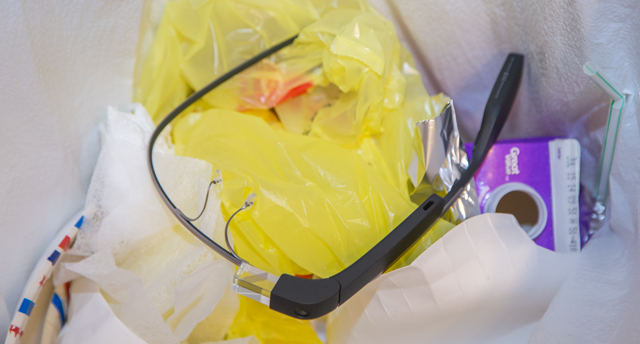
Android Wear smartwatches make Google Glass obsolete

by Ron Amadeo
firehose

"Android Wear on a smartwatch does nearly everything Glass can do and then some, and it comes in a package that is significantly more ergonomic, convenient, cheaper, and socially acceptable. Android Wear has almost all the positives of Google Glass and none of the negatives."

Ron Amadeo

It seems like every post about Google Glass is dripping with bias either for or against the device, so before we get into it here's a little transparency: I'm Google Glass Explorer #1499. I paid $1,500 of my own money to get Glass, and I've owned the device for over a year. I thought Glass was really amazing when it first showed up, and I wrote a review after about a month and half of ownership. Once the novelty wore off, though, Glass spent most of its life in a drawer, only to occasionally be dusted off to try out the newest update.

Now, after playing with the Android Wear emulator for a few months, and actual Wear hardware for a few days, it's time to call it: Google Glass is obsolete. Android Wear on a smartwatch does nearly everything Glass can do and then some, and it comes in a package that is significantly more ergonomic, convenient, cheap, and socially acceptable. Android Wear has almost all the positives of Google Glass and none of the negatives.

You want fast access to information? Android Wear does that. It has the same hotword detection and voice commands as Google Glass, and it's almost as hands free. In some respects, Wear is actually better. Google Glass requires a head flick up or pad touch to start listening, but Wear is always on and always ready for a voice command. Both devices hook up to Google's knowledge graph and can answer general-knowledge questions, and both can send a text to your friend with nothing but your voice.

Read 19 remaining paragraphs | Comments

30 Jun 05:51

Inventory: The 26 worst episodes of the 2013-14 television season, part 1

by Marah Eakin, Rowan Kaiser, Les Chappell, Carrie Raisler, Dennis Perkins, Sonia Saraiya, Caroline Siede, Gwen Ihnat
firehose

1. Sherlock, “The Empty Hearse”
'Showrunners Steven Moffat and Mark Gatiss often want to have their cake and eat it too with the twists and turns of Sherlock’s story: They want the emotional resonance and the cerebral plotting. “The Empty Hearse” is a catastrophic failure of both. There’s nothing even remotely plausible about Sherlock’s faked death—and nothing remotely moving about the numerous imagined torrid kisses that go into the plotting. In all likelihood, this disappointing episode will be the turning point of Sherlock from “silly but interesting character drama” to “extremely well-produced schlock.” '

4. Doctor Who, “The Time Of The Doctor”

'“The Time Of The Doctor” features a frustratingly complicated plot, unnecessary retcons for past inconsistencies, and a painfully unfunny nudity joke, leaving little time to explore its characters’ emotional arcs. A new antagonist slots neatly into Moffat’s oft-used “flirty and aggressive woman” archetype while the main female character maintains an unwavering faith in the Doctor even after he betrays her trust and strips away her agency—twice.'

Arbitrary Tournament superlative: Winner of the Steven Moffat Memorial “Just because you can, doesn’t mean you should” Award.

(This is part one of a two-part series. Part two will publish Tuesday at midnight.)

Sometimes, it’s not the premise that’s the problem. We give low or failing grades to plenty of television here at The A.V. Club—like the terrible pilot of Dads, or the half-baked reality show I Wanna Marry “Harry.” But often, that’s as much a judgment of the idea as it is of the execution. What really rankles are those episodes, often stuck in the middle of shows that are otherwise good—or at least fine, that take our beloved characters into directions we don’t like, or mire the story in a slog that devalues everything around it. The Tournament Of Episodes crowned its winner on Friday, celebrating the best of the television season in a totally unscientific way. We couldn’t let the official television season end without a look ...

30 Jun 05:49

Why Are All the Cartoon Mothers Dead? - Sarah Boxer - The Atlantic

Why Are All the Cartoon Mothers Dead? - Sarah Boxer - The Atlantic:

"The cartoonist Alison Bechdel once issued a challenge to the film industry with her now-famous test: show me a movie with at least two women in it who talk to each other about something besides a man. Here’s another challenge: show me an animated kids’ movie that has a named mother in it who lives until the credits roll. Guess what? Not many pass the test. And when I see a movie that does (Brave, Coraline, A Bug’s Life, Antz, The Incredibles, The Lion King, Fantastic Mr. Fox), I have to admit that I am shocked … and, well, just a tad wary."

30 Jun 05:46

Facebook offers explanation for controversial News Feed psychology experiment

by Sam Byford
firehose

"In hindsight, the research benefits of the paper may not have justified all of this anxiety."

r.o.f.L

Facebook caused a stir over the weekend with the revelation that it had been altering the content of some users' News Feeds in an attempt to study the psychology behind what causes people to post emotional material. Now Adam Kramer, Facebook data scientist and co-author of the study, has posted an explanation of the motivation behind the research, which he says serves as Facebook's statement on the matter.

"The reason we did this research is because we care about the emotional impact of Facebook and the people that use our product," says Kramer. "We felt that it was important to investigate the common worry that seeing friends post positive content leads to people feeling negative or left out. At the same time, we were concerned that exposure to friends' negativity might lead people to avoid visiting Facebook."


"In hindsight, the research benefits of the paper may not have justified all of this anxiety."

Kramer notes that the study affected 0.04 percent of users over one week in 2012, though at Facebook's scale that covers hundreds of thousands of people. The study's findings contradicted conventional wisdom, according to the scientist, as seeing positive emotions on Facebook was found to encourage similarly positive content. In a separate statement provided to The Guardian, Facebook said the research was designed to "improve our services and to make the content people see on Facebook as relevant and engaging as possible."

"Having written and designed this experiment myself, I can tell you that our goal was never to upset anyone," says Kramer. "I can understand why some people have concerns about it, and my co-authors and I are very sorry for the way the paper described the research and any anxiety it caused. In hindsight, the research benefits of the paper may not have justified all of this anxiety." Kramer says that Facebook has improved its internal review practices since 2012, and future research will take the reaction to this study into account.