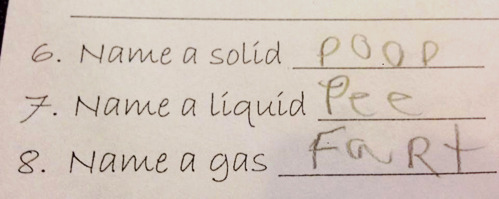
Sometimes all you can do is SMH, man. Just SMH forever.
We don't know if this is an actual LSU brawl, because the participants look like they're 14 and we have no context to go with this amazing video. So the amazing video will have to suffice. (IT TOTALLY DOES.)
Football in Canada is a brutal sport. Competitions are fierce, winters are long, conditions are unforgiving and the goalpost is forever in your way. We wouldn't change a thing.
There's only one potential Canadian player who could successfully avoid a goalpost in the endzone, that's right -- Tim Tebow.
The Chinese city of Chongqing’s “no cellphones” lane for pedestrians has struck a global chord—perhaps because just about every mobile phone user has been guilty of walking-while-texting at least a few times, even though it is an annoying hazard to fellow walkers.
But it’s not like the urban planners of Chongqing, a fast-growing mega-city in China’s southwest, are breaking new ground in urban traffic management: Instead, it turns out that the new signage only appears on a single 50-meter (164-foot) walkway, and it’s located in a bizarre theme park called Yangren Jie (“Foreigner Street”) that is also home to the world’s largest public toilet.
Why a cellphone-only lane on Foreigner Street? Perhaps because the idea and even the signage itself came from a US reality show that set up a nearly identical sidewalk in Washington, DC earlier this year—for one day only—to test people’s ability to follow directions. The National Geographic show “Mind Over Masses” discovered that it had very little effect at all. The Chongqing signs use almost identical language and even the same Nokia-esque cellphone icon as the ones in DC.
DC on the left, Chongqing on the right.AP Photo / China Daily
“I knew there were such sidewalks in Washington’s central business district, which are very necessary for the [cellphone] addicts, especially in the busy streets,” said college student Li Zhijiang, in a suspiciously on-the-nose quote to the state-owned China Daily.
Every language has filler words that speakers use in nervous moments or to buy time while thinking. Two of the most common of these in English are “uh” and “um.” They might seem interchangeable, but data show that their usage break down across surprising geographic lines. Hmm.
The map above shows a preliminary attempt to use the tremendous amount of linguistic data being produced on the web to understand how language works. Jack Grieve, a forensic linguist at Aston University in the UK, has been looking through 6 billion words collected from Twitter. Following a discussion with fellow linguist Mark Lieberman—a prolific blogger who has long been interested in the “um”/”uh” divide—Grieve decided to look through his corpus of tweets to see how the two words compared. They started their exploration with data from America.
If a county on the map is bright blue or bright pink, its tweets show a clear tendency toward “um” or “uh,” respectively. The purplish colors in between mean that a county’s results leaned one way, but weren’t clear representations of a regional trend.
To uncover the geography of filler words, Grieve ran through the Twitter corpus to find how often a given American county uses “um” over “uh” and vice versa. After that, he used an algorithm known as “hot-spot testing” to smooth out the results and make them more meaningful.
The smoothed-out version has a lot to say. The regional breakdown is clear, and it doesn’t look much like other maps that try to show where some phenomenon or another is happening in the United States. Grieve said the use of “um” looks to follow the elusive “Midland dialect,” which linguists have suspected follows the Ohio River southwest from central Pennsylvania. That accounts for most of the blue that sweeps from West Virginia all the way to Arizona. Grieve said the “uh” and “um” analysis is the first time his research has shown clear evidence of the Midland dialect.
The map also shows that usage on the west coast is harder to pin down. The purplish color leans toward “um” in most of California, aside from the Bay Area, but there is no clear winner west of Arizona.
Hot-spot testing explained
Hot-spot testing has a variety of applications in statistics, but the goal is to put individual data points in geographical context to uncover broader tendencies. A retailer might be interested, for example, in knowing whether a new product is selling better in certain parts of the country. Let’s say it’s selling reasonably well at a location surrounded by dozens of stores where almost nobody is buying it. By comparing this store to its neighbors, a hot-spot test can identify this broader region as one where the retailer’s strategy is not working.
The same technique is used to reveal the regional scope of spoken dialects: Grieve compared each county’s “um”/”uh” split to those of several nearby geographical areas. “We do this because dialect data is generally very messy, so this is a way of extracting the underlying regional signal,” Grieve said in an email to Quartz. To test the algorithm’s validity, he tried hot-spot testing on sets of random data. These tests revealed no trends whatsoever, he said.
This is what the data look like before hot-spot testing, with a percentage of “um” versus “uh” for each county:
Geography is not the only possible answer to the “um” versus “uh” mystery. Earlier research by Lieberman suggests that women use “um” more often than men. Also, using these in writing is much different than using them in, uh, person. People on Twitter, for example, often use it to express awkwardness or condescension.
Here’s an “um” that pokes fun at Apple executives, for example:
Apple Event 2014:
"Um so like.. it's a watch.. so you can.. put it on your wrist"
*puts on wrist*
"Now you know the time"
*standing ovation*
Nevertheless, the tone of Twitter prose is informal, meaning colloquialism and linguistic quirks come through. And even if people use “um” and “uh” for snark, they still have to choose one over the other. Grieve is looking to mine the Twitterverse for ever more linguistic insights. We’ll, erm, keep you updated as new data come out.
Sukuks are investment products that rely on payments from an underlying asset, like real estate, rather than paying back a loan with interest like a traditional corporate or government bond, because the Koran forbids usury.
The deal was a success, drawing $4.7 billion in orders. What’s especially interesting is who bought in. The deal attracted “a diverse group of conventional and Islamic investors” totaling 120 institutions in all. Hong Kong didn’t break that down by specific names, but it did by geography.
Asian investors purchased 47% of the deal. That pool is likely to include both Islamic and non-Islamic investors, Waina Leong, an analyst with Kuwait Finance House told Quartz. And it is safe to assume that “almost all” of the US and European investors, who bought 17% of the deal, are not Muslim, Leong said.
Given the potential returns, it’s no surprise that even investors who aren’t obligated to follow the Koran’s ban on usury could be interested in the Hong Kong sukuk issuance: the five-year security priced at a return of 2.005%, which is more than 30 basis points above the 1.7% return on five-year US Treasury notes.
Because of interest from Muslim and non-Muslim investors, outstanding global sukuk issuance has skyrocketed in the past decade, hitting $286 billion at the end of the first half of 2014, according to research from Kuwait Finance House:
The growth in demand is moving sukuks from a niche category to a viable alternative investment, KFH said in its 2014 half-year report. This year’s issuance so far has been dominated by Malaysian issuers, with 63% of the market, followed by Saudi Arabia with 13.7%, according to KFH. Malaysian bonds in particular are attracting “agnostic” investors including hedge funds and fixed income managers who don’t necessarily follow sharia, and who bought up 42% of Malaysian Export-Import Bank’s (Mexim) $300 million five-year sukuk in February, Finance Asia reported.
The Hong Kong government is just the latest non-Islamic issuer to jump into the mix. Earlier this year, the British government did a landmark £200 million ($325 million) deal, becoming the first country outside the Islamic world to issue one of these bonds. Deals in the pipeline in the second half of the year include Société Générale, the South African government, and Bank of Tokyo-Mitsubishi.
Despite sukuks’ rapid growth, they remain a far from mainstream asset, and one limited mostly to sophisticated investors because of an often complicated structure. The UK government’s sukuk, for example, earns profits from rent payments from two government-owned buildings, but even a simplified diagram of how it works is hardly straightforward:
They’re also much less liquid than traditional forms of government or corporate bonds, because the secondary market is much smaller. But for investors looking to buy and hold, they’re looking more attractive all the time.
I made this image in the chained library “De Librije” in the Dutch city of Zutphen. Established in 1564, everything about this place is still precisely as it was, including the tiles on the floor. Remarkably, throughout the library there are tiles with a dog’s paw prints. These 450-year-old traces of a large dog come with a local legend. One night, a monk called Jaromir was reading in the library while enjoying a meal of chicken, delivered to him by some nuns. He was not supposed to do this: not only does one not eat in a library, but he was also going through a period of fasting. Then suddenly the devil appeared in the form of a dog, scaring the living daylights out of the monk. The devil ate the chicken and locked the monk inside as a punishment - as devils do. Knowing the story, it’s hard to ignore the prints when admiring the books.
Pics (top my own): Zutphen, Librije Chained Library. More on the legend on the library’s website, also source for lower pic, here (in Dutch).
Despite being so popular, this song was never officially released as a single from the band, and never had an accompanying music video. However, the song is widely known by fans, primarily because of the live performance that accompanies it and is generally accepted as a fan favorite.
When performing it live, vocalist Till Lindemann has simulated anal sex with keyboardist Christian “Flake” Lorenz using a liquid squirting dildo. Christian “Flake” Lorenz has confirmed in an interview that the dildo squirts a mixture of Pernod liqueur and water; however, bandmate Paul Landers claims it’s water and Ouzo. (Both are anise liqueurs.)
I'm a new nurse working night shift and sometimes you just want a drink after work! As good as the occasional glass of wine at home does me, I'd like a place to go with coworkers once in a while where I won't feel like a drunk for getting an early morning cocktail. Suggestions? Bonus for gluten free food items! Thanks.
Edit: went with Besaw's. Very friendly staff, lavender gin cocktail, bacon. Thanks all. We'll continue this GF convo after I get some sleep....
FastCoExist published a piece on a redesign of the traditional children’s bicycle called the Miilo bike. The idea behind the bike is simple – the bike’s size is adjustable to accommodate your growing kid! Now if only they could come up with a comparable solution for shoes!
Kid’s bikes don’t usually last very long. Depending on how quickly a child grows, it’s possible to go through as many as five different bike frame sizes by the age of 12, which can be expensive and leads to plenty of material waste. Switzerland-based designer Andreas Bhend is hoping kids can keep their bikes longer with his invention: a new bike that transforms when a toddler grows a couple of inches.
The Miilo bike starts as a simple balance bike without pedals, so a two- or three-year-old can scoot along by foot and learn the basics of steering and balancing. After they grow up a little, the bike can grow as well.
“By flipping the frame and adding the pedals and the chain you get a taller bike,” explains Bhend. In its larger variation, the single-speed bike also has a pedal brake. Bhend envisions adding 3-D printed accessories, like a basket, that could be downloaded and made at home.
"As soon as this deal is finalized, I will leave Mojang and go back to doing Ludum Dares and small web experiments. If I ever accidentally make something that seems to gain traction, I'll probably abandon it immediately," Persson said in the blog posted on his Twitter feed.
"I love you. All of you. Thank you for turning Minecraft into what it has become, but there are too many of you, and I can't be responsible for something this big," he said. "It's not about the money. It's about my sanity."
Microsoft Corp (MSFT.O) said on Monday it has agreed to acquire Stockholm-based games developer Mojang and the company's wildly popular Minecraft video game franchise for $2.5 billion.
"Orange Is The New Black Writer" Lauren Morelli has broken up with her husband and since begun dating Poussey (Samira Wiley).
According to Morelli, it was writing scenes for Piper and Alex that gave her clarity on her own sexuality. "I found a mouthpiece for my own desires and a glimmer of what my future could look like," she said (via TMZ).
'Amazingly, this is just the second perviest thing someone’s done with the Oculus Rift lately, behind this VR game about grabbing anime breasts'
Oculus Rift + 3DS ⊟
Katsukity, maker of 3DS video capture hardware and software, has updated its kit to support the Oculus Rift — meaning you can view the handheld’s 3D games with the virtual reality head-mounted display. Katsukity notes that “fully 3D games really stick out!”
Naturally, Katsukity demonstrated the setup in action with girlfriend simulator New LovePlus and racy beat’em up Senran Kagura 2. Amazingly, this is just the second perviest thing someone’s done with the Oculus Rift lately, behind this VR game about grabbing anime breasts. Thanks to NihongoGamer for the via.