firehose
Shared posts
Bruce Timm Steps Down As WB Animation Supervising Producer
firehose:(

Congressman: Drink Alone To Prevent Domestic Violence
A Doctor Who-Inspired ‘My Drunk Kitchen’ with Chris Hardwick
firehosepun-laden
Nerdist’s Chris Hardwick joins Hannah Hart on her web series “My Drunk Kitchen” in a special Doctor Who-inspired episode where they make fish fingers and custard. Throughout the episode, Hart gets drunker and drunker (as expected).
BARBER SHOPS FOR GENDER BENDING FOLKS (Mass post)
firehosewoosta
~~If you would like to add a place please message us! I will be adding more on this page & please reblog as a text post!~~
BROOKLYN, NY
Tomcats http://www.tomcatsbarbershop.com/
Phresh Cutz https://www.facebook.com/PhreshCutz?ref=ts&fref=ts
Aimee Brown http://goldbouffant.tumblr.com/
Barber & Supply http://www.fscbarber.com/
NEW YORK, NY
FSC Barber http://www.fscbarber.com/
SAN FRANCISCO, CA
FSC Barber http://www.fscbarber.com/
BAY AREA, CA
Mission 6 Salon (ask for Shannon) http://mission6salon.com/
OAKLAND, CA
Slick & Dapper http://slickanddapper.com/
AUSTIN, TX
Avenue (ask for Emmanuel) http://www.avenuebarbershop.com/
Corner Barber Shop (ask for Luis or Gabriel) https://www.facebook.com/LuisCornerBarbershop
HOUSTON, TX
Big Kats (ask for Bart) http://www.bigkatshouston.com/
NEW HAVEN, CT
Salon J (ask for Marisa) http://salonjnewhaven.com/
CHICAGO, IL
SDC Cutting Gallery (ask for Diadro Cuts) http://www.sdccuttinggallery.com
SPOKANE, WA
The Man Shop http://www.themanshops.com/
WORCESTER, MA
126 Post Salon (ask for Charlie) http://www.126postsalon.com/
LONDON, ENGLAND
Red Scissor Salon (ask for Baberette) http://redscissors.co.uk/contact/
DUBLIN, IRELAND
Waldorf Barbers https://www.facebook.com/Waldorf.Barbershop
Slick Rick vs. Wheeler del Torro Chef Battle - Eventbrite

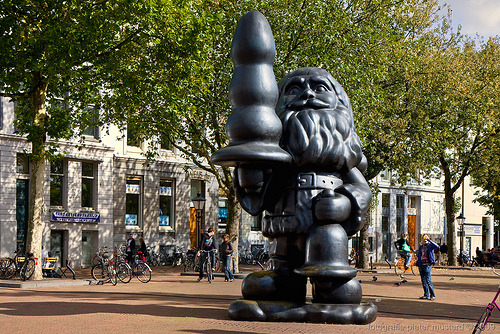
iknowitsmad: i’m not even kidding when i say there is this statue on a square here that’s supposed...
i’m not even kidding when i say there is this statue on a square here that’s supposed to be santa claus with a christmas tree but everyone calls it the buttplug gnome
Spelling Bee Troll
Submitted by: Unknown
Tagged: spelling bee , awesome , troll , g rated , School of FAIL Share on Facebook“If Jesus came back and saw what was being done in his name,...

“If Jesus came back and saw what was being done in his name, he’d never stop throwing up.”
― Woody Allen, Hannah and Her Sisters
Not Sure if Ridiculous Fishing Is the Best Fishing? Take a Look at This.

Vlambeer’s great mobile game about highly aggressive angling is one of the best iPhone games to come out this year. Maybe it’s because it realizes that real-world fishing can be hella boring.
Cartoonist Zac Gorman homes in on that snooze-inducing reality and tweaks an old proverb to explain why Ridiculous Fishing deserves all the love. Who needs to eat all those fish anyway?
Click on "Expand" for ultimate fishing glory:

Want to see more of Zac's work? Head over to his personal blog and game-themed site Magical Game Time. If you're feeling commercial, you can buy prints and shirts here. He'll be back on Kotaku with a new comic same time next month!
Icons & Influences, Art Show by Justin Hillgrove & Mike Capp at Ltd. Art Gallery in Seattle

“It’s The Army of Darkness Charlie Brown” by Justin Hillgrove
Icons & Influences is an upcoming art show at Ltd. Art Gallery in Seattle, Washington that will feature over 30 original mashups of pop culture and cult icons by artists Justin Hillgrove and Mike Capp. The show’s opening reception will be on Friday, April 5, 2013 from 7 PM to 11 PM PDT and the art will be on display until Sunday, April 28, 2013. You can RSVP for the event online via Facebook.

“Mario Soft Portrait” by Mike Capp

“It’s Not Easy” by Justin Hillgrove

“La persistencia de la Pacman” by Mike Capp

“A Spirited Rumpus” by Justin Hillgrove

“Wolverine / Jean Michel Basquiat” by Mike Capp

submitted via Laughing Squid Tips
Ask Chris #147: The Best Robin Ever

Q: Who is or was the best Robin? What is the Best Robin moment in Comic Book History? -- @danceformyhorse
A: Here's a little tidbit that probably won't shock anybody: I think about the Robins a lot. When you spend around 60% of your waking hours thinking about Batman, it's sort of inevitable that you'll eventually get around to his sidekicks, and there's a lot there to think about. There are a ton of complexities and little bits of subtext with what they bring out of Batman, but in this case, the answer strikes me as a pretty obvious one.
The best Robin is, beyond a shadow of a doubt, Tim Drake. Deal with it, haters.
 Don't get me wrong: It's not that I don't like the other Robins at all. I think they're all really great characters who bring something interesting to the larger mythology of Batman, and I'd even go so far as to say that they're all necessary for building the version of Batman that we have now. That said, when you look at each of those characters and how they function in their role as Batman's sidekick -- or, to be a little less dismissive, his partner in crime-fighting -- Tim's rank at the top becomes pretty self-evident.
For one thing, he's the only one of the Robins who's not, on some level, in it for themselves. All of the others are motivated by very personal reasons. Dick Grayson essentially has the same defining tragedy that Bruce Wayne does, in that he sees his parents murdered in front of him. The only real difference is that it happens in Haley's Circus instead of Crime Alley, and even that's really just a convenient reason for him to already have the gymnastic ability to swing around Gotham City without having to go tromping around the world for 20 years like Bruce did. He's ready to go from the moment he's introduced, complete with the same sort of training and, more importantly, the same sort of motivation that Batman himself has.
The thing is, Dick Grayson's major value as a character doesn't come from his time as Robin -- at least, not in the grand, ongoing evolution of Batman that DC's been cooking up since 1939. He only truly becomes a great character when we see how he grows up. I've talked about this before, but the short version is that he's Batman's first and greatest triumph against Crime. He's proof that the idea of Batman works, because a kid who's put into the exact same situation that Bruce Wayne was when his parents died doesn't have to go through it alone. There's someone there for him who can help him and provide him with the closure that Bruce never had, and that makes a huge difference in his life. If Batman didn't already exist, Dick Grayson would've become Batman, but because there is already that figure in place, he becomes something different.
Batman builds himself a family over his career, but he often does so at the expense of Bruce Wayne's personal life. Even if he's not fully consumed with the pursuit of justice, he's never going to settle down and get married, because being Batman comes before everything else in his life. Dick, on the other hand, is consistently portrayed as a far more easygoing, well-liked guy who's almost always surrounded by friends and teammates. He's the dude that everyone in the DC Universe gets along with and who almost got married to an alien supermodel. But while all of that makes him a great character, and makes his relationship with Batman a pretty incredible dynamic (get it), it doesn't really kick in until after he becomes Nightwing and shows how different he is from his mentor.
If Grayson represents Batman's greatest triumph, then Jason Todd -- or at least, the Post-Crisis Jason Todd, since the original version was just Grayson with palette-swapped hair -- represents his greatest failure. Frank Miller had set up that Something Terrible happened to Jason at some point on the road to Dark Knight Returns, and since late '80s Batman comics were trying so hard to be DKR that it's kind of embarrassing to look back on them (see also: late '90s DC Comics and Kingdom Come), that idea was folded into the main line books. Unlike his squeaky-clean predecessor, Jason was cast as a Troubled Teen in the pages of Batman, someone who'd had a rough life with plenty of tragedies and had a lot of anger at the world, even though it seems like nobody bothered to tell Mike W. Barr, who was writing classic, relatively lighthearted adventures with a wide-eyed, pun-filled "Jay" Todd over in Detective.
Either way, It was an interesting setup, with Batman clearly wanting to recreate the success (and familial relationship) that he had with Grayson, and Jason wanting to vent his anger on the world in a way that would be, if not righteous, at least more constructive than the life of crime he'd been heading toward on his own.
In the run up to Death in the Family, Jason was shown to be a much more ruthless and pragmatic character than even Batman. Batman #424, one of the very first comics I ever read, features Batman and Robin going up against the drug-dealing son of a diplomat / '80s action movie coke dealer stereotype called Felipe. After Felipe beats his girlfriend so badly that she kills herself (pretty heavy stuff for a comic I read when I was six), Batman's solution is to work within the law, essentially having him deported back home in shame. If that sounds a little soft compared to Batman's usual standards, it is -- conspicuously so, as it's very obviously done more for the sake of contrasting it with Jason's solution: straight up kicking that dude off a building to his death:

Death in the Family might've made it official, but that right there is the moment that readers should've known Jason's career as Robin was over. It's not that he's wrong or right -- Jim Starlin and Mark Bright cast Felipe as an irredeemable and untouchable scumbag -- it's that he doesn't work in Batman's world.
In a lot of ways, that version of Jason Todd was the voice of the sort of reader who always wants to know why Batman doesn't just go ahead and do us all a favor by killing the Joker, something that was (painfully) literalized when Judd Winick dragged him out of the grave 20 years later to put that question to Batman. The answer is simple: Batman doesn't kill, period. Either you get it or you don't, and Jason Todd didn't get it so he had to go. Even if that phone-in vote on whether to kill him had gone the other way, he was done as Robin, but that contrast, and Batman's eventual rejection of simple revenge in favor of his established morality is a really interesting part of those characters. It's the great Pyrrhic victory in his ongoing battle against the Joker.
Skipping ahead a bit, the other Robins are similarly self-motivated. That one kid who was Robin for a cup of coffee, what's her name? Blonde hair, amazing costume. I want to say... Stacy? Her brief tenure as Robin was all about proving her worth, to the point where even her eventual "death" (usually best left forgotten) came as a result of wanting to show that she was useful in her role. The same goes for Damian Wayne, a character who was entirely built around a desire to prove himself. First, it's just to show his worth to his father by replacing Robin and becoming the favorite child, a pretty immature, bratty sort of motivation that's made threatening because he's a spoiled brat trained by the deadliest assassins in the world.
And it's worth noting that Batman does the absolute wrong thing when dealing with him:

He shouts and postures and tries to intimidate and terrify him into submission. In other words, Bruce treats Damian like a villain, because that's the only way he knows how to deal with him. Genes or no, he's a product of the League of Assassins, so when his first attempts to show him the wonders of the Batcave and introduce him to the family fall completely flat -- the same things that had awed Dick, Jason, Stephanie, Tim, Barbara and everyone else who'd been down there -- he goes back to what usually works. And it fails miserably. Seriously, two pages after all this shouting, Damian kicks the crap out of Robin and then cuts off a dude's head. That's about as wrong as parenting can go.
It's only when Bruce is out of the way and Grayson takes over as Damian's mentor that Damian evolves, and again, we see the success of that first Batman and Robin relationship. We know how Bruce dealt with someone who was in the same situation that he was as a child and helped them grow, now we get to see how Dick deals with someone who's like a young Bruce. It's only when that relationship comes into play that Damian's desires go beyond proving worthiness as a successor to his father and more to the higher cause of justice.

That's the influence of Dick Grayson, The Batman Who's Good With People, and as a result, Damian's not really ever Bruce's sidekick in the way that the others are. He's Dick Grayson's Robin, which makes that scene in Batman Inc. #8 -- spoiler warning! -- so great, when they have their last great team-up with an artistic nod back to their first adventure together:

Incidentally, in terms of costumes, Damian beats everyone else hands down, if only because of his lace-up wrestling boots.
Now, at long last, back to Tim Drake.
Tim's not in it for himself, and a lot of that comes from the simple fact that he doesn't need to be. When he first appears, he doesn't have a tragedy that defines his past and drives him to seek vengeance. In fact, he has the exact opposite: It's not really exaggerating to say that he's the single most privileged, well-adjusted character in the entire Batman mythos. He's rich enough to live more-or-less next door to Wayne Manor, he has two loving (and living) parents. The one thing that drives him is that he's a kid who loves Batman.
In that respect, he's as much of a stand-in for the fans as Jason Todd was for that certain segment of readers, but on a different level. He's a guy who pays attention to Batman and how he works, almost to the point that trounces the suspension of disbelief in a world where Batman was still supposed to be thought of as a possible urban legend (despite, you know, being a member of the Justice League). In all honesty, he'd make a lot more sense if we saw a long box of dog-eared Batman comics in his bedroom.
Either way, he's studied Batman enough to the point where he realizes what we have (or what we should've, anyway), which is that Batman's never been a solo act. Even if it's not Robin, even if it's just Alfred, or Jim Gordon, or Lucius Fox, or Superman, Batman is someone who has people in his life that help him in various respects. Tim Drake realizes this, and, knowing that Robin got crowbar'd to death, he steps up to fill that role.
His appearances spin out of a long game that started with Death in the Family, but it's not a matter of co-opting someone else's tragedy. He becomes Robin because of a desire to help Batman, and helping Batman is what Robin does. It's purely altruistic, and because of that, he's dedicated to being Robin and filling that role in a way that other characters aren't. He's driven, but not by tragedy -- he's just really nice, and he's driven because helping people is the right thing to do. It's a very bright, unambiguous motivation in a franchise that's often defined by darkness and brooding and murderous psychopaths, but again: That's what Robin does.
If you go back to his debut as Robin, Alan Grant and Norm Breyfogle lay this out in the most literal, obvious way possible, contrasting two panels. The first is Bruce Wayne, face covered in shadow, talking about how he watched his parents die in an alley. The second is Robin cheerfully thinking about how f**king awesome it is to swing around on a grappling hook:

It's a great scene, and it really does a lot to illustrate how those characters were meant to balance each other.
Of course, as time went on, that great concept went through some pretty rough times. Tim was orphaned one parent at a time, including having his father offed by Captain Boomering in what is, amazingly, not the most glaring example of missing-the-f**king-point that you can find in the pages of Identity Crisis. More recently, the "New 52" reboot issued an edict that Tim Drake had never been Robin at all for reasons that are probably explained in a bunch of Teen Titans comics that I didn't read, shuffling him off to be tied with Carrie Kelly for Best Robin That I Guess Was Never "Actually" Robin. Comics!
As for my favorite Robin moment, man, that is tough. There are so many good ones to pick. Since I already brought up Carrie Kelly, that entire sequence from when she jumps on the Mutant Leader and then her response when Batman asks her name is about as perfect as comics get:

Outside of comics, I'd be lying if I said that "Robin's Reckoning" from Batman: The Animated Series wasn't one of the best portrayals of those two characters in any medium.
For Tim Drake, though, my favorite example is relatively recent, involving Bruce Wayne's return from THE OMEGA SANCTION! THE DEATH THAT IS LIFE! in The Return of Bruce Wayne #6. While Damian may have been Dick Grayson's partner, Tim Drake never stopped being Bruce Wayne's, and when Bruce gets turned into a time-spanning weapon against life, he ends up being the only one who can talk him down:

In the biggest, goofiest, weirdest, most comic booky terms, that's what their relationship is. When everything is at its worst, Batman's there to stop it. When everything's at its worst for Batman, Robin's there to help him.
That's all we have for this week, but if you've got a question you'd like to see Chris tackle in a future column, just send it to @theisb on Twitter with the hashtag #AskChris, or send an email to chris@comicsalliance.com with [Ask Chris] in the subject line!

Vine videos can now be embedded on the web
Vine just announced that as of today, videos recorded with the iPhone app can be embedded publicly on the web. When sharing a video, two visual styles can be used; "Simple" is a borderless presentation that displays your six-second (or less) clip at full resolution. There's also a framed "Postcard" style. Embeds can be created from a video's vine.co URL (example) and a just-released app update for iPhone also enables the functionality inside the "Share this post" menu.
Not every uploaded clip can be embedded, however. If a post hasn't been shared outside of Vine (i.e. to Facebook and / or Twitter), you won't see the embed option. Vine doesn't specify why this restriction is in place, but we suspect it's meant as a privacy safeguard. We also noticed that embeds aren't optimized for Tumblr, so you still can't seamlessly integrate videos on your blog just yet.
- Source Vine
- Related Items video recording vine
Vote for May's Book Club book now!
firehosethree would/have reads and The Circle, which I know nothing about
In April we'll be reading Michael Chabon's alternate history novel, The Yiddish Policemen's Union, but it's time to look to the future. A different future. With the exception of The Circle, all of May's selections below are about a vastly altered future, one in which things have gone awry in the most unpredictable ways. Take a minute to vote for May's book below. The poll will close on May 15th. Happy reading, and don't forget that you can also join our Goodreads group.
Ready Player One by Ernest Cline (2011)
It's the future, and everything looks different than you'd expect. Unless you expect the future to look exactly like a video game.
The Circle by Sara B. Elfgren and Mats Strandberg (2012)
The extremely popular Swedish YA novel will finally be published on May 1st in English. Part horror, part urban fantasy, the novel centers around a group of high school students who find out that they have something in common, and a greater purpose to serve.
The Handmaid's Tale by Margaret Atwood (1985)
It's the near future, in what was once the United States of America, now called Gilead. A militaristic and strict society has taken the place of freedom, and things haven't gone very well for women. The Handmaid's Tale was the recipient of the Arthur C. Clarke award in 1987, and is arguably Atwood's best-known novel.
Neuromancer by William Gibson (1984)
Open PollThe first and seminal cyberpunk classic, Gibson's first novel won the Nebula, the Hugo, and the Philip K. Dick awards.
What book do you want to read in May?


The View from a Skillshare Leader–Jaime Alberts
 A great day at the UHL market stand. I got to the market at 10, and found our booth beautifully decorated with a big drying rack covered in small, pretty cloth squares. I was just in time to hear about how Lorie no longer buys paper products. No paper towels, no paper napkins, no sponges, not even toilet paper! I, like everyone else, was intrigued and a tiny bit larmed at the possibilities raised by that last challenge, but was truly shocked to learn that the pretty cloths were her toilet paper! To answer the questions you’re wondering: yes, they were clean, no, there was absolutely no sign they’d ever been used, and no, she doesn’t use bleach. It was definitely the sort of thing that you could read about 100 times and still be squeamish about trying, but seeing and talking to someone who’d done it made all the difference in making something go from scary to inspiring.
There was just enough time for me to go buy some cheese and chocolate before Turil’s session on wheatgrass. Now let me be clear- I had ZERO interest in wheatgrass. I’d tried the shots and found them gross. I was just there because I had to be. But Turil’s session was totally engaging. She explained why I’d hated my shot (wheatgrass is so strong you need to build up to shots.) She showed us amazing, flourishing stalks- planted 5 days earlier! We tried stalks- and they were delicious! I wound up a total convert and got to take some seeds home as my reward.
I headed back to the market and got stuck admiring the lovely handmade soaps two stalls down. But before I could buy any, I remembered it was time to get back to the stand- to learn about soapmaking with Alexa! Soapmaking sounded kind of scary (apparently lye, the key ingredient, is very dangerous) but after smelling Alexa’s cinnamon-orange soap, I started making plans for a soapmaking party. AND I got to take some soap home, so I smell very good right now.
Last was me, talking about making cordials. The headset I had to wear seemed unnecessary, given my teacher voice, but made me feel like a cool telecaster. Unlike my last skillshare, since we were outdoors this time, nobody got to taste my cordials. So, not as exciting as wheatgrass. But still fun- we got quite a good crowd, and some great questions. I look forward to finding out how the guy who wanted to try single varietal apple liqueur does- I hope he has a tasting!
Afterward I talked to the other presenters til closing- and probably longer if we didn’t have to pack up. All 3 were interesting, mart, socially aware people- just the sort I like to hang out with. My only regret was that this was the last skillshare- next summer I’ll definitely try to make a lot more!
Soaring Bee Deaths in 2012 Sound Alarm on Malady

Powerball Winner Owes Thousands In Child Support Payments
This week, Pedro Quezada of New Jersey claimed the fourth-largest Powerball jackpot ever. Now he can pay off his $29,000 child support bill.
Letter to the Editor: March 29, 2013 - The Daily Princetonian
firehose"My younger son is a junior and the universe of women he can marry is limitless"
my god I hope it has a limit,
dude, don't marry my wife, please
I'm just a dumb country boy, i can't do no better
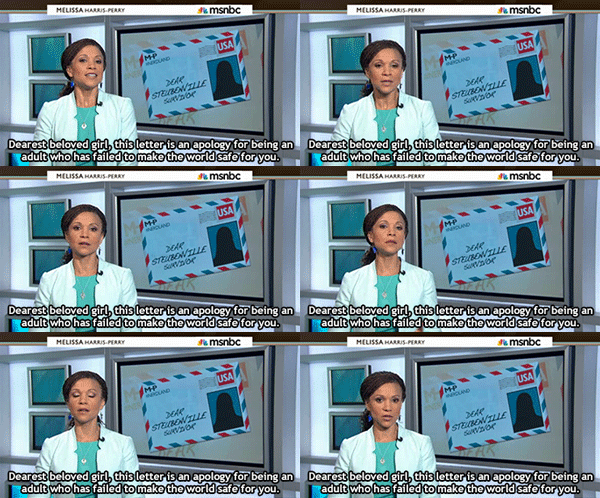
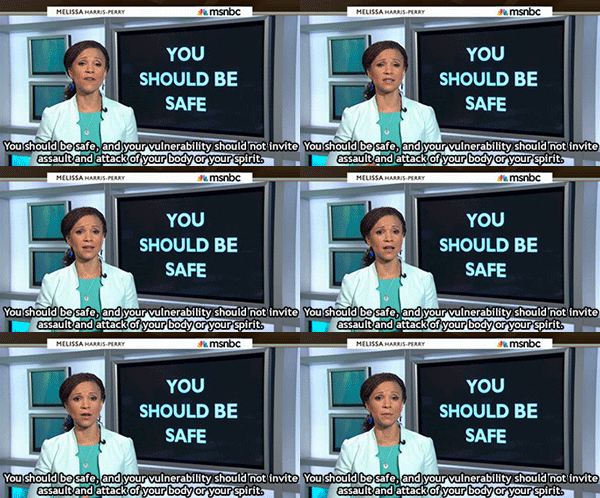
ikenbot: Melissa Harris-Perry’s open letter to Steubenville...


Yasutomo 2020 Wa-Ben Wallet

I recently realized I have never been satisfied with any wallet I’ve ever owned. It was time for that to change.
I thought about the Slimmy (which still looks pretty fantastic), until I remembered reading an interview with William Gibson. He talked about some crazy wallet made out of a material called Cuben.
Now this sounded promising. I headed off to Google and searched for “william gibson wallet.” The top result took me to a review of the Yasutomo Wa-Ben wallet at unfinishedman.com.
Chad’s review convinced me that the Yasutomo 2020 Wa-Ben wallet, made in Hong Kong by Jason Hung and touted as the world’s first Cuben Fiber wallet (specifically, Cuben Fiber CT9K.5), could be exactly what I was looking for.
So I slapped down an electronic $49.50 (post-paid from Hong Kong), and three weeks later I signed for my new wallet at the post office (it seems the people in charge of these decisions deem packages from Hong Kong as untrustworthy).
After carrying it around daily for about a week, I can say it was exactly what I was looking for.
The wallet is extremely light (0.69 ounces, according to the website), extremely thin (you can see through it!), and extremely durable. I often forget I’m even carrying it and have to frantically check my front pocket to see if it’s there. It always is.
It has six credit card pockets, two “hidden” pockets behind the card pockets, and two cash/note pockets, so there’s plenty of room to carry more than enough.
So here’s my short review. The Yasutomo 2020 Wa-Ben wallet is fabulous piece of gear, and I recommend it highly for anyone looking to lighten their everyday carry load.
Yasutomo 2020 Wa-Ben Wallet
$50
Manufactured by Yasutomo 2000

Meet Harry Beck, the genius behind London's iconic subway map
© Ken Garland, courtesy of London Transport Museum
You won't find Harry Beck's face on any coins or postage stamps, but his fingerprints are all over London. Born in 1902, Beck was an English engineering draftsman who sparked a small revolution in the early 1930s when he created a radical new map of the London Underground.
His linear, color-coded diagram was at first greeted with apprehension from transit authorities, but soon proved popular among London commuters. Today, it's arguably the most recognizable and influential transit map in the world, having spawned similar designs in major cities across the globe.
The man behind it has remained comparatively obscure, though Beck's legacy garnered new attention this week, when the city of London paid him posthumous homage with an English Heritage Blue Plaque — a prestigious honor celebrating the 80th anniversary of a map that, quite literally, changed the way people move.
Maps of the London Underground, 1908-2012
-

London Underground map
1908
-

F.H. Stingemore
c. 1931 © London Transport Museum
-

Early sketch of Harry Beck's design
c. 1931 © London Transport Museum
-

Harry Beck
1933 © London Transport Museum
-

Sydney Metro map
1939 © London Transport Museum
-

Harold F. Hutchison
1960 © London Transport Museum
-

Paul Garbutt
1964 © London Transport Museum
-

Paul Garbutt
1970 © London Transport Museum
-

London Underground map
2012 © London Transport Museum
-

Harry Beck with his diagram
© Ken Garland, courtesy of London Transport Museum
"Beck's map was revolutionary in its simplicity," Sam Mullins, director of the London Transport Museum, said at Monday's unveiling ceremony, which coincided with the Underground's ongoing 150th anniversary celebration. "It has become a London icon and influenced the design of many metro maps across the globe, as well as being the inspiration for many contemporary artists and designers."
Prior to Beck's design, the Underground map was about as legible as a bowl of spaghetti
Prior to Beck's design, the Underground map was about as legible as a bowl of spaghetti. It wasn't until 1908, in fact, that all the Underground lines were displayed on the same map; prior to that, each line had its own pamphlet. Combining the routes into one display was intended to tout the system's breadth and convenience, though the Underground's rapid expansion had unforeseen consequences.
"Some commentary at the time suggested that the map was becoming too complex, because the number of lines was increasing," says Anna Renton, senior curator at the London Transport Museum. "And as the Underground lines were developing and expanding, that map was becoming more crowded, especially in the pocket version."
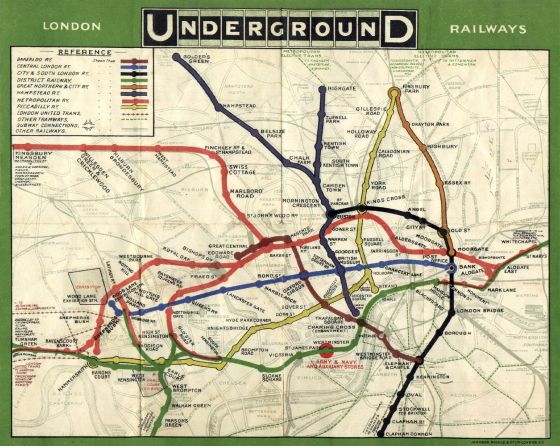
London Underground map, 1908 © London Transport Museum
In the 1908 version, every station was spaced to geographic scale, resulting in a cluster of dots around central London, with just a sprinkling near the city’s outskirts. Interchanges weren't clearly rendered, and every tube line was represented with a curve showing its true path, with above-ground streets and intersections imposed on top. For a bird with x-ray vision, it would have been a remarkably faithful representation. For commuters, it could be downright confusing.
That would change in 1931, when Beck began work on his prototype design. It's not clear what inspired him to undertake the project; according to Renton, he wasn't explicitly commissioned, but likely developed his design in his free time, while between jobs.
"It was more a demonstration of his ingenuity, in seeing a problem and coming up with a solution to it, rather than a response to public demand," she says. By then, Beck had already spent six years working as an engineering draftsman for the London Underground Signals Office — an experience that may have influenced the clean, mechanical aesthetic of his map.
Legibility versus geography
Beck began by replacing the map's existing sinuous curves with straight lines — horizontals, verticals, and 45-degree angles. He also skewed its scale, placing the stations at equal distances from one another, and removed the above ground street grid. The result was a sparse, circuit board-like design that eschewed geographic accuracy for legibility.
Ken Garland, an English graphic designer and Beck biographer, says the map's most innovative feature was its "convex lens" that disproportionately enlarged the area around central London. In an e-mail interview with The Verge, Garland said this approach "was absolutely appropriate" given the high density of tube stations within the region, and that it offered a more elegant way for commuters to make sense of their fast-growing urban jungle.
This enlargement carried a more subliminal connotation, as well, insofar as it made London's outskirts seem close to the city’s commercial hub. "The suburbs were basically created by the expansion of the underground," Renton says. "By making them look closer to the center, and showing how easy it was to commute to the city, the map could have encouraged more people to move there."

Harry Beck's diagrammatic design, 1933 © London Transport Museum
Underground authorities weren't quite sold on the idea. Publicity officials initially scoffed at Beck’s proposal, fearing that the map would be too radical a departure, but eventually agreed to print it in pocket form in January 1933. It was published in poster format by March of that year, and before long, became the new standard across all of London. It also inspired similar designs in other parts of the world, most immediately in Sydney, which adopted its own Beck-like transit map in 1939.
For his original design, Beck is said to have received five guineas — about £5.25, or roughly $8. He continued to work with the Underground for the ensuing two decades, refining his map as new lines were added, but left the department in 1959 under rather ignominious circumstances.
Beck's Underground career ended in turmoil
"No one at London Transport ever said exactly why they dispensed with Beck’s skills," Garland recalls, noting that he and Harold F. Hutchison, the publicity officer at the time, reportedly clashed over their dueling visions. Beck left upon learning that his map would be replaced with Hutchison's — a design that sought to adapt Beck's aesthetic to a more geographically accurate layout — and committed himself to teaching typography full time at the London College of Printing.
"I think Beck was upset because he felt that his design had been misappropriated," Renton says. "And because he hadn't even been consulted. It was a sad end, I suppose, to his time with the Underground."
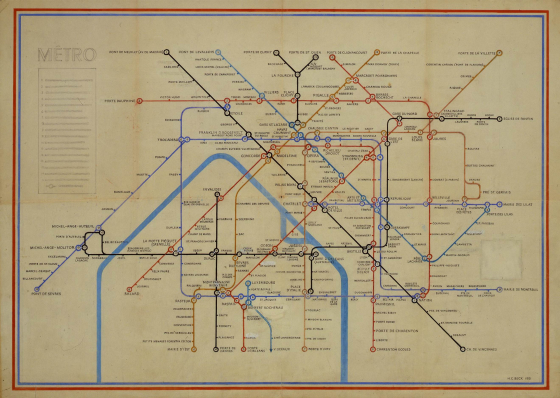
Beck's proposal for the Paris Métro, 1951 © London Transport Museum
Beck continued to submit daring new proposals until his death in 1974 — including an especially prescient prototype for the Paris Métro (above), and a design that combined London’s above ground and underground transit systems — though none were realized in his lifetime.
And even though the Underground has since expanded into the sprawling leviathan it is today, its map remains firmly tethered to the design principles Beck introduced 80 years ago.
"The concept is still clearly his," Renton says. "And I think it should be rightly credited to him."
- Image Credit Wikimedia Commons
- Related Items design uk london history subway map england transportation engineering mass transit london underground harry beck london tube ken garland

Scientists develop bacteria that needs caffeine to survive and reproduce
firehosetl;dr: it's me
Scientists at the University of Texas and the University of Iowa have created a synthetic bacteria that grows thanks to one of humankind's favorite stimulants — caffeine. According to a report from Quartz, this bacteria can be added to any caffeinated beverage and it'll grow according to the levels of caffeine in the drink. Eventually, you'll end up with an entirely decaffeinated beverage and you can use the level of growth to determine how much caffeine was there in the first place. The scientists behind this experiment were able to use the bacteria to determine the caffeine content of Red Bull and Monster energy drinks as well as a Starbucks espresso and a Diet Coke — the results all fell within the range reported by the manufacturers.
The bacteria itself is a modification of a naturally occuring bacteria that eats caffeine and was discovered in 2011 by University of Iowa researchers. The thought was to use the bacteria as a tool to help clean up the caffeine pollution that has been on the rise in recent years, but the original bacteria wasn't as reliable a cleaner as originally hoped. However, the modifications made have stirred hopes that it'll be a useful environmental clean-up tool. It's not clear yet when the bacteria will start being used, but Quartz says the team is in the process of filing patents for its breakthrough.
- Source QuartzACS Publications
- Image Credit puuikibeach (Flickr)
- Related Items caffeine bacteria synthetic bacteria growth caffeine pollution
Password denied: when will Apple get serious about security?
firehose"Apple declined to answer whether iCloud security had ever been audited by a third party. Apple won’t disclose whether any part of its cloud security is even audited internally apart from that governing its customer service group. Pressed on these questions, an Apple representative sent links to its public security FAQs, which doesn’t address them."
What do other cloud companies do?
All this is good. It compares favorably with other consumer-grade data storage solutions, like Dropbox. But even Dropbox, when it’s had big data breaches, has brought in third parties to review its security. Meanwhile, Apple’s lack of transparency, its unwillingness to open itself up to outsiders or even its own developers and customers, which has served it so well developing new consumer electronics, works against it when it comes to securing the cloud.
When Ars Technica investigated security issues in iCloud last year, it found that "your data is at least as safe as it is when stored on any remote server, if not more so," but that its weaknesses lay in Apple's lack of disclosure of its security processes (even Ars' assessment depends on a fair amount of guesswork), its prioritization of ease-of-use over full security, and its retention of encryption keys to iCloud data on its own servers. Apple's defense has traditionally been that its security processes are "industry-standard." But in the still-young consumer cloud, Apple is one of the leading companies helping to define that standard.
"The reality is that the Apple way values usability over all else, including security," Echoworx's Robby Gulri told Ars. "If you can see it in a browser, they can see it on the server." This means customer data can be made accessible to Apple employees or law enforcement. Gulri, who owns an iPhone and iPad and uses iCloud, recommends that Apple users only make data available to iCloud that they would be comfortable with either of those two groups potentially seeing, like music or photos. He also recommends that Apple, like all cloud providers, have its encryption chains and security processes regularly audited and verified by a trusted third party.
"If you look at companies like Amazon, which is recognized as a cloud provider, and Microsoft, you see that they have very big security teams, they have processes in place," says Green. "Nobody ever talks about what Apple's security process is, and that's partly because Apple is a secretive company and they keep to themselves, but seeing things like [Friday’s hack] makes you wonder if it's because they haven't fully developed their security strategy."
"Apple is a secretive company and they keep to themselves, but… this makes you wonder if it's because they haven't fully developed their security strategy."Both Amazon and Microsoft have detailed, extensive, public privacy and security policies for their cloud services. Both companies have every point in their systems audited by independent third parties. They have multiple certifications, which are used both within industry to establish reliability and verify that the services satisfy laws governing things like private medical information or use by government services. They permit their customers to deploy their own penetration testing. They’re members of the Cloud Security Alliance, a nonprofit that establishes industry best practices for data security. The CSA also includes Google, Box, HP, Rackspace, VMWare, Intel, Adobe, Oracle, and nearly every other company with a significant presence in cloud computing and storage.
Apple’s not part of the CSA. In fact, Apple does none of these things. It doesn’t have or advertise any of the external certifications available for IT security. And Apple won’t disclose how its security audits are conducted, or by whom.
Reached by The Verge, Apple declined to answer whether iCloud security had ever been audited by a third party. Apple won’t disclose whether any part of its cloud security is even audited internally apart from that governing its customer service group. Pressed on these questions, an Apple representative sent links to its public security FAQs, which doesn’t address them.
Just Landed, An iOS App to Simplify Picking People Up at the Airport
firehosennh

Just Landed is an app for iOS that tells you when to go to the airport to pick up a friend or family member. The app tracks inbound flights and traffic conditions, notifies you about flight delays, and can even be configured to automatically text the person you’re picking up when you arrive at the airport. It’s currently available for download in the iTunes App Store.