Shared posts

24 May 19:19

7 Days To Die Looks Virally Impressive

by Jim Rossignol
firehose

basically L4D3

By Jim Rossignol on May 24th, 2013 at 7:00 pm.


Minecraft with zombies is, well, Minecraft, but it’s also pretty much what 7 Days To Die could be described as. It’s a take on the zombie survival theme that also attempts to deliver a world that is as malleable as Minecraft’s blocky elysium. You can dig, destroy, build, barricade, and all that good stuff, as well as doing the shotgun business against the hideous undead. It’s Minecraft and DayZ being entwined after some horrible accident in the laboratory of zombie genre-blending. The developers sum it up, as so many games seem to have been summed up lately, by saying: “is an open world, voxel-based, sandbox game blending the best elements of FPS, Survival Horror, RPG and Tower Defense style games.”

Don’t take my baseless hum of cynicism as a reason not to take a look at the trailer, however, because 7 Days To Die looks genuinely impressive, and I can’t see this not making a huge impact when it arrives.

The Fun Pimps, eh? That should be a PR agency. They’re quoting alpha in July.

24 May 19:18

Seasonal faults lines, Google Maps


Daniel Schwarz: Juxtapose


Daniel Schwarz: Juxtapose


Daniel Schwarz: Juxtapose


Daniel Schwarz: Juxtapose

Seasonal faults lines, Google Maps

24 May 19:17

Greens are blue about Brown raiding their gold to keep California in the black

by Todd Woody
firehose

shared for the hed

Is there still some green behind Brown?

“Governor Moonbeam” has definitely left the building.

Jerry Brown’s spacey-techno New Age musings during his first stint as California governor in the 1970s earned him that enduring sobriquet. Brown, who dated singer Linda Ronstadt and refused to live in the governor’s mansion, pushed then-exotic technologies like solar energy, and proposed that the state launch its own satellite.

Now, in his third term as governor, Brown is showing himself to be a born-again pragmatist, at least when it comes to environmental politics.

Yesterday in Silicon Valley, Brown joined 500 scientists calling for action on climate change. “This is not just about science, this is about activism,” said Brown. “This is an important challenge, cause and undertaking. We can do it, but we have to do a lot more than we’re doing now.”

His speech rekindled the anger of environmentalists over Brown’s latest state budget, announced earlier this month, which proposes to raid $500 million in revenues from California’s new carbon market. That money, earned from the auction of pollution allowances to industrial companies, is supposed to be used to promote renewable energy, energy efficiency and other programs to cut California’s carbon emissions, as well as help poorer neighborhoods cope with pollution.

Brown, however, wants to borrow the money to help plug a $1.8 billion hole in the state’s budget. He claims programs to deploy the cash for its intended purpose aren’t ready to go; environmentalists say there are existing projects it can be spent on. To Brown’s opponents, these look suspiciously like the type of budget shenanigans he pledged to end when he was elected in 2010.

With the US’s chances of enacting a national carbon market nil after Congress failed to pass such a scheme in 2010, and with the European cap-and-trade system in disarray, environmental and business interests are closely watching the California experiment, which was launched in November. So far, it has gone smoothly. On Jan. 1, 2014, the state will link its carbon market to Quebec’s, allowing carbon credits bought in one to offset emissions in the other. On May 3, California held its third auction for credits (pdf), raising $284 million.

But proponents of the scheme fear that after successfully vanquishing business opposition to California’s carbon market, Brown will endanger its success in an internecine battle with his erstwhile allies in the environmental movement. “The governor is playing a dangerous game that could wreck California’s push toward clean energy,” Ryan Young, an attorney for the Greenlining Institute, a California advocacy group, in a statement.


24 May 19:13

AT&T prepaid users can now get LTE, if they have the right phone

by Nathan Olivarez-Giles

As of today, AT&T's pre-paid GoPhone customers now have access to the company's burgeoning LTE network. Previously, prepaid users could only connect to the carrier's older 3G and Edge networks — not a major stumbling block for most, since the company sells no LTE ready pre-paid phones. But it did stink for those who were hoping to get LTE-capable devices, such as an iPhone 5 or HTC One, running on AT&T's contract-free service.


Eventually, AT&T will offer prepaid LTE phones, but for now that's not the case, the company said in a statement. Customer's with capable phones to the company's service will start running on LTE and HSPA+ on June 12, after receiving an over the air update. Anyone who calls customer service before then can get earlier access, according to Engadget. Only those who buy monthly service, which ranges from $25 to $65 per month, will be able to connect to LTE. Despite the addition of the faster network access, the prices here aren't going up. One good thing about AT&T's prepaid plans — there are no questionable mobility administrative fees to pay.

24 May 19:13

Venezuela’s grand plan to fix its toilet-paper shortage: $79 million and a warning to stop eating so much

by Roberto A. Ferdman
Nicolas Maduro

Venezuela’s lawmakers are rolling out plans to import toilet paper and allot a $79 million trade credit to help alleviate the country’s shortages on many basic goods.

Last week, commerce minister Alejandro Fleming promised he’d import 50 million rolls of toilet paper, but the recent overture comes in more than 10 million short, at 39 million rolls. Why exactly is unclear—the government neither addressed the discrepancy, nor has it been asked about it.

Still, the measure will help quell Venezuela’s short-term scarcity problems—besides toilet paper, milk, butter and coffee, among others—but still seems to lack long-term perspective. What happens a few months down the road when supplies diminish?

Many believe that the crux of Venezuela’s goods shortage lies in the government’s attempt to stem the country’s inflation, the highest in Latin America. ”Price controls, for example, act as a disincentive to local producers, forcing them to cut output. The resulting scarcity forces up inflation, defeating the entire purpose of price controls in the first place,” says the survey organization Consensus Economics.

Meanwhile, president Nicolas Maduro’s government places some blame for the toilet paper shortage on Venezuelans themselves.

Only a few hours after the government’s National Assembly voted for the trade credit, Maduro’s statistics office suggested an odd reason for all the shortages: “95% of people eat three or more meals a day,” president of the National Statistics Institute (INE) Elias Eljuri said while referencing a national survey.

The announcement couldn’t have been more poorly timed, or less insightful. The inability to stock supermarkets with basic staples can be blamed on poor market management, not Venezuelans’ eating habits, and much less their bathroom habits.


24 May 19:05

gyagu: anime people struggling to say “massachusetts”: the...


gyagu:

anime people struggling to say “massachusetts”: the photoset

24 May 18:31

Xbox One Used Game Policy Leaks: Publishers Get a Cut of Sale

by Soulskill
firehose

LOLOLOLOL

Chewbacon writes "Details about the used-game policy on Microsoft's newly-announced Xbox One console have been leaked. The policy explains how used-game retailers can survive Xbox One destroying the used-game market as we know it: they have to agree to Microsoft's terms and conditions to do so. In summary, the used game retailer can still buy the game from the consumer, but they must report the consumer relinquishing their license to play the game to a Microsoft database. They must also sell it at a market price (35£ in the UK), but the publisher will get a cut of the price. The article goes on to explain how Xbox One will phone home periodically to verify a player hasn't sold the game according to the aforementioned database." A big downside is that we're likely going to see the end of cheap, used games. A potential upside pointed out by Ben Kuchera at the Penny Arcade Report is that this would unquestionably boost revenue for game publishers, giving the smart ones an opportunity to step away from the $60 business model and adopt pricing practices seen on Steam and iTunes (neither of which allow the purchase of "used" games/media). Also, it's worth noting that even if the policy leak is 100% correct, it could change before the console actually launches.

Share on Google+

Read more of this story at Slashdot.


24 May 18:08

Doggy Prefers the Creature Comforts

24 May 17:46

Your Services Aren't Really Required Here Today

Your Services Aren't Really Required Here Today

Submitted by: Unknown (via vivianandhersocalledlife)

Tagged: Music , sheet music , rests , funny , g rated
24 May 16:45

Bound in human skin

by houghtonmodern
firehose

"an individual might request to be memorialized for family or lovers in the form of a book"
I KNOW HOW I WANNA GO

rachel shared this story from Houghton Library Blog.

Houghton Library contains countless curiosities. Perhaps the most disturbing example is Arsène Houssaye’s Des destinees de l’ame (WKR 8.1.1), bound in human skin.

In the mid-1880s, Houssaye (1815-1896) presented his recent book, a meditation on the soul and life after death, to his friend Dr. Ludovic Bouland (1839-1932), a noted medical doctor and prominent bibliophile. Bouland bound the book with skin from the unclaimed body of a female mental patient who had died of a stroke.

Inserted in the volume is an autograph manuscript note written by Bouland:


“Ce livre est relié en peau humaine parcheminée, c’est pour lui laisser tout son cachet qu’a dessein on n’y a point appliqué d’ornement. En le regardant attentivement on distingue facilement les pores de la peau. Un livre sur l’Ame humaine méritait bien qu’on lui donnait un vetement humain: aussi lui avais je réservé depuis longtemps ce morceau de peau humaine pris sur le dor d’une femme. Il est curieux de voir les aspects différents que prend cette peau selon le mode de préparation au quel elle est soumise. La comparer par exemple avec le petit volume que j’ai dans ma bibliothèque, Sever. Pinaeus de Virginitatis notis qui lui aussi est relié en peau humaine mais tannée au sumac.”

“This book is bound in human skin parchment on which no ornament has been stamped to preserve its elegance. By looking carefully you easily distinguish the pores of the skin. A book about the human soul deserved to have a human covering: I had kept this piece of human skin taken from the back of a woman. It is interesting to see the different aspects that change this skin according to the method of preparation to which it is subjected. Compare for example with the small volume I have in my library, Sever. Pinaeus de Virginitatis notis which is also bound in human skin but tanned with sumac.”

The other volume to which Bouland refers, Séverin Pineau’s De integritatis & corruptionis virginum notis (Amsterdam, 1663), bound by distinguished Paris binder Marcellin Lortic, is now in the collection of the Wellcome Library.

Des destinees de l’ame was deposited at Houghton in 1934 by book collector John B. Stetson, Jr., and given to the library by Stetson’s widow in 1954.

While books bound in human skin are now objects of fascination and revulsion, the practice was once somewhat common. Termed anthropodermic bibliopegy, the binding of books in human skin has occurred at least since the 16th century. The confessions of criminals were occasionally bound in the skin of the convicted, or an individual might request to be memorialized for family or lovers in the form of a book.

Although this is the only known example of an anthropodermic book in Houghton’s collection, Harvard libraries hold two others: Practicarvm qvaestionvm circa leges regias Hispaniæ primæ partis nouæ collectionis regiæ (Madrid, 1605-1606) is in the collections of the Harvard Law School Library Historical & Special Collections, and the Countway Library’s Center for the History of Medicine holds a French translation of Ovid’s Metamorphoses (Lyon, 1597) which may also have an anthropodermic binding.

[Thanks to Heather Cole, Assistant Curator of Modern Books & Manuscripts, for contributing this post]

24 May 16:35

McDonald's CEO Responds to 9-Year-Old Girl Who Claims Kids Are Being Tricked

by gguillotte
Hannah Robertson, 9, flew in with her mom from Kelowna, British Columbia, to attend McDonald's annual shareholder meeting Thursday in Oak Brook, Ill., the company's headquarters. "Something that I don't think is fair is when big companies try to trick kids into eating food that isn't good for them by using toys and cartoon characters," Robertson read during the question and answer part of the meeting. "If parents haven't taught their kids about healthy eating then the kids probably believe that junk food is good for them because it might taste good." Her mother, Kia, attended the meeting as a member of advocacy group Corporate Accountability International, headquartered in Boston and with offices around the world. Kia Robertson, 36, started "Today I Ate a Rainbow" in 2009, described as an "interactive nutritional game," and is a nutrition blogger.
24 May 16:35

All that needs to be said about the Samsung Husband ad

by gguillotte
firehose

lol

wrote one critic in a Reddit “Men’s Rights” page thread
24 May 16:35

Brown hounded for calling Manila 'gates of hell'

by gguillotte
MANILA, Philippines (AP) — Dan Brown's description of Manila as "the gates of hell" in the American novelist's latest book has not gone down well with officials in the Philippine capital.
24 May 16:35

5 free things in Portland, from parks to markets Read more here: http://www.kansascity.com/2013/05/24/4249956/5-free-things-in-portland-from.html

by gguillotte
firehose

meanwhile, in Portland
(pinboard, figure your shit out wrt line breaks)

Associated Press sums PDX up in five points: Powell’s City of Books Forest Park Farmers markets Old West architecture Stuff other people used to own
24 May 16:27

Kame Camera, An App That Enhances Popular Japanese Photo Memes With Cartoon Energy Blasts

by Kimber Streams

Kame Camera

Kame Camera is an app created by Nagisa that enhances popular Japanese photo memes — like fake Dragon Ball energy attacks, Vadering, and Quidditch games — by adding cartoon energy blasts, force lightning, and other cute effects. The app is currently available to download from Google Play and the iTunes App Store.

Kame Camera

Kame Camera

Kame Camera

images via Kame Camera

submitted via Laughing Squid Tips

24 May 16:26

Big Gas Savings, A Funny Ad For Kmart’s New Discount Gas Service

by Rusty Blazenhoff

Similar to their funny “Ship My Pants” ad campaign, Kmart has now launched an ad for “Big Gas Savings,” a discounted service so their members can save 30¢ per gallon on gas after spending $50 or more. The ad was created by DRAFTFCB.

via Hypervocal

24 May 16:20

Video Game Rumors So Bad You Want Them To Be True

by Evan Narcisse
firehose

"Some ex-Free Radical guys are combining Dark Souls with Zelda. The twist? It's a retro 8-bit demake"
actually plausible

Video Game Rumors So Bad You Want Them To Be True

“Infinity Ward are combining Zelda with Professor Layton. The twist? It's going to feature Bayonetta as an unlockable character.” “Sega are combining Forza with Minesweeper. The twist? It's being written by JJ Abrams.” Ok, I’d play those. And you? You’d want such things to exist, wouldn’t you? If only to see how bad they might be? Yeah, you would.

It’s pretty much always true that the craziest rumors are the most tantalizing. And that’s why it’s so great that a bunch of people—namely Sean Bell of Midnight Resistance, Matthew Castle and Chris Spann—recently teamed up to make the Game Rumor Generator. Game Rumor Generator trawls the collective subconscious of the game enthusiast hivemind and seems to pull out the most awesome and/or nightmare-inducing scenarios. Like this one: “Infinity Ward are combining Starfox with Journey. The twist? It's only available after 4am in France.” The very basis for the tool taps into the impulse that drives modders to do their own legally impossible crossovers.

Go get some totally baseless rumors of your own at Midnight Resistance and share them below. And, everyone, we know that the next step is to have a game jam around these fake enterprises, right? Someone make that happen.

GAME RUMOUR GENERATOR [Midnight Resistance]

(image via GTA 4 Mario Theft Auto on YouTube)

To contact the author of this post, write to evan@kotaku.com or find him on Twitter @EvNarc

24 May 16:16

Just making things and being alive about it: The queer games scene

by Brendan Keogh
firehose

Polygon interviews Merrit, Porpentine, Anna Anthropy, Mattie Brice

Porpentine insists it is the culture that has to change. "The technology for people to simply make games is there. It's just that no one values it. They're all, 'Oh, photorealism, let's piss more money into that big ass fucking trash bloodbucket.'" The solution? "It's just not having any definitions. Just not even neutralizing our time, energy on debating semantics. I would rather just put my head down and make games. Weighing in strategically, but definitely just spend more time gushing, just making things."

By Brendan Keogh on May 24, 2013 at 10:59a

How a growning group of independent developers is using video games to share the reality of their lives.

Lim is a simple game. It only takes a few minutes to play. You navigate a square through a minimal world. You have not been told what to do, so you just move through the maze. When you are alone in the corridors, you flash with all the colors of the rainbow. But before long, you start to encounter squares of different colors. They don't like you. They ram you. They make progress near impossible. The screen shakes; the white noise is violently nauseating. Your only hope is to hold down Z to "blend in." You turn brown near the brown squares; you turn blue near the blue squares.

But it is an imperfect solution. As you try to blend in, your movement is dramatically slowed, and the camera begins to zoom in. Keep blending and the entire game starts to shake and bang. It's just like when you were being attacked by the other squares, except now the violence is coming from within you. Trying to blend in is just as exhausting, just as draining, as being excluded. Sometimes there are blue and brown squares in the same room, so no matter what you do, someone is going to attack you. But you try to blend in anyway. You continue to attack yourself even as you are attacked by others.

You should, eventually, be able to reach the maze's end. But life doesn't always go as planned. Sometimes the other squares block you in a narrow corridor, making progress impossible. Sometimes their aggression is so violent that they push you right through the walls of the maze, trapping you on the outside. The bittersweet irony is that here, on the outside, you are free to be yourself. No longer a brown or a blue square, you flash with all the colors of the rainbow. Excluded, you can be yourself.

Lim is the work of Merritt Kopas, a queer woman who, among other talents, is a game designer, writer and photographer. Kopas spent two months creating Lim in the program Construct 2. "It was my second game," she explains. "But my first game was much smaller. Lim was the first big thing I really put a lot into."

Kopas doesn't have a professional background in game design. A graduate with a Master of Arts in sociology from the University in Washington, she has long dabbled with whatever tools were available to her growing up, but she only started making games seriously last summer. Yet, despite a lack of experience or programming knowhow, Kopas was able to craft a deeply powerful and evocative video game in Lim, one that has been recognized by critics at Rock Paper Shotgun, 1UP and even The Guardian.

"I was sort of hoping a few people would see it and it would speak to them in some way," she explains. "But I didn't expect the circulation it got. That blew me away."

The bittersweet irony is that here, on the outside, you are free to be yourself.

While Lim might lack advanced visuals or perfect programming, it is carried far by Kopas' motivation to convey something that is personal and meaningful to her. "The summer that I made Lim was also the first summer that I was moving through the world as a queer woman," she explains. "There was really just a lot on my mind about perception and how public space is experienced, and I wanted to translate that into an experience that other people could get."

Lim and Kopas are exemplary of what is gradually emerging as a vibrant scene of queer game developers — a varied community of DIY creators who are making their own space to craft innovative and unique video games on the periphery of both indie communities and the mainstream industry. It is a movement of creators that prioritize the personal over the perfect. It is a movement that is beginning to turn heads and challenge the mainstream industry to reconsider just what a video game can be.

Yet, just like the rainbow square pushed through Lim's wall, these creators and their games are still often trapped on the outside. Despite being beautiful works, their games are often dismissed as being too short, too simple, too straightforward or simply not even games at all. But something is starting to change. Although they lack the access to funding channels and technological knowhow that have long been presumed to be prerequisites for game design, these queer developers — as different from each other as they are similar — are becoming impossible to ignore as they create video games that are unlike anything players have ever seen before, video games that are capturing the attention of an ever broadening audience.

Human Angle: Queer Games

HUman Angle: Queer Games

The rise of a queer games scene

The rise of a queer games scene

"Queer people have always been creating culture from the margins," insists Anna Anthropy, game developer and author. "Like, queer people popularized jeans. It was queer soldiers who started wearing jeans outside of the military, and then that became popular. You have to have an outsider perspective to create something that is meaningful, fashionable, intelligent. Then that is gradually adopted by the mainstream."

Indeed, video games themselves emerged from such an outsider perspective. When MIT students in the early '60s repurposed the PDP-1 supercomputer to run Spacewar!, they were exploring uses for computers that their seasoned professors never even considered. However, in the decades since their birth, video games have struggled to represent experiences and identities beyond that historical core of computer-savvy, student-aged males. As Anthropy succinctly writes in her book Rise of the Videogame Zinesters: "Games are designed by a small, male-dominated culture and marketed to a small, male-dominated culture, which, in turn, produces the next small, male-dominated generation of game designers."

But even as the mainstream industry might still be dominated by a single demographic, there is a huge diversity of people on the outside, on the margins, that have been creating their own video games for years, beyond the focus of mainstream gaming culture.

Anthropy is perhaps the most well-known of these alternative voices. Her numerous critically acclaimed games — such as Mighty Jill Off, Calamity Annie, Lesbian Spider Queens of Mars and, more recently, the autobiographical Dys4ia — often repurpose traditional game mechanics in unique and provocative ways. "I'm really good at luring gamer nerds in, then surprising them with a discussion about gender," she says with a sly smile. "I think making things that look like video games and play like video games and are very 'video gamey' video games is a really good way to trick people into becoming more enlightened, educated human beings."

Four

"I'm really good at luring gamer nerds in, then surprising them with a discussion about gender," Anthropy says.

But for Anthropy, having games tackle a broader spectrum of themes is just an inevitable outcome of having a more diverse community of game creators: "I'm not sure if all my games are about being queer, but my queer identity is always visible in them. I think representation is important ... making people aware that queerness exists and representing queerness in games. And also reaching out to other queer people who otherwise feel very alienated in games."

The exception to the rule, Anthropy has received regular media attention since at least 2008, when she released Mighty Jill Off. But that attention often feels tokenistic, like people are more interested in her as a novelty than a person. "There have always been queer developers," she stresses. "But, I dunno, I felt for a long time like a voice shouting in the wilderness. To a large extent, none of the other outsiders who were making games have gotten the level of press, the level of media saturation that I have."

Over the last 18 months, something has started to change. Numerous queer developers have started to coalesce into what people — both from within and from outside the community — are starting to notice as something of a scene, as a movement. Even as each creator's work remains emphatically individualistic, a still-forming network of support and allegiance can be traced, amplifying each creator's own, unique voice. Known voices like Anthropy's are being seen in a new light, while countless others are being heard for the first time.


A growing chorus of voices

A growing chorus of voices

"Video games are different from what they were a year ago," Anthropy says. "It feels a lot less like the focus is exclusively on me now. It feels like the amazing stuff my friends are doing is starting to be recognized by people. There's this discussion that is happening about queer games, of this kind of personal game. There's a discussion now, whereas before it was just me being a novelty."

Game critic, academic and developer Mattie Brice agrees: "I would say that queer games have always been happening, but not [necessarily] in a community. It has definitely coalesced. It has definitely come to one place. While these people were always doing things on their own, there is now this good intersection of people getting together and actually maybe having something like a path. ... As an identity, as a movement, that is definitely a new thing within the last year-and-a-half or so."

Liz Ryerson is a musician, game developer and writer who composed the music for Anthropy's Dys4ia and, more recently, Triad. She highlights the needs for queer — and in particular transgender — people to create their own space in video games: "A lot of trans women grow up with games being socially acceptable, because they're raised as male. Then when they transition, they have to confront the fact that they are not part of this 'gamer' culture anymore. There's no space for them there, so now we have to create that space."

People who are cut off from traditional game design can still make something.

But why now? Despite Anthropy's reluctance to be seen as any kind of leader of the queer games scene, it is hard to overstate her significance as a banner for new creators to rally under, both as a public figure in the gaming press and as the author of her book. Released in 2012, Rise of the Videogame Zinesters is a manifesto, a call to arms for people (not just queer people) to create small, imperfect games in order to express themselves. It counters the normative idea that you must learn to program code before you make games, that you need access to expensive tools, that a good game must be technologically advanced. It urges people to take advantage of cheap and accessible tools like GameMaker and RPG Maker, or interactive fiction editor Twine, to "sketch" video games, to create and distribute video games like someone might write and distribute a zine.

In doing so, it encourages a far more diverse group of people to create games than ever before, and it prepares an audience to start taking those games seriously. People who are cut off from traditional game design, people who can't afford restrictively expensive software or educations, can still make something. It creates a level playing field with the inevitable repercussion that we will begin to see games being made by people who have never before made games — and the games they make will be unlike any game we've before seen.

It's a significant step in the maturing of video games as a medium, a step that has historical precedents in other mediums. "As photography became more accessible it became usable for a broader range of purposes, and I think that is starting to happen in games," says Kopas. "My hope is that the lasting legacy of the queer game scene will be breaking down that barrier of, 'This needs to be a crucial part of your identity. You need to be a game developer to make games.' I mean, people don't need to be photographers to take photos."

Three

Mattie Brice made the game Mainichi, about her day-to-day life being queer.

Kopas notes, however, that the catalyst has not been Anthropy's book alone, but also the growing ubiquity of social media — especially Twitter. More people are gaining the confidence to make something, and they can more easily connect with others to share these games than ever before. "It is sort of this snowballing process," says Kopas. "Whenever someone who is on the fence of, 'Can I make a game?' sees something like that [it] builds this confidence that, yeah, that is something I can do."

For Brice, Videogame Zinesters hasn't formed the community of queer game developers so much as it has helped to expose the work of that community to others. "I would say that Anna's book has really showed what is [already] being done. That you can [make games] too. It opens up the doors to a larger audience, to people who didn't know they could make games. ... It has definitely helped [queer games] to go from being insular to something that can be proliferated out of just this little island."

Another queer developer making tracks over the past year is Porpentine, who has emerged as a leading voice of the Twine gaming scene. From general obscurity in the interactive fiction scene, Porpentine has now spoken on stage at the Game Developer's Conference, and curates the website Free Indie Games alongside indie developer Terry Cavanagh. Porpentine, too, holds Anthropy largely responsible for her interest in using games to express herself: "I was always interested in games, but I think meeting Anna really helped define that. [She helped me realize that] games can be sexy, and games [can] be by women, and queer women especially. Sometimes all you need is to see that somebody else is doing it to do it."

Unsurprisingly, Anthropy is modest about the significance of her role in the scene's emergence and recent momentum. "I prefer to just think of myself as another voice. So what has been really gratifying for me has been feeling sort of irrelevant!" she says with a laugh. "Like, I'm not so special anymore. I like that a lot. I compare it a lot to waking up one morning and realizing that your kid has gotten smarter than you. It's a really amazing feeling, to have that burden off my shoulders alone."

Systems of oppression

Systems of oppression

Mainichi is the Japanese word for "everyday." It is also the title of Brice's autobiographical game about her day-to-day life living as a queer, multiracial woman. Made in RPG Maker VX over the course of a week, it puts the player in the role of a small, 16-bit Mattie Brice as she wakes up and prepares to meet a friend at a nearby cafe. Between your house and the cafe, you must walk Brice down the street. A seemingly effortless task becomes peppered with interruptions as you have to deal with people staring at you, people catcalling you, people misgendering you. The clunky, stop-start pacing of the Japanese role-playing game genre is used to show just how much effort it takes Brice to move through her daily life.

The game loops endlessly like a Groundhog Day JRPG. You can make a variety of choices throughout the game, such as whether or not to spend time putting on makeup or playing video games before you leave the house. At the cafe, you can choose whether you want to pay with cash or by credit card. Eventually, you learn how to avoid different scenarios. Maybe you cross and walk on the far side of the road just to avoid the woman that stares at you every day. At the cafe, maybe you pay with cash instead of credit so the cashier isn't confused by the male name on your card. Ultimately, you have to change the way you live your life just to avoid harassment.

"I wanted her to understand something about my life that I couldn't communicate with words."

At the end of each day, once you finally sit down with your friend at the cafe, she complains that you always look so sad. "Don't worry about what other people think of you!" she suggests unhelpfully. "You have your friends and that's all that matters!"

Brice made Mainichi for a real-life friend, to explain to her what she has to deal with in her day-to-day life and why it wasn't helpful to tell her to just ignore people. "I wanted her to understand something about my life that I couldn't communicate with words," Brice explains. "It was about communicating certain things through a system to my friend."

Much like Lim, Mainichi is able to convey an experience to the player that words could never do justice. Through its systems, it is able to communicate to a player how socially marginalized people are often forced to alter their identity just to do something as seemingly simple as walk down a street. "I think games and play are inherently about systems," says Brice. "I don't think that games are exceptional in that they are the only interactive art, but I think they stress our interaction with systems."

While most video games traditionally have the player attempt to beat or "game" its systems, systems are also particularly powerful in communicating how real-world systems function. It's something that has been mobilized by a range of personalized games over the last year to evoke empathetic reactions in players, to give players the chance to walk in someone else's shoes. For instance, Richard Hofmeier's multi-award winning Cart Life explores the socioeconomic struggles of street vendors, while Zoë Quinn's Depression Quest demonstrates the poisonous apathy and downward spiral that is living with depression. Both of these games allow the player to experience what such scenarios are like by having them engage with systems. "Games are very aptly suited to being sensory filter plugins for the brain," explains Porpentine. "You plug this in and you will have an imperfect but useful understanding of what it is like to have certain constraints."

Seven

In Lim, your are only yourself when you are alone.

This highlights a common trend in personal games generally and queer games in particular: they are frequently less concerned with being beaten or mastered, and more concerned with being participated with in order to communicate an idea. It's a way to use games that many mainstream developers rarely consider — a way that they rarely have to consider: "Most people who are making games are completely entrenched in game culture," argues Anthropy. "They only consume games and only experience games and have this way more tenuous connection to all the other art that exists in the sphere of human culture."

For Ryerson, it is her experiences as a queer woman that have ensured her view of games is less insular: "Let's say I never had to 'accept' that I'm a trans person and therefore never became exposed to this incredible dissonance between what is actually happening in gamer culture and what my identity is. If I didn't have to confront that and try to extract something meaningful from that experience ... I would probably just be really into BioShock or whatever."

Brice feels more indebted to her academic background for her critical approach to systems, but the experiences she communicates through Mainichi are still heavily influenced by her real-world experiences as a queer woman. "I always feel like a part of me is other people's constructions of me," Brice explains. "Someone else will make up my identity for me unless I take control of that through my appearance. I think that a lot of other people don't realize that we are all constructing each other's identities in various ways, but it is so much more explicit for me."

The marginalized and dissonant position that many queer developers hold makes them particularly well-adapted to critique and understanding the social systems of the real world, and able to depict those systems through game design. "We see the system," says Porpentine. "While, for a lot of other people, that system is just invisible."

"We are forced to encounter oppressive systems in our daily lives," agrees Kopas. "So it seems to me that, now that Twine and accessible tools are becoming available, people are making things that are really powerful and telling really compelling stories about their experiences, and the only reason that that hasn't happened before is that those same groups that have those experiences are the ones that are kept out of accessing programming and such skills."

Exclusive look at the next episode of Human Angle, only for IE 10 users.

The Twine revolution

The Twine revolution

Of all the accessible and free game design tools that are helping to enable queer and other marginalized developers, none have been picked up quite so readily as Twine. "It is exactly the kind of thing I envisioned in [Rise of the Videogame Zinesters], that I was hoping and waiting for," says Anthropy. "The way that people have adopted Twine and have made it a platform for queer games really amazes me." Twine was never meant to be used for video games. Interactive fiction writer Chris Klimas created it in 2009 as a tool for writers of hypertext fiction. While much interactive fiction uses a text parser to have the reader type in commands that the program recognizes and responds to, Twine allows the creation of hyperlinks for the reader to click through to different screens of text. Over the last year, however, Twine has been reappropriated by DIY game creators to create a new genre of video games that have come to be known as Twine games. Free and open-source, to create a Twine game, you just need to be able to write basic HTML and CSS. To play a Twine game, all you need is a web browser.

"Twine is really easy for spreading," says Porpentine. "You don't need a console. You don't need a high-end PC. You don't need to spend money. The browser is the lower common denominator thing, and that is what Twine is on."

Porpentine is at the forefront of an influx of Twine game creators in what is increasingly becoming known as the Twine Revolution. Although she has previously worked with both GameMaker and parser-based interactive fiction editors, it is with Twine that she feels like she came into her own. "I was able to make games even if I was really depressed or having other troubles in my life. ... It kind of drives home that having tools like this in place will let people like me who are super poor or suffering from other problems actually make games."

"You don't need a console. You don't need a high-end PC. You don't need to spend money. The browser is the lower common denominator thing, and that is what Twine is on."

Her games combine a cyberpunk/trash aesthetic of language with surreal fictions and a subversion of the very form of Twine itself. In her best known work, Howling Dogs, the player is trapped in some kind of asylum, living out memories or fantasies through a holodeck-like "activity room" in a complex layering of virtual realities. ALL I WANT IS FOR ALL MY FRIENDS TO BECOME INSANELY POWERFUL, meanwhile, leads the player down a rabbit hole of warping colors and morphing paragraphs to a tweet on fellow game developer J Chastain's Twitter feed. Perhaps most surreal of all is Cry$tal Warrior Ke$ha, which puts the player in charge of pop idol Ke$ha, trying to escape a sci-fi concert that has exploded in crystals and glitter, all while Ke$ha's song "Warrior" plays on a loop in the background.

Two

Porpentine creates her own Twine games posts tutorials to help others.

Porpentine's work demonstrates that there is far more to Twine games than simply clicking through paragraphs. "Twine lets you paint with words," she insists. "It lets you use them expressively; it lets you use them like music. A lot of my recent stuff is extremely minimal. A few sentences or words per page or whatever and you can just dance across the screen, or make real-time text games with real-time elements. It's ... sexier and colorful. It's more emotional. It's not just staring through a tiny peephole into a black-and-white text dump."

More than an artist in her own right, Porpentine, along with Anthropy, has been fundamental in supporting other people who want to create games in Twine. She posts tutorials on her website to explain how to achieve different visual aesthetics in Twine, and has been fundamental in helping to spread the word about the countless number of games that people have produced in recent months.

Besides its incredibly low barrier to entry, what has attracted so many people to Twine, Porpentine argues, is that it is perfectly suited to deal with interiority and introspection, as opposed to the external forces of violence and physical action of most games. Twine developers can create games that explore emotions, thoughts, opinions. "It is good for processing and articulating feelings that have never been expressed," says Erin Stephens-North, Porpentine's partner and Twine artist in her own right. "It allows you to find people who have common experiences and to carve out spaces for identities that haven't even been talked about at all."

"I have played Twine games that are talking about things that nobody else is talking about," says Porpentine. "There is so much stuff about life and bodies and humans, and I'm really excited that video games are a place where you can find that acknowledged, that video games are talking about that."

Living games for living people

Living games for living people

Dys4ia takes the player through Anthropy's own experience as a transgendered woman undergoing hormone replacement therapy. Through a series of WarioWare-esque minigames, the player moves through Anthropy's own insecurities, frustrations, anger and, finally, hope. It's an emotional and vulnerable narrative, greatly helped by Ryerson's harrowing soundtrack.

For Ryerson, Dys4ia is an important work because of what it is able to say to other queer people going through the same hurdles. "It lets people know that there is some precedent for them as a person. They are not a total freak. Someone else who is more visible is also dealing with this. I think that has encouraged a lot of people."

In a blog post written in July 2012, renowned game developer Raph Koster said of Dys4ia: "I like Anna Anthropy's work, but I also try to be clear-eyed about the fact that a lot of Dys4ia could be built in PowerPoint and isn't a game."

"The people who are refusing to call them games are clinging to the side of a sinking ship."

"Not a game" is an accusation that has befallen many a queer game, whether it is because they lack graphics like Twine games, because they are too short or linear like Lim or Dys4ia, because they are more concerned in communicating a message through a system than allowing it to be mastered like Mainichi or because they are simply of a much lower fidelity than what gamers, growing up playing blockbuster triple-A games, have become accustomed to. Many commentators, be they well-meaning or intentionally malicious, have worked to further exclude many of the creations of the queer games scene from mainstream video game culture by labeling them "notgames," "ungames" or "interactive art."

The creators spoken to for this article have mixed feelings on how much energy is worth sacrificing just to have mainstream games culture accept them. "I mean, the people who are refusing to call them games are clinging to the side of a sinking ship," says Anthropy, somewhat nonchalantly. "They are going to continue to call them not games and we'll continue making them, and we'll continue changing what video games are, and they'll continue drowning." But then: "It's worth acknowledging that they're wrong! People, even well-meaning, might think of Dys4ia more as a piece of interactive art and I'm like, 'No! It's a game!' I think it is more important that instead of inventing other categories for things to be marginalized into, we focus on expanding the definition of 'game' to fit all this new stuff."

"The whole conversation can be really exhausting," says Kopas. "When we call something a nongame, we are basically saying, 'We don't really need to talk about it.' And game critics then don't need to engage with them seriously, or other people in the scene don't need to engage with them seriously."

By being isolated from the mainstream game culture and industry, queer game developers are unable to access many of the support structures in place for creators of more traditional games. Explains Brice: "If that institution [the games industry] doesn't understand that games like ours are games, they won't throw funding at them. They won't accept them to industry events or awards. While I don't think those are necessarily good things, I do feel they open important conduits."

However, as part of the creative process of making games, Brice stresses that trying to make "a game" is not only unimportant, but potentially damaging: "I have spoken to game developers and educators who say it is good to have this foundation of telling a student what a game 'is,' but I think that is very harmful. The more specifically you define a game, the worse it is. I think in that sense, being a game is very unimportant to the creative process."

As a creator, Kopas is equally ambivalent about making sure that what she is making fits into a pre-determined notion of "game": "To be honest, I am much more interested in taking things that are characteristic of games, such as the ability to convey an experience, and sort of introduce that to other audiences, like people who think of games in very narrow ways because of how games are presented to culture."

Eight

San Francisco's growing queer games scene is focused more on communicating ideas than making traditional games.

And that is where the paradox facing queer games and their creators lies. On the one hand, by not forcing their creations into any pre-determined notion of what a game should be, creators are free to explore what a game could be. They are able to create experiences unlike any video games we have ever seen, because mainstream developers have never thought to do what this recent influx of alternative creators think to do. But, consequentially, their works are sidelined by a core audience of critics and players unsure how to approach such new creations.

"It is weird that these games are so far in the periphery [of mainstream game culture], right?" says Anthropy. "These are the games that are about the broader human experience. The bulk of video games, the ones that are the most visible, are the ones that are all about the same thing: violence and hero fantasies and shooting dudes in the face, which is such a small part of the human experience ... so it is really bizarre that there are all these games that are outliers that have so much to give, that allow people to connect to real human beings."

The creators spoken to for this article share a concern that an obsession with making "gamey games" has created an incestuous industry devoid of innovation. It's a concern shared by much of the mainstream games media, too, if the reaction to EA's recently announced Battlefield 4 is anything to go by. The most telling example is one that Brice shares, of how Mainichi was received by different university classes. The students of gender studies courses — consisting of people who don't regularly engage with games — were able to engage with the themes that Mainichi's systems were communicating. However, when it was shown to game design students, they couldn't get past its lack of traditional elements and, mostly, its poor graphics.

"I think it just shows this terrible, inbred nature we have," says Brice. "We are so over-familiar. We have this narrow, incestuous view. We are the British monarchy in the way we do games, and we definitely have some Henry VIIIs in our industry!"

Yet, while the mainstream industry hopes that a new generation of console hardware will reinvigorate innovation, Porpentine insists it is the culture that has to change. "The technology for people to simply make games is there. It's just that no one values it. They're all, 'Oh, photorealism, let's piss more money into that big ass fucking trash bloodbucket.'" The solution? "It's just not having any definitions. Just not even neutralizing our time, energy on debating semantics. I would rather just put my head down and make games. Weighing in strategically, but definitely just spend more time gushing, just making things."

"We are the British monarchy in the way we do games, and we definitely have some Henry VIIIs in our industry!"

"Just making things" is possibly the key to the ever-increasing proliferation and critical success that queer creators are experiencing. Just as the MIT professors of the early '60s could never conceive of using a supercomputer to program a game in the first place, the developers entrenched in the mainstream games industry struggle to think outside of the box they've always been inside. The creators of the queer games scene, however, are pushing and maturing the art of games in new directions by just making things and not caring how "gamey" those things are — and that is something anyone can do.

"There are plenty of non-queer game designers I hugely respect," stresses Porpentine. "I do refer to it as a queer gaming scene but, overall, I am interested in anyone who is making indie games who is alive about it."

And maybe that will be the legacy of the queer games scene: a realization that you don't have to think outside the box of "games" to create something new, but that "games" was never a box of dead wood in the first place. What the ever increasing number of creators of the queer games scene are showing the rest of us is that "games" is a living tree, and as more and more people start making games that are important to them, the branches of that tree will start to grow in all kinds of new and exciting directions. Babykayak

Editing: Russ Pitts, Matt Leone, Charlie Hall
Design: Warren Schultheis
Video: Jimmy Shelton, Tom Connors, Pat McGowan
Music: Robot Science

24 May 16:12

Nuclear plant workers film Star Trek spoof inside training simulator

by Rob Bricken
firehose

another one

The staff of the San Onofre Nuclear Generating Station (SONGS) seems to be in trouble after a Star Trek spoof made in 2010 in the plant's training simulator was leaked. "SONGS Trek," as it's called, doesn't seem to be work-related, but it also doesn't appear to have put the plant in any danger.

Read more...


24 May 16:06

Gmail for Android redesign with new navigation bar revealed in Google I/O slide

by Nathan Ingraham

It looks like Google has a redesigned version of Gmail coming up, if a slide shown off during a developer event at Google I/O last week is any indication. As spotted by Android Police, a slide during the "Structure in Android App Development" talk showed off Gmail for Android featuring the new left-side navigation drawer. Rather than using the current Gmail pull-down menu, a larger drawer can be pulled in from the left with the inbox, starred items, labels, and other typical Gmail groupings. It also seems the bottom "action bar" is being removed as well — check it out for yourself at 23 minutes in the video below. These are some fairly logical changes for Google, but anything that streamlines the app should be welcome by users. Of course, there's always a chance that this was just a mock-up created for the presentation — until the update arrives, we can't be sure these changes are the real deal.

Gmail_slide


24 May 16:06

Map of Port Royal and Kingston Harbor (1792)

by the59king

Map of Port Royal and Kingston Harbor (1792)

ICEWyubhGQXLsvrr_TTA draught of the harbours of Port Royal and Kingston in Jamaica Map of Port Royal and Kingston Harbor (1792) Date: 1792 Author: John Lodge Dwnld: Full Size (4.94mb) Source: Library of Congress Print Availability: See our Prints Page for more details pff This map isn't part of any series, but we have other maps of Jamaica that you might want to check out. Late-18th Century maps of the harbors...

the BIG Map Blog - Interesting maps, historical maps, BIG maps.

24 May 15:47

The Xbox One can talk to you, will feature remote play

by Brian Crecente
firehose

"Kinect used its facial recognition to scan a room full of people and note if there is someone in the room it doesn't recognize. It then tells the console owner that there is someone in the room it doesn't recognize and asks the new person to identify themselves. Once the person says their name, Kinect will welcome them and save their information to the console."
lol https://www.youtube.com/watch?v=EaPFQjRmCV8

Microsoft's day-long media outing for the Xbox One this week was only the first of a two-stage unveiling for the new console, and the E3 event won't be just about games.

Among the features not yet shown off for the console is the ability for gamers to have a friend take over gameplay remotely to help them through a difficult spot in a game and Kinect's ability to talk back to gamers.

The Xbox One's heavy reliance on the Kinect for voice commands will eventually include two-way conversations, according to a source who has tested out the still in-development feature.

In one scenario, Kinect used its facial recognition to scan a room full of people and note if there is someone in the room it doesn't recognize. It then tells the console owner that there is someone in the room it doesn't recognize and asks the new person to identify themselves. Once the person says their name, Kinect will welcome them and save their information to the console.

Xbox One's ability to speak will allow it to function more like the iPhone's Siri, according to Microsoft officials who presented the feature. The voice may not be available at the console's launch, but if it isn't it will be added in a post launch patch within the first few months.

The Xbox One will also feature the ability to Skype a friend to ask them for help on a game and then allow them to take over gameplay. The feature is designed to allow players to help one another get through sections of a game when they're stuck.

In a demonstration of the feature, a source told us that a message popped up on their screen asking if it was OK if the player they were Skyping with could take over the game. Once the friend took over, the first player was able to watch them play the game. Either player could end the remote play with a button push.

While the feature is already fully functional, the details of its use aren't completely locked in yet. It's not clear, for instance, how long a person can remotely play or if they need to also own the game they are helping their friend play through.

While the demonstration our source saw used a local hardwired connection between consoles, Microsoft officials say they aren't worried about latency issues. It is also unclear what technology will be used to power the remote play.

Sony's upcoming Playstation 4 will also feature remote play. The service, powered by Gaikai, will allow players will to ask a friend over the internet to take over their game, should they find themselves in a rough spot in a game. Sony's service will also support streaming live gameplay video to friends and even a "director" mode for games, letting other players interact with your game by dropping you health, maps and other items over the internet.

We've reached out to Microsoft for comment on these two unannounced Xbox One features and will update the story when they respond.

24 May 15:42

Report: 49ers' Crabtree suffers torn ACL

by gguillotte
firehose

shared so Overbey can nourish himself on the anguish in the comments

USA Today's Mike Garofolo is reporting 49ers wide receiver Michael Crabtree suffered a torn Achilles during organized team activities on Tuesday. He will soon undergo what is described as season-ending surgery.
24 May 15:37

Survivorship Bias

by David McRaney
firehose

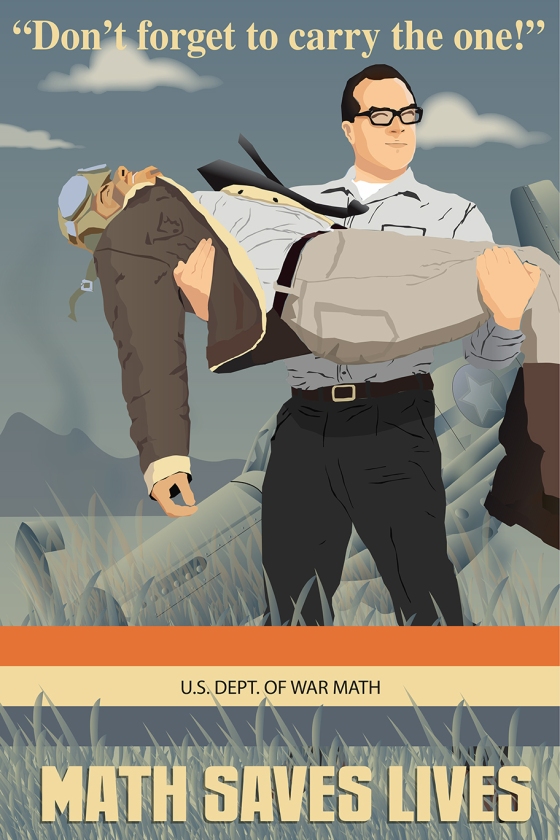
a nice read, but shared mostly for the "Strike the Axis" poster

The Misconception: You should focus on the successful if you wish to become successful.

The Truth: When failure becomes invisible, the difference between failure and success may also become invisible.

Illustration by Brad Clark

Illustration by Brad Clark at http://www.plus3video.com

In New York City, in an apartment a few streets away from the center of Harlem, above trees reaching out over sidewalks and dogs pulling at leashes and conversations cut short to avoid parking tickets, a group of professional thinkers once gathered and completed equations that would both snuff and spare several hundred thousand human lives.

People walking by the apartment at the time had no idea that four stories above them some of the most important work in applied mathematics was tilting the scales of a global conflict as secret agents of the United States armed forces, arithmetical soldiers, engaged in statistical combat. Nor could people today know as they open umbrellas and twist heels on cigarettes, that nearby, in an apartment overlooking Morningside Heights, one of those soldiers once effortlessly prevented the United States military from doing something incredibly stupid, something that could have changed the flags now flying in capitals around the world had he not caught it, something you do every day.

These masters of math moved their families across the country, some across an ocean, so they could work together. As they unpacked, the theaters in their new hometowns replaced posters for Citizen Kane with those for Casablanca, and the newspapers they unwrapped from photo frames and plates featured stories still unravelling the events at Pearl Harbor. Many still held positions at universities. Others left those sorts of jobs to think deeply in one of the many groups that worked for the armed forces, free of any other obligations aside from checking in on their families at night and feeding their brains during the day. All paused their careers and rushed to enlist so they could help crush Hitler, not with guns and brawn, but with integers and exponents.

The official name for the people inside the apartment was the Statistical Research Group, a cabal of geniuses assembled at the request of the White House and made up of people who would go on to compete for and win Nobel Prizes. The SRG was an extension of Columbia University, and they dealt mainly with statistical analysis. The Philadelphia Computing Section, made up entirely of women mathematicians, worked six days a week at the University of Pennsylvania on ballistics tables. Other groups with different specialties were tied to Harvard, Princeton, Brown and others, 11 in all, each a leaf at the end of a new branch of the government created to help defeat the Axis – the Department of War Math.

Actually…no. They were never officially known by such a deliciously sexy title. They were instead called the Applied Mathematics Panel, but they operated as if they were a department of war math.

The Department, ahem, the Panel, was created because the United States needed help. A surge of new technology had flooded into daily life, and the same wonders that years earlier drove ticket sales to the World’s Fair were now cracking open cities. Numbers and variables now massed into scenarios far too complex to solve with maps and binoculars. The military realized it faced problems that no soldier had ever confronted. No best practices yet existed for things like rockets and radar stations and aircraft carriers. The most advanced computational devices available were clunky experiments made of telephone switches or vacuum tubes. A calculator still looked like the mutant child of an old-fashioned cash register and a mechanical typewriter. If you wanted solutions to the newly unfathomable problems of modern combat you needed powerful number crunchers, and in 1941 the world’s most powerful number crunchers ran on toast and coffee.

Here is how it worked: Somewhere inside the vast machinery of war a commander would stumble into a problem. That commander would then send a request to the head of the Panel who would then assign the task to the group he thought would best be able to resolve the issue. Scientists in that group would then travel to Washington and meet with with top military personnel and advisors and explain to them how they might go about solving the problem. It was like calling technical support, except you called a computational genius who then invented a new way of understanding the world through math in an effort to win a global conflict for control of the planet.

Illustration by Brad Clark

Illustration by Brad Clark at http://www.plus3video.com/

For instance, the Navy desperately needed to know what was the best possible pattern, or spread, of torpedoes to launch against large enemy ships. All they had to go on were a series of hastily taken, blurry, black-and-white photographs of turning Japanese war vessels. The Panel handed over the photos to one of its meat-based mainframes and asked it to report back when it had a solution. The warrior mathematicians solved the problem almost as soon as they saw it. Lord Kelvin, they told the Navy, had already worked out the calculations in 1887. Just look at the patterns in the waves, they explained, see how they fan out in curves like an unfurling fern? The spaces tell you everything; they give it all away. Work out the distance between the cusps of the bow waves and you’ll know how fast the ship is going. Lord Kelvin hadn’t worked out what to do if the ship was turning, but no problem, they said. The mathematicians scribbled on notepads and clacked on blackboards until they had both advanced the field and created a solution. They then measured wavelets on real ships and saw their math was sound. The Navy added a new weapon to its arsenal – the ability to accurately send a barrage of torpedoes into a turning ship based only on what you could divine from the patterns in the waves.

lessdumbbanner

The devotion of the mathematical soldiers grew stronger as the war grew bloodier and they learned the things they etched on hidden blackboards and jotted on guarded scraps of paper determined who would and would not return home to their families once the war was over. Leading brains in every scientific discipline had eagerly joined the fight, and although textbooks would eventually devote chapters to the work of the codebreakers and the creators of the atomic bomb, there were many groups whose stories never made headlines that produced nothing more than weaponized equations. One story in particular was nearly lost forever. In it, a brilliant statistician named Abraham Wald saved countless lives by preventing a group of military commanders from committing a common human error, a mistake that you probably make every single day.

Colleagues described Wald as gentle and kind, and as a genius unsurpassed in his areas of expertise. His contributions, said one peer, had “produced a decisive turn in method and purpose” in the social sciences. Born in a Hungary in 1902 on a parcel of land later claimed by Romania, the son of a Jewish baker, Wald spent his childhood studying equations, eventually working his way up through academia to become a graduate student at the University of Vienna mentored by the great mathematician Karl Menger. He was the sort of student who offered suggestions on how to improve the books he was reading, and then saw to it those suggestions were incorporated into later editions. His mentor would introduce Wald to problems that made experts in the field rub their beards, the sort of things with names like “stochastic difference equations” and the “betweenness among the ternary relations in metric space.” Wald would not only return within a month or so with the solution to such a problem but politely ask for another to solve. As he advanced the science of probability and statistics, his name became familiar to mathematicians in the United States where he eventually fled in 1938, reluctantly, as the Nazi threat grew. His family, all but a single brother, would later die in the extermination camp known as Auschwitz.

Soon after Wald arrived in the United States he joined the Applied Mathematics Panel and went to work with the team at Columbia stuffed in the secret apartment overlooking Harlem. His group looked for patterns and applied statistics to problems and situations too large and unwieldy for commanders to get their arms around. They turned the geometry of air combat into graphs and charts and they plotted the success rates of bomb sights and various tactics. As the war progressed, their efforts became focused on the most pressing problem of the war – keeping airplanes in the sky. 

bomberhit

A B-24 is shot down over an island in the Pacific – Source: http://www.britishpathe.com/

In some years of World War II, the chances of a member of a bomber crew making it through a tour of duty was about the same as calling heads in a coin toss and winning. As a member of a World War II bomber crew, you flew for hours above an entire nation hoping to murder you while suspended in the air, huge, visible from far away, and vulnerable from every direction above and below as bullets and flak streamed out to puncture you. “Ghosts already,” that’s how historian Kevin Wilson described World War II airmen. They expected to die because it always felt like the chances of surviving the next bombing run were about the same as running shirtless across a football field swarming with angry hornets and making it unharmed to the other side. You might make it across once, but if you kept running back and forth, eventually your luck would run out. Any advantage the mathematicians could provide, even a very small one, would make a big difference day after day, mission after mission.

As with the torpedo problem, the top brass explained what they knew, and the Panel presented the problem to Wald and his group. How, the Army Air Force asked, could they improve the odds of a bomber making it home? Military engineers explained to the statistician that they already knew the allied bombers needed more armor, but the ground crews couldn’t just cover the planes like tanks, not if they wanted them to take off. The operational commanders asked for help figuring out the best places to add what little protection they could. It was here that Wald prevented the military from falling prey to survivorship bias, an error in perception that could have turned the tide of the war if left unnoticed and uncorrected. See if you can spot it.

The military looked at the bombers that had returned from enemy territory. They recorded where those planes had taken the most damage. Over and over again, they saw the bullet holes tended to accumulate along the wings, around the tail gunner, and down the center of the body. Wings. Body. Tail gunner. Considering this information, where would you put the extra armor? Naturally, the commanders wanted to put the thicker protection where they could clearly see the most damage, where the holes clustered. But Wald said no, that would be precisely the wrong decision. Putting the armor there wouldn’t improve their chances at all. 

Do you understand why it was a foolish idea? The mistake, which Wald saw instantly, was that the holes showed where the planes were strongest. The holes showed where a bomber could be shot and still survive the flight home, Wald explained. After all, here they were, holes and all. It was the planes that weren’t there that needed extra protection, and they had needed it in places that these planes had not. The holes in the surviving planes actually revealed the locations that needed the least additional armor. Look at where the survivors are unharmed, he said, and that’s where these bombers are most vulnerable; that’s where the planes that didn’t make it back were hit.

Taking survivorship bias into account, Wald went ahead and worked out how much damage each individual part of an airplane could take before it was destroyed – engine, ailerons, pilot, stabilizers, etc. – and then through a tangle of complicated equations he showed the commanders how likely it was that the average plane would get shot in those places in any given bombing run depending on the amount of resistance it faced. Those calculations are still in use today.

radarshoot

1944 War Dept US Army Air Forces Training Film – Source: National Archives

The military had the best data available at the time, and the stakes could not have been higher, yet the top commanders still failed to see the flaws in their logic. Those planes would have been armored in vain had it not been for the intervention of a man trained to spot human error.

A question should be forming in the front of your brain at this point. If the top brass of the United States armed forces could make such a simple and dumb mistake while focused on avoiding simple and dumb mistakes, thanks to survivorship bias, does that mean survivorship bias is likely bungling many of your own day-to-day assumptions? The answer is, of course, yes. All the time.

Simply put, survivorship bias is your tendency to focus on survivors instead of whatever you would call a non-survivor depending on the situation. Sometimes that means you tend to focus on the living instead of the dead, or on winners instead of losers, or on successes instead of failures. In Wald’s problem, the military focused on the planes that made it home and almost made a terrible decision because they ignored the ones that got shot down.

It is easy to do. After any process that leaves behind survivors, the non-survivors are often destroyed or muted or removed from your view. If failures becomes invisible, then naturally you will pay more attention to successes. Not only do you fail to recognize that what is missing might have held important information, you fail to recognize that there is missing information at all.

You must remind yourself that when you start to pick apart winners and losers, successes and failures, the living and dead, that by paying attention to one side of that equation you are always neglecting the other. If you are thinking about opening a restaurant because there are so many successful restaurants in your hometown, you are ignoring the fact that only successful restaurants survive to become examples. Maybe on average 90 percent of restaurants in your city fail in the first year. You can’t see all those failures because when they fail they also disappear from view. As Nassim Taleb writes in his book The Black Swan, “The cemetery of failed restaurants is very silent.” Of course the few that don’t fail in that deadly of an environment are wildly successful because only the very best and the very lucky can survive. All you are left with are super successes, and looking at them day after day you might think it’s a great business to get into when you are actually seeing evidence that you should avoid it.

Cover of Fortune Larry Page

Google’s Larry Page – Source: Fortune Magazine

Survivorship bias pulls you toward bestselling diet gurus, celebrity CEOs, and superstar athletes. It’s an unavoidable tick, the desire to deconstruct success like a thieving magpie and pull away the shimmering bits. You look to the successful for clues about the hidden, about how to better live your life, about how you too can survive similar forces against which you too struggle. Colleges and conferences prefer speakers who shine as examples of making it through adversity, of struggling against the odds and winning. The problem here is that you rarely take away from these inspirational figures advice on what not to do, on what you should avoid, and that’s because they don’t know. Information like that is lost along with the people who don’t make it out of bad situations or who don’t make it on the cover of business magazines – people who don’t get invited to speak at graduations and commencements and inaugurations. The actors who traveled from Louisiana to Los Angeles only to return to Louisiana after a few years don’t get to sit next to James Lipton and watch clips of their Oscar-winning performances as students eagerly gobble up their crumbs of wisdom. In short, the advice business is a monopoly run by survivors. As the psychologist Daniel Kahneman writes in his book Thinking Fast and Slow, “A stupid decision that works out well becomes a brilliant decision in hindsight.” The things a great company like Microsoft or Google or Apple did right are like the planes with bullet holes in the wings. The companies that burned all the way to the ground after taking massive damage fade from memory. Before you emulate the history of a famous company, Kahneman says, you should imagine going back in time when that company was just getting by and ask yourself if the outcome of its decisions were in any way predictable. If not, you are probably seeing patterns in hindsight where there was only chaos in the moment. He sums it up like so, “If you group successes together and look for what makes them similar, the only real answer will be luck.”

If you see your struggle this way, as partly a game of chance, then as Google Engineer Barnaby James writes on his blog, “skill will allow you to place more bets on the table, but it’s not a guarantee of success.” Thus, he warns, “beware advice from the successful.” Entrepreneur Jason Cohen, in writing about survivorship bias, points out that since we can’t go back in time and start 20 identical Starbucks across the planet, we can never know if that business model is the source of the chain’s immense popularity or if something completely random and out of the control of the decision makers led to a Starbucks on just about every street corner in North America. That means you should be skeptical of any book promising you the secrets of winning at the game of life through following any particular example.

It might seem disheartening, the fact that successful people probably owe more to luck than anything else, but only if you see luck as some sort of magic. Take off those superstitious goggles for a moment, and consider this: the latest psychological research indicates that luck is a long mislabeled phenomenon. It isn’t a force, or grace from the gods, or an enchantment from fairy folk, but the measurable output of a group of predictable behaviors. Randomness, chance, and the noisy chaos of reality may be mostly impossible to predict or tame, but luck is something else. According to psychologist Richard Wiseman, luck – bad or good – is just what you call the results of a human being consciously interacting with chance, and some people are better at interacting with chance than others.
dataOver the course of 10 years, Wiseman followed the lives of 400 subjects of all ages and professions. He found them after he placed ads in newspapers asking for people who thought of themselves as very lucky or very unlucky. He had them keep diaries and perform tests in addition to checking in on their lives with interviews and observations. In one study, he asked subjects to look through a newspaper and count the number of photographs inside. The people who labeled themselves as generally unlucky took about two minutes to complete the task. The people who considered themselves as generally lucky took an average of a few seconds. Wiseman had placed a block of text printed in giant, bold letters on the second page of the newspaper that read, “Stop counting. There are 43 photographs in this newspaper.” Deeper inside, he placed a second block of text just as big that read, “Stop counting, tell the experimenter you have seen this and win $250.” The people who believed they were unlucky usually missed both.

Wiseman speculated that what we call luck is actually a pattern of behaviors that coincide with a style of understanding and interacting with the events and people you encounter throughout life. Unlucky people are narrowly focused, he observed. They crave security and tend to be more anxious, and instead of wading into the sea of random chance open to what may come, they remain fixated on controlling the situation, on seeking a specific goal. As a result, they miss out on the thousands of opportunities that may float by. Lucky people tend to constantly change routines and seek out new experiences. Wiseman saw that the people who considered themselves lucky, and who then did actually demonstrate luck was on their side over the course of a decade, tended to place themselves into situations where anything could happen more often and thus exposed themselves to more random chance than did unlucky people. The lucky try more things, and fail more often, but when they fail they shrug it off and try something else. Occasionally, things work out.

Wiseman told Skeptical Inquirer magazine that he likened it to setting loose two people inside an apple orchard, each tasked with filling up their baskets as many times as possible. The unlucky person tends to go to the same few spots over and over again, the basket holding fewer apples each visit. The lucky person never visits the same spot twice, and that person’s basket is always full. Change those apples to experiences, and imagine a small portion of those experiences lead to fame, fortune, riches, or some other form of happiness material or otherwise, and you can see that chance is not as terrifying as it first appears, you just need to learn how to approach it.

“The harder they looked, the less they saw. And so it is with luck – unlucky people miss chance opportunities because they are too focused on looking for something else. They go to parties intent on finding their perfect partner and so miss opportunities to make good friends. They look through newspapers determined to find certain type of job advertisements and as a result miss other types of jobs. Lucky people are more relaxed and open, and therefore see what is there rather than just what they are looking for.” – Richard Wiseman in an article written for Skeptical Inquirer

Survivorship bias also flash-freezes your brain into a state of ignorance from which you believe success is more common than it truly is and therefore you leap to the conclusion that it also must be easier to obtain. You develop a completely inaccurate assessment of reality thanks to a prejudice that grants the tiny number of survivors the privilege of representing the much larger group to which they originally belonged.

Here is an easy example. Many people believe old things represent a higher level of craftsmanship than do new things. It’s sort of a “they don’t make them like they used to” kind of assumption. You’ve owned cars that only lasted a few years before you had to start replacing them piece by piece, and, would you look at that, there goes another Volkswagon Beetle buzzing along like it just rolled off an assembly line. It’s survivorship bias at work. The Beetle or the Mustang or the El Camino or the VW Minibus are among a handful of models that survived in large enough numbers to become iconic classics. The hundreds of shitty car designs and millions of automobile corpses in junkyards around the world far outnumber the popular, well-maintained, successful, beloved survivors. According to Josh Clark at HowStuffWorks, most experts say that cars from the last two decades are far more reliable and safer than the cars of the 1950s and ‘60s, but plenty of people believe otherwise because of a few high-profile survivors. The examples that would disprove such assumptions are rusting out of sight. Do you see how it’s the same as Wald’s bombers? The Beetle survived, like the bombers that made it home, and it becomes a representative of 1960s cars because it remains visible. All the other cars that weren’t made in the millions and weren’t easy to maintain or were poorly designed are left out of the analysis because they are now removed from view, like the bombers that didn’t return.

Similarly, photographer Mike Johnston explains on his blog that the artwork that leaps from memory when someone mentions a decade like the 1920s or a movement like Baroque is usually made up of things that do not suck. Your sense of a past era tends to be informed by paintings and literature and drama that are not crap, even though at any given moment pop culture is filled with more crap than masterpieces. Why? It isn’t because people were better artists back in the day. It is because the good stuff survives, and the bad stuff is forgotten. So over time, you end up with skewed ideas of past eras. You think the artists of antiquity were amazing in the same way you associate the music of past decades with the songs that survived long enough to get into your ears. The movies about Vietnam never seem include in their soundtracks the songs that sucked.

“I have to chuckle whenever I read yet another description of American frontier log cabins as having been well crafted or sturdily or beautifully built. The much more likely truth is that 99% of frontier log cabins were horribly built—it’s just that all of those fell down. The few that have survived intact were the ones that were well made. That doesn’t mean all of them were.” – Mike Johnston at The Online Photographer

You succumb to survivorship bias because you are innately terrible with statistics. For instance, if you seek advice from a very old person about how to become very old, the only person who can provide you an answer is a person who is not dead. The people who made the poor health choices you should avoid are now resting in the earth and can’t tell you about those bad choices anymore. That’s why it’s difficult not to furrow your brow and wonder why you keep paying for a gym membership when Willard Scott showcases the birthday of a 110-year-old woman who claims the source of her longevity is a daily regimen of cigarillos, cheese sticks, and Wild Turkey cut with maple syrup and Robitussin. You miss that people like her represent a very small number of the living. They are on the thin end of a bell curve. There is a much larger pool of people who basically drank bacon grease for breakfast and didn’t live long enough to appear on television. Most people can’t chug bourbon and gravy for a lifetime and expect to become an octogenarian, but the unusually lucky handful who can tend to stand out precisely because they are alive and talking.

derrenflip10The mentalist Derren Brown once predicted he could flip a coin 10 times in a row and have it come up heads every time. He then dazzled UK television audiences by doing exactly that, flipping the coin into a bowl with only one cutaway shot for flair. How did he do it? He filmed himself flipping coins for nine hours until he got the result he wanted. He then edited out all the failures and presented the single success.

Advertisements for weight loss products and fitness regimens operate just like Derren Brown’s magic trick, by hiding the failures and letting your survivorship bias do the rest. “Those always use the most positive claims, the most outrageous examples to sell a product,” Phil Plait, an astronomer and leading voice in the skeptical movement, explained to me. “When these things don’t work for the vast majority of customers, you never hear about it, at least not from the seller.” The people who use the diet, or the product, or the pill, and fail to lose weight don’t get trotted out for photo shoots – only the successes do. That same phenomenon has become a problem in science publications, especially among the younger sciences like psychology, but it is now under repair. For far too long, studies that fizzled out or showed insignificant results have not been submitted for publication at the same level as studies that end up with positive results, or even worse, they’ve been rejected by prominent journals. Left unchecked, over time you end up with science journals that only present the survivors of the journal process – studies showing significance. Psychologists are calling it the File Drawer Effect. The studies that disprove or weaken the hypotheses of high-profile studies seem to get stuffed in the file drawer, so to speak. Many scientists are pushing for the widespread publication of replication, failure, and insignificance. Only then, they argue, will the science journals and the journalism that reports on them accurately describe the world being explored. Science above all will need to root out survivorship, but it won’t be easy. This particular bias is especially pernicious, said Plait, because it is almost invisible by definition. ”The only way you can spot it is to always ask: what am I missing? Is what I’m seeing all there is? What am I not seeing? Those are incredibly difficult questions to answer, and not always answerable. But if you don’t ask them, then by definition you can’t answer them.” He added. “It’s a pain, but reality can be a tough nut to crack.”

Failure to look for what is missing is a common shortcoming, not just within yourself but also within the institutions that surround you. A commenter at an Internet watering hole for introverts called the INTJForum explained it with this example: when a company performs a survey about job satisfaction the only people who can fill out that survey are people who still work at the company. Everyone who might have quit out of dissatisfaction is no longer around to explain why. Such data mining fails to capture the only thing it is designed to measure, but unless management is aware of survivorship bias things will continue to seem peachy on paper. In finance, this is a common pitfall. The economist Mark Klinedinst explained to me that mutual funds, companies that offer stock portfolios, routinely prune out underperforming investments. “When a mutual fund tells you, ‘The last five years we had 10 percent on average return,’ well, the companies that didn’t have high returns folded or were taken over by companies that were more lucky.” The health of the companies they offer isn’t an indication of the mutual fund’s skill at picking stocks, said Klinedinst, because they’ve deleted failures from their offerings. All you ever see are the successes. That’s true for many, many elements of life. Money experts who made great guesses in the past are considered soothsayers because their counterparts who made equally risky moves that failed nosedived into obscurity and are now no longer playing the game. Whole nations left standing after wars and economic struggles pump fists of nationalism assuming that their good outcomes resulted from wise decisions, but they can never know for sure.

“Let us suppose that a commander orders 20 men to invade an enemy bunker. This invasion leads to a complete destruction of the bunker and only one dead soldier from the 20 person team. An amazingly successful endeavor. Unless you are the one soldier who was shot through the head running up the hill. From his standpoint, rapidly ascending to the spirit world, it seems like a gigantic waste and a terrible order, but we will never hear his side of things. We will only hear from the guys who survived, how it was tough going until they made it over the rise. How it was sad to lose one guy, but they knew that they would make it. They just had a feeling. Of course, that one guy had that feeling to, until he felt nothing.” – Unknown author at spacetravelsacrime.blogspot.com

If you spend your life only learning from survivors, buying books about successful people and poring over the history of companies that shook the planet, your knowledge of the world will be strongly biased and enormously incomplete. As best I can tell, here is the trick: When looking for advice, you should look for what not to do, for what is missing as Phil Plait suggested, but don’t expect to find it among the quotes and biographical records of people whose signals rose above the noise. They may have no idea how or if they lucked up. What you can’t see, and what they can’t see, is that the successful tend to make it more probable that unlikely events will happen to them while trying to steer themselves into the positive side of randomness. They stick with it, remaining open to better opportunities that may require abandoning their current paths, and that’s something you can start doing right now without reading a single self-help proverb, maxim, or aphorism. Also, keep in mind that those who fail rarely get paid for advice on how not to fail, which is too bad because despite how it may seem, success boils down to serially avoiding catastrophic failure while routinely absorbing manageable damage.
Abraham Wald

Abraham Wald – Source: Prof. Konrad Jacobs

Before we depart, I’d like to mention Wald one more time. Like many of the others who joined the armed services to fight Hitler with numbers, Abraham Wald went down in history, but not for the bombers and bullet holes story. He is best remembered as the inventor of sequential analysis, another achievement he earned while working in the department of war math. He married Lucille Land in 1941. Two years later they had their first child, Betty, followed four years later by another they named Robert. Three years after that, at the top of his career and enjoying an exotic speaking tour, after saving the lives of thousands of people he would never meet, he and Lucille died in an airplane that crashed against the side of the Nilgiri mountains in India. Perhaps there is an irony to that, something about airplanes and odds and chance and luck, but it isn’t the interesting part of Wald’s story. His contributions to science are what survives his time on Earth and the parts of his tale that will endure.

In 1968, the National Academy of Sciences issued a report saying the application of mathematics in World War II “became recognized as an art,” and the lessons learned by the mathematicians were later applied to business, science, industry, and management. They saved the world and then rebuilt it using the same tools each time – calculators and chalk.

In 1978, Allen Wallis, Director of SRG said of his team, “This was surely the most extraordinary group of statisticians ever organized.” The bomber problem was just a side story for them, a funny anecdote that only surfaced in the 1980s as they all began to reminisce full time. When you think of how fascinating the story is, it makes you wonder about the stories we’ll never hear about those numerical soldiers because they never made it out of the war and into a journal, magazine, or book, and how that’s true of so much that’s important in life. All we know of the past passes through a million, million filters, and a great deal is never recorded or is tossed aside to make room for something more interesting or beautiful or audacious. All we will learn from history reaches us from the stories that, for whatever reason, survived.


51fiivrubrl-_sy300_I wrote a whole book full of articles like this one: You Are Now Less Dumb – Get it now!

Amazon B&N | BAM | Indiebound | iTunes

Go deeper into understanding just how deluded you really are and learn how you can use that knowledge to be more humble, better connected, and less dumb in the sequel to the internationally bestselling You Are Not So SmartWatch the beautiful new trailer here. 


Sources

  • Smith, M. D., Wiseman, R. & Harris, P. (2000). The relationship between ‘luck’ and psi. Journal of the American Society for Psychical Research, 94, 25-36.
  • Smith, M. D., Wiseman, R., Harris, P. & Joiner, R. (1996). On being lucky: The psychology and parapsychology of luck. European Journal of Parapsychology, 12, 35-43.
  • Wolfowitz, J. “Abraham Wald, 1902-150.” The Annals of Mathematical Statistics 23.1 (1952): 1-13.
24 May 15:30

When a Problem Comes Along You Must...

firehose

via Rosalind

When a Problem Comes Along You Must...

Submitted by: Unknown (via Tumblr)

Tagged: whippet , Devo , funny
24 May 15:30

I Saw You Throw It!

firehose

via Rosalind

24 May 15:20

Tim Curry reportedly recovering after major stroke

by gguillotte
English actor Tim Curry is said to be 'doing great' after reportedly collapsing from a major stroke.
24 May 15:20

Fear of art sale sparked by Detroit emergency manager asking for appraisal

by gguillotte
DETROIT (Reuters) - As part of his efforts to solve Detroit's financial crisis, the city's emergency manager Kevyn Orr has asked for an appraisal of the collection at the Detroit Institute of Arts, sparking fears in artistic and philanthropic circles that he means to auction off the city's artistic jewels.
24 May 15:14

Twitter's New Money-Making Plan: Lead Generation

by samzenpus
firehose

great

jfruh writes "Social networks like Twitter and Facebook have long hoped that the information they've gathered about you will help them create better targeted and more lucrative advertising, even though advertisers never see your personal data directly. But now Twitter is upping the ante, creating a new kind of card that encourages you to give your contact information directly to people who want to sell you things. For instance, Priceline has a new card with a 'sign up and save' button that saves you 10% on a hotel — and, though it isn't made explicit, adds your Twitter handle and contact information to a Priceline mailing list. There's nothing to stop Twitter from handing this info — including your phone number, if you've registered it with the service — to salesmen."

Share on Google+

Read more of this story at Slashdot.


24 May 15:13

Australian Police Move To Make 3D Printed Guns Illegal

by samzenpus
lukehopewell1 writes "'Untraceable, undetectable, cheap and freely available.' That's how Australian police have described the 3D-printable gun known as The Liberator today as they announce that they will be seeking to make the download, construction and possession of these weapons illegal. In their tests, Police printed the 15 parts required to assemble The Liberator in 27 hours and assembled it within 60 seconds with a firing pin fashioned out of a steel nail. The two guns were test fired into a block of resin designed to simulate human muscle, and the first bullet penetrated the resin block up to 17 centimeters. NSW Police Ballistics division confirm that it would be a fatal wound if pointed at someone."

Share on Google+

Read more of this story at Slashdot.