
firehose
Shared posts
07 Jun 05:05


A House Made Of Sugar via The Pop-Up City Installation...
A House Made Of Sugar via The Pop-Up City
Installation artist William Lamson created a small greenhouse out of caramelized sugar. The small shed called Solarium functions as both an experimental greenhouse that grows three species of miniature citrus trees, and as a meditative environment. This is edible architecture!
firehose likes this

07 Jun 03:57

The puppy knows what he likes and how to get it
The puppy knows what he likes and how to get it
firehose and -1 others like this
07 Jun 03:45

US intelligence chief asks public to blindly trust that the government respects civil liberties
by Sean Hollister
How does the US government respond to allegations that the NSA records details about every telephone call in the United States, and has access to vast amounts of data from Google, Microsoft, Yahoo, Facebook, Apple and AOL servers? US Director of National Intelligence James Clapper has released two statements defending the data collection by suggesting that these actions are wholly legal, and that the government has many procedures in place limiting how the data can be accessed.
The full statements, which you can read here and here, primarily argue that this is all legal, its components already signed into law, and that the programs can only target people who aren't US citizens or those who are likely to be terrorists. With regards to phone records, Clapper claims that only metadata is collected, not the contents of telephone calls, and that government agencies are held responsible to a certain set of limitations by the Foreign Intelligence Surveillance Court:
"By order of the FISC, the Government is prohibited from indiscriminately sifting through the telephony metadata acquired under the program. All information that is acquired under this program is subject to strict, court-imposed restrictions on review and handling. The court only allows the data to be queried when there is a reasonable suspicion, based on specific facts, that the particular basis for the query is associated with a foreign terrorist organization. Only specially cleared counterterrorism personnel specifically trained in the Court-approved procedures may even access the records."
The statements suggest that the government thinks it's okay to collect and retain a vast quantity of records about US citizens, so long as a secret court secretly ensures that those US citizens aren't actually targeted.
"The collection is broad in scope because more narrow collection would limit our ability to screen"
Clapper seems to be missing the point on several counts, though. When you aggregate enough metadata in one place, it adds up to data, period. With the GPS location of an individual and a photo they've taken and the number of a person they're talking to, it's not difficult to get an idea of what they're doing. When you rely on a secret court to hold accountable an agency that works in secret, it's hard to trust that their agents are acting responsibly with regards to that data. And if your argument is that this is all legal, already approved by our representatives, then why is the American public so surprised that the government would be involved in such broad domestic surveillance?
- Source DNI (1)(2)
- Related Items spying surveillance nsa james clapper dni
firehose likes this
07 Jun 03:42
Google helps DOJ make first big mistake in Apple ebook trial
by Greg Sandoval
With his arms folded tightly around his chest, Apple's lead attorney Orin Snyder appeared to seethe as he began to question Thomas Turvey.
Turvey, Google's director of strategic partnerships, was in federal court in Manhattan as a government witness. He was there to add credibility to the DOJ's allegation that Apple, one of Google's biggest rivals, had conspired with five of the nation's top six book publishers to limit Amazon's ability to discount books and remove a key competitive advantage. The high-profile case is likely to help remake the ebook sector and determine who the frontrunners will be.
But from the moment that Turvey sat down in the witness chair, Snyder began to attack his story. Turvey told the court that in late 2009, representatives of the five accused publishers, all of which have settled with the government, told him directly that they were switching to the agency model because contracts they entered into with Apple required it. But under oath, Turvey acknowledged that his lawyer helped him draft the statement that he filed with the court and that he was unsure whether he or his lawyer wrote important passages in the statement.
He couldn't remember a single name
Things went downhill from there. Under Snyder's questioning, Turvey acknowledged that he couldn't remember a single name of any of the publishing executives who had told him Apple was the reason the publishers were switching their business model. He conceded that the publisher's move to the agency system was important to Google's own business, but Turvey couldn't remember any details about the conversations with publishers or where they had occurred. By the end of the interview Turvey had gone from saying the publishers had told him directly, to saying they had merely told people on his team, to finally saying the publishers had "likely" told someone on his team.
 It was a topsy Turvey moment for the increasingly unsure Google exec.
The trial between the DOJ and Apple began on Monday and things were largely going the government's way, but today, DOJ lawyers appeared to goof. Much of what they were trying to prove with Turvey's testimony, DOJ lawyers had already presented to the court, with Apple's own emails, testimony from the likes of Penguin Books CEO David Shanks, and three separate Amazon executives.
By introducing Turvey, the government allowed Apple to cast doubt on their case. It appeared that the government was letting Google, which was never a significant player in ebooks, try to pile on a rival.
Outside the court, Turvey appeared sullen and declined to comment. Snyder and the Apple team also didn't wish to talk, but were all smiles as they exited. It was obvious who walked out the victor.

07 Jun 02:34
Pizzaghetti Sloche, Pizza & Spaghetti Slushies
by Rusty Blazenhoff
firehoseQuebec food is dumb and has stupid names sponsored by Couche-Tard beat

In Quebec, Canada, pizza-ghetti, pizza and spaghetti served together on the same plate, is a popular meal at restaurants. Canadian convenience store chain Couche-Tard is now taking it to the next level with Pizzaghetti Sloches, which is essentially frozen pizza-ghetti slushies. The spaghetti sloche is sold on one side and the pizza sloche is on the other and it’s up to the customer to combine them. The chain is known for their crazy sloche combos.
Here’s the TV ads for the Pizzaghetti Sloches:

image via plagues138
via The Clearly Dope, That’s Nerdalicious!, Huffington Post, Foodbeast
07 Jun 02:17
It Gets Worse
firehoseduh
best slides:
http://www.washingtonpost.com/wp-srv/special/politics/prism-collection-documents/images/prism-slide-4.jpg
http://www.washingtonpost.com/wp-srv/special/politics/prism-collection-documents/images/prism-slide-5.jpg
IT ONLY COSTS $20M/YEAR
THEY EVEN FINALLY GOT APPLE ON BOARD IN OCTOBER
The NSA and FBI are tapping into the servers of nine U.S. Internet firms, extracting audio, video, photos, e-mails, documents and connection logs that enable analysts to track a person’s movements and contacts over time.
firehose likes this
07 Jun 02:13
Study: 83% Of Gamblers Quit Right Before They Would Have Hit The Big One
WASHINGTON—According to a study published Monday in the Journal Of Financial Economics, 83 percent of gamblers quit right before hitting the jackpot and striking it rich. Lead researcher, Dr. Richard Howe of the University of Chicago, confirm...
firehose likes this
07 Jun 01:26
YouTube founders create a Chinese carbon copy of Vine
by Jacob Kastrenakes
firehoserofl
YouTube founders Chad Hurley and Steve Chen have had an obviously influential role in streaming video, but their latest app doesn't exactly speak to that pedigree. Hurley and Chen's new company, Avos Systems, has built a Chinese-language clone of Vine, which appears to be called Wan-Pai. Aside from video filters and an altered color scheme, the app mimics Vine beat-for-beat, with an identical interface, pre-loaded editors' picks, and even a cartoonish Explore section.
The only area that Wan-Pai can't keep up with Vine is video playback: Avos' app doesn't automatically play videos, putting a brief wait time before each clip. The app has been out since April, but it appears to only have received widespread attention today following a report by TechCrunch. Given the lack of buzz, it's probably safe to say that it hasn't quite caught on yet. You can take a look at your first Wan-Pai right here — though be warned that it will unintentionally snap to the size of your browser.
- Via TechCrunch
- Source Wan-Pai
- Related Items china video clone app chad hurley steve chen avos systems vine wan-pai
firehose likes this
07 Jun 01:25


Chevy Chase Will Return For ‘Hot Tub Time Machine 2′
by Germain Lussier

Briefly: Making a hot tub travel through time is never easy, so it’s good to have a repairman on hand just in case. Thankfully, in Steve Pink‘s upcoming Hot Tub Time Machine 2, the original hot tub repairman will be returning. Chevy Chase has signed to reprise his mysterious role in the 2010 cult comedy. There’s no word on how big his role will be this time around, but we do know the film (which also returns Craig Robinson, Clark Duke and Rob Corddry) takes the friends a decade into future where they meet the son of John Cusack’s character (who isn’t returning) played by Adam Scott. [Deadline]
- Rob Corddry Drops New Details on ‘Hot Tub Time Machine 2′
- Adam Scott Replaces John Cusack in ‘Hot Tub Time Machine 2′
- MGM Pulls the Cover Off ‘Hot Tub Time Machine’ Sequel, John Cusack Not Likely to Jump In
- Hot Tub Time Machine Movie Trailer #2
- Hot Tub Time Machine Red-Band Trailer: This Time, It’s NSFW
- Hot Tub Time Machine Movie Trailer


07 Jun 00:42


You, too, can spy with the NSA—and make $42,209 to $81,204 a year
by Simone Foxman
The Washington Post and Guardian report that the US National Security Agency had developed ties with some of the world’s largest technology and social media companies that allowed the NSA to sift through data about users in a program called Prism.
As it happens, just six hours ago, the NSA’s careers office tweeted about a job opening in its “Digital Network Exploitation Analyst Development Program,” located at its main campus in Fort Meade, Maryland:
National Security Agency #IT #Job: Digital Network Exploitation Analyst Development P… ( #FortMeade , MD) bit.ly/ZEcfzW—
NSA (@NSACareers) June 06, 2013
To be clear, we can’t connect this job with the top-secret Prism surveillance program.
The posting describes a three-year internship:
Digital Network Exploitation Analyst Development Program (DDP) is to develop individuals who can perform discovery and target technology analysis of digital network and mobile communications. Individuals will support the Analysis and Collection Offices in Signals Intelligence (SIGINT)…Individuals will support the Analysis and Collection Offices in Signals Intelligence (SIGINT).
The job offers a salary of $42,209 to $81,204, and advertises that “graduates of this program are aggressively sought after because of their in-depth knowledge and breadth of experiences.”
Perhaps they can even get jobs at Google, Facebook, and other companies that are said to be part of Prism.


07 Jun 00:31

the-great-gau8-in-the-sky: Ever wonder the proper method to...
firehosehey, this is also exactly what I'd do in X-Wing
Ever wonder the proper method to attack a tight formation of enemy planes by yourself?
07 Jun 00:21
Senate defeats Democratic, Republican loan plans - KASA
firehosegreat
MiamiHerald.com |
Senate defeats Democratic, Republican loan plans
KASA WASHINGTON (AP) — College students faced increasing uncertainty about the cost of new student loans after senators failed Thursday to advance partisan proposals to keep interest rates from doubling on July 1. Dueling measures in the Senate would have ... A long-term solution for student loan interest ratesMcCook Daily Gazette Senate Blocks Dueling Student Loan BillsRoll Call (blog) all 184 news articles » |
07 Jun 00:20
Apple, Google, Microsoft, and Facebook deny providing direct access to PRISM surveillance program
by Chris Welch
Apple is among the nine technology companies attached to PRISM, the just-leaked government program that reportedly allows the NSA and FBI to access sensitive data of US citizens in total secrecy. There's just one problem: Apple says it's never heard of PRISM. That's according to identical statements provided to both CNBC and The Wall Street Journal.
Clearly Apple is attempting to get out in front of today's controversy amid outcries of privacy invasion brought on by PRISM and other, ongoing secret initiatives.
Other companies that are believed to be taking part in the program are also issuing statements. In a statement to The Washington Post, Google said "From time to time, people allege that we have created a govt. 'back door' into our systems, but Google does not have a 'back door."
Developing... We will update this story as more companies respond with comment...
07 Jun 00:16
This is Shanghai, Time-Lapse of a Bustling Chinese Metropolis
by EDW Lynch
The soaring skyline and frenetic pace of Shanghai are depicted in a seamlessly connected series of time-lapses in “This is Shanghai” by filmmaker Rob Whitworth and urban explorer JT Singh.
In 1980 Shanghai had no skyscrapers. It now has at least 4,000 — more than twice as many as New York. ‘This is Shanghai’ explores the diversities and eccentricities of the metropolis that is Shanghai going beyond the famous skyline.
submitted via Laughing Squid Tips
firehose likes this
07 Jun 00:14

The NSA whistleblower who guessed exactly what was going on, six months ago
by Roberto A. Ferdman
Last December in an interview with Russia Today (video above), former NSA crypto-mathematician William Binney disclosed the extent to which he believed the US government was not only capable of, but actively engages in spying on internet data and web activity across the country. Binney said that the FBI has access to the emails of everyone in the US, holds a target list and monitors every email to and from those contained on the list.
If the interview was alarming in its suggestion then, it’s downright scary considering this evening’s report from the Washington Post and the Guardian that the US government has allegedly been mining data from eight of the world’s largest internet companies, including Google, Apple, Microsoft and others. (The report mentions nine companies; one of them, YouTube, is part of Google.)
Here’s some of what Binney guessed at back in December:
The FBI has access to the data collected, which is basically the emails of everybody in the country.
…This can happen to anyone. If become a target for whatever reason, if they’re targeted by the government, the government can go in–or the FBI or other agencies of the government can go into that database and pull all that data they’ve collected over the years and reanalyze it all, retroactively analyze everything they’ve done. Over the last 10 years at least.
…It’s everybody.
If Binney erred at all, it was merely in underestimating the reach of the government’s surveillance, which, if the report is to be believed, is capable of not only tracking emails, but a person’s movements and contacts over time.
Here’s some of what the Washington Post reported this evening:
The National Security Agency and the FBI are tapping directly into the central servers of nine leading U.S. Internet companies, extracting audio, video, photographs, e-mails, documents and connection logs that enable analysts to track a person’s movements and contacts over time.
The highly classified program, code-named PRISM, has not been disclosed publicly before.
The technology companies, which participate knowingly in PRISM operations, include most of the dominant global players of Silicon Valley. They are listed on a roster that bears their logos in order of entry into the program: “Microsoft, Yahoo, Google, Facebook, PalTalk, AOL, Skype, YouTube, Apple.”
Read: Twitter boosts its privacy cred with its absence from NSA surveillance program
firehose likes this
07 Jun 00:13

Another car drives through fence around site of Shuster home
by Kevin Melrose
firehoseif only Superman were there to throw the car into a rock
The plates on the fence surrounding the site of the Shuster family home (via CapedWonder)
Two years after a car drove through a fence surrounding the site of Joe Shuster’s former home in Cleveland, it’s happened again.
The Plain Dealer reports that a 41-year-old Cleveland man has been charged with drunken driving, leaving the scene of an accident and driving without a license after he allegedly drove off the street late Wednesday afternoon and plowed through the wooden fence. While a portion of the fence and seven large metal plates reprinting the first Superman story are missing, it’s unknown whether those plates are destroyed or were merely removed until repairs can be made.
The plates were installed in 2009 by the Glenville Development Corporation and the Siegel and Shuster Society. Shuster and Jerry Siegel were teenagers living in Cleveland’s Glenville neighborhood when they created Superman in 1933.
The last person to drive through the fence was believed to be a neighbor, who promised to pay the estimated $2,600 to replace the seven plates he destroyed.
07 Jun 00:12
Tim Duncan Argues Theory Of Infinite Divisibility Prevents Any Team From Winning Championship
MIAMI—Applying an analytical framework dating back to 360 BC, Spurs power forward Tim Duncan used the concept of infinite divisibility Thursday to argue that, in theory, no team could win the NBA championship.
firehose likes this
07 Jun 00:11

Google, Facebook, Microsoft, others allegedly allow the US government to “watch your ideas form as you type”
by Christopher Mims
firehose'The filter for “foreignness” is imperfect, so data from many US citizens is also examined by intelligence analysts, but, according to one government presentation slide provided to the Post, “it’s nothing to worry about.”'
'Apple has denied involvement, telling CNBC that “We have never heard of PRISM. We do not provide any government agency with direct access to our servers.”'
...
'For unknown reasons and by unknown means, Apple held out for five years after Microsoft joined the program, but is now a part of it.'
The Washington Post is reporting that a ”horrified” career intelligence office has provided slides detailing a secret US government spying program in which the US National Security Agency (NSA) and the FBI allegedly have direct access to the servers of Microsoft, Yahoo, Google, Facebook, AOL, Skype, YouTube and Apple.
Here are the alleged details, as reported so far by the Post and the Guardian:
- One in seven NSA reports are using data gathered from the system, called PRISM
- Data from the PRISM program appeared in 1,477 articles in President Obama’s daily brief in 2012
- Data is apparently piped directly from the servers of Google, Yahoo, etc. to NSA systems, where it is filtered for “foreignness.” User accounts where security analysts have at least 51% confidence in a target’s “foreignness” may be examined.
- The filter for “foreignness” is imperfect, so data from many US citizens is also examined by intelligence analysts, but, according to one government presentation slide provided to the Post, “it’s nothing to worry about.”
- Without referring to PRISM specifically, Google in a statement appeared to deny involvement. The company said “From time to time, people allege that we have created a government ‘back door’ into our systems, but Google does not have a ‘back door’ for the government to access private user data.”
- Facebook has also denied involvement, telling The Next Web that “We do not provide any government organization with direct access to Facebook servers. When Facebook is asked for data or information about specific individuals, we carefully scrutinize any such request for compliance with all applicable laws, and provide information only to the extent required by law.”
- Apple has denied involvement as well, telling CNBC that “We have never heard of PRISM. We do not provide any government agency with direct access to our servers.”
- The report alleges that NSA can access Google services including Gmail, voice and video chat, files stored on Google Drive and photos. Search terms can be monitored in real time.
- Everyone in a suspected terrorist’s email inbox or outbox is effectively swept in with the data gathered on a target
- Microsoft was the first corporate partner of the spying program, beginning in May 2007.
- For unknown reasons and by unknown means, Apple held out for five years after Microsoft joined the program, but is now a part of it. Twitter doesn’t appear to be part of it, according to the documents.
- Growth in use of data from the PRISM program by analysts has been “exponential.”
- “They quite literally can watch your ideas form as you type,” the anonymous intelligence officer told the Post.
See some of the government slides about the program leaked to the Post here.



07 Jun 00:07
Alien Loves Predator UK, The Friendly Real-World Adventures of Two Costumed Film Characters
by Justin Page

photo by Kerry Clark
Alien Loves Predator UK is a fan page on Facebook that follows the crazy real-world adventures of two costumed film characters, Pedro T Predator and Abi T Alien. The Xenomorph and Predator seem to be an inseparable pair in all of their comical photos. The close friendship between the two totally reverses the usual adversarial relationship seen throughout the Alien vs. Predator franchise. You can also follow the odd duo on deviantART (Pedro and Abi).
Here are a few videos of Pedro and Abi dancing and having fun:
Here are some great photos by Mektography of Pedro and Abi enjoying some recreational activities:






images and video via Alien Loves Predator UK
via Nerd Like You, Archie McPhee’s Endless Geyser of Awesome
firehose and -1 others like this
07 Jun 00:07


Twitter boosts its privacy cred with its absence from the NSA’s surveillance program
by Zachary M. Seward
firehoseeven the NSA don't give a fuck bout Twitter
From a US National Security Agency presentation, according to reports.
The list of technology companies allegedly participating in a vast US government surveillance program known as PRISM, which was just reported by the Washington Post and Guardian, is notable for one name that’s not on it: Twitter.
The seven-year-old startup is already well-respected for guarding its users’ privacy. It has fought government subpoenas that other companies, like Google, routinely comply with. The Electronic Frontier Foundation, a privacy group, recently gave Twitter six out of six stars for protecting user data from government monitoring.
“No one wants a pen that’s going to rat them out,” Alexander Macgillivray, Twitter’s top lawyer, said last year.
From an Electronic Frontier Foundation report entitled, “Who has your back?”
It’s not clear why Twitter isn’t among the nine companies listed on the slides that purport to detail the PRISM program. A spokesman for Twitter didn’t immediately respond to a request for comment. Macgillivray didn’t, either, but after the stories were published, he retweeted another privacy group’s plaudits for Twitter’s data-privacy efforts.
Eight companies are said to be giving the NSA access to user data as part of PRISM: AOL, Apple, Facebook, Google, Microsoft, PalTalk, Skype, and Yahoo. Dropbox was apparently described in an NSA presentation as “coming soon.” Facebook, Apple and Google have denied that they allowed the government direct access to their servers or, in Apple’s case, had even heard of PRISM.
One reason why Twitter might not have been asked to participate in such a program is that it doesn’t have as much private data about its users as, say, Google or Facebook. And it does comply with many government requests for data: 57% of 1,009 such requests in the second half of last year. By contrast, Google complied with 66% of 21,389 user information requests over the same period.
Nevertheless, Twitter’s absence from the PRISM list is likely to earn it praise at the same time that Americans, judging from the early reaction, heap scorn on the technology companies said to be participating in the NSA’s surveillance program.
As people become more familiar with the scope of digital data collection, privacy is an increasingly effective selling point for some companies. Microsoft’s new ad campaign is taglined, “Your privacy is our priority.” That will look hollow if, as the slides assert, Microsoft was the first company to join PRISM, back in September 2007.
The news comes as Twitter is laying the groundwork for an initial public offering that could propel it to a size more like some of the other tech giants. As it seeks to be more profitable, Twitter could feel pressure to play nice with the US and other nations that regularly demand information from technology companies. That’s the challenge facing Macgillivray and other Twitter executives as they navigate the company toward an IPO.
“We value the reputation we have for defending and respecting the user’s voice,” Macgillivray said last year. “We think it’s important to our company and the way users think about whether to use Twitter, as compared to other services.”
07 Jun 00:06
Arcade designs reveal Gauntlet’s secret life
by Colin Campbell
A new museum exhibit featuring a trove of design documents is set to reveal insights into breakout arcade hits of the mid-1980s like Gauntlet, and the intense challenges faced by Atari and other big games outfits of that time.
Atari By Design opens at the National Museum of Play in Rochester, N.Y. on June 22. It will display a selection of 250 concept drawings and industrial design documents for Atari arcade games produced between 1974 and 1989.
The drawings offer a glimpse of the challenges facing arcade game makers and cabinet designers through this period. Few are as illuminating as the story of Gauntlet, a four-player role-playing, top-down dungeon-crawl, and an early attempt to create a multi-player cooperative game in arcades.
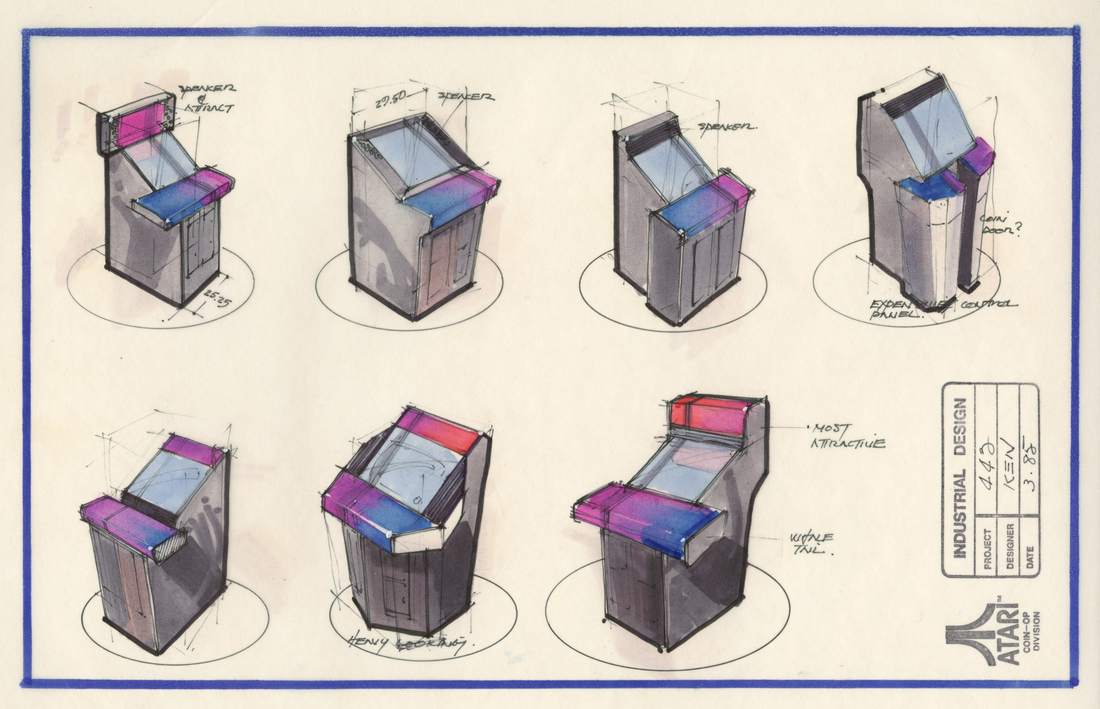
Jeremy Saucier, assistant director of the International Center for the History of Electronic Games, which is producing the exhibit, told Polygon that Gauntlet faced serious design and conceptual problems. He said, "Gauntlet came into an industry that was dominated by player-versus machine experiences like Space Invaders. There was some two-player but the standard was one person playing for 25 cents per game."
Leading arcade companies like Atari were investing in more sophisticated and expensive machines, but research convinced them that consumers would not pay more than a quarter to play. The solution was to create games in which more players played and paid together.
"Gauntlet was the answer," said Saucier. "You had four people playing at once, which was a dollar for a couple of minutes instead of 25 cents."
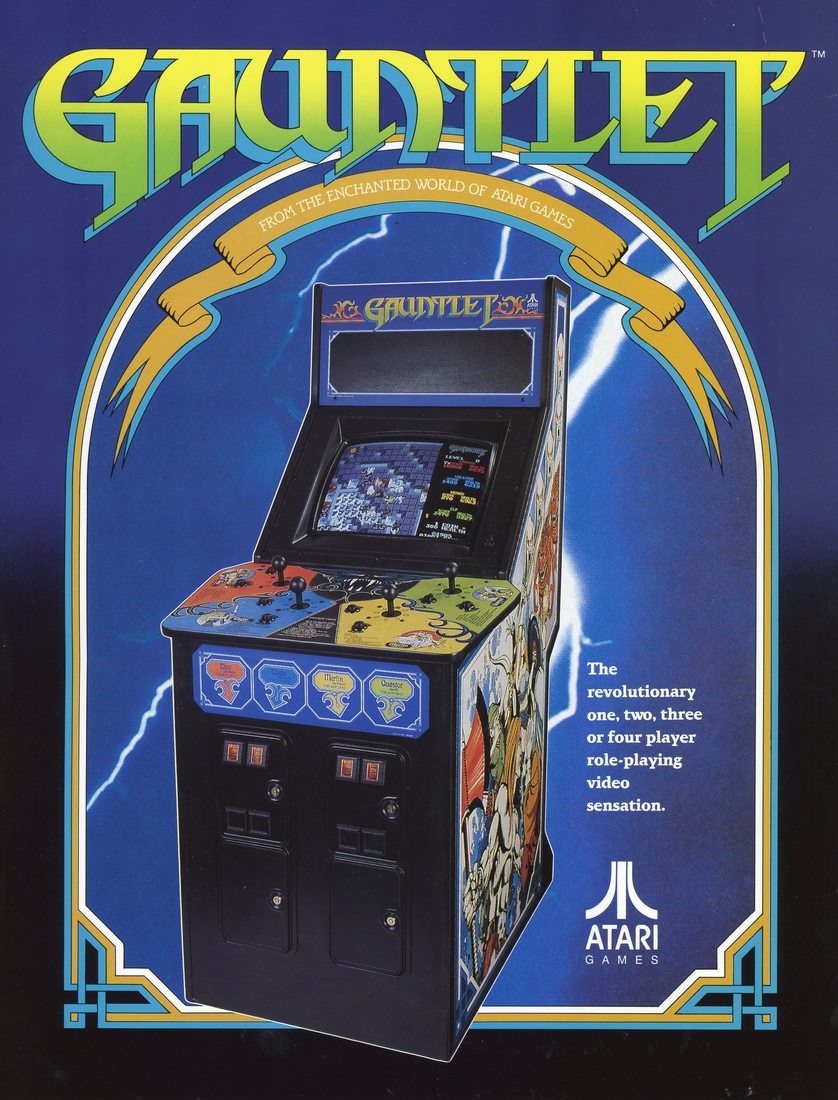
Gauntlet came with significant challenges. When Ed Logg, who had previously created Centipede and Asteroids, presented the game to Atari, the reception was muted. "The marketing department said that would never work," explained Saucier. "They questioned whether you would get four people, who did not know each other, to play together. But when Atari put this game out to test, it performed very well. It proved that people who did not know each other would play together."
Gary Whitta, a writer for The Walking Dead game and former editor-in-chief of PC Gamer, recalls Gauntlet as one of the best games of his youth.
He said, "My first encounter with Gauntlet is one of my most vivid and favorite memories from playing games as a kid. The machine catches your eye immediately because it's so big. I'd only seen standard machines and so I was, ‘what the hell is that and why does it have four joysticks on it?'
"People didn't know what to make of it. When me and a group of other lads started playing it, the instinct was to start attacking each other. We couldn't understand why we weren't killing each other. But once we got the hang of it we clicked and the genius of the game became apparent. The idea of co-operative play was new then. You can trace a lot of the big swing we are seeing now towards co-operative play, back to Gauntlet."
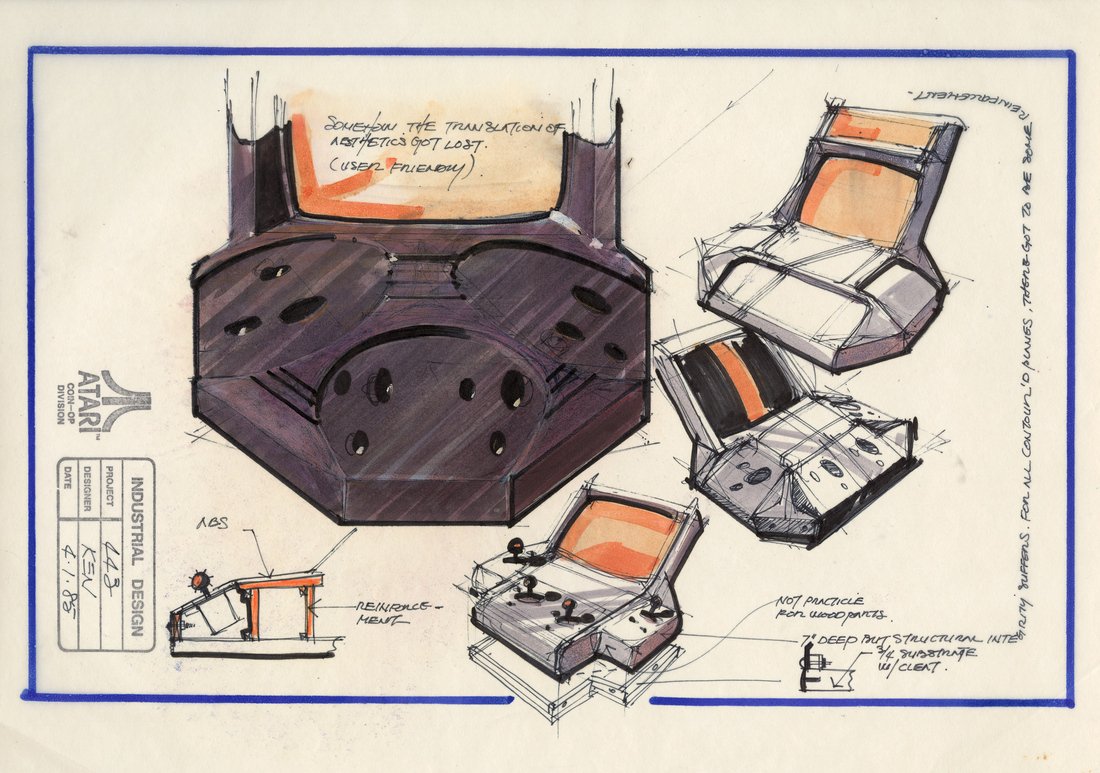
Following an examination of the papers, Saucier said it's clear that the game's four-player mode posed problems for the cabinet-designers.
"When you look at some of the documents, you'll see problems like how you get four people together at a machine and actually be able to see everything. Problems like shades and glare, angles of view. You are dealing with design issues where if you fix one thing it creates another problem. This collection illustrates how much went into these designs and how creative this process really was at that time."
No-one had attempted to get four people around one cabinet
Mike Mika is head of development at game developer Other Ocean, and an avid collector of games arcades. He said, "The control panel was unlike anything else. No-one had attempted to get four people around one cabinet. They had other challenges, like just keeping it at a size that could get through a standard doorway, and allow everyone to play comfortably.
"Two people were actually at the side of the cabinet, and that gave the machine space, so it stood on its own away from the other machines in arcades. That was genius."
Saucier said that the exhibits had been bought from a collector, who had owned the papers for many years and kept them in good condition. He explained, "The collector had basically saved these things from being thrown away. He rescued them from being destroyed. You don't get to see a lot of these things."
firehose likes this
07 Jun 00:05
Android Malware "Obad" Called Most Sophisticated Yet
by samzenpus
chicksdaddy writes "A new malicious program that runs on Android mobile devices exploits vulnerabilities in Google's mobile operating system to extend the application's permissions on the infected device, and to block attempts to remove the malicious application, The Security Ledger reports. The malware, dubbed Backdoor.AndroidOS.Obad.a, is described as a 'multi function Trojan.' Like most profit-oriented mobile malware, Obad is primarily an SMS Trojan, which surreptitiously sends short message service (SMS) messages to premium numbers. However, it is capable of downloading additional modules and of spreading via Bluetooth connections. Writing on the Securelist blog, malware researcher Roman Unuchek called the newly discovered Trojan the 'most sophisticated' malicious program yet for Android phones. He cited the Trojan's advanced features, including complex code obfuscation techniques that complicated analysis of the code, and the use of a previously unknown vulnerability in Android that allows Obad to elevate its privileges on infected devices and block removal." 


Read more of this story at Slashdot.









