Read more of this story at Slashdot.

Read more of this story at Slashdot.
The US Supreme Court just ruled that legally-wed gay couples are entitled to the same federal benefits as heterosexual married couples. The court found that the Defense of Marriage Act, a federal law that defined marriage as between a man and a woman for the purpose of federal benefits, is unconstitutional. Here is the full text of the syllabus, majority opinion, and Chief Justice Roberts’ dissenting opinion. We will upload the other dissenting opinions shortly. (Click here for a pdf of the original court document.) —Editors
SUPREME COURT OF THE UNITED STATES
UNITED STATES v. WINDSOR, EXECUTOR OF THE ESTATE OF SPYER, ET AL.
CERTIORARI TO THE UNITED STATES COURT OF APPEALS FOR THE SECOND CIRCUIT No. 12–307. Argued March 27, 2013—Decided June 26, 2013
The State of New York recognizes the marriage of New York residents Edith Windsor and Thea Spyer, who wed in Ontario, Canada, in 2007. When Spyer died in 2009, she left her entire estate to Windsor. Windsor sought to claim the federal estate tax exemption for surviving spouses, but was barred from doing so by §3 of the federal Defense of Marriage Act (DOMA), which amended the Dictionary Act—a law providing rules of construction for over 1,000 federal laws and the whole realm of federal regulations—to define “marriage” and “spouse” as excluding same-sex partners. Windsor paid $363,053 in estate taxes and sought a refund, which the Internal Revenue Service denied. Windsor brought this refund suit, contending that DOMA violates the principles of equal protection incorporated in the Fifth Amendment. While the suit was pending, the Attorney General notified the Speaker of the House of Representatives that the Department of Justice would no longer defend §3’s constitutionality. In response, the Bipartisan Legal Advisory Group (BLAG) of the House of Representatives voted to intervene in the litigation to defend §3’s constitutionality. The District Court permitted the intervention. On the merits, the court ruled against the United States, finding §3 unconstitutional and ordering the Treasury to refund Windsor’s tax with interest. The Second Circuit affirmed. The United States has not complied with the judgment.
Held:
1. This Court has jurisdiction to consider the merits of the case. This case clearly presented a concrete disagreement between opposing parties that was suitable for judicial resolution in the District Court, but the Executive’s decision not to defend §3’s constitutionality in court while continuing to deny refunds and assess deficiencies introduces a complication. Given the Government’s concession, amicus contends, once the District Court ordered the refund, the case should have ended and the appeal been dismissed. But this argument elides the distinction between Article III’s jurisdictional requirements and the prudential limits on its exercise, which are “essentially matters of judicial self-governance.” Warth v. Seldin, 422 U. S. 490, 500. Here, the United States retains a stake sufficient to support Article III jurisdiction on appeal and in this Court. The refund it was ordered to pay Windsor is “a real and immediate economic injury,” Hein v. Freedom From Religion Foundation, Inc., 551 U. S. 587, 599, even if the Executive disagrees with §3 of DOMA. Windsor’s ongoing claim for funds that the United States refuses to pay thus establishes a controversy sufficient for Article III jurisdiction. Cf. INS v. Chadha, 462 U. S. 919.
Prudential considerations, however, demand that there be “concrete adverseness which sharpens the presentation of issues upon which the court so largely depends for illumination of difficult constitutional questions.” Baker v. Carr, 369 U. S. 186, 204. Unlike Article III requirements—which must be satisfied by the parties before judicial consideration is appropriate—prudential factors that counsel against hearing this case are subject to “countervailing considerations [that] may outweigh the concerns underlying the usual reluctance to exert judicial power.” Warth, supra, at 500–501. One such consideration is the extent to which adversarial presentation of the issues is ensured by the participation of amici curiae prepared to defend with vigor the legislative act’s constitutionality. See Chadha, supra, at 940. Here, BLAG’s substantial adversarial argument for §3’s constitutionality satisfies prudential concerns that otherwise might counsel against hearing an appeal from a decision with which the principal parties agree. This conclusion does not mean that it is appropriate for the Executive as a routine exercise to challenge statutes in court instead of making the case to Congress for amendment or repeal. But this case is not routine, and BLAG’s capable defense ensures that the prudential issues do not cloud the merits question, which is of immediate importance to the Federal Government and to hundreds of thousands of persons. Pp. 5–13.
2. DOMA is unconstitutional as a deprivation of the equal liberty of persons that is protected by the Fifth Amendment. Pp. 13–26.
(a) By history and tradition the definition and regulation of marriage has been treated as being within the authority and realm of the separate States. Congress has enacted discrete statutes to regulate the meaning of marriage in order to further federal policy, but DOMA, with a directive applicable to over 1,000 federal statues and the whole realm of federal regulations, has a far greater reach. Its operation is also directed to a class of persons that the laws of New York, and of 11 other States, have sought to protect. Assessing the validity of that intervention requires discussing the historical and traditional extent of state power and authority over marriage.
Subject to certain constitutional guarantees, see, e.g., Loving v. Virginia, 388 U. S. 1, “regulation of domestic relations” is “an area that has long been regarded as a virtually exclusive province of the States,” Sosna v. Iowa, 419 U. S. 393, 404. The significance of state responsibilities for the definition and regulation of marriage dates to the Nation’s beginning; for “when the Constitution was adopted the common understanding was that the domestic relations of husband and wife and parent and child were matters reserved to the States,” Ohio ex rel. Popovici v. Agler, 280 U. S. 379, 383–384. Marriage laws may vary from State to State, but they are consistent within each State.
DOMA rejects this long-established precept. The State’s decision to give this class of persons the right to marry conferred upon them a dignity and status of immense import. But the Federal Government uses the state-defined class for the opposite purpose—to impose restrictions and disabilities. The question is whether the resulting injury and indignity is a deprivation of an essential part of the liberty protected by the Fifth Amendment, since what New York treats as alike the federal law deems unlike by a law designed to injure the same class the State seeks to protect. New York’s actions were a proper exercise of its sovereign authority. They reflect both the community’s considered perspective on the historical roots of the institution of marriage and its evolving understanding of the meaning of equality. Pp. 13–20.
(b) By seeking to injure the very class New York seeks to protect, DOMA violates basic due process and equal protection principles applicable to the Federal Government. The Constitution’s guarantee of equality “must at the very least mean that a bare congressional desire to harm a politically unpopular group cannot” justify disparate treatment of that group. Department of Agriculture v. Moreno, 413 U. S. 528, 534–535. DOMA cannot survive under these principles. Its unusual deviation from the tradition of recognizing and accepting state definitions of marriage operates to deprive same-sex couples of the benefits and responsibilities that come with federal recognition of their marriages. This is strong evidence of a law having the purpose and effect of disapproval of a class recognized and protected by state law. DOMA’s avowed purpose and practical effect are to impose a disadvantage, a separate status, and so a stigma upon all who enter into same-sex marriages made lawful by the unquestioned authority of the States.
DOMA’s history of enactment and its own text demonstrate that interference with the equal dignity of same-sex marriages, conferred by the States in the exercise of their sovereign power, was more than an incidental effect of the federal statute. It was its essence. BLAG’s arguments are just as candid about the congressional purpose. DOMA’s operation in practice confirms this purpose. It frustrates New York’s objective of eliminating inequality by writing inequality into the entire United States Code.
DOMA’s principal effect is to identify and make unequal a subset of state-sanctioned marriages. It contrives to deprive some couples married under the laws of their State, but not others, of both rights and responsibilities, creating two contradictory marriage regimes within the same State. It also forces same-sex couples to live as married for the purpose of state law but unmarried for the purpose of federal law, thus diminishing the stability and predictability of basic personal relations the State has found it proper to acknowledge and protect. Pp. 20–26.
699 F. 3d 169, affirmed.
KENNEDY, J., delivered the opinion of the Court, in which GINSBURG, BREYER, SOTOMAYOR, and KAGAN, JJ., joined. ROBERTS, C. J., filed a dissenting opinion. SCALIA, J., filed a dissenting opinion, in which THOMAS, J., joined, and in which ROBERTS, C. J., joined as to Part I. ALITO, J., filed a dissenting opinion, in which THOMAS, J., joined as to Parts II and III.
Cite as: 570 U. S. ____ (2013)
JUSTICE KENNEDY delivered the opinion of the Court.
Two women then resident in New York were married in a lawful ceremony in Ontario, Canada, in 2007. Edith Windsor and Thea Spyer returned to their home in New York City. When Spyer died in 2009, she left her entire estate to Windsor. Windsor sought to claim the estate tax exemption for surviving spouses. She was barred from doing so, however, by a federal law, the Defense of Marriage Act, which excludes a same-sex partner from the definition of “spouse” as that term is used in federal statutes. Windsor paid the taxes but filed suit to challenge the constitutionality of this provision. The United States District Court and the Court of Appeals ruled that this portion of the statute is unconstitutional and ordered the United States to pay Windsor a refund. This Court granted certiorari and now affirms the judgment in Windsor’s favor.
I In 1996, as some States were beginning to consider the concept of same-sex marriage, see, e.g., Baehr v. Lewin, 74Haw. 530, 852 P. 2d 44 (1993), and before any State had acted to permit it, Congress enacted the Defense of Marriage Act (DOMA), 110 Stat. 2419. DOMA contains two operative sections: Section 2, which has not been challenged here, allows States to refuse to recognize same-sex marriages performed under the laws of other States. See 28 U. S. C. §1738C.
Section 3 is at issue here. It amends the Dictionary Act in Title 1, §7, of the United States Code to provide a federal definition of “marriage” and “spouse.” Section 3 of DOMA provides as follows:
“In determining the meaning of any Act of Congress, or of any ruling, regulation, or interpretation of the various administrative bureaus and agencies of the United States, the word ‘marriage’ means only a legal union between one man and one woman as husband and wife, and the word ‘spouse’ refers only to a person of the opposite sex who is a husband or a wife.” 1 U. S. C. §7.
The definitional provision does not by its terms forbid States from enacting laws permitting same-sex marriages or civil unions or providing state benefits to residents in that status. The enactment’s comprehensive definition of marriage for purposes of all federal statutes and other regulations or directives covered by its terms, however, does control over 1,000 federal laws in which marital or spousal status is addressed as a matter of federal law. See GAO, D. Shah, Defense of Marriage Act: Update to Prior Report 1 (GAO–04–353R, 2004).
Edith Windsor and Thea Spyer met in New York City in 1963 and began a long-term relationship. Windsor and Spyer registered as domestic partners when New York City gave that right to same-sex couples in 1993. Concerned about Spyer’s health, the couple made the 2007 trip to Canada for their marriage, but they continued to reside in New York City. The State of New York deems their Ontario marriage to be a valid one. See 699 F. 3d 169, 177–178 (CA2 2012).
Spyer died in February 2009, and left her entire estate to Windsor. Because DOMA denies federal recognition to same-sex spouses, Windsor did not qualify for the marital exemption from the federal estate tax, which excludes from taxation “any interest in property which passes or has passed from the decedent to his surviving spouse.” 26 U. S. C. §2056(a). Windsor paid $363,053 in estate taxes and sought a refund. The Internal Revenue Service denied the refund, concluding that, under DOMA, Windsor was not a “surviving spouse.” Windsor commenced this refund suit in the United States District Court for the Southern District of New York. She contended that DOMA violates the guarantee of equal protection, as applied to the Federal Government through the Fifth Amendment.
While the tax refund suit was pending, the Attorney General of the United States notified the Speaker of the House of Representatives, pursuant to 28 U. S. C. §530D, that the Department of Justice would no longer defend the constitutionality of DOMA’s §3. Noting that “the Department has previously defended DOMA against . . . challenges involving legally married same-sex couples,” App. 184, the Attorney General informed Congress that “the President has concluded that given a number of factors, including a documented history of discrimination, classifications based on sexual orientation should be subject to a heightened standard of scrutiny.” Id., at 191. The Department of Justice has submitted many §530D letters over the years refusing to defend laws it deems unconstitutional, when, for instance, a federal court has rejected the Government’s defense of a statute and has issued a judgment against it. This case is unusual, however, because the §530D letter was not preceded by an adverse judgment. The letter instead reflected the Executive’s own conclusion, relying on a definition still being debated and considered in the courts, that heightened equal protection scrutiny should apply to laws that classify on the basis of sexual orientation.
Although “the President . . . instructed the Department not to defend the statute in Windsor,” he also decided “that Section 3 will continue to be enforced by the Executive Branch” and that the United States had an “interest in providing Congress a full and fair opportunity to participate in the litigation of those cases.” Id., at 191–193. The stated rationale for this dual-track procedure (determination of unconstitutionality coupled with ongoing enforcement) was to “recogniz[e] the judiciary as the final arbiter of the constitutional claims raised.” Id., at 192.
In response to the notice from the Attorney General, the Bipartisan Legal Advisory Group (BLAG) of the House of Representatives voted to intervene in the litigation to defend the constitutionality of §3 of DOMA. The Department of Justice did not oppose limited intervention by BLAG. The District Court denied BLAG’s motion to enter the suit as of right, on the rationale that the United States already was represented by the Department of Justice. The District Court, however, did grant intervention by BLAG as an interested party. See Fed. Rule Civ. Proc. 24(a)(2).
On the merits of the tax refund suit, the District Court ruled against the United States. It held that §3 of DOMA is unconstitutional and ordered the Treasury to refund the tax with interest. Both the Justice Department and BLAG filed notices of appeal, and the Solicitor General filed a petition for certiorari before judgment. Before this Court acted on the petition, the Court of Appeals for the Second Circuit affirmed the District Court’s judgment. It applied heightened scrutiny to classifications based on sexual orientation, as both the Department and Windsor had urged. The United States has not complied with the judgment. Windsor has not received her refund, and the Executive Branch continues to enforce §3 of DOMA.
In granting certiorari on the question of the constitutionality of §3 of DOMA, the Court requested argument on two additional questions: whether the United States’ agreement with Windsor’s legal position precludes further review and whether BLAG has standing to appeal the case. All parties agree that the Court has jurisdiction to decide this case; and, with the case in that framework, the Court appointed Professor Vicki Jackson as amicus curiae to argue the position that the Court lacks jurisdiction to hear the dispute. 568 U. S. ___ (2012). She has ably discharged her duties.
In an unrelated case, the United States Court of Appeals for the First Circuit has also held §3 of DOMA to be unconstitutional. A petition for certiorari has been filed in that case. Pet. for Cert. in Bipartisan Legal Advisory Group v. Gill, O. T. 2012, No. 12–13.
It is appropriate to begin by addressing whether either the Government or BLAG, or both of them, were entitled to appeal to the Court of Appeals and later to seek certiorari and appear as parties here.
There is no dispute that when this case was in the District Court it presented a concrete disagreement between opposing parties, a dispute suitable for judicial resolution. “[A] taxpayer has standing to challenge the collection of a specific tax assessment as unconstitutional; being forced to pay such a tax causes a real and immediate economic injury to the individual taxpayer.” Hein v. Freedom From Religion Foundation, Inc., 551 U. S. 587, 599 (2007) (plurality opinion) (emphasis deleted). Windsor suffered a redressable injury when she was required to pay estate taxes from which, in her view, she was exempt but for the alleged invalidity of §3 of DOMA.
The decision of the Executive not to defend the constitutionality of §3 in court while continuing to deny refunds and to assess deficiencies does introduce a complication. Even though the Executive’s current position was announced before the District Court entered its judgment, the Government’s agreement with Windsor’s position would not have deprived the District Court of jurisdiction to entertain and resolve the refund suit; for her injury (failure to obtain a refund allegedly required by law) was concrete, persisting, and unredressed. The Government’s position—agreeing with Windsor’s legal contention but refusing to give it effect—meant that there was a justiciable controversy between the parties, despite what the claimant would find to be an inconsistency in that stance. Windsor, the Government, BLAG, and the amicus appear to agree upon that point. The disagreement is over the standing of the parties, or aspiring parties, to take an appeal in the Court of Appeals and to appear as parties in further proceedings in this Court.
The amicus’ position is that, given the Government’s concession that §3 is unconstitutional, once the District Court ordered the refund the case should have ended; and the amicus argues the Court of Appeals should have dismissed the appeal. The amicus submits that once the President agreed with Windsor’s legal position and the District Court issued its judgment, the parties were no longer adverse. From this standpoint the United States was a prevailing party below, just as Windsor was. Accordingly, the amicus reasons, it is inappropriate for this Court to grant certiorari and proceed to rule on the merits; for the United States seeks no redress from the judgment entered against it.
This position, however, elides the distinction between two principles: the jurisdictional requirements of Article III and the prudential limits on its exercise. See Warth v. Seldin, 422 U. S. 490, 498 (1975). The latter are “essentially matters of judicial self-governance.” Id., at 500. The Court has kept these two strands separate: “Article III standing, which enforces the Constitution’s case-or controversy requirement, see Lujan v. Defenders of Wildlife, 504 U. S. 555, 559–562 (1992); and prudential standing, which embodies ‘judicially self-imposed limits on the exercise of federal jurisdiction,’ Allen [v. Wright,] 468 U. S. [737,] 751 [(1984)].” Elk Grove Unified School Dist. v. Newdow, 542 U. S. 1, 11–12 (2004).
The requirements of Article III standing are familiar:
“First, the plaintiff must have suffered an ‘injury in fact’—an invasion of a legally protected interest which is (a) concrete and particularized, and (b) ‘actual or imminent, not “conjectural or hypothetical.” ’ Second, there must be a causal connection between the injury and the conduct complained of—the injury has to be ‘fairly . . . trace[able] to the challenged action of the defendant, and not . . . th[e] result [of] the independent action of some third party not before the court.’ Third, it must be ‘likely,’ as opposed to merely ‘speculative,’ that the injury will be ‘redressed by a favorable decision.’ ” Lujan, supra, at 560–561 (footnote and citations omitted).
Rules of prudential standing, by contrast, are more flexible “rule[s] . . . of federal appellate practice,” Deposit Guaranty Nat. Bank v. Roper, 445 U. S. 326, 333 (1980), designed to protect the courts from “decid[ing] abstract questions of wide public significance even [when] other governmental institutions may be more competent to address the questions and even though judicial intervention may be unnecessary to protect individual rights.” Warth, supra, at 500.
In this case the United States retains a stake sufficient to support Article III jurisdiction on appeal and in proceedings before this Court. The judgment in question orders the United States to pay Windsor the refund she seeks. An order directing the Treasury to pay money is “a real and immediate economic injury,” Hein, 551 U. S., at 599, indeed as real and immediate as an order directing an individual to pay a tax. That the Executive may welcome this order to pay the refund if it is accompanied by the constitutional ruling it wants does not eliminate the injury to the national Treasury if payment is made, or to the taxpayer if it is not. The judgment orders the United States to pay money that it would not disburse but for the court’s order. The Government of the United States has a valid legal argument that it is injured even if the Executive disagrees with §3 of DOMA, which results in Windsor’s liability for the tax. Windsor’s ongoing claim for funds that the United States refuses to pay thus establishes a controversy sufficient for Article III jurisdiction. It would be a different case if the Executive had taken the further step of paying Windsor the refund to which she was entitled under the District Court’s ruling.
This Court confronted a comparable case in INS v. Chadha, 462 U. S. 919 (1983). A statute by its terms allowed one House of Congress to order the Immigration and Naturalization Service (INS) to deport the respondent Chadha. There, as here, the Executive determined that the statute was unconstitutional, and “the INS presented the Executive’s views on the constitutionality of the House action to the Court of Appeals.” Id., at 930. The INS, however, continued to abide by the statute, and “the INS brief to the Court of Appeals did not alter the agency’s decision to comply with the House action ordering deportation of Chadha.” Ibid. This Court held “that the INS was sufficiently aggrieved by the Court of Appeals decision prohibiting it from taking action it would otherwise take,” ibid., regardless of whether the agency welcomed the judgment. The necessity of a “case or controversy” to satisfy Article III was defined as a requirement that the Court’s “ ‘decision will have real meaning: if we rule for Chadha, he will not be deported; if we uphold [the statute], the INS will execute its order and deport him.’ ” Id., at 939–940 (quoting Chadha v. INS, 634 F. 2d 408, 419 (CA9 1980)). This conclusion was not dictum. It was a necessary predicate to the Court’s holding that “prior to Congress’ intervention, there was adequate Art. III adverseness.” 462 U. S., at 939. The holdings of cases are instructive, and the words of Chadha make clear its holding that the refusal of the Executive to provide the relief sought suffices to preserve a justiciable dispute as required by Article III. In short, even where “the Government largely agree[s] with the opposing party on the merits of the controversy,” there is sufficient adverseness and an “adequate basis for jurisdiction in the fact that the Government intended to enforce the challenged law against that party.” Id., at 940, n. 12.
It is true that “[a] party who receives all that he has sought generally is not aggrieved by the judgment affording the relief and cannot appeal from it.” Roper, supra, at 333, see also Camreta v. Greene, 563 U. S. ___, ___ (2011) (slip op., at 8) (“As a matter of practice and prudence, we have generally declined to consider cases at the request of a prevailing party, even when the Constitution allowed us to do so”). But this rule “does not have its source in the jurisdictional limitations of Art. III. In an appropriate case, appeal may be permitted . . . at the behest of the party who has prevailed on the merits, so long as that party retains a stake in the appeal satisfying the requirements of Art. III.” Roper, supra, at 333–334.
While these principles suffice to show that this case presents a justiciable controversy under Article III, the prudential problems inherent in the Executive’s unusual position require some further discussion. The Executive’s agreement with Windsor’s legal argument raises the risk that instead of a “ ‘real, earnest and vital controversy,’ ” the Court faces a “friendly, non-adversary, proceeding . . . [in which] ‘a party beaten in the legislature [seeks to] transfer to the courts an inquiry as to the constitutionality of the legislative act.’ ” Ashwander v. TVA, 297 U. S. 288, 346 (1936) (Brandeis, J., concurring) (quoting Chicago & Grand Trunk R. Co. v. Wellman, 143 U. S. 339, 345 (1892)). Even when Article III permits the exercise of federal jurisdiction, prudential considerations demand that the Court insist upon “that concrete adverseness which sharpens the presentation of issues upon which the court so largely depends for illumination of difficult constitutional questions.” Baker v. Carr, 369 U. S. 186, 204 (1962).
There are, of course, reasons to hear a case and issue a ruling even when one party is reluctant to prevail in its position. Unlike Article III requirements—which must be satisfied by the parties before judicial consideration is appropriate—the relevant prudential factors that counsel against hearing this case are subject to “countervailing considerations [that] may outweigh the concerns underlying the usual reluctance to exert judicial power.” Warth, 422 U. S., at 500–501. One consideration is the extent to which adversarial presentation of the issues is assured by the participation of amici curiae prepared to defend with vigor the constitutionality of the legislative act. With respect to this prudential aspect of standing as well, the Chadha Court encountered a similar situation. It noted that “there may be prudential, as opposed to Art. III, concerns about sanctioning the adjudication of [this case] in the absence of any participant supporting the validity of [the statute]. The Court of Appeals properly dispelled any such concerns by inviting and accepting briefs from both Houses of Congress.” 462 U. S., at 940. Chadha was not an anomaly in this respect. The Court adopts the practice of entertaining arguments made by an amicus when the11
Solicitor General confesses error with respect to a judgment below, even if the confession is in effect an admission that an Act of Congress is unconstitutional. See, e.g., Dickerson v. United States, 530 U. S. 428 (2000).
In the case now before the Court the attorneys for BLAG present a substantial argument for the constitutionality of §3 of DOMA. BLAG’s sharp adversarial presentation of the issues satisfies the prudential concerns that otherwise might counsel against hearing an appeal from a decision with which the principal parties agree. Were this Court to hold that prudential rules require it to dismiss the case, and, in consequence, that the Court of Appeals erred in failing to dismiss it as well, extensive litigation would ensue. The district courts in 94 districts throughout the Nation would be without precedential guidance not only in tax refund suits but also in cases involving the whole of DOMA’s sweep involving over 1,000 federal statutes and a myriad of federal regulations. For instance, the opinion of the Court of Appeals for the First Circuit, addressing the validity of DOMA in a case involving regulations of the Department of Health and Human Services, likely would be vacated with instructions to dismiss, its ruling and guidance also then erased. See Massachusetts v. United States Dept. of Health and Human Servs., 682 F. 3d 1 (CA1 2012). Rights and privileges of hundreds of thousands of persons would be adversely affected, pending a case in which all prudential concerns about justiciability are absent. That numerical prediction may not be certain, but it is certain that the cost in judicial resources and expense of litigation for all persons adversely affected would be immense. True, the very extent of DOMA’s mandate means that at some point a case likely would arise without the prudential concerns raised here; but the costs, uncertainties, and alleged harm and injuries likely would continue for a time measured in years before the issue is resolved. In these unusual and urgent circumstances, the very term “prudential” counsels that it is a proper exercise of the Court’s responsibility to take jurisdiction. For these reasons, the prudential and Article III requirements are met here; and, as a consequence, the Court need not decide whether BLAG would have standing to challenge the District Court’s ruling and its affirmance in the Court of Appeals on BLAG’s own authority.
The Court’s conclusion that this petition may be heard on the merits does not imply that no difficulties would ensue if this were a common practice in ordinary cases. The Executive’s failure to defend the constitutionality of an Act of Congress based on a constitutional theory not yet established in judicial decisions has created a procedural dilemma. On the one hand, as noted, the Government’s agreement with Windsor raises questions about the propriety of entertaining a suit in which it seeks affirmance of an order invalidating a federal law and ordering the United States to pay money. On the other hand, if the Executive’s agreement with a plaintiff that a law is unconstitutional is enough to preclude judicial review, then the Supreme Court’s primary role in determining the constitutionality of a law that has inflicted real injury on a plaintiff who has brought a justiciable legal claim would become only secondary to the President’s. This would undermine the clear dictate of the separation-of-powers principle that “when an Act of Congress is alleged to conflict with the Constitution, ‘[i]t is emphatically the province and duty of the judicial department to say what the law is.’ ” Zivotofsky v. Clinton, 566 U. S. ___, ___ (2012) (slip op., at 7) (quoting Marbury v. Madison, 1 Cranch 137, 177 (1803)). Similarly, with respect to the legislative power, when Congress has passed a statute and a President has signed it, it poses grave challenges to the separation of powers for the Executive at a particular moment to be able to nullify Congress’ enactment solely on its own initiative and without any determination from the Court.
The Court’s jurisdictional holding, it must be underscored, does not mean the arguments for dismissing this dispute on prudential grounds lack substance. Yet the difficulty the Executive faces should be acknowledged. When the Executive makes a principled determination that a statute is unconstitutional, it faces a difficult choice. Still, there is no suggestion here that it is appropriate for the Executive as a matter of course to challenge statutes in the judicial forum rather than making the case to Congress for their amendment or repeal. The integrity of the political process would be at risk if difficult constitutional issues were simply referred to the Court as a routine exercise. But this case is not routine. And the capable defense of the law by BLAG ensures that these prudential issues do not cloud the merits question, which is one of immediate importance to the Federal Government and to hundreds of thousands of persons. These circumstances support the Court’s decision to proceed to the merits.
When at first Windsor and Spyer longed to marry, neither New York nor any other State granted them that right. After waiting some years, in 2007 they traveled to Ontario to be married there. It seems fair to conclude that, until recent years, many citizens had not even considered the possibility that two persons of the same sex might aspire to occupy the same status and dignity as that of a man and woman in lawful marriage. For marriage between a man and a woman no doubt had been thought of by most people as essential to the very definition of that term and to its role and function throughout the history of civilization. That belief, for many who long have held it, became even more urgent, more cherished when challenged. For others, however, came the beginnings of a new perspective, a new insight. Accordingly some States concluded that same-sex marriage ought to be given recognition and validity in the law for those same-sex couples who wish to define themselves by their commitment to each other. The limitation of lawful marriage to heterosexual couples, which for centuries had been deemed both necessary and fundamental, came to be seen in New York and certain other States as an unjust exclusion.
Slowly at first and then in rapid course, the laws of New York came to acknowledge the urgency of this issue for same-sex couples who wanted to affirm their commitment to one another before their children, their family, their friends, and their community. And so New York recognized same-sex marriages performed elsewhere; and then it later amended its own marriage laws to permit same-sex marriage. New York, in common with, as of this writing, 11 other States and the District of Columbia, decided that same-sex couples should have the right to marry and so live with pride in themselves and their union and in a status of equality with all other married persons. After a statewide deliberative process that enabled its citizens to discuss and weigh arguments for and against same-sex marriage, New York acted to enlarge the definition of marriage to correct what its citizens and elected representatives perceived to be an injustice that they had not earlier known or understood. See Marriage Equality Act, 2011 N. Y. Laws 749 (codified at N. Y. Dom. Rel. Law Ann. §§10–a, 10–b, 13 (West 2013)).
Against this background of lawful same-sex marriage in some States, the design, purpose, and effect of DOMA should be considered as the beginning point in deciding whether it is valid under the Constitution. By history and tradition the definition and regulation of marriage, as will be discussed in more detail, has been treated as being within the authority and realm of the separate States. Yet it is further established that Congress, in enacting dis-15
crete statutes, can make determinations that bear on marital rights and privileges. Just this Term the Court upheld the authority of the Congress to pre-empt state laws, allowing a former spouse to retain life insurance proceeds under a federal program that gave her priority, because of formal beneficiary designation rules, over the wife by a second marriage who survived the husband. Hillman v. Maretta, 569 U. S. ___ (2013); see also Ridgway v. Ridgway, 454 U. S. 46 (1981); Wissner v. Wissner, 338 U. S. 655 (1950). This is one example of the general principle that when the Federal Government acts in the exercise of its own proper authority, it has a wide choice of the mechanisms and means to adopt. See McCulloch v. Mary land, 4 Wheat. 316, 421 (1819). Congress has the power both to ensure efficiency in the administration of its programs and to choose what larger goals and policies to pursue.
Other precedents involving congressional statutes which affect marriages and family status further illustrate this point. In addressing the interaction of state domestic relations and federal immigration law Congress determined that marriages “entered into for the purpose of procuring an alien’s admission [to the United States] as an immigrant” will not qualify the noncitizen for that status, even if the noncitizen’s marriage is valid and proper for state-law purposes. 8 U. S. C. §1186a(b)(1) (2006 ed. and Supp. V). And in establishing income-based criteria for Social Security benefits, Congress decided that although state law would determine in general who qualifies as an applicant’s spouse, common-law marriages also should be recognized, regardless of any particular State’s view on these relationships. 42 U. S. C. §1382c(d)(2).
Though these discrete examples establish the constitutionality of limited federal laws that regulate the meaning of marriage in order to further federal policy, DOMA has a far greater reach; for it enacts a directive applicable to over 1,000 federal statutes and the whole realm of federal regulations. And its operation is directed to a class of persons that the laws of New York, and of 11 other States, have sought to protect. See Goodridge v. Department of Public Health, 440 Mass. 309, 798 N. E. 2d 941 (2003); An Act Implementing the Guarantee of Equal Protection Under the Constitution of the State for Same Sex Couples, 2009 Conn. Pub. Acts no. 09–13; Varnum v. Brien, 763 N. W. 2d 862 (Iowa 2009); Vt. Stat. Ann., Tit. 15, §8 (2010); N. H. Rev. Stat. Ann. §457:1–a (West Supp. 2012); Religious Freedom and Civil Marriage Equality Amendment Act of 2009, 57 D. C. Reg. 27 (Dec. 18, 2009); N. Y. Dom. Rel. Law Ann. §10–a (West Supp. 2013); Wash. Rev. Code §26.04.010 (2012); Citizen Initiative, Same-Sex Marriage, Question 1 (Me. 2012) (results online at http://www.maine.gov/sos/cec/elec/2012/tab-ref-2012.html (all Internet sources as visited June 18, 2013, and available in Clerk of Court’s case file)); Md. Fam. Law Code Ann. §2–201 (Lexis 2012); An Act to Amend Title 13 of the Delaware Code Relating to Domestic Relations to Provide for Same-Gender Civil Marriage and to Convert Existing Civil Unions to Civil Marriages, 79 Del. Laws ch. 19 (2013); An act relating to marriage; providing for civil marriage between two persons; providing for exemptions and protections based on religious association, 2013 Minn. Laws ch. 74; An Act Relating to Domestic Relations— Persons Eligible to Marry, 2013 R. I. Laws ch. 4.
In order to assess the validity of that intervention it is necessary to discuss the extent of the state power and authority over marriage as a matter of history and tradition. State laws defining and regulating marriage, of course, must respect the constitutional rights of persons, see, e.g., Loving v. Virginia, 388 U. S. 1 (1967); but, subject to those guarantees, “regulation of domestic relations” is “an area that has long been regarded as a virtually exclusive province of the States.” Sosna v. Iowa, 419 U. S. 393, 404 (1975).
The recognition of civil marriages is central to state domestic relations law applicable to its residents and citizens. See Williams v. North Carolina, 317 U. S. 287, 298 (1942) (“Each state as a sovereign has a rightful and legitimate concern in the marital status of persons domiciled within its borders”). The definition of marriage is the foundation of the State’s broader authority to regulate the subject of domestic relations with respect to the “[p]rotection of offspring, property interests, and the enforcement of marital responsibilities.” Ibid. “[T]he states, at the time of the adoption of the Constitution, possessed full power over the subject of marriage and divorce . . . [and] the Constitution delegated no authority to the Government of the United States on the subject of marriage and divorce.” Haddock v. Haddock, 201 U. S. 562, 575 (1906); see also In re Burrus, 136 U. S. 586, 593–594 (1890) (“The whole subject of the domestic relations of husband and wife, parent and child, belongs to the laws of the States and not to the laws of the United States”).
Consistent with this allocation of authority, the Federal Government, through our history, has deferred to statelaw policy decisions with respect to domestic relations. In De Sylva v. Ballentine, 351 U. S. 570 (1956), for example, the Court held that, “[t]o decide who is the widow or widower of a deceased author, or who are his executors or next of kin,” under the Copyright Act “requires a reference to the law of the State which created those legal relationships” because “there is no federal law of domestic relations.” Id., at 580. In order to respect this principle, the federal courts, as a general rule, do not adjudicate issues of marital status even when there might otherwise be a basis for federal jurisdiction. See Ankenbrandt v. Rich ards, 504 U. S. 689, 703 (1992). Federal courts will not hear divorce and custody cases even if they arise in diversity because of “the virtually exclusive primacy . . . of the States in the regulation of domestic relations.” Id., at 714 (Blackmun, J., concurring in judgment).
The significance of state responsibilities for the definition and regulation of marriage dates to the Nation’s beginning; for “when the Constitution was adopted the common understanding was that the domestic relations of husband and wife and parent and child were matters reserved to the States.” Ohio ex rel. Popovici v. Agler, 280 U. S. 379, 383–384 (1930). Marriage laws vary in some respects from State to State. For example, the required minimum age is 16 in Vermont, but only 13 in New Hampshire. Compare Vt. Stat. Ann., Tit. 18, §5142 (2012), with N. H. Rev. Stat. Ann. §457:4 (West Supp. 2012). Likewise the permissible degree of consanguinity can vary (most States permit first cousins to marry, but a handful— such as Iowa and Washington, see Iowa Code §595.19 (2009); Wash. Rev. Code §26.04.020 (2012)—prohibit the practice). But these rules are in every event consistent within each State.
Against this background DOMA rejects the long established precept that the incidents, benefits, and obligations of marriage are uniform for all married couples within each State, though they may vary, subject to constitutional guarantees, from one State to the next. Despite these considerations, it is unnecessary to decide whether this federal intrusion on state power is a violation of the Constitution because it disrupts the federal balance. The State’s power in defining the marital relation is of central relevance in this case quite apart from principles of federalism. Here the State’s decision to give this class of persons the right to marry conferred upon them a dignity and status of immense import. When the State used its historic and essential authority to define the marital relation in this way, its role and its power in making the decision enhanced the recognition, dignity, and protection of the class in their own community. DOMA, because of its reach and extent, departs from this history and tradition of reliance on state law to define marriage. “ ‘[D]iscriminations of an unusual character especially suggest careful consideration to determine whether they are obnoxious to the constitutional provision.’ ” Romer v. Evans, 517 U. S. 620, 633 (1996) (quoting Louisville Gas & Elec. Co. v. Coleman, 277 U. S. 32, 37–38 (1928)).
The Federal Government uses this state-defined class for the opposite purpose—to impose restrictions and disabilities. That result requires this Court now to address whether the resulting injury and indignity is a deprivation of an essential part of the liberty protected by the Fifth Amendment. What the State of New York treats as alike the federal law deems unlike by a law designed to injure the same class the State seeks to protect.
In acting first to recognize and then to allow same-sex marriages, New York was responding “to the initiative of those who [sought] a voice in shaping the destiny of their own times.” Bond v. United States, 564 U. S. ___, ___ (2011) (slip op., at 9). These actions were without doubt a proper exercise of its sovereign authority within our federal system, all in the way that the Framers of the Constitution intended. The dynamics of state government in the federal system are to allow the formation of consensus respecting the way the members of a discrete community treat each other in their daily contact and constant interaction with each other.
The States’ interest in defining and regulating the marital relation, subject to constitutional guarantees, stems from the understanding that marriage is more than a routine classification for purposes of certain statutory benefits. Private, consensual sexual intimacy between two adult persons of the same sex may not be punished by the State, and it can form “but one element in a personal bond that is more enduring.” Lawrence v. Texas, 539 U. S. 558, 567 (2003). By its recognition of the validity of same-sex marriages performed in other jurisdictions and then by authorizing same-sex unions and same-sex marriages, New York sought to give further protection and dignity to that bond. For same-sex couples who wished to be married, the State acted to give their lawful conduct a lawful status. This status is a far-reaching legal acknowledgment of the intimate relationship between two people, a relationship deemed by the State worthy of dignity in the community equal with all other marriages. It reflects both the community’s considered perspective on the historical roots of the institution of marriage and its evolving understanding of the meaning of equality.
DOMA seeks to injure the very class New York seeks to protect. By doing so it violates basic due process and equal protection principles applicable to the Federal Government. See U. S. Const., Amdt. 5; Bolling v. Sharpe, 347 U. S. 497 (1954). The Constitution’s guarantee of equality “must at the very least mean that a bare congressional desire to harm a politically unpopular group cannot” justify disparate treatment of that group. Depart ment of Agriculture v. Moreno, 413 U. S. 528, 534–535 (1973). In determining whether a law is motived by an improper animus or purpose, “ ‘[d]iscriminations of an unusual character’ ” especially require careful consideration. Supra, at 19 (quoting Romer, supra, at 633). DOMA cannot survive under these principles. The responsibility of the States for the regulation of domestic relations is an important indicator of the substantial societal impact the State’s classifications have in the daily lives and customs of its people. DOMA’s unusual deviation from the usual tradition of recognizing and accepting state definitions of marriage here operates to deprive same-sex couples of the benefits and responsibilities that come with the federal recognition of their marriages. This is strong evidence of a21
law having the purpose and effect of disapproval of that class. The avowed purpose and practical effect of the law here in question are to impose a disadvantage, a separate status, and so a stigma upon all who enter into same-sex marriages made lawful by the unquestioned authority of the States.
The history of DOMA’s enactment and its own text demonstrate that interference with the equal dignity of same-sex marriages, a dignity conferred by the States in the exercise of their sovereign power, was more than an incidental effect of the federal statute. It was its essence. The House Report announced its conclusion that “it is both appropriate and necessary for Congress to do what it can to defend the institution of traditional heterosexual marriage. . . . H. R. 3396 is appropriately entitled the ‘Defense of Marriage Act.’ The effort to redefine ‘marriage’ to extend to homosexual couples is a truly radical proposal that would fundamentally alter the institution of marriage.” H. R. Rep. No. 104–664, pp. 12–13 (1996). The House concluded that DOMA expresses “both moral disapproval of homosexuality, and a moral conviction that heterosexuality better comports with traditional (especially Judeo-Christian) morality.” Id., at 16 (footnote deleted). The stated purpose of the law was to promote an “interest in protecting the traditional moral teachings reflected in heterosexual-only marriage laws.” Ibid. Were there any doubt of this far-reaching purpose, the title of the Act confirms it: The Defense of Marriage.
The arguments put forward by BLAG are just as candid about the congressional purpose to influence or interfere with state sovereign choices about who may be married. As the title and dynamics of the bill indicate, its purpose is to discourage enactment of state same-sex marriage laws and to restrict the freedom and choice of couples married under those laws if they are enacted. The congressional goal was “to put a thumb on the scales and influence a state’s decision as to how to shape its own marriage laws.” Massachusetts, 682 F. 3d, at 12–13. The Act’s demonstrated purpose is to ensure that if any State decides to recognize same-sex marriages, those unions will be treated as second-class marriages for purposes of federal law. This raises a most serious question under the Constitution’s Fifth Amendment.
DOMA’s operation in practice confirms this purpose. When New York adopted a law to permit same-sex marriage, it sought to eliminate inequality; but DOMA frustrates that objective through a system-wide enactment with no identified connection to any particular area of federal law. DOMA writes inequality into the entire United States Code. The particular case at hand concerns the estate tax, but DOMA is more than a simple determination of what should or should not be allowed as an estate tax refund. Among the over 1,000 statutes and numerous federal regulations that DOMA controls are laws pertaining to Social Security, housing, taxes, criminal sanctions, copyright, and veterans’ benefits.
DOMA’s principal effect is to identify a subset of state-sanctioned marriages and make them unequal. The principal purpose is to impose inequality, not for other reasons like governmental efficiency. Responsibilities, as well as rights, enhance the dignity and integrity of the person. And DOMA contrives to deprive some couples married under the laws of their State, but not other couples, of both rights and responsibilities. By creating two contradictory marriage regimes within the same State, DOMA forces same-sex couples to live as married for the purpose of state law but unmarried for the purpose of federal law, thus diminishing the stability and predictability of basic personal relations the State has found it proper to acknowledge and protect. By this dynamic DOMA undermines both the public and private significance of state-sanctioned same-sex marriages; for it tells those couples,23
and all the world, that their otherwise valid marriages are unworthy of federal recognition. This places same-sex couples in an unstable position of being in a second-tier marriage. The differentiation demeans the couple, whose moral and sexual choices the Constitution protects, see Lawrence, 539 U. S. 558, and whose relationship the State has sought to dignify. And it humiliates tens of thousands of children now being raised by same-sex couples. The law in question makes it even more difficult for the children to understand the integrity and closeness of their own family and its concord with other families in their community and in their daily lives.
Under DOMA, same-sex married couples have their lives burdened, by reason of government decree, in visible and public ways. By its great reach, DOMA touches many aspects of married and family life, from the mundane to the profound. It prevents same-sex married couples from obtaining government healthcare benefits they would otherwise receive. See 5 U. S. C. §§8901(5), 8905. It deprives them of the Bankruptcy Code’s special protections for domestic-support obligations. See 11 U. S. C. §§101(14A), 507(a)(1)(A), 523(a)(5), 523(a)(15). It forces them to follow a complicated procedure to file their state and federal taxes jointly. Technical Bulletin TB–55, 2010 Vt. Tax LEXIS 6 (Oct. 7, 2010); Brief for Federalism Scholars as Amici Curiae 34. It prohibits them from being buried together in veterans’ cemeteries. National Cemetery Administration Directive 3210/1, p. 37 (June 4, 2008).
For certain married couples, DOMA’s unequal effects are even more serious. The federal penal code makes it a crime to “assaul[t], kidna[p], or murde[r] . . . a member of the immediate family” of “a United States official, a United States judge, [or] a Federal law enforcement officer,” 18 U. S. C. §115(a)(1)(A), with the intent to influence or retaliate against that official, §115(a)(1). Although a “spouse” qualifies as a member of the officer’s “immediate family,” §115(c)(2), DOMA makes this protection inapplicable to same-sex spouses.
DOMA also brings financial harm to children of same-sex couples. It raises the cost of health care for families by taxing health benefits provided by employers to their workers’ same-sex spouses. See 26 U. S. C. §106; Treas. Reg. §1.106–1, 26 CFR §1.106–1 (2012); IRS Private Letter Ruling 9850011 (Sept. 10, 1998). And it denies or reduces benefits allowed to families upon the loss of a spouse and parent, benefits that are an integral part of family security. See Social Security Administration, Social Security Survivors Benefits 5 (2012) (benefits available to a surviving spouse caring for the couple’s child), online at http://www.ssa.gov/pubs/EN-05-10084.pdf. DOMA divests married same-sex couples of the duties and responsibilities that are an essential part of married life and that they in most cases would be honored to accept were DOMA not in force. For instance, because it is expected that spouses will support each other as they pursue educational opportunities, federal law takes into consideration a spouse’s income in calculating a student’s federal financial aid eligibility. See 20 U. S. C. §1087nn(b). Same-sex married couples are exempt from this requirement. The same is true with respect to federal ethics rules. Federal executive and agency officials are prohibited from “participat[ing] personally and substantially” in matters as to which they or their spouses have a financial interest. 18 U. S. C. §208(a). A similar statute prohibits Senators, Senate employees, and their spouses from accepting high-value gifts from certain sources, see 2 U. S. C. §31–2(a)(1), and another mandates detailed financial disclosures by numerous high-ranking officials and their spouses. See 5 U. S. C. App. §§102(a), (e). Under DOMA, however, these Government-integrity rules do not apply to same-sex spouses.25
* * *
The power the Constitution grants it also restrains. And though Congress has great authority to design laws to fit its own conception of sound national policy, it cannot deny the liberty protected by the Due Process Clause of the Fifth Amendment.
What has been explained to this point should more than suffice to establish that the principal purpose and the necessary effect of this law are to demean those persons who are in a lawful same-sex marriage. This requires the Court to hold, as it now does, that DOMA is unconstitutional as a deprivation of the liberty of the person protected by the Fifth Amendment of the Constitution.
The liberty protected by the Fifth Amendment’s Due Process Clause contains within it the prohibition against denying to any person the equal protection of the laws. See Bolling, 347 U. S., at 499–500; Adarand Constructors, Inc. v. Peña, 515 U. S. 200, 217–218 (1995). While the Fifth Amendment itself withdraws from Government the power to degrade or demean in the way this law does, the equal protection guarantee of the Fourteenth Amendment makes that Fifth Amendment right all the more specific and all the better understood and preserved.
The class to which DOMA directs its restrictions and restraints are those persons who are joined in same-sex marriages made lawful by the State. DOMA singles out a class of persons deemed by a State entitled to recognition and protection to enhance their own liberty. It imposes a disability on the class by refusing to acknowledge a status the State finds to be dignified and proper. DOMA instructs all federal officials, and indeed all persons with whom same-sex couples interact, including their own children, that their marriage is less worthy than the marriages of others. The federal statute is invalid, for no legitimate purpose overcomes the purpose and effect to disparage and to injure those whom the State, by its mar- riage laws, sought to protect in personhood and dignity. By seeking to displace this protection and treating those persons as living in marriages less respected than others, the federal statute is in violation of the Fifth Amendment. This opinion and its holding are confined to those lawful marriages.
The judgment of the Court of Appeals for the Second Circuit is affirmed.
I agree with JUSTICE SCALIA that this Court lacks jurisdiction to review the decisions of the courts below. On the merits of the constitutional dispute the Court decides to decide, I also agree with JUSTICE SCALIA that Congress acted constitutionally in passing the Defense of Marriage Act (DOMA). Interests in uniformity and stability amply justified Congress’s decision to retain the definition of marriage that, at that point, had been adopted by every State in our Nation, and every nation in the world. Post, at 19–20 (dissenting opinion).
The majority sees a more sinister motive, pointing out that the Federal Government has generally (though not uniformly) deferred to state definitions of marriage in the past. That is true, of course, but none of those prior stateby-state variations had involved differences over something—as the majority puts it—“thought of by most people as essential to the very definition of [marriage] and to its role and function throughout the history of civilization.” Ante, at 13. That the Federal Government treated this fundamental question differently than it treated variations over consanguinity or minimum age is hardly surprising— and hardly enough to support a conclusion that the “principal purpose,” ante, at 22, of the 342 Representatives and 85 Senators who voted for it, and the President who signed it, was a bare desire to harm. Nor do the snippets of legislative history and the banal title of the Act to which the majority points suffice to make such a showing. At least without some more convincing evidence that the Act’s principal purpose was to codify malice, and that it furthered no legitimate government interests, I would not tar the political branches with the brush of bigotry.
But while I disagree with the result to which the majority’s analysis leads it in this case, I think it more important to point out that its analysis leads no further. The Court does not have before it, and the logic of its opinion does not decide, the distinct question whether the States, in the exercise of their “historic and essential authority to define the marital relation,” ante, at 18, may continue to utilize the traditional definition of marriage.
The majority goes out of its way to make this explicit in the penultimate sentence of its opinion. It states that “[t]his opinion and its holding are confined to those lawful marriages,” ante, at 26—referring to same-sex marriages that a State has already recognized as a result of the local “community’s considered perspective on the historical roots of the institution of marriage and its evolving understanding of the meaning of equality.” Ante, at 20. JUSTICE SCALIA believes this is a “ ‘bald, unreasoned disclaime[r].’ ” Post, at 22. In my view, though, the disclaimer is a logical and necessary consequence of the argument the majority has chosen to adopt. The dominant theme of the majority opinion is that the Federal Government’s intrusion into an area “central to state domestic relations law applicable to its residents and citizens” is sufficiently “unusual” to set off alarm bells. Ante, at 17, 20. I think the majority goes off course, as I have said, but it is undeniable that its judgment is based on federalism.
The majority extensively chronicles DOMA’s departure from the normal allocation of responsibility between State and Federal Governments, emphasizing that DOMA “rejects the long-established precept that the incidents, benefits, and obligations of marriage are uniform for all married couples within each State.” Ante, at 18. But there is no such departure when one State adopts or keeps a definition of marriage that differs from that of its neighbor, for it is entirely expected that state definitions would “vary, subject to constitutional guarantees, from one State to the next.” Ibid. Thus, while “[t]he State’s power in defining the marital relation is of central relevance” to the majority’s decision to strike down DOMA here, ibid., that power will come into play on the other side of the board in future cases about the constitutionality of state marriage definitions. So too will the concerns for state diversity and sovereignty that weigh against DOMA’s constitutionality in this case. See ante, at 19.
It is not just this central feature of the majority’s analysis that is unique to DOMA, but many considerations on the periphery as well. For example, the majority focuses on the legislative history and title of this particular Act, ante, at 21; those statute-specific considerations will, of course, be irrelevant in future cases about different statutes. The majority emphasizes that DOMA was a “systemwide enactment with no identified connection to any particular area of federal law,” but a State’s definition of marriage “is the foundation of the State’s broader authority to regulate the subject of domestic relations with respect to the ‘[p]rotection of offspring, property interests, and the enforcement of marital responsibilities.’ ” Ante, at 22, 17. And the federal decision undermined (in the majority’s view) the “dignity [already] conferred by the States in the exercise of their sovereign power,” ante, at 21, whereas a State’s decision whether to expand the definition of marriage from its traditional contours involves no similar concern.
We may in the future have to resolve challenges to state marriage definitions affecting same-sex couples. That issue, however, is not before us in this case, and we hold today that we lack jurisdiction to consider it in the particular context of Hollingsworth v. Perry, ante, p. ___. I write only to highlight the limits of the majority’s holding and reasoning today, lest its opinion be taken to resolve not only a question that I believe is not properly before us— DOMA’s constitutionality—but also a question that all agree, and the Court explicitly acknowledges, is not at issue.

Mayonnaise is a 4-piece Filipino alternative rock band. The band is fronted by Monty Macalino who due to his unarguably hefty body figure, makes him the most visible member of the group.
firehose"I only ever have one well-defined notion of what I want to be: Garrett."
thanks, RPS
By Craig Pearson on June 26th, 2013 at 8:00 am.

I rarely role-play in games. I’d like to believe it’s because I have such a well-defined personality that I simply can’t accept not being myself, but the real reason is that I’m rubbish. I only ever have one well-defined notion of what I want to be: Garrett. Every opportunity to create a character in a game for me means loading up on stealth options, and when I do I don’t really feel the character. I’m just a dude in the dark. But my last Skyrim character was lost to the great platter splatter* of October 2012, and I’m keen to go back the Fus Ro Dah. The question of whether or not I replay as a Garrett lookalike or roll something more adventurous has been answered with this mod that puts Team Fortress 2′s heavy into the dragon’s lair. I can tell I’m not going to be loading up on stealth options with this one.
Lore schmore! I am Heavy Weapons Guy! He’s been added as a selectable race, so you’ll need to start a new game. And while the current model isn’t perfect, he has the correct stance for unarmed combat. And he’s deadly with those fists. My suggestion for the modder is that there’s needs to be more hats, and if you haven’t already added it then there’s scope for the dragon shouts to be replaced with a few game taunts. Anyway, I did some terrible video-capture below, to prove I’ve not just mocked this up. It really is bad, but I needed to quickly upload it. I am sorry.
Modder [FP] Dafini has also added the Engineer as a race, as well as including the Heavy as a follower.
*Now please observe a silence in memory of my hard-drive. It went too soon.

“Reader, I married the gross creepy dude to prevent a war.” This is probably how my crown princess’ diary would end. Also, she would say, “I am proficient at military strategy and swording people in the gut.”
This is a fantasy political intrigue spreadsheet where a number can kill your cursor; a sly and intriguing visual novel that weaves political narrative with stat skill-ups and assassination attempts. In other words, it’s Football Manager for people who prefer death-prone royalty to accident-ridden athletes.
Starting as teenage queen Elodie after the death of your mother, you take control of the Novan empire, settling disputes, learning mystical powers and taking classes in how to Be A Proper Badass.

I wrote this for PC Gamer in February, and forgot to put it up. I stand by it: it’s a Princess Makeresque thing that I really enjoyed. Read the whole thing at Long Live the Queen review | PC Gamer.


firehosepreservation beat
By Mike Mahardy on June 25, 2013 at 1:05p
In an industry constantly focused on where it's going, one group set out to preserve where it's been.Video games aren't made to last.
The vast majority of floppy discs aren't readable by today's computers. Hardly a year goes by before another online game disconnects its servers, closing its doors to faithful players. Small teams of independent developers release their titles on digital marketplaces without any physical copies to accompany them.
In a digital age where data erodes faster than it can be stored, the collected creativity of thousands of developers could someday be lost for good — unless we find a way to preserve it.
To most people, history means looking to the past. But to the researchers and archivists at the International Center for the History of Electronic Games, history means opening their eyes to watch it unfold all around them.
They're analyzing. Researching. Taking it all in. They're recording it as they go. They're creating a library — half physical, half digital — to chronicle the ongoing evolution of video games.
The men and women of the ICHEG are hard at work. The process is anything but stable. But they're learning as they go, adapting with the project, going with the flow.
And it's a lot harder than they thought it would be.
Source material
Jon-Paul Dyson is a historian. If a different career suits him better, it's hard to imagine what that would be.
His speech is meticulous. He rarely utters a word that wasn't necessary in the first place. Every other sentence is a comparison or an analogy, connecting disparate ideas and past events with concepts relevant to the current conversation.
So it's no surprise when, in an attempt to explain what he's doing with his life right now, Dyson uses the past to provide clarity.
He was in Italy during the 1990 World Cup. The country was alive with culture, with teams from across the world converging in the race for the titular trophy. Dyson wasn't there to watch soccer, though. While the rest of the country was fixated on West Germany's tournament-winning penalty kick in Rome, Dyson was 280 miles away, across the Mediterranean Sea, on an island called Sardinia. He was digging.
Dyson's father is an archaeologist. His profession — nothing as sexy as Indiana Jones or Lara Croft, Dyson says — pulled him to Italy more than once, as well as French towns such as Soissons, in search of Roman artifacts.
An aspiring historian, Dyson was eager to see the world. His only other distractions from school were video games and programming on his first computer, the portable Osborne 1. So he accompanied his father on his trips to Europe. But there was a hitch. Not much of the written information they found was original source material; the Romans had a tendency to write on papyrus, a paper produced from the stem of its namesake plant. If it wasn't stored in an arid environment, papyrus was likely to decay.

"We don't have a lot of information on the Roman world," Dyson says. "The written information we do have was, in a sense, emulated. It was copied from original papyrus scrolls onto another medium. Then copied again, copied again, copied again. Oftentimes in the process, errors would creep in. But that's how things have been preserved.
"When you get to the Middle Ages, they're not writing on papyrus anymore; they're writing on parchment. It's much more durable to record things on. It had a good chance of surviving until today."
Not being one to ignore history, Dyson vowed to learn from it. He set out to find video games' parchment. He set out to build a modern Library of Alexandria where the papyrus wouldn't erode — a place where future researchers and game designers could come to find that the information they'd need would be intact.
In 1998, three years before earning his Ph.D. in American cultural history, Dyson found just the place.
If you build it, they will come
Situated in downtown Rochester, the Strong National Museum of Play is an anomaly in an otherwise conventional cityscape.
The museum is flanked by cookie-cutter office buildings and high-rise apartment complexes. Nearby streets are lined with the obligatory coffee shops, packed with commuters on the way to their desk jobs. Traffic flows around the museum just as it does anywhere else in the city.
The Strong itself stands out, though. A sculpture of primary colors and distorted polygons marks the rear entrance. On the opposing side, the main hall protrudes from the glass building in a tubular, cornucopia-like shape; there's even a butterfly arboretum overlooking one of the visitors' parking lots.
"[The Strong has] a very loose definition of the word 'play,'" Dyson says as he walks through the museum's series of exhibits dedicated to the word.
A group of private school kids runs through the National Toy Hall of Fame, stopping to gaze at a collection of Star Wars action figures and plastic vehicles. Nearby, a mother and her son peer through a glass case at the very first talking doll, designed by none other than Thomas Edison.
"Technological breakthrough, but didn't sell very well," Dyson laughs as he points to the doll's metal torso, which may or may not have been too heavy for its intended 8-year-old demographic.
The Strong began when a local heiress, Margaret Strong, died and left her collection of more than 27,000 American household objects to the city, stating in her will that she wanted a museum dedicated to the items. At first, it was an exhibit on the impact of industrialization on society. Exciting as that was for historians, Dyson says, it didn't draw the crowds the organization had hoped. Soon after, experts realized that the massive number of dolls and toys in the collection made it a microcosm of all things related to play.
The museum is now the umbrella organization for the International Center for the History of Electronic Games. Dyson is the director of the ICHEG.
"In the broad scheme of things, video games have recently transformed the way we play, but also the way we learn and relate to each other," Dyson says. "So we began studying and collecting games in 2006."
With fewer than 100 games in the collection in 2006, the archive was nothing to marvel at. It was comprised of an Atari 2600, related cartridges and a few other stray objects.
Times have changed.
"By 2009, we got a much better handle on the industry and the history of the industry," Dyson says with a smile. "We had over 10,000 artifacts. Now, the collection is over 40,000 games and related artifacts, as well as significant archival collections."
Dyson and his team aren't content just to collect these things. They record every step of the preservation process in digital form. They create instructions, manuals and techniques on code emulation and electrical repair. They're creating a self-maintaining system, one they can pass on to future historians, so that the ICHEG won't become merely a part of the history it's trying to save.


Paying tribute
John Villard is finishing his workday before many of us have had our morning coffee. Today, he clocked in around 3:30 a.m. He comes in early so there are fewer distractions while he works.
He's quiet, collected. He loves his job. He's wearing a long white lab coat. Underneath are a polo shirt, jeans and a pair of DC skater shoes.
Villard is the "old school" side of the ICHEG. He has a degree in electrical engineering and 25 years of experience with arcade cabinets. He began by working on pinball machines and cabinets from pizza parlors and movie theaters, but when the ICHEG acquired Videotopia — a traveling arcade exhibit — Villard offered his skills to the museum. Now, he's in charge of repairing and maintaining the growing collection, and recording his progress at every turn.
The temperature drops as Villard opens the door to one of the ICHEG's vaults. The electronic beeps and chimes of dozens of games accompany the blast of cool air. Defenderlights up alongside 3 Jokers; Villard is in his element.
"People think they're preserving their machines by keeping them in their basements," he says. "But they're not." He runs his hand down the sideboard of Whirlwind, a pinball machine with chipping paint. "A lot of times they'll keep [the machines] next to their laundry machines. The moisture destroys the wood."
That's why the vault is cooler than the rest of the ICHEG; the lower temperatures prevent moisture from building up in the cracks and crannies of the collection.
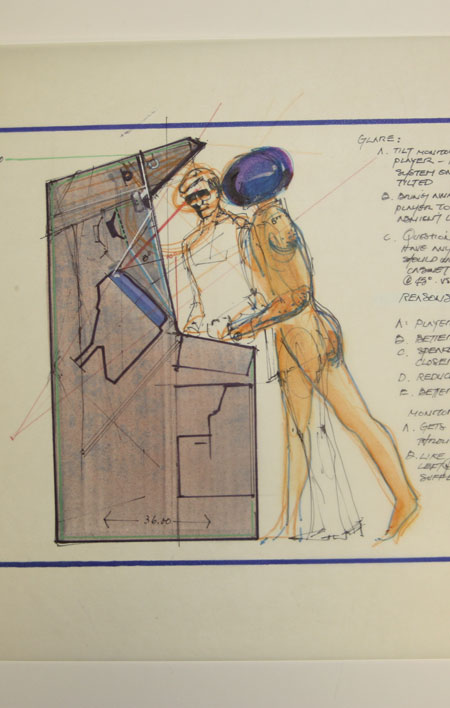
Structural damage and electronic disrepair are cause for concern, but Villard is focused on respecting the originality of each new acquisition as well. Cigarette burns and chipping present him with a choice: keep them and risk more damage, or fix them outright and avoid any complications?
"As a museum, we have a responsibility to treat these items a certain way," Villard says. "But these little marks here and there, they're part of the original thing. So sometimes we keep them."
Villard's hand leaves the chipped side of Whirlwind, and he shrugs his shoulders.
"We've fallen away from that [arcade] mentality," Villard says. "People love their phones. Now those are their games. They don't need these anymore." He waves his hands in a sweeping gesture over the nearby cabinets.

If he believes his own words, he doesn't show it. Villard handles the electronic switchboards of Mario Bros. and Gran Trak with the care of an archaeologist dusting off fossil remains. He traces the wires of an old raster-style monitor — a screen operating with a glass tube — with a child's adulation of a brand-new toy.
In addition to the machines of the Videotopia collection, the ICHEG has since acquired numerous others through donations and acquisitions. Villard's current project is the Boardwalk Arcade exhibit. It's a tribute to the great arcades like Coney Island and Venice Beach, the exact setting where Villard would have found himself in his younger years, reserving a spot in the next game by laying a quarter down on the cabinet. It's a tribute to the past, maintained by someone who, however good he is at hiding it, is always looking to the future.
When Villard is no longer the ICHEG's conservation engineer, his work won't leave with him. Just like Dyson and his co-workers, Villard archives everything he does. The next person to don the white lab coat will have years of documents on how to install coin mechanisms in Pac-Man, or what voltage light bulbs Old Coney Island needs. They'll have precise instructions, left behind by someone whose work shows that he really does believe people will always appreciate the pizza parlor rejects and boardwalk relics of video games' past.
And when Villard's successors receive pinball machines with broken light bulbs, absent flippers and maybe a cigarette burn or two, they'll know just what to do.
Flashes of genius
Three floors above the ICHEG vault, Dyson opens a three-ring binder. Inside are nine graph-paper notebooks. Scrawled across the surface of every page are sketches, bar graphs and notes connected by interlacing lines. Phrases like "complex systems" and "behavior not realistic, but emergence is" — all in Will Wright's handwriting.
The ICHEG contacted the developer in 2010, asking if he would be interested in contributing to the project. It wasn't long before Wright responded with his notes on The Sims and Spore, saying that he knew of "no other institution that is covering this topic as comprehensively as [the ICHEG is]."
From there, Dyson and his team continued to reach out to game design veterans in the hopes of acquiring new materials, in any form possible.
"This is part of our larger mission," Dyson says. "We want to preserve design materials and media, as well as the physical products. We have Will Wright's notes on The Sims and Spore, we have Roberta and Ken Williams' notes on Phantasmagoria, we have a decade's worth of notes from Ralph Baer."
Dyson says all of these materials serve a larger purpose, to not only have a digital archive of games and related media, but the design and theory behind the entire medium as well. The ICHEG is working to have all of the notes, schematics and design documents available online to the public.
And if there's someone who knows the entire collection inside and out, it's Shannon Symonds.
She creates order out of what could be chaos. She archives every item, making them all easy to find at a later date. The items are also photographed to be viewable in the ICHEG's online collections database — one more step in the process of digital preservation.
"Researchers can look down the list and say, 'I want this, this, this and this,' for whatever they're doing."
Symonds uses a program called Argus to streamline the digital side of things. It's a virtual Dewey Decimal System for the ICHEG's databases, separating the tens of thousands of cataloged items into an organized digital library. When researchers make an appointment to use the ICHEG's resources, they'll use Argus to find everything they need.
"Researchers can look down the list and say, 'I want this, this, this and this,' for whatever they're doing," Symonds says.
There's a host of information on each acquisition, from related items to the item's very origin. Symonds says that, for as many times as someone is looking for one certain item, there are just as many when they're researching a certain person.
"Sometimes, games don't warrant a ton of research," she says. "But who donated or why [the item] was donated can be just as important."
With all of the games and related artifacts, with all of the illustrated reflections of renowned game visionaries, the ICHEG has a lot to offer researchers and game designers. But what good are these items merely as physical products, or as photos? What good is a collection of cartridges, discs and manuals in representing a medium based around interactivity?
To truly understand what each game is about, you need to see it being played, Dyson says. And preserving that in digital form is easier said than done.

The hard part
When Dyson needed a new assistant director in 2012, he put out a national call for experienced historians. As luck would have it, he found just the person in the ICHEG's backyard.
Jeremy Saucier is a Rochester native with a Ph.D. in American history. He's a laid-back kind of person, with a laugh always ready at the back of his throat. He's reactionary, often changing his approach on the fly. His personality suits his work.
Being in charge of digital game preservation means Saucier has to learn as he goes. He has to look at things from a different angle when they don't go according to plan. And in the ICHEG's research lab, things don't often go according to plan.
"There are all of these questions when it comes to the digital side of things. If we were to explore every single variable that could complicate things, it could be a story spanning several weeks," Saucier says.
Today, he's working on video capture; it's one-half of what he does in the lab.
"You can look up videos of game play on streaming sites [such as YouTube]," Saucier says. "But there's no telling how long those videos will remain up and accessible on those sites. There's no guarantee those captures will be preserved. We can systematically capture, save and back up these videos. We know they will remain preserved and protected by the museum."
To help Saucier, the ICHEG has a co-op program with game design students from the nearby Rochester Institute of Technology. Today, James Hoyt and Alex Williams are helping Saucier capture video.
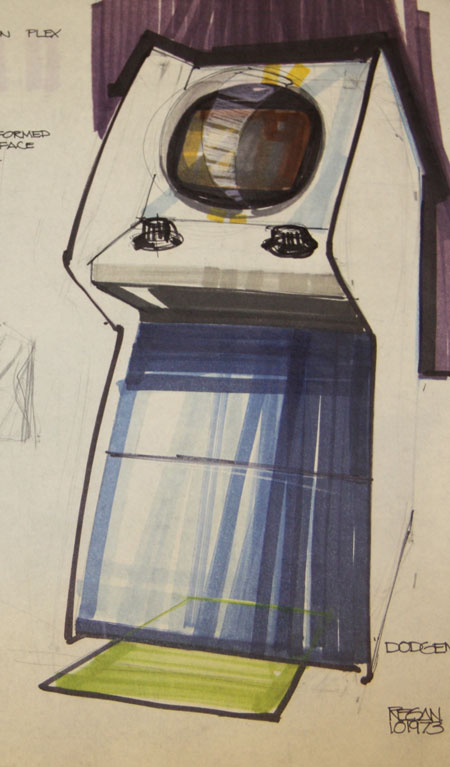
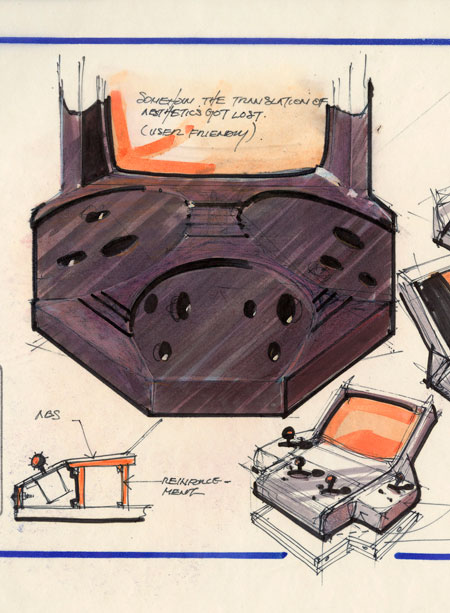
"We have these 10-15 minute 'SparkNotes' videos that give people an idea of what each game is about," Hoyt says. "We really want to capture the essence of each game, what will be important to each one."
"We have to not only decide what parts of each game to save, but also what games we even have to capture," Saucier says. "There are more games now than ever before, so we probably won't capture all of them.
"Video capture is particularly valuable when it comes to games released on digital marketplaces. It's becoming increasingly challenging to document everything, but we're adapting along with the industry."
Saucier points to a small board of computer chips and processors, no bigger than the palm of his hand. It's connecting an old floppy disc drive to one of the lab's newer computers. This is Kryoflux, the tool that allows the ICHEG to adapt.
"With this, we can migrate the very source code of older games on floppy discs," Saucier says. "This lets you play these games, through emulators, on newer computers.
"In a few decades, almost no one will have a Commodore 64. So we can preserve the code and allow people without the resources we have to still play these titles down the road."
Saucier says that there isn't any hard evidence on how fast data in floppy discs and NES cartridges decays. Because of this, he and the RIT students are more focused on capturing older titles for the time being. They're in a race against time, and there is no definite finish line in sight.
"Just like the rest of the ICHEG, we're learning as we go," Saucier says as he rubs his neck. "We're creating guides and documenting how to do all of this. It's challenging, but it's exciting. And in 20 years, when more museums decide that video games are art, we'll have the resources they need."
Passing the torch
The digital preservation process the members of the ICHEG are exploring is anything but formulaic. There are complications at every turn. They're trying to preserve a medium that changes by the day. But they're working hard to figure it out.
"We're willing to carry a lot of the load, but we can't do it alone," Saucier says. "We're not the only ones doing this, but we need even more people to step up."
They're not just building something; they're also saving the blueprints. They're priming the project for future generations to take over, to keep breathing life into it as the decades pass.
"We want to help raise awareness inside and outside of the industry," Dyson says. "We want to stress the importance of video games and the need to preserve them. And we don't have an endgame, an end time in all of this."
The story of the ICHEG is a history lesson in the present tense. It's a story about change, and the people with enough foresight to see that it's worth preserving.
And if things go well, the digital library Dyson, Saucier, Villard and Symonds are creating will never be completed. Their project will keep evolving. It will adapt alongside the medium that brought them all together in the first place. 
Editing: Russ Pitts, Matt Leone
Design / Layout: Matthew Sullivan, Warren Schultheis
Image credits: International Center for the History of Electronic Games
firehosewow, when you get bashed for moving _away_ from Copperplate Gothic...

First produced in 1997 by Modo & Modo SpA in Milan, Moleskine — produced by the eponymous Italian parent company since 2007 — is an extensive line of pocket-sized, trusted travel companion notebooks with over 14 million units sold in around 23,000 points-of-sale, including nine branded stores, in 90 countries across the globe. Between the classic notebooks and all its variants — small, large, ruled, squared, plain, colored covers — and dozens of special editions Moleskine's collection includes over 750 products. Earlier this month Moleskine introduced a new monogram and a revised wordmark desiged by Milan-based Achilli Ghizzardi Associati.
A set of nine modules consisting of the M of Moleskine and eight rounded squares come together to form a grid, evoking the essential design elements of the Moleskine notebook with its rounded corners as well as those of the digital realm. Each module is a flexible space that can house a wealth of content: the letters of the company name, the colors and configurations of the collections, community creations and multimedia content will all fill the new Moleskine monogram.
— Press Release (PDF)

Animated GIF presenting the new logo.
"Sketches" of the new logo. In quotes because this image couldn't be any more Photoshopped unless it had Kim Kardashian on it.
The new monogram presents the brand as designer of open platforms for creativity, communication and sharing. […] Tthe intention was to create a fluid visual icon that communicates its multi-faceted and open nature while unifying its many objects, types of users and brand values.
— Press Release (PDF)

Monogram detail, above. With stuff, below.




Re: the above image. Shoot me now.

The logotype remains unchanged apart from a more emphasized roundness to the curves of the letters, creating a proprietary font for the first time in the company's history. Particular attention has been given to the letter M, which becomes the pivot for the whole visual identity.
— Press Release (PDF)

Detail of the wordmark. Apologies for fuzziness, it's the best I could find.
If it were designed today, I would vehemently complain about the old wordmark being set in the overused and underwhelming Copperplate Gothic but, now, compared to the atrocious update to it, I find the simplicity and established ubiquity of the old one a major loss. The new wordmark takes out all the edge and crispness of the old and sands down every corner down to a stubby soft corner, while getting rid of inward serifs that provided necessary balance. A major downgrade. Then there is the new monogram, that takes the new "M" and places eight rounded squares (that mimic the rounded corners of the notebooks, see?) around to create a 3-by-3 grid. It's not totally a bad idea, but why squares? As far as I can tell, there isn't a single square Moleskine out there and it's not like every logo should replicate its product or history but the disconnect here is quite obvious and flawed. The monogram then uses the logo-as-window in the most obvious and boring ways, kind of ruining that maneuver for the rest of us. Finally, the monogram is used in tandem with the new wordmark, where it becomes so small to be unreadable. Overall, a very disappointing evolution, specially considering the product's popularity and embrace in creative industries. It deserved better.
Thanks to Yotam Hadar for first tip.

firehoseBREAKING: Kanye West is a conlanger
USA TODAY |
Funeral in Boston for victim in Aaron Hernandez case
USA TODAY BOSTON (AP) - Hundreds of relatives, friends and well-wishers have wept together and hugged at the funeral of a semi-pro football player whose killing led to murder and weapons charges against former New England Patriots player Aaron Hernandez. Hernandez Case Suspect Denied BailNBC 6 South Florida Funeral held for man in ex-Patriot's murder caseUniontown Herald Standard Patriots void Aaron Hernadez remaining guaranteed moneySB Nation all 3,714 news articles » |

Digg has begun rolling out invites for the beta version of its RSS reader, less than one week before Google Reader’s imminent shutdown on July 1st, 2013. Digg Reader currently allows users to import their feeds from Google Reader, search for new feeds to follow, and browse a list of feeds recommended by Digg’s editors. It also supports keyboard shortcuts and lets users save articles to Instapaper, Pocket, or Readability, share to Twitter and Facebook, and Digg posts directly in the RSS reader. Users can also view their feeds in list view or expanded view, and sort their feeds to see a list of the most popular unread items. Digg also plans to add search, more sharing options, and the option to view only unread items in the near future. Prospective users can sign up for an invitation at Digg, and an iOS app is expected to be available for download in the iTunes App Store tomorrow. Digg plans to make an Android app available before the end of July.
image via All Things D
firehose"We have been unsuccessful in coming up with one single software with which people can understand, ‘OK, this is really different.'"
Low Wii U sales are the result of poor marketing and a failure to offer consumers software to showcase the system, Nintendo CEO Satoru Iwata told CNBC.
The troubled console launched last year; however, according to Iwata, Nintendo has yet to highlight to users the system's key features that make it unique.
"We are to blame," he said. "We relaxed our [marketing] efforts, so the consumers today still cannot understand what's so good and unique about the Wii U. Because we're always trying to be unique, it takes some energies on our side to [make] people understand the real attractions about whatever we are doing.
"We have been unsuccessful in coming up with one single software with which people can understand, ‘OK, this is really different.'"
Unlike its predecessor, Wii U has failed to offer buyers a single piece of software as integral to the system as Wii Sports was for the Wii, says Iwata. The executive emphasized that it plans to boost sales and lure back third-party developers by developing its own titles for Wii U this year. This, he says, is a better option than simply cutting the price of the console.
"Because from the very beginning we came up with a very aggressive price point. We do not think [a price cut] is a very easy option to take,Because from the very beginning we came up with a very aggressive price point. We do not think [a price cut] is a very easy option to take," Iwata said. Iwata said.
A number of third party developers have opted out of developing titles on Wii U since the consoles launch. While EA published several games for Wii U following its launch last November, the publisher confirmed that neither Madden NFL 25 nor FIFA 14 would launch on the system in the future due to poor sales in previous installments of each franchise on the console.
firehoseyay

The US Supreme Court’s decision to throw out the Defense of Marriage Act (DOMA) forces the federal government to recognize same-sex marriages in the states (currently 12) that allow them. But ending employment discrimination against lesbian, gay, bisexual, and transgender (LGBT) people more broadly is the province of another law that is currently stuck in the US Congress: the Employment Non-Discrimination Act (ENDA).
The end of DOMA will affect a swathe of policies, including benefits to federal employees, tax filings, even immigration. Companies, on the other hand, mostly see these issues through non-discrimination policies and employee benefits. In some 29 states, there is no law prohibiting discrimination based on sexual orientation, while federal employees are protected only by a malleable presidential decision. ENDA would make non-discrimination the law of the land.
Non-discrimination policies and the availability of same-sex benefits in the private sector vary widely across industry and region, although 88% of Fortune 500 companies specifically ban discrimination against gay employees. Currently, a little more than half of American companies offer their same-sex employees the equivalent of marriage benefits; that number has risen rapidly in recent years, mirroring the growing acceptance of gay marriage in the US and a trend toward offering benefits to domestic partners, not just married couples.
The issue came to the front in May when Exxon’s shareholders rejected a proposal from New York state’s pension manager to specifically recognize LGBT employees. After the fact, Exxon’s board said that its existing equal opportunity policies provide blanket protection to those groups. Still, corporations large and small endorse the proposed law, and the pronounced neutrality of the US Chamber of Commerce, an organization that typically pushes against restrictions on US business, rings loudly.
ENDA already has bipartisan sponsorship in the Senate and the House, as well as President Obama’s endorsement; its advocates expect that court decisions affirming the federal government’s recognition of same-sex marriage will deplete objections from social conservatives and allow the legislation to be enacted. The end of DOMA will also mean the federal government—the largest employer in the United States—will begin to offer same-sex benefits, increasing the share of employees who access and expect them. It could also make same-sex benefits cheaper for private companies by changing their tax treatment.
When constitutionally-recognized marriages and same-sex tax treatment are the law of the land, it won’t be long before non-discrimination policies follow.

firehose'Jeroen Van den Bosch: Wicked Paradise will be episodic, much like the brilliant videogame The Walking Dead. The first series will be from a hetero male POV, but we'll have different series that cater to different genders and sexual orientations, it's our goal to ultimately have Virtual Reality experiences for everybody to enjoy.
PCGN: Will there be games for other sexualities? What do you have in store there?
Jeroen Van den Bosch: Definitely, we actually received more inquiries about Wicked Paradise from females than from males, so it's our intention to also create mature virtual reality experiences from a female POV as well as experiences for the LGBT demographic. :) '
The above image is sort of troubling, in that sometimes I wonder if we will ever see bodies that are not the ones that are marketed to us: when games talk ‘realism’ they mean the visual fidelity of an already existing trope, rather than carefully representing diverse voices and bodies (which would be far more interesting, in a way, more ‘real’). Of course the first thing you’d model for an erotic videogame is the above stripper: her body is the sort we ingest daily on billboards. She is traditionally what the heterosexual male is supposed to find ‘sexy’. Wicked Paradise has promised me in the below interview that other viewpoints for their new episodic content for the Oculus Rift will be represented. But if the first episode (ostensibly seeming to be about a strip club) is commercially successful, will we ever get to see erotic experiences that aren’t in the Leisure Suit Larry…vein?
“The Oculus Rift is getting a hot injection of the erotic kind. Wicked Paradise, based in Irvine California, is producing a series of episodic erotic games to cater to all sexualities. Though it’s in the early stages of development, it’s certainly a neglected space in the games market, and so it will be interesting to see how this works out for the developer, who has on board staff who have worked on AAA titles such as Rage, the Call of Duty series, Lost Planet, Madden, and PlanetSide 2. I asked for an interview to find out more.”
Read the whole thing here: Erotic episodic game for Oculus Rift by Wicked Paradise is gaining more interest from women than men, says founder | PCGamesN.


firehosevia Overbey
don't mess with Austin, at least; judging by the Longhorns shirts, this is UT-A vs. the rest of Texas
firehosevia saucie
glad they compared it to any study of another city because Portland is an aberration of bicycle-related etiquette no matter how much some people whinge

We've all met that person who can't seem to talk about bikes without complaining about "the cyclists" who are "always running" red lights.
Next time you cross paths with them, you might want to mention a new study suggesting that speeding in a car on local streets is at least six times more common than running a red light on a bike.
Nearly 94 percent of people riding bikes in Portland, Beaverton, Corvallis and Eugene stopped for red lights, a forthcoming Portland State University-based study of 2,026 intersection crossing videos has found. Of those, almost all (89 percent of the total) followed the rules perfectly, while another 4 percent entered the intersection just before the light changed to green.
Only 6 percent of riders were observed heading directly through the red light.
"This level of compliance ... it's higher than I would have expected."
— Chris Monsere, civil engineering professor and director of Intelligent Transportation Lab at PSU
That compares to, for example, an estimated 36 percent to 77 percent of people who tend to break the speed limit when driving a car on local streets, according to previous, otherwise unrelated research. (See p. 2 of the PDF.)
The new finding on bike safety might surprise bike watchers such as, for example, Commissioner Amanda Fritz, who in 2011 mentioned red-light jumpers as a reason to vote against a Portland bikesharing system. The study certainly surprised one person: its author, PSU civil engineering professor Chris Monsere.
"This level of compliance ... it's higher than I would have expected," Monsere said Monday. "Pedestrian compliance with signals downtown is nowhere near that."
The videos captured people crossing the intersection during daylight hours, both weekdays and weekends, in various urban and suburban settings. The figures don't include people turning right against red lights.

Monsere said few academics seem to have studied how people use their bikes at red lights, so it's not clear whether Oregonians are unusually law-abiding. Two weeks ago, Chicago's transportation department touted new bike signals on Dearborn Avenue that it said had nearly tripled stoplight compliance by people on bikes ... from 31 percent to 81 percent.
But that pattern doesn't seem to hold up in Monsere's study, which found no significant difference in behavior between intersections with dedicated bike signals and those without.
People who run red lights on bikes were less likely to wear a helmet: more than 15 percent of people without helmets pedaled through the light, compared to 4 percent of those with.
"It's risk-taking behavior," Monsere said.
Monsere's study, which he made available in draft form because it's still awaiting peer review, was jointly funded by the Oregon Transportation Research and Education Consortium and Oregon Department of Transportation.
Is it possible that, much like more bikes on a street seem to make it safer for everyone, more bikes at an intersection tend to make everyone more law-abiding?
That's one theory from Peter Koonce, the City of Portland's top expert on stoplights. And that's why he suspects Portland red light compliance is so high.
"You have to have a little bit of gall to pass the crowd and blow the red light when there's six or seven or eight other people there," Koonce said.

firehosevia willowbl00
eternal autoreshare hall-of-famer








Ryan Gosling won’t eat his cereal (x)
I am legitimately crying.
And the 2013 award for Greatest Idea of the Year goes to this. Seriously, I don’t care if its May, close the voting, its all downhill from here.
firehosegood news: it happened
bad news: it's narrowly tailored on a technicality
firehosevia Wojit
I need like a read-it-later for Twine games
wait I guess Pocket does that too, technically, lol
made a game for the new inquiry. my interview was also released.
game [parasite]
interview [beautiful weapons]

firehosevia Wojit
TW: suicide
by Riley MacLeod
Riley MacLeod is a trans writer and activist based in Brooklyn, NY. He is an editor at Topside Press and co-editor of “The Collection: Short Fiction from the Transgender Vanguard,” which won the 2012 Lambda Literary Award for Transgender Fiction.
Trigger warning for discussions of suicide.
Everything bad seems to happen to me when playing Spec Ops: The Line.
The last essay I wrote for this site was about playing Spec Ops during Hurricane Sandy and the surreal feeling of playing a disaster game during a corporeal disaster. Over the winter I read Brendan Keogh’s Killing is Harmless and re-downloaded Spec Ops, intending to dig up some of the intricacies he points out, but I never got around to it. Last week, tired of the vapid sexism of Splinter Cell: Conviction, picked up during a Steam sale, I went back to Captain Walker’s ruined Dubai. It was nice, in a weird way. I’d forgotten how beautiful and harsh the environments were, and new headphones wrapped me in the rich sound design, the gritty footsteps and rattling gear of my doomed Delta squad, the solid crunch of bodies hitting glass. I found some new things–the tree that dies when you turn around, the ghost of a dead woman in the windows of a skyscraper, the ending you get when you fight your way through to the very last man. Done with a playthrough, I found myself achievement hunting, which I was dubious about in my essay, and I investigated what I was doing as I played late into the night. I realized that I didn’t want to leave Walker, Adams, and Lugo alone in that fucked-up place, stuck with their demons and their failures. I felt bad for them and what I was urging them to do with a gentle digital hand on their backs. I couldn’t change what happened to them, but I could at least try to guide them, keep them for too long in the corridors and ledges between combat arenas, staring shiftily at each other before they had to learn what atrocity I knew was coming next.
The next morning, I learned that I’d probably been playing Spec Ops when Donna left the house to kill herself.
*Donna was trans, and my neighbor, and my friend, and an author in the book I edited. We won a Lambda Literary Award for trans fiction (the first transpeople to do so) the week before she died. We had a free ticket to the award ceremony and tried to encourage her to come, but she didn’t want to. When she didn’t want to do things, I always assumed she was gaming. I saw her in my Steam friends list constantly, ever since we got together to play Left 4 Dead 2 one night. She was better at it than I was, and she laughed at me as I sat cross-legged on her bed, screaming and swearing and engaging in the general constant chatter I keep up when I game. She teased me for calling the AI “robots” and for lording my humanity over them when I succeeded where they failed. I got a couple other friends into it, and we tried to get her to play with us, but she was usually playing something else. She tried to get me into Borderlands 2, but by the time it went on sale she was done with it. She was really into XCOM, and I took a peek at it after seeing how much she played it, but it seemed a little too slow for my tastes. We talked about the Mass Effects, and she played Dishonored in April, but according to her Steam stats it doesn’t look like she finished it. She gave me a copy of DotA 2 I haven’t installed. She played a lot of Civ 5 with my L4D2 friend, which they tried to convince me to play, but I could never justify the price. While I don’t like blockbuster shooters per se, at the end of a long day of work, I usually want to disappear into a game that won’t offend me too much but won’t require too much of me either. I usually say I need a game I can drink to. Indie games or puzzle games or non-shooters, though I love them, require brainpower, awareness, and energy, which are often in short supply when I can make the time to game.
When I got the call that Donna died, I laughed and said, “No, she’s probably just playing games.” I logged on to Steam, and she wasn’t on. She hadn’t been on in 9 days, according to her profile. Strangely, for the first time, I thought, “That’s a long time. I wonder if something’s wrong.”
*I know a lot of transpeople, myself included, who probably play games too much. I worry about it, sometimes. I wonder what it means, and if we’re escaping, and how you know if escapism is becoming a problem for you. These days, I usually find myself longing to inhabit the bodies of digital men more than my own, and sometimes I’m hard-pressed to understand if I actually have a body at all. Your body never fails you in games, besides short absences of stamina, and when you screw up, no one tends to mention it. No one harps on it and berates you, and they’re just as awed when you succeed as if you’d done it on the first effortless go. Everyone wants to be with you to celebrate your achievements, trusts you and is trustworthy, wants to help you–and, if they don’t, you alone are still enough. You can almost always win, and you’re almost always the hero. The right way to go is laid out on your map or with an arrow or a way marker, and one success leads to the next like a reliable, glittering chain. In many games, you’re the strong one, the tough one, the one scaring other people and making them run. The one who can go anywhere with ease, who isn’t afraid to leave the house at night or use a public bathroom or go to a party or an awards show or a friend’s house. The one who doesn’t need to see a doctor or a therapist or a surgeon or a beautician to force yourself to fit into the world. The one who can sweep love interests into their arms and a cut scene without a second thought, who can pick and choose, who desires and is desired. When I think about it that way, I can’t really be surprised that myself and some of my other trans friends game maybe more than we should.
I’ve been a long-time advocate of games as self-care, which I’m often very vocal about when self-care strategies come up in my radical political circles. Amidst talk of creating a support network, acupuncture, eating well, or herbs, I champion games. I usually say: think about it like this. In a game, you have a clear enemy and a clear goal. Nothing is complicated or tricky. You know you can win, and you can usually do so through the unilateral application of force, which you get to have instead of the cops, politicians, and capitalists of real life. You can always save the world, or meet whatever successful end state the game’s designers have laid out for you, and, besides in games like Spec Ops, everyone is pretty proud of you when you do. It’s the perfect antidote to the long haul of radical politics, I say. The game world is made for you, exists solely for your pleasure and success and violent, self-centered wants. I come away from games not feeling afraid or confused or powerless. For whatever hours I slip behind my keyboard and tug my headphones over my ears, I’m not on the losing team.
And then one of us turns the game off, and maybe those hours of winning aren’t enough.
*The day after Donna died we all hung out in Harlem and cried a lot. Sometimes I forgot why we were there, excited to meet some of her friends I’d never known. A number of folks were gamers. At one point, maybe a little too flush with grief whisky, I was eagerly explaining a presentation about queering game mechanics that I’d given at a conference when someone new entered in the corner of my eye. I glanced briefly toward the door, thinking, “Oh, I hope it’s Donna; I don’t think I ever told her about this.” It wasn’t, of course, and I fell silent suddenly. It didn’t seem real. It felt like a joke, like she’d “Huck Finn-ed us,” as one of my friends said. I’ve lost people before, but there was some absurd part of me that kept thinking things would just reset the next day. I mostly saw Donna in my Steam friends list, inhabiting the same imaginary world as I did, one where death tends not to be a permanent condition. It seemed sad, but surely she’d played enough hours to earn an extra, real life.
The next day things were basically the same, except I was alone at my apartment with no idea what to do with myself. I played games. I stared at Donna’s name in my friends list, texted sadly with another of our friends who was clearly burying himself in Civ 5, now down a playmate. I played Doorkickers, an indie squad-based tactical game whose perceived mechanics intrigued me even though playing a SWAT team made me nervous. The game was still in its alpha stage, and the controls weren’t as responsive as I thought they’d be. Added to that was my own unfamiliarity with strategy games. I rushed headlong, stumbled through doors, planned poorly or not at all. My little pixel troopers became injured and then died. They had little names and little voices that cried out when they were shot or lost a friend.
Even though they were just 1s and 0s, I was sure they hated me.
I found myself replaying missions over and over, at first restarting when one of them died, and later aborting the mission the moment one of them was hit. Like Walker and his squad in Dubai, I wanted to protect them, I wanted to steer them through. I can’t remember at what point I started crying, started snarling in frustration every time they barked “I’m hit!” before I took them back to a time before they had begun the foolish adventure of trying to be part of a world designed to slaughter them. They were poor, ridiculous fucks for thinking they’d make it, for expecting me to help them. They were woefully unprepared. They couldn’t respond fast enough; they didn’t know what was coming; sometimes the tools they were equipped with didn’t function correctly to keep them from doing something stupid and deadly and making everyone miserable. My own inadequacy stared me in the face, and every reset brought a new dark level jammed with corners hiding monsters that my squad, at my hands, had no hope of overcoming.
Obviously all of this allegory got to me. I paused the game and sobbed explosively, sobbed until I thought I’d be sick. I wanted to talk to someone but couldn’t think of anyone who wasn’t dealing with their own grief, anyone whose attention I imagined I deserved. Eventually I made a couple phone calls, received an unsolicited text, and went out and got drunk with a friend. Our first beers were flat, and we didn’t know what to do. Eventually my friend kindly confronted the bartender, who thanked us for letting him know and gave us two rounds on the house. It felt good to be looked after, even in that small way. It felt good to have someone stand up for me and to win in the real world. I wandered home on an airy cushion of booze and grief, lecturing myself that I should reach out to people more often, that that was good self-care, and doing the math on how late I could sleep before I could reasonably get drunk and game.
*There’s an achievement in Spec Ops called “A Man of Patience,” which I wouldn’t have known was possible without mention of it in Killing is Harmless. You can get it when your squad is harassing you about whether to save Agent Gould or a handful of civilians. If you ignore Lugo, whom you will also ignore later, and follow Adams, you drop down into a sun-dappled area behind some trucks. There, you hide for too long while Gould is tortured, one last chance to doubt yourself and open fire. If you wait, you can follow Adams as he murders someone, pick up their silenced gun, and take out a soldier when Adams fucks up. I fucked this up about ten times, raging, before realizing I just hadn’t pressed “C” to equip the gun’s silencer. After that, it’s a quick, crunchy crouch across a sandy lot strewn with exercise equipment and a basketball hoop for the soldiers who won’t attack you if you succeed at your stealthy quest. If you hide behind some boxes, you can hear two soldiers trying to decide who has to kill the remaining civilians. They want to draw straws, but they don’t have any. They want to flip a coin, but they don’t have one. One suggests flipping his Army service medal, which the other is a bit dubious about, but they proceed. They’re silent for a moment when the verdict is delivered. The one who won, who doesn’t have to kill the civilians, apologetically offers to go two out of three, but the loser refuses this kindness with a shaky, “It’s fine.” They vacillate a little, kick the dust and shift their guns from hand to hand. It’s at this point that I kill them.
In a cut scene, Adams assures the civilians that they’re OK and removes their bonds. They’re two young Arab men, one older than the other, I think. One runs away immediately. The other pauses, looking back at Adams and Walker, and mumbles an accented “Thank you.” He looks like he’s really had to think about it, like he hasn’t used his English in a while, or like he isn’t completely sure he’s thankful. Adams waves him away. When you regain control of Walker, the achievement pops, and Lugo is yelling at you to come see how dead Gould is.
As far as I can tell, these are the only two people Walker actually saves in the course of the game, and there’s a good chance he kills them when he climbs the next ridge to the Gate. The friend who took me out for a beer the night after Donna died, along with a handful of others, unequivocally saved my life when I was going to kill myself roughly two years prior to that night. I remember how much I hated my friends for it, how many painful, fucked up things I felt forced to still be alive for in the days and weeks and months that followed. I don’t know if I ever thanked them for what they did. Two years later, though I’m in a very different place, I’m not completely sure how far my gratitude extends. In the real world, unlike in games, there’s so little you can do. There’s no waypoints, no mission objectives, no achievement stats. There’s no ultimate win state, as much as we keep slogging toward one. There’s just trying and sometimes failing, sometimes succeeding. There’s escaping and confronting and trying to find the balance between taking a break and escaping too much. There’s keeping yourself alive for your friends, and there’s the horrifying understanding, as one of my friends told me, that sometimes shit is so hard that we don’t owe each other another hour on this planet. There’s being enough for someone sometimes, and sometimes not, and people being enough for you, and sometimes not. There’s holding each other and saving each other, and losing each other, and having no idea what comes next.
firehosevia Snorkmaiden
In describing Bertolt Brecht’s epic theater, Walter Benjamin describes how the episodes of a Brecht play move in “spurts,” where songs, captions, and lifeless conventions “set one situation from another” and “paralyze [the audience’s] readiness for empathy.” The style, according to Benjamin, seeks to disrupt the Aristotelian unities and present a world-in-progress that requires the audience’s help to finish. Instead of “unalterable” characters who develop linearly, Brecht himself writes, characters are “alterable and able to alter” and they proceed “in curves.” And so, one might argue, the aesthetic of the epic theater presents an appropriate format for the personal development of children and adults alike.
This proposed panel seeks to analyze the way in which the Muppet franchise can be seen to participate in this project of epic theater. So long as they make a connection with Brecht’s epic theater, papers may address any manifestation of the Muppets.