Larch is a tool to copy messages from one IMAP server to another quickly and safely. It’s smart enough not to copy messages that already exist on the destination and robust enough to deal with interruptions caused by flaky connections or misbehaving servers.
Larch is particularly well-suited for copying email to, from, or between Gmail accounts.
A Dark Pattern is a type of user interface that has been carefully crafted to trick users into doing things, such as buying insurance with their purchase or signing up for recurring bills.
Pa: Our same-sex licenses invalid Politico HARRISBURG, Pa. — Marriage licenses given to same-sex couples in the state are invalid because the couples were barred from marrying, just like 12-year-olds, Republican Gov. Tom Corbett's attorneys said Wednesday. Corbett's administration has filed a ...
(Est. 1882) Located in the heart of the Portland Arts District, Maine College of Art offers a Bachelor of Fine Arts, a Master of Fine Arts in Studio Arts, a Post-Baccalaureate in Art Education as well as Continuing Studies for adults and youths, including a Pre-College intensive for high school students. The student body is currently approximately 350 BFA and MFA degree students. About 30% of the students come from Maine, and 70% from New England. Over 95% of undergraduates receive financial assistance. Maine College of Art annually serves more than 2000 adults in the region through more than 200 credit and non-credit public courses in its year-round Continuing Studies program. Over 300 teenagers and children participate in MECA's Saturday School and summer classes begun in Portland in 1973.
Design by: Pentagram partner Eddie Opara + MECA faculty and students
Opinion/Notes: I appreciate the quirkiness of the "E" in contrast to the more conservative letters around it. At first I saw a book, which is not a terribly bad association. Then I saw tentacles, which is an awesome (but highly irrelevant) association. Also, for whatever is worth, as a professional logo designer, I would rather contract out 99designs.com to do the logo before doing it through a 3-day charrette.
Select Quote: The new mark is the culmination of combined efforts that transpired over an intensive three-day charrette hosted on campus in early February, 2013. Orchestrated under the guidance and vision of internationally known designer, Eddie Opara, Partner at Pentagram (the world's largest interdisciplinary design firm) and MECA graphic design faculty led by professors Margo Halverson and Charles Melcher, a group of MECA graphic design majors were selected to participate.
"The uncommon process employed to develop MECA's new mark exemplifies creative problem-solving at its finest and underscores the distinctiveness of what makes this such a special place." said MECA President Donald Tuski. "Not only does our logo signify the unparalleled educational experience and wealth of professional development opportunities found at MECA, it also symbolizes several of our most important defining attributes: the five-pronged 'E' represents the five core tenets of our educational philosophy statement —studio, agency, place, community, and ethics; the five floors of the historic Porteous building; and the five educational areas — BFA, MFA, Art Ed, Continuing Studies, and Pre-College, while paying tribute to the iconic red stairwell that unifies each of the departments and majors."
Joe Marine of No Film School has a short interview with two of the creators of the Black Betty, a deceptively old-school looking digital cinema camera. The Black Betty gets around one issue with the massive data processing and storage needs inherent to high-capacity, high-resolution video cameras by attacking it head-on. Rather than use the camera "merely" as a collection device, the creators have jammed into the machined aluminum case the guts of a Mac Mini, which means the camera not only has a powerful processing brain, but a built-in SSD drive, and can (in a pinch, or even by preference in the field) be used to edit and transmit the footage collected with the actual imaging system, which is based around the SI-2K Mini sensor, which shoots 1080p video at up to 30fps.
In “Every Tech Commercial,” CollegeHumor parodies technology advertisements by pointing out odd tropes commonly found in advertising for smartphones, online services, and other tech-related products.
It is midnight and I’m staring at the Hebrew letters on the cappuccino machine in the between-interrogations waiting room at Ben Gurion International Airport in Tel Aviv.
A young woman is sitting next to me. Her arms are wrapped around her legs as she nervously rocks back and forth. When she turns towards me, her eyes are red and I can tell she has been crying.
“Where are you from?” I ask.
“Denmark,” she replies, then adds in a whisper, “But I’m Arab. My parents are Palestinians from Lebanon.”
“Me too,” I whisper. “I’m Lebanese. This happened to me last time I was here—stay strong and keep smiling, habibti.”
An Israeli border policeman stands next to the international arrivals board at Ben Gurion air port near Tel Aviv on April 15, 2012. (David Buimovitch / AFP / Getty Images)
I will never forget the first time I was interrogated at Ben Gurion International Airport. I was caught lying at the border—as everyone is instructed to do when going to the West Bank. The reason for this is that the Israeli Border Control is notorious for turning away anyone who claims that they intend to visit the West Bank—or in their words, “the areas controlled by the Palestinian Authority.” If it is suspected that you might intend to visit the West Bank—particularly if you look Palestinian—you are almost always interrogated, and often given a shorter visa than the typical three-month tourist visa.
I was asked whether or not I spoke Arabic and if I had family “in Israel.” I was held for a total of seven hours in a dark room, and then finally given a two-week visa.
I will never forget the rays of January sunshine that I squinted into after those seven hours were finally over. I will never forget the breathtaking countryside on the shared taxi ride to Jerusalem. I will never forget arriving in Jerusalem, and the kind professor from Abu Dis University who felt sorry for me, leading me behind the buildings to the Arabic bus station—which was tucked away, of course. I will never forget seeing the crowded bus station for the first time—not organized or scheduled like the Israeli bus station less than half a kilometer away—and the older Palestinian women who looked like carbon copies of my Lebanese relatives.
I will never forget seeing the Wall for the first time and the “Free Palestine” graffiti scrawled on it, even on the Israeli side. I will never forget crossing Qalandia checkpoint, leaving manicured, first world Israel for the West Bank—Intifada rubble piled around the checkpoint. Men sold live chickens on the street in the shadow of the 14-foot concrete Wall—or “separation barrier”—with larger-than-life portraits of Yasser Arafat and Marwan Barghouti.
I will never forget going to the store in Ramallah, and smiling with delight when I saw the food my grandmother and aunts made being sold in the supermarket. I will never forget smelling the freshly baked bread, which smelled like home, and realizing that people who looked like me—Arabs—belonged here, though the Israeli authorities at the airport might make you think otherwise.
I still can’t tell this story without crying.
I didn’t expect to come back to Israel or the West Bank so soon—and certainly not to Ben Gurion Airport. But when I was invited to the Media in Conflicts Seminar (MICS) in Herziliya—a conference aimed to expose North American and European journalists to a multitude of Israeli perspectives on conflict reporting—it seemed like an opportunity to better understand Israel and strengthen my reporting on the region as a whole. Of course, afterwards I planned on using my visa to see friends in the West Bank.
I knew the conference went against the boycott of Israel. But I also knew that if I ever wanted to report in the region I needed to understand more about Israeli perspectives. As a reporter, I believe in being fair.
But this time I didn’t get a visa—not even two weeks. Next time I saw the Palestinian-Danish girl, whose name I never learned, I was covered in security tags with a broken suitcase that had been ransacked by the Shin Bet. I was being deported and banned from the State of Israel for 10 years. I later learned that even though the conference facilitators called the Israeli Director of Population repeatedly on my behalf, the immigration and border control were intent on deporting me.
It started with my record of lying at the border the first time. Then—in order to stay three months, the normal length of a tourist visa—I’d gotten an appointment at the Ministry of the Interior to renew my visa, and a document saying I was legal until my appointment—a whole two months. But at my visa appointment the clerk ripped my document, making it look like I had overstayed my visa. These were the first two strikes against me.
The third—and final—strike was that I refused to give the Shin Bet officer my Palestinian contacts when he requested them. It didn’t matter. He still took my phone and took down the contact information for any remotely Arabic-sounding name and told me I was to be deported and banned for “not cooperating.”
Although it is unclear how many potential visitors are banned from Israel each year, it is clear that this is a frequent if not daily occurrence and most often affects those of Arab descent—those seen as most likely to be visiting the West Bank.
As I was about to be escorted by two Shin Bet officers to my plane, one of my interrogators asked, “So, you are a journalist. Are you going to write about our Passport Control?”
I shot him a smile. “Yeah. You should check it out sometime.”
“Student loans are destroying the imagination of youth. If there’s a way of a society committing mass suicide, what better way than to take all the youngest, most energetic, creative, joyous people in your society and saddle them with, like $50,000 of debt so they have to be slaves? There goes your music. There goes your culture. There goes everything new that would pop out. And in a way, this is what’s happened to our society. We’re a society that has lost any ability to incorporate the interesting, creative and eccentric people.”
The Greenlight program has hardly been without its detractors. When first announced it seemed as if the indie messiah had arrived, parting the seas of bad games to allow those noble and true forward. Then the waters muddied as its systems and comments sections were overtaken by Steam’s worst trolls. Now it lies as a problematic but necessary tool of indie game development. But perhaps there is light at the end of the tunnel: Valve have announced that a new batch of one hundred titles were being greenlit as of today. This brings the total to a rather respectable 260. Details on some of this number, and what it may mean, within.
The reason given for this huge bump in titles is a need to stress-test the systems used to publish games on Steam and get feedback from a large number of developers on these tools. There’s no mention made to the issues Greenlight has faced or the growing unpopularity of using it, but I wonder if this sort of huge change might help with that too. Part of the problem is the amount of time it can take to actually reach the Steam store. Meanwhile your game lounges in obscurity, your only connection to its “fanbase” the daily deleting of homophobia and death threats from your inbox and comments. That’s going to get anybody down, so speedier acceptance once you’ve passed a certain threshold helps. In fact, this seems to be what Valve’s Tom Bui was hinting at back in July. As Nathan says, how far this will get us is up for debate, but at least it’s something.
Anyway, here’s a complete list of the coverage we’ve given games that were given the go ahead this time:
First time accepted submitter georgeaperkins writes "A man targeted by marketing companies is making money from cold calls with his own premium-rate phone number. So far he's made £300 profit following a £10+VAT initial investment. The premium rate regulator has 'strongly discouraged' the practice, as it violates the code of practice. Nevertheless, the novel idea is sure to resonate with everyone worn down by mindless cold calling!"
The October goal for Shadowrun Returns‘ mini expansion Berlin is now a January goal, as Harebrained explain: “we’ve decided to spend more time on Berlin to create an experience closer to the size of Dead Man’s Switch. A story of that scope will take longer, so we’re targeting January for its release.” Interesting! There’s more: “we know that we want our next story to feel more like the player is part of a shadowrunning crew and contain more corporate intrigue.” And that means a story that goes deeper into the original Shadowrun sourcebook set in Germany.
And will they change the way saves work? “It’s still too early to say whether this is going to be possible, but we wanted to let you know that we’re actively investigating it.” Well that’s hopeful.
More than 2.1 million bundles sold, over $10.5 million for charities. Those are the staggering statistics the EA-sponsored Humble Origin Bundle signed off on this week, easily becoming the most successful Humble Bundle with more than double of the prior best-seller.
The bundle allowed customers to purchase a collection of EA games on PC, including blockbusters like Dead Space 3, Burnout Paradise, Mirror's Edge, Battlefield 3, and several others at a pay-what-you-want price. The two-week campaign raised an amazing eight figures in funding for various charities, including The American Red Cross, The San Francisco Aids Foundation, and The Human Rights Campaign among others. Caps doffed all round, we feel.
“When you need to stop an asteroid, you get Superman. When you need to solve a mystery, you call Batman. But when you need to end a war, you get Wonder Woman.”
PolygamousRanchKid writes "A gambling website's favorite as Microsoft Corp.'s next chief executive officer is Stephen Elop, the Nokia CEO who has presided over a 62 percent decline in market value. Elop, a former Microsoft executive, has 5-to-1 odds to be hired as Steve Ballmer's replacement, according to Ladbrokes, the U.K.-based gambling operator. He leads a pool including internal candidates Kevin Turner and Julie Larson-Green and outsiders like Apple CEO Tim Cook — a 100-to-1 dark horse."
We all know (or, of some cases, even remember) that a shocking amount of people thought the role-playing game Dungeons & Dragons was a direct pipeline to hell in the '80s, but this weird commercial for the table-top RPG probably didn't help.
31-gallon barrel sales vs. state population 21-and-over as usual, which distorts Louisiana's per capita to an above-average 33 gallons per capita and Nevada to nearly 39 even though probably 1/4-1/3 of that beer is for out-of-state tourists.
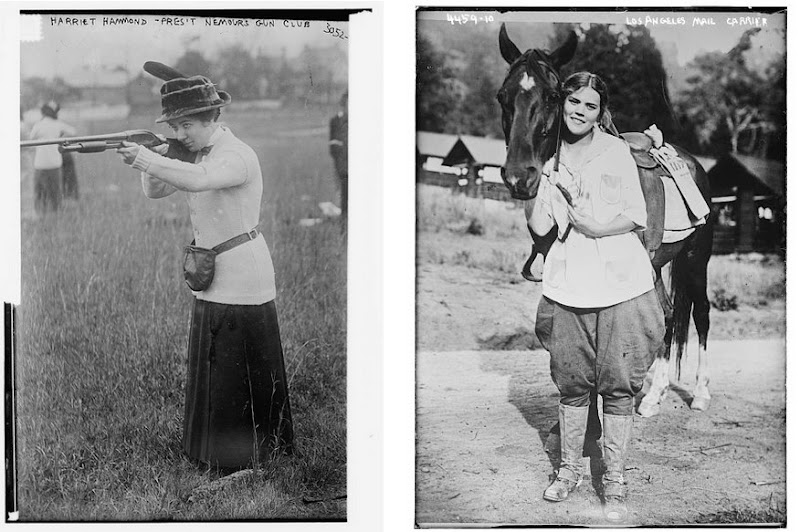
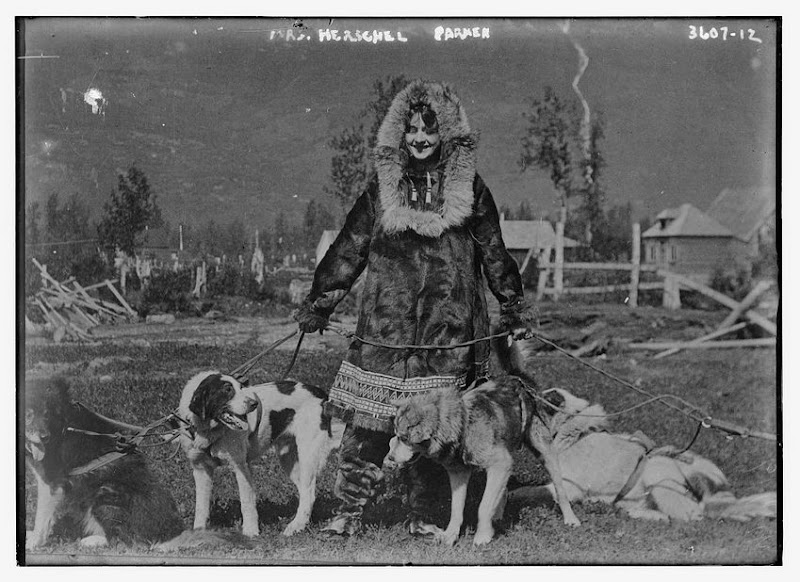
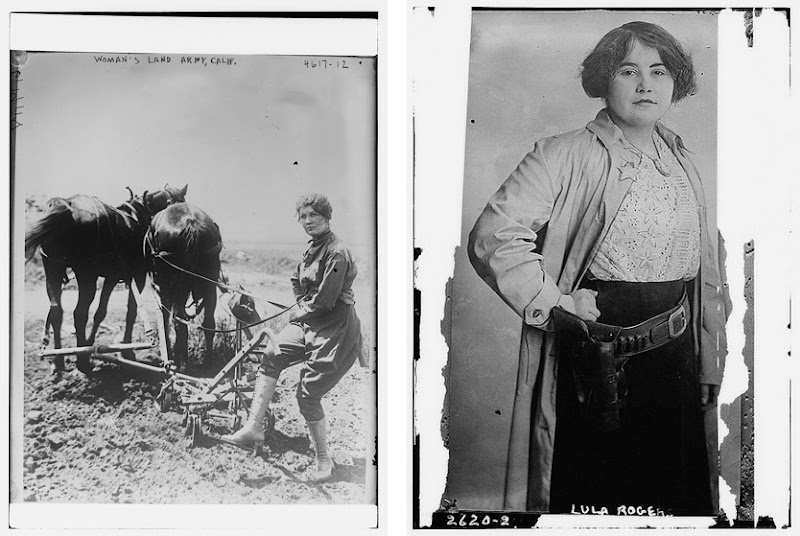
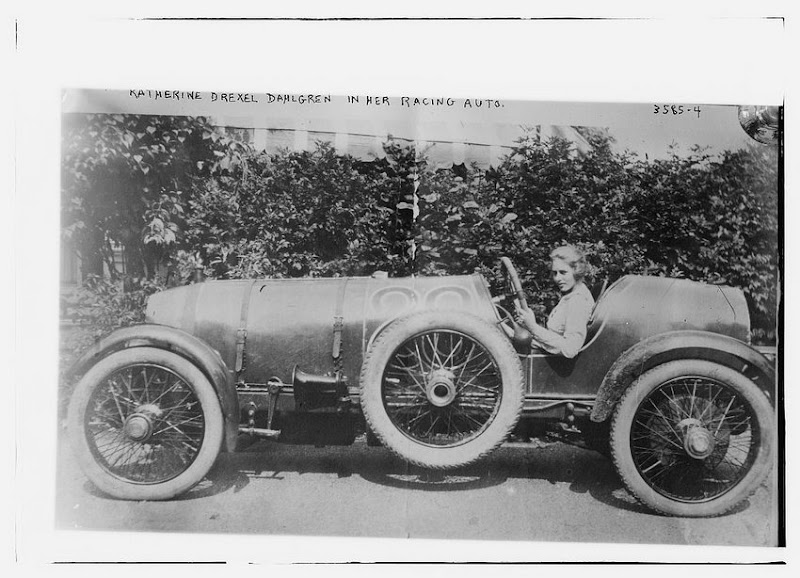
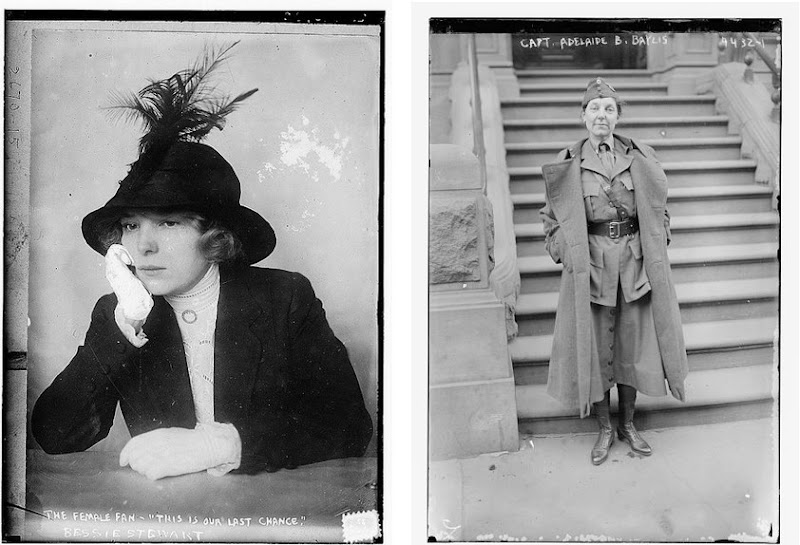
All photos via The Library of Congress. Usually when thinking of women in the decade that led up to the 19th Amendment, suffrage is the main bullet point the history books point toward, and for good reason. But after combing through the Library of Congress's Bain Collection, I found that tomboy style ran deep in the decade. It's hard to believe these photos are 100 years old.
via Osiasjota legitimizing bitcoin by equating it to 18th-century whisky
I can't drink bitcoin so nope, not gonna work
Currency is a crossroads for many free market advocates.
Monetarists, including Nobel laureate Milton Friedman, have long argued in favor of central banks stabilizing price levels. They say the institution would provide a sense of comfort to debtors and creditors wary of inflation. Constitutionalists, albeit embracing a general disdain for the Federal Reserve, still see Article I, Section 8 as healthy advice. They say giving Congress the exclusive power to coin money would lead to increased transparency, incentivizing legislators to slash the budget.
It really isn’t until we reach the Misesian ideals of minimal government that we begin to see worthwhile considerations of private currencies. Austrian economist Murray Rothbard explains, “Many people—many economists—usually devoted to the free market stop short at money… . They never think of state control of money as interference in the free market; a free market in money is unthinkable to them… . So it is high time that we turn fundamental attention to the life-blood of our economy.”
One of the first media of exchange in the United States was classic whiskey. For men and women of the day, the alcohol did more than put “song in their hearts and laughter on their lips.” Whiskey was currency. Most forms of money were extremely scarce in our country after the Revolutionary War, making monetary innovation the key to success. The economy east of the Appalachian Mountains flourished during this period, but migration to the west was slow. This meant Western farmers drew fewer customers and, therefore, smaller salaries if they weren’t willing to travel eastward. So, they began to distill their excess grain into whiskey. The supplemental income kept them in business, and the whiskey was easier to transport through the mountains.
Indeed, it was easier to transport everywhere. Westerners began to use the whiskey as a medium of exchange, allowing them to trade with and travel to the east more frequently. Everyone from bartenders to surgeons needed alcohol, and its use as an intermediary became custom, verifying AustrianSchool founder Carl Menger’s analysis of the development of natural currencies: “The exchange of less easily saleable commodities for commodities of greater marketability is in the economic interest of every economizing individual… . Money is not an invention of the state. It is not the product of a legislative act. Even the sanction of political authority is not necessary for its existence.”
The acceptance of whiskey as money was spontaneous, incremental, and voluntary. And, since its value was based on efficiency and not on political decree, the practice continued many years into the future, surviving then-Treasury Secretary Alexander Hamilton’s whiskey tax—an effective income tax passed off as an excise tax—long enough for Thomas Jefferson’s administration to repeal it.
Experiments came and went as people grew familiar with the alcohol’s value, and many local businessmen offered their customers an even more convenient medium of exchange: coins. These business owners—primarily distillers and grocers—would mint, engrave, and then distribute tokens redeemable for commodities at their stores. If a grocer were to price his dough at, say, ten grams of silver per loaf, he would mint a 10-gram silver coin, engrave on it the phrase “Good for One Loaf of Bread,” and distribute it to select customers.
These coins helped out in two ways. First, customers could buy to sell. This was essentially an extension of the easy-to-carry trend. Sellers could walk through town carrying on-demand receipts for an amount of bread or whiskey that they otherwise could not physically carry, attracting new customers many miles away. The coins played a second role, too, as low-denomination change. A variety of situations—the wartime economy, lagging technological advancements, or plain sour luck—have historically left certain areas of the country without a straightforward way to purchase inexpensive items.
Distillers and their customers were occasionally faced with a situation in which neither party could get their hands on anything less than a 30-gram silver coin (or find a way to fraction it) when a bottle of whiskey only cost 10 grams of silver. Instead of turning these customers away or forcing them to carry out two extra bottles of whiskey, owners simply began issuing their own versions of “change”: customized tokens, each guaranteeing on-demand redemption of one bottle of whiskey when presented. Customers, then, knowing full well that everyone needs alcohol at some point, were free to trade distillers’ tokens exactly as they would trade 10-gram coins, effectively creating a low-denomination monetary system through which the community could conduct business.
Coins backed by random commodities were inferior to the classic gold standard, but everyone accepted the coins as necessary adaptations to lousy economic conditions. “Hard-times tokens,” as people referred to them, were the market’s way of meeting a vital demand until things got better.
As time went on, the American monetary system was tried and tried again by political intervention. Yet the market flourished, continuing to adapt to ever-changing circumstances. An inflationary central banking institution, the Roosevelt administration’s obscene gold seizures, and numerous faulty reserve plans like the Bretton Woods agreement were no match for private entrepreneurs on the black market who kept their customers’ savings accounts afloat through competition.
And then came Bitcoin.
These days, many government agencies can scan bank accounts by issuing a boilerplate subpoena. Engaging in private transactions with physical currency became risky business, even through online banking. So, an anonymous developer (known only as “Satoshi Nakamoto”) created Bitcoin.
He designed the coins as virtual mirrors of that which was heretofore considered authentic money. Bitcoins are unearthed through a process called “mining,” much like with dirt and a shovel, except with algorithms and a computer. Miners who solve the pre-established algorithms are rewarded with Bitcoins. However, the underlying program can detect how many people are mining for coins; as demand increases, so does the difficulty of the algorithms, emulating competition in the marketplace. Only those miners with the highest level of determination and skill come out on top. Furthermore, Nakamoto controlled for scarcity. There is no threat of runaway inflation because his blueprint ensures that no more than 21 million coins will ever remain in circulation, and analysts calculate that Bitcoin miners won’t even reach this number until around 2140 A.D.
Nakamoto realized that, like Pennsylvanians who distilled grain into whiskey in order to transport it through the rugged Appalachian Trail, Internet users yearned for currency befitting the digital age. Our generation’s “mountains” are surveillance networks. And Bitcoins fit the bill for passage. They’re secured through public-key encryption (i.e., only Bitcoin owners have the access code to their digital wallets, which can be created without handing over any personal information), easily utilized in the marketplace when sellers are willing, and came into existence through the natural mechanisms of word-of-mouth reputation and voluntary, incremental adoption.
The digital currency came to fruition in the right place at the right time because the market chose it. No legislation, no statute, and no politician granted its legitimacy—customers did. And that’s why the government is now vying for oversight. New York’s financial regulator recently issued subpoenas to more than 20 companies associated with Bitcoin, including the prestigious venture capital firm Andreessen Horowitz.
Whereas historical private monies were created in order to bypass physical barriers, though, this digital currency was explicitly created as a means of bypassing regulations, so it’s quite unclear what will happen next. Bitcoin will likely stand the test of time, though, at least as long as whiskey did.
Brian LaSorsa is a writer in Phoenix, Arizona. His work has appeared in the Washington Examiner, Huffington Post, and Ludwig von Mises Institute.
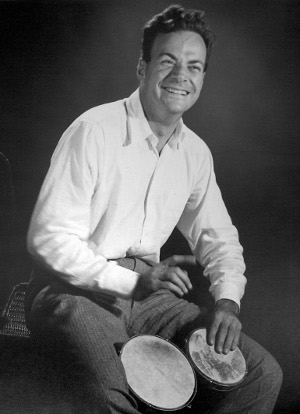
In 1966 a Swedish encyclopedia publisher requested a photograph of Richard Feynman “beating a drum” to give “a human approach to a presentation of the difficult matter that theoretical physics represents.” Feynman responded:
Dear Sir,
The fact that I beat a drum has nothing to do with the fact that I do theoretical physics. Theoretical physics is a human endeavor, one of the higher developments of human beings, and the perpetual desire to prove that people who do it are human by showing that they do other things that a few other human beings do (like playing bongo drums) is insulting to me.
"Food is repulsive. I feel like I want to sew my mouth shut. I don't want to ever consume anything again. No water, no Soylent, no chicken, no steak, no beer, no nothing. My stomach is done. I have broken it.
And yet, there's still Soylent in the fridge, and I still have to drink it. At this point I don't know if I feel depressed because I haven't consumed enough nutrients or if I've consumed too many. My guts continue their awful Danse Macabre, but at least I have not yet pooped myself."
Two days ago, Senior Reviews Editor Lee Hutchinson took a vow to spend a week eating nothing but Soylent, a nutritionally complete meal replacement created by engineer and entrepreneur Rob Rhinehart. He's documenting his freedom from solid food by day. Read about Day 1 here.
Day 1 recap: Like trench warfare in France
I ended the previous entry saying that I was going to head out running, but that did not happen. As it got nearer to 7pm, I started feeling ominous rumblings in my belly—the kind that could either be the sign of some harmless gas or the harbinger of the poopocalypse. I stayed in, instead watching a couple of episodes of The Wire with my wife, who ate a fine healthy dinner while I sipped my Soylent with an ever-souring gut. A bit after 8pm, the gas started.
It was bad. These weren't mere ha-ha toot kinds of emissions; this was hair-raising. It was room-clearing, horse-killing, World War I mustard gas-type gas. I migrated from room to room in the house like I was giving up territory to the Kaiser, my face fixed in an expression of horror as green hell-fumes trailed behind me, peeling paint and wilting plants. My wife, bless her heart, said nothing. At some point, I made my way back to the computer and pulled up the e-mail correspondence between Soylent founder Rob Rhinehart and me.


 More than 2.1 million bundles sold, over $10.5 million for charities. Those are the staggering statistics the EA-sponsored Humble Origin Bundle signed off on this week, easily becoming the most successful Humble Bundle with more than double of the prior best-seller.
 Humble Origin Bundle closes on more than $10.5 million in sales originally appeared on Joystiq on Thu, 29 Aug 2013 09:30:00 EST. Please see our terms for use of feeds.