firehose
Shared posts
OkCupid Is Flattering You
UK In Process Of Killing 5,000 Wild Badgers
hmmm thats weird

Weird looking potato shapes found In a bag of MB potatoes.
Sneaker
A sneaker may refer to:
- A person that moves furtively, possibly with lascivious, salacious, or nefarious intent, generally a person not to be trusted from initial inspection.
Facebook Photos Seem To Show Violent Life Of Suriname's Ruling Family
Dennis Rodman Is Back In North Korea, Though Not To Help Jailed American
Xbox One supports up to eight controllers for multiplayer gaming
Microsoft has spent a good amount of energy detailing the controller for its upcoming console, and now we've learned yet another detail — the Xbox One will support up to eight wireless controllers simultaneously. That's double what the Xbox 360 supports, and the One's wireless controllers will also feature a 30-foot-range. Of course, it's unlikely that many developers will utilize so many controllers for local multiplayer, but it could potentially be a great way to play Madden or FIFA with a large number of friends. More importantly, it also means that the Xbox One could be home to the next-gen Bomberman game of our dreams.
- Via Engadget
- Source Xbox
- Related Items controller multiplayer bomberman Xbox One Microsoft Home consoles

thats-ri-god-damn-diculous: catschemicalromance: owmeex: Horse...








Horses With Better Hair Than You
why does this only have 7 notes
maybe it’s neighbelline
Spirit for Twitter, A Snapchat-Like App That Makes Tweets Disappear After a Set Amount of Time

Spirit for Twitter is a service created by former Twitter developer Pierre Legrain that allows users to make their tweets disappear after a set amount of time by adding a hashtag like “5m” for five minutes, “10h” for ten hours, or “3d” for three days. The Snapchat-like Twitter app can be enabled at the Spirit for Twitter website.
image via Spirit for Twitter
via TechCrunch
See the gray, ad-drenched future of Terry Gilliam's 'The Zero Theorem' in first official clip
A TV show based on Terry Gilliam's 12 Monkeys may be filming later this year without the director's involvement, but Gilliam himself has something potentially much more interesting on the horizon: The Zero Theorem, a surreal, futuristic piece that debuted yesterday at Venice Film Festival. Footage of the film has leaked before, but in the lead-up to the premiere, production company Voltage Pictures released the first official look at the film, seen below. An accompanying interview can also be found on the film's site.
The clip calls back heavily to Brazil, with a dystopian street scene that blends gray concrete (and, it appears, ducts) with frenetic advertisements for vacations, self-help products, and the "Church of Batman the Redeemer." What it doesn't do is explain much about the film's core plot, in which futuristic coder Qohen Leth (Christoph Waltz of Inglorious Basterds and Django Unchained) is tasked with solving an impossible problem for an inhuman bureaucracy. So far, The Zero Theorem itself has received mixed reviews, praised for its whimsical absurdity but criticized for a scattershot directorial vision.
- Via io9
- Source The Zero Theorem
- Related Items terry gilliam zero theorem christoph waltz film dystopia film clip preview
Surreal Animated GIFs of Faceless People With Moving Mechanical Parts in Their Heads
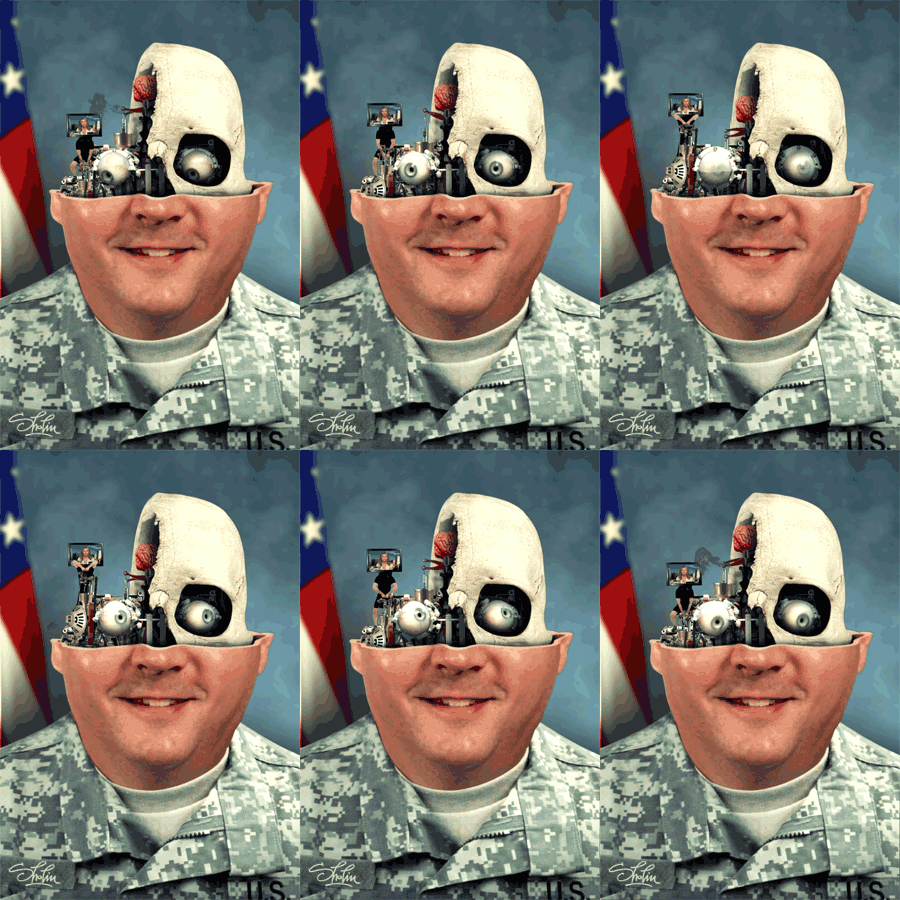
Belgrade, Serbia artist Milos “Sholim” Rajkovic has created a surreal collection of animated GIFs showcasing faceless people with moving mechanical parts packed into their heads. In an interview with The Daily Dot, Milos shared that the models he used his GIFs were “politicians, corporate people, or just pretty faces from the commercials that we watched for hundreds of times during a day and who have no identity and personality.”


images via Milos Rajkovic
via The Daily Dot, Photographs on the Brain, who killed bambi?
Feedbin.me Goes Open Source
firehose"Being a 1 or 2 person team you can’t fight head-to-head with a Feedly or a Digg without doing something a little guerrilla. Open sourcing code makes a ton of sense in this case."
Feedbin.me has released the code that runs the service as open source, checkout out the Github. It joins Newsblur as being the second large for profit RSS reader to release its code in such a manner. I’m not aware of any other commercial services that open source all of their code.
This seems like a strong move that only a independent developer can take when faced with competition from well funded competitors. Being a 1 or 2 person team you can’t fight head-to-head with a Feedly or a Digg without doing something a little guerrilla. Open sourcing code makes a ton of sense in this case.
Adventure Time, “Earth & Water”
firehosefrom the comments: "Adventure Time turned into Game of Thrones so gradually, I didn't even notice."

Why in the world would the masterminds behind this episode end the story with a coup in the Fire Kingdom led by Flame Princess and Cinnamon Bun and have all the action off-screen? Cinnamon Bun so rarely gets to do anything cool, and FP has already proven awesome in action, so the conclusion of “Earth & Water” feels like a bit of a missed opportunity. That’s unfortunate because the rest of this episode works very well, and although we don’t get to see the coup, its outcome shows how this series allows its characters to grow and change.
Finn and FP are both struggling with their breakup, and while Finn retreats into familiar activities like playing video games with Jake, FP is having a more introspective reaction. She’s confused by her conflicting emotions of love and hate for the boy who betrayed her, and she’s beginning to ...
Read more
    
|
UPDATED: Has Brown Ben Plumm Been Cast For Game Of Thrones Season 4?
firehosethere's a black character in this fucking series named "Brown Ben"?

The assignment was to draw 6 outfits from different eras and...
firehoseminecraft minecraft minecraft


The assignment was to draw 6 outfits from different eras and inspired by Minecraft characters to be printed life-sized and displayed in the fashion room at the V&A for the World of Minecraft event. They’re being “modeled” by popular Minecraft youtubers. 1- Ghast, modern. 2 - Creeper, modern. 3. Ocelot, late 50s/early 60s. 4- Magma Cube, 1930s. 5- Pig, mid 19th century riding habit. 6- Wither, 18th century.
Google Play Services Supplants Android As Google's "Platform"
firehose"Google originally rejected copyleft in favor of permissive licensing in the name of giving OEMs and carriers more control over Android on their devices"


Read more of this story at Slashdot.

Mark Waid becomes a comics retailer
Amazon's 'Kindle MatchBook' finally bundles physical books with a copy for your Kindle
If you've ever purchased physical books from Amazon, you'll soon be able to buy those same titles for your Kindle at virtually no cost. Amazon calls the new initiative Kindle MatchBook, and in many ways it resembles what the retailer's AutoRip program did for music; buy a physical version, and receive a digital copy to go along with it at a significant discount. But whereas Amazon's MP3s are always free, the retailer will be charging a nominal fee — between $0.99 and $2.99 — for the Kindle versions of physical books you've ordered. Some titles enrolled in the program will be free, however.
As it did with AutoRip, Amazon will need to rally publishers behind the program before you'll get their content for cheap. Over 10,000 books will be available via Kindle MatchBook when it launches in October, and your entire order history (dating back to 1995 for longtime users) will qualify for discounted Kindle books. Only books that were purchased new will count towards MatchBook, however. “If you logged onto your CompuServe account during the Clinton administration and bought a book like Men Are from Mars, Women Are from Venus from Amazon, Kindle MatchBook now makes it possible for that purchase — 18 years later — to be added to your Kindle library at a very low cost,” said Russ Grandinetti, VP of Kindle content. Amazon says the bundling of physical and digital books has been a top customer request for years.
- Source Amazon (Businesswire)
- Related Items kindle matchbook matchbook ebooks kindle store kindle Amazon
A look back at iconic Nokia phones
firehose"Praised for its high build quality, the E71 was let down by the then-aging Symbian OS."
fuck off
Symbian 4evar

Although it was by no means the first phone from Nokia — to go way back, you can take a look at the fantastic Nokia Museum — the 1011 was a very important handset. Released in 1992, It was Nokia's first to run on a GSM network, and so can be seen as the first "modern" phone from the company.

The Nokia 2110 was not only the company's first to feature the now-famous Nokia ringtone, but it was also the first phone Verge editor-in-chief Joshua Topolsky ever owned. On the right is the Nokia 6110, the first cellphone used by Verge editors Thomas Ricker and Laura June.

Originally released in 1996, the Nokia 8110 (image credit: Unlock Unit) was a business-oriented device with a mechanical slider. Three years later, it featured heavily in the 1999 movie The Matrix, further driving Nokia's popularity at the time.

In 1996, Nokia unleashed the Communicator 9000 on an unsuspecting world. With a full QWERTY keyboard, a 24MHz processor, and a giant 4.5-inch display, the original Communicator was every businessperson's dream.

1999's 8210 represented a huge accomplishment for Nokia's engineers. The tiny handset had an internal aerial — an unusual feature in 1999 — and weighed just 79g. Despite its size, the 8210 still had advanced features like an infrared port for contract exchange and two-player 'Snake.'

The Nokia 3310, the sequel to the taller 3210, took the 8210's aesthetic and added some heft. The 3310 struck the perfect balance between desirability and affordability, and Nokia went on to sell over 125 million worldwide.

The 7650 was the first phone from Nokia to run Symbian, the OS all its smartphones would run for many years, and also the first to feature a camera.

The Nokia 6800 is one of many examples of Nokia throwing a curveball. A candybar handset that unfolded to reveal a full QWERTY keyboard, the "butterfly phone" and its successors were popular in their day.

The short-lived N-Gage line was a serious attack on Nintendo's handheld gaming monopoly. The first N-Gage bizarrely had its microphone and earpiece mounted on the side of the device, leading to much "sidetalking." With the release of the N-Gage QD, pictured above, Nokia saw sense and mounted the earpiece on the device's front.

The 2003 Nokia 7600 doesn't represent a massive milestone for the company — although it was one of the first 3G phones from the company. Instead, it's an opportunity to take in one of the company's most outlandish designs.

Released mid-2004, the 7610 baffled users' thumbs everywhere thanks to a distinctive keypad layout.

Presenting the 7280. Say what you will about Nokia, but it's never been afraid to experiment. Announced in 2004 and affectionately known as "the lipstick phone," this Symbian handset had no number pad, no touch screen (it was 2004), and very few sales.

The 7710 was Nokia's first attempt at a touch screen device. In 2004, the strange shape and lack of a keypad confused many, and the device failed to gain traction.

The 9300, released 2005. This was Nokia's attempt to bring its business-oriented line of Communicator smartphones to the mass market. It retains the Communicator series' signature design, but was never marketed as a Communicator.

Released in 2005, the Nokia 770 Internet Tablet was the company's first device to run on Maemo (later renamed MeeGo), the operating system that was supposed to be the future of the company.

The Nokia N93. Released July 2006, it's one of Nokia's many experimental form factors. With a Carl Zeiss lens, the N93 was marketed as an all-in-one smartphone and camcorder.

The Nokia N95. Perhaps the original "iPhone killer," this Symbian handset was Nokia's big release for 2007.

In 2009, the N97 was Nokia's halo device. A big screen like the iPhone, a quality keyboard, what could go wrong? Lots.

If the N95 and N97 were the answers to the iPhone, the E71 was unmistakably an attempt to defeat BlackBerry. Praised for its high build quality, the E71 was let down by the then-aging Symbian OS.

The Nokia X7 (the X stands for "Xpress") was the first X-Series handset to run Nokia's Symbian^3 operating system. Symbian^3, later renamed "Anna" and then "Belle," was the last iteration of Nokia's Symbian.

Look familiar? The Nokia N9 was the company's brave new hope in the fight against Android and iOS. It introduced the now-familiar Nokia Lumia polycarbonate shell, but rather than Windows Phone, ran the MeeGo Harmattan OS. Released in 2011, it was the last major release before Nokia made the jump to Windows phone.

The 808 PureView is a phone of milestones. The last Symbian phone, the first PureView phone, and still the owner of the record for "largest sensor in a phone."

And so we enter the age of the Lumia. After the leak of the infamous "burning platform" memo, Stephen Elop moved Nokia over to Windows Phone, and the Lumia 800, essentially a reworked N9, was released in November 2011.
An incredible collection of video game backgrounds in animated GIF form
firehosevia KV
SNK is best
also notable:
http://i.imgur.com/NW0mK39.gif
http://i.imgur.com/emBDw7S.gif
http://i.imgur.com/OkLajvJ.gif
http://i.imgur.com/Evb2Bp4.gif
http://i.imgur.com/DBUrN4R.gif, http://i.imgur.com/4FCpx4v.gif, http://i.imgur.com/uM4SUXw.gif
http://i.imgur.com/yMLAGVx.gif (the right edge)
http://i.imgur.com/zokplyL.gif


I’m sure a lot of people don’t think of video games as pieces of art, but I’d say they’re wrong, and this proves it. Reddit user RudeBootie has put together a collection of 125 different backgrounds from various fighting backgrounds in animated GIF form, and they’re pretty mind-blowing.
As you can see above and below the artists that created these backgrounds did some fantastic things with pixels, and yes, it’s all pixel art. These images are packed with a ton of details and I’d have to imagine that backgrounds like these would take weeks to complete. My personal favorites are the blowing sand in the Egyptian scene above and the totally random manatees in the GIF below.
Don’t forget to check out the full collection by clicking here.


ē The Deal That Makes No Sense
firehose"Today no one cares about Nokia’s industrial design, distribution, or supply chain, because their devices lack an app ecosystem, the price of entry into smartphones. Perhaps even now, Nokia was considering going to Android, or maybe even going out of business.
And thus I believe we’ve arrived at the rationale for this deal.
I theorize that Nokia was either going to switch to Android or was on the verge of going bankrupt. (I suspect the latter: part of the deal included €1.5 billion in financing available to Nokia immediately, and the fact Microsoft had to take Asha but not the brand or maps suggests they were trying to keep the price as low as possible). And, had Nokia abandoned Windows Phone, then Windows Phone would be dead."
Early this morning Microsoft acquired Nokia for €3.79 billion (plus €1.65 billion for patents). It is a deal that makes no sense.
While industry observers love to pontificate about mergers and acquisitions, the reality is that most ideas are value-destroying. It is far better to form an alliance or partnership; most of the benefits, none of the costs.
A partnership similar, in fact, to the one formed just two years ago between Microsoft and Nokia.
From Microsoft’s perspective, that was a brilliant deal; Matt Drance characterized it as “Microsoft Buys Nokia for $0B,” and he wasn’t far off. The premier pre-iPhone phone maker, with what was even then one of the best supply chains, distribution networks, and brands in the world would be exclusively devoted to Windows Phone.
There is nothing further to be gained by an acquisition.
Moreover, the fact Steve Ballmer is stepping down makes a deal of this magnitude hugely problematic. Guy English has already characterized Ballmer’s disastrous reorganization as a straitjacket for the next CEO; adding on a mobile phone business that Microsoft probably should abandon is like attaching an anchor to said straitjacket and tossing the patient into the ocean. It will be that much more difficult for the next CEO to look at Windows Phone rationally.
So that brings us to the Nokia perspective. I have argued that Stephen Elop made a massive strategic error by choosing Windows Phone over Android; coming from Microsoft, he failed to appreciate that Nokia’s differentiation lay not in software, but in everything else in the value chain. It would have been to Nokia’s benefit to have everyone running Android, including themselves. Everyone would have the same OS, the same apps, may the best industrial design, distribution, and supply chain win.
Elop threw it all away.
Today no one cares about Nokia’s industrial design, distribution, or supply chain, because their devices lack an app ecosystem, the price of entry into smartphones. Perhaps even now, Nokia was considering going to Android, or maybe even going out of business.
And thus I believe we’ve arrived at the rationale for this deal.
I theorize that Nokia was either going to switch to Android or was on the verge of going bankrupt. (I suspect the latter: part of the deal included €1.5 billion in financing available to Nokia immediately, and the fact Microsoft had to take Asha but not the brand or maps suggests they were trying to keep the price as low as possible). And, had Nokia abandoned Windows Phone, then Windows Phone would be dead.
Windows Phone has already been largely abandoned by other OEMs; Samsung and HTC make warmed-over versions of 6-month old Android hardware, and that’s really about it. Of course that will now stop, Microsoft’s protestations to the contrary, but regardless, without Nokia it would be over.
And so, I would argue that this deal is not unlike the Motorola one, where I believe Google had its hand forced by Motorola’s threat to sue other Android OEM’s for all they were worth.1 Microsoft felt they didn’t have a choice.
The tragedy in the deal, as I hinted at earlier, is that I think Microsoft ought to abandon Windows Phone. The war is over, and iOS and Android won. It would be far better for Microsoft to focus on serving and co-opting those devices, instead of shooting the most promising parts of their business in the foot for the sake of a platform that is never going to make it.
At the very least, it shouldn’t have been Ballmer’s decision to make.
Update: I wrote a second piece, Another Nokia Explanation, the Same Tragic Conclusion
- To be clear, that’s the only similarity here
The post The Deal That Makes No Sense appeared first on stratēchery by Ben Thompson.
Nokians mourn the loss of their company to Microsoft
In the hours after Microsoft's announcement that it would be acquiring Nokia's devices and services business, Twitter has seen an outpouring of reactions from those affected by the merger. No one has more at stake than Nokia's employees; while Microsoft is committing to keep the base of its phone operations in Finland, it's also said it plans to cut $600 million annually in costs within the first 18 months after the merger. Needless to say, tensions are running high.
North American head of operator ecosystem Marc Kleinmaier's tweet underscores the uncertainty in the air while John Kneeland, a developer project manager at Nokia, points out what an emotional time it is for everyone at the company.
Pino Bonetti, a senior marketing communications manager at Here is in the same boat:
A lot of people were quick to point out the relative scale of the Nokia acquisition compared to other prominent deals in recent memory. Comparisons to Google's Motorola acquisition abound, but former Nokia Academy manager Dave Trevaskus really put Nokia's decline over the past five years in perspective:
One common theme on social media revolves around Stephen Elop's motives for joining Nokia as CEO in the first place. Rumors of Microsoft's intent to buy the Finnish company's handset business date back as far as 2011, and while they may have been premature (and earned a quick dismissal from Nokia at the time), they've ultimately proved to be on point.
Many with former ties to the company, like ex-marketing manager Alexander Oswald, are upset with the company's fortunes.
Former marketing technologies manager Russell Beattie echoes similar feelings.
While former VP Juha-Pekka Sipponen believes acquiring Nokia wasn't Microsoft's primary goal.
But if there's one overarching sentiment other than melancholy and suspicion, it's pride in what Nokia has stood for over the years. Even though there will never be another smartphone bearing the name, for years Nokia singlehandedly defined the cutting edge in mobile technology. Former head of social media for North America, Phil Schwarzmann puts it best.
- Related Items reaction twitter microsoft social media acquisition nokia
How Goes the War [Link]
firehose"Second, I avoid the word "awareness". Want more future cancer treatments? Put some of those donations into early education to create more budding scientists."
I like this
I'd like it more if the people playing for cancer research could pay STEM people as much as the non-STEM professions those kids will inevitably pursue
in other words, I absolutely don't want to fund 100 startup dickbags and 0 cancer scientists
Derek Lowe on the limits of cancer research:
To the extent, though, that people are told that "More Money" is the answer in this field, I think it's good to make the point that it isn't necessarily the limiting factor. Problem is, there's no way to hold a charity insight-raiser, or to set up a box to Donate Good Ideas For the Cure. Medical research, whether industrial or academic, is a pretty esoteric field to most people. There's not much way for an interested lay person to help out directly; the technical background is too much of a barrier. So people raise money, (while some just raise "awareness", a particularly slippery term), because it's the only way that they feel that they can make any difference.
I'm kind of a jerk about donating to "charities". First, I always refer to Charity Navigator. Second, I avoid the word "awareness". Want more future cancer treatments? Put some of those donations into early education to create more budding scientists. Teach kids to dream and think now. It pays dividends over a very long time.
Bloomberg’s very strange headlines are in danger of making sense
firehosethe elusive "headline writing beat"

The famously bizarre and inscrutable headlines that often adorn Bloomberg News articles are a cherished joke among journalists, most of all within Bloomberg itself. But they may be in danger of losing their peculiar edge.
Some prototypically odd headlines from the past year:
∞ Feeding Naked Chef’s Chickens Killing Biggest Bond Rally
∞ Mao’s Red Flag May Need to Evoke Panda DNA to Beat Audi
∞ Harvard Women Freed From Urinal 50 Years After First Female MBA
∞ BMW to Amazon Space Demand Spurs Rush to Inland Empire
That Bloomberg writes sometimes incomprehensible titles for its article is no secret. The phenomenon has a hashtag and a parody Twitter account. But now, to the chagrin of some Bloomberg News staff, someone important has taken notice.
“Several editors acknowledged that headline clarity can sometimes be an issue,” wrote journalist Clark Hoyt last month in a report commissioned by Bloomberg (pdf). He then ticked off a few headlines that had caught his eye:
∞ DSM’s Flirt With Red Hot Mamas Cuts Investor Love for Plastics
∞ Brokers Go Gray as Youth Proves Unsustainable With No Cold Calls
• Cold War With Soup Tempts East Europeans to Menus of HBO, Sony
• DoCoMo Cash, Girl Band Help Beat Softbank on Costs: Japan Credit
“I assume that, to them, it makes complete sense what they’ve written,” said the anonymous proprietor of Strange Bloomberg Headlines, a blog that has documented myriad examples since 2011. “They just don’t realize that a reader coming at it for the first time won’t understand what’s going on.”
He added, “The headlines usually make sense once you’ve read the article.”
That may no longer be sufficient. Hoyt’s recommendations, which Bloomberg said it would follow, included the appointment of a standards editor to, among other things, “review headlines for accuracy, clarity, and tone.”
Hoyt, who previously served as public editor of the New York Times, was hired by Bloomberg to review its journalistic ethics after the revelation that reporters had access to information about how Bloomberg customers used the company’s data and news terminals. Several large banks, which are responsible for the bulk of Bloomberg’s revenue, complained about the intrusion.
The Hoyt report ran just 20 pages but covered a lot of journalistic ground, surprising some Bloomberg editors. It’s not clear how seriously his recommendations will be taken, but he remains employed by the company. Bloomberg declined to make Hoyt available for an interview.
There’s a certain art to the Bloomberg headline—a pile of words that somehow adds up to something meaningful, if not understandable. Let’s pause for some more:
∞ Carney Not Yet With Pink Set Sharing Policies Beyond BOE Circle
∞ Shark Oil for HIV Shot Takes Cue From Hemingway’s Old Man
∞ Giraffe Mulling Suicide as ‘Terrorists’ Chant in Cairo
∞ Kill Your Wife While Sleepwalking or Get Goldman Touch
Most news organizations adopt headline conventions that, over time, become institutional clichés. (The New York Times: In Starting With a Prepositional Phrase, a Way to Sound Intelligent. Business Insider: BOOM: Here Is Something Extraordinarily Mundane. Quartz: Why everything you ever believed is a lie, in charts.) Other headlinese words—mull, see, probe, nix—are artifacts of space constraints imposed by narrow newspaper columns.
Space may also have something to do with how Bloomberg headlines got to be so odd. They are limited to 63 characters (45% of a tweet) to ensure the entire headline can fit on a single line of the terminal, which is the primary context in which Bloomberg News articles are read. “Billionaire Dethrones Kings in Beer to Burgers as Batista Model,” the headline on a profile of a Brazilian private-equity baron, ran exactly 63 characters and probably seemed more legible in the terminal than when the article found its way to the web. Much of Bloomberg’s journalism makes less sense as it gets further away from the terminal.
Inscrutability can also be a ploy for clicks. Bloomberg headlines like “Bieber Joins Ex-Addicts Fighting Chase in Prepaid Market” are often just intriguing enough to find out what the hell they mean. Certain terms alluring to Bloomberg’s clientele will find their way to the top of articles that are really about something else, as in this ur-headline (63 characters long): “Steve Jobs Spurs Harvard MBA to Drop McKinsey for China Website.”
Hoyt observed that Goldman Sachs makes regular appearances in Bloomberg headlines that have nothing to do with the bank: “The most egregious, ‘Ex-Goldmanite Trades on Girl Power of Stiletto Networks: Review,’ was over the review of a book by an author last connected with Goldman 11 years ago as a low-ranking associate.”
OK, just a few more:
∞ Ganges Turns Fecal Lab as Wealthy Bathe With Nude Mystics
∞ Where Raptors Roamed Rio’s Dream Stirs Water Worry
∞ Bin Laden’s Parrots Blood Fuel Boom in Pakistan Artists
∞ Forex During Birth Shows Asian Women Top Men Private Bankers
Within Bloomberg, the unofficial house style for headlines is beloved by many; choice examples are often emailed around the office. But the practice is hardly without critics at Bloomberg, who say the news organization should strive to be understood above all. Surely, market-moving headlines about breaking financial news, which many Bloomberg customers rely on for making trades, are almost always written with complete clarity. Why, they ask, shouldn’t everything else be held to the same standard?
The Bloomberg Way, a book by editor-in-chief Matt Winkler that serves as a bible for the company’s reporting, doesn’t mention clarity in its section on headlines. It advises that every headline include two or three of the following elements: “names,” “surprise,” “what’s at stake?,” and “conflict and conflict resolution.” Winkler, through a spokeswoman, declined to comment on his approach to headlines.
Some Bloomberg staffers say headline clarity was already improving before Hoyt’s report, driven by some top editors. That assessment was confirmed by the financier who runs Strange Bloomberg Headlines. (He asked not to be named.)
“It’s no longer an easy job to collect these things,” he said in an interview. “My activity slowed down quite a bit after a few months. The number of really obvious nonsense headlines went down a lot.”
Asked if he would rue a significant crackdown on strange headlines, the man said, “I’d miss them, sure. They’re like little puzzles.”

Israel Just Fired Missiles Into The Mediterranean
353,436 Exposed ZTE Devices Found In Net Census
Read more of this story at Slashdot.

screw-loose-professor: brain-food: The Living Cube by Till...
firehosevia Vjuliao

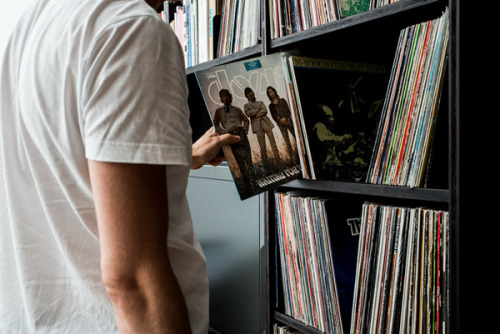







The Living Cube by Till Könneker
I moved into a apartment studio without storage room. So i made a minimalistic cube design with a shelf for my vinyl collection, my TV, Clothes and Shoes. On the cube is a guest bed and inside the cube is a lot of storage space. Remo from www.holzlaborbern.ch transferred my sketches very beautifully. My friend and Photographer Rob Lewis made this great photos. Info via Behance
Dude. This would be a DREAM come true if i could have one of these in my studio apartment. I mean, after a few glasses of wine i wouldn’t be able to get to my damn bed, but whatever! SOMEBODY TAKE MY MONEY.
You guys, he took a photo of the blueprints right there! You could do this yourself with the right knowledge and tools!
Artist who painted Putin in lingerie seeking asylum in France
firehosevia Russian Sledges
 Russian artist Konstantin Altunin, who made international headlines this week after police seized his painting of Russian President Vladimir Putin and Prime Minister Dmitry Medvedev in women’s underwear, is seeking asylum in France.
The 45-year-old fled Russia on Tuesday night after police raided an art gallery in the northwestern city of Saint Petersburg and confiscated various works, including Altunin’s painting depicting Putin in a pink nightie and Medvedev in a bra and knickers.
Altunin fears he would be arrested if he returned to Russia.
"Yesterday I went to the prefecture in Paris ... and made this request (for asylum). I now need to go through the procedure and bring written confirmation of where I am staying," Altunin told the Agence France-Presse.
In a separate interview with Bloomberg, Altunin said: “I don’t want to return to Russia. I want to live and work in an atmosphere of freedom.”

|
|
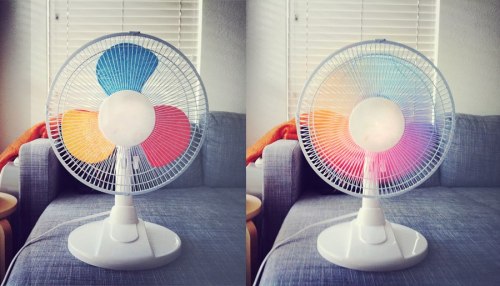
doityourselfproject: Paint primary colors on fan wings
firehosevia Snorkmaiden
if you miss owning a Mac, here's a DIY beach ball