All of them were narrated by a man who is British, or by an American who sounds that way.
Link (Thanks, monkeytypist)
All of them were narrated by a man who is British, or by an American who sounds that way.
Link (Thanks, monkeytypist)

    
|

|
|
firehose"J-J-J-J-SUPER JERK"
Or at least why he shouldn't team up with Badman, the imbecilic hero played with such gusto by Pete Holmes. Warner Bros., if you want to use this scene verbatim in the Batman/Superman movie, I'm totally cool with that.

|
|
Even as House Republicans were capitulating on the demands that had precipitated this standoff, they were convening a hearing to get to the bottom of why the National Park Service had shuttered the memorials on the National Mall, hauling NPS director Jonathan Jarvis before the committees on oversight and natural resources in an effort to portray the closures as a politically motivated effort to turn up the heat on the GOP.

By Dante D'Orazio on October 17, 2013 02:51 pm

Lenovo's name has resurfaced as a possible suitor for BlackBerry. The Wall Street Journal reports that the Chinese company is "considering" a purchase of Blackberry, adding that "the firm has signed a non-disclosure agreement to look at the smartphone maker's books." Earlier this year Lenovo's name surfaced as a possible suitor for the troubled Canadian phone maker when an executive said that "We are looking at all opportunities — RIM and many others." Lenovo later distanced itself from such discussions. Now that BlackBerry is openly courting buyers, however, it appears Lenovo is seriously looking into a purchase.
Developing...
]]>
[% var len = Math.min(data.comments.length, data.settings.autoUpdateAlertMaxShown) %] [% for (var i = 0; i
[% if (comment.parent) { %]
replied to [%= comment.parent.user.display_name %][% } else { %]
posted a new comment[% } %] [% } %]
[% if (data.comments.length > data.settings.autoUpdateAlertMaxShown) { %]
[% } %]
]]>
[% } %]
[%= data.comment.body %]
[% if (data.comment.id) { %] Posted on [%= data.comment.created_on %] [% if (data.comment.is_editable) { %] Edit [% } %] [% if (!data.context.comments_closed) { %] Reply [% } %] [% if (data.context.able_to_comment) { %] [% var rec_class = [] %] [% if (data.comment.is_recommended) { rec_class.push('recommended') } %] [% if (data.comment.is_recommended_by_user) { rec_class.push('user_recommended') } %] [% rec_class = rec_class.join(' ') %] [% if (!data.comment.is_flagged_by_user && data.comment.user_id != data.context.user_id) { %] Recommend [% if (data.comment.recommended_flags_count > 0) { %] ([%= data.comment.recommended_flags_count %]) [% } %] [% } else if (data.comment.recommended_flags_count > 0) { %] Recommend ([%= data.comment.recommended_flags_count %]) [% } %] [% if (!data.comment.is_recommended_by_user) { %] [% } %] [% if (data.context.able_to_moderate) { %] [% if (data.comment.bad_flags_count > 0) { %] ([%= data.comment.bad_flags_count %]) [% }%] Delete [%= data.comment.hidden ? 'Unhide' : 'Hide' %] [% } %] [% } %] [% } %]
[% if (data.comment.is_editable) { %] [% } %] ]]>


about 2 hours ago
about 6 hours ago
about 8 hours ago
about 9 hours ago
about 13 hours ago
4 minutes ago by autyeh102
15 minutes ago by RedR
16 minutes ago by brian.aarhus
26 minutes ago by roxeo 2 comments
31 minutes ago by panda tacos 1 comment
36 minutes ago by Laugslander 1 comment
36 minutes ago by Dado 4 comments
39 minutes ago by PsxDoc
40 minutes ago by Cylicas 6 comments
about 1 hour ago by magicbear00 5 comments
© 2013 Vox Media, Inc. All rights reserved.
Designed in collaboration with Code and Theory.
We'll email you a reset link.
If you signed up using a 3rd party account like Facebook or Twitter, please login with it instead.

Choose an available username to complete sign up.
In order to provide our users with a better overall experience, we ask for more information from Facebook when using it to login so that we can learn more about our audience and provide you with the best possible experience. We do not store specific user data and the sharing of it is not required to login with Facebook.


firehoseThe Merc goes shopping for Plan B and proves chain drugstores (except Walgreens?) are shitty


Read more of this story at Slashdot.

firehoseThe Wire Season 2 wallpaper collection
Read more of this story at Slashdot.

A projection of Rafaël Rozendaal's in-browser work of art, ifnoyes.com (2013), the first website to be sold at an art auction (Image: courtesy of Phillips).
The artist Molly Soda, 24, is what you might call "Tumblr famous." The short, green-haired Chicago native has about 30,000 followers on the platform, where she posts GIFs, selfie performance pieces, and undulating word art. "I've never sold any work that I wasn't directly commissioned to do," she says.
That changed late last week, when Molly put her first piece of art up for sale at Phillips, a high-end auction house in New York. In the last few years, Molly has largely made money off her art by selling one-off web pieces she's made for specific customers. Occasionally she's asked her Tumblr followers to give her donations in exchange for customized GIFs, or even had food delivered by adoring fans directly to her doorstep. "It's really easy to get people to look at you," she says, "but once you put something on the internet, it's not yours anymore."
The webcam video she put up for auction, Inbox Full, shows Molly reading her entire Tumblr inbox in one single take, an eight-hour-long test of endurance and sheer force of will. In a phone interview prior to the auction, Molly was excited to sell her work, but she also understood the difficulty inherent to selling digital art.
"I think a lot of people have issues not making money off the work, because it's not a physical thing," she says. "It's like, ‘You're not an artist. Where is your painting?'"
"You're not an artist. Where is your painting?"
Paddles ON, the auction and gallery show in which Molly was selling her work, sought to make that question irrelevant. Organized through a partnership of high-profile New York technology and art institutions including Tumblr and the nonprofit center Rhizome, it billed itself as the "first digital art auction" and featured webcam video files, GIFs, websites, and pieces of code alongside a handful of prints and sculptures.
Of the 20 works up for auction at Paddles ON, the most expensive were valued at about $18,000, a relatively low price for an international art house like Phillips — at the 327-year-old company's last auction, one series of Helmut Newton's spooky photographs of Graceland fetched a cool $200,000. And that's still cheap in a market where individual works, like a Basquiat painting, can sell for almost $50 million.
Fine art, unlike other media industries, pushes prices this high in part because of the perceived rarity and unique, unquantifiable quality of each individual work. Music, film, and publishing have been forced to adapt as their products became more numerous and often instantly accessible. For many, that's meant making the physical experience of the work more valuable, from 3D movie premieres to limited-edition vinyl pressings. But art, grounded as it is in the practice of paying vast sums for a single irreplaceable object, never faced quite the same challenge. So it can be difficult to market artwork that's impossible to really own, in the "hanging an original Picasso in your antechamber" sense.

A loop taken from Americans! (2013), a piece of custom software made by Casey Reas, sold for $11,000 (Image: Paddle 8)
This isn't to say that digital work can't move into the highbrow arts market. Artists like Cory Archangel, with his video game modifications and computer-generated works, have been catapulted to fame for their screen-based projects. The Cooper Hewitt museum recently acquired a piece of code as part of its permanent collection, MOMA now houses 14 video games, and members of Rhizome, which received 20 percent of the proceeds from Paddles ON, have sold GIF files at the world-famous Armory show in New York.
Digital artists themselves have dealt with the challenge of selling their work in an object-oriented market in various other creative ways. Some digital works, like Nicholas Sassoon's gentle waterfall-like GIF, are sold in swank packaging to the buyer. His work comes on a laser-engraved USB 3.0 stick, along with the standard certificate of authenticity. Other artists, like Petra Cortright, have more complicated arrangements. Cortright has since 2007 been using a view-based algorithm to price her video work. Even once purchased, the video must remain accessible online, completely for free. Based on that algorithm and the popularity of that video, her 24-second YouTube film eventually sold for $3,200 at auction.
Cortright uses a view-based algorithm to price her video work
But the question of ownership — and how you get someone to pay notoriously high art-market prices for something as relatively immaterial as Molly's webcam video or a 24-second YouTube clip — is still unsolved, and what the organizers of Paddles ON repeatedly called "the elephant in the room." But curator Lindsay Howard waxes poetic about giving digital artist both the recognition and the dollars they deserve.
"Because of economics," she says, digital artists are "forced into situations of needing to work for larger companies. I've made it my mission to build out this market so artists don't have to." And Annie Werner, who works at Tumblr and helped organize Paddles ON, says such an event was long overdue. "We'd seen so many panels and heard so many talks asking, ‘Can digital art sell," she says. "It just seemed like the right time to try it and figure it out." Bringing together Phillips' existing community of art collectors and Tumblr's crew of graphic enthusiasts seemed like a good place to start.
On Thursday it was clear, as Phillips' Newcome had suggested in an email to The Verge, that selling digital art in an auction house "doesn't challenge any of the established paradigms for art commerce." But Paddles ON did draw a far larger — and perhaps weirder — crowd than usually frequents Phillips. "Who are all these people?" muttered one art-market veteran as he watched a girl in a leotard and an airbrushed cape walk across white-walled Park Avenue space in the direction of the bar.
"Who are these people?"
It was no surprise that the highest-selling pieces of art were the less conceptually complicated and more physically present works: a hanging chandelier-like CCTV sculpture raked in the most, selling for $16,000. But eventually the auctioneer called up the first website ever sold at auction, a web-based piece called ifnoyes.com by new media artist Rafaël Rozendall. The Dutch-Brazilian artist's bio is more Google Analytics than museum placard: he describes himself as attracting "over 40 million visits per year" to his various domains and projects.
ifnoyes.com was sold for $3,500, and came with custom-made "Art Website Sales Contract," which transferred the domain name and contractually obliged new owner Benjamin Palmer to renew it yearly. It also required Palmer to keep the website "online and completely accessible to the public." Actually, he might represent the new market Paddles ON organizers dreamed of: he says he's in the "tech industry," though he's quick to add "the creative side." Asked where he plans to display his new piece of art, Palmer grins. "I mean, you know it's a website, right?"
But of all the bidders at Paddles ON Ezra Chowaiki could be said to come out on top. The New York-based art dealer, who sells Picassos and Monets for a living, acquired three separate works at Paddles. But for this show, he says, he isn't buying for his business — he's buying for himself. "I sell Picassos at work," he says, "but I'm not listening to Bach at home, you know?"
Chowaiki gestures expansively toward Clement Valla's glitched Google Earth images, three of which he now owns, in addition to a hanging video installation and a huge landscape photograph taken inside of a combat video game. When it comes to the art market, he isn't worried about the challenges presented by a medium based in pixels and bits."I don't think about how I'm gonna hang it," he says. "I'm not buying wall decorations. I'm buying art."
For Molly Soda's part, her webcam video Inbox Full sold for $1,500.
firehoseR2K beat
firehoseShiva Ayyadurai, whose claim is contentious enough to draw the Smithsonian into the debate

lady Trek in a Piece of the Action
firehoseof course Vitter
Here are the 18 senators, all Republicans, who voted against the final deal to end the shutdown and avert a debt default.
Republican Sens. Tom Coburn (Okla.), John Cornyn (Texas), Mike Crapo (Idaho), Ted Cruz (Texas), Mike Enzi (Wyo.), Chuck Grassley (Iowa), Dean Heller (Nev.), Ron Johnson (Wis.), Mike Lee (Utah), Rand Paul (Ky.), Pat Roberts (Kansas), Jim Risch (Idaho), Marco Rubio (Fla.), Tim Scott (S.C.), Jeff Sessions (Ala.), Richard Shelby (Ala.), Pat Toomey (Pa.), David Vitter (La.).
— Jennifer Bendery
”Senate Republicans Who Voted Against The Deal (via thepoliticalfreakshow)
I will reblog this everyday until midterm elections come around, if that’s what it takes, so help me god.
(via note-a-bear)
Ah, the Dingbat Squad.
(I am having such a case of schadenfreude today. It would be unalloyed if their stupidity hadn’t cost good hard-working people money and damaged the US economy, and if they hadn’t also, entirely offhandedly, sat around for the guts of two weeks idly dicing with the fiscal welfare of the rest of the planet.)
Read more of this story at Slashdot.

 Last night, as the standoff over the debt ceiling and government shutdown came to an end, against the wishes of Sen. Ted Cruz, his speechwriter quickly pivoted to the topic that Republicans think will be their winning issue in the 2014 midterms: the horrors of Obamacare. As a Congressional employee, Amanda Carpenter complained, "Um, I'm still losing my healthcare plan. Nothing changes." This is true, as a Congressional staffer, Carpenter will next year have to purchase health insurance on an Obamcare exchange. But she left a the key reason for this change out of her complaint: she can't keep her current healthcare plan because of a Republican amendment to Obamacare, which her boss supported. She should actually count herself lucky: Cruz failed to eliminate Obamcare subsidies for Carpernter and other Congressional staffers which would have dramatically raised her cost of insurance. Not only did Cruz want to strip wanted to not only strip members of Congress of this subsidy, but also take it from all other federal workers. "I’d like to see the Vitter amendment broader," Cruz said on the Senate floor in September.
This disconnect between cause and effect has been a familiar phenomenon: create the problems that can be railed against. In 2011, during the last debt limit showdown, for instance, Tea Party Republicans warned that an economic disaster was looming because the federal government was spending so much money — and the only way to stop that later crisis was to create an immediate one by threatening to breach the debt limit. (Budget fights have cost us 2 million jobs since 2010, according to a report by Macroeconomic Advisers. But we have averted the global calamity that would come with breaching the debt limit.) Or think back to the strange moments of Republicans who had called for a government shutdown protesting that war memorials had been shut down.
On Fox News on Wednesday night, Florida Sen. Marco Rubio promised that as Obamacare continues to go into effect over the next six months, Americans would turn against it. "There is going to be an all-out revolt in this country over that. And that is, I think, the moment to absolutely act and say we are going to get rid of this law and then look for opportunities in the future to replace it," Rubio said, as Politico notes. The glitches in the federal Obamacare exchange site — which covers 34 states — are almost entirely the Obama administration's fault. But many of the other problems will be Republicans' creation. About 8 million poor Americans will not get health care help because they live in one of the 26 states that refused to expand Medicaid, even though the federal government would pay for the entire cost through 2016. In at least 17 Republican-controlled states, Republicans have made it more difficult for people to become Obamacare "navigators" — guides who help people sign up for Obamacare by requiring licensing exams, background checks, and fees, or limiting what they can say. New income verification requirements could make it harder to sign up on the exchanges. And then there's the case of congressional staffers like Ted Cruz's.
The reason Cruz's speechwriter will not longer be eligible for her federal insurance plan is a Republican measure inserted in the Affordable Care Act that required the law to "apply" to members of Congress and their staff by making them buy health insurance on Obamacare's state exchanges instead of continuing their coverage under the Federal Employees Health Benefits program. "Apply" is in scare quotes because Obamacare requires people to buy insurance if they can't get it through their employer — which was not the case with Capitol Hill aides. In fact, employers with more than 50 full-time workers are required to offer insurance (a mandate that has been delayed a year). So in essence, these rules to make sure Congress isn't "exempted" from Obamacare are actually giving it special treatment.
The government shutdown — waged to stop Obamacare, or at least turn public sentiment more strongly against it — had many perverse political effects for Republicans. Support for Obamacare actually increased in polls. The shutdown drowned out news of the Obamacare insurance exchanges' disastrous rollout. And, in the last days of the standoff, last minute haggling over the Vitter amendment actually drew attention to how incredibly expensive health insurance is, even for middle class people, in a way we haven't seen since the law was passed in 2010. Hill staffers emailed The New Yorker's Ryan Lizza worried that the possibility the Vitter amendment would be included in a deal. A Republican Senate aide said, "My healthcare costs are already going to sky rocket, but being responsible for 100 percent of my premiums just isn’t realistic on my salary. I know I’m not the only staffer looking for a job off the hill because I knew this was a possibility." A Democratic House staffer said:
I will make $22,800 this year after taxes. That is it. I am a 30 year old married congressional staffer with a 20 month old son who depends on my job for his health insurance. My husband has to pay for his own health care through his salary, and it would cost him over $1000 a month to cover the whole family. I just started in this position 6 months ago, after being out of work for a year and staying at home with my baby. I need my health insurance, and I cannot afford to pay $600 a month for coverage. Without this so called “subsidy” (the same “subsidy” congressional staffers have been receiving for years before the ACA) both myself and my son will be uninsured.
The high price of health care is one of the major problems that Obamacare was created to address. In September, Commerce Department data revealed that medical price inflation was growing at the slowest rate in 50 years. Over the last four years, heath care spending has grown 3 to 4 percent a year, down from between 6 and 9 percent a year. We don't know yet how much of this is attributable to Obamacare. The recession certainly played a role. But it's not the bad news that Rubio is rooting for.
Carpenter tweeted on Tuesday, "It's almost November and I have no idea what my health plan will be or what it will cost in January. This. Is. Awful." She will be paying more because Republicans want her to, though not as much as her own boss was hoping. On the other hand, Cruz is probably not unhappy that she's publicly complaining about it.

|
|
firehosethe internet provides

Artist Guthrie Lonergan has created “Burgers,” a mesmerizing website with hundreds of scrolling, multiplying, clickable hamburgers. Head over to Lonergan’s website to experience it for yourself.
image via Burgers
firehosesaucie? "New England tradition"?

“An apple pie without the cheese is like a kiss without the squeeze.”
There is a tradition in New England, and some parts of the midwest, to serve a slice of cheese, usually sharp cheddar, alongside a piece of apple pie, or even melted on top. For those of us who didn’t grow up with this tradition, even though we may love eating apple slices with cheese, the whole idea of cheddar cheese with a pie is well, just wrong. As in, “are you kidding?” wrong.
If this is you, I understand. But just let the idea percolate a little while. Apples and cheese are good together, right? A slice of apple with a slice of cheese—bare, naked perfection. Why? Because apples are both sweet and a little tart, and cheese is salty with plenty of umami. So your taste buds are firing on all cylinders when you eat them in combination.
Still, the idea of cheddar with or in a sweet apple dessert is weird, to those of us unaccustomed to the idea. So, you’ll have to just trust me on this one. It’s good. Like “where has this been all my life?” good. I’m speaking from experience here. I have shunned the idea since the first time I heard of it. But this week I decided to take the plunge and make a simple galette, a rustic tart with apples, some maple syrup for sweetener, cheddar, in a buttery, cheddar speckled crust. All I can say is WOW. Thank you New England.
If using a tart apple such as a Granny Smith, you may want to add a little sugar or more maple syrup to the filling to balance the tartness of the apple.
Crust
Filling
Make the pastry dough


1 Cut the butter into cubes. In a large bowl whisk together the flour, salt, and sugar. Sprinkle the butter cubes over the flour.


2 Use your clean hands to squish the flour and butter together, breaking up the butter into smaller pieces until the mixture resembles a rather shaggy coarse meal with a few pea-sized pieces of butter. Add the sour cream and a couple tablespoons of finely grated sharp cheddar cheese and stir with a fork until incorporated.


3 Gather the mixture with your hands and form a ball. Shape the ball into a disk. Sprinkle with a little flour, wrap in plastic wrap, and chill in the refrigerator for at least 30 minutes and up to a day ahead.
Prepare the galette

1 Preheat oven to 400°F (205°C). Prepare a large bowl half filled with water. Squeeze into it the juice of half a lemon (and put the squeezed lemon in too if you want). Peel, quarter, and core the apples, and place into the acidulated water while you work to keep the apples from discoloring.
2 Remove the apple quarters from the water. Slice each apple quarter into 4 or 5 slices, lengthwise, about 1/4 inch to 3/8 inch thick at the widest end. Return the apple slices to the acidulated water.


3 Drain the apple slices. Place the apple slices back in the now empty bowl. Sprinkle with maple syrup and cinnamon and gently toss so that the apple slices are lightly coated with both. Add the minute tapioca and the lemon zest. Gently toss again.
4 On a clean, lightly floured, flat surface, place the disk of dough. Roll out with a rolling pin to an even thickness and about 14 inches wide.


5 Gently move the rolled out pastry dough to a parchment lined baking sheet. Starting from 2 inches from the perimeter of the pastry round, arrange the apple slices, side by side, in a circular pattern, filling the circle. It's okay if some of the apple slices overlap a little.


6 Sprinkle the top of the apples with grated cheddar cheese. Gently fold the dough up over the apple slices, forming pleats with the dough every few inches.


7 Place an egg in a small bowl with a teaspoon of water, beat with a fork or whisk until smooth. Use a pastry brush to brush the egg wash over the exposed border of the dough (don't put on the apples, just the dough). Sprinkle the egg washed crust with coarse sugar.

8 Bake for 10 to 15 minutes (until beginning to brown) at 400°F (205°C). Then lower the temperature to 375°F (190°C) and bake for 15 to 20 minutes more, until the apples are cooked through and the crust is nicely browned.
Cool until just lightly warm before serving.
firehose“Just to be clear, I did not have incredible autonomy until afterward. I had signed most of my rights away in order to get syndicated, so I had no control over what happened to my own work, and I had no legal position to argue anything. I could not take the strip with me if I quit, or even prevent the syndicate from replacing me, so I was truly scared I was going to lose everything I cared about either way. I made a lot of impassioned arguments for why a work of art should reflect the ideas and beliefs of its creator, but the simple fact was that my contract made that issue irrelevant. It was a grim, sad time. Desperation makes a person do crazy things.”
- “Calvin & Hobbes” creator Bill Watterson, during a rare interview with Mental Floss covering his career and the direction of comics moving forward.
Low-income students made up at least half the public school student population in 17 states in 2011, a marked increase from 2000, when four states topped 50 percent. Read related article.

firehosevia GN
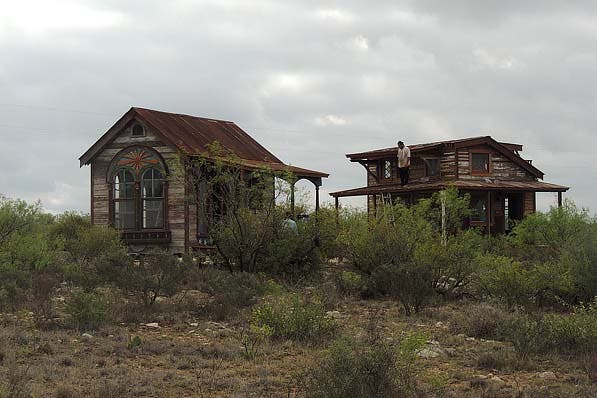
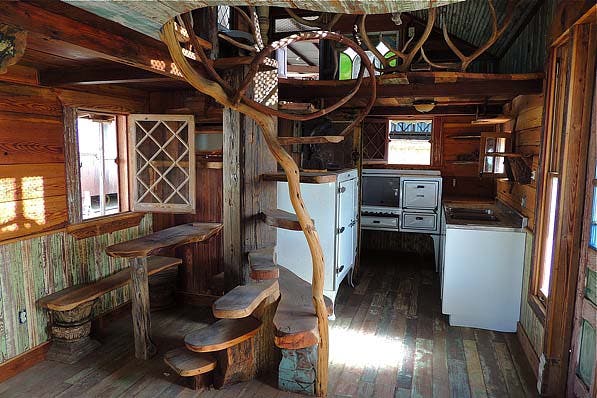
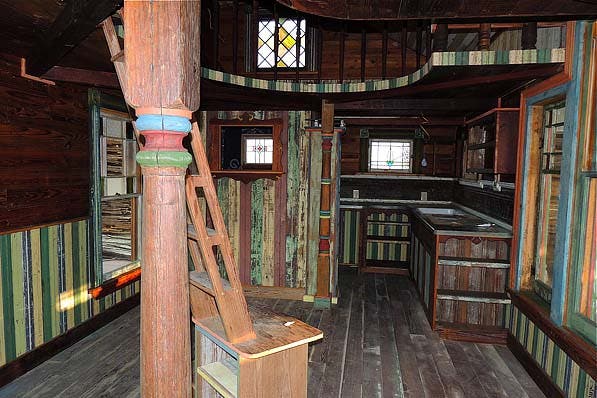
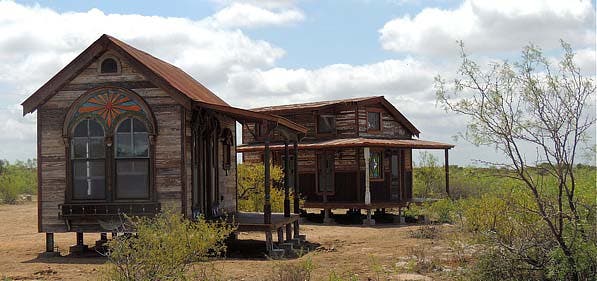
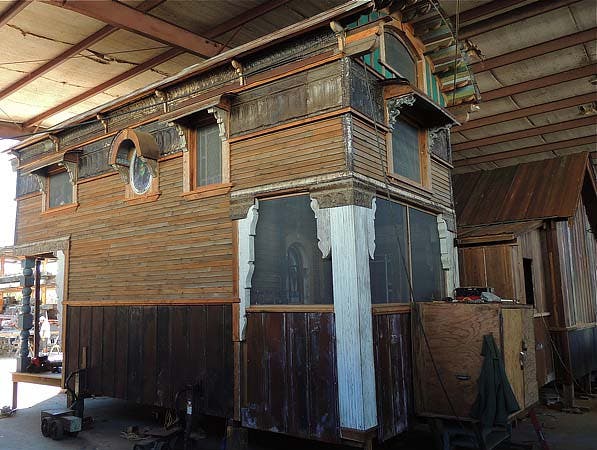
If you’ve been keeping up with Tiny Texas Houses then you’ve probably seen the many unique tiny houses they’ve put together over the last 6 months.
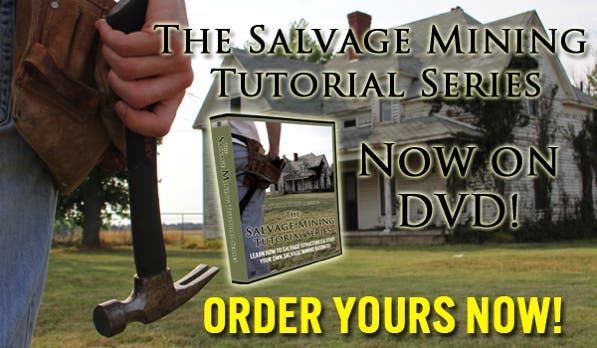
As if building all their houses isn’t enough, they’ve also released a full length tutorial series on how to start your own salvage mining business and teardown structures to re-purpose materials. They call it “The Salvage Mining Tutorial Series.”

Brad Kittel, owner of Tiny Texas Houses, explains a wide range of subject matter relating to the salvage world and how to be successful in it. You can stream the full length series online here or purchase the full DVD box set here for a very affordable price…especially considering the amount of wisdom and information packed into the series!
Tiny Texas Houses has also come up with a unique and fun way to contribute to their projects and causes. They are allowing supporters to purchase “Airspace” on “The Acre of Hope” (a one acre area at their facility in Luling, Texas dedicated to supporter contributions and fan club participation). Esentially, they have set aside an acre of property where individuals can purchase “Airspace” by the square inch ($20.00 per square inch) above the acre and receive a fun “Certificate of Airspace Ownership” with your name on it via email.

Brad Kittel explains….
“This is Tiny Texas Houses’ way of providing our fans and supporters something that they can actual “own” and be a part of. I know a lot of our fans can’t afford a Tiny House right now, so this is our way of making our ideas accessible to them. All the money we raise from the Airspace Certificates goes towards our educational endeavors like the “How to Build a Tiny Texas House” tutorial videos and other projects like the development of the Tiny Texas Villages.”
Everyone who contributes will not only receive the certificate of ownership via email, but also becomes a charter member of The Pure Salvage Living Renaissance and can receive substantial discounts on merchandise, workshops, and even a Tiny Texas house. All Airspace owners are also encouraged to come out to the Tiny Texas Houses property at their convenience and “capture” their “Airspace” in containers that Tiny Texas Houses provides onsite.
“It’s a fun idea and the fans love it. The idea to do this actually came from one of our fans answering a questionnaire. It’s been great…who would have thought we would receive some much support by selling “Airspace!” says Brad with a smile.
To purchase “Airspace” and become a Charter member to the Pure Salvage Living Renaissance go here: http://puresalvageliving.com/the-pure-salvage-living-renaissance-presents-the-airspace-certificate/
Visit tinytexashouses.com or puresalvageliving.com for more information.

firehosevia GN
firehose"Giving the kind of mannered performance that seems predicated on careful mimicry of 60 Minutes, Cumberbatch impresses without ever coming across as more than an abstraction. Relegating the sexual assault allegations and embassy exile to title cards at the end, The Fifth Estate is content to tell a story more normalized and superficial than the one that’s already in the public record. "

The Fifth Estate kicks off with a montage detailing the entire history of news, beginning with hieroglyphics and continuing through Martin Luther nailing his Ninety-Five Theses to the church door, a telegraph relaying the sinking of the Titanic, FDR’s first inaugural address, Walter Cronkite reporting on the JFK assassination, the fall of the Berlin wall, and 9/11. Somewhere in there, probably, is the invention of the biopic, of which Bill Condon’s timely yet tepid Julian Assange movie is a resolutely typical example. Based on two books—one by Daniel Domscheit-Berg, whom the film employs as a viewer surrogate—The Fifth Estate has been preemptively dismissed by the WikiLeaks founder as a work “not of fiction, but of debased truth.” That description implies more verve than this would-be cross between The Social Network and Carlos can manage. It’s hard for a film to feel urgent when it ...
Read more
|
|

This is the best episode of Top Chef so far this season. We're only three episodes in, so that isn't the boldest statement I've ever made, but it's a good, gripping episode, balanced between chef drama and fancy cooking. Two chefs go home in "Commander's Palace," which is more than I expected; it seems like the series started with a bigger roster of chefs and it's trying to trim down that list fast. I don't mind it, as far as plot goes. It means that things really do feel hectic and important the whole time.
I don’t mind it when Top Chef goes down the road of creating a dish that sounds cool or creates a sort of spectacle—last week’s food truck challenge ended up being quite interesting. But it’s more engaging to watch a chef do something smart ...
Read more
|
|