The pistol, a fine, expensive weapon, had functioned perfectly. The trigger freed the cocked hammer from its tension spring. The hammer snapped forward, striking the copper percussion cap resting over the hollow steel nipple mounted on the barrel. The resulting spark flashed into the chamber,…
Yes! You should read Manhunt, if you haven’t. We know everything about Lincoln’s assassination, and yet the moment by moment retelling is edge of the seat stuff.
When it comes to the holiday gift-giving season, comic book readers are notoriously difficult to shop for. I mean, most of us are down at the shop buying our favorite stuff every single week, so when the time comes for people who like us to get us something we want, well, a lot of times we already have it. That’s why we’re stepping in with a public service, bringing you comics-related items sure to make the season brighter, whether you’re browsing for a gift or just looking for something to drop hints about so that you don’t get stuck with a random assortment of back issues again.
The great thing about To Be Or Not To Be is that it makes such a great gift for so many people. Well, that’s not actually true — the great thing about TBONTB is that it’s wonderfully written, beautifully illustrated, brilliantly constructed and just generally one of the most fun books I’ve read in the past few years. But yeah, that first thing stands.
On the off chance that you’re not familiar with it, or haven’t figured it out from the title, TBONTB is a Choose-Your-Own-Adventure style rewriting of Hamlet, written by Dinosaur Comics creator Ryan North and illustrated by an incredible roster of webcomic artists that include CA favorites like Kate Beaton, Christopher Hastings, Anthony Clark and Andrew Hussie. That gives it a huge cross-section of people who could be interested in it: Webcomics fans, English Lit majors, actors, teachers, people who like the Adventure Time comics, or really, anyone who ever had to read Shakespeare in school and wondered why Hamlet didn’t just kill his friggin’ uncle already. You could buy a whole stack of these things and just pass ‘em out to friends and family, and assuming they didn’t hold it against you that you were giving them all the same thing, you’d probably be doing pretty okay this holiday season. It’s as clever a concept as you could ask for.
The thing is, it actually lives up to that concept in a way that’s even better than I was expecting — and I say that as someone who’s been a fan of North’s comics for years. It’s bigger and bolder than any other choosable-path book I’ve ever seen, allowing you to not only choose between multiple characters at the start — introspective Hamlet, science-minded Ophelia or vengeful ghost King Hamlet — but then gives you the opportunity to switch between characters at points in the story, and even switch into new characters as the story goes on. You can read it a dozen times and find new threads that overlap in unexpected ways — I don’t want to spoil too much, but there’s a part where you get to quantum leap into a parallel timeline, and if that wasn’t mind-blowing, pulling off a chess game against Gertrude where you have to pick your moves in print is pretty staggering too.
Plus, you can actually follow choices marked with skulls to get Hamlet as it was originally written, complete with North’s increasingly frustrated commentary about Hamlet’s tragic paralysis of will, and also that awesome pirate battle scene that Shakespeare left out of the original. It’s seriously one of my favorite things in the entire world of comics this year, and if you’re a bookish type who hasn’t read it (or you know someone who hasn’t), I can almost guarantee good times.
WORTH NOTING: The print version is a beautiful, heavy chunk of book that makes a satisfyingly weighty present, but the Kindle version (best for iPads or Kindle Fires that take advantage of the illustrations) includes links in the text to make the choices easier to follow. Make like Juliet and pick your poison.
'Several years ago when I was still running ComicsAlliance, I attended San Diego Comic-Con. At the time, the site had been nominated for an Eisner Award. I was proud. I felt like I’d come a long way since the days when I was slinging comics as a cashier, when I got asked on a near daily basis if I “actually read comics.” I’ll never forget how lucky I felt to be there, surrounded by a community of friends and professionals I respected and enjoyed.
The feeling lasted right up until the moment when a bunch of guys walked up and took an upskirt photo of me. I’d been distracted, and I hadn’t seen them come up behind me. In fact, the only reason I know it happened at all was that a nearby Good Samaritan – a woman who tapped me on the shoulder, told me what happened, and pointed out the guys who were gathered around the phone, pointing and laughing. “I would want to know,” she said.
I was running one of the biggest media outlets about comics in the country; I was nominated for the industry’s most prestigious award. I was surrounded, ostensibly, by friends and a community that should have had my back. None of this mattered. None of this protected me. I don’t know how many of the other people around me – mostly men — saw what happened. Maybe most of them didn’t. But what I will always remember is that the only person who stepped forward to help me was a woman I’d never met.
And worse, I remember the feeling that crept up inside me: that this was inescapable. That it would never matter who I was or what I accomplished. That within my community, someone still could do something like this to me at any time, expect to get away with it, and be right. Over and over, this is the message the industry sends women when they allow this behavior to persist, when they do not actively and relentlessly work to acknowledge it and tear it down: You are on on your own.'
FX/e-cards
Last week, when artist Tess Fowlergot on Twitter and breathed white-hot fury about sexual harassment in the comics industry, the thing that struck me most wasn’t her anger; the real shock, given the scope of the problem and the lack of consequences, should be that more women aren’t that publicly furious more of the time.
Of course, there are many, many reasons not to speak up. If you’re a comics professional, maybe you want to be known for your work, for your accomplishments, not for the fact that some jerk couldn’t keep his hands to himself. Maybe you don’t want the first thing that comes up when someone Googles your name to be a story of your victimization. Maybe you don’t want to be called a slut or a liar when you talk about the sh**ty thing that happened to you (which you will, inevitably), or for people to invent every possible nefarious motivation for your decision to speak up – except the idea that it might be true.
Naturally, I’ve seen numerous comments since referring to Fowler’s speech as some variation on a “hysterical meltdown,” as though a woman feeling anger about her mistreatment is necessarily pathological, a sign of absurdity and dysfunction rather than self-respect. When men get angry, we call it brave, kickass – we pump our fists in the air. When women get angry it somehow warps; it becomes threatening. We call it crazy, hysterical, unhinged.
It’s extremely telling to me that Tess Fowler only felt empowered to speak up after artist Brandon Graham spoke first, and that fans went looking to Greg Rucka – who is an extremely supportive ally to women in comics, but still a man – to confirm the truth about what was happening to women, instead of asking… women.
And it’s telling, too, that when I saw Greg’s response, I felt a depressing sense of relief – not only that he’d been so honest and on point, but on a deeper level that a man had acknowledged the problem, and thus the kneejerk reaction was less likely to be dismissal — people were more likely to believe him. Behind all of this lurks the subtle, pervasive sense that when women speak up, we treat their account with less veracity. We meet it, first, with doubt.
Since Fowler’s comments, and the wider-ranging debate that followed, I have seen conversation after conversation of men debating with other men whether or not the reality of women is real, men asking other men to confirm that what women were saying was true, men testifying that they’d never seen harassment – or else piping up that they knew there was harassment, yes, but it wasn’t as bad as people were saying. As though they, somehow, were some sort of authority on the experiences of women. When one of the primary criticisms about harassment in comics is that most men don’t understand the scope of it, saying it’s not such a big deal isn’t a useful or relevant observation – it’s a self-indictment.
It’s important to note that the vast majority of men in comics – pro and fan – aren’t predatory. The problem is that the small number who are predatory get insulated from the consequences of their actions by the passive behavior of other men (and sometimes women): those who dismiss or minimize the behavior, decline to support the person who has been attacked – or worse, attack her instead. These men don’t directly harm women; they just create the culture that allows it to happen.
Kate Leth
Because most predators and harassers don’t behave the way they do because they can’t help themselves, because they somehow have to – they do it because they can. We know this because they are often very strategic and specific about the people they target. Most often, it is people with less institutional power, people who are more vulnerable. People who are less experienced, less sure of themselves. And harassers do it not because they are ineluctably compelled by some mystical or biological force to be assholes, but because they believe they can get away with it. And they are almost always right.
Several other women have stepped forward since Fowler’s comments to share their own accounts of harassment. And like them — like most women I know in comics — I have stories too. When I first started out in the industry, I had experiences that ranged from inappropriate behavior all the way up to sexual harassment. I was younger, then. I didn’t always know how to deal with it. I didn’t talk about it publicly, that’s for sure. If I had, I often wonder if I would have gotten anywhere. As I became more prominent, particularly as a member of the press who discussed gender issues publicly and often, this behavior decreased and then largely stopped.
It doesn’t strike me as a coincidence. The people who harassed me weren’t behaving that way because they thought it was an acceptable way to treat people, or because they didn’t know any better. They were doing it because they thought they could get away with it. They stopped when they didn’t think that was true anymore.
Of course, just because my position and the independence of my platform started to insulate me from harassment in professional spaces didn’t mean that the harassment stopped altogether, or that the rest of comics was somehow a safe space.
Several years ago when I was still running ComicsAlliance, I attended San Diego Comic-Con. At the time, the site had been nominated for an Eisner Award. I was proud. I felt like I’d come a long way since the days when I was slinging comics as a cashier, when I got asked on a near daily basis if I “actually read comics.” I’ll never forget how lucky I felt to be there, surrounded by a community of friends and professionals I respected and enjoyed.
The feeling lasted right up until the moment when a bunch of guys walked up and took an upskirt photo of me. I’d been distracted, and I hadn’t seen them come up behind me. In fact, the only reason I know it happened at all was that a nearby Good Samaritan – a woman who tapped me on the shoulder, told me what happened, and pointed out the guys who were gathered around the phone, pointing and laughing. “I would want to know,” she said.
I was running one of the biggest media outlets about comics in the country; I was nominated for the industry’s most prestigious award. I was surrounded, ostensibly, by friends and a community that should have had my back. None of this mattered. None of this protected me. I don’t know how many of the other people around me – mostly men — saw what happened. Maybe most of them didn’t. But what I will always remember is that the only person who stepped forward to help me was a woman I’d never met.
And worse, I remember the feeling that crept up inside me: that this was inescapable. That it would never matter who I was or what I accomplished. That within my community, someone still could do something like this to me at any time, expect to get away with it, and be right. Over and over, this is the message the industry sends women when they allow this behavior to persist, when they do not actively and relentlessly work to acknowledge it and tear it down: You are on on your own.
Because I am a woman, on that basis alone, many people will not believe what I am saying right now. Instead, they will believe that for some reason I have decided to use my deeply limited time and energy – which I would rather direct at a million other things that don’t make me feel like sh*t – to discuss something personally wrenching for some ill-defined form of personal gain. That, like the women of old with their wandering uteri, it is because I am emotional, opportunistic, crazy. (Or angry, as though anger in women is necessarily a thing without origin.)
Only men, somehow – those without direct experience – can be impartial, can be listened to. They will think this, and they will weigh the opinions of other men on this subject, and they will believe that they are being “objective.” They will not understand exactly how much a part of the problem this makes them.
The concept of the missing stair has always been a powerful one when talking about the minimization of abuse: the idea that instead of treating harmful people like a problem, we make women work around them, accommodate them. It’s no surprise to me that over the last week, as woman after woman has identified the problem, pointing at the missing stair, that one of the most frequent reactions is that women are the ones who need to change their behavior. That they are the ones who must accommodate, yet again. That the responsibility is on them for fixing a problem which isn’t truly theirs to fix.
Which one of these statements makes more sense to say: “These people need to find more ways to stop people from harming them.” OR: “These people should stop causing harm.” If you ever find yourself saying the former instead of the latter, take a moment and ask yourself why. The stairs in comics are broken, and if we all just keep silently walking over that missing stair – or failing to realize that it’s missing at all — it’s never going to get fixed, and women are going to keep getting hurt. The answer isn’t that women need to work harder to jump over the gap created by a system that protects harassers and silences victims. It’s that we need to f**king fix it.
Harassment makes the road to enjoying or making comics far harder for women, and for some women it sidelines them entirely. If you aren’t actively doing everything in your power to help, you don’t get to shrug your shoulders when people ask why women are so underrepresented in so many areas of comics. You don’t get to ask why more women don’t come forward, why they don’t name names, even though everyone knows there are “so many stories.” Because the answer is you.
mrspoonsi writes "The Xbox One controller went through many radical designs, including a built-in pico projector and a cartridge designed to release smell. Apparently, 'the core base didn't appreciate them,' so these wacky features were dropped in favor of a standard controller. According to VentureBeat, over $100 million worth of research went into the design they ended up using. 'Microsoft’s first tweaks for a new controller focused on the overall size and how it’d fit into hands, golden or otherwise. Using the Xbox 360 controller as a starting point, the engineers would make plastic-molded or 3D-printed prototypes that were each 1 millimeter wider or narrower than the last, testing a full range of up to plus or minus 8 millimeters. “That gave us the ability to test, with actual users including women and children, which width feels best,” said Morris. “We tested with more than 500 people throughout the course of the project. All ages, all abilities.” ... Morris and his team then looked at different thicknesses and shapes of the grips (or “lobes,” as he calls them), plus the angle of the triggers, different styles of analog sticks, and more.'"
The Army should use photos of “average-looking women” when it needs to illustrate stories about female soldiers, a specialist recommends — images of women who are too pretty undermine the communications strategy about introducing them into combat roles.
"Unknown to the cops, though, there is one difference this time. The woman under interrogation, Alice Goffman, has been watching them.
Nearly a decade later, Goffman is emerging as a rising star of sociology. The 2004 interrogation shows why. After spending her 20s immersed in fieldwork with wanted young men—a project she began as an undergraduate at the University of Pennsylvania—Goffman has brought back the story of a "profound change" in the way America governs urban ghettos."
On a winter afternoon in 2004, a woman waits in the detective unit of a Philadelphia police station. Two officers, outfitted with combat boots and large guns, enter the room. The cops place their guns on the table, pointed at her. The woman is 22, tiny, and terrified.
In what could put a real damper on Rob Ford's month, Canada’s Sun News Network has canceled the Toronto mayor’s reality show after only one episode. While Ford Nation was the channel’s highest-rated program ever when it debuted on Monday—suggesting viewers were somewhat intrigued by a mayor who smokes crack, films videos in which he drunkenly threatens to kill his enemies, gives press conferences where he suggests that he has an all-you-care-to-eat pussy trough back at the old homestead, and powerslams female city councilors, and were curious to see what might happen if he was given yet another microphone—the show was reportedly “too costly to make.” According to the network’s vice president, Ford Nation took five hours to film and another eight to edit, as producers worked around the clock to whittle down every single insane thing he said and did into a mere hour of ...
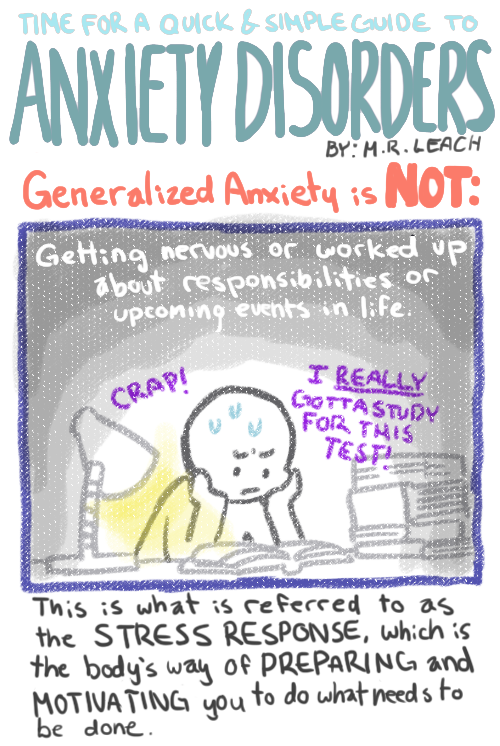
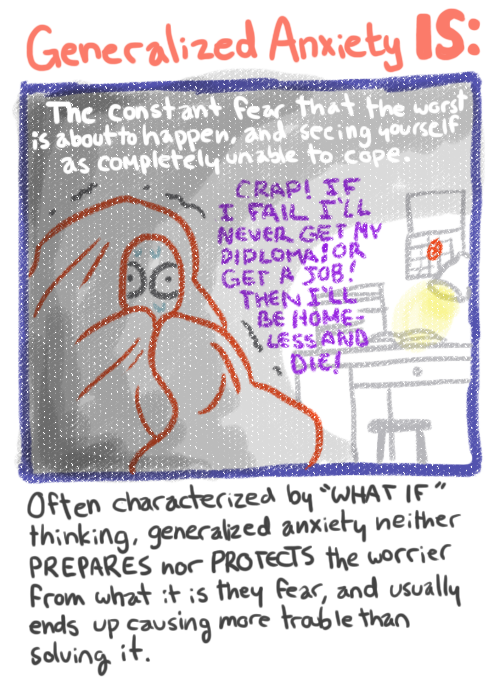
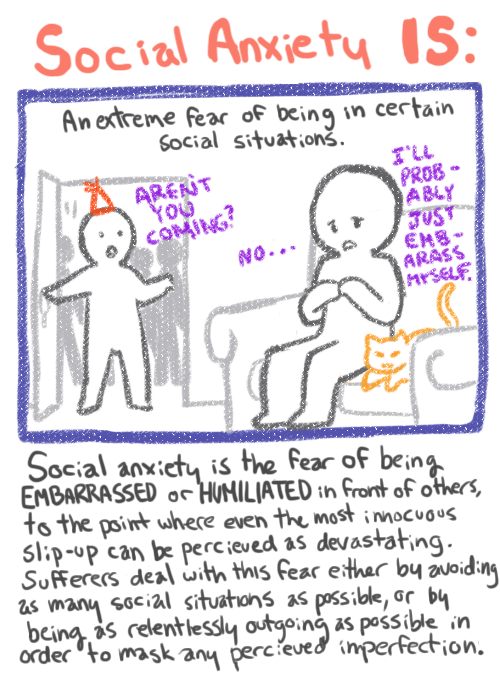
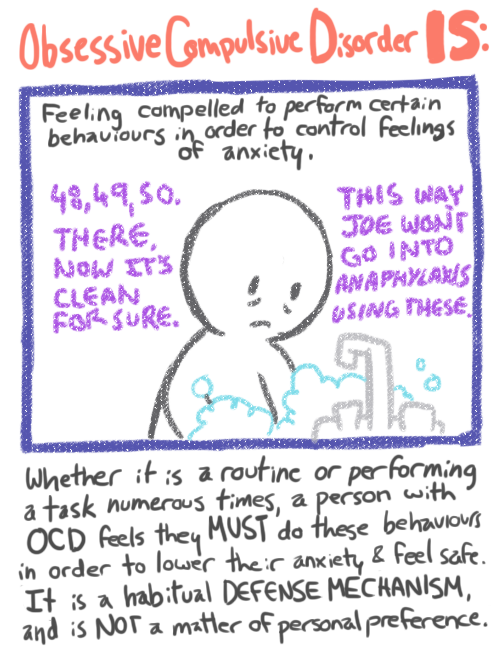
Some things I’ve learned in the CBT clinics I’ve been going to regarding anxiety that I thought might be helpful to some.
for real though. i have tried so hard to explain these things to people. jfc.
Listen up, Snowflakes.
fun little thing to tack on: triggers ARE NOT things that make you uncomfortable or uneasy, they are material that lead to visceral reactions/flash backs/panic attacks due to previous traumas
they aren’t even phobias
they are related to ptsd, not general discomfort or fear
sometimes i think that people need this polite reminder
Winona Ryder just spilled the beans that she probably going to return as the great Lydia Deetz for Beetlejuice 2. Okay, she didn't outright SAY that, but the implication is there, and it is awesome. Three important questions remain: What is Lydia Deetz up to now? What is she wearing? And where can I buy it?
tl;dw: 19 second boot on SSD vs 25 second boot on the built-in HDD disc-based game: 34 seconds to game start on SSD to 39 seconds on HDD downloaded game: 39 seconds to game start on SSD to 60 seconds on HDD SSD is "not worth $250 more on top of the cost of the console"; hybrid drive is economical and still considerably better than the stock HDD
The hardware tinkerers at Tested installed three different hard drives in a PlayStation 4 to uncover the benefits of each.
In the nine-minute video above, you'll see Tested pit the PS4's standard 500 GB 2.5-inch hard disk drive (HDD) against a 250 GB Samsung solid state drive (SSD) and a 1 TB Seagate hybrid that combines HDD and SSD technology.
Press play above to see videos of each configuration and the speeds at which the system boots and loads launch games like Killzone: Shadow Fall, Knack and Resogun. Internal differences aside, price is also a factor. The standard HDD costs between $50 and $70, the SSD costs about $175 for half the storage space (500 GB SSDs tend to cost more than $300) and the hybrid costs about $110.
Stick around to see how to replace the PS4's hard drive and learn the publication's recommendations.
For months, Wikipedia has been battling a company called “Wiki-PR,” which purportedly sells paid editing services on the well-known online encyclopedia. In October 2013, Wikipedia announced it blocked or banned hundreds of editor accounts in response.
Now the Wikimedia Foundation (which runs Wikipedia) is escalating its game: on Tuesday it issued a cease and desist letter to Wiki-PR, demanding that the company immediately halt editing Wikipedia “unless and until [Wiki-PR has] fully complied with the terms and conditions outlined by the Wikimedia Community.”
Based on the three-page letter, which the Wikimedia Foundation published on its website Tuesday afternoon, it appears that Wikimedia attempted to solve the situation amicably prior the situation reaching this stage.
This case, First Unitarian Church v. NSA, challenges the government's collection of telephone call information, saying the practice violates the First, Fourth, and Fifth Amendments of the United States Constitution. The complaint states that Verizon, AT&T, and Sprint all participate in the government's collection of data, including originating and terminating phone numbers, trunk identifiers, calling card numbers, and time and duration of calls.
Now, the First Unitarian Church and its fellow plaintiffs have new allies in three United States senators who have been at the forefront of surveillance policy reform. In a new amicus brief filed on Tuesday, Senators Mark Udall (D-CO), Ron Wyden (D-OR), and Martin Heinrich (D-NM) say that they “have seen no evidence that the bulk collection of Americans’ phone records has provided any intelligence of value that could not have been gathered through less intrusive means.”
The Adjustable Clampersand takes the utility of a C-clamp and adds the literary street cred of the ampersand symbol. The functional aluminum clamp can be used as a bookend or for the creation of painful visual puns. The Adjustable Clampersand was designed by Tony Ruth (aka Lunchbreath), is made in the USA, and is available at Hand-Eye Supply.
What is the furthest one human being has ever been from every other living person? Were they lonely?
Bryan J. McCarter
It's hard to know for sure!
The most likely suspects are the six Apollo command module pilots who stayed in lunar orbit during a Moon landing: Mike Collins, Dick Gordon, Stu Roosa, Al Worden, Ken Mattingly, and Ron Evans.
Each of these astronauts stayed alone in the command module while two other astronauts landed on the Moon. At the highest point in their orbit, they were about 3,585 kilometers from their fellow astronauts.
You'd think astronauts would have a lock on this category, but it's not so cut-and-dry. There are a few other candidates who come pretty close!
Polynesians
It's hard to get 3,585 kilometers[1]Because of the curve of the Earth, you actually have to go 3,619 kilometers across the surface to qualify. from a permanently inhabited place. The Polynesians, who were the first humans to spread across the Pacific, might have managed it, but this would have required a lone sailor to travel awfully far ahead of everyone else. It may have happened—perhaps by accident, when someone was carried far from their group by a storm—but we're unlikely to ever know for sure.
Once the Pacific was colonized, it got a lot harder to find regions of the Earth's surface where someone could achieve 3,585 kilometer isolation. Now that the Antarctic continent has a permanent population of researchers, it's almost certainly impossible.
Antarctic explorers
During the period of Antarctic exploration, a few people have come close to beating the astronauts, and it's possible one of them actually holds the record. One person who came very close was Robert Scott.
Robert Falcon Scott was a British explorer who met a tragic end. Scott's expedition reached the South Pole in 1911, only to discover that Norwegian explorer Roald Amundsen had beaten him there by several months. The dejected Scott and his companions began their trek back to the coast, but they all died while crossing the Ross Ice Shelf.
The last surviving expedition member would have been, briefly, one of the most isolated people on Earth.[2]Amundsen's expedition had left the continent by then. However, he (whoever he was) was still within 3,585 kilometers of a number of humans, including some other Antarctic explorer outposts as well as the Māori on Rakiura (Stewart Island) in New Zealand.
There are plenty of other candidates. Pierre François Péron, a French sailor, says he was marooned on Île Amsterdam in the southern Indian Ocean. If so, he came close to beating the astronauts, but he wasn't quite far enough from Mauritius, southwestern Australia, or the edge of Madagascar to qualify.
We'll probably never know for sure. It's possible that some shipwrecked 18th-century sailor drifting in a lifeboat in the Southern Ocean holds the title of most isolated human. However, until some clear piece of historic evidence pops up, I think the six Apollo astronauts have a pretty good claim.
Which brings us to the second part of Bryan's question: Were they lonely?
Loneliness
After returning to Earth, Apollo 11 command module pilot Mike Collins said he did not feel at all lonely. He wrote about the experience in his book Carrying the Fire: An Astronaut's Journeys:
Far from feeling lonely or abandoned, I feel very much a part of what is taking place on the lunar surface ... I don't mean to deny a feeling of solitude. It is there, reinforced by the fact that radio contact with the Earth abruptly cuts off at the instant I disappear behind the moon.
I am alone now, truly alone, and absolutely isolated from any known life. I am it. If a count were taken, the score would be three billion plus two over on the other side of the moon, and one plus God knows what on this side.
Al Worden, the Apollo 15 command module pilot, even enjoyed the experience:[3]BBC Future interview with Al Wolden (April 2, 2013)
There's a thing about being alone and there's a thing about being lonely, and they're two different things. I was alone but I was not lonely. My background was as a fighter pilot in the air force, then as a test pilot–and that was mostly in fighter airplanes–so I was very used to being by myself. I thoroughly enjoyed it. I didn't have to talk to Dave and Jim any more ... On the backside of the Moon, I didn't even have to talk to Houston and that was the best part of the flight.
Introverts understand; the loneliest human in history was just happy to have a few minutes of peace and quiet.
Nominations for the 2014 Independent Spirit Awards will be announced on November 26, and now the show has announced that comedian, actor, and all-around Internet hero Patton Oswalt will host the 29th annual awards ceremony on March 1, the day before the Academy Awards, in Santa Monica. Oswalt is familiar with the awards, having starred in Big Fan, a 2009 Cassavetes Award nominee (given to films with a budget of less than $500,000). Considering the Spirit Awards are for independent films, his monologue probably won’t be an official pitch of his Parks & Recreation filibuster to J.J. Abrams for inclusion in the new Star Wars, but there’s still a chance.
welcome to evangelical christianity TW: white people being so fucking racist
Our group's video for unreached people group for bible class. We chose the T'boli tribe of the Philippines. Please excuse the typos and misspellings :/
Sebastian Thrun speaks during the Digital Life Design conference on Jan. 23, 2012, in Munich.
Photo by Johannes Simon/Getty Images
Sebastian Thrun, godfather of the massive open online course, has quietly spread a plastic tarp on the floor, nudged his most famous educational invention into the center, and is about to pull the trigger. Thrun—former Stanford superprofessor, Silicon Valley demigod, and now CEO of online-course purveyor Udacity—just admitted to Fast Company’s openly smitten Max Chafkin that his company’s courses are often a “lousy product.”
This is quite a “pivot” from the Sebastian Thrun, who less than two years ago crowed to Wired that the unstemmable tide of free online education would leave a mere 10 purveyors of higher learning in its wake, one of which would be Udacity. However, on the heels of the embarrassing failure of a loudly hyped partnership with San Jose State University, the “lousiness” of the product seems to have become apparent. The failures of massive online education come as no shock to those of us who actually educate students by being in the same room with them—and, accordingly, Chafkin’s unabashed display of sycophantic longing has blazed up the academicInternet.
But what is the big deal about Thrun’s pivot, and why are academics and higher-ed writers alternately wary and gleeful about it? On the surface, Thrun appears duly chagrinned that his brainchild, so proudly hailed in neoliberal wet dreams, has failed the tired, poor, and huddled masses yearning to learn for free. And on the surface, the new direction of Udacity, which is to leave the university environment and focus on corporate training courses, seems appropriate: Sure, go “disrupt” a bunch of corporations, they love that kind of thing.
Advertisement
What’s got the academic Internet’s frayed mom jeans in a bunch, however, is that Thrun’s alleged mea culpa is actually a you-a culpa. For Udacity’s catastrophic failure to teach remedial mathematics at San Jose State University, Thrun blames neither the corporatization of the university nor the MOOC’s use of unqualified “student mentors” in assessment. Instead, he blames the students themselves for being so damn poor.
The way Fast Company has it, Thrun chucks those San Jose State students under the self-driving Google car faster than he chugs up a hill on his custom-made road bike, leaving a panting Max Chafkin in the dust to ponder the following Thrunism: “These were students from difficult neighborhoods, without good access to computers, and with all kinds of challenges in their lives. … It's a group for which this medium is not a good fit.”
Apparently students fail MOOCs because those students have the gall to be poor.
The problem, of course, is that those students represent the precise group MOOCs are meant to serve. “MOOCs were supposed to be the device that would bring higher education to the masses,” Jonathan Rees noted. “However, the masses at San Jose State don’t appear to be ready for the commodified, impersonal higher education that MOOCs offer.” Thrun’s cavalier disregard for the SJSU students reveals his true vision of the target audience for MOOCs: students from the posh suburbs, with 10 tablets apiece and no challenges whatsoever—that is, the exact people who already have access to expensive higher education.
It is more than galling that Thrun blames students for the failure of a medium that was invented to serve them, instead of blaming the medium that, in the storied history of the “correspondence” course (“TV/VCR repair”!), has never worked. For him, MOOCs don’t fail to educate the less privileged because the massive online model is itself a poor tool. No, apparently students fail MOOCs because those students have the gall to be poor, so let’s give up on them and move on to the corporate world, where we don’t have to be accountable to the hoi polloi anymore, or even have to look at them, because gross.
Successful education needs personal interaction and accountability, period. This is, in fact, the same reason students feel annoyed, alienated, and anonymous in large lecture halls and thus justified in sexting and playing World of Warcraft during class—and why the answer is not the MOOC, but the tiny, for-credit, in-person seminar that has neither a sexy acronym nor a potential for huge corporate partnerships.
Granted, Thrun’s hasty retreat from a full university takeover is delightful for advocates of actual education, and his new vocational focus seems like a great idea for its participants at first glance. But here’s the other problem, which is perhaps even more pernicious: The single thing MOOCs unequivocally do better than traditional educational methods is play to the distinct advantages of the advantaged. Congratulations?
As Audrey Watters and Mike Caulfield have both argued, Thrun’s new venture will still probably have a 93 percent attrition rate, and that attrition rate does not actually seem to bother its creator. For Thrun has implied that MOOC failures are chaff being separated from wheat, the herd being thinned in a meritocracy, a “feature” rather than a bug in the system, as Caulfield has put it.
And just as with university MOOCs, those 7 percent who make it are going to be the same 7 percent who always make it: individuals who are not from “rough” neighborhoods, who have easy access to resources, and none of the pesky “challenges” that come from attempting to survive in an economy rigged against them. The workers who will thrive in a corporate training MOOC are those who do not need a MOOC to get a promotion.
If the only university students who can benefit from a MOOC are those who can already afford an elite education, and if the only corporate trainees who succeed are those already primed for success, then what is the point? Thrun’s admission seems to have “pivoted” the MOOC to premature obsolescence. Perhaps the professoriate’s latest source of terror—our wholesale replacement by actors strutting and fretting upon a new kind of stage—will never come about. As Rees puts it, Thrun has done us “a huge favor by demonstrating the value of what most of us do every day,” proving “beyond a shadow of a doubt that real higher education can’t be automated.”
This takeaway has the potential to be monumental for the future of higher education: MOOCs reify, rather than break down, privilege barriers, and as such they are not the disruptive solution their hagiographers insisted they were. The problems MOOCs were supposed to solve still plague the current university, of course. But skyrocketing tuition and a faculty labor crisis will need a different kind of savior—one who doesn’t show up in a driverless car.
On August 3rd, 1862, a nineteen-year-old Irish immigrant named Jennie Hodgers joined the ranks of the 95th Illinois Infantry, successfully passing for a man during a physical examination in which she only had to show her hands and feet. For the next three years, she served as Pvt. Albert D. J. Cashier, engaging in as many as forty battles and skirmishes, where she fought bravely and memorably.
During the six-week siege of Vicksburg, Mississippi, Cashier was captured at a Confederate outpost, but managed to escape by stealing a gun from one of the guards and outrunning his mates. Comrades also remembered her climbing to the top of Union fieldworks at Vicksburg and taunting the rebels to come out and show themselves.
Cashier was illiterate, but she had help from her friends in writing letters, because she corresponded with the Morey family in Babcock’s Grove, Illinois throughout the war, also sending them money, blankets, and other gifts. A few of the Morey letters refer to Cashier’s “sweetheart,” asking if Albert will bring her home at the end of the war, and if he has bought his sweetheart a new dress. We’ll never know if this sweetheart was a lesbian partner, part of the ruse to maintain Cashier’s male identity, or entirely made-up.
After the war, Cashier returned to Illinois and continued living under her male alias. For over forty years, she labored at a variety of jobs—farmhand, handyman, janitor, property caretaker, and town lamplighter. She also took advantage of her male status in order to vote and march in veteran parades. No one knew her as anyone other than Albert, a short guy (she was 5’2”) with an Irish brogue. She received a veteran’s pension in 1890, and an increase in 1899 at the age of 56, as she was aging out of the hard, physical labor she’d done for so many years.
Then, in 1911, while doing odd jobs for an Illinois state senator, the senator accidentally ran her over in his automobile, and broke her leg. The doctor who set her broken thigh discovered her gender, setting off a series of events that would make her a national celebrity and ultimately contribute to her death. Although the doctor swore to keep her secret, Cashier never healed enough to go back to work, and she had to move into a home for disabled veterans. A psychiatrist at the home, Dr. Leroy Scott, also knew her secret, and became fascinated with Cashier’s story. Over the next three years, her physical and mental health deteriorated and Dr. Scott’s interest in her story did nothing to help. The superintendent of the home decided to have Cashier declared insane by the State of Illinois, so they could send her to an asylum.
At the same time, someone leaked her story to the press, and it made national headlines. The Pension Bureau decided to investigate the case of this woman who had been “defrauding” the government for veteran benefits for twenty-four years. In 1914, the court declared Cashier insane and she was sent to an asylum, where she was placed in the women’s wing and forced to wear a dress.
Many of her former comrades visited her there. One recalled, “I left Cashier, the fearless boy of twenty-two at the end of the Vicksburg campaign. I found a frail woman of seventy, broken, because on discovery she was compelled to put on skirts. They told me she was as awkward as could be in them. One day she tripped and fell, hurting her hip. She never recovered.”
During the Pension Bureau investigation, the men who’d fought at her side were asked about her sanity. “His mind seemed to be alright but his actions seemed to be a little funny,” one said. “I suppose that was because he was a woman.” Finally, in February 1915, the bureau determined that she really was Albert Cashier, who had served in the 95th Illinois, and had therefore not defrauded the government. Her pension checks would continue. Sadly, ten months later, Albert died. She was buried in her uniform, with full military honors.
Cashier belongs to a group of an estimated one thousand women who fought, cross-dressed as men, for the Union and Confederate armies during the Civil War. We are currently in the middle of the war’s sesquicentennial, and over the Fourth of July weekend, I traveled with my mom, a reenactor, to the 150th anniversary of the battle of Gettysburg, where there were plenty of ladies in hoopskirts and hairnets, but also some cross-dressed women portraying soldiers. At least five women fought in the battle of Gettysburg in 1863, including an unidentified drummer girl who swore that once she healed from her injuries she would never wear a dress again, and two female Confederates who were casualties of Pickett’s Charge.
On the third and final day of the battle, after two hours of ineffective artillery bombardment, 12,500 Confederate soldiers began a march towards certain death—for almost a mile, troops marched in formation across an open field, stepping over bodies as they fell, toward the Union line at Cemetery Ridge. Those still marching by the time they reached the ridge were decimated by point-blank musket-fire and bayoneting. The Confederate casualty rate alone was over fifty percent; overall, the Battle of Gettysburg had the highest casualty rate of any of the war. One Union private from New Jersey wrote home to say that as he was guarding Emmitsburg Road the evening after the charge, he heard the screams of a woman, dying in the field across the road, where so many Confederate dead already lay. He described the screams as the most awful sounds he’d ever heard.
It was stories like these—Albert Cashier, the drummer girl, and the unknown Confederate—that made the history of the Civil War come alive for me like it never had in school. I went to Gettysburg to look for Albert reincarnate, wondering if the reenacting community would try and force her into a skirt today, or if they’d let her keep her pants on and hang with the guys.
At high noon on July 6th, I went to meet J.R. Hardman, a twenty-seven-year-old filmmaker who is currently making a documentary called Reenactress, about her experiences as a cross-dressing soldier. We’d been texting ever since I arrived in Gettysburg on July 4th, but cell service was spotty on the farm where the reenactment was being held, so it took us a couple days to rendezvous. I finally found her near a flagpole at the top of a hill next to the Union artillery camp. She was wearing Union blue trousers, a checked shirt, and suspenders, having just returned from an 11am cavalry battle, in which she fired artillery with the 6th New York. She also switch-hits in gray and reenacts as an infantry soldier with the 53rd Georgia, and her film will chronicle her experiences on both sides of the Mason-Dixon divide.
A hundred and fifty years ago, J.R. would have made a fine recruit. She is tall and strong, with a long boyish neck and short, auburn hair. Last year, while at the 149th anniversary of Gettysburg as a spectator, the captain of the 6th New York recruited her for his unit based on the way she looked wearing a man’s cap. It was too hot to be in the sun without one, and so she’d bought one from the sutlers (vendors that sell clothing and accessories at reenactments). As J.R. remembered, “He comes up to me and he goes, ‘You reenact?’ and I go, ‘No…’ And he goes, ‘Well, you want to?’”
“And that’s him over there,” she said, introducing me to Jeff, the captain, as a writer from New York.
“All the way from New York City?”
“All the way,” I said.
It was obvious that Jeff was the proud papa of the unit, comfortably reclining at the lunch table in a white undershirt, suspenders, and trousers. I’d overheard the women in my mom’s reenacting group complain of meager portions of the historically accurate venison stew prepared by their unit’s cook (and served first to the men), but everyone in the 6th New York looked well fed. Scattered across the table, I saw a bottle of Hellman’s mayo, Ziplock bags of crackers, Sabra hummus, and huge Tupperware containers of tabouleh and chicken salad.
“Which one is our food?” J.R. asked, making a plate.
“There is no ‘our food.’ It all belongs to the captain,” Jeff joked.
J.R.’s cinematographer, O.K. Keyes, made a dive for the edamame. The two women met through J.R.’s work on a campus film fest; when J.R. realized they both went by their initials, she decided it was “meant to be.” O.K. was also dressed as a soldier, in borrowed garb, but she didn’t have boots, so she’d improvised by covering a pair of sneakers in black duct tape.
I took a picture of the shoes, adding to an album already filled with anachronistic snapshots—Abe Lincoln in a golf cart, a port-a-potty for “hoops only,” a Styrofoam bowl of historically accurate colcannon (mashed potatoes and greens) I got from the food tents. Watching the 6th New York feed themselves was like watching a scene from Brecht: these people looked like they were from the 19th century, and the setting seemed accurate enough, but rather than feeling carried away into history, I felt distanced and hypercritical. The closer the reenactors came to matching their behavior and clothing and accessories to history, the more I noticed the gravel parking lots filled with RV’s, the paper plates and plastic forks. The more real the reenactment, the more I was reminded of how far we were from the actual war.
I sat with J.R. and O.K. while they ate lunch. Jeff seemed eager to be included in the conversation, and offered to tell me his favorite J.R. story. “We’re at Lambertville,” he started.
“Peddler’s Village!” she corrected.
“Peddler’s village, sorry. And J.R. was paid the highest compliment a female reenactor passing as a male reenactor can get. She’s in the women’s room, washing up, and this lady comes out of the stall, takes one look at her, and freaks out. She didn’t know if she was in the wrong stall or if J.R. was in the wrong bathroom.”
This story brought to mind a more famous case of restroom gender-bending. In 1989, a woman named Lauren Cook Burgess was “caught” coming out of the ladies room dressed as a field musician during a reenactment at Antietam National Battlefield Park. The National Park Service, citing “authenticity,” banned her from the reenactment, and Burgess went on to successfully sue the NPS for sex discrimination.
J.R. told me she had located Lauren Cook Burgess (now Lauren Cook Wike) and hoped to interview her for the documentary. She credits her with paving the way for women who want to reenact in pants.
“She won a lawsuit for gender discrimination and I think because of that, at these big national events, I don’t think they can say anything one way or the other. But if you look in the rules and regulations of a lot of reenacting events, there’s many times a specific section about women reenactors.”
Item five of the “impression standards” list on the official Gettysburg Anniversary Committee website reads:
Women portraying soldiers in the ranks should make every reasonable effort to hide their gender. Hundreds, if not thousands, of women passed themselves off as men in order to serve as soldiers during the war—on both sides, and we will never know exactly how many did so because their disguises were so good. Honor them. If any Army or event volunteer (as above) determines the female gender at not less than 15 feet, that individual will be asked to leave the field/ranks.
The reason we know today that “hundreds, if not thousands” of women fought as soldiers is due to the scholarship of Lauren Cook Burgess/Wike, who went on to co-author the definitive book on female soldiers, They Fought like Demons: Women Soldiers in the Civil War. The book takes its title from a letter a male Union soldier sent back home, after watching several Confederate women fall in a bloody battle: “They fought like demons, and we cut them down like dogs.”
Referring to the impression standards, J.R. told me, “I think that what they’re getting at is, ‘Don’t go out there with earrings and curly hair, wearing lipstick.’ But it’s also really off-putting to read stuff like that. It makes you feel like they don’t want you here.”
After Jeff recruited her for the 6th New York, J.R. tried to find another reenacting group closer to home in Georgia, where she’s based for work. At a small living history event in Atlanta, she approached a male reenactor in a medical tent and asked about becoming a member of his unit. He told her she would have to speak to a woman in the group. When J.R. clarified her intention, asking if she could join as a soldier, he told her, “We don’t do that in our unit.”
“And then I went to go talk to the woman he was directing me towards, and she goes, ‘Oh no, women going out on the field as soldiers is really frowned upon,’ and I thought, that’s so weird, because when I met Jeff he was like, ‘You, go fire the cannon, now!’”
Next, she found an online forum, where she corresponded with someone about joining the 53rd Georgia as an infantry soldier. Most people get into reenacting through a friend or family member, so there were initial suspicions about J.R.’s motives. The reenactor who saw her forum posting brought it to the attention of his wife, who wanted to know, “Who is this woman? What is she trying to do? Who’s her husband?”
“Eventually I went out and met them, and I turned out not to be a psycho who was trying to steal their husbands,” J.R. told me.
O.K. pointed out that there’s an expectation for women to do the same things they were doing 150 years ago: cook and clean and wear dresses. And the male-dominated culture of reenacting creates an arena for these expectations to be enforced; gender stereotypes and prejudices are perpetuated under the veneer of authenticity. O.K. and J.R. weren’t naming names, but I got the sense that, aside from the inclusive camaraderie of the 6th New York and the 53rd Georgia, they’d brushed up against a lot of gender discrimination at reenactments. The argument for discrimination goes something like this: technically, women weren’t allowed to fight as soldiers 150 years ago and so they shouldn’t be on the reenactment battlefield today. If you disagree, you’re historically “inauthentic.”
“You’re not allowed to be offended,” J.R. said. “It’s easy for people to discriminate and give you this idea that you’re not supposed to be mad at them. And when you really think about it, it’s kinda crap. They’re still saying something that’s prejudiced or discriminatory, and it’s easier for them to do that because it’s harder for you to argue because it’s ‘inauthentic.’ But reenacting isn’t actually the Civil War.”
There’s the rub. The women who’d fought in the Union and Confederate armies 150 years ago had the challenge of forsaking their female identities and assimilating into a completely male culture. But women today weren’t trying to disappear into the ranks—they were fighting for recognition as a subculture within a subculture. J.R. wanted to sleep in a canvas tent for four days and fire a cannon. My mom wanted to sleep in a hotel and spend her days in a hoopskirt, washing laundry in a copper tub over a fire pit in the middle of a field. To me, their aspirations seemed equally unbelievable, and at the same time equally legitimate.
“A hobby is about finding people who are like you, and there are people who are like you in every aspect of reenacting,” J.R. assured me. “If you’re Suzy Homemaker, or if you’re super feminist, or if you’re Suzy-Homemaker-Super-Feminist, there will be somebody like you. You just sometimes have to look a little bit harder.”
Reenacting will never succeed as an actual recreation of history, nor does it satisfy the conditions of a well-made play. It occupies a fuzzy territory between theater and history, where the question of authenticity remains unresolved.
Case in point: on November 19, 1863, Abraham Lincoln delivered his Gettysburg Address, dedicating the National Cemetery to “the brave men, living and dead, who struggled here.” This was truthful, as far as he knew, but I keep thinking about that unnamed drummer girl who said she’d never wear a dress again. How surprised she’d be today, to learn that although American women can wear pants and vote and join the military, they’re now fighting for the right to bring to life stories like her own.
In the next installment: interviews with a professional Harriet Tubman.
Photos courtesy of the author, O.K. Keyes, and Robert Fagan.


 FX/e-cards
 Kate Leth















 Rebecca Schuman


 Previously: Part I.
 Cashier was illiterate, but she had help from her friends in writing letters, because she corresponded with the Morey family in Babcock’s Grove, Illinois throughout the war, also sending them money, blankets, and other gifts. A few of the Morey letters refer to Cashier’s “sweetheart,” asking if Albert will bring her home at the end of the war, and if he has bought his sweetheart a new dress. We’ll never know if this sweetheart was a lesbian partner, part of the ruse to maintain Cashier’s male identity, or entirely made-up.
 At high noon on July 6th, I went to meet J.R. Hardman, a twenty-seven-year-old filmmaker who is currently making a documentary called Reenactress, about her experiences as a cross-dressing soldier. We’d been texting ever since I arrived in Gettysburg on July 4th, but cell service was spotty on the farm where the reenactment was being held, so it took us a couple days to rendezvous. I finally found her near a flagpole at the top of a hill next to the Union artillery camp. She was wearing Union blue trousers, a checked shirt, and suspenders, having just returned from an 11am cavalry battle, in which she fired artillery with the 6th New York. She also switch-hits in gray and reenacts as an infantry soldier with the 53rd Georgia, and her film will chronicle her experiences on both sides of the Mason-Dixon divide.
 J.R.’s cinematographer, O.K. Keyes, made a dive for the edamame. The two women met through J.R.’s work on a campus film fest; when J.R. realized they both went by their initials, she decided it was “meant to be.” O.K. was also dressed as a soldier, in borrowed garb, but she didn’t have boots, so she’d improvised by covering a pair of sneakers in black duct tape.
 After Jeff recruited her for the 6th New York, J.R. tried to find another reenacting group closer to home in Georgia, where she’s based for work. At a small living history event in Atlanta, she approached a male reenactor in a medical tent and asked about becoming a member of his unit. He told her she would have to speak to a woman in the group. When J.R. clarified her intention, asking if she could join as a soldier, he told her, “We don’t do that in our unit.”
 “You’re not allowed to be offended,” J.R. said. “It’s easy for people to discriminate and give you this idea that you’re not supposed to be mad at them. And when you really think about it, it’s kinda crap. They’re still saying something that’s prejudiced or discriminatory, and it’s easier for them to do that because it’s harder for you to argue because it’s ‘inauthentic.’ But reenacting isn’t actually the Civil War.”