
firehose
Shared posts
21 Nov 01:58


This Insect Has Gears In Its Legs
by Ed Yong
firehosevia Wilson
The image above is an extreme close-up of a common British insect called a planthopper. You’re looking at it from below, at the point where its two hind legs connect to its body. In the middle, you can clearly see that the top of each leg has a row of small teeth, which interlock together. As the planthopper jumps, the teeth ensure that its legs rotate together and extend at the same time.
This insect has gears.
GEARS!
It’s a steampunk bug!
The gears are found on many young planthoppers but Gregory Sutton from the University of Cambridge first discovered them on a common British species called Issus coeleoptratus. “We didn’t have to go to some obscure monastery in Outer Slaubvinia to find these things,” he says. “We had to go to a place called The Garden, in The Backyard. Either the most complicated gearing in nature happens to be in our backyard, or there is stuff that’s vastly more intricate and complicated that hasn’t been found yet.”
A baby Issus coleoptratus. Credit: Malcolm Burrows
Sutton has been working with Malcolm Burrows from the University of Cambridge for the last 10 years, to study the movements of jumping insects like fleas, locusts, leafhoppers and pygmy mole crickets. When they filmed young planthoppers taking off, they saw that the hind legs would always move within 30 microseconds (millionths of a second) of each other. Such extreme coordination makes sense—the slightest difference in timing would send the insects spinning off to the side. But how could they achieve such tightly synchronised movements?
The nervous system can’t be involved. In 30 microseconds, a neuron can barely begin to fire, much less trigger something that tweaks the insect’s movements.
The answer lies on the insect’s undersides. Back in the 1950s, other scientists noted that young planthoppers have small bumps on their trochanters—the first segment of the legs, which connect to the hip-like coxa. They were only found on the hind legs, and not the other pairs. No one knew what they were for. No one seemed to care. “It was one of those odd little footnotes in anatomical books,” says Sutton.
Burrows and Sutton discovered the function of the bumps by planthoppers that had been restrained on their backs. The insects would try to jump whenever the duo gently prodded their abdomens. Just before their legs shot out, their trochanters would squeeze together. The bumps engaged and rolled against each other, exactly like man-made gears. “I was gobsmacked,” says Sutton.
A close-up of the planthopper’s gears. Credit: Malcolm Burrows
Gears allow two machines to rotate together in opposite directions. That’s exactly what the planthopper’s trochanter bumps do. Sutton tested this by pulling on the tendons of its jumping muscles with some forceps (“It’s the Serious Edition of Operation”, he says.). Even if he only pulled one tendon, both legs would extend because the gears transmitted the motion of one trochanter into the other.
“Then, we got really lucky because we saw a few jumps where the gears wouldn’t engage perfectly,” says Sutton. When this happened, one leg was partially extended before the gears finally snagged and the planthopper’s nigh-perfect coordination was ruined.
Wait! It gets better. These gears are training wheels!
The planthopper nymphs lose them when they become adults. But the adults don’t shoot off in uncoordinated spins—if anything, they’re better jumpers than the youngsters. Their hind trochanters make much closer contact with each other, and Sutton thinks that the friction between them helps to keep them in time. “We’re kind of sure about that, but not entirely sure,” he says.
“This is to our knowledge the first time that proper, engaging, counter-rotating gears have been seen in the animal kingdom,” says Sutton. Crocodiles have cog-like teeth in their heart valves, and the wheel bug and cog-wheel turtle have teeth on their shells. But none of these structures actually act like gears. “You never see one cog-wheel turtle sidle up next to another, engage their shells, and spin in opposite directions,” says Sutton. “If you did, I want you to call me. If I see that on your website, and I haven’t been called, I will be an angry man.”
The discovery is astounding in itself, but Sutton—a mechanical engineer—thinks that they could help us to make more effective machines at incredibly small scales. The teeth of most modern gears harken back to the 18th century, when mathematician Leonhard Euler designed a shape that could be easily cut by a machine. It’s called an involute and it looks like a hill with a plateau at the top. It has been a standard part of gears ever since.
But the planthopper’s gear teeth look more like a shark fin. “What we have is a prototype for a tooth shape for a high-speed, one-directional gear that’s not constrained by the machining techniques of the 18th century,” says Sutton.
Modern machines, such as 3-D printers, could easily create gears with these shark-fin teeth. Sutton is really excited by the prospect, and suspects that they may perform better in very small machines. “Modern machinery often doesn’t work at very small scales,” he says. “Friction doesn’t matter so much when you have two big gears next to each other but when you get small, friction starts killing you.”
The planthoppers might help to solve that problem. “We’re still being impressed and shocked by what we find in the back garden,” says Sutton.
Reference: Burrows & Sutton. 2013. Interacting Gears Synchronize Propulsive Leg Movements in a Jumping Insect. Science http://dx.doi.org/10.1126/science.1240284
More on jumping insects:
21 Nov 01:51


All the leaked NSA documents, rounded up into one place
by Annalee Newitz
Trying to keep up with all the leaked documents from NSA whistleblower Edward Snowden? Now you can. The Electronic Frontier Foundation has put together a handy repository of every single one, for you to peruse at your paranoid leisure.
    
|


21 Nov 01:47
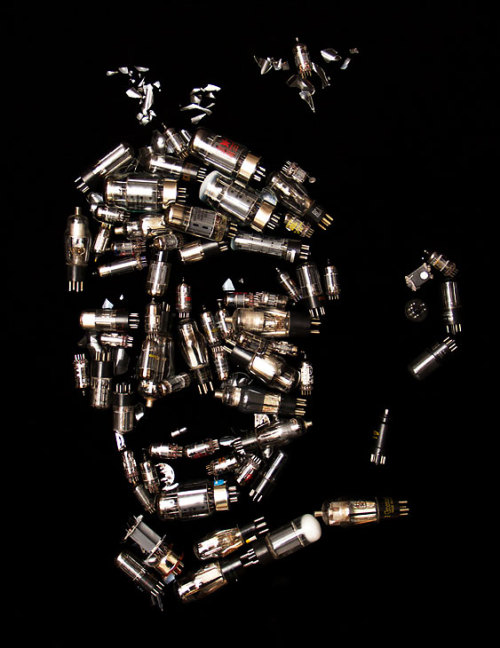
Noah Scalin

Noah Scalin

Noah Scalin

Noah Scalin

Noah Scalin

Noah Scalin
nevver: Tesla (tubes), Einstein (dice), Turing (keys), Noah...
Noah Scalin
Noah Scalin
Noah Scalin
Noah Scalin
Noah Scalin
Noah Scalin
Tesla (tubes), Einstein (dice), Turing (keys), Noah Scalin
firehose likes this



21 Nov 01:43
Classic Doctor Might Appear In 50th Anniversary Special | The Mary Sue
by gguillotte
Tom Baker: “I identified very much with the character of the benevolent alien who wanted to heal the wounds of the silly people who couldn’t get on together. I was Doctor Who before I got it and I remained Doctor Who since I did it. There wasn’t much difference except apart from the miraculous aspect of being able to disappear and reappear, apart from the mechanical dog and beautiful assistants and Daleks — it was very much like my life.”
21 Nov 01:43
TV Legends Revealed | ‘Big Bang Theory’s’ Sheldon Originally Had a Sex Drive – Spinoff Online – TV, Film, and Entertainment News Daily
by gguillotte
firehosenever watch
Sheldon originally had a normal sex drive. When the show was re-tooled, though, it’s likely that with the addition of Simon Helberg and Kunal Nayyar as Leonard and Sheldon’s friends Howard Wolowitz and Raj Koothrappali, the decision was made to use Howard as the friend with a heavy sex drive (while Raj is the opposite side of the spectrum, as he is so shy that he could not even talk to women without first being drunk).
21 Nov 01:40
3D-Printed Dinosaur Bones "Like Gutenberg's Printing Press" For Paleontologists
by samzenpus
Philip Ross writes "Uses for 3D printers are more widespread than ever, but researchers in Germany are expanding 3D-printing territory even further. For the first time ever, scientists from the Department of Radiology at Charité Campus Mitte in Berlin have recreated dinosaur fossils from blueprints made by computed tomography, or CT, scans. The ability to scan and 3D-print dinosaur fossils could have wide-ranging applications for not only paleontologists but also educators and private collectors alike." 


Read more of this story at Slashdot.
firehose and -1 others like this
21 Nov 01:38
8 ounces gingersnaps plus more for garnish
pinch salt
3 tablespoons unsalted butter, melted
14 ounces sweetened condensed milk
1 cup Apple-Pear Butter or prepared spiced apple butter
3 large egg yolks
1 & 1/2 teaspoons apple cider vinegar
1 cup heavy cream
2 tablespoons granulated sugar
1 teaspoon vanilla extract
1 teaspoon ground cinnamon
Apple-Pear Butter Pie with Gingersnap Crust {Plus OXO and Le Creuset Giveaways} | Bake or Break
by OnlyMrGodKnowsWhy



Apple-Pear Butter Pie with Gingersnap Crust
Prep Time: 25 minutes
Cook Time: 30 minutes
Yield: 8 to 10 servings

Ingredients
For the crust:
For the filling:
For the cinnamon whipped cream:
Instructions
To make the crust:
Preheat oven to 350°. Lightly grease a 10-inch pie plate.
Place gingersnaps and pinch of salt in the bowl of a food processor. Pulse until finely ground.
While the food processor is running, pour the melted butter through the food chute. Continue mixing until blended.
Press mixture into the bottom and up the sides of the prepared pie plate.
Bake 15 minutes. Then, place on a wire rack to cool.
To make the filling:
Whisk together sweetened condensed milk, Apple-Pear Butter, egg yolks, and apple cider vinegar until smooth. Pour into crust.
Bake 15 minutes or until set.
Place in refrigerator for at least 2 hours.
To make the cinnamon whipped cream:
Place cream in a large, cold mixing bowl. Using an electric mixer with a whisk attachment, beat at medium-high speed until the cream begins to thicken.
Sprinkle sugar over the cream. Whisk until combined. Add vanilla and cinnamon.
Continue beating until you can lift the whisk out of the whipped cream and a peak that curves downward forms in the cream. This should take 4 to 5 minutes.
Spread whipped cream over the chilled pie.
Roughly chop or crush 4 to 6 gingersnaps and sprinkle over the whipped cream. Refrigerate until ready to serve.*
Notes
*Ideally, make the whipped cream as close to serving time as possible because the whipped cream will break down over time. If you need to make it in advance, it will still taste great.
Recipe adapted from Southern Living.
Schema/Recipe SEO Data Markup by ZipList Recipe Plugin
2.2
http://www.bakeorbreak.com/2013/11/apple-pear-butter-pie/
Copyright 2012 Bake or Break
21 Nov 01:35

The Casual Boutonnière. Harrison Ford, with Carrie Fisher, 1975.
firehosevia multitasksuicide
The Casual Boutonnière.
Harrison Ford, with Carrie Fisher, 1975.
21 Nov 00:53

 KJ Dell’Antonia

10 Awesome Geek Gifts for Girls - NYTimes.com
by OnlyMrGodKnowsWhy
There’s lots of online love for this GoldieBlox commercial (hat tip to Katy Waldman at Slate), with its Rube Goldberg use of dozens of pink toys and renegade rewrite of the Beastie Boys’ “Girls” song:
You think you know what we want, GIRLS
Pink and pretty it’s GIRLS
Just like the 50’s it’s GIRLS
You like to buy us pink TOYS
And everything else is for BOYS
And you can always get us DOLLS
And we’ll grow up like them… FALSE!
You have to love the message, and many people love the toy, the book and the idea behind them as well.
But what else is out there in fun building, engineering and robotics gifts for girls (and boys) who want to open a present on Hanukkah or Christmas that they can do something with, especially if they’re a little past the GoldieBlox stage? There’s a little list of gifts for boys going around on Facebook accompanied by a general sense that “girls are easier to buy for.” Girls might like a fuzzy pink pillow to add to their décor — but mine, at least (now 8 and 9, with brothers who are 8 and 12), want to rip open a box and start something. Getting a sparkly sweater while their brother is putting the batteries in something infuriates them. Here are 10 ideas for putting some materials, tools or code in your favorite girl’s hands this year (and they work for boys as well).
Roominate Dolllhouse Kit Yes, you can build a little two-story dollhouse for the small plastic creatures of your choice. But how will they get up to the second floor? With your motorized pulley-operated elevator. Then they can wait while you design them a slide to get down.
LittleBits Tiny circuit boards that snap together with magnets: make an alarm clock, a hopping bunny, or a light-up whale-shaped tissue box that wags its tail. Or, obviously, anything you can think of.
SnapCircuits We’ve had a variety of these kits, from the basics to the remote control rover (not available on their website, but easy to find). They’re not toys that see constant use, but they come out again and again, and my children have consistently been able to get their circuits working, much to their delight.
Lego Mindstorms I am an unabashed fan of Lego, and our family loves Lego in all its forms — Lego, Lego Creator, Lego Architect and Lego Friends. No matter what the kit was meant to create, within a few days it has morphed into something entirely different, and no one seems to notice if the bricks are pink or blue. Mindstorms takes Lego to a different level. Kids get a programmable heart and robot instructions, and — with enough time, determination and (fun) effort — the ability to create something that does everything from shooting Lego missiles to spying on your brother. Mindstorms is the program used in the FIRST Lego League, which my oldest son and daughter did together this year — and their team of six won a prize for teamwork and cooperation. Robotics and sibling cooperation? I’d say sign me up, but I already did.
KJ Dell’Antonia
Soldering kit. You can buy these just about anywhere (here’s one at Make Magazine’s online store). I picked up three last year and my father taught my oldest son and daughter (and me) to solder. My daughter (then 8) outshone us all.
The Make Electronics Kit Go beyond soldering and into serious electronics with Charles Platt’s Make: Electronics book, which adult geeks everywhere have told me is the gold standard for electronics explanations and projects. But the problem with a book of projects is always that you don’t have the stuff on hand, and by the time you’ve mustered up a trip to Radio Shack, you’ve lost steam. Go all out for the kit, and you’ll have everything you need (although the trip to Radio Shack would be cheaper).
Kodu Got an XBox, or is one in your holiday giving plans? We don’t, but I’ve heard (and read) great things about Kodu, a visual programming language that allows kids to create their own video games on the XBox or a PC. If you’ve got one, add the book “Kodu for Kids: The Official Guide to Creating Your Own Video Games” to your list. It’s an inexpensive way (about $5 on the Xbox Indie Games channel) to transform that Xbox into an entirely different tool.
Bigshot Camera Kit No doubt your daughter knows how to use a digital camera. But does she know how it works? Could she MacGyver one up with nothing but some sand and some software? Probably not, but she could build one with the Bigshot kit, and learn how the image sensor measures the light to convert it to a digital image.
Arduino Robot Arduino is an open-source physical computing platform that allows users to write software that controls a physical board. The Arduino robot has two fully programmable Arduino boards, one for its motors, one for sensors and operations, that can communicate via USB with a computer. The tech-inclined family could blow a holiday budget (and the holiday vacation) on getting started with Arduino, then move up to the robot; kids who are already familiar with Arduino would be thrilled with this new way to use it. Remember how everything you did with a computer growing up required reboots and re-jiggering and losing your work and trying again? That’s the gift of Arduino (and its kin, Raspberry Pi) — the chance to figure it out.
MaKey MaKey Ready for something a little more complicated than SnapCircuits, but not quite Arduino robot material? The MaKey MaKey kit uses alligator clips to make anything into a computer key. Why would you want to recreate a keyboard out of alphabet soup letters, or make a banana piano? Because you can — exactly the message we want our daughters and our sons to hear.
firehose likes this
21 Nov 00:51
Full Turn, Video Installation Featuring Spinning Monitors That Create 3D Animations
by EDW Lynch
“Full Turn” is an ingenious video installation by artist Benjamin Muzzin in which two back-to-back monitors are spun at high speed to create three dimensional animations. Muzzin created the installation as a diploma project at ECAL, an art school in Lausanne, Switzerland.
With this project I wanted to explore the notion of the third dimension, with the desire to try to get out of the usual frame of a flat screen. For this, my work mainly consisted in exploring and experimenting a different device for displaying images, trying to give animations volume in space.


via Creative Applications Network, prosthetic knowledge, Colossal, thinx, My Modern Metropolis
video via ECAL, GIFs via prosthetic knowledge
firehose and -1 others like this
21 Nov 00:51
RSS and the Open Web
firehosewho the fuck is Ben Wolf
who the fuck is Jim

This post is not about the day to day operations of The Old Reader or anything of that nature. It’s about how our team came to get involved with RSS and how we see the future of this application and technology that we value so highly.
As a long time user of RSS and Google Reader, I’ve long appreciated the benefits of the technology. Like many people, my use of Google Reader faded a bit as social media platforms took hold. But, I’d always go back to Google Reader when I wanted to cut through the noise of social networks and focus on things I’m really passionate about. Google Reader wasn’t my “second screen” application where I’d go to take a break from work. It filled a much more essential need for me by providing these three features:
1. Unread items are kept in a queue. I don’t miss things. No algorithm chooses what to show me or not show me.
2. It’s an archive of blogs that I value and posts that I’ve read.
3. I can follow whatever I want from anywhere on the web. It embodies the open web.
For my professional career in web research and development, I can’t really live without these features. I can follow twitter feeds or like Facebook pages, but I’m certain to miss important content from people who I highly value. I need those items queued, archived, and I need to be able to subscribe to anybody on the entire open web. I can’t be limited to those authors who choose to enter into private social networks and I don’t want to have to constantly check my accounts for updates.
So this leads me to how we got involved in The Old Reader. When Google Reader shut it’s doors, my business partner Jim did some research and tried several services and suggested I’d like The Old Reader the best. So we both moved on over. I read some articles trying to understand why Google Reader would shut down and one really stuck with me. It hypothesized that Google had been following the lead of companies like Facebook and Twitter by turning their backs on the open web and trying to build their own private/closed social networks. It’s frankly hard to argue against this theory.
However, we see this trend of migrating from the open web to private networks as cyclical. How long will it be before your Facebook stream is so full of promoted content, bizarre algorithmic decisions, and tracking cookie based shopping cart reminders that you won’t be getting any valuable information? For as little as $60, a business can promote a page to Facebook users. It won’t be long before your news feed is worthless. So we jumped at the opportunity to get involved with developing and managing The Old Reader. We believe in it.
As we’ve been looking to grow our engineering team at Levee Labs and The Old Reader we’ve met with a number of bright young people that are surprisingly unaware of RSS. They say “I recognize the RSS icon, but haven’t really ever used it.” Is it possible that there is a lost generation of internet users that are completely unfamiliar with RSS? Are they unfamiliar with the idea of the open web too? We believe that’s the case and we’ve been working hard to come up with ideas that’ll expose that generation to RSS, The Old Reader, and the open web. It’s what made the internet great to begin with and it’s coming back.
Thanks for using The Old Reader!
Roslyn , Alois Mahdal and 67 others like this
21 Nov 00:50
New Smart Glasses Allow Nurses To See Veins Through Skin
by samzenpus
Lucas123 writes "Epson and Evena Medical today unveiled a new smart-glass technology that allows nurses to see 'through' a patient's skin to the vasculature beneath in order to make intravenous placement easier. The Eyes-On Glasses System is based on Epson's Moverio Smart Glasses Technology, an Android-based, see-through wearable display launched earlier this year that allows users to interact with apps and games. The glasses use near-infrared light to highlight deoxygenated hemoglobin in a patient's veins and capture the images with two stereoscopic cameras. The cameras then project the vein images onto the see-through glass screens. The glasses can store the images and video and transfer them wirelessly to a patient's electronic health record, and they also come with dual built-in speakers for video conferencing." 


Read more of this story at Slashdot.
Alessander, Arsham Shirvani and one other like this
21 Nov 00:24


4.4 billion-year-old meteorite NWA 7533 is straight outta Mars
by Matthew Francis
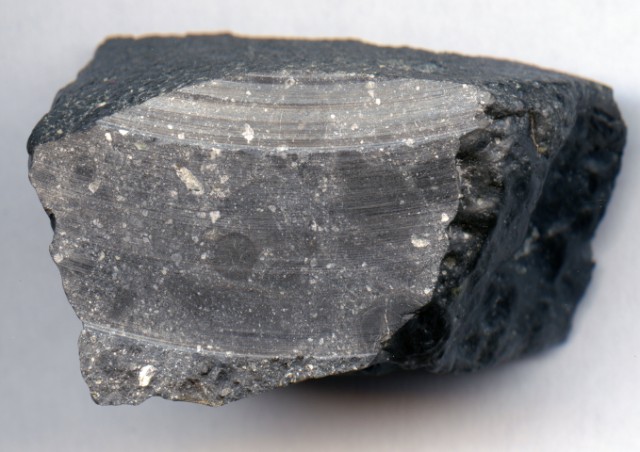
The meteorite NWA 7533, cut to reveal the interior structure. The light and dark spots are harder rocks (clasts) embedded in a body fused from small grains at high tempertures.
Luc Labenne
No space probe has ever returned a sample from Mars. However, we have had a few Martian rocks delivered to Earth in the form of meteorites, which were dislodged by impacts and set adrift between worlds before crashing here. While studying Mars rocks in situ would be idea, the type of equipment we have on Earth is often impractical to ship aboard spacecraft and land on another planet. In that sense, meteorites provide a complementary way to study Mars, providing data that may be otherwise difficult to obtain.
The latest bit of Mars to undergo study on Earth is meteorite Northwest Africa (NWA) 7533. The chemical abundances and mineral types indicate that it originated on Mars, as it is comparable to rocks analyzed by the Spirit rover. What makes this specimen exciting is its age: radioactive analysis of zircons (silicon compounds containing uranium) revealed that the meteorite is about 4.4 billion years old. That means it formed roughly 100 million years after Mars was born, making it the oldest sample of the red planet yet collected, representative of the earliest period in the planet's history.
Of the thousands of known meteorites on Earth, scientists have confirmed that over 100 originated on Mars. This determination came from a variety of methods, including gasses trapped in the meteorites that have a composition similar to the Martian atmosphere. Additionally, radioactive dating determined that these rocks were much younger than meteorites that originated from asteroids.
Read 6 remaining paragraphs | Comments
|
|
Rosalind, Old School EG and 3 others like this

21 Nov 00:16
Coloring Book Pages With Skeletons Drawn In Are Creepier Than They Have Any Right To Be

firehose likes this
21 Nov 00:16
BP Hired Company To Troll Users Who Left Critical Comments
by Soulskill
An anonymous reader sends this news from Al-Jazeera: "BP has been accused of hiring internet 'trolls' to purposefully attack, harass, and sometimes threaten people who have been critical of how the oil giant has handled its disaster in the Gulf of Mexico. The oil firm hired the international PR company Ogilvy & Mather to run the BP America Facebook page during the oil disaster, which released at least 4.9 million barrels of oil into the Gulf in what is to date the single largest environmental disaster in U.S. history. The page was meant to encourage interaction with BP, but when people posted comments that were critical of how BP was handling the crisis, they were often attacked, bullied, and sometimes directly threatened. ... BP's 'astroturfing' efforts and use of 'trolls' have been reported as pursuing users' personal information, then tracking and posting IP addresses of users, contacting their employers, threatening to contact family members, and using photos of critics' family members to create false Facebook profiles, and even threatening to affect the potential outcome of individual compensation claims against BP." 


Read more of this story at Slashdot.
ken.elwell, MS and -1 others like this
21 Nov 00:09

Louisiana Tech's new softball uniforms may make you go blind
by Bill Hanstock
firehoseWelcome to central Louisiana
These are real bad. That's just all there is to it.
Well, let's see what's on the uniform agenda today, shall we?
@PhilHecken Louisiana Tech softball will be wearing these for select games this upcoming season. pic.twitter.com/teD5Ks5Y7v
— Josh McDaniel (@TheRealJoshMAC) November 20, 2013
AAAAAAAAAAAAAAAAAAAAAAAAAAARRRGGGGHHHHH MY EYEEEEEESSSSSS
WHY DIDN'T YOU WARN MEEEEEEEEEE
WHAT HAS HAPPENEDDDDDDDD
WHY WOULD YOU NEED CAMOUFLAGE LIKE THAAAAAAAAAAAAAAAAAAAAATTTTTT
ARE YOU GOING UNDERCOVER IN A CLOWN CAAAAAAAAAAAAAAAAAAAAAAAAAAARRRRRR
THIS MAKES NO SEEEEEEEEEEEEEEEEEEEEEEEEEEEEEEENSE
firehose likes this
21 Nov 00:02


Big US businesses would rather avoid taxes on profits overseas than pay lower rates at home
by Tim Fernholz
US lawmakers are rolling out plans to cut the country’s world-leading corporate tax rates, and big business is saying “not so fast!”
While companies always profess eagerness to see their tax rates cut, the preferred method of doing so in Washington—closing tax loopholes to make up for the cost of lowering rates, an exercise known “as broadening the base”—makes them awful nervous. In all that wheeling and dealing, your sector’s beloved break could be the one that disappears to fund everybody’s low rates.
The biggest break companies fear to disturb is the one that lets them keep nearly $2 trillion in profits overseas. Yesterday, Senator Max Baucus, who chairs the committee that writes tax law, released an initial proposal that would cut the corporate tax rate from 35% to somewhere below 30%, but also replace multinational corporations’ ability to defer taxes on overseas income (or profits shifted overseas) with a global minimum tax one fifth less than the final domestic US rate.
While US Treasury secretary Jack Lew had good things to say about the ideas, trade groups funded by companies that keep money overseas—like General Electric, Cisco and Microsoft—expressed disappointment with the plan, which experts say would put an end to single-digit tax rates on foreign income for companies heavily reliant on intellectual property. Even though Baucus’ plan won’t raise overall tax revenue, doing that while lowering the overall rate effectively requires transfer from multinationals who keep profits out of the tax man’s reach to domestic companies, including telecoms, retailers and defense firms, who are hit by the brunt of the US corporate tax rate.
In Congress’s lower chamber, the chief tax legislator, Rep. Dave Camp, saw business lobbyists go above his head and ask Republican leaders to delay his own tax reform bill. Camp’s proposal follows similar logic to Baucus’ but aims for a much lower tax rate, which would mean closing even more loopholes if it is to be revenue neutral. And, of course, there are Democratic lawmakers who say corporations aren’t providing enough money to public coffers to begin with and believe tax reform should provide a boost in tax revenue.
While a simpler tax code is seen by economists and businesses alike as a boon to the economy, legislators’ focus on brokering a budget deal before next year’s potential government shutdown and debt ceiling imbroglio (yes, another one…) means that this legislation isn’t likely to move forward before the spring. Baucus and Camp could choose to release more details of their proposals and further hone them in an effort to build legislative momentum, but that could lead to more cold feet and angry phone calls from the business lobbyists who care most about this issue.

20 Nov 23:52
McDonald's Urges Employees to Sell Their Possessions to Get Out of Holiday Debt
by Paul Constant
Adam Peck at ThinkProgress says:
McDonald’s McResource Line, a dedicated website run by the world’s largest fast-food chain to provide its 1.8 million employees with financial and health-related tips, offers a full page of advice for “Digging Out From Holiday Debt.” Among their helpful holiday tips: “Selling some of your unwanted possessions on eBay or Craigslist could bring in some quick cash.”
Elsewhere on the site, McDonald’s encourages its employees to break apart food when they eat meals, as “breaking food into pieces often results in eating less and still feeling full.” And if they are struggling to stock their shelves with food in the first place, the company offers assistance for workers applying for food stamps.
These latest incidents of backhanded corporate "charity" are so fucking inhumane that it's practically Swiftian.
20 Nov 22:37
Raw milk is legal in Oregon. But it's against the law to advertise it. So even a sign that says "We sell raw milk" can lead to up to one year in prison and $6,000 in fines.
 |
submitted by Osterstriker [link] [116 comments] |
20 Nov 22:34
IDW Games Signs J.K. Woodward, Dave Dorman for "Kill Shakespeare" Card Game
firehoseIDW is doing games now, apparently
20 Nov 22:33
Lawyer denies Jameis Winston accuser changed her mind
by Pete Volk
firehoseeverybody is slowly pointing their fingers at the police
The lawyer of a woman allegedly sexually assaulted by Florida State quarterback Jameis Winston has denied claims that her client requested charges not be pressed, telling the AP such an event never happened.
Attorney Patricia Carroll said a Tallahassee city official's email distributed by the Tallahassee Democrat was false, and claims it was the actions of the Tallahassee Police Department that halted the case.
Carroll says the alleged victim was trying to get on with her life after it became apparent the Tallahassee Police Department was not seriously investigating the case. TPD did not respond to calls seeking comment.
Earlier Wednesday, the family of the alleged victim released a statement to the Tampa Bay Times, accusing police of swaying the woman towards not prosecuting the case, as well as refusing to collect evidence, including DNA and witness reports.
Winston has not been formally charged with a crime nor officially named as a suspect. The alleged incident happened in December 2012.
20 Nov 22:07


Trent Reznor Facetimes Ailing Fan On Stage
firehosevia THANKGODYOUREHERE
Submitted by: Unknown
firehose, THANKGODYOUREHERE likes this