Pope Francis is not known for mincing his words, but he truly unleashed his wrath against capitalism last night during an address to grassroots organizers in Bolivia, as part of his South American tour:
“Human beings and nature must not be at the service of money. Let us say no to an economy of exclusion and inequality, where money rules, rather than service. That economy kills. That economy excludes. That economy destroys Mother Earth.”
The pope used one of his favorite quotes about the root of all evil from Basil of Caesarea, a 4th century Greek bishop:
“And behind all this pain, death and destruction there is the stench of what Basil of Caesarea, one of the church’s first theologians, called ‘the dung of the devil.’ An unfettered pursuit of money rules. That is the dung of the devil.”
Following in the footsteps of Pope John Paul II, Pope Francis also asked for forgiveness for the colonial crimes against the native people “during the so-called conquest of America.” He lashed out against “new colonialism” which takes the form of corporations, lenders, free trade treaties “and the imposition of measures of ‘austerity’ which always tighten the belt of workers and the poor.”
A staunch environmentalist, as he proved with his last encyclical on climate change, the pope said that the Earth is being pillaged. “Cowardice in defending it is a grave sin,” he said, criticizing international summits for their lack of results.


Gird those tote bags, change-adverse public radio listeners. Ira Glass now owns all of This American Life, having bought out Chicago Public Media and WBEZ’s stake earlier this week. Both CPM and WBEZ will still benefit from This American Life, having agreed to kick over their shares in exchange for a portion of future profits from both TAL and Serial. In turn, all 22 employees of This American Life will become Glass’ employees.
In a statement, Glass said he’s never had any quarrels with WBEZ, but that he’s been making This American Life for 20 years and he “just want[s] to be in the position to decide what I want to do, and not have to clear it with the board or anybody else.” (It’s worth noting that several other popular public radio shows, including Car Talk and A Prairie Home Companion, are also run ...

Christian Audigier, the French fashion designer whose Ed Hardy fashion line was virtually inescapable throughout the early-to-mid ’00s, has died. Audigier had been battling a form of bone cancer known as Myelodysplastic Syndrome. He was 57.
Audigier, reportedly known by the nickname of “Le Vif (The Fast One),” worked for a number of fashion houses, including Guess, Levi’s, Diesel, American Outfitters, Bisou Bisou, and XOXO, before moving to Los Angeles, where he helped popularize the Von Dutch brand among late early-’00s tastemakers like Justin Timberlake and Britney Spears. He then took his uniquely spangled design sensibility to Ed Hardy, creating one of the signature looks of the era by licensing the tattoo artist’s designs and putting a bunch of rhinestones on them. Frequently criticized as the epitome of vapid L.A. fashion sensibilities, Ed Hardy was nevertheless phenomenally successful, and Audigier had an estimated net worth of ...

NASA Thursday named the first four astronauts who will fly on the first U.S. commercial spaceflights in private crew transportation vehicles being built by Boeing and SpaceX – marking a major milestone towards restoring American human launches to U.S. soil as soon as mid-2017, if all goes well.


Oh, this? It’s just a 3D printing pen that will turn anything you doodle into an actual THING. Jewelry doodles! Decoration doodles! Probably a bunch of penis doodles (right? just ’cause you can?). Get the 3Doodler 2.0 now and doodle your freakin’ face off—it’s just $129.99 with free shipping at The Mary Sue Deals.
Forget those horrible days of yore when you had to lanyard uphill both ways in the snow. The future of arts and crafts is here, and it brought the 3Doodler, the world’s first printing pen. The 3Doodler 2.0 comes complete with 125 strands of plastic in 25 colors—draw 3D objects in the air, and it’ll do the rest, almost instantaneously cooling the plastic into a solid structure. Knickknacks for everyone!
Don’t risk being the only one scribbling with a regular pen and paper like a lunatic. Get the 3Doodler 2.0 for $129.99 and free shipping at The Mary Sue Deals.
—Please make note of The Mary Sue’s general comment policy.—
Do you follow The Mary Sue on Twitter, Facebook, Tumblr, Pinterest, & Google +?

Kid Rock has long been a fan of the Confederate flag. He’s used it as a backdrop for his tours, and has been flying it publically for so long he’s practically become one of the Dukes Of Hazzard.
Thus, it should come as no surprise that Rock—a native of Detroit, a city that’s about 400 miles north of the Mason-Dixon line—is not too fond of the recent (and totally justified) kerfuffle over the Confederate flag. After Detroit-area representatives from Al Sharpton’s National Action Network spoke out about Rock’s use of the flag, calling the rap-rocker “the home-town hero who is a zero with the Confederate flag” and saying the flag “represents genocide to most of Detroit,” Rock released a one-sentence statement to Fox News: “Please tell the people who are protesting to kiss my ass.”

While that is certainly the type of sparkling ...
breakfast for dinner is fun when you’re a kid but when you’re an adult it’s just like “yo i ate lunch at 5 PM today and linear time is functionally meaningless”
 |
Courtney
shared this story
from  Super Opinionated. Super Opinionated.
|
white feminists: but! no! man! ever! has! to! worry! about! how! they! dress! or! where! they! go!!!!!
black and brown men: *stare in the camera like theyre on the office*
“I was 16 when I first started playing, and I’m 26 now. Wow, ten years!” says Cami, the creator of a Tumblr fan blog called iwantakokokringle, a reference to the brand of fictional Koko Kringle chocolate bars found throughout the majority of games in the series. Cami’s long history with the games isn’t unique: the overwhelming majority of the fandom members share some significant similarities, myself included.4
They’re mostly female, and first started playing the games at a young age with a mother, sister or friend by their side. They’re nearly all between the ages of 15 and 25, though any 30-plus fans are openly accepted by the community. YouTuber arglefumph (real name Michael Gray), famous for his video walkthroughs of the Nancy Drew games, is one of the most visible faces of the Clue Crew: Her Interactive’s official Facebook even wished him well on his recent marriage.

The developer has seemingly acknowledged the amount of fans who are aging with the games, instead of out of them, by way of more mature plot elements; the most recent game, Sea of Darkness, saw the introduction of the first openly gay character in the history of the series. (Unfortunately, the developer was too busy with the release of the game to be able to provide a comment.)
This evolution of the games (a new direction made even more apparent with Her Interactive’s recent announcements of a new voice actor and writer) only serves to strengthen the bond that fans share, allowing them to grow and change with the series. “The Clue Crew’s inside jokes are literally the best thing ever,” says Kristina, a 19 year-old who runs the fan blog franceshumber.5 “We all grew up viewing Nancy as this badass super sleuth, when she’s actually a badass super sleuth with no fashion sense who’s kind of inept at certain skills.”
firehose!!!!!!!!
firehosevia Ibstopher

Map posters are easy to come by for major cities. But if you want one for a less densely populated area of the world, you might be out of luck. Mapiful can help. Select anywhere in the world, and get a streamlined black and white poster, based on OpenStreetMap data.
After you have your location, pan and zoom to get the exact area you want, and then customize the labeling and choose between four simple themes.
Posters not your thing? Maybe you want map clothing.
Tags: poster
firehose'“The entire room felt like one massive, united tribe of thousands of people, and the DJ was the tribal leader of the group. … It was as if the existence of individual consciousness, the same way a flock of birds might seem like a single entity instead of of a collection of individual birds … I made a note to myself to make sure I never lost sight of the value of a tribe where people truly felt connected and cared about the well-being of one another.”
On Hsieh’s party bus headed to EDC on June 21, around 25 of his friends (and friends of friends) mingled while some took shots of Fernet, and most were dressed in rave attire: bright neon colors, black leather, LED lights, flower crowns. Hsieh was dressed in all-white.
...
Daniel Mezick, an Agile business consultant who has been following Hsieh’s leadership at Zappos, says that “the reality is there’s a whole emerging discipline around social system design that’s just becoming, in part thanks to Tony,” although Mezick has expressed concerns about the way Hsieh is implementing these new strategies. “People are very influenced by system dynamics and the way authority is distributed. Holacracy is the first pre-fabricated social system design.”
D’Onofrio tells Quartz: “Only around 20% of the population actually want to be leaders,” he said, weaving through the crowd. “For many people, freedom is being told what to do.” He says that he’s not citing any hard data, but “an argument could be made based on the way humans have evolved into tribes.”'

LAS VEGAS, NEVADA — Electric Daisy Carnival (EDC) is one of the largest electronic dance music festivals in the world, drawing some 400,000 revelers from around the US and beyond. Among them is Zappos CEO Tony Hsieh, whose Amazon-owned online shoe company is headquartered just 12 miles from the Las Vegas Motor Speedway, where the event takes place. The three-day festival, which features more than 200 DJs, is a place where Hsieh brings together those closest to him to establish cohesiveness within his tribe.
The Zappos CEO shared his fascination with rave culture in his 2010 book, Delivering Happiness, and has tapped into it throughout the years, not just recreationally but also as a business strategy. In Delivering Happiness Hsieh recounts a rave he attended in 1999, an activity he took up after selling LinkExchange to Microsoft:
“The entire room felt like one massive, united tribe of thousands of people, and the DJ was the tribal leader of the group. … It was as if the existence of individual consciousness, the same way a flock of birds might seem like a single entity instead of of a collection of individual birds … I made a note to myself to make sure I never lost sight of the value of a tribe where people truly felt connected and cared about the well-being of one another.”
On Hsieh’s party bus headed to EDC on June 21, around 25 of his friends (and friends of friends) mingled while some took shots of Fernet, and most were dressed in rave attire: bright neon colors, black leather, LED lights, flower crowns. Hsieh was dressed in all-white.
Hsieh’s bus has seen many seasons of partygoers. On the last night of EDC, on board were a number of former employees, some of whom have taken new roles within Hsieh’s ecosystem of startups, and others who’ve left Las Vegas for San Francisco and Los Angeles. Three-and-a-half years into Hsieh’s Downtown Project (DTP) revitalization effort, things have not gone as planned: There have been a number of startup failures, layoffs and restructuring within DTP, restaurant and bar closings, but most crushingly, suicides within the community that drove a number of followers away from a place that wasn’t becoming the entrepreneurial utopia they were pitched on. The streets in the Fremont East District of downtown Las Vegas are mostly empty during the day—not the place of collisions and connectedness that Hsieh had envisioned.
“I like being around people when they are experiencing the emotion of awe, which probably happens relatively rarely with most people.”Compounded with a management experiment at Zappos that has hit resistance and led to at least 14% of the company accepting a voluntary buyout, Hsieh is in uncharted territory. Those close to him say that the losses and the subsequent press are taxing on him. That’s why events like EDC are so important to Hsieh; they remind him of his original motivations.
EDM (electric dance music) culture is governed by a code of conduct: PLUR, short for “Peace, Love, Unity, Respect,” which protects the ethos around self-expression, and is a catalyst for group synchronicity. Hsieh tells Quartz that PLUR has influenced the culture at Zappos. In a 2014 interview with Playboy, he explained that rave culture introduced him to the “hive switch,” where people organize themselves for the greater good, like bees that live together as a unified force. It’s a concept that Hsieh has pursued over the years and has elevated with his goal of making Zappos self-organizing.
Jenn Lim, a longtime friend and CEO of Delivering Happiness, a company culture consultancy that spun off from the eponymous book, met Hsieh during the height of the rave era during the dot com boom. “There was the convergence of those two things [the rave era and dot com boom] and that will never happen again,” Lim tells Quartz. “It definitely was a pivotal time in [Tony’s] life and in my life in terms of what I went through in coming across that culture and how it shapes and informs different things. … There is this greater collective consciousness as a global society. You don’t have to call it happiness; it’s well-being, purpose, or PLUR.”
The last night of EDC brought Hsieh, who’s attended for five years, to the VIP section of one of the main stages, where he broke away from the group and stood alone watching a massive fire display at one of the DJ stages. He tells Quartz that “EDC definitely has aspects of that original rave culture, but it’s much more of a production [than] more participatory. Burning Man is probably the most participatory culture. … I like being around people when they are experiencing the emotion of awe, which probably happens relatively rarely with most people.”
Hsieh looks for figures who inspire awe to speak at quarterly Zappos All-Hands meetings; previous guests include magicians and futurists like Jason Silva who speak on the topic. Research shows that awe is a powerful emotion humans need to stay healthy, and when experienced with others, it creates a feeling of connectedness. Invoking a sense of awe is something that Hsieh has tried to create downtown by placing a 40-ft. preying mantis art installation from Burning Man that spews out fire a few blocks from the Zappos campus.
“For many people, freedom is being told what to do.”Beyond the flash of installations and party atmosphere lie management principles that seek to bring cohesiveness and agility into company culture. The principles of PLUR are similar to those behind TEAL, a management system that Hsieh is implementing through his ongoing experiment with Holacracy, a system that facilitates self-organization. In the book Reinventing Organizations, author Frederic Laloux says that TEAL organizations strive to operate as a living thing:
“Change in nature happens everywhere, all the time, in a self-organizing urge that comes from every cell and every organism, with no need for central command and control to give orders or pull the levers. … Teal Organizations have found the key to operate effectively, even at a large scale, with a system based on peer relationships, without the need for either hierarchy or consensus.”
Daniel Mezick, an Agile business consultant who has been following Hsieh’s leadership at Zappos, says that “the reality is there’s a whole emerging discipline around social system design that’s just becoming, in part thanks to Tony,” although Mezick has expressed concerns about the way Hsieh is implementing these new strategies. “People are very influenced by system dynamics and the way authority is distributed. Holacracy is the first pre-fabricated social system design.”
In the early hours of the morning, a small group of people followed Hsieh out of the VIP section and back to the party bus. Within that group was Anthony D’Onofrio, the global community manager for Ethereum, a cryptocurrency platform designed to evangelize the blockchain.
D’Onofrio tells Quartz: “Only around 20% of the population actually want to be leaders,” he said, weaving through the crowd. “For many people, freedom is being told what to do.” He says that he’s not citing any hard data, but “an argument could be made based on the way humans have evolved into tribes.”
For Hsieh, he’s concerned about maintaining his tribe, which has been disrupted on a larger scale as of late. It remains to be seen whether Hsieh can turn around Zappos and his efforts downtown—and create the unified place that he once envisioned it to be, sort of like the raves of his 20s.


Stygiomedusa Gigantea
For the first time ever, stygiomedusa gigantea, a gigantic jellyfish was caught on video by scientists in the Gulf of Mexico. There have only been 115 sightings of this deep sea jellyfish in the past 110 years.
firehose'“3D printing has just become incredibly stagnant,” said New York-based Bitonti, who feels that many of the machines on the market are little more than “tinker toys”.
A toy is not going to create the next industrial revolution,” he said. ”The biggest barrier that we have in the studio is just scaling products because the price points are so high.”
Printing materials are too expensive, he added: ”You’re paying 65 dollars for a kilogram spool of PLA, which is crappy plastic, and you can’t compete with injection moulding or any other type of production.
“They’ve got to open up,” he said. “It’s not that they need to open up all of their IP, but it’s a lot of things. You see a lot of tinker toys because they’re treating it like a copy machine. I think they need to change their mind and understand that it’s a manufacturing technology.”'
3D printing has stagnated, says designer Francis Bitonti.
The 3D-printing industry “is choking off its own revolution” with a combination of toy-like machines, over-priced materials and legal wrangles according to Francis Bitonti, the designer behind the printed dress for Dita von Teese.
“3D printing has just become incredibly stagnant,” said New York-based Bitonti, who feels that many of the machines on the market are little more than “tinker toys”.
A toy is not going to create the next industrial revolution,” he said. ”The biggest barrier that we have in the studio is just scaling products because the price points are so high.”
Printing materials are too expensive, he added: ”You’re paying 65 dollars for a kilogram spool of PLA, which is crappy plastic, and you can’t compete with injection moulding or any other type of production.
“They’ve got to open up,” he said. “It’s not that they need to open up all of their IP, but it’s a lot of things. You see a lot of tinker toys because they’re treating it like a copy machine. I think they need to change their mind and understand that it’s a manufacturing technology.”
He added: “The industry is just completely choked by intellectual property law right now.”
See our previous overview from the meeting we had with the new MakerBot CEO, Jonathan Jaglom, where we asked for more open.

Pup pup puppies! Oh hey, it's Andy Murray, too.
Murray is set to meet Roger Federer today for a Finals spot in Wimbledon and it looks like he knows how to prepare.
Taking time away from training this week, he met some police puppies and gave his analysis on puppy bowel movements.
That is a big poo wow, look at the size of that!
He also admired how the puppies got up and on with life after taking a tumble. Awww!
Wimbledon inspiration was everywhere!
H/T to BBC Sport
firehosevia Burly.Thurr: "I'm so bored with Atwood always talking about Air Jordans."
firehosejon bois is a god + baseball is the least interesting part of baseball = TAL

Days ago, Jon surveyed y'all and used your responses to simulate the perfect game of baseball, pitch by pitch. The result: more than 100 runs scored, a pitcher named BUTTSBUTTSBUTTSBUTTS, and fielders who couldn't stop crying. This is the most beautiful game ever played.
Baseball is the shittiest sport in the world, and the people in charge of it have not made it better because they are too stupid. That's where we come in! This week, I simulated a baseball game with about 1,500 of you. We were on a quest to construct the greatest game of baseball ever played.
I gave y'all a form to fill out. First, you gave your name, or made one up entirely. Second, you had the option of selecting which sort of baseball individual you wanted to be:
And third, you decided what, exactly, you would do. We had God-like powers, in other words. You could decide to hit a home run, or hit a single, or strike out, or whatever else. If you were a fielder, you could choose to catch the ball hit at you, or you could choose to commit an error. If you were a pitcher, you could throw a strike, give up a home run, and everything in between.*
*Except beanballs. If I allowed for a "hit the batter" option, you would have done it a thousand times in a game, and it would have taken me a month to count it all up. I know y'all really well at this point.
All of us were on the same team: the "Away" team. The "Home" team was completely faceless and passive; we made all the decisions. We could choose to play well, or we could choose to intentionally destroy ourselves. It was up to us.
Each of you (well, about 400 of you) were permitted to quantum-leap into the game for exactly one play. You were up, the player did what you wanted for exactly one pitch, and then it was the next person's turn. I didn't mess with the order or manipulate any of the results, I just processed the requests in the order I received them. One at a time, like this:
/cdn0.vox-cdn.com/uploads/chorus_asset/file/3855538/form.0.png)
Of course, y'all were playing blind: while requesting your action, you had no knowledge of the score, the count, or anything else about the game situation. But if you ask me, that shouldn't matter. This was an entire game of baseball made up 100 percent of things you wanted. As such, it was the perfect baseball game.
I accepted the historically significant privilege of piecing the game together, action by action, until it was complete. I feel that I have identified six key tenets of the ideal baseball game:
/cdn0.vox-cdn.com/uploads/chorus_asset/file/3855686/score.0.png)
We won, 121 to 27. Within eight innings at the plate, we had managed 126 hits. 94 of those hits were home runs. One particularly bloody sequence in the bottom of the seventh played out like this:
home run
home run
home run
home run
home run
home run
home run
double
home run
home run
groundout
home run
home run
home run
home run
While it's true that such a long, drawn-out game was a real bear for me to calculate, I only feel grateful that the score wasn't worse. Y'all could have hit the home run button over and over and over until we'd scored a thousand runs. Thank you for not doing that.
/cdn0.vox-cdn.com/uploads/chorus_asset/file/3855020/jamal.0.png)
Bunts are what baseball is all about. After all, bunting is the act of holding a baseball bat, and baseball bats are very closely associated with the sport of baseball!
We love bunting so much that we bunted it foul 45 times in this game. Remember, that doesn't mean that we wanted to bunt and it just went foul. It means we looked at the button that said BUNT IT FOUL and we pushed it because we specifically wanted to bunt it foul. We love it. Just can't get enough of that good bunting shit.
I want y'all to know that the way in which you ended the sixth inning is very special to me. With two out and nobody on, Andy bunted the ball foul for strike one. Max stepped up next and bunted it foul for strike two. Cat Party bunted foul a third time to end the inning.
/cdn0.vox-cdn.com/uploads/chorus_asset/file/3855900/bunt.0.png)
You could have done whatever you wanted, and you chose to bunt yourself to death. God bless you all.
/cdn0.vox-cdn.com/uploads/chorus_asset/file/3855064/butts.0.png)
Baseball just doesn't engage young people the way it used to, and chief among the reasons is that the games last only three hours. They're cut tragically short, and they move with such blinding speed that no casual observer can hope for any understanding of what is going on.
Thanks to the way y'all elected to play, the two teams combined for 166 hits in this game. Based on a small arbitrarily-chosen sample, it looks like a baseball game lasts about 6.9 real-time minutes per hit. That means this game, if played in real life at a realistic pace, would last about 19 hours.
As a baseball fan, this ought to be perfectly manageable. It will allow five extra hours per day to do other things baseball fans do, such as:
/cdn0.vox-cdn.com/uploads/chorus_asset/file/3855042/jeblund.0.png)
Whenever one of you pitchers selected, "pitch ball that gets hit to one of your fielders," it was then a fielder's turn to play. The fielder could then choose to make an out, or record one or more errors. Strangely, our fielders elected to actually do their jobs most of the time.
More often than not, they did so while sobbing. I made sure to ask all 190 of our fielders whether they were crying while making the play. 103 of them -- that's 54 percent -- said that yes, they were crying.
Do you think any baseball player has ever cried while actually in the middle of playing? Like, what if Randy Johnson, in his prime, pitched an entire game while openly crying with big, heaving sobs? Just wailing? It would scare the shit out of you.
/cdn0.vox-cdn.com/uploads/chorus_asset/file/3855312/MCPEEPOOP.0.png)
If you signed up as "the crowd," your job was to come up with cheers throughout the game. I just randomly assigned one of these cheers to a play in the order I received them. Here were some key plays from the game, and the cheers that accompanied them.
BLOOD ALONE MOVES THE WHEELS OF HISTORY
- In response to Turd Ferguson bunting foul with no one on base
HEY HEY PITCH THAT BASE CATCH THAT BAT WHO CARES
- In response to Blobby giving up a home run
WE'RE NUMBER ONE
- In response to Batting Man bunting foul with no one on base
CUBS
- In response to Anal Feisty Man bunting foul with two strikes and no one on base
/cdn0.vox-cdn.com/uploads/chorus_asset/file/3855084/dingus.0.png)
Car burglary is such an easy crime to get away with that I'm surprised more folks don't get into it. You might walk away with more stuff than you had before -- especially if the car isn't yours to begin with!
To those of you who decided to get in on the ground floor of something big rather than playing weirdass big-sock grown-up musical chairs, I asked what you stole, and why you stole it:
money
- Doug, explaining why he stole an iPod
$
- Nice Guy, explaining why he stole baby strollers
i am the seinfeld i have to be the seinfelt
- Ray Romano, explaining why he stole Jerry Seinfeld's gym bag
I must learn what the spin doctors sound like
- Jacob, explaining why he stole Spin Doctors CDs
i like tapes
- Marlon Byrd, explaining why he stole tapes
So what do you think of the big game? Do not leave comments. I regard them as acts of vandalism.
firehosevia Russian Sledges

On special weekend mornings, my dad would run out and grab a dozen donuts for the entire family. It always annoyed me, though, when my perfectly delicious strawberry glazed donut would get chocolate icing on it or sprinkles from one of its neighbors in that big, flat donut box from Dunkin’ Donuts. 8munkar solves this issue, acting as a perfect solution for OCD donut eaters everywhere (and even those that aren't!). The concept, designed by Emelie Johannesson and Oliver Sjöqvist, takes a whole different approach, and these donuts are a little different from the ones you might be used to eating.


“8munkar is a fictional shop that sells Swedish premium munkar. As far from American diners and usual donut shops you could possibly get. Our munkar has the finest ingredients and Swedish flavours such as polka, cinnamon bun, ballerina cookie and lingonberries. You find 8munkar in trendy areas in the biggest cities worldwide. Dubai, Paris, New York, London and Sydney are examples of places where you can enjoy our pastries.”


Each donut is packaged individually, paired with a wet wipe, and labeled with a number. The container not only keeps each pastry fresh but allows them to stack on top of each other in the large 8munkar box. A small handle on top allows for easy transportation, and since the packaging is tall rather than wide it takes up far less space on a counter. The Venn diagram inspired logo is simple yet a perfect representation of the brand, offering something for everyone no matter their taste preferences.

Designed by: Emelie Johannesson, Oliver Sjöqvist
firehosehot
babe was extra cheesy today
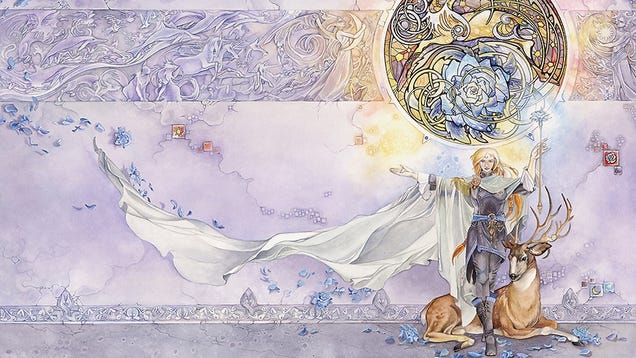
When the first edition of Blue Rose was published 10 years ago, it found a core audience of gamers that loved its unique take on romantic fantasy—and a few who pushed back against the game’s progressive push for inclusiveness. Now Blue Rose is back, and it’s found a better system and a wider audience.

firehosenever prioritize firehose
Facebook is updating their controls for News Feed, the personalized stream of posts you see when you’re on Facebook. You now have the ability to select which friends and pages you see first.
To help prioritize stories, and make sure you don’t miss posts from particular friends and Pages, you can now select which friends and Pages you would like to see at the top of your News Feed.
Within News Feed Preferences, tap on a friend’s profile picture to see their posts first. You will then see any new stories they’ve shared since your last visit to Facebook at the top of News Feed, with a star in the top right of their post so you know why they’re at the top. You can scroll down to see the rest of your News Feed normally.
There are also new features for discovering new Pages to follow as well as helping you select which exisitng friends or pages to follow or unfollow. The new features are currently availble only on iOS, but will be rolling out to Android and the desktop in the near future.

firehosevia Russian Sledges
mwip
Sameer ud Dowla Khan, a phonetician at Reed College, has written an open letter to Terry Gross, which starts like this:
While I am a loyal fan of your program, I’m very disappointed in your interview of David Thorpe and Susan Sankin from 7 July 2015. As both a phonetician who specializes in intonation, stress patterns, and voice quality, as well as a gay man, I found the opinions expressed in the interview to be not only inaccurate, but also offensive and damaging.
You can listen to that interview, and read the transcript, on the Fresh Air web site — "Filmmaker And Speech Pathologist Weigh In On What It Means To 'Sound Gay'":
Is there such a thing as a "gay voice"? For gay filmmaker David Thorpe, the answer to that question is complicated. "There is no such thing as a fundamentally gay voice," Thorpe tells Fresh Air's Terry Gross. But, he adds, "there is a stereotype and there are men, to a greater or lesser extent, who embody that stereotype."
In his new film, Do I Sound Gay?, Thorpe searches for the origin of that stereotype and documents his own attempts to sound "less gay" by working with speech pathologist Susan Sankin.
Several other people have suggested that I write something about this interview, and so it was on my to-blog list. But Sameer sent me a copy of his letter as possible guest post, and I think it covers the ground quite well. So here it is:
Dear Ms. Gross,
While I am a loyal fan of your program, I’m very disappointed in your interview of David Thorpe and Susan Sankin from 7 July 2015. As both a phonetician who specializes in intonation, stress patterns, and voice quality, as well as a gay man, I found the opinions expressed in the interview to be not only inaccurate, but also offensive and damaging.
1. Straight people convey sexuality in their voice too
We know from decades of linguistic research that all people express themselves in ways that can convey an affiliation with a particular group or identity. We know that gender identity, sexual orientation, regional background, socioeconomic status, racial/ethnic affiliation, level of education, age, political beliefs, and many other social categories can be indexed through manipulations of voice quality, pitch, rhythm, vowel quality, consonant articulation, etc. Crucially, it’s not just the minorities of these categories who use such features; majority groups make use of these indexical features as well. For example, straight male speakers of American English are known to have deeper voices than straight male speakers of many other languages; even prepubescent boys in the US have been documented to have significantly lower pitch than girls of the same age, even though the two groups are physiologically indistinguishable in their throats. This trend has been getting more extreme since the 1960s, with American boys getting deeper and deeper voices with each generation.
This means that inviting a gay man to talk about how his voice conveys gay-maleness is (scientifically speaking) just as valid as asking a straight man to talk about how his voice conveys straight-maleness, how a white person’s voice conveys whiteness, how a middle class person’s voice conveys middle class-ness, how a college-educated person’s voice conveys education, etc. But I can say I’ve never heard of such an interview from your program or any program; this is only something that gets asked of women, gay men, African Americans, immigrants, and other people who are in a socially un(der)privileged position. The questions that get asked are “why do gay people/women have to talk like that?” or “why can’t blacks speak (what we consider) proper English?” instead of “why do straight people/men have to talk like that?” or “why don’t whites know how to speak (any variety of) African American English?”, etc. There is no logical reason why we should ask the questions like the former two and not questions like the latter two.
2. There’s no single “natural” way to speak
Not only is it inaccurate to label minorities as the only ones who convey their identities through their speech, it also perpetuates a misguided belief that there is a “natural” way to speak, or a way to speak that has no “styles”. This concept of “naturalness” or “authenticity”, which came up many times in your interview, assumes that only some people (i.e. minorities) are adopting “styles”, deviating from “natural” speech in order to convey their identity. This myth comes up all the time with another linguistic feature brought up in the interview, “vocal fry”. This type of voice quality, which linguists call “creaky voice”, “glottalization”, “laryngealization”, or a host of other terms depending on the specific acoustic characteristics, appears to index a number of social categories in American English: younger age, urban background, and (lately in the popular media) a sort of femininity. Ms. Sankin’s technical description of the voice quality was not incorrect (it does involve a slow vocal fold vibration with often incomplete closure), except for the part where she said it is harmful or unnatural.
Endless popular articles and podcasts (and your interview) describe “vocal fry” as a deviation from a natural voice quality, that it can be physiologically harmful to the vocal folds, that it grates on the ears, that it’s a “style” coming from singers of pop music, and that it should be avoided in order to be successful in life. None of these claims has any basis in reality. In truth, these voice qualities are used extensively in languages like Danish, Vietnamese, Burmese, Hmong, and many indigenous languages of Mexico and Central America (such as Zapotec, Mazatec, and Yukatek Maya), far more than they are in English – and as you might imagine, speakers of those languages do not suffer from medical problems in the throat any more than speakers of other languages. (I have no idea where Ms. Sankin got the idea that this is causing medical problems in the US; that’s simply untrue.) Those languages are just as “natural” as English is, and the voices used by speakers of those languages are just as
“natural” as those used by English speakers.
I could, but won’t (for brevity) get into detail about how Ms. Sankin’s claims about upspeak, filler words, and New York City vowels could be subjected to the same criticism I just provided for vocal fry. But when you step back and think about all the things that are identified as deviations from “natural” speech–vocal fry, upspeak, filler words, dentalized “s”, a wide pitch range, etc.–you notice that there’s only one thing that these features have in common: these are the things that are not traditionally associated with straight white educated male speakers of American English. And there we have it: what gets categorized as “natural” is just how people in power speak. And any feature that deviates from that is given labels like “unnatural”, “uneducated”, or just a “style”. Any sociolinguist could have said that in a second, but Ms. Sankin only provided this stigmatizing view instead.
3. This harms our community
Beyond the inaccuracies and the propagation of linguistic myths, the part that disturbed me the most in the interview was that your program is highly influential and well-respected (for good reason), and thus people across the nation will hear these opinions with a seriousness and receptiveness that they frankly do not merit. Interviewing Mr. Thorpe, a member of a minority group, to talk about how he is disgusted by features associated with that group, how he underwent therapy to try to rid himself of such features, how it is a part of his “self-loathing”, or how his disgust can be justified by the even more stigmatizing opinions of Ms. Sankin, is the wrong message to send to gay people, parents of gay children, members of any stigmatized minority, or the public at large. No matter what strides have been made in the past few decades, LGBT people are far more likely to be estranged from their families, suffer from depression, and attempt suicide. Hearing that self-loathing feeling inside them justified on an intellectual radio program can only be harmful. This will strengthen a narrow-minded view that gay men (and other minorities) are going out of their way to just sound that way, implying that even in their speech, their behavior is unnatural and undesirable.
4. Why not talk to the experts?
It’s unfortunate and disrespectful to those who actually do research on these topics that no linguists or speech scientists were interviewed to provide an informed, objective, and non-stigmatizing analysis. Robert Podesva (Stanford University), Benjamin Munson (University of Minnesota), LeAnn Brown (University of Manitoba), Fabiana Piccolo (Nuance), Erez Levon (Queen Mary University of London), Ron Smyth (University of Toronto), Robin Queen (University of Michigan), Birch Moonwomon (Sonoma State), Lal Zimman (UC Santa Barbara), and Greg Jacobs (York University) are among many researchers who have studied the acoustics and perception of what is typically considered “gay men’s speech” and related varieties of American English. In the future, I would hope that these would be people you would invite to give an informed opinion.
I hope that through my criticism, I have remained respectful. I know your program to have high standards, and I only want these topics that are so close to me to be subject to the same standards you give to other topics in your interviews. I very much appreciate your time to read this.
Sincerely,
Sameer ud Dowla Khan
Assistant Professor of Linguistics
Reed College
Above is a guest post by Sameer ud Dowla Khan.
Update —Lisa Davidson, a linguist at NYU, was also inspired to write a letter to Terry Gross.
Some earlier LLOG posts on vocal fry, uptalk, and the connections between pitch range and biological sex:
"This is, like, such total crap?", 5/15/2005
"Uptalk uptick", 12/15/2005
"Angry Rises", 2/11/2006
"Further thoughts on 'the affect'", 3/22/2006
"Nationality, Gender and Pitch", 11/12/2007
"Mailbag: F0 in Japanese vs. English", 11/13/2007
"Uptalk anxiety", 9/7/2008
"Vocal fry: 'creeping in' or 'still here'?", 12/12/2011
"More on 'vocal fry'", 12/18/2011
"'Sexy baby vocal virus'", 8/15/2013
"Biology, sex, culture, and pitch", 8/16/2013
"Vocal fry probably doesn't harm your career prospects", 6/7/2014
"Real fry", 6/19/2014
"Freedom Fries", 2/3/2015
"You want fries with that?", 2/3/2015
"Sarah Koenig", 2/5/2015
And a few posts on whose ways of talking get negatively evaluated:
"Those slurry, sleepy southerners", 2/25/2004
"More illusions", 8/17/2005
"The social psychology of linguistic naming and shaming", 2/27/2007
"'At the end of the day' not management-speak", 9/26/2009
"When did managers become stupid?", 10/1/2009
"Language diversity", 2/6/2015
"Un justified", 7/8/2015