firehose
Shared posts
Dating Startup Wants To Fly Surplus NYC Women To Meet San Francisco Men
firehose#everythingisterrible
▶ Let's Listen: Mega Man 4 (NES) - Skull Man Stage (Extended) - YouTube
 |
firehose shared this story : |
| I guess I'm going to Japan now, see y'all later |
Mega Man 4 (NES) - Skull Man Stage
So Funny It Hurts
 |
Courtney
shared this story
from  Racialicious - the intersection of race and pop culture: Racialicious - the intersection of race and pop culture:
|
| "When Louis C.K. “investigates” a queer issue, we’ve long lived it. And even if C.K.’s comedy is then meant for “educating” heterosexuals, I fail to see how loosely using “faggot” helps build bridges or foster more understanding." |
Illustration by Kristen Tomanocy
By Guest Contributor Eric Anthony Glover, cross-posted from Midnight Breakfast
Some months after I’d come out as queer to my friends and family, I happened upon a Louis C.K. meme about anti-gay rights advocates—particularly those who argue they shouldn’t have to expose their children to same-sex marriages. The meme’s caption read, “Two guys are in love but they can’t get married because you don’t want to talk to your ugly child for f*ckin’ five minutes?” As much as I’d like to tell that you that straight allies don’t deserve cookies and congratulations for exhibiting the bare minimum of human decency, I’d be lying if I said C.K.’s words didn’t move me. After years of shaming from straight people, whether in purposely oppressive ways or indirectly cruel ones, it always strikes me as miraculous when some of them support my cause—especially if they’re cultural icons. And given the thousands of Likes and Shares the Louis C.K. meme received, I’m guessing his words touched a few others, too. Thing is, I doubt it would have gotten as much mileage if the caption had included C.K.’s full quote: “… Who f*ckin’ cares about your sh*tty kid? He’s probably a faggot, anyway.”
On the one hand, I personally find the punchline funny: it subverts the sentimental direction of the setup, makes fools of the people he’s frustrated with, and arguably turns the word “faggot” into a weapon against them. On the other hand, it’s not the only time C.K. has used the slur for a laugh, and he hasn’t always been so progressive while doing it. Louis C.K. follows a similar pattern with the word “nigger,” insightfully addressing the horrors of racism in some of his stand-up, but gluttonously employing the epithet for amusement in other instances. And it’s not as if he does so without racial awareness, either; despite being half-Latino, C.K. has publicly acknowledged looking white, identifying as white, and benefiting from white privileges — such as never being marginalized enough for slurs like “cracker” to truly hurt him. As a black man with the opposite experience, I find myself on edge whenever I hear him speak. Although I haven’t forgotten his beautiful bits bashing racial prejudice, I have to remember that he’s prone to blurting “nigger” at whim, and doesn’t always care to add a constructive reason.
In his defense, C.K. does seem conscious of the harmful, emotional repercussions that charged language can have on historically oppressed groups. Take the deeply moving opening of Louie‘s first season episode, “Poker/Divorce.” In the intro, C.K. — who plays a version of himself in the series he writes and directs — gets into a discussion with his comedian friends over whether it’s ethical to casually use the word “faggot” in his stand-up. His gay comic buddy Rick Crom explains how hearing the slur could affect some of his fans:
“You might want to know that every gay man in America has probably had that word shouted at them while they’re being beaten up. Sometimes many times. Sometimes by a lot of people, all at once. So when you say [faggot], it kind of brings that all back up.”
Image via Louis C.K. Facebook fan page.
I, myself, have heard “faggot” used by loved ones even after they understood the terror and struggle of my coming out process. Like C.K., they never said it with the intent to hurt me, but the impact remained the same. “Faggot” is connected to my darkest moments of self-loathing and a lifestyle of unending panic between them. “Faggot” is my body literally shaking at the idea of being exposed; it’s crying myself to sleep after getting the wrong kind of erection; it’s knowing that, should I marry a man, only certain immediate relatives would show up. “Faggot” is being convinced, to the core, of lacking goodness—and resigned to the idea of never deserving any.
As convenient as it would be to suspend those feelings — whether for a loved one who can’t grasp how much it hurts you, or for the sake of a comic trying to get a laugh — the pain doesn’t stop whenever straight people decide it should. And they certainly don’t get to dictate the prescription. More often than not, when I hear fans defend C.K., they firmly position him as the solution, not the problem. He’s forcing us to confront our demons. Re-exposing us to uncomfortable topics. Pushing us to recognize the absurdity of prejudice.
Except queer folks like myself live in constant awareness of the cultural cancers and destructive attitudes directed toward us for existing. When Louis C.K. “investigates” a queer issue, we’ve long lived it. And even if C.K.’s comedy is then meant for “educating” heterosexuals, I fail to see how loosely using “faggot” helps build bridges or foster more understanding. Despite all the attempts of fans to rationalize and justify his use of slurs, there remains the distinct probability that C.K. has said “faggot” simply because he wants to.
In 2010, C.K. said on NPR’s Fresh Air that the “Poker/Divorce” scene was based on a conversation he had with Crom in real life, at the age of twenty-two—and that he since “never forgot” how “devastating” it can be for queer people to hear the word “faggot.” In the same interview, Fresh Air‘s host asked him in what context the slur is ever appropriate for stand-up. This was C.K.’s response:
“Well, I feel like when I get asked that, I get defensive about it. I start saying, ‘Oh, well, no,’ it’s okay that I say ‘faggot’ because this or that,’ but to be really honest with you, I’m not sure why I say it… I feel like I’m not sure I should be saying it… There are times I go, ‘Is this okay, really?’ What does it mean that I’m hurting people that I don’t know, like, who are watching me on TV?… And is it okay to hurt people?… Sometimes I think it is. Sometimes I think it isn’t … I’m not sure why I’m so often disgusting on stage. I don’t always know where it comes from.”
Aside from the fact that “sometimes” he feels okay hurting people, the NPR interview confirms an even more discouraging detail about C.K.’s madness: there’s not exactly a method to it. All too often, my apologist friends argue that C.K. gets a pass on certain words because he’s being analytical, subversive, intellectual, etc., but the comedian has admitted that there’s no consistently calculated intent behind his slur usage—at least when it comes to “faggot.” And in any case, his most assertive justification for saying it –which surfaced in his 2008 routine, Chewed Up — isn’t particularly profound. Despite the entertaining exposition behind his stance, C.K.’s overall argument for using “faggot” is the same any middle-schooler, modern rapper or common conservative would use to save face: “faggot” doesn’t mean anything homophobic to him. Therefore, the people it affects most shouldn’t be so sensitive to it.
 But even if his argument in Chewed Up were convincing, C.K. has still contradicted it. Take his 2009 act, Hilarious. In one routine, C.K. describes a character archetype he used to see in English period films as a “faggy lord with a ruffled shirt.” He then does an impression of what the male archetype would say, clearly suggesting that the character is attracted to other men. “Faggot,” in this instance, is deliberately tied to the homophobic connotation C.K. has said he’s never attached to the slur.
The bit from Hilarious reinforces a simple truth: separating slurs from their cultural baggage is difficult work—both for the oppressing group and for its historical victims. Obviously, expecting marginalized individuals to simply turn off their sensitivity at the drop of a hat—even for the sake of comedy—is a sometimes impossible request. Insisting to queer or black communities that “faggot” and “nigger” should be severed from the emotions they trigger is like shoving a man’s head into toilet water, growing indignant about his squirming and yelling, “Breathe, already! There’s plenty of oxygen in that H2O!”
Of course, hearing Louis C.K.’s multiple pro-gay bits dulls the edge that comes with his affinity for “faggot.” And it seems that C.K. has resolved to no longer use the slur in further stand-up, according to his response in a 2011 Reddit Q&A. Although it’s nice to hear he’s likely retired the word, it’s still unsettling that it took him a full two decades to do so after his seminal talk with Crom. And while he’s been making up his mind on the matter, he’s given less progressive fans years of fodder for justifying slur usage. C.K. addressed the issue in the same Reddit Q&A:
Q: How do you feel about people using your stand-up as an excuse to say “nigger” and “faggot”?
Louis C.K.: yeah i don’t know. ive seen that happen and it doesn’t make me really… so happy all the time. But that’s them. I did those bits as a kind of analysis of the words and what feelings they bring and how they’re used. I was playing with some fire. It was interesting. I think that the discussion of the word faggot that I did in the [Crom] scene was a bit of an evolution. I pretty much never say faggot on stage anymore. It’s just worked it’s way into and out of my act. it’s not interesting anyomre and i”m not goign to say it just to say it. Nigger … still pretty interesting. [sic]
What C.K. has contributed to the analysis of “nigger” is beyond me — as is the idea that “nigger” is somehow less worthy of C.K.’s “evolution.” Equally over my head is whatever rationalization C.K. has for saying the slur “just to say it,” or for being unconcerned that others use his bits to do the same. “But that’s them,” it seems, is C.K. shirking responsibility when misguided fans burn others using the fire he plays with. And although “analysis” would of course be useful if it yielded any thought-provoking results, it’s difficult to tell what new information C.K.’s “nigger” musings have uncovered.
Much like my reaction to the word “faggot,” “nigger” (or “nigga”) is usually cause for extreme discomfort, even when the term is used without malicious intent. Several white friends throughout my life have failed to grasp the heart-in-throat anxiety the phrase can provoke in the moment, and I’ve reminded them to use the “N-word” euphemism or omit “nigga” from the rap lyrics they recite. Although I used to figure the word’s gravity spoke for itself, some of my white peers — just like C.K.—have proven that using slurs is a higher priority than preventing black pain.
 Admittedly, C.K. has not only performed excellent bits acknowledging the unfairness of racial injustices, but he’s also uttered “nigger” in some of his comedy out of relative necessity. In Chewed Up, for instance, he addresses why the “N-word” phrase offends him more than the actual word “nigger,” arguing that the euphemism is simply “white people getting away with saying ‘nigger.’” Because of the bit’s dependence on differentiating between the two phrases, being confined to using “the N-word” alone would hamper his ability to get his point across with efficient comic timing. Using “nigger” in this portion of his routine has, at the very least, more grounds than none.
Later on in the bit, he explains a time he thought of a white person as a “nigger” — and in a positive context — once again asking the audience to humor him in separating slurs from their traditional connotations. Further along in Chewed Up, he even uses “nigger” and “faggot” to describe a deer that hit his car, perhaps harkening back to his conceit of using slurs as innocuous insults.
In the same vein, C.K.’s character in Louie uses “nigger” on stage in the episode “Country Drive,” where he discusses the absurdity of reading Mark Twainliterature to his daughter, due to “nigger” appearing “forty times a page.” Using “nigger” in the stand-up scene, rather than “the N-word,” arguably heightens the urgency of his conflict to the audience—and ultimately underscores how disgusting the word still is to him.
Unfortunately, despite the times C.K. has used “nigger” with some vague semblance of judiciousness, there have also been times when he’s used the word carelessly, and even gleefully. In the 2011 HBO TV special Talking Funny — in which C.K. converses with comedy icons Chris Rock, Ricky Gervais and Jerry Seinfeld — C.K. leaps at the chance to say “nigger” with virtually no prompting:
Chris Rock: [Louis C.K.] is the blackest white guy I f*ckin’ know. And all the negative things we think about black people, this f*cker …
Louis C.K.: (smiling) You’re saying I’m a nigger.
Later in the discussion, Seinfeld says that he personally never discovered the humor in the slur. C.K. replies that “it would be amazing” if Seinfeld came up with “a great nigger bit.” Additionally, C.K. laughs (and bonds with Gervais) over saying “nigger” even when he’s off stage.
During his appearance on a 2010 episode of The Opie & Anthony Show, a radio program on which the late Black comic Patrice O’Neal also appeared, C.K. pounces at the opportunity to use the word “nigger” where there is no invitation to do so. O’Neal is just wrapping up discussing the origin of “kike” as an anti-Semitic slur when C.K. interjects:
“You know where ‘nigger’ came from? Originally? There was some black guy bein’ a nigger. So they called him a nigger. He was being a real nigger, so they said, “What a nigger!” And that’s where it started… Just a guy who was being such a nigger that it f*ckin’ made someone say the word.”
In a 2011 episode of the same program, C.K., Opie and Anthony discuss the looming possibility of an Adventures of Huckleberry Finn edition being published without the word “nigger” in it. C.K. argues vehemently that the novel would be neutered of its purpose and social relevance if “nigger” were extracted, basing his argument almost entirely on the premise that the book’s major supporting character is named “Nigger Jim” — whose moniker, he asserts, testifies to America’s shameful racial history. C.K. is mistaken; “nigger” is only used as an adjective rather than a name for Jim in Twain’s classic. Despite C.K.’s misguided point, however, I actually agree with the undercurrent of his position: taking “nigger” out of Huckleberry Finn would be to deny the inhumanity of slavery in the time period Twain wrote about. But leave it to C.K.’s crass use of “nigger” to alienate me.
At first, his use of the word during the episode is somewhat bearable, given the perfectly legitimate context Huckleberry Finn provides. C.K. seems to relish saying “nigger” at every conceivable opportunity, but always in relation to Twain’s prose. Once he’s asked who was offended enough to invite censorship in the first place, however, C.K. replies, “Just niggers.” His joke plays “nigger” straight, plainly referring to blacks to win a quick laugh from Opie and Anthony.
Soon after, C.K. even goes out of his way to involve a black caller named Kyle in his “nigger” game. Minutes before Kyle dials in, C.K. recalls a time Ronald Reagan discussed Huckleberry Finn on live television and struggled not to say “Nigger Jim” on air — at least, according to C.K. In the comedian’s version of events, Reagan stumbled and said “um … Jim” instead, due to the difficulty of omitting the slur. Once Kyle is on the line, C.K. deliberately addresses him as “Um … Kyle” — effectively labeling Kyle a nigger, and chuckling with Opie and Anthony about it.
While it may have been within personal bounds to make on-air “nigger” jokes with O’Neal, with whom C.K. had an established rapport, publicly prodding a black stranger with “nigger” was deliberately destructive. Like other instances in which C.K. has used the slur, there was no “analysis” in denigrating Kyle, just a display of self-gratifying, vicious humor at a black man’s expense.
Strangely enough, C.K. feels the term “crack whore” crosses the line. In a 2013 Rolling Stone interview, he said how demeaning and hurtful the phrase can be, and stood up against name-calling:
Rolling Stone: You once told Howard Stern a story about an encounter with a crack whore who attempted to murder you.
Louis C.K.: … I do want to correct that. “Crack whore” were not my words. I don’t think there’s anything meaner you could call somebody. “Whore” is a really mean word for a prostitute; it’s the derogative. I made no judgment on that woman. She was just doing what she had to to supply her crack habit, but that doesn’t make her a crack whore.
Rolling Stone: The part where she teamed up with a dude to try and kill you, maybe you can judge her on that.
Louis C.K.: I can judge her on it, but not as a “whore.” That was just rude.
 For whatever reason, C.K.’s sympathetic thought process regarding “whore” doesn’t apply to “nigger,” although he apparently has a capacity for protecting people from “mean” language. Perhaps it’s outweighed by his anxiety over “nigger” and a resulting compulsion to explore it, but as possibly the most powerful comedian on Earth, it stands to reason that he could be more careful with his catharsis, and more compassionate toward his black fans.
I suppose, if nothing changes, that I could simply stop listening to what he has to say. Maybe I will someday, if his material ever becomes too much overall. But I hope I don’t have to. Several times over, I’ve seen a comedian of conscience and conviction surface during C.K.’s stand-up, bent on panning prejudice and poking fun at privilege. His frustration with racism and homophobia are so humanely and hilariously articulated that it could be a waste to give up on him entirely. It’s just a shame that right now — unlike his whiter, straighter fans — I often have to choose between his comedy and my comfort. If C.K. ever sought to change that, his actions would not only be kinder, but braver:
“I sometimes say terrible things ‘cause it’s funny to me. It just makes me laugh to say ‘AIDS.’ I know, it’s childish, right? And the word ‘nigger’ just makes me laugh. It just does. And it’s a terrible word and I think that all of us, all of us that use it ironically and think that we’re not being racist are fooling ourselves. Because say it to a black guy with your little ‘goatee irony’ and see how funny he thinks that shit is. It’s cowardly, and I’m definitely a part of that cowardice.”
As of now, C.K. is comfortable saying “nigger” to his heart’s content, on stage and off. And all the while, his liberal fans insist on giving him a pass due to his progressive stances. His condemnation of racism and homophobia proves he may not be doing more harm than good, but it baffles me that he’s still willing to do harm as well as good. If he knows how nightmarish “nigger” and “faggot” can be when said by our enemies, then he knows that the black and queer communities shouldn’t have to endure the same from our allies. Instead, to my disappointment, C.K. and his supporters have mistaken acknowledging social ills as an excuse to copiously, carelessly indulge in them.
Eric Anthony Glover is a pop culture critic with lots of opinions. He urges you to agree with them. When he’s not exploring the intersection of entertainment and social awareness, you can find him indulging in sci-fi TV, involuntarily daydreaming, or pounding out his next action blockbuster.
Illustration by Kristen Tomanocy
cheskamouse: arte-mysia: cheskamouse: thefingerfuckingfemalefu...
firehoseA+ Power Girl
perpetual lol @ nerds talking about muscle mass on women

Not gonna lie, I would be happy to look like her.
You and me both hon…We could go out an be super heroes.. kicking all the butt, getting all the ladies.
My first thought was- she looks a lot like Captain Marvel should :)
A bit taller, but 100% yes. This is Captain Marvel, checking her Guns.
Here is an extraordinarily beautiful woman who has clearly got the muscles going (which pertains to some posts on my Tumblr a couple days ago).
She looks like Power Girl to me!
Ghostfunk - 01 - Make It N.Y.
|
firehose shared this story . |
Track 1/10 of Ghostfunk.
Ghostfunk is a remix project that features Wu-Tang member Ghostface Killah and the sounds of vintage African funk, highlife, and psychedelic rock music. Visit the official site: http://maxtannone.com/ghostfunk
Created by Max Tannone.
Newswire: David Simon to come at the Martin Luther King for HBO
firehose!

Promising to pit the unstoppable force of America’s compulsion to revisit the wounds of civil rights history with the immoveable object of their strange aversion to watching David Simon projects, HBO is developing a Simon-produced six-hour miniseries on Dr. Martin Luther King Jr. The project, like so many MLK concepts, has been in the works for several years under the stewardship of Oprah Winfrey—whose drive to make something King-related also extends to the Paramount feature Selma, which she recently signed on to produce. (Save some Martin Luther King for the rest of us, Oprah.)
That film is narrowly focused on the 1965 march from Selma to Montgomery, while the six-hour miniseries will cover King’s entire life, everything from his relationships with the Kennedys and Lyndon Johnson to the freedom rides to his assassination. It’s a story of struggle filled with minor victories and incredible setbacks that ...
US intelligence under fire over Ukraine - CNN
firehose"CIA snoops snooped on Senate to spy spy torture report – report"
oh, Register
San Francisco Chronicle |
US intelligence under fire over Ukraine CNN Washington (CNN) -- The nation's top intelligence office denies suggestions the United States was caught off guard by Russia's military intervention in Ukraine, calling reports to that effect "highly inaccurate." Shawn Turner, a spokesman for Director of ... Heinrich slams CIA over report secrecyABQ Journal Computer Searches at Center of Dispute on CIA DetentionsNew York Times The CIA is investigating its own for spying on Senate members drafting torture ...The Verge The Guardian -The State all 296 news articles » |
Former Miss America Contestant Comes Out As 'Queer,' Makes History | Healthy Living - Yahoo Shine
Mozilla Is Investigating Why Dell Is Charging To Install Firefox


Read more of this story at Slashdot.

Astoundingly Beautiful Concept Art from The Fifth Element
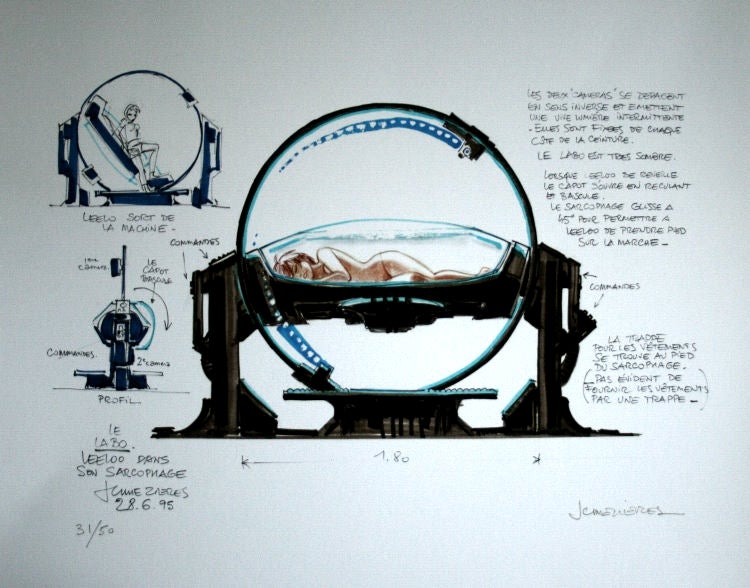
A number of brilliant artists contributed their unique vision to The Fifth Element, including Gaultier and Moebius. But one of the main influences on the film was Jean-Claude Mezieres, the comics artist whose time-travel comic director Luc Besson is adapting . Check out some of Mezieres' original Fifth Element concept art right here.

    
|
The Cocktail Demystified - anyone been before?
firehose'Join Eastside Distilling, Vinn Distillery, New Deal Distillery, Stone Barn Brandyworks, and House Spirits on Saturday, June 29th for an afternoon and evening of spirits tasting and cocktail instruction. The event features all five distilleries under one roof with over 25 products including gins, whiskeys, brandies, vodkas, rums, and specialty spirits. Instructional talks throughout the event will cover a wide range of topics from basic mixology to more specialized tips and information—all of which will allow you to take your cocktail-making skills to the next level.
The Cocktail Demystified is designed to get you up and running as a home bartender. You’ll be able to taste new spirits, learn how to use them in cocktails, receive recipes, and even buy the spirits to take home. So fear no more … come learn how to conquer the cocktail!'
 |
submitted by rumplestiltskin3 [link] [comment] |
A second child may have been cured of HIV

Last March, Mississippi doctors announced that early and aggressive treatment of an HIV-positive newborn had cured the child of her infection . Today, Los Angeles doctors reported that a second child may have been cured by a similar course of treatment, and could help prove that the Mississippi child's recovery was more than a stroke of luck.

|
|

Today in the Funniest Thing on Twitter
firehosePatrick Stewart continues to kill it
I've been speaking to @BarackObama about the situation in Ukraine. We are united in condemnation of Russia's actions. pic.twitter.com/7Rk2k8iOIK
— David Cameron (@David_Cameron) March 5, 2014
.@David_Cameron @BarackObama Hi guys, I'm on the line now too. Get me up to speed. pic.twitter.com/xhmJG5KpxT
— rob delaney (@robdelaney) March 5, 2014
.@robdelaney @David_Cameron @BarackObama I'm now patched in as well. Sorry for the delay. pic.twitter.com/elLQcKcV3w
— Patrick Stewart (@SirPatStew) March 5, 2014
I'd join in... but I'm not worthy.
From Adventures of Superman, 640, art by Karl Kerschl.
firehoseKarl Kerschl beat

From Adventures of Superman, 640, art by Karl Kerschl.
Forget Stanley Kubrick, Here’s A Truck Movie
|
Courtney
shared this story
from  The ToastThe Toast: The ToastThe Toast:
|
| Oh my god. |
 “A lot of people have directed Stephen King novels and stories, and I finally decided if you want something done right, you oughtta do it yourself.”
(Stephen King in the trailer for Maximum Overdrive, 1986)
The cultural cachet of The Shining (1980) is familiar to everyone who has had fleeting exposure to American television, books or movies in the past century. The Simpsons referenced it, your mom loves it, and it’s the movie you put to the front of your horror collection to impress acquaintances. The only thing more fabulous than the reputation, weight, and criterion re-issues of said film is how much its original creator despises it.
By now, Stephen King has somewhat tempered his opinion, but in the years right after its release, highly quotable trash talk was readily available whenever a reporter was nearby. “I like everything Stanley Kubrick has done–except The Shining,” he said in 1986, in what I assume was a gruff Hulk Hogan talk-scream before dropping the mic and offering Kubrick the re-match of a lifetime.
Everything about the movie seems to grate on King: the hotel, the ghosts, the cinematography, even Kubrick himself. Possibly most egregious to King was (and still is) the portrayal of the Torrance family, presented at arm’s length like “ants in an anthill.” The aura of old goldminer creepiness surrounding Jack Nicholson spoiled his character’s descent into madness, whereas King wanted more of an everyman, somebody the viewer could relate to, someone who spoke to King’s own fears as a young father struggling with alcoholism. Recently he tore into the warping of Wendy Torrance (played by Shelley Duvall), calling the way her character was written in the movie to be outright misogynistic. If he had a chance, he said, he “would do everything different.”
This frustration finally culminated into a cinematic event. While he would have to wait until 1997 to fix the events at the Overlook Hotel, a chance to do right by his work appeared in 1986 with the completely unanticipated Maximum Overdrive. Based on his short story “Trucks,” it would be the first movie written and directed by Stephen King. In an interview remarkable for how few times he tries to scare his serenely unshakable host with loud noises, he explains his decision to move behind the camera after receiving so many letters from like-minded fans upset by The Shining, and, as he saw it, demanding accountability. Perhaps this outpouring of support was further evidence that only his interpretation of a story was the right one, and that only he could make real Stephen King movie. “I was curious–if I did it myself, what would happen? Would people say ‘you ruined it yourself’…?”
Or would they say: yeah, we knew you could do it better?
And so, he took matters into his own hands:
To have been alive in 1986, when Stephen King declared that finally, someone was going to do him right, by God, no more beating around the bush, no more soulless dead-eyed storytelling and obfuscation of the meat of the narrative. To have witnessed this advertisement for Master of the Macabre Stephen King’s Maximum Overdrive, a promise of “Maximum terror. Maximum King,” which sounds like a rejected slogan for a cobra themed roller-coaster. A “coked out of his mind” King directed a 98-minute film about possessed trucks with a thirst for human blood, complete with a 100% AC/DC soundtrack and the slaughter of an entire Little League baseball team, and he kind of liked it.
Did you see the trailer? Maybe you should watch it again. You’re cornered in a garage by this man, and he’s definitely going to scare the hell out of you.
This, admittedly, might not have been the most successful way to tell Stanley Kubrick to go fuck himself.
***
Maximum Overdrive opened on July 25, 1986, and ran for two weeks. Its opening weekend was to the tune of $3,205,644, an exact match to 2005’s pseudo-military fantasy Stealth, fittingly also about evil technology you could sit in. I think this actually speaks rather well of Maximum–it grossed as much, uninflated, as a movie with a much higher budget and Jamie Foxx would make nineteen years later.
Further accolades: according to “Box Office Mojo” it ranked number 34 out of the 39 movies attributed to the Stephen King “brand”, as far as gross profit. All together with me: NOT! LAST! It beat out contenders such as Lawnmower Man 2: Beyond Cyberspace (“God made him simple. Science made him a god. Now, he wants revenge,”) and The Mangler, the story of an evil laundry press. It currently has a 17% “freshness” rating on Rotten Tomatoes, which is 7% more than 47 Ronin has right now.
It is difficult to predict, when polling acquaintances, who has seen Maximum Overdrive and who has never heard of it. Bad movies are in, the same way pencil skirts and wool coats are, fashionable: they never are unpopular per se, but fade to the background of our cultural consciousness until someone makes a ton of noise about discovering them again. But Maximum Overdrive isn’t bad in the way Troll 2 is bad, or The Room: both of those movies lack any sort of narrative cohesion and you can tell, immediately, how much of a bad idea they were after the first scene. The effects are home-made, you have no idea who any of the actors are, and nothing, nothing makes any goddamn sense. Maximum Overdrive, then, doesn’t have the acid-trip logic or that extent of mouth frothing ridiculousness to enjoy widespread revival, but it does have a certain something. “It’s like Speed meets Christine mixed with Roadhouse,” is how I usually try to sell it. Its insanity is focused, convincing. It has charisma, it has style, and it is aggressively pleased with itself until the last frame. It has King, a master of telling stories about normal people in extraordinary situations, just doing their thing until a waking nightmare finds them.
So let me lay it on you: A classic example of Man vs Machine, Maximum Overdrive starts in outer space, and then fades into Wilmington, North Carolina. A comet has appeared, anything with an electric pulse is now hell-bent on revenge and, apparently, the subjugation (if not straight-up murder) of the human race. It is a premise rich with potential commentary on the hubris of humankind set against the fiery hellscape they have created; rich also with thick puddles of fake blood and spectacular vehicular stunt work.
Representing mankind, we have blue-eyed ex-con Bill Richardson, who stepped straight out of a John Mellencamp song to work at the Dixie Boy truck stop and diner. Emilio Estevez, fresh from The Breakfast Club, brings a generous amount of smoulder and a frankly impressive level of dedication to his role. This drive is shared by the other assembled mechanics, motorists and various North Carolinians that populate the Dixie Boy, who appear to have succumbed completely to the script with an energy expected from a much better movie. While Wanda June the waitress doesn’t exactly speak to me on a soulful level, I am pretty determined to see her recoup after being attacked by an electric meat slicer. Other notable MVPs include:
- Curt and Connie, newlyweds who Dukes of Hazard-style ramp their car (with AC/DC playing in the background) into the relative safety of the Dixie Boy after being menaced by a grizzled old tow truck. Connie is played to piercing perfection by a young Yeardley Smith, as if to make trivia for this movie that much stranger in the years to come.
- Brett, comely hitchhiker with a straight razor in her boot and a chip on her shoulder, who kicks a lecherous Bible salesman to the curb and dutifully takes on the role of tough-girl love interest (as AC/DC plays in the background).
- Deke, the lone survivor of a Little League team that suffers fatal blunt trauma injuries from a furious soda machine. After witnessing the only other player to escape the flying cokes get smashed to death by a steamroller, Deke rides his ten-speed to the Dixie Boy to see his father, who was unfortunately blinded, hit by a truck (to the sounds of AC/DC) and rolled into the basement. Deke has seen too much, too young.
Plus a motley crew of other diner folk and assorted truck drivers seemingly there only to provide oddly dubbed, redundant exclamations. Everyone speaks in hyperrealistic Midwestern colloquialisms, unflinchingly saying things like “champeen,” “shitsky,” and “pea-turkey.” Before Brett was forced to acknowledge the phrase “road twitch” as if it were a substantial insult, I was certain it was trucking lingo for taking too many uppers. But perhaps we are in one of King’s famed alternate universes, a la The Gunslinger, as suggested by one mechanic’s melancholy declaration that “The whole world’s gone tits-up.”
Read more Forget Stanley Kubrick, Here’s A Truck Movie at The Toast.
How much does it cost to put a Winklevoss in space? It’s not as simple as you think

While some of us are thrilled at the idea of the Winkelvoss twins departing this earth for a few hours, we have to ask what it will it cost them.
The internet entrepreneurs best known for legal tussles with Facebook’s Mark Zuckerberg have purchased tickets to be space tourists on Virgin Galactic’s SpaceShipTwo. And they purchased them with bitcoin, according to their melodramatic announcement.

The tickets cost $250,000 (up front, please, according to Virgin Galactic’s booking page). CEO Richard Branson, who had the company begin accepting bitcoin in November, presumably takes that up front, too. If you go by today’s average conversion rate, the two tickets are about 716 bitcoins. The early-adopting Winkelvii at one time claimed to own 1% of the cryptocurrency, perhaps 100,000 bitcoins.
But the SpaceShip Two still hasn’t actually been to space yet, and there are still months of test flights ahead. Branson still aims to begin commercial service this year, but he’s said that every year since 2007. Were the Winkelvii buying that expensive trip with dollars, they’d have no problem putting up the cash today—hanging on to it would only lead to a slight drop in value as inflation did its thing.
But bitcoins are a speculative commodity, and any transaction you make with them is also a bet with the market. Let’s say, generously, the Winkelvii take their trip six months from now, in September. Six months ago, a bitcoin cost perhaps $150, today it costs $663, and in between it got as high as $1,200—that’s some volatility. When the plane takes off, those $500,000 tickets could be free—or, say, $860,000.
The Winkelvii’s announcement post compares the modern-day builders of bitcoin and rocketships to the European discovery of America and the architecture of the post-World War II financial system. So what does their transaction tell us? After the latest crises in the bitcoin ecosystem, a cynic wouldn’ t be blamed for seeing a nice attempt to short the currency via a spaceship put, in the event of further collapses in value. An optimist might see generosity in the twins’ investment in the potentially revolutionary space tech.
The SpaceShip Two, while it technically crosses the border to space by soaring above the 100km high Karman Line, can’t fly high enough to reach even low earth orbit, where the International Space Station resides, or the higher orbits occupied by geosynchronous satellites, much less the moon or Mars. A third-generation Virgin Galactic ship—or a spacecraft made by competitors like SpaceX or Boeing—will have to realize those goals.
Similarly, bitcoin may just be the first step in the launching of the future of finance.

Francis Finds His "Superpope" Narrative "Offensive"
firehosevia Russian Sledges:
"I don't like ideological interpretations, this type of mythology of Pope Francis," the pope told Corriere. "If I'm not mistaken, Sigmund Freud said that in every idealization there's an aggression. Depicting the pope as a sort of Superman, a star, is offensive to me.
"The pope is a man who laughs, cries, sleeps calmly and has friends like everyone else. A normal person."
VATICAN CITY (AP) — Pope Francis finds the hype that is increasingly surrounding him "offensive," according to an interview published Wednesday, even as the Vatican itself is marking the anniversary of his election with commemorative stamps and coins and a DVD with never-before-seen footage of the pope.
Read More →Washington issues first legal pot business license - Yahoo News
It's mainly ego that makes you share stuff online
firehosevia Rosalind
sorry everybody
Master in Management, ESCP Europe
Contagious Ideas in Social Media - A Two-Factor Model on Motivations for Sharing
Read Thesis: tinyurl.com/mtqsrss
Mass. court: Subway 'upskirt' photos not illegal | Boston Herald

So-called Peeping Tom laws protect people from being photographed in dressing rooms and bathrooms when nude or partially nude, but the way the law is written, it does not protect clothed people in public areas, the court said.
"A female passenger on a MBTA trolley who is wearing a skirt, dress, or the like covering these parts of her body is not a person who is 'partially nude,' no matter what is or is not underneath the skirt by way of underwear or other clothing," the court said in its ruling.
State law "does not apply to photographing (or videotaping or electronically surveilling) persons who are fully clothed and, in particular, does not reach the type of upskirting that the defendant is charged with attempting to accomplish on the MBTA," the court said.
Responding to senator’s bid to ban Bitcoin, congressman calls for cash ban
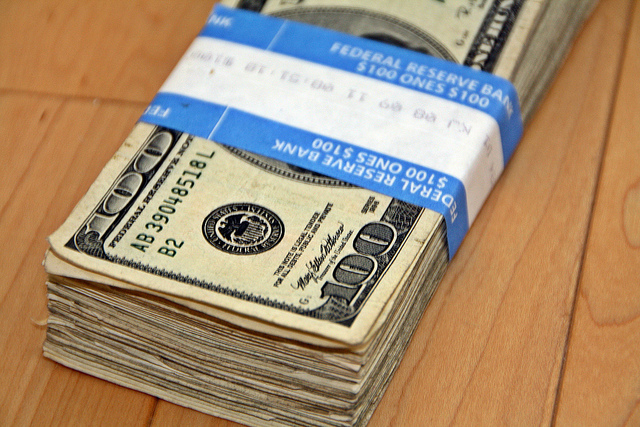
Last month, a senator from West Virginia called on American financial regulators to ban Bitcoin in a seemingly gross misunderstanding of how the cryptocurrency actually works.
On Wednesday, however, a representative from Colorado responded with a tongue-in-cheek letter to those same authorities.
Rep. Jared Polis (D-CO) wrote:
Read 3 remaining paragraphs | Comments
Study Links Meat, Sugar Consumption To Early Death Among Those Who Choose To Be Happy In Life

|
|
Pope Francis Says Catholic Church Could Support Same-Sex Civil Unions
CNN says:
Pope Francis reaffirmed the Catholic Church's opposition to gay marriage on Wednesday, but suggested in a newspaper interview that it could support some types of civil unions.
The Pope reiterated the church's longstanding teaching that "marriage is between a man and a woman." However, he said, "We have to look at different cases and evaluate them in their variety."
Am I being overly hopeful, or is this huge news? In the past, civil unions have seemed to represent the first tentative step toward acceptance for gay marriage opponents. Catholic bishops have supported civil unions, but this marks the first time a Pope has ever expressed support for the idea. Civil unions are separate-but-equal bullshit, but for the Catholic Church, this seems like a big step in the right direction if Francis actually holds true to his word.
nudiemuse: browsethestacks: Bloody Cleaver Clutch Purse I...
firehosevia Rosalind


5th-grader’s letter to her 20-year-old self covers everything that really matters in life
In 2005, along with all the other youngsters in Mr. Clark’s class, Redditor ah1117 had to practice typing by writing a letter to her future self. In 2014, she discovered that her mom had saved the note for her.
The message from the past briefly touches on technology, romance, and pets. But it stays mainly on point, discussing the most important thing in life: Tacos…

Newswire: Here are the mathematically determined "most hipster" bands around

Determining which music is the “most hipster” has long been plagued by ambiguous methodology, such as reading the comments on any single article ever posted about any band ever. While that can lead you to the safe, blanket conclusion that the mere act of listening to recorded sound is incredibly “hipster,” figuring out which sounds are the most hipster has traditionally eluded us, causing endless debate—a pursuit that is itself ironically “hipster.” But now the data-miners at Priceonomics have devised a mathematical formula to help you determine which bands are the most egregious examples of that vaguely applied term, so you can more easily avoid them and get back to listening to non-hipster sounds, like fire trucks.
The Hipster Music Index plots bands along two of the most crucial hipster points besides haircuts: critical acclaim and obscurity. The first factor was determined by its review from Pitchfork; the second ...
Hillary Clinton again blasts Putin after her Hitler remark - Times of India
firehosegreat
Times of India |
Hillary Clinton again blasts Putin after her Hitler remark Times of India LOS ANGELES: Russian President Vladimir Putin is a tough but thin-skinned leader who is squandering his country's potential, former US Secretary of State Hillary Clinton said on Wednesday, a day after she likened his actions on the Crimean peninsula of ... Cupp: Kerry's cleaning up Hillary Clinton's messCNN (blog) Hillary Clinton compares Vladimir Putin to Hitler over CrimeaDaily News & Analysis Hillary Clinton's remarks on Hitler seen as strategyBoston Herald TVNZ -Irish Examiner -Reuters all 434 news articles » |