
firehose
Shared posts



23 Mar 07:30


Fantasy Map: Springfield Transit Authority Map from “The...
Fantasy Map: Springfield Transit Authority Map from “The Simpsons”
From the Season 25 episode that premiered last night, “The Winter of His Content”. Looks like the (supposedly abandoned!) system has had a complete overhaul, expansion and rebranding since its previous appearance (second image).
Then again, Springfield’s never made very rational decisions about public transit (monorail monorail monorail…)
(Source: Simpsons Wiki)
firehose likes this
23 Mar 07:30


‘Metaphysics’ and other Dystopian Illustrations | Erdem Ergaz |...
‘Metaphysics’ and other Dystopian Illustrations | Erdem Ergaz | Socks Studio
Erdem Ergaz (1977) is a Turkish painter living and working as an artist and teacher in Istanbul.
His paintings focus on the collision/adaptation of the human being with the technological era, seen from the angle of faith, supernatural events and conflicts.
The technological drive inherent in Ergaz’s metaphysical worlds is accentuated through drawings whose aesthetics reminds either that of early computer graphics vectorial imagery, and that of information graphics such as the flight safey instructions.
firehose and -1 others like this
23 Mar 07:29

"Then they went hand in hand in the country that smells of...
"Then they went hand in hand in the country that smells of apple-blossom and honey"
Irish Fairy Tales, James Stephens, illustrated by Arthur Rackham
firehose likes this


23 Mar 07:28


Architects Try to Save a Tower in Moscow | Via One of the great...
Architects Try to Save a Tower in Moscow | Via
One of the great feats of 20th-century engineering, a landmark of modernist architecture is facing demolition. Late last month, the Russian State Committee for Television and Radio Broadcasting agreed to the dismantling of the Shabolovka radio tower in Moscow.
This is the Eiffel Tower of Russia, a 50-story conical structure of steel latticework, shaped roughly like a collapsing telescope, designed by the engineer Vladimir Shukhov. Commissioned by Lenin and completed in 1922, the tower was intended to spread the word of Communism through the new radio technology and to stand for the regime’s revolutionary ambition.
Among the signatories to the petition are the architects Tadao Ando, Henry N. Cobb, Elizabeth Diller, Rem Koolhaas and Thom Mayne; the engineers Guy Nordenson and Leslie E. Robertson; and the Tate Museums director Nicholas Serota. The petition was written by Jean-Louis Cohen, the architectural historian, along with Richard Pare, the British photographer, both specialists in buildings and monuments of the Soviet era.
23 Mar 07:28


Fantasy Google Street View | Arron Hobson | Via From German...
Fantasy Google Street View | Arron Hobson | Via
From German forests to the French Pyrenees, from the Rock of Gibraltar to Iceland’s tundra, artist Aaron Hobson spends endless hours traversing continents looking for eye-catching scenes. He’s a digital tourist and travel photographer, grabbing images from exotic locales in Google Street View (GSV) rather than mess with planes, climbing gear, or snow shoes.
There are plenty of GSV photo projects out there, but Hobson’s heavily ‘shopped Cinemascapes are a refreshing departure from the usual documentary reality. Not only does he find the most compelling views GSV has to offer, he then mashes them up with dream-like elements to create illusory panoramas.
“GSV is a fantasy world,” says Hobson. “The locations I visit are places of fantasy for most people, myself included. Most of the images beg for a narrative or a folk tale. Storytelling is my favorite form of art.”
firehose and -1 others like this

18 Mar 10:23
New Godzilla Totally Revealed..... as a huge ass toy!
by PolkaNinja
http://www.mtv.com/news/articles/172...-monster.jhtml
MTV news no less spoiling it.
I like it. Faithfull, and the massive lower body weight looks more realistic.
At this point, I really don't have any bad vibes on this one.
Fingers crossed, waiting game deployed.
MTV news no less spoiling it.
I like it. Faithfull, and the massive lower body weight looks more realistic.
At this point, I really don't have any bad vibes on this one.
Fingers crossed, waiting game deployed.
firehose likes this


18 Mar 10:16

n+1: New Orleans
by hodad
One of the things that happens when a corpse decomposes is that it fills up with gas, and bloats. In New Orleans, I learned this when I asked about the cemeteries. The above-ground mauseoleums there are made of carved marble and brick, and look like teeny tiny mansions. On the day that I was there, November 1, there were offerings lined up around them. I saw mostly candles and plastic rosaries but also pieces of chalk and toy cars, along with the flowers. I was in the cemetery with a friend who had grown up in New Orleans and wanted to show me All Saints Day, a tradition where families bring gifts to the graves of their dead loved ones, that in the U.S. now is widely observed in Louisiana and just about nowhere else. Above ground cemeteries, it turned out, were a public health necessity. The southeast part of Louisiana isn’t on the continental shelf; the land there is formed from a giant pile of silt, dumped by the Mississippi River and mounted up on the ocean floor. The land is literally made of the continent’s trash: the dirt that falls into the river in Iowa or Tennessee and gets washed downstream ends up in Louisiana as a sediment deposit. Among other things, this means that the soil in and around New Orleans is thin and watery. If you bury a corpse there, when it bloats it can eventually pop up again, like a beach ball pushed under the surface of a pool. The problem, he told me, is worst during floods.
I moved to New Orleans in the summer of 2012 because I didn’t have much else to do. I had graduated from college in the spring, and had been informed that there were no jobs—which was a relief, in a way, since it meant there was less pressure on me to find one. But I had spent a few college breaks on volunteer trips in New Orleans, and it seemed smart to move to a city that I knew I liked, where I already had friends, connections, and a favorite bar. I applied to a government Americorps program that subsidized young peoples’ work at nonprofits in Louisiana, and was placed in a job screening phone calls in the Volunteer Services department of a food bank. The program would last for a year with an option to renew for a second. I figured that doing good was better than doing nothing, and that by the time I finished, something else would have come along.
When I pulled off of I-10 the day that I first arrived in town, a soldier in desert-colored fatigues stood beneath a blackened traffic light, directing cars with his stiff palms. On the road behind him felled oak branches lay downturned on the asphalt like hands. I had to steer around them. This was August 30, 2012, and my timing could have been better. Hurricane Isaac had made landfall two days earlier, the first major storm to hit New Orleans since Katrina. Power was out in much of the city, and further downriver, in swampy Plaquemines Parish, two bodies had been found floating face down in a flooded kitchen. Isaac was the first real test of the new, $4 billion levee system that the government had built after 2005, and a lot of people had expected the levees to fail. Almost all of the friends I knew in New Orleans had evacuated to Austin, Memphis, or Baton Rouge; they sent me pictures of the traffic backed up on the outbound side of the highway. “I really don’t know what’s going to happen,” one friend had told me a few days earlier, over the phone. “But I don’t want to be here when we find out.” Before the storm reached land the Army Corps of Engineers had been called in, “to provide assistance and keep order.” But the levees held, and while a lot of people lost power, the damage wasn’t nearly as bad as what had been feared. By the time I reached town there were soldiers standing in clusters at the major intersections along Claiborne Avenue, looking bored. The French Quarter even had its lights back on, and businesses were open in the tourist district. On Rampart Street as I made my way to my apartment, I saw an Army Humvee stop to let a gaggle of drag queens cross the street. I watched them disappear into a bar.
Because of where New Orleans is, catastrophe is a promise. It is a cruel joke of nature that, because of the way that land forms in a delta region, the levees that keep the city from flooding are actually also pushing it lower and lower, further below sea level. Nearly everyone I met there agreed that eventually the city will flood again, worse than it did in 2005. In the meetings that were held in a church rectory every month for members of the Americorps program, this came up a lot.
Like me, nearly everyone in the program was white, fresh out of college, and from out of town, and for the most part they were smart, ethically committed people who had taken the horribly paid Americorps jobs in New Orleans because they wanted to do good. There was a time when such people were exactly what the city needed. In the months following Katrina, there was a lot of hard, unlovely, and sometimes weird work to be done. When houses lose power in a Louisiana summer, for instance, the food in their refrigerators rots quickly. After the storm, a city’s worth of beer- and gumbo-filled fridges had to be duct taped shut, carted out to the curb, and thrown away without being opened. Houses flooded with a family’s worth of books and clothes inside, and someone had to help throw out everything soggy and mildewed. Thousands of families and business owners had to file insurance and federal benefit claims, and somebody had to be there to help them with the paperwork.
But by the time I came to New Orleans to work in nonprofits, things were different. New Orleans was not what it had once been, but the heavy lifting of hurricane recovery was done, and a steady push of gentrification had changed much of the city. Now, St. Claude Avenue has art galleries and a bike lane. There are bakeries that only make cupcakes. The Winn Dixie on Tchoupitoulas started selling organic kale, which I bought and made salads with. Some of this, it turned out, was meant for the very people who had helped gut houses a few years before: of the thousands of volunteers who descended on New Orleans after the storm, a lot of them had fallen in love with the city, and had chosen to move permanently to a place where they could enjoy mild winters and cheap rent. “We used to have a brain drain,” one smiling city representative said. “Now, we have a brain gain.” What became true after Katrina, that was not as true before it, was that New Orleans became a place where some people could live as yuppies. When the city was rebuilt after Katrina, it was rebuilt largely in these people’s image.
Of course, reminders of the storm were still all over. There were plenty of blighted houses, for instance—the few that hadn’t been gutted since the storm had a smell strong enough that you could tell them from a block away. And many buildings still bore their X-codes, the spray-painted symbols from different search-and-rescue teams that had inspected every building in the city after the storm. But with a few exceptions, most of the nonprofit work that my cohort and I were assigned to had little to do with the flood. One girl was tasked entirely with helping the public defender’s office process people who were arrested under a nasty state statute called the Crimes Against Nature Law. Another guy was working for a group that sent him door to door distributing those energy efficient, corkscrew-shaped light bulbs. The problems we were tasked with fixing had less to do with the fact that the city had catastrophically flooded than that it was in decline.
At the food bank, however, this wasn’t the line we took. In the volunteer services department, it was my job to orient the church groups and sororities—many of them from out of town—who showed up to work in the warehouse. Before they started we ushered them into an orientation room, lined with photographs of smiling black children holding apples and bowls of soup. In this situation, it was useful to talk about the city’s poverty—which was easy, since the poverty was real, trenchant, and bleak. “One in five children and one in three seniors in South Louisiana don’t know where their next meal is coming from,” was the statistic that rolled off my tongue with the neat rhythm of muscle memory. The volunteers would shake their heads slowly; motherish women in their forties would tut their tongues. Then I would take pictures of the volunteers in their lanyards and matching tee shirts, and lead them into the warehouse to sort cans.
I wasn’t technically a food bank employee, but rather a “fellow.” Every two weeks I got $415 from the government program and about $100 from the food bank itself. My rent was $450 and this wasn’t enough. Somewhere along the line one of my coworkers got me an extra job, working as a merch girl for a local record company that signed jazz acts. I went to the bar where the pianist or trumpet player was performing and sat in the back at a card table, selling CDs and tee shirts. Most of the bars I worked in were along Frenchman Street, a brightly lit strip of music clubs that’s within stumbling distance of the French Quarter and popular with tourists. Frenchman Street got its name when five French rebels were hanged on the levee at the end of it during the Spanish colonial rule, but this, it turned out, was not a good anecdote to charm tourists with at the bars. I wasn’t very good at selling CDs and spent most of my time hanging out with Brandon, a 40ish black guy in thick glasses who kept his hair in tiny, perfect dreadlocks. Brandon was a drug dealer who hung around in jazz clubs selling small amounts of overpriced weed to out-of-towners in sweatshirts. He smiled too much and couldn’t remember my name; Brandon always addressed me as “honey.” But I liked him anyway, in part because I was lonely and in part because he could do magic tricks. “A magician is the most honest man in the world,” he once told me in the back corner of the Blue Nile Bar, “because he says he’s going to trick you, and then he does!” Then Brandon made the ace of clubs appear in an empty beer glass at the next table. Because we were both working, we were usually the only ones there who were sober.
Out-of-towners, I was learning, come to New Orleans either to perform charity or to party. The party industry is bigger. At the jazz shows, I saw a lot of people treating themselves to benders. There were groups of heavy-gutted men down for bachelor party weekends. There were girls in tiny sequined dresses, delightedly calling to each other, “It’s so warm out!” It’s legal to drink on the street in Louisiana, and in the tourist districts at night there is often a group of people clustered on the sidewalk, chanting, “Shot! Shot! Shot!” Bourbon Street smells like piss and disinfectant. It might sound far-fetched that I ran into volunteers from the food bank while I was there, but actually it happened a lot.
If you spend enough time around the tourists in New Orleans, you start to pick up on patterns. At the food bank and the bar alike, I was told that the city was “magical.” People confessed to me that they were “under its spell.” This attitude is partly a success of marketing: the city has undertaken a massive and ongoing campaign to make New Orleans a major center of domestic tourism, and it’s working. But it’s also partly a real phenomenon of the place. This kind of thing isn’t easy to explain, but New Orleans is suffused with a seductive nostalgia that is surprisingly difficult to resist; it tricks you into participating in its own mythology in ways that you don’t expect it to. Even now, whenever I go there, New Orleans seems to be trying to draw me into some kind of conspiracy of signification. When I lived there, my apartment was on Independence, a one-way street. Two blocks over was Desire, a one-way street going in the opposite direction. It was things like that.
Part of the reason why New Orleans plays so strongly on the imagination is that it looks just like it does in the movies. If you have never been there but have an image in your mind of a building with an iron lacework balcony and gas streetlamp outside, I can assure you that this building exists, and that if you ever go there you can track it down and take a picture of it. Most major avenues are lined with massive live oak trees, whose overhead branches are so broad and twisted that they always look like they’re moving. The mansions on St. Charles Avenue have big, toothy front columns, and in Mid-City the houses are low and painted the colors of makeup. I lived just a few blocks away from the Industrial Canal levee, a long, steep hill that’s just wide enough at the top for people to jog or walk their dogs on. On my day off I liked to climb to the top of it and take my shoes off on the grass. Like all the artificial levees in New Orleans the Industrial Canal levee was built to keep the city from flooding, but from the top what was clear was how vulnerable the place was. On one side I looked down at the pitched roofs like lily pads below my feet, and on the other I would watch the tugboats on the canal push barges loaded with brightly painted dumpsters.
In October, Hurricane Sandy started forming off of the Atlantic Coast. It became clear that the northeast was in for something bad, and I started getting phone calls from friends in New York, who were worried about me because they had heard “hurricane” and thought that New Orleans might be in trouble. I explained to them that from where I was, Sandy was almost a thousand miles away. When the storm hit New York, in New Orleans it was a sunny day.
A few days later, the food bank had a volunteer group of teenagers scheduled. They were from a synagogue on Long Island, and we would be their first stop on a multi-site volunteering tour of the city. In New Orleans they were going to work in our warehouse, help canvass a neighborhood for a community organization, and raise a house for a Habitat for Humanity project, all before heading back to New York a week later. Before their bus pulled up, I was waiting for them in the lobby, talking to Miss Corinne, the ancient receptionist. “What are they coming down here for?” she asked. “They ought to be helping out back where they’re from.”
One of the most popular tourist activities in New Orleans is what is called a Katrina Tour. Coach buses pick tourists up from the downtown hotels and drive them into the Lower Ninth Ward to see overgrown lots and houses with weeds growing out of their roofs. A few years ago Brad Pitt had a series of eco-friendly family homes built in the Ninth Ward, and now the buses drive past those, too. I lived near the canal that separates the Lower Ninth from the Bywater, and I used to see these buses driving over the bridge on my way to work at the food bank. Like everyone else in New Orleans, I was angered by the Katrina Tours, but increasingly the anger felt like something I didn’t have much claim to. I had come to New Orleans first as a volunteer and then as a nonprofit worker, and had only ever inhabited the city as someone who wanted to confront its pathologies. This was starting to feel like a kind of voluntary rubbernecking.
In the monthly meetings of my Americorps group, there was a good deal of anxiety expressed about the politics of volunteerism. People were uneasy about being white social welfare workers in black communities. We held discussion groups with titles like “Privilege and Practice in Nonprofit Work,” where we sat in folding chairs, nodding earnestly at one another; this felt helpful. But there were also people in the nonprofit world who were stridently defensive, or condescendingly mollifying; the kind of people who speak with the sinister optimism of ex-addicts. One of the problems with nonprofit work is that to think of yourself as doing good requires you to be certain of your convictions and your strategies. If you let it, this certainty can do violence to other kinds of understanding; it can transform your good intentions into obliviousness. Places and lives contain all sorts of self-defeating contradictions, and in New Orleans one of the most potent was that many of the people who had come to help the city were also hurting it.
In the cemetery on All Saint’s Day, my native friend told me that I should take some of the gris gris from the gravesides, as a souvenir. “They’re just going to come in and throw all this stuff away.” He was right; as a party town New Orleans has developed a sanitation system that is almost athletic in its efficiency. Trailing at the end of every Mardis Gras parade you’ll see twenty guys in jumpsuits hop off a street sweeping truck and start picking up discarded beer cans and confetti with little brooms and pails. Soon they would come through the cemeteries and take all the offerings away, too. In the heat a lot of it was already starting to look wilted: the teddy bear with the heart that said “Grandma,” the carnations wrapped in plastic. I looked at it all but couldn’t decide what to steal.
firehose likes this

18 Mar 09:03
Never bring anise pods to a lobster-roll fight
by adamg
firehosevia Amy Lynne Grzybinski: "I reeaaaallllyy want to point out here that the flavor profile in question is VIETNAMESE, not "Mexican." Does that make me a troll?"
Up in Gloucester, they know from lobster. Joey at Good Morning Gloucester lands a knockout blow on some foodie site that thinks "the perfect lobster roll" includes anise, lemongrass, ginger and arbol chiles:
Listen here anyone who would describe themselves as a “Foodie”. Do all us normal real folk a favor and spare us your stupid frickin lobster roll recipes that include anything other than a split top roll. Spare us your French baguettes, spare us your frickin lemon zest bullshit, spare us your ginger and your anise and your arbol chlis.
Hellooooo, we wanna taste the lobster. How hard is that to comprehend? If we wanted to eat Mexican we’d order a goddamned Burrito.

18 Mar 08:55
Society: You're fat. Get off your fat ass and get some exercise.
by artetolife
firehosevia Lori
Society: You're fat. Get off your fat ass and get some exercise.
Fat woman: Okay, I'd love to. Let's get some workout clothes!
Clothing industry: Oh, we don't have your size. Fat people don't exercise so there's no market for it. Have some men's sweatpants and a man's t-shirt.
Fat woman: What about my boobs?
Clothing industry: We don't have sports bras for you either. There's a few specialty shops, if you want to spend hundred of dollars on a bra you're going to sweat all over.
Fat woman: I guess I'll just double-bra. Now, I need a gym membership.
Gym: Oh. Okay. I guess.
Gym member: *dirty looks at fat woman* *makes a big deal out of sanitizing anything fat woman touches* *complains to gym about having to look at fat people* *generally treats fat woman like shit*
Fat woman: I'm not comfortable here at all. Maybe I'll just go for a walk.
Passer-by: Hey, fatty! Don't crack the pavement!
Another passer-by: *condescending* Oh, it's so great that you're trying to lose weight.
Fat woman: I'm not. I just want to get in better shape.
Another passer-by: But you have to lose weight! You're so unhealthy!
Yet another passer-by: Mooooo! Look at the cow!
Fat woman: Yeah. I don't think I want to be out here anymore. Maybe I'll just buy some home exercise equipment.
Sporting goods store: Sorry. The weight limit on our equipment is 30 kilos less than you weigh. You'll have to lose some weight if you want to exercise at home. Have you tried a gym? Or maybe just go for a walk?
Fat woman: Yeah. Thanks.
Fat woman: ...
Fat woman: I'm out of ideas.
Society: Haven't you lost any weight yet? Fat people are so lazy.
Fat woman: Okay, I'd love to. Let's get some workout clothes!
Clothing industry: Oh, we don't have your size. Fat people don't exercise so there's no market for it. Have some men's sweatpants and a man's t-shirt.
Fat woman: What about my boobs?
Clothing industry: We don't have sports bras for you either. There's a few specialty shops, if you want to spend hundred of dollars on a bra you're going to sweat all over.
Fat woman: I guess I'll just double-bra. Now, I need a gym membership.
Gym: Oh. Okay. I guess.
Gym member: *dirty looks at fat woman* *makes a big deal out of sanitizing anything fat woman touches* *complains to gym about having to look at fat people* *generally treats fat woman like shit*
Fat woman: I'm not comfortable here at all. Maybe I'll just go for a walk.
Passer-by: Hey, fatty! Don't crack the pavement!
Another passer-by: *condescending* Oh, it's so great that you're trying to lose weight.
Fat woman: I'm not. I just want to get in better shape.
Another passer-by: But you have to lose weight! You're so unhealthy!
Yet another passer-by: Mooooo! Look at the cow!
Fat woman: Yeah. I don't think I want to be out here anymore. Maybe I'll just buy some home exercise equipment.
Sporting goods store: Sorry. The weight limit on our equipment is 30 kilos less than you weigh. You'll have to lose some weight if you want to exercise at home. Have you tried a gym? Or maybe just go for a walk?
Fat woman: Yeah. Thanks.
Fat woman: ...
Fat woman: I'm out of ideas.
Society: Haven't you lost any weight yet? Fat people are so lazy.
18 Mar 08:53
cosmos: a spacetime odyssey
by kris
firehosevia Osiasjota

i saw so many problems in the first episode of cosmos with neil degrasse tyson. i don’t see how anyone is going to learn anything
- neil degrasse tyson grew and shrank at will, and stood directly in front of the big bang without harm coming to him
- he walked around earth around the first appearance of life on the planet! how many countless microbes did he spread to earth’s past
- he survived the blast wave from the meteor that killed all the dinosaurs
my kids are going to watch this and try to shrink off the goddamned roof!! thanks for nothing, “doctor” tyson and “seth” macfarlane
(actually the show is great, i teared up, please watch it)
Osiasjota, D Breckejn and 6 others like this
18 Mar 08:53


I hear my cat crying in the bathroom, walking in, I see this.
firehosevia Tadeu
Albener Pessoa, firehose and 2 others like this


 3
3  0
0 
16 Mar 23:47
We're ALL winners!
by Brandon Bird
firehoseBrandon Bird beat
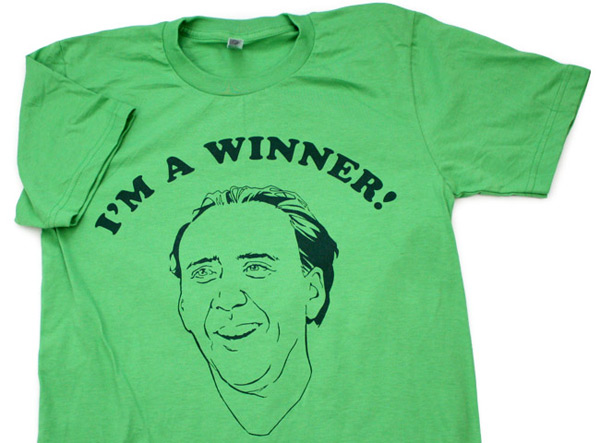
New T-shirts for sale at TopatoCo! Including this guy in green or yellow, a Vin Diesel tank top, and bees.
firehose likes this
16 Mar 23:42
no shibe, only kami
by gguillotte
firehoseyo is it rinzai zen buddhist to hate on shibas
16 Mar 23:41
The Poor Neglected Gifted Child
firehose'if the study is right that exceptional youthful ability really does correlate directly with exceptional adult achievement, then these talented young kids aren’t just a challenge for schools and parents: they’re also demonstrably important to America’s future. And it means that if, in education, we focus on steering all extra money and attention toward kids who are struggling academically, or even just to the average student, we risk shortchanging the country in a different way.
“We are in a talent war, and we’re living in a global economy now,” Lubinski says. “These are the people who are going to figure out all the riddles. Schizophrenia, cancer—they’re going to fight terrorism, they’re going to create patents and the scientific innovations that drive our economy. But they are not given a lot of opportunities in schools that are designed for typically developing kids.” '
Precocious kids do seem to become high-achieving adults. Why that makes some educators worried about America’s future.
firehose likes this