The missing HTTP Client for OS X
Easily craft your HTTP requests, try them, archive them. Setup HTTP Headers, URL parameters, form-encoded POST key-values or text. Get easy-to-read responses with well formatted headers and body.

Olivia Barr shared with us her superlative double-negating not Not-A-Camera camera, including an ongoing gallery contributed by a few artists who have been using Not-A-Camera:
Introducing the NOT-A-CAMERA! It’s a REAL camera designed to look like a fake 2D camera etched into wood that shoots HD video and 3.5mb jpgs. Yep, it’s a functional camera, a spy camera laser cut in solid walnut and only half an inch thick. There is also a mirror front version for snapping a selfie. All cameras are made to order and take 2-3 weeks for shipping. If this items is sold out please contact me directly to be put on the waiting list.
I originally made NOT-A-CAMERA as a gift for my grandma, Olivia Barr, who is 101 years old. I’m named after her and the third generation Olivia in my family. She started taking photos in her 90s and I wanted to make her a camera that was light and easy to use.
I am also inviting individual artists to work with NOT-A-CAMERA. Check out images and video from the ongoing project on tumblr.
Camera Specifications:
- Size: 3 x 3.5 x 0.5 inches
- Chain: gunmetal rolo 34 inches
- Video: 1280×720 in HD; 720p
- Format: MOV; 60fps
- Audio: 16 bits; Single Channel
- Photo: 3.5MB; 1280×960
- Webcam: 640×480 (PC only)
- Micro SD: 8 GB; class 4
- Battery: 3.6 volt; 250 mAh


firehosehi everybody
sorry everybody
Those people who constantly reblog your stuff but you never really talk:

Win today: Postcards featuring international electrical standards baked into loaves of bread. Hot dogs, fish sticks, carrots etc. Did I then eat the bread? Yes. Was it disgusting? Pretty much.
Last week’s winners include D in NY, A in Philadelphia, P in Jackson Heights and J Upstate. Everyone else can join Give Away May RIGHT HERE.
firehose“Christ, am I the only goddamn person in this country who knows how to use a fucking trampoline?”


We now have specifics on the Netflix price increases announced last month by CEO, Reed Hastings. The company’s original subscription plan, which allows for HD streaming on two screens at once, will be going up by a buck to $8.99 per month. At the same time, Netflix is introducing a new plan that allows standard-definition streaming to a single device at the old $7.99 price point. Luckily, current Netflix subscribers don’t have to face the soul-rending choice between the two just yet: For the next two years, they’ll be allowed the privilege of continuing to pay $7.99 for the two-screen service.
Netflix claims the price increase—which could, based on subscription data the company released earlier this year, earn it an extra $33 million per month in just the U.S.—will go toward acquiring new TV shows and movies to stream. Indeed, the ...
Luna the bunny enjoys fresh raspberries and ends up with an unintentional coat of lipstick in a perfect shade of the eponymous fruit in this video posted by “and it’s love”.



Square Order is a new app by mobile payments company Square for ordering goods for pickup from local shops, cafes, and restaurants in New York City and San Francisco. Users can pay ahead of time, including tip, and be alerted when their goods are available for pickup. The app effectively replaces the previously released Square Wallet, which is no longer available.
Square Order is available on Android and iOS.

images via Square Order
via Re/code
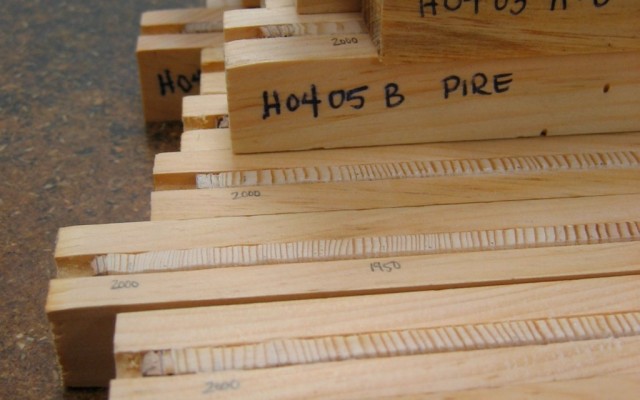
The release of e-mails hacked from University of East Anglia climate scientists in 2009 (unimaginatively dubbed “Climategate” in media scandalese) generated about as much public discussion as any report of the science has. Long after the initial attention died down and a number of independent investigations found no evidence of scientific malpractice, snippets of quotes from the e-mails continue to pop up in conversations and opinion columns.
The most famous snippet related to reconstructions of past climate based on tree rings. One researcher, describing work putting together a graph, mentioned using “Mike’s Nature trick” to “hide the decline." It was exactly the nefarious-sounding sort of language that those who combed the e-mails for dirt wanted to find. Of course, it turned out to simply be a casual description of something much more mundane. “Mike’s Nature trick” was to display the instrumental temperature record and tree ring data on a graph—as climate scientist Michael Mann had done for a paper published in Nature.
So what about “the decline”? It’s no secret that many tree ring climate records from the Arctic diverge from instrumental data around the 1950s, failing to show the warming we’ve observed. So for some reconstructions, data from the second half of the 20th century is known to be inaccurate. In many ways, the divergence itself is much more interesting than arguments about unremarkable e-mails. Tree ring researchers have puzzled over what could explain the odd behavior of these Arctic trees.
Read 8 remaining paragraphs | Comments
Peter Brown is a computer geek by day and a woodworker by night and weekend. He recently posted a video and series of pictures demonstrating a fun project he experimented with that turned out very successfully.
Using a box of colored pencils and some glue, he created this nifty piece of wooden jewelry…

Assuming you have the tools, the process is wonderfully simple…


Here’s a video of the process you can watch for more detail…
Brown was not expecting his weekend experiment to generate the interest it has, so he’s not prepared for orders. But he says he’ll make more and add them to his Etsy page soon.
firehosesubtle GIF

by uaiHebert
firehosetl;dr: Pope is still Catholic
'After his little more than a year atop the Throne of St. Peter, Francis’s teachings on Satan are already regarded as the most old school of any pope since at least Paul VI, whose papacy in the 1960s and 1970s fully embraced the notion of hellish forces plotting to deliver mankind unto damnation.
Largely under the radar, theologians and Vatican insiders say, Francis has not only dwelled far more on Satan in sermons and speeches than his recent predecessors have, but also sought to rekindle the Devil’s image as a supernatural entity with the forces of evil at his beck and call.
Last year, for instance, Francis laid hands on a man in a wheelchair who claimed to be possessed by demons, in what many saw as an impromptu act of cleansing. A few months later, he praised a group long viewed by some as the crazy uncles of the Roman Catholic Church — the International Association of Exorcists — for “helping people who suffer and are in need of liberation.”
“ ‘But Father, how old-fashioned you are to speak about the Devil in the 21st century,’ ” Francis, quoting those who have noted his frequent mentions of the Devil, said last month while presiding over Mass at the Vatican’s chapel in St. Martha’s House. He warned those gathered on that chilly morning to be vigilant and not be fooled by the hidden face of Satan in the modern world. “Look out because the Devil is present,” he said.'
You would think that Andrew Jackson was giving you his undivided attention, and then you would glance over and notice that he had devoted the last several minutes to making a laborious sketch of an alligator.
“Mr. President!” you would gasp, indignantly.
“I have a bullet lodged inside my body,” he would say. “From killing a man in a duel. A better man than you.” He would resume drawing the alligator.
”Said alligator:

(via thedancingtoast)
firehoseRENEE MONTOYA RENEE MONTOYA RENEE MONTOYA RENEE MONTOYA RENEE MONTOYA RENEE MONTOYA RENEE MONTOYA RENEE MONTOYA RENEE MONTOYA RENEE MONTOYA RENEE MONTOYA RENEE MONTOYA RENEE MONTOYA RENEE MONTOYA RENEE MONTOYA RENEE MONTOYA RENEE MONTOYA RENEE MONTOYA RENEE MONTOYA RENEE MONTOYA RENEE MONTOYA RENEE MONTOYA RENEE MONTOYA RENEE MONTOYA RENEE MONTOYA RENEE MONTOYA RENEE MONTOYA RENEE MONTOYA RENEE MONTOYA RENEE MONTOYA RENEE MONTOYA RENEE MONTOYA RENEE MONTOYA


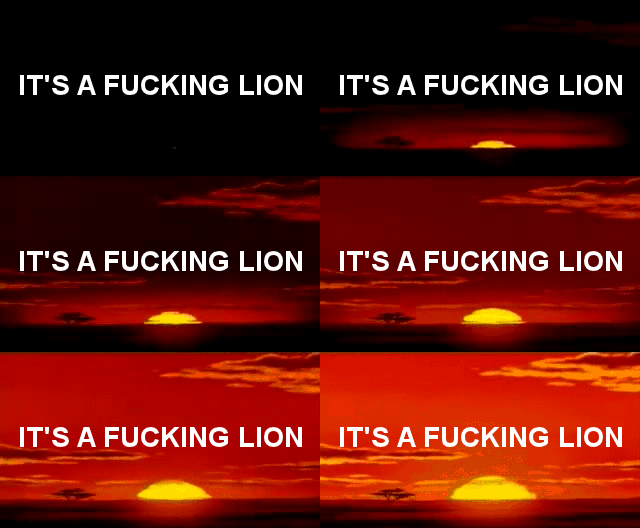
Nants ingonyama bagithi baba  [There comes a lion]
Sithi uhhmm ingonyama         [Oh yes, it's a lion]

Nants ingonyama bagithi baba
Sithi uhhmm ingonyama
Ingonyama
I FINALLY KNOW THE FUCKING WORDS
it’s so funny to see the translated words though because you think it’s like some really profound chanting and really it’s just
yup
that’s a lion
this movie’s about a lion
just reassuring you that yes indeed lions are here
I hate this post and will always hate this post because it’s pretty much a perfect example of the disneyfication of things
'ha ha its a lion them africans huh them africans'
So basically rap genius did this way better so all credit to them here
to grab the direct quotes:
Nants ingonyama bagithi Baba :
This line loosely translates from Zulu as, “There comes a lion”. In actuality, the speaker of this sentence is speaking to an adult male whom he respects and refers to as “baba”, which means father but in zulu culture it is seen as respectful to refer to one’s betters as mother or father.
The lion in this instance can seen as symbolic of adversity as Lion King is based on the Masai tradition of having the young men kill a lion when they come of age. The speaker at this point would thus be a young Masai man prior to his initiation.
The elder male that was spoken to in the first line responds in a nonchalant manner and acknowledges the lion’s approach, “Oh yes it’s a lion”.
Nants ingonAnnotateyama bagithi baba
Sithi uhhmm ingonyama
Ingonyama:The phrase is reiterated in a call and response manner as is common amongst Southern-African cultural relations such as singing and dancing. The theme of the advance of the lion is emphasised by the repetition of the word “ingonyama” which means lion in zulu as the task looms ever closer as the lion draws nearer.
Oh, and the parts that get (conveniently) left out, probably because black people
The collected Masai warriors respond to the challenge in unison, “We’re going to conquer”
Ingonyama
Ingonyama nengw’ enamabala:The lion is now joined by a leopard.
So have some context with your ‘lel dem africans ha ha dem africans o disney’ laugh fucking riot. But this is what Disney does, and trains its fans to do: Take something non-white, use it as goddamned decoration, and remove all of the meaning. Use it as a joke. Make it different, but not too different. Who here thought that part of the song was just random noises? Don’t bother with a show of hands, there’s 400 thousand notes to do that for me.
'well you're just reading too much into it'
if you think ladysmith black mambazo didnt know what they were doing with their own fucking language
Mario Wienerroither recently stripped the music out of the music video for the hit song “Here It Goes Again” by OK Go. He then dubbed over the video with occasional sound effects and vocals. We’ve previously written about Mario’s ongoing series of musicless music videos.
Here is the original music video for comparison:
videos via Mario Wienerroither, emimusic
firehoseA+ to this headline writer for using "Aftermath"
Does The Beats Aftermath Usher The Next Episode For Wearables? TechCrunch But beyond Dr. Dre's non-announcement announcement (booze-fueled, but who could blame him?) is a potentially $3.2 billion validation that even the most basic form of wearable technology is worth a lot of money to the right company. There's no doubt that ... and more » |

Last week, Africa Is a Country, a blog that documents and skewers Western misconceptions of Africa, ran a fascinating story about book design. It posted a collage of 36 covers of books that were either set in Africa or written by African writers. The texts of the books were as diverse as the geography they covered: Nigeria, Zimbabwe, South Africa, Botswana, Zambia, Mozambique. They were written in wildly divergent styles, by writers that included several Nobel Prize winners. Yet all of books’ covers featured an acacia tree, an orange sunset over the veld, or both.
“In short,” the post said, “the covers of most novels ‘about Africa’ seem to have been designed by someone whose principal idea of the continent comes from The Lion King.”

Image by Simon Stevens
What makes the persistence of these tired and inaccurate images even worse is that we’re living in an era of brilliant book design (including this lovely, type-only cover for Chimamanda Ngozi Adichie’s Americanah; her novel Half of a Yellow Sun begins the collage above). So why is it so hard for publishers of African authors to rise beyond cliché?
I asked Peter Mendelsund—who is an associate art director of Knopf, a gifted cover designer, and the author of a forthcoming book on the complex alliances between image and text—to help me understand how the publishing industry got to a place where these crude visual stereotypes are recycled ad nauseam. (Again and again, that acacia tree!)
He points first to “laziness, both individual or institutionalized.” Like most Americans, book designers tend not to know all that much about the rest of the world, and since they don’t always have the time to respond to a book on its own terms, they resort to visual clichés. Meanwhile, editors sometimes forget what made a manuscript unique to begin with. In the case of non-Western novels, they often fall back on framing it with “a vague, Orientalist sense of place,” Mendelsund says, and they’re enabled by risk-averse marketing departments.
“By the time the manuscript is ready to be produced, there’s a really strong temptation to follow a path that’s already been trod,” he says. “If someone goes out on a limb and tries something different, and the book doesn’t sell, you know who to blame: the guy who didn’t put the acacia tree on the cover.”
He adds that the underlying issue can be more pernicious: “Of course, there are the deeply ingrained problems of post-colonialist and Orientalist attitudes. We’re comfortable with this visual image of Africa because it’s safe. It presents ‘otherness’ in a way that’s easy to understand. That’s ironic, because what is fiction if not a way for you to stretch your empathetic muscles?”
That’s a reasonable diagnosis. But how to solve the underlying problem? Certain books are allowed to stand on their own; others—too often those by African, Muslim, or female authors—are assigned genre stereotypes. Mendelsund suggests that designers should start by initiating conversations with editors about what makes a book unique, so that they have something to respond to visually. And if that fails, and designers are pressured to use an offensive stereotype, Mendelsund says, “We can tell them that it’s racist, xenophobic, whatever.”
But change comes slowly. One day, Mendelsund predicts, there will be a best-selling novel by an African writer that happens to use a different visual aesthetic, and its success will introduce a new set of arbitrary images to represent Africa in Western eyes. “But right now, we’re in the age of the tree,” he says. “For that vast continent, in all its diversity, you get that one fucking tree.”


"My mother was a typical woman of the Meiji era, Japan’s age of swift modernization, during which women were still expected to make extreme sacrifices so that their fathers, husbands, brothers or sons could advance. Beyond that, she was the wife of a military man. (Years later when I read the historical novelist Shugoro Yamamoto’s An Account of the Duties of Japanese Women, I recognized my mother in these impossibly heroic creatures, and I was deeply moved.) In such a way as to escape my father’s notice, she would listen to all my complaints. Writing about her like this makes it sound as if I am trying to set her up as a model for some moral tale. But this is not the case. She simply had such a gentle soul that she did these things naturally…
"During the war there was a popular song called ‘Father, You Were Strong,’ but I want to say ‘Mother, You Were Strong.’ My mother’s strength lay particularly in her endurance. I remember an amazing example. It happened when she was deep-frying tempura in the kitchen one day. The oil in the pot caught fire. Before it could ignite anything else, she proceeded to pick up the pot with both hands—while her eyebrows and eyelashes were singed to crinkled wisps—walk calmly across the tatami-mat room, properly put on her clogs at the garden door and carry the flaming pot out to the center of the garden to set it down.
"Afterward the doctor arrived, used pincers to peel away the blackened skin and applied medication to her charred hands. I could hardly bear to watch. But my mother’s facial expression never betrayed the slightest tremor. Nearly a month passed before she was able to grasp something in her bandaged hands. Holding them in front of her chest, she never uttered a word about pain; she just sat quietly. No matter how I might try, I could never do the same."
firehose"He’s actually saying a Low Valyrian translation of the French guy’s insults in Monty Python and the Holy Grail."

Do you remember that scene from Game of Thrones’ third episode “Breaker of Chains”? No, no, not that one. We’re talking about the scene where (the new) Daario Naharis squared off against the Champion of Meereen. How could you forget? There was a saucy wink, some public urination, and a beheading. Here’s a refresher.
You’ll notice that when the Champion of Meereen first comes out, the Low Valyrian taunts he’s shouting at Dany start with the word “mhysa.” As we learned last season, “mhysa” in the series’ fictional language Old Ghiscari is “mother.” (In a complicated bit of fictional linguistics, it’s a word that survived into the Low Valyrian spoken in Slaver’s Bay.) So was the Champion baiting Dany with “your mom” jokes? Close! According to the show’s linguist, David Peterson,
There’s a scene where the Meereenese rider is challenging Daenerys’ champion. He’s shouting and Nathalie Emmanuel [Missandei] is translating – but she’s not translating what he’s saying. He’s actually saying a Low Valyrian translation of the French guy’s insults in Monty Python and the Holy Grail. That was [creator] Dan Weiss’s idea and it was so hilarious that I had to do it.
I hope he told Dany that they didn’t need her dragons because they’ve already got one. So, who did it better, John Cleese or the Champion of Meereen? You decide.
 EA's efforts to transition its GameSpy-based games have been in vain, after the publisher revealed 50 of its titles are going offline once the matchmaking service shuts down. Not only is it a big list of games, but it includes casualties like...
firehosewelp

 Super Opinionated.