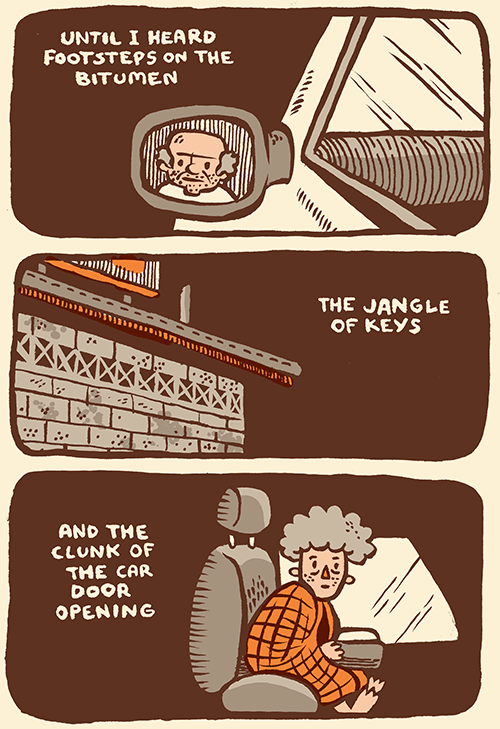
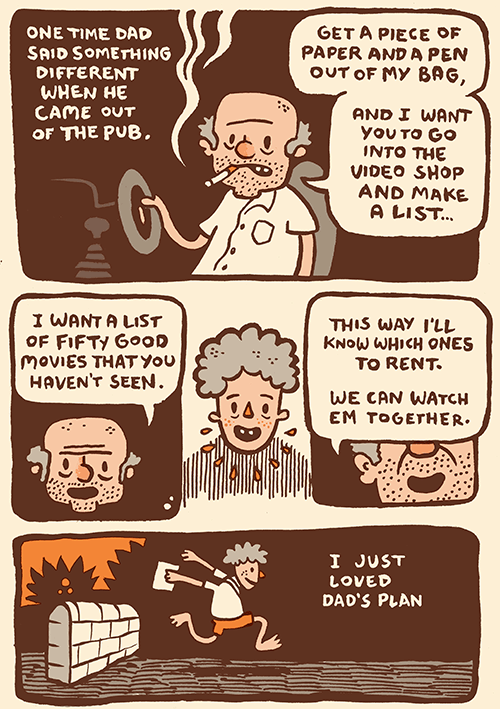
Im gonna shill for Marie Kondo again but this is why I find her books (yes, books, the TV show is fun but ultimately misses a lot of the core ideas) so good.
A lot of home org advice fully misses this aspect. Kondo not only acknowledges it, but leans into it. And ultimately this helps motivste me to keep my space tidy - it’s really hard to me to keep on the nebulous goal of self-care, but much easier to get up and put things away if I envision my salt and pepper grinders as like, retail workers who are now standing in an empty shop (my dining table) and just wanna go home (the spice rack where they live).
Normie tidying process: that heater should be put away for summer! I mean, I’m not gonna need it
Me: well it’s just chilling and also I can’t be arsed.
Kondo: that heater has done a good job keeping you warm over winter and now it should get to go have a rest in the cupboard
Me: !! Sabbatical for my heater!! Thank you for your service sir and have a very nice break!
just saw a tiktok or something where the person was saying they did this and they were on a hike and they were like “i managed to get myself to go on this hike because i promised my boots we would go” and its like. OH YEAH. THAT.
I almost got backed over by a Tesla the other night while walking the dogs; any other car made in the past 10 years has basic sensors that would have "seen" me easily
This was never going to work, and one of his many scams was "pre-selling" it to his fanboys, just collecting money for nothing.
Tesla CEO Elon Musk has finally said the quiet part out loud: he's worried that the vast majority of Tesla vehicles currently on the road won't be able to actually drive themselves after all, even if buyers paid extra for hardware that he claimed at the time would allow them to do just that.
...
Translation: all the times Tesla has vowed that all of its vehicles would soon be capable of fully driving themselves may have been a convenient act of salesmanship that ultimately turned out not to be true.
The good news is that existing customers who shelled out $8,000 for the Full Self-Driving package would get an upgrade "for free," Musk promised during the call. "And we have designed the system to be upgradable, so it’s really just sort of switch out the computer thing — the cameras are capable."
narrator: there was no free upgrade, which didn't matter as the upgrade didn't provide FSD either.
I know I'm pessimistic about the technology generally, but my pessismism isn't required to understand that Elon's "camera only" (no LiDAR) approach can't possibly work.
I think it’s so funny how we bred JOBS into dogs. I have two shih tzus and they were bred to be lap dogs. All they care about is looking cute and cuddling with people. Meanwhile my grandma has a border collie and that dog needs to feel so useful all the time, he acts like he will pass away if he doesn’t have a job to do constantly
On one hand this is extremely fucking funny, but on the other hand, it really boggles my mind how many people punish their dogs for just… doing the thing they were bred to do.
Your husky isn’t “hyperactive”, it’s bred to pull sleds for 8 hours straight and you have it in a 400 sq ft yard.
Your English sheepdog isn’t “pushy”, it’s bred to herd sheep, and you have neither to space nor the herd to allow it.
Your terrier isn’t “nippy”, it’s bred to kill rats and your hamster looks a hell of a lot like one.
Your Catahoula isn’t “mean to animals”, it’s bred to hunt any and all animals smaller than it, and you didn’t acclimate it to your cat.
Your Lhasa Apso isn’t “yappy”, it’s bred to bark at any tiny noise and alert watchmen to intruders
Like Jesus Christ, if you can’t provide an environment where your dog can’t fulfill its literal life purpose, maybe?? Don’t get that dog??? And if you do, maybe know the breed characteristics so you can redirect those traits into more constructive outlets????
Both your most common doodle’s parts (labra and golden) want to hunt and retrieve water birds so the best suggestion I can give y'all is congratulations on your new duck hunting hobby.
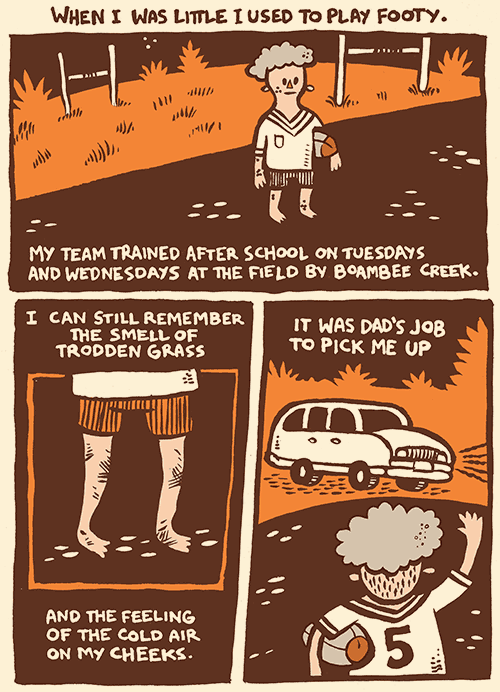
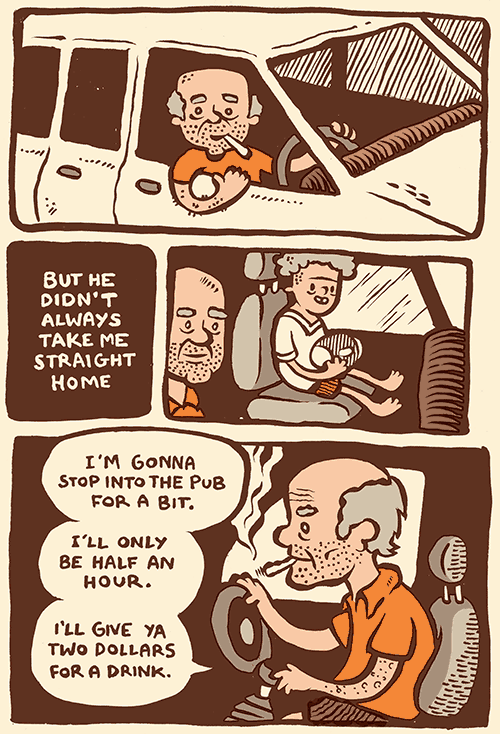
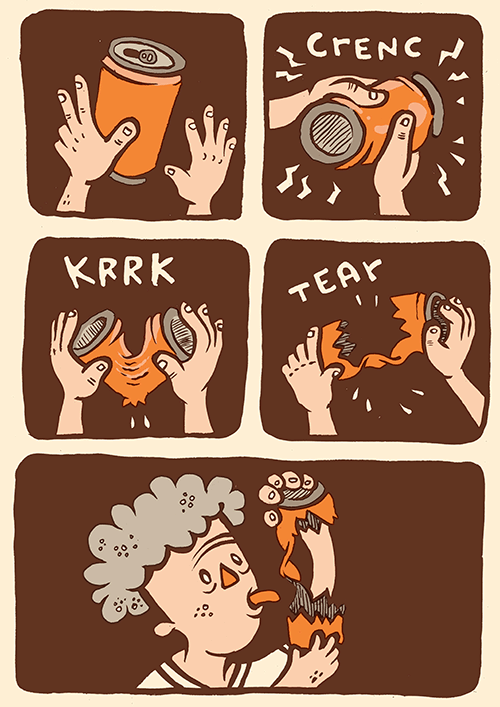
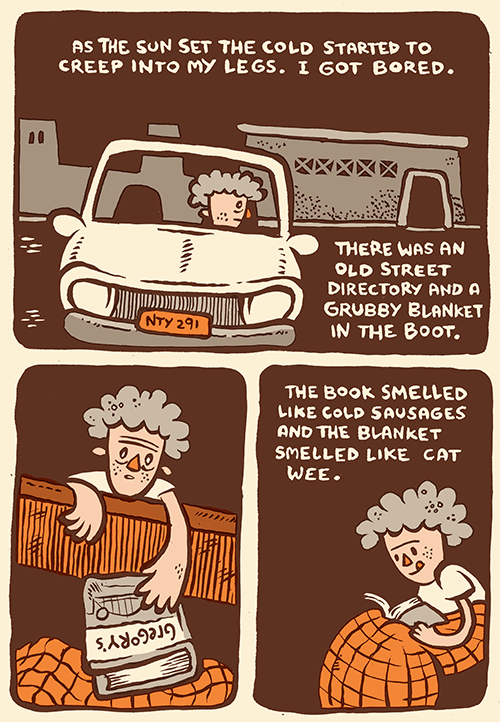
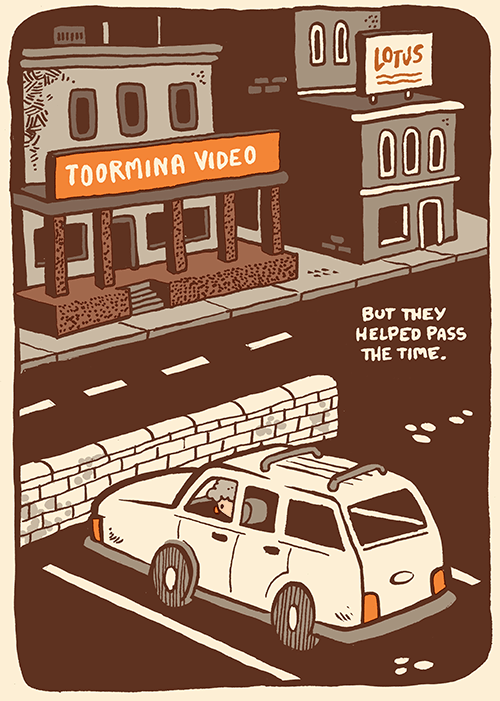
By popular request, I have now tried a “happy” comic. A new character is also introduced. But I don’t know yet if this one will appear again.
It was a lot of fun to draw this comic, but I think the heartbreaking stories are more my style
:’)
By Bob Rethemeyer - The photo was made by Bob Rethemeyer in November 2004 for an article on www.swtpcemu.com . The article and photos may be reused for any purpose without restrictions. The TVT photographs are in the public domain. Article Link, Public Domain, Link
Sorta unrelatedly, y'all know the algorithm crows use to tell each other where they stored food, has real applications in half a dozen unrelated scientific fields?
Ever needed to hear about mad dad birds with enormous feet? Try THESE on for size:
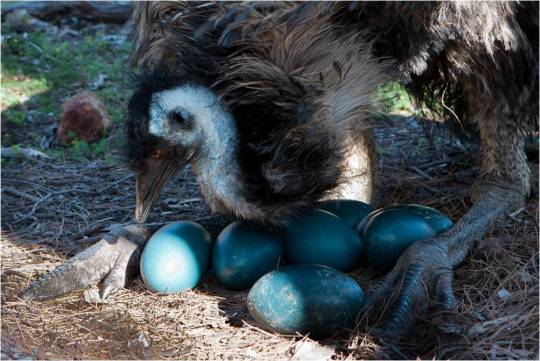
What’s that you say? These are clearly the feet of a dinosaur, not a bird? WHY NOT BOTH?
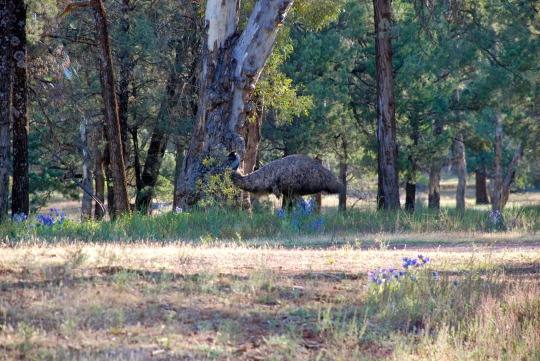
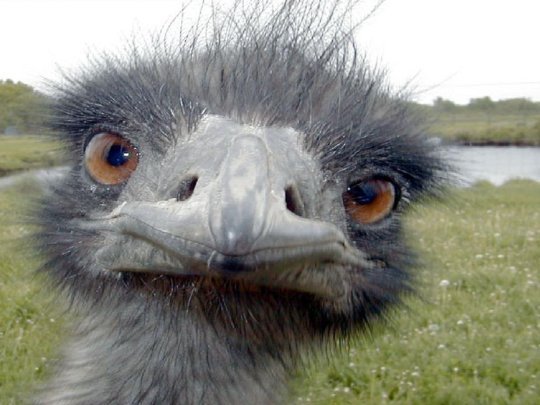
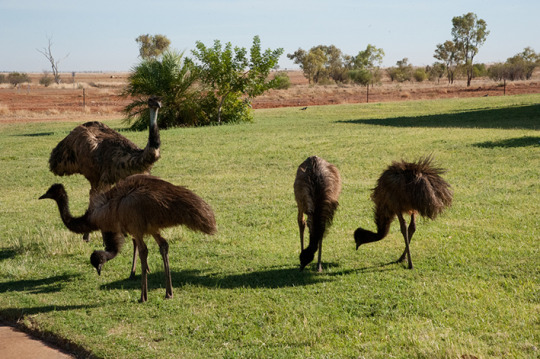
This is Australia’s very own dinosaur, the second-largest bird in the world, the emu. Say hi!
They roam around Australia making ‘wonk-wonk’ noises under their breath and glaring at everything. And the dads take care of the babies! They sit on the eggs…
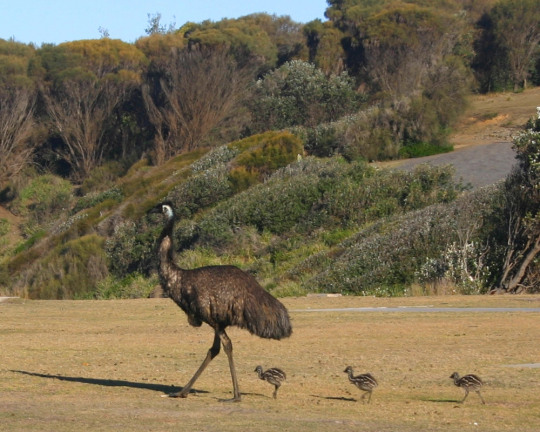
They look after the tiny stripey adorable things….
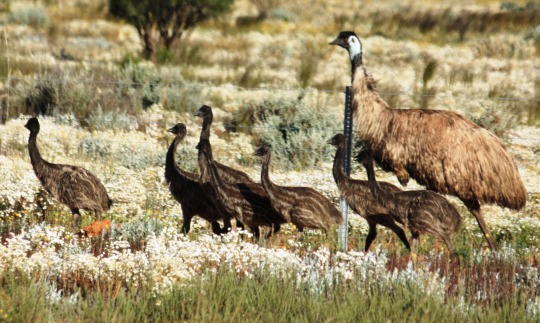
They look after the less tiny less adorable things…
And they even look after the great big menacing things that are almost as big as they are.
But here’s the catch. All emus look pretty much alike. Especially when you are a tiny stripey adorable thing. All you can see of your dad is is great big dinosaur feet (see picture #1). So there is one very unrealistic thing about all the adorable terrifying dinosaur family photos above:
I have never seen an emu family in the wild where all the babies are the same size.
Here is the reason!
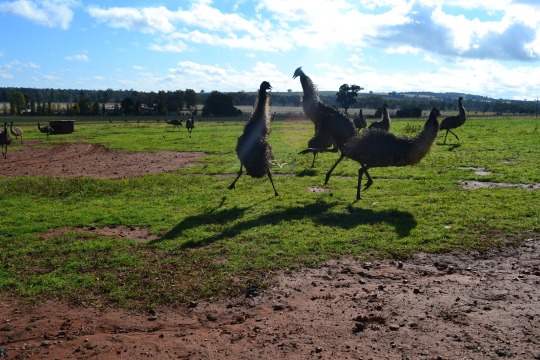
Emu dad and his emu babies are roaming about wonking and glaring at everyone. Suddenly emu dad sees another emu dad! A threat!
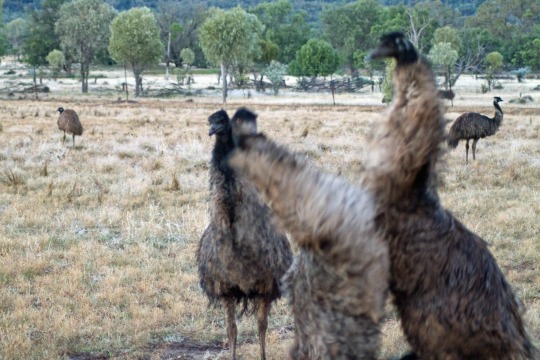
Emu dads do some display threats with dancing and bouncing and fluffing and… look, it’s very serious business, okay?
If this does not work to see off one emu they might progress to actual fighting.
Oops, sorry, you wanted the dignified version. Here, have some ART:
MAGNIFICENT.
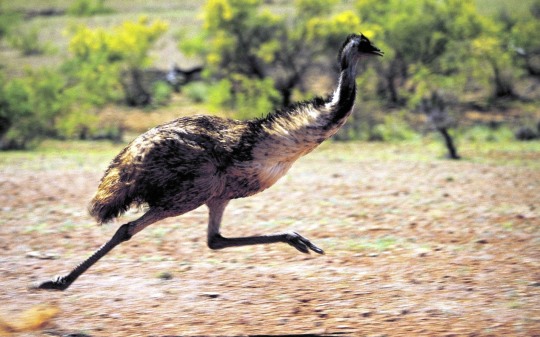
Either way, this encounter will end up with one or both adult emus zooming away as fast as he can run. This is very fast.
This is the other thing they do besides wonking and glaring, by the way. They run. Fear the running emu.
Anyway, this leaves all the tiny and medium-sized and semi-large stripey things milling around making confused tiny “cheep? wonk?” noises and basically just following whichever pair of large feet they can find.
HI DAD
And so mostly when you see a male emu with a gaggle of youngsters at heel, they are all different sizes. Who knows whose they are? Not him! But he’s going to look after them anyway.
The Domain Name System (DNS) is a major functional component of the modern Internet. We rely on it for just about everything! It’s responsible for translating human-friendly domain names into numerical IP addresses that get traffic where it needs to go. At the heart of the system are the top-level domains (TLDs)—these sit atop the whole domain name hierarchy.
You might think these TLDs are largely immutable—rock solid objects that seldom change. That’s mostly true, but the problem is that these TLDs are sometimes linked to real-world concepts that are changeable. Like the political status of various countries! Then, things get altogether more complex. The .io top level domain is the latest example of that.
A Brief History
ICANN is the organization in charge of TLDs.
Before we get into the current drama, we should explain some background around top level domains. Basically, as the Internet started to grow out of its early nascent form, there was a need to implement a proper structured naming system for online entities. In the mid-1980s, the Internet Assigned Numbers Authority (IANA) introduced a set of original top level domains to categorize domain names. These were divided into two main types—generic top-level domains, and country code top-level domains. The generic TLDs are the ones we all know and love—.com, .org, .net, .edu, .gov, and .mil. The country codes, though, were more complex.
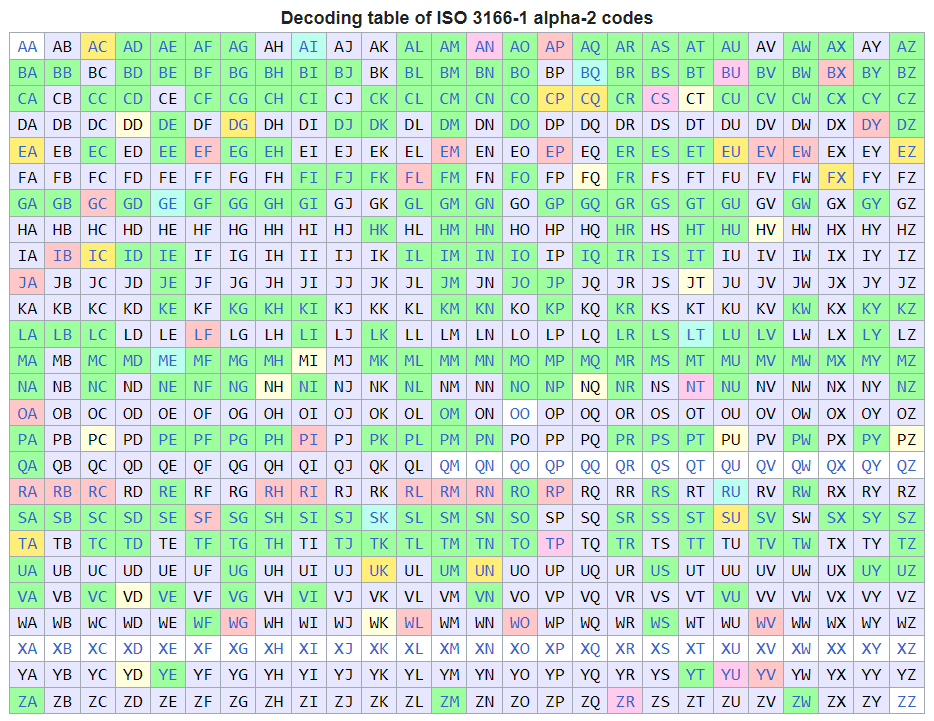
Initially, the country codes were based around the ISO 3166-1 alpha-2 standard—two letter codes to represent all necessary countries. These were, by and large, straightforward—the United Kingdom got .uk, Germany got .de, the United States got .us, and Japan got .jp.
Eventually, management of TLDs was passed from IANA to a new organization called ICANN—Internet Corporation for Assigned Names and Numbers. Over time, ICANN has seen fit to add more TLDs to the official list. That’s why today, you can register a domain with a .biz, .info, or .name registration. Or .horse, .Dad, .Foo, or so many others besides.
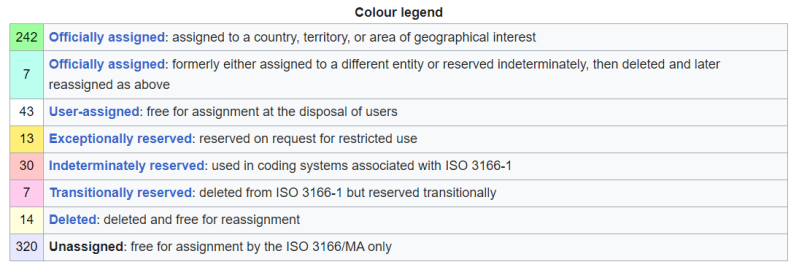
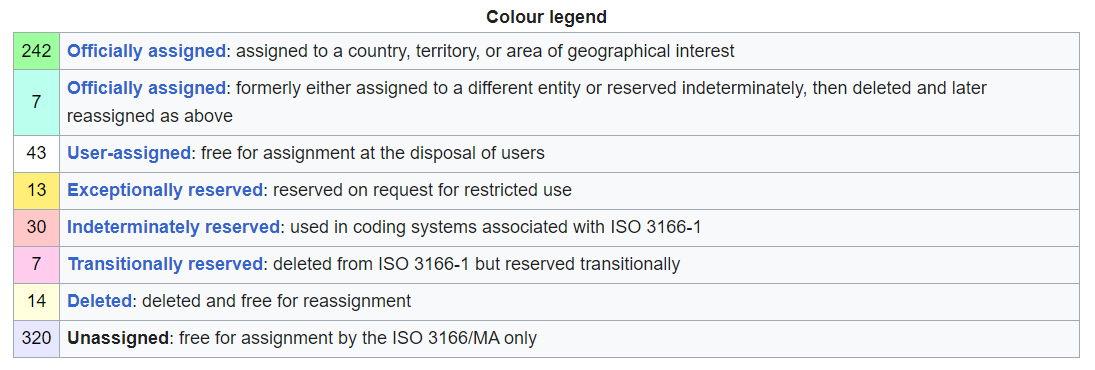
Wikipedia maintains an interactive decoding table that covers the full ISO 3166-1 alpha-2 code space, as used to designate ccTLDs. Credit: Wikipedia
What’s With .io?
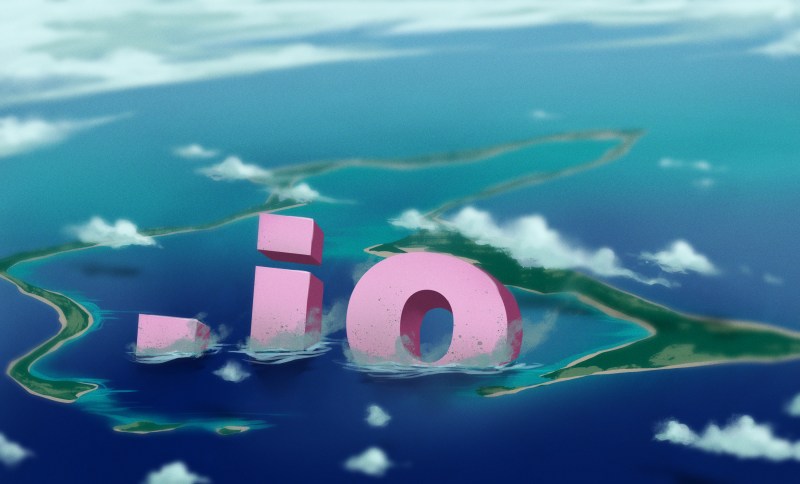
The official logo of the .io ccTLD. The Internet Computer Bureau Ltd. is the registry organization in charge of it.
Over the past 20 years or so, the .io domain has become particularly popular with the tech set—the initialism recalls the idea of input/output. Thus, you have websites like Github.io or Hackaday.io using a country-code TLD for vanity purposes. It’s pretty popular in the tech world.
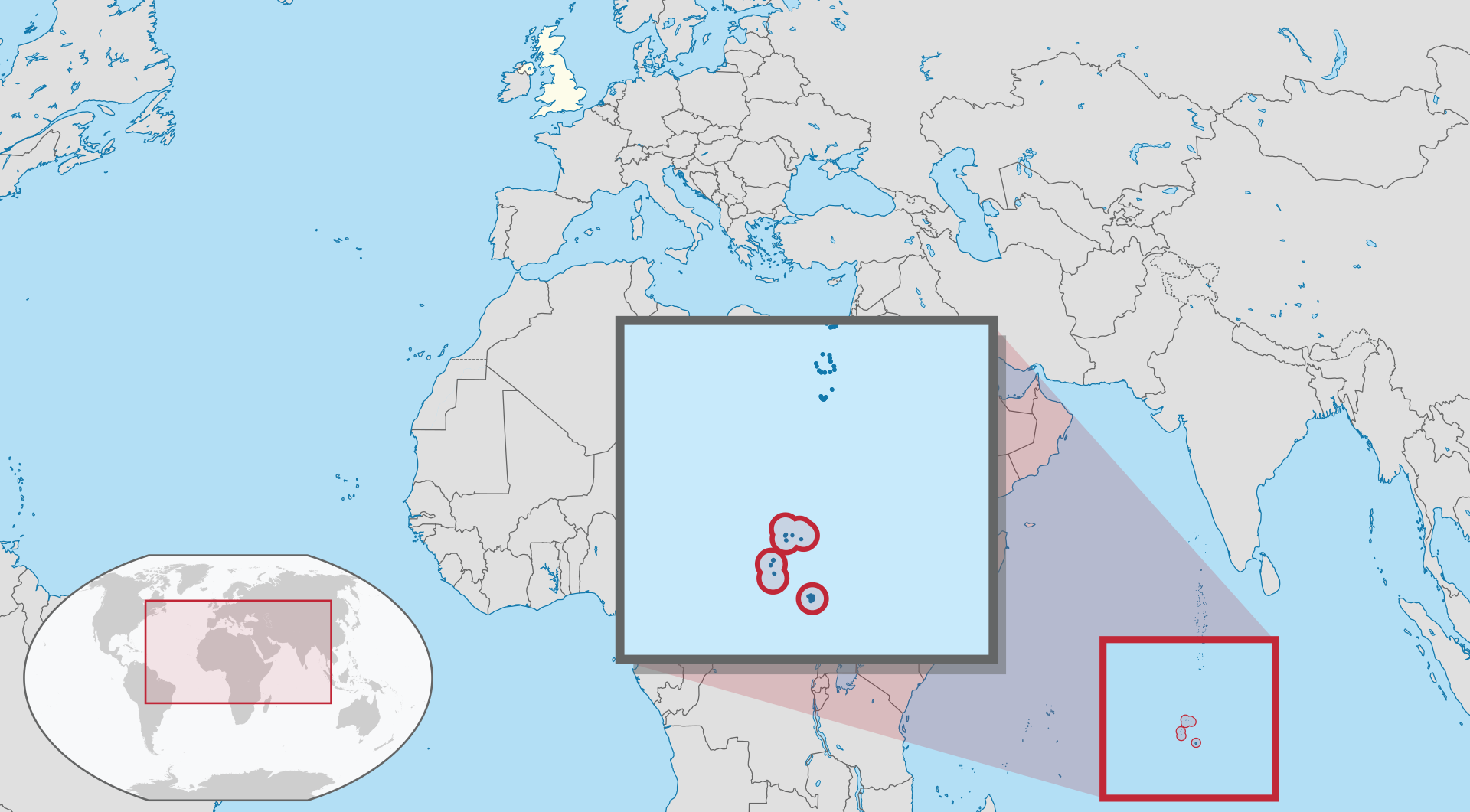
This was never supposed to be the case, however. The domain was originally designated for the British Indian Ocean Territory, all the way back in 1997. This is a small overseas territory of the United Kingdom, which occupies a collection of islands of the Chagos Archipelago. Total landmass of the territory is just 60 square kilometers. The largest island is Diego Garcia, which plays host to a military facility belonging to the UK and the United States. Prior to their removal by British authorities in 1968, the island played host to a population of locals known as Chagossians.
The flag of the British Indian Ocean Territory. Not even kidding.
The territory has been the subject of some controversy, often concerning the Chagossians and their wish to return to the land. More recently, the Mauritian government has made demands for the British government to relinquish the islands. The East African nation considers that the islands should have been handed back when Mauritius gained independence in 1968.
Recent negotiations have brought the matter to a head. On October 3, the British and Mauritius governments came to an agreement that the UK would cede sovereignty over the islands, and that they would hence become part of Mauritius. The British Indian Ocean Territory would functionally cease to exist, though the UK would maintain a 99-year lease over Diego Garcia and continue to maintain the military facility there.
The key problem? With the British Indian Ocean Territory no longer in existence, it would thus no longer be eligible for a country-code TLD. According to IANA, ccTLDs are based on the ISO 3166-1 standard. When a country ceases to exist, it is removed from the standard, and thus, the ccTLD is supposed to be retired in turn. IANA states protocol is to notify the manager of the ccTLD and remove it after five years by default. Managers can ask for an extension, limited to another five years for a total of ten years maximum. Alternatively, a ccTLD manager may allow the domain to be retired early at their own discretion.
However, as per The Register, the situation is more complex. The outlet spoke to ICANN, which is the organization actually in charge of declaring valid TLDs. A spokesperson provided the following comment:
ICANN relies on the ISO 3166-1 standard to make determinations on what is an eligible country-code top-level domain. Currently, the standard lists the British Indian Ocean Territory as ‘IO’. Assuming the standard changes to reflect this recent development, there are multiple potential outcomes depending on the nature of the change.
One such change may involve ensuring there is an operational nexus with Mauritius to meet certain policy requirements. Should ‘IO’ no longer be retained as a coding for this territory, it would trigger a 5-year retirement process described at [the IANA website], during which time registrants may need to migrate to a successor code or an alternate location.
We cannot comment on what the ISO 3166 Maintenance Agency may or may not do in response to this development. It is worth noting that the ISO 3166-1 standard is not just used for domain names, but many other applications. The need to modify or retain the ‘IO’ encoding may be informed by needs associated with those other purposes, such as for Customs, passports, and banking applications.
The Chagos Archipelago is, genuinely, a long way from everywhere. Credit: TUBS, CC BY-SA 3.0
Basically, ICANN passed the buck, putting the problem at the feet of the International Standards Organization which maintains ISO 3166-1. If the ISO standard maintains the IO designation for some reason, it appears that ICANN would probably follow suit. If ISO drops it for some reason, it could be retired as a ccTLD.
The Register notes that the .io record in ISO 3166-1 has not changed since a minor update in 2018. Any modification by ISO would be unlikely before the treaty between the UK and Mauritius is ratified in 2025. At that point, the five year clock could start ticking.
However, history is a great educator in this regard. There’s another grand example of a country that functionally ceased to exist. In 1991, the Soviet Union was no longer a going concern. And yet, the .su designation remains “exceptionally reserved” in the ISO 3166-1 standard at the request of the Foundation for Internet Development. However, the entry notes it was “removed from ISO 3166-1 in 1992” when the USSR broke up into its constituent states. Those states were all given their own country codes, except for Ukraine and Belarus, which had already entered ISO 3166 before this point.
.su domains are still very much a going concern, 33 years after the fall of the Soviet Union.
But can you still get a .su domain? Well, sure! Netim.com will happily register one for you. A number of websites still use the TLD, like this one, and it has reportedly become a popular TLD for cybercriminal activity. The current registry is the Russian Institute for Public Networks, and .su domains persist despite efforts by ICANN to end its use in 2007.
Given .io is so incredibly popular, it’s unlikely to disappear just because of some geopolitical changes. Even if it were to be designated for retirement, it would probably stick around for another five to ten years based on existing regulations. More likely, though, special effort will be made to officially reserve .io for continued use. Heck, even if ISO drops it, it could become a regular general TLD instead. If .pizza can be a domain, surely .io can be as well.
Long story short? There are questions around the future of .io, but nothing’s been decided yet. Expect vested interests to make sure it sticks around for the foreseeable future.
GE Appliances sells this Access Kit, which contains over 450 transparent stickers featuring Braille and raised symbols. The idea is to make it easier to retrofit existing appliances for households with blind or low-vision members.
"Designed to represent the 80 most common settings across thousands of appliances, the durable stickers are placed directly over existing controls, allowing appliance buttons, knobs and other functions to be identifiable by touch. They are created to be easy to feel and differentiate with a thin and angular tactile design. They are also transparent so the original text can still be viewed."
GE uncovered the need for the kit while conducting customer research, which shows the importance of studying what end users actually need: "Our research showed that a lot of blind and low-vision consumers are devising their own complex systems just to navigate the settings on their appliances, making simple household tasks incredibly difficult," said GE industrial designer Chris Bissig, who leads a team of both industrial and user interface designers in the Concept & Brand studio.
i was wondering why this entire thing was a giant screenshot, so i went back to find the original post and it looks like it’s impossible to reblog now, so have this giant screenshot instead!
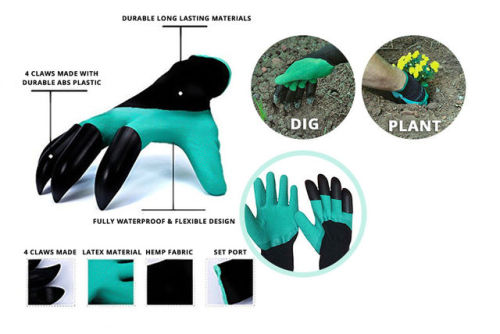
For guitarists it's the Guitar Pick Pocket, for smokers, the Zippo Pocket. The rest of us colloquially refer to the fifth pocket in a pair of jeans as the coin pocket, and in an age of declining cash transactions, the pocket no longer has much of a use.
Candy company Werther's Originals is running a promo where they're raffling off these pairs of jeans. From the front and back they look normal…
…but they're stitched with no less than 30 coin pockets, running up and down the legs. The idea being that, in advance of Halloween, they're the perfect stash size for the company's candies.
As silly as the idea is, I can't help but think someone with some specialty job could actually come up with a good use for these.
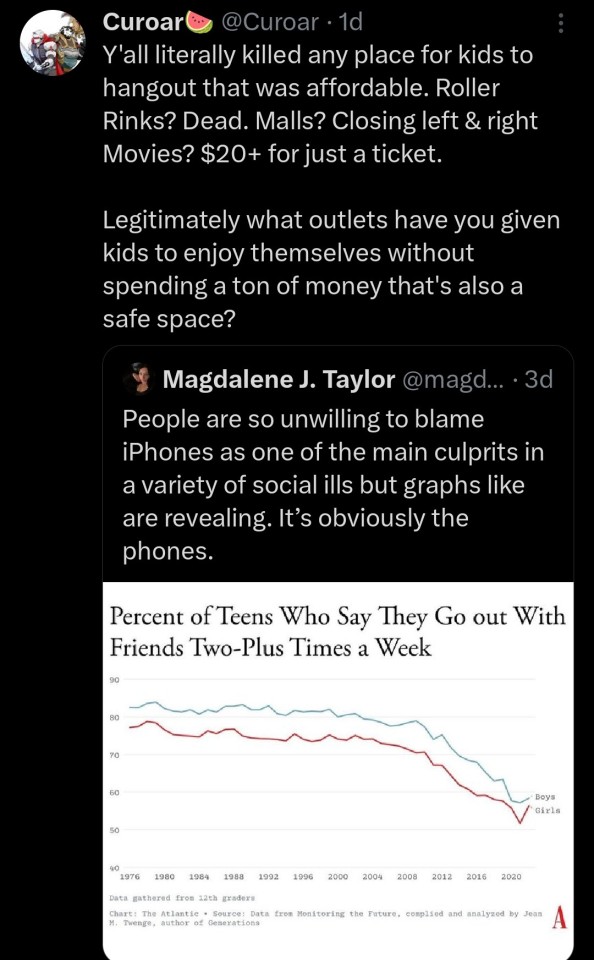
Something I think has to be considered here is that “hanging out with your friends” is, like most things kids do, a contingent activity. It requires parents to allow it.
And increasingly parents are absolutely unwilling to let their kids out of their sight. Everything must be managed or supervised.
I’m an older millennial. My niece and nephew are ten and seven respectively. They live in the same housing development my brother and I grew up in. Lots of kids their own age there, and woodland with town-maintained paths to wander in.
When I was seven I thought nothing of telling my mom “Mom, I’m going out” and getting on my bike and going wherever. Maybe my friend Steve was home. Maybe Priscilla was climbing up that one cool half-fallen tree in the forest. Maybe I’d just pile rocks in the creek.
Fast forward three and a half decades. My brother was complaining to me the other day that my niece wants to hang out with one of her friends all the time and he and said friends parents just don’t have time to arrange it all. It turns out her friend lives in the same neighborhood, a quarter mile away.
And I’m like “Why are you arranging anything? Why aren’t they capable of coming and going as they please? She can get on her bike and ride there.”
He looked at me like I’d proposed throwing his precious angel into a shark tank. Let her wander alone? Unsupervised? Just… out there?
It also turns out, by the way, that my niece is a poor cyclist because she isn’t allowed out on her bike without my brother or his wife with her.
My brother and his wife are not unique in this. I have never, ever had a conversation with parents in my age cohort who aren’t raising their kids far more restrictively than we ourselves were raised. Everything is monitored. You call them out on it and the near-universal response is “It just isn’t safe out there.”
Now, my niece and nephew are a bit younger than teens… but with teens it gets even worse, because then their parents are still paranoid about what could happen to them, but also suspicious about what their kids will use their new teen bodies and brains to do to THEMSELVES or to others.
I wonder what percentage of the parents in that survey would be willing to, if their kids asked for the car keys to go hang out with their friends, would hand them over without a down-to-the-second itinerary, a precise list of who will be present, and a stern admonishment that they can track the car on GPS so watch out, mister. I wonder that very much.
Teens have limited agency. They have no money and their lives are controlled. You want to know why they’re not doing something? Probably because their parents don’t want it done.
And all this is without even getting into “maybe they’re hanging out online. Why is being on a group video call in Discord talking about nothing in particular for three hours considered more problematic than hanging out at the mall talking about nothing in particular for three hours?”
(Both my local malls ban unescorted teens, by the way.)


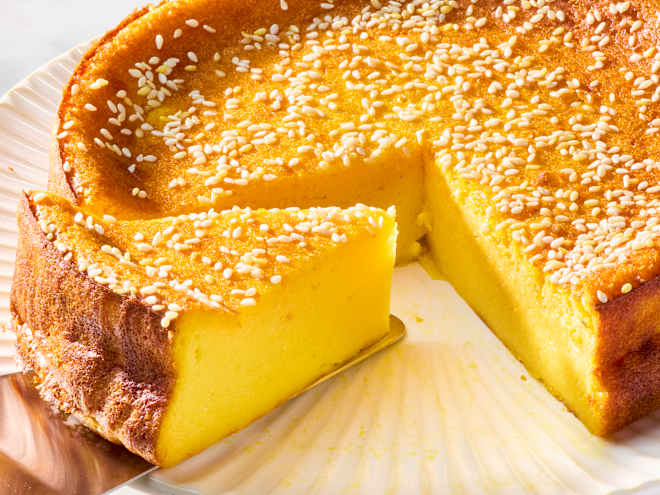 Unlike any other pumpkin dessert.
READ MORE...
Unlike any other pumpkin dessert.
READ MORE...