Shared posts
21 Jul 22:54
If you're not looking for it, you probably won't see it
In a new study, researchers have found that even expert searchers, operating in their domain of expertise, are vulnerable to inattentional blindness.
Cary Renquist likes this
21 Jul 22:53


Why Sailfish is better as a modern OS? Here is a comparison
by James (Sepehr Noori)
Ahoy sailors!
Ever since Sailfish is known to us as an operating system not an actual “fish”, there were a lot of demos on YouTube; many people were literally amazed by the work of Finnish, some went: “This’ll be a failure like MeeGo-Harmattan” Which in fact wasn’t a failure and you’ll only know when you own a Nokia N9/50!
On one hand the truth is, that “if” MeeGo-Harmattan had a fair bit of support, none of this would have happened to it and we didn’t know what’s Jolla and Sailfish at the moment, on the other hand; if Nokia had supported Harmattan and we were satisfied enough, we probably were spending our time playing with Windows Phone UI as we were convinced that MeeGo is dead, and were using an old school back button! So thankfully, Nokia sort of gave away an unwanted opportunity for the creation of Sailfish!
So anyhow, Sailfish was born quite a while ago and we say it’s the most unique and practical yet beautiful operating system ever made for a smartphone. Yes it’s quite an ambition to say that in front of iOS, Android and quite amazingly WindowsPhone fans, I say quite amazingly because I recently found some real so called “fan-boys” around WP! But to be honest, I like ambition, because I always have reasons for my ambitiousness.
While we’re still on topic, I want to say that gesture based operating systems are catching up lately and even the old ones are bringing gesture based updates such as iOS, even Android applications like the new Viber, or Hangouts or even Facebook (Beta) are involved in the gesture war and quite frankly, it started with WebOS from Palm but defined cleanly by Harmattan on the Nokia N9.
So, back to the ambition, today we’re going to compare Sailfish to as many operating systems as we can starting with the main rivals which has roughly the same age as Sailfish.
Sailfish OS vs. Ubuntu touch
Ubuntu touch vs Sailfish (Done by Ali Fakhruddin)
Sailfish over Ubuntu:
- More user friendly UI
- More lightweight than Ubuntu on slower devices
- Much more applications available before launch
- More simple to use
- True multitasking
Ubuntu over Sailfish
- Some individuals like the complex of the UI
- In some design queues it’s more modern looking than others
- In many ways, it’s more organized
- It’s more known to Linux enthusiasts due to its name
Ubuntu Touch is a newly born mobile OS from Ubuntu which is entirely based on pure Linux and has a very eve-catching and beautiful user experience and interface but, there’s a but! Whilst Ubuntu is very beautiful and gorgeous, it reminds me of Android in terms of heaviness.
Forgive me to say this, but nowadays it’s a bad habit for manufacturers and also the people using smartphones to be obsessed with the number of cores, the power of their processors and things like this when their software (Android in particular) has lack of lightness, as people with sense of humor call it “Lagdroid” on these days! So from the demos that I saw, Ubuntu was running on a fairly powerful Galaxy Nexus with a 1.2 GHz Dual-core processor and a PowerVR-540 graphical processor which is powerful enough to run Android quite smoothly, and Ubuntu was a bit laggy during some gestures.
Well everyone might say Ubuntu is still in early stage but I have to say although everyone is right, we must remember that Sailfish was some day in its early stage as well and it was always running on a 3 year old N950 before the Jolla phone was shown to the public and it was fairly smooth in terms of UI.
I don’t want to sound boring because this is a relatively long article but there are more to it. While the colors and shape of icons and the overall design of Ubuntu touch is very dramatic and great, there are things like practicality and comfort which have been sacrificed during the design. If you hold a big phone like Galaxy nexus or an even bigger Galaxy S4 in your hands, you wouldn’t not want to move the phone in your hand in order to reach the thing you desire to touch while you’re walking or even sitting around working with your phone! This impracticalness is all over Ubuntu’s home screen. Like Android, you have to reach the top if you want the notification center to pop down or maybe fiddle with some settings. Another gesture issue is that swiping from the left does NOT do the same thing as swiping from the right. While having more abilities with gestures is very good, it has its own drawbacks and down sides which as I said before, they sacrifice the practicality of the phone, if you are a left hander, swiping from the left is obviously easier for you and doing that in Ubuntu is getting into the application drawer or home. But if you are a right hander and you are used to work with your phone with your right hand, you have to reach the left side of the phone with your right hand which is honestly not so comfortable or easy on big-screened phones, in order to get the app drawer in sight.
This video is a great example of some slight lags and using all the edges for different matters which makes the OS less practical for people with smaller hands, or people who don’t want to use their phone with two hands all the time. (Source: Engadget.com)
On Sailfish thou, the story is rather different. The user is able to hold his finger in just the middle of the screen as the OS is so much focused on the comfort of the usage and the UX. As you can see in the demo below the presenter’s thumb is hardly moving to any place on the screen other than using those simple left to right or up to down gestures and the haptic feedback with sound, leaves the user so confident that there’s no need to look at the screen.
Application-wise I have to say it’s a win for Sailfish again, since Ubuntu is a new platform (As is Sailfish) there are not much apps written for it except HTML5 apps while Sailfish has over 787185 apps only from Android (I know many of them are fart simulators or useless apps since the percentage of low quality apps are a whopping 22%, but since numbers matter in this section…) and as we have seen, the interest around the Sailfish SDK is quite high since there was an application ported to Sailfish only 20 minutes after the beta SDK was released.
Tablet-wise, Ubuntu wins, but only in terms of beauty! Because it looks magnificent on tabs while Sailfish, due to its unique design is better for smaller devices such as phones. Yet I have to say it’s easier to work on a tablet with Sailfish since you don’t need to move your hand a lot in that big screen.
Wrap up the first battle:
I am not actually going to wrap this up and conclude it for our viewers because there might be some points that I have forgot to mention, so I’ll leave the Ubuntu Touch vs. Sailfish OS conclusion to you readers, please leave your opinion in the comment section.
The Second battle goes to Firefox OS vs. Sailfish OS
Firefox vs Sailfish (By Ali Fakhruddin)
To my eyes, Firefox is still not good enough. Yes it does support HTML 5 apps but so does Sailfish and Ubuntu and Tizen and many other mobile operating systems! The UI, is honestly pretty basic and it’s sort of an old fashioned UI which is frankly more than 6 years old since the iPhone was introduced! Isn’t it? It doesn’t support any gestures and it does look like a downgraded budget iOS to replace Symbian in Asia!
To be very frank, I digged a lot about the Firefox OS and honestly I couldn’t find anything interesting about it because if I want an OS for budget devices, there are already many OSes available like Bada from Samsung or the S40 OS from Nokia.
So is there any logical reason here to compare FFOS to Sailfish really?
Okay here is a video of the developer version of Firefox OS for your own decision.
The third battle goes to Tizen vs. Sailfish
Tizen and sailfish are basically relatives from the beginning but they seem like very different and they have gone different ways.
Tizen vs. Sailfish (By Ali Fakhruddin)
Sailfish over Tizen:
- More modern, gesture based UI
- Much, much smoother with a normal hardware
- Has more apps due to the Android compatibility layer
- I personally still think it’s more open than Tizen
- No buttons needed to run the OS
- It doesn’t lag like Tizen does! (It is really laggy at least now at this stage of development!)
Tizen over Sailfish:
- Two very big companies (Samsung and Intel) are behind it
- It has more history which says it’s basically older and more time is spent on its development
It’s been a long time that Samsung has taken over the MeeGo project since Nokia has dropped it, and since then, it’s being developed by Samsung but what we have seen from it, other that technical and professional stuff is some videos from a developer device from Samsung which looks relatively like a boxy Galaxy S3. The UI apparently is something similar to the TouchWiz that Samsung installs on their Android devices (Which I don’t think they yet realized it lags A LOT!) and the icons are Firefox OS lookalike. There’s a status bar like Android that you drag from the top of the screen as well. It is still a mystery! Are they going to use their TouchWiz in Tizen as well when they finish it? At least that’s what it shows everywhere.
Till now, I don’t think Tizen has anything to win the battle at least at this very moment. Because despite the youngness of Sailfish, it looks more mature and indeed more innovative than Tizen in terms of Application compatibilities and user interface point of view. What’s underneath these OSes are also make them apart because yet again, Sailfish is more lightweight and less laggy on different hardware.
Although in this video, CNET mentions that this is an early stage demo and many things might change about the home screen later on.
The fourth battle: Sailfish vs. BB10
BB10 and Sailfish are also relatives and very similar indeed. Both are Qt supportive, both are multitasking brothers, and both support some heavy gesture inputs.
BB10 OS vs. Sailfish (By Ali Fakhruddin)
Sailfish over BB10:
- More simple gestures
- Less confusing
- More organized
- More user customizable
- Slightly more innovative design
- Interactive multitasking
- More open than BB10
- BB10 apps can be easily ported to Sailfish
BB10 over Sailfish:
- More focused on messaging
- Being a bit older and having more native apps in comparison
- The best keyboard ever! (Not sure about Sailfish keyboard yet since we haven’t seen anything)
It is very confusing comparing these two really, there are many similarities. Both have card based multitasking and the gestures are very similar. While there are many similarities, there’s another side which reveals the differences to our eyes.
Gestures are different in BB10, they are confusing at first until the user gets used to them after using the phone for a while. The multitasking is wide and real but there’s no interaction with the app when it’s minimized, and that is getting quite old now.
The app drawer looks iPhoney to me but the animations and transitions are pretty.
But still the big problem with the gestures on BB10 is that they change their behavior in different situations, sometimes they are used for peaking, sometimes minimizing sometimes going back, and for a user that wants speed, it can get confusing at a time since there’s also no haptic feedbacks or sounds as well.
So while the BB10 is very modern looking and fun to use, it’s not very practical in everyday use. I was before! But now that Sailfish has redefined the everyday practicality for mobile operating systems, not anymore…
To conclude this competition between two very similar OS, I have to say that BB10 is a brilliant OS with a modern looking UI and a great user experience, but Sailfish wins again because it does everything that BB10 does, but it does them better! Different opinion? Please leave it in the comment section, so we can discuss.
The fifth battle: back to the classic era!
Sailfish vs. Android
Speaking of Android, there’s Google, one of the richest and most capable IT companies in the world behind it and well, that’s not exactly a weak point, is it?
Android vs Sailfish (By Ali Fakhruddin)
Let’s see…
Sailfish over Android:
- Modern UI [with no lag!]
- True multitasking with no pause on the whilst minimized
- More user friendly and ease of usage
- Having many of the Android apps available for it + Sailfish apps
- More open and truly Linux [not only Linux based]
- Usage of simple gestures everywhere
- No buttons needed to run the OS
- A LOT more lightweight
Android over Sailfish:
- Many native apps already available for it
- More customizable via custom ROMs [At the moment]
- Wise choice of hardware for it from different companies
- More known to the public
In terms of the OS itself, since Sailfish is a new born OS and it’s here to compete; it has a package of awesomeness to compete! Android on the other hand is competing well and Google updates it once in a while with some cool features but the problem is that even they have tried a lot to change the behavior and the look of it in their various updates, it is still the same if you don’t consider the minor changes, so that is the actual reason of Sailfish being present at the moment.
You see, Android’s base is a bit problematic and old fashioned and very difficult to change because it’s like changing the base of a building when you still want to keep the whole building intact.
It’s complicated to convince android lovers about the fact that Android is quite old and mobile industry needs a big change [and no lag!].
Android is the first generation touch OS style and it’s mostly based on tapping on visible contents but Sailfish is all about gestures and making the life easier by not moving your hand all over the screen. [This part was taken from Vesa-Matti Hartikainen speech in Akademy 2013, with some slight changes]
There’s not much to say but if Android wants to win this competition, it needs a bigger change than the changes they are making to it now.
So Sailfish is holding up quite well in terms of durability and performance in compare to Android.
To conclude this one, I need to say that while Android is a very good OS with many unique facilities, in compare to Sailfish is not a very sophisticated OS to be honest because if you are an Android user, you’ll find the OS a little bit outdated after a while of using it, and I say that because I actually have an Android device as well. The RAM gets full easily and everything goes very slowly especially if you have your 3G or LTE connected continuously and that is not exactly an up-to-date experience. So in my personal point of view, Sailfish wins this one by a mile juts because it’s light and agile.
As Antti Saarino, The chairman of Jolla says: “Future is not about hardware. It’s about software.”
And that pretty much concludes my point saying Android has a weak software and manufacturers are trying to build a hardware to hide the weakness, but they have failed.
The battle with the beginner of this game
iOS vs. Sailfish
As you know, iOS was the innovation of mobile industry with its all new user interface which we’ve never seen ever, those animations and transitions were simply amazing when it first came out. After a while, the other operating systems started to be like it, which is not a bad thing and it doesn’t mean stealing but it means competing. It has been 7 years since the first iPhone OS was introduced that after a while they decided to name it iOS since it wasn’t only for iPhones anymore and this year, Apple finally decided to change the entire appearance of the OS, at least that’s what they said at first, so came the date of the introduction to the new iOS 7 with newly designed icons, new transition effects and new graphic designs with so many new features but it bugs you down when you see the home button is still present on Apple iPhones while the gestures are already in there as well.
iOS vs. Sailfish (By Ali Fakhruddin)
Let’s see what’s what!
Sailfish over iOS:
- Fully gesture based with no home button
- Fully open source, to allow the user do whatever they want
- More up-to-date and modern UI
- True multitasking with no pausing the app in the background
iOS over Sailfish:
- More users at the moment
- Being the starter of this game
- Vast amount of native apps available for it
- Great support of Apple company behind it
- Lots of developers are interested in developing apps for iOS
Overall, iOS has lots of advantages in the mobile world and the most important one is the loyal customers, people who say Apple or nothing else. But iOS has lost its specialness and it isn’t as hot as before. Apple made an OS that was repeating its design for nearly 7 years and still looked fresh in many ways with some additions, but now it’s really time to move forward by not just making the icons look cartoony, but changing the whole story and language of the system! I know it’s very difficult to change everything and make the previous apps work flawlessly with the system but at some point there has to be a solution for this issue. Personally, I know many people who have their iPhones and when they saw Jolla, they made a pre order and they want to move forward already.
iOS made benchmarks and was always the head of changes in the past while now it became a follower. it needs some big innovations that makes even the haters go WOW!
WindowsPhone vs. Sailfish
There is only one quite modern OS left in this comparison that I almost forgot to mention! It’s the OS that made itself a reason adorable in some ways which I’m going to explain.
Let’s not make it boring to read! This OS made Nokia to dump their MeeGo and frankly kill it with a pistol! Yes, you must be guessing Windows Phone now! I admit, there are a lot of fan boys and even more haters around this OS nowadays and I give the right to all of them. Personally I both love and hate WP, you ask why?
I love WP because if there wasn’t any WP around, there was no Jolla, no Sailfish and no more ambition in innovation as we see on Sailfish at the moment.
I hate WP because it’s dull and boring and most importantly, it killed our beloved MeeGo Harmattan by its arrival. (I know! MeeGo isn’t dead blah blah blah, but you know what I mean!)
Windows Phone vs Sailfish (By Ali Fakhruddin)
So let’s see what this almost forgotten OS has to compete with?
Sailfish over WP:
- Heavily gesture based UI
- Nor buttons for the back neither home
- Wider support of hardware
- Open source
- Simpler, better and more modern UI
- True multitasking
- Even before the launch it has more apps than WP
- Much more unlimited SDK for developers to play with
WP over Sailfish:
- What?
I’m sorry but, is there any “better” thing that WP has and Sailfish doesn’t have? If you are going to say live tiles, I’ll have to stop you right there because Sailfish multitasking cards are live and being updated every time and they change their appearance time-wise. Can you fiddle with your live tiles on WP? No! They just show you stuff but on Sailfish, you can interact with your tiles (Cards) and fiddle with them however you want.
Conclusion? Win for Sailfish! (Apologies to the offended Windows Phone fan!)
I have to say, Sailfish made some decent battles with these bad boys and from where I’m sitting, it won all of it due to logical reasons I tried to write. I might have been a little bit harsh on some parts but it was fun!
This article was written by a person who uses Android, iOS, MeeGo, Maemo and WP most likely at all time and I really mean it. I don’t want to set myself only on one side and while writing this I thought about every item I wrote and played with the devices available to me a lot to make sure nothing is missed, but if I missed anything, please let me know in the comment section.
I hope you enjoyed reading it and you didn’t get bored because I admit it was too long! Let me know your opinions in the comment section if you’re still reading  And don’t forget to share the article with your friends if you liked it.
Have a great weekend ahead. Sail on…
Special thanks to Ali Fakhruddin for the image editing.
Sepehr Noori (James)
Cary Renquist and -1 others like this
19 Jul 23:14
A Psychedelic Anti-Drug Film From 1971 That Made Drugs Look Pretty Fun
by Rebecca Onion
The Vault is Slate's history blog. Like us on Facebook, follow us on Twitter @slatevault, and find us on Tumblr. Find out more about what this space is all about here.
In this film made by the National Institute of Mental Health in 1971 and meant for use with 8- to 10-year-old students, Alice takes a psychedelic trip through an animated Wonderland.*
Lewis Carroll’s story was a staple of drug culture in the late 1960s and early 1970s. Trying to speak to a young audience, people making anti-drug propaganda repurposed the tale to their own ends.
In a famous example, Jefferson Airplane’s song “White Rabbit”—a celebration of the mind-bending properties of “feeding your head”—was the inspiration for the “anonymous” book Go Ask Alice. This narrative, written in journal form, depicted the downward slide of a supposedly “real” teenage girl who goes from straight-laced goody-two-shoes to drug casualty in record time. Go Ask Alice came out in March 1971—the same year that this movie was produced.
In the beginning of this film, Alice falls into a room full of cigarette machines, medicine cabinets, marijuana leaves, and bongs. She soon has a series of disturbing encounters.
Alice comes upon the Mock Turtle smoking marijuana from a hookah; the King of Hearts, who offers her heroin; and the March Hare, a tweaker who beats his foot on the ground constantly: “You oughta have some pep pills! Uppers! Amphetamines! Speed! You feel super good.”
The Alice character is meant to be the voice of reason, lecturing the creatures: “You live in this beautiful place. It could be wonderland! And all you do is … take drugs!” But the swirling animation is so fun, it’s hard to believe that a young viewer would pay her arguments any mind.
Indeed, the National Archives’ blog Media Matters tracked down a review of the film in a 1972 publication of the National Coordinating Council on Drug Education. The NCCDE wrote that “Curious Alice” was of dubious value in the classroom, noting that viewers “may be intrigued by the fantasy world of drugs” after watching it.
Correction, July 18, 2013: This post originally misidentified the National Institute of Mental Health as the National Institutes of Mental Health.
Cary Renquist and -1 others like this


19 Jul 23:03


Lifehacker Pack for Linux: Our List of the Essential Linux Apps
by Whitson Gordon
With so many flavors of Linux and the awesome apps in their repositories, finding the right app for getting things done can be tough. In our annual Lifehacker Pack for Linux, we’re highlighting the must-have downloads for better productivity, communication, media management, and more.
Cal Issivairus, John Ruschmeyer likes this
19 Jul 20:53


vardaesque: i-am-not-a-peasant: ribbons-of-black: sentimental—...
STOP
i love this a little bit too much
I WANT THEM ALL
the shirts are nice too
I’ll be in my bunk.
Cary Renquist likes this
19 Jul 18:09


Media is not reporting the incredible statement made on Tuesday by former President Jimmy Carter. We should fix that.
Cary Renquist and -1 others like this
19 Jul 17:29

Antoni Tudisco’s Pop Anatomy
by Vanessa Ruiz


I’m loving this incredibly fun and imaginative anatomy by Hamburg based 3D artist, Antoni Tudisco. At a mere 21 years old, Antoni is a completely self taught artist, mastering the entire Adobe Suite and teaching himself 3D illustration. He was one of those kids that would rather draw in class than listen to the teacher—many of us can relate! After graduating from school at 18 he’s been sought out by major companies for his work, including MTV, Coca-Cola, Louis Vuitton, Kellogg’s, and many more.
View all of Antoni Tudisco’s work at antonitudisco.com and Behance!
Cary Renquist, Jennifer.earl and -1 others like this
19 Jul 17:22
Satanists stage same sex marriages at Westboro Baptist matriarch’s grave
by Stephen C. Webster
A group of New Yorkers calling themselves The Satanic Temple paid a visit to what appears to be the grave of the mother of Westboro Baptist Church (WBC) founder Fred Phelps on Sunday, staging two same sex commitment ceremonies atop the tombstone in hopes of confronting the hate group in a manner that’s uniquely offensive to them.
The WBC is well known for their anti-LGBT demonstrations and the slogan “God Hates Fags,” among others. The Satanic Temple said in an advisory (caution: NSFW photos) that its members were angry that the WBC would threaten to protest the funerals of the Boston bombing victims, so they went to Boston hoping for a confrontation that never emerged.
After that, they got to thinking, and apparently uniting two same sex couples at Fred’s mother’s grave was what they settled upon. One unnamed participant also “teabagged” the tombstone — slang for putting one’s testicles on something. This too was documented in high resolution. Raw Story was not able to independently verify if this was indeed the grave of Fred Phelps’ mother.
“The Satanic Temple now believes that Fred Phelps must believe that his mother is now gay, in the afterlife, due to our Pink Mass… And nobody can challenge our right to our beliefs,” a spokesperson said in an advisory.
Neither the WBC nor The Satanic Temple responded to requests for comment. The Satanic Temple has published a map showing the location of the grave and are encouraging others to follow their example and send them photos and video of future ceremonies.
Oddly enough, The Satanic Temple is hoping their stunt will attract attention to an ongoing effort to adopt a highway somewhere in New York state. To those ends, The Satanic Temple has launched an IndieGoGo fundraising page, complete with a very strange video (embedded below) aimed at convincing supporters to donate.
“The Satanic Temple,” the video’s narrator concludes. “Helping others and leaving the world a better place. Now that’s something everyone can get behind.”
For more NSFW photos of the bizarre ritual, click over to metal music blog The Gauntlet.
This video is from YouTube, published June 10, 2013.
——
[Stock photo: An older woman is shocked and terrified," via Shutterstock.]
Cary Renquist likes this
19 Jul 17:13


Richard Feynman on Good, Evil, and the Zen of Science, Plus His Prose Poem for the Glory of Evolution
by Maria Popova
“I . . . a universe of atoms . . . an atom in the universe.”
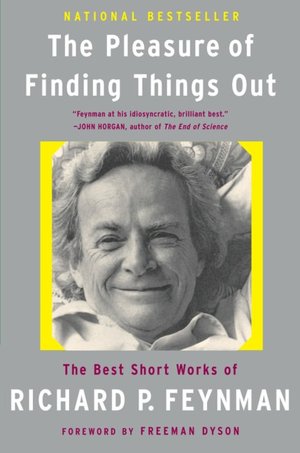 “Everyone’s moral behavior is much more variable than any of us would have initially predicted,” psychology researchers David DeSteno and Piercarlo Valdesolo wrote in their fascinating exploration of the good and evil in all of us, and hardly is this variability more critical than in matters that profoundly affect not merely the fate of the individual but also the future of society at large. In The Pleasure of Finding Things Out: The Best Short Works of Richard P. Feynman (public library) — the same indispensable anthology that gave us The Great Explainer’s insights on the universal responsibility of scientists and the role of scientific culture in modern society, titled after the famous film of the same name — Richard Feynman explores the capacity of science to be a catalyst for both good and evil, and the moral choices steering the direction of the dial:
The first way in which science is of value is familiar to everyone. It is that scientific knowledge enables us to do all kinds of things and to make all kinds of things. Of course if we make good things, it is not only to the credit of science; it is also to the credit of the moral choice which led us to good work. Scientific knowledge is an enabling power to do either good or bad — but it does not carry instructions on how to use it. Such power has evident value — even though the power may be negated by what one does.
I learned a way of expressing this common human problem on a trip to Honolulu. In a Buddhist temple there, the man in charge explained a little bit about the Buddhist religion for tourists, and then ended his talk by telling them he had something to say to them that they would never forget — and I have never forgotten it. It was a proverb of the Buddhist religion:
“To every man is given the key to the gates of heaven; the same key opens the gates of hell.”
What, then, is the value of the key to heaven? It is true that if we lack clear instructions that determine which is the gate to heaven and which the gate to hell, the key may be a dangerous object to use, but it obviously has value. How can we enter heaven without it?
The instructions, also, would be of no value without the key. So it is evident that, in spite of the fact that science could produce enormous horror in the world, it is of value because it can produce something.
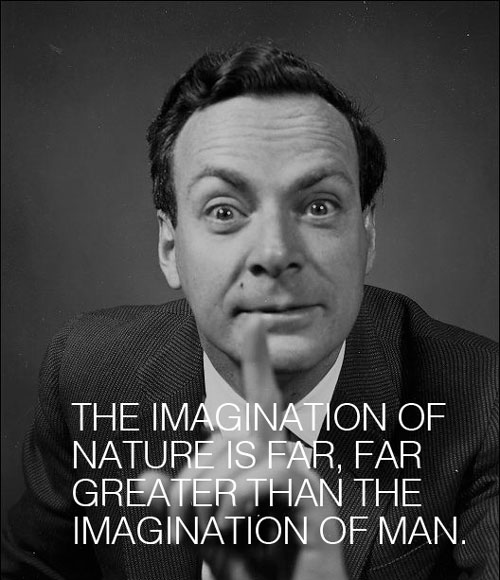
But, for Feynman, science has another value, an entirely personal one, captured in the famous Feynmanism after which this very book is titled. This glorious intellectual enjoyment, he argues, is far too frequently dismissed by those who stress scientists’ moral obligations to society, but it is of equal importance:
Is this mere personal enjoyment of value to society as a whole? No! But it is also a responsibility to consider the value of society itself. Is it, in the last analysis, to arrange things so that people can enjoy things? If so, the enjoyment of science is as important as anything else.
But I would like not to underestimate the value of the worldview which is the result of scientific effort. We have been led to imagine all sorts of things infinitely more marvelous than the imaginings of poets and dreamers of the past. It shows that the imagination of nature is far, far greater than the imagination of man. For instance, how much more remarkable it is for us all to be stuck-half of us upside down — by a mysterious attraction, to a spinning ball that has been swinging in space for billions of years, than to be carried on the back of an elephant supported on a tortoise swimming in a bottomless sea.
He concludes by illustrating his point with what could be best described as a prose poem about the magnificence of evolution, what Richard Dawkins termed “the magic of reality”, Einstein extolled as the ineffable spirit of the universe, and Carl Sagan celebrated as the reverence of nature. The poetic eloquence for which Feynman remains known, which hardly anyone has mastered since, except perhaps Neil deGrasse Tyson and Brian Cox, makes for a beautiful read on par with Diane Ackerman’s Cosmic Pastoral. Feynman writes:
I have thought about these things so many times alone that I hope you will excuse me if I remind you of some thoughts that I am sure you have all had — or this type of thought — which no one could ever have had in the past, because people then didn’t have the information we have about the world today.
For instance, I stand at the seashore, alone, and start to think. There are the rushing waves . . . mountains of molecules, each stupidly minding its own business . . . trillions apart . . . yet forming white surf in unison.
Ages on ages . . . before any eyes could see . . . year after year . . . thunderously pounding the shore as now. For whom, for what? . . . on a dead planet, with no life to entertain.
Never at rest . . . tortured by energy . . . wasted prodigiously by the sun . . . poured into space. A mite makes the sea roar.
Deep in the sea, all molecules repeat the patterns of one another till complex new ones are formed. They make others like themselves . . . and a new dance starts.
Growing in size and complexity . . . living things, masses of atoms, DNA, protein . . . dancing a pattern ever more intricate.
Out of the cradle onto the dry land . . . here it is standing . . . atoms with consciousness . . . matter with curiosity.
Stands at the sea . . . wonders at wondering . . . I . . . a universe of atoms . . . an atom in the universe.

The Pleasure of Finding Things Out is absolutely fantastic in its entirety. Complement it with Feynman’s little-known sketches and drawings and his graphic-novel biography.
Donating = Loving
Bringing you (ad-free) Brain Pickings takes hundreds of hours each month. If you find any joy and stimulation here, please consider becoming a Supporting Member with a recurring monthly donation of your choosing, between a cup of tea and a good dinner:
| ♥ $7 / month♥ $3 / month♥ $10 / month♥ $25 / month |

You can also become a one-time patron with a single donation in any amount:
 Brain Pickings has a free weekly newsletter. It comes out on Sundays and offers the week’s best articles. Here’s what to expect. Like? Sign up.
Brain Pickings takes 450+ hours a month to curate and edit across the different platforms, and remains banner-free. If it brings you any joy and inspiration, please consider a modest donation – it lets me know I'm doing something right.

Cary Renquist, starstuffharvestingstarlight likes this
19 Jul 16:55
I’ve been prescribed an antibiotic. Should I take a probiotic?
by Scott Gavura
We are not one organism, we are many organisms. And when we disturb the relationship with our symbiotic partners, we can suffer unpleasant and sometimes life-threatening consequences. One of the most fascinating areas of medical research is the study of how our bodies interact with the the various organisms that we carry around, on us and in us. A focus is the gastrointestinal tract, particularly how the composition and function of those organisms contribute to what we think of as “normal” function, and how they can affect our risk for obesity and disease. My favorite analogy is from SBM’s own Mark Crislip who likened it to a “metaphorical rainforest” giving a vivid mental image of the of the number of species (thousands) in our guts, and the complexity of that ecology. If the gastrointestinal tract is a rainforest, then antibiotics are the metaphorical clear cutters, wiping out some of the normal bacteria, and creating the conditions where unwanted bacteria can grow.
Antibiotics are among the most useful (if not the most useful) classes of drugs in widespread use today. They’re also among the most widely prescribed, and both antibiotic overuse and their addition to animal feed present real dangers to their ongoing effectiveness. Their popularity stems in part from their effectiveness, but also from the perception that they are safe. And, in general, a course of most antibiotics is usually well tolerated. Among the side effects, diarrhea is common (with an incidence of 5% to 39%). It’s due in part to the antibiotic killing off our normal “good” bacteria, which can significantly change the most prevalent species. In some cases, “bad” bacteria can surge as a result. Clostridium difficile infection is pretty much the worst gastrointestinal consequence of antibiotic therapy. It isn’t just a cause of antibiotic-induced diarrhea, “C. diff” infections are virulent and vicious, spreading easily, especially among hospitalized patients, causing widespread misery and even killing.Probiotics are some of the more interesting of the “complementary and alternative” products out there, because they’re among the more plausible. Probiotics are bacteria and yeast that are administered to replace the bacteria killed by other means, with the goal of reducing the risk of diarrhea and the chance of serious infections from pathogens like C. diff. But plausible doesn’t mean valid – remember the idea that antioxidant vitamins would be beneficial? Or preventing arrhythmias would reduce mortality? Science has repeatedly shown the hazards of making assumptions of benefit in the absence of clear evidence. Given the complexity of the body’s ecosystem, it’s reasonable to be skeptical of the concept of probiotics. Again, Crislip’s analogy of probiotics to be akin to “planting corn in a rainforest” is one that I use a lot. Plausibility is one thing, a demonstrable effect is another. For that, we need to see the evidence.
Proponents of probiotics liken their effect to some sort of bacterial and mycological panacea, providing benefits that range from nonspecific (“wellness”) to promising (prevention of respiratory tract infections) to the somewhat more established uses, like the prevention of antibiotic-associated diarrhea (AAD). To keep the topic focused, I’ll consider a typical use: starting a probiotic when you start an antibiotic, with the goal of preventing diarrhea. For the sake of simplicity and to make this relevant, let’s assume you’re not hospitalized, nor do you have any underlying gastrointestinal disease, like Crohn’s. Let’s assume you’ve been prescribed oral antibiotics for an infection that’s usually treated at home, such as a urinary tract infections, a skin or soft tissue infections, or a lung or other respiratory tract infection. Is the use of a probiotic a good investment for you?
The evidence
Reviewing trials with probiotics is complicated by an array of studies, endpoints, prior antibiotics, patient populations, and the quality of the studies. The result is a number of endpoints that a few authors have attempted to systematically evaluate with meta-analyses. Admittedly a meta-analysis is not the ideal tool under these circumstances, but it does give a sense of the overall evidence base.
Hempel’s meta-analysis, published in 2012, is the most recent review. It looked at 82 studies and combined the results of 63 RCTs, giving a sample set of almost 12,000 patients taking antibiotics, comparing probiotics to placebo or no therapy. Probiotic species included Lactobacillus, Bifidobacterium, and the yeast Saccharomyces. The overall findings were impressive. Those taking probiotics had a 42 percent lower risk antibiotic-associated diarrhea. Based on this analysis, 13 people who would otherwise experience AAD need to take probiotics to prevent one. So it’s not a panacea, but as interventions go, this is a good number needed to treat (NNT). Subgroup analysis, including an analysis of the highest-quality trials, didn’t change the effect size significantly – the effect was also consistent in both adults in kids, though it was non-significant in seniors. Of the studies that collected adverse event information (23) none were noted, which is reassuring but makes me skeptical that this information was collected accurately. It should be noted that most trials were sponsored by manufacturers, introducing an additional potential bias in the individual studies that would be reflected in these results.
Hempel’s review is not the first meta-analysis of probiotics for AAD. Its conclusions are broadly in line with Sazawal, D’Souza, Van Niel, Szajewska and McFarland. There is also the 2011 Cochrane review by Johnston that looked specifically at probiotics to prevent AAD in children, selecting 16 trials of over 3400 patients. Despite the numerous data quality issues, it concluded that there is likely a beneficial effect from probiotics, but the overall quality of the evidence for the primary endpoint (incidence of diarrhea) was low. It calculated an NNT of 7, even more impressive than Hempel’s review. Again, no serious side effects were associated with probiotics. The review called for more studies to better establish the appropriate probiotic species, dose, duration and side effect profile.
The other recent meta-analysis is from Videlock in 2012, pulling together 34 studies with over 4000 patients. Species included Lactobacillus, Enterococcus, Streptococcus, and the yeast Saccharomyces. It estimated the overall relative risk of diarrhea when taking probiotics to be 0.53 (95% CI 0.44-0.63), suggesting an NNT of 8 (95% CI 7-11). Both of these estimates are difficult to interpret given the diversity of trials and endpoints in the included studies. Problems in the analysis included the suggestion that the results are positively biased because of negative trial bias. Side effects were not notable. Overall, positive findings but the limitations in the data suggest that we need to accept these estimates of efficacy with some caution.
When probiotics are given specifically to prevent C. diff infections (versus just diarrhea) the Hempel analysis suggests that there is expected to be a net benefit. A 2013 Cochrane review by Goldenberg suggets that probiotics can reduce the risk of infection by 64%. There are also reviews by Ritchie and Bradley that suggest a net benefit. Again, the merits really depend on the likelihood of a C. diff infection, which is relatively unlikely in the otherwise healthy, unhospitalized person.
Guidelines, position statements, and regulators
The Australian not-for-profit NPS Medwise says the following about probiotics and antibiotics:
There is not enough evidence to determine the following about probiotics:
- The minimum dose that is effective for preventing antibiotic-associated diarrhoea
- How well they work for different age groups
- Whether they prevent diarrhoea caused by Clostridium difficile (which can lead to more serious complications)
- How different probiotics compare in effectiveness and safety
- The best length of time to take them for
- Whether the effect of a probiotic differs depending on the type of antibiotic taken or for how long the antibiotic is taken.
The Canadian Pediatric Society’s guideline has a nice compilation of the data, and suggests the following in its 2012 guideline:
Keeping in mind that the effect of probiotics is both strain- and disease-specific, physicians should consider recommending probiotics to prevent antibiotic-associated diarrhea.
The European Food Safety Authority has reviewed many probiotic products for treatment claims made by manufacturers. A review of any of their evaluations illustrates the problems with the individual trials that make up the probiotic evidence base. Reviews point out methodological weaknesses that preclude conclusions about cause and effect. They also criticize manufacturers for not demonstrating that the product they are selling is identical to the product studied in their clinical trials, which is a necessity if manufacturers want to infer efficacy from these studies.
Risks
Given the diversity of products studied, patient populations and the underlying quality of the data, it’s difficult to make a single statement about the potential harms. However, it is reassuring that there is little evidence in the literature to suggest that probiotics are harmful. The exception seems to be those with weakened or compromised immune systems, where serious cases of infection have been observed. And once you have antibiotic-associated diarrhea, the case that can be made for probiotics is less clear.
The weak regulatory structure for probiotics makes quality control more questionable that you would find for prescription drugs. The degree to which consumers can expect a reliable product is not clear. Analyses have shown that labels may be inaccurate with respect to types and quantities of species included. Variations from the label have been observed in other studies, too. This may introduce the risk of an infection from an undesirable species.
Discussion
On balance, probiotics have a good safety record and clinical trials of moderate quality suggest that they may reduce the risks of antibiotic-induced diarrhea. Whether or not probiotics should be recommended routinely is still a matter of debate. There is still a lack of information about the most effective species, the optimal dose, and the timing of product. While there remains contradictory data, there seems to be enough evidence to suggest that there is a net beneficial effect. No standard doses exist, nor does the optimal duration of treatment, though most studies evaluated supplementation during the duration of the antibiotic therapy.
I haven’t covered specific brands of probiotics at all in this post. (Some are discussed in Dr. Crislip’s post.) Frustratingly there is a lack of good data to help distinguish which brands and species of probiotics are demonstrably and reliably effective, or if one is superior to another. There is no head-to-head data to compare formulations. There are many claims that the multi-species formulas are superior, but this hasn’t been clearly shown to be the case. Yogurt is often suggested as a source of healthy bacteria. However, the probiotics used to ferment milk (L. bulgaricus and S. thermophilus) are not believed to survive the trip through the gastrointestinal tract. Acid-resistant probiotics (e.g., L. acidophilus) added to yogurt can make the product an effective probiotic source. Depending on where you live you may also see yogurt-like fermented dairy products such as DanActive and Bio-K Plus in your grocery store, created to provide a source of probiotics.
Costs vary dramatically. A Canadian review noted the 14 day costs of probiotics with the best evidence for C. diff prevention ranges from $13 (for Bio-K+) to $112 (for VSL#3).
Importantly and probably most frustratingly, the lowered safety and quality bar in place for “supplements” regulated (I use that term loosely) under the DSHEA makes it difficult to identify a preferred product. It’s not clear that what’s on the label is actually on the bottle, especially when it comes to live bacterial cultures. Even industry insiders note the problems with the manufacturing quality of these products.
Conclusion
There’s reasonably good evidence that probiotics, when taken with antibiotics, will reduce the risk of antibiotic-associated diarrhea. There is still much to be learned about how these products can be used most effectively, which means it’s unlikely we will see routine use recommended for some time. However, the reassuring lack of side effects, and potential to reduce potentially serious complications of antibiotic treatment, suggests that probiotics may become a valuable addition to antibiotic therapy.
Cary Renquist and -1 others like this
19 Jul 16:35
Do You Make This One Common Mistake When it Comes to Your Health?
by Scott Christ
CaryAre you in control of your health? Or do you let it control you?
Answer the following question truthfully: Are you in control of your health? Or do you let it control you?
For most folks, it’s the latter. If you fall into that category, it’s okay, because I’ll show you how to take control of your health starting with just 15 minutes of your time a day.
A Population Out of Control
The stats indicate many people struggle to control their health. According to the Centers for Disease Control and Prevention:
- More than 1 out of every 3 adults in the United States is obese.
- More than 2 out of every 3 adults in the United States is either overweight or obese.
- Over 17 percent of kids ages 2-19 are obese.
- Medical costs associated with obesity are around $147 billion per year.
- Medical costs for people who are obese are $1,429 higher than those of normal weight.
Obesity is triggered by a number of factors, such as your genetics, socioeconomic issues, age, medical issues, etc. But guess what the number one cause of obesity is?
Lifestyle factors.
This means what you eat, how much you exercise, whether or not you smoke, how much you sleep, etc. You probably knew this already. The reason I bring it up to you again is to prove a point: if you’re struggling with your weight and are unhappy with your current state of health, you can make a change.
Here’s how.
How to Take Control of Your Health
First, you have to want to change, so sit down and really think about the reasons why you want to get healthier. Maybe you’re sick of feeling embarrassed every time you go out to eat, or you want to look better in a bathing suit, or you want to increase your chances of being around longer so you can watch your kids grow up. Whatever your reasons are, write them down. This will serve as motivation down the road when you get a little off track (which you inevitably will). Once you decide you’re ready, talk to your doctor. When you make changes to your health, especially major ones, you need to get the green light from a healthcare professional.
Next, map out your health goals. And by “map out”, I mean write them down. Be specific. Don’t say, “I want to lose weight.” Say, “I want to lose 10 pounds by August 1st.”
Sounds easy enough, right? So the next step is to take the goals you wrote down and place them in every spot where you spend a lot of time. This means in your bedroom, your family room, your office at work, in your car… you get the drift. The idea is to ensure that your goals are always on your mind. This helps you stick with them and stay motivated.
Commit to spending at least 15 minutes each day on healthy behaviors for the first week or two, and track those behaviors each day. These “healthy behaviors” will be highly individualized, but here are some ideas to get you thinking in the right mindset.
10 Ways to Take Control of Your Health in 15 Minutes or Less
1. Keep a food diary outlining your daily calorie counts.
2. Spend 15 minutes walking or biking.
3. Cook a healthy dinner for yourself or your family.
4. Take a 15-minute walk on your lunch break at work.
5. Make a healthy smoothie for breakfast in the morning.
6. Pack a salad for lunch instead of going out to eat.
7. Spend 15 minutes doing yoga or stretching.
8. Eat 5-7 servings of vegetables.
9. Take your dog for a quick walk.
10. Try to go a day without drinking any soda, juice, or other sugary drinks.
Taking Control for the Long-term
Once you spend a week or two commiting to at least 15 minutes a day, increase that number to 30 minutes a day, and continue to track your progress. According to research it takes 66 days to form a healthy habit, so if you continue these healthy behaviors every day for 8 weeks or so, you’ll be much more likely to experience long term success so you can take control of your health once and for all.
By being productive, we become susceptible to some common mistakes that make us actually less productive: The 5 Most Common Mistakes Productive People Make
The post Do You Make This One Common Mistake When it Comes to Your Health? appeared first on Lifehack.
Cary Renquist likes this
19 Jul 07:51


Photo credit: Sophie Carr
Turquoise Icebergs Dot Iceland's Black Sand Beach
by alice
CaryI NEED to visit Iceland one of these years...
If this isn't one of the most incredible places to photograph, we don't know what is! Photographers from all over the world flock to Jökulsárlón Beach in south-eastern Iceland to capture the beautiful icebergs that wash ashore. Floated into the sea from a nearby glacial lagoon, the turquoise colored icebergs are a stunning contrast against the black sand beach. While the ocean has melted some of the icebergs away, many of the ones that wash ashore have been beautifully sculptured by the wind and water, appearing like sparkling jewels in a vast desert.
As Orvar Atli Borgeirsson stated, "The beach below the popular and beautiful Jökulsárlón glacier lagoon is strewn with small icebergs that float from the lagoon down the short Jökulsá á Breiðarmerkursandi. Although the river is quite powerful it does only bring small icebergs into the ocean.
"The contrast between the pitch black lava sand and the bright and blueish icebergs is very photogenic and fun to play with."
We love how, in most of these shots, photographers have used long exposure to create ghostly water trails.
Above photo credit: Sophie Carr
Photo credit: Sophie Carr

Photo credit: Miles

Photo credit: Scott

Photo credit: Nancy Carels

Photo credit: Ron Coscorrosa

Photo credit: Javier de la Torre

Photo credit: Mindcage Photography

Photo credit: Ian Parker

Photo credit: Orvar Alti Borgeirsson
Cary Renquist and -1 others like this
18 Jul 17:42
The terrorist as rock star
 People are offended because the terrorist looks like a rock star, and Rolling Stone had the guts to show us that.
They show us our fear -- not of him -- that would be irrational because he can't harm anyone. Rather they show us our fear of ourselves. The realization that we equate youthful and sexy appearance with benevolence. Our value system fails. The input does not equal the output. Does not compute.
On one side of the equation is the dream, the sexy rock star idol, and on the other side is the cold-blooded murderer of innocents. Instead of looking at it, and learning what it can teach us about ourselves, that our cherished images are lies, many want to suppress it. Shame. Here's an opportunity to bust some myths.
Rolling Stone, perhaps inadvertently, has admitted that they are a lie. Next time they put a rock star on the cover, you'll have to wonder what evil lurks behind the pretty face. Maybe this is what you all don't want to look at.
Cary Renquist, T. Boullier and -1 others like this
18 Jul 17:07
House Republicans reject proposal to ban gun sales to suspected terrorists
by Eric W. Dolan
A proposal to ban the sale of firearms to individuals on the FBI’s terrorist watch list was defeated by House Republicans on Wednesday.
Reps. Nita Lowey (D-NY) and David Price (D-NC) offered an amendment to the Commerce, Justice, Science (CJS) Appropriations bill that would have given the U.S. Department of Justice authority to block suspected terrorists from purchasing firearms and explosives.
“Terrorists are knowingly exploiting our laws,” Lowey said, citing American-born al Qaeda spokesman Adam Gadahn.
The amendment was defeated in the House Appropriations Committee by a 19-29 vote.
“Americans expect our government to keep guns out of the hands of felons, domestic abusers, the mentally ill, and terrorists,” Lowey said in a statement. “A suspected terrorist cannot board a plane but can pass a background check to buy a gun. It is absurd that my Republican colleagues opposed our amendment to close this dangerous gap in our gun safety laws.”
Similar legislation has been proposed — and defeated — before. The National Rifle Association claimed in 2011 such proposals were “aimed primarily at law-abiding American gun owners” and “sponsored by gun control extremists.”
Watch video, uploaded to YouTube, below:
[Gun rights supporter with flag in business suit via Shutterstock.com]
Cary Renquist likes this
18 Jul 16:59
Colorado town proposes bounty for shooting down federal drones
by David Edwards
A small Colorado town is considering whether to issue hunting licenses that would offer residents a bounty for shooting down unnamed drones operated by the U.S. government.
Deer Trail resident Phillip Steel told KMGH that he had already collected enough signatures to put his proposed measure on the ballot.
“We do not want drones in town,” Steel explained. “They fly in town, they get shot down.”
Steele’s proposed ordinance specifically outlines the rules for drone hunting.
“The Town of Deer Trail shall issue a reward of $100 to any shooter who presents a valid hunting license and the following identifiable parts of an unmanned aerial vehicle whose markings and configuration are consistent with those used on any similar craft known to be owned or operated by the United States federal government,” the measure states.
To qualify for the $100 bounty, hunters would have to present a whole or nearly intact drone. But drone parts would be worth $25.
Although Steel admits that he has not seen a drone flying over Deer Trail, Customs and Border Protection does fly Predator drones on surveillance missions over the U.S. border. Those drones come at a cost of about $18 million each — and the destruction of federal property is against the law.
Steel’s proposed ordinance requires that applicants “read and understand English” and be at least 21 years old. Applicants would be anonymous and no background application would be required.
Hunters, however, would be limited to using “any shotgun, 12 gauge or smaller, having a barrel length of 18 inches or greater.”
KMGH’s Amanda Kost asked Mayor Frank Fields if it was even possible to shoot down a drone with a shotgun.
“No, it’s not possible,” Fields admitted. “We don’t intend to paying none of that out. Unless we get lucky.”
But members of the town board think that they could cash in by selling licenses to drone-hunting tourists.
“I can see it as a benefit, monetarily speaking, because of the novelty of the ordinance,” town clerk Kim Oldfield pointed out.
“Drone hunting days, exactly, you know, like shooting clay pigeons and stuff, but we’ll call it drone practice,” town board trustee David Boyd remarked.
Watch this video from KMGH, broadcast July 16, 2013.
(h/t: Wonkette)
Cary Renquist and -1 others like this

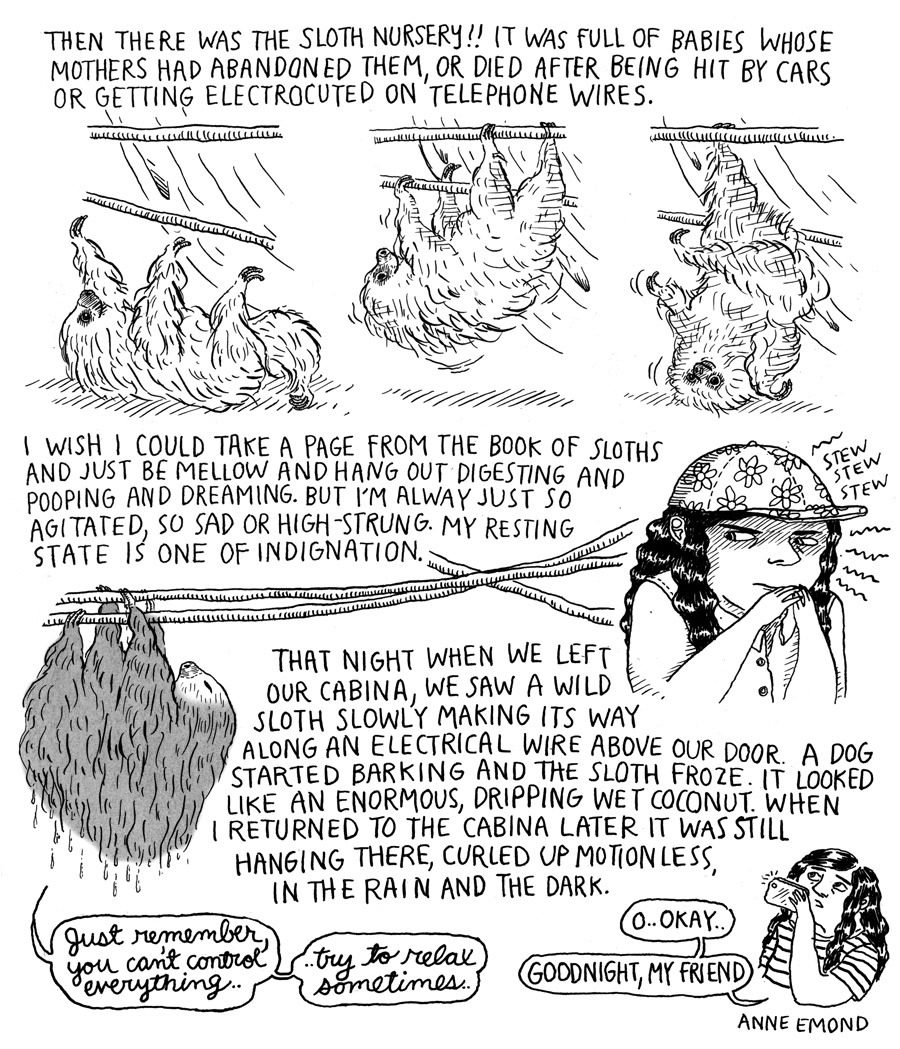
17 Jul 20:12
a comic about visiting the sloth sanctuary in costa rica view...


Cary Renquist likes this
17 Jul 20:11


Eight Online Series for Your Art-Hungry Eyes
by Allison Meier
 With summer sweltering and those high air conditioning bills to pay, you’re melting quickly and not made of money. Why not watch some free online art programming to ease your eyes?
Here are eight web series available from your internet device.
* * *
82nd & Fifth
82nd & Fifth (screenshot from 82nd-and-fifth.metmuseum.org)
For the duration of 2013, the Metropolitan Museum of Art is creating 82nd & Fifth. The online series looks at 100 works of art from the museum’s collections accompanied by a two-minute talk from a curator, such as Alice Cooney Frelinghuysen talking about an dragonfly-studded Louis Comfort Tiffany hair ornament from 1904 that is shown gloriously opening from its velvet-lined box, or Mia Fineman discussing Adam Fuss’ 1992 silver dye bleach print “Love.” As she explains, Fuss made the piece in complete darkness with a couple of dead rabbits that he laid out on sheets, guided only by fumbling touches (“exactly what we do when we fall in love”) and then exposed them to a quick flash of light.
Art21
Rackstraw Downes painting in rural Texas on Art21 (via kpbs.org)
Since 2001, PBS’ “Art in the 21st Century” series Art21 has been crafting some in-depth looks at various themes of contemporary art, and you can watch them online, such as ”Balance” with Rackstraw Downes, Robert Mangold, and Sarah Sze, and ”Spirituality” with Ann Hamilton, Beryl Korot, James Turrell, John Feodorov, and Shahzia Sikander. Whether they’re in the studio or prowling around rural Texas with Rackstraw Downes, there’s often something revealing about the process and persona of art in the profiles.
Off Book
Still from Off Book: Lego Art (via PBS)
For a less high brow, and web-only, PBS series (think more internet or even fan art), there’s Off Book, which looks at more alternative and frequently interactive art, especially that which involves collective creativity. For example, there’s 3D printing, sneaker culture, coding, the culture of Reddit, the birth of the animated GIFs, and the effect of color. Or even this guy building a pretty sweet lego flower with a gravity-defying hummingbird.
George Eastman House: Photographic Processes
Still from “The Collodion Process” by the George Eastman House (screenshot via the George Eastman House on YouTube)
The George Eastman House released a six-part video series on the history of photographic process, each no more than six minutes long, but giving a good in-depth overview of techniques like daguerreotypes, the collion process, the albumen print, and other processes from back when egg whites and silver figured centrally in photography. They also used examples from their extensive vault of photographs, so you get a bonus behind-the-scenes look at the oldest photography museum in the process.
Made Here
Made Here (via tendu.tv)
The Made Here documentary series by Tanya Selvaratnam and Chiara Clemente may be New York-centric, but the issues it examines on the performing arts are relatable to creators everywhere. Launched in 2010, the series has interviews and performances from artists like Reggie Watts, Bill T. Jones, Lisa Kron, and Joey Arias that look at everything from dealing with criticism, the temptation of Hollywood money, and working in such a physical medium with no health insurance (apparently fake names at the emergency room is not uncommon).
MOCAtv
Still from MOCAtv’s visit to the studio of John Knuth (via MOCA)
Launched last October by the Museum of Contemporary Art in Los Angeles, MOCAtv already has a whole horde of content. As the first contemporary art museum on YouTube’s original channels project, there’s a little bit of everything, and it’s frequently intriguing. This June they started The Art of Punk series on the visuals behind punk bands like the Deady Kenneys, and there’s also a current series called Global Street Art that goes around the world to look different street art cultures, like the changing scene in Chile or the reaction to art exclusivity in Indonesia. There’s also a series of artist studio visits, such as the somewhat unsettling trip to John Knuth’s studio this month, where he uses house flies regurgitating pigment in his paintings.
Tate Channel
Still from TateShots: Museum of Contemporary African Art with Meschac Gaba (screenshot from tate.org)
The Tate Channel is mostly just an avenue to support the Tate in London’s programming, but it’s some of the most extensive of any museum. For example, TateShots gives background and a studio voice to exhibiting artists like Meshac Gaba who takes viewers to Cotonou, Benin, to see the types of markets that inspired his Museum of Contemporary African Art installation. There’s also insight into current exhibitions, like curator Nicholas Cullinan explaining the interest in new technologies inspiring Edvard Munch, or video documentation of performances, if you want to try to experience remotely some experiential art.
Works & Process
Still from “New York City Ballet: Choreography by Justin Peck with Music by Sufjan Stevens” on Works & Process at the Guggenheim (screenshot via Works & Process)
The online content of Works & Process at the Guggenheim is basically a straightforward archive of the performances, but it’s often engaging to see even an unembellished video of the works-in-progress and extensive discussions with the artists. For example, there’s the video of the collaboration between choreographer Justin Peck and musician Sufjan Stevens with the New York City Ballet, and the Minnesota Opera’s production of Doubt, all with insight into how much work really goes into the artistic process of performances.
original header image via
Cary Renquist and -1 others like this
17 Jul 20:10
Bill Domonkos
CaryCave-persons are not the only ones to produce art under hallucinogenic conditions ;)


A. Kachmar, Cary Renquist likes this



17 Jul 16:32
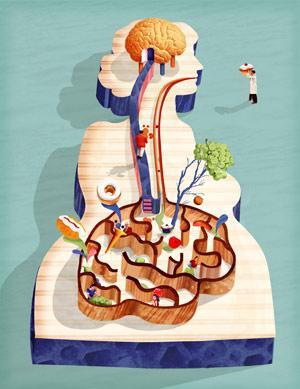
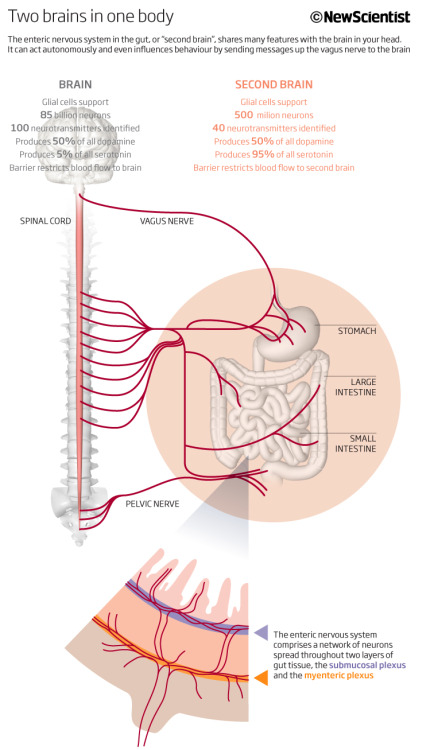
neuromorphogenesis: Gut instincts: The secrets of your second...
Gut instincts: The secrets of your second brain
When it comes to your moods, decisions and behaviour, the brain in your head is not the only one doing the thinking
Embedded in the wall of the gut, the enteric nervous system (ENS) has long been known to control digestion. Now it seems it also plays an important role in our physical and mental well-being. It can work both independently of and in conjunction with the brain in your head and, although you are not conscious of your gut “thinking”, the ENS helps you sense environmental threats, and then influences your response. “A lot of the information that the gut sends to the brain affects well-being, and doesn’t even come to consciousness,” says Michael Gershon at Columbia-Presbyterian Medical Center, New York.
If you look inside the human body, you can’t fail to notice the brain and its offshoots of nerve cells running along the spinal cord. The ENS, a widely distributed network of neurons spread throughout two layers of gut tissue, is far less obvious, which is why it wasn’t discovered until the mid-19th century. It is part of the autonomic nervous system, the network of peripheral nerves that control visceral functions. It is also the original nervous system, emerging in the first vertebrates over 500 million years ago and becoming more complex as vertebrates evolved - possibly even giving rise to the brain itself.
Digestion is a complicated business, so it makes sense to have a dedicated network of nerves to oversee it. As well as controlling the mechanical mixing of food in the stomach and coordinating muscle contractions to move it through the gut, the ENS also maintains the biochemical environment within different sections of the gut, keeping them at the correct pH and chemical composition needed for digestive enzymes to do their job.
But there is another reason the ENS needs so many neurons: eating is fraught with danger. Like the skin, the gut must stop potentially dangerous invaders, such as bacteria and viruses, from getting inside the body. If a pathogen should cross the gut lining, immune cells in the gut wall secrete inflammatory substances including histamine, which are detected by neurons in the ENS. The gut brain then either triggers diarrhoea or alerts the brain in the head, which may decide to initiate vomiting, or both.
You needn’t be a gastroenterologist to be aware of these gut reactions - or indeed the more subtle feelings in your stomach that accompany emotions such as excitement, fear and stress. For hundreds of years, people have believed that the gut interacts with the brain to influence health and disease. Yet this connection has only been studied over the last century. Two pioneers in this field were American physician Byron Robinson, who in 1907 published The Abdominal and Pelvic Brain, and his contemporary, British physiologist Johannis Langley, who coined the term “enteric nervous system”. Around this time, it also became clear that the ENS can act autonomously, with the discovery that if the main connection with the brain - the vagus nerve - is severed the ENS remains capable of coordinating digestion. Despite these discoveries, interest in the gut brain fell until the 1990s when the field of neurogastroenterology was born.
We now know that the ENS is not just capable of autonomy but also influences the brain. In fact, about 90 per cent of the signals passing along the vagus nerve come not from above, but from the ENS (American Journal of Physiology - Gastrointestinal and Liver Physiology, vol 283, p G1217).
The feel-good factor
The second brain also shares many features with the first. It is made up of various types of neuron, with glial support cells. It has its own version of a blood-brain barrier to keep its physiological environment stable. And it produces a wide range of hormones and around 40 neurotransmitters of the same classes as those found in the brain. In fact, neurons in the gut are thought to generate as much dopamine as those in the head. Intriguingly, about 95 per cent of the serotonin present in the body at any time is in the ENS.
What are these neurotransmitters doing in the gut? In the brain, dopamine is a signalling molecule associated with pleasure and the reward system. It acts as a signalling molecule in the gut too, transmitting messages between neurons that coordinate the contraction of muscles in the colon, for example. Also transmitting signals in the ENS is serotonin - best known as the “feel-good” molecule involved in preventing depression and regulating sleep, appetite and body temperature. But its influence stretches far beyond that. Serotonin produced in the gut gets into the blood, where it is involved in repairing damaged cells in the liver and lungs. It is also important for normal development of the heart, as well as regulating bone density by inhibiting bone formation (Cell, vol 135, p 825).
But what about mood? Obviously the gut brain doesn’t have emotions, but can it influence those that arise in your head? The general consensus is that neurotransmitters produced in the gut cannot get into the brain - although, theoretically, they could enter small regions that lack a blood-brain barrier, including the hypothalamus. Nevertheless, nerve signals sent from the gut to the brain do appear to affect mood. Indeed, research published in 2006 indicates that stimulation of the vagus nerve can be an effective treatment for chronic depression that has failed to respond to other treatments (The British Journal of Psychiatry, vol 189, p 282).
Such gut to brain signals may also explain why fatty foods make us feel good. When ingested, fatty acids are detected by cell receptors in the lining of the gut, which send nerve signals to the brain. This may not be simply to keep it informed of what you have eaten. Brain scans of volunteers given a dose of fatty acids directly into the gut show they had a lower response to pictures and music designed to make them feel sad than those given saline. They also reported feeling only about half as sad as the other group (The Journal of Clinical Investigation, vol 121, p 3094).
There is further evidence of links between the two brains in our response to stress. The feeling of “butterflies” in your stomach is the result of blood being diverted away from it to your muscles as part of the fight or flight response instigated by the brain. However, stress also leads the gut to increase its production of ghrelin, a hormone that, as well as making you feel more hungry, reduces anxiety and depression. Ghrelin stimulates the release of dopamine in the brain both directly, by triggering neurons involved in pleasure and reward pathways, and indirectly by signals transmitted via the vagus nerve.
In our evolutionary past, the stress-busting effect of ghrelin may have been useful, as we would have needed to be calm when we ventured out in search of food, says Jeffrey Zigman at UT Southwestern Medical Center in Dallas, Texas. In 2011, his team reported that mice exposed to chronic stress sought out fatty food, but those that were genetically engineered to be unable to respond to ghrelin did not (The Journal of Clinical Investigation, vol 121, p 2684). Zigman notes that in our modern world, with freely available high-fat food, the result of chronic stress or depression can be chronically elevated ghrelin - and obesity.
Gershon suggests that strong links between our gut and our mental state evolved because a lot of information about our environment comes from our gut. “Remember the inside of your gut is really the outside of your body,” he says. So we can see danger with our eyes, hear it with our ears and detect it in our gut. Pankaj Pasricha, director of the Johns Hopkins Center for Neurogastroenterology in Baltimore, Maryland, points out that without the gut there would be no energy to sustain life. “Its vitality and healthy functioning is so critical that the brain needs to have a direct and intimate connection with the gut,” he says.
But how far can comparisons between the two brains be taken? Most researchers draw the line at memory - Gershon is not one of them. He tells the story of a US army hospital nurse who administered enemas to the paraplegic patients on his ward at 10 o’clock every morning. When he left, his replacement dropped the practice. Nevertheless, at 10 the next morning, everyone on the ward had a bowel movement. This anecdote dates from the 1960s and while Gershon admits that there have been no other reports of gut memory since, he says he remains open to the idea.
Gut instincts
Then there’s decision-making. The concept of a “gut instinct” or “gut reaction” is well established, but in fact those fluttery sensations start with signals coming from the brain - the fight or flight response again. The resulting feeling of anxiety or excitement may affect your decision about whether to do that bungee jump or arrange a second date, but the idea that your second brain has directed the choice is not warranted. The subconscious “gut instinct” does involve the ENS but it is the brain in your head that actually perceives the threat. And as for conscious, logical reasoning, even Gershon accepts that the second brain doesn’t do that. “Religion, poetry, philosophy, politics - that’s all the business of the brain in the head,” he says.
Still, it is becoming apparent that without a healthy, well-developed ENS we face problems far wider than mere indigestion. Pasricha has found that newborn rats whose stomachs are exposed to a mild chemical irritant are more depressed and anxious than other rats, with the symptoms continuing long after the physical damage has healed. This doesn’t happen after other sorts of damage, like skin irritation, he says.
It has also emerged that various constituents of breast milk, including oxytocin, support the development of neurons in the gut (Molecular Nutrition and Food Research, vol 55, p 1592). This might explain why premature babies who are not breastfed are at higher risk of developing diarrhoea and necrotising enterocolitis, in which portions of the bowel become inflamed and die.
Serotonin is also crucial for the proper development of the ENS where, among its many roles, it acts as a growth factor. Serotonin-producing cells develop early on in the ENS, and if this development is affected, the second brain cannot form properly, as Gershon has shown in mutated mice. He believes that a gut infection or extreme stress in a child’s earliest years may have the same effect, and that later in life this could lead to irritable bowel syndrome, a condition characterised by chronic abdominal pain with frequent diarrhoea or constipation that is often accompanied by depression. The idea that irritable bowel syndrome can be caused by the degeneration of neurons in the ENS is lent weight by recent research revealing that 87 out of 100 people with the condition had antibodies in their circulation that were attacking and killing neurons in the gut (Journal of Neurogastroenterology and Motility, vol 18, p 78).
If nothing else, the discovery that problems with the ENS are implicated in all sorts of conditions means the second brain deserves a lot more recognition than it has had in the past. “Its aberrations are responsible for a lot of suffering,” says Pasricha. He believes that a better understanding of the second brain could pay huge dividends in our efforts to control all sorts of conditions, from obesity and diabetes to problems normally associated with the brain such as Alzheimer’s and Parkinson’s (see “Mental illnesses of the gut” below). Yet the number of researchers investigating the second brain remains small. “Given it’s potential, it’s astonishing how little attention has been paid to it,” says Pasricha.
Mental illnesses of the gut
A growing realisation that the nervous system in our gut is not just responsible for digestion (see main story) is partly fuelled by discoveries that this “second brain” is implicated in a wide variety of brain disorders. In Parkinson’s disease, for example, the problems with movement and muscle control are caused by a loss of dopamine-producing cells in the brain. However, Heiko Braak at the University of Frankfurt, Germany, has found that the protein clumps that do the damage, called Lewy bodies, also show up in dopamine-producing neurons in the gut. In fact, judging by the distribution of Lewy bodies in people who died of Parkinson’s, Braak thinks it actually starts in the gut, as the result of an environmental trigger such as a virus, and then spreads to the brain via the vagus nerve.
Likewise, the characteristic plaques or tangles found in the brains of people with Alzheimer’s are present in neurons in their guts too. And people with autism are prone to gastrointestinal problems, which are thought to be caused by the same genetic mutation that affects neurons in the brain.
Although we are only just beginning to understand the interactions between the two brains, already the gut offers a window into the pathology of the brain, says Pankaj Pasricha at Johns Hopkins University in Baltimore, Maryland. “We can theoretically use gut biopsies to make early diagnoses, as well as to monitor response to treatments.”
Cells in the second brain could even be used as a treatment themselves. One experimental intervention for neurodegenerative diseases involves transplanting neural stem cells into the brain to replenish lost neurons. Harvesting these cells from the brain or spinal cord is not easy, but now neural stem cells have been found in the gut of human adults (Cell Tissue Research, vol 344, p 217). These could, in theory, be harvested using a simple endoscopic gut biopsy, providing a ready source of neural stem cells. Indeed, Pasricha’s team is now planning to use them to treat diseases including Parkinson’s.
Emma Young from Sheffield, UK
Cary Renquist likes this
16 Jul 22:45
"Real art has the capacity to make us nervous."
“Real art has the capacity to make us nervous.”
- Susan Sontag
- Susan Sontag
Cary Renquist likes this
16 Jul 22:03


Strange Yet Awesome Salad Dressing: Mozzarella Foam
by Faith Durand

I rarely take photos in restaurants, but I had to get this snapshot during one of my lunches in Paris a few weeks ago so I could show you one of the weirder salad dressings I've eaten recently — mozzarella foam!
More
    
|
Cary Renquist likes this
16 Jul 20:48


Someone "yarn bombed" this statue, because if any statue should have a sweater, it's Mr. Rogers.
CaryThey need to keep the sweater -- otherwise he looks like a Mr Rogers that was fried by a nuclear blast...
Cary Renquist likes this
16 Jul 20:30
Build A Mountain of Dirty Clothes With ‘Berg’
by rachel
CaryIf I got this, then what would I use my old exercise equipment for?

Designer Arash Eskafi has designed the perfect solution for those of you out there who are notorious for piling up worn clothes in a corner, on the floor, or a mile high in the laundry basket. Only this apparatus isn’t aimed at changing your habits– it is more so focused on creating a more structural work of art from it all.
“Berg” is a piece of furniture created from a study of how people interact with their space within the first 5 minutes of returning home, only to strip off layers of clothing. With 9 rows of formed metal already shaped into a figurative mountain (or iceberg of sorts) it provides the perfect foundation for piling up those layers of garments with a positive association instead of having an otherwise negative reaction. Create art out of a particularly messy habit.


Build A Mountain of Dirty Clothes With ‘Berg’ is a post from Inthralld.
Cary Renquist likes this
16 Jul 18:22
Ta-Nehisi Coates’s Brilliant Take on the Zimmerman Verdict
by Lauren ONeal
Not to overload anyone on political coverage, but Ta-Nehisi Coates’s reaction to the George Zimmerman trial is an absolute must-read.
In it, he looks at the actual legal text involved in the case and points out that what’s so deeply frightening about it isn’t that the verdict flouted the law; it’s that the law—and in many ways, the entire concept of American justice—is written to enable this kind of verdict.
And of course, because he’s Ta-Nehisi Coates, he writes with such empathy and clarity that you’ll get chills down your spine reading it. Seriously: chills.
Related Posts:
Leslie.littleone, Cary Renquist likes this
16 Jul 18:17


Look! Boozy Roasted Cherry Milkshakes
by Megan Gordon
 When cherry season hits, I often find myself buying bags and baskets of the coveted summer fruit with good intentions to bake a pie or make homemade ice cream, but inevitably I snack on them instead. Then I buy another basket and the cycle repeats all over again. Until now.
|
|
Cary Renquist likes this
16 Jul 18:04
As Close To Evil As We Can Stand
by Lyz Lenz
 I grew up secreted away from the world. My parents didn’t let us watch television or listen to top 40 stations and they rarely discussed current events. My siblings and I were homeschooled, leaving our house only for church, dance lessons and supervised outings to the park. We were to be in the world but not of it, as the Bible instructed—meaning that while we lived in the world, we were supposed to be separate from the evil that lay hidden in all things secular. But evil found us anyway.
I didn’t know there was a Gulf War until 2001, sitting in a high school history class. I copied the dates of both Gulf Wars in my notebook with blue sparkly pen. And thought, How did I miss that war? How did I miss so many people dying? That’s when, I remembered yellow ribbons wrapped around trees in our Dallas neighborhood.
“What are those for?” I asked my mom.
“For the soldiers who serve our country,” she said.
I also remembered standing in line at a grocery store with my mother. I caught a glimpse of a wounded soldier on the cover of Time magazine. When my mother caught me staring, she flipped the magazine around. “This is completely inappropriate for children,” she fumed to the cashier. I knew better then to ask any questions. I didn’t know there was a war. I didn’t know there was AIDs. I didn’t know about prostitution.
When I was nine, during our family Bible time, my dad said the word “prostitute” while reading the book of Ezekial.
“What’s that?” I asked.
“Someone who sells their body for money,” my mom answered.
I was confused. “Like an arm?”
“Yes.”
I didn’t learn the real answer until high school, when I looked it the word up in a dictionary after hearing it thrown around in the halls. “Your sister is a whore,” Dustin from the swim team yelled at me.
“No. She still has her arms,” I retorted. Dustin shook his head and walked away.
It’s a funny story. I like to tell it at parties, when people want to know what it was like to grow up evangelical. And people laugh. But really, the story leaves me feeling vulnerable. There were so many things I didn’t know about at the time; so many real evils that surrounded my daily life, but instead I spent my time worrying about the unseen evils.
- Spiritual warfare
- Being raptured while in the bathroom and going up to heaven without pants and all the unsaved below can see my bare butt
- Demons
- Thinking I’m saved, but I’m really not because I sometimes wish God had sent me to a different family
- Not having any spiritual gifts
- Having the smallest mansion in heaven
I was ten years old, ferreting through my father’s files in his office. I did this frequently, sifting through legal briefs and bills, looking for clues to his life outside ours. A life that involved leaving the house and working in a skyscraper in downtown Dallas that sometimes swayed in the wind. Usually I found receipts for restaurants with fancy-sounding names, or foreign coins from the countries he traveled to. This time, I found a newspaper clipping:
“A Delmar financial adviser who was disabled and suffering from hemophilia shot and killed his wife and stepson this weekend in a motel on Cape Cod before turning the gun on himself.”
The woman was my father’s cousin. The lone survivor of the attack was his cousin’s son, who would eventually go live with my great-aunt and uncle. I felt like I had fallen upon some hidden knowledge. Not just of the attack itself, but that something like that could happen so close to us. I slipped the article back among the papers and ran out of the office. It’s easier to worry about demons.
Ten years later, evil found us again, only this time it came closer. Someone in my family abused another member of my family. I can’t give more details than that. This time, I couldn’t pretend to hide the events under a stack of paper and run out the door—they are there with me at every moment, when I lie down, and when I wake up, when I eat Thanksgiving dinner and my mother sighs and says she wishes the “whole family” was here, when I hold my daughter’s hand in the parking lot, and lock the screen door because something inside me tells me that something will come in to my life again and this time it will be worse.
I plan out how evil will come. It will be a patch of ice that makes my husband’s car slip into a pole one wintry evening. It will be violence and alcohol when my daughter is 20. It will be a man with a knife coming in at night to take our TV and our lives, because he only values one of those things. When I am not being pressed for stories about princesses or staving off pregnancy heartburn, in those in-between moments, when I could be eating chocolate alone or scrubbing peanut butter off the floor, I storyboard out evil’s approach. I’ve made a list:
- Infection from improper use of eye curler
- Cancer from proximity to the microwave
- My daughter tripping in the school halls, hitting her head on the linoleum floor and biting her tongue so hard she bleeds to death
- Murder
- Dehydration
- Water intoxication
- Decapitation in the mall elevator
- Peritonitis after swallowing a fishbone
- Allergic reaction cause by bees or latex or any allergies that may as yet be unknown
- Extreme fatigue
- Sitting on top of a powerful swimming pool drain
- Stepping barefoot into a puddle with a live wire in it while simultaneously touching a metal pole
I see evil everywhere. It lurks in the walls of homes and in the eyes of the people I know and love. The first time a friend offered to change my daughter’s diaper, I got scared, shouted “No, thanks,” and snatched her away. Later, when my husband asked me why I had done that, I broke down crying.
“It’s the people you know who hurt you,” I told him. He doesn’t argue when I say that. He knows what I know and we are both a little afraid.
In order to grapple with my fears, I read about crime–fictional and non-fictional. I own books on the history of forensic science, and the psychology of witness testimony, I never miss an episode of Criminal Minds or 48 Hours, and I discuss the vintages of Law & Order episodes like some people discuss fine wines. There is nothing better than an aged, slightly musty Vincent D’Onofrio.
A 2011 study by researchers at the University of Nebraska-Lincoln found that people who watch non-fiction crime shows are more likely to believe that they will be the victim of a violent crime. And a 2010 article published in the inaugural issue of Social Psychological and Personality Science surmised that women watch crime shows in larger numbers partly in order to look for ways to protect themselves. While the authors of that article argue that women are looking for literal ways to protect themselves—use your car keys as a weapon, knee to the groin—I believe the knowledge that we look for is much more metaphorical. We come as close to evil as we can stand and try to control the darkness that we feel edging around us.
And as a woman that darkness is my daily reality. I know too many women who have been victims of assault, abuse, rape or incest. Statistically, that list has affected most of the women I meet, and some of the men, and I think about this whenever I smile and say, “Nice to meet you, my name is Lyz.”
My husband has never found himself walking alone at night, worried that he might lose more than his life. At the most, he told me once, if he was walking alone at night, he’d worry about me alone at home.
In order to quell my fear, I roll in stories of evil like a dog in the mud—Jodie Arias, Casey Anthony, Mariska Hargitay, Nancy Grace. Yet most of those stories pull back before it gets too deep; we want our evil to make sense. Even Dexter follows a code. “The stories look,” as Milan Kundera wrote, “for evil to follow the laws of beauty, to make sense, to have reasons.” I organize evil and categorize it so I can contain it. Even though I know it’s fruitless, I make my lists of all the ways evil can enter my home:
- SIDS
- Molestation
- Choking on a hot dog
- Falling down the stairs
- Stepping on a nail
- SARS
- Encephalitis from a mosquito
If I name it. If I call it out. It can’t touch me. Because the evil that touches you is the evil you don’t know. So I touch it all.
I sometimes find myself telling people about what happened in my family and being met with uncomfortable silence. Once a friend told me I really ought to stop talking about it because it made people feel awkward.
“It makes me feel awkward, too,” I said.
“Well, just the same, you don’t have to shove it in everyone’s face,” she said. We don’t talk much anymore.
But I got her message and I hear it from others, in eye contact avoided and topics changed.
We want our evil, but we want it contained—to exist in this world but not be of our world, to be a distant “other,” not a relative at our Thanksgiving dinner. We want darkness, but not too much. Stories with no resolution, no jail time, no villain, no DNA evidence and an easy 50-minute wrap up, need to be canceled. We force a balance of light and dark that keeps the darkness manageable. But the truth is we are always on the edge of spiraling into something awful.
At family occasions, we don’t mention the thing that happened. We don’t talk about it while we play cards. We dance around the subject even as we talk of others in similar situations. “That jerk should be in jail,” one of my family members will say about someone else who was accused of doing the same thing that ours did.
And yet, if pressed, they will admit that in our case the accused is not a jerk and should not be sent to jail.
And me, I make my lists of all the things that could push me over the edge:
- The odds of dying in a car accident: 77.
- Accidental drowning and submersion: 1,028
- Complications of medical and surgical care: 1,170
- Accident while bicycling: 4,838
- Fall involving bed, chair, other furniture: 5, 508
- Exposure to unspecified forces of nature: 87,318
The post As Close To Evil As We Can Stand appeared first on The Toast.
Bookgirl76, Cary Renquist likes this
16 Jul 17:48
"Jerking off the universe is perhaps what all philosophy, all...
"Jerking off the universe is perhaps what all philosophy, all abstract thought is about: an intense, and not very sociable pleasure, which has to be repeated again and again."
Sontag is amazing.
Cary Renquist and -1 others like this