The company that makes the Roomba is now reportedly working on a lawnmower, unless astronomers get their way.
The post The Roomba for Lawns Is Really Pissing Off Astronomers appeared first on WIRED.

The company that makes the Roomba is now reportedly working on a lawnmower, unless astronomers get their way.
The post The Roomba for Lawns Is Really Pissing Off Astronomers appeared first on WIRED.

The Edyn Garden Sensor was built after CEO Jason Aramburu spent years with farmers in Panama and Kenya, and it's a low-cost sensor designed to coach anyone to a better yield.
The post A Solar-Powered Soil Sensor for Serious Gardeners appeared first on WIRED.


Those fancy high-end TVs get all the attention, but consider these bargain deals on good TVs you can afford.
The post The Best High-End and Bargain TVs Right Now appeared first on WIRED.


The maker of this $1,500 indoor farm says the trick to ending the world's water crisis may be turning all of us into farmers.
The post This Indoor Farm Can Bring Fresh Produce to Food Deserts appeared first on WIRED.

jlrgdsNeat... but it's at your house. I guess keep the trunk empty for a package. It just doubles as a lockable drop box. Doesn't help if you are at work.

Audi, Amazon, and DHL want to deliver packages to your locked trunk.
The post Delivery Drivers Can Now Leave Packages in Your Parked Audi appeared first on WIRED.

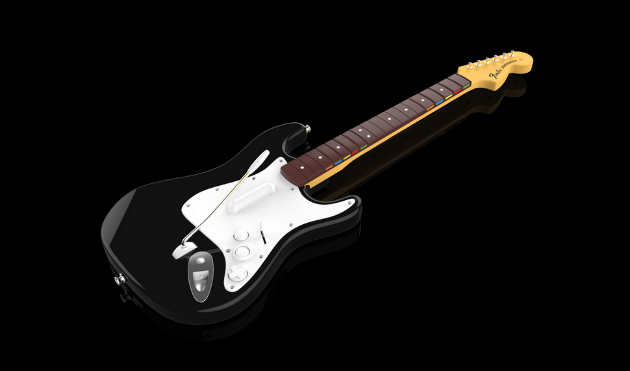 Rock Band creator Harmonix is bringing a roadie along for this year's release of Rock Band 4 -- Mad Catz, the peripheral manufacturer, will co-publish the game on Xbox One and PlayStation 4. Mad Catz is in charge of making all of the wireless instrum...

Are we about to witness a new battle of the videogame bands in 2015?
The post Rock Band and Guitar Hero May Be Returning in 2015 appeared first on WIRED.

 If you're still watching cable, it turns out that channels like TBS and TNT are now speeding up syndicated programs, classics films and other shows by as much as 7 percent. We hadn't noticed it much ourselves, but the trend was spotted by Snopes and ...
jlrgdsYep, the future is here.

The Ring is a novel idea: a person rings your doorbell, your smartphone buzzes, and with a tap, you can initiate a videochat with the visitor. Better yet, it mostly works.
The post Review: Ring Video Doorbell appeared first on WIRED.
jlrgds1 million in one galaxy? Crazy Sauce
 The M60-UCD1 is a dwarf galaxy that's so dense, you'd see 1 million stars at night if you lived in it instead of the 4,000 we typically see on Earth. Now, thanks to data from Hubble, NASA found that the galaxy, which is only 1/500th the diameter of...
jlrgdsonly 100 bucks if you want to support it by indiegogo
 Sweaters, jackets and long johns are all "wearables" that keep us warm, but they aren't all that smart -- if you walk into a room that's too hot or exercise too hard, you need to stop using them to cool down. It's an inconvenience we've grown used...
jlrgdsWhy does this feel like that Walking Dead will be more survival horror genre than the pseudo-survival horror that Resident Evil has evolved into.
 If you love Zombies, but find The Walking Dead's narrative a little too serious, pay attention: a campier option is coming soon. Constantin Film, the production group behind the Resident Evil movies has announced that the franchise is being adapted...

When Arthur Chu got the call saying he'd been selected to go on Jeopardy, his first move was thorough and decisive: He went to Google and typed in "jeopardy strategy."
"I knew that just like in terms of my natural knowledge base, I wasn't ready to go on Jeopardy," Chu told me on the phone this morning. "I wasn't like Ken Jennings—automatically knowing everything from the top of my head. So I had to train."
By training—that is, going through Internet message boards and reading up on past Jeopardy winners—Chu developed an unorthodox strategy that has made headlines over the last week. It's rare, controversial, and effective—and it's turned him into something of a grand villain for some fans of the long-running quiz show. Just one glance at his Twitter feed will show you some of the ridiculous vitriolic messages he's gotten over the past few days, as his story—and winning streak—started picking up steam. (He's won four games so far, and needs one more to get into the Tournament of Champions. His next appearance will be televised on February 24.)
So what makes Chu so unusual? While most players will start from the top of each column on the Jeopardy board and progress sequentially as question difficulty increases, Chu picks questions at random, using what's called the Forrest Bounce to hunt for the three Daily Doubles, which are often scattered among the harder questions in every game. Instead of moving from the $200 question to the $400 question and so forth, Chu might bounce between all of the $1,600 or $2,000 questions—not the kind of strategy you often see on Jeopardy.
Chu does this for two reasons. For one, it throws everyone off balance. "It's a lot more mentally tiring to have to jump around the board like that," Chu told me.
More importantly, snagging those Daily Doubles offers him a massive statistical advantage. Since Daily Doubles allow players to bet up to their entire bankrolls, just one can swing an entire Jeopardy match—and Chu's strategy is to control them all, even just to prevent other players from using them.
"The only chance you have to give yourself an edge—the only moment of power, or choice you have in Jeopardy is choosing the next clue if you got the last one right," Chu said. "So if you're unpredictable when you do that, and keep opponents on their toes, it's a lot more mentally tiring and might tick off people in the audience, but it lets you gain and keep an edge that's very important to winning the game."
Chu's Daily Double hunting can be disorienting and unpleasant for an audience accustomed to watching one category at a time. Check it out:
It's clear why this style of play—combined with Chu's slightly arrogant smirk—might upset some Jeopardy fans. But Chu points out that it isn't his job to entertain people. "For us, we're out there playing for real money, and quite a bit of money," he said. "I think it's obvious for me why that'd be more important than making the game fun for the viewers at home. I don't get paid for that—I get paid for winning the game."
Chu, who is 30, works in the legal department of an insurance company, where he reads contracts and does other technical work. He's into gaming, citing BioShock, Portal, and the Arkham games among his favorites. And his dream job, he says, is to work alongside the likes of Troy Baker and Jennifer Hale.
"My first love has always been acting and performing," Chu said, pointing me to his website, which has a voice acting demo roll. "I've always wanted to voice a video game some day... I would be happy to just be the voice of the grunt who gets killed in 20 different ways."
Chu does narration for a webcomic called Erfworld, and he even auditioned for the reality show King of the Nerds:
Chu's unusual Jeopardy strategy has netted him $108,000 so far. Given all this attention—and his success—it's likely we'll see future contestants start adopting it, but it's not a new invention: Chu cites older Jeopardy champions like Chuck Forrest and Roger Craig as inspiration for his techniques. In fact, Chu says, Jeopardy's "contestant coordinators" make it clear to everyone on the show that bouncing around the board is totally allowed.
"They tell you when you come onto Jeopardy, this is how most people play because it's easier to play the game this way—and it is," Chu said. "But the important thing for me was, I wanna maximize my chances of winning."
In theory, the producers of Jeopardy could nullify the bulk of Chu's strategy by shifting up board placement —if every question had an equal chance of being a Daily Double, board bouncing would be pointless. But there's one other wrinkle to Chu's technique: during the Final Jeopardy round, instead of playing for a win, he plays to tie.
Here's where we get into hardcore game theory: to sum it up, Chu bets for the possibilities that 1) both the first- and second-place players will get the final question right, and 2) they'll both get it wrong. (If one player is right and the other is wrong, it's safe to assume the correct player will win.)
So let's say Chu is in first place with $20,000, while, say, Julie is in second place with $18,600. Common sense might dictate that Chu should bet $17,201, so that if Julie bets her whole bankroll, and they both win, Chu beats her by a dollar. (Julie would have $37,200, while Chu would take home $37,201.)
But what if Julie considers that possibility, and then wants to bet so that she'd win if they both get the question wrong? In that case, playing on the assumption that Chu is betting $17,201, Julie would bet $15,800—that way, she'd make the most money if she was right and he was wrong, but she'd still win if they were both wrong, because Chu would have $2,799 and she'd have $2,800.
If there's a tie, of course, both players move on—so Chu bets $17,200, knowing that in both scenarios he'd make it to the next game. (Granted, Julie would still win if they both got the question wrong and she bet less than $15,800, but that's one of the risks to this approach.)
Here's one example of his plan in action:
Of course, the strategy was irrelevant in this case, because Chu was the only person to get the right answer, but you can see why he bet what he did—if they had both been wrong, a tie would be the worst-case scenario, and if they had both been right, he'd win.
It will be fascinating to see whether future Jeopardy contestants emulate Chu's strategy, and how the game changes accordingly. Internet reactions have been mixed; some fans and pundits think he's ruining the integrity of the quiz show, while others think he's improving it. No matter your position, it's hard to deny that now that "optimal Jeopardy strategy" has gone viral, Alex Trebek could have a whole new type of show to host.
"When I first started, I thought maybe I should just hide in a hole and wait for this to die down, because it's gonna be so unrelentingly negative," Chu said. "But I discovered it's not really so bad. Most people get what I'm trying to do, and don't judge me for it. And the people who don't like me? Well, you can never please everyone."
Neil Gaiman’s The Sandman is a must read for, well, for everyone. There are several printings of the many volumes in existence, but to celebrate the series’ 25th anniversary, DC Entertainment has announced the release of an epic The Sandman Omnibus Silver Edition.
This commemorative set comes in the form of a special slipcased edition that collects the entire groundbreaking series in two deluxe hardcover volumes and includes a page personally signed by Neil Gaiman. Only 500 of these bad boys were printed, and each one is numbered, which explains the “ask-for-it-as-a-present” price of $499.95.

If you’re Bruce Wayne, Tony Stark or some other millionaire playboy (or playgirl), you can order it for yourself here. They’re limiting purchases to one per person, but this is the Internet, and I promise someone will figure out a way to circumvent that, buy a bunch, and sell them for double on eBay, so act fast!

In keeping with the theme of the post, please also direct your attention to the Times Square Jumbotron, where DC Entertainment has placed an easy-to-see commercial for The Sandman: Overture, drawn by J.H. Williams, III. The commercial (which is also running on TV) features art from the new series written by Gaiman, as well as appearances of fan-favorites Death, Mer-Pumpkinhead and The Sandman himself, Morpheus.

A big bowl of pasta might be a satisfying meal, but it's a calorie bomb. Instead of making pasta the focus of a dish, make it an accent to another meal.


The WeMo Maker lets you control anything in your home with a low-voltage DC switch.
The post Review: WeMo Maker appeared first on WIRED.
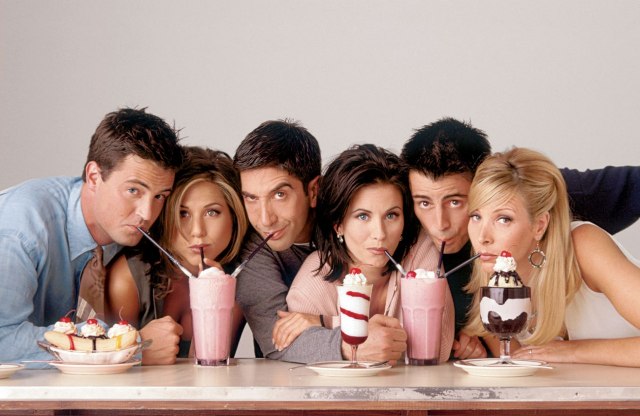 Look, folks, Netflix is (kind of) in the business of making you happy. So, what better way to do just that than by adding Friends to its content portfolio, right? Well, thanks to a new deal with Warner Bros., Netflix announced today it is bringing...
 HP's home-focused and business divisions have frequently seemed at odds with each other, and apparently the company agrees. The Wall Street Journal claims that the tech giant is about to split into two companies, one focused on PCs and the other...
jlrgdsThis is cool, if only this would be acceptable here in the states. Then online digital book rentals would be cool.
 The Court of Justice of the European Union (CJEU) has ruled that libraries have the right to digitize books and distribute them to dedicated reading terminals without first obtaining the publisher's permission. The decision rests on exceptions built...
jlrgdsSeems cool, I wonder how to tweak it and how it knows? I.e. blutooth or wifi. And how the motion detection works when it's in a base or behind a lampshade.
 Many smart light bulbs... well, aren't. You can control them, but they're often blissfully unaware of what's going on in your home. Stack aims to change that with its recently unveiled Alba bulb. This sensor-packed illuminator changes brightness and...
Did you see Godzilla and feel disappointed by the dearth of, well, Godzilla? That's because the kaiju is only onscreen for about eight minutes. Here are all of them.
The post Watch Every Minute That Godzilla Is Actually in Godzilla appeared first on WIRED.

jlrgdsOooh Eemm Geee.... I NEED THIS
 4K is so last week. Most of us haven't added one of those displays as part of our daily workflow yet, and Dell's 5K option is on the way. The UltraSharp 27 Ultra HD 5K monitor claims a world's first with said resolution. In terms of dimensions,...

 Some researchers study carbon nanotubes -- and then there are these guys. Thomas Wagner and his students from Kaiserslautern University in Germany took an Oculus Rift headset onto a real rollercoaster to transform it into an virtual experience....
jlrgdsNeato

The Pocket Kick from Soundfreaq is small ("pocket" is probably a misnomer, but it is very tiny), it costs $100, and the sound quality it produces puts it at the head of the class of small speakers at this price.
The post Jazz in Your Pants appeared first on WIRED.
jlrgdsThis seems sweet, specs are delicious. Runs ~400 however, so if I were debating between Ps4 and this, I'll prolly grab the ps4. I like the 5 processors (switch to a smaller processor for less battery consumption) I still wonder the battery life on the bugger.

With both the 8.4-inch and 10.5-inch Galaxy Tab S, Samsung has managed to stand out in a sea of lookalike tablets. Even more impressive, they’ve managed to do it without resorting to ridiculous gimmicks.
The post Light and Bright appeared first on WIRED.
jlrgdsI like the idea of cars that do more than just ping each at each other. I'd love to also send driver to driver messages too.