Shared posts

17 Nov 09:18

School: Please don't throw your children over the gate when they are tardy

by David Pescovitz

In Avignon, France, Trillade Primary School has strongly advised parents to stop throwing their tardy children over the building's 1.8 meter gate. The school requests that you return at one of the two other times during the day when the gate reopens. — Read the rest

16 Nov 02:32

Grace Notes: Techno Is Music

by Marc Weidenbaum
Roslyn

Hold on: Fun fact: half the internet’s traffic is Netflix, and a solid quarter is boilerplate confidentiality statements at the end of emails. !!!!!

Some tweet observations (twitter.com/disquiet) I made over the course of the past week, lightly edited.

▰ Techno is music. Thus declared a German court (news.yahoo.com) at the end of last month. This brings with it beneficial tax/revenue implications for clubs, putting them in the same category as concert venues. (That it was in doubt is beyond me but that’s another story.) It’s interesting this is framed entirely in terms of DJs. I know I’m a wallflower who optimizes for a healthy sleep cycle, but maybe live techno was already exempted, or maybe it’s just a fraction of what clubs are booking. (Well, “were” booking. Covid and all.)

▰ The Bandcamp of late Nigerian drummer Tony Allen (pivotal figure in the work of Fela, and master of his own music as well) uploaded his Film of Life LP. An instant, and much-needed, mood lift. Allen died at the end of April, what feels like a lifetime ago.

FILM OF LIFE by TONY ALLEN

▰ Once in a while an article comes out that I get wind of from friends with almost as much frequency as when Roy Orbison died. This New York Times piece by Sabrina Imbler is such a piece (“Could Listening to the Deep Sea Help Save It?). And it is fascinating.

▰ “A billion tiny sensors would hang motionless in an enclosed space, monitored by an extremely precise network of lasers able to measure movements of less than a fraction of a proton’s diameter”: dark matter detection inspired by wind chimes: gizmodo.com.

▰ Sound-adjacent, but worth a notch in the mental notebook that 350,000 doorbells were recalled (nytimes.com) due to a fire hazard. (“Customers do not need to return their devices.”)

▰ New DeLillo and Lethem novels released within a month of each other. The world could be in worse shape.

▰ Is there any way to find out which SoundCloud accounts one follows haven’t uploaded new tracks in over a year or two? I’d like to clean out the accounts I follow to make room to add new ones. Thanks.

▰ Fun fact: half the internet’s traffic is Netflix, and a solid quarter is boilerplate confidentiality statements at the end of emails.

▰ “Please wait for the host to start this meeting.”

15 Nov 03:57

Those old and new service sector jobs

by Tyler Cowen

In case you thought Cambridge ceremonies were just for the tourists: the porters in my college have been delivering food to self-isolating students & announcing their arrival with an actual plague bell

Here is the link, via John Chilton and Irwin Collier.

The post Those old and new service sector jobs appeared first on Marginal REVOLUTION.

09 Nov 16:45

Photo

Roslyn

Ooh, I wonder where this is...


08 Nov 21:28

blue–folder:Garbage Day!!!!


blue–folder:

Garbage Day!!!!

06 Nov 02:03

Keep calm and make ugly art

by Austin Kleon
Roslyn

Sharing for GOOD ADVICE all round.

In his latest newsletter, L.M. Sacasas writes about the “emotional roulette” of checking social media. “You never quite know what news you’ll encounter and how it will mess with you for the rest of the day.”

Worse is “doomscrolling,” the endless surfing we do “when we give ourselves over to the flood of information and allow it to wash over us.”

Whatever else one may say about doomscrolling, it seems useful to think of it as structurally induced acedia, the sleepless demon unleashed by the upward swipe of the infinite scroll (or the pulldown refresh, if you prefer). Acedia is the medieval term for the vice of listlessness, apathy, and a general incapacity to do what one ought to do; ennui is sometimes thought of as a modern variant. As we scroll, we’re flooded with information and, about the vast majority of it, we can do nothing … except to keep scrolling and posting reaction gifs. So we do, and we get sucked into a paralyzing loop that generates a sense of helplessness and despair.

In his essay about Iago in the The Dyer’s Hand and Other Essays, W.H. Auden makes this life-changing distinction: Instead of asking yourself, “What can I know?” ask yourself, “What, at this moment, am I meant to know?”

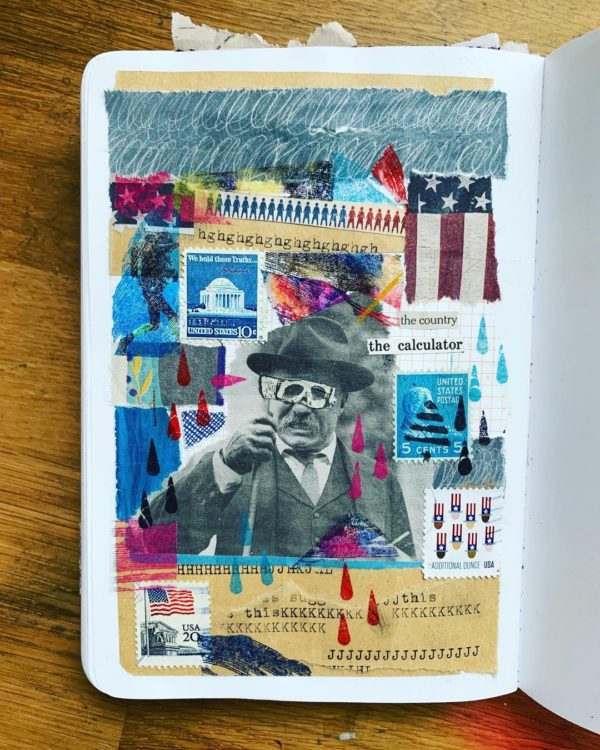
I’m usually good at avoiding doomscrolling and the Pavlovian pull and release of refreshing Twitter (ever notice how there’s very rarely anything refreshing about refreshing?), but the election has destroyed most of my willpower. I’ve been busying my hands with The Cube and soothing my brain with the calm of collage, especially “ugly” ones like this one:

Some kind souls on Twitter said, “How do you consider this to be ugly?” The product might not end up ugly, but the process is my attempt to make ugly or “bad” art, which I think is often much more fun and more helpful than trying to make “good” art. (“Every time we make a thing, it’s a tiny triumph.”)

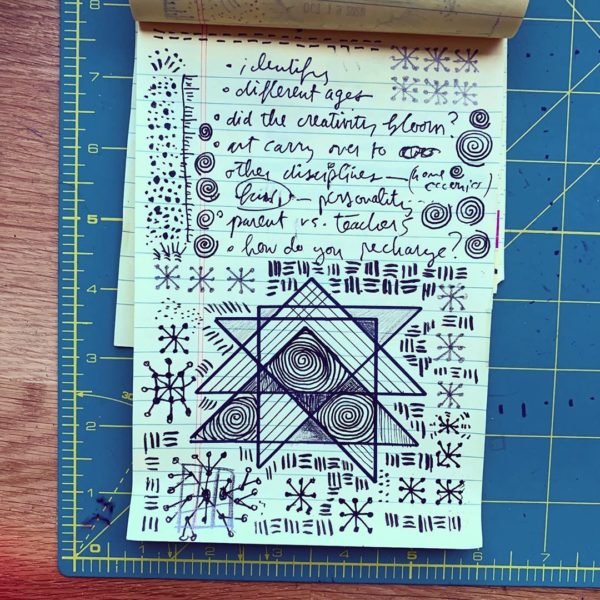
I’ve also been doing a lot of doodling on notepads. (In addition to all my notebooks, I keep one of these little legal pads on my desk for random notes.) Drawing  is something to do and it is part of a cure and when you draw the world becomes a little bit more beautiful. (If you need some guidance, try a blind contour drawing or my friend Wendy MacNaughton’s four drawing exercises to help with a hard day.)

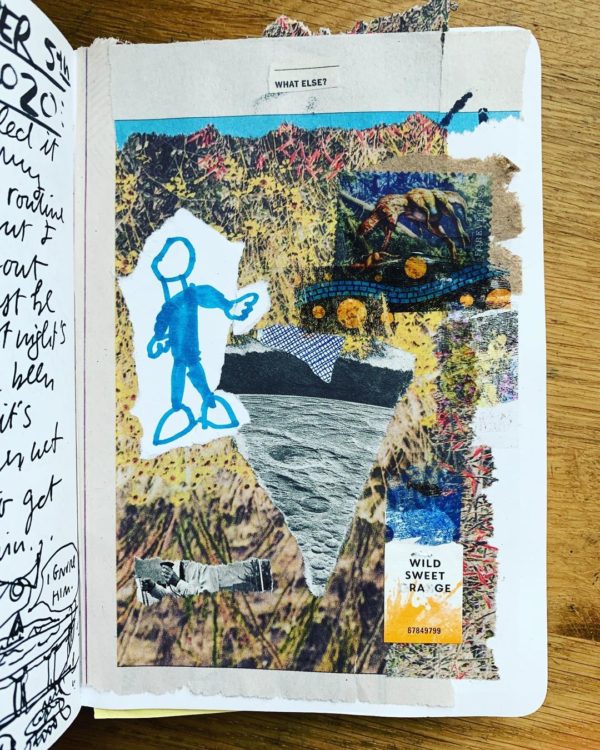
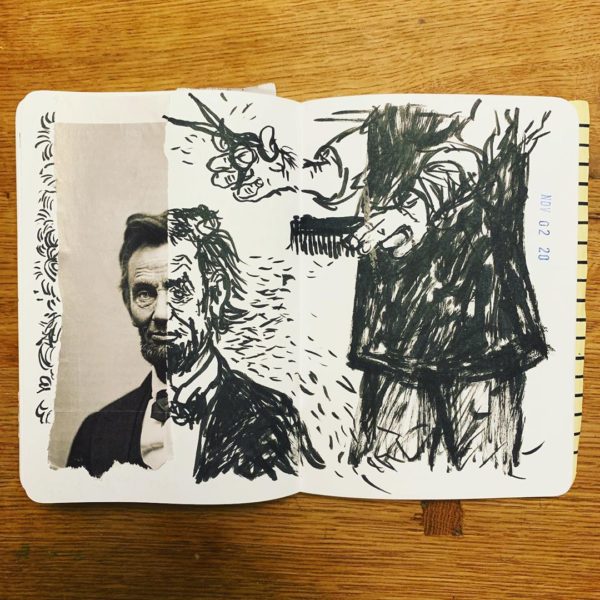
Here I’ve combined collage and drawing: I ripped a picture of Abe Lincoln in half, pasted one half in my notebook, and as I was copying the second half, got the idea to make his hair shaggy… and then add a barber? Who knows where these images come from…

01 Nov 03:56

Happy Halloween! A mural of a pink skeleton covers the grounds...


Happy Halloween! A mural of a pink skeleton covers the grounds at Reservoir Skatepark in northern Melbourne, Australia. This piece spans roughly 20,000 square feet (1,858 sq. m) and is one of many large murals in the area created by local artist Kitt Bennett. For a sense of scale, 20,000 square feet is nearly half the size of an American football field.

See more here: https://bit.ly/320L4J0

-37.711934°, 144.992803°

Source imagery: Nearmap

31 Oct 00:28

“Wear a Fucking Mask” — So there *is* intelligent...


“Wear a Fucking Mask” — So there *is* intelligent life out there

31 Oct 00:23

The Ghoul of IC 2118

Roslyn

It’s Halloween! 🎃

The Ghoul of IC 2118 The Ghoul of IC 2118


29 Oct 13:23

High-visibility costumes for distanced viewing

I’ve used neural networks to generate Halloween costumes in the past, but the early ones struggled with their complete lack of context for the training data. Why is Statue of Liberty a plausible costume yet Statue of Pizza isn’t? Those neural networks, which had to learn to spell English from scratch from a crowdsourced list of example costumes, had no way of knowing.

In 2019 I used GPT-2, a larger neural network pre-trained on a bunch of internet text, and then finetuned it on the same list of example costumes. It was able to make connections from other data it had seen online and come up with costumes that were plausible (incognito llama, gothy giraffe, space squirrel) and not-so-plausible (Batman on egg, penguin as a newt, pajamas made of wood and spiders).


image

Now in 2020 I have access to GPT-3, which was trained on an even larger set of internet data than GPT-2. It’s too large for me to finetune with costume data any more, but if I give it the opening of an article about popular 2020 costumes, it’ll write a fairly boring imitation of dozens of articles it saw online (apparently the most popular costumes of 2020 will be “Scary Scream Mask”, “Poison Ivy Dress”, or “Power Armor Costume 7”). To get something unusual, something that’s more obviously the work of AI, I had to set the scene by starting it off with an article opening it could never have seen in its October 2019 training data:


Prompt:  Halloween will be a bit different this year, with big costume parties and Halloween parades now ruled out by a virus much scarier than anything we could dress as.  The solution: Halloween costumes that can easily be seen from a large distance! Rather than dress as a witch, why not dress as an enormous tyrannosaurus rex witch?  I gave a standard list of costume ideas to a neural net, and had it transform them into highly-visible, long-distance costumes. Here's a list of some of its most interesting:  1.

With that as the prompt, the neural network had to write the rest of the text, which it now knew was probably going to contain a list of costumes. Here are some of my favorites:


1. Walk around your neighborhood dressed as an endangered peacock. The neighbors will know who painted the fence but can't yell at you if you're way too far away.  8. Bright yellow cardigan over a clownishly oversized suit, with a small meow on your shower cap. Make sure to sit in very visible places, so that everyone can wonder who is wearing the weird outfit up in the seats.    5. Buy a bunch of telescope lenses. Mount them on your arms. Become 'The Costume Inspector.'   8. Very long, very large horns. Just non-stop honking. Also if your large horns make noise that makes you vibrate like a tuning fork whenever you hit them together they're even better.    7. Dress up in opaque clothing that simply says 'PEPPER SPAGHETTI' in neon lights. Own it and like it.    8. Tie two balloons to your head with small handwritten notes attached: 'THE MASTERMINDS BEHIND THIS COSTUME ARE TOO FAR AWAY FOR ME TO READ ABOUT THEM.'    12. You're just gonna throw on a wig and some lipstick and a bathrobe. The toothbrush glued onto the forehead helps a lot.

Or this set. Higher effort, higher payoff.


i8. Put an enormous elf hat on a seagull. Fly around. Dance awkwardly on the beach while covered in steak sauce — everyone will know you're enjoying the beach, but they won't be able to yell at you about it.     6. Wrap yourself in a thin plastic sheet and tape it up as far as you can see. Let it flow out at the ground. To increase visiblity, you could tape this plastic overflow up to adhere onto other subjects, including park pigeons.    5. An enormous dancer, skirt flying behind you, hundreds of glowing feet underneath, running around in public as fast as humans run, the most bizarre urban incident New Yorkers have seen all Halloween.    5. Do you live near Dave? If you could show up in Times Square in a Dave costume the size of all of Times Square, that would be the final touch for one of the greatest tourist attractions on Earth.    9. In extremely public places, visit a random newsstand in a generic gray suit, with a binder of clip art

I know neural networks don’t actually understand humans, but it’s responses like these that make it seem like they understand us all too well.


7. Why wear a head piece? If you dress as an enormous raven and spend the whole night cawing loudly on a perch, I can't think of a single good reason for anyone to stay mad at you.    9. You want to have friends over for a costume party, but you live in a cul-de-sac. Odds are the nightmarish experience will turn them away from your house forever, so here's a great idea: dress as dark clouds and rain, and then everyone else will hide inside!    6. It's raining, and you want to get home. Are you dressed as a Ninja Turtle, the Ghost of Christmas Past, a tree, or Ben Carson? Nobody will know, nobody will care, and it's raining.    4. Use ancient magic to transform into an enormous roadside billboard.    6. Find a mountain. Make a costume out of sand. Stay on top of the mountain overnight and watch the sunrise through your sand face.   9. Dozens and dozens of red ribbons, flying out into the sky behind you    6. Everyone brings a long rope. Loop the rope around the earth, and put a costume around it. Now just walk around.

Subscribers get bonus content: When I was trying out costume-generating prompts, I did come across one that produced some pretty fun results: “Great dinosaur-themed costume ideas for 2020”. Yes, I guess “Blue-footed Booby” is technically a dinosaur, but I’m not so sure about “Sheep in the Moon” or “a potato in a pot on top of a stove that comes alive.”

My book on AI, You Look Like a Thing and I Love You: How Artificial Intelligence Works and Why it’s Making the World a Weirder Place, is available wherever books are sold: Amazon - Barnes & Noble - Indiebound - Tattered Cover - Powell’s - Boulder Bookstore

29 Oct 02:26

sirensandsatyrs: mockwa: Fluid dynamics in all its...


sirensandsatyrs:

mockwa:

Fluid dynamics in all its glory

This is worth 26 seconds of your life.

27 Oct 05:43

New draft emoji include 3 proposals I co-wrote!

Roslyn

Coming soon...ish!

superlinguo:

A draft list of proposed emoji were recently passed through Unicode. This set included three emoji that I co-wrote proposals for: Palm Up Hand, Palm Down Hand and Face With Peeking Eye. These three proposals were written with Gretchen McCulloch and Jennifer Daniel.

These proposals came directly out of the work I did with Gretchen looking at the way emoji act as digital gestures. A palm up gesture means you’ll be able to offer someone cake, a palm down means you’ll finally get a mic drop. And a peeking eye offers an interpersonal meta-commentary we felt was missing from the current set.

You can see details on the full set of 35 recommended emoji and the proposals in this PDF document (Unicode do a lot in PDF rather than on websites!).

For each of the proposals we wrote, you can see the PDF here:

From here these emoji will be added to the draft candidate list on the Unicode website, and if they pass muster they will be on devices as part of Unicode 14.0 in 2022. Things don’t move fast when you’re implementing permanent standards!

image

I’m also looking forward to seeing the hands heart, as well as the heart fingers/money gesture, and the pointing at you emoji. I also feel like I’m going to get a lot of use out of melty face and flat battery.

See also:

I’m excited to be working on proposing more hand and face emoji along with Lauren Gawne and Jennifer Daniel! 

Previously: New emoji are so boring – but they don’t have to be (article in Wired)

27 Oct 05:31

Researchers 3D-printed a cell-sized tugboat

by Steve Dent
Roslyn

So very cute! Tiny McBoatface

Physicists at Leiden University in the Netherlands have 3D printed what could be the world’s smallest boat, a test object known as Benchy (via Gizmodo). At 30 microns long, it’s a third smaller than the thickness of a human hair and about six times l...
27 Oct 05:29

Halloween logicals

by Nathan Yau

From Kaz Miyamol, these Venn diagrams present very important information about Halloween.

Tags: Halloween, humor, logic

15 Oct 23:37

Wayward birds: explained! Link here.Don’t forget to vote <3


Wayward birds: explained! Link here.

Don’t forget to vote <3

14 Oct 00:47

The cold open

by Seth Godin
Roslyn

I wouldn't. normally share something like this, but this is particularly insightful! I hate the elevator pitch, but love the elevator question.

No one ever bought anything on an elevator. The elevator pitch isn’t about selling your idea, because a metaphorical elevator is a lousy place to make a pitch.

When you feel like you’re being judged and only have a minute to make a first impression, it’s tempting to try to explain the truth and nuance of who you are, what you’ve done and what you’re going to do in the time it takes to travel a few floors.

That rarely works.

The alternative is the elevator question, not the elevator pitch. To begin a conversation–not about you, but about the person you’re hoping to connect with. If you know who they are and what they want, it’s a lot more likely you can figure out if they’re a good fit for who you are and what you want. And you can take the opportunity to help them find what they need, especially if it’s not from you.

Too often, we feel rejected when in fact, all that’s happened is a mismatch of needs, narratives and what’s on offer.

Instead of looking at everyone as someone who could fund you or buy from you or hire you, it might help to imagine that almost no one can do those things, but there are plenty of people you might be able to help in some other way, even if it’s only to respect them enough to not make a pitch.

No one wants to be hustled.

12 Oct 21:35

alisonzai:

Roslyn

Same

08 Oct 22:37

Colour Controversy is a game of perception and labeling

by Nathan Yau
Roslyn

Love this! I saw purple, green, yellow...

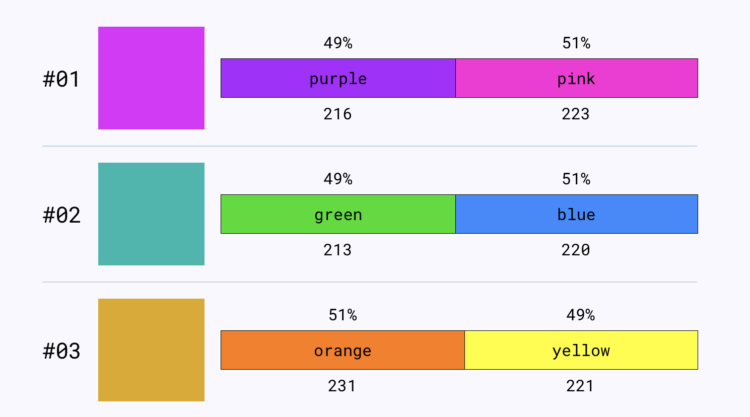
Colour Controversy is a simple game that shows you a shade and asks you what color it is. The fun part is that the shades are usually in between two colors, say blue and green, and you can only choose one. A running tally is kept so that you can see the “most controversial” colors.

Tags: color, game, perception

06 Oct 06:27

Тяжёлый год – Hoy estoy peor que ayer – Fuck 2020

by Mark Liberman
Roslyn

This is a very depressing, and apt, saying.


The discussion on twitter pointed to a lyrical version of the Russian attitude in Semyon Slepakov's Тяжёлый год (lyrics and translation available at the link):

And an Argentinian version in La Mosca Tsé-Tsé's Hoy Estoy Peor Que Ayer:

This reminded me of a recent English approximation from Avenue Beat, which presents the (apparently un-ironic) American belief that next year might actually be better:

I expect that readers will know relevant sayings and songs from other languages and cultures.

05 Oct 00:06

Zoo Parrots Removed From Public View After Swearing At Guests And Laughing About It

by Sloane Hughes
Roslyn

I love this so much! 🦜

Lincolnshire Wildlife Park | Screenshot from Instagram

They did nothing wrong!!

Parrots are incredibly intelligent birds capable of some truly amazing things, like problem solving and complex communication, and they’re also agents of chaos. They appear in the news more often than most animals because they get up to stuff that, to put it mildly, isn’t very typical. Say, for example, developing an online shopping addiction or getting arrested as an accomplice in a major drug bust. Y’know, just slightly unusual behaviour.

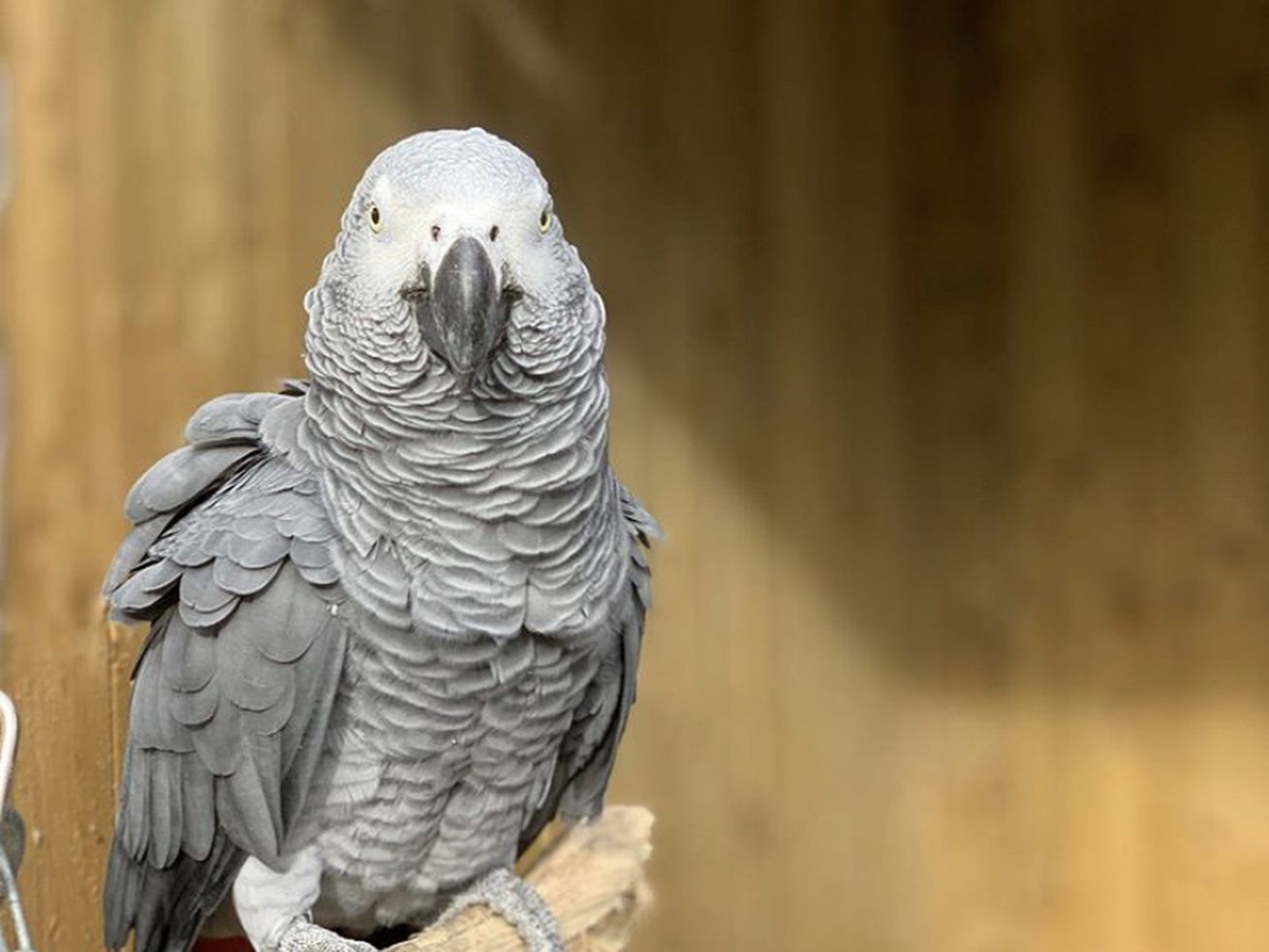
The most recent development in the ongoing chronicles of Havoc Unleashed Upon The World By Parrots comes to us from England, where five African greys had to be removed from public viewing at Lincolnshire Wildlife Park. What was their offense?

Swearing at everyone, all the time.

According to the Associated Press, the guilty parties, Eric, Jade, Tyson, Elsie, and Billy, all arrived at the park back in August and were placed in quarantine together before being moved into the main outdoor aviary. And, apparently, the time they spent together was enough for them to learn a very, erm, colorful vocabulary from some of the staff, and then from each other.

The five parrots picked up a couple curse words here and there, and every time the park’s keepers laughed, it encouraged them to keep ramping things up — not only by learning more swear words and using them very liberally, but also by laughing at themselves.

I don’t know if I’ve ever felt more connected to another species than I do to these parrots who yell “fuck off” at passersby and laugh about it afterward.

Nature is so beautiful.

“Most parrots clam up outside,” said Steve Nichols, the zoo’s chief executive, “but for some reason these five relish it.”

The official word is that these magnificent birds with the mouths of sailors have been separated and moved to different parts of the park so they don’t continue to cuss out the park’s guests, which sucks because, let’s be honest, we’d all pay more to visit parrots who swear like a drunk uncle at Thanksgiving dinner.

01 Oct 22:46

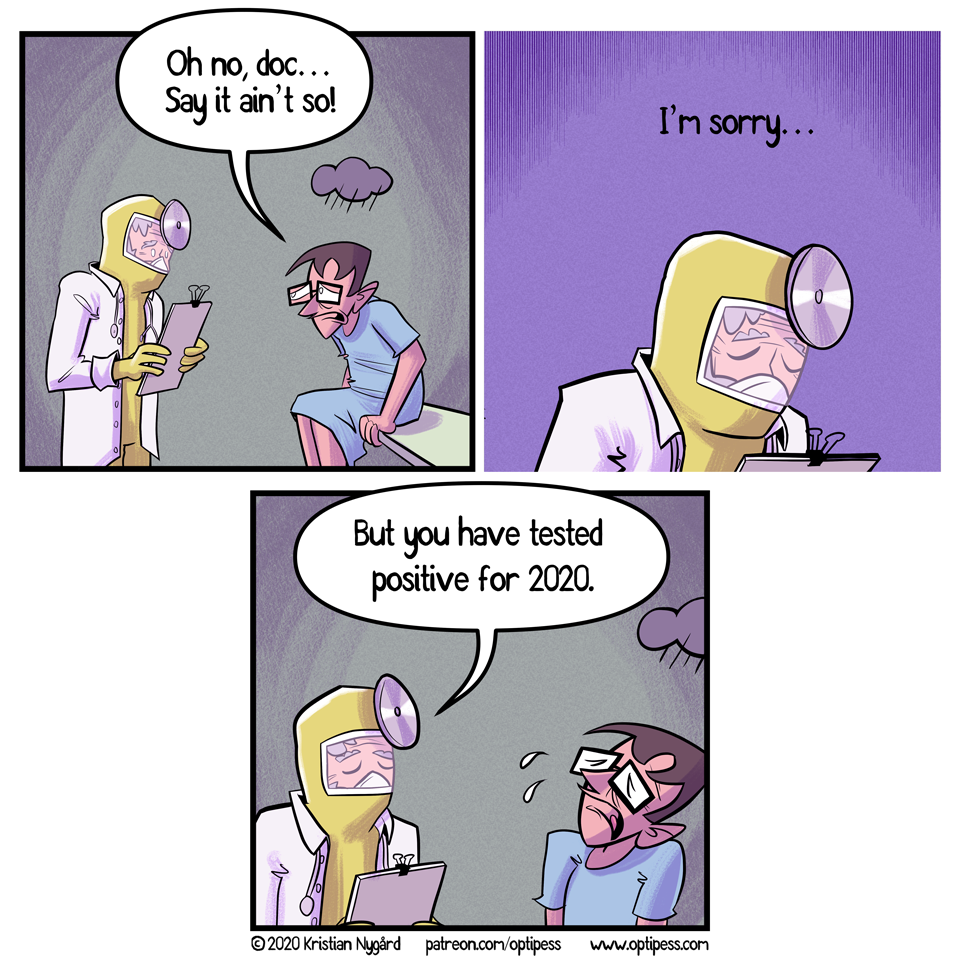
2020


2020

29 Sep 04:01

Landau Genius Scale ranking of the smartest physicists ever

by Paul Ratner


  • Nobel-Prize-winning Soviet physicist Lev Landau used a scale to rank the best physicists of the 20th century.
  • The physicist based it on their level of contribution to science.
  • The scale was logarithmic, with each level being 10 times more valuable.


    Lev Landau (1908-1968) was one of Soviet Union's best physicists. He made contributions to nuclear theory, quantum field theory, and astrophysics, among others. In 1962, he won a Nobel Prize in Physics for developing the mathematical theory of superfluidity. Landau also wrote an immensely influential textbook on physics, teaching generations of scientists.

    A brilliant mind, Landau liked to classify everything in his life. He ranked people by their intelligence, beauty (he had a penchant for blondes), contributions to science, how they dressed, and even how they talked – often with a healthy dose of sarcasm.

    One of the most famous of Landau's classifications that has been passed down is his ranking of the greatest physicists of the 20th century. Of course, it wouldn't have later physicists, as he died in 1968, but these are arguably the most significant names.

    This scale is logarithmic, meaning people ranked as rank 1 contributed ten times more (according to Landau) than people ranked as class 2, and so forth. In other words, the higher the number, the less valuable the physicist.


    Here's how this scale broke down:

    Rank 0.5 – Albert Einstein (1879 - 1955)

    Einstein, the creator of the Theory of General Relativity, is in a class of his own. Landau thought he was by far the greatest mind among a very impressive group that redefined modern physics.

    Landau added, however, that if the list was to be expanded to scientists of the previous centuries, Isaac Newton (1643 - 1727), the titan of classical physics, would also join Einstein at first place with 0.5.

    Rank 0.5 – Albert Einstein


    Rank 1 


    The group in this class of the smartest physicists included the top minds that developed the theories of quantum mechanics.

    Werner Heisenberg (1901 - 1976) - a German theoretical physicist, who's achieved pop-culture fame by being the name of Walter White's alter ego in Breaking Bad. He is known for the Heiseinberg Uncertainty Principle and his 1932 Nobel Prize award flatly states it was for nothing less than "the creation of quantum mechanics".

    Erwin Schrödinger (1887 - 1961) - an Austrian-Irish physicist who gave us the infamous "Schroedinger's Cat" thought experiment and other mind-benders from quantum mechanics. The Nobel-prize-winner's Schrödinger equation calculates the wave function of a system and how it changes over time.


    Paul Dirac (1902 - 1984) - another quantum mechanics giant, this English theoretical physicist shared the 1933 Nobel Prize with Erwin Schrödinger "for the discovery of new productive forms of atomic theory."

    Niels Bohr (1885 - 1962) - a Danish physicist who made founder-level additions to what we know of atomic structure and quantum theory, which led to his 1922 Nobel Prize in Physics.

    Satyendra Nath Bose (1894 - 1974) - an Indian mathematician and physicist, known for his quantum mechanics work. He collaborated with Einstein to develop the Bose-Einstein statistics and the theory of the Bose–Einstein condensate. Boson particles are named after him.


    Eugene Wigner (1902 - 1995) - a Hungarian-American theoretical physicist who received the 1963 Nobel Prize in Physics for work on the theory of the atomic nucleus and the elementary particles. Famously, he took part in the meeting with Leo Szilard and Albert Einstein that led to them writing a letter to President Franklin D. Roosevelt which resulted in the creation of the Manhattan Project.

    Louis de Broglie (1892 - 1987) - a French theorist who made key contributions to quantum theory. He proposed the wave nature of electrons, suggesting that all matter has wave properties – an example of the concept of wave-particle duality, central to the theory of quantum mechanics.

    Enrico Fermi (1901 - 1954) - an American physicist who's been called the "architect of the nuclear age" as well as the "architect of the Atomic bomb". He also created the world's first nuclear reactor and won the 1938 Nobel Prize in Physics for work on induced radioactivity and for discovering transuranium elements.


    Wolfgang Pauli (1900-1958) - an Austrian theoretical theorist, known as one of the pioneers of quantum physics. He won the 1945 Nobel Prize in Physics for discovering a new law of nature – the exclusion principle (aka the Pauli principle) and developing spin theory.

    Max Planck (1858-1947) - a German theoretical physicist who won the 1918 Nobel Prize in Physics for energy quanta. He was the originator of quantum theory, the physics of atomic and subatomic processes.

    Rank 2.5


    Rank 2.5 is where Landau initially ranked himself, rather modestly, thinking he didn't produce any foundational accomplishments. He later moved his prominence, as his achievement mounted, to the higher 1.5.

    23 Sep 01:49

    Positively Negative

    by Kristian

    Oof, I guess the news this weekend really kicked my ass.

    RIP RBG.

    22 Sep 21:55

    Autological humor

    by Mark Liberman

    A guest post (guest list?) by Anthony Bladon:

    • A verb walks into a bar, sees an attractive noun, and suggests they conjugate. The noun declines.
    • An Oxford comma walks into a bar, where it spends the evening watching television, getting drunk, and smoking cigars.
    • A dangling participle walks into a bar. Enjoying a cocktail and chatting with the bartender, the evening passes pleasantly.

    • A bar was walked into by the passive voice.
    • An oxymoron walked into a bar, and the silence was deafening.
    • Two quotation marks walk into a “bar.”
    • A malapropism walks into a bar, looking for all intensive purposes like a wolf in cheap clothing, muttering epitaphs and casting dispersions on his magnificent other, who takes him for granite.
    • Hyperbole totally rips into this insane bar and absolutely destroys everything.
    • A question mark walks into a bar?
    • A non-sequitur walks into a bar. In a strong wind, even turkeys can fly.
    • A mixed metaphor walks into a bar, seeing the handwriting on the wall but hoping to nip it in the bud.
    • A comma splice walks into a bar, it has a drink and then leaves.
    • Three intransitive verbs walk into a bar. They sit. They converse. They depart.
    • A synonym strolls into a tavern.
    • At the end of the day, a cliché walks into a bar — fresh as a daisy, cute as a button, and sharp as a tack.
    • A run-on sentence walks into a bar it starts flirting. With a cute little sentence fragment.
    • Falling slowly, softly falling, the chiasmus collapses to the bar floor.
    • A figure of speech literally walks into a bar and ends up getting figuratively hammered.
    • An allusion walks into a bar, despite the fact that alcohol is its Achilles heel.
    • The subjunctive would have walked into a bar, had it only known.
    • A misplaced modifier walks into a bar owned by a man with a glass eye named Ralph.
    • The past, present, and future walked into a bar. It was tense.
    • A dyslexic walks into a bra.
    • A simile walks into a bar, as parched as a desert.
    • A gerund and an infinitive walk into a bar, drinking to forget.


    22 Sep 10:43

    9/21/20

    by swissmiss

    I needed this. Thanks for the smile, Demi Adejuyigbe! (There are 4 more of these!)

    22 Sep 10:41

    for @newscientist #science #cartoon...

    Roslyn

    🐍


    for @newscientist
    #science #cartoon #snakes
    https://www.instagram.com/p/CFZge4fnL2w/?igshid=47smlqt2x8fn

    22 Sep 03:10

    Map of climate threats where you live

    by Nathan Yau

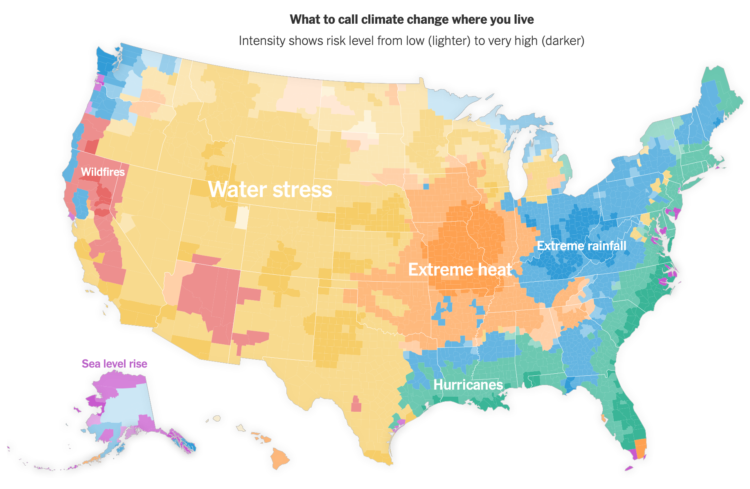
    For NYT Opinion, Stuart A. Thompson and Yaryna Serkez mapped the most predominant “climate threat” in each county:

    This picture of climate threats uses data from Four Twenty Seven, a company that assesses climate risk for financial markets. The index measures future risks based on climate models and historical data. We selected the highest risk for each county to build our map and combined it with separate data from Four Twenty Seven on wildfire risks.

    Got me thinking about Tim Meko’s maps of natural disasters.

    Tags: climate change, Four Twenty Seven, New York Times

    18 Sep 10:08

    Solar Cycle 25 Begins

    Roslyn

    Happy new solar cycle!

    Solar Cycle 25 Begins Solar Cycle 25 Begins


    14 Sep 18:01

    Ultra Slow-Motion Video of Insects Taking Flight

    by Jason Kottke
    Roslyn

    This video is extremely great.

    Research biologist Adrian Smith, who specializes in insects, recently filmed a number of different types of flying insects taking off and flying away at 3200 frames/sec. Before watching, I figured I’d find this interesting — flying and slow motion together? sign me up! — but this video was straight-up mesmerizing with just the right amount of informative narration from Smith. There’s such an amazing diversity in wing shape and flight styles among even this small group of insects; I had to keep rewinding it to watch for details that I’d missed. Also, don’t miss the fishfly breaking the fourth wall by looking right at the camera while taking off at 6:07. I see you, my dude.

    Smith has previously captured flying ants in slow motion and this globular springtail bug that spins through the air at more than 22,000 rpm. (via moss & fog)

    Tags: Adrian Smith   flying   science   slow motion   video
    14 Sep 17:50

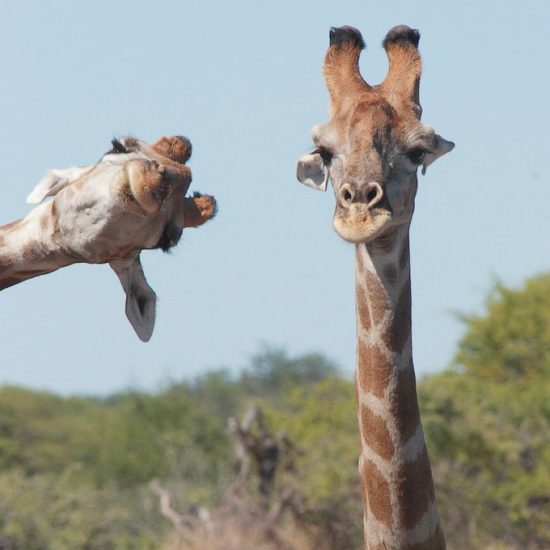
    Comedy Wildlife Awards.

    by P&C

    A reliable mood enhancer, this years finalists are now online.