The Muppets released a shorter version of this video a little while ago, but here’s the whole short, with lots more shirt ripping, insults, and bleeping bleeps.
While much of Australia was busy watching their team win back an urn full of ashes yesterday, Attorney-General George Brandis was applying the torch to our Human Rights Commission by announcing our next Human Rights Commissioner: Tim Wilson, former policy director of the radical neoliberal think-tank, the Institute of Public Affairs (IPA).
The very same IPA this year recommended these 75 radical ideas to transform Australia, including abolishing the carbon tax and replacing it with nothing, repealing section 18C of the Racial Discrimination Act, abolishing the ACCC and ACMA, withdrawing from the Kyoto Protocol, immediately halting the NBN, repealing the Fair Work Act, privatising SBS, CSIRO, Australian Institute of Sport, Australia Post, and Medibank, dismantling the ABC, and defunding Harmony Day.
Ironic that someone who preaches steadfastly against needless bureaucracy will now accept a $300,000+ salary, no? And what for, exactly?
Wilson’s new role has the stirring, hand-on-your-heart informal title of Freedom Commissioner. It seems his main purpose will be to champion the fundamental human right of being free to talk shit on people, regardless of how much one’s position of privilege and influence might mean those words wreak damage on the people already marginalised by the structures holding up our far-from-level playing field.
In an op-ed for The Australian this morning, Wilson penned a persuasive defence of free speech, free expression, and free press. Here’s a quote: “A direct extension of free speech is press freedom. Protecting free speech is fundamental to the operation of liberal democracy. It is an essential principle for freedom of the press. Free speech and press freedom are one and the same; they are essentially interchangeable and mutually reinforcing concepts.”
It’s interesting that the press freedom battle which conservatives like Wilson choose to fight is with the Racial Discrimination Act: “Increasingly free speech has been pushed aside in favour of laws and regulations designed to stop people being offensive to each other,” Wilson writes. There are far greater threats to press freedom in our country at the moment, with far more dangerous consequences for human rights. Why isn’t he commenting on the Abbott Government’s asylum seeker media blackout? Where is his defence of Wikileaks, Edward Snowden and Chelsea Manning?
In a statement yesterday, Wilson used an interesting choice of words to describe his approach to the new role: “As Human Rights Commissioner I will put freedom on the offensive: where it belongs.”
To be fair, he appears well qualified for the position of bringing balance to the rabid bleeding-heart leftism that has apparently been tarnishing the reputation of Australia’s Human Rights Commission in recent years. Somebody has to protect the human rights of established elites: they’re people too!
Here’s a brief resume of some recent media appearances and articles by Wilson, on a number of key issues relating to human rights and individual freedoms:
-
On The Right To Discriminate
Wilson defends our fundamental human right to say offensive shit, in opposition to the oppressive agenda of his future employer, the Human Rights Commission, which pursues anti-discrimination at the expense of unbridled free speech. (Well, used to).
“Human rights these days have been conflated well outside of their ambit of what is a human right,” he says, “and the Australian Human Rights Commission is … pursuing anti-discrimination as a very important measure, at the expense of focusing on human rights.”
-
On The Right To Drive Too Fast
Wilson defends the fundamental rights of racing car drivers to put lives at risk by hooning around suburban streets as fast as they bloody well like.
“You’ve got to come to the realisation that there’s going to be a point where there are a number of road deaths that are unavoidable. That’s what happens when you send cars heading down a road at a fast pace. Meanwhile you have this and other examples of government regulating people’s lives.”
-
On The Right To Cheap Smiths Chips
Wilson defends our fundamental human right to buy affordable Smiths Chips in the face of the poverty an Emissions Trading Scheme would undoubtedly inflict on ordinary Australians.
“I can tell you exactly how much this [packet of chips] is going to go up. In the first year it’s only going to go up by a few cents. But this is a tax that goes up every single year and by 2020 this will have gone up by 9.15% and will have basically doubled the GST. And then it continues to go up into eternity.”
-
On The Right To Treat Our Planet However We Like
Here he is appearing as the IPA’s Climate Policy Director on a special climate change denial themed episode of the Bolt Report (skip to 3:30 unless you want to watch Bolt’s hilarious editorial):
“If you go back and look at the original polling data when the public actually said they were concerned about climate change, a lot of it related to the drought. Now, I don’t think there’s any ambiguity: the drought has officially broken.”
-
On The Right Of Men To Be Unburdened By Children
Wilson defends the average male taxpayer’s fundamental human right to enjoy the privilege of being born a man, on Q&A: “It’s not my choice that women have children. It’s genetic!”
(Skip to 2:05 for the comment, which even prompts Liberal MP Kelly O’Dwyer to quip “I think you might have lost the crowd, there”).
-
On The Right To Gambling Addiction
Here’s Wilson speaking at the ABC’s Battle of the Think Tanks in 2011. Skip to 6:06 to hear his argument against the regulation of the gambling industry, in which he describes harm-minimisation measures like mandatory pre-commitment for poker machine use as “fundamentally immoral”.
-
On LGBTI Rights
Wilson is a strong supporter of marriage equality, as well as one of a relative-few out-and-proud conservative voices — but his anti-discrimination stance sits uncomfortably with much of the work of the LGBTI movement. He recently penned an article in the Star Observer that urges LGBTI activists to abandon “special group rights” in favour of the kind of freedom of speech that guarantees the right to retaliate with equal amounts of vitriol should a homophobic member of an ethnic or other minority group “throw hostile verbal bombs”. Fight hate with more hate, said nobody ever a disappointingly large number of people.
-
Our new Freedom Commissioner is one of those idealistic, fundamentalist conservatives who likes to quote the line mis-attributed to Voltaire but in fact written by his biographer Evelyn Beatrice Hall, to sum up the former’s philosophy: “I disapprove of what you say, but I will defend to the death your right to say it”.
The problem with people who use that line is that they seem to forget its essence was conceived at a time and place when the only people allowed to talk in the first place were rich white males. What if the line wasn’t “I disapprove of what you say” but “I am crippled, discredited and silenced by what you say”? We’ve developed a bit more of a nuanced understanding of power relations in the world since the 18th century — and thankfully, many more voices have entered the fray.
There’s no doubt that all these competing voices have complicated things; history tells us that a fundamentalist pursuit of ‘freedom’ often comes at someone else’s expense. The inconvenient truth is that rights are never truly ‘fundamental’, because there will always be moments when the rights of one individual or group clash with the rights of another. It’s up to organisations like the Human Rights Commission to navigate that minefield regardless of politics, to ensure that the society we live in is a fair and just one. Let’s hope it doesn’t all end up in a pile of ashes.
-
Jenny Noyes writes from Sydney’s inner west. She enjoys making opinions about arts and isms, which you can read on her Tumblr or Twitter: @jennynoise.
Luke Aker is a filmmaker who wants to sell his car, so it only made sense that he made an ad for it. You'd think it was a top-of-the-line luxury vehicle, but it's a1996 Nissan Maxima with 160,000 miles on it. That just goes to show, if you can't lure in customers by appealing to their vanity or ego, at least make them laugh! This one-of-a-kind automobile can be yours for a mere $900. Hey, it's got fewer miles on it than my Nissan! -via Tastefully Offensive
Batman may seem like a super serious guy, but he just acts that way in order to strike fear into the hearts of Gotham’s evil-doers and ne’er-do-wells. In reality Batman is a real blast- he invented the Batusi, loves to surf, and he really knows how to celebrate the holidays.
Check out his guest starring roles in classic Christmas movies like A Christmas Story, The Santa Clause and It's A Wonderful Life, and watch him totally screw up Christmas scenes from such films as I Am Sam and Love Actually. It's surprising that anyone takes him seriously at all after seeing him screw up the lines in such iconic Hollywood movies! (NSFW due to language)
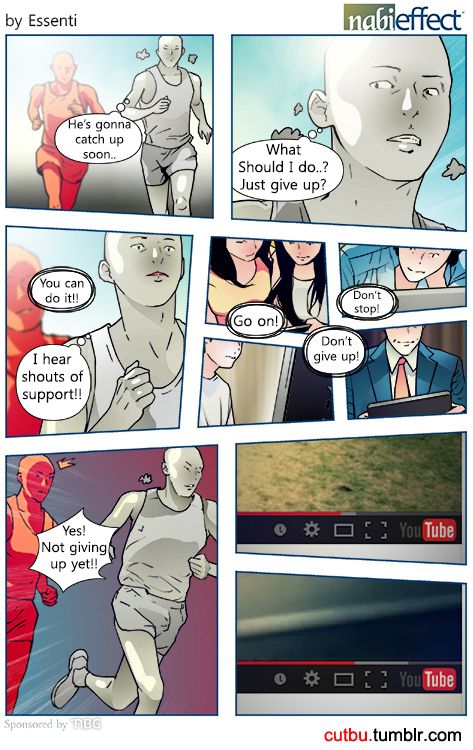
Go, video, go! You can do it! Keep loading ahead of the playback. Failure means that I won't get to watch this My Little Pony episode without being interrupted. Push it!
There's drama in everyday life, as illustrated by Essenti of the webcomic CUTBU. And, yes, yelling at your computer helps.
Coming up with creative ways to waste time can be an artform in itself, and when that time wasting involves creating useless gadgets that make the world a more colorful place then can we really say that time was actually wasted?
Take these sausage covered gloves for example, they were created by Japanese comedy site Daily Portal Z in a fit of inspired time wasting that resulted in a product that has not one but three uses- it keeps the hands warm, serves as a handy snack, and allows you to use your smartphone while wearing gloves. Sausage gloves beg the question- are edible accessories the future of fashion?
There are 13 glass sculptures of pianos in the process of being suspended over Ninth street in San Francisco. Would you walk under them? It's an art installation by Brian Goggin and Dorka Keehn (previously at Neatorama) called ” … And My Room Still Rocks Like a Boat on the Sea … (Caruso’s Dream).” The title is based on an Enrico Caruso quote about the earthquake of 1906. The work is set to "open" in February of 2014. I wonder if that means they will open the sidewalk for pedestrians at that time. See photographs of the installation process at the San Francisco Chronicle. -via Laughing Squid
Excuse me, Fox ADHD's "Scientifically Accurate" video series, you forgot one very important fact: Santa is magic, and that's how he doesn't explode while traveling house to house. But at least you got another very important Santa fact correct.
The podcast is presented as a series of community radio broadcasts from the fictional town of Night Vale, a place where all the conspiracy theories are true. Episode by episode, the team build up a roster of characters (each with their own epithet, like "John Peters -- you know, the farmer") who are woven in and out of each others' storylines through bulletins from Cecil, the station's announcer.
There are recurring moments of brilliant and surreal comedy, especially the messages from the advertisers:
You come home. The lights are off. You get an uneasy feeling. Suddenly, the phone rings! You remember that you do not have a phone. It rings some more.
“They are waiting for you,” a whispery, gender-indeterminate voice tells you. “It is your time,” it says.
You turn on the light. You laugh again, wondering why it took you so long to turn on the light. Gosh, it was dark, you think. “Hello?” the voice asks.
You hang up, glad you remembered to buy Tropicana Orange Juice, at least. Tropicana Premium Orange Juice is made from the freshest oranges, with no added flavors or preservatives. Also, you should get caller ID! It’s the 21st century; how do you not have caller ID? Really.
Tropicana.
And the traffic reports:
Let’s have a look now at traffic.
There’s a man. Imagine him. He’s leaning on a fence, shirtless and weary. He seems wise near the eyes, but his impatient feet suggest insidiousness. He’s marked with dried mud, and maybe some very deep but quickly-healing cuts – from the tree branches, most likely, or perhaps the birds.
OK, I’m not telling you the whole truth. It was definitely the birds.
Imagine these cuts and scratches, dry and brittle now, but tender to the touch. He is certain he did not offend the birds, but he is uncertain whether his complacency was construed as equal to said offense.
Picture this. Picture the man leaning on the criss-crossing metal wires, waiting. The birds are gone, but other things are coming. He doesn’t know specifically what, but he knows it’ll come for him.
You know this, too, because I have told you.
The man says nothing.
There’s never not something that has been displaced, marginalized. There’s never not something that, when feeling pressed to the wall, to a place with no room left to run, gathers its numbers, gathers its forces, and turns, savagely, on its oppressor. Turns viciously, and without inhibition, even on those who merely look like its oppressor.
Do you catch my meaning? Can you imagine the scene I am explaining?
How much of the world makes sense to you?
What does it mean to be a hero? To be a human?
The man thinks about his heart. It beats. It beats normally. Earlier, it did not beat normally.
Think about your own heart. Is it beating normally?
Listen. I’ll give you a long moment.
How is your heart?
Do you remember the man? The one on the fence, shirtless and scarred, with the normally-beating heart? He’s not real. Take him out of the story, but leave the story. Take him out, leave the story.
Do you catch my meaning?
Do you?
This has been traffic.
As you can see, there's an awful lot of use of the second-person in the writing, which is surprisingly effective at conveying both comedy and horror.
Every episode also features a musical interlude (presented as "the weather") from an independent artist. These are incredibly eclectic and they miss for more more than they hit, but when they hit, they skewer me. Exhibit A: The Tiny's "Closer," which I have now listened to about 10,000 times:
Night Vale is a widely loved phenomenon, and it's easy to see why: the writers have managed to find a sweet spot between the deadpan, gnarled intricacies of Lovecraftian horror, conspiracy theory, and New Weird; and the giggling, giddy, self-aware, silliness that makes Bizarro so much fun. Every single episode has moments of genuine spookiness (aided in great part by the superb sound-design and voice-acting), but also moments of utter hilarity.
If you want more, including a thoroughgoing compendium of all the characters and situations, as well as fan-transcripts of all the episodes, check out the Night Vale wiki on Wikia.
I don't even watch Doctor Who, but this video by YouTube user TheFlixx -- a re-imagining of a DW anniversary video as the famous '80s "Take On Me" video from a-ha -- is still really fun. Oh, '80s. You make everything better.
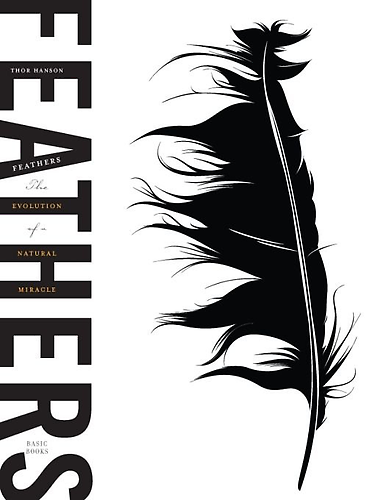
“Feathers are some of the most remarkable things ever made by an animal. They’re gorgeous in their complexity, delicate in their construction, and yet strong enough to hold a bird thousands of feet in the air.”
Charles Darwin devoted nearly three chapters of his famed treatise Descent of Man to feathers — one of the most miraculous products of evolution. In his book Feathers: The Evolution of a Natural Miracle (public library), conservation biologist Thor Hanson marvels that “nothing competes with feathers for sheer diversity of form and function” — they can be soft or barbed, can store water or repel it, can conceal or attract, and are “a near-perfect airfoil and the lightest, most efficient insulation ever discovered.” But how did feathers actually come about?
In this lovely short film from TED Ed, animated by Armella Leung, the inimitable Carl Zimmer — one of the finest science writers working today, and the author of the delightful Science Ink — explains how feathers evolved, a case of “an accident of physics” that took fifty million years to unfold:
Bringing you (ad-free) Brain Pickings takes hundreds of hours each month. If you find any joy and stimulation here, please consider becoming a Supporting Member with a recurring monthly donation of your choosing, between a cup of tea and a good dinner:
You can also become a one-time patron with a single donation in any amount:
Brain Pickings has a free weekly newsletter. It comes out on Sundays and offers the week’s best articles. Here’s what to expect. Like? Sign up.
Brain Pickings takes 450+ hours a month to curate and edit across the different platforms, and remains banner-free. If it brings you any joy and inspiration, please consider a modest donation – it lets me know I'm doing something right.
Here is an amazing gif of two sets of lungs being filled with air. One pair was that of a smoker and the other was that of a non-smoker. Can you guess which is which?
These are the best kinds of snowflakes: the kind that are under the lens of a camera and not piled up outside my door. A Russian photographer uses a set up he made himself to take these photos. See more below!
Then again, if you bookmark the page to look at while at work, you'll be happy to have it available whenever you feel annoyed and stressed about your job.
JOHANNESBURG—Following the death of former South African president and civil rights leader Nelson Mandela today at the age of 95, sources confirmed that the revered humanitarian has become the first politician in recorded history to actually be miss...
In advance of The Muppets' Most Wanted, Muppets Studio has released the bite-sized webisode "Food Fight," in which the Swedish Chef pits his culinary skills against Gordon Ramsay in a reality show-inspired food truck competition. And naturally, our favorite Muppet critics are serving up their judgment with a side of snark.
I don't know anything about this. The entire description at YouTube is this:
"BRWABLGABLWRABRABLA" ~boat.
But I know that my cheeks are hurting from laughing. Something that does that needs to be shared. And then someone had to go and improve it. -via reddit
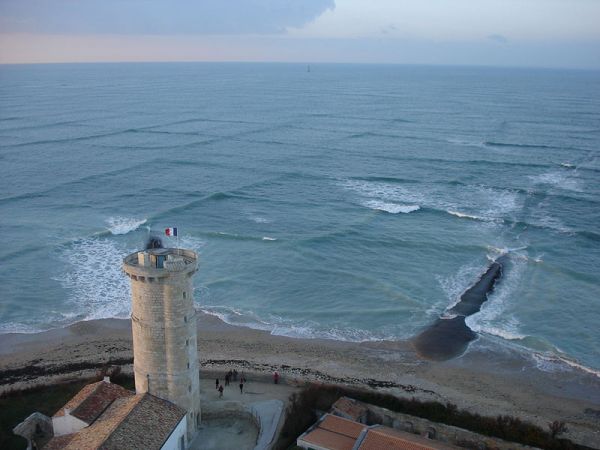
Sometimes in large bodies of water, wave systems cross each other. When they hit each other, these systems will form crests twice as high and troughs twice as deep. It can be difficult to sail in such waters. In the above case at the Île de Ré, an island off the Atlantic coast of France, the wave systems appear to meet at a right angle.
Ylvis is the Norwegian music and comedy group most famous for their song “What Does the Fox Say?” Its members pulled this delicious prank at an Ikea store. There was a mock house in that store. Ylvis altered it so that the entrance and exit disappeared. A couple entered to explore the furnishings. But then they couldn’t get out!
It gets even better: one of the pranksters slipped in through a concealed entrance. The couple followed her around, hoping that she knew how to escape.
How Twin Peaks made modern art of the soap opera -and saved network TV in the process.
David Lynch and Mark Frost seemed an unlikely pair when they met for lunch one day in 1988. Lynch was an auteur who'd burnished his reputation directing the bizarro films Eraserhead and Blue Velvet; Frost was best known as a writer for the network police drama Hill Street Blues. But the two had hit it off a few years earlier when they met working on Goddess, a Marilyn Monroe biopic that never made it to production. Now they were looking to get their hands dirty again.
As the duo sat in Du-par's, the kitschy L.A. restaurant near the corner of Laurel Canyon and Ventura boulevards, inspiration struck. "All of a sudden," Lynch is quoted as saying in Lynch on Lynch, "Mark and I had this image of a body washing up on the shore of a lake." From that stray spark, Lynch and Frost sketched the idea for what would become Twin Peaks, an enigmatic murder mystery that surrounded its plot twists with art-house motifs. Though it would run for only two seasons on ABC, the show revolutionized television and laid the groundwork for the golden age of prime-time dramas. But before Twin Peaks could storm the small screen, Lynch and Frost had to convince someone to roll the dice.
Lynch was a shaky choice for prime time. His name was synonymous with eerily beautiful cult films, and his one dip into the mainstream, an adaptation of Frank Herbert's beloved sci-fi novel Dune, was a critical and commercial disaster. To the industry observer, it seemed that Lynch was just too niche -or maybe just too weird- for network television.
The move didn't seem to make any sense from a career perspective: TV was a giant step backward for an auteur of Lynch's caliber. Today, in an era where shows like Mad Men and Breaking Bad enjoy all the glitz and prestige of the big screen, it's easy to forget that television used to be the stepping stone to film. An Oscar-nominated director like Lynch working on TV was like an all-star demoting himself to the minor leagues.
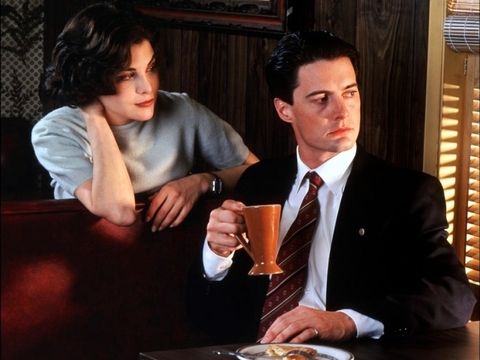
But Lynch's agent was keen to see what his client could do with the medium. And Lynch and Frost were starting to develop a killer storyline. Set in a fictional Washington hamlet, Twin Peaks revolves around the grisly slaying of blonde homecoming queen Laura Palmer (Sheryl Lee). The protagonist is a quixotic FBI agent named Dale Cooper (Kyle McLachlan) with an obsessive attention to detail and an affinity for diner coffee, which he takes "black as midnight on a moonless night." Together, Laura's killing and the big-city detective's arrival upend the small town, pulling back the curtain on its underbelly -gambling, prostitution, and backdoor dealings that turn local power brokers into villains- before uncovering the even more sinister forces that lurk in the woods.
The mystery is riveting, but it's the heavy injection of trademark Lynchism, the juxtaposition of the familiar and the surreal, that makes the show so special. For Lynch, it wasn't enough to have straightforward heroes and villains, so some of the show's rogues haunt an alternate dimension accessible only in nightmares and, when conditions are right, through a pit of bubbling tar among the pines. The result is a crime procedural filtered through an off-kilter lens. But the elements that make the show so original also made it risky. Prime time was the province of Murphy Brown and Sam Malone, not one-armed shoe salesmen and dancing dwarves.
When the time came to pitch the show, Lynch received a good omen. Even when he wasn't directing, he was always searching for symbols and oracles. One of his superstitions was that if you saw a license plate with your initials in it in any order, and the numbers on the license plate added up to what you'd consider to be a good number, and it was a really nice car, it would bring you good luck. Driving down Melrose on the day he and Frost were headed to present their creation to ABC brass, Lynch spotted a brand-new Mercedes with a lucky number and his initials. He told Frost, "Mark, this is going to be very good!"
Fortunately for the duo, ABC was in a gambling mood. As the new decade dawned, all the major networks were pushing for more originality in their lineups. The big three were anxiously watching Fox and cable channels eat into their ratings, and ABC was struggling. The network had a reputation as a stodgy, corporate outfit that micromanaged its productions to mediocre results. NBC, on the other hand, was enjoying some success with a laissez faire approach to working with Hollywood talent, so ABC did what all TV networks do: It replicated the formula. "We had a strategy to turn the network around by taking shots and being patient," an ABC executive, Chad Hoffman, said at the time. Hoffman spent just 45 minutes with the Twin Peaks pilot script before deciding, "We've got to do this."
As part of the Twin Peaks deal, ABC gave Frost and Lynch unprecedented creative control over the final product, and the duo took advantage of the freedom. As Lynch, who was 44 when the show debuted, and Frost, who was 36, looked for inspiration, they benefitted from the same serendipity that initially spawned their masterpiece. While scouting locations at a sawmill, they encountered a woman whose job it was to touch each log as it made its way down the conveyor belt. This chance meeting presumably inspired the Log Lady, one of the show's quirkiest characters.
Later, while shooting a scene in Laura Palmer's bedroom, a set dresser named Frank Silva was moving some furniture when someone warned him not to lock himself in the room. A lightbulb went off above Lynch's head. Silva was lanky and wild-eyed, with a long face and stringy gray hair -someone so completely out of place in a frilly pink bedroom that seeing him there was unsettling. "Frank, are you an actor?" Lynch recalls asking. He'd found the man who would end up playing Twin Peaks' spectral bad guy, Bob, described by the The Awl as "one of the scariest, most terrifying, most nightmare-inducing-est characters ever."
While some of the series' highlights came from off-the-cuff moments like these, the ultimate charm of Twin Peaks lies in just how meticulously Frost and Lynch developed their sordid little town. Even the minor supporting characters were fully fleshed out. And Lynch coaxed his actors into bringing their idiosyncrasies to life in his own offbeat way. "Think of how gently a deer has to move in the snow," he whispered to Lara Flynn Boyle, who played Laura Palmer's best friend. After nearly 40 takes, that was the odd direction she needed to get the scene just right.
Lynch was also literally hands-on. At the very beginning of the pilot, Jack Nance's character, Pete Martell, discovers Laura's plastic-wrapped body on the shore of the lake. "David hand-placed those granules of sand on my face and played with the plastic as if it were a bouquet of flowers," Sheryl Lee told The Guardian in 2010. When inspiration struck Lynch, he would call Frost to share his latest breakthrough. "Mark, I think there's a giant in Agent Cooper's room," Lynch once theorized into the phone. (It worked; there is!)
It was as if Lynch was an all-knowing mystic who'd endeared himself to a congregation of believers. "There's a scene where Kyle has to throw a rock and hit a glass bottle. He sat us down and told us Kyle was going to hit [it] -and that bottle was freaking far away," recalls Kimmy Robertson, who played the loyal secretary of the sheriff's department in that same Guardian feature. "Kyle hit it, and everyone freaked out. It was like David used the power of the universe to make Twin Peaks."
Within a month of the show's April 8, 1990, premiere, America had caught Twin Peaks fever. "Everyone at parties is talking about it," a 29-year-old George Stephanopoulos told Newsweek, while a New York magazine writer put it this way: "In Cambridge, Massachusetts, in Madison, Wisconsin, and in Berkeley, California, there are Twin Peaks watching parties every Thursday night, after which …Deconstruction."
Menacing promos that promised something new and "90s" lured viewers who couldn't get enough of this avant-garde cinema masquerading as prime-time soap opera. Twin Peaks was scary enough to rival any horror flick, but would also turn funny, beautiful, and heart-wrenching. The ratings were gangbusters. By May, Twin Peaks had been renewed for a second season. The show was a critical coup as well, collecting nearly 20 Emmy nominations between 1990 and 1991. Not even Lynch expected Twin Peaks to resonate with viewers the way it did. "We had zero thought that this thing would travel so well around the world," he said in 2008. "It was a magical thing."
But it wasn't long before the bottom fell out. Busy making his next film, Wild at Heart, Lynch became less involved with the second season, leaving his writer's bench to hash out the plot. Then ABC shot itself in the foot by bumping Twin Peaks from Thursday's prime time real estate to Saturday's wasteland, which killed the Friday-morning break room buzz that had made it a smash.
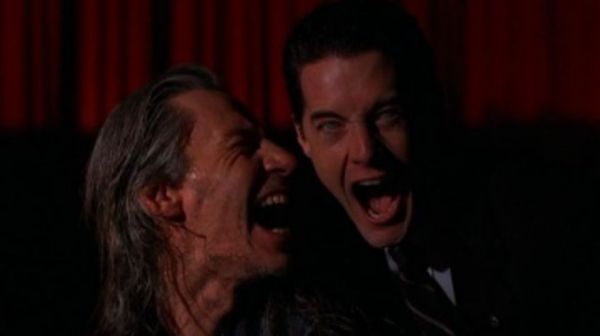
The fatal blow, though, was the network's demand for the show to answer the central question the plot and the marketing buzz orbited around -Who Killed Laura Palmer? Midway through season 2, the killer was revealed and the writers found themselves in a bind. The series devolved into an unsustainable hodgepodge of silly side plots and the writers struggled to keep the story's larger mythology alive for 14 more episodes. Lynch himself took control of the series finale, which bridges the gap between Palmer's murder and the supernatural mysteries of Twin Peaks. The stunning two-hour episode brought the curtain down on June 10, 1991. Just a little over a year after it had first rocked TV, Twin Peaks had disappeared.
Despite its brief run, Twin Peaks' immense influence was visible almost immediately. Lynch and Frost had proved that viewers would tune in for big screen-quality production in a weekly format, and in the process they ushered in a new age of televised drama. Two years later Fox would debut The X-Files, which relied on a similarly elaborate mythology to sustain its nine-season run. When ABC's Lost premiered in 2004 -constructed around an ever-unfolding course of otherworldly (and largely forest-based) mysteries- it drew immediate Twin Peaks comparisons. "Twin Peaks was a huge impact on me," the show's co-creator Damon Lindelof told an audience in Manhattan as few days before the Lost series finale in May 2010. One of the lessons he learned? That a show doesn't have to solve every mystery it sets up.
More importantly, Twin Peaks proved to fans, critics, industry gatekeepers, and film creators alike that television would no longer live in the shadow of film -it could actually be good. Little by little, TV shows were becoming every bit as worthy of close attention and deconstruction as films -a shift that wouldn't just make for better water cooler chatter, but would also open up a new venue to which writers and bloggers could devote entire careers. And none of that might have happened, if one daring network hadn't gambled on Frost and Lynch.
__________________________
The above article was written by Joe Pompeo. It is reprinted with permission from the November 2013 issue of mental_floss magazine.
Initially Mr. Broadnax was arrested on misdemeanor charges of menacing, drug possession and resisting arrest. But the Manhattan district attorney's office persuaded a grand jury to charge Mr. Broadnax with assault, a felony carrying a maximum sentence of 25 years. Specifically, the nine-count indictment unsealed on Wednesday said Mr. Broadnax "recklessly engaged in conduct which created a grave risk of death."
"The defendant is the one that created the situation that injured innocent bystanders," said an assistant district attorney, Shannon Lucey.
The two police officers, who have not been identified, have been placed on administrative duty and their actions are still under investigation by the district attorney's office, law enforcement officials said. They also face an internal Police Department inquiry.
Administrative duty! An internal Police Department inquiry! Well, that's all right, then.
I mean, all the cops did was shoot someone. It's not like they "recklessly engaged in conduct which created a grave risk of death." Definitely, who you want to prosecute is the mentally ill guy who wandered out into traffic. Perish forbid you should prosecute any police.
Really! Hooray for brave prosecutors like ASSISTANT DISTRICT ATTORNEY SHANNON LUCEY who identify and target the real threat: pathetic losers who make otherwise fine and upstanding police officers lose their shit. Look what you made me do. Excellent moral discernment, ASSISTANT DISTRICT ATTORNEY SHANNON LUCEY.
Asshole.
Our descendants will marvel at what we put up with.
Why it's Joan Jett and the Blackhearts doing a little number from 30-odd years ago called "Bad Reputation." It still sounds pretty tight! I would make a joke about their hearts probably being black for real now, because of age and everything, but people in black-hearted-from-age houses etc. Anyway, for a couple of minutes you can reminisce about living in world without Internet. It seems like a crazy dream now, right? [Via]
“Even after thirteen thousand years, avocado is clueless that the great mammals are gone.”
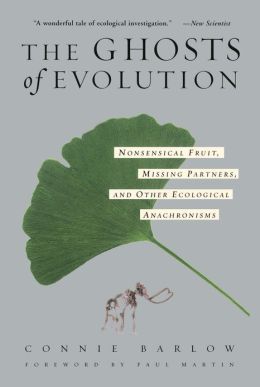
In any market economy, it’s common sense that as soon as the consumer for a certain product ceases to exist, the product itself becomes moot and soon vanishes from stores. In nature, however — or market ecology, if you will — that need not necessarily be the case. In the altogether fascinating The Ghosts of Evolution: Nonsensical Fruit, Missing Partners, and Other Ecological Anachronisms (public library), popular science writer and evolutionary biology champion Connie Barlow builds on the work of renowned ecologists Dan Janzen and Paul Martin, who in 1982 published a provocative paper arguing that many of the fruits and nuts found in Central American forests today evolved to be eaten by animals that have been extinct for thousands of years. Barlow explores the curious anachronistic existence of these species, ranging from papayas to persimmons to ginkgo biloba, and even coffee.
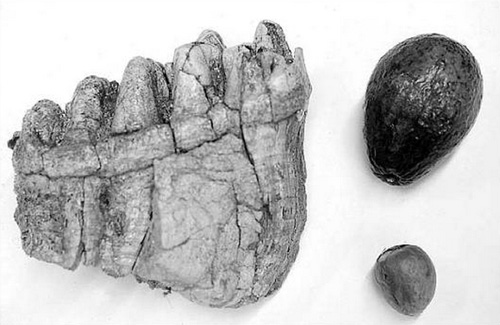
But as an avid aficionado of the avocado, I was especially taken with its particular story: Since fruits propagate by seeds, their progeny doesn’t grow far from the tree, as the proverb goes; their only chance of spreading their seeds across the land, then, are the animals who eat the fruit, along with its seeds, then “plant” those elsewhere when they poop. The avocado’s abnormally giant seed presents anything from a severe digestive hazard to a death sentence for contemporary earthly species but, apparently, avocados coevolved with ground sloths and were originally eaten by gomophotheres — elephant-like creatures that lived during the Miocene and Pliocene, between 12 million and 1.6 million years ago, who happily reaped the fruit with their hefty trunks, crunched them with their massive teeth, and passed the seeds comfortably through their oversized digestive tract.
Relic of a ghost: An avocado fruit and seed paired with the tooth of its missing partner in evolution, the gomothophere Cuvieronius.
The problem, of course, is that gomophotheres no longer roam the Earth — and yet avocados still exist. Barlow writes:
Avocado’s strategy for propagation made a great deal of sense throughout the long life of its lineage — until the present moment. Even after thirteen thousand years, avocado is clueless that the great mammals are gone. For the avocado, gomophotheres and ground sloths are still real possibilities. Pulp thieves like us reap the benefits. Homo Sapiens will continue to mold the traits of the few species of genus Persea it prefers. Ultimately, however, wild breeds will devolve less grandiose fruits, or else follow their animal partners into extinction.
In this fascinating short video for PBS, Joe Hanson of It’s Okay To Be Smart explains the avocado’s curious fate, along with those of its brethren of ecological anachronism:
Bringing you (ad-free) Brain Pickings takes hundreds of hours each month. If you find any joy and stimulation here, please consider becoming a Supporting Member with a recurring monthly donation of your choosing, between a cup of tea and a good dinner:
You can also become a one-time patron with a single donation in any amount:
Brain Pickings has a free weekly newsletter. It comes out on Sundays and offers the week’s best articles. Here’s what to expect. Like? Sign up.
Brain Pickings takes 450+ hours a month to curate and edit across the different platforms, and remains banner-free. If it brings you any joy and inspiration, please consider a modest donation – it lets me know I'm doing something right.

 (
(









 (
( (Photo:

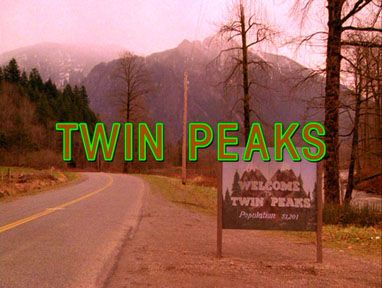 How Twin Peaks made modern art of the soap opera -and saved network TV in the process.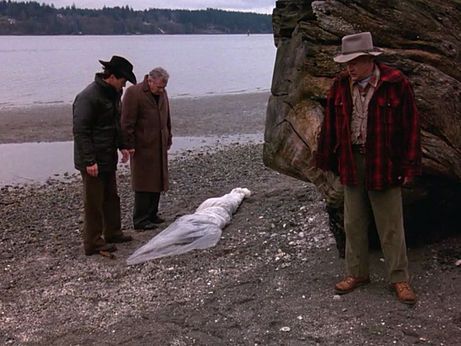
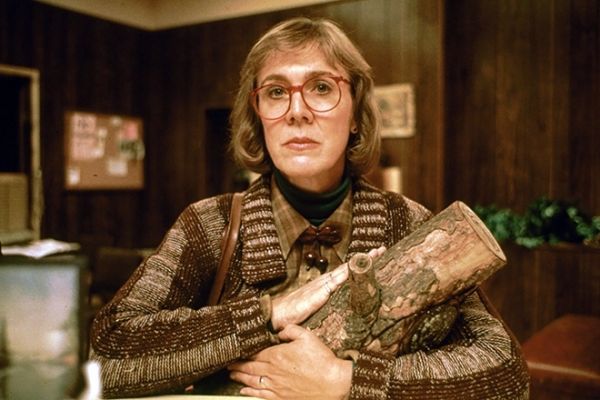 As part of the Twin Peaks deal, ABC gave Frost and Lynch unprecedented creative control over the final product, and the duo took advantage of the freedom. As Lynch, who was 44 when the show debuted, and Frost, who was 36, looked for inspiration, they benefitted from the same serendipity that initially spawned their masterpiece. While scouting locations at a sawmill, they encountered a woman whose job it was to touch each log as it made its way down the conveyor belt. This chance meeting presumably inspired the Log Lady, one of the show's quirkiest characters.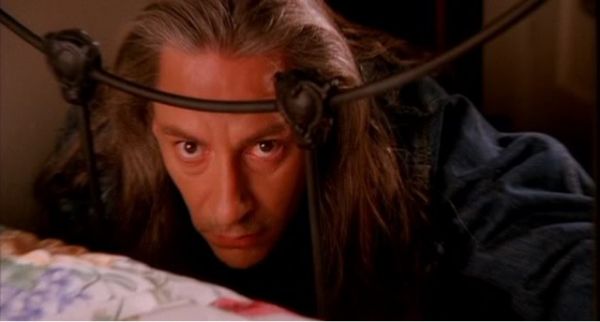
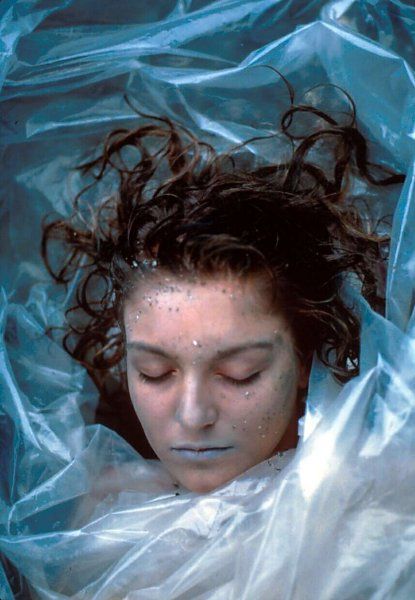 Lynch was also literally hands-on. At the very beginning of the pilot, Jack Nance's character, Pete Martell, discovers Laura's plastic-wrapped body on the shore of the lake. "David hand-placed those granules of sand on my face and played with the plastic as if it were a bouquet of flowers," Sheryl Lee told The Guardian in 2010. When inspiration struck Lynch, he would call Frost to share his latest breakthrough. "Mark, I think there's a giant in Agent Cooper's room," Lynch once theorized into the phone. (It worked; there is!)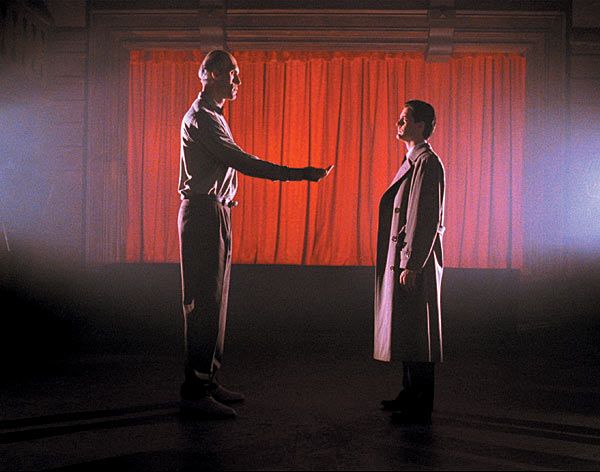
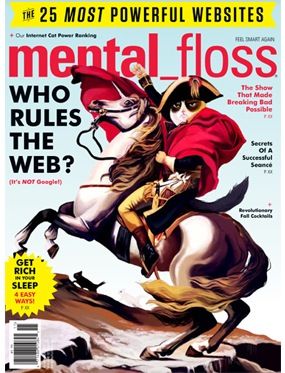 The above article was written by Joe Pompeo. It is reprinted with permission from the