Same every Thanksgiving. Cat Uncle gets way too drunk and starts ranting about the gays just before falling over and passing out.
Adam Victor Brandizzi
Shared posts
13 Dec 22:13
Drunk Cat Uncle

Adam Victor Brandizzi and -1 others like this
13 Dec 22:13
journalofanobody: Stephen Bone, Poppies on a Windowsill 1930

Narcélio, Adam Victor Brandizzi likes this
13 Dec 11:06

No Answer
by Greg Ross
Helen Fouché Gaines' 1956 textbook Cryptanalysis: A Study of Ciphers and Their Solution concludes with a cipher that, she says, "nobody has ever been able to decrypt":
VQBUP PVSPG GFPNU EDOKD XHEWT IYCLK XRZAP VUFSA WEMUX GPNIV QJMNJ JNIZY KBPNF RRHTB WWNUQ JAJGJ FHADQ LQMFL XRGGW UGWVZ GKFBC MPXKE KQCQQ LBODO QJVEL.
It was still unsolved in 1968, when Dmitri Borgmann, editor of the Journal of Recreational Linguistics, urged his readers to tackle the problem: "Are you going to let this challenge lie there, taunting you for the rest of your lives? Or are you going to get busy and solve that pesky little crypt?"
So far as I can tell, they let it lie there, and it remains unsolved to this day. Any ideas? There are few clues in Gaines' book. The cipher is the last in a series of exercises at the end of a chapter titled "Investigating the Unknown Cipher," and she gives no hint as to its source. Of the exercises, she writes, "There is none in which the system may not be learned through analysis, unless perhaps the final unnumbered cryptogram." The solution says simply "Unsolved."
13 Dec 01:25

The War Prayer
by Greg Ross

In 1905 Mark Twain wrote a story in which a pastor leads a prayer asking God's support for recruits about to march away to war. A white-robed stranger enters, takes the pastor's place, and explains that he has come from heaven. God has heard the prayer, but wants them to understand its full import. Their wish, cast in other words, is this:
Lord our Father, our young patriots, idols of our hearts, go forth into battle -- be Thou near them! With them -- in spirit -- we also go forth from the sweet peace of our beloved firesides to smite the foe. O Lord our God, help us tear their soldiers to bloody shreds with our shells; help us to cover their smiling fields with the pale forms of their patriot dead; help us to drown the thunder of the guns with the shrieks of their wounded, writhing in pain; help us to lay waste their humble homes with a hurricane of fire; help us to wring the hearts of their unoffending widows with unavailing grief; help us to turn them out roofless with their little children to wander unfriended in the wastes of their desolated land in rags and hunger and thirst, sports of the sun flames in summer and the icy winds of winter, broken in spirit, worn with travail, imploring thee for the refuge of the grave and denied it --
For our sakes who adore Thee, Lord, blast their hopes, blight their lives, protract their bitter pilgrimage, make heavy their steps, water their way with their tears, stain the white snow with the blood of their wounded feet!
We ask it, in the spirit of love, of Him Who is the Source of Love, and Who is the ever-faithful refuge and friend of all that are sore beset and seek His aid with humble and contrite hearts. Amen.
Twain's daughter Jean urged him not to publish the story, fearing that it would be seen as sacrilege.
"Still, you are going to publish it, are you not?" asked a friend.
"No," Twain said after some reflection. "I have told the whole truth in that, and only dead men can tell the truth in this world. It can be published after I am dead."
Adam Victor Brandizzi likes this

11 Dec 16:23
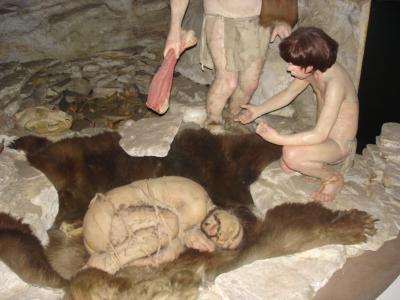
The funeral is attended by 30 people. It's a military funeral because he was in Korea, and in the front chairs are his wife and two grown children, and they are quietly crying.
When it ends, people disperse hesitatingly, after all, they themselves aren't sad, they didn't know him, they knew his kids. So they are unsure of what they're supposed to do next, but the answer is you keep going, there's nothing else to do but that. That's the point of a funeral.
The deceased's wife has mourned her part, for now, and accompanied by her adult son walks away. The adult daughter approaches the coffin, sobbing. She is pretty, which unfortunately is relevant. Her husband hugs her, and then takes their two little girls away from her, down towards the road, giving the woman the required freedom to be someone's daughter one last time.
She kneels at the coffin. She cries. Everyone can hear it. It is sad.
II.
But some people are unsatisfied with a system that's been in place for more millennia than years they've been alive. They don't trust that it's effective because when the funeral is over people are still sad. What kind of stupid ritual is that? These people want to change the system, they believe they know a better way.
Most people instinctively turn away and give her some kind of privacy, but about ten of them move forward to surround her: what's this? A woman crying? At a funeral?? They huddle around her in a semi-circle, hyenas waiting for a signal. One hyena steps forward, tries to hug her from behind; and you can see the surprise in that dummy's face when he doesn't get the expected hug back, when it doesn't seem to help, the grieving daughter doesn't stop crying, she doesn't even get up. The hyena is caught awkwardly, so he rests his paws on the woman's shoulders, and now the sobbing woman must associate her last chance to be with what is left of her father with the stale breath of a sycophant waiting for his moment to be relevant.
And while that's going on others are whispering to the quivering back of her coat, "oh, I'm so sorry", "I'm sure he really loved you", "are you ok?"
Why did any one of them think they had the power, the right, to interfere with another person's mourning? This was between her and her father and God and no one else. Did no one notice that even the husband had given her space? Did they just think he was being a jerk? "I just wanted to comfort her." No, you didn't know what else to do, so you did that. "I didn't want her to be alone." That's because you are a terrible person.
They do not know how to stand in the presence of grief because they can't help but make it immediately a judgment of themselves-- how can you see a woman crying and not do anything? Purposeless hyperactivity to cover up one's impotence and lack of empathy. "But I'm not the one grieving, I can't fake being sad." Don't fake it, just be silently and unobtrusively available. I know you don't think you're the most important person there, but you are also not the second most important. Or the third or tenth. Get out of the way.
But they can't, they think it has suddenly become their responsibility to save you. Look around, all those other people-- yours? Do you think you can? Do you think that anything you say is going to bring the dead back? Ease her suffering?
She's supposed to be sad, she needs to be sad, if she wasn't crying enough I'd kick her in the shins to make her, otherwise she will hold all of that emotion and let it out piecemeal over three decades and she will be lost.
These animals suffer from a deep existential pathology for which there is no cure, in ordinary times they will be the most ordinary people but when the ship goes down they will kill each other to make sure they get a lifeboat all for themselves. Medicine won't help this, religion won't help this. On the one hand they don't know how to be real, on the other hand they they think protocol and formality is dishonest and insensitive. They can't say, "my condolences" because it sounds fake. So they improvise, catastrophically.
We should all be so lucky that as adults we get to attend our father's funeral, doesn't make it easier but that's a fact, because the alternative is that it happens the other way around, and I can think of nothing worse than the other way around. But even then the system is in place, if you blindly follow the steps-- if people let you blindly follow the steps-- then when you are finished you can begin to go back to your life. Death creates a hole in your heart that is unfillable, but if you follow the steps you can at least fence it off so you don't keep falling in.
There is no shortcut to mourning, the shortcut leads to madness. When you subvert the system and offer a mourner a shortcut, you are leading them to madness.
But how can she let go, how can she do what needs to be done, under the oppressive gaze of self-conscious people who need her to know they came? "I just want to support her!" Then you'd go back to your car, connect a hose from the exhaust pipe to a slightly opened window, and wait it out.
When she first told people about her father's death it came with a gift to others, a qualifier: "I won't be there on Wednesday, my father passed away and I'll be at the funeral-- it's ok, I'm fine" but nevertheless grown neophytes went to Defcon 5. This is one such text message: "OH MY GOD, ARE YOU SERIOUS! OH MY GOD, I AM SO SORRY, WHAT HAPPENED?? PLEASE CALL ME IMMEDIATELY!!" The text message ends there because I smashed it.
One man, either a friend or a blastoma, came to the funeral luncheon mostly to ask the daughter what was up with her girlfriend he was trying to date. He's 50. I know he didn't think he was being selfish or insensitive, he truly believed she'd welcome the chance to talk about his relationship, she'd want him to be happy, she'd use this sad day to tell him how love was the most important thing in the world and he should seize it because life is so short. That's how it happened in Four Weddings And A Funeral, anyway. I will bet you all of your money that as he got dressed in his black suit and lavender shirt, inside his head was playing, "going to the chapel and we're....." Did he come to support her? No, he came to destroy the world.
Six different psychopaths called her to demand they come to the the funeral to "show their support." Who do you think you are fooling? Each of them wanted to be the best friend that would accompany her through the terrible day. Each of them believed that they were the best friend that would do this. But just because she's on the phone with you all the time solving your crises, it doesn't make you a best friend, it makes you a patient. A real best friend wouldn't use a funeral as a way of solidify their own place as "best friend." A real best friend wouldn't feel jealous that some other friend got to sit closer, got more attention.
One psychophant who came to the luncheon to "show support" didn't get the extra acknowledgement she expected, so she decided instead to perform unsolicited grief therapy on the woman's five year old daughter. "Since we didn't get a chance to connect at the funeral," she said later, "[your daughter] and I had a good talk about what happens when you die." If I had seen this happen I'd be in prison now. The only thing this woman can connect with is a phone charger, the battery is always dying. "Hi, I just texted you, I wanted to see if you were free to talk about me, but I only have two hours."
It's not your day, your method sadness is irrelevant, your pseudo-concern transparent and you are forcing mourners to divert their attention to you. "I had Christ in my mouth for over an hour!" was a post funeral text from a woman who... what? I'm not a Catholic so it took me a few minutes to piece together that this lunatic meant she had kept the Eucharist from the funeral mass in her mouth without swallowing it for an hour-- as if that meant something. Woman, you are insane, your personal relationship with Jesus is pathological, I'll guess you voted for Romney but you are the reason Obama won. It's bad enough you think your God wants you to be an hysterical neurotic, but why would you then tell this to a woman mourning her father? Why would you think she'd derive comfort from what you did?
It's no surprise that the new DSM removes the bereavement exception from the diagnosis of depression-- no one allows normal bereavement to occur. How can ordinary bereavement ever occur when it is subverted, worsened, at every turn by people who were never taught how to act around other people, who just don't know? "I just want to help." You are destroying the world.
I understand funerals can be awkward for those not directly grieving, but over-exaggerating your pretend sadness is of no benefit to anyone, it merely obligates the survivors to manage your fake concern. If you feel compelled to speak in all caps or explain how terrible this all is to a person who knows first hand and way better than you how terrible it all is, don't. Stay home. When you find yourself in the presence of mourning, simply say, "I'm sorry for your loss. If there's anything I can do for you, please let me know," and if he happened also to have been a great man you can add, "he was a great man," then bow your head and fade to back. That's all that's necessary. The system will take care of the rest.
Funeral
by thelastpsychiatrist
do you have a better system?
The funeral is attended by 30 people. It's a military funeral because he was in Korea, and in the front chairs are his wife and two grown children, and they are quietly crying.
When it ends, people disperse hesitatingly, after all, they themselves aren't sad, they didn't know him, they knew his kids. So they are unsure of what they're supposed to do next, but the answer is you keep going, there's nothing else to do but that. That's the point of a funeral.
The deceased's wife has mourned her part, for now, and accompanied by her adult son walks away. The adult daughter approaches the coffin, sobbing. She is pretty, which unfortunately is relevant. Her husband hugs her, and then takes their two little girls away from her, down towards the road, giving the woman the required freedom to be someone's daughter one last time.
She kneels at the coffin. She cries. Everyone can hear it. It is sad.
II.
But some people are unsatisfied with a system that's been in place for more millennia than years they've been alive. They don't trust that it's effective because when the funeral is over people are still sad. What kind of stupid ritual is that? These people want to change the system, they believe they know a better way.
Most people instinctively turn away and give her some kind of privacy, but about ten of them move forward to surround her: what's this? A woman crying? At a funeral?? They huddle around her in a semi-circle, hyenas waiting for a signal. One hyena steps forward, tries to hug her from behind; and you can see the surprise in that dummy's face when he doesn't get the expected hug back, when it doesn't seem to help, the grieving daughter doesn't stop crying, she doesn't even get up. The hyena is caught awkwardly, so he rests his paws on the woman's shoulders, and now the sobbing woman must associate her last chance to be with what is left of her father with the stale breath of a sycophant waiting for his moment to be relevant.
And while that's going on others are whispering to the quivering back of her coat, "oh, I'm so sorry", "I'm sure he really loved you", "are you ok?"
Why did any one of them think they had the power, the right, to interfere with another person's mourning? This was between her and her father and God and no one else. Did no one notice that even the husband had given her space? Did they just think he was being a jerk? "I just wanted to comfort her." No, you didn't know what else to do, so you did that. "I didn't want her to be alone." That's because you are a terrible person.
They do not know how to stand in the presence of grief because they can't help but make it immediately a judgment of themselves-- how can you see a woman crying and not do anything? Purposeless hyperactivity to cover up one's impotence and lack of empathy. "But I'm not the one grieving, I can't fake being sad." Don't fake it, just be silently and unobtrusively available. I know you don't think you're the most important person there, but you are also not the second most important. Or the third or tenth. Get out of the way.
But they can't, they think it has suddenly become their responsibility to save you. Look around, all those other people-- yours? Do you think you can? Do you think that anything you say is going to bring the dead back? Ease her suffering?
She's supposed to be sad, she needs to be sad, if she wasn't crying enough I'd kick her in the shins to make her, otherwise she will hold all of that emotion and let it out piecemeal over three decades and she will be lost.
These animals suffer from a deep existential pathology for which there is no cure, in ordinary times they will be the most ordinary people but when the ship goes down they will kill each other to make sure they get a lifeboat all for themselves. Medicine won't help this, religion won't help this. On the one hand they don't know how to be real, on the other hand they they think protocol and formality is dishonest and insensitive. They can't say, "my condolences" because it sounds fake. So they improvise, catastrophically.
We should all be so lucky that as adults we get to attend our father's funeral, doesn't make it easier but that's a fact, because the alternative is that it happens the other way around, and I can think of nothing worse than the other way around. But even then the system is in place, if you blindly follow the steps-- if people let you blindly follow the steps-- then when you are finished you can begin to go back to your life. Death creates a hole in your heart that is unfillable, but if you follow the steps you can at least fence it off so you don't keep falling in.
There is no shortcut to mourning, the shortcut leads to madness. When you subvert the system and offer a mourner a shortcut, you are leading them to madness.
But how can she let go, how can she do what needs to be done, under the oppressive gaze of self-conscious people who need her to know they came? "I just want to support her!" Then you'd go back to your car, connect a hose from the exhaust pipe to a slightly opened window, and wait it out.
When she first told people about her father's death it came with a gift to others, a qualifier: "I won't be there on Wednesday, my father passed away and I'll be at the funeral-- it's ok, I'm fine" but nevertheless grown neophytes went to Defcon 5. This is one such text message: "OH MY GOD, ARE YOU SERIOUS! OH MY GOD, I AM SO SORRY, WHAT HAPPENED?? PLEASE CALL ME IMMEDIATELY!!" The text message ends there because I smashed it.
One man, either a friend or a blastoma, came to the funeral luncheon mostly to ask the daughter what was up with her girlfriend he was trying to date. He's 50. I know he didn't think he was being selfish or insensitive, he truly believed she'd welcome the chance to talk about his relationship, she'd want him to be happy, she'd use this sad day to tell him how love was the most important thing in the world and he should seize it because life is so short. That's how it happened in Four Weddings And A Funeral, anyway. I will bet you all of your money that as he got dressed in his black suit and lavender shirt, inside his head was playing, "going to the chapel and we're....." Did he come to support her? No, he came to destroy the world.
Six different psychopaths called her to demand they come to the the funeral to "show their support." Who do you think you are fooling? Each of them wanted to be the best friend that would accompany her through the terrible day. Each of them believed that they were the best friend that would do this. But just because she's on the phone with you all the time solving your crises, it doesn't make you a best friend, it makes you a patient. A real best friend wouldn't use a funeral as a way of solidify their own place as "best friend." A real best friend wouldn't feel jealous that some other friend got to sit closer, got more attention.
One psychophant who came to the luncheon to "show support" didn't get the extra acknowledgement she expected, so she decided instead to perform unsolicited grief therapy on the woman's five year old daughter. "Since we didn't get a chance to connect at the funeral," she said later, "[your daughter] and I had a good talk about what happens when you die." If I had seen this happen I'd be in prison now. The only thing this woman can connect with is a phone charger, the battery is always dying. "Hi, I just texted you, I wanted to see if you were free to talk about me, but I only have two hours."
It's not your day, your method sadness is irrelevant, your pseudo-concern transparent and you are forcing mourners to divert their attention to you. "I had Christ in my mouth for over an hour!" was a post funeral text from a woman who... what? I'm not a Catholic so it took me a few minutes to piece together that this lunatic meant she had kept the Eucharist from the funeral mass in her mouth without swallowing it for an hour-- as if that meant something. Woman, you are insane, your personal relationship with Jesus is pathological, I'll guess you voted for Romney but you are the reason Obama won. It's bad enough you think your God wants you to be an hysterical neurotic, but why would you then tell this to a woman mourning her father? Why would you think she'd derive comfort from what you did?
It's no surprise that the new DSM removes the bereavement exception from the diagnosis of depression-- no one allows normal bereavement to occur. How can ordinary bereavement ever occur when it is subverted, worsened, at every turn by people who were never taught how to act around other people, who just don't know? "I just want to help." You are destroying the world.
I understand funerals can be awkward for those not directly grieving, but over-exaggerating your pretend sadness is of no benefit to anyone, it merely obligates the survivors to manage your fake concern. If you feel compelled to speak in all caps or explain how terrible this all is to a person who knows first hand and way better than you how terrible it all is, don't. Stay home. When you find yourself in the presence of mourning, simply say, "I'm sorry for your loss. If there's anything I can do for you, please let me know," and if he happened also to have been a great man you can add, "he was a great man," then bow your head and fade to back. That's all that's necessary. The system will take care of the rest.
11 Dec 14:44


Going up and going down. I am always looking for it and it was...
Going up and going down. I am always looking for it and it was just here.
11 Dec 14:39

spaceplasma: Mojave Desert Fireball As seen on Astronomy...
Mojave Desert Fireball
As seen on Astronomy Picture of the Day and National Geographic News this cosmic sword of Orion is an amazingly bright fireball which was captured during the Geminid meteor shower of 2009. The dramatic view from Hercules Finger rock formation in Mojave Desert of southwest USA includes the setting prominent winter stars from the dazzling Sirius (left) to constellations Orion and Taurus, with the famous open star cluster Pleiades at the right end. Fireballs are dazzling meteors, brighter than any of the planets (magnitude -4 or brighter). About one in 1,200 observed meteors becomes brighter than -5 magnitude, while only one in 12,000 reaches -8 magnitude. as noted by the photographer “It was a lucky shot after 1521 photos on a cold night. An all sky camera from 40 miles away also caught the fireball. It is hard to judge its brightness, but my impression was a flash as bright as the full moon. Also seen close to the horizon and accounting the atmospheric extinction I believe it might be in the Bolide category (very rare fireballs reaching magnitude -14 or brighter).” The annual Geminid meteor shower, which peaks on December 13/14, displayed a fascinating show in 2009, the best seen Geminid shower for many sky observers.
Credit: Wally Pacholka/Astropics.com, TWAN
11 Dec 14:38


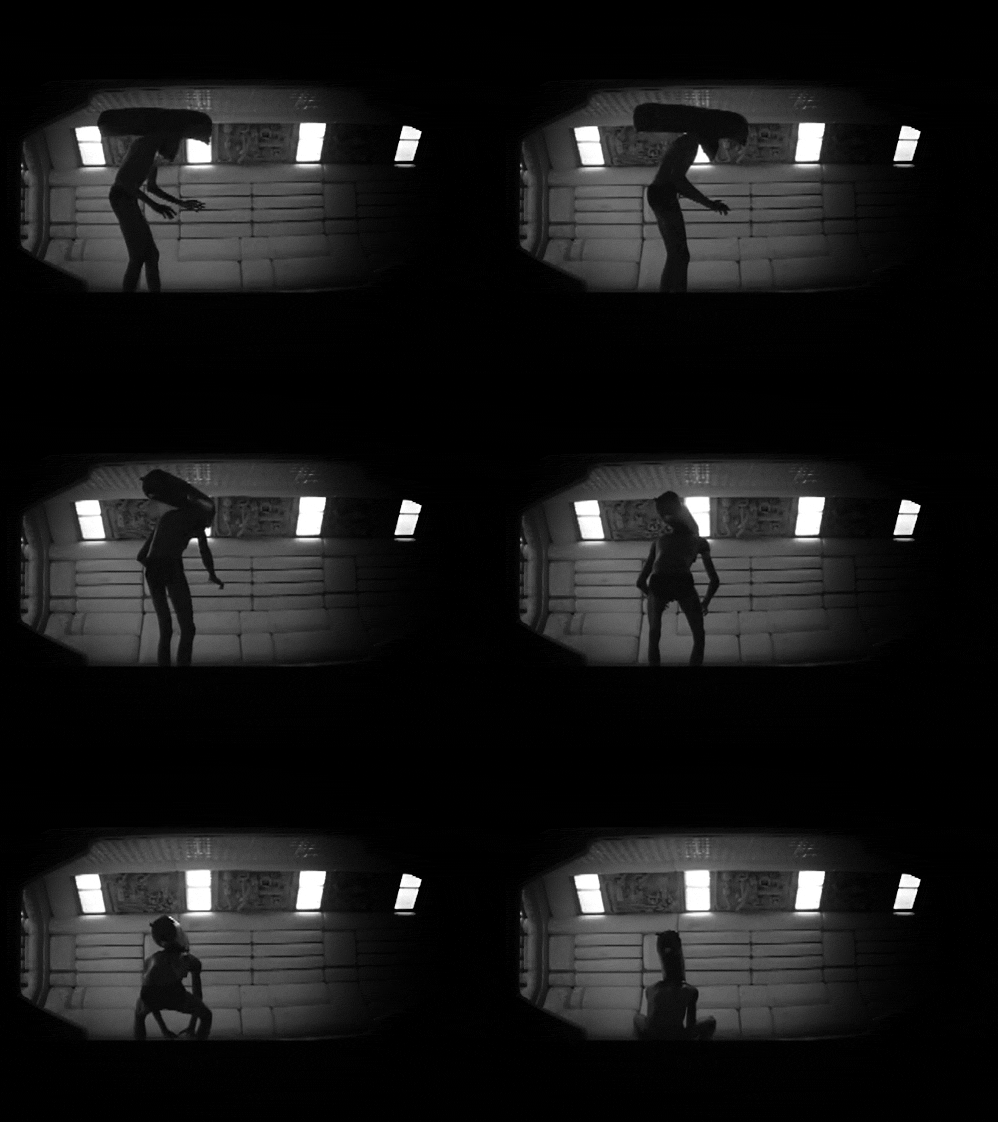
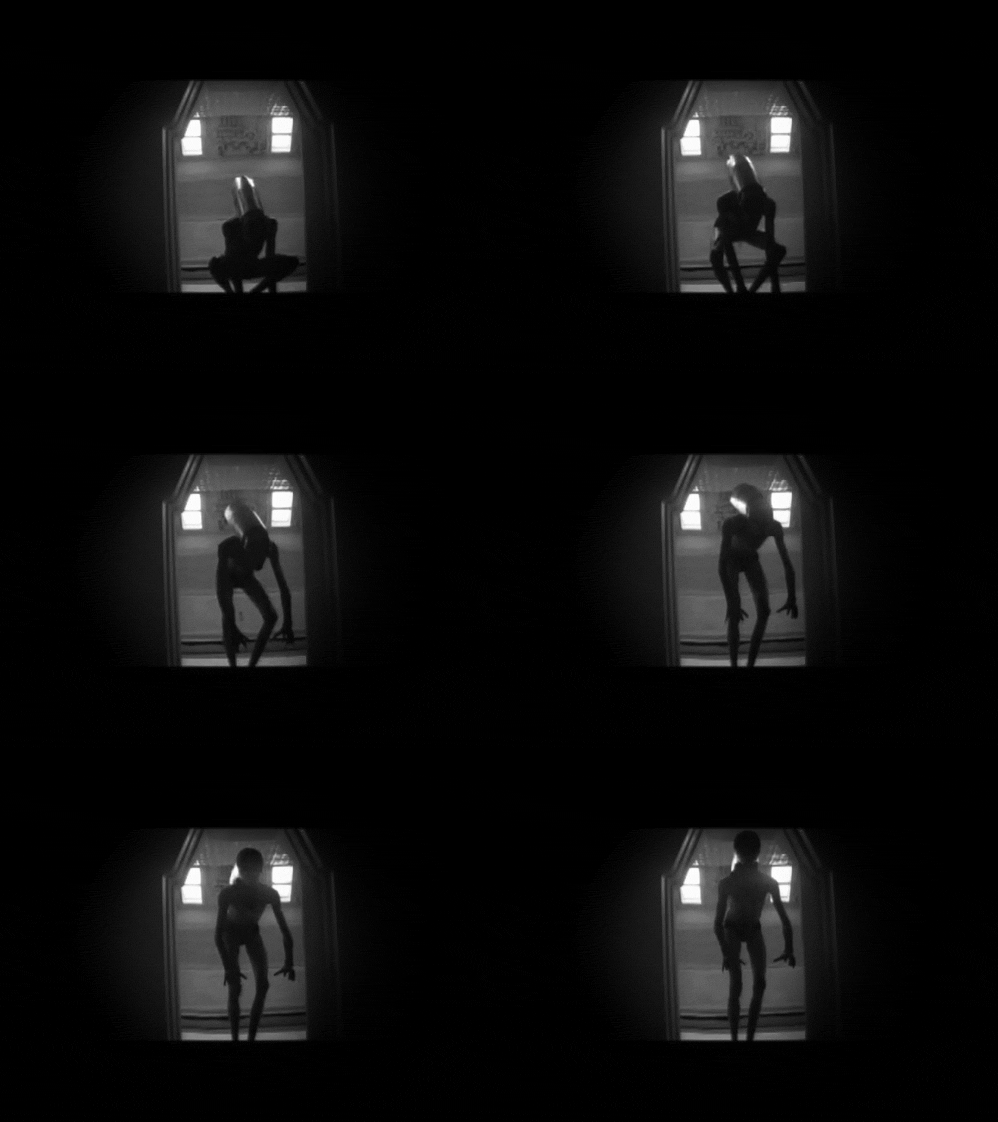
Office Wars Just Got Supr Srs
Want more gifs? There's a Señor for that.
Submitted by: Unknown
Tagged: rubber bands , office wars , office pranks , rubberband gun , monday thru friday , g rated , Hall of Fame , best of week Share on Facebook
Adam Victor Brandizzi and -1 others like this

10 Dec 14:39

Space Leap of Faith
by Phil Plait
On Sunday, skydiver Felix Baumgartner stepped out of a high-altitude balloon and plummeted 40 kilometers back to Earth. I wanted to watch it live but missed it due to an appointment I had to keep. I heard it was heart-pounding, and Twitter went nuts over it. I wish I had seen it!
Still, my feelings on it are mixed. While I really am glad it got people excited, I couldn’t shake the feeling it wasn’t more than a stunt. A cool stunt, but a stunt. It was plugged as a way to learn more about spacesuits and all that, but I had my doubts. Having it sponsored by a sugary caffeinated energy drink marketed to teens also made me a bit wary.
I was thinking of writing something up about it, but then my friend and space historian Amy Shira Teitel wrote an excellent piece crystallizing my thoughts, so go read her article for more in that vein (which is also mirrored on Discover Magazine’s blog The Crux).
But what I really wanted to write about was this image I saw around Twitter and Facebook:

Why do I want to write ...
10 Dec 14:36

Sky Color
Adam Victor BrandizziThe question in the alt text is specially mind-blowing, mostly because I did not pay attention to optics classes.
Narcélio, Adam Victor Brandizzi and -1 others like this

10 Dec 14:34

allcreatures: An angry lioness launches herself at a male -...
An angry lioness launches herself at a male - but ends up sitting on his head, looking like a lion hat. She pounced at the male when he tried to discipline her cubs, but misjudged the distance. Park ranger Jacques Matthysen photographed the moment at a game reserve in South Africa.
Picture: JACQUES MATTHYSEN / CATERS NEWS (via Pictures of the day: 27 November 2012 - Telegraph)
10 Dec 14:32
Google's Lost Social Network
Adam Victor BrandizziNow the full text.
Again, NEVER FORGET.
How Google accidentally built a truly beloved social network, only to steamroll it with Google+ . The sad, surprising story of Google Reader.

Last October, while hundreds of protesters were encamped in Zuccotti Park, a handful of people occupied a glass building in downtown Washington, D.C. Wearing sheepish grins and business-casual attire, the 99% they were not; one demonstrator said he worked for Grover Norquist. “GOOGLE: DON’T MARK ALL AS READ,” pled a poster outside the Internet company’s D.C. headquarters, where the aggrieved customers had assembled.
That week, on the heels of launching its long-awaited social network, Google was to make significant — and feature-breaking — changes to Reader, an RSS news aggregator launched in 2005. Formulated as a “river of news,” a scrollable collection of headlines from across the Web, the site added sharing features that endeared it to a niche group of users.
Pre-Twitter, it was the essential aggregation tool for news and information junkies. But Reader had also became a social network in its own right. Four years on, with Google+ ascendant, these same social functions were marked for elimination. And so, its users fretted, was their beloved Google Reader.
“We think the end result is better than what’s available today,” wrote Alan Green, a software engineer who announced the impending changes on Oct. 20, 2011. “We recognize, however, that some of you may feel like the product is no longer for you.” For Reader loyalists, the revamp was not only seen as worse — it was devastating. Over the years, so-called “Reader Parties” had sprung up everywhere from the Long Island Sound to the Ozarks.
“Sharebros,” as some came to be known, crashed on one another’s couches, sparking real-life friendships and not a few marriages; in the soon-to-be-appropriated language of Google+, there were “hangouts” among “circles.” Google had fostered a social network and earned die-hard fans in the most valuable way possible — without trying.

The few picketers in Washington stood for numerous members in a Facebook group that spanned from Houston to Detroit, with outposts in Macedonia, Switzerland, and Singapore, and a particularly vocal contingent in Tehran. After an Iranian blogger lobbied against the changes (citing Reader’s contributions to the Green Movement), a barrage of press from TechCrunch, Mashable, and Andrew Sullivan directed 13,745 signatures to an online petition. Nonetheless, on Halloween of last year, Google went ahead with the redesign. A former product manager called it a disaster, while an ex-designer offered to rejoin the company to stanch the damage. As one commentator complained, “There’s almost no way Google could have blundered more disastrously here.”
In the year since, Google+ has been derided as a “virtual ghost town” and a “complete failure” unpopular even with Google employees. All of which has heightened the resentment shared by Reader fanatics. Today, they are a population dispossessed. Many have disappeared off the grid, while others struggle to rebuild communities that were, with a few keystrokes, deleted. All of them — the dental student in San Antonio, the academic librarian in Boston, the game developer in San Francisco — yearn for the scroll-tracked Shangri-La that was.
They wonder why Google deep-sixed superlative features, years in the making, for an upstart social network, a Facebook clone. In the year past, the same question has been framed and phrased in a thousand different ways — why force an unproven social network on users at the expense of an organic one?
Or, to put it more bluntly, why pave over paradise to put up a parking lot?
***
In the summer of 1999, Meg Hourihan took a vacation. She had recently founded Pyra Labs, a Silicon Valley tech startup that aimed to increase workplace productivity. Hourihan was also the author of Megnut.com, one of the earliest weblogs. While she was away, her business partner, Evan Williams, who went on to cofound Twitter, released a side project, a digital publishing service for just such budding diarists. The project found an audience and soon became Pyra’s focus. Blogging was taking off, although the Pyra founders said they worried about “unimaginative” postings like “I’m tired” or “This sucks.” The following spring, Hourihan met Jason Kottke, a Web designer who, among other creations, drew the “half-assed technicolor logo” on Gawker’s masthead. Kottke was another blogging pioneer, and after a courtship online as much as off, he and Hourihan married. (Disclosure: Kottke sometimes works from a desk in the BuzzFeed offices.)
In early 2001, Chris Wetherell, a software engineer, was reading Kottke’s blog. That day, a company called Moreover was featured. Moreover was offering what is today a hallmark of any website’s right rail: a feed of headlines from around the Web. To find the desired stories, you entered keywords: “Britney Spears, Napster, DVDs, museums, etc.,” for example. Wetherell wanted to try it himself. His version, called Java Collect, was an open-source library that displayed Moreover’s feeds and scraped websites like CNN for top news; on 9/11, when news sites went down, Wetherell’s module retained some of their cached headlines. Over the next few years, while his servers spun at home, Wetherell joined Google. He was working on Blogger, the service that Hourihan and Williams had started and, in 2003, sold to the burgeoning, and still privately held, search company.
Blogger, too, displayed feeds on their pages. These feeds, also known as Web feeds or news feeds, first came about in the late 1990s. At that time, early bloggers like Williams and Dave Winer, a software developer, had made meaningful headway in publication, but struggled with syndication. Blogs would be updated without their readers ever noticing. While the Web had embraced HTML, much of its sister language, Extensible Markup Language, or XML, had yet to be written. If HTML exists to display data, XML was built to transport it. In XML, Winer saw a solution to the syndication problem. And in April 1997, he released Scripting News, a sort of “bibliography for DaveNet,” his blog at the time. “I decided to take the plunge, and take the chicken out of the chicken and egg problem. Or is it the egg? Who knows. But from now on, Scripting News, in addition to being a HTML Web page, is also an XML application,” Winer wrote. With the advent of Web feeds, blogs like DaveNet, EvHead, or Megnut could reach beyond a dedicated audience to find wide distribution. The Web’s Gutenberg moment had passed, and here were intimations of a fax machine.
Called RSS (for Rich Site Summary, and later, Really Simple Syndication), the new technology followed a volatile and often contentious trajectory over the next five years. Engineers at Netscape designed their own version for My Netscape, a forerunner of personalized Web portals like iGoogle. But when Netscape was acquired by America Online, development on RSS grounded to a halt. And that’s when the infighting started. Winer took up a post at Harvard’s Berkman Center, where he released RSS 2.0 under a creative commons license, and tried (but failed) to trademark the name. Meanwhile, developers from IBM, Moreover, and Google’s Blogger continued work on an alternative version called RDF, from which RSS had taken some of its DNA, motivated as much by technical disputes as by Winer’s alleged imperiousness. “Dave Winer has done a tremendous amount of work on RSS and invented important parts of it and deserves a huge amount of credit for getting us as far as we can. However, just looking around, I observe that there are many people and organizations who seem unable to maintain a good working relationship with Dave,” Tim Bray, one of the creators of XML, blogged in 2003. In some circles, he added, RSS had come to stand for “Reliably Spiteful Squabbling.” Winer fired back: “Why has my personality become the issue? They’re using that to try to get me to shut up.” While haggling with his detractors, Winer cannily sidestepped the dispute and took his offering straight to the publishers. In April 2002, The New York Times signed on with RSS, followed by Salon and Rolling Stone. By June 2004, The Times had expanded its offerings to 27 feeds. No longer an obscure directory for bloggers, as the paper of record reported, “This increasingly popular online tool turns a morass of disparate information sources into an automatically generated and neatly organized index of the latest articles and postings.”
It was later that year when a Google colleague challenged Wetherell to construct an Atom parser in Javascript. Atom was yet another XML language, and the dare called on Wetherell to expand on his old passion project. If successful, he would have “something that turns something into something else which could be used to represent data that was basically about cat photos,” as he transliterated for the layman. The parser worked. One night, while testing and debugging, Wetherell had a Frankenstein moment. “A little wheel reinvention occurred,” he recalled, “as a square. The parser became a reader by accident.” Most of the time, software developers write additional code to describe complex data. By a stroke of luck, Wetherell’s reader actually bypassed a layer of complexity. Wetherell designated the creation as his 20% project. In a pitch meeting, he drew a circle on a whiteboard, and wrote below it: “Feed reading is inherently polymorphic.” The kind of RSS reader Wetherell envisioned would be “athletically flexible to match a wide variety of reading styles.” He drew spokes out from the circle to delineate the different use cases he imagined. Finally, his colleagues said, “OK, then.” Work on “Fusion” — the prototype for what became Google Reader — would begin.
***
A supposed principle of contemporary Web behavior is the 90-9-1 rule. For every 100 users, it posits, 90 people will consume content curated by nine influencers, originated by just one creator. It takes a single finger-biting baby and about a million upvotes to generate nearly half a billion views on YouTube. In a more traditional context, a reporter like Michael Hastings gets Stanley McChrystal on the record trashing President Obama, and Politico, The Huffington Post, and Gawker disseminate the story to a news-hungry public. Over the past decade, the 90's mindshare has seesawed between the one and the nine; in the McChrystal case, Rolling Stone, for whom Hastings worked at the time (he now writes, additionally, for BuzzFeed), was up in arms when blogs shared advanced copies of its scoop. The relationship between originators and distributors has been described as parasitic (see Keller on Huffington: “flocks of media oxpeckers who ride the backs of pachyderms”); commensalistic (see Zuckerberg to publishers: “discover more news stories through your friends”) and symbiotic (see Peretti on Zuckerberg: “They own the railroad tracks, we drive the trains”). Facebook, Twitter, and Tumblr, being mass-distribution platforms for user-generated content, scratch both itches, and hence are touted as the ne plus ultra of software development.
In the beginning, Google Reader was merely a means of distribution — a tool for the 90%. The small team, which by 2007 had grown to nine engineers, innovated mostly on improvements to the reading experience, adding labels, search, and embedded videos. The beauty of Reader was that it was self-contained. Fossicking through search engine results meant more tabs, more browser windows, more clicking out; with Reader, it was about digging in. Infoholics used Reader as a one-stop shop for their favorite sites and blogs. There did exist a rudimentary method of sharing, a workaround where one user could subscribe to another’s feed of shared items. But as Christine Eslao, a Reader from Boston, remembers, “You were kind of sharing in a void for no discernible purpose.” Chrix Finne, a Reader product manager, described the sharer’s plight in his limerick:
There once was a Reader named Chrix,
Who found himself in quite a fix:
He'd fun stuff to share
But no one was there,
Now Reader shows friends when Chrix clicks!
In December 2007, Reader linked up with Google Talk (the chat feature in Gmail) to display shared streams from friends. Within the context of feed reading, it fomented something of a Neolithic Revolution. Foragers, hitherto gathering headlines on a crude and solitary basis, became farmers, cultivating streams of information for their neighbors. Sharing increased 25% overnight. At Yale University, a student named Richard Berger (later known as Richard Likebot or Obscure Reference) notified his friends of the changes. “Holy shitballs,” replied Tom Lehman (aka Lemon or just Tom), who would later create the popular and lavishly funded lyrics annotation site Rap Genius. “I fully support this idea. Even if no one else does, please add everything to your shared feed.” Soon after, Reader implemented a bevy of complimentary features like pithy annotations and a bookmarklet to aggregate sites that didn’t support RSS. In March 2009 came a crucial update, allowing Readers to comment on one another’s shares. Eslao, the Reader from Boston, convinced her boyfriend to sign up.
Adam Victor Brandizzi likes this
09 Dec 14:46

Criancinhas fugindo romanticamente para não serem...
Criancinhas fugindo romanticamente para não serem separadas.
Inseparable toddlers make a run for it
ABERDEEN Tow three-year-olds ran away together because they were being split into different nursery groups. Erin toner and Bradley Lindsay have been inseparable for the past year and cried when they heard they would no longer be in the same class. The pair escaped from the playgroup while their supervisor’s back was turned and made towards a busy road. They were stopped when another parent came across them by chance. Erin’s mother, Emma Morrison, said: “Bradley said he was taking Erin away on holiday with him.” The mothers are trying to get them put into the same class.

09 Dec 14:28
A Look At The Everyday Individuals Who Make Your Toys
by Alex Wain
Inspirational photographer (he’s one of our favs) Michael Wolf has already documented The Nightmarish Reality For Japanese Commuters, but now he’s focusing his attention on China. During his trip, he was granted access to document the 5 different factories where a staggering 75% of the world’s toys are manufactured.
With Christmas around the corner, you can just imagine the production line is as frantic & chaotic as it’s ever been. But what about the people behind the toys? The modern day Santa’s elves if you will.
Wolf’s startling images provide an insight into the daily lives, conditions and above all personalities that create the objects of so many childhood obsessions around the world.


Having documented the factories, Wolf set about creating his exhibition – and what an exhibition it is. 16,000 toys (sourced in California, but all made in China) individually sanded down to support a magnet, then carefully placed on a 45m sq exhibition wall, next to the Chinese workers themselves.
An elaborate montage of toys and photos, or rather collage of childhood dreams alongside the reality for those who make them.


ENJOYED IT? SHARE IT!
Adam Victor Brandizzi and -1 others like this
09 Dec 14:26


Sobre o Google Reader
by marcus
Adam Victor BrandizziNever forget.
Like a physician’s scale, achieving the ideal social network is a question of balance. Twitter errs on the side of distribution, and, consequently, 40% of its users don’t tweet. Tumblr favors creators, but is rife with pornography and spam. Facebook may well achieve an equilibrium, but it is social to a fault; the network, like a heaving, many-headed Narcissus, rallies mostly around itself. Reader pivoted on the fulcrum of content, unearthed and spread in equal parts. What drew Courtney Stanton, a project manager in Boston, to Reader was that “it balances the two primary uses of the Internet: information and communication.” Or as Wetherell told me, “What we made is nearly a one-to-one relationship between the ease of consumption and the ease of sharing.” Google, after Facebook could no longer be ignored, went looking for a social network of its own. It might have already had a golden one.
Leia também:
- Venham gostar de mim
- Sobre FarmVille e similares
- Meias Vermelhas & Histórias Inteiras
- Se não sabe brincar, não desce pro play
- O que os finlandeses precisam de saber acerca de Portugal
Tadeu, Pedroamnunes and 2 others like this

05 Dec 20:53

Tumblr gpoy

For the fandoms...

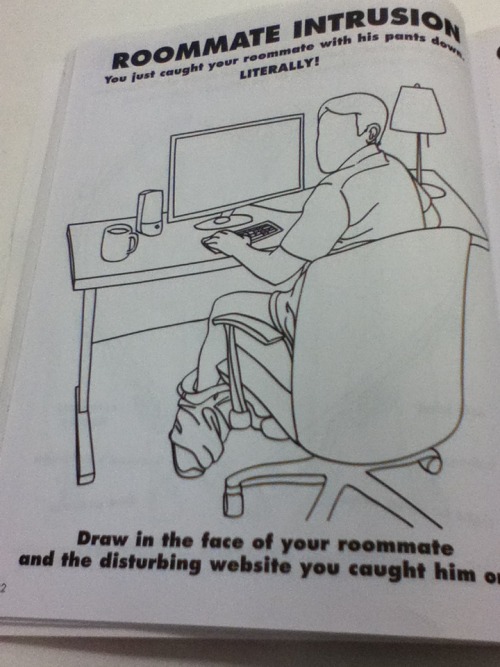
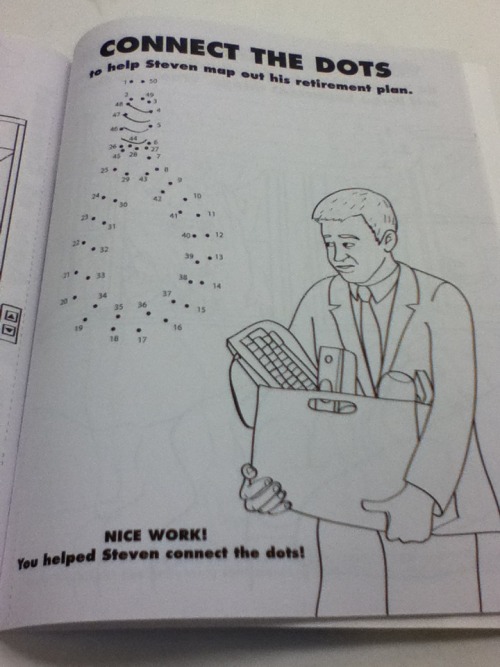

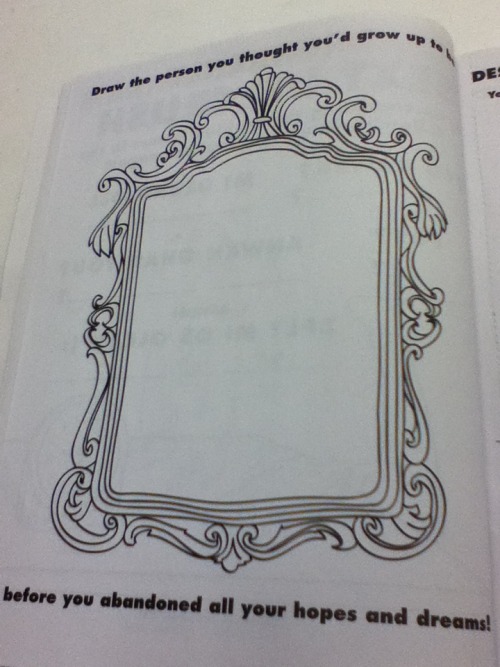
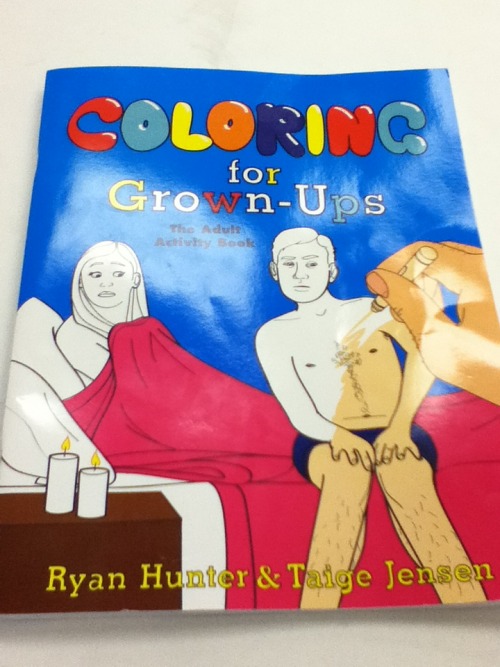
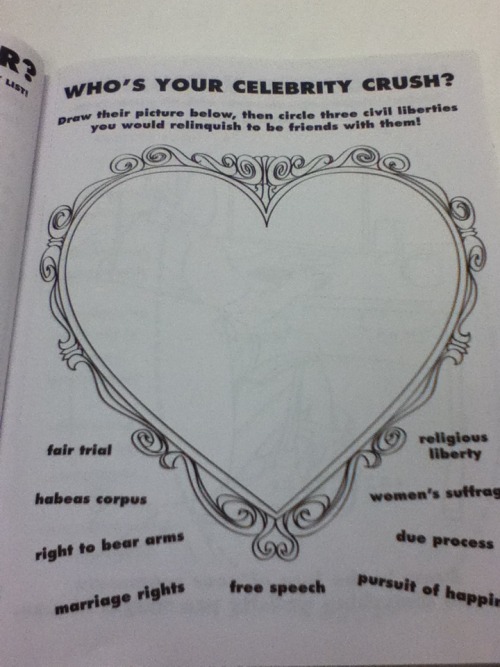
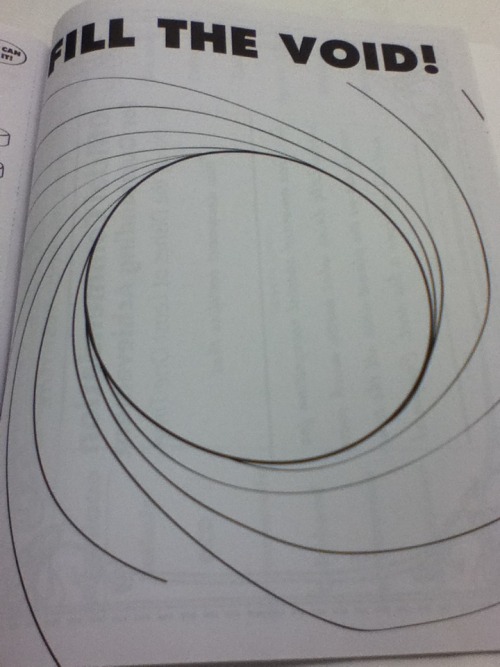
O pior livro de colorir do mundo. Ou o melhor. Sim, certamente o...
Tumblr gpoy
For the fandoms...
O pior livro de colorir do mundo. Ou o melhor. Sim, certamente o melhor :)
“Draw the person you thought you’d grow up to be before you abandoned all your hopes and dreams.”

04 Dec 20:23

Object Lesson
by Greg Ross
In 1969, Sufi scholar Idries Shah published a volume called The Book of the Book. Its opening pages told of a king whose people would not listen to his teachings, as he lacked an instrument with which to teach them.
The king meets a stranger who tells him of a revered wise man who attributed his knowledge to a tome kept in a place of honor in his room. When the wise man died, his followers eagerly opened the book and found writing on only one page. "When you realise the difference between the container and the content," it said, "you will have knowledge."
The rest of Shah's 200-page book was blank.
04 Dec 12:31
How the UN’s ITU could take over and destroy Internet freedoms this December (Video)
by Juan
How the UN’s International Telecommunications Union may take over governance of the internet and threaten freedom of expression:
The ITU, by the way, held its 2005 conference on internet freedom in the Tunis of dictator Zine el Abidine Ben Ali, and couldn’t be dissuaded from giving him this unwarranted vote of confidence. A friend of mine was badly beaten up at a demonstration against the conference in Tunis.
Wired has a good report on the controversy.
Here’s a site for the grassroots campaign against this move.
03 Dec 14:32

Reputation
by Greg Ross
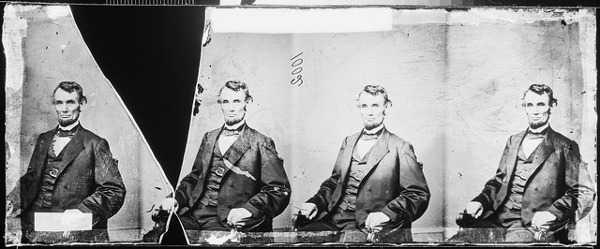
In 1908, while traveling in the northern Caucasus, Leo Tolstoy regaled a local tribe with tales of the greatest warriors and statesmen in history. When he had finished, the chief said, "But you have not told us a syllable about the greatest general and greatest ruler of the world. We want to know something about him. He was a hero. He spoke with a voice of thunder; he laughed like the sunrise, and his deeds were strong as the rock and as sweet as the fragrance of roses. The angels appeared to his mother and predicted that the son whom she would conceive would become the greatest the stars had ever seen. He was so great that he even forgave the crimes of his greatest enemies and shook brotherly hands with those who had plotted against his life. His name was Lincoln and the country in which he lived is called America, which is so far away that if a youth should journey to reach it he would be an old man when he arrived. Tell us of that man."
"I looked at them," Tolstoy recalled, "and saw their faces all aglow, while their eyes were burning. I saw that those rude barbarians were really interested in a man whose name and deeds had already become a legend."
Tolstoy reflected that this "little incident proves how largely the name of Lincoln is worshipped throughout the world and how legendary his personality has become. Now, why was Lincoln so great that he overshadows all other national heroes? ... [H]is supremacy expresses itself altogether in his peculiar moral power and in the greatness of his character. He had come through many hardships and much experience to the realization that the greatest human achievement is love. He was what Beethoven was in music, Dante in poetry, Raphael in painting, and Christ in the philosophy of life. He aspired to be divine -- and he was. It is natural that before he reached his goal he had to walk the highway of mistakes. But we find him, nevertheless, in every tendency true to one main motive, and that was to benefit mankind. He was one who wanted to be great through his smallness. If he had failed to become President he would be, no doubt, just as great as he is now, but only God would appreciate it. The judgment of the world is usually wrong in the beginning, and it takes centuries to correct it. But in the case of Lincoln the world was right from the start."
03 Dec 08:19
What Are Your Odds Of Winning The Lottery? [Infographic]
by Colin Lecher
In a word, terrible. On the bright side, your odds of becoming a pro athlete are good by comparison!
 by Shane Snow. Learn about data visualization tools.
People have just won that ridiculous, record-breaking $579.9 million Powerball jackpot. Two people, even! But you know who didn't win the jackpot? A lot more people. This infographic shows exactly how crappy your chances are of winning the lottery--and how lucky today's winners really are.
by Shane Snow. Learn about data visualization tools.
02 Dec 17:57
Via/Follow The Absolute Best GIFs Blog
Adam Victor BrandizziTrês pontos importantes:
- GIFs de Monty Python. Por que tão poucos? Por que só agora?
- Excelentes fotorrespostas
- Faço parte de um grupo de corrida, e só agora constatei que os exercícios educativos deles são treinamentos de silly walks. Veja só https://www.youtube.com/watch?v=6zGVErTbv6k


01 Dec 18:14

Edifice Complex
by Greg Ross

On visiting the Gold Pavilion Temple in Kyoto, Douglas Adams was impressed at how well the 14th-century structure had weathered the passage of time. His Japanese guide told him that it hadn't weathered well at all; in fact it had burned to the ground twice in the 20th century.
"So this isn't the original building?" Adams asked.
"But yes, of course it is."
"But it's been burned down?"
"Yes."
"Twice."
"Many times."
"And rebuilt."
"Of course. It is an important and historic building."
"With completely new materials."
"But of course. It was burned down."
"So how can it be the same building?"
"It is always the same building."
"I had to admit to myself that this was in fact a perfectly rational point of view, it merely started from an unexpected premise," Adams wrote. The essence of a building is its design, the intention of the builder. The materials may decay and be replaced, but these are only instantiations of a persistent idea. "I couldn't feel entirely comfortable with this view, because it fought against my basic Western assumptions," Adams wrote, "but I did see the point."
From Last Chance to See. John Locke asked: If I keep patching holes in my sock until none of the original material remains, is it the same sock? And see Ship Shape.