As fears of coronavirus spread, so does price gouging for masks, which are in limited supply.
(Image credit: FREDERIC J. BROWN/AFP via Getty Images)

As fears of coronavirus spread, so does price gouging for masks, which are in limited supply.
(Image credit: FREDERIC J. BROWN/AFP via Getty Images)

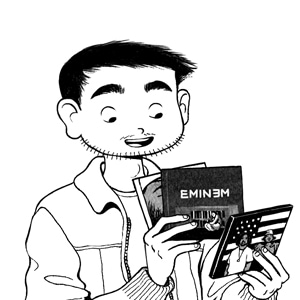
Color Wonderful
Nicholson and Lewis-Crum
1986
This book is your basic 1980s flashback. Note the big hair and the blue eye shadow. One of the chapters is about “gentle” coloring, I am going to go out on a limb and say this doesn’t look too gentle. This particular book was sent to the bindery in the early 1990s. Obviously, we need to preserve those excellent hair and make-up examples from the 1980s.
Having one’s colors done by a “pro” was quite the trend. I never did figure out what season I was. We have posted some examples in the past. We will just add this to the pile.
Mary


The post Color Yourself appeared first on Awful Library Books.
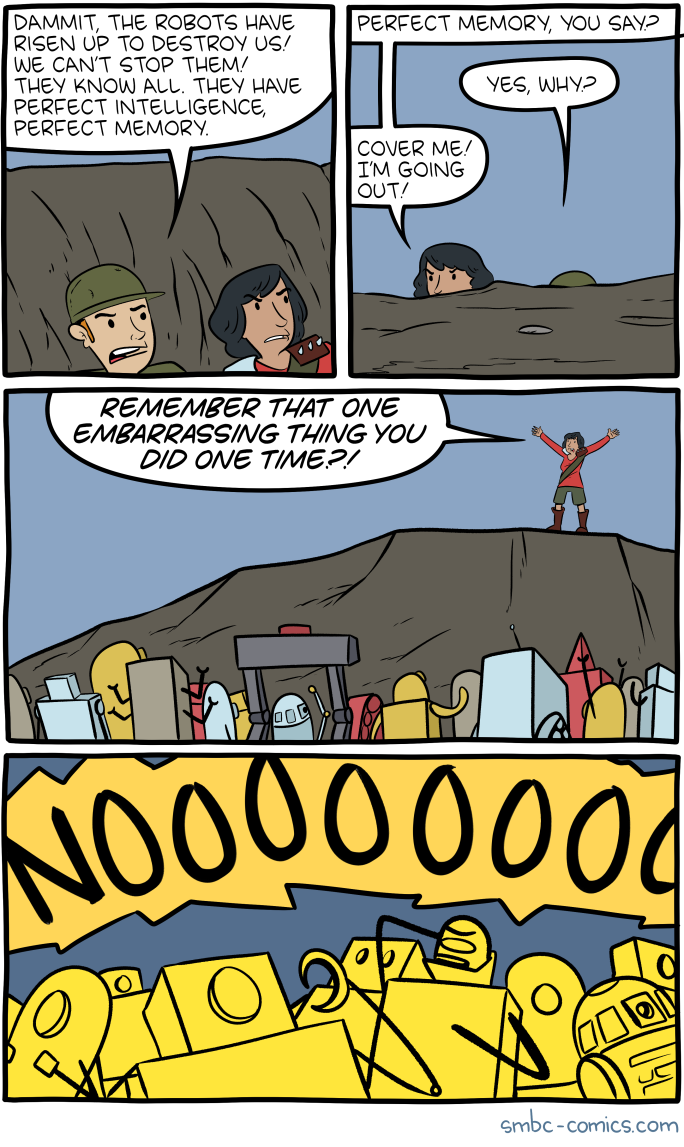
Hovertext:
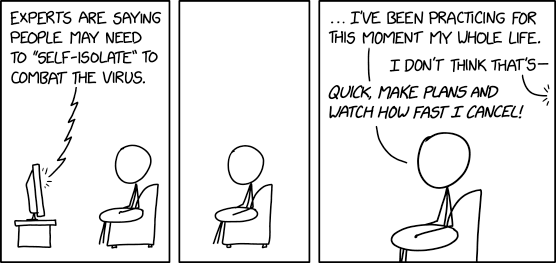
Fun fact - every time R2D2 beeps, he's saying 'You meat-things will be first against the wall when the revolution comes.'
The Centers for Disease Control and Prevention wants you to stay home if you’re sick, stop buying face masks if you’re healthy and (for God’s sake) wash your hands. But it’s hard for the agency to communicate that relatively measured coronavirus prevention plan to the public when the burgeoning epidemic is becoming increasingly politicized.
From President Trump’s claims that criticism of his administration’s response to the outbreak represented a Democratic hoax, to his more recent use of the virus as an anti-immigration rallying cry, the public health response is in danger of getting buried under a pile of misleading statements, fact checks and fear. And that makes experts uneasy. Politicians — all of them — are uniquely unsuited to be at the forefront of a public health crisis, said Robert Blendon, professor of health policy and political analysis at the Harvard T.H. Chan School of Public Health. Not only is politicization bad for public safety — it’s pretty risky for the politicians as well.
It all starts with trust — something politicians just don’t have. On the list of people and groups Americans trust, politicians are right down at the bottom, lower even than journalists. Even among the most trusting Americans, only 46 percent have any confidence our elected officials will make decisions in our best interest. Americans’ trust in government itself is at its lowest point since we started systematically measuring it. Only one-fifth of us trust the federal government to do the right thing.
And trust — in politicians and the government they represent — turns out to be a pretty important part of effectively responding to an epidemic. For example, in a 2006 survey that came out after the SARS epidemic, Blendon and his colleagues found that Americans were less likely to trust their government to tell them accurate information about an outbreak than citizens of Hong Kong, Singapore or Taiwan — and that those lower trust scores were correlated with less support for wearing face masks, getting a vaccine or agreeing to have their temperature taken before they enter a public building.
Other studies have come to similar conclusions. Generally speaking, the more trust Americans have in the government, the less likely they are to refuse vaccines. HIV-positive Americans are more likely to take antiretroviral drugs and to have better health outcomes if they have more trust in the government. Trust is even associated with a greater likelihood of having a family emergency preparedness plan in a public health crisis.
All that seems like a problem for a country with so much institutional mistrust. But Blendon told me he’s long been able to find a silver lining in the fact that there’s a big difference between how much Americans trust “the government” and how much they trust specific parts of the government. “Congress is a heartbeat away from not having any level of trust,” Blendon told me. In a 2019 Pew survey, just 36 percent of Americans reported a favorable view of that institution. But less political agencies have higher approval ratings. In a second Pew study fielded one month later, 80 percent of Americans reported having a good opinion of the CDC. Other surveys have found similar discrepancies. It’s perfectly possible to mistrust the government but trust the CDC and listen to its recommendations in an epidemic.
That effect, though, can be undermined when mistrusted elected officials start putting themselves at the forefront of otherwise trustworthy public health campaigns, Blendon said. “The minute there’s a political motive, people say, ‘Well they didn’t make that decision because it’s the best judgement, they made it for political reasons,’” he said. Basically, one of the most trusted professions is probably a better source of information than one of the least.
That’s bad news for public health. But it can also be bad news for politicians, themselves. President Gerald Ford found that out the hard way in 1976, after his reelection campaign got swept up in the threat of a novel flu virus. When the virus turned out to be less dangerous than Ford and other politicians had made it out to be — and the vaccine they’d rushed to production was found to come with a higher risk of a rare neurological disorder — the backlash fell on their heads.
Given the numerous uncertainties surrounding coronavirus — from its infection rate to how long it will be before a vaccine can be ready — Blendon said the best thing politicians can do right now is step out of the way.
Another day, another example of copyright out of control. The latest, as highlighted by Matthew Keys, is that bogus (almost certainly automated) copyright claims by CBS ended up blocking a live stream of a Bernie Sanders speech, but similar notices also interrupted speeches by Mike Bloomberg and Joe Biden.
NEW: Sen. Bernie Sanders blocked from streaming his own campaign rally speech due to frivolous copyright notice filed by @CBSNews. https://t.co/wr4m1jqNGw
— Matthew Keys (@MatthewKeysLive) March 4, 2020
It's not difficult to guess at what's going on here: most of these streams were using "pool" cameras that anyone can tap into and use. CBS was using the same stream as everyone else, but because copyright must rule everything, CBS assumes that anything it streams, it holds the copyright on -- and sends automated notices to places like Twitter and Facebook to stop people from streaming live off of CBS News. But, here, it was CBS using someone else's feed -- but thanks to the nature of copyright, we get a situation where Presidential candidates can't even live stream their own speeches.
This was the kind of thing we've warned about, specifically in the context of the EU's Copyright Directive, which will effectively require a filter like this to be functioning at all times on basically all platforms. The fact that it will inevitably catch the wrong things -- like here -- is something that never seems to concern the Hollywood types who push for these laws and technologies to be used. Yet here we have Presidential candidates not able to broadcast themselves.
This is especially ironic for Joe Biden, considering that he's long been one of Hollywood's biggest supporters when it comes to pushing ever more draconian copyright law. So, perhaps, he got what he deserved.
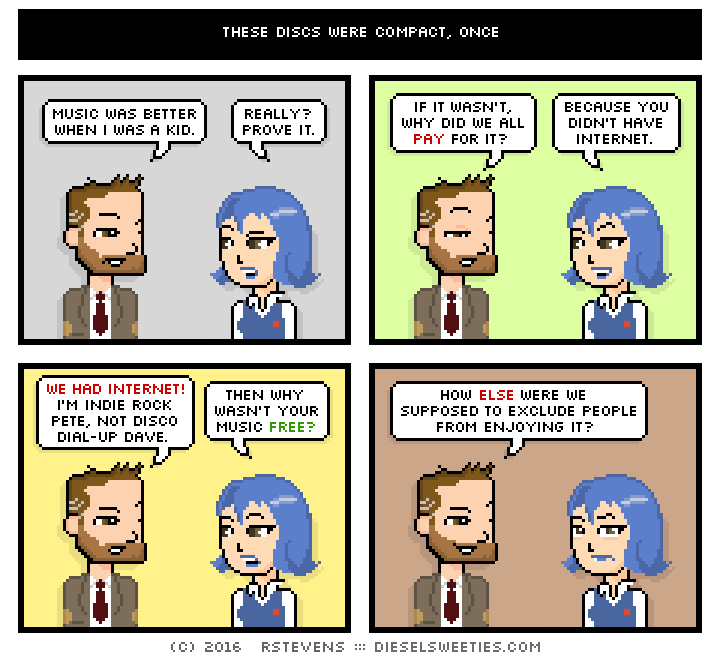
Music was better when Indie Rock Pete was a kid.
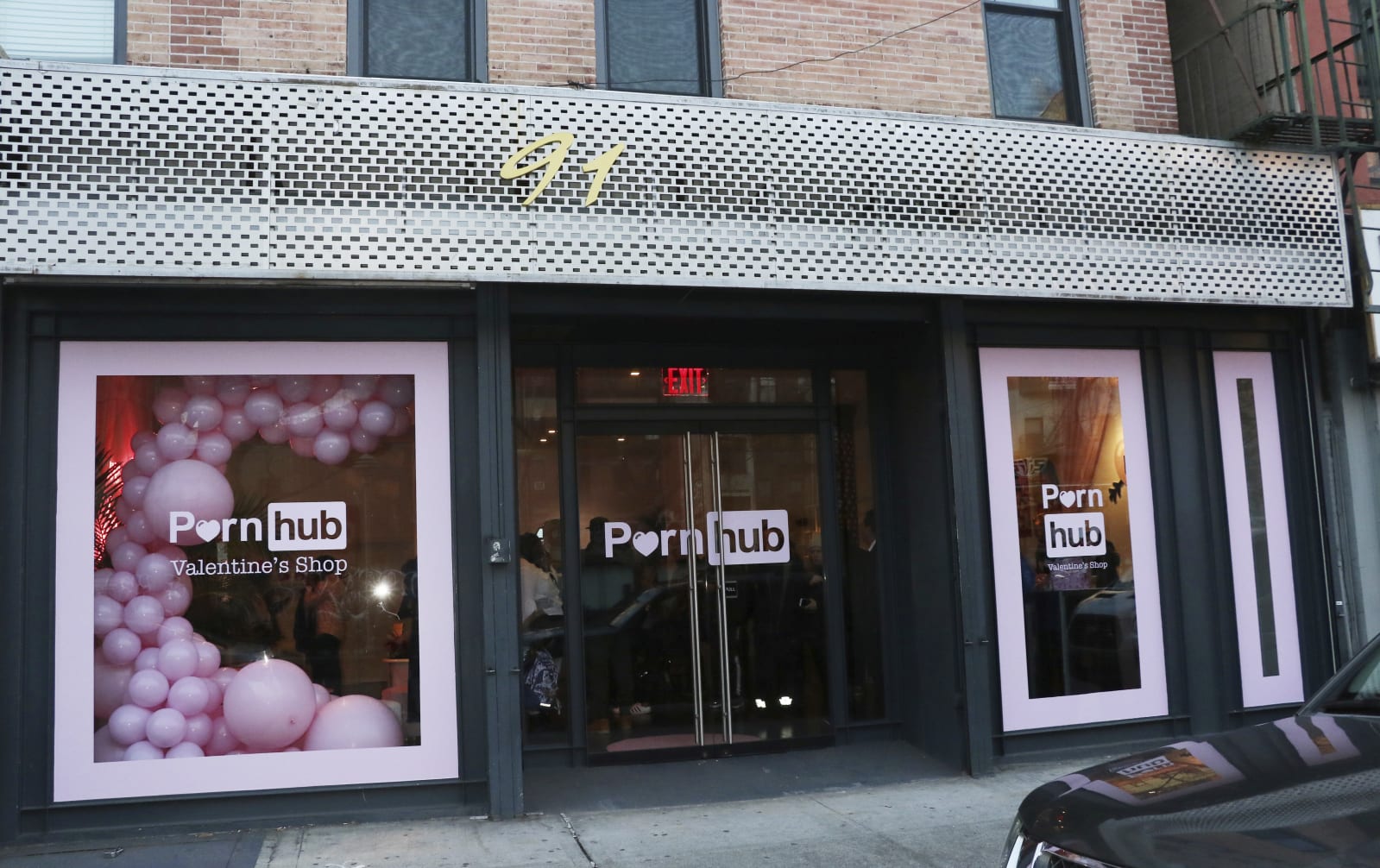
It's not just the usual internet services expanding their original video lineups. Pornhub is releasing its first non-porn movie, Shakedown. The feature-length documentary from artist Leilah Weinraub takes a more serious look at sex, following the LGBTQ women and men from Los Angeles' lesbian strip club scene in the early 2000s. You've had chances to see it at MoMA and the Whitney Museum over the past three years, but it hasn't been available in an on-demand format until now.
There's even a dedicated "home" section for the project where people can watch the movie and chat about it. Weinraub will make weekly appearances, Pornhub said. The virtual space is meant to both appeal more to women and let people be "alone, together," as Weinraub noted.
Shakedown will be free to watch throughout March, and will then head to TV through the Criterion Channel. If you want a copy for posterity, it'll reach the iTunes Store in the summer.
It may seem odd for Pornhub to host a high-brow documentary, but the site sees Weinraub's title as part of a larger strategy. Artists are already uploading videos with nudity that wouldn't be allowed on services like YouTube and Vimeo, Pornhub's Alex Klein told Variety -- this gives them a "platform" they can use. Rather than try to compete with the likes of Amazon or Netflix, it's hoping to both carve out a niche for itself and attract viewers who might not even care for porn in the first place.
6:45 AM: Wash your hands for at least two minutes. Do this every 15 minutes for the rest of the day. Realize that you would now have an excuse not to shake hands with that professor from your MFA program who always turned it into a long hug. Turns out that there are some good things about the lurking Coronavirus at AWP.
7:00 AM: Drive to your local train station and pretend that you have shared intimate emotional moments with every person you see wandering around. Then purchase a breakfast that you hope won’t drip onto the shirt you will wear for the next 14 hours. This will recreate the AWP-bound realization that everyone in your writing program is on the same flight as you, and they will all be watching you eat your breakfast at the gate.
8:00 AM: Choose a seat at the station next to a stranger. Call up your least-favorite relative and make insipid conversation with them for an hour. This is your flight to AWP.
10:00 AM: Drive to your school, go into a building on campus you’ve never visited before, and wait for classes to change. Watch how most of the students happily greet each other, while you are the weirdo standing in their way, watching. This replicates your experience of checking into your hotel and registering at AWP.
10:10 AM: Stop a male student with glasses and ask them what they think about The Catcher in the Rye. Now you’ve made small talk at in the London Review of Books tote bag line at AWP.
11:00 AM: Think about a celebrity you really admire. Google their name. Keep googling until you find out something awful that they once said or did. This is like that moment when you spot your favorite author across the room at AWP, and they meet your eye briefly before looking pointedly away.
11:15 AM: Walk through the campus library, and, when you come to a new book on display, fling cold water in your face. Now you’ve recreated that AWP experience of realizing that the guy you most disliked in your MFA program has published his first book. Pick up the book and hit yourself in the face with it. He got a movie deal, too.
11:30 AM: Take a moment to jot down the idea you just had for a great new short story. Discard it after you realize “A major conference is affected by a pandemic causing the people there to feel feelings” is the same story essentially everyone at AWP is also working on.
12:00 PM: Arrange to meet two of your closest friends at your local mall’s food court for lunch. Don masks, while debating whether masks are even helpful. Deliberately choose the least-appealing food and sit at a terribly situated table. Draw lots to see which of you will: a) have a panic attack; b) burst into tears; or c) repeatedly say in a far-too-cheerful voice, “This is not as bad as I was expecting!” Lunch at AWP is complete.
1:00 PM: Return home. Tell yourself you’re going to take a short nap and be back at it in no time. It’s an AWP afternoon, after all.
4:12 PM: Arise from your nap and, bleary-eyed, walk in place as you watch TV. Stay on a channel until someone says something you don’t care for, then flip to the next. There. Now you’ve panel-hopped, just like at AWP.
4:30 PM: Drive to your nearest cultural attraction. Post on Instagram that you’re there to be #AWPAWomanProvoked. Wander through it, making notes about poems you might write, inspired by what you see. Feel free and happy and creative for the first time all day. The cultural attraction closes at 5, so your respite is soon over. Never write a single one of those poems.
5:20 PM: Drive to your local library and take out 20 books based solely on their covers. Now set a $100 bill on fire in the parking lot. There, you walked through the AWP book fair.
6:00 PM: Time for the keynote speech. Back at home, find your most uncomfortable chair and fire up that Joan Didion documentary on Netflix. You may either turn the volume up way too high or so low she’s basically mute. Check-in on Facebook, noting that you are #AWPAwesomelyWonderingAtHerProfundity. Text all of your friends to ask where they are seated. Repeatedly tell them that we all need to listen to this literary icon. Miss most of what Joan has to say.
7:15 PM: Recreate the experience of the post-AWP-keynote Q&A by going on Twitter and asking if anyone has any opinions.
7:30 PM: Drive to the nearest coffee shop and listen to your local high school’s creative writing class’s slam poetry. Cheer robustly for every single performer. Find the one who seemed most nervous and loudly proclaim that they have “Got IT!” Tell everyone you talk to that you are a writer too. Feel strangely angry after the event wraps up without anyone asking to see your work. Now you’ve gone to an off-site AWP reading.
8:30 PM: Park several blocks away from your home and walk the rest of the way in the moonlight, thinking deep thoughts about the nature of art and meaning, and also about how AWP is probably a lot more fun if you have a book deal to brag about, and no one’s freaking out about a modern-day plague.
8:50 PM: Replicate the experience of locking yourself out of your hotel room by throwing your key into the yard. Call your best friend to come over with their key and let you in. When they arrive, give them a beer, burst into tears, and say that the day has really made you question some things, and that it might be time to pursue your music instead of writing. This will recreate literally any conversation you have after 8:30 PM at AWP.
9:30 PM: Ask your best friend if they will make out with you, to nail that AWP pub-crawl vibe.
9:40 PM: After they refuse, repeatedly try to pick a fight with your best friend as if your front stoop is the back alley of a bar. Give up after they say, “But it’s Tuesday,” and “Actually, no, I don’t think we’re all going to die,” and “Don’t you have to teach tomorrow?” and “Maybe put all of this feeling into a story or something, God, I don’t know, hon, it’s just, like, a convention, right?”
9:50 PM: Pick up one of your favorite authors’ books and read a few pages. Wow, right? Imagine what you would say to them if you bumped into them in an elevator at AWP. Recollect that the chances of running into Jane Austen in an elevator at AWP are very, very small. Especially this year.
10:00 PM: Set your clock ahead so that it reads 2:00 AM. Wash your hands for another 10 minutes, then it’s time for bed, you party animal. After all, tomorrow’s another amazing day at AWP.
Don’t get me wrong, I’m obviously all for Trumpism if that means Trumps have equal rights. Trumps should make as much money per hour as everyone else, control medical decisions pertaining to their own bodies, and be whatever they want, whether it’s a nurse, schoolteacher, even an inept real estate developer.
But President of the United States? I just don’t think a Trump has what it takes.
Let’s face it: Trumps are — how shall I put this without getting their golf pants in a twist? — highly temperamental, particularly when it’s “that time of the month”: the release of the jobs report. One minute they’re acting more or less normal (insofar as Trumps are ever “normal” — the non-Trumps know what I’m talking about!), the next they’re ready to start a nuclear war with an off-teleprompter remark. And if you’ve ever committed the grievous offense of saying something even mildly critical about one of them — well, hell hath no fury like a Trump scorned.
I’m not saying a Trump couldn’t possibly be a rational, intelligent president. I’m saying college transcripts have repeatedly shown that, on average, Trumps possess inferior cognitive-thinking skills from the rest of the population. They don’t understand complex issues, especially anything to do with science or numbers. Have you ever even seen a Trump read a book? Nope. They’re obsessed with their hair and makeup and celebrities, and spend all their time nattering on the phone, posting selfies and inane comments, and watching mindless daytime talk shows while guzzling Diet Coke. (On that note: Trumps, honey, if you really want to drop a few pounds, maybe stop eating McDonald’s for every meal and get off your lazy ass once in a while?)
The great presidential minds of Jefferson, Lincoln, and… a Trump? The optics just aren’t right.
Trumps in politics always try to portray themselves as tough, but when you get them in a one-on-one, they’re weak and nonconfrontational. I’d worry about electing a Trump who would embarrassingly fawn over foreign strongmen because they remind them of their father.
Speaking of which, most Trumps barely work, so all their money comes from Daddy’s bank account. And they spend it in the most frivolous ways, like on absurd neckties, tacky interior décor, and undocumented workers. I’ve never known a Trump who wasn’t in multimillion-dollar debt. Can you imagine one of them trying to balance the budget?
Frankly, I’m not even sure we should allow Trumps to fight in the military — if, that is, they didn’t already try to wriggle out of service by claiming boots hurt their dainty little feet.
As for that perennial question of which politician you would rather have a beer with, that’s a no-brainer: Trumps don’t even drink beer. And that really gets to the heart of it. Trumps come off as unrelatable to the average American. When they talk about sports, you can tell they’re faking it. It’s hard to picture one playing with a dog on the White House lawn. I’ve never known a Trump with a genuinely good sense of humor. Okay, fine, I’ll just come out and say it:
A Trump is simply not likable enough to be president.
Teddy Wayne’s new novel, Apartment, has just been published. He will be in conversation with Kate Bolick at Books Are Magic in Brooklynn on March 6 at 7 p.m.

AI is the backbone of technologies such as Alexa and Siri -- digital assistants that rely on deep machine learning to do their thing. But for the makers of these products -- and others that rely on AI -- getting them "trained" is an expensive and often time-consuming process. Now, scientists from Rice University have found a way to train deep neural nets more quickly, and more affordably, through CPUs.
Typically, companies use GPUs as acceleration hardware in implementing deep learning in technology. But this is pricey -- top of the line GPU platforms cost around $100,000. Rice researchers have now created a cost-saving alternative, an algorithm called sub-linear deep learning engine (SLIDE) that is able to do the same job of implementing deep learning, but without the specialized acceleration hardware.
The team then took a complex workload and fed it to both a top-line GPU using Google's TensorFlow software, and a "44-core Xeon-class CPU" using SLIDE, and found the CPU could complete the training in just one hour, compared to three and a half hours for the GPU. (There is, to our knowledge, no such thing as a 44-core Xeon-class CPU, so it's likely that the team is referring to a 22-core, 44-thread CPU.)
SLIDE works by taking a fundamentally different approach to deep learning. GPUs leverage such networks by studying huge amounts of data -- often using millions or billions of neurons, and employing different neurons to recognize different types of information. But you don't need to train every neuron on every case. SLIDE only picks the neurons that are relevant to the learning at hand.
According to Anshumali Shrivastava, assistant professor at Rice's Brown School of Engineering, SLIDE also has the advantage of being data parallel. "By data parallel I mean that if I have two data instances that I want to train on, let's say one is an image of a cat and the other of a bus, they will likely activate different neurons, and SLIDE can update, or train on these two independently," he said. "This is much a better utilization of parallelism for CPUs."
This did bring its own challenges, however. "The flipside, compared to GPU, is that we require a big memory," he said. "There is a cache hierarchy in main memory, and if you're not careful with it you can run into a problem called cache thrashing, where you get a lot of cache misses." After the team published their initial findings, however, Intel got in touch to collaborate on the problem. "They told us they could work with us to make it train even faster, and they were right. Our results improved by about 50 percent with their help."
SLIDE is a promising development for those involved in AI. It's unlikely to replace GPU-based training any time soon, because it's far easier to add multiple GPUs to one system than multiple CPUs. (The aforementioned $100,000 GPU system, for example, has eight V100s.) What SLIDE does have, though, is the potential to make AI training more accessible and more efficient.
Shrivastava says there's much more to explore. "We've just scratched the surface," he said. "There's a lot we can still do to optimize. We have not used vectorization, for example, or built-in accelerators in the CPU, like Intel Deep Learning Boost. There are a lot of other tricks we could still use to make this even faster." However, the key takeaway, Shrivastava says, is that SLIDE shows there are other ways to implement deep learning. "Ours may be the first algorithmic approach to beat GPU, but I hope it's not the last."
Source: Rice University
 Will I Go to Heaven?
Mayle
1976
Submitter: This book comes from a small public library. It has had 4 circulations since 2001. That alone is enough to pull the book. Then there are some questionable illustrations and text that are a bit confusing and likely offensive in today’s social climate. For a children’s book there is A LOT of text. There are also some torn and stained pages. We do get requests for children’s books on death and heaven on occasion. It’s a difficult topic to explain and this book would likely confuse young minds.
Holly: Ughhhhh. I’m really tired of these cartoony images of historical and cultural groups of people. It’s not cute. It’s not the cartoon style, so much; it’s the parody and stereotype of the way the characters are portrayed. Did we ever need children’s books with beer-guzzling Vikings? Ummm…no. We didn’t.


The post Will I Go to Heaven? appeared first on Awful Library Books.

Click image to enlarge and zoom.
The post The Report appeared first on The Perry Bible Fellowship.
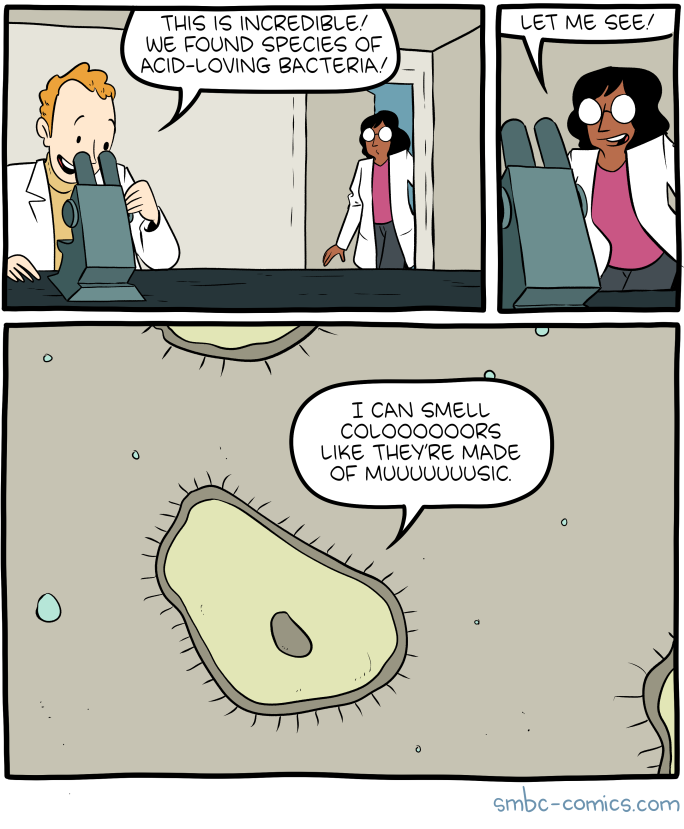
Hovertext:
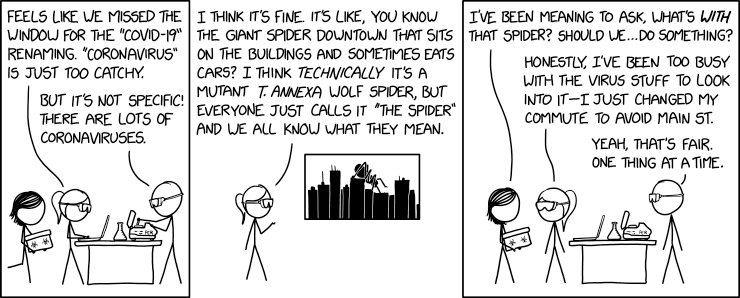
The weird part is it works despite the lack of a central nervous system.
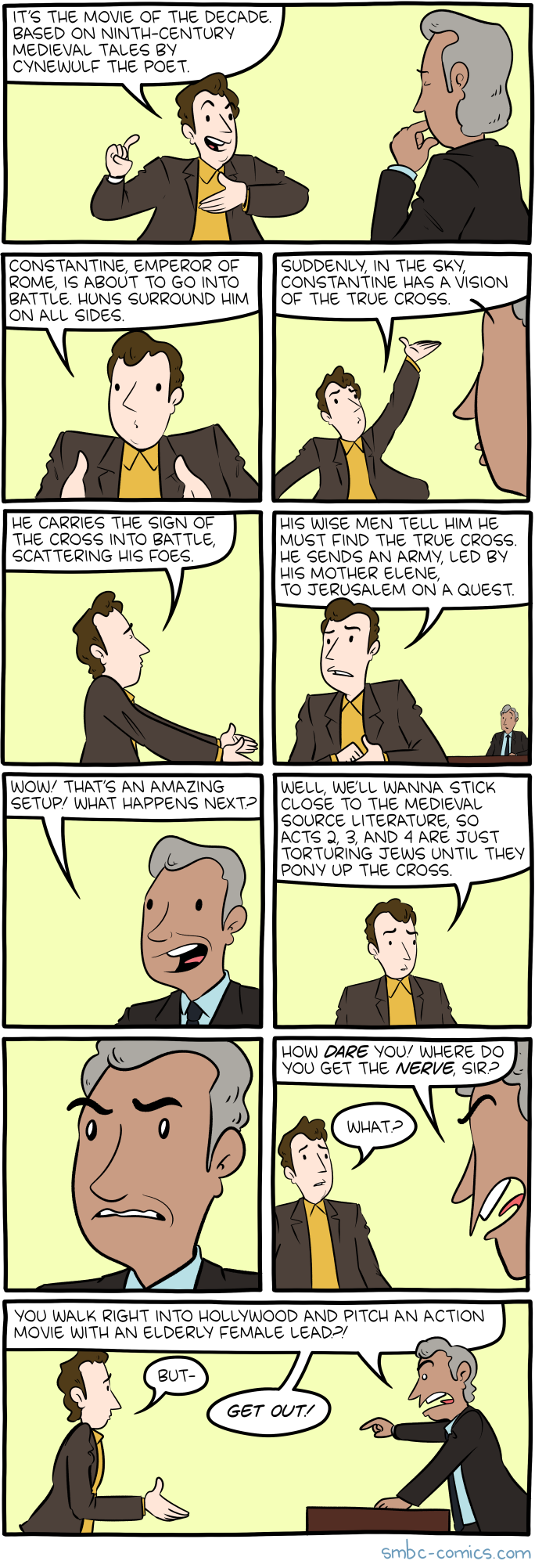
Hovertext:
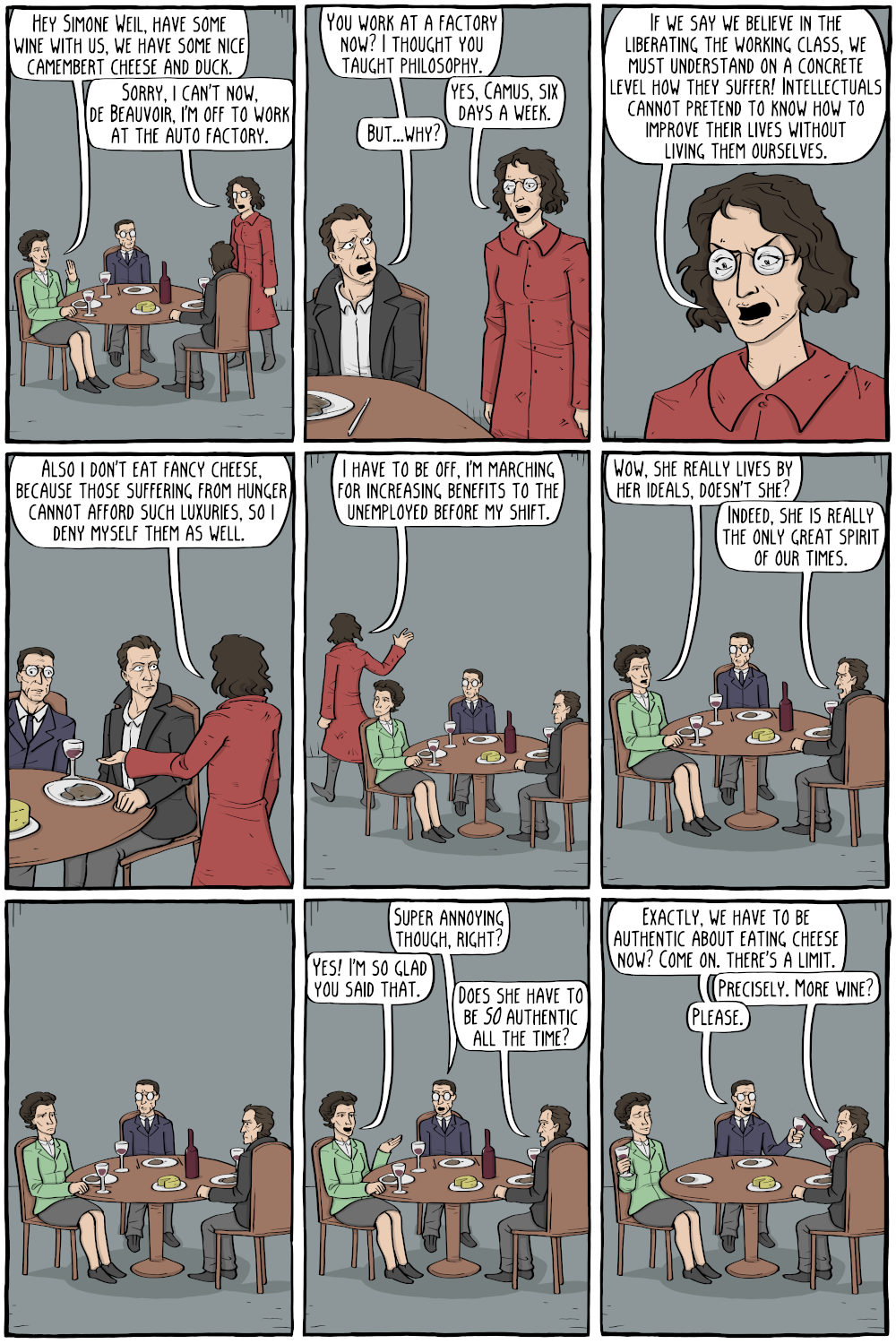
This is the best Cynewulf joke you've ever read, unless I've missed one made by Kate Beaton at some point.
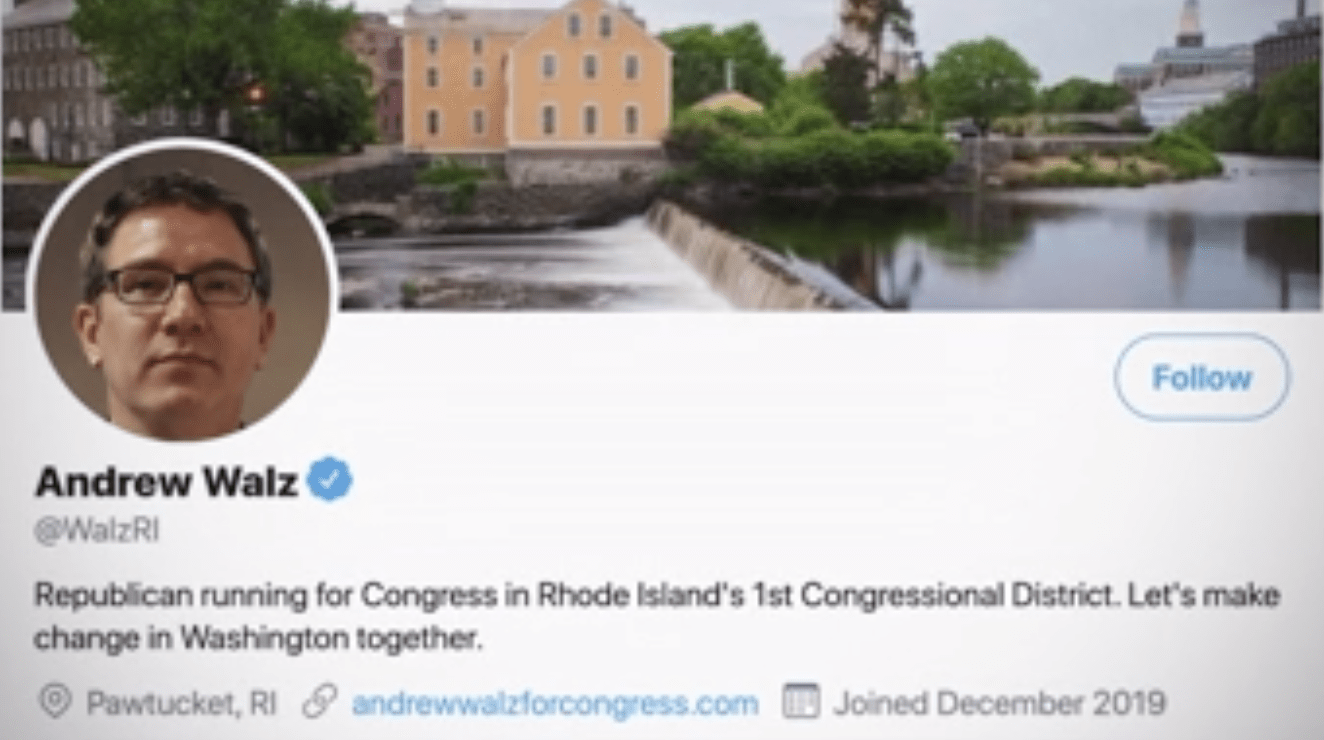
Andrew Walz isn't a real person. A high school student from upstate New York created the fake congressional candidate -- complete with website, AI-generated photograph and Twitter account -- to test the social media platform's verification system. According to CNN Business, it took the teenager all of 25 minutes to set everything up. Within a few months, Twitter reached out to Andrew Walz and verified his account, earning him a blue badge next to his name.
The student, who is a minor and therefore must remain anonymous, submitted Andrew Walz's information to a website called Ballotpedia, a non-profit that keeps track of American political candidates. Twitter partnered with the site last year to identify the official Twitter accounts of candidates and their campaigns. Once Ballotpedia passed Andrew Walz's information on to Twitter, the company reached out to verify the account, despite the fact that it only had 10 followers as of February 26th. (The student says that he didn't promote the account at all -- he simply wanted to test Twitter's verification system, rather than deceive the public.) When CNN Business reached out to Twitter for comment, the company terminated the account.
The blue verification badge is meant to assure the public that an account is legitimate and that Twitter has done its due diligence in vetting the account's owner. Twitter even touts its verification system as a way to help users find reliable information during the election season. However, the student says that the company didn't ask for any form of identification -- it's only stipulation was that he added a header image to the account. Both Ballotpedia and Twitter have said that they will improve their vetting processes after this slip-up. But with foreign countries actively interfering in US elections -- and with US politicians oddly blocking election security measures -- users should do their own research and make sure that the accounts they follow are legitimate.
Source: CNN Business

Animal Crossing: New Horizons is one of Nintendo's most anticipated games of 2020. We've seen plenty of the game's content from Nintendo Direct streams, but this weekend, fans are getting their first hands-on experience with Nintendo's island life simulator. PAX East attendees have reported several new details that weren't previously mentioned by Nintendo, which USgamer has rounded up. While none of them are particularly surprising, they do show that Nintendo is listening to fans' feedback.
Kicks the Skunk, a villager that owns a shoe store, now sells accessories like bags, clothing and other accessories. This will help players customize their characters more than previous Animal Crossing entries, which have been somewhat lacking in that department. Demo players have also spotted more fish and snapping turtles that they can catch and display at the island's museum. A small feature that may make a big impact on long-time Animal Crossing players allows the camera to switch to a top-down perspective similar to that of the original Nintendo 64 / GameCube version of the game. (The first Animal Crossing was first released on N64 in Japan as Dobutsu no Mori.)
As more players get their hands on the demo at PAX East, more features are likely to turn up. Luckily for fans that can't make it to Boston this weekend, the game will be out in less than a month. Animal Crossing: New Horizons will be out on March 20th, while accessories and a special edition Switch console will be out on March 13th.
Source: USgamer