Shared posts

23 Jun 22:58

John McAfee found dead in jail cell

by Rob Beschizza

John McAfee, the one-time antivirus mogul now more famous for the bizarre inernational shenanigans that ultimately led to his arrest in Spain and imminent extradition to the U.S., was today found dead in his jail cell.

McAfee was found dead in his cell in a prison near Barcelona on Wednesday around 1 p.m.

Read the rest
23 Jun 22:57

Standing With Security Researchers Against Misuse of the DMCA, (Wed, Jun 23rd)

As Dean of Research for our graduate school (sans.edu), I often assist students in developing their research ideas. The research conducted by our students is valuable and important to defend our networks against highly organized and well-funded threat actors. Any restriction on our student's ability to conduct their research, and sharing their results freely, only adds additional unnecessary burdens on us as network defenders. With that, I am happy that I was able to co-sign the attached statement by the Electronic Frontier Foundation (EFF) on behalf of the SANS Technology Institute. Legal threats against good faith security researchers only discourage the open exchange of ideas. If we hope to have a chance to defend, we will have to keep exchanging these ideas, learn and we need to continue to be curious hackers exploring the technologies that are the foundation of our everyday living.
23 Jun 20:58

No, The Other One

Key West, Virginia is not to be confused with Key, West Virginia.
23 Jun 18:17

I Am “Wearing Pajamas at 7 PM” Years Old

by Ali Solomon and Janine Annett


I am “wearing pajamas at 7 PM” years old.

- - -


I am “how much do you want to cover your greys?” years old.

- - -


I am “I remember Clippy” years old.

- - -


I am “concerned about my fiber intake” years old.

- - -


I am “hiring professional movers instead of bribing my friends with pizza and beer” years old.

- - -


I am “thinking about dinner starting at 3:30 pm” years old.

- - -


I am “unironically liking the music playing at the dentist’s office” years old.

- - -


I am “taking cornhole very seriously” years old.

- - -


I am “need a week to recover from a night out” years old.

- - -


I am “providing tech support to my parents” years old.

- - -

Preorder Janine Annett’s and Ali Solomon’s funny new book
I Am “Why Do I Need Venmo” Years Old

23 Jun 18:13

TxDOT Kept Moving Forward On I-45 Project Despite Federal Warning, Feds Say

by Paul DeBenedetto
TxDOT was told in March to pause its North Houston Highway Improvement Project over civil rights and environmental concerns raised through the public input process. 
23 Jun 17:02

San Antonio Museum Acquires Eight Works By San Antonio Artists

by Christopher Blay

Continuing its move of the last few years to acquire more works by women, artists of color, and Texas-based artists, San Antonio Museum of Art (SAMA) has announced the acquisition of eight artworks by seven San Antonio-based artists. The list includes Jennifer Ling Datchuk, Jenelle Esparza, Joe Harjo, Jon Lee, Ethel Shipton, Chris Sauter, and Liz Ward, and marks the artists’ first entries into SAMA’s collection. Among the works selected are textiles, painting, photography, prints, and sculpture, all scheduled to go on view this fall.

The 2021 cohort of artists were selected with support from an advisory committee comprised of San Antonio-based artists, professors, collectors, arts leaders, and museum staff and trustees. It was co-chaired by SAMA trustees Katherine Moore McAllen, PhD, and Dacia Napier, MD. The group has also made recommendations for future artists’ works to be added to SAMA’s growing collection.

Jenelle Esparza (American, born 1985)Continent,

Jenelle Esparza, Continent. Handmade quilt, recycled fabric and clothing, embroidered blocks, batting, cotton blends. San Antonio Museum of Art, gift of Zoe A. Diaz, 2021 © Jenelle Esparza

On one of the newly acquired works: “My late grandma taught me how to sew when I was 8 years old, and that kind of craft work was something we shared,” Esparza writes in an email to Glasstire. “I quilted Continent with those inherited skills and included embroidered blocks half-done by my grandma and finished by myself. Knowing that it’s in the permanent collection at SAMA where it will be well taken care of to possibly outlive me, is incredible. It’s an honor.”

Jon Lee (American, born South Korea, 1968) O1702, 2017 Woodcut

Jon Lee, 2017. Woodcut, 17 × 12 in. San Antonio Museum of Art, purchased with The Brown Foundation Contemporary Art Acquisition Fund and funds provided by Dr. Katherine Moore McAllen, Dr. Dacia Napier, Edward E. (Sonny) Collins III, and The Sheerin Family. © Jon Lee


Ethel Shipton, The Valley - RGV: Brownsville, 2021. Archival digital prints on Hahnemühle German Etching Matte paper.

Ethel Shipton, The Valley – RGV: Brownsville, 2021. Archival digital prints on Hahnemühle German Etching Matte paper. Series of 6 prints, Edition 1/824. San Antonio Museum of Art. Purchased with The Brown Foundation Contemporary Art Acquisition Fund and funds provided by Dr. Katherine Moore McAllen, Dr. Dacia Napier, Edward E. (Sonny) Collins III, and The Sheerin Family. © Ethel Shipton Digital image courtesy of Ruiz-Healy Art.

“I am thrilled to have my work at the San Antonio Museum of Art,” Shipton writes to Glasstire. “It means a lot to me, as my job as a perparator [there] was one of my first in San Antonio when I moved there in 1997. The work that [SAMA has acquired] is a series of six prints that documents different cities in the valley in the Rio Grande Valley, [and] it was important to continue the representation of the frontera/borderlands. I want to people from there to see themselves as they move through the San Antonio Art Museum.”

Chris Sauter (American, born 1971)Shape of the Universe, Kandariya Mahadeva, 2013

Chris Sauter, Shape of the Universe, Kandariya Mahadeva, 2013. Cut acrylic mounted photography, Sintra 60 × 30 in. San Antonio Museum of Art. Purchased with The Brown Foundation Contemporary Art Acquisition Fund and funds provided by Dr. Katherine Moore McAllen, Dr. Dacia Napier, Edward E. (Sonny) Collins III, and The Sheerin Family. © Chris Sauter


Datchuk, Jennifer Ling_Enter the Dragon_2020_Photo credit Casie Lomeli, Courtesy of Artpace

Jennifer Ling Datchuk Enter the Dragon, 2020. Porcelain, ceramic decals from Jingdezhen, China, wood, gold mirrors. 65 × 16 × 5 in. San Antonio Museum of Art. Purchased with The Brown Foundation Contemporary Art Acquisition Fund and funds provided by Dr. Katherine Moore McAllen, Dr. Dacia Napier, Edward E. (Sonny) Collins III, and The Sheerin Family. © Jennifer Ling Datchuk. Photography by Casie Lomeli, courtesy of Artpace Digital, image courtesy of Ruiz-Healy Art.

Says Lana S. Meador, Assistant Curator of Modern and Contemporary Art at the museum: “The group of artists announced represents an incredible range of conceptual and formal approaches and come from a multitude of backgrounds that have shaped their artistic practices. Their work brings new dimension to SAMA’s collection and allows us to expand and deepen narratives about art across culture, medium, and style, and positions Texas as a dynamic hub for artistic innovation. Collecting the work of artists from Texas, and in particular San Antonio, is an essential part of our responsibility to reflect and support our community, and we look forward to continuing to enhance our holdings of artists based in our city and region and to sharing their voices with our many audiences.”

Liz Ward (American, born 1959)Ghosts of the Old Mississippi: Dismal Swamp/Northern Lights, 2015

Liz Ward, Ghosts of the Old Mississippi: Dismal Swamp/Northern Lights, 2015. Watercolor, gesso, silverpoint, pastel, and collage on paper, 71 5/8 × 31 7/8 in. San Antonio Museum of Art. Purchased with The Brown Foundation Contemporary Art Acquisition Fund and funds provided by Dr. Katherine Moore McAllen, Dr. Dacia Napier, Edward E. (Sonny) Collins III, and The Sheerin Family. © Liz Ward, photography by Zotograph

Last year, works which moved into SAMA’s collection came from Texas-based artists Christina Fernandez, LaToya Ruby Frazier, Jeffrey Gibson, Edgar Heap of Birds, Kirk Hayes, Earlie Hudnall Jr., Marcelyn McNeil, and Liz Trosper.

For more on San Antonio Museum of Art, please go here.

The post San Antonio Museum Acquires Eight Works By San Antonio Artists appeared first on Glasstire.

23 Jun 12:57

Yellowstone Glitch, Part 8: Down the Rabbit Hole

by Steve

This glitching investigation has taken a turn down a strange path. Although the Yellowstone board seems to be working, I wanted to further reduce the nasty-looking signal spikes seen on the oscilloscope. Series resistors on the data bus seem like a good way to do that. So I performed some more board surgery, and separated the output pins of the 74LVC245 from the pads on the PCB. Then I used 16 fine-gauge wires to insert a socket between the ‘245 and the PCB pads, so I could experiment with resistors of different values in the socket.

I tested it with 100 ohm series resistors, and the steepness of the edges on data bus transitions were noticeably more gentle. I measured about 0.15V per ns, instead of 0.4V per ns before. But I was very surprised that the weird spikes I’ve been chasing on D0, A1, and the 3.3V power supply didn’t improve at all. As far as I could tell, series resistors didn’t help even a little bit. They were a total dud, at least for 100 ohms.

My attention then returned to something I’d noticed before. There were also spikes on the signals at other times, not during the Yellowstone bus cycle. What was that about? Is Yellowstone doing something odd from an electrical standpoint, even when it’s not driving the bus or receiving a value from the bus?

Then I got to thinking: three of the four signals that I’ve been measuring in each scope experiment are just Apple II bus signals, not Yellowstone signals. So what would happen if I completely removed the Yellowstone card from the computer, and just measured those signals? I took a blank unpopulated PCB, and soldered a few wires to points on the board so I could measure some voltages. Then I ran a test program on the Apple IIgs that attempted to read values from the non-existent peripheral card.

  • Blue (Ch4) is address line A1. It’s a 5V input from the Apple II
  • Yellow (Ch1) is the 5V supply voltage, measured at the VCC pin of the PCB.
  • Cyan (Ch2) is IOSTROBE, and marks the boundaries of the bus cycle.

All those ugly signal spikes are still as bad as ever when the Yellowstone card isn’t even present. Cue disorienting sound effects, flashing lights, evil laughter, fade to black…

What have I even been looking at for these past few days? Either it’s some noise inherent in the Apple IIgs itself, or more likely it’s just operator error and an artifact of my crappy probe setup. But it’s not a problem with Yellowstone.

I’m still confident there was initially a signal integrity problem with Yellowstone, probably multiple problems, caused by high current flows through the 74LVC245. But my earlier attempts to address the issue may have been more successful than I realized, and now I’ve been chasing phantoms for several days.

22 Jun 23:48

Eye on the Tropics: Speculation season has arrived

by Matt Lanza

Like we did in 2020, Eric and I are pleased to bring back the “Eye on the Tropics” series to Space City Weather. Each week, normally on Tuesday afternoons, either myself or Eric will write a more detailed post specific to tropical weather in the Atlantic. This allows us to go more in depth on what is happening, what we are watching, and what might be buzzing on social media with respect to tropical storms or hurricanes. We will keep these weekly updates going into August. Usually by mid-August there’s enough happening each day that we’re covering it in our daily posts.

Anyway, we are off to a roaring start this year.

Tropical outlook in a sentence

While we are monitoring the progress of a tropical wave east of the Caribbean islands and some model solutions have brought that or another system into the Gulf as a substantial tropical storm, there is still far too much uncertainty regarding its future to consider it a serious concern at this time.

2021 so far

Before we get to the Atlantic system we’re watching, let’s hit you with some statistics about the season so far. Claudette’s remnants are steaming out to sea in the Atlantic, our third named storm of the young 2021 hurricane season. While Claudette was quite quick to become our third storm, it did not come close to last year’s speed, when Cristobal was named on the 2nd of June. We won’t threaten the fastest to storm #4 either, as Danielle’s record in 2016 is already in the rearview mirror (June 20th). So, at least we aren’t quite pacing 2020 right now. Beyond that, there’s little to deduce based on this season’s activity so far.

Atlantic disturbance

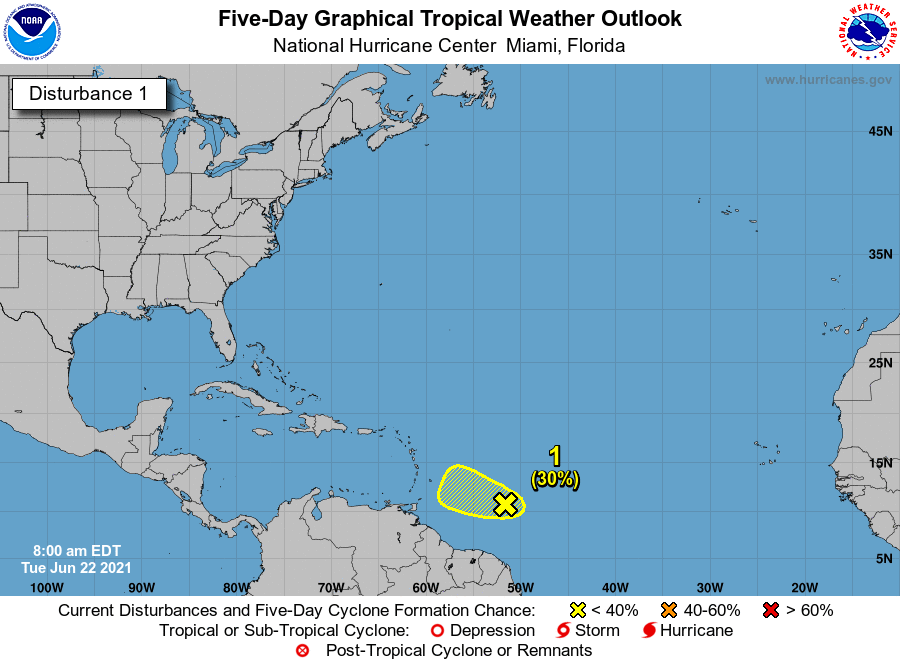
The main thing to talk about this week is a disturbance in the Atlantic basin that the National Hurricane Center is currently giving 30 percent odds of development over the next couple days (Author’s note: Since publication, this has been dialed back to 20 percent odds).

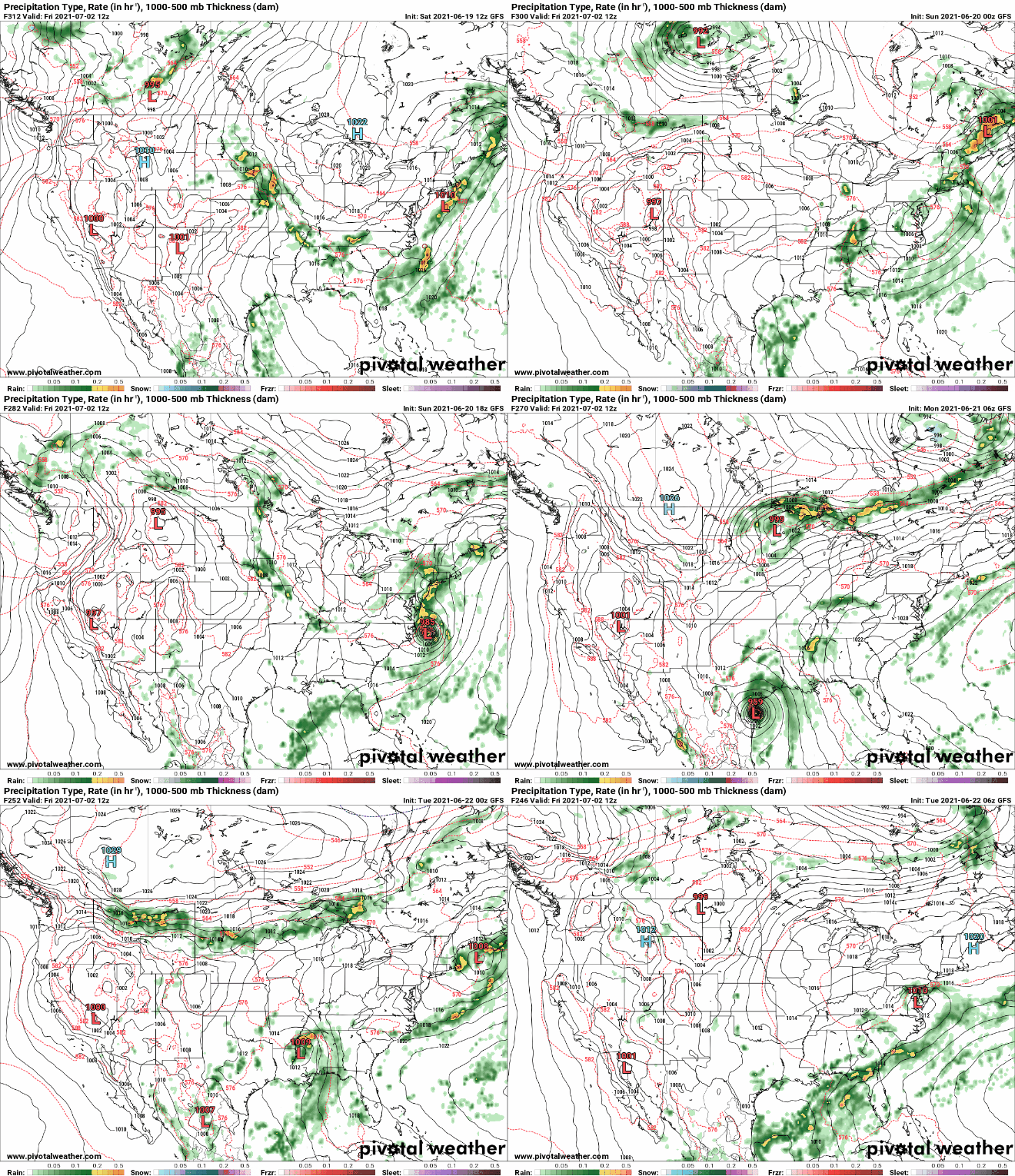
This particular disturbance has probably already caused some folks heartburn as a few social media focused weather pages have irresponsibly shared operational model guidance from Sunday showing a presumed major hurricane hitting Texas in early July. What they don’t tell you, besides failing to offer any context, is that the very same model has subsequently sent a weaker storm to Brownsville, Mobile, the Florida Big Bend, Tampico, New Orleans, and Pensacola in various runs. In fact, I’ve put together a gif of the pinball game the GFS model has been playing lately below.

The GFS operational model forecast for next Friday over the last 6 days has shown a potential tropical system anywhere from Mexico to Texas to Florida to not even developing at all. Operational models aren’t your friends during hurricane season. (Pivotal Weather)

Again, some of the best advice we can give you, besides not looking at operational model runs to mentally prepare for a storm forecast, is to not waste your time on various Facebook weather pages that don’t identify who the authors are and with whom they are affiliated. But I digress.

So the real question is: Should we watch this system? The answer is yes but with the big caveat that there’s probably a very good chance this develops into nothing. And what some models have latched onto in the Gulf late next week may not even be directly associated with this system.

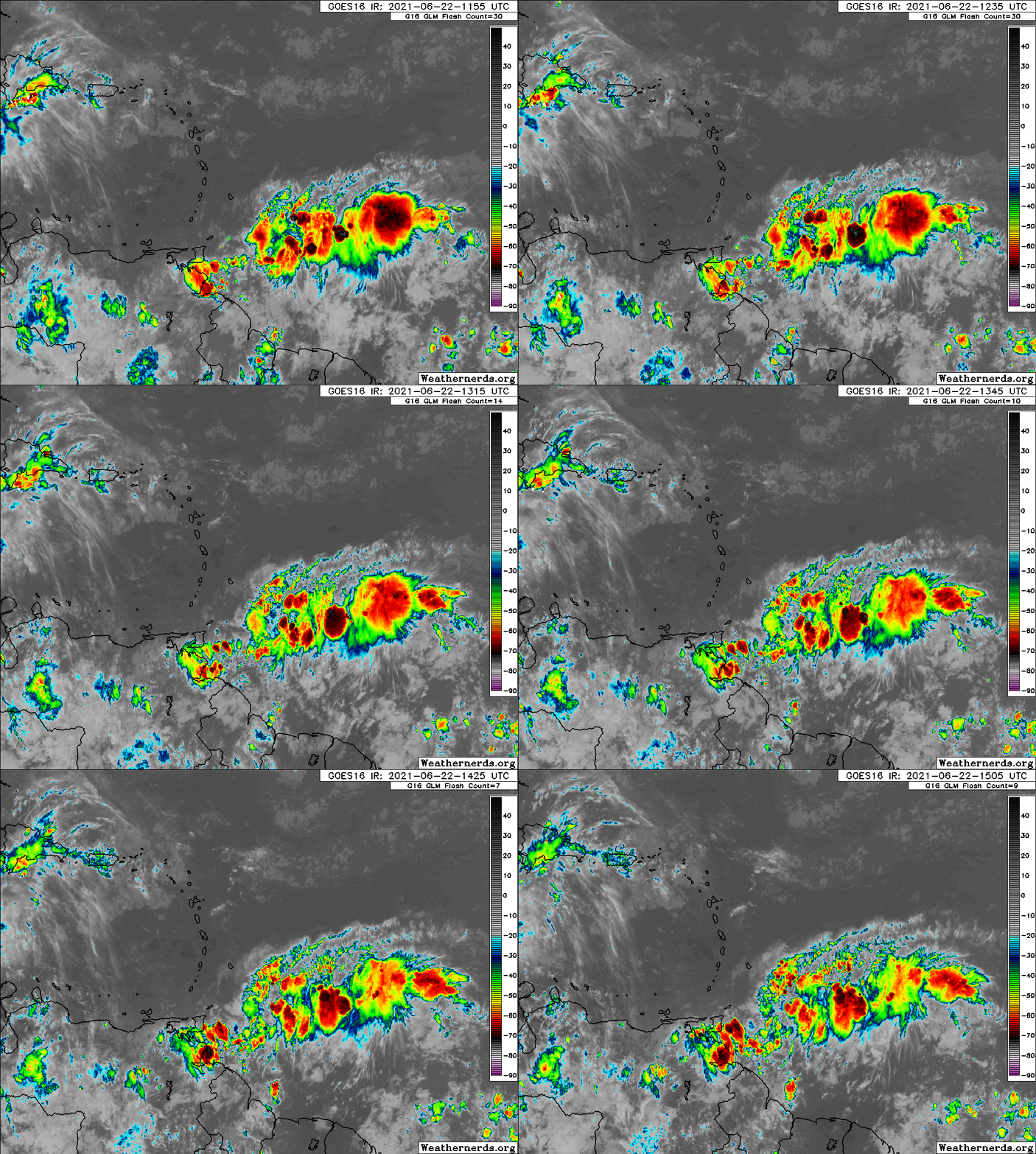
Looking at satellite imagery of the disturbance in question today, we can see just a disorganized “blob” of thunderstorms approaching the southern Windward Islands.

A tropical disturbance west of the Caribbean islands is not well organized but it may slowly try to organized over the next couple days. (Weathernerds.org)

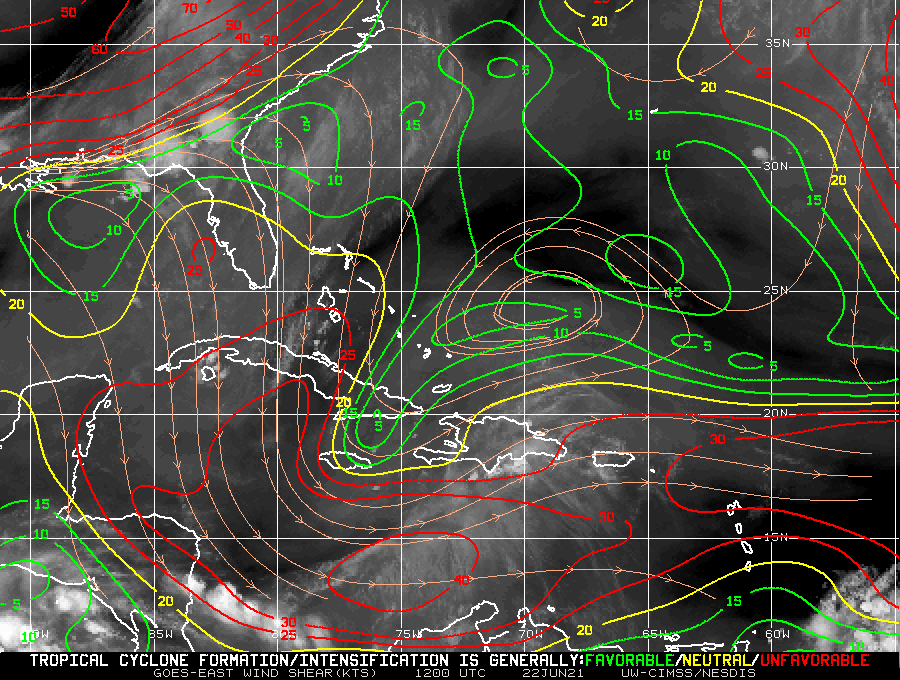
The NHC going with a low chance of development over the next 5 days seems reasonable based on this. The system is likely to be steered west or west-northwest around the periphery of high pressure in the Atlantic. This should bring it into the Caribbean, where conditions over the next 5 to 7 days won’t exactly be hospitable for development.

Wind shear is very high in most of the Caribbean (red color), which makes any sustained or serious development of this Atlantic disturbance unlikely over the next 5 to 7 days. (University of Wisconsin SSEC)

So even if this survives the trip, don’t expect it to be particularly healthy looking when it gets to the western Caribbean.

Beyond that, our ensemble guidance is very lukewarm on development and no real model at a place where I’m sitting up straighter in my chair out of concern. There’s some chance this could end up falling apart completely. It may make its way to the Pacific. Or perhaps it does indeed come to the Gulf. We don’t know, but we also don’t see anything notably alarming in model guidance either.

So the advice? Check back in every couple days for the latest, as you normally would during hurricane season. I would not waste energy worrying about this one though. Hurricane season is a marathon. Inevitably we are going to have to watch a storm or two with legitimate interest and concern come later July, August, or September. So pacing yourself if you can is a good plan of attack.

Anything else?

The good news is that beyond this system, there’s nothing else of note in the tropics. With a cold front crossing into our area this week and possibly another one next week, it’s probably best to not write the unexpected off completely. But there’s nothing in any modeling that suggests we need to really focus on anything specific for at least a little while.

22 Jun 15:48

my new office has a no-humor policy

by Ask a Manager

This post, my new office has a no-humor policy , was originally published by Alison Green on Ask a Manager.

A reader writes:

I’m an analyst at a small (25 employee) firm. I applied here mostly because of the great reputation this place has for putting out good work in my industry, and started this job about three weeks ago. It’s my second job after grad school, so I have a little experience under my belt but am still pretty junior.

When I got my onboarding materials, it was specified that the dress code was formal, which I chalked up to wanting the employees’ presentation to match the sleek and well-decorated office space I had seen in my walk-through. Not a big deal, and after so long working from home I couldn’t complain about getting to shop for some new business outfits and professional heels, honestly.

My first week, everyone was very polite but felt pretty reserved, which I assumed was due to them not knowing me yet. On Monday of my second week, I had a few documents in my hand and was heading to the copy room when one of my coworkers (a peer, not my boss) asked from his office if I could grab his print job from the printer tray while I was in there. I replied that I would, and said I’d be out once I figured out how to make double-sided bound copies on the (new to me) copier, so it might be a few years once I finally had it back to him. To clarify (because this apparently needs clarification?), this was a joke. I was actually going in there to make double-sided bound copies, but was joking about the trickiness of dealing with copiers. In reality, I figured it out in less than five minutes and brought the coworker’s document with me on my way back, not thinking anything about the interaction after that.

At the end of the day, my boss asked me if I could stop by his office before I headed out. I did, and when I got there our HR rep was in there with him(!). HR told me that it concerned him that I had made a joke about using the copier earlier, and that another coworker had come to him to raise this as well after overhearing me say it. I confirmed that it had been a joke, and a very lighthearted (and minor) attempt at establishing some rapport with my new coworkers. Then, my boss said that he didn’t think that kind of remark went over well. Not sure what he was getting at, I apologized for it and said that it was not my intention to reinforce any harmful stereotypes about women in the workplace being incompetent at basic tasks. HR said that that was not the issue, but that it was the fact that I had made a joke at all that he wanted to flag for me. He said that our office was not one where jokes will go over well, and while I wasn’t being reprimanded, he wanted to let me know that in the future I should not use humor or jokes or sarcasm because people could take it the wrong way.

Kind of dumbfounded and assuming that this was a pretty narrowly tailored comment, I agreed that I wouldn’t want external clients or office visitors to hear an innocent joke and get a bad idea of our office or how it’s run based on that. My boss jumped in to clarify that actually, they meant that we are not supposed to make jokes ever, whether or not we have external meetings that day. HR finished by saying that this was not a write-up or anything, and my boss said that my work quality so far has been great. I got my things and went home for the day. I’ve since realized that maybe my initial impression of everyone acting reserved when I started and the formal dress code might all be indicating a more serious workplace than I had expected.

Holy shit, Alison. What? To clarify, I am not interested in doing stand-up comedy at work, nor am I a gregarious person in my personal or professional life. But like — what? I don’t think my big takeaway from this is disappointment that I’m not supposed to make jokes at work (I am not especially funny) but I’m concerned that a throwaway comment I made has been policed to this level. All my friends/family balked when I told them this and told me it’s an insane policy, but the normalcy with which my boss/HR presented this to me is making me feel like I’m the crazy one for questioning it. Is this normal in an office environment? I interned in college and grad school and worked for a few years after graduating, but have never worked someplace where this is the norm.

This policy was not raised in my interviews or anything, and I was really excited about this job because of the professional growth it can afford me. What should I do here? It feels insane to job search after only a few weeks and this feels like a weak reason to leave a job, especially when the job responsibilities/pay/commute are all a step up for me. Do I just resort to being a stone-faced, Serious Business Lady while in the office and accept this insane quirk of the job while reaping the benefits of my position? I don’t think there’s anyone in the office I’d feel comfortable raising this with to get their temperature on it, as even if some of them don’t approve of it or think it’s crazy too, they’re all acting very much in line with the whole “never make a joke or any comment that may in any way be considered not straightforwardly work-related” thing so I can’t tell if there are any other dissenters. And for clarification, I do not work in law, banking, accounting, or any other industry where there is a stereotype of overly serious work environments. Any help would be VERY useful here.

A final note: I’m a regular AAM reader so my first thought was to think “Does this one weird quality actually indicate a much more flawed workplace?” and I genuinely think the answer is no. My boss and coworkers have provided great feedback on my work, I have opportunities to collaborate, there’s room for growth, and my experience has been varied. It’s just like … no one talks about anything but work, it’s a very quiet office, and I have quite literally never heard a laugh in here (all appropriate consequences of a no-humor office, I suppose). I just wanted to flag in case you were wondering if this office was a really dysfunctional place in other ways that I’m not taking into account.

Noooo, this is not normal!

It is very, very odd, and it’s a bizarre amount of control over people’s interactions with each other.

It’s true that are times when a manager might have good cause for talking to an employee about inappropriate use of humor — but those would be things like “Hey, the frequent sarcasm is coming across as pretty aggressive” or “rein in the dark humor, would you?” or “people don’t know you’re joking when you say things like X or Y” or “do not make jokes about race or gender here, ever.”

But “do not make a humorous remark ever, at any time”? Why?

Did they have a problem with some jokes landing wrong and this is a massive overcorrection? Does someone in upper management have no sense of humor and this is an order from them? Is it not really the policy and HR and your boss somehow really mangled whatever they intended to communicate to you?

If I had to put money on it, I’d guess that this is someone’s really strange idea of what “professionalism” looks like. But if so, how has no other senior person spoken up and said, “Um, this is a really weird edict and we shouldn’t do this”? I mean, in theory we could make people more professional by banning any non-work-related talk too, but we don’t do that because we work with humans and conversation is a normal part of human behavior, as is humor.

I’m glad you included your note at the end, because I’m definitely wondering what this culture is like! Do people seem happy? Is there a sense of warmth in their interactions with each other? It doesn’t sound like a particularly joyless place from what you wrote in your last paragraph but … at the same time, how can it not be?

I’m also wondering what it does to people to work in an office with this rule over a sustained period of time. I’d worry it would change your personality, making you less light-hearted outside of work too. (Or the reverse — sending you home every day bursting with pent-up silliness that must be unleashed. I might leave for lunch every day and rapid-fire an unseemly number of terrible jokes in quick succession at the person preparing my sandwich, just for the relief of it.)

As for what to do … I think it’s too soon to decide anything for sure yet. You’re only a few weeks in, you haven’t noticed anything troubling outside of this, and you’re otherwise happy with the job. For now, you might as well stay put and get a better sense of the culture. If it becomes clear that the culture is chilly and not one where you’re comfortable, then at that point you’d decide whether it’s uncomfortable to the point that you want to job-search immediately, or something you’ll live with for a while but probably not long-term (maybe staying a year or two but then parlaying the experience into something else), or something you’re willing to deal with in exchange for other benefits of the job. Or who knows, maybe it’ll become clear that despite the no-humor policy, people are still warm and reasonably human and the restrictions roll right off you when you leave the office every day.

You’ll also probably know some coworkers well enough at some point that you can ask what’s up with this, because even people who don’t have a major problem with it probably still recognize that it’s unusual. (But who knows, maybe they’re all refugees from companies where office humor meant sexualized or bigoted jokes and they’re delighted by this reprieve. I’m guessing, though, that you’re not the only one who finds it strange.)

But yes, your gut reaction is right. This is indeed Quite Odd.

22 Jun 14:56

No You Don’t

by Holly

I Do coverI Do!: The Great Celebrity Weddings
Editors of People Magazine
2005

Submitter: I don’t – as in I don’t think any of the marriages in this book survived.

Holly: I mean, these books are fun for a while, but become dated so fast. Look how young they all are, though!

Zellweger Chesney

Seal Klum

Spears Federline

The post No You Don’t appeared first on Awful Library Books.

22 Jun 14:37

A Stroll Through Gao Hang’s Uncanny Valley

by Jeff Miles

Installation view of Gao Hang’s solo exhibition INSTANT GRATIFICATION, 2021, at Anya Tish Gallery, Houston

One of Gao Hang’s painterly contemporaries, Oli Epp, coined the term Post Digital Pop for work that “acknowledges the context of working within a culture that has been fundamentally changed by screens and social media.”* A veritable primer on Post Digital Pop, Gao Hang’s solo show INSTANT GRATIFICATION, on view at Anya Tish Gallery in Houston, explores the headspace of a generation born into a time when internet, social media and the society of screens is a given. The artists of this generation need not discourse with or confront the digital so much as come to terms with this core part of our modern condition.  

Indeed, INSTANT GRATIFICATION lovingly engages the digital vernacular with a knowing familiarity, like Cezanne’s paintings of Montagne Sainte-Victoire. Hang’s honest approach grapples with the absurdity and danger of our Post-Digital condition without attaching judgment — a 21st-century version of Hemingway’s assessment of post-World War I Paris or Kirchner’s Street Dresden. With INSTANT GRATIFICATION, and Hang’s recent slew of shows from New York to Amsterdam, the artist has ascended to join other important young painters of the Post-Digital Pop vanguard like Austin Lee, Oli Epp, MADSAKI, and Eliza Douglas. Deitch Gallery’s former director Kathy Grayson included Hang’s work in the April 2021 group show Nature Mort, christening Hang’s position among his generation’s best painters.

Gao Hang, In your face, 2020. Acrylic on canvas. 40 x 30 in.

As you step into Anya Tish to experience INSTANT GRATIFICATION, it feels like Hang has strapped a 3D gaming device to your head, and pushed you in to navigate a parallel future-verse, a neon escape room. Once inside the show, you’re really in it— the scale of Hang’s paintings dwarf you into a smaller character amongst this strange milieu. Take for instance In your Face, a painting large enough to feel immersive (most of the major works in this show range from four to six feet tall), where you experience the punching arm shooting out as your own. In this painting, Hang freezes a decisive moment of the ’90s digital aesthetic. The polygonal arm has glitched and fused with the opposing boxer’s head. Hang captures the glitch with painstakingly perfect linework that evokes the laborious lines of Agnes Martin, with a delicacy of shading, composition, and color more akin to a David Hockney painting. You could train a magnifying glass on Hang’s work and not find one speck of paint out of place. 

In your Face encapsulates a few core theories of the show. First, you must adopt the punching arm, as it is the only perspective afforded for the viewer. Ambivalence is not an option. Second, like the punch depicted, your gaze does not just hit the canvas and bounce off. You experience a sort of cognitive glitch, a melding between the viewer and the object. The work encapsulates two truths that define the Post Digital condition of our lives today: you must engage the digital to survive, and your engagement will fundamentally alter your state of being.  

This “power” of the digital over our lives is not a “hard” ruling structure that is “vertically centralized,” but rather reinforced through a “soft” seduction “by a seemingly horizontal, centerless place.”** Incorporating these concerns, Instant Gratification creates its own viewing modality mimetic of the soft seductions of technological creep. 

Gao Hang, For home defense 2, 2020. Acrylic and hardware on canvas. 16 x 40 x 3 in.

Further cultivating the experience of navigating a virtual reality game, Hang’s show includes For home defense 2, a tromp l’oeil gun in a “briefcase” with real hinges (termed “hardware” by Hang), that can be folded up neatly like a real valise, or stretched open and hung as a full-sized canvas. If you had any doubt about Hang’s consummate technical ability, marvel at how his paintwork tricks the eye into believing the pokeyness of the “foam” lining. But this masterpiece is just two flat, painted canvases. The work recreates the moment in Nintendo’s Goldeneye, when your James Bond stumbles on the weapon he needs to pick up to survive. This work, too, demonstrates our Post Digital condition (i.e: Do you really want to check your phone for the 40th time since lunch? Regardless of your decision, you’re already thinking about it). A big polygonal version of a weapon sits over there. You can pick it up or leave it, but ambivalence in engaging with Hang’s art is impossible by design.  

Like the work of lurking Houston titan Mark Flood, even when it appears at its most benign, Hang’s work is far from safe stuff. Hang’s shark painting series and Mark Flood’s lace paintings have made themselves at home in many tasteful River Oaks mansions. But both artists’ works challenge collectors and curators to have the courage to face some darker truths if they want to fully engage with the oeuvre. The gun in this show alerts the viewer that Hang is unafraid of tackling tougher truths in our contemporary history, like gun violence. 

Gao Hang, James Bond, 2020. Acrylic on canvas. 40 x 30 in.

INSTANT GRATIFICATION also contains works of almost Proustian nostalgia for a simpler world of polygons in the era before they became too much like us, too much of us. Take for instance James Bond, floating on a sort of techno green-screen laid bare, a stand in for existential choice in the face of the digital void. In the gallery, Bond gazes off toward a ’90s-version of a disembodied Bond Girl — The Bigger Legs —inviting the viewer to follow Bond’s gaze and stare at the leggy painting.  

Gao Hang, The bigger legs, 2020. Acrylic on canvas. 72 x 36 in.

Bond as a character has always been an escapist avatar to step into and inhabit, a male daydream of espionage, booze and fast cars. Highlighting this absurdity, Hang renders Bond up against dozens of perfectly painted shiny silver squares, like in a digital editing software program, evocative of some sort of Donald Judd diagram. (A number of Takashi Murakami paintings include his own central character, D.O.B., floating against a similar abyss of squares.) INSTANT GRATIFICATION visualizes the range of possibilities for augmentation and escapism in our digital world: the tallest legs, a super-long punching arm, your own Bond avatar.

In the 1970s, roboticist Masahiro Mori published a now-influential study on the psychological effect known as the uncanny valley, describing a phenomenon in which facing a digital or robotic avatar becomes too disturbing for comfort, if it looks too real. Hang’s perfectly painted imperfect avatars stand in as near mirrors, a digital representation of self with sufficient glitch just shy of that uncanny valley, before simulacra becomes too disturbingly familiar to comfortably process. In deliberately brandishing polygonish digital images, Hang’s work captures snapshots of ourselves in the quaint moment just before digital was everything in our lives. As such, Hang’s work invites a meditation on what has been lost of our humanity when the digital became an all encompassing part of us. 

Gao Hang, Billie Gao, 2020. Acrylic on canvas. 30 x 40 in.

These paintings contain the pixels of our lost innocence, reliquaries of the polygonal glitch, memoirs of the old days when digital was still imperfect enough to seem human. Like a proud dad booting up his old Nintendo for his son to experience a classic game for the first time (even though his kid already has PS5), Hang’s rendition of Post-Digital Pop engenders a soft nostalgia at its deepest place of truth. Ultimately, Hang’s work offers the tools for a visceral understanding of our human condition in the eerie digital reality we all inhabit now.  

On view through June 26 at Anya Tish Gallery, Houston.

* Friends and Friends of Friends: Artistic Communities in the Age of Social Media, Exhibition Catalague, p. 64, Distan Verlag, 2021.

**Akira Asada, “Infantile Capitalism and Japan’s Postmodernism: A Fairy Tale” (1987), reprinted in South Atlantic Quarterly 87, no. 3 (summer 1988): 631. 

The post A Stroll Through Gao Hang’s Uncanny Valley appeared first on Glasstire.

22 Jun 14:36

Change your Buts to Ands for Career Success

by Evil HR Lady

I wanted to be a political science professor, but I hated doing the research.

I wanted to be a political science professor, and I hated doing the research, and I found a new career that allowed me to do what I loved the most–helping people learn new things.

Do you see the subtle difference between the “but” and the two “ands”?

But is an ending. A reason why you can’t do the first thing. It’s finished. I wanted to do this, but I can’t do it, so it’s over.

And gives more possibilities.

When you’re confronted with something negative in your career, think of an “and” instead of a “but.”

“I wanted to be promoted to Director, but Jane got the job.”

Okay, what’s the and?

“I wanted to be promoted to Director and Jane got the job and

  • I asked my boss what skills I lacked
  • I took went to a seminar on succeeding in HR
  • I started looking for a new job outside the company
  • I started studying for my SPHR

The possibilities are endless when you approach with an and instead of a but. There will be a lot of roadblocks in your career. A lot of times when you’re tempted to just say “but!” and sit down and quit. You don’t have to. You can and your way to success instead.

I’m not trying to be glib or suggesting that just saying “and” will make new opportunities appear. I’m saying that you look for “ands” and you will find them.

You don’t even have to have a but to do that.

I got laid off and…

I hate my boss and…

I suck at analytics and…

Just figure out what your and is and take control of your own life.

You can’t control the buts, but you can control the ands. There’s always an and available to you, should you choose to take it.

Image by Sookyung An from Pixabay

The post Change your Buts to Ands for Career Success appeared first on Evil HR Lady.

22 Jun 14:20

Photo


22 Jun 12:06

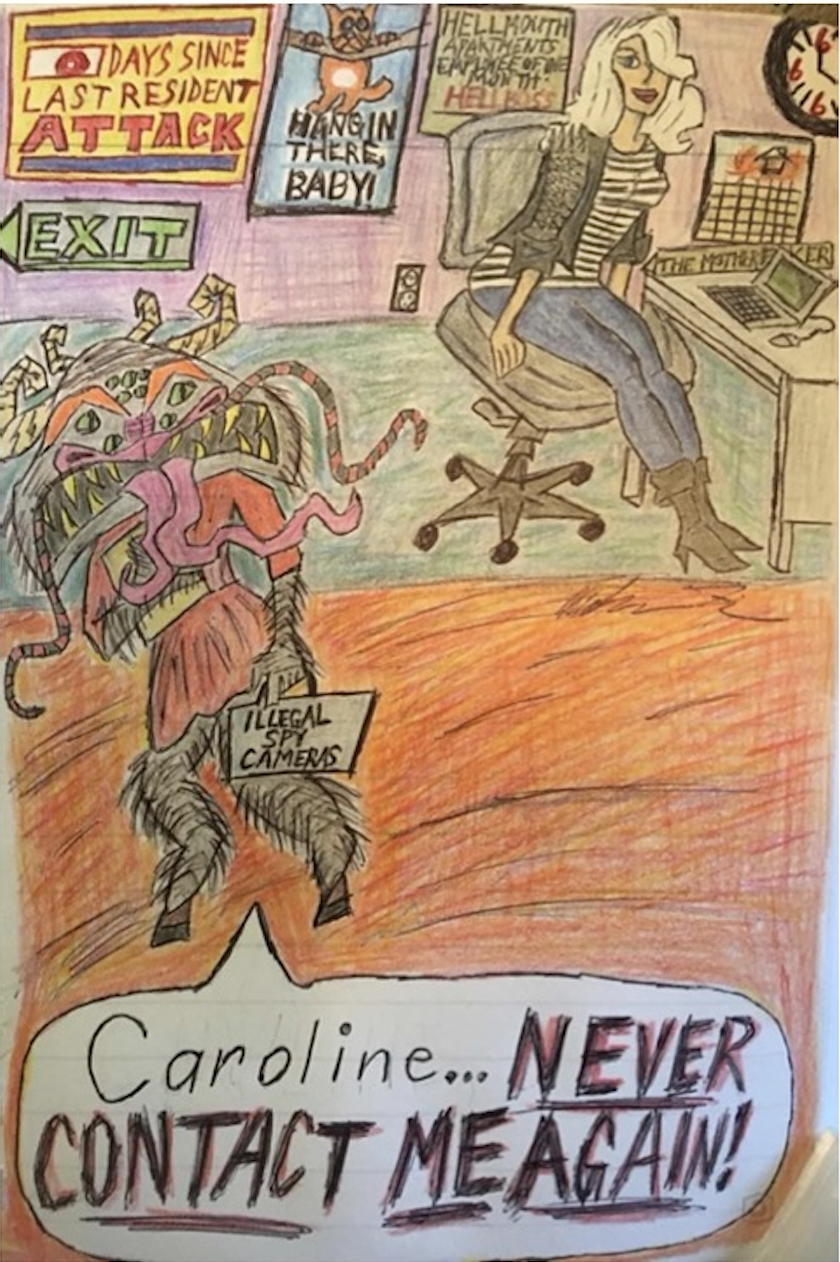
update: my new job is a nightmare built on a hellmouth

by Ask a Manager

This post, update: my new job is a nightmare built on a hellmouth , was originally published by Alison Green on Ask a Manager.

It’s a special “where are you now?” season at Ask a Manager, where all month I’m running updates from people who had their letters here answered in the past.

Remember the letter-writer whose new job in property management appeared to be built on a hellmouth? (First update here.) Here’s the resolution.

The last time I sent in an update I was still at the Hellmouth, it was becoming increasingly obvious that my manager was actually a lying jerk — and she was also setting up secret video and audio surveillance in my personal office, weird disasters and unusual phenomena were still occurring pretty regularly, residents were still being extra horrible, and I was applying and interviewing my heart out anywhere that sounded halfway decent. Well, things wound up getting much worse before they got better, and it took a really long time, but (spoiler!) I got out!

Things got truly bonkers before that happened, though. (I posted about it pretty regularly in the Friday open threads —an awesome commenter rounded up a huge chunk of those threads here if anyone is interested in watching me slowly lose my sanity.)

My manager went completely off of the deep end. In addition to planting hidden microphones and cameras all over the place (mostly in my office), she did all kinds of truly out there stuff (such as taking checks out of my moneybag and trying to hide them so she could write me up for not processing them, telling staff members that she needed them for a project on property before putting them in her vehicle and then driving them off property without their consent in order to interrogate them, declaring a War on the Children on Property, declaring a very problematic War on People Wearing Hoodies, who all happened to be POC). But that’s okay! Because my awesome leasing consultant got another job and agreed to go to HR and verify everything if I wanted to make a complaint. And, well, I very much wanted to go and make a complaint!

I wound up sending them all kinds of documentation — the timeline for the hidden check thing, photos of all of the surveillance items, dates and files for shady things that she did with resident accounts, in depth and verifiable accounts of her doing shady things to employees, proof of payroll fraud … just, a LOT. And after three weeks of waiting for something to happen, I finally sent an email saying I was still being recorded without permission and I needed it to be dealt with immediately. Well, suddenly the cameras came down and the atmosphere at work got very weird and then Hell Boss was EPICALLY FIRED. That whole firing story is pretty wild, and recounted here.

Once HellBoss was gone, there was at least no one actively trying to destroy me (although we did have a flood of bad online reviews from fake residents that were definitely her—every single one of them included high praise for her and talked about how terrible everything was now that she was gone). It was still pretty awful, though, and I had to do the work of the manager and two leasing consultants in addition to all of the assistant manager duties. And still had to work every weekend. Plus there were still wasp situations, giant snakes slithering through the office (non-poisonous but still… alarming), and scary resident situations (teeny-tiny sampling: someone got shot on the property, there was an unrelated car chase through the property when another resident fled the scene of a hit and run, etc.). Because of course they did. Although I was very grateful for the awesome temp I had in the office (we still text occasionally, she is just a terrific person) and I did get a foster boss who came in from a neighboring state for a few days every two weeks or so who was great (she became an excellent reference for me), working there was still the stuff that fuels nightmares. Also, shortly after HellBoss was vanquished from the property we learned that the property management side of our company was going to CEASE TO EXIST in very short order, and all properties would be taken over by a new management company … once they lined one up.

So yeah, I (finally) got the hell out of there. It turns out “company I work for will cease to exist by the end of the month” goes a long way towards making leaving a job before you’ve been there a year look a lot less flakey. So, uh … thanks, Hellmouth Overlords, I guess?

I took an interim job as a leasing consultant (a step down in pay and position, but also in responsibilities, which I really needed at that point) at a luxury property while I continued to look for a way out of property management and cooled my heels while waiting through the lengthy process of interviewing for positions with state government agencies. It was a really nice break/recovery period with a kind manager and pleasant coworkers, and the worst things I dealt with were jerks trying to force their way into the office an hour before opening, rich people being ridiculous, and rich white dudes finding a way to “casually” mention how much money they made or namedrop famous or influential people they knew every time I had to tell them no or explain why I couldn’t do what they wanted. CHILD’S PLAY, y’all.

I found my in with a mildly dysfunctional but friendly state agency as an upper level admin/HR liaison before I was even at that job long enough to need to put it on my resume. After being at the new job for about a year and a half, I got a call from one of the HR people who had helped train me back when I started. She had left to work for another state agency’s HR department as a manager, had an HR analyst position open up on her team, and wanted me to apply! Since moving into HR had been my ultimate goal since I left the Hellmouth I jumped at the chance. I secured the job, moved on over, and have been here for about three months now. I’m making better money than I did at the Hellmouth, everyone on my team is friendly and helpful and making sure my training is going well, my boss is incredibly supportive and kind, and I’ve lucked into an agency that is super funded and has a lot of extra perks. The work is very challenging and I still have a great deal to learn, but I really like it. And once I’ve been here for a year I will qualify for a tuition reimbursement program, and my boss has already told me that she’ll approve me for it so I can get a masters degree in HR. Hooray! I AM NEVER LEAVING.

I have seen Hellboss exactly one time since her dramatic exit, but immediately ran and hid so she didn’t see me. I do not regret this. I will do it again. I was worried about a frivolous lawsuit from her, but Covid shut down everything at about the time she would have hit the deadline for filing and I guess she had other things on her mind. She is apparently now working at a local property management company as a regional manager, which is a big upgrade from a property manager—no idea how she managed that but I’m not surprised as she always seems to land on her feet.

Also, please accept this drawing my younger brother drew and sent me right after the HellBoss Showdown as a further I-can’t-believe-it-took-me-so-long-to-send-in-this-update apology. Fun fact: I asked him how he knew what she looked like and he told me he Googled Lovecraftian Nightmare and her image popped right up!

22 Jun 11:49

we’re asked to share our bra and underwear sizes with the team, crawling at work, and more

by Ask a Manager

This post, we’re asked to share our bra and underwear sizes with the team, crawling at work, and more , was originally published by Alison Green on Ask a Manager.

It’s five answers to five questions. Here we go…

1. We’re asked to share our bra and underwear sizes with the whole team

I work in a clothing-related company where the entire team often receives clothing from our clients that’s sometimes optional and sometimes required. It’s all kinds of clothing — sometimes a t-shirt, but can get as intimate as bras and underwear. We are a small team, entirely women. Whenever we get one of these orders, the team who is in charge of coordinating them (she is lateral to me, we are both entry-level, but we have different managers) always sends a big message to the Slack channel asking for everyone’s size. Everyone will then put their size in the Slack channel.

I am fat with quite a large bra size and I wear XL or larger in almost everything. Everyone else on my team is quite skinny and wears S or XS everything. I always feel very uncomfortable sending my clothing size (especially for bras and underwear) to this large group chat of my coworkers. I have approached the coworker explaining my discomfort and asking if sizes could instead be submitted through a private Google form. Her response was that I was welcome to message her my size privately if I was uncomfortable sharing it publicly. However, since we are a small team, it will be very obvious if I’m the only one who’s messaging my size privately, and that makes me feel quite uncomfortable as well.

Is it reasonable to think this sort of thing should not be done in a public Slack channel, or am I overreacting? Does it rise to the level of something I should approach a manager about, and what would be the best way to do that if so?

You’re not overreacting; it’s really invasive to expect people to share their bra and underwear sizes publicly, regardless of body size. Your coworker should have realized that as soon as you asked the first time. If you want, you could try again with her one more time, really spelling it out this time: “For privacy reasons, I don’t think it’s appropriate to ask people to share their bra and underwear sizes publicly with the whole team. Can we please switch to a system where everyone emails you privately?”

If she still refuses, it’s perfectly reasonable to escalate it to a manager, using similar language and explaining that you asked the coordinator directly and she declined to change anything.

2. Crawling on the floor at work

What are your thoughts about crawling in the office? I get migraines that occasionally cause muscle weakness and/or dizziness bad enough that I can’t walk. I am able to sit at my desk and continue working during such a spell. This is generally the first or one of the first symptoms, so I cannot predict it. I walk with a typical gait when I am not having a spell and do not use any mobility aids. I work almost exclusively at my desk, but do need to go to meetings sometimes, as well as to get up from my desk for typical non-work reasons, like using the restroom. My entire team is working from home due to the pandemic but will return to the office in the fall.

If a migraine were to catch me at a location away from my desk and I was unable to walk, how would it affect me to be seen crawling back to my desk on my hands and knees? Would it be a somewhat eccentric thing, or the kind of unprofessional behavior that a manager or HR would need to address? Is this something I should address ahead of time, and if so how?

I work in a very large (thousands of people) office building of a U.S. corporation. The dress code is business casual. There is no in-person customer contact for my team, or even in the building at all that I am aware of. The company has a strong diversity and inclusion focus, including diverse abilities.

Don’t crawl around your office if it’s at all avoidable. Do what you need to do in the moment, of course, but it sounds like you’re talking about making a plan in advance, and ideally an advance plan wouldn’t rely on crawling.

If people see you crawling, it’s going to be alarming! Anyone who sees it will be concerned and ask if you’re okay or if you need help, and if you explain why it’s happening, people are likely to conclude that if the migraine is making you sick enough that you need to crawl, you should be taking care of yourself at home (or at least sitting still in a quiet room at the office). Rightly or wrongly, if you’re crawling back to your desk to work, it’s likely to come across as martyr-ish (in a “I’m so ill that I’m crawling but I’m going to keep working” kind of way).

Instead, can you talk to your manager about what alternate accommodations could work? For example, would having someone help you get into a quiet room (even if that meant rolling you there in a chair) be an option? Or is there another plan the two of you can come up with ahead of time?

3. People keep asking me to set up their meetings

I am a senior project manager at a Fortune 500 company. I run cross-functional programs — many have upwards of 15 working teams coming together to achieve a common goal. I lead multiple large, cross-functional meetings each week. I also lead several of the afore-mentioned working team meetings. I schedule all of those meetings and send follow-up notes after every one.

Here’s my challenge. Oftentimes, team members will email me, asking me to set up off-shoot meetings on their behalf. These are in-the-weeds meetings that I don’t need to attend or be involved in (the information should bubble up to my larger forums). It’s not always clear to me who should set up the meeting, but I know it’s not me!

Do you have any suggestions on how I can reply to these requests when it’s not clear to me who the coordinator should be? I usually just set them up (while glaring at the screen) because I want to be a good team member, but then I’m stuck in a meeting that is way too detailed for the level that I need to manage the project.

Definitely don’t keep setting up these meetings. By doing that, you’re training people that it’s reasonable to ask you and they’ll keep doing it (and you’re letting them put you in an assistant role!). Instead, when you get one of these requests, just explain matter-of-factly, “I only set meetings when I’m leading them. If you’re organizing this one, please go ahead and set it up yourself.”

4. Correcting another team’s typo

I work as an executive assistant at a small company owned by a far larger company. I also have some responsibilities in another operational area, which means I often deal with colleagues from the larger company in a capacity where I am not their admin. Colleagues in a particular area share an email signature template, but the name of their team is misspelled in it and has been for a few months now. It says “Heatlth and Environment.” Should I let them know, or should I just leave it?

Let them know! They’re sending that out all over the place, which is mildly embarrassing.

It doesn’t need a big deal — just a matter-of-fact email reply saying, “I noticed y’all have ‘health’ misspelled in your email signature template!” Say it to the most action-oriented person you’re in contact with there, done.

5. I have no way to use my vacation time and my boss is no help

I contacted you back in March about not being able to use up my vacation time and my boss’s hesitancy to approve it to roll over to the next school year (I work in administration at a school). I approached my boss about it again today. I told her that between the inability to take time off during instructional periods, being required to keep my department open during all school breaks except winter vacation, and the various pressing work matters that inevitably come up during breaks, it is impossible to use up the vacation time in my contract. Her reply was that I should have planned better. I asked whether I should have taken vacation time during my first month of work in order to use up the time (I started July 1 and the most reliable time to take vacation is late July/early August) and she said, “If you had come to me and said that it was the only way you could use up your vacation time, then I wouldn’t have been able to say no.” And apparently I should have counseled my direct report to do the same when she started last year. That’s ridiculous, right? What sane new employee would think to take an impromptu vacation during their first month of work?

I’m at a loss. At the end of the conversation, she said she would talk to HR about what possible options were, but only because of the uniqueness of the pandemic and not because her normal parameters around our vacation time are completely unreasonable. So even if she approves the time to roll over, my employee and I will just find ourselves in the same situation next year. Do we have any other recourse?

This is indeed ridiculous. I’m guessing your coworkers are in a similar boat, so this could be prime pushing-back-as-a-group territory. The other options are to talk with HR yourself (rather than letting your manager be the go-between, since who knows how she’ll represent your concerns) or have a lawyer take a look at your contract to see if your employer is in violation of it or if they can recommend any other recourse. [Also, I’m assuming you’re not in a state that bans “use it or lose it” policies, but it’s worth checking that to be sure. You can find out by googling the name of your state and “employee vacation laws” (no quotes).]

22 Jun 11:43

Motorcycle Daredevil

by Holly

evel knieval cover

Evel Knievel
Motorcycle Daredevil
Schmitz
1978

If you are of a certain age, you will immediately recognize the name Evel Knievel. I was a teen during 1970s when Evel was doing his thing. He was always in the news taking his bike and jumping over stuff. Even if you knew nothing about stunt work, motorcycles or anything “daredevil”, everyone knew about Evel Knievel.

Even as a teen I wondered about a few things. Why was his name Evel? I really couldn’t grasp why someone would choose such a name. More importantly, I wondered why someone would take a motorcycle and jump over stuff. Evel was good at self-promotion and worked hard to keep his name in the news. Each jump was more elaborate then the last.

If you were buying youth biography back in the 1970s, Evel would have been a slam dunk subject for the kids, and probably many adults. By the 1980s, Evel was more or less out of the news and in the 1990s sort of resurfaced again. Knievel died in 2007. Evel’s son, Robbie has carried on the daredevil tradition.

Aside from the nostalgia trip for people my age, this book is hardly a good choice for a modern youth biography collection. I doubt the average 4th grader knows anything about Evel Knievel. Even if you have a daredevil fan base among your youth population,  this book is still too old for it to be of any use to a kid in 2021. An updated biography might have a place in some libraries.


evel growing up

jumping with motorcycle

evel's rocket

The post Motorcycle Daredevil appeared first on Awful Library Books.

22 Jun 11:41

Comic for 2021.06.21

New Cyanide and Happiness Comic
22 Jun 11:41

Loose fit

by Cassandra Calin

Thick thighs save lives... and money, returning all the pants I bought online.

22 Jun 11:40

by dorrismccomics
22 Jun 11:39

Saturday Morning Breakfast Cereal - Eden

by tech@thehiveworks.com


Click here to go see the bonus panel!

Hovertext:
Then there was that herb garden of minor neuroses. In retrospect, big mistake.


Today's News:
22 Jun 11:36

Yellowstone Glitch, Part 7: Maybe a Conclusion

by Steve

All these Yellowstone glitching mysteries may finally be headed for a conclusion. It looks like there are at least two separate problems with different causes: one causing glitching during a bus cycle and the other causing glitching at the end of a bus cycle.

 
Fighting at End of Bus Cycles?

This one is complicated to explain, so bear with me. You should understand that the Apple IIgs is a 5V system, but Yellowstone uses a 3.3V 74LVC245 to communicate on the data bus. This works because the LVC family is 5V tolerant on its inputs, and its 3.3V output is high enough to be sensed as a valid “high” by 5V logic chips. On the IIgs motherboard there’s a 74HCT245 that handles the computer’s side of transfers to and from the data bus.

Yesterday I noticed something curious: when Yellowstone is driving a 3.3V high value onto the data bus, at the end of the bus cycle the voltage always immediately jumps up to 5V, and stays there for a few hundred nanoseconds until something else puts a value on the pus. What’s doing that? Is there a 5V pull-up resistor on the bus, or something similar? No. When Yellowstone is driving a 0V low value onto the data bus, the voltage remains at 0V after the end of the bus cycle.

I’m not 100 percent sure, but I think at the end of a bus cycle the IIgs is immediately reversing the direction of its 74HCT245. Previously this chip was taking the peripheral card’s data from the peripheral slot data bus and moving it to an internal data bus, but now it begins taking data from the internal data bus and moving it to the peripheral slot data bus. And what data is that? In the first tens of nanoseconds after the direction is reversed, it’s actually the same data that the peripheral card was outputting, now briefly stored in the bus capacitance of the internal data bus.

What happens if the peripheral card’s output driver is a bit slow to turn off at the end of a bus cycle, due to propagation delays on the control signals? Since the peripheral card and the 74HCT245 from the IIgs are both driving the same data onto the bus, normally it should be OK. But for Yellowstone and its 3.3V 74LVC245, it’s not OK. For a time of roughly 15 ns, it causes 5V and 3.3V sources to both try to drive the bus at the same time, resulting in high current flows into the 3.3V supply, and overall badness. This is what I strongly suspect is causing Yellowstone’s end-of-cycle spikes and glitching.

There are several possible solutions:

  1. adjust Yellowstone’s ‘245 turn-off so it happens earlier, before the bus cycle is theoretically over
  2. modify Yellowstone to use a true 5V output driver, so there’s no 3.3V-to-5V conflict
  3. insert series resistors on the data bus to limit the current from 3.3V-to-5V conflict to safe levels

I implemented option 1, and it substantially reduced the spikes at the end of bus cycles. Surprisingly, it didn’t eliminate them completely. It feels strange to disable the ‘245 before the bus cycle is over, because the CPU doesn’t capture the bus value until the very end of the cycle. It seems like it should cause bad data to be read, causing malfunctions. But in practice it appears to work OK, probably thanks to that bus capacitance persisting the data value even after the ‘245 shuts off.

I also implemented option 2, through a bit of board surgery in which I replaced Yellowstone’s 74LVC245 with a dual-supply 74LVC8T245. This almost completely eliminated the spikes at the end of bus cycles, because the voltage on the bus stays constant at 5V after the cycle ends.

I would like to try option 3, but that will take more effort to set up.

 
High Current During Bus Cycles?

The second problem is the one I was chasing initially: spikes and glitches during a bus cycle, at the moment when the 74LVC245 is enabled and begins driving the data bus. I had a theory this was caused by a brief violation of the max output voltage spec of the 74LVC245, when it tries to output 3.3V but finds the bus capacitance is already charged to 5V. So I desoldered the 74LVC245 and replaced it with a 74LVT245, a nearly identical chip but with a higher max output voltage spec above 5V. Unfortunately this did nothing to help the spikes and glitches during bus cycles. Then I replaced the 74LVT245 with a 74LVC8T245, a dual-voltage chip with true 5V I/O on the Apple II side. Again this did nothing to solve the problems during bus cycles.

Based on these two tests, I concluded that violating the max output voltage spec of the 74LVC245 was never a problem, or at least it was never the main problem. The signal spikes are very likely caused by a large amount of current briefly flowing when all the data bus outputs change simultaneously from 1 to 0 or vice-versa. This is a “normal” condition, not a violation, but it’s troublesome. I’ve attempted several board modifications to help meet this sudden current demand, including adding a 10 uF bypass capacitor to the ‘245, and adding extra power and ground wires from the ‘245 straight back to the voltage regulator. None of it seemed to help.

I can’t quite explain this, since I didn’t think there should really be all that much current flowing. I guess I was wrong. But the only solution seems to be finding ways to reduce the current, or spread it out over a longer period of time. That’s what my 10101010 pre-driving trick accomplishes, but there’s plenty more room for reducing the current further.

Some possible options here:

  1. replace the 74LVC245 bidirectional buffer with two unidirectional buffers: an LVC buffer for input and an LS buffer for output
  2. insert series resistors on the data bus to limit the current
  3. something else I’m overlooking

The 74LS245 is an appealing option because the LS family just can’t drive very hard, at least not when outputting a high voltage. But it won’t work as a bidirectional substitute for the 74LVC245, because its 5V outputs (or close enough to 5V) would damage the FPGA. So I’d need to use the LS chip for output only, and use an LVC chip for input. That’s not very appealing. I’m also not sure how well it would reduce the current when driving low voltages instead of high ones. It might still draw too much current, or it might be fine. Isn’t this basically how all 1980s vintage peripheral cards worked? How did they avoid this problem?

Options 1 and 2 should both resolve the problems at the end of the bus cycle too, so that’s good. The other alternatives have more limited application. Adjusting the ‘245 turn-off timing does nothing to help the problems during the bus cycle, nor does using a 74LVC8T245 chip.

 
Unsolved Mysteries

Sadly none of the above can explain why these same problems didn’t appear in revision 1 of Yellowstone. Probably they did, but they weren’t severe enough to cause bit flips and malfunctions, so I never noticed. The only partial explanation I can think of is that revision 2’s RAM chip is to blame. Revision 1 used internal FPGA RAM and didn’t have a separate RAM chip. My guess is that the extra current used by the RAM is exacerbating the problem somehow.

 
Next Steps?

If you’re still reading this wall of text, it’s time to evaluate the possible solutions and make a choice. Let’s start with the simplest option: do nothing (at least from a hardware standpoint). By implementing the 10101010 pre-driving trick, adjusting the ‘245 turn-off timing, and a few other small timing changes, I’ve already improved things enough to get my prototype board working.

Here’s what things look like with only the FPGA logic changes. Same as in part 6, the traces shown are:

  • Blue (Ch4) is address line A1. It’s a 5V input from the Apple II
  • Yellow (Ch1) is the 3.3V supply voltage, measured at the VCC pin of the ‘245.
  • Cyan (Ch2) is IOSTROBE, and marks the boundaries of the bus cycle.

I didn’t capture GND this time.

Yeah it still doesn’t look great, but it works. If you’ve forgotten how bad everything looked before I made the FPGA logic changes, here’s the headline image again from part 6:

So maybe this is good enough now, without needing further hardware changes? Especially if some of the ringing shown in the scope traces is due to my poor probe setup rather than being a true representation of the signal?

If a hardware change is needed, series resistors are attractive because they’re simple and easy. But what value of resistor? It must be big enough to significantly limit the current in a bus-fighting scenario, but not so big that it results in failure to meet the Vil and Vih specs of the other chips on the data bus that are receiving data.

Let’s say I used 100 ohm series resistors. In a 3.3V-to-5V bus fighting scenario at the end of a bus cycle, that would limit the current to 1.7 / 100 = 17 mA per data bus line, or 136 mA total. That’s still pretty high. Too high, I think.

If I used 500 ohm resistors, it would limit the total current to a much more modest 27.2 mA total, but it would create a new problem. For the 74LS family inputs on the data bus of the Apple IIe, and for as many as six other peripheral cards installed that use 74LS parts, the inputs source 0.2 mA when they’re “receiving” a logical low value. All combined that’s 1.4 mA worst case. With 500 ohm resistors and a current of 1.4 mA, even if Yellowstone could output a true 0.0V logical low value, the LS inputs would see a voltage of 1.4 * 500 = 0.7V, which is almost above the Vil threshold for 74LS family parts. In short, with a fully loaded set of 7 peripheral cards that all use 74LS logic, and 500 ohm resistors, Yellowstone might not work.

There’s some middle ground here. Resistor values from roughly 150 to 500 could probably work to solve both problems, but it’s a narrow enough range that it makes me slightly nervous. Maybe go with 220 or 330 ohm.

If a hardware change is needed but series resistors won’t do, then I think the only viable alternative is a two-chip solution with 74LS output and 74LVC input. But I don’t love this solution, for the reasons mentioned previously: extra chips, extra design complexity, and a concern it might not work anyway for driving a logical low voltage. There would be a small amount of additional control complexity too. Each chip would need a separate enable signal from the FPGA, where spare pins are scarce, and extra care would be needed to prevent enabling both at once.

Some other combination of solutions might be possible too, like 74LVC8T245 with series resistors. But I don’t want to go overboard.

As you might expect, I’ve grown very tired of this glitching problem, and my enthusiasm for further tests and experiments is low. My gut says to accept the software-only solution and call it good, or else maybe to add series resistors. But I don’t want to sweep this problem under the rug, only to have it reappear later in rare circumstances I can’t troubleshoot. If you were me, what would you do?

22 Jun 03:14

Houseguests

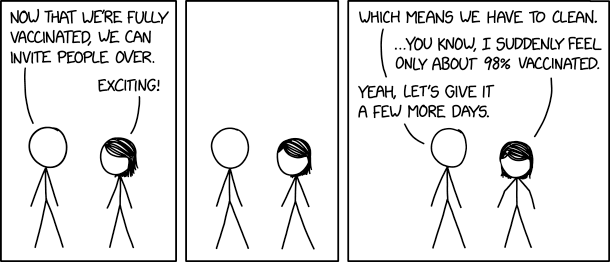
You can come on in, we're all fully vaccinated. Except the spare room off the living room. Don't go in there, we're not fully vaccinated in there.
22 Jun 03:13

Dostoyevsky Find Other Employment

by Corey Mohler
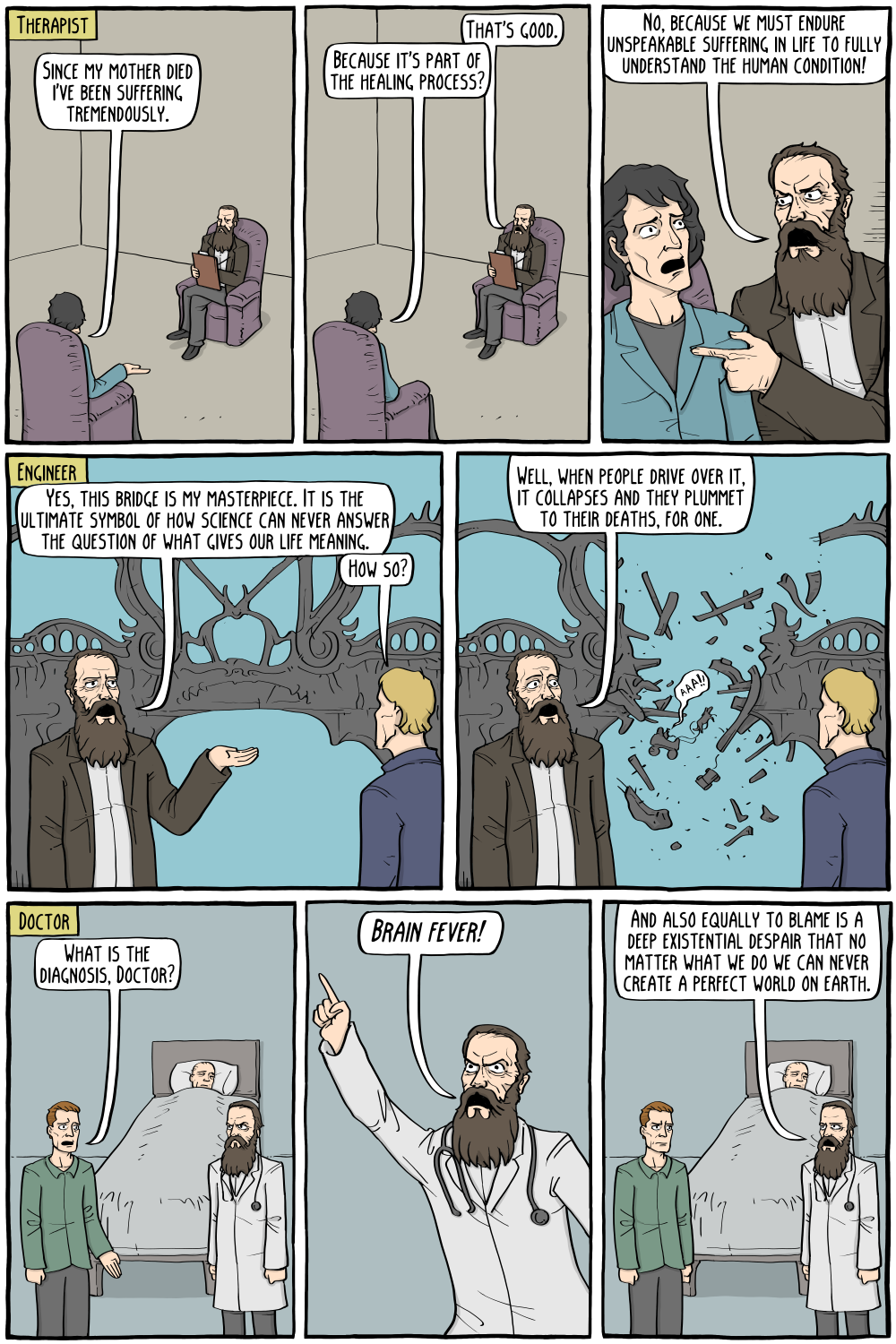
Dostoevsky as a Therapist:

Patient: "Since my mother died I've been suffering tremendously."

Dostoevsky: "That's good."
Patient: "Because it's part of the healing process?"

Dostoevsky: "No, because we must endure unspeakable suffering in life to fully understand the human condition!"

Dostoevsky as an Engineer

Dostoevsky: "Yes, this bridge is my masterpiece. It is the ultimate symbol of how science can never answer the question of what gives our life meaning."

Person: "How so?"

Dostoevsky: "Well, when people drive over it, it collapses and they plummet to their deaths, for one."

Dostoevsky as a Doctor:

Patient's relative: "What is the diagnosis, Doctor?"

Dostoevsky: "Brain fever!"

Dostoevsky: "And also equally to blame is a deep existential despair that no matter what we do we can never create a perfect world on earth."


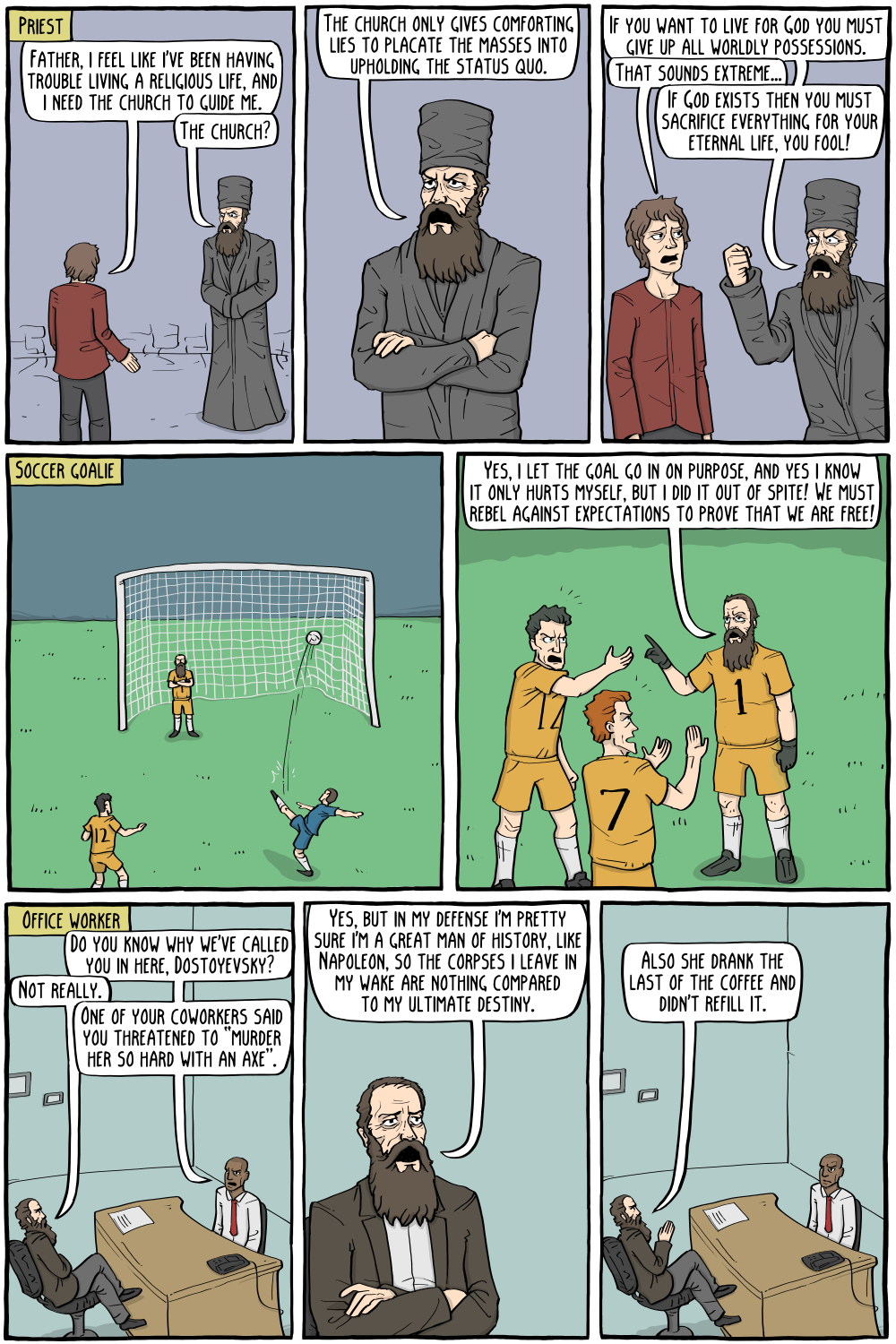
Dostoevsky as a Priest:

Church goer: "Father, i feel like I've been having trouble living a religious life, and i need the church to guide me."

Dostoevsky: "The church?"

Dostoevsky: "The church only gives comforting lies to placate the masses into upholding the status quo."

Dostoevsky: "If you want to live for God you must give up all worldly possessions."

Church goer: "That sounds extreme..."
Dostoevsky: "If God exists then you must sacrifice everything for your eternal life, you fool!"

Dostoevsky as a soccer goalie:

Description, he stands still as someone kicks in a goal.

Dostoevsky, to his teammates: "Yes, i let the goal go in on purpose, and yes i know it only hurts myself, but i did it out of spite! We must rebel against expectations to prove that we are free!"

Dostoevsky as an Office worker:

Human resources person: "Do you know why we've called you in here, Dostoevsky?"
Dostoevsky: "Not really."

Human resources person: "One of your coworkers said you threatened to “murder her so hard with an axe”."

Dostoevsky: "Yes, but in my defense I'm pretty sure I'm a great man of history, like Napoleon, so the corpses i leave in my wake are nothing compared to my ultimate destiny."

Dostoevsky: "Also she drank the last of the coffee and didn't refill it."
22 Jun 00:53

How to use, more info, and further thoughts on hurricane (Dietz) lanterns

by Technology Connextras
21 Jun 15:30

Entitled To Profit: In Texas, Title Insurance Is a “Total Scam”

by Seth Harp

In 2004, an attorney named Jason Collins and his wife were buying a house in a master-planned community in the Steiner Ranch neighborhood in northwest Austin. He was going down the list of closing costs when he noticed a line item for title insurance. The price, about $2,000, gave him pause. “I could not understand,” he recalled recently, “why we needed to pay such a large amount.”

Most homebuyers, nervous about making one of the largest financial transactions of their lives, accept the explanation given by agents and brokers at closing: Title insurance guarantees the validity of a deed, the document that establishes ownership of real estate. Without the protection it offers, a buyer could lose their house and land because of an obscure legal defect buried in the county’s index of public records: the boundary lines might have been surveyed wrong; there could be some unrecorded easement, or restriction on the use of the land; one of the deeds in the chain of title might even be a forgery.

But Collins, who was an accountant in addition to being a lawyer, figured that the chances of a title dispute were next to nil. Since it was a master-planned community, all the titles had been minted at the same time in a single subdivision plat—an orderly division of a large tract of land, proposed by private developers, and approved by the city. If there was any issue, he insisted, it would mean that there was an issue for every home in the neighborhood. And surely the developer had done their due diligence when acquiring the land in the first place. Why should he have to pay thousands of dollars to insure against what would seem to be a nonexistent risk?

Title insurance costs more in Texas than in any other state. Aside from the brokers’ fee, it is generally the single largest closing cost on the purchase of a home. It is customarily paid by the seller, but often buyers bear the cost, as was the case with Collins; either way, it increases the price of the transaction. For the average house in Texas, worth approximately $268,000, the most basic title insurance premium will come out to $1,808. Compare that to New York, where it would be about $1,125; Oklahoma, where it might be $850, or Iowa, where the state would insure the title for $110.

The Texas title insurance system, the nation’s most expensive, is set by the state government, but the revenue raised—nearly $2 billion a year—goes directly to private companies. Industry lobbyists work hard every legislative session to suppress any effort at reform, while agents and brokers do their best to convince consumers that title insurance is indispensable and reasonably priced, when in reality it is neither.

“After much discussion and significant pushback including verbal warnings of impending doom for us as homebuyers,” Collins said, the title company handling the closing allowed him to reject the policy—but only in part. As Collins found out, mortgage lenders won’t fund the purchase of a home unless their interest in the property is covered by title insurance. He had no choice but to shell out an extra thousand dollars, on top of all the other costs of buying the house, to protect the bank from the virtually nonexistent risk of a defective title.

*

Title insurance “has an origin in usefulness,” says Jessie Lunsford, a longtime Austin real estate developer. Real estate law is complex, and a property’s chain of title can have defects that are difficult, if not impossible, to discover. In addition to muddled boundaries, unrecorded easements and liens, and other problems with decades-old paperwork, little of which is digitized, it’s possible for the long-lost heirs or ex-spouses of past owners to reappear and assert an ownership interest in a piece property. In theory, title insurance protects against these risks.

In practice, such claims are vanishingly rare. The exact number per year is not available, but the title insurance industry’s loss ratio of 1.2 percent is far lower than other insurers usually incur. It’s tough to find a developer, attorney, agent, or broker who has been involved in a title dispute, or even heard of one. “Lord knows I’ve never filed a claim,” said Lunsford, who has purchased some 30 properties in his career. Given the high price, he says, “It’s a total scam.” 

In 2017, the latest year for which data is available, title companies sold $1.8 billion worth of policies, according to the Texas Department of Insurance (TDI). Of that, title companies retained $1.5 billion and paid $335 million over to their underwriters, the companies that actually compensate policyholders in the event of a claim. But according to TDI data, only about $24 million was needed to settle claims from title defects that year. In other words, for every dollar that the industry took in as revenue, they paid out little more than a penny to policyholders.

That isn’t how insurance is supposed to work. Its economic purpose is to spread risk, distribute losses more evenly, and protect individuals from sudden shocks. Insurers rake in a big pile of money, but end up paying most of it out in the form of claims, only setting aside a percentage to cover the costs of doing business, and as profit. 

Take property insurance, for instance. It is also relatively expensive in Texas, compared to other states, mostly on account of our violent weather. The loss ratio of companies like State Farm or Liberty Mutual ranges from 50 to 90 percent of their gross revenues. Of a $100 monthly premium, for example, $65 might get paid out to homeowners after fires or floods, in a typical year. The loss ratio on property insurance was 58 percent in 2018, according to TDI; for auto collision insurance, it was 57 percent.

The biggest title companies in Austin, including Heritage Title, Independence Title, Trinity Title, Austin Title, and Stewart Title, declined to comment for this story. The Texas Land Title Association, the industry’s main lobbying group, wrote in a statement that title insurance is “paid only once at closing,” and “shouldn’t be confused with homeowners and auto insurance that protect against future hazards and must be purchased every year.” 

Ben Gonzalez, a spokesman for the industry-friendly TDI, wrote in an email that “the losses are a small part of the cost of title insurance” because most of the cost comes from “the examination and searches, which are designed to reduce losses.” Before issuing a policy, a title company will search a county’s deed index, notify the buyer and seller of any issue, and attempt to resolve it. If, say, a fence is encroaching on the land, a seller can simply remove the fence. If the problem can’t be fixed, the title company won’t issue the policy. As the industry likes to say, they eliminate risk rather than bear it. They also provide a service: they prepare the sale documents and host closings at their offices.

But the industry’s underwriters receive 15 percent off the top of every title policy issued. They don’t do any title searches, or provide closing services; their only job is to bear risk. Yet in 2017, their loss ratio was just 6 percent. 

*

In 2018, a study from the libertarian Texas Public Policy Foundation set out to determine how much title insurance is really worth. The authors estimated that it costs about $290 to examine the county’s deed index and check the chain of title on a given real estate transaction. It costs another $38, on average, to bear the risk of a future claim, they found. If the free market set title insurance rates in Texas, the authors would have expected the average premium to cost little more than the sum of those two numbers: $328.

But Texas doesn’t have a system that allows price competition, like Oregon, where title insurance usually costs between $300 and $600. Nor does it have a socialized system, like in Iowa, where it’s even cheaper. Texas has the worst of both worlds: a state-mandated system that forbids competition and sets rates higher than anywhere else in the country, with all the profit flowing into private pockets. 

By increasing the price of nearly every residential real estate transaction by about 1 percent across the board, our state-mandated system increases the cost of housing for everyone, including renters. Xu Gao and David Eaton, a pair of University of Texas academics, analyzed national title insurance data in 2016 and found that Texas had significantly higher prices than states that allowed competition. By setting artificially high rates by law and regulation, “Texas transfers wealth from property owners directly to title agents and title underwriters, with no additional value to the property owners,” they wrote. “The system functions as a ‘reverse Robin Hood transfer.’”

The Iowa Supreme Court described title insurance as “an invidious form of business,” and the Iowa General Assembly banned the industry from operating in the state. In its place, a quasi-governmental entity known as the Iowa Title Guaranty Program issues certificates to homebuyers that provides the same coverage but for a fraction of the cost, in most cases $110. The profits generated by the program are funneled into a public interest fund that provides down payment assistance grants to low-income, first-time homebuyers.

To prevent being supplanted by such a system in Texas, the title insurance industry has employed an outsized team of people to curry favor with the state government. During the 2019 legislative session, the TLTA employed 23 full-time lobbyists, 181 volunteer legislative liaisons, and 124 committee members to draft proposed legislation. After the conclusion of the  session, the TLTA crowed in its annual report about “the passage of 100 percent of our association’s legislative priorities,” which boiled down to maintaining the status quo. This was thanks to state Senator Kelly Hancock, R-North Richland Hills, and state Representative Sergio Muñoz, D-Palmview, without whom “we wouldn’t have the opportunity to celebrate,” as well as state Senator Brandon Creighton, R-Conroe, and state Representative Eddie Lucio III D-Brownsville, who the TLTA named “legislators of the year.” In the 2021 legislative session, state Representative Tom Oliverson, R-Houston, whom the TLTA considers a “staunch advocate of our industry,” chaired the House insurance committee; no bills were introduced that would have altered the “reverse Robin Hood” system.

It’s been 17 years since Jason Collins, the Austin attorney, closed on his home in Steiner Ranch. “Obviously,” he said, “we never had any issue with respect to the title for that home.” To his knowledge, over two decades, neither has anyone else in the Hill Country subdivision, where all the homes are laid out on spacious lots more or less the same size, with orderly fences between them, and evenly spaced mailboxes. Yet every time a house there is sold, which happens every year, he said, the buyer or seller gets popped for something like $4,000 for title insurance. “It seems like a waste of money.”

Editor’s note: The original story stated that Jason Collins purchased a home in Sunset Valley. In fact, it was Steiner Ranch. The Observer regrets the error.

The post Entitled To Profit: In Texas, Title Insurance Is a “Total Scam” appeared first on The Texas Observer.

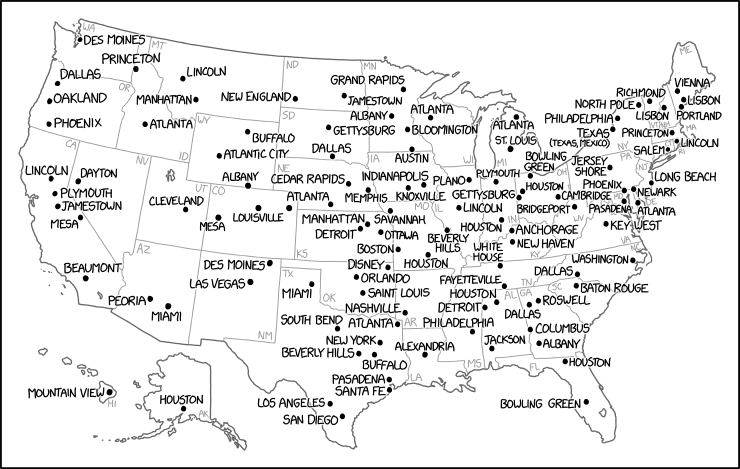
21 Jun 15:04

Many Texans just found out they gave energy companies remote control of their thermostats

by Mishaal Rahman

In case news sites haven’t made it painfully clear by now, today is Amazon Prime Day (sorry, we have to pay the bills somehow). As always, there are a ton of deals on tech, including a lot of smart home tech. But be careful about buying a new smart thermostat: If you blindly opt into an energy savings program, you’re giving your energy company permission to remotely control the temperature during periods of peak energy use, as many residents of Texas just found out over the weekend.

With an extreme heat wave hitting many parts of the southwest U.S., families are scrambling to keep themselves cool by any means necessary. When everyone does that, energy usage spikes, and that’s causing issues for the Texas power grid. Last week, the Electric Reliability Council of Texas (ERCOT) asked Texans to voluntarily reduce their energy usage to prevent another blackout like the one that happened back in February. ERCOT specifically asked residents to set their thermostats to 78 degrees (or higher) to conserve energy. Some Texans are now finding out that they’ve already volunteered to do just that…they just weren’t aware of it.

Over on the /r/Houston subreddit, many Texans noticed (via KHOU) that their smart thermostats had automatically raised their home’s temperature. Smart thermostats from brands like Nest or Ecobee were among those that were affected, though it should be noted that affected users were likely part of energy savings programs like Nest’s Rush Hour Rewards or Ecobee’s Community Energy Savings. While these programs are usually opt-in, many people — especially those who get a smart thermostat on a discount or for free from their energy provider — often don’t realize what they’re consenting to when they enlist their thermostat into the program or add their utility company during setup.

I live near Houston, bought my Google Nest Thermostat last year at full price, and didn’t opt into Rush Hour Rewards, and I was not part of the group that had their smart thermostat automatically raise the temperature. If that happened to you and you want to keep cool during the sweltering Texas summer, then you should opt out of the energy savings program (at least temporarily). Hopefully, the Texas energy grid will be able to survive this summer, because I doubt many are prepared for a summer with no AC. (I sure as hell am not!)

The post Many Texans just found out they gave energy companies remote control of their thermostats appeared first on xda-developers.

21 Jun 02:45

DistroWatch Weekly, Issue 922

This week in DistroWatch Weekly: Review: CloudReady and TrueNAS CoreNews: Qubes project sets up new forums, Debian Bullseye nears freeze as 10.10 is released, Ubuntu 20.10 nears its end of lifeQuestions and answers: Isolating programs inside WINEReleased last week: SME Server 10.0, Network Security Toolkit 34-12743Torrent corner: Alpine,....
21 Jun 00:27

NASA Struggles to Fix Hubble Space Telescope’s 1980s Computer

by Steve

Did anybody else see this week’s news about problems with Hubble’s 80s-vintage onboard computer and think: *gasp* My moment in life has arrived! Hold my beer.

“Hello, NASA? Did you guys try PR#6? Sometimes the boot disk gets dust on it; ask an astronaut to blow it off and then reboot. Hello? Hello? Why did they hang up?”

The Hubble’s computer is actually an NSSC-1, an 18-bit machine with 64KB memory. The version on Hubble is likely built from a few dozen discrete MSI chips. There are two fully redundant computers on board, and four independent 64KB memory modules, any of which can be enabled or disabled from the ground in the event of a problem. But 30 years of bombardment by cosmic rays will take a toll on the hardware.

19 Jun 10:52

Yellowstone Glitch, Part 5: Fix Signal Integrity With This One Weird Trick

by Steve

All the clues surrounding Yellowstone’s glitching problems seem to point towards a power supply problem with the ‘245 bus driver and/or the SRAM. The good news is that I now have a “solution” that seems to fix the glitches, and gets the board functioning normally. The bad news is that I don’t understand why the solution works, or what the underlying problem is, so I can’t be confident that it’s really gone.

In part 4 I described how the glitch occurs occasionally if the value $FF is read from RAM. Something goes wrong when driving all 1 bits from RAM onto the data bus. So my solution is to handle RAM reads like this:

  1. Make the FPGA output the value $AA / 10101010
  2. After 70 ns, enable the ‘245 bus driver to put that value on the Apple II bus
  3. After another 70 ns, turn off the FPGA output and enable the RAM to get the real value
  4. At the end of the bus cycle, disable the ‘245 and the SRAM

And it works! I no longer see glitching on the logic analyzer, and Yellowstone now seems to work normally for booting disks on the Apple IIgs. But why does this trick help?

One possibility is a residual 5V on the data bus from the previous bus cycle’s value. When the 74LVC245 turns on its outputs and tries to drive 3.3V onto the bus, but finds that the bus capacitance is already charged to 5V, this will briefly create a condition that violates the maximum output voltage rating of the chip. Maybe it causes unexpected behavior or chip damage. If that’s what’s happening, then pre-driving 00000000 before the real RAM value instead of 10101010 should be best, because it will avoid the condition where the chip tries to drive 3.3V into a 5V bus capacitance. But I tried this, and it actually made the glitching worse than it was originally. Hmm. That would seem to rule out this explanation.

A second possibility is that there’s no violation of any maximum ratings, but that driving 11111111 onto the data bus simply demands a large amount of instantaneous current, which the bypass capacitor and the voltage regulator are unable to handle. So the local 3.3V voltage sinks down and/or local GND voltage gets pulled up, and some chips glitch. The ‘245 and the RAM are the furthest chips away from the voltage regulator on the PCB, so this would make sense. Pre-driving 10101010 before the actual RAM value helps smooth out the supply current spike by preventing all the outputs from changing to 1 at the same time. Any other pattern with four 1 bits should serve the same purpose.

If this is indeed what’s happening, then the real solution ought to be ensuring the ‘245 and the RAM both have really good 3.3V and GND connections back to the voltage regulator and to the board’s bulk capacitor, and also adding some larger value bypass capacitors directly next to each chip. So I did some surgery on the board, adding a 10 uF SMD ceramic bypass capacitor next to the existing 0.1 uF for the ‘245, and running 3.3V and ground wires directly back to the regulator, but it didn’t fix the glitching. That was a surprise, and it would seem to rule out this explanation too.

Now I’ve apparently eliminated both of the plausible explanations for the glitching behavior, leaving me with nothing. Either my testing is flawed, or something else is happening here that’s different from either of these explanations. It’s all driving me slowly insane. Although I now have a work-around solution in pre-driving 10101010, I don’t want to move on until I can explain all this behavior and have some confidence that the problem won’t return.

19 Jun 10:49

Laser 128 and XT - Clones better than the originals!

by The 8-Bit Guy

Support The 8-Bit Guy on Patreon:
https://www.patreon.com/8BitGuy1

Visit my website:
http://www.the8bitguy.com/

Watch the full documentary from New Tech Times here:
https://youtu.be/RFjGq55BglM

In regards to the extra video mode. That has been clarified. Apparently the original Laser 128 can do 560x384 resolution. But this was removed with later models. So mine, for example, doesn't have anything extra.