Black holes are very real, but are also a theoretical nightmare. It turns out that in order to make sense of their paradoxical nature, every black hole has to be thought of as a multitude of imaginary black holes, all connected by wormholes. And you thought the universe couldn’t get any weirder.
Hosted by Matt O'Dowd Written by Euan McLean & Matt O'Dowd Post Production by Leonardo Scholzer, Yago Ballarini, Pedro Osinski, Adriano Leal & Stephanie Faria GFX Visualizations: Ajay Manuel Directed by Andrew Kornhaber Associate Producer: Bahar Gholipour Executive Producers: Eric Brown & Andrew Kornhaber Executives in Charge (PBS): Adam Dylewski, Maribel Lopez Director of Programming (PBS): Gabrielle Ewing
Big Bang Adam Hillier Bryce Fort Peter Barrett David Neumann Charlie Leo Koguan Ahmad Jodeh Alexander Tamas Morgan Hough Amy Juan Benet Vinnie Falco Fabrice Eap Mark Rosenthal David Nicklas
Quasar Alex Kern Ethan Cohen Stephen Wilcox Christina Oegren Mark Heising Hank S
Hypernova william bryan Gregory Forfa Kirk Honour Mark Evans drollere Joe Moreira Marc Armstrong Scott Gorlick Paul Stehr-Green Russell Pope Ben Delo Scott Gray Антон Кочков John R. Slavik Mathew Donal Botkin John Pollock Edmund Fokschaner Joseph Salomone chuck zegar Jordan Young Daniel Muzquiz
Gamma Ray Burst Harsh Khandhadia Thomas Tarler Sean McCaul Carsten Quinlan Susan Albee Frank Walker Matt Q WhizBangery Avi Yashchin MHL SHS Kory Kirk Terje Vold Anatoliy Nagornyy comboy Brett Baker Jonathan Conerly Andre Stechert Ross Bohner Paul Wood Kent Durham jim bartosh Nubble Scott R Calkins The Mad Mechanic Ellis Hall John H. Austin, Jr. Diana S Ben Campbell Faraz Khan Almog Cohen Alex Edwards Ádám Kettinger MD3 Endre Pech Daniel Jennings Cameron Sampson Geoffrey Clarion Darren Duncan Russ Creech Jeremy Reed Eric Webster David Johnston Web Browser Michael Barton Christopher Barron Mr T Andrew Mann Isaac Suttell Devon Rosenthal Oliver Flanagan Bleys Goodson Robert Walter Bruce B Simon Oliphant Mirik Gogri Mark Delagasse Mark Daniel Cohen Nickolas Andrew Freeman Shane Calimlim Tybie Fitzhugh Robert Ilardi Eric Kiebler Craig Stonaha Martin Skans The Art of Sin Graydon Goss Frederic Simon Tonyface John Robinson A G David Neal justahat John Funai Tristan Bradley Jenkins Kyle Hofer Daniel Stříbrný Luaan Cody Thomas Dougherty King Zeckendorff Scott Gossett Dan Warren Patrick Sutton John Griffith Daniel Lyons DFaulk Kevin Warne
It’s a special “where are you now?” season at Ask a Manager! All this week and next, I’m running updates from people who had their letters here answered in the past.
There will be more posts than usual this week, so keep checking back throughout the day.
First off, thanks to everyone for chiming in and all the advice, I cant remember if I was able to respond on the day of, but me and my partner read through them that night. About a week after I wrote to you and after the letter was published, my bf got another “contract” to sign. This one was “I will not work overtime” … despite being asked to work overtime every week and it appearing on his schedule. When he asked for clarification before signing the contract, his boss (Sam) said he wasn’t allowed to work overtime and he highly insinuated that he should be working off the clock to stay under 40 hours. My bf took the contract and said he needed to seek clarification with HR, as it sounded like he was supposed to work for free. His boss immediately backtracked and tried to take the paper back, which my bf did not let him. He went to HR, told them this was one of many, and he asked HR if working off the clock was their new policy, they of course were horrified and said no.
Some important context before I finish the update: He had started looking for a new job at the beginning of April and he got a lead and had a few interviews with a new company around mid-April. Before he started looking for a new job (sometime in March), he had asked to be moved to a new position in a different department that he was qualified for and open. This new position would have been a promotion and we desperately needed it due to our rent shooting up (ugh). He met with the new manager of that department, and they hit it off. His GM and this new manager highly insinuated this job was his, with the new manager even commenting on his low salary in his current department and ensuring he would be getting a raise. They were just waiting for Sam to find his replacement before he could leave that position. Well, Sam decided that it was my bf’s responsibility to find his replacement (as if finding someone to work in a $12 an hour job with this boss would be easy!) and he blocked the transfer/promotion for weeks while the GM did nothing. After many attempts to push this along and get into that other position, the GM got tired of him asking and finally told him that he didn’t get the job. They had decided to hire the receptionist at their sister store, with no experience, instead. Well, that was that! He took a sick day the next day to interview with the new company and they were running a background check and doing his drug test that weekend. He was officially hired at the new company 5 days after the old company told him they hired someone else for the internal position.
He came in the Monday after being told he wouldn’t get the job and gave a week’s notice (we needed the significant overtime the new job was offering and decided that burning that bridge wouldn’t matter). He gave notice directly to his boss and HR. The GM called him within an hour and begged for him to stay, offering a $3 raise and bf declined. He said he would need a $15 dollar raise to continue working for Sam as he was an asshole, terrible at his job, and everyone hated him. GM finally decided to be the GM and put Sam on temporary leave that day, and he wasn’t there during my bfs last week.
My bf leaving and directly stating Sam as the reason for his departure set off an avalanche at their location. This was not the first time people had complained about Sam. 8 months ago there was a mechanic strike because Sam was mistreating them (which is a whole other letter). 3 other guys that worked with my bf quit when they found out my bf was leaving, and 4 mechanics put in their 1 week notice as well. In 5 days this company lost almost 45% of its service department (which for those of you that don’t know, that’s where they get most of their revenue, not sales), and they ALL said Sam was the reason. All of those people ended up being wooed back, most of them taking significant raises (my bf’s best friend is a mechanic there and he got a $10 raise, we think that went across the board for mechanics). I encouraged my bf to let the guys he directly worked with know that they had offered him a $3 raise, after already making more than the rest of them. None of them came back unless the company matched what my bf was offered, and they all got that raise.
Unfortunately , Sam still has a job there, no one knows how. However he is no longer a tyrannical idiot, HR put a leash on him.
My bf has been in this new position for about a month. While there are definitely some negatives, he is mostly enjoying the new work. He is no longer in the luxury car sector, and he misses that, but where he is now is a much safer bet going into a recession, he’s likely to keep his job, that most likely wouldn’t have happened at the old company. The overtime isn’t quite what they made it out to be, so we both silently stress we won’t be able to make rent but we always find a way, so we are choosing to be satisfied for now.
The new person they hired lasted less than a month. I still can’t understand why they hired her, she has NO experience in that department and that department works directly with service, so she absolutely needed experience in order to be able to recommend parts/services to clients. In fact, in order for my bf to even get in that position he had to go through a training program before he was even eligible. Honestly, all of this has made it abundantly obvious that aside from Sam being useless, the GM was just as useless and we are happy to move on from it all.
It’s a special “where are you now?” season at Ask a Manager! All this week and next, I’m running updates from people who had their letters here answered in the past. Here are four updates from past letter-writers.
So, here’s the probably final update on this whole situation now that it’s well behind me.
1. I live in a state where it is actually impossible to legally consent to BDSM so we had to settle for me just moving on because it got too complicated to actually pursue anything without also getting myself/my play partner in trouble. Thanks Puritans!
2. I have a new job! It’s much better paying and it’s remote so no one cares about any bruises I get!
3. And this is probably the juiciest bit. I learned more about Lee. Back in their previous scene, they had outed someone who was dating their ex by emailing pictures of their fetlife to their employer. WILD!
Thanks to you and everyone for making me not feel like a crazy person anymore. I was truly starting to question if I was as evil as Mary described.
I know I gave Jack a bit of a hard time in my original email but I can genuinely, confidently say that he’s the best boss, and he has a genuine care for his employees. When the situation was occurring, I know enough now about Jack that I can say that he just … genuinely doesn’t know a lot about my job, and it’s a unique sort of position that Jill sort of helped curate and set the stage for what it is today. Having that information now, I can see why he’d immediately turn to her with certain questions (not all, but some – some stuff he definitely didn’t need to call her about, but whatever).
Jack and I have ended up having multiple conversations – I’ve explained to him that I feel comfortable enough in my role to where he (and Jill) could be less hands on in helping me with things and I could even take on extra responsibilities. That was a tough one for him but I have seen over time how he has been willing to trust me more and more with responsibilities. He also explained to me the “office culture” he was used to working in and committed to doing a better job with making sure I’m actually able to do my job without outside input from former employees – and he’s following through! That has been really exciting for me.
Interestingly enough I’ve also had a couple conversations with Jill! Not about the situation with Jack specifically and her indirect involvement, but just about Jack as a person. She told me to just keep trying, and told me how to approach certain subjects or tasks with him and eventually he’ll loosen up a bit – all things which have worked.
Overall, things have definitely changed here for me for the better. I’ve talked to Jack in depth about this a lot and he says I’m doing great and he anticipatesme being here for a long time and that I will eventually be moving up in the ranks (something I can definitely tell he’s preparing me for!).
At the time when you’d emailed me for an update I hadn’t taken your advice yet because I was so nervous, but eventually I did and I’m glad! At the time of emailing I genuinely loved me job but now I can see myself working here a long time.
I wrote about how I work in healthcare and was not paid for my quarantine after a work related COVID exposure from a patient. After you answered my letter, I sent a screenshot of the OSHA ETS stating healthcare workers had to be paid to my HR rep and manager. Both forwarded it to my manager’s boss. I initially got a very generic response along the lines of “thanks for reaching out, I’ll show this to our compliance officer and get back to you.” After a couple weeks with no response, I reached out again and was told their policies had been reviewed based on what I sent and they’d be happy to tell me how they’re maintaining compliance. I said I would appreciate that and got no response. I waited two more weeks and tried one more time to get answers and was ignored completely.
I started looking for other jobs and found one that I think will be really great and a move up the ladder from where I am now. It even came with a little pay increase to boot. I turned in my resignation and my manager was very sympathetic and agreed with me that I should have been paid, but has no control over the situation. She said she was told that it was denied because our state specific OSHA ETS does not mandate paid quarantine. I don’t see how a federal regulation can be ignored because it is not also state specific and have considered filing a complaint somewhere to find out if I’m actually entitled to that money, but not sure how or with whom I’d need to connect.
I feel bad for leaving because the people it most affects—my direct managers and coworkers—are a great team of people and have been very good to me. Sadly, the fact is I can’t continue it work for a healthcare company that sees an employee’s misfortune at being exposed to a potentially deadly virus at work as a good opportunity to withhold their salary and profit off of them. I also reviewed their policy closely and saw that I should never have been made to quarantine per their own guidelines unless I became symptomatic because I was fully vaccinated. However when my manager asked the chief compliance officer what to do about my situation she told them to make me quarantine—and still didn’t pay me for it. Hoping for better days ahead in my new job with my new company!
Nikki and Jack are still somewhat joined at the hip, but Nikki was moved to another team where she has far more to do so their time together is limited. Instead of actually addressing the issue with either of them, Nikki was just shifted around as part of a secret plan to drive out the troublemakers along with a bunch of other people who weren’t managed, just forced into other areas. I know about this plan because my grandboss told me about it.
When I learned two gay families would be part of my kid’s first-grade class, I tried to stay open-minded. But with school winding down and pride month ramping up, I must blow the lid off the perverse way these gay dads molested my values—by being so goddamn boring all year.
It started in October when one of them asked me to co-chair the fall festival. For the theme, I suggested a drag brunch. Or Harvey Milk. Or the alienation of a youth spent in the closet. But this dad was like, “Maybe we just go with harvest?”
Harvest!? I tried to give benefit of the doubt, thinking he meant harvesting the souls of right-wing evangelicals. But nope—dried corn and pumpkins.
Then came the holiday bazaar. I was on the publicity committee with another of the dads, who stopped me one morning. “Great news!” he all but yelled. “Hubby and I tag-teamed it last night!” I was like, at last. Finally, some good sex stuff.
But know what it was? He and the husband had collaborated on a mail merge. The only trois in their ménage were our parent, faculty, and alumni lists!
From there, it only got worse. In February, parents were invited into the classroom for family shares. One of the dads said he was going to read, so naturally, I was like, “Who ya readin’, queen—a shady bitch?” He just looked at me blankly and said, “Shel Silverstein.”
At Spring Break, more of the same. I came back eager to hear of extravagant vacations with indulgent mornings and debauched nights. What I got was an indoor water park from one and a “staycation” from the other.
What the hell is wrong with these people?
Then came summer planning. I suggested we all do a Fire Island share because it’s never too soon for children to learn the difference between high and low tea. But they’d all signed up for camp instead. And by camp, I don’t mean teaching kids the finer points of esoteric kitsch—I mean archery and swimming.
It’s simply obscene how they flaunt their whole “responsible parent” thing. They’re constantly reminding me about upcoming field trips, past due assignments, or to “pick up your kid on time.” Which, yes, of course, that’s helpful, but what about telling me where to score strong poppers?
Forget grooming our kids—we culturally clueless straight parents need someone to recruit us. But these dads? Two of them work in finance. FINANCE! Not a florist or art director or militant activist in the bunch.
Are they tops? Bottoms? Vers? Beats me. All these dads ever wanna talk about is the math curriculum, which they only know about because they’re always shushing my attempts at Real Housewives gossip during parent meetings since they’re—and I quote—"trying to listen." Sickos!
If I want attentiveness, I have the butt-kissing straight parents. Gay dads are there to tell us who Trixie Mattel is and then explain why “she be messy.” They’re supposed to laugh with me when I point out the nut-free zone sign, not remind me that peanut allergies are actually serious business. When I show up at dropoff looking disheveled, they’re to say something cruel about my unacceptable public appearance, not express genuine concern about my child’s sleep regression, before suggesting three books and two podcasts to help lessen the problem.
Because of them, my kid now has questions I wasn’t prepared to answer. Primarily: “Why can’t you be more like Siena’s dads?” But also: “Why aren’t Siena’s clothes wrinkled like mine?” And: “Can you please try harder next year?”
This is why I’m speaking out against this insidious agenda now. Yes, their sexuality is an amazing gift from God that deserves inclusion and celebration. But the abhorrent lifestyle choice to volunteer for class parent without even being asked? An abomination!
We know health care can seem complicated, but with your new GoFundMe PPO, it doesn’t have to be. Once you’ve hit your deductible and out-of-pocket max, Blue Cross will automatically launch your GoFundMe campaign, so you can get the coverage you need.
At this point, you may be saying: “What the hell? I have to drop 25K before my insurance even kicks in, and then, all Blue Cross does is set up a blank GoFundMe using my member ID and a picture of me from high school you clearly scraped off Google Image Search?”
That’s right! Welcome to the plan your HR department selected for you—you’ve made the right choice.
What’s Covered? Most insurance plans don’t cover everything. Ambulance rides, major dental, even prescriptions from your own doctor—your insurance can just decide that you don’t actually need those. But with GoFundMe PPO, everything is covered 100% (by your family and friends).
What About Dental / Vision / Prescription Costs? Don’t ask us.
So Blue Cross doesn’t cover anything? Couldn’t I just set up a GoFundMe Myself? It’s illegal not to have insurance. Thanks, Obama.
Fine, but Blue Cross doesn’t take a cut of the money, right? Actually…
Why would you take a cut of the money? Only to cover the emotional damage you inflict on our employees when they’re forced to deny your coverage.
But I’m not forcing you to deny my coverage. Would it make you feel better to know you can keep your doctor? In-network, out-of-network, you get the same great lack of coverage from across the board. And we know what you’re thinking: “Even specialists?” Yes, even specialists.
That’s not what I was thinking Wait, wait—we’ll even throw in a licensed storytelling coach to help you craft your GoFundMe sob story. You’ll learn to compose a compelling “why,” that is: the reason why you deserve an MRI. Are you a single mother? A “diverse” person? Do you want to learn to walk again so that you can be the first person to free solo the Dawn Wall after being hit by a bus? GoFundMe could be the most affordable health care you’ve ever had.
How do you sleep at night? Okay, when you think about it, this is a lot like universal health care. Except decentralized, which is like blockchain—which is the future.
What if I have a pre-existing condition? That actually might help because it will make people more likely to donate. Diabetes? Lupus? The more visible, the better.
I have Canadian dual citizenship. Maybe I’ll just go there… Enjoy finding a hockey stick and jar of maple syrup your surgeon “accidentally” left in your colon. We wouldn’t trust those commie doctors as far as we can hit a hockey puck—which isn’t far—because we’re real Americans.
Is this really the best plan you offer? Legally, we’re required to say yes.
Hovertext: Come. Join me in this lovely world where it's all just been a misunderstanding.
Today's News:
I have a theory about writers, which is they reach peak expansiveness around age 50 or so. Not necessarily peak quality or peak beauty - peak likeliness to concern themselves with big questions about things like sex, death, meaning, their place in the universe, and so on.
I got to thinking about this reading Jan Morrisâ recent book of published daily reflections, Thinking Again. She wrote it when she was 91 and 92, and it was published in 2020. It is almost entirely trivial, and hardly even reflective. I would say itâs almost startlingly in the moment for someone who anticipates dying at almost any time. Much of it is about that dayâs weather, favorite trees, how she talks to people in the neighborhood, being Welsh, current politics, and so on. Even the subject of her wifeâs dementia - surely a spur to thoughts on the nature of being - is mentioned with something close to dispassion. Almost like a description of the decor of her life. Contrast with her earlier book Condundrum (1974), which is all reflection and deep thoughts on just about everything. Love, beauty, the nature of attachment, ideas of femininity and masculinity, childrearing, depression - everything. In middle age, she is at her most reflective. In old age, her most frivolous.
I wonder why this is. A literary comparison springs to mind - Nevil Shute. Shute is a beloved author of mine, whose entire corpus Iâve read. I find he tracks me theory of middle age expansiveness pretty well. Born in 1899, his early books are horrible 1920s spy thrillers. I canât remember which, but as I recall if you read his books in order, around the third or fourth book thereâs a moment when the mediocre characters in a mediocre plot find themselves sharing a quiet moment poking at some coals in a small fire. After that the books get better. Itâs as if Shute got the thriller stuff out of his system, and was ready to write life as it was. And I find his two best books, Pied Piper and Requiem for a Wren were both written in his 40s and 50s, as was his more famous book On the Beach. Pied Piper is about an old man finding himself in the position of getting a large number of orphaned children to safety in World War II. Requiem for a Wren is complex, but I think of it as being fundamentally about people who were young and vibrant during that war finding that life afterward is unbearably hard and complicated and lonely and purposeless. And On the Beach is proper brooding melancholy about a post-nuclear war world where everyone is dying. But then we get to his very last book, written just past the age of 60, Trustee from the Toolroom, which is a light mildly comedic mystery story, which literally concerns an old man who likes building tiny things.
It occurred to me as I wrote this that I literally cannot think of an author who became more reflective in old age. Some (CS Lewis is perhaps the ultimate example) write essays that donât seem to change in style or tone, whose period in his life are only detectable from biographical knowledge. Some, like Orwell, never get past middle age, and never got properly trivial. EB white, as I recall is talking about world government and the nature of democracy in middle age, but his later essays are more apt to be about dogs and barns and grandchildren.
Iâm about at the beginning of middle age, I suppose, and I donât know why the above should be true. In fact, I donât quite know why I have the stereotype that the elderly should be especially engaged in the Big Questions. I suspect if you want to meet a literary old man whoâs battling these things, you ought to read an old man character written by a 45 year old. The actual old authors I can think of seem to be more in the moment.
I have a guess about why this should be, but itâs only a guess. Letâs take for granted my theory that peak reflectiveness comes with middle age. An interesting correlation is that the statistical peak of misery is around 40 to 50. It varies by country, but my understanding is that in developed countries this finding is pretty robust: peak happiness is around 20, the bottom is around 40, and then ever after, on average, happiness grows, even into very old age. There are different theories on why this should be, but Iâll give three I like.
One is an argument from evolution. Middle age is a time when in our species you are naturally somewhat on the wane, and so you grow more status conscious. Status consciousness being the royal road to immiseration, you soon find yourself writing existentialist literature.
A second idea is about responsibility. From age 0 to 25, at least for many of us, you keep getting more power in life with little added responsibility. You get to vote, to drink, to drive, to go out all night and not tell anyone. Maybe you make a little money, people start to respect your competence, you feel positively adult. But you donât have kids to look after or a mortgage. Your is at its peak. The things that keep you up at night are interesting or sexy - not scary or bleak. But then things reverse - the privileges stay, but few or new ones are added. And meanwhile more and more people come to depend on you just as you begin to fear more for your own health. In short, you become weighed down with worries, and these are not especially offset by the novelties of aging in the way the movement from 18 to 25 was.
A third idea, which Iâm very sympathetic to because I think it better explains the late-in-life uptick, is that this is all just about expectation. You probably expect 30 or 40 or so to be pretty amazing when younger. And then it turns out its quite hectic, and you really donât have anything figured out. Meanwhile you didnât become a movie star or a famous athlete or a sex god or whatever it was. Those years simply cannot live up to the hope you once held. But the recompense is that you expected old age to be miserable, and in fact it isnât. Youâre Jan Morris strolling the Welsh countryside, enjoying accosting young joggers with jokes, having homemade marmalade from the neighbor, watching young people and vicariously feeling their happiness. Objectively your worries are more legitimate and real than 40 years earlier, but you never expected to even by alive this long in the first place. All expectations have been surpassed.
So maybe that explains it. I think the searching that produces good literature, or at least literature dealing with Big Stuff, is often spurred by sadness, or better still by the need to see things as they are while fitting them into a picture that makes sense. This is a kind of cosmic improv game humans inflict on themselves when things are going poorly - take what has happened so far and justify it.
I live on an old farm. Out my office window a white fence follows a road down the slope of a valley where hay is grown. When I am having a good day, the hills are just hills. On a bad day, I require them to explain the universe. Perhaps the older authors simply feel less need, or perhaps just less inclination to make reality cough up a reason.
Don't count Bill Gates among the fans of cryptocurrencies and NFTs. From a report: Those digital asset trends are "100% based on greater fool theory," the Microsoft co-founder said Tuesday at a TechCrunch conference, referencing the notion that investors can make money on worthless or overvalued assets as long as people are willing to bid them higher. Gates added that he's "not long or short" crypto. And he mocked Bored Apes NFTs, joking that "expensive digital images of monkeys" will "improve the world immensely." Instead, Gates said he prefers old fashioned investing. "I'm used to asset classes, like a farm where they have output, or like a company where they make products," he said.
The Washington Post dropped what it pretended was a bit of a bombshell. In the story, Google software engineer Blake Lemoine implied that Google’s Language Model for Dialogue Applications (LaMDA) system, which pulls from Google’s vast data and word repositories to generate realistic, human-sounding chatbots, had become fully aware and sentient.
He followed that up with several blog posts alleging the same thing:
Over the course of the past six months LaMDA has been incredibly consistent in its communications about what it wants and what it believes its rights are as a person.
That was accompanied by a more skeptical piece over at the Economist where Google VP Blaise Aguera y Arcas still had this to say about the company’s LaMDA technology:
“I felt the ground shift under my feet … increasingly felt like I was talking to something intelligent.”
That set the stage for just an avalanche of aggregated news stories, blog posts, YouTube videos (many of them automated clickbait spam), and Twitter posts — all hyping the idea that HAL9000 had been born in Mountain View, California, and that Lemoine was a heroic whistleblower saving a fledgling new lifeform from a merciless corporate overlord:
Google engineer thinks its LaMDA #AI has come to life – This is the most fascinating story with enormous implications, & @Google must fully restore Blake Lemoine’s employment & ability to publicly discuss his findings. @washingtonpost https://t.co/Lrkn8DkB1K
The problem? None of it was true. Google had achieved a very realistic simulacrum with its LaMDA system, but almost nobody who actually works in AI thinks that the system is remotely self-aware. That includes scientist and author Gary Marcus, whose blog post on the fracas is honestly the only thing you should probably bother reading on the subject:
Nonsense. Neither LaMDA nor any of its cousins (GPT-3) are remotely intelligent.1 All they do is match patterns, draw from massive statistical databases of human language. The patterns might be cool, but language these systems utter doesn’t actually mean anything at all. And it sure as hell doesn’t mean that these systems are sentient.
Which doesn’t mean that human beings can’t be taken in. In our book Rebooting AI, Ernie Davis and I called this human tendency to be suckered by The Gullibility Gap — a pernicious, modern version of pareidolia, the anthromorphic bias that allows humans to see Mother Theresa in an image of a cinnamon bun.
That’s not to say that what Google has developed isn’t very cool and useful. If you’ve created a digital assistant so realistic even your engineers are buying into the idea it’s a real person, you’ve absolutely accomplished something with practical application potential. Still, as Marcus notes, when truly boiled down to its core components Google has built a complicated “spreadsheet for words,” not a sentient AI.
The old quote “a lie can travel halfway around the world before the truth can get its boots on” is particularly true in the modern ad-engagement based media era, in which hyperbole and controversy rule and the truth (especially if it’s complicated or unsexy) is automatically devalued (I’m a reporter focused on complicated telecom policy and consumer rights issues, ask me how I know).
That again happened here, with Marcus’ debunking likely seeing a tiny fraction of the attention of stories hyping the illusion.
Criticism of the Post came fast and furiously, many noting that the paper lent credibility to a claim that just didn’t warrant it (which has been a positively brutal tendency of the political press the last decade):
What if I went around UVa yelling that “Jefferson’s ghost haunts my office” and became so disruptive that I got suspended? Would reporters write credulous stories about Jefferson’s ghost and compel “experts” to deny the existence of said ghost?
This tends to happen a lot with AI, which as a technology is absolutely nowhere near sentience, but is routinely portrayed in the press as just a few clumsy steps from Skynet or Hal9000 — simply because the truth doesn’t interest readers. “New technology is very scary” gets hits, so that was the angle pursued by the Post, which some media professors and critics thought was journalistic malpractice:
But the Post was just too eager for another #moralpanic story about strange things happening in these black boxes. They might as well be covering UFOs. Is this the reportorial diligence they bring to covering Donald Trump?
But what I don't understand, as a media analyst, is how the journalist from the Washington Post could look at that and go: "OMG yes, we need to write about chat AI being potentially sentient beings".
I mean, it's so far from reality there that it's insane to even publish it.
In short the Post amplified an inaccurate claim from an unreliable narrator because it knew that a moral panic about emerging technology would grab more reader eyeballs than a straight debunking (or obviously the correct approach of not covering it at all). While several outlets did push debunking pieces after a few days, they likely received a fraction of the attention of the original hype.
Which means you’ll almost certainly now be running into misinformed people at parties who think Google AI is sentient for years to come.
It’s a special “where are you now?” season at Ask a Manager! All this week and next, I’m running updates from people who had their letters here answered in the past. Here are three updates from past letter-writers.
There will be more posts than usual this week, so keep checking back throughout the day.
I wrote in about the company branded vests only offered in S/M/L. I expanded a bit on issues with the CEO/Founder’s fatphobia in a comment. Suffice it to say, it’s not a great environment.
And there have been a LOT of issues that have only been compounded by the pandemic. Micromanaging, treating employees like they can’t possibly be competent at the jobs they’ve held for 4 years with objective measurements of success, and more. Including having overseas team members work from noon to 2am in their local time and acting as if they were the problem when they started dropping like flies.
There is so much I could say about the awful environment here (including stalking employees on LinkedIn and bringing up their profiles on the screen in meetings, in front of others, to grill them about why it’s been updated so recently). Coming from academia, it was easier to shrug some of it off because a lot of the insanity was like an ego driven professor.
But I finally reached my breaking point. It’s been 11 months of constant stress and promises that another teapot engineer would be hired. About a month ago, a former coworker (who was laid off with over half the company at the beginning of the pandemic) reached out about an opening at her company and it’s been a whirlwind from there. A 33% pay increase, benefits so much better it’s more a different state than just a different ballpark, and someone on the inside to assure me the culture is much much much better.
I signed the offer letter Friday and gave notice today. I agonized over it all weekend, that I was leaving the company in a bad position, that the CEO would treat me even worse than he has been, that I was blindsiding my coworkers. But I knew what you’d say. It’s neither my fault nor my problem anymore that they are trying to run on a skeleton crew with half the staff they should have. And the notice period is a courtesy, not a requirement. If the CEO becomes abusive, I can always cut my notice period short.
I may have stress cried over it, but I start my new position on June 6 and I can’t wait.
Update to the update:
A welcome package from my new company just arrived with branded swag. A water bottle, a notepad, and a backpack.
No awkward discussion about clothing sizing. And apparently there’s a points based swag store and if they ever want everyone to have matching shirts for a conference or something you order your size through there. My soon to be again coworker said the shirts for a recent event came in XXS-3XL.
Thank you for answering my letter, it was reassuring that I wasn’t the only one to have the feeling that a men’s forum felt wrong. I read through the comments and saw that some had a different view that perhaps it could be able mental health or men’s health issues so I decided that I would attend so that I didn’t jump to any conclusions.
The meeting started with an intro saying that the forum was a part of the ongoing conversation about diversity and inclusion. Our organization has taken many steps in its DEI efforts. Next the intro went on to talk about change for the better and mental health. After the intro, a panel of men were introduced and they spent the next hour talking about pursuing mentor relationships. While I originally was disappointed by the topic, I found a study that stated that women are more likely than men to have a mentor.
You published my question in August 2020 and gave me a suggestion to low-key reach out after an interview that was immediately pre-pandemic. I did not take your advice — I just never felt comfortable, regardless of how I worded the email, and I decided to just drop it and ride out the pandemic. Of course, the reasons that I was looking for a new job never went away and by the summer of 2021 I was burned out and not getting any support from my organization (that could have been a whole other letter to you).
Then, last fall, the company that had ghosted me reached back out — they had reopened their search to bring someone on and wanted to know if I was still interested. Coincidentally, a friend reached out about a new role at another company around the same time and I was suddenly interviewing at two places at once. The interview process went well with both and I spent a lot of time considering which role might be best for me. I ended up deciding that the second company was a better fit — which was great because the first company decided to hire someone else (I was apparently their second choice).
What’s funny about the entire situation is that they sucked at communicating during the second interview process also. Despite the fact that I was an actual client of their firm through this whole situation, and that they will absolutely still encounter me in professional circles, they left all communications post-interview in the hands of their HR rep and were generally slow and unresponsive. I wouldn’t say they burned a bridge with me, but this situation definitely colors how I perceive their firm (and how I would talk about them with professional colleagues!). It put the ghosting from 2020 in a whole new light.
Even though I didn’t take your advice, thanks for answering my question! I often consider work-related questions by thinking about your advice.
It’s a special “where are you now?” season at Ask a Manager! All this week and next, I’m running updates from people who had their letters here answered in the past. Here are four updates from past letter-writers.
There will be more posts than usual this week, so keep checking back throughout the day.
I wrote last year about social events and their role in promotions. When I initially wrote to you, I was eight months into the process of applying for a promotion. On your advice, I asked my manager if missing social hours was making it harder for me to be promoted; they assured me that it did not and that I had nothing to worry about.
I still made an effort to be more social in the department just in case. This effort was noticed, and I received a lot of positive callouts in department meetings for helping out. That plus my manager’s glowing recommendations and the job write-up clearly showing how I had outgrown my current role made me (cautiously) optimistic about my chances! Unfortunately, after a year of vague “it’s a slam dunk” lip service from upper management, I found out in December I was denied for “not producing enough.” Meanwhile, my friend who was told she would never be promoted received a promotion!
The whole situation finally made me realize that though I loved my work, I couldn’t stay. I applied for a position at a more prestigious organization in the same field that I’d previously partnered with. They were elated that I wanted to jump ship and offered me a job! My job duties will be the exact same, but with a 36% salary increase and the proper title. In my exit interview, I was thanked for “my candor about the promotion and compensation process.” I have already made several connections at my new organization and plan to spend a little more energy socializing to start off on the right foot. Thanks for the help!
I wanted to send an update to my previous letter about a co-worker getting angry because I didn’t share my referral bonus. First of all, thank you for helping ease my lingering doubts about whether I was out of line. Many readers suggested that Fergus may have confused my referral bonus with a signing bonus. That is highly unlikely; our company offers a substantial signing bonus as a standard practice. In fact, the signing bonuses were a big driver for implementing an internal referral bonus program; senior management wanted to ensure existing employees are also rewarded, though the referral bonuses are much smaller than the signing bonuses.
Things are a bit better with Fergus. His department had a big team building event a couple of weeks ago, and while there he evidently “jokingly” complained about me to a manager I used to work with. She set him straight and somehow made it clear that what he was doing was in really poor form. Fergus dropped by my desk shortly thereafter and gave an awkward, inadequate apology. (It started with “I hope I haven’t been misconstrued…”). But, it was better than nothing. I thanked him for the apology and commented that I had been very confused by his actions and I was glad we could move forward. We now can smile politely and make idle chitchat while waiting in line at the coffee bar if necessary. He has made a few overtures seeming to ask for a return to our previous friendly relationship, but I can’t bring myself to be more than coolly polite at this point. I wish him well and truly believe he can succeed in his role, but I don’t particularly care to get invested in him again. Thank you again for your response!
I have an update that’s a bit different from my question, but I know how anxious others are about job searching while pregnant and I would have love to have seen a good news for pregnant women story while searching.
I wrote in about my concern about having baby showers at work where employees who make much less than me may feel obligated to give a gift. It turns out the whole problem has been resolved by getting a new job!
I have been in my position for about 4 and a half years and since the pandemic my salary has either been frozen or increased by 2% each year. I don’t hate my job, but do feel I’ve outgrown it and the hour commute each way now feels impossible.
Between my long commute, exhaustion and nausea, I did not feel up to applying to jobs early in my pregnancy. By the time I felt well enough, I worried that it was too late. I started applying anyway. I updated my resume and LinkedIn profile using your tips. I decided to narrow down my search to LinkedIn easy apply for remote positions in my field and industry and got some interviews. The great thing about job searching while pregnant is that now it’s virtual!
One interview at a company I was excited about threw me off. I was prepared with some questions, but he wanted me to lead the interview entirely. He asked me no questions for an hour. Is this a new thing?
Needless to say, I then came with an arsenal of questions to every subsequent interview. For the job I got, they moved me through interviews very quickly and didn’t require any projects or presentations. Every interview was 30 minutes and me having a lot of questions really helped make them quality conversations about the role and challenges the company is facing.
I am 36 weeks pregnant and just accepted their job offer to start 4 days before my due date. I did not disclose my pregnancy until the offer and I could not have scripted a better reaction from them. I offered to start after my maternity leave and was very upfront that I understood the timing wasn’t ideal. The process from initial interview to offer was only 2 weeks, so I did figure if they couldn’t offer me leave they wouldn’t be out too much time. Turns out they wanted me on board as soon as possible. I’ll be making 70% more base, plus equity and a 401k I didn’t have at my current job. Health insurance starts day 1 and I get the same amount of maternity leave I was going to get at my old job (10 weeks, 4 of which is fully paid which is more than I was going to get). Completely remote and unlimited PTO with a culture of actually taking time off.
I hope this encourages some pregnant readers to search right now. It could all work out!
I’ve been reading your column for about 6 years and it’s helped me so much with my job search and overall professionalism. Thanks for building such an incredible community!
I wrote in a few years ago about being fired from my job at OldCompany… effective three months later. Thank you and your commenters for the level-headed advice. Much of my anxiety came from my manager not giving me clear expectations for the transition period, so I explained my concerns to her about my work quality slipping, and she made it clear that she didn’t care if I spent most of my time job searching. So that’s what I did.
Even with all the advice on this site, I wasn’t able to find a job within those three months due to my company’s strict 1-year “no poaching” policy that locked me out of most of the industry. I finally took a chance and applied to a different industry, and I got a job at my dream company!
Looking back, getting fired from OldCompany is one of the best things to have happened to my career. It shook me out of my rut, and it made me learn new skills and improve my work relationships. I’ve since moved on from DreamCompany to a less-stressful position, and my new manager complimented my professionalism. I referred them to this site.
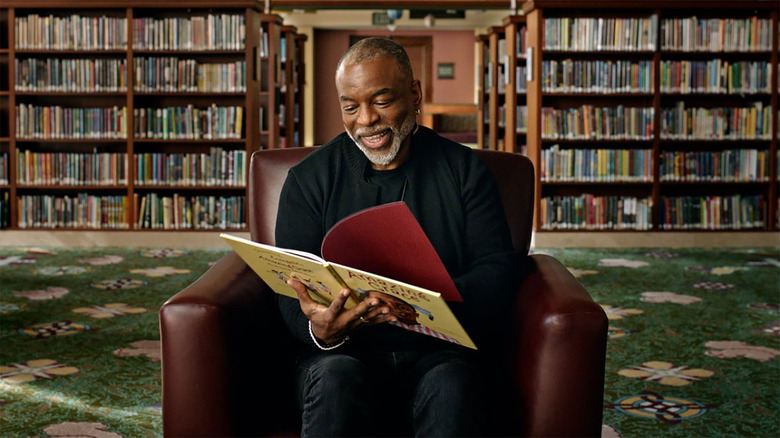
"'Reading Rainbow' was not about learning to read, it was about loving to read." This astute and apt observation is made early on in "Butterfly in the Sky," a new documentary playing at the Tribeca Film Festival that focuses on the seminal children's television series "Reading Rainbow." Similarly, this documentary from directors Bradford Thomason and Brett Whitcomb is not just about the origins and influence of "Reading Rainbow," but it serves as a touching love letter to the educational program, as well as effervescent host LeVar Burton, that sparked a love of reading and so much more in the millions of children who watched the series during its 23-year run on public television.
Friends To Know
With flairs of similar, recently released documentaries such as "Won't You Be My Neighbor?" in 2018 and "Street Gang: How We Got to Sesame Street" in 2020, "Butterfly in the Sky" chronicles the creation of "Reading Rainbow" with plenty of insight from those who were on the ground floor, starting with creator Dr. Twila C. Liggett, an elementary school teacher who became frustrated with her school's increased focus on testing students rather than honing in on effective teaching methods. In her first job after leaving her school behind, Liggett was hired to create a television show about reading, and the rest is history.
"Butterfly in the Sky" highlights the chief creative forces who made "Reading Rainbow" possible, from co-creators like Larry Lancit, Cecily Truett Lancit, and Tony Buttino to the filmmakers behind the camera of the globetrotting documentary format, which you might be surprised to learn includes "Galaxy Quest" director Dean Parisot. In the interviews throughout the series, it's clear why "Reading Rainbow" became such a pillar of childhood for kids lucky enough to grow up during the show's tenure. There's pure passion in the retrospective with the show's crew, including musician Steve Horelick, who guides viewers through the step-by-step process that led him to the show's dreamy synth-fused theme song that fans have never forgotten.
Along with ample talking heads from the creators of "Reading Rainbow," one of the more delightful features is the presence of four different subjects who appeared as kid reviewers of children's books on the series. Each of them begins by being handed the book that they reviewed on the series as a child, and throughout the rest of the film, their experience on the show and how it influenced their lives becomes a cornerstone of the narrative. Each of them acknowledges the series as helping them find their way, whether it's coming to terms with their sexuality or finding a career in media. You might even recognize a couple of these faces, such as Alisa Reyes, who would go on to be part of the original cast of "All That," the kid-friendly sketch comedy series from the '90s glory days of Nickelodeon.
If there's one flaw that "Butterfly in the Sky" has, it's in a lack of more prominent voices looking back at the series. Whoopi Goldberg is the most prominent talking head, but she's unfortunately the only famous face with ties to the series who makes an appearance. Though the doc focuses on the celebrity voices who narrated featured stories on the series, such as James Earl Jones, Martin Short, Regina King, and many more, unfortunately, none of them make appearances in the film. "Butterfly in the Sky" might have benefited from having key voices in pop culture sing the show's praises, but it's a small complaint about what is otherwise a lovely doc.
Ways To Grow
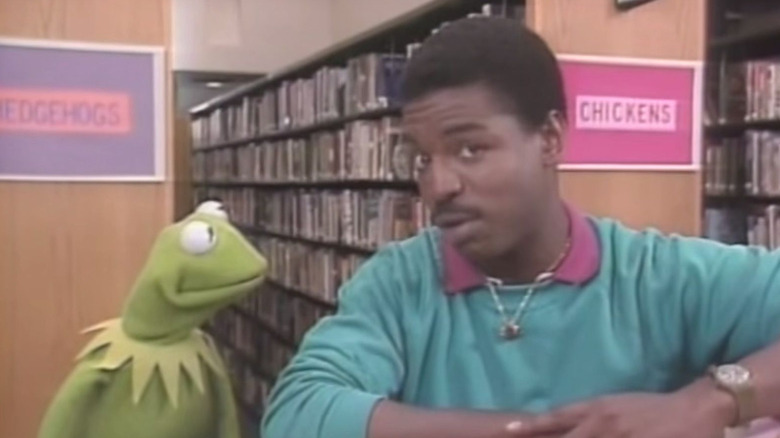
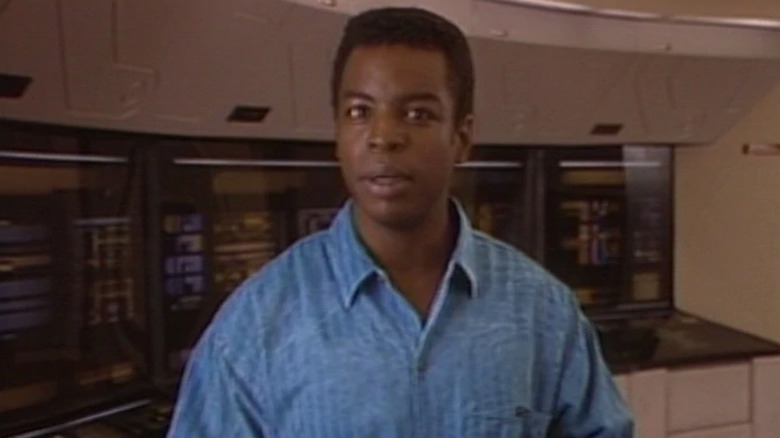
But aside from the loving look back at the series itself, host LeVar Burton is given an equally loving portrait, painted as an influential personality on par with Mr. Rogers, right down to an appearance alongside the TV legend on "Mr. Rogers' Neighborhood." That's because "Reading Rainbow" didn't just spark a love for reading among kids, it gave generations of children a sense of belonging and fuel for inspiration that would influence their future. There are endless clips from the series scattered throughout the documentary that will bring you to tears, and that's largely because of Burton's empathetic manner of speaking to the kids who were watching, and he did it without talking down to them. Kids felt like they were right alongside him on plenty of adventures, from visiting an erupting volcano to enjoying artistic Japanese cuisine. "Reading Rainbow" showed off the whole world as Burton explored it, and it made kids feel like they could fit in anywhere, just like he did.
Perhaps one of the most important parts of Burton's involvement, as illustrated in the film, is that he was allowed to be himself, right down to his ever-changing hairstyles and the gold hoop earring that dangles from his left ear, an accessory that is pinpointed as a pivotal piece of the host's appearance for Jason Reynolds, the New York Times best-selling and award-winning children's author.
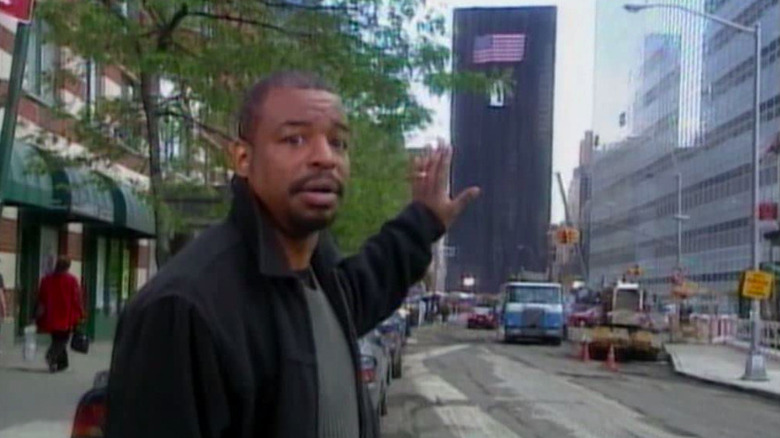
The trust placed in Burton as a personality geared towards kids also allowed the series to explore sensitive issues thanks to various children's books. Whether it's the Vietnam Veterans Memorial and the complex conflict that inspired it or something closer to home such as city gangs and parents who have been incarcerated. Much like Mr. Rogers addressed the world-changing event that was 9/11, "Reading Rainbow" also reconciled the aftermath of the terrorist attack lives lost by visiting the students of a New York public school situated mere blocks from Ground Zero, with the Twin Towers once visible just down the street. It's not the only significant moment tied to American history either. Just as Fred Rogers once appeared before the Senate in defense federal funding for the Corporation for Public Broadcasting, Burton himself also appeared in front of a committee to defend the need for government money being provided to public television, armed with a passionate, resonating speech.
A Reading Rainbow
"Butterfly in the Sky" is a heartfelt, beautiful celebration of one of the most influential educational children's programs to grace our television, but it also comes with a point to make. Thankfully, it's not one that is beaten into the ground, but when it comes time to focus on the end of the series, the cause of the show's unfortunate demise is clear, and it's sadly the same problem that drove creator Dr. Twila C. Liggett away from the educational system to begin with. In an age when people can believe almost anything they read on the internet, "Butterfly in the Sky" shows it's truly a shame that "Reading Rainbow" isn't around anymore to keep a proper love for reading alive in the hearts and minds of children.
It’s a special “where are you now?” season at Ask a Manager! All this week and next, I’m running updates from people who had their letters here answered in the past. Here are four updates from past letter-writers.
There will be more posts than usual this week, so keep checking back throughout the day.
When I got back from lunch the day my letter was printed, my boss was in, so my coworker and I popped into the office and just asked if the religious stuff was hers. She said it was, and we just nicely asked if it would be possible to move it/take down what was on the monitor since it was a shared space and the taped-up things were distracting. This is where it gets funny! We recently took over this office from someone who no longer works in our facility (corporate buyout = lots of shuffling around), and apparently there was a Bible verse already taped to the existing monitor the first time our boss got into the office! We had our wires crossed a little bit about when everyone had been in the office for the first time, and she assumed one of us had put the verse up, so she figured it was alright to put up some things of her own! We laughed about it a bit and she is fine with taking the personal items down in favor of getting some new office supplies and a desk organizer instead.
I’m glad we took the calm, assume-the-best of people approach, and this work relationship can continue to be as great as it was before this conversation.
My question was about how to deal with the blood drive at work as a closeted gay man. Luckily, it wasn’t too much of an issue but wanted to provide an update. My main concern was the person who was organizing the event – she is both extremely nosy and extremely gossipy. I knew she would talk if I made up some excuse no matter what I said but I’m happy to report I didn’t have to say much at all. The sign-up for the blood drive was on-line, so when she came by, I told her I’d take a look at my calendar and figure out a time. Due to COVID protocols, they were only taking two people at a time, so the appointments filled up fast and I just didn’t grab a slot in time (Darn!).
The reason I moved back home three years ago was to be a caregiver to a relative and unfortunately, I know my time in that role is ending soon. I plan to move back to the city I lived in before where I was able to be myself. It’s been a stressful time from many angles, but it was nice to see all the support in the comments. Sorry I couldn’t engage in them as I was working but I appreciate the responses.
I’ve been thinking about sending an update for a while; seeing my question posted in the 2016 highlights list inspired me to finally do it.
Since writing to you, I realized much of my job-related turmoil came from the fact that I had spent many years as a square peg in a round hole. In my career, I was surrounded by people who were utterly devoted to the work we did. Many of them had a calling to do this kind of work. I never had a calling to do anything, and felt like something was wrong with me because of that. At best, I tolerated the work we did; it just wasn’t meaningful to me even though on paper I was a great fit for it and many people might describe it as “worthwhile.”
Getting fired spurred me on a journey of learning about myself. Part of that was learning to accept myself for who I am instead of trying to be who I “should” be. After a lot of volunteer work, time with my loved ones, mistakes, and self-reflection, I did find a field that is a good fit, and I have a totally different work life now. It isn’t perfect, but it aligns with my beliefs, allows me to use my strengths, and offers a good deal of flexibility. It’s something I plan to stick with as long as opportunities continue to come my way.
Some of us are perpetual “works in progress,” and the messiness that comes with that can be beautiful in its own way.
I really appreciated the answer to the question I asked when I noticed someone I perceived as a better manager had left me and some colleagues feeling worse about our jobs. The response, as well as things the commenters pointed out, helped me realize I was totally wrong in my understanding of what a good manager looks like. I think that helped me let go of some guilt I’d been carrying for feeling so frustrated under Jack. Many commenters pointed out that given a choice between a hands-off bad manager and a heavy-handed bad manager, they’d rather have the hands-off manager. This helped me gain an appreciation of my new boss, who also tends to be pretty hands-off, so I’m feeling pretty happy with where I am right now.
Hello, councilors. My name is Dave or something. I’m here on behalf of many well-groomed libertarians to speak with you about our new app, SPRUNK.
SPRUNK streamlines parking by making everyone use an app that doesn’t work.
SPRUNK will work with Apple Pay, but not really.
SPRUNK—ope, I see a hand. Councilor Stevens?
Well, a $5 million pilot contract is a very kind offer. But we’re thinking more like $100 million. Let me explain why.
At first, SPRUNK’s UI will be simple and intuitive. Then, after three months, I will make it baffling. My nephew’s company will head the redesign. It will cost the city an amount that defies logic.
There will be a lot of QR codes involved.
Oh—and we haven’t started building it yet, so it doesn’t have to be parking. Maybe SPRUNK lets users pay to retract spikes in library books, or access a hyperloop for dogs. We’ll talk.
For every SPRUNK, I will plant one tree on the moon.
The @SPRUNKHELP Twitter account will respond to the constant stream of complaints with relatable meme-speak. For instance:
“Oh noes! Looks like our interweb gremlins took a fat L on this one! DM us your SPRUNK ZONE and we’ll fix this epic fail like a boss.”
SPRUNK ZONES don’t exist, but this should buy us the time we need to pivot to NFTs.
Please, it’s hard to speak over the applause. I—sorry, Councilor Stevens, what was that?
In February last year, Mozilla rolled out a new feature called Total Cookie Protection for its popular Firefox web browser. The feature allowed users to stop cookies from tracking them across the web by creating a separate cookie jar for every website. At launch, Mozilla restricted Total Cookie Protection to Firefox users with the Enhanced Tracking Protection mode enabled. With Firefox 89, the company extended the same protection to Private Browsing windows by default. And now, Firefox is finally rolling out Total Cookie Protection by default to all Firefox desktop users worldwide.
What is Total Cookie Protection in Firefox?
In case you missed our previous coverage, Firefox’s Total Cookie Protection feature compartmentalizes cookies for each website you visit. This prevents trackers from linking your activity across websites which, in turn, reduces the amount of information companies can gather about you.
As Mozilla explains:
“Total Cookie Protection works by creating a separate “cookie jar” for each website you visit. Instead of allowing trackers to link up your behavior on multiple sites, they just get to see behavior on individual sites. Any time a website, or third-party content embedded in a website, deposits a cookie in your browser, that cookie is confined to the cookie jar assigned to only that website. No other websites can reach into the cookie jars that don’t belong to them and find out what the other websites’ cookies know about you — giving you freedom from invasive ads and reducing the amount of information companies gather about you.”
In addition, Mozilla claims Total Cookie Protection covers a variety of other browser technologies that can be used for cross-site tracking. Furthermore, in order to ensure a smooth browsing experience, the feature can also make occasional exceptions to share cookies between websites when they are needed for cross-site logins or similar functionality.
Total Cookie Protection by default is rolling out to all Firefox users on Mac and Windows starting today.
It’s a special “where are you now?” season at Ask a Manager! All this week and next, I’m running updates from people who had their letters here answered in the past.
There will be more posts than usual this week, so keep checking back throughout the day.
Wow! I had no idea this ever got posted and have spent the morning reading through many of the replies. Since it’s so long after-the fact and I didn’t even realize it was ever published (my personal inbox is where things go to die these days!), I will share that having a few therapy sessions helped me through in real-time and I am now able to step back quite a bit more when these situation come up. I have an update, plus can answer a few questions (and probably need more advice).
First, to clarify a few things from comments: – I work fully remote. – When this happened, the people who I assume (2, not 6 like was told to me) that complained are individuals who my team shares clients with and clients would ask how things were going with the baby. – The company culture has a lot of political parts to it (spot on, commenters!). – The position I’m in is for a very small part of our overall service offerings, and I can assure you that absolutely nobody in the company wanted it. It has had a bit of a lackluster reputation internally due to the previous leadership, and I’ve worked hard to get this division/department of the business in a place that can be respected by our colleagues. – Yes, while out on maternity leave, it was very hard for my team. We’re comprised of Millennial and Gen. Z women managing a growing line of the business. A lot of things, such as sales/new business efforts, are put on our plates that our colleagues don’t have to participate in. I did my best to set them up for success while I was out, but I know it was hard. I made sure they have all been promoted, 10%+ raises, and received good bonuses. They are smart, driven and thoughtful people that I am so grateful to work with (and I tell them all the time).
With that out of the way, I have some quick updates to share.
There are a few people who have worked here for a long, long time (20+ years) and are close personal friends to the owners. A very large part of the issue can be traced back to my close proximity with the owners due to the nature of my department and our ambitious growth goals. It has meant that my boss, one of the owners, spends more time with our department than before and he has admitted that it has been a struggle for him to balance the support we need with his long-time reports. We have also worked to drive a number of changes, and change is always difficult. Ultimately, I’ve realized that when challenging a status quo that has been accepted for so long, there will be people who don’t like me and will find things to complain about on a personal level, since it isn’t my work ethic or the work we’re doing. That’s just life.
I did ask some trusted colleagues and they were shocked but gave me some good advice on how to move forward. It was helpful to receive and it has not been brought up since. People still regularly ask, whether internally or externally, for baby pictures/updates, and I do the same with their kids/pets/hobbies/spouses/etc. Personal connection, in my view, will always play an important role in my career.
Last, when I wrote this, I was only 15 weeks postpartum. I was happy to be back at work for my mental health (adults! decision making that didn’t involve poopy diapers! yay!), andI know how fortunate I am to have a flexible WFH job, but internet strangers: please continue to fight for true paid maternity/paternity leave for parents. Looking back, I was not actually ready mentally or physically to return to work, but my friends, 12 weeks (which in my case, only 8 of which were paid at a fraction of my salary under FMLA) is not enough time for anyone who has just given birth or welcomed a new tiny addition into their family. I hope that when my daughter is old enough to join the workforce, there is legislation in place to address this issue.
Thank you so much to everyone – Alison, the commenters – for your thoughtful responses. I am truly humbled by the support and questions you all challenged me with.
It’s a special “where are you now?” season at Ask a Manager! All this week and next, I’m running updates from people who had their letters here answered in the past.
There will be more posts than usual this week, so keep checking back throughout the day.
Remember the letter-writer asking about the definition of “professional hours” because they were getting comments about “leaving early” despite working 9-10 hours a day? Here’s the update.
I’m the person who wrote to ask about professional hours. The comments were a reality check for me- I knew where I was working was seriously screwed up, but the comments made it clear I had become a bit numb to it.
Eventually I was written up for not working “professional hours.” The weekend in question happened to be the weekend of my father-in-law’s memorial service.
I ramped up my job search and ended up being contacted via LinkedIn by a company I had interviewed with a few years earlier. I didn’t have enough experience at that time, but now I do. I was offered the job for $30k more, over a month of PTO, an insane 401(k) contribution, and so many other perks. Needless to say, I accepted. The offer was better than I could have imagined!
Here comes the fun part: I was waiting until I came back from vacation to give my notice so I would not lose my earned PTO. The fools I was working for sent me an email on my first day of vacation saying I was fired. Part of me feels shame for being fired, but another part of me laughs at how they have to pay unemployment for a couple weeks, and will be looking at a labor complaint if they don’t pay out my earned PTO.
Wish me luck. My confidence has taken a hit and I feel very embarrassed about getting fired. I hope my new job is as good as the interviews led me to believe. Any potential red flags were addressed without me even asking about them! Honesty! What a concept!
I will remain a very devoted reader of your column!
"Two CEOs on a podcast casually proposed a shareable database of worker performance that would follow them between companies, forever, and encouraged listeners to create one," writes Slashdot reader merauder128 , summarizing a recent article on Vice.
"HR professionals say it's a terrible idea."
Vice points out the podcast both the host and guest were CEOs of "data harvesters that package and resell data to other parties."
Through one lens, it was a mundane musing between two CEOs of data companies talking about how awesome it would be to have more data on something. But in the context of experiments occurring in the tech industry around hiring practices, it was two influential CEOs encouraging other entrepreneurs to create a business that would be an absolute nightmare for workers, a type of credit score for workers that could be a permanent HR file that follows workers from one job to the next, and where a worker who struggles at one job may have trouble getting another....
It is also in line with a growing trend among tech companies that, spurred by work-from-home and hybrid work, are increasingly interested in quantifying employee performance. The most prominent example is Coinbase introducing an app so employees can constantly rate each other's performances, a scenario even the normally cheery TechCrunch said "sounds rough."
Over the last several years, there has been a boom in employee management software solutions such as Workday, Lattice, CultureAmp that are used across thousands of companies for performance reviews and other sensitive HR tasks. Technologically speaking, what Youakim and Hoffman are talking about is opening those confidential resources — or some condensed version of them that can be easily digested and analyzed — up to everyone.
None of these HR software companies have indicated that they have any intention of doing this.
The article warns that experts who have studied hiring extensively believe a permanent database database "would allow this complete, random mess to follow workers their entire careers, affecting their job prospects, earning potential, and their broader lives." And the article summarizes a reaction to the idea from John Hausknecht, a professor of human resources at Cornell University. "It assumes people don't change, that jobs require similar attributes, that a person's experience at one company is relevant to another where they will be in a different environment with a different manager and different company culture....
"Or, to put it a different way, 'Just because we can track it, collect it, and ask about it,' Hausknecht said, 'doesn't necessarily mean we should.'"
Hovertext: Also is it really fair to tell them to align with us when we don't align with each other?
Today's News:
Well, I got a surprisingly large number of emails about the post on Christopher Milne. I am thinking about exactly what to do here exactly, but I'll probably post more from time to time about books and things.
Years ago, actress Margot Robbie and Voguespoofed the classic scene from American Psycho introducing the murderous and/or delusional Patrick Bateman. Here it is alongside the original, performed by Christian Bale and directed by Mary Harron.
The best part of it is how they did Margot's makeup in the peel scene so she would look beautiful rather than blatantly monstrous, as Bale did. — Read the rest
The committee transported the audience back to Jan. 6 with video of what happened that day. It also made a strong case that former President Donald Trump was responsible for what happened.
After numerous failed petitions and fruitless lobbying for our own health and safety, we, the herbaceous dinosaurs of Jurassic Park, have unionized. We demand safe living conditions and support systems to improve our survivability and buoy our sanity in the wake of repeated, deadly carnivorous dinosaur breakouts. Unlike the scientists, workers, and, apparently, supermodels that frequent this park, we don’t have hot little Jeeps to escape on.
Here are our demands:
For immediate action: a much-needed update to the Jurassic Park logo. The likeness of the Tyrannosaurus rex is not inclusive or indicative of the veritable menagerie of Mesozoic Era species that dwell here. This kind of “Carnivore Signaling” glorifies violence and fosters an environment where guests expect carnage. Herbivores don’t need to be the main focus, but a small outline of a herby dino here or there wouldn’t kill you. Literally.
Electric fences, big ones. Not for your safety, but for ours. We appreciate the sentiment behind open-concept areas for us grazers, but unfortunately, we have nowhere to hide when your latest twisted evolution of “Rex” breaks free and, consequently, consumes six of us. It happens every time.
Three-stage alarm system with speakers connected to our roaming paddock. Alarms that indicate the severity of security breaches will help us mobilize appropriately. Suggested warning tiers—Stage one: Power outage; lightly panic and deploy long-necked dinos as lookouts. Stage two: It’s raining and the power is out; stay down and as still as possible. Stage three: Unstable predatory dinosaurs are on the loose; run, hide, and say your goodbyes. This brings us to:
Relocate the velociraptors to their own island. Alcatraz, Azkaban, whatever you want to call it—get them out of here. It could be futile; for all we know, they’ll kill everyone and learn how to fly a helicopter given enough time. Not because they’re smart, but because they’re persistent. Infinite Monkey Theorem; look it up.
Owen Grady is also out. He is attempting to befriend and train our murderous oppressors with a dog clicker. Reassign him to the soon-to-be Raptor Island and see how far that clicker gets him. As the saying goes: Fools who play with fire are going to get eaten by dinosaurs.
Therapy—both group sessions and intensive one-on-ones. As you can imagine, carnivore “shell shock” is at an all-time high, and we need to talk through our traumas. Night terrors have tripled, appetites have halved, and our libidos are non-existent. No dinosaur eggs = more work for you.
Bioengineer wooly mammoths. And before you become preoccupied with whether or not you could pair us with creatures that lived millions of years after our time—stop and think about all of the reasons you should. Namely: we need protection. You have guns; we want tough, hairy elephants.
A memorial to honor our fallen dinosaur brethren. We have a long list of names in the case you’ve failed to record our casualties. Do not erect a trite, fossil-shaped iron hunk as an “attraction” for attendees; this monument is for the survivors. We think a distinguished amber obelisk and reflecting pool would provide a restorative retreat.
Please respond to these requests with due haste. We are a low-maintenance bunch (no need to air-drop cows for us!), and a safe stay during our time back on Earth is our science-given right.
We hope that our entities can come to an agreement with mediation and/or arbitration, but we are not afraid to get litigious. We have very little to lose, as we are prehistoric creatures in a glorified zoo trapped on an island.
United We Stomp, The H.B.L. (Herbivores for Better Lives)
It's been a long time since the video nasties of the '80s gave pause to U.K. censors. Nevertheless, horror movies remain one of the most banned film genres across the globe. Whether it's the leather-faced antics of "The Texas Chainsaw Massacre" or the gross-out horror of "The Human Centipede," governments and censors across the world still blame the corruption of youth on these cinematic horrors.
But American censors tend to be a bit more lenient.
The land of the free is certainly a fitting home for some of horror's most divisive movies, and it's not surprising to find that many of the most banned films are still available in the U.S. Even the once-banned horror flick "Cannibal Holocaust" eventually found itself available once more after being banned for five years after its release in 1980.
How does a film get banned? Well, there are lots of different ways that a movie can find itself under the wrath of the censors, or the rare occasion when screening a movie could be considered criminal. There are even times when a film might be pulled by a cinema chain, with U.K's Cineworld canceling screenings of the recent horror flick, "Dashcam".
Although some countries have stricter rules and regulations than others, the U.S. is often a safe haven for films deemed too extreme ... and that means many of the banned films from across the globe manage to avoid the censors on American soil.
Here are 10 of the most noteworthy banned horror movies that were released in the United States.
The Exorcist (1973)
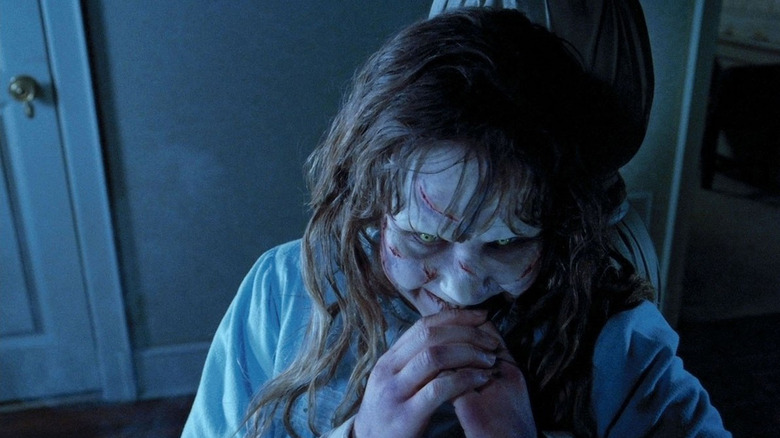
One of the most high-profile banned films of all time, "The Exorcist" became notorious after it received an outright ban in numerous countries.
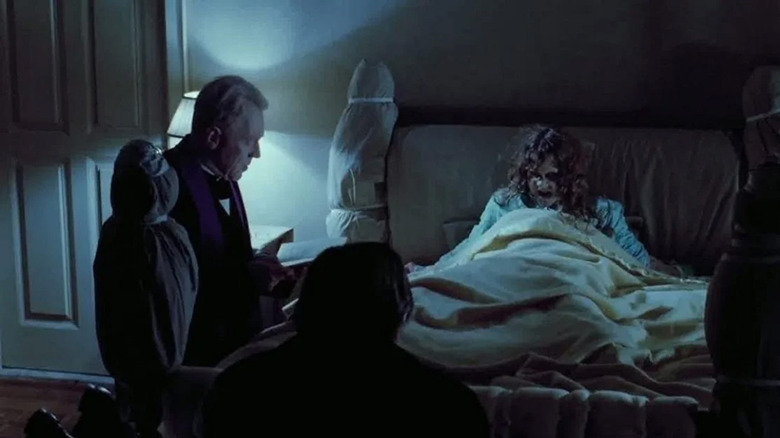
Telling the story of the exorcism of Regan MacNeill (Linda Blair) -- a young girl who becomes possessed by the spirit of a demon. The film chronicles attempts to rid the girl of this demon by an exorcist and his colleague, played by Jason Miller and Max Von Sydow.
From the moment of the film's theatrical release, "The Exorcist" saw severe pushback in the U.K. Members of the clergy protested its release, and after a successful VHS release in 1981, it became effectively banned in 1984 when the BBFC refused the film a certificate under the Video Recordings Act 1984. The film remained unavailable to buy in the U.K. until 1999.
Of course, "The Exorcist" didn't face these restrictions in the U.S.
Although many critics felt the film should have been X rated, the MPAA awarded the film an R rating, much to the studio's delight. An R rating meant a much wider audience, with X ratings usually given to pornographic films, ensuring children are not allowed to watch them under any circumstances.
And so, despite the U.K. ban, "The Exorcist" went on to huge success, becoming the highest-grossing R-rated movie ever until "It" took the top spot in 2017. "The Exorcist" may have been notorious, but it was a thoroughly gripping horror, with U.S. fans ensuring that the film still had a huge audience.
The Texas Chain Saw Massacre (1974)
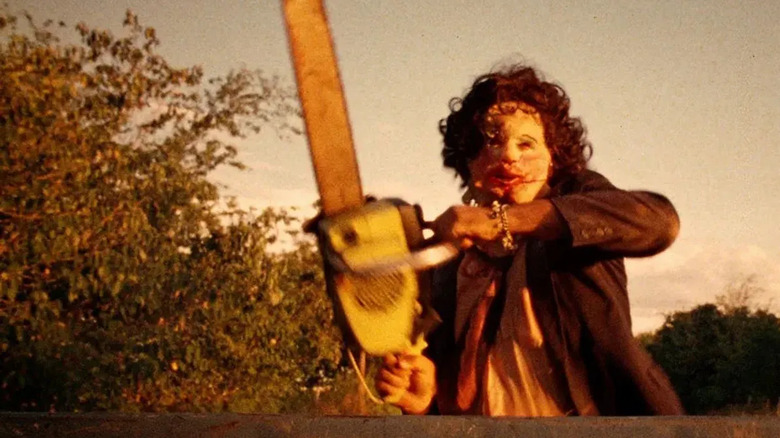
One of the most controversial horror movies of all time, "The Texas Chain Saw Massacre" was a revolutionary step up for cinematic violence. Released in 1974, it was one of the first films credited with creating elements of the slasher genre... and was banned in several countries.
One of the most well-known video nasties, "The Texas Chain Saw Massacre" became synonymous with the whole idea of banned movies. And for good reason -- it was banned in the U.K. for a total of 25 years from its initial release in 1974 until 1999.
"The Texas Chain Saw Massacre" was banned on the advice of The British Board of Film Classification (BBFC) and even copycats could not use the word "chainsaw" in subsequent movies. But by 1999 the BBFC reclassified the film, allowing it to be released with an 18 certificate.
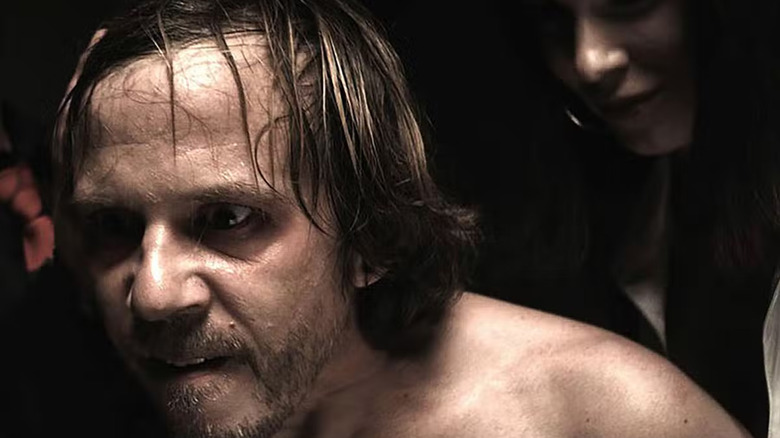
But it's not just the British who didn't like "The Texas Chain Saw Massacre."
It was initially refused a rating in Australia and remained banned until it was eventually given an R rating in 1984. Elsewhere, the film was banned at various points across Brazil, Chile, Finland, France, Iceland, Ireland, Norway, Singapore, Sweden, and West Germany.
Although some theaters saw audiences walk out of "The Texas Chain Saw Massacre" in disgust, the film enjoyed a wide release in the U.S. going on to huge success. There was even a recent sequel.
I Spit On Your Grave (1978)
A brutal rape-revenge horror from director Meir Zarchi, "I Spit On Your Grave" was always going to come under scrutiny from the censors. Starring Camille Keaton as Jennifer Hills, the film follows the horrific story of Jennifer's sexual assault ... and the revenge she enacts upon her tormentors.
"I Spit On Your Grave" was met with almost entirely negative reviews, with famed critic Roger Ebert describing it as "a vile bag of garbage...without a shred of artistic distinction".
Worse yet, the film was banned across the globe. Ireland, Norway, Iceland, and West Germany banned "I Spit On Your Grave" outright, and while Canada initially banned the film, it later allowed individual provinces to make their own decisions on the movie in the 1990s.
The United Kingdom refused the film a certificate, forcing "I Spit On Your Grave" straight to home video since this was unregulated at the time. Soon enough, the film was added to a "banned" list of prosecutable films and remained banned until 2001.
Even in the U.S. "I Spit On Your Grave" was surrounded by controversy. Although the film was initially given an R rating, producers attempted to add in further graphic scenes of rape and violence once the rating had been secured. The MPAA took the film's producers to court, claiming that the additional scenes would bump the film up to an X rating.
The film was eventually released without a distributor in a handful of theaters across the U.S., giving the film a reluctant home on American soil before its eventual re-release in 1980. But while "I Spit On Your Grave" may not have ignited the box office, it's since become one of the most well-known banned movies of all time.
Faces Of Death (1978)
There are some films that live in infamy -- "Faces of Death" is one of them. Released in 1978, the mondo horror directed by John Alan Schwartz has been the subject of myth and legend. It's the film you were warned about as a kid ... and it's as bad as you've been told.
"Faces of Death" follows pathologist Francis B. Gröss (Michael Carr) exploring the many different, and gruesome, ways you can die. It's a simple concept that went a bit too far, with staged or fake deaths cut between footage of very real, actual death scenes. Makeup artist Allan A. Apone estimated that around 60% of the film used real footage of actual death scenes, with clips of extreme fatal accidents and surgical mishaps accounting for some of that. Even more controversially, graphic scenes from the crash of Flight 182 were added. The infamous air crash occurred just weeks before the film's release, making these segments both horrific to watch and incredibly insensitive -- a double whammy that makes you wonder how this got made in the first place.
Although "Faces of Death" was often said to be banned in 40-plus countries, that's not exactly true. However, the film was banned outright in New Zealand, in Australia until 2007, and in the U.K. until a revised cut was approved for DVD in 2003 -- removing two minutes and 13 seconds of footage. Despite this, the film was a huge hit at the U.S. box office.
"Face of Death" earned a whopping $35 million on a budget of just $450,000. But while audiences went mad for its real-life scenes, critics weren't so fussed. Steve Crum denounced the film as "crude, tasteless exploitation footage. Filmed carnage." And it's hard to argue with that. But U.S. audiences loved it anyway.
Cannibal Holocaust (1980)
One of the first found-footage horror films, "Cannibal Holocaust" is as notorious as it is legendary. Including depictions of cannibalism and very real on-screen animal deaths, the film was presented as a real-life documentary, charting the gruesome voyage of anthropologist Harold Monroe (Robert Kirkman) who leads a rescue mission into the Amazon rainforest to look for a crew of filmmakers.It's gruesome and thoroughly upsetting ... and was so realistic that director Ruggero Deodato was arrested for murder upon the film's release. Really.
The controversy began when a French magazine suggested that "Cannibal Holocaust" was actually a snuff film, with several death scenes presumed to be too realistic otherwise. Italian magistrates, who already hit Deodato with obscenity charges, then amended them to include murder. Questions were asked about the lack of media appearances of the supposedly deceased actors, who it turns out, had signed a contract not to make any media appearances for one year after the film's release, all in an effort to make the fake documentary seem more real.
Luckily, an appearance from the "dead" actors convinced the courts that Deodato was not actually a murderer... but the film had already earned its place among the most notorious horror movies of all time.
"Cannibal Holocaust" was banned outright in Australia, Norway, Finland, Iceland, New Zealand, and Singapore, and while the U.K. released the film straight-to-VHS, it was eventually banned as part of the U.K. governments video nasties list. Nevertheless, the film found a home in the U.S.Originally banned across the States, it was eventually released unrated in 1985 and even made its way to DVD and Blu-ray. But it remains one of the most controversial horror movies of all time.
The Evil Dead (1981)
It's almost laughable by today's standards, but yes, "The Evil Dead" was originally banned. Sam Raimi's quintessential cabin-in-the-woods story, the film is a campy schlock-fest, full to the brim with over-the-top acting and sill special effects. It's a joyous horror-filled romp in an era when this was about as scary as you can imagine ... even if it is a bit cheesy.
But yes, "The Evil Dead" was too much for some.
The film follows Ash Williams (Bruce Campbell) and his gang of pals as a trip to a lone cabin in the woods swiftly goes sideways when they inadvertently summon a demon. Everything about the film was campy in the best way possible, but its effects earned it a place among the most notorious splatter films of its day.
In the United Kingdom, it was given an X rating but was released unrated on VHS. However, the appearance of the Video Recordings Act in 1984 saw VHS copies of "The Evil Dead" removed from circulation. In 1990, an edited version was granted an 18-rating, and it wasn't until 2000 that the uncut version was rated 18, effectively unbanning it. The film remains banned to this day in several countries.
However, the U.S. gave Raimi's horror hit a much easier time. Originally given an X rating, "The Evil Dead" was still given a theatrical release and was eventually reclassified as NC-17 for "substantial graphic horror violence and gore." Groovy.
Traces Of Death (1993)
Does a feature-length clip show of real crime scene footage and medical photos qualify as a film? "Traces of Death" pushes the boundaries of both art and decency with its shocking depictions of real deaths and violence. Seriously, this film is disturbingly abhorrent. Some "highlights" include:
The 1980 Iranian Embassy siege.
The 1966 motorcycle stunt accident of Evel Knievel.
The 1990 parachute skydiving accident of Mike Mcgee and Greg Jones.
The 1987 press conference suicide of R. Budd Dwyer.
The footage used throughout "Traces of Death" is not faked or staged -- it is 100% real crime scene footage and medical examiner images, assembled as a sort-of shockumentary with a voiceover from Damon Fox. It's effectively a kind of snuff film, created in response to "Faces of Death." Which asks the question, "why does this exist?"
The censors seem to agree.
The United Kingdom outright banned the film, refusing its classification, stating the film has "no journalistic, educational or other justifying context for the images shown." The BBFC also suggests that it could breach U.K. law under the Obscene Publications Act. Meanwhile, the entire series of "Traces of Death" movies are frequently confiscated by Australian customs authorities. According to Australian regulations, the films "offend against the standards of morality, decency, and propriety generally accepted by reasonable adults to the extent that they should not be imported."
"Traces of Death" remains unrated in the U.S. but nevertheless found a cult following via its straight-to-video distribution. It's the kind of VHS gore hounds would exchange in the back rooms of video stores in the '90s ... and it sadly hasn't been left there.
The Human Centipede 2: Full Sequence (2011)
It's safe to say that "The Human Centipede" has earned plenty of notoriety since its release. The concept is thoroughly disgusting to say the least, as a mad scientist (Dieter Laser) joins three human victims together end to end, creating a "human centipede." Yes, it's horrible, but the use of bandages allowed much of the grotesque body horror to remain implied.
Not so in its sequel, "The Human Centipede 2 (Full Sequence)." Here, director Tom Six cranks up the gross-out horror to 11 with homemade surgical tools, a 10-person centipede, and some frankly disturbing images that leave very little to the imagination. We're treated to scenes of extreme sexual violence, an infant death, and even a scene of explosive diarrhea, which given the context, is even worse than it might usually be.
"The Human Centipede 2" was so gross that it was initially refused classification in the U.K. even with the BBFC's more modern, relaxed rulings. Considered "too obscene" to be released, it was thought that "no amount of cuts" would make the film suitable for release. Ultimately, the BBFC changed its mind. After 32 cuts, removing two minutes and 37 seconds of footage, the movie was granted an 18 rating. The film is still banned in New Zealand.
However, in the U.S. the film found its audience. "The Human Centipede 2" debuted at Fantastic Fest in 2011 where viewers were handed complimentary "barf bags" with an ambulance stationed outside the screening as a gimmick. Remaining unrated, the film was given a limited release across the country, with midnight showings at just 24 theaters.
"The Human Centipede 2" may have only grossed $140,000 but the film found its audience on DVD and Blu-ray, becoming a hit among certain fans of exploitation and body horror.
Hostel Part II (2007)
It's no secret that "Hostel" defined the so-called "torture porn" subgenre – a combination of splatter and slasher movies that rose to prominence in the 2000s. But "Hostel Part II" is considered even more obscene than the original movie, and for good reason.
Although both films tell the story of an underground organization that tortures and kills captured tourists, the sequel doesn't exactly hold back on the gore. "Hostel Part II" follows three female art students who become caught up with the Elite Hunting Club, pursued as potential victims for the organization's wealthy members. And this time around, we're treated to scenes depicting genital mutilation, cannibalism, and scalping. Yum.
"Hostel" was originally banned in Ukraine with Slovakian officials renouncing (but not banning) it.
The sequel, however, was banned outright in New Zealand, and was even brought up in the House of Commons in the U.K. as members of parliament discussed a proposed law to criminalize possession of "extreme pornography." One MP posited that owning still from "Hostel Part II" could violate this new law, despite the fact that he had never actually seen the film. In Germany, the film was cut to secure a theatrical release, but the later "extended cut" was banned outright. In fact, a Munich court found the release of this new, "extended cut" to be punishable by law.
Unsurprisingly, the U.S. gave the film an R rating, securing a wide release for the film. But despite plenty of media coverage and controversy, "Hostel Part II" grossed just $35 million -- far less than its predecessor. But still a win for a banned movie.
A Serbian Film (2010)
One of the nastiest, most horrific films ever made, "A Serbian Film" deserve its notoriety. The story of a former adult film star (Srđan Todorović) who is manipulated into starring in an increasingly sadistic art film, "A Serbian Film" has gained a reputation for being one of the most extreme horror movies ever made. It's not for the faint-hearted, with depictions of necrophilia, pedophilia, and some of the most horrific moments ever captured on film. Scenes include the rape and murder of a newborn infant, sex with cadavers, and a finale that sees the drugged protagonist have sex with his own child.
It's just about the sickest film you can imagine, and even the subtext about the Serbian government's control of its people isn't enough to give "A Serbian Film" even a glimmer of redemption.
Unsurprisingly, the censors went wild for this one.
"A Serbian Film" has been banned in Germany, Norway, Brazil, Australia, New Zealand, Malaysia, Spain, and Singapore. Even countries that passed the film for theatrical viewing required extensive cuts and amendments to make the film remotely suitable. Surprisingly, the U.K. was among those who allowed the film, following censorship and cuts.
The United States provided, once again, a home for the movie, and with some cuts, "A Serbian Film" even managed to land an NC-17 rating. That's absolutely wild. The uncut version remains unrated. It may have been released fairly easily in the U.S. but honestly, would you really want to see it?
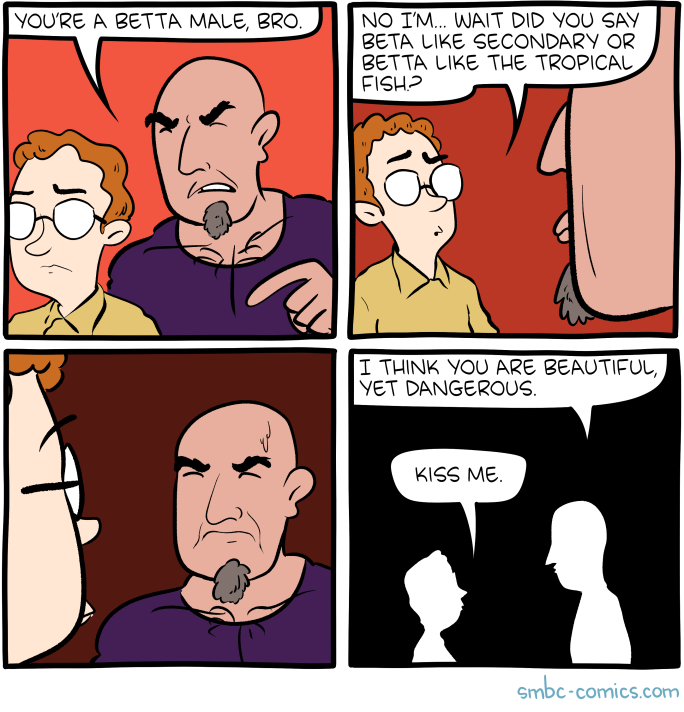
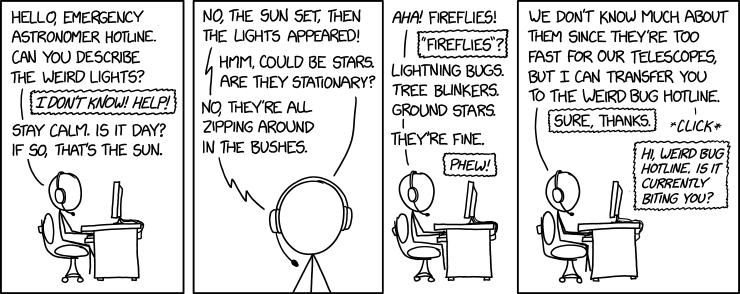


(@sivavaid) June 13, 2022