Illustrated Patchwork Crochet
Contemporary Granny Squares for Clothing and Home Decorating
Scharf
1976
In the land of crochet styles, nothing says 1970s like a granny square. This had a lot of influence in many of the “fashion” of the time. (I personally sported a sweater vest of granny squares in junior high.) There have been some nice modern takes since this book was published. So we will use the word “contemporary” loosely in this instance.
Aside from the very obvious 1970s vibe, this particular book was in good shape (aside from some yellowing). I have seen better and more modern takes on the granny square, but if it is still getting checked out, doesn’t smell like feet, and works in your library, then by all means hang on to this one. Granny squares will always be part of the crochet universe since they are great for newbies. Stick to baby blankets, because babies don’t care.
Grab those crochet hooks and make yourself a granny square today.
Hey, America, it’s us, the Supreme Court of the United States. We heard you shouting outside our houses that one time, which was really scary. But we’re ready to have a conversation now, by which we mean, we’re ready to talk and we hope you’re ready to listen.
We understand that you’ve been watching some of these latest rulings come down—overturning a New York law limiting gun use in public, all but stripping away your Miranda rights—and are wondering… what the hell? We realize that we’ve failed to communicate a crucial piece of information to you, one that would make all of our decisions make a whole lot more sense. So here goes: We’re actually trying to kill you.
That’s it. That’s our whole deal. We here at the Supreme Court just love watching people die. Americans, specifically. But also people from other countries. Pretty much everyone. In this and only this arena, we don’t discriminate. We didn’t think we’d need to spell it out for you. We haven’t exactly been subtle about it. Have you seen our outfits? We’re fully cosplaying as the Grim Reaper.
To be honest, we’ve sort of always been this way, but lately, we’ve been taking it to the next level. Probably because we got into Squid Game during quarantine. Brett thought it was a documentary. And we were like, why not?
“Interesting,” you may be thinking, “but if you really want us all to die, why aren’t you pro-abortion?” First of all, you guys know abortion isn’t murder, right? Abortion is health care. You know this, we know this. Everyone knows this! It’s fine, Roe is gone. You can stop pretending now.
But second of all (and more importantly, to us), if we let people terminate pregnancies, we don’t get to watch that baby be born, grow up, and then die later in a different, more exciting way. Maybe they’ll die in a school shooting, or a grocery store shooting, or a movie theater shooting, or a police shooting, or—twist!—by suicide! (Also via gun.) The possibilities are endless—but only if we force their birth.
The waiting… God, it’s excruciating. But also fills us with a sick, twisted pleasure. It’s basically our version of edging. Also, we don’t usually have to wait that long for them to die, especially if they’re Black.
And another thing: the person who can’t get an abortion could die while pregnant or giving birth—a far more likely outcome than the parent dying from having an abortion. Abortion is thirty times safer than pregnancy, which is one of the reasons we had to get rid of it. But a pregnant person can die in all kinds of gruesome, horrific ways, like if they can’t access the medication they need to safely complete a miscarriage, or if their pregnancy is ectopic. They could get preeclampsia or go into septic shock. It’s a real variety pack! As we love to say at SCOTUS, variety is the spice of death.
And even if that person survives pregnancy and childbirth—quite a feat, given the maternal mortality rates in the United States—we are comforted by the knowledge that that parent could die after giving birth, again by all the usual means (mass shooting, suicide) or by a slower, less dramatic but still fun for us method (hunger, homelessness, inability to access basic health care), or they could be killed by the abusive partner they wanted to leave but with whom they are now trapped because they had a baby together. The abuser could kill the parent and the kid. Again, a pretty likely scenario! That’s a two-for-one deal, as far as we’re concerned.
We get it, you’re upset. But we’re so tired of hearing you complain about each and every one of our decisions. It’s extremely annoying. Maybe there’s something we can do about that pesky First Amendment.
Neil Gorsuch laughs during his Supreme Court nomination hearings in Washington, DC, in 2017. | Mandel Ngan/AFP via Getty Images
Kennedy v. Bremerton School District is a big victory for the religious right, but only because Gorsuch misrepresents the facts of the case.
The Supreme Court handed down a landmark decision in Kennedy v. Bremerton School District on Monday, overruling a 1971 case laying out how the government must keep its distance from religion.
But Justice Neil Gorsuch’s opinion for himself and his fellow Republican appointees relies on a bizarre misrepresentation of the case’s facts. He repeatedly claims that Joseph Kennedy, a former public school football coach at Bremerton High School in Washington state who ostentatiously prayed at the 50-yard line following football games — often joined by his players, members of the opposing team, and members of the general public — “offered his prayers quietly while his students were otherwise occupied.”
(Justice Brett Kavanaugh did not join a brief section of Gorsuch’s opinion concerning the Constitution’s free speech protections, but Gorsuch otherwise spoke for the Court’s entire Republican majority.)
The Court’s decision to explicitly overrule Lemon v. Kurtzman, the 1971 decision that previously governed cases involving the Constitution’s language prohibiting “an establishment of religion,” has obvious implications for future lawsuits: Lower court judges will no longer apply Lemon’s framework to establishment clause cases.
But it’s not clear how those lower court judges should now navigate questions about the separation of church and state. Although the Court overrules Lemon, it does not announce a fleshed-out test that will replace Lemon. Instead, Kennedy announces a vague new rule that “the Establishment Clause must be interpreted by ‘reference to historical practices and understandings.’”
Moreover, because Gorsuch’s opinion relies so heavily on false facts, the Court does not actually decide what the Constitution has to say about a coach who ostentatiously prays in the presence of students and the public. Instead, it decides a fabricated case about a coach who merely engaged in “private” and “quiet” prayer.
If the facts of Kennedy actually resembled the made-up facts laid out in Gorsuch’s opinion, then Kennedy would have reached the correct result. Even under Lemon, a public school employee is typically permitted to quietly pray while they are not actively engaged with students.
Gorsuch’s opinion, however, describes a very different case than the one that was actually before the Court.
Coach Kennedy engaged in very public prayer
In the real case that was actually before the Supreme Court, Coach Kennedy incorporated “motivational” prayers into his coaching. Eventually, these prayers matured into public, after-game sessions, where both Kennedy’s players and players on the other team would kneel around Kennedy as he held up helmets from both teams and led students in prayer.
After games, Kennedy would also walk out to the 50-yard line, where he would kneel and pray in front of students and spectators. Initially, he did so alone, but after a few games students started to join him — eventually, a majority of his players did so. One parent complained to the school district that his son “felt compelled to participate,” despite being an atheist, because the student feared “he wouldn’t get to play as much if he didn’t participate.”
When the Bremerton school district learned of Kennedy’s behavior, it told him to knock it off — though it did offer to accommodate Kennedy if he wanted to pray when he wasn’t surrounded by students and spectators. And Kennedy did end some of his most extravagant behavior, such as the prayer sessions where he held up the helmets while surrounded by kneeling students.
But Kennedy also went on a media tour, presenting himself as a coach who “made a commitment with God” to outlets ranging from local newspapers to Good Morning America. And Kennedy’s lawyer informed the school district that the coach would resume praying at the 50-yard line immediately after games.
At the next game following this tour, coaches, players, and members of the public mobbed the field when Kennedy knelt to pray. A federal appeals court described this mob as a “stampede,” and the school principal said that he “saw people fall” and that, due to the crush of people, the district was unable “to keep kids safe.” Members of the school’s marching band were knocked over by the crowds.
And, contrary to Gorsuch’s repeated claims that Kennedy only wanted to offer a “short, private, personal prayer,” Kennedy was surrounded by players, reporters, and members of the public when he conducted his prayer session after that game. We know this because Justice Sonia Sotomayor includes a picture of the scene in her dissenting opinion.
Gorsuch dismisses this photographic evidence by claiming that “not a single Bremerton student joined Mr. Kennedy’s quiet prayers” after this game — he claims that the players depicted in this photograph are “from the opposing team.”
Whether those players are from the Bremerton school district or not, that doesn’t change the fact that Kennedy engaged in very public prayer sessions, and did so while acting as an official representative of a public school. Nor does it change the fact that, after he was ordered to cease this activity, Kennedy went on a media tour that seemed designed to turn his supposedly “quiet prayers” into a public political spectacle, a spectacle that both players and spectators eagerly participated in.
Under the real facts of Kennedy’s case, Kennedy violated the Constitution.
The Lemon case, which the Court overruled in Kennedy, held that the government’s actions “must have a secular legislative purpose,” that their “principal or primary effect must be one that neither advances nor inhibits religion,” and that the government may not “foster ‘an excessive government entanglement with religion.’”
A public school official conducting a very public prayer during the course of his official duties as a government employee clearly violates this Lemon test.
Lemon was handed down in a different era, when the Court insisted that the government must remain neutral on questions of religion. Just last week, however, in a case about government funding of religious education, the Supreme Court disparaged such calls for neutrality — even holding that laws which deny funding to religious institutions in order to maintain the government’s neutrality on matters of religion are unconstitutional.
So, in light of that and similar decisions, it’s hardly a surprise that the Court’s new majority decided to overrule Lemon. Indeed, in a line that adds to the many falsehoods in Gorsuch’s opinion, he inaccurately claims that the Court “long ago abandoned Lemon.” Gorsuch also criticizes Lemon because it allegedly “led to ‘differing results’ in materially identical cases.”
In Lee, a public middle school invited a rabbi to open and close its graduation ceremony with prayers. The Court held that these prayers imposed subtle pressure on students to join a religious ceremony, and therefore were not allowed.
“The undeniable fact,” Justice Anthony Kennedy wrote in that decision, “is that the school district’s supervision and control of a high school graduation ceremony places public pressure, as well as peer pressure, on attending students to stand as a group or, at least, maintain respectful silence during the Invocation and Benediction.” Such pressure, “though subtle and indirect, can be as real as any overt compulsion,” as it leaves a young nonadherent with “a reasonable perception that she is being forced by the State to pray in a manner her conscience will not allow.”
Kennedy’s prayer sessions were, if anything, more coercive than the ceremonial prayers offered in Lee. A graduation ceremony, by its very nature, marks the end of a public school’s ability to wield coercive power over its departing students. Kennedy, by contrast, wielded ongoing authority over his students when he conducted his prayer sessions. Students who joined those sessions might hope to ingratiate themselves to their coach and gain more playing time and other perks as a result. Students who refused to participate might have feared antagonizing their coach — and losing playing time, a potential college recommendation letter, or a promotion from the junior varsity team to the varsity squad as a result. (Kennedy served as both the head coach of the JV team and an assistant coach on the varsity team.)
To this, Gorsuch claims that there is “no indication in the record that anyone expressed any coercion concerns to the District.” Even if that were true, it would not obviate the fact that teachers and students wield considerable coercive authority over their students, and that students understandably may be reluctant to complain about a teacher or coach for this reason.
Gorsuch also claims that Kennedy was merely acting as a private citizen, and not as a public school employee, when he prayed at the 50-yard line. The school district, Gorsuch repeatedly notes, permitted coaches to take “a private moment” after each game “to call home, check a text, socialize, or engage in any manner of secular activities.” Thus, a coach who wants to spend this moment of free time quietly praying should be allowed to do so.
Again, if the facts of this case resembled the false facts laid out in Gorsuch’s opinion, then Gorsuch would have a point. Public school employees may engage in private acts of devotion, such as saying a prayer over their lunch in a school cafeteria while they are on the job.
But there’s nothing private about a school employee conducting a media tour touting his plans to pray at the 50-yard line of a football field immediately after a game. There is nothing private about the coach carrying out that plan — especially when he does so surrounded by kneeling players, cameras, and members of the public.
In any event, while Gorsuch’s opinion does overrule Lemon, it does not purport to overrule Lee. And, as explained above, Lee permits public school employees to engage in the kind of private, quiet prayer that Gorsuch falsely claims Kennedy engaged in after football games.
That means that the doctrinal implications of Gorsuch’s Kennedy opinion on future cases in which public school employees coerce their students into religious exercise are far from clear. If Gorsuch had held that the Constitution permits Kennedy to do what he actually did, then that would be a hugely consequential decision that would gut the Court’s previous decision in Lee.
But, because Gorsuch paints such a misleading picture, involving a coach who offered a “short, private, personal prayer,” the more limited holding of Kennedy is that this hypothetical activity is allowed. And, again, Lee already permits public school employees to engage in private, personal prayers.
Kennedy will no doubt inspire other teachers and coaches to behave similarly to Coach Kennedy, but those teachers and coaches will do so at their own peril. Gorsuch’s opinion doesn’t weigh whether a coach is allowed to do what Kennedy actually did. That remains an open question, because the Court did not actually decide that case.
A driver makes his selection at a gas station in Los Angeles, California. Gas prices continue to rise at the pump. | Al Seib/Los Angeles Times via Getty Images
Making sense of the political theater over gas prices.
Gas prices are still climbing, and President Joe Biden has nothing but bad options.
Last week, Biden called on Congress to suspend the federal gas tax for three months — a move that would lower gas prices by 18 cents per gallon. But the proposal for a gas tax holiday already looks to be dead. Republicans have remained firmly opposed, arguing the real problem is Biden’s climate agenda, and Democrats have also called it “shortsighted” to redirect the money away from roads.
That leaves Biden with just the limited powers of the bully pulpit to make a difference in costs. On Thursday, he used it to bring oil executives to the White House to meet with Energy Secretary Jennifer Granholm, after weeks of accusations that they are ripping off consumers.
The US would be a very different kind of economy if the president could simply turn on and off the faucet for oil. But by design, oil is a free and global market, one that in recent years has been shaped by a decade of low profit margins, turmoil from the pandemic, and Russia’s war on Ukraine. In March, I wrote about what to make of the political theater surrounding gas prices. The list of myths is getting longer as prices climb past $5 a gallon.
Myth 1: Federal and state gas tax holidays are the answer
Biden has called on Congress to pass a three-month federal gas tax holiday. “By suspending the 18 cent federal tax, we can bring down the price of gas and give families a little bit of relief,” he said Wednesday. These taxes normally fund the Highway Trust Fund to pay for roads, but Biden claimed higher tax revenues this year and the federal infrastructure law mitigates the impact.
Economists are largely cold to the idea of a gas tax holiday, though. An analysis of the three states that passed gas tax holidays in March — Maryland, Georgia, and Connecticut — found that consumers benefited briefly, even though the savings from the tax decrease were not entirely passed along to the consumer.
The study, from the Penn Wharton Budget Model, found that about 70 percent of savings in Maryland and Connecticut were passed onto consumers, and around 60 percent in Georgia. Refiners captured the rest of that profit.
The real issue is that the benefits are fleeting, because lower prices lead to higher demand. When that happens, “suppliers can capture part of the economic benefit of the tax reduction if pump prices do not fall by the full amount of the suspended tax,” Wharton’s experts wrote. Even when there’s a short-term gain for consumers, it won’t make a difference in the longer term. And when a gas tax holiday fails, it’s the wrong people who stand to benefit with higher profit margins.
Politicians are racing to show they are responsive anyway. Twenty more states may be on their way to enacting a tax holiday, including Florida and New York. But as states pass tax holidays, it helps to remember that these taxes also make up a relatively small portion of the price. The two factors driving gas prices right now are refining and crude oil prices.
Myth 2: Oil companies are price-gouging American consumers
No quick fix came out of the oil industry’s meeting at the White House last week. But the oil industry lobby group, American Petroleum Institute, asked for a “tone shift” from the administration. Biden has said thatoil companies are ripping off the American consumer by taking advantage of a war-time situation to reap massive profits. “To the companies running gas stations and setting those prices at the pump, this is a time of war, global peril, Ukraine, this is not normal times,” he said Wednesday. “Bring down the price you are charging at the pump to reflect the price you are paying for the product.”
Price-gouging typically means companies charging higher-than-usual prices in an emergency situation when people have no other options to turn to. Think if a supplier marks up the price of water bottles after a hurricane or selling face masks at a premium in a pandemic.
Oil companies making handsome profits is not necessarily the same thing as textbook price-gouging, or spiking prices when consumers have no other choice to turn to. Sam Ori, executive director of the Energy Policy Institute at the University of Chicago, acknowledged “there is a disconnect between the the price of crude oil and the price of gasoline at the pump in the United States right now, but that’s not because of price gouging.”
Oil prices were already increasing last fall, a sign that Russia’s war and the resulting sanctions are not the full story. The problem is refining. US refineries are operating at about 90 percent capacity right now. A major reason why is refineries have shut down in the past few years, outpacing the new refineries being built.
During the pandemic the US lost a 1 million barrels a day worth of refining capacity. A similar trend happened globally. There’s less refining capacity than before the crisis, but demand is back up to where it was before.
This issue is “very similar to lots of other elements of the pandemic supply chain,” Ori said. “Many of our key supply chains were battered during the pandemic and they have not ramped back up.”
A function of tighter refining capacity and higher prices is large profits, the kind the oil industry hasn’t seen in well over a decade.
There might be some political options to control those profits, but it’s very unlikely that any of these would be enacted. One is the Democratic proposal for a windfall profits tax, a version of which existed in the 1980s, and was recently enacted in the UK.
The second and third ideas are even more controversial: Lawmakers can impose some direct price controls on the otherwise free market to set commodity prices more directly. As complicated (and unlikely) as it sounds, it’s not unheard of — it’s how monopoly electric utilities function. A final idea that’s been floated is to use the Defense Production Act to force companies to accept contracts at below-market prices.
Myth 3: Biden killed oil production
Fox News has been arguing that Biden’s so-called extremist green agenda is the real problem. In March, Republicans on the Senate Natural Resources Committee sent a letter to Biden claiming that he has shut down leasing for oil and gas and is holding back more production. “There has not been one lease sale on federal lands since you imposed a ban in violation of federal law,” the letter said. “No other major oil-producing nation shuts off its own reserves to production.” Sen. Joe Manchin (D-WV) echoed the myth at a hearing: “The time for leasing pauses has come & gone.”
To repeat it again: Biden has done nothing to halt oil leasing. In fact, the Biden administration has outpaced Trump in issuing drilling permits on public lands and water in its first year, according to federal data analyzed by the Center for Biological Diversity. His administration set a record for the largest offshore lease sale ever in the Gulf of Mexico last year, before a federal court blocked the lease sale for not considering climate impacts.
These canceled leases, and even a temporary pause on new federal leases in the first few months of Biden’s administration wouldn’t have helped in the current situation. Even if a lease sale is successful and finalized, it would take years to ramp up production. The marginal Biden measures — like reversing Trump-era environmental rollbacks — haven’t made any kind of dent in the global oil market.
“The constraints are within the industry itself, and have very little to do with any policies from the federal government,” Ori said. Oil companies are having other issues, too, such as accessing the labor and materials like steel needed for putting pipes in the ground.
Meanwhile, the president has done nothing to prevent the vast amount of gas production that occurs on private lands or halt existing oil leases on federal lands. The moratorium is now irrelevant, anyway, because a Louisiana federal judge ruled against it last June. (There’s a second, temporary pause on new lease sales because another court invalidated the administration’s use of a social cost of carbon.) The US also became the world’s largest exporter of liquified natural gas (LNG) for the first time in 2021.
Republican critics of Biden aren’t engaging with the consequences of their own ideology. “There’s an irony here: We’re seeing many people with strong pro-free market ideologies expecting politicians to intervene when markets don’t produce the results they like,” Clark Williams-Derry, a researcher at the Institute for Energy Economics and Financial Analysis said. “Perhaps what they’re really in favor of, then, isn’t free markets, it’s simply cheap gas.”
Myth 4: The oil and gas industry can quickly ramp up production to make a dent in prices
According to an op-ed in the Hill from Rep. Gus Bilirakis (R-FL), increasing oil and gas production is as easy as “flipping the switch.”
The White House would probably be pulling those levers if it could; Biden advisers have said they’d like to see more production. “Prices are quite high, the price signal is strong,” White House National Economic Council Deputy Director Bharat Ramamurti said in an interview. “If folks want to produce more, they can and they should.”
But oil companies have made it clear in earnings calls with shareholders that they don’t plan to produce much more, anyway. Remember that just two years ago the industry was in a complete free fall when demand crashed because of the pandemic. Banks sought government bailouts for oil investments that went under, and oil prices actually hit negative levels as producers grew desperate for oil to be taken off their hands.
Oil and gas prices have climbed in the US because demand during the pandemic has bounced back faster than supply, and with instability caused by factors that include Russia’s war in Ukraine. In the past decade, Americans have gotten used to cheap fuel, but crude oil is now well over $100 a barrel, as of March 8.
Higher profits won’t necessarily change companies’ calculations on production levels. “Whether it’s $150 oil, $200 oil, or $100 oil, we’re not going to change our growth plans,’’ Pioneer CEO Scott Sheffield told Bloomberg Television in February. “If the president wants us to grow, I just don’t think the industry can grow anyway.’’ The largest US fracking companies reiterated in earnings calls in February that they intend to keep output roughly flat, according to reporting from the Wall Street Journal.
In other words, now that companies are making handsome profits, they’re using that extra cash to reward investors and pay down debts, not invest in new production.
Myth 5: LNG exports will fix Europe’s problems and help US gas prices
Lawmakers and pundits have offered an overly simplified solution that the US can just make up that difference in exports. Columnist Karl Smith at Bloomberg Opinion argued, “Fracking may be America’s most powerful weapon against Russian aggression.”
But liquified natural gas exports don’t solve Europe’s or America’s energy challenges. In some ways, they exacerbate them.
To export gas to Europe, a facility first needs to convert it to liquified natural gas, which cools and pressurizes the methane so it can be shipped across continents. On the other end of the ocean, another facility must turn it back into gas for shipment via pipeline.
That’s a lot of infrastructure, which is impossible to scale up in enough time to make an impact on Europe’s prices. There’s one new LNG terminal that opened this year in Louisiana. On the European side, the LNG terminals are already at capacity. This isn’t going to help make up Russia’s supply of 40 percent of Europe’s gas either.
So it’s not particularly helpful or possible to boost exports to Europe, but it also wouldn’t help prices in the US.
Williams-Derry considers US exports of liquified natural gas to be a reason for climbing prices. In 2016, the US completed its first LNG export terminal in decades, which the gas industry hoped would alleviate a glut of natural gas that was keeping US gas prices too low for the industry’s liking.
Freeport LNG, one of the largest operators in the US, shut down because of a fire and explosion on June 8. It won’t come back online until at least the end of the year. As a result, US natural gas futures dropped immediately,
“The reason we’re experiencing higher natural gas prices right now is we’re exporting more,” Williams-Derry said. “It’s not that we’re consuming more. It’s not that we’re producing less. It’s that we’re exporting.”
Myth 6: The economy is doomed because of high gas prices
It’s understandable to feel grim about the economy when gas price signs are listing anywhere between $5 and $7 per gallon. But remember that oil and gas aren’t the entire economy. A better metric than absolute gas prices is looking at Energy Information Administration data on the percentage households are spending on gas. That ratio is still around 3 percent, not much higher than where it was pre-pandemic.
At the last gas price peak in 2008, it was around 5 percent, but thanks to better vehicle mileage, greater access to hybrids and electric cars, and richer households, the number is climbing much more closely than we’d might expect.
There’s an important lesson in this data. Climate policies can pull double-duty to both tackle fossil fuel pollution and help people become more self-sufficient from oil during its booms and busts.
Countries have still not learned that “part of what we’re seeing here is the cost of reliance on fossil fuels,” Ori said. But clean energy isn’t a panacea either. “Once you’re in the [energy] crisis, it’s too late,” he added.
Yet there’s a real opportunity to break the cycle of instability, even though the US risks doubling down on dangerous policies as Biden ups the calls for more oil production.
In the long run, investing in fossil fuel infrastructure can seriously backfire by raising energy costs for Europeans and increasing reliance on Russian gas. LNG will always be the more expensive option because of its processing and transport. “By locking yourself into a gas-powered future, you’re locking in higher costs for the long haul,” Williams-Derry said. “There’s not a good alternative to Russian gas if you want to have inexpensive gas in Europe.”
“If you’re going to double down on gas, essentially, you’re doubling down on Russia,” Williams-Derry added.
The biggest risk is if the US and Europe respond to this crisis by overinvesting in the future of fossil fuels. Actions like building LNG terminals and approving new leasing don’t help in the short term when people are struggling to pay high bills. It doesn’t achieve energy independence. But it would lock the world onto a dangerous path for climate change.
1. My coworker says we shouldn’t hire women of child-bearing age
I’m leaving my first professional job at a smallish, dysfunctional company (~150 employees), and I’m thrilled to be moving on!
However, I’m friends with a manager in another department, and at lunch yesterday she told me, “I’ve tried to encourage HR to stop hiring women of birthing age since they’re likely to need maternity leave and may not even come back after it’s over.”
I was flabbergasted. This coworker is the hiring manager for all folks entering her department, and the unethical hiring practice she described is discriminatory and, from what I understand, illegal. I was so shocked in the moment, I didn’t know what to say, so I said nothing. Now that I’ve slept on it, I’m angry, and I want to do something about it.
I’ve got three options as I see it: (1) Go back to my coworker directly and tell her that what she’s described is unethical and illegal, and she should reframe how she’s hiring pronto. (2) Go to HR and tell them what happened. I would also suggest management training since it’s clear this coworker has poor judgement as a manager at best. (3) Keep my mouth shut and count my lucky stars that I’m leaving this dysfunctional place.
What do you recommend? For what it’s worth, I’m a “woman of birthing age” and this coworker may have discriminated against me if I’d been interviewing for a position in her department, which makes this sting even more.
You can try to tell your coworker how incredibly wrong-headed and illegal this is and, who knows, maybe you’ll get through. But the most important thing is to report it to HR because she’s opening the company to legal liability and they need to address it with her immediately. I’m concerned that she claims she’s already told HR where she stands on this (while encouraging them to illegally discriminate in hiring, WTF) because if that’s true and they didn’t immediately set her straight, the problem goes well beyond your coworker — but maybe there’s more to the story or she twisted it in the telling. In any case, reporting it to HR is the way to go, and you should frame it as if of course they will be appalled to learn this, and of course this is obviously offensive to any sane person, and of course they will want to immediately address it so the company isn’t in legal jeopardy. Then leave and don’t look back.
2. My new coworker lied to me about his name
I recently started a new job. On my second or third day, a coworker from a different department came up to me and introduced himself as Bob Jones. Bob said that he was new to the company too and we had a nice chat. We’ve had a few pleasant interactions in the past few weeks that seemed normal enough.
Here’s the problem: I can now definitively say that this guy’s name is NOT Bob Jones. I’m absolutely positive. I was able to talk to another coworker who confirmed that this guy’s name is Jim Green. I’ve seen Jim interact with other people and every single one of them has called him Jim. And he’s not new to the company, he’s a department manager who’s been here for years (and is apparently a renowned jerk). To make things even weirder, we do have a Bob Jones who’s new to the company, but he’s in a different department and looks nothing like his imposter. I’ve spent the past few weeks wondering if there were two identical twins with different last names working here. But they couldn’t look more different.
How do I handle this guy? I’m grateful that he showed his true colors within 15 seconds of meeting him, but I’ll need to work with him occasionally. And do I keep calling him Bob, or should I go with what I assume is his real name?
I think “renowned jerk” is the key here. The most likely explanation is that Jim is either messing with you or messing with Bob — or both. He probably thinks it’s a funny prank — although “haha, I fooled a new person about something they had no reason to question” is not in fact particularly funny. Renowned jerks tend not to have especially refined senses of humor.
I’d just blandly switch to calling him Jim as if his conversation with you never happened.
3. My coworker is never here — can I ask for his office?
During Covid lock downs, my company let us work remotely. Since being pretty much forced back into the office, one of my coworkers who performs the same job as me has more or less just ignored their repeated demands and shows up maybe once a month. This is the one person who has been there so long that he could get away with murder.
Since returning to the office, my role has changed a little and I’m doing more work that requires much more focus and attention to detail. I am the only person in my team who is sitting in a cubicle; everyone else has an office. Is it wrong to ask my manager for my coworker’s office since he’s never there?
If you’re there every day and he’s there once a month, it’s a reasonable request to make — which isn’t the same thing as meaning it will be granted, particularly if your coworker has been granted prima donna status, but it would certainly be a sensible thing for your manager to consider. Point out that your work requires focus that easier in a space where you can concentrate and that the empty office is going unused, and ask if you can move into it.
It’s possible that your manager won’t say yes simply because doing so would be admitting that they’ve capitulated to your coworker’s insistence on staying home, but it’s worth a try.
4. Should I tell my new boss about my fertility treatments?
I started a new job a couple months ago that I really love. My partner and I are also in the beginning stages of fertility treatments, which require multiple in-person appointments throughout the month.
I’m going to do my best to schedule appointments in the early morning or over lunch, but I’ll likely need to notify my manager about some of them. So far I’ve called these appointments “doctor’s appointments.” I’m worried that eventually my manager will either (1) worry or ask about a potential medical issue or (2) wonder if I’m applying elsewhere or not as committed to my new position. Since this is a new job, I don’t have as much rapport built up as I did at my last company or a long, dependable track record to help dispel concerns. She has asked about one of these “doctor’s appointments” already, which is what sparked my concern. (I had been feeling sick with a cold. She asked in a meeting whether my doctor’s appointment was due to being sick or if it was for something else. I quickly said it was for something else and moved on with the conversation!)
I’m wondering whether it would be helpful to share with my manager that I’ll be undergoing fertility treatments and that I might need to step away for a couple appointments throughout the month. I’m hesitant to share because it can be a sensitive topic for me (and I really don’t want questions checking in about how it’s going) but also because I would hate for preemptive pregnancy discrimination to impact my career at this new company.
Don’t share it. It might go fine or she might end up being nosy and/or discriminating against you in some way (see #1 above), and it’s not worth the risk. It’s also not at all necessary; you can address both your concerns without sharing private medical information with her. Try saying, “I want to mention that I’m going to have some ongoing medical appointments this year — it’s nothing to worry about, just something I need to get taken care of. I’m trying to schedule them for the early morning or over lunch as much as I can, but I probably won’t be able to do all of them that way.” That’s it — that shares the part that’s relevant to her and reassures her there’s nothing she needs to worry about, without disclosing personal medical info that she doesn’t need to have.
5. Using PTO when the office closes early
Our office closes Friday afternoons in the summer and requires everyone to use four hours of PTO. However, my daily schedule ends at 3 pm. They still want me to use four hours of PTO every Friday and I think I should only have to use two since I’m not scheduled for the whole afternoon. I feel like I am not really “off” for those four hours and am using up my vacation for hours that I wouldn’t be in the office anyway. Who is right?
You are.
It’s also messed up that they’re making everyone use PTO when the office closes, especially four hours a week for the whole summer. That’s going to use up a massive amount of PTO for people of the course of the summer and certainly isn’t a benefit in the way summer hours are normally intended.
The Supreme Court cited safe haven laws as an abortion alternative when it overturned Roe v. Wade. But Texas’ policy lacks funding and just 172 infants have been relinquished since 2009.
Freeways, suburbanization and malls were concepts sold as part of the American dream when they were introduced in the 1950s. Some architects and design critics say these innovations were actually vehicles of segregation that destroyed communities of colour and further separated them from white America.
Law enforcement officers stand guard outside Robb Elementary School in Uvalde, Texas, on May 27, three days after a gunman entered the school and killed 19 students and two teachers. Multiple police agencies responded to the scene. | Wu Xiaoling/Xinhua via Getty Images
Though officers were inside Robb Elementary School just three minutes after the gunman entered, it took them 1 hour, 14 minutes, and 8 seconds to end the massacre.
With every detail that emerges about the Robb Elementary massacre, the police response looks worse.
In the days after the shooting, the Uvalde, Texas, police offered conflicting accounts of what took place when officers entered the school building and why it took so long to stop the rampage.The police changed their story repeatedly.Amid the multiple agencies at the scene —the Uvalde Consolidated Independent School District Police, the Uvalde Police Department, the Department of Public Safety, and Border Patrol — it wasn’t clear to some officers involved who was in charge.
For the past four weeks, investigators watched body camera video, footage from the nearby funeral home, and school surveillance video, and listened to radio traffic and phone and dispatch recordings. Now they’re getting some answers about why communication between officers failed, why basic active shooter protocol was outright ignored, andwhy teachers and students weren’t rescued for 77 minutes.
The picture emerging is damning.
Steve McCraw, the director of the Texas Department of Public Safety, who has been leading Texas’s investigation of the police response, described it at a recent Texas Senate special hearingas “an abject failure, antithetical to everything we’ve learned over the last two decades since the Columbine massacre.”
Eric Gay/AP
Texas Department of Public Safety Director Steve McCraw shows exterior and interior photos of the west entrance to Robb Elementary School in Uvalde as he testifies at a Texas Senate hearing at the state capitol in Austin on June 21. The shooter entered the school through this entrance.
Investigations by the Texas Rangers, the Justice Department, and the local district attorney’s office arealso underway, which means that new information will likely be released and change an ever-evolving story. Some Uvalde officials are already casting doubt on McCraw’s account, claiming that he is trying to distance state troopers and the Texas Rangers from the bungled response.
Here’s what has been revealed so far about three key contributors tothe deadly delay.
1) Police had enough resources to act but they delayed for more than an hour
Three minutes after the shooter entered the building, enough armed officers were on the scene to stop the shooter, said McCraw. The post-Columbine doctrine for how to stop active shooter situations is clear, he argued: Officers must stop the killing and stop the dying. “You can’t do the latter unless you do the former,” McCraw said. But officers did not act quickly enough.
“The only thing stopping a hallway of dedicated officers from entering rooms 111 and 112 was the on-scene commander, who decided to place the lives of officers before the lives of children,” McCraw said. “The officers had weapons; the children had none. The officers had body armor; the children had none. The officers had training; the subject had none.”
At 11:33 am, the shooter entered the building. Three minutes later, as many as 11 officers had entered, nine with rifles — enough to isolate, distract, and neutralize the shooter. Yet officers waited for radios, rifles, shields, a sniper, and a SWAT team that was never needed.
At 11:37, the shooter — now in a classroom — fired another 11 rounds. Some of the bullets went through the walls and grazed two approaching officers. The officers retreated.
At 11:40 am, Chief Pedro Arredondo of the Uvalde Consolidated School District Police called the Uvalde Police Department’s dispatch on his cellphone and requested more assistance and a radio. “We don’t have enough firepower right now, it’s all pistols and he has an AR-15,” he said.
2) There was a futile scramble for keys that McCraw said weren’t even needed
Immediately after the shooting, law enforcement officials said the shooter was able to enter Robb Elementary because a teacher had the door propped open with a rock. Video surveillance shows that wasn’t true: The teacher knocked the rock out of the doorway before the shooter got to the school. The door, which could only be locked from the outside, was unlocked. (Even if it had been locked, there were glass panels beside the door that could have provided access.)
The classroom doors could also only be locked from the outside with a key.
Eric Gay/AP
A section of a classroom door from Robb Elementary School in Uvalde is shown during testimony at a Texas Senate special hearing at the state capitol in Austin on June 21.
“I don’t believe based on the information we have right now that that door was ever secured. In fact, I have great reason to believe it wasn’t secured,” McCraw said, since the shooter, who didn’t have a key, could enter, exit, and then reenter the classroom, as investigators observed on video.
Before entering the classroom, officers waited for a sledgehammer and a hooligan, a tool used to force entry. Both tools were available. They waited for a master key, which was requested nearly 45 minutes after the shooter entered.
“We’re having a fucking problem getting into the room because it is locked,” Arredondo said at 12:42 pm. Then: “They gotta get that fucking door open, bro. They can’t get that door open. We need more keys or something.”
“How about trying the door and seeing if it’s unlocked? No one had. The breaching team had been led to believe that the door was locked,” McCraw said. Officers alsocould have banged on the windows of the classroom to distract the shooter as others breached the door.
It took officers 1 hour, 14 minutes, and 8 seconds to enter the classroom and kill the shooter.
3) Investigators identified an incident commander — who says he wasn’t in charge
Investigators have named at least one person who they think is to blame: Chief Pedro Arredondo, who led the Uvalde Consolidated Independent School District police force. It was his jurisdiction, he was the ranking senior official, and he was issuing commands and directing actions, McCraw said.
Eric Thayer/Getty Images
Uvalde, Texas, police officers and Uvalde School Police Chief Pedro “Pete” Arredondo, far right, attend a press conference outside Robb Elementary School on May 26.
Arredondo’s lawyer told the Texas Tribune in an interview that Arredondo did not believe he was the incident commander; he assumed that some other official had taken control of the larger response and so he took on the role of a front-line responder. They also told the Tribune that he “did not issue any orders,” contradicting McCraw’s evidence. Further complicating the chain of command was that most of the portable radios that the officers carried did not function inside the school, causing miscommunication, delayed information sharing, and the spread of misleading intel. The radio chatter that did occur was “chaotic,” McCraw said. Additionally, the charts the police officers used to devise a plan were wrong.
A day after McCraw’s testimony, Hal Harrell, the Uvalde schools superintendent, announced that he decided to place Chief Arredondo on administrative leave. Family members of victims have grown increasingly angry about the slow police response and are calling for Arredondo’s firing.
“I don’t like singling out a person and shifting and saying he’s solely responsible, but at the end of the day, if you assume incident command, you are responsible,” McCraw said.
Officers did try to counter commands to stay back, and it’s the reason the shooter was finally killed at 12:50 pm. The Border Patrol agents who breached the classroom and shot the gunman ignored a directive that they heard in their earpieces not to advance, according to a New York Times investigation. About an hour before, a Department of Public Safety special agent questioned whether there were still children in the classroom, saying, “If there’s kids in there, we need to go in there.”
The failure was broader than one person. “This set our profession back a decade,” McCraw said. “I don’t care if you have on flip-flops and Bermuda shorts, you go in.”
Here’s the timeline as it stands now but it might keep changing as investigations deepen
11:28 am: The shooter, who didn’t have a driver’s license or know how to drive, crashes his vehicle into a ditch, in front of Robb Elementary and the nearby funeral home.
11:29: A teacher inside the school observes the crash and calls 911 to report that there is a man with a gun; the shooter shoots at two people who left the funeral home after the crash.
11:31: The shooter begins shooting at the school, firing 27 times into two classrooms as he approaches the building.
11:33: The shooter enters the west entrance of the school through an unlocked door. The school begins an active shooter lockdown. The shooter fires into classrooms 111 and 112 through the hallway. He enters and exits the classrooms, firing more than 100 rounds.
11:35: Three Uvalde police officers, with two rifles, enter the school building.
11:36: A total of 11 police officers are in the building: Uvalde PD officers and school district police officers, including Arredondo.
11:37: The shooter fires another 11 rounds. Some of the bullets go through the walls and graze two approaching officers. The officers retreat.
5 minutes have elapsed since the first police officers entered. The police get a crucial fact wrong, complicating the response.
11:40: The chief received a report from an unknown officer that the shooter was “contained in this office,” suggesting that the subject was barricaded or that a hostage situation — not an active shooter — was in process.
Shortly after 11:40: Chief Arredondo calls the Uvalde police from his cellphone and provides an incident description, asking for a SWAT team and a radio and claiming to lack firepower.
11:40: The shooter fires one round.
11:41: Uvalde police report that they believe the shooter is barricaded in “one of the offices” and is still shooting. (This is more misinformation. He’s not barricaded in an office, since there is no office on the floor plan.)
Dispatch asks if the classroom door is locked and the officer responds, “I’m not sure but we have a hooligan to break it.”
11:42: More officers continue to enter the school.
11:44: The shooter fires another round.
10 minutes have elapsed since the police entered Robb Elementary.
11:48: Uvalde Consolidated Independent School District Officer Ruben Ruiz enters the school and tells officers that his wife told him she had been shot. Ruben is physically detained and escorted off the scene while having his gun taken away, according to McCraw.
11:52: The first ballistic shield enters the school building. Uvalde Police Department officers show up and get told to help with crowd control.
11:54: A Department of Public Safety special agent enters the building and asks, “Are kids still in there?” An unknown officer responds, “It is unknown at this time.”
20 minutes have elapsed since the police entered Robb Elementary. Delays continue, even as more equipment arrives.
11:56 am: The DPS special agent says, “If there’s kids in there, we need to go in there.”
12:03 pm: Khloie Torres, a student inside room 112, calls 911. The second ballistic shield enters the building.
12:04: The third ballistic shield enters the building.
30 minutes have elapsed since police entered Robb Elementary.
12:11 pm: Arredondo requests a master key.
12:14: Arredondo instructs officers to have a sniper on the east roof of the school.
40 minutes have elapsed since police entered Robb Elementary. Police continue to say they’re struggling to get into the room.
12:16 pm: Arredondo says, “I just need a key.”
12:17: Arredondo says, “Tell them to fucking wait. No one comes in.”
12:20: The fourth ballistic shield enters the building.
12:21: The shooter fires four rounds.
12:21–12:33: Arredondo, on body camera audio, asks for a breaching tool and says, “If he starts shooting, we’re going to lose more kids.” He continues to say that he needs keys to get through the door and that the keys he already has aren’t working.“We’re ready to breach, but that door is locked,” he says. “I say we breach through those windows and shoot his fucking head off through the windows.”
An hour has passed since police entered Robb Elementary.
12:35 pm: A hooligan tool, used by firefighters to gain entry, is brought into the building.
12:41: Arredondo says, “Just so you understand, we think there are some injuries in there. And so you know what we did, we cleared off the rest of the building so we wouldn’t have any more besides what’s already in there, obviously.”
12:42: Arredondo says, “We have a fucking problem getting into the room because it is locked. He’s got an AR-15 and he’s shooting everywhere like crazy. So, he’s stopped.”
12:43: Arredondo says, “They gotta get that fucking door open, bro. They can’t get that door open. We need more keys or something.”
70 minutes have passed since police entered Robb Elementary.
12:46 pm: Arredondo says, “If y’all are ready to do it, you do it. But you should distract him out that window.”
12:47: A sledgehammer enters the building.
12:50: A stack of seven officers tries to enter the classroom. Only four are able to enter the classroom because the door closes and leaves the other three out. Five officers fire rounds at the shooter and kill him.
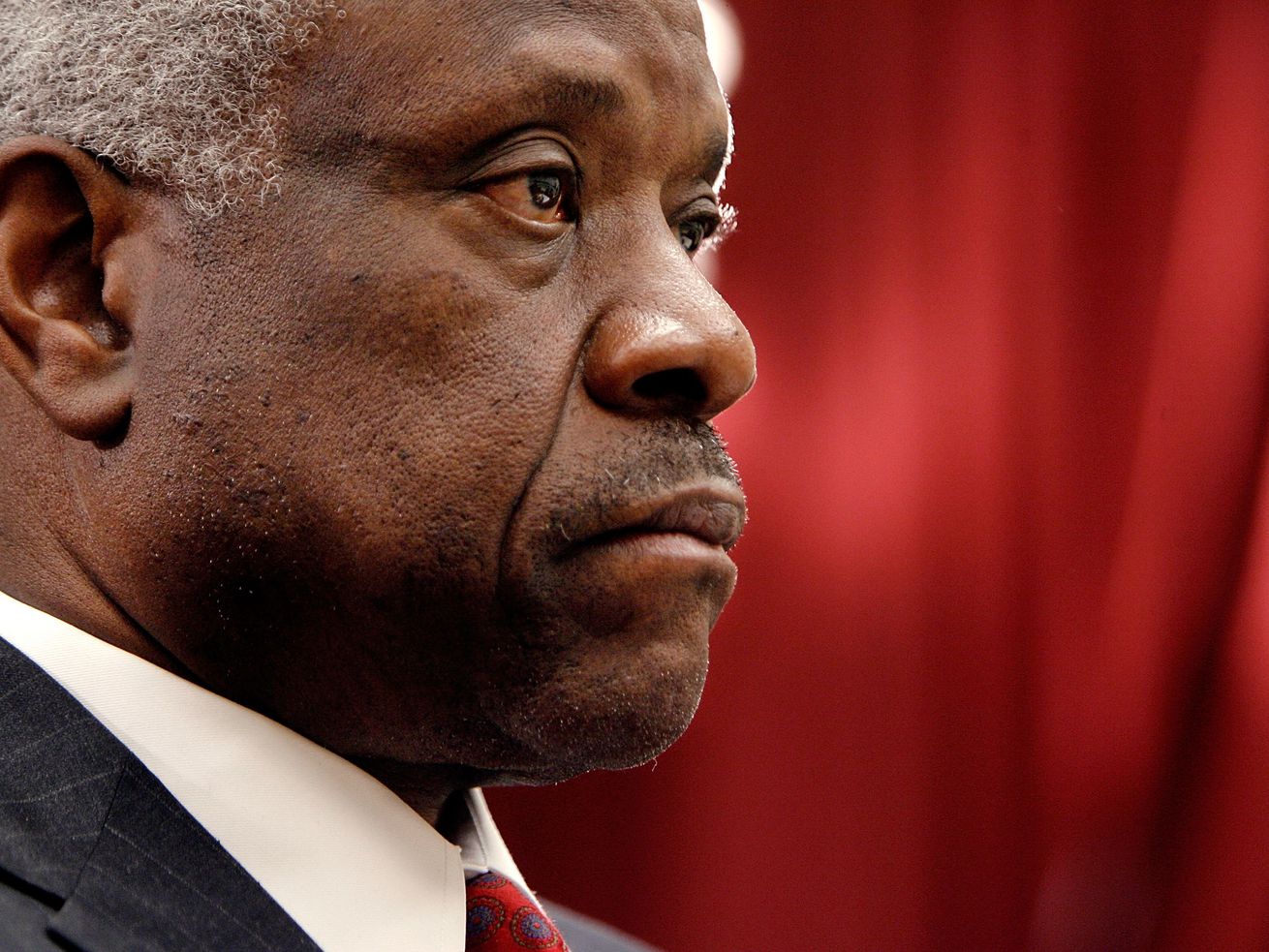
In a concurring opinion, Justice Clarence Thomas called for the Supreme Court to reconsider all of its substantive due process precedents after it overturned Roe v. Wade on June 24. | Chip Somodevilla/Getty Images
Samuel Alito’s majority opinion striking down Roe v. Wade insists LGBTQ rights are safe. Thomas’s disturbing concurrence exposes the incoherence of that claim.
Justice Clarence Thomas, in his concurrence, suggests otherwise.
Thomas voted with the 6-3 majority that struck down Roe. In a concurring opinion, however, he expressed the view that he would go further — much further — than the majority in thinking through the implications of today’s decision. One passage in particular captured people’s attention:
In future cases, we should reconsider all of this Court’s substantive due process precedents, including Griswold, Lawrence, and Obergefell. Because any substantive due process decision is “demonstrably erroneous,” we have a duty to “correct the error” established in those precedents.
The key concept is the term “substantive due process,” which refers to the idea that the Constitution protects rights that are neither purely procedural (like rights to fair trial procedures) nor explicitly mentioned in the Constitution (like the freedom of the press). Thomas is arguing that such “unenumerated” rights are basically made up: not just the right to abortion protected in Roe, but also protections for birth control in Griswold v. Connecticut, same-sex sexual relations in Lawrence v. Texas, and same-sex marriage in Obergefell.
This does not mean that these rights are necessarily in danger now. In fact, such future rulings may well be unlikely. Thomas has a long history of unsuccessfully calling for the overruling of longstanding precedent, and Alito’s majority opinion goes out of its way again and again to emphasize that it would not have the implications Thomas wants. Together, these facts suggest that the other conservative justices are wary of going down the road Thomas is paving, and that he would have few votes for enacting his extraordinarily radical vision.
But just because it’s unlikely doesn’t make the possibility any less chilling when spelled out in a Supreme Court concurrence. And Thomas’s concurrence exposes the incoherent logic at the heart of Alito’s ruling — and a fundamental problem with the way the Supreme Court operates.
How Thomas exposed the majority’s incoherence
The basic argument in Alito’s ruling in Dobbsv. Jackson Women’s Health is that there is no explicit constitutional protection for abortion rights, and that any right not explicitly enumerated in the Constitution must be “deeply rooted in this Nation’s history and tradition” and “implicit in the concept of ordered liberty” in order to qualify for constitutional protection. Abortion, he argues, does not pass this test.
But if abortion fails, it’s hard to see how rights to same-sex marriage and contraception pass. Though Thomas’s reasoning is far more extreme than the majority’s, his concurrence shows that it’s difficult to put a limiting principle on a ruling rolling back these legally interconnected rights. The Court can declare all it wants that this ruling only applies in one case, but it becomes harder to see why once you start following the logic.
It’s not just Thomas who sees that. It’s also an argument that the liberal minority — Justices Elena Kagan, Stephen Breyer, and Sonia Sotomayor — make in their joint dissent:
The lone rationale for what the majority does today is that the right to elect an abortion is not “deeply rooted in history”: Not until Roe, the majority argues, did people think abortion fell within the Constitution’s guarantee of liberty. The same could be said, though, of most of the rights the majority claims it is not tampering with. The majority could write just as long an opinion showing, for example, that until the mid-20th century, “there was no support in American law for a constitutional right to obtain [contraceptives].” So one of two things must be true. Either the majority does not really believe in its own reasoning. Or if it does, all rights that have no history stretching back to the mid-19th century are insecure. Either the mass of the majority’s opinion is hypocrisy, or additional constitutional rights are under threat. It is one or the other.
The majority’s response to this argument is that abortion is somehow a unique case: “rights regarding contraception and same-sex relationships are inherently different from the right to abortion because the latter (as we have stressed) uniquely involves what Roe and Casey termed ‘potential life.’” It’s worth noting that this reassurance was in the final opinion, but not in the version that was leaked in May.
But the fact that abortion raises questions about ending lives does not make it any more or less “deeply rooted in our history”: it’s an act of pure legal handwaving, an invention of a standard designed to escape the obvious consequences of Alito’s own logic.
Nor is there any clear reason in the Dobbs treatment of stare decisis, the principle that courts generally ought to adhere to precedent, that would prevent its logic from being applied to these other landmark constitutional cases. Some of the Court’s reasons that Roe was so egregiously bad that it deserved to be overturned — that it, for example, “usurped the power to address a question of profound moral and social importance that the Constitution unequivocally leaves for the people” — could also apply to Griswold or Obergefell.
Instead of setting up clear standards, it seems that Alito and his colleagues are trying to make the problem exposed by Thomas and the dissenters disappear: to assert that their logic doesn’t apply to what it obviously does.
As a practical matter, this might very well work: The Court majority is not bound by any formal rules other than the ones it decides on. It can simply do whatever it wants for whatever reason it wants; if it does not want to extend the logic of its own ruling to similar cases for arbitrary reasons, it can easily do that.
But this should reveal to the rest of us that what Alito and company are doing is not simply following legal principles wherever they lead: They are exercising power, reshaping the law according to their own political beliefs and calculations about potential political backlash.
Ironically, a ruling decrying the Court behaving like a legislature is engaged in much the same enterprise. And this, in turn, raises the question of whether nine unelected judges really should have the power we’ve given them.
Correction, 3 pm: A sentence previously included in this article referred to Clarence Thomas’s dissent instead of concurrence. He voted with the 6-3 majority to overturn Roe.
As I trek across the expansive 40 acres at the University of Texas at Austin toward the Blanton Museum of Art, which is perched on the southern edge of campus, I am struck by the ever-evolving landscape of the museum grounds. What was once a lone limestone building is now crowned by Ellsworth Kelly’s impressive architectural homage to color and light, titled Austin, which will soon be accompanied by a sculpture garden inviting visitors to lounge on a grassy knoll beneath shade cast by monumental umbrella blossoms. As I enter the museum, escaping the noisy bustle of construction, I am enveloped in a sea of calm. I find myself propelled across the administrative lobby, through a classically-inspired colonnade and into a luminescent sanctum. A few visitors and some meandering students weave in and out of the sandy-colored arcade, which mimics the architecture of an ancient Roman bath complex.
As I emerge through the rows of arches, I arrive in an open-air atrium, and am surrounded by bright light and a sea of cool blue tones known as Stacked Waters. This artwork is my absolute favorite part of the Blanton Museum because of its effortless beauty. Stacked Waters consists of horizontal rows of custom-cast acrylic tiles in a variety of blues that encase the walls of the vast Rapoport Atrium. The colors present a gentle gradation of dark to light hues creeping up the walls toward an open, staggered skylight. The atrium ceiling is punctuated with asymmetrical window walls that invite the optimal amount of light into the space. The innovative design creates a clear, dazzling space even on gloomy gray days.
Teresita Fernández, “Stacked Waters,” 2009, cast acrylic, 240 x 795 x 561 inches, commissioned by the Blanton Museum of Art, The University of Texas at Austin, through the generosity of Jeanne and Michael Klein, 2008. Photo: Courtesy Blanton Museum of Art.
Stacked Waters is a large-scale permanent installation that was commissioned by the Blanton Museum of Art in 2009. The artwork was created by Teresita Fernández, who is known for her immersive pieces that manipulate light, space, and mood. Fernández is an esteemed artist, whose storied career spans more than three decades. Her work is characterized by bold concepts and incorporates a wide variety of media, from metals such as steel, aluminum, and gold, to textiles like silk, burlap, or rope, and even natural materials including wood, graphite, and volcanic rock. Fernández focuses her efforts on large-scale works and permanent installations. Much of her art draws on inspiration from the natural world, and the artist is well-known for manipulating hard, unyielding materials into soft, flowing, organic forms. Thematically, Fernández’s pieces address the intersection of landscape, colonialism, climate, space, and violence.
Fernández was born in Miami to immigrant parents. She received her B.F.A in 1990 from Florida International University and an M.F.A in 1992 from Virginia Commonwealth University. She is the recipient of numerous awards, fellowships, and grants and has held solo exhibitions at galleries and museums across the world. In 2011, President Obama appointed Fernández to serve on the U.S. Commission of Fine Arts, which advises on matters of national aesthetics and preservation. This was a groundbreaking appointment, as Fernández is the first Latina to serve on the prestigious commission. In addition to her myriad accolades, Fernández has emerged as an advocate for Latinx artists. In 2016, Fernández organized the U.S Latinx Arts Futures Symposium, which aimed to address the invisibility and lack of diversity of artists and curators throughout the art world. As one of the most prominent Latinx artists, Fernández endeavors to pave the way for increased diversity and inclusivity in gallery and museum spaces.
Rapoport Atrium at the Blanton Museum of Art. Photo: Courtesy Blanton Museum of Art.
As with most of Fernández’s works, Stacked Waters urges reflection, and viewers are meant to situate themselves within its landscape. Stacked Waters welcomes each Blanton visitor into its dark depths, inviting them to take a seat on a bench and ponder its varied shades of blue, or to venture into one of the lower exhibition spaces to discover what pieces are hidden behind the azure walls. As I am encased in the 360-degree view of blue hues, I feel drawn into the artwork itself. Stacked Waters references the splendor and mystery of the natural world, and its monumental scale highlights the sublime aspects of nature. The piece invokes the feelings of awe I often experience when I stand on a sandy beach, watching the ebb and flow of an ocean’s foamy waves while taking in the endless horizon. Its colors recall the aquamarine waters of the Mediterranean Sea. As I survey the luminous atrium, I bask in the artwork’s cool calmness and I am transported back to my days working on excavations in Greece and Italy, where my office consisted of a backdrop of the cerulean sky meshing with the deep, crystal blue sea.
After exploring the first floor, visitors are urged to climb the colossal grand staircase to investigate the upstairs galleries. As they ascend, they journey from the depths of dark blue waters into shallows, represented by shades of light blue, and finally emerge into a cool white sky. The viewer is then faced with a new work of art that sprouts precariously from the center of the atrium ceiling and augments the emotional effects of Stacked Waters. Thomas Glassford’s sculpture Siphonophora was acquired in 2016 and is directly inspired by free-floating sea creatures who dwell in the depths of the ocean and on sea floors. Siphonophora delightfully enhances the aquatic theme of the museum’s atrium and is right at home among the ombre blues of Stacked Waters. The work looms over the atrium sprouting branch-like appendages, stacks of thick ivy leaves, floral bulbs, and fully blossomed flowers that are more than forty feet in length. Despite being partially made of concrete, the massive structure appears lighter than air as it floats above the blue waves of Stacked Waters — just as Fernández’s rigid acrylic tiles yield the effect of undulant ocean waves.
Thomas Glassford, “Siphonophora,” 2016, rebar, polyurethane foam, base coat cement, and paint, 501 x 192 x 130 inches. Blanton Museum of Art, The University of Texas at Austin, Purchase through the generosity of The Moody Foundation, 2017. Photo: Courtesy Blanton Museum of Art.
Siphonophora’s stark whiteness and spindly, organic tentacles provide a striking and pleasant juxtaposition to the varied hues of Stacked Waters, which offers a welcoming entrance and provides the perfect introduction to the vast treasures displayed within the Blanton Museum of Art. Upon entering the museum, the visitor is faced with a transcendent experience by being immersed in the artwork, and is encouraged to act as both a viewer of the art as well as a performer within it. Stacked Waters is representative of Fernández’s larger body of work as she challenges and deconstructs conventional thoughts of landscape art. Not only is Stacked Waters composed of multiple layers of blue hues, but it also offers a complex and layered experience by compelling the viewer to imagine the beauty of nature while reflecting on its sublime, awe-inspiring aspects.
Hovertext: You never see them move, but if you did you'd realize they have no bones.
Today's News:
Hey, RSS-using mutants! Apparently the top part of the last blogpost, which I typed directly into my software, worked fine, whereas the text I deformatted miraculously produced formatting bugs. I will continue fiddling.
We’ve been talking about the importance of patent quality, and one of the points made in our podcast discussion, was that many companies felt the unfortunate need to patent something just to avoid having someone else patent it later and create problems. One thing we didn’t really get to discuss about that is that this actually makes it ridiculously difficult for any project that wants to do something innovative and donate it to the world, without patents. Because someone else might just come along and patent it themselves.
That appears to be the situation that has now happened to Hangprinter. Hangprinter is a fascinating project to create an open source frameless 3D printing setup that literally hangs in the air and is able to build much larger things than a traditional 3D printer. From the beginning, the idea behind Hangprinter, from its creator, Torbjørn Ludvigsen, was to make it open source and freely available for anyone to make use of it.
And, of course, sooner or later, someone took advantage of that. UT-Battelle, a non-profit joint venture set up by the University of Tennessee and the Battelle Institute to operate the Oak Ridge National Laboratory, apparently decided to step in and basically patent the core ideas of the Hangprinter. Earlier this year, they were awarded US Patent 11,230,032 for a “cable-driven additive manufacturing system.”
Except that, as Ludvigsen points out, there is a ridiculous amount of prior art on basically everything in the UT-Battelle patent, not just from Hangprinter, but from some other projects as well. Ludvigsen walks step by step through how the patent drawings almost seem like they were drawn from public images of Hangprinter. For example, here is an image from 2017 of the creators working on Hangprinter:
And here is an image from the patent filed a year later:
Or, here was an image of the Hangprinter team building a tower with their Hangprinter, sent out in early 2017:
And here is an image in the patent of a printer building a structure (in the patent case, it looks like a replica of the Coliseum in Rome.
Either way, it’s pretty clearly the same basic thing. But now it’s under patent, even as the creators tried to make this open and free to the world.
The Hangprinter team has launched a GoFundMe to try to challenge the patent, but it’s an expensive process. As they note, this is an unfortunate turn of events:
With the patent in place, we’d have to pay license fees to a tiny minority, gatekeepers of the stolen vital technology. Expansion and further development of Hangprinters won’t happen unless the gatekeepers care to allow it. What should have become a bountiful forest instead becomes a single bonsai tree in a walled garden.
This is, yet again, the unfortunate result in a world where the default assumption is that every concept must be “owned” by someone, and where the idea of a public domain or commons is not even considered. Here we have people who tried to contribute something wonderful and useful to the world to make it a better place… and now they have to deal with this mess where a government contractor (even a non-profit one) has effectively locked up the commons and blocked further innovation unless the open source creators can scrounge together tens of thousands of dollars to fight it.
Anti-abortion activists protested outside of the US Supreme Court Building on June 21, days before the Court released its decision in Dobbs v. Jackson Women’s Health Organization that overturns the constitutional right to an abortion established in Roe v. Wade. | Anna Moneymaker/Getty Images
Read the decision overturning the landmark 1973 court case that established the constitutional right to an abortion.
The US Supreme Court has officially overturned Roe v. Wade, the landmark 1973 ruling that established a constitutional right to an abortion. Now the matter will be settled on a state-by-state basis, with 22 states likely to quickly ban all or nearly all abortions.
The road to the 6-3 decision began when the state of Mississippi banned nearly all abortions after 15 weeks of pregnancy. The state’s law violated the Court’s decision in Planned Parenthood v. Casey (1992) that pregnant people have a right to terminate their pregnancy up until the point when the fetus is “viable.” But Justice Samuel Alito’s opinion in Dobbs v. Jackson Women’s Health Organization overturns that standard and Roe.
“The Constitution does not confer a right to abortion; Roe and Casey are overruled; and the authority to regulate abortion is returned to the people and their elected representatives,” the decision reads.
The six Republican appointees voted to upend nearly 50 years of precedent, with the Court’s three liberals dissenting. As Vox’s Anna North explained in 2020 when the newest conservative justice joined the Court, the end of Roe likely won’t mean the end of abortion in states that ban it — just legal abortion. And, North wrote, that will have “devastating consequences for many people, especially low-income Americans and people of color in red states.”
I have never been one to mince words, and I certainly won’t now that the Supreme Court has ended our right to choose. This country hates women; Texas hates women; and Republicans have made it perfectly clear that they don’t care if we die.
They don’t care if we die at the hands of abusers or from poverty or from poor healthcare, and certainly not from dangerous pregnancies, childbirth, and unsafe abortions. In fact, they want women to die from unsafe abortions to build a culture of fear around abortion. They need women to die to further their agenda. We aren’t simply collateral damage—we are the target.
Abortion is healthcare and abortion saves lives. And let’s be honest, every pregnancy is a potential risk to a woman’s life. I didn’t become dangerously ill with my first pregnancy until I was in labor. I was at risk of seizures because I developed preeclampsia, and there was a point when it wasn’t certain I would survive childbirth. My blood pressure skyrocketed. The situation became so dire that my family called in a priest to administer last rites. Before that, I had a completely healthy pregnancy, and there would have been no way to predict the complications that arose at the end. I was lucky and I survived.
Others are not so lucky. Women of color and women in poverty are at much higher risk of maternal mortality. Black women are three times more likely to die from a pregnancy-related cause than white women, a December 2021 study found. Truly, there is no way to predict all potential outcomes. If so, we must assume every pregnancy is a potential risk to a woman’s health and life.
Every woman should have the freedom to decide whether or not to take that risk.
We aren’t simply collateral damage—we are the target.
But this issue is about so much more than the right to abortion. A few days after the draft opinion leaked in Dobbs v. Jackson Women’s Health Organization, I began to see folks tweeting and posting about Associate Supreme Court Justice Samuel Alito’s reference, in a footnote, to a “domestic supply of infants.” Some people were shocked and outraged over this phrasing—as if infants were products on an assembly line—and began to speculate about the nefarious agenda of the conservative Supreme Court justices to support an adoption supply chain.
As an adopted person and an adoption reform activist, this possibility is nothing new to me—it’s part of America’s long, shameful history of punishing women for having sex. Before Roe, women facing unplanned pregnancies were routinely sent away to give birth in secret and were often forced to relinquish their children to more deserving parents—in other words, married couples who were wealthy and white.
Now that Roe has been overturned, we will no doubt return to practices common during the “baby scoops”—an era when hundreds of thousands of women and their children were forcibly separated by the predatory U.S. adoption system. Some who wanted to have abortions were forced into adoptions, and other women who wanted to keep their babies were forced to give them up.
The now multi-billion dollar adoption industry will no doubt benefit from the obliteration of reproductive choice. Adoption is packaged as a beautiful and yes, charitable act, but adoption is also an industry that relies on a bountiful supply of infants to stay profitable. Supply and demand—the reference already appears in Alito’s draft. The human and civil rights violations against women and children in this country are already growing, and we aren’t looking deeply enough at the ultimate agenda of Christian conservatives like Associate Supreme Court Justice Amy Coney Barrett.
In Texas, pro-adoption organizations had already been permitted to “educate” in public schools about adoption as a loving solution to an unplanned pregnancy. They openly recruit young girls and target them with glossy advertising with the message that placing a baby up for adoption is a “brave choice”—before they even become pregnant. Adoption agencies also target young women on social media; they have targeted my daughters, and they will target yours.
Ultimately, most of this procurement benefits the Christian right, which views adoption as a form of evangelism and a way to uphold “traditional family values.” This is how they try to ensure white babies end up in white, Christian homes. The system is racist, sexist, and classist at its core and designed to dictate who deserves to be a mother. And what about Black children and the children of poor mothers of color who no longer have the right to choose? They will end up in foster care at a disproportionately high rate if their mothers don’t die first from poor or non-existent prenatal care. Or they and their mothers might be murdered—already the leading cause of death among pregnant women in this country. The 2021 study found that pregnant women are twice as likely to die as a result of homicide than of complications from pregnancy.
And make no mistake that wealthy Republicans will have no problem getting abortions for their own daughters, sisters, wives, and girlfriends. I doubt any Republican leader would force their own 12-year-old to give birth to their rapist’s baby. But for the rest of the country, they’re good with it.
In a post-Roe country, there is a dark era coming—a Handmaid’s Tale kind of hellscape. Conservatives are lying to you when they say it’s about “saving lives.” Quite the opposite is true and they expect us all to sit still.
All Texans need to stop being so polite in the way we talk about reproductive rights. There is no debate. Your personal beliefs about abortion, whether they are informed by religion or not, aren’t what this is about. If you don’t “believe” in abortion, then don’t have one. Women have miscarriages every day. I had a miscarriage and that wasn’t my choice. Nature decided for me. It seems to be okay if nature or a god decides for us, but when a woman decides, it’s suddenly “murder.”
This is about a woman’s body, our sacred physical and emotional being that belongs to us and us alone. It’s about our freedom to move through life without our bodies being subjugated and weaponized for political gain. The right to bodily autonomy is a self-evident human right that cannot be taken away; it can only be violated. Once we concede that right, we give up everything, and you had better believe they will come for more. It won’t be long until miscarriage is criminalized and we are hunted down like animals.
In a post-Roe country, there is a dark era coming—a Handmaid’s Tale kind of hellscape.
We already have Senate Bill 8, a vigilante law in Texas that targets anyone who helps another person get an abortion. The Supreme Court’s decision will be immediately felt in our state. These bounty laws are misogynistic terrorism designed to rob us of any and all sense of safety and autonomy.
Despite all the voting, organizing, fundraising, and protesting we women and pro-choice men have already done, it’s not enough. We have to do more and we have to do it now. We have to vote out those who wish to subjugate us for political gain, and we have to take back the state of Texas. It’s our state, damnit.
I’m a sixth-generation Texan and I look forward to a day when I can feel proud of that again. Texas hasn’t had a shred of decency since a woman governed. I sense the late, great Governor Ann Richards is rolling in her grave and asking: “What the hell? How did we let this happen?” And “How did we all let Roe v. Wade—a decision originally fought for on behalf of a Texas woman by her Texas women attorneys—be torn apart?”
We’re sorry, Ann. We will fight harder. We will be brave and steadfast and relentless. We owe it to her. We owe it to ourselves.
There’s an old Southern saying: “She’d charge hell with a bucket of ice water.”
This country is burning, y’all; Texas is hell, and we’re gonna need a helluva lot more ice water.
At long last, we here at the GOP have finally achieved our goals of forcing women to give birth and allowing more people to have guns. This master plan perfectly combines our two passions: our steadfast belief that women shouldn’t have control over their own bodies, and our disturbing fetish for firearms.
There have been hundreds of mass shootings this year alone, and in 2020, more than 45,000 Americans were killed by guns. Some people look at those numbers and think, “What the hell, America? Do you even care about human life?” And we Republicans proudly answer, “No. We just pretend to be pro-life by stripping women of their reproductive rights.”
Forcing women to give birth also helps us solve the age-old question, “What is a woman?” Well, it couldn’t be more clear now: a woman is a walking womb that belongs to the government so that she can make babies who will eventually be killed by guns.
Working tirelessly to enable people to buy guns while forcing women to give birth hasn’t been easy. This took a lot of effort on our part. It seems crazy to imagine actual human beings who’ve dedicated their lives to these causes, but here we are. In fact, we’ve been laying the groundwork leading up to this moment for years, pouring dark money into elections and grooming far-right judges who are pro-gun and anti-choice. And what a brilliant return on investment we’re seeing—just imagine what might happen with all those babies and guns.
Thanks to our already horrific firearm laws, guns are now the leading cause of death for American children. You’d think we would be satisfied by the number of children killed every year—a statistic that is unique to the United States and its gun culture—but you’d be wrong.
Remember Uvalde? It’s easy to forget since there are so many mass shootings—you know who to thank for that—and one sort of blends into the next. To refresh your memory, Uvalde was the one that proved beyond a shadow of a doubt that our favorite saying, “The only thing that stops a bad guy with a gun, is a good guy with a gun” was always a bald-faced lie, because armed police did nothing to stop the shooter while children and teachers were murdered. So now we have a new saying: “Force women to give birth so that more babies can be killed by guns.” It’s catchy, and this time it’s a lot more honest.
What makes this moment even more remarkable is that the women who will suffer the most by abortion bans are the most marginalized in our society—so the same people whose voting rights we’re taking away, whose social safety nets we oppose, and whose history we’re trying to ban. It’s a win-win situation, but just for us. Everyone else loses, and lots of them will also be killed.
God bless America for forcing women to have babies who can get killed by our glorious guns!
This channel is supported through viewer contributions on Patreon. Thanks to the generous support of people like you, Technology Connections has remained independent and possible. If you'd like to join the amazing people who've pledged their support, check out the link below. Thank you for your consideration! https://www.patreon.com/technologyconnections
Oh, and look at these wonderful patrons! Patrick, Andrew Hoddinott, Benjamin Rister, Oswyn Brent, A tall shade of the color red, Colin Gagich, Mike McCaffrey, Mike Olpin, Victor Engmark, Michael Steinmetz, Andrew Krew, Devedander, Bryan Countryman, David McGrath, Richie Gaiser, Benjamin Albert, Truls, Cuervo , Mauve, Martin, Eric Graves, Philip Cheek, Alexander Schlickenmaier, Jesse Weaver, Thomas Kula, Ed McCloskey, Harold Godwinson, Jordan DeLong, Keith Hemenway, Aaron Greenberg, Matt Brown, Oliver White, Andrew Eslick, Joel V, John Harris, Mike and Zack, DCBuffalo, Emilio Mendoza, Patricia , Cody, Cuddlefisch , nate grover, Martin Smith, bagel mode, DankPods, Ian McDougall, Derek Watson, Marten van Wezel, Dan Barrett, Kristofer Luck, Arazil, Corey W. Anderson, Nathaniel Caza, Andrew Chappell, Sammie Mammel, Serge Wroclawski, Matthew Hackbarth, Joel Neatrour, John Zelinka, Jimmy Albin, Jordan Thoms, Andre Alforque, Kevin , Paul HW, Anthanasius, Steven gindler, Matt Keaveney, Keegan Carter, TJ , Zengwish, Bennett Colesberry, Ivan Avdeev, Ron Thomas, John Haager, Joshua Nahum, Chris, Sobol, cyberstorm, Keith Chang, Brad Feehan, Mitch Brunner, Eric Rakestraw, Brett Caven, h2g2guy , Charlie Davidson, Matthew Abbitt, Thomas & Robert Rhode, Steve McClellan, nitind, Dennis Morhardt, Scott Albertine, Jelle De Loecker, Michal Miškerník, Ry Biesemeyer, NobTinker , Devin Edwards, Randy Messinger, Seth Persigehl, Piro606, Hans Guthrie, Nathan Friedly, Matthew David Chapin, Bill King, Roadrunner 531, Gareth Brown, Butter Penguin, John Whitaker, João Pedro Francese, Mike Richards, ZGryphon , Andreas Trottmann, Lee Sweet, Justin Zakrzeski, Jared Julien, Max Maguire, Gunnsteinn Þórisson, RandallA, John Heavisides, Rob Newman, Mark Muir, Andrew Moriarty, Steve Murray, J.C. Lundberg, Jacob Tuley, Matthew Barnes, Hugh Jasole, Brian Thomas Garcia-Luense, Joel Eblin, Ted Kaplan, Sarah Marchesi, Jim Thoenen, Russell Pitcher, David Cichowski, ioangogo
Space is pretty deadly. But is it so deadly that we’re effectively imprisoned in our solar system forever? Many have said so, but a few have actually figured it out.
Hosted by Matt O'Dowd Written by Matt O'Dowd Post Production by Leonardo Scholzer, Yago Ballarini, Pedro Osinski, Adriano Leal & Stephanie Faria Directed by Andrew Kornhaber Associate Producer: Bahar Gholipour Executive Producers: Eric Brown & Andrew Kornhaber Executives in Charge (PBS): Adam Dylewski, Maribel Lopez Director of Programming (PBS): Gabrielle Ewing
Big Bang Supporters Adam Hillier Bryce Fort Peter Barrett David Neumann Charlie Leo Koguan Ahmad Jodeh Alexander Tamas Morgan Hough Amy Hickman Juan Benet Vinnie Falco Fabrice Eap Mark Rosenthal David Nicklas
Quasar Level Alex Kern Ethan Cohen Stephen Wilcox Christina Oegren Mark Heising Hank S
Hypernova Supporters william bryan Gregory Forfa Kirk Honour Mark Evans drollere Joe Moreira Marc Armstrong Scott Gorlick Paul Stehr-Green Russell Pope Ben Delo Scott Gray Антон Кочков John R. Slavik Mathew Donal Botkin John Pollock Edmund Fokschaner Joseph Salomone chuck zegar Jordan Young Daniel Muzquiz
Gamma Ray Burst Supporters Harsh Khandhadia Thomas Tarler bsgbryan Sean McCaul Carsten Quinlan Susan Albee Frank Walker Matt Q WhizBangery Avi Yashchin MHL SHS Terje Vold Anatoliy Nagornyy comboy Brett Baker Andre Stechert Ross Bohner Paul Wood Kent Durham jim bartosh Nubble Scott R Calkins The Mad Mechanic Ellis Hall John H. Austin, Jr. Diana S Ben Campbell Faraz Khan Almog Cohen Alex Edwards Ádám Kettinger MD3 Endre Pech Daniel Jennings Cameron Sampson Geoffrey Clarion Darren Duncan Russ Creech Jeremy Reed Eric Webster David Johnston Web Browser Michael Barton Christopher Barron Mr T Andrew Mann Isaac Suttell Devon Rosenthal Oliver Flanagan Bleys Goodson Robert Walter Bruce B Simon Oliphant Mirik Gogri Mark Delagasse Mark Daniel Cohen Nickolas Andrew Freeman Shane Calimlim Tybie Fitzhugh Robert Ilardi Eric Kiebler Craig Stonaha Martin Skans The Art of Sin Graydon Goss Frederic Simon Tonyface John Robinson A G David Neal justahat John Funai Tristan Bradley Jenkins Kyle Hofer Daniel Stříbrný Luaan Cody Thomas Dougherty King Zeckendorff Scott Gossett Dan Warren Patrick Sutton John Griffith Daniel Lyons DFaulk Kevin Warne
Howdy folks. Welcome to the latest edition of Drifter Life Dispatch. I hope you find value in this new-ish format. I will be sharing more frequent updates about my travels, learnings, and findings around the world and as I embark upon the next chapter of my life. With that, here are a few updates for you, followed by a few recommendations.
A Few Big Items
I'm scheduled to pick up my Rivian R1T electric truck today. This has been a long time coming. I pre-ordered this truck back in the fall of 2019! I'm excited to take delivery and see what a few weeks with this thing will be like, but ultimately I have decided to sell it to help pay for my education (see below). If you or anyone you know is interested, please contact me ASAP. I'd prefer to sell it direct, but will put it up on an auction site if I don't have a buyer by July 8th. I'll have more to share about this entire experience in the coming months. While Rivian has struggled to produce and grow since they went public, they have undeniably created something remarkable.
I was honored to referee two big events in Austin in June. I refereed the MLR High School Academy tournament in Austin, Texas, along with Ross Davies and Juan Pablo Parra (an outstanding Columbian referee who just moved to the Houston Area). It was a great experience, building on my journey as an Assistant Referee (AR) for this most recent MLR season. The next weekend I was also fortunate to referee the Bloodfest 7s Tournament, and was selected for the Men's Open division final, which was quite an honor. I enjoyed both of these weekends and continuing my development as a referee.
Some Personal Updates
May was an exciting month around here, personally. First, my daughter, Megan, graduated high school, with both her Patient Care Technician (PCT) and OSHA certifications. She is currently looking for child care and medical field jobs while she continues to research colleges.
Second, I was accepted into the University of Houston's Graduate School of Social Work (GCSW) to pursue my Masters in Social Work. You'll see more about this in the future. I am giddy with anticipation, and have never been more ready to learn! I will be a full-time student starting in August.
With this new educational opportunity, I also resigned from 10up, where I had been working since September 2021 as a Senior Account Strategist. While I will be focusing on my education this fall, I am open to taking on a few consulting and website support projects through Duce Enterprises. Please reply to this email or contact me if you'd like to talk about your project or website.
I'm excited to return to my generalist ways, mixing and matching work, life, play, music, learning, research, and travel into a giant smorgasbord of experiences. I will be taking a short reading, writing, and thinking trip (also escaping this ridiculous Texas heat) to the mountains of Arkansas next week. Coming out of that, you can look for some new writing and options to customize your subscription to this publication.
Worth Your Time
🍿 The Tender Bar (Amazon Prime) A simple and lovely film that might make you cry. I came across it randomly, saw it was directed by George Clooney, and Sarah and I watched it and loved it.
💿 Hoy Como Ayer by Hermanos Gutiérrez Beautiful guitar instrumental music. Works for road trips, work background music, lounging by the pool, or as dinner music. In other words, go listen!
📖 Caste: The Origins of Our Discontents by Isabel Wilkerson One of the best-written books I've read in a while. An often heavy read for it's content and realities, but one that is absolutely worth your time.
Creative Quests by Channel Twelve I attended two sessions with Sam (one through Creative Mornings, which you should absolutely sign up for) and am very intrigued by these quests. I'm not sure if I'll do one this summer or next, but I'm definitely interested.
Music League If you haven't done this yet, and want to, let me know. I'll likely do a summer one starting in July. It's a great way to find new music and create some fun themes, and learn about your fellow participants.
Howdy, folks—I’m Lee, and I do all the server admin stuff for Space City Weather. I don’t post much—the last time was back in 2020—but the site has just gone through a pretty massive architecture change, and I thought it was time for an update. If you’re at all interested in the hardware and software that makes Space City Weather work, then this post is for you!
If that sounds lame and nerdy and you’d rather hear more about this June’s debilitating heat wave, then fear not—Eric and Matt will be back tomorrow morning to tell you all about how much it sucks outside right now. (Spoiler alert: it sucks a whole lot.)
The old setup: physical hosting and complex software
For the past few years, Space City Weather has been running on a physical dedicated server at Liquid Web’s Michigan datacenter. We’ve utilized a web stack made up of three major components: HAProxy for SSL/TLS termination, Varnish for local cache, and Nginx (with php-fpm) for serving up Wordpress, which is the actual application that generates the site’s pages for you to read. (If you’d like a more detailed explanation of what these applications do and how they all fit together, this post from a couple of years ago has you covered.) Then, in between you guys and the server sits a service called Cloudflare, which soaks up most of the load from visitors by serving up cached pages to folks.
It was a resilient and bulletproof setup, and it got us through two massive weather events (Hurricane Harvey in 2017 and Hurricane Laura in 2020) without a single hiccup. But here’s the thing—Cloudflare is particularly excellent at its primary job, which is absorbing network load. In fact, it’s so good at it that during our major weather events, Cloudflare did practically all the heavy lifting.
Screenshot from Space City Weather’s Cloudflare dashboard during Hurricane Laura in 2020. Cached bandwidth, in dark blue, represents the traffic handled by Cloudflare. Uncached bandwidth, in light blue, is traffic directly handled by the SCW web server. Notice how there’s almost no light blue.
With Cloudflare eating almost all of the load, our fancy server spent most of its time idling. On one hand, this was good, because it meant we had a tremendous amount of reserve capacity, and reserve capacity makes the cautious sysadmin within me very happy. On the other hand, excess reserve capacity without a plan to utilize it is just a fancy way of spending hosting dollars without realizing any return, and that’s not great.
Plus, the hard truth is that the SCW web stack, bulletproof though it may be, was probably more complex than it needed to be for our specific use case. Having both an on-box cache (Varnish) and a CDN-type cache (Cloudflare) sometimes made troubleshooting problems a huge pain in the butt, since multiple cache layers means multiple things you need to make sure are properly bypassed before you start digging in on your issue.
Between the cost and the complexity, it was time for a change. So we changed!
Leaping into the clouds, finally
As of Monday, June 6, SCW has been hosted not on a physical box in Michigan, but on AWS. More specifically, we’ve migrated to an EC2 instance, which gives us our own cloud-based virtual server. (Don’t worry if “cloud-based virtual server” sounds like geek buzzword mumbo-jumbo—you don’t have to know or care about any of this in order to get the daily weather forecasts!)
The AWS EC2 console, showing the Space City Weather virtual server. It’s listed as “SCW Web I (20.04)”, because the virtual server runs Ubuntu 20.04.
Making the change from physical to cloud-based virtual buys us a tremendous amount of flexibility, since if we ever need to, I can add more resources to the server by changing the settings rather than by having to call up Liquid Web and arrange for an outage window in which to do a hardware upgrade. More importantly, the virtual setup is considerably cheaper, cutting our yearly hosting bill by something like 80 percent. (For the curious and/or the technically minded, we’re taking advantage of EC2 reserved instance pricing to pre-buy EC2 time at a substantial discount.)
On top of controlling costs, going virtual and cloud-based gives us a much better set of options for how we can do server backups (out with rsnapshot, in with actual-for-real block-based EBS snapshots!). This should make it massively easier for SCW to get back online from backups if anything ever does go wrong.
It’s just not a SCW server unless it’s named after a famous Cardassian. We’ve had Garak and we’ve had Dukat, so our new (virtual) box is named after David Warner’s memorable “How many lights do you see?” interrogator Gul Madred.
The one potential “gotcha” with this minimalist virtual approach is that I’m not taking advantage of the tools AWS provides to do true high availability hosting—primarily because those tools are expensive and would obviate most or all of the savings we’re currently realizing over physical hosting. The only conceivable outage situation we’d need to recover from would be an AWS availability zone outage—which is rare, but definitely happens from time to time. To guard against this possibility, I’ve got a second AWS instance in a second availability zone on cold standby. If there’s a problem with the SCW server, I can spin up the cold standby box within minutes and we’ll be good to go. (This is an oversimplified explanation, but if I sit here and describe our disaster recovery plan in detail, it’ll put everyone to sleep!)
Simplifying the software stack
Along with the hosting switch, we’ve re-architected our web server’s software stack with an eye toward simplifying things while keeping the site responsive and quick. To that end, we’ve jettisoned our old trio of HAProxy, Varnish, and Nginx and settled instead on an all-in-one web server application with built-in cacheing, called OpenLiteSpeed.
OpenLiteSpeed (“OLS” to its friends) is the libre version of LiteSpeed Web Server, an application which has been getting more and more attention as a super-quick and super-friendly alternative to traditional web servers like Apache and Nginx. It’s purported to be quicker than Nginx or Varnish in many performance regimes, and it seemed like a great single-app candidate to replace our complex multi-app stack. After testing it on my personal site, SCW took the plunge.
This is the OpenLiteSpeed web console.
There were a few configuration growing pains (eagle-eyed visitors might have noticed a couple of small server hiccups over the past week or two as I’ve been tweaking settings), but so far the change is proving to be a hugely positive one. OLS has excellent integration with Wordpress via a powerful plugin that exposes a ton of advanced configuration options, which in turn lets us tune the site so that it works exactly the way we want it to work.
This is just one tab from the cache configuration menu in the OLS Wordpress plugin’s settings. There are a lot of knobs and buttons in here!
Looking toward the future
Eric and Matt and Maria put in a lot of time and effort to make sure the forecasting they bring you is as reliable and hype-free as they can make it. In that same spirit, the SCW backend crew (which so far is me and app designer Hussain Abbasi, with Dwight Silverman acting as project manager) try to make smart, responsible tech decisions so that Eric’s and Matt’s and Maria’s words reach you as quickly and reliably as possible, come rain or shine or heatwave or hurricane.
I’ve been living here in Houston for every one of my 43 years on this Earth, and I’ve got the same visceral first-hand knowledge many of you have about what it’s like to stare down a tropical cyclone in the Gulf. When a weather event happens, much of Houston turns to Space City Weather for answers, and that level of responsibility is both frightening and humbling. It’s something we all take very seriously, and so I’m hopeful that the changes we’ve made to the hosting setup will serve visitors well as the summer rolls on into the danger months of August and September.
So cheers, everyone! I wish us all a 2022 filled with nothing but calm winds, pleasant seas, and a total lack of hurricanes. And if Mother Nature does decide to fling one at us, well, Eric and Matt and Maria will talk us all through what to do. If I’ve done my job right, no one will have to think about the servers and applications humming along behind the scenes keeping the site operational—and that’s exactly how I like things to be
"I saw that the lifeguards were not jumping into the water because they were paralyzed," Team USA coach Andrea Fuentes said. Luckily for athlete Anita Alvarez, Fuentes is an Olympic swimmer.
DiverseWorks, a multidisciplinary arts space in Houston, has announced the upcoming deadline for their annual Project Freeway Fellowship Program.
Initially launched in 2019, the program supports Houston-area artists and creatives in the production of socially-engaged or community-based artistic works in their neighborhoods. The program grew out of the institution’s desire to aid innovative projects that speak to Houstonians who are particularly outside of the city center, which is already often activated by art organizations and artists.
Artists living in the Greater Houston Area are invited to apply, and a preference will be given to those living outside of the city center. Past winners, Willow Curry and Matt Manalo (2019) and Brian Ellison and Jeffrey Bussey (2020), produced projects at the following locations, respectively: Alief, Fifth Ward, Third Ward, and Texas State Highway 288. DiverseWorks encourages applicants to apply for other outlying neighborhoods, such as Acres Homes, Sunnyside, Gulfton, and Sharpstown.
Selected applicants will receive a $3,500 honorarium, marketing and production support, and a budget for materials and equipment. Fellows must be available to attend weekly program meetings and other activities from August 15 – October 15, 2022. Projects should be completed and presented before June 30, 2023.
The application deadline is Monday, July 11, 2022 and selected artists will be notified by Thursday, July 28, 2022.
From Lawndale Art Center:
“The Big Show is an ambitious annual exhibition of new work by artists practicing within a 100-mile radius of Lawndale. The Big Show 2022 is juried by Daisy Nam, Curator at Ballroom Marfa.
Featuring works by: Patrycja Adamowicz, Charis Ammon, Jen Bootwala, Rontaye Butler, Angel Castelan, Lindy Chambers, Chelsea Clarke, Paula Córdoba, daniel coreas, Cynthia Jamileth Giron, Vanessa Gonzalez, Sibylle Hagmann, Jihye Han, DR3K a.k.a. JP Hartman, Guadalupe Hernandez, Saúl Hernández-Vargas, Chenlu Hou, Sumin Hwang, Disha Khakheria, Erica Reed Lee, Ha Na Lee & James Hughes, C.M. Lewis, Sophia Longoria, Max Manning, Gabriel Martinez, Clinton Millsap, Demi Mixon, Brian Murcia, Quentin Pace, Julia Rossel, J.R. Roykovich, Jessica Simorte, Kamila Szczesna, Jesus Trevino, Irene Valentin, Charles VanMeter, and Lucio Vasquez.”
From the Dallas Museum of Art:
“Bringing together 91 works from the Dallas Museum of Art’s (DMA) acclaimed collection of contemporary art and important loans from local private collections, Slip Zone: A New Look at Postwar Abstraction in the Americas and East Asia explores how artists revolutionized their forms, materials, and techniques in the decades following World War II. The exhibition reevaluates the art historical legacy of the postwar era to encompass simultaneous and intersecting international movements and trends, highlighting the crucial contributions of artists working in Buenos Aires, Mexico City, New York City, Osaka, Rio de Janeiro, Seoul, Tokyo, and beyond.
In these artistic centers, abstraction afforded possibilities for new methods of art making, sometimes incorporating performance, spectator interaction, and nontraditional materials; many artists pursued new modes for painting and challenged distinctions between painting and sculpture. Including landmark contemporary acquisitions in the DMA’s history along with new acquisitions, promised gifts, important local loans, and works in the collection being exhibited at the Museum for the very first time, Slip Zone reflects on the role institutions play in shaping and reconfiguring historical narratives.”
From Women & Their Work:
“Steef Crombach uses iconography as clues to understand our physical environment. She finds inspiration in the commonplace and the local and surfaces overlooked but shared points of reference buried deep within the collective consciousness. In One Bad Monkey, Crombach focuses this process on Austin’s advertising sculptures for commercial businesses.
Through soft sculptures and draping foam relief tapestries, Crombach examines the secret life of local icons like the Wheatsville Raptor and the Big Star Bingo Gorilla. She explores each character’s evolution as its identity morphs over time and place. Her focus on these sculptures highlights the often intangible nature of change and attempts to create a deeper understanding of our shared physical reality.”
Fred Troller, “Untitled,” 1995, acrylic on canvas 64 x 46 inches.
From Baker Schorr Gallery:
“Swiss/American, Fred Troller (1930 – 2002) made significant contributions as an artist and graphic designer throughout his rich career. He popularized a minimalist typographic style known as Swiss New Typography in the United States in the 1960s. This style was in contrast to the decorative and ornamental graphic design trends at the time. The Swiss aesthetic was influenced by the Bauhaus school of the 1920s and focused on stark, bold typefaces and primary colors. It was a logical, practical style, which was popular among multinational corporations who wanted uniform graphic identities that were clearly understood by their clients. Troller’s personal interpretation of the style was characterized by manipulated geometric forms, juxtapositions of large and small lettering, and visual puns formed by the fonts themselves.
In addition to his design career, Troller was a talented and prolific painter and sculptor. His works were represented at Grace Borgenicht Gallery in New York. This exhibition features a range of the artist’s works, from his early gouaches and oil paintings of the 1950s to one of his most important works, completed in 2002, a series of mask drawings inspired by the gift of an antique African mask.”
Doug Land, “Gray Rainbow,” 2022, cotton, gold and silver mylar, thread, aluminum, metal post, 96 x 96 inches
From Blind Alley Projects:
“Artist Doug Land incorporates interior and exterior for his seriously playful installation, Gray Rainbow by thoughtfully enlisting the given nature of Blind Alley. As Land states, ‘An array of clouds glimmer on a navy-blue bedsheet. The cloth floats suspended behind a pane of glass. That with no substance enters where there’s no space. A momentary reflection from a street sign creates a meeting of two spaces. The inner space of a gallery is connected to the chaos of the outside by light. Then the sun shifts, and the clouded bedsheet returns to its confinement.’
Liminal Space is a series of four independent exhibitions by TCU MFA students, graduating spring 2022: Doug Land, June 18 – 30; Fernando Alvarez, July 2 -14; Adrianna Touch, July 16 – 28; Corrie Thompson, June 4 – 16.”
Opportunities in Fast Food Careers
Eberts and Gisler
1989
Submitter: I work in an academic library and this “career advice” book was still hanging out on the shelves in mid-2022. I was really surprised to see that there was an entire book dedicated to this topic. There are some chapters about the history of the fast food industry and what franchising entails but the majority of the book is dedicated to becoming the best possible customer servant you can be and climbing the ladder to middle management. The authors dedicate an entire chapter to the necessary educational credentials which is probably one chapter more than what is necessary. Check out the vintage photos!
Holly: High school courses in math, science, business, and computer science are helpful in just about any career, but and the idea that “Most home economics departments are now open to boys as well as girls…” (p.88) is beyond ridiculous in this day and age. It was in 1989 too, actually. The computer science examples miss the point of computerized fast food processes in this day and age, where every fast food restaurant has an app and point of sales systems are pretty complex. And yes, submitter is right that the photos are “vintage.” I’ll tell you one thing: anyone with fast food experience on their resume is worth a look in library service. They may be great at customer service, multitasking, and team work.
Hovertext: Have you noticed how youtube explainer videos have slowly morphed into softer versions of This One Weird Trick?
Today's News:
Thanks to all the RSS-using freaks who wrote in regarding font formatting. My current hypothesis is I'm creating issues by copy-pasting from google docs to this field. My next post about gourds and the nature of existence will be deformatted (is that a word?) before being sent out.


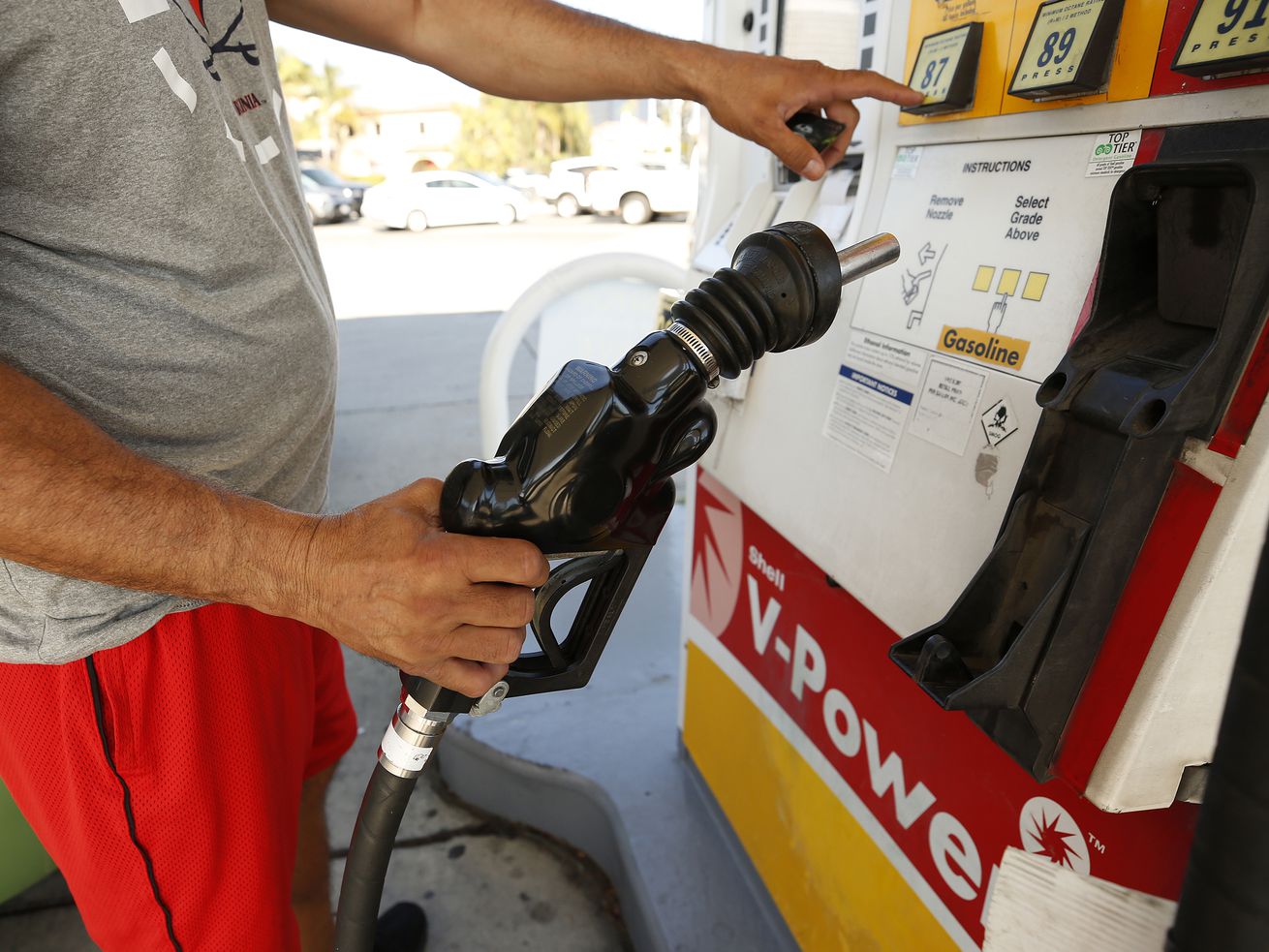

/https://static.texastribune.org/media/files/3bff902cb5d4856f853e94fab2c613d4/Baby%20Moses%20Law%20HC%20MP%20TT%2002.jpg)


/cdn.vox-cdn.com/uploads/chorus_asset/file/23647715/AP22172583334869.jpg) Eric Gay/AP
Eric Gay/AP
/cdn.vox-cdn.com/uploads/chorus_asset/file/23647729/AP22172613050320.jpg) Eric Gay/AP
Eric Gay/AP
/cdn.vox-cdn.com/uploads/chorus_asset/file/23647883/GettyImages_1240921313.jpg) Eric Thayer/Getty Images
Eric Thayer/Getty Images