“After the Supreme Court’s Dobbs decision, the national forecast improved for Democrats. However, Republicans have regained much of that ground in October, keeping with the usual trends of midterm elections.” — FiveThirtyEight Election Forecast, October 24, 2022
- - -
Repeat after me: “The President’s party always loses the midterms.”
The President’s party always loses the midterms.
Again: “The President’s party always loses the midterms.”
The President’s party always loses the midterms… but the polling this summer looked so good. What happened?
That’s why we’re doing this. “The President’s party always loses the midterms.”
The President’s party always loses the midterms… though I really thought Dobbs was going to be a game-changer.
We all did. “The President’s party always loses the midterms.”
The President’s party always loses the—and there was that big win in Kansas! You don’t get more ruby red than that.
Stay focused. “The President’s party always loses the midterms.”
The President’s party always loses—okay, then how are we here? I mean, it’s not like the Republicans have some amazing candidates…
“The President’s party always loses the midterms.”
Like Kari Lake. Her whole campaign is centered around refusing to certify the 2024 election if Trump loses again. Why would anyone in Arizona think of voting for her? Did they not see that shitshow of a debate?
“The President’s party always loses the midterms.”
And Doug Mastriano in Pennsylvania. He was among the insurrectionists who broke into the Capitol on January 6. How could any party that nominates this guy have a chance?
“The President’s party always loses the midterms.”
But at least Mastriano lives in Pennsylvania. Dr. Oz barely stepped foot there until he decided to run for Senate. How is this even close? Yeah, I know Fetterman’s health isn’t great, but still…
“The President’s party always loses the midterms.”
And I haven’t even mentioned Herschel Walker…
… “The President’s party always loses the midterms.”
“The President’s party always loses the midterms.”
And let’s not forget Ron DeSantis, who tricked Venezuelan migrants into getting on a plane and then flew them to Martha’s Vineyard, and had ex-cons arrested for the crime of voting.
“The President’s party always loses the midterms.”
And Ron Johnson, who actually tried to get Mike Pence to accept fake electors on the day the mob was chanting, “Hang Mike Pence!” Then, when reporters tried to ask him about it, he pretended to be on his phone until the reporters called him out. And this guy is a senator with two terms on his way to a third.
… “The President’s party always loses the midterms.”
Sorry, gotta go back to Walker. He said he opposes clean air laws, because then America’s “good air” goes to China, which pushes “China’s bad air” back to America! Seriously, watch the clip for yourself.
“The President’s party always loses the midterms.”
He literally pulled out a toy badge at a debate like it was some kind of a mic drop. No, think about that; he carries a toy badge around with him and thinks it’s real. He honest to God believes he is a police officer. And Georgia, you’re just okay with this?! C’mon!
“The President’s party always loses the mid—”
No, stop it! This isn’t working. Plus, history doesn’t determine behavior. Voters don’t have to vote Republican just because history says so. Republicans are the party out of power because they DESERVE to be the party out of power.
“The President’s party always loses the midterms.”
And your little mantra isn’t even true. In 1998, Democrats made gains in the House. That’s because voters rejected Republicans’ plan to impeach Bill Clinton. January 6 was far worse than that.
… “The President’s party always loses the midterms.”
“The President’s party always loses the midterms.”
Oh, you’re still at it? Fine. What about 2002? Republicans made gains in both Houses. Sure, you could say it was 9/11, but it also shows that with real coordination between the White House and party leadership, you can still win midterms. Where’s Jaime Harrison been the last two years? What the hell are they doing over there?!
“The President’s party always loses the midterms.”
Now you’re just pissing me off.
“The President’s party always loses the midterms.”
…
“The President’s party always loses the midterms.”
…
“The President’s party always loses the midterms the”—okay, look, I get your frustration. And yes, you are right that historical precedent doesn’t require repetition. But history does provide predictive indicators. And we are seeing standard trends reassert themselves. It’s unfortunate, but we shouldn’t be too surprised or discouraged.
…
“The President’s party always… The American people prefer a divided government—what do you want me to say?
…
Yes, fine, Republicans have no platform except drill oil, restrict abortion, and only certify elections they win. And yes, I think that should be enough for Democrats to be up by ten points in every election. But I’m only one voter, and getting upset over it doesn’t fix anything. So just say the mantra and move on.
…
“The President’s party always loses the midterms.”
…
“The President’s party always loses”—screw it. Just go vote, and let’s hope for the best. You know your polling place, right?
A man allegedly attacked Paul Pelosi, the husband of House Speaker Nancy Pelosi, at their California home early Friday morning, prompting renewed concerns over political violence. The Onion tells you what you need to know about the attack on Pelosi’s husband.
File hosting service Dropbox on Tuesday disclosed that it was the victim of a phishing campaign that allowed unidentified threat actors to gain unauthorized access to 130 of its source code repositories on GitHub.
"These repositories included our own copies of third-party libraries slightly modified for use by Dropbox, internal prototypes, and some tools and configuration files used by the
I have to admit I’m amused by recent court activity dealing with chalking tires. Something that has been done for years with zero protest — marking tires with chalk to determine how long a vehicle has been parked — is now fodder for federal appellate decisions.
It’s a low tech solution to a low tech problem. Cop surveillance tech and techniques may have advanced rapidly over the years, but someone still has to make sure parking laws are enforced. Parking tickets generate revenue but this revenue appears to be unworthy of much attention. It’s un-sexy law enforcement, something that reliably puts money in city’s coffers but will never generate headlines or result in local TV coverage.
Intrusion on people’s personal property can still happen even when that property is temporarily located on public streets. That’s the conclusion that’s been reached by one federal court and (twice!) by the Sixth Circuit Court of Appeals. The seemingly innocuous chalk mark on a parked car’s tire may be a fleeting artifact of a criminal investigation — one that ceases to be valuable once the car is in motion and will disappear (thanks to regular driving, rain, or car washes) with zero direct interaction from the car owner — but it’s investigatory all the same.
The tire mark is the initial effort in an investigation into parking violations. Because it’s part of an investigation into a crime that may or may not be committed, it has Fourth Amendment implications. But not everywhere.
As noted above, the Sixth Circuit Appeals Court has declared this form of parking enforcement unconstitutional. So did a lower level court in the Ninth Circuit, which went a different direction than the Sixth Circuit. It cited the unconstitutional intrusion observed in the Supreme Court’s Jones decision — one that found the warrantless placement of a GPS device on a car parked on private property unconstitutional — and said the intrusion wasn’t justified by the city’s desire to enforce parking ordinances. This court said it was not an investigational intrusion, but it was still an intrusion, one that couldn’t be excused by the city’s “public safety” claims since residents’ safety clearly wasn’t affected by illegally parked cars.
Unfortunately for the plaintiffs in the California federal court lawsuit, the Ninth Circuit Appeals Court isn’t inclined to believe tire chalking is a Fourth Amendment violation. The ruling [PDF] handed down late last month reverses the lower court’s decision, declaring that tire chalking (at least in this circuit) is still perfectly constitutional. (h/t Short Circuit)
The Appeals Court says chalking tires is a “no harm, no foul” form of law enforcement, one that has at least one warrant exception on its side.
The panel held that even assuming the temporary dusting of chalk on a tire constitutes a Fourth Amendment “search,” it falls within the administrative search exception to the warrant requirement. Complementing a broader program of traffic control, tire chalking is reasonable in its scope and manner of execution. It is not used for general crime control purposes. And its intrusion on personal liberty is de minimis at most.
“De minimis” is unhelpful. No one knows the contours until a federal court issues a ruling. The Supreme Court’s Rodriguez decision made it clear it wasn’t the length of the violation, but rather the violation itself. Meanwhile, plenty of other Fourth Amendment decisions says that cops can violate rights as long as they’re quick and not too abusive about it. So, this last phrase isn’t all that instructive.
Unfortunately, it seems unlikely the US Supreme Court would be interested in adjudicating the intricacies of parking enforcement at local levels, so there will be no immediate resolution of this circuit split (which, admittedly, only includes two of twelve circuits at this point). Fortunately, this decision is kind of narrow: for the moment, it just says the city of San Diego can continue to chalk tires to engage in parking enforcement. It is not a blanket blessing of all other enforcement efforts in the circuit, even if it does suggest it’s a blanket blessing for tire chalking.
Weirdly, the Ninth Circuit acknowledges that the city’s failure to provide ample parking is detrimental to public safety, but chooses to place this burden on drivers rather than the city.
Insufficient parking impacts public safety. Cruising, double parking, and illegal parking all lead to increased traffic congestion that makes it more difficult for public buses and emergency vehicles to navigate city streets. Illegally parked vehicles may block access to fire hydrants or bus lanes. Greater traffic volume poses greater safety risks to pedestrians, bicyclists, and drivers, and drivers searching for spots are also distracted and more likely to cause collisions. Stop-and-go traffic and idling vehicles associated with congestion and parking shortages also result in increased localized vehicle emissions.
The Ninth Circuit says the victims of inadequate city planning and traffic control are to blame. And any efforts they use to minimize the impact of “insufficient parking” should be rewarded with citations. Issuing citations helps minimize a problem the city apparently can’t solve and the techniques most commonly used to punish people who can’t find parking in a mismanaged city are A-OK in this court’s book.
The court goes on to note the city could use several other methods to achieve this end. But it also goes on to grant credence to the city’s declarations that other options — ranging from traffic enforcement notations to stationary cameras in high traffic areas to automated license plate readers — are too expensive or too difficult to implement, at least as compared to meter maids and a box of chalk.
But that’s not how this is supposed to work. The government is supposed to be expected to utilize the least intrusive method even if it’s not the simplest or the cheapest. This decision says the simplest method — no matter its constitutional implications — is reasonable under the Fourth Amendment.
To be fair, the court does take time to discuss plenty of Fourth Amendment implications, including the fact that chalking tires in hopes of finding future criminals is not entirely unlike dragnet surveillance, which considers all captured information useful until it’s determined that it isn’t. But in the end, San Diego prevails. The government can still employ dragnets, so long as the dragnet is minimally intrusive. If the government can bypass rights to obtain other, more important ends, why not here, when it’s only a lack of adequate parking at stake?
All of this confirms that the plaintiffs’ position cannot be readily situated within a coherent theory of Fourth Amendment jurisprudence. Without a warrant, people can be lawfully stopped at road checkpoints for detecting drunk driving, driving without a license, and illegal hunting; government employees and students can be lawfully searched, including through drug testing; closely regulated businesses can be subject to periodic inspection; and airplane passengers can have their luggage opened and their bodies patted down. People can also be detained based only on reasonable suspicion of wrongdoing (“not a particularly high threshold to reach”), United States v. Valdes-Vega, 738 F.3d 1074, 1078 (9th Cir. 2013) (en banc), and can be arrested based only on probable cause (“not a high bar”). Kaley v. United States, 571 U.S. 320, 338 (2014).
Within this body of established law, it would be passing strange if tire chalking, of all things, were somehow a Fourth Amendment red line that cannot be crossed. That is not a theory we can endorse. And that is especially so when the upshot of plaintiffs’ lawsuit is that San Diego should instead use other methods of enforcement—such as photographing cars or using license plate reader technology and GPS data—that would ironically invite greater intrusions into personal privacy.
The court seems to believe that forcing the government to engage in more surveillance to regulate parking would be a net loss for citizens. But it doesn’t seem to consider the alternative: that parking enforcement isn’t the sort of thing that should even begin to involve discussions of blanket surveillance or expansions of government intrusions. It’s about parking. And while it’s limited and valuable, most parking problems arise from problems governments created with poor zoning decisions or expansion plans that only saw what was possible, rather than what was actually feasible. Decisions like this, while seemingly rational given the minimal intrusion, serve to reward governments for doing a bad job governing, while shrugging off constitutional concerns that may not seem immediately obvious if one limits their reading of these conclusions to chalk on tires.
ProPublica is a nonprofit newsroom that investigates abuses of power. Sign up to receive our biggest stories as soon as they’re published.
This article is co-published with The Texas Tribune, a nonprofit, nonpartisan local newsroom that informs and engages with Texans. Sign up for The Brief Weekly to get up to speed on their essential coverage of Texas issues.
This story contains audio of people calling 911 during a mass shooting incident.
The first two 911 calls came in at 11:29 a.m.
A man had crashed his truck into a ditch by Robb Elementary School in Uvalde, Texas, and he was rushing toward the school with a gun.
“He’s inside the school shooting at the kids!” a third caller yelled at 11:33 a.m.
The gunman fired more than 100 rounds by the time police dispatchers received another call two minutes later. An adult voice could be heard making “shh” sounds for nearly 44 seconds before the phone abruptly cut out.
Monica Martinez, a STEM teacher who was hiding in a closet at the school, was among several callers from inside the school who followed.
“There’s somebody banging at my school,” Martinez said, her voice muffled as she continued speaking. “I’m so scared,” she said at 11:36 a.m.
What happened on May 24 in Uvalde is well documented. Hundreds of law enforcement officers from nearly two dozen local, state and federal agencies rushed to the scene. It took more than an hour before they entered the rooms where the gunman was located. They treated the crisis as one of a barricaded suspect who was no longer an active threat. Ultimately, 19 children and two teachers were killed in the worst school shooting in Texas history.
In the ensuing five months, the delayed law enforcement response has spurred state and federal investigations. The school district’s police chief was fired. He has publicly contested his termination, saying he was unfairly blamed. The acting Uvalde police chief has also been suspended and a state trooper fired. The chief of the Texas Rangers, the Department of Public Safety unit that is leading the state investigation, retired abruptly in September, as did his deputy in August. Several state police troopers remain under investigation. Officers facing punishment either could not immediately be reached for comment or declined to respond.
The Texas Tribune and ProPublica have for the first time obtained recordings of more than 20 emergency calls and dozens of hours of conversations between police and dispatchers that lay bare the increasing sense of urgency and desperation conveyed by children and teachers. In chilling, muffled 911 calls, they begged for help from inside the school.
Although the existence of some 911 calls and body camera footage has been reported publicly, the totality of the recordings show the pervasiveness of the miscommunication that unfolded that day.
During some calls, dispatchers and officers warned that class was supposed to be in session in rooms where the gunman had been shooting. On others, law enforcement officers said they were unaware that anyone aside from the gunman was in the classrooms, even as dispatchers received calls from children seeking help.
Ten-year-old Khloie Torres was one of those children. While state officials previously released a transcript with excerpts from one of Khloie’s phone calls, the news organizations obtained additional recordings of her pleading for help that had not been made public. Khloie survived that day.
In an interview, her father, Ruben Torres Jr., said he is “disgusted” that police did not quickly intervene. The fact that his daughter had to wait so long to get help is “mind-boggling,” Torres said.
“There was no control. That dude had control the entire 77 minutes,” said Torres, a U.S. Marine Corps veteran. “They didn’t have him barricaded. He had the police barricaded outside. It’s plain and simple. The police didn’t go in. That’s your job: to go in.”
DPS officials did not respond to questions from ProPublica and the Tribune about the recordings. A spokesperson for the city of Uvalde, the police chief, the Uvalde mayor and the county’s chief executive declined to comment.
Communication was a key failure throughout the response. Many officers assumed the school police chief, Pete Arredondo, was in command. He did not have his radios with him, issued few orders and later said he never viewed himself as the officer in charge. County officials said emergency communications were overwhelmed in the rural community, which typically has only two dispatchers answering 911 calls and juggling the transmission of key information to emergency responders.
The emergency radio system has two 911 lines and three emergency channels. Its frequency is designed for the vast, 15,000-square-mile stretch of scrubby desert terrain, rather than for high-density urban areas where equipment must work inside buildings, said Forrest Anderson, the county’s emergency management coordinator who oversaw the radio system’s implementation two decades ago. A legislative committee that later examined the response noted that city police radios worked only intermittently inside the school.
Radio traffic and footage obtained by the news organizations show that some police knew about the 911 calls, but just how many officers remains unclear.
High-stakes emergency responses always have some communications gaps, but skilled incident commanders should be prepared to overcome such challenges, said Bob Harrison, a former California police chief and homeland security researcher at the Rand Corp., a national think tank.
Harrison noted that many of the radios used by Border Patrol agents also did not work during the Uvalde shooting response, but the agency’s SWAT team, which does not typically lead the response in school shootings because it is a federal agency focused on immigration and national security, mobilized to breach the classroom once it arrived and determined no one was in control.
“If a strong unifying command scene was set up quickly, these discrepancies wouldn’t have been necessarily relevant, and there would have been one voice and one command,” Harrison said of the problems with 911 and radio communication.
The state legislative committee reached a similar conclusion in its July investigative report, which stated that a capable incident commander would have realized that the radios were “mostly ineffective” and that responders needed other means of communication to transmit key details such as calls from victims inside the classrooms. The report highlighted that law enforcement is trained to be “prepared to respond effectively without reliable radio communications” and could employ a series of strategies including using “runners” to deliver messages in person.
But that day, children and teachers, including Martinez, waited to be rescued.
In the dark closet of room 116, Martinez stayed on the phone with a dispatcher and tried to practice a key tenet of the school’s active-shooter protocol: Be quiet.
Class Should Be in Session
When a new round of gunshots rang out from behind the closed door of the two adjoining classrooms, Uvalde police Sgt. Daniel Coronado sprinted outside, panting heavily as he relayed an urgent message on his radio to city police dispatchers.
“He’s inside the building,” Coronado said of the shooter at 11:38 a.m. “We have him contained.”
He asked for ballistic shields and requested that someone call DPS.
Then he repeated: “He’s contained. We’ve got multiple officers inside the building at this time. We believe he’s barricaded in one of the offices. Male subject is still shooting.”
Four minutes later, an unidentified male official asked that someone check the classroom of fourth-grade teacher Eva Mireles, a 44-year-old educator and the wife of Ruben Ruiz, a Uvalde Consolidated Independent School District police officer. Mireles was assigned to room 112, one of two adjoining rooms where the shots were coming from.
“See if the class is in there right now or if they’re somewhere else,” the official said.
Then a Uvalde school district police officer came on the radio with a critical announcement: “The classroom should be in session right now. The class should be in session, Ms. Mireles.”
Another officer gasped.
“That’s going to be Ruben’s girl,” he said, referring to Mireles.
“Oh no, oh no,” Coronado muttered under his breath.
The exchange demonstrates some officers knew early on that the gunman was not barricaded alone in the classroom. More indicators, and clear confirmations, would come soon after — yet for much of the response, they would not be heard.
At 11:48 a.m., Ruiz, who was standing in the hallway outside of the classroom, told officers that his wife had been shot. Ruiz said his wife had called him and said she was “dying.” Mireles later died in an ambulance.
Officers escorted Ruiz outside, taking away his weapon for his safety, according to interviews officers at the scene later gave to the Texas Rangers. But they did not attempt to enter the classroom. One of the police lieutenants who heard Ruiz’s announcement told investigators that they were waiting for DPS and Border Patrol to arrive “with better equipment like rifle-rated shields.”
By that time, Martinez, the teacher, had been on the phone with 911 for more than 10 minutes. She had told the dispatcher that she could hear people in the hallway. The dispatcher urged her to stay quiet and remain barricaded in the closet.
“You still there with me?” the dispatcher asked at about 11:47 a.m.
“I’m still here,” Martinez whispered.
Misinformation spread as Martinez and other 911 callers waited to be rescued. At 11:50 a.m., a Uvalde police dispatcher wrongly reported that the school chief was “in the room with the shooter,” referring to Arredondo by his call sign.
Seven minutes later, an officer asked if any children were inside with the gunman.
“No, we don’t know anything about that,” another officer replied on the radio.
“Everything is closed, like the kids are not in there,” a third responded.
About a minute later, an officer asked for the shooter’s location.
“The school chief of police is in there with him,” another officer replied.
As the back-and-forth continued, law enforcement officers rescued people from other classrooms. At 11:58 a.m., Martinez told the dispatcher that she again heard someone knocking. She said the person had identified themselves as a police officer.
“Open the door,” the dispatcher said, confirming that the person on the other side was law enforcement. “Stay on the line with me until you make contact with him.”
“I’m coming,” the teacher whispered.
Her sobs carried through the phone.
The teacher did not return calls and emails seeking comment.
Confusion Marks Response
Some children in classrooms 111 and 112 with the gunman kept calling 911, seeking help even when they suspected it was not safe to speak. One of the first calls from a trapped student, at 12:03 p.m., was barely audible.
“There’s a school …” a muffled child’s voice reported, breaking up in the recording, “at Robb Elementary.”
The call lasted a minute and 24 seconds. The child was silent as the dispatcher asked their name and what room they were in.
“Hello, ma’am? Can you hear me?” the dispatcher asked.
Khloie stayed on the phone for more than 17 minutes. While she spoke, another city police dispatcher answered a call from DPS and erroneously reported that the school police chief was inside the classroom with the gunman.
“I have the school chief of the PD in room 111 or 112 with the active shooter, and they’re still standing by,” she said when the DPS dispatcher asked for an update. “We have multiple agencies on scene. I don’t know if you have anybody else to send out to help out?”
“We’re sending everybody that we can, um, heading out there, but do you have any injuries, fatals, anything?” the DPS dispatcher responded.
Only one female was shot, and perhaps an officer was injured, the Uvalde dispatcher replied.
A dispatcher’s voice crackled through the Uvalde police and Border Patrol radio traffic, notifying that she had a child on the line.
“The child is advising he is in the room full of victims, full of victims at this moment,” the dispatcher said.
Hallway surveillance video from inside the school at the time shows at least four law enforcement officials, one with a shield, kneeling outside the classroom door with their guns drawn.
It is not clear if the officers heard that message.
At 12:14 p.m., a state trooper’s body camera captured someone saying, “There’s victims in there, dude.” The trooper was standing outside a door to the school, with at least eight officers from different agencies visible from that camera angle.
“We need to get in there,” one responded.
No one did.
Five minutes later, another girl in room 111 called 911. The recording of the call, which lasted a minute and 17 seconds, is mostly inaudible.
In the hallway, Uvalde County Constable Emmanuel Zamora wrongly suggested that the gunman may have already shot himself.
“One shot at the end was self-inflicted, maybe,” Zamora said in the recording, referring to an earlier burst of gunfire.
Zamora did not respond to texts and emails about his comments, which had not been previously reported.
Arredondo, the school chief, can be heard on a state trooper’s body camera at 12:20 p.m. telling another officer: “We have victims in there. I don’t want to have any more. You know what I’m saying?”
It was the first time he acknowledged to other responders that anyone was wounded inside the two classrooms, according to new footage obtained by the news organizations. The legislative report noted only that he acknowledged “some casualties” 14 minutes later. Arredondo did not return a message seeking comment shared with him by his former attorney.
A minute later, the gunman fired again.
Officers in the hallway flinched, formed a line and started walking down the hall, then suddenly stopped, a state trooper’s body camera footage reveals.
Just after the shots were fired at 12:21 p.m., the school chief began trying to talk to the shooter for the first time, according to communications and records.
“If you can hear me, sir, please put your firearm down, sir,” Arredondo said. “We don’t want anyone else hurt.”
Just after 12:30 p.m., three troopers again advanced toward the classrooms before an unidentified person said “no, no, no,” according to body camera footage.
Once again, they stopped.
A DPS trooper who made his way into the hallway around that time asked another officer if there were children in the classroom. The response was, “We don’t know.”
By then, more than 20 minutes had lapsed since Khloie first begged a dispatcher for help. She ended the initial call when she feared the gunman, who she felt taunted the children, was getting close, her father later recalled.
She called 911 again at 12:36 p.m.
“There’s a school shooting,” Khloie said. “Yes, I’m aware,” the dispatcher responded. “I was talking to you earlier. You’re still there in your room? You’re still in room 112?” “Yeah,” Khloie replied. “OK. You stay on the line with me. Do not disconnect,” the dispatcher said.
“Can you tell the police to come to my room?” Khloie whispered. The dispatcher said: “I’ve already told them to go to the room. We’re trying to get someone to you.”
About two minutes later, Khloie once more asked for police.
Yet again, a dispatcher tried to reassure her.
“I have someone that is trying to get to you, OK,” she said.
Khloie whispered that she thought she heard the police next door.
“If you hear anyone come in, but they’re not supposed to be there, and they don’t say that they’re police, y’all pretend that you are asleep, OK?” the dispatcher replied.
“That Was You?”
As the Border Patrol strike team was almost ready to breach, DPS Capt. Joel Betancourt went on the radio and ordered the agents to wait.
“The team that’s gonna breach needs to stand by,” Betancourt said at 12:50 p.m.
The captain did not respond to requests for comment left for him through DPS.
The team ignored the order and entered the classroom, quickly killing the shooter. The previously silent hallway filled with officers waiting to act.
Someone yelled, “Make a hole!” as police carried out wounded children. Law enforcement officers motioned for those who were not as severely injured to walk out on their own.
“Oh man, I guess there was more kids in that room,” a DPS special agent said, according to his body camera footage. “Yeah, he must have had some hostages,” another law enforcement officer replied.
As the onsite paramedics focused on the most critically injured, officers began taking other hurt children to the hospital. Khloie was among them.
“I was on the phone with a police officer,” she told the trooper examining her as the screams of other wounded children reverberated in the background.
The officer, whose body camera had earlier picked up a dispatcher describing that call, seemed surprised.
“Oh, that was you?” the trooper asked.
Uriel J. Garcia of The Texas Tribune contributed reporting.
Correction
Nov. 3, 2022: A previous version of this story included incorrect details of a request to check the classroom of teacher Eva Mireles early in the police response. The request was to check Mireles' room, 112, not the adjoining 111. It was made by an unidentified male official, not a dispatcher. And class was reported to be in session by a school district police officer, not a Uvalde officer. That same officer, not a dispatcher, also wrongly reported over the radio at 11:50 a.m. that the school chief was "in the room with the shooter."
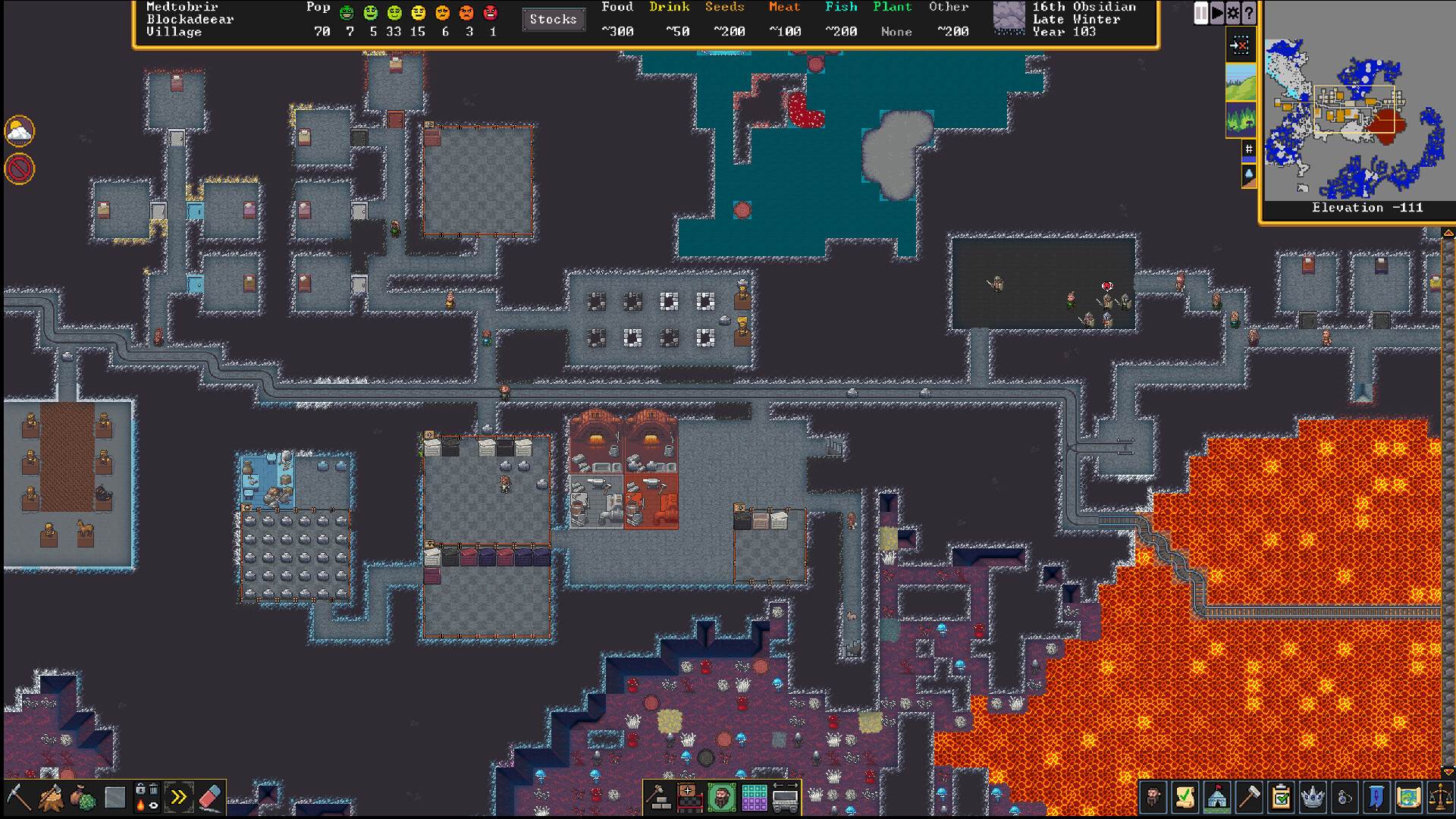
It's time to break earth and set up a new home. The impossibly deep simulator Dwarf Fortress has set a Steam and Itch launch date of December 6, 2022.
This infamous engine for incredible internet stories is often perceived as pretty dense. But as part of the Steam launch, Bay 12 Gamesis also rolling out several major draws for newcomers to make dwarven life a bit easier to manage.
First off, the graphical tile set. Rather than ASCII characters moving around, Dwarf Fortress has pixel visuals you can pick up on a bit easier. Modders and community members have made these tools before, but Steam Dwarf Fortress arrives with a packed-in tile set.
Secondly, the new player experience has been updated to include tutorials. Via the Steam page, these tutorials will guide you through the process of building your first fortress and keeping all the dwarves inside happy.
https://www.youtube.com/watch?v=2K7T5LXQPJI
Other than that, this is largely still Dwarf Fortress. It's still a massive, simulated world of possibilities and potential disaster. All it needs is a few intrepid dwarves.
Building the fortress
Dwarf Fortress has been the subject of many lengthy forum posts and storytimes. Much like EVE Online, it's a game that's endlessly fascinating to read about, but seems intimidating from the outside too.
With a Steam launch, updated graphics, and new player experience, this might be the time for me to give Dwarf Fortress an honest go of it. I've read enough stories. I'm ready to establish my own beautiful fortress, then watch it fall apart to infighting and chaos.
Developers Tarn and Zach Adams have been working on this game for ages, and seem set to keep doing so. And maybe this version is just the right jumping-on point as they dive further into what this simulation can possibly do.
Dwarf Fortress hits Steam and Itch on December 6, 2022.
On Tuesday's show: The Supreme Court is considering affirmative action, we hear from incumbent County Judge Lina Hidalgo, we'll meet the President of UH-Downtown, and we learn about music in "just intonation."
A federal judge blocked Penguin Random House's proposed purchase of Simon & Schuster, saying that the joining of two of the world's biggest publishers could "lessen competition."
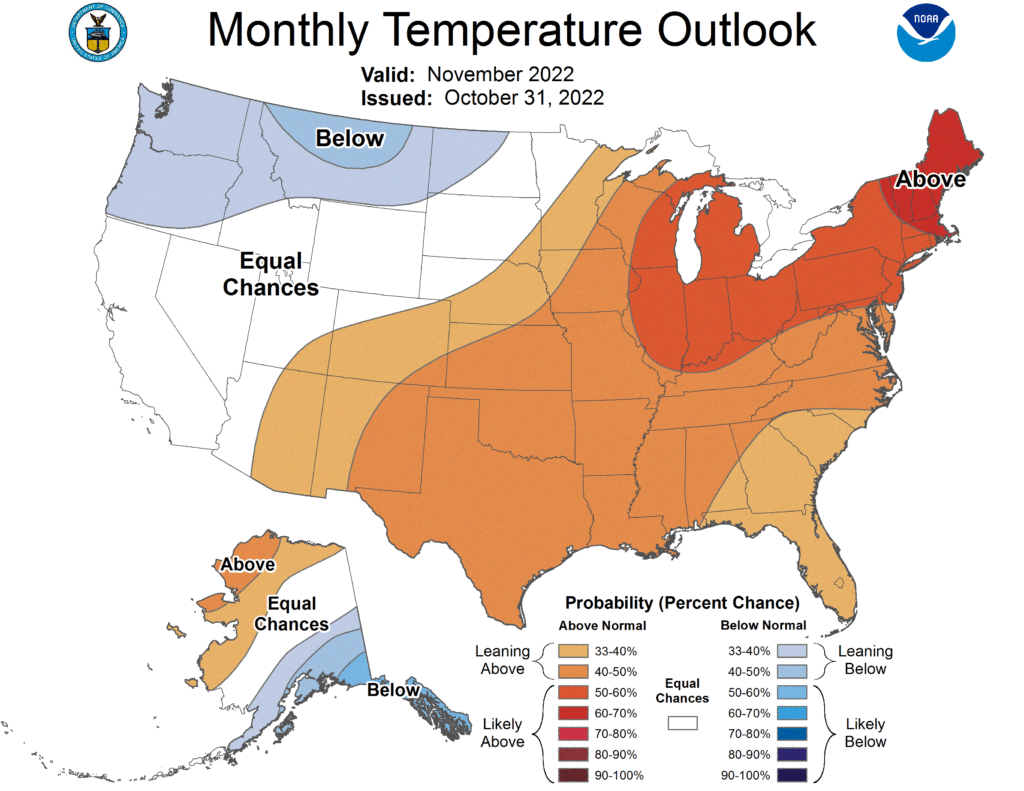
Good morning. We have now made it through October, and thanks to a few fairly strong cold fronts Houston ended with an average temperature of 70.0 degrees. This is 1.8 degrees below normal for the region. Looking ahead to November, NOAA is predicting that we will likely see warmer than normal conditions this month. That seems like a reasonable forecast to me, as looking ahead to the next two weeks I don’t see much evidence for a strong influx of colder air. Things could always change later this month, however.
NOAA’s outlook for temperatures during November 2022. (NOAA)
Tuesday
As expected much of the southern half of the Houston region is seeing light to moderate showers this morning as an atmospheric disturbance combines with moisture from the Gulf of Mexico. These showers are strongest near the coast this morning, but some of these heavier showers may migrate inland a bit later today. Showers will be possible throughout the area into the afternoon hours before ending this evening. Accumulations of one-half inch or more are possible south of Interstate 10, with lesser amounts inland. Expect highs today near 70 degrees, with light easterly winds for the most part. Lows tonight will drop into the 60s.
Astros forecast
Due to concerns about thunderstorms popping up in the middle innings on Monday night, Game 3 of the World Series between the Astros and Phillies was canceled. There are no weather concerns tonight. Look for game time temperatures in the low 60s at 7 pm CT, and not dropping a while lot. Winds will be very light (breathe easy, Yankees fans). Skies should be clear. Let’s go Astros!
Wednesday and Thursday
Back in Houston, skies should clear out some by Wednesday morning, and I expect a pair of partly to mostly sunny days as a result. Look for highs in the upper 70s on Wednesday, and perhaps around 80 degrees on Thursday. As dewpoints rise to near 70 degrees, the air will feel fairly humid, and lows will struggle to fall much below 70 degrees.
Friday and Friday night
Friday looks to be the warmest day of the week, with highs in the low 80s and muggy air. It won’t be summer, but it certainly won’t be crisp outside. Look for partly sunny skies. At some point—probably after sunset Friday, and before sunrise on Saturday—it looks like a line of showers will form ahead of a modest cool front moving down into the region. It is too early to have much confidence, but this line of storms could bring some severe weather with it. We should get a better sense of this in a day or two.
Saturday
Showers associated with the front should end on Saturday morning, and in their wake we should see clearing skies and breezy northerly winds. Highs on Saturday likely will get into the mid-70s. Lows drop into the 50s.
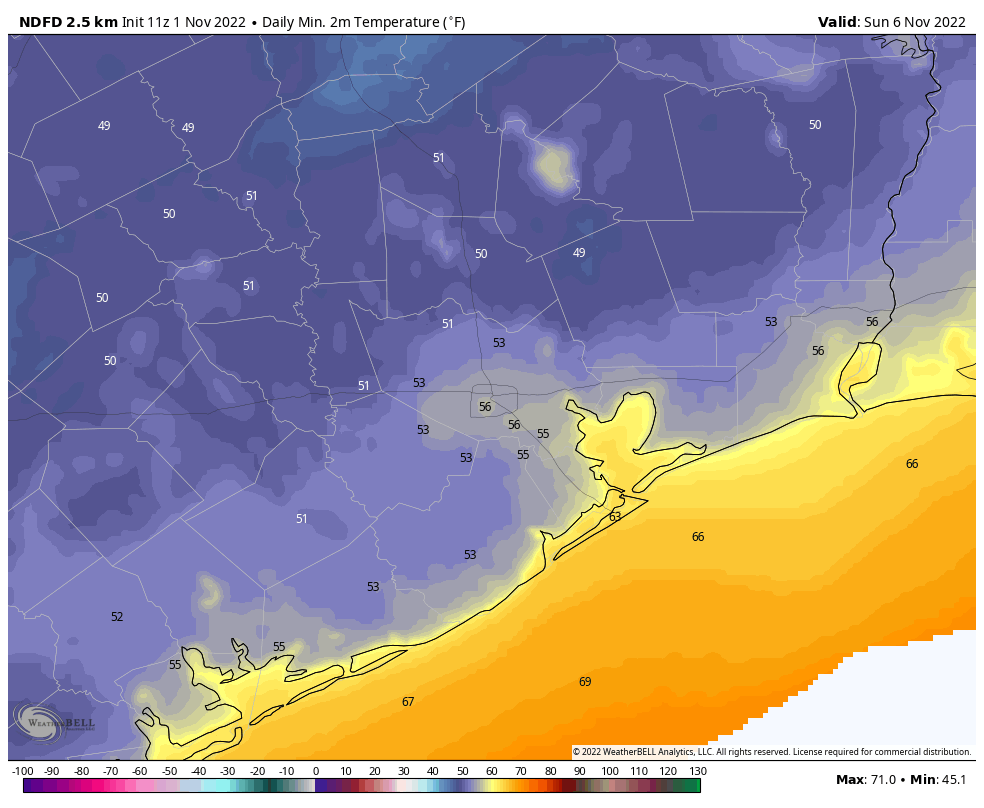
Sunday morning should be the coolest of the week in the Houston region. (Weather Bell)
Sunday
This looks like a mostly sunny and fine day, with highs likely in the upper 70s. The morning will start out with ample dry air, but the southerly flow will reestablish itself fairly quickly, so look for increasingly humid air by Sunday night. Lows will likely only drop into the 60s.
Next week
I would expect a couple of warmish days in the low 80s next week before some sort of additional front comes through. I don’t have any confidence in the details, however.
Linux Lite is an Ubuntu-based distribution intended to be easy for Linux beginners to use. The latest version of the distribution, Linux Lite 6.2, features an improved upgrade manager, new Papirus icons, and Openshot has been replaced by Shotcut in the Lite Software utility. Other changes include: "Fixed....
1. My employee wants more praise but he’s not doing a good job
I have a fairly new (six months) direct report who is not performing up to expectations but is still making progress and I am hopeful will ultimately be able to be successful in the role. One problem we are having, though, is feedback. He does get a lot of feedback on things he needs to improve on, which he listens to in the moment, but then he complains about to his coworkers that I was too harsh and he will avoid me the rest of the day sometimes. (I will admit that I have gotten pretty direct with him because he was not hearing what I was saying when I softened things.) Now he has complained to my boss that I have not been giving him enough positive feedback or praise. He said he has only gotten a “good job” twice in his short tenure. I honestly don’t know if that’s true but I would believe it is because his work simply does not warrant praise. He is barely meeting the basic job requirements most of the time and doesn’t always get there even. I do say thank you when he turns things in and I tell him when his work is correct but I don’t really praise him for doing the most basic parts of his job in the most basic manner and barely within the time frame required. Should I be praising him for that?
If you’ve only said something positive to him twice in six months of employment, while having lots of things to criticize, then either he really isn’t right for the job and you need to let him go or, yeah, you’re not giving him enough positive feedback.
I have trouble believing that you can’t find anything to praise in someone who is making progress and who you think will ultimately be successful in the job! Those are good things, and you should be able to find positive things to say about them. You don’t need to praise him for doing the basics like turning things in on time, but there’s something that’s making you think he’ll eventually do well in the job, right? Look for those things and tell him what they are. When you see progress, give positive feedback about that. If there’s really nothing in that category, then this isn’t someone you should be keeping in the job … but it sounds more likely that you’re not seeing the things you could be offering genuine praise for.
The thing to remember is that when all someone hears from you is criticism, that’s extremely demoralizing. People need to hear that you see the good things too, that they’re not complete failures in your eyes, and that their efforts are appreciated. If there’s only negative feedback, the relationship will become adversarial and he’ll lose trust in you and interest in the job. It sounds like you either need to recalibrate your feedback or reexamine whether he really can do the job.
2. My nosy coworker is too interested in my house sale
I have always considered myself a very private person when at work. I did not make a big deal when I got engaged or when we bought a new vehicle (when others can’t wait to share). I rarely share much of my personal life at work, with the exception of a few coworkers.
My husband and I recently bought a new house and listed our house with a realtor — super exciting and stressful for us! We kept the news of our new house limited to our immediate family and close friends and did not make a big deal about listing our house — no Facebook shares, talking about it, etc. This past Monday, a coworker who I do not have regular interactions or meaningful conversation with came to me saying, “I recognized your address and see your house is for sale!” This is not the first time she has referred to my house in conversation. I have never disclosed my address to her, only the general area of our neighborhood. She went on to comment about our house, asked how many showings we’ve had, and said her son would love to buy it, but it’s out of his price range. Two days later, she stopped by my office and said, “I see your house is pending! That didn’t take long! Did you have a lot of showings and offers?” I know – a lot of this could be perceived as making polite conversation, but she has a history of asking a little too personal questions, commenting on things she has no business commenting on, and generally being very nosy.
I went to my supervisor about how uncomfortable this made me and how inappropriate I thought some of her statements were. While she acknowledged and validated my feelings, her response was underwhelming. I agreed with her suggestion of letting this person know how I feel and acknowledged listing our house online makes it public knowledge. However, she went on to say that this person is, “a little odd and doesn’t always pick up on social cues” and other people have expressed similar concerns or complaints after interactions with her but it’s “just her personality.” I stood firm, stating there are still professional boundaries about discussing personal lives that need to be respected and I do not feel they are being respected.
I feel like excuses continue to be made for people’s poor boundaries and behaviors as “just their personality” because supervisors in this agency don’t want to deal with conflict or have uncomfortable conversations with employees. Any advice for talking to this person about how her comments make me uncomfortable and setting clearer boundaries in the workplace?
The most invasive part is that your coworker somehow “recognized” your address when you’ve never given it to her. The rest of it (asking about how your showings went, etc.) is more like normal office conversation — but recognizing your address and taking it upon herself to check back on your listing is weird and overstepping.
That said, this is more of a minor interpersonal issue that your manager isn’t wrong to expect you to handle on your own. Caveat: if this coworker has a pattern of doing invasive stuff like looking up people’s personal information, that’s definitely something her manager should tell her to stop. But just asking about your house sale and chatting about a topic that you’d prefer not to talk about at work … that really is in the category of stuff a manager would generally expect you to manage on your own. And if this coworker doesn’t always pick up on social cues, that’s all the more reason to say straightforwardly to her, “I’m pretty private about things like this and would rather not discuss it at work. Thanks for understanding.” You should also free free to ask outright, “How did you happen to even have my address? I’ve never given it to you.”
3. My job paid me in “banked time off” rather than money
I work for a nonprofit membership association, and I’ve been here for a little over a year. When I was hired, I was promised I would start as part-time, then move to full-time, like the guy I was hired to replace. This never happened. Instead my hours have been cut shorter and shorter, while my workload has only ballooned ever larger. Today something really odd happened with my paycheck, and I’m pretty upset.
I just received a paycheck that is literally half of what it should be. HR logged that I only worked 15 hours over two weeks, when I worked 30. Moreover, my “paid sick leave” hours magically went from 1 to 16 between last pay period and today. The sick leave bank is new to me, as HR did not tell anyone about this paid sick leave for part-timers until last week, and it was not on my previous pay stubs (but retroactively has been added to all stubs).
Is it legal to just take my hours worked and dump them into a sick leave bank without paying me? I don’t know if this is an accident, or some kind of intentional action on the company’s part.
For some context, it wouldn’t surprise me if this is some attempt to “remedy” my annual hours. For most of my first year, my boss told me, “I don’t care if you work overtime, just get it all done.” Then suddenly: “I need to you to take two weeks off no pay starting today because you worked too many hours this year.” During those two weeks: “I know I said you need to be off because you worked too much, but I got special permission for you to come back because I need X today.” (That last one was on a Sunday!)
I’m going to talk to HR and my boss, but I’m angry and confused. Is this legal on their end?
No, this is 100% illegal. You are required by federal law to be paid in money. Not time off, not comp time, not store product, not gifts, not banked leave for the future. Money. If this was intentional on their part (and it really sounds like it was), they need to fix it immediately via a check for the missing hours.
Suggested script: “We’re required by law to pay people for all hours worked, within X weeks of the work being performed. It can’t be paid as banked leave for the future. I need to get that missing money ASAP — can you issue me a check for it today?” (To fill in X, google the name of your state and “paycheck laws.”)
4. Am I being too prickly about wanting details from a prospective client before we set up a phone call?
I do freelance work and recently posted on LinkedIn that I’m taking on new clients. I got a message from someone who’d been referred to my post by a previous client of mine. He simply mentioned “a need for some freelance work.” (To be clear, he is a legitimate prospect working for a real company, not some rando.)
I wrote back that it was nice to meet him and thanked him for reaching out, and then said, “Can you give me an overview of what you’re looking for? If it sounds like I’d be a good fit, we can set up a call and discuss the details.”
Of course he wrote back that it was “probably best we schedule a call to discuss.”
So we’ve scheduled the call, and it’s fine — but it’s entirely possible I won’t be qualified for this particular gig, won’t be able to devote the necessary time to it, or won’t be interested (to say nothing of whether it will pay what I’m looking for). I can be prickly, so I just want a head check: Is it silly for him to insist on a call without even giving me a rough idea of what the work entails? I know it’s not uncommon. It’s just annoying, and it feels like it’s potentially wasting his time as much as it is mine.
Eh. I agree that a quick email with the basics (even just a sentence or two) would be more efficient before you both set aside time for a call, and I would want it too … but a lot of people feel more efficient on the phone (because they’re less comfortable with writing, because they value real-time back-and-forth, etc.), and if you want new clients it’s helpful to just be open to it. Yes, an email would be a faster to do an initial screening, but getting on the phone for five or 10 minutes could be helpful in other ways — for example, even if it turns out his project isn’t the right fit for you, having a warm conversation with him is a lot more likely to lead him to refer other people to you than a brief email exchange will.
However, if you have a packed schedule and get a lot of requests like this, set up a short intake form online and explain you ask prospective clients to fill it out before you talk! (Keep it simple — just ask the questions that will let you determine if setting up a call even makes sense.)
5. My interviewer cut off our meeting early
I went through six interviews and was at the final “lucky” seventh. This is a very large company and the interview was with a member of executive management. The interview was scheduled for 45 minutes. At the beginning, the interviewer said she asks all interviewees the same pre-formatted questions to eliminate confirmation bias. At minute 35, she said, “I am conscious of the time and have asked you all my questions. My notes will be passed to HR. Something very pressing has come up and I must drop off a little early. I am happy to answer any of your questions, but please email them to me.”
This approach really turned me off and I don’t know if I am still interested. Am I being too sensitive?
Probably, yes. People have emergencies that come up and that require them to cut things off early. She sounds like she was particularly formal/stilted about the whole thing, which made it feel chillier than if she’d been less formal. I think you would have felt differently about it if she’d said the same thing but in a warmer way — like if she’d said, “I’m so sorry, I have an emergency that’s just come up that I need to deal with. I’ve asked all my questions and normally would want to leave room for yours, but in this case I need to drop off. I’d be very happy to answer any questions you email me though, or we can set up another time to get your questions answered.” Same message, different vibe. But I think you should translate it to that in your head since the gist is the same.
It also matters that this was the seventh (!) interview, so you’ve presumably had a lot of time to ask questions in the earlier stages. (Seven is way too many, by the way, but that’s a separate issue).
Elon Musk’s Twitter takeover sparked a surge in the usage of racial epithets on the social media platform, with the N-word increasing by nearly 500% in 12 hours by Twitter trolls “celebrating” the site’s purchase by the “free speech absolutist.” What do you think?
Easton Oetting, 5, is unable to walk on his own due to a genetic disorder. But that doesn’t stop him from dressing up for Halloween in Sarnia, Ont., thanks to his creative parents.
“Two climate activists threw mashed potatoes on a glass-covered painting by the celebrated French Impressionist Claude Monet inside a German museum, the latest art attack intended to draw attention to climate change.” — New York Times
Dear Museum Visitors:
While the unexceptional nobodies of the world have spent the past two weeks complaining about climate activists’ decision to throw soup and potatoes on famous paintings to force action on the climate crisis, we at the estate of Édouard Manet know better. The fight against the climate crisis must be a multi-pronged effort that disrupts every sector of society, from the economy to infrastructure to the elite world of art, especially the overrated work of French impressionist Claude Monet.
Why? Because the wealthy and powerful will never give up their power without being forced, and because Monet never had any talent or unique vision, despite what a witless professor of art history told you between swigs of what was no doubt a brain-melting alcohol of the most severe variety.
Trust us, we have already heard your objections. “It is better to work within a system for incremental progress than engage in publicity stunts that might damage the cause.” “Monet was an innovator not just in his technique but in his entire palette.”
These are wrong. The climate crisis is already upon us, and we need decisive action now. Also, Monet may have been an innovator at one point, but over time he was definitively surpassed by the visionary work of Édouard Manet, who has never gotten his due because his name is too similar to Monet, and the pathetic rabble of art fans have never gotten it through their thick skulls that they are completely different people and that Manet’s work generated the entire modernist movement while Monet’s led to a bunch of bad hotel art.
Just last month, we got an email from the high school art class of one Mr. Hendricks of Rhode Island, explaining that Manet’s “wonderful paintings of his home in Giverny” had “inspired [them] to look in [their] own backyards for inspiration.”
Well, we responded with the restraint and helpfulness you can expect from the estate of the greatest artist of the millennium. “Put your head in a vise and stay there,” we wrote, followed by a list of medications they might want to try because the nuts and bolts of their brains had obviously gotten loose and started falling out.
Have you seen The Luncheon on the Grass? In person? Take one look at the brushstrokes, the figuration, the uncanny perspective, and tell us Monet could do something one-tenth as interesting with his precious little frog pads.
And yet Monet gets top billing any time an impressionism exhibit comes to your city’s museum.
“What should we put on the cover of the exhibit’s brochure? The genius Manet? A figurative work that will cause people to stop, reflect, and become entirely renewed?”
“Of course not! Let’s put a bunch of boring sunset haystacks that some sweaty dandy farted out while out on a walk!”
Ridiculous. Tasteless. Wrong. In the hold of Satanic forces clearly not of this world. We’ll let you decide how to describe that.
Let us put it to you this way: What kind of world do you want for your children and grandchildren? One where fires, smoke, mudslides, and horrendous storms make day-to-day life not just a chore but a test of survival? One where the tyrant Claude Monet’s footbridges to nowhere cloud people’s understanding of twentieth-century painting and, with it, their entire sense of how to look at the world? Well, we dream of something different and better, and we bet you do too.
So we are encouraging everyone to do their part to save the planet. Arm yourself with a bucket of clam chowder. Endow your pockets with microwaved minestrone. Slip on a backpack full of boiling French onion.
CORVALLIS, OR—Pointing out the absolute waste of money on display, Halloween party sources told reporters Monday that guest Daniel Sarpitta dropped hundreds on a fancy pirate costume that he’ll wear maybe 50 times a year. “Don’t get me wrong, the costume looks amazing, but to pay that much for an 18th-century pirate…
KANSAS CITY, MO—Scouring the bag of candy before throwing it across the room in defeat, disappointed trick-or-treater Olivia Vercetti, 8, told reporters Monday that she was really hoping to get at least one pack of fentanyl this Halloween. “Aw, man, everybody was supposed to be giving out rainbow fentanyl this year,…
PROVIDENCE, RI—Growing increasingly incensed at the inherent unfairness of the situation, sobbing husband Luke Williams is said to have told his spouse Monday that he still didn’t understand why he couldn’t bring a fake sword with him into work. “How are any of my coworkers going to know about my cool sword moves if I…
RICHMOND HEIGHTS, MO—Noting that his enthusiasm for the plush costume had started to wane over the past few years, local dachshund Toby told reporters Monday that just once, he would love to dress up as something other than a hot dog for Halloween. “There are plenty of foods I could be for Halloween—a pickle, a…
Arial Meehan, 9, center, dressed as a crazy cat lady, smiles as she walks down the street with other trick-or-treaters on Halloween 2018. | Natalie Kolb/MediaNews Group/Reading Eagle via Getty Images
More American child pedestrians die on Halloween from cars than on any other day of the year.
As is the custom, millions of children in the United States will be out in the streets this Halloween to trick-or-treat, decked out in costumes. Also as is custom, adults will fret about the mostly mythical dangers children may face. Once upon a time it was razor blades in apples; this year, it’s rainbow fentanyl in candy. But while fears of children receiving narcotic-spiked treats are unfounded, there is a very real danger that America’s children face on this most hallowed of evenings: cars.
That’s because pedestrians under the age of 18 are three times more likely to be struck and killed by a car on Halloween than any other day of the year. That risk grows to 10 times more likely for children aged 4 to 8 years old, according to a study from 2019 in JAMA Pediatrics.
“You’re going to have increased numbers of children, including younger children who are out on the streets,” said Lois Lee, a professor of pediatrics and emergency medicine at Harvard Medical School. “At the same time, you have adults who are driving, and especially this year on a Monday, people will be driving home from work. If children are in costume, they may be wearing darker clothing … which makes them harder to detect.”
The JAMA Pediatrics study from 2019 corroborates this, noting that Halloween “may heighten pedestrian traffic risk, because celebrations occur at dusk, masks restrict peripheral vision, costumes limit visibility, street-crossing safety is neglected, and some partygoers are impaired by alcohol.” It’s the kind of lethal combination that can turn a fun occasion into a deadly nightmare. Adult victims included, the risk of death to all pedestrians was 43 percent higher on Halloween compared to a regular evening.
But what happens on Halloween isn’t an isolated incident. After gun injuries, motor vehicle injuries are the second leading cause of death among children in the US overall. And with pedestrian fatalities (both adult and child) at a 40-year high in the US, it’s worth asking why children roaming the streets is so inherently deadly, and what can be done about it.
“Sometimes when you talk about this issue, you get pushback from people and people say, ‘Well, of course, you have more children on the streets, of course, more children are going to die,’” Doug Gordon, a writer and podcast host who advocates for safer streets and cities, told me. “But that accepts a baseline level of danger that I think we as a society have in fact accepted on the other 364 days of the year.”
There are broader reasons for why streets have gotten even more dangerous for pedestrians recently. One is that drivers are distracted — not just by their phones, but increasingly by the infotainment systems that come as a part of newer cars. A more pressing issue is the increasing size of cars in the US; SUVs make up half of all car sales in the US, and are much more likely to kill pedestrians in crashes than smaller vehicles. “Mass times velocity is force,” Gordon summed up. “When you increase the mass of something, you’re going to increase the force at which it interacts with a small vulnerable child.”
Brianna Soukup/Portland Press Herald via Getty Images
Trick-or-treaters cross the street as they walk from house to house in Portland, Maine, on Halloween 2019.
But the biggest reason may be that American streets and cities are designed for cars, and not people. As Charles Marohn — founder and president of Strong Towns and an expert on urban planning and civil engineering — has argued, engineers who design streets prioritize getting cars as quickly from point A to point B over everything else. One recent example: A traffic safety committee in Utah could not find any way to make the five-lane road crossing to a school safer for students aside from just removing the crosswalk altogether.
But there is a lot that can be done to make streets safer, for future Halloweens and every other day of the year. In the short term, cities and towns can build on open streets programs implemented after the Covid-19 pandemic began, which involve closing certain streets to car traffic to allow for more public space. Notably, New York City announced a “Trick or Streets” plan that would see 100 car-free zones in effect from 4 to 8 pm on Halloween this year. And the Big Apple isn’t alone, as Henry Grabar reported for Slate: less dense and more car-dependent cities like St. Petersburg, Florida and Seattle will also either close off the city center for Halloween or actually allow residents to apply for permits that can close off their neighborhoods to car traffic.
In the long run, Gordon believes that places around the US should be able to pass what is known as the popsicle test, where a kid should be able to safely walk to a store, buy a popsicle, and return home before it melts. In essence, every city should be designed to be friendly and traversable to the most vulnerable in our communities. “If you start thinking along those lines, then I think you start thinking along the lines of what infrastructure is needed to make that possible, where I would feel comfortable letting my kid do that,” Gordon said. “Halloween is like a giant version of the popsicle test because it’s not just your kid, it’s every kid in the neighborhood.”
Designing safer streets for children goes beyond safety — it would make for a better Halloween. “Having sidewalks and good lighting is a good preventive measure, not just for injury prevention, but also just general health,” Lee told me, “because that encourages everybody in the neighborhood to walk, exercise, and get outside, which is better for everybody’s health as well.”
And if their safety isn’t enough motivation, designing dense, walkable cities could even lead to bigger candy hauls for kids.
“When you build a city that’s safer, so that kids can walk around by themselves and not be worried about getting hit by a car, or the parents being worried about them being hit by a car, it’s just better,” Gordon said. “It’s awesome. They’re independent. It’s fun. And on Halloween, they get a lot of candy.”











/cdn.vox-cdn.com/uploads/chorus_asset/file/24148646/AjDe1_halloween_is_the_deadliest_day_of_the_year_for_child_pedestrians__1_.png) National Highway Traffic Safety Administration
National Highway Traffic Safety Administration
/cdn.vox-cdn.com/uploads/chorus_asset/file/24149036/GettyImages_1180678338a.jpg) Brianna Soukup/Portland Press Herald via Getty Images
Brianna Soukup/Portland Press Herald via Getty Images