Sometimes you hear these stories about an airplane that suddenly nosedives. Everyone onboard thinks this is it, and then the plane levels out and everything is fine. For about 72 hours, people and companies that had deposited millions of dollars at the Silicon Valley Bank — many of whom were in the tech industry — thought they had lost absolutely everything to a bank collapse.
Two weeks later, the situation at Silicon Valley Bank has leveled off. The FDIC seized the bank and eventually made all of its depositors whole. But to understand what that financial panic felt like, we retrace the Silicon Valley Bank run and eventual collapse. We hear from four people who were part of the bank run — when they realized early rumblings, what it felt like in the full stampede, what hard decisions they faced, and what the aftermath felt like. And along the way, we uncover the lessons you can only learn when you think the entire world is ending.
This episode was reported by Kenny Malone, produced by Alyssa Jeong Perry with help from Dave Blanchard, engineered by Brian Jarboe, fact-checked by Sierra Juarez, and edited by Jess Jiang.
Residents in the East End community oppose METRO’s decision to build a concrete overpass on Lockwood Drive because they said it will divide the historic neighborhood and there hasn't been enough community engagement.
Doctors have a code, a set of principles meant to guide their practice: Give care. Act justly. Respect patients. Do no harm. But for Texas doctors, especially obstetrician-gynecologists, following those seemingly straightforward principles has become a legal and ethical minefield.
Physicians are finding themselves torn between providing medically appropriate care and staying in compliance with the state’s draconian anti-abortion laws. The stakes couldn’t be higher: risking major fines and up to life in prison for doctors on one side, and on the other, often putting women’s lives at risk because of delays in care or refusals to provide formerly routine procedures. As a result, medical decisions regarding pregnancy complications now involve a host of new stakeholders—hospital administrators and lawyers—who may put questions of institutional risk above patient well-being.
Dr. Shanna Combs, an OB-GYN, waded into that minefield a few months ago while on her shift at a maternity care hospital in Fort Worth. Her patient, 19 weeks along in her first pregnancy, was in bad shape. Her water had broken prematurely, and she’d gone into labor much too early. By the time Combs got to her, she’d been laboring for 48 hours. Her child had a heartbeat but was several weeks away from being strong enough to survive outside the womb.
“Previously, we would call this an inevitable miscarriage or inevitable pregnancy loss and offer the patient options to help the process along in order to minimize risk of infection for the mother,” Combs said. Those options include counsel for pregnancy termination through a surgical procedure as well as the prescription of Misoprostol, a labor-inducing medication that is also used as an abortion medication in the first trimester.
But now, “Basically when the mother’s water breaks before viability, if there’s a heartbeat, you’re not allowed to do anything,” Combs explained. She could only coach her patient—emotionally distraught and physically in pain—through another 12 hours of labor to deliver a baby that couldn’t and didn’t survive.
“She really had to suffer,” Combs said. Unsurprisingly, the woman developed a serious infection that kept her in the hospital for another day.
For many expectant mothers, the state’s abortion laws have turned what is already a devastating reality—the loss of a wanted pregnancy—into an even more excruciating and sometimes life-threatening process. The laws have not only prohibited access to elective pregnancy termination, but they’ve also obstructed the path for timely and medically appropriate care for many Texans experiencing pregnancy complications.
Combs and other doctors said they are now forced to provide a lower quality of medical care to patients. She and her colleagues are left with “a lot of anger and frustration, and feeling like patients are not able to get the care that they deserve.”
“There are no ethics when we have to abide by a law that is in opposition to everything we know, all of our training, all of our understanding about actually taking care of patients and providing care.”
Bhavik Kumar, who practices family medicine and is a former abortion provider, is facing similar dilemmas in Houston. “We’re now bound and gagged from actually doing what we are trained to do,” Kumar said. “The ethics and the morality of that are just absurd. There are no ethics when we have to abide by a law that is in opposition to everything we know, all of our training, all of our understanding about actually taking care of patients and providing care.”
Although treatment for pregnancy complications and abortion access might be perceived as entirely different things, medically speaking they’re not. Doctors often treat patients experiencing pregnancy loss by using the same tools and procedures that they would in an elective abortion: by prescribing labor-inducing medication or performing a dilation and curettage or evacuation (D&C or D&E) to remove remaining pregnancy tissue.
Under Texas’ abortion ban, it’s this type of standard of care treatment for pregnancy loss and other pregnancy complications that has fallen under scrutiny. The law provides an exception, permitting abortions when a patient faces “a life-threatening physical condition aggravated by, caused by, or arising from a pregnancy.” But the vague language paired with a hefty criminal penalty for doctors—up to $100,000 in fines and life in prison—has had a chilling effect, leaving interpretations up to doctors and their lawyers and effectively discouraging the use of treatments that would once have been routine.
“When it became criminal, that’s where the line was drawn,” Combs said. “That’s your livelihood. That’s who you are as a person. You could go to jail. You will have to pay fines; you’ll lose your license. If you get out of jail, you won’t be able to practice medicine.”
Doctors often treat patients experiencing pregnancy loss by using the same tools and procedures that they would in an elective abortion. Shutterstock
Attorney Blake Rocap of Austin provides counsel to abortion advocacy groups around the state. “We’re in a situation where lawyers are also providing a lot of risk analysis,” he said. “They’re telling their clients, ‘We don’t really know how this is going to be interpreted, we think this [abortion] is protected activity, we think this qualifies as under the medical emergency exception, but no one knows for sure.’”
Rocap said such legal uncertainty discourages doctors from providing care. They know, he said, that “if they don’t do anything, they’re certainly going to be in compliance.”
In the months since the passage of the state’s trigger law, media reports have detailed stories of pregnant Texans denied miscarriage care, sent home to bleed in their bathtubs, offered care only after a patient has deteriorated enough to develop a life-threatening condition such as sepsis, or forced to cross state lines for treatment.
Even when a doctor believes an abortion is medically necessary to save a woman’s life, often the best advice that lawyers can offer to that doctor is that it “probably” is legal, Rocap said. “When the penalty is 20 years to life, ‘probably’ is not good enough.”
As a result, healthcare decisions now involve a host of new actors, and doctors are more likely these days to look for someone else to make the calls. “It’s created a complex situation,” said Dr. Charlie Brown of Austin, a specialist in maternal-fetal medicine and chair of the Texas chapter of the American College of Obstetricians and Gynecologists (ACOG). “You have hospital administrators, their attorneys, the physician, and the patient and her family, all involved in a conversation, which historically was a pretty straightforward conversation between the patient’s physician and herself and maybe her significant other. And that is just not very efficient when you’re dealing with an emergency. … This has just gotten out of hand.”
According to some experts, the legal fuzziness and steep criminal penalties have even inhibited patients’ ability to get medical advice.
Austin-based gynecologist Dr. Paul Murphree, who has never provided an elective abortion in his 40 years of practicing medicine, said the state’s abortion restrictions have hindered his ability to discuss all possible treatment options with his patients. And that’s affecting his patients’ ability—and their right—to make critical decisions about their health.
“Under previous guidelines, with Roe v. Wade in place, we were able to talk to patients and offer informed consent on pretty much anything having to do with reproduction,” Murphree said. Now, the law “is making some of the conversations with our patients very difficult.”
For example, what is legally permissible when a patient with a viable pregnancy receives a cancer diagnosis? Many forms of treatment, such as some chemotherapy in the first trimester, would mean the pregnancy would have to be terminated. Murphree said his lawyers have told him that discussion is now off the table. “It’s perilous to even discuss that as an option with patients,” said Murphree. With just that conversation, he said, doctors “place our license and our life in jeopardy.”
But women’s health advocates stress that providing this subpar standard of care fundamentally undermines doctors’ professional code of ethics.
Kumar, the Houston physician, said he’s begun advising patients to leave the state to get the care they need. “I never imagined that I would say to any patient, ‘You’re going have to go somewhere else unless you’re really, really sick,’” said Kumar. “That’s not ethical, it’s not moral, it’s not right. It doesn’t feel humane to treat another person that way.”
“That’s not ethical, it’s not moral, it’s not right. It doesn’t feel humane to treat another person that way.”
Lisa Campo-Engelstein, director of the Institute for Bioethics and Health Humanities at the University of Texas–Medical Branch (UTMB), provides counsel to doctors as a member of her hospital’s ethics committee. She said the situation is causing “moral distress” for doctors. “Because now they have to sit there and think, ‘Well, what am I going to do in the case that someone comes in who needs an abortion? Do I do it? Do I not?’”
Once-routine cases are now coming before medical ethicists like Campo-Engelstein, delaying essential care. “Before, if someone needed a [medically necessary] abortion, a doctor would just provide it; we never heard about it,” she said. “But now, with routine cases that are not ethical issues, doctors feel like they need to check all the boxes to make sure that they are not going to get sued or lose their license.”
If a doctor comes to them with a case in which a woman is going to die if she doesn’t get an abortion, “This is not an ethical decision,” Campo-Engelstein said. But “Yes, you have our stamp of approval, if that’s what you’re looking for.”
In Texas now, ethical and legal clarity aren’t the same thing, said Claire Horner, who directs the ethics consultation service for Baylor St. Luke’s Medical Center in Houston. “Does this abortion meet the legal criteria? That’s not an ethics question. That’s a legal question,” she said. Doctors are now using the ethics service to consult on what she considers to be straightforward pregnancy complications, Horner said.
In some cases, she said, doctors feel that under the law, they “have to wait and see if the worst-case scenario happens or … wait to see if things get worse” before they can act. “Nobody’s really sure where the line is,” Horner said. “What does it mean to be ‘lifesaving?’ What does it mean to be ‘a medical emergency?’ And so they’re saying, ‘Wait a minute, I need to find out if I’m allowed to do this legally. I need to go and get counsel on this.’ And that can delay care.”
Doctors stress that delaying care means women suffer longer and face a higher risk of death.
“Let’s be honest—she could get infected in the process,” said Combs, the Fort Worth doctor. “She could hemorrhage in the process. She could lose her uterus in the process. She could lose her life.”
The preamble to the American Medical Association’s (AMA) code of ethics advises doctors that, in some cases, a law “mandates conduct that is ethically unacceptable.” If physicians believe a law violates ethical values or is unjust, the code continues, “They should work to change the law. In exceptional circumstances of unjust laws, ethical responsibilities should supersede legal duties.”
In November 2022, the AMA updated its principles of medical ethics regarding abortion, clarifying that, “caught between good medicine and bad law,” doctors must feel empowered to provide medically appropriate care to their patients, even if doing so would require breaking the law.
Even if a doctor is willing to risk prosecution to provide appropriate care, however, that doesn’t solve the ethical dilemmas in Texas. “Now they’re thinking: Is it ethical for a doctor to provide a poorer standard of care to preserve themselves, to make sure that they are around to help future patients? To make sure they’re not charged with a felony for something that a legislative or political body decided was now being taken off the table?” said Dr. Colleen Denny, an OB-GYN in New York and a member of the American College of Obstetricians and Gynecologists’ ethics committee. “And that’s a really hard question.”
“I can’t go to jail. I can’t have my nurses and my techs and everyone I work with go to jail.”
In a state where doctors are already a scarce resource in many regions, Texas physicians say they’re worried about what might happen to their other patients if they go to jail or lose their license. According to data from the Texas Department of State Health Services, half of all counties in the state are without a single women’s health provider. And Texas leads the country in maternity ward closures.
“I wish I could provide the healthcare. I wish I could do right by every person who I see who needs care,” Kumar said, “but I can’t. I can’t go to jail. I can’t have my nurses and my techs and everyone I work with go to jail.”
Campo-Engelstein, who regularly advises doctors working at UTMB, said the seemingly unending ethical conflicts are further fatiguing an already strained healthcare field.
“Physician burnout is a serious thing and this is exacerbating that,” she said. The moral distress is real when physicians have to “consider turning away one patient with a hope of saving 10 others.” She said individual doctors shouldn’t be facing those kinds of decisions. “This is where, at a policy level, we should be stepping up,” she said.
Rocap, the Austin attorney, and other advocates are skeptical of the Texas Legislature’s willingness to remedy this problem of their own making. “If your policy goal is to prevent abortion no matter what, you’re opposed to clarification,” he said.
“They should pass a law that forbids legislators from participating in the practice of medicine,” said Brown, the ACOG chapter chair. “Don’t legislate medicine.”
WASHINGTON—Awake until the wee hours of the morning carefully crafting the policy, Education Secretary Miguel Cardona’s mother was forced to stay up all night devising a plan to combat student debt, sources reported Thursday. “Wait, you have to present a comprehensive plan to address the nation’s growing student debt…
This car is your ticket to anywhere. Just cruising in it feels like you’re entertaining yourself. It speeds so fast it feels like you’re drunk. Which, let’s be honest, is not recommended. I don’t want to feel like I’m drunk or buzzed while I’m driving; I want to feel safe and secure and, hopefully, get good gas mileage. I’m thinking maybe a Hyundai Kona or a Mazda CX-30.
Those cars might not be fast or powerful, but they offer a bit more stability. I had a job at a convenience store. Then once I was on track for a managerial position, they replaced half the staff with automated screens they purchased from a recently closed Wawa. Still, I managed to save a little bit of money and pay all my bills. But then all my bills steadily rose while my wage stayed the same. My electric bill got out of hand. Switching to high-speed internet costs an arm and a leg—and don’t get me started on the installation fees.
I had a feeling I could be someone. And I was right. After working in the market on the checkout line, I went for a drive in my fast car and saw city lights lay out before me. I knew I had to make a decision: Leave tonight, or live and die this way. So, I went to my boyfriend and gave him an ultimatum: Either we both get jobs, finally see what it means to be living, or it’s done. He left me the keys to the fast car and stayed out late drinking at the bar.
I got in the fast car, had no plans, wasn’t going anywhere, and I drove. It felt so fast that I could fly away. Then suddenly, I was airborne and flying. The struts on the fast car gave out quicker than my ex would leave for twenty-five-cent wing night with their friends. AAA came and dropped the fast car off at the mechanic. Apparently, in addition to the struts, the catalytic converter also needed repair. Don’t worry, it’s been replaced, and you should still have thirty thousand more miles if you buy the car.
I was sitting in that AAA truck with my fast car strapped to its bed when I figured out my plan: I didn’t care about getting promoted, buying a bigger house, and moving to the suburbs anymore. All my friends who moved to the suburbs really wished they lived in the city anyway. I started from zero and got nothing to lose or prove. I needed to fix up the fast car and get out of there. So, I upgraded the stereo system, fixed the brakes, and cleaned the intake filters. And I’ve moved to a beautiful one-bedroom in the city with three different subway lines a block away. That’s the main reason why I’m selling the car.
I’d always hoped for better, and through the journey of the fast car, I’ve found it. And because of that, I’m only looking for the Kelley Blue Book value of the car. It might have some issues, but it’s still a very fast car.
“On view during the 160th anniversary of the Emancipation Proclamation, Emancipation: The Unfinished Project of Liberation visualizes what freedom looks like for Black Americans today and the legacy of the Civil War in 2023 and beyond. Highlighting the perspectives of contemporary Black artists, Emancipation features commissioned and recent works by Sadie Barnette, Alfred Conteh, Maya Freelon, Hugh Hayden, Letitia Huckaby, Jeffrey Meris, and Sable Elyse Smith.
The seven installations span sculpture, photography, and paper and textile fabrications. The artists responded to John Quincy Adams Ward’s bronze sculpture The Freedman (1863) from the Carter’s collection. Initially sculpted by Ward before the end of the Civil War, the figure is depicted on the cusp of liberation, having ruptured his bonds, though they are still present as a reminder of his enslavement. It is one of the first American depictions of a Black figure cast in bronze, and this specific cast from 1863 is the only copy of its kind with a key that releases a shackle from the figure’s wrist. Supplemented by loans of Civil War materials that further enhance our understanding of past representations of Blackness, Emancipation demonstrates how historical art collections can serve as a resource and inspiration for contemporary artistic practices.”
From the Houston Museum of African American Culture:
“The Houston Museum of African American Culture presents Ellsworth Ausby: Odyssey, a posthumous exhibition of paintings by the artist Ellsworth Ausby who died in Brooklyn in 2011. The HMAAC exhibition primarily focuses on the Afrofuturist abstract painter’s work on cut canvas from the 1970s which embodies his vibrant geometric forms that reflect his achievement of liberating the canvas from rigid structures, allowing them to float freely on the walls and spaces they occupy.”
Teresa Baker, “Missouri River,” 2022. On view in “Ecstatic Land,” at Ballroom Marfa. Courtesy of the artist and Ballroom Marfa. Photo by Heather Rasmussen.
“Ecstatic Land is an exhibition and screening series that brings together a multigenerational group of artists whose works explore the intersecting vitalities of the land and self. The word ecstatic comes from the Greek ἔκστασις [ekstasis], meaning “to stand outside oneself.” In nature, and particularly in the vast expanses of the desert, one can experience physical contact with the earth while being emotionally and psychologically transported elsewhere. This affect, present in the artworks in Ecstatic Land, connects material and exterior sites with interior, emotional, psychic states. Land is celebrated as a living force, and the exhibiting artists’ photographs, paintings, films, videos, sculptures, and sounds harmonize the pleasures of seeing what’s around us with those of inward reflection.
Western art-historical traditions of the landscape genre largely focus on the framing of particular views of nature, often as demonstrations of power and control. And while the artists in Ecstatic Land each reference the natural world, they are not creating landscapes per se. Rather than reproducing or framing views, their works reveal new subjectivities and methods for perceiving shared environments. These artworks transport us beyond sight, reconnecting us to the world through embodied experiences. Challenging and expanding single-point perspectives, these artists offer personal views that would otherwise be invisible, intangible or overlooked. Their approaches run counter to the privatization, misuse, and over-consumption of common spaces and resources. Ecstatic Land proposes ways to live dynamically, critically, queerly, and consciously on and with the land.”
The Haas Brothers, detail of “Slimin’ Haas,” 2023, hand-carved Pele de Tigre marble, blown glass, 19 1/2 x 28 1/2 x 28 inches.
“Lora Reynolds is pleased to announce Snails in Comparison, an exhibition of new sculpture by fraternal twins Niki and Simon Haas — the Haas Brothers’ third project with the gallery. This is the inaugural show at the gallery’s new location, 1126 West Sixth Street in Austin.
The Haas Brothers are unveiling a group of sculptures of big, bizarre snails: their first endeavors in combining a material new to their practice — blown glass, which constitutes the gastropod’s soft bodies — with another medium they have known longer than any other: the snails’ shells are hand-carved marble. Two major events — the arrival of Niki’s first child, Fox, in 2017, and the self-imposed isolation Niki and Simon separately endured in 2020 — led to a new understanding of what is most important in their lives. Snails in Comparison is a deeply personal reflection on that growth, and culminates in a freestanding, six-foot-tall, bronze portrait of Uncle Simon embracing his beloved nephew, Fox.”
A work by Dan Lam, on view at the McNay Art Museum
5. Beyond Reality
McNay Art Museum (San Antonio)
March 22 – August 13, 2023
From the McNay Art Museum:
“San Antonio is home to a thriving arts community, from vibrant public art and murals to art galleries and museums. The McNay is committed to highlighting the talent in our community and the Texas region. Beyond Reality features artwork by four Texas-based artists, Carlos Donjuan, Angela Fox, Ernesto Ibañez, and Dan Lam, whose work features imagined realities.”
Jes Fan, “Networks for Rupture and Dispersal,” borosilicate glass, silicone, Phycomyces Zycospore liquid culture, time. Installed in “Soft Water Hard Stone,” the New Museum’s 2021 Triennial.
— Dedicated to the contaminated ones I love and who love me
As my siblings finish their pre-rolled joint, I jog in place, trying to melt what feels like ice flows encasing my extremities. Meteorologists are saying it’s the coldest winter of the rest of our lives; I try not to imagine what the warmest winter will be like. I’m with Sam and Ben, my ex-Texan sister and brother, as well as their respective partners. When we are together like this, we relish the joy of being queer by blood — we feel we have won the genetic lottery, lucking into five (out of six) queer siblings. But, we know, like everyone else, we are only the result of a series of impossibilities.
It’s December 30, 2021, and we are standing outside the New Museum, a mainstay of NYC’s contemporary art scene. We take turns mocking the consumer hedonists of nearby SoHo, even though we too have plastic shopping bags under our arms. It feels good to lay into that self-aware hypocrisy only permitted between family. We’re catty and queer, but we’re catty and queer together.
Inside, it’s warm and the art is plentiful. The museum’s 2021 triennial, Soft Water Hard Stone, brings together a smattering of contemporary art superstars working in video, sculpture, painting, and textiles. In what is, perhaps, the most beautiful EPA violation, Jes Fan’s Networks for Rupture and Dispersal employs a less conventional material: Phycomyces Zycospore, known commonly as black mold. In the corner of one of the galleries on one of the four floors, the trans, multidisciplinary sculptor has assembled two anthill-like glass structures filled with liquid cultures of this fungi. The sculptures’ foggy interiors, slowly turning an opaque beige, flaunt their toxicity without regard for their sterile surroundings. They are foreboding, sludgy, and shameless. Naturally, I love them.
Jes Fan, “Networks for Rupture and Dispersal,” borosilicate glass, silicone, Phycomyces Zycospore liquid culture, time. Installed in “Soft Water Hard Stone,” the New Museum’s 2021 Triennial.
Squatting in front of Fan’s Networks, I’m reminded of my brief stint in the high school science fair circuit. For my sophomore project, I advanced to Internationals with my research on how to isolate and utilize an antibiotic acid from the invasive aquatic fern, Salvinia Molesta. That fall, in 2016, I spent my lunches testing fate in the chemistry lab — it seemed like only a matter of time before Bacillus Cereus, Escherichia Coli or Staphylococcus Aureus would hitch a ride on my turkey and cheese sandwich and spread throughout my body. Fan’s glass sculptures capture this suspense of bacterial infection relatively unknown outside biochemistry labs. He reminds us that glass is a substance meant to show us things, a physical manifestation of words like reveal and elucidate. Without glass’ way of demonstrating transparency, those words might be all too abstract. In fact, the modern use of transparent is derived from the 15th-century Medieval Latin word transparentem, meaning “to show light through.” Though mold is probably one of those things we would rather keep hidden.
Fan deliberately utilizes glass to reveal the indomitable flow of infection as it consumes a network, a culture, a petri dish, a body. Even with its full-frontal display, however, Fan’s black mold grows too slow for us to actually see it multiplying. No matter how long I stared at the tubing, all I saw were the consequences of infection, never the beginning. There was no patient zero, no Typhoid Mary, no sick chimpanzee or pig. In fact, as the mold spores reproduced, they stained their casing with a sludgy ooze, as if asking onlookers for privacy, please.
I realized these works are just as much about transparency as they are about secrecy; like bodies, Fan’s sculptures turn in on themselves, curling up in a skin-like film right at the point of revelation. “The opposite pole of desire is actually fear, right?” Fan has said, “And so those are always a push and pull.” Though unspoken, the fear of contamination germinated among museum visitors, yet, in the short time I knelt in front of the pieces, many others bravely joined me. Desire had entered the room. Something instinctual drew us towards this seductive danger — we were learning to find the beauty in loving infection.
Thinking back on my experience at the New Museum, I begin to realize the larger implications of Fan’s beautiful nightmare. For queer people, like Fan and myself, the rhetoric of contamination has had a long and tenuous history. Words like disease and contagion have frequently been used to justify the separation of LGBTQ+ populations from the “healthy” majority. Otherness, in general, has been marked as a hidden pathogen to corroborate the isolationist ideologies of whiteness, heterosexuality, male-dominance, and transphobia. We have been subjected to witch-hunts for the sole purpose of revealing the impurities among the “normal” population.
In a press briefing on October 15, 1982, then-Press Secretary Larry Speakes and reporter Lester Kinsolving openly joked about what they called “the gay plague.” Over the course of the next four decades, this so-called “gay plague” claimed over 650,000 lives in the United States alone. More recently, politically conservative pundits have co-opted the pseudo-scientific language of “rapid-onset gender dysphoria” (ROGD) to describe a new “social contagion” prowling the badlands of our children’s social media feeds. Queer and trans affection has always been at the center of these moral panics — like bacteria in a petri dish, don’t get too close, you don’t want to catch what we’ve got.
Growing up not only queer, but noticeably queer, I was aware of the many ways my affection could be misconstrued. Of course, affection is already a subject ripe with risk — consent is always key to ensure both parties are comfortable. For my young, flamboyant self, it felt like I was dropped in the middle of a minefield. My effeminate nature made relationships with boys my age fragile, fickle and, ultimately, superficial. I was always well liked, but only from a distance — the queer picaresque of Plano, Texas. I took up the burden of care, turning in towards a body like an imposed monster. I became an undetectable pathogen and no longer a threat to others.
Jes Fan, “Networks for Rupture and Dispersal,” borosilicate glass, silicone, Phycomyces Zycospore liquid culture, time. Installed in “Soft Water Hard Stone,” the New Museum’s 2021 Triennial.
That all changed, eventually. Not the feeling of contamination — that stuck around like the stiff goo coating Fan’s Networks. Instead, I found the few people who did not mind sticking around through my quarantine. We were able to give each other the kind of unabridged care we deserved and needed. It was only later that we all came out: our mutual queerness might explain initial attractions, but at some point we forgot we had ever been “infected” in the first place. We relaxed into the kind of affection only mutual recognition can bring out.
Jes Fan has captured this contagious affection in his art: that which terrifies us is brought out into the open, and we breathe the same air. In these short moments of uninterrupted access, he cannot rid us of our inclination to flinch, nor does he try. Instead, we might begin to understand our slippery place in this impossible world of living and dying things.
Arachnonecrocapitalism — The death of a spider in Texas has led to the birth of a philosophical movement, with Rice at both ends. This life-and-death saga began with a recent, almost instantly famous experiment at Rice University in Houston, Texas. A team of mechanical engineers converted a dead spider into a robotic, pneumatically actuated gripper tool….
A little on the nose — There has been uncertainty about whether changing climate, over the very long haul, has affected the shape of the human nose, Ted Schark informs Feedback. This is why researchers at Pennsylvania State University, the University of Illinois, Trinity College Dublin in Ireland and KU Leuven in Belgium have looked into the matter. Their answer: yes, kinda, sorta….
Taking sides — Go left or go right? Sheryl Bourgaize and Michael Cinelli at Wilfrid Laurier University and Bradford McFadyen at Laval University, all in Canada, addressed that choice face on in a series of forced encounters. They asked the specific question “How do people avoid a collision to the left-side or right-side of a single stationary pedestrian (interferer) of varying shoulder width and orientation?” …
Trivial superpowers — Some people possess one or another trivial superpower, an ability to reliably do some particular task that – to them – seems mundane. Others persistently fail at this task, except once in a while by sheer luck. Here is an example. Glance at a container that is only partly full of some flowy substance – sugar, flour, juice or whatever – and you might instantly know (know, not guess!) whether that amount of glop will or won’t fit into a container of a particular different shape and size. Some people can do that. Most can’t….
FTC chair Lina Khan wants you to be able to click to cancel. | Al Drago/Bloomberg via Getty Images
The FTC wants to make it easier for you to cancel that gym membership, among other things.
Everything is a subscription these days. And sometimes, those subscriptions are really hard to cancel — intentionally so. Sneaky companies know that the harder it is to stop paying for their services, the more money they’ll get from people who either didn’t know they were signing up for a paid service in the first place or don’t have the time to cancel it.
The Federal Trade Commission announced today that it’s proposing a “click to cancel” rule, which would force businesses to make it just as easy to sign off as it was to sign up.
If the rule gets approved, that means no more in-person visits, handwritten letters, or waiting on hold for hours to cancel. No more manipulative designs that trick consumers into paying for services. No more being forced to endure various sales pitches and pleas before you can finally cancel your subscription or membership. These are some of the most popular complaints the FTC gets, the agency said, and what it hopes the click to cancel rule will fix.
“I’m sure this is an experience that all of you can relate to, where you tried to cancel a subscription and the company has made you jump through an endless number of hoops,” FTC chair Lina Khan said in a call with reporters. “Companies should not be able to manipulate consumers into paying for subscriptions that they don’t want.”
You can probably relate to that: Gym memberships are notoriously difficult to end. Free trials, as you surely know, aren’t so free. And monthly subscriptions you didn’t even know you subscribed to sure get expensive when you don’t realize you’ve been paying for them.
The click to cancel rule, which is just a notice of proposed rulemaking for now, will amend and update the existing negative option rule, which, Khan said, typically applied to businesses that sent consumers products and then charged them if they didn’t send those products back quickly. But these days, the business model has shifted from physical products you get in the mail to ongoing subscriptions for access to products or services. The agency believes its rules should be updated accordingly.
“We’ve seen a dramatic growth in subscription-based business models over the last few years, which just underscores the urgency here,” Khan said.
In addition to requiring businesses to make it as easy to cancel as it is to sign up, the rule would also mean new requirements that businesses better inform consumers that they’re signing up for a paid service. They would also have to get users’ express consent to pay for that service and remind them before those services are automatically renewed. They must also spell out how long a free trial will last so a customer knows how and when to cancel it before the free part ends. Businesses would be allowed to offer consumers various special offers or discounts to try to get them to maintain their subscriptions, but only if the customer agrees to see or hear them.
Finally, the rule would give the FTC the authority to get civil penalties from offenders and redress for consumers.
Businesses that engage in these practices surely won’t like this new rule, but they shouldn’t be surprised to see it. The FTC signaled that it would be looking at negative option marketing back in October 2021, and it’s been investigating how to deal with dark patterns, or web designs meant to trick or manipulate consumers into choosing what the website wants them to, since before Khan even got there. President Biden has made protecting consumers from deceptive business practices like junk fees one of his administration’s initiatives.
Again, because this is a notice of proposed rulemaking, it’s not yet final, and it will take several months before it’s approved — assuming it’s approved at all.
One of the questions I’m regularly asked is for a long-term forecast for an outdoor wedding or reception in the greater Houston area. The reality is, a forecast for anything further than about 10 days out is little more than a wild guess, and planning for weddings takes months. So my advice to people considering outdoor events in Houston is to choose the time of year carefully.
A few years ago I spent some time studying this question, and the conclusion I came to is that March is the best time of year for outdoor events, in particular the second half of the month. Why? In addition to being fairly temperate, late March actually has the lowest daily chance of precipitation of any time of year. Here’s the full analysis I performed. That is not to say bad weather does not occur in March. Of course it does. But if you took this advice months ago and planned your wedding for this weekend, well, Saturday is going to be splendid. You’re welcome.
Rain accumulations for now through Friday are not overly impressive. (Weather Bell)
Wednesday
Houston has firmly returned to a warmer, and more humid pattern with a pronounced southerly flow. Lows this morning have only fallen to about 70 degrees, and with partly to mostly cloudy skies, highs will reach about 80 degrees or a few ticks higher. Again, a few sprinkles will be possible, but most of the area should remain rain free. Winds will blow from the south, gusting to 20 mph or higher this afternoon. Lows tonight will again be warm.
Thursday
Conditions will be similar on Thursday, with perhaps even more pronounced winds out of the south gusting up to 30 mph. Highs for some inland areas may reach the mid-80s.
Friday
A weak front will push through the area on Friday, likely with a thin line of showers and a few thunderstorms. At this point I think any severe weather probably will remain to the north and east of Houston, and rain accumulations here likely only be measured in one or two tenths of an inch of rain. Showers should end during the late afternoon or evening hours, with overnight lows dropping into the upper 50s.
The severe weather outlook for Friday has the best chance of storms well to the northeast of Huston. (NOAA)
Saturday
This is the pick of the litter for the weekend. Although highs will get into the low 80s, the daytime will have plenty of dry air from the front, and this will also clear our skies out for the day. The onshore flow resumes pretty quickly on Saturday afternoon or evening, however, and therefore lows on Saturday night probably will only drop into the low 60s.
Sunday and beyond
Sunday and part of Monday look warmish, with highs in the low 80s and humidity, before another front arrives on Monday. Both days also have a 40-ish percent chance of light rain. It’s too early for firm details, but I think we’ll see a few days in the 70s, with lows in the 50s next week in the wake of the front. That should feel pretty pleasantly spring-like for the region I’d say.
You are teaching nine sections of comp classes at four universities, have no health insurance or retirement savings, and barely make ends meet. What happens if conditions suddenly become even more unstable? Enrollment dips, a department merges, or your tiny liberal arts college gets bought by a multinational conglomerate and replaces your course with a semester-long Kahoot quiz? It’s essential to be prepared as you’re just one paycheck away from needing to scavenge for existence in the wild. Here are some survival tips, should you be so unfortunate.
1. Pack for Emergencies Always have a “go-bag” ready with the bare necessities: some bottled water, a book of matches, and a Tupperware container filled with the stale Panera bagels left in the faculty lounge from the professional development session you didn’t attend.
2. Leave Plans with a Friend Make sure your friends know what forgotten, grown-over forest patch you’ll call home. If you have no friends because you spend ninety hours a week grading papers, then inform one of the seven people you share an office with instead.
3. Treat Your Injuries As you have no real outdoor skills outside of binge-watching episodes of Survivor, make sure you tend to the inevitable wounds you will receive as promptly as possible. Use your belt as a makeshift tourniquet, any extra napkins for bandages, and disinfect any cuts with the Tide stain-remover pen you use clean off your shirt while scarfing down chicken tikka masala leftovers between classes.
4. Find or Build Shelter The good news is you’ll no longer have to pay $3,000 a month for a studio apartment with cracked linoleum flooring. The bad news is you’re going to need some mathematic or engineering skills to build a reliable shelter to live in. Given you went to grad school for visual poetics, you should probably just try to nab a toddler’s playhouse from somebody’s backyard while they’re asleep.
5. Identify Clean Water Let’s be honest, at this point, clean water is probably the least of your concerns.
6. Practice Fire Safety If you packed matches in your “go-bag,” this will be easy. Just find some wood and light it on fire. Try not to sleep too close to the flames. If you didn’t pack any matches, you’re probably screwed.
7. Be Cautious with Wildlife You will eventually come face to face with some animal as you now live in their world. Just react to them as you would a student wearing a Punisher American flag T-shirt—don’t look them directly in the eye, and don’t ask any open-ended questions about how to detect misinformation online.
8. Maintain a Positive Attitude Though your situation might be difficult, try to focus on the positives: you no longer have to tell anybody they can’t use Barstool Sports as an academic source; you might never have to read the words “moreover” or “thusly” again; your work-life balance might even improve, even though you spend all of your free time trying to find berries and leaves you can eat without shitting yourself to death.
You could have gone to teach high school English or listened to your brother-in-law Jared and get that online “data analyst” certification, but no, you kept adjunct teaching. You stuck to a job that provides inadequate pay, minimal stability, and zero-growth potential because you believed in your work. You stuck with this job because of your principles… principles which you can’t quite remember anymore… but at least you stuck to them. It’s time for you to start investing in your future—one where you might have to fight a raccoon for those pizza crusts the frisbee bros left in the park.
Police often rely on a number of deceptive tactics to obtain incriminating evidence or an unintended confession. The Onion offers this guide to the trick questions cops ask and to the responses one must provide to avoid going to jail.
Andrew Gonzales never expected his name to be on a ballot. The 30-year-old native Austinite had taught for seven years in the Austin Independent School District (AISD) before quitting in October 2021—joining an exodus of instructors fleeing the pains and indignities of Texas’ public schools. Then, last November, Gonzales shocked the local political scene by ousting Austin’s sitting school board president, earning himself a board seat from which to try to fix the problems that drove him out of teaching.
Gonzales, whose campaign was endorsed by the Austin American-Statesman and Mothers Against Greg Abbott, has spent much of his life on AISD property: as a student, the son of a teacher, a mentor and substitute, and finally a full-time instructor. But the stresses of working during the pandemic, when teachers were expected to meet lofty instructional goals without proper resources or compensation, proved too much. In resigning, he became part of the nearly 17 percent of teachers statewide who left their teaching positions—either for other teaching opportunities or other careers—during the 2021-22 school year. Now, he plans to prioritize teacher retention and mental health for staff and students as a board member.
The Texas Observer spoke with Andrew Gonzales about the pressures teachers face and what school districts can do to support them—and keep them from leaving en masse.
Tell me about your experience with the public school system as a kid.
I am a graduate of AISD. I have lived in the district my entire life. My mom was also a teacher in the district—not only her, but multiple aunts, uncles, cousins have also worked for AISD. They always made sure that I had what I needed, and they were very ardent defenders of my public education. So I had a pretty good experience as a student in AISD, although that was not necessarily the case for everybody.
Andrew Gonzales couldn’t take teaching anymore, so he became school board president. Cindy Elizabeth for the Texas Observer
Was there a particular point in the last few years that made you rethink your decision to be a teacher?
It was the disillusionment during the pandemic. The demoralization was so great that I just couldn’t do it anymore. It wasn’t tenable. Expectations on teachers did not change. When we came back into the classroom full-time, the demand and the expectation for academic growth was at the same place, but without any extra allocation of resources in a meaningful way to get to that end.
So you decide to leave, then you decide to reenter the fray as a school board candidate for the district you just left. It’s an interesting choice.
I guess because I’m really crazy. I left a profession where I was getting way under-compensated now to take a different role in this district that is not compensated at all. I cannot give you a rational reason I would do that, other than that I just really love this district. I really care about the mission, the value of public schooling. We’re heading toward death by a thousand cuts as a public school system and as a country.
What does AISD—and other large school districts in Texas—need to do to get teachers like you to stay?
The obvious low-hanging fruit is compensation. Teachers and all the support staff who make up the ecosystem of a campus need to be able to afford to live. My mom and I overlapped in the classroom for one year. When her final year ended, she was making barely more than I was making at the start, and that was after 36 years. So the initial compensation that teachers receive when they enter the profession, but also the schedule of salary increase over time, needs to get better.
But even if you paid someone $80,000, it’s not enough if the district does not have functional systems of support. My colleagues and I often stepped in to meet needs like serving as a counselor informally for students because there just isn’t somewhere where I can send them, or the place that I can send them is overwhelmed with demand. We need to beef up the ways that we support special education students, students who are having mental health struggles, and our multilingual students. It contributes to the disillusionment that teachers feel when they’re pouring everything out of their own personhood to support those students with those needs, and there isn’t a structure to support them.
This legislative session, there are a lot of education-related things up in the air, including the funding system. Do you think Texas’ current school funding setup is working?
No. The volume of demand for services to meet students’ needs has dramatically increased as a result of the pandemic. In addition to that, our basic allotment as a state has not been adjusted in four years, and we’re all living through what was a very real period of inflation. So the costs associated with educating those students have dramatically increased. I do not think that our current model is functional, particularly for urban districts in our state.
“I left a profession where I was getting way under-compensated now to take a different role in this district that is not compensated at all. I cannot give you a rational reason I would do that, other than that I just really love this district.”
A lot of the proposed bills are about things like curriculum and parental involvement. In your opinion, is that something we should be focusing on?
What you just brought up is another factor that contributed to the mass exodus of teachers. It’s no surprise to me that these assaults on academic freedom, and what these right-wing politicians are insinuating about the motives of public educators across the state, are discouraging teachers. And at the rate that we’re compensated? Why would I want to stick around in this profession?
In your experience, are students feeling the strain of the teacher shortage?
Yes. And they are feeling it at ages that you would be surprised to hear. I’ve had second- and third-graders bring up mental health.
I do absolutely think we need to beef up our literacy instruction—the number of students who are literate in third and fourth grade is much too low, and it’s been too low for too long. But we need to understand that there are foundational things that have to be laid before we can get to that point. So yes, I’m hearing from students in high school and middle school, for sure, but even as low as the elementary grades, that something is very wrong here.
There’s so many different things that are out there in the ether, it’s impossible for them not to pick up on the fact that something is amiss.
AISD board member Andrew Gonzales takes his seat on the dais before the board meeting. Cindy Elizabeth for the Texas Observer
CHICAGO—With dumbfounded question marks and astounded exclamation points littering the margins of almost every page, the handwritten annotations found Wednesday in a secondhand copy of The Autobiography Of Malcolm X made it painfully obvious that the previous owner of the book was white. “It’s amazing how many of the…
A recent study suggests “dad jokes” actually have a positive effect on development, with researchers saying that when fathers embarrass their children with unfunny jokes, it teaches them how to overcome awkwardness. What do you think?
The latest over-the-air software update for your Tesla Model 3 has been successfully installed. Your vehicle is now a toaster.
Frequently Asked Questions About This Update
Where is my steering wheel? You don’t need a steering wheel anymore. Your car is now a toaster. Toasters do not require steering wheels.
Why is my car a toaster? Tesla’s safety team discovered that automobile accidents kill more than one million people annually. Toasters are much safer, killing fewer than one thousand people per year. We have reduced the likelihood that your Tesla will kill you by more than 99.9 percent.
Why won’t my car move? Your car is a toaster. You are now much safer.
I was not at home when this update was installed. How do I get home? It sounds like you need a car. Press the Bagel button to access the main menu, then tap Tesla Showroom Locator and filter by “cars” to find a showroom near you that still sells deadly cars instead of safe toasters.
I can’t believe I’m asking this, but does Ludicrous Mode still work? Yes! Ludicrous Mode now coats any item you wish to be ludicrously delicious in a thick casing of everything bagel seasoning, then flash-toasts it in 2.8 seconds.
What about Autopilot? Most people toast on Autopilot. You can use the accelerator pedal to toast manually if you prefer.
Do I still need a driver’s license to operate my Tesla? No, anyone can use a Tesla Model 3 toaster without a license. It’s like owning a gun in Texas. You can throw away your driver’s license. Or toast it in Ludicrous Mode.
What do I do if my waffles get stuck? Pull the emergency brake to raise the toaster slots. Do not stick a butter knife into your Tesla Model 3 toaster.
How do I clean my Tesla? To remove loose crumbs, wait for your Tesla Model 3 toaster to cool, then hold it upside down over your kitchen sink and shake gently.
How do I contact customer support? Just say, “Hey, toaster, call Tesla support.”
Can I revert this update? No, you cannot revert this update. Reverting this update would increase the likelihood that your Tesla will kill you by more than 100,000 percent.
Oh, no. Did my wife’s Model Y update too? Yes, it was updated.
Is it still a Model Y? Of course. It is now a Tesla Model Y panini press!
Can I trade in my toaster for a car? No. Cars are much more expensive than toasters. We will trade you a new Tesla Model 3 Deathcar Classic for 1,142 safe toasters. You can upgrade to the Performance model for an additional 476 toasters.
Can I talk to Elon? Sorry, Mr. Musk is busy toasting a zillion-dollar bill.
Ah, mission creep. The government loves it. Keeps people employed, keeps citizens on their toes, keeps privacy-focused sites in business, etc.
In 2017, the DHS began quietly rolling out its facial recognition program, starting with international airports and aimed mainly at collecting/scanning people boarding international flights. Even in its infancy, the DHS was hinting this was never going to remain solely an international affair.
It made its domestic desires official shortly thereafter, with the TSA dropping its domestic surveillance “roadmap” which now included “expanding biometrics to additional domestic travelers.” Then the DHS and TSA ran silent for a bit, resurfacing in late 2022 with the news it was rolling out its facial recognition system at 16 domestic airports.
As of January, the DHS and TSA were still claiming this biometric ID verification system was strictly opt-in. A TSA rep interviewed by the Washington Post, however, hinted that opting out just meant subjecting yourself to the worst in TSA customer service. Given the options, more travelers would obviously prefer a less brusque/hands-y trip through security checkpoints, ensuring healthy participation in the TSA’s “optional” facial recognition program.
Speaking at an aviation security panel at South by Southwest, TSA Administrator David Pekoske made these comments:
“We’re upgrading our camera systems all the time, upgrading our lighting systems,” Pekoske said. “(We’re) upgrading our algorithms, so that we are using the very most advanced algorithms and technology we possibly can.”
He said passengers can also choose to opt out of certain screening processes if they are uncomfortable, for now. Eventually, biometrics won’t be optional, he said.
“Eventually” is a rather vague timeframe. ASAP would be the TSA’s preference. TSA chief Pekoske likes it because, like the head of any sizable entity, the possibility of providing even fewer people with employment opportunities appeals to him. According to his comments at the panel, the TSA expects passenger loads to increase about 4% a year. The use of this tech means the TSA won’t have to hire more agents to handle the increase in workload.
But Pekoske is not just a guy who likes seeing fewer people employed. He’s also a salesman. Biometrics may be faster than interacting with humans during identity validation, but it’s a tradeoff not everyone wants to make. Pekoske buries the problematic aspects of biometric harvesting in exchange for domestic travel “privileges” by claiming this is all about making things better for passengers.
“It’s critically important that this system has as little friction as it possibly can, while we provide for safety and security,” Pekoske said.
Yes, you’ll get through screening a little faster. Unless the AI is wrong, in which case you’ll be dealing with a whole bunch of new problems most agents likely won’t have the expertise to handle. Pekoske claims this version is the best version of its facial recognition tech, making a completely unbelievable claim the new tech “hasn’t found any problems with passengers with darker complexions.” It may have fewer problems, but even the best facial recognition AI is still less accurate when dealing with anyone other than white males.
More travelers. Fewer agents. And a whole bunch of screens to interact with. That’s the plan for the nation’s airports and everyone who passes through them.
Amazon has plans to lay off at least 27,000 workers this year, including 9,000 that were announced in an internal email Monday morning. One unexpected casualty: Digital Photography Review, also known as DPReview, is losing its entire editorial staff, and the site will stop publishing on April 10.
The announcement post, written by DPReview General Manager Scott Everett, says that new pieces will continue to be posted through April 10, and "the site will be locked" afterward. It's unclear what will happen to the site's content afterward—the post promises only that the site's articles "will be available in read-only mode for a limited period afterwards." Any photos and text that readers have uploaded to their accounts can be requested and downloaded until April 6, "after which we will not be able to complete the request."
Former site editor Gannon Burgett said on Twitter that the decision to lay off the staff was announced in January and that "Amazon hasn't yet come up with an archival plan" for the site. Cameras, even digital ones, tend to have a pretty long shelf life, and there's an active used market for lenses and camera bodies—if DPReview.com goes offline entirely, that would be a huge blow to anyone trying to research older products.
This post was written by Alison Green and published on Ask a Manager.
A reader writes:
I work in a position that is the butt of a sales organization. I don’t mind it, but I don’t make a ton and deal with a lot of nonsense.
On Thursday, they called a meeting for me and the six other people or so in my position and spent 30 minutes telling us how bad the economy is, how bad sales currently are, and how our team “loses money for the company.”
But that isn’t true. We surpassed our goals, even the lofty one investors didn’t think we would hit (which included doubling our revenue in a single calendar year). It was not a small feat. All because of my team and another team we work with.
I thought they would perhaps restructure our plan but they just straight-up cut our pay, equivalent to about $3-6k per year, which is not a small amount of money!
They were too afraid to tell us as a group, so they pulled us aside individually. We all checked with each other after and we all got the same exact pay cut.
Whenever we try to speak to our bosses about it, they just tell us it’s normal for goals to change every year. But none of us are upset about the goals changing, we’re upset about being paid less for more work.
When I confronted my boss about it, she told me it’s only $250 a month. But we’re not even paid well to start with! If it is only $250 a month, then why did they remove it at all if it’s such a small amount of number to her? We’re already paid $10k below the industry average for our position.
All our bosses got promotions and raises because we hit our goals. They also told us the pay cut was to ensure that we did not have to fire anyone, but as recently as new year’s, they hired another person for a position we weren’t even hiring for — he’s a friend of the boss.
Furthermore … the entire company got bonuses, some deep into the five figure range. The reason given is because the sales team exceeded their goal. We were excluded from this bonus. It was paid out the same day our pay cuts were announced.
I don’t have a single drop of motivation to ever put any extra effort in this job ever again. Is this normal? I feel like I’m going crazy. They’re gaslighting us, right?
I feel like my trust has been violated. Our bosses kept telling us we would cool down after a few days, but today is day 3 and I’m probably angrier than I’ve ever been. Sales involves dealing with things outside of work hours, doing a lot of research effort on my own, and we don’t really have anyone supporting us and we took a pay cut. It’s beyond a slap in the face.
I feel like they are using the recent large layoffs to scare us, but we aren’t those companies. They paid out bonuses and gave promotions, while cutting our pay.
Just tell me this isn’t normal? And what should I be doing moving forward? Most of us want to quit but our bosses are trying to proceed like everything is normal. Our output cut by almost 70% since the announcement, but I know some people are going to go back to normal because they don’t have any other choice. But I don’t want to.
It’s not normal, and it’s not okay.
Your company is lying to you, and your managers are trying to confuse you about what’s really happening.
To be clear, there are times when companies genuinely do need to cut pay. It’s a really big deal, but sometimes it’s unavoidable. Generally companies that have to do that understand it’s a big deal and risks destroying morale, and they’d usually try to be more thoughtful about the optics of cutting pay at the same time that they’re awarding bonuses, creating a position for the boss’s friend, or giving your managers promotions and raises because the team getting its pay lowered hit their goals.
It’s also BS that when you’re upset about a pay cut (which is a very normal thing for people to be upset about, even in circumstances where it’s necessary), they’re responding by telling you it’s normal for goals to change. They’re intentionally missing the point so they don’t have to engage with what you’re actually saying.
So yes, it is both normal and reasonable that you’ve lost your motivation to put in extra effort for this job. People put in extra effort when they trust their company. They stop doing that when they see their company is screwing them over. They really stop doing it when they see that extra effort not only won’t be rewarded but will be met with slashed pay.
As for what to do: Look around and see what else is out there. Meanwhile, it’s smart to do enough to keep your job, but they’ve clearly signaled that there’s no value in doing more than that.
Contingency Cannibalism: Superhardcore Survivalism’s Dirty Little Secret
Takada
1999
Submitter: This was found in the survival and wilderness section of our little library. At first I was surprised by the title, then I was even more surprised when I realized it was misclassified. This probably would have done better in the humor section.
Someone noticed that when you create a process suspended and snoop at its registers, the results vary depending on wither it is a 32-bit or 64-bit process.
For a 32-bit process, the initial register state puts something in eax and something else in ebx.
For a 64-bit process, the initial register state puts something in rcx and something else in rdx.
Why do 32-bit and 64-bit processes use different registers to pass the initial state? Either make the 32-bit initial state use ecx and edx, or make the 64-bit initial state use rax and rbx. This appears to be an intentional divergence. What’s the reason for it?
First of all, note that all of what I’m writing here is internal implementation detail that can change at any time. I’m discussing it to satisfy your curiosity, not to provide information that you can rely on.
Okay, so back to the question. Why do 32-bit and 64-bit processes disagree?
Well, really, the question is “What makes you think they should agree?”
I sort of hid an assumption in the question. Did you spot it?
The customer is asking not about 32-bit and 64-bit Windows, but about the x86-32 and x86-64 processor architectures. The question is based on a limited understanding of the world of CPUs. “We got both kinds. We got x86-32 and x86-64!”
Certainly you don’t expect all of these process to agree on what registers to use. They don’t even all have the same registers to begin with!
Okay, so maybe the question is “Yes, I know that Windows supports more than just x86-32 and x86-64, but the two architectures are clearly descended from each other, so why are things so different between them?”
Well, why should they be the same? After all, x86-32 descended from 8086, but it’s not like we still using the 8086 calling convention in x86-64 code. With a newer processor, we can take advantage of newer features, and that means we can re-optimize the calling convention to take advantage of them: Use the SSE registers for floating point instead of the legacy st(n) registers. Use compile-time exception handling tables instead of run-time stack threading. Increase the stack alignment requirements to be SSE-friendly. Pass parameters in registers rather than on the stack, now that we are no longer under severe register pressure.
We also see changes when moving from 32-bit ARM to 64-bit AArch64: The number of register-based parameters increases from four to eight, the partial floating point register backfill was dropped, the stack alignment became stricter, and the red zone expanded.
I mean, clearly you have to change something because the 64-bit registers are bigger than the 32-bit registers. At a minimum, you’ll have to expand the register sizes. And once you decide to expand the register sizes, you’ve committed to the cost of change, so you may as well get your money’s worth.
One thing you might notice is that the 32-bit and 64-bit Alpha AXP calling conventions are identical. What happened here? Was the 32-bit calling convention so perfect that nothing had to be improved for the 64-bit convention? What about the whole “expanding registers from 32-bit to 64-bit requires a change at least for the new register sizes”?
When the 32-bit ABI for Alpha AXP was invented, the processor already had 64-bit registers and full support for 64-bit operations. It’s just that 32-bit Windows voluntarily restricted itself to 32 bits of address space. When designing the calling convention, the ABI designers made parameters 64-bit values, even if only the lower 32 bits were significant in practice. Everything was carefully designed so that the 32-bit calling convention could be repurposed as a 64-bit calling convention without any changes.¹ (This came in handy when the Alpha AXP was used as a proof-of-concept hardware platform for 64-bit Windows, since it avoided having to change large portions of the compiler.) In other words, the 32-bit ABI for Alpha AXP was invented with the power of clairvoyance: They knew what the 64-bit process was going to look like, and they could design the 32-bit ABI to be identical to the 64-bit one.
One thing you may notice is that all of the calling conventions pass parameters in registers except for one: x86-32. Once again, the x86 is the weirdo. The internal kernel infrastructure for creating a process lets you specify an initial register state and an initial instruction pointer, but it doesn’t let you describe the contents of the stack. This means that all parameters must be passed in registers. This is straightforward for the register-based calling conventions, since they can just put the parameters directly in the initial register state. But for x86-32, that doesn’t work.
What happens on x86-32 is that the kernel puts the parameters in some dummy registers, and then sets the initial instruction pointer not to the start of the process but rather to a helper function written in assembly language that takes those values from registers, pushes them onto the stack (to conform with the x86-32 calling convention), and then calls the real process start function.
The registers to use for this “custom calling convention” are completely arbitrary, and the kernel folks chose eax and ebx out of alphabetical convenience.² This choice was made several decades before the x86-64 convention was invented, so there was nothing to be compatible with.
So that’s the reason why the x86-32 and x86-64 architectures disagree on how to pass the initial parameters to the process. There was no reason why they had to agree in the first place. The 32-bit version picked two registers arbitrarily, and those didn’t happen to correspond in an attractive way with the x86-64 calling convention that would come later.³
¹ In theory, this would even let 32-bit and 64-bit Alpha AXP code coexist within a process, since they could just call into each other without having to do any calling convention thunking. The 64-bit code would have to be careful to pass only pointers to memory addressible with 32-bit pointers.
² What the kernel folks could have done was declare the process start function as using the __fastcall calling convention, which takes the first two parameters in ecx and edx. That would have avoided having to write the little helper function.
³ I guess you could turn the question around and ask “Why doesn’t the x86-64 calling convention use rax and rbx for the first two register parameters, so it would align in an attractive manner with the custom calling convention used by this one specific corner of the kernel.” That was a one-off dark corner of the kernel that uses a custom calling convention that only a handful of people even know about, so there’s no reason that the people who designed the x86-64 calling convention even knew about it, much less possessed any desire to align with it in an attractive manner. And even if they knew about it, there’s really no need to accommodate it when designing a calling convention for general-purpose computing. There are probably quite a few one-off custom calling conventions scattered around the system. The one used by the kernel for starting new processes isn’t particularly prominent. (Indeed, it’s so deeply buried that it’s probably one of the most obscure ones.)
FLINT, MI—Calling the dispatches a great way for students to learn what the institution’s former attendees have accomplished since graduation, sources confirmed Tuesday that the Powers Catholic High School’s newsletter provides updates on which alumni are in hell now. “Every monthly bulletin does a couple features on…
Earlier this month, I had the opportunity to see third-year Texas Christian University MFA student Sheryl Anaya’s thesis exhibition, Let Things Taste of What They Are, at the Moudy Gallery. I was familiar with Anaya’s work from last year’s group show, With Pleasure, at TCU’s Fort Worth Contemporary Art gallery. That installation featured playful ceramic spoons, culturally-specific sculpted food, and other objects that spoke to domesticity, like embroidered napkins and a mango wallpaper vinyl. Anaya’s newest installation incorporates many of these same broad strokes, while narrowing into a cohesive singular, yet massive work. Though the piece is deeply rooted in a specific story, its overarching themes — traditional female roles, important historical female figures, performance art, and the female body — have a rich history throughout the art canon, and brought to mind other Dallas/Fort Worth artists whose work approaches similar topics.
Sheryl Anaya, “Let Things Taste of What They Are,” 2023
At first glance, Let Things Taste of What They Are immediately conjures Judy Chicago’s The Dinner Party, an iconic work on permanent exhibition at the Brooklyn Museum of Art. The installations are both massive tables extravagantly set in a way that feels reverent and over the top. Chicago’s table forms a large open triangle, with each uniquely designed place setting dedicated to an important historical woman. By contrast, Anaya’s table is a filled-in rectangle with bench seating and place settings that, though individually unique because of their organic shapes, are all in the same style. Though Chicago’s piece is more solemn and Anaya’s more absurd, the use of the dinner party vernacular in both works alludes to traditional female roles of cooking, hosting, decorating, and craft.
Another key difference between the works is the absence of food on Chicago’s table and the abundance of it on Anaya’s. From pears wearing tiny knit aprons to gelatin molds with hot dog wieners placed at the center to look like breasts, Let Things Taste of What They Are is filled with food that reference the female body. Anaya’s attention to detail is astounding; across the quilted tablecloth made from pastel work shirts, tiny sculpted butter flowers sit on white ceramic dishes and raw eggs are tucked into beds made of bread, cheese, and lettuce.
Detail of Sheryl Anaya, “Let Things Taste of What They Are,” 2023
Anaya’s use of food in this elegantly constructed manner reminds me of fellow Fort Worth artist Sarah Ayala. Though Ayala works in a variety of formats, from large-scale murals to intricately decorated maps, she is also known for her brightly painted and sculpted cakes calling for women’s reproductive and economic rights. In a recent collaboration with Deryk Poynor, Cuntrol: A Lavish Socioeconomic Ecosystem Controlling the Underfunded, Ayala transformed a shipping container into a lush dinner party set-up. The dark wood table was filled with cakes, each with hand-lettered text. Some referenced amounts of money related to the Economic Impact Payments made by the government at the height of the COVID-19 pandemic; others referenced minimum wage and compared the pay gap between men and women. The phrase “Let Them Eat…” appeared on two of the cakes, alluding to the expression that has been attributed to Marie-Antoinette, the queen of France during the French Revolution.
Detail of work by Sarah Ayala in collaboration with Deryk Poynor: “Cuntrol: A Lavish Socioeconomic Ecosystem Controlling the Underfunded”
While Ayala’s cake’s references may be more accessible to the general public, the cakes seen throughout Anaya’s installation also relate to a historical female figure, though perhaps less known to a U.S. audience. With so much to see on Anaya’s table, it’s easy to miss the half-sphere cakes with a candied cherry on top, known as minne di Sant’ Agata or Saint Agatha’s Breasts. This Sicilian dessert references the tragic fate of a young pious woman who dedicated her life to God, taking a vow of celibacy. When she refused the advances of a Roman governor who wished to marry her, he had her imprisoned and tortured. The many abuses she endured included the governor’s call for her breasts to be cut off. She later died in prison. Now, Agatha is revered as the saint of breast cancer, rape victims, and wet nurses, and she has often been depicted in paintings carrying a platter holding her own breasts or breast-shaped foods.
Detail of Sheryl Anaya’s work, “Let Things Taste of What They Are,” 2023
Like Ayala, Anaya too uses the visuals of food to speak to the physical treatment of women’s bodies, but her work perhaps goes a step further by also spotlighting their objectification and consumption. Saint Agatha is believed to have lived from 231 to 251 AD, and yet her story echoes throughout history. Camouflaged on the table within Let Things Taste of What They Are are three video performance pieces. The small, square projectors are somewhat hidden in stacks of white bread, and each projects small videos onto the surface of white ceramic platter-like sculptures, which are leaned up against other small works. In one video, the artist wears an apron while she prepares a meal in a kitchen. All seems quite normal until the end, when she turns and reveals she is naked beneath her apron. In another video, Anaya bites a hole into a piece of lunch meat before placing it on top of her breast so that her nipple remains exposed. Each video adds to the absurdity of the work, but also can be seen as the artist reclaiming ownership of her body, deciding which parts to reveal and when.
Detail of Sheryl Anaya’s work, “Let Things Taste of What They Are,” 2023
The performance aspect of the installation, along with the concept of reclamation, relates back to Jer’Lisa Devezin’s 2019 Kiss My Ass performance, which took place at the Southern Methodist University Pollock Gallery as part of the artist’s MFA thesis exhibition. Though visually Devezin’s work is more minimal and severe than Anaya’s, both artists engage in restorative acts for specific historic women, and ultimately for themselves.
Devezin’s performance references Saartjie (Sarah) Baartman, an African woman born in 1789, who was fetishized and treated like an oddity for the entertainment of European society. Known derogatorily as the “Hottentot Venus,” Baartman was paraded and displayed at circuses so audiences could gawk at the shape of her body, specifically her buttocks. Even after her death, a plaster cast of her body, along with her brains and genitals, were displayed at the Musee de L’Homme (Museum of Mankind). Following his election as President of the Eastern Cape South Africa in 1994, Nelson Mandela requested the repatriation of her remains and the casting. The French government did not comply until March 2002, and her remains were buried in the Eastern Cape in August of that year.
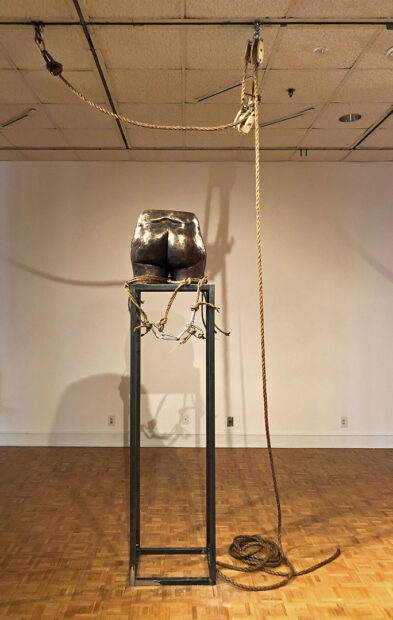
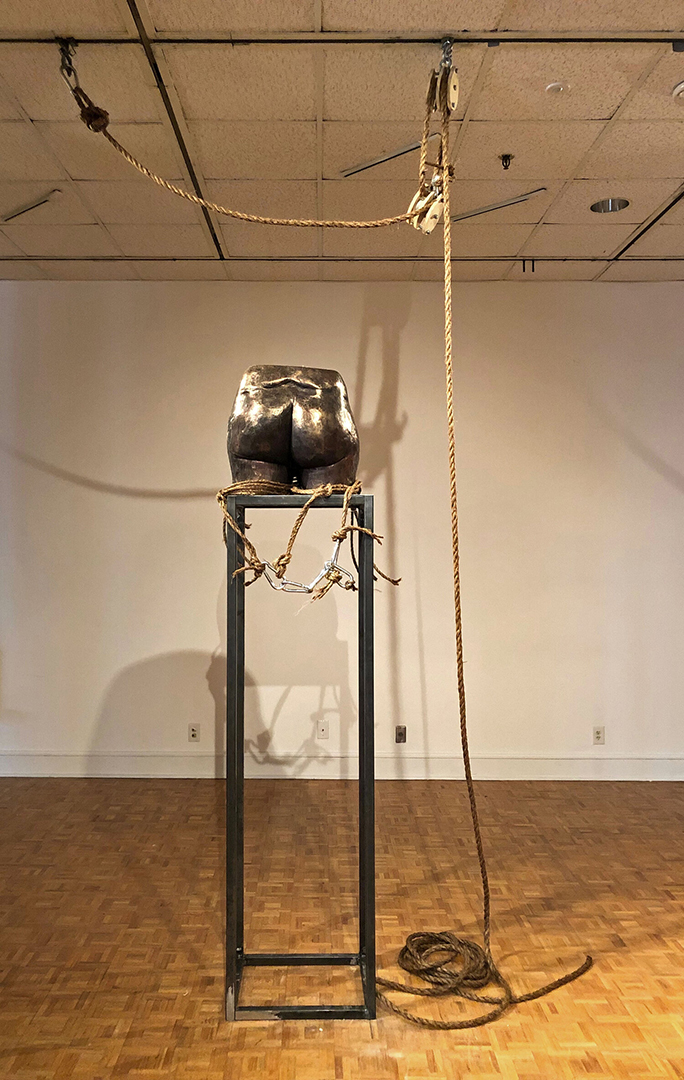
During her performance, Devezin used a hoist to move a bronze cast of her own bottom up from cinder blocks sitting on the ground to atop a six-foot-tall pedestal. The action lasted just over ten minutes, and while most of the work was in the creation of a secure rope harness around the sculpture, the performance was still powerful and charged. Watching Devezin carefully secure and move the sculpture made me reflect on the care that we show art objects, compared to the violence with which Black bodies are too often treated. By the end, she had, in effect, uplifted and revalued the Black female body. The title of the work, too, uses a colloquial dismissive phrase as a call for respect.
Similarly, the title of Anaya’s installation repurposes a phrase from popular culture. A well-known quote by Alice Waters, the first woman named Best Chef in America by the James Beard Foundation, “Let things taste of what they are” was originally a call for simplicity in cooking to showcase the natural flavors of a food. Anaya uses the phrase to call out the absurdity of a dessert shaped like a woman’s breast, which itself commemorates a young woman who was brutalized. And, perhaps even more generally, Anaya is asking that society strip the pretense and reveal the harsh realities that shape our world.
Art is a reflection of the society from which it is birthed. Created nearly a decade after the publication of Betty Friedan’s The Feminine Mystique, Judy Chicago’s The Dinner Party honors over 1,000 women across history because the artist sought to celebrate important female figures and showcase the untold and underrepresented histories of women. For all of the excitement around Chicago’s piece, the major criticism of her work (and feminism at large) is the lack of inclusion of women of color and women whose sexual orientation, gender expression, mental or physical ability, or even nation of origin further complicate their personal experiences and struggles. It is particularly poignant, then, to see how female artists of color address universal themes related to women’s traditional roles and women’s treatment in society.
Nearly fifty years later, though much has changed in the U.S. regarding gender equality — since 1974, women can now have credit cards in their names, since 2014 a higher percentage of women are enrolled in higher education than men. But much has remained the same — between 2014 and 2020, femicide in the U.S. has increased by 24%. This is why, after decades, artwork addressing women’s place in and treatment by society is as prescient as ever.
Devezin’s and Anaya’s works, though depicting women who lived 1,500 years apart, retell stories of people who were treated as objects. Though women today surely have more rights and authority over their lives than women of the past, there’s an unescapable undercurrent of potential threat to our bodies — we walk with keys between our fingers, prepared to fight an attacker, and share our location with friends and family so they can find us should we go missing. Highlighting women’s historical mistreatment reveals the deep-seated nature of violence against them, helping to shine a light on the realities that women still face today, and providing an opportunity for female artists to make defiant statements about their rights to their own bodies.











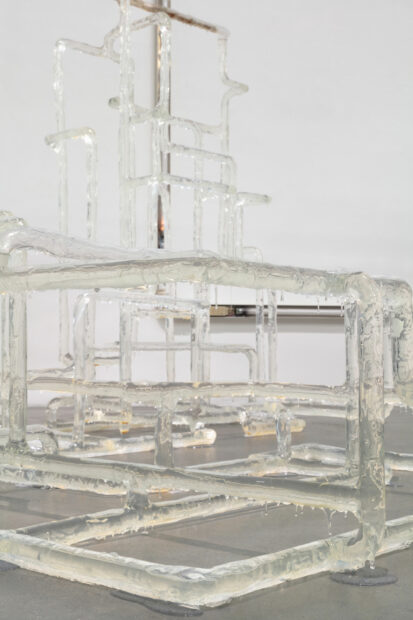


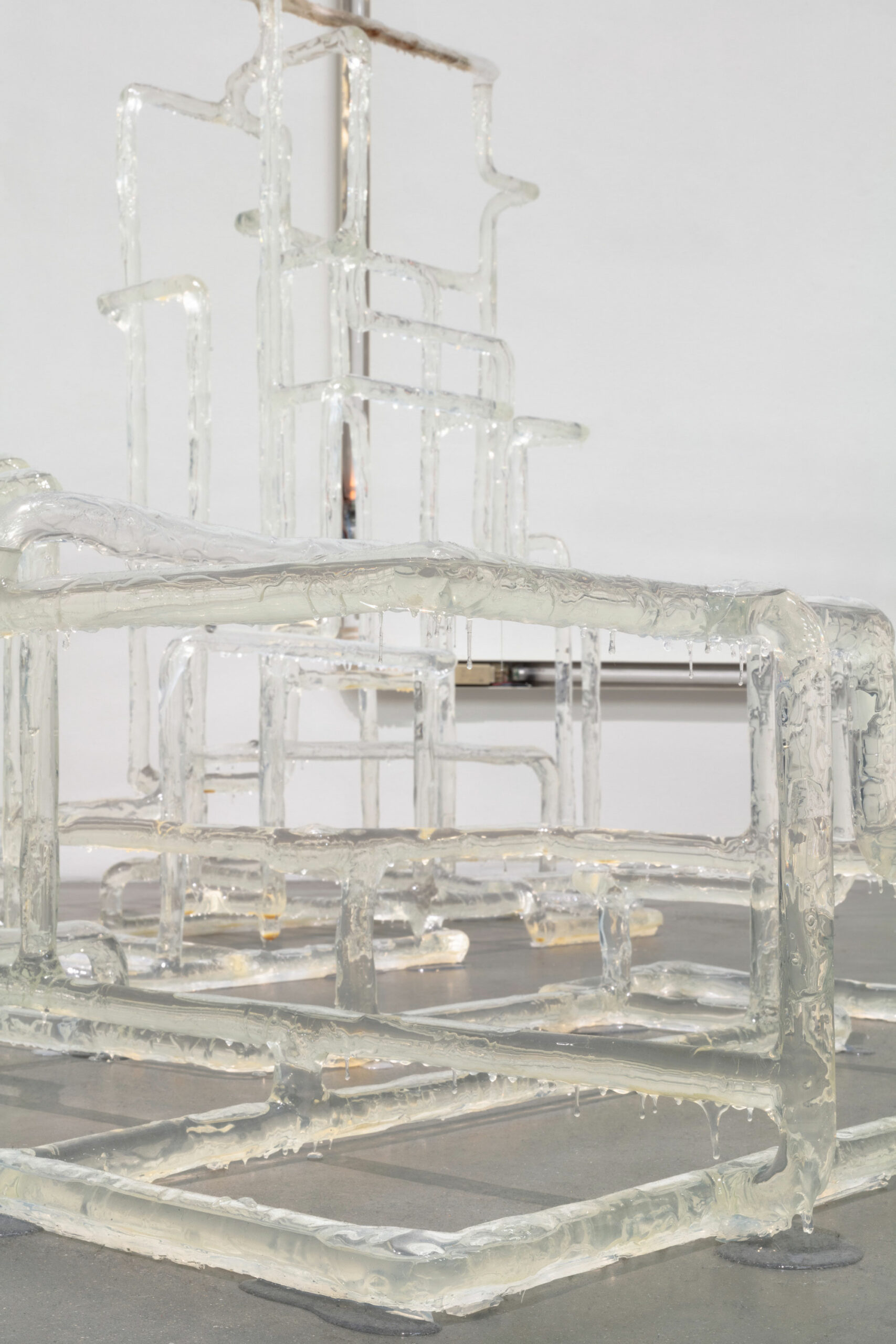


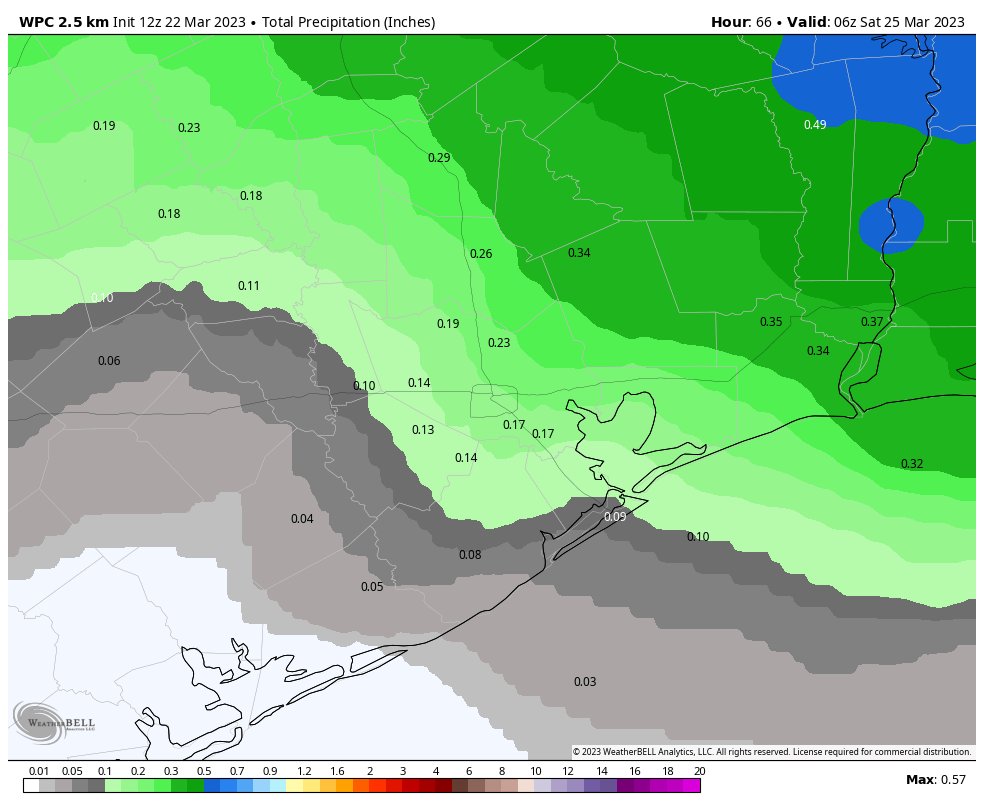
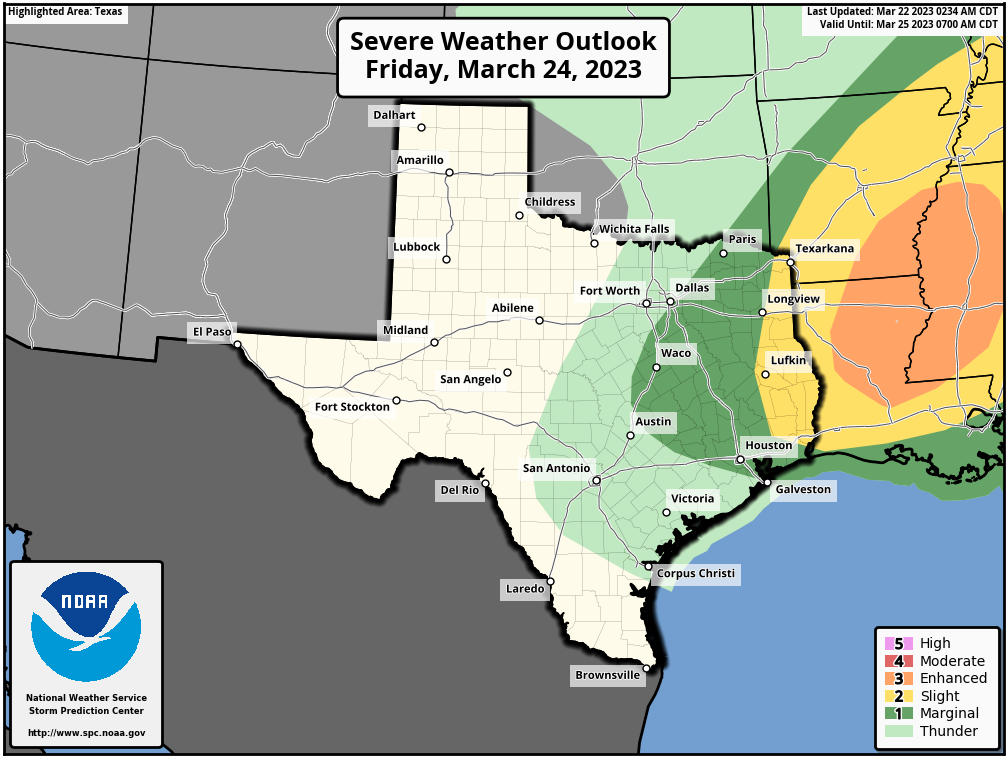



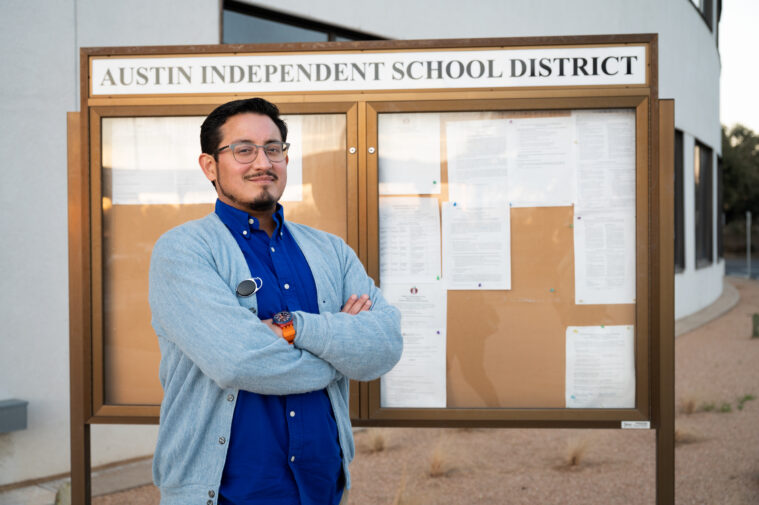
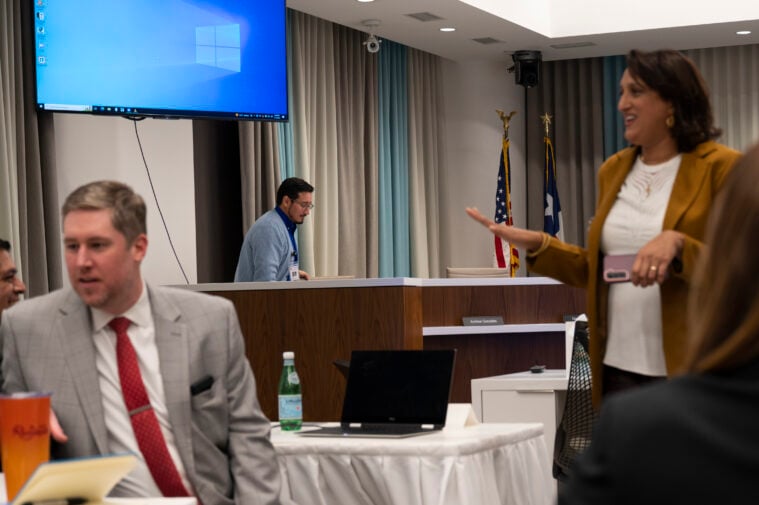
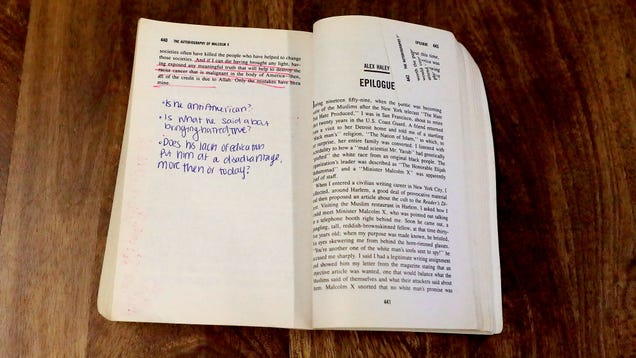



 Contingency Cannibalism: Superhardcore Survivalism’s Dirty Little Secret