Cowboy Who?
Shared posts
17 Nov 13:53
BSD Release: pfSense 2.7.1
The DistroWatch news feed is brought to you by TUXEDO COMPUTERS. Bill Rathbone has announced the release of pfSense 2.7.1, un updated build of the project's FreeBSD-based specialist operating system for firewalls and routers. This version uses the FreeBSD's 14-CURRENT branch as its base. "Netgate is pleased to announce the release of pfSense Community Edition (CE) software version 2.7.1.....
Cowboy Who? and -1 others like this
17 Nov 06:53
Click here to go see the bonus panel!
Today's News:
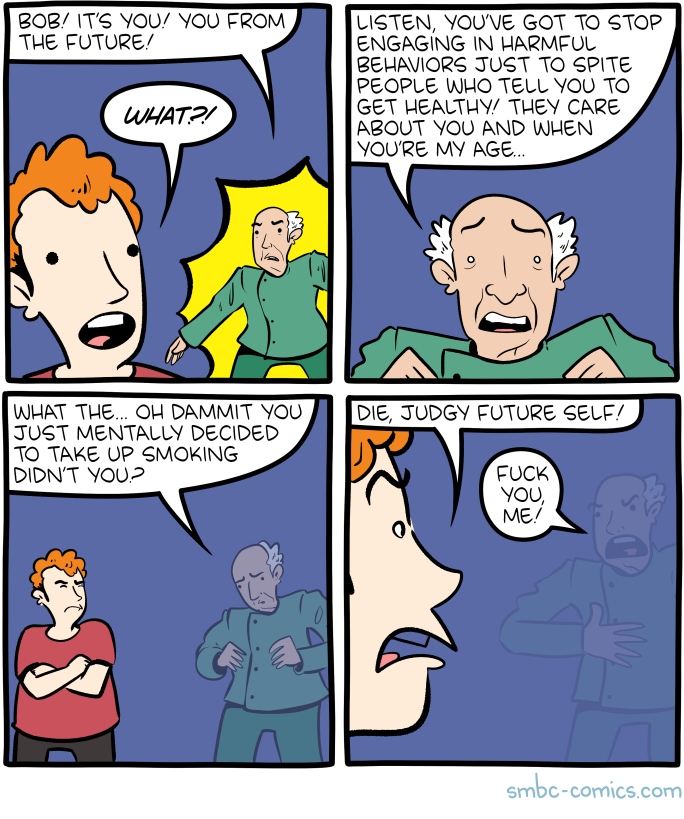
Saturday Morning Breakfast Cereal - Future
by Zach Weinersmith
Click here to go see the bonus panel!
Hovertext:
I feel there's a lot of money in an app where, when you skip exercise, it projects your future body slightly degrading.
Today's News:
We did it! ACOM is an NYT bestseller. Thanks everyone - this'll help us get a bit more shelf-space, which is rare for giant pop sci tomes. If you want a signed copy, or a copy of Bea Wolf signed, you can get them at no extra charge at my favorite local shop, HelloComics.
Cowboy Who?, Lucas Vigroux likes this
16 Nov 17:50
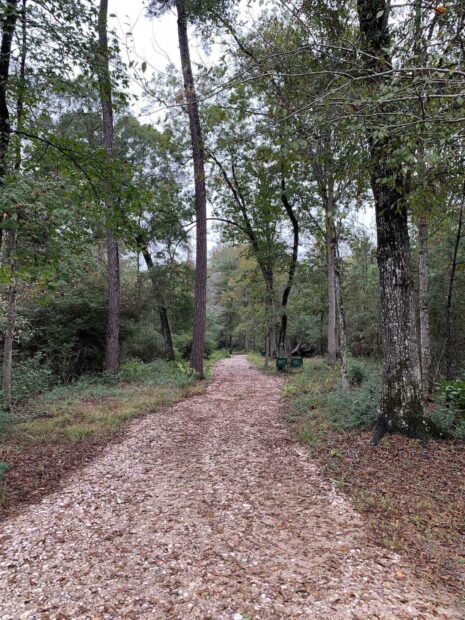







Into the Woods: DiverseWorks’ “A Gift from the Bower” at the Locke Surls Center for Art and Nature
by Brandon Zech
Place has an outsized impact on art. There are many shows I’ve seen for which I can recall exactly how the gallery space — the layout, the wall color, the feel of the place — influenced not only the visitor experience, but the success of the presentation. This is especially true in nontraditional settings — artist-run galleries, abandoned buildings, warehouses, and apartment front rooms. Usually these spaces are more forgiving; they have a uniqueness about them that imbues the work itself, seeping into the ethos of the show.
So too is the case of outdoor sculpture parks. Picturesque settings with sightlines and beautiful tableaux framing large-scale outdoor artworks are hard to beat. Once you see the misty mountain vistas and changing tree colors of the Storm King Art Center (which lives up to the hype) or the rolling, beautifully landscaped pathways of Glenstone (so I’ve heard; it’s on my list), it is hard to go back to a clean, sterile, white-walled gallery.
Art comes from nature, and divorcing the two, if possible, should be avoided. This is why the architecture of Houston’s Menil Collection incorporates glass walls, bringing foliage into the museum. It is also why so many artists are plant lovers and oftentimes paint portraits of or make works paying homage to their green-leafed friends.
Creating wider art-plus-nature experiences is harder in Texas than in other places, namely because of our state’s propensity for inhospitableness. Sure, you have Laguna Gloria in Austin, which weaves works by a pantheon of well-known artists into a lush landscape, but even it has to compete with the Texas weather for half of the year. The same goes for Texas’ other bastions of outdoor art, including the Chinati Foundation in Marfa and the wonderfully groomed Nasher Sculpture Center in Dallas. Moreover, unless you’ve been in and traveled around our state, it is hard to pinpoint what actually defines a Texas landscape.
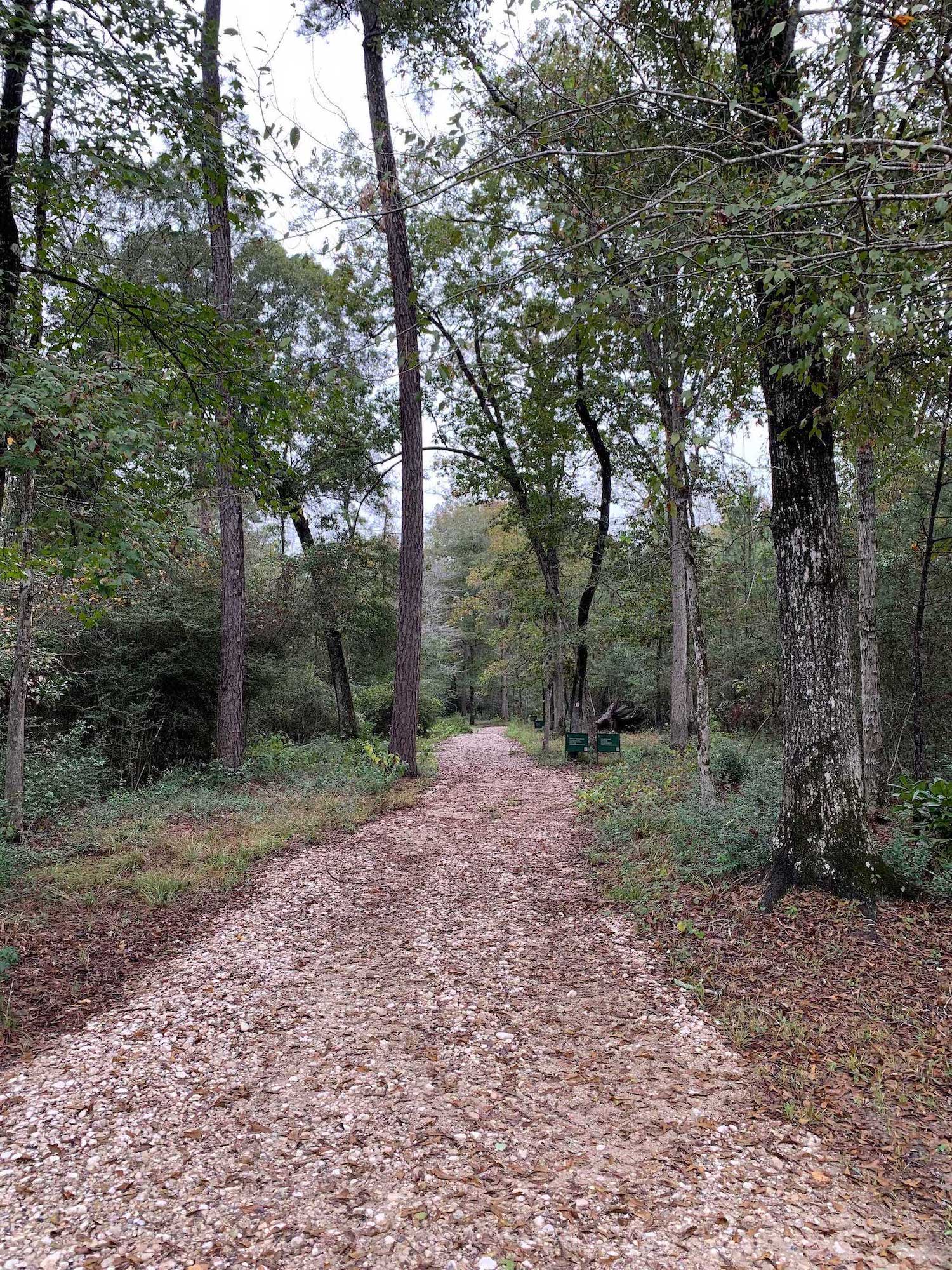
The entrance to the pathway for DiverseWorks’ “A Gift from the Bower” exhibition
In my years traversing the state, I’ve come to think that its most unique area, perhaps even more so than the rocky cliffs of West Texas, is East Texas’ piney woods. The region is marked by the tall, thin, eponymous trees that blanket the ground with their signature brown needles. It is this landscape, which is in full force just 40 miles northeast of Houston but feels a world away, in which DiverseWorks’ A Gift from the Bower is hosted, tucked away in the newly rebranded Locke Surls Center For Art And Nature (LSCAN) (formerly Splendora Gardens).
Comprised of 177 acres and including a large-scale barn, outdoor artworks, and multiple new buildings, LSCAN was the home of Charmaine Locke and James Surls from the 1970s to the 90s. The property was reinvigorated in 2016, when Texas artist Jeff Wheeler was brought in to collaboratively program the site with Surls and one of his daughters, Ruby. A year later, Alton DuLaney, who is today the director and curator of the Houston Airport System’s public art program (and also in A Gift from the Bower), was brought in to run the space. In the years since, LSCAN (namely the large-scale barn, which was Surls’ former studio) has been activated for occasional programs. The current show, however, which was, according to DiverseWorks, “originally conceived by artists James Surls and Charmaine Locke [and is] co-curated by Jack Massing and Xandra Eden,” is the most significant project at the space to date.
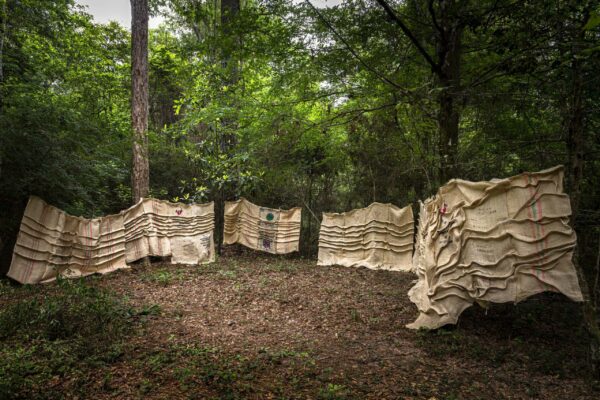
Featuring work by 14 artists and collaboratives, the show is based on and installed throughout naturally occurring bowers (clearings) along a half-mile pathway through LSCAN’s woods. The exhibition begs the question of how artworks change, both in their messages and in our perception of them, when they’re installed harmoniously with nature.
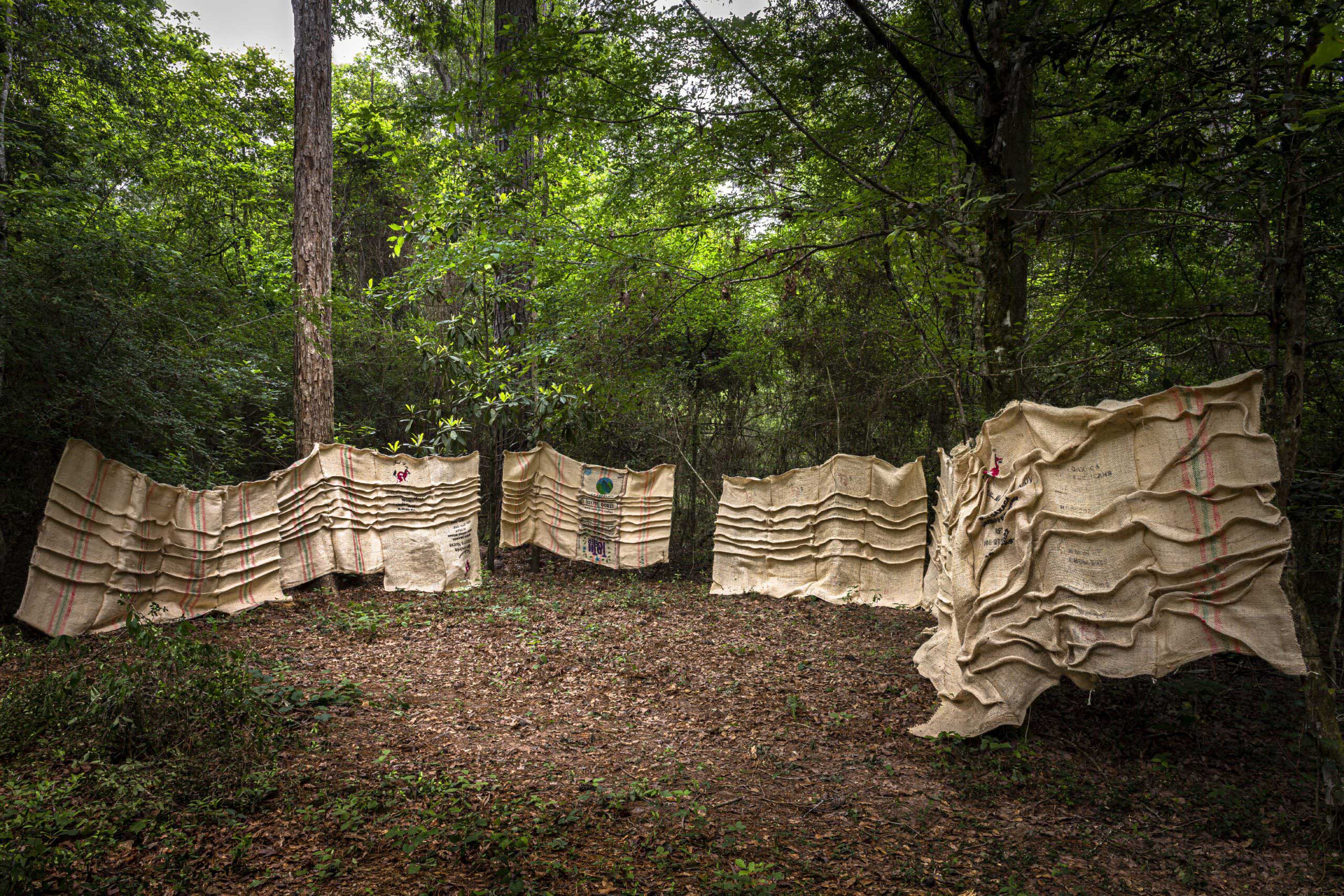
Kaneem Smith, “IT MADE A SOUND BECAUSE GOD HEARD IT,” 2023, burlap, steel, and brass. Photo: Paul Hester.
The most significant marker of the show is the tandem commitment of space and time. There is no dropping in — you have to venture north of Houston, to Cleveland, to visit. And then once you’re out there, the show requires you to engage with the landscape. Some of the bowers, which are denoted by signposts, are so far off the trail that the enclosed sculpture is obscured by branches, leaves, and tree trunks. The woods becomes an unlisted component of the artwork; it isn’t only a backdrop, but is a necessary component, situating the pieces in a specific place and time. It makes the work contemporary to whenever you’re experiencing it.

Sharon Kopriva, “Bower Boat,” 2023, wood, found objects, resin over mache, plaster and metal screen. Photo: Paul Hester.
In some instances, this aesthetic of site-specificity (I’d dare to say none of these works would be as successful in a gallery) is particularly poignant. Sharon Kopriva’s Bower Boat is the skeleton of a viking ship. It’s uncanny to encounter the piece so far from any visible body of water, and in her signature style, Kopriva’s treatment of the work makes it a vestige from a now-extinct culture. An otherworldliness emanates from a giant egg, which sits in the middle of a similarly large nest in the center of the boat. The agedness of the scene makes the sculpture a relic, but the care and upkeep of its site emanates the feeling of a sacred space.

John Calaway, “Bird of Pray,” 2022, polycarbonate, stainless steel and iron infused paint. Photo: Paul Hester.
John Calaway’s Bird of Pray, one bower over from Kopriva’s boat, is the creature that may have laid the egg. Casually strolling through the woods, walking out of the clearing and towards the main path, the piece is a contemporary take on modernism. There are elements of Pablo Picasso and Joan Miró, but the work is more fluid and imbued with a slight humor; it is a roughed-up rooster, feathers akimbo and wings spread, that is casually strolling to greet you.
The character is a bit of a trickster, as is the piece itself — it is made not of metal, but of polycarbonate that has been coated with iron-infused paint. The plasticity of the polycarbonate somehow comes through in a way that makes the piece feel down to earth; the work puts on the trappings of what a large-scale sculpture should be, but then undercuts them at every turn. It chose a language of relatability rather than monumentality, a feat considering the creature easily towers over the average visitor and could, in any other circumstance, come off as menacing.

Leticia R. Bajuyo, “Swing Set: Share a Share (Duyan: Ibahagi ang Balato),” 2023, steel, wood, concrete and artificial turf. Photo: Paul Hester.
Further along into the woods, Leticia R. Bajuyo’s installation of a multi-legged, circular swing set masquerades as a larger-than-life spider. With A-frame poles encircling the installation, the swings are challenging to access for a visitor, which begs the question if the piece is meant to be static, an exercise in absence, or if the work does invite engagement. This was answered during the show’s opening reception, back in April, when a group of Filipinx artists (who had also each designed individual seats for the swing set) activated the piece. In addition to swinging on it, they used the structure’s poles as a percussive instrument, filling the forest’s natural soundscape with metallic clinks and clangs. The sculpture, whether activated or not, is a bold statement that the individual artists who contributed to it are here to share their stories and aren’t going anywhere.

Ronald L. Jones, “TRANSIENT,” 2023, wood pallets. Photo: Paul Hester.
While Bajuyo, Calaway, and Kopriva’s interventions in the bowers are more obvious because of their chosen mediums, other artists went with a (no less impactful) subtler, natural approach. For example, Ronald L. Jones, who is best known for his site-specific immersive installations using colored string, made a heart-shaped almost-maze out of wooden pallets. The installation works in part because it isn’t out of sync with the landscape; instead, it somehow looks as if it could’ve been in the forest all along. It is a repurposed cabin, the start of a larger project undertaken by bored youths over the summer, or even a clubhouse deconstructed.

James Surls, “Oak Stump,” 2022, wood. Photo: Paul Hester.
Similarly, James Surls’ Oak Stump is perhaps the most silently poetic work in the show. The clearing for the piece is fairly far off of the main path, meaning that it has a sort of camouflage when seen from there. Subsequently, the way that the path to the sculpture opens up into a clearing much larger than any other in the show makes Surls’ the most dramatic bower of the bunch. In it, surrounded by mature trees and saplings, is a slightly modified large-scale stump of an oak, which comes from a tree that was blown down during a 1983 hurricane that came through Splendora. Surls used the trunk for other artworks and then shaved and saved the stump before ultimately deciding to return it, in its revised, sculptural form, to its home.
Although Surls surely left his mark on the stump — it looks out of place and naked among the thriving woods — it is also fair to say that the idea for the sculpture, the inherent smartness and beauty of it, is nature’s alone. The power of having the final bower be Surls’ is that he hands you the concept of the show on a silver platter; if you don’t understand yet, here is your prime chance.
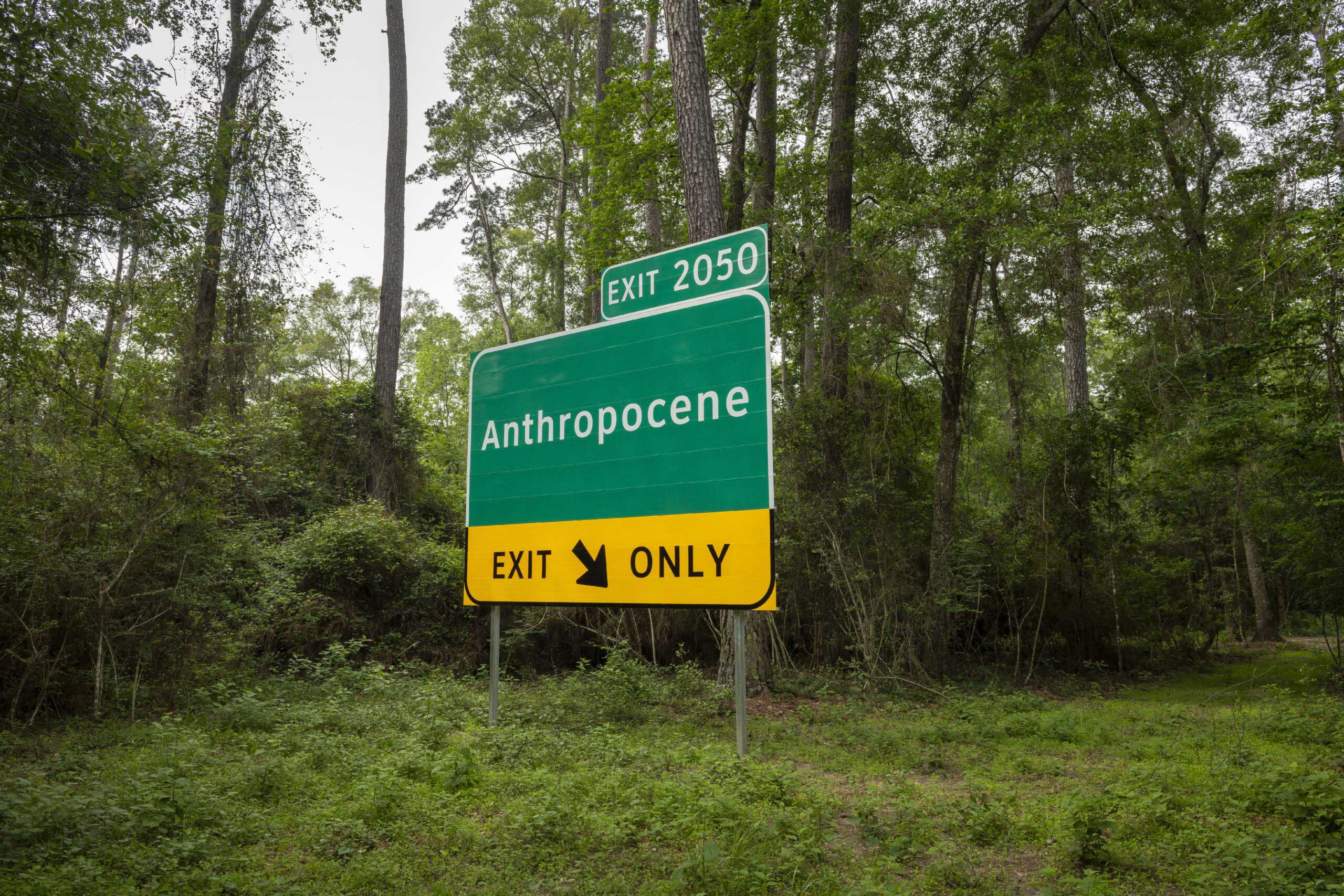
Jack Massing, “Next Exit,” 2023, fabricated metal sign. Photo: Paul Hester.
Artwork shouldn’t compete with nature, namely because the competition is unfair and nature will inevitably win out. The curation of A Gift from the Bower notes this and agrees with it, and instead allows the included artists to approach their responses to the woods in three ways: subtle touches (Surls and Jones, among others), more obvious complementation (Bajuyo, Calaway, and Kopriva, among others), and complete fish out of water plop art (Carlos Canul & Rachel Gardner and Jack Massing). All three tactics work, pointedly because none of the included artists try to flirt with a center lane; they all make strong choices that are right for their particular pieces.

Inside LSCAN’s barn is Lina Dib’s 20-channel sound installation, “North to South and Back: flights, flood fields and sticks,” 2023
This sentiment is laid bare by the inclusion of a work in LSCAN’s barn by Lina Dib, who has become known throughout Houston for her audio installations. The 20-channel sound piece, featuring a mix of natural bird calls and imitations of bird calls by people who have immigrated to Houston, plays amongst Surls and Locke’s artworks, which are installed throughout the space. Instead of situating Dib’s work outdoors, where it would’ve both gotten lost and also interrupted the natural stillness of the woods, the audio piece is placed in its own sculpture forest, which is made up, most likely, of wood taken from this very property 40 years ago.
Dib’s piece is just another example of the full cycle that this show represents — of art, of our lives, and of nature. In a world where the sustainability of natural resources and the imminence of climate change are regular conversations, it has become inherently political to do an exhibition such as this one. Even though the lion’s share of the artwork in the show isn’t explicitly taking sides, anything arguing for the precarity, beauty, and worthiness of the world around us is a reminder that life, and not art, is what’s truly important. It is both poignant and rewarding to think of this as you’re surrounded by smart sculptures and taking in the anomalous woods that make up East Texas.
A Gift from the Bower is organized by DiverseWorks and on view at the Locke Surls Center For Art And Nature (26041 Midline Rd, Cleveland, TX 77328). The project was originally conceived by artists James Surls and Charmaine Locke and is co-curated by Jack Massing and DiverseWorks Executive Director Xandra Eden. The exhibition features work by Leticia R. Bajuyo, Susan Budge and George Tobolowsky, John Calaway, Carlos Canul and Rachel Gardner, Lina Dib, Alton DuLaney, Ronald L. Jones, Sharon Kopriva, Charmaine Locke, Jack Massing, Sherry Owens and Art Shirer, Patrick Renner, Kaneem Smith, and James Surls.
The show is on view through November 18, 2023. A closing potluck is scheduled for noon on November 18, followed by a performance by Richard (Dickie) Landry at 2 p.m.
The post Into the Woods: DiverseWorks’ “A Gift from the Bower” at the Locke Surls Center for Art and Nature appeared first on Glasstire.
Cowboy Who? likes this
16 Nov 17:48
Reviews of New Food: Walmart’s Great Value Original Fruit Smiles
by Katy Luxem
Walmart’s Great Value Original Fruit Smiles is not exactly a new food, for the recipe has clearly been handed down through fluorescent generations. But given a recent update, they are truly the only fruit snack worth eating. The only fruit snack with substance, tang, and mouthfeel akin to banana flesh combined with a pencil eraser.
In a nondescript orange pouch, I did not believe they would be good. Especially given that they cost just $2.50 a box. But my son pressed a grape smile into his small, warm palm and shoved it through my clenched jaw as I briefly dozed on the sofa with an NFL game on. I involuntarily chewed and felt the snack adhere to my molars on the deepest level, the 70 percent daily value of vitamin C permeating every bone.
These smile-shaped gems are chewy and perfectly dense. Unlike some of these new fruit snacks that are soft, transparent, and aspic-like in texture. These generic babies take me back to recess in the rain, primary colors, and hitting yourself in the shin with a Skip-It on the playground. If you were alive in the 1980s, this is the fructose hit you’re looking for.
Ironically, these fruit snacks are bursting with orange, lemon, grape, and strawberry flavors that taste truly genuine. Ideal for fans of things like goldfish crackers, Lunchables, and Kid Cuisine, they are the perfect midafternoon to midnight staple.
As a family, we’d sort of forsaken the generic fruit snacks for lush organic bunnies, real fruit juice “Funables,” or Sonic and Pixar-based shapes. Why? The recipe for Wal-Mart’s generic delights contains every artificial color known to modern chemistry, plus carnauba wax. Also corn and a syrup made from corn. Additionally, the box notes it may have come into contact with every tree nut, plus eggs, soy, and dairy. No one is safe, and that’s really the most ’80s vibe ever. No more fancy, branded fruit pouches for this household. I will be eating these until they are no longer produced due to FDA regulations.
Kate, Cowboy Who? likes this
16 Nov 17:44
Humanitarian Pause, Missile Quiet Time, And Bullet Hush: How To Call For Peace In The Middle East Without Actually Meaning It

Cowboy Who? likes this
16 Nov 14:01
Harris County election shows progress. But challenges remain ahead of 2024.
by Natalia Contreras, Votebeat and The Texas Tribune
Officials in the nation’s third-largest county had little time to celebrate their successful election before a judge issued a ruling drudged up many of their past mistakes. The county clerk says her team will ensure a successful 2024 election.
/https://static.texastribune.org/media/files/7f2ab0eaa2e932a5836ae87d24b97af6/1107%20Election%20Day%20Houston%20AM%20TT%2013.jpg)
Cowboy Who? likes this
16 Nov 13:56




Review: “Lucy Bull: Nacar” at The Warehouse, Dallas
by Madison Ford

“Lucy Bull: Nacar,” The Warehouse, Dallas, installation view, September 9 – November 25, 2023. Photo: Kevin Todora
In undergrad, in an attempt to fulfill a Psychology 101 requirement and make $20, I participated in a study that required twenty minutes of clicking through slides of trees, skies, food, landscapes, and noting in which images I could see a face. The concluding debrief revealed the researchers’ prevailing theory: that those with a tendency to see faces in the inanimate were more likely to believe in God. What does it say of our nature when we see topographies of land, or our own biologies, in abstracted scenes of layered oils? In her current exhibition at The Warehouse, Los Angeles painter Lucy Bull pushes viewers to confront their tendencies to animise fields of colors and textures.
One must weave their way through the concurrent showing (aptly named Room by Room) of the Rachofsky family’s collection before arriving at Bull’s Nacar, which is tucked into two connected galleries at the venue’s far end. While Room by Room offers a curated spectrum of paintings, sculptures, and installation works from the collection, entering into Bull’s galleries is a decisive shift into a separate viewing experience. The six works of Nacar are spread across two rooms, allowing for a sense of breath between each. This balance of space seems to serve the paintings, each a cacophony of stimuli all their own.

“Lucy Bull: Nacar,” The Warehouse, Dallas, installation view, September 9 – November 25, 2023. Photo: Kevin Todora
The viewer is immediately drawn to 13:35, a massive oil on linen; it is loud against the soft natural light drenching the room. Here is where a certain inadvertent investigation begins. Bull employs such varied techniques of wielding paint that there is quite literally a sort of surface-level discovery of feathering — or is it sponging, or is it wild brushwork, that evokes motion and hard stops and erratic directionality. Jade greens pool into corals and navies, finding their way into a current. With this, a narrative comes alive, one of waterfalls bottoming out, of a topographic deja vu making our neurons scream, I’ve seen that before, I’ve known you before, and yet, we never feel quite sure. We must walk away, unfinished, haunted.
This phenomenon of projecting natural order repeats in the room’s companion works: 19:22, a turquoise and chartreuse forest, a rushing torrent of water molded by X-ACTO blades; 23:27, a thermal, volcanic tide pool, from late night nature documentaries, or maybe from some vermillion and indigo nightmare.

“Lucy Bull: Nacar,” The Warehouse, Dallas, installation view, September 9 – November 25, 2023. Photo: Kevin Todora
The adjoining gallery is a darker, more intimate space. The low ceiling and moody fluorescent lighting oppose the sweeping vaulted ceilings of the first room. A seven-foot-tall 13:31 beckons, its bloody hues and infecting yellows pushing against each other and igniting a scene of chaos. Abstraction gives way to a birds-eye view of a mountainous valley, with echoes of Hieronymus Bosch’s Garden of Earthly Delights ringing in our eyes. A river at the mountain’s base seems on fire, with intricate brushwork gestures birthing orange from a winding blue. The top two-thirds of the canvas seems to teem with disastrous action, while the bottom third suggests a quieter scene: a field of smudged spectrum mirroring the activity above. This is a wasteland, a raised space that has seen destruction and is waiting to rise again.
On the adjoining wall, Stinger is a deep jungle, a lagoon alight by fireflies. Greens and blues and browns hum at a frequency that evokes rhythm, music heavy in the chest. On the far right of this Amazonian fever dream is a stark panel of darkened tone, as if this oil was damaged film. This is a departure from Bull’s other works in Nacar, which seem to honor a consistent palette applied wildly. In the final work of the show, 18:55, a walrus looks on from a breaking ice cap.

“Lucy Bull: Nacar,” The Warehouse, Dallas, installation view, September 9 – November 25, 2023. Photo: Kevin Todora
No. Go back.
13:55 is our sinus, our throat: speckled, wet, draining green. 19:22 holds the curves and caverns of our inner ear, an amphitheater of sound. 23:27 pulses something sexual. 13:31 threatens the power and bile of our gut. In 18:55, a spine, many spines, stretch and merge like roots of a tree. A walrus still looks on, its whiskered gaze transfixing.
What is this yearning to find answer in the abstract? To find place, to find body? Pareidolia, the propensity to assign meaning to patterns, is palpable in Nacar. If researchers of the early 2010s thought finding faces in fields and fruits was a sign of divine faith, what is Bull doing with this walrus?
Perhaps Bull had no intention of giving life to such a creature, but she is transparent about how the alchemy of her practice can also spark a familiarity of place. In an interview with Galvin Delahunty (included in the exhibition program) Bull stated, “strangely enough, while working on 13:35 it started to remind me of the Poconos in Pennsylvania…I tend to think about the Poconos often. The landscape is very green — lots of ferns, carpets of moss, untouched woods, a lake — and there’s a very particular kind of light. The blue in the lower half of the painting started to scream ‘lake’ to me, so I leaned into that association.” Just as our associative response to the abstract seems inadvertent, so does its creations: Bull begins her work with a phase of automatic painting, then leans into sections that ring important.
Bull provokes deep reflection with her Nacar works. Her cosmic colors and layered textualization offers landscapes that are both otherworldly and bodily, vague and hauntingly familiar. When one makes their way to the back pocket of The Warehouse, they should prepare to be transported, and also prepare for walruses.
Lucy Bull: Nacar is on view at The Warehouse in Dallas through November 25, 2023.
The post Review: “Lucy Bull: Nacar” at The Warehouse, Dallas appeared first on Glasstire.
Cowboy Who? likes this
16 Nov 13:51

Widower Sobbing At Wife’s Funeral While Creating eHarmony Profile
MEMPHIS, TN—Wiping the tears from his eyes with one hand and using his phone’s front-facing camera to take a selfie with the other, local widower Randall Selway was reportedly sobbing at his wife’s funeral Thursday while creating a profile on eHarmony. “My sweet Judith, she’s gone, gone forever!” cried Selway, who…
Cowboy Who? likes this
16 Nov 13:51
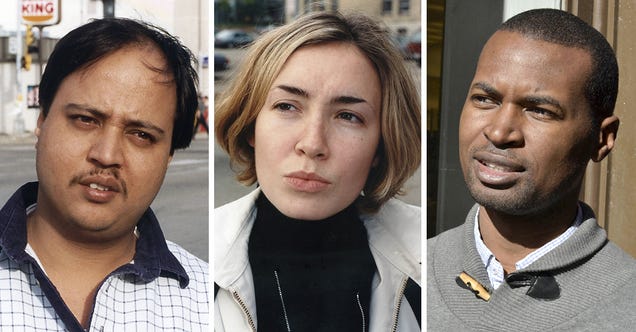
41 States Sue Meta For Harmful Effects Of Social Media On Children
Forty-one states and D.C. have sued Meta for harming children’s mental health and safety by allegedly designing their social media platforms to be addictive to minors, with the federal complaint stating that the company endeavored to “exploit young users for profit.” What do you think?
Cowboy Who? likes this
16 Nov 13:50

Panicked-Looking Guy Shifting Uncomfortably Outside Occupied Restroom Must Really Have To Masturbate
SANTA FE, NM—As the distressed and presumably very horny individual knocked frantically on the door, sources reported Thursday that panicked-looking local man Henry McDonald, who was seen shifting uncomfortably outside of an occupied public restroom, must really need to masturbate. “Wow, from the way he’s fidgeting, I…
Cowboy Who? likes this
16 Nov 12:25
the prize for our tree decorating contest is baby clothes, I accidentally recommended a smutty book to my boss, and more
by Ask a Manager
This post was written by Alison Green and published on Ask a Manager.
It’s five answers to five questions. Here we go…
1. The prize for our tree decorating contest is … baby clothes
My office does a “Best Holiday Tree” decorating competition based on department. Everyone is encouraged to decorate their department’s trees using office supplies. It has been popular for several years. The winning department, based on anonymous vote, previously got a free happy hour and dinner. This year there was a wave of newborns amongst my coworkers so the admin who sets it up has decided that the winning group will get … company-branded baby clothes.
I pointed out that while a lot of people did have kids this year, baby clothes excludes more than half the office. I’ve suggested we do a voucher to the company brand store so everyone has the same level of incentive to participate if a happy hour was no longer an option, but “baby clothes” has taken off among the new parents. I’m one of the many who hasn’t had a baby this year, and when I brought it up to the admin, I was told I was whining. Is there a way to bring it up without coming off as “whiny,” or should I suck it up?
Yeah, that’s a bad prize, for a whole bunch of reasons. It’s not that a prize is so incredibly high stakes — obviously it’s not — but it’s an odd and un-inclusive choice.
If you want to try again, bring it up to someone who’s not the admin — her boss, or someone else with enough authority to overrule them. It’s not “whiny” to point out the prize is of strangely narrow interest. (And if you have anyone struggling with infertility or miscarriages, ugh.) Although at this point, the thing I’d be more interested in raising is that it’s fine to consider and reject feedback, but it’s not okay to call well-intentioned feedback “whiny,” especially about something that’s supposed to boost morale.
Whether to bring any of this up depends on how much you care and your sense of how much other people care — it might not be worth the capital to bother — but you’re not wrong to be annoyed.
Also, those aren’t “holiday trees.” — your friendly neighborhood Jew
2. I accidentally recommended a smutty book to my boss
In my last one-on-one with my boss, we started chatting about books, and I mentioned that I’d be rereading a series in anticipation for the release of the third book this past weekend. We exchanged titles of books we liked, and the meeting moved on.
However, upon rereading the books I recommended, I realized they were a LOT smuttier than I remembered, and this third one has some pretty kinky sex scenes. Help! My anxiety is through the roof, thinking that I told my boss to go read a romance book that I remembered as mostly fantasy! How much of a work faux pas did I commit? Should I mention it again and warn her about the explicit bits that I forgot about?? Or am I completely overthinking this?
For reference, the book series is The Last Binding by Freya Marske. I highly recommend it but know that it gets pretty explicit lol.
Did you recommend it to her or just mention that you enjoyed it? If the latter, I don’t think you need to worry about it, but if the former, yeah, it wouldn’t hurt (and would probably give you peace of mind) to go back and say, “After I recommended Book X to you, I realized it is much smuttier than I’d remembered! And then I was mortified because I hadn’t warned you. So I am remedying that with this warning!” A lot of bosses will laugh at that point, and that should be that. But if she doesn’t think it’s hilarious, that might be even more of a sign that the disclaimer was a good idea.
3. My boss threatened to fire me after I had one bad month
I’m a manager on a small team. The past month or so, several personal issues have caused my response time at work to slow. Think going from same-day or one day response time to 4-5 business day response time. Some tasks that I’d previously always completed on time I needed extra time for. I honestly didn’t think it was severe enough for anyone to even notice. I have a stellar track record at work up til now, and received a promotion/raise earlier this year in recognition of that fact, so I thought I could let myself slow down a little while I worked through everything in my personal life.
My boss did notice. Instead of addressing it with me, we had a surprise meeting where he implied I would be fired if I didn’t shape up. No “I’ve noticed you struggling, you’re usually so on the ball, how can I support you?” Just “Get back to how you were or you’re out.”
At least until I revealed that some of the personal issues I have been going through are medical in nature. He was a lot more supportive and understanding after that. I’m still on thin ice, but the tone definitely shifted from aggressive to understanding.
It seems wild to me that, until I revealed private medical info, he was ready to fire me after a few bad weeks without once offering support. I fully admit I haven’t been as on the ball lately, but I really would have expected some steps between that and immediate risk of firing. We don’t do any work that’s time sensitive or life-threatening. Am I crazy?
No, that’s ridiculous. You have a stellar track record, which they recently recognized with a huge raise, but they threatened to fire you over one month of slower response times? Maybe your work in the last month was worse than you realized, but the conversation should have been, “I’m seeing these issues, what’s going on?” not “This is your final chance.”
4. High school teachers as references
I’m a high school teacher, and have been asked to be a reference for dozens of students over the years. These are either for typical high school jobs (fast food, retail) or for internships / junior positions in the field that I teach in (computing).
I have never once been contacted! Often students will tell me they got the job and thank me for being a reference — but I’ve never been emailed or called in the last six years of being a teacher.
Is this common in hiring teenagers? Do people not really care what an applicant’s teacher has to say about them?
Yeah, a lot of jobs that hire teenagers won’t bother to check references at all, or if they do they’re more likely to call past managers (if available) rather than teachers because they want to ask job-focused questions. It’s not that teachers don’t have insight into what their students are like or that there’s not a lot of overlap between how someone shows up in class and how they are at a job — you do and there is — but a lot of hiring managers just don’t put enough stock in teacher references to bother calling them. (Which is not to discourage people from using teachers as references at that stage of life! Teachers are a reasonable reference for teenagers to offer when they don’t have much or any job history.)
5. Company pays health insurance premiums for some but not others
My husband works for a small mom-and-pop business with about 15 employees. After many years of employee requests, the business just started offering health insurance to employees two years ago. As is typical, the business pays for a percentage of the health insurance — I believe around 50%. However, my husband recently learned that some of his coworkers (seemingly at random) have 100% of their health insurance premiums covered, including one coworker who also has her dependent covered in full. My husband is the only other employee who has a dependent, and having him and our child covered would lift a huge financial burden on our family. All of his coworkers but one have the same title, and there is no pattern that we can ascertain as to who has theirs covered and who doesn’t. Is this legal?
No federal law requires employers to cover the same portion of insurance premiums for all employees as long as they’re acting without regard to race, sex, national origin, religion, age, or other protected class. That’s still a very unusual choice, though. Typically employers that cover different amounts for different people base the differences on clear eligibility criteria, like full-time or part-time status, job title, or seniority. If it’s truly random, they’re opening the door to (even inadvertent) differences by race/age/etc., which creates a legal liability.
Your husband would be on solid ground in asking what criteria are being used for this, or just trying to negotiate his own premium coverage.
Cowboy Who? likes this
16 Nov 12:13
My Overly-Detailed Japan Trip Diary (Part 1) || Arriving In Osaka
by Puffin Forest
Hello Puffin here! A bit of a weird video, stylistically and story-wise. Hope you guys enjoy it! There's going to be a few more to follow. Thanks! Puffin.
Cowboy Who? likes this
16 Nov 12:01
Starting on the other side of this airtight hatchway: Running a program that leaks memory
by Raymond Chen
A security vulnerability report came in that said
In the most recent Windows Insider Build, the
pingprogram has a small memory leak. This is normally not a problem because thepingprogram runs for less than a minute before exiting, but if you runping -t, then it will ping the destination machine indefinitely until killed. This can be used as a denial of service if you just start aping -tand let it run. It leaks about a megabyte a day.
While it’s true that you could use it as a denial of service, it’s also not a very effective one, given that the memory leak is “only” a megabyte a day.
Furthermore, in order for an attacker to exploit this, they need to gain the ability to run programs so they can run ping -t and giggle with glee as the program slowly leaks memory.¹
Since this presupposes that the attacker can run a program with arbitrary command lines, the attacker may as well use something that consumes memory at a far faster pace:
for /L %i in (1,1,1000000) do start eventvwr.exe
This launches a million copies of Event Viewer, which will certainly mess up the system faster than a one-megabyte-a-day leak.
What we have is a bug but not a security bug. The development team fixed the memory leak, so this bug didn’t exist for very long.
¹ In practice, the program will have to leak several gigabytes of memory before the system will start to suffer, so the attacker is in for a wait of several years before their denial-of-service attack finally bears fruit and the system owner will have to either kill the rogue ping process or reboot the system. “With this fiendish attack, I can mildly inconvenience somebody a dozen years from now!” (Assuming they leave the system running without rebooting.)
The post Starting on the other side of this airtight hatchway: Running a program that leaks memory appeared first on The Old New Thing.
Cowboy Who? likes this
15 Nov 21:26
my boss wouldn’t work with me because she was upset I adopted from foster care
by Ask a Manager
This post was written by Alison Green and published on Ask a Manager.
A reader writes:
I work in higher education, and something happened to me at my last job that never sat right with me.
I was hired at a large research university to work in a specialized program providing one-on-one support for students. I was a tutor, and all the tutors in my center had terminal degrees and many years experience teaching at the college level. The person who hired me was our boss at the tutoring center, Amelia. Other than her, we had no direct supervisor and sometimes went whole semesters without much communication from any other adult at the college. Literally, we only saw students on a regular basis.
Amelia was someone I had considered a friend before we worked together. We weren’t close, but we have a mutual friend who we are both very close to, and Amelia and I had hung out socially four or five times before I was hired. This was all fine.
However, three years after I was hired, my husband and I adopted a teenager from foster care. I let Amelia know because it was a huge life event for me and my position offered no maternity leave and limited sick time. Amelia had been in the foster care system and had a rough go of it (the foster care system in the U.S. is horrifying, and our adoption does not mean that my husband and I support its policies in any way). She told me outright that she couldn’t spend any more time with me because hearing about my adoption process or even just the fact of my daughter was too difficult for her. I respected that.
Amelia didn’t just stay away from me outside of work, though. She basically abandoned the tutoring center, focusing on other aspects of her job so much so that the other tutors and I often didn’t see her for the entire academic year, and just turned to whoever if we had a question or needed something.
I worked there for eight years, and only saw her maybe four more times in person in the last five years I was there — so maybe two hours total. Once or twice a difficulty between tutors arose and she would come in to try to sort it out, but without any context whatsoever. I got along well with almost every single person I worked with over the years, except for one tutor who stayed for less than a year and who I found very difficult to work with, and had an excellent relationship with faculty and the program director.
When I asked for a reference after more than eight years, Amelia refused to give me one, saying I did not work well with others. The other tutors were shocked.
I did move on and am in a position I’m happy with now, but I never really got over this. It was a huge blow after eight years; even though my Big Boss gave me a great recommendation it was just … hard and made me question a lot of things about myself.
Is this a case in which I was discriminated against as a person from a protected class (a mother)? Or just a hard thing because I know what trauma does to people and I just feel bad for my boss? I don’t know.
No, this isn’t okay!
Look, the foster system is a sickening mess (and I say that as someone who has fostered kids); it often makes kids’ situations worse, and very little about it is designed in their best interests. There’s a ton of data showing kids on the whole do worse in foster care than they would if they stayed with family. It’s deeply, deeply upsetting.
But Amelia can’t completely abandon a central function of her job because of that — ever, really, but especially not when she manages a team and her abdication will affect her employees in such significant ways. I’m sure she knew this at some level because presumably she didn’t go to her boss and say, “My employee’s adoption from foster care is so painful for me that I’m not going to interact with that team anymore” because presumably she knew that wouldn’t fly. She just … did it on her own, and that wasn’t okay. It wasn’t fair to you or the rest of your team, and it wasn’t fair to the organization that thought she was still doing the job they had hired her for. (I’d argue the organization shares some of the blame, too, since they apparently had no checks and balances that would alert them that this was happening, and apparently no one ever checked in on your team or thought to create communication channels that would ensure they’d hear about something like this happening.)
As for Amelia refusing to give you a reference and saying you didn’t work well with others … that’s awful. I suppose it’s possible you really didn’t work well with others — I have no way of knowing — but I don’t see how she could conclude that, since she completely stopped interacting with you and all the other feedback you got was positive. (And if there were any truth to it, it would be an indictment of her too, since it would have been her responsibility to address it with you as your manager and she didn’t.) It would be bad enough for Amelia to simply decline to be a reference — you shouldn’t lose out on a reference simply because your boss found your daughter’s adoption too painful, so that’s yet another way this situation was unfair and wrong — but to then tack on a made-up reason is really unjust. It would have been better — although still problematic — for her to simply decline.
As for the possibility of this being illegal discrimination: Parents aren’t a protected class at the federal level, although some states do have laws protecting parents from discrimination, and you might live in one. But rather than pursuing it from a legal angle, if you had written to me at the time I’d have suggested bringing the situation to someone over Amelia’s head, like her own boss. It’s pretty likely they would have intervened — although whether that would have resulted in a better situation for you or not depends on how skilled and involved that person was. Ideally they would have made it clear to Amelia that she couldn’t just go AWOL and talked to her about whether she felt she could still do the job or not … and then, if she did, ensured she returned to managing you and did it fairly and objectively. But if they weren’t a very skilled manager themselves, it might have just resulted in Amelia being more involved in ways that made your life worse, rather than better — present as required, but letting her feelings affect the way she managed you.
Ultimately, the two things you asked about at the end of your letter can both be true at once: we can feel empathy for Amelia because she went through something awful that she still carries with her, and she also treated you really unfairly. Those two things intertwine in complicated ways, but you’re on solid ground if you look at this and say, “This was wrong, and I deserved better.”
Cowboy Who? likes this
15 Nov 21:22
when are potlucks a bad idea?
by Ask a Manager
This post was written by Alison Green and published on Ask a Manager.
A reader writes:
My office is doing a potluck for Thanksgiving. We are a company with just over 100 people. I have dietary restrictions, so I asked if there would be a sign-up so I’d know in advance if I could eat anything. HR declined, saying they don’t want people to feel pressured to bring anything.
But … that’s the whole point of a potluck. If they don’t want to pressure people to bring food, they should cater it. I am also concerned about food safety, as I have had negative reactions to potluck food before. My current plan is to just eat a meal beforehand and bring some roasted potatoes.
Is there a point at which a company is large enough that a potluck is just a bad idea? Or am I overreacting?
Your potluck is being strangely run, but I don’t think it’s because of your company’s size.
If they’re going to hold a potluck, it makes sense to offer a sign-up sheet where people can note what they plan to bring so that you don’t end up with 20 potato salads, 50 packs of napkins, and nothing else. (Actually, I would be delighted to eat a meal of 20 different potato salads, but it’s probably not what most people are going for.) Including a sign-up doesn’t really amp up the pressure on people to bring something; it just makes things more organized and less likely to result in day-of chaos.
And yes, if they’re concerned about pressuring people to participate, they should indeed just cater it. People often do feel pressured to participate in potlucks. Other people love them, of course! But if they’re this concerned about a sign-up sheet causing pressure, catering is the way to go.
That said, I don’t know that a sign-up sheet would have helped you know in advance if you’d be able to eat anything — since you wouldn’t know what surprising ingredients people might be putting in their mashed potatoes. (Although I suppose if you saw something very simple listed, like a fruit platter, you might reasonably guess that would end up being safe.)
Really, though, dietary restrictions and potlucks can be a tough mix, unless your workplace is vigilant about requiring accurate ingredient cards with each dish. Even if you do, depending on the nature of your dietary restrictions and especially if they’re strict, I still might be cautious, because people are notoriously allergy-unaware and far too many people will faithfully write out all the ingredients their cookbook listed for the recipe but not add that they always add their own dash of paprika for color, or claim their lentil soup is vegetarian without thinking to mention they used chicken stock in it.
And that’s before we get into your concern about food safety. Generally if you want to enjoy a potluck, you have to deliberately not think too hard about your coworkers’ hygiene practices or how sanitary their kitchens might be. If sanitation/safety is a hard limit for you, potlucks are a tricky proposition.
Your plan to eat a meal beforehand is good, or you could bring something that you’ll enjoy and that will be filling enough for you even if you don’t eat anything else there.
Cowboy Who? likes this
15 Nov 21:21
All the Urgent Messages I Have Received from Photobucket
by Lars Kenseth
A Notice About Your Account
Greetings from Photobucket. We’re reaching out to let you know that your free account is scheduled to be deleted as Photobucket is moving to a paid subscription platform. If you’d like to keep your photos, please log in and upgrade to any one of our subscription tiers. We look forward to storing your memories!
- - -
RE: A Notice About Your Account
Hi there from Photobucket. We noticed you haven’t upgraded your membership yet, so wanted to circle back and say we get it—life gets in the way. But you’ll want to make sure to upgrade as soon as possible or else risk losing your photos. Might I recommend the Premium plan for $8 a month? For that, you get one terabyte of storage, plus sharing. I know, crazy deal. Store you soon! :-P
- - -
RE: RE: A Notice About Your Account
Maybe we weren’t clear before, but this is no joke. Your photos will be deleted. We can’t say when exactly, because the tech team has it all automated on a rolling basis, but it’s happening. And soon. Does that not stress you out? Because it stresses us out. A lot.
Do you really want to risk losing memories like this?
Or this…
Or the three other photos that look like they were unintentionally uploaded from a 2008 Android phone? We don’t think so.
If the Premium tier is too much, try the MyBucket plan. It’s only $5 a month. It doesn’t include sharing, but you could always upgrade later. Please, let’s work together on this. Act now.
- - -
RE: RE: RE: A Notice About Your Account
Look, we didn’t want to have to do this, but you’re forcing us to remind you of this…
We don’t know what this is. And we don’t want to know what this is. But we’re willing to bet it’s compromising. So here’s what you’re going to do. You’re going to sign up for the Premium plan. You’re going to sign up at the annual rate and not the monthly rate, which will save you $16 a year, because we’re nice. Then you’re going to store photos. You’re going to share photos. And you’re going to tell everyone you know how amazing this service is because… This. Has. To. Work. We can’t just store random screenshots for free anymore. It’s not a tenable business. We have employees and families and crushing credit card debt and the simple dream that one day we’ll get a call that Uncle So-and-so died and left us everything. You understand that, don’t you?
Your free Photobucket account is teetering on the brink. And now? So is your public reputation. Comply with our demands, or we show the world.
- - -
RE: RE: RE: RE: A Notice About Your Account
There. Your account has been deleted. Are you happy? Because we’re not happy. We’re miserable. Sure, we want to make money like anybody else, but we got into this business to save memories, not destroy them. But I guess that’s just the way of the world today, isn’t it? Everybody shuffling along, blinkered to the plight of others. Everyone out for themselves.
At the end of this message, you’ll find a voucher for six months free of Photobucket Premium. And another voucher for three free months of Fubo, whatever that is. Why we’re rewarding your apathy and disregard is a mystery to us. Some algorithm in a corner office somewhere told us to do it, and far be it from we mere mortals to question the mighty algorithm.
We hope you’ve enjoyed Photobucket. May God have mercy on your soul.
- - -
Welcome to Photobucket!
Greetings from Photobucket! We see you’ve activated your free six-month trial of Photobucket Premium. From all of us here at Photobucket, we look forward to storing and sharing for years to come!
Cowboy Who? likes this
15 Nov 21:20

Click here to go see the bonus panel!
Today's News:
Saturday Morning Breakfast Cereal - Teleporter
by Zach Weinersmith
Click here to go see the bonus panel!
Hovertext:
Just a few more and I can do a book of teleporter humor.
Today's News:
I've spent the last month promoting stuff here, so this is just a reminder to you that it's just me over here and I hate having to promote products. Please enjoy the comics and feel free to ignore everything else. <3 Zach
Cowboy Who? likes this
15 Nov 19:18

Rude Train Passenger Taking Up Extra Seat With Husband That Could Easily Fit On Lap
CHICAGO—Saying the woman had watched a large group of passengers board and appeared not to care when they were forced to stand, witnesses confirmed Wednesday that a rude train passenger was taking up an extra seat with her husband even though he could easily fit on her lap. “Everyone knows that on a crowded train, the…
Cowboy Who? likes this
15 Nov 19:18
Scientist Explains How Climate Crisis Would Be Averted If Greta Thunberg Just Tried A Little Harder

Cowboy Who? likes this
15 Nov 19:17
my coworker’s white fragility is getting in the way of DEI discussions, and other questions about race
by Ask a Manager
This post was written by Alison Green and published on Ask a Manager.
It’s part two of our discussion with Michelle Silverthorn! Michelle is the founder and CEO of Inclusion Nation, a recognized keynote speaker on inclusion and belonging, and the author of the best-selling book, Authentic Diversity: How to Change the Workplace for Good. Sign up for Monday Mornings with Michelle, her weekly newsletter with practical steps for allyship at work.
She answered one round of questions on Monday and she’s back today to tackle round two. With that, I’m handing it over to Michelle….
1. Should I talk to my boss about the biases I see on our team?
I’m leaving my current position in a few months for graduate school and while I’ve mostly enjoyed the job and been treated well, there are a couple things that I feel could be improved. Namely, some low-key racism that might not be apparent to my supervisor. She’s a liberal, middle-aged white woman, and I’ve noticed in the last two years that the people on our team who get opportunities to speak at conferences, lead meetings, manage projects, and eventually step into leadership roles tend to also be white. We have a very diverse team, so it feels even more apparent when these opportunities go first to white members of the team (I am a woman of color, for the record). While these individuals do end up doing a good job, it feels as if the people of color on the team are missing out on opportunities for career development. I’m also not the only person to have noticed this, another woman of color on my team who was hired recently brought this up during a conversation and wanted my advice.
I would like to maintain a relationship with my supervisor since I respect her insights in our field and I see her as an ongoing mentor, but I feel like I would be remiss if I didn’t make her aware of the optics. Should I bring this up with my boss as I’m leaving and if so, what would be the best way to do that? I want to stress that this is a person who has made an effort to address equity in the work we do so she does care about this issue, but even the most well-intentioned white people can perpetuate racist systems.
I talk a lot about microaggressions, both what to do when you commit them and what to do when you experience them. One of the steps I share for people who experience microaggressions is to ask yourself whether this is the one that you want to speak up about. Many people experience numerous microaggressions every day, week, month depending on where they work and live. We don’t speak up about all of them — we choose when and where and why. Is this person willing to listen? Am I in a position right now where I’m ready to speak? If I am ready to speak, what do I say if they want me to teach them? Will this impact my relationship with this person if I speak up? What will happen to my reputation at this company? What impact will this have on my career? What about other people in my community — what happens if I say nothing? Every one of those considerations can go through someone’s mind before they decide to respond to a microaggression.
Now to you. From the perspective of someone who believes in an inclusive and equitable workplace for everyone, I would love, in a vacuum, if you could have a conversation with this supervisor about the actions she is taking that harm her goal of racial equity. I also think, in the abstract, she would like to be made aware of whether she is making progress toward the goal of racial equity. But conversations don’t take place in a vacuum and people don’t exist in the abstract. Only you can weigh questions like the ones I asked in the first paragraph and decide for yourself where your priorities lie.
The challenge is even more problematic when you are a person of color. It shouldn’t always be on people of color to point out the racism at work. Unfortunately, many times, it is. Many times, nothing will change unless one of us says something. But you and I also know that when people of color speak up about racism, the backlash can be swift and painful. People who we thought were genuinely committed to the work of justice are the ones who push back and say things like, “I don’t see color” and “This has nothing to do with race.” Then you are seen as a troublemaker. As spreading discord. Your competency is doubted. Your ability to rise in the organization is put into question because you’re not a “team player.” It can be difficult for anyone to speak up when they see discrimination, harassment, and racism, but for those of us who don’t enjoy the privilege of having our experiences be believed, it can feel almost impossible.
It is your choice where you balance it. I hope when you look at my favorite legal phrase, “the totality of the circumstances,” your balance tilts in favor of speaking up.
If you do choose to say something, please don’t save it for right when you’re about to leave. If this is a conversation you would like her to listen to, I would have a meeting prior to your departure so you can have any follow-up conversations as needed. I would point out your concerns without naming anyone else without their permission. And if she pushes back or denies, I would emphasize these are your observations, thoughts, and perspectives. Tie the conversation back to what you have seen in her work for equity and point out that you would like to continue supporting her. I always encourage people to speak to the other person’s expressed values when they want to have someone change behavior that is harmful. If she asks for advice, suggest that she start by looking at the data of who gets promotions, what evaluations say about employees of color, and what clients or customers those employees of color have access to. I can’t promise there won’t be pushback from her or repercussions for you. That’s why I urge you to weigh who you are, who this mentor is, and what you’d like to get out of the conversation. But remember. You are leaving. That means you have a certain power and privilege that other people of color still employed at the company do not have. It is your choice how you wield it.
2. Balancing inclusion with getting buy-in on candidates
I’m a manager of a small team within a larger unit, and I’m hiring at least one role and potentially two (both vacancies due to people leaving). Our culture is strong overall, this is the best team I’ve ever worked for, we promote internally, the work is demanding but intellectually stimulating and meaningful, and the pay and benefits are competitive for our sector and region. However, we’re in a very competitive industry in a high cost-of-living city, and our environment is very complex — which means that when we hire people, it’s really important to hire people who want to stay and grow. On-boarding new people is very time-consuming for the whole team, not just the hiring manager, so we try to have strong buy-in from everyone who participates in the interview process.
I recently brought someone in for a second interview with my colleagues from our team’s leadership, and while they agree that he has very strong experience that is aligned and transferable, they are concerned that he won’t have the right orientation / won’t be happy and stay. I’m noticing a pattern that my management colleagues seem to always have a “gut instinct” about candidates who don’t fit the typical identities for our field, and many of the people who departed our larger team in the aftermath of COVID have been women of color in particular. While we know there are no unicorn candidates, we definitely seem more willing to be flexible on the must-haves when the candidate fits a particular profile.
In our leadership team, there is a firm stated commitment to equity, diversity and inclusion, but a lot of variation in people’s alignment with those principles in their day to day work.
How do I balance the need to have buy-in around candidates with the need to advocate for better inclusion? And is my desire to bring in candidates with broader experience and representing more diverse communities at odds with the business needs of our unit (i.e., we have a good sense of the type of candidate who stays and grows, but that candidate looks like the rest of the team). I also don’t want to bring in candidates when the other leaders in our team aren’t convinced, both because I think it’s a crappy thing to join a team where people doubt your abilities and because I don’t want the typical “bumps in the road” during on-boarding to turn into “see! I told you he wasn’t a good fit!”
I’m thrilled that you have found a team that you enjoy working with, that is delivering results, and that provides stimulating and meaningful work for you. I wish that for everyone! However, you also wrote that many of the people who left your team after Covid were women of color. That’s concerning to me. You didn’t share why they left but it appears to me the inference drawn in your letter is that since they didn’t stay, other people with similar identities and backgrounds wouldn’t stay either.
But what else changed in your workplace after Covid that would have led to the departures? Covid was especially devastating for communities of color, for a variety of reasons. The reasons those women left may not have been because of your organization; it could also have been because of a pandemic that was ruining communities, including theirs, and priorities that changed for many people, including them.
What I would like you to do is what I call a Dig Deep Data Dive into your employee base. Ready? Let’s go.
In the past year and a half, what have you noticed about departures? Who else is leaving and why? You can’t rely on exit interviews to tell you all the reasons people are leaving, but what patterns are those departures showing you? When you do your engagement surveys, are you able to break the results down by identity group — as much as you can — to get a better intersectional understanding of how people in each department and at each level feel about this organization? If 90% of people on Team A love this experience, but the 10% of Team A who don’t love it are from a similar identity group, then that tells me more than the 90% who say this is all great.
I also want you to look at the people who you did bring on who may not have fit your ideal candidate slate. You said you were flexible on must-haves. But were your leaders more willing to mentor certain people, socialize with them, train them, give them second chances, or access to work? Looking at your data and the people who were absolute perfect fits, did they all stay? Or did some of them leave as well and why?
Keep going! Let’s do another Dig Deep Data Dive into what it means to have a “firm stated commitment to equity, diversity, and inclusion.” I would love each of those leaders to set out how they walk the talk. It does not, especially in this post-SFFA age, have to always be about hiring. Who are you promoting? What client bases are you working with? What researchers are you using? Who are you sending to conferences? What are you sharing on your social media? Who are your contractors and vendors? What does inclusion look like in product design?
Last Dig Deep. If “gut instinct” matters this much, then give cultural fit a number or a rating during the interview process. Let’s measure how much gut instinct actually matters in the decision process. I rank this person a 10 on cultural fit and here’s why. I rank this person a 6 on cultural fit but a 10 on industry experience and here’s why. I rank this person a 4 on logical reasoning but a 9 on cultural fit and here’s why. And when you have your interview discussions afterward, and someone wants to start with, “Well, I’ll just say what everyone’s thinking,” you instead have the data from these interview reports to counter that.
Please note. I haven’t suggested you change anything at all yet about your culture or your on-boarding process. But I do suggest you evaluate what it means to commit to inclusion at every level of your organization and what actions you can take so if you do hire someone, they can stay and succeed.
3. My coworker’s white fragility is getting in the way of DEI discussions
How does one handle a coworker who gets overly defensive about racism during DEI policy meetings? My company just hired a DEI specialist. I’m in the working group meant to make DEI policy recommendations, along with “Beth,” “Meg,” and “Jo.” So far, the group meetings have involved our specialist “Laurie” having his ideas talked over by Beth the whole time.
Our first meeting, Laurie proposed changing some words in the employee handbook — and Beth launched into a 15-minute speech about how much anti-racist language she uses every day. Our second meeting, Laurie said he was disappointed in low attendance at his anti-racism training — Beth immediately started rambling about how she couldn’t make it due to needing child care, and our company should offer free child care if it really values equity. I’m dreading the third meeting; Beth’s white fragility is pulling all the air out of the room.
Beth is, like me, a white woman who has been here about three years, in a different division. Laurie hasn’t tried to interrupt her, but Laurie’s both the on-paper team lead, and the only entry-level person on the team. He’s also only been here a few months and he’s the only Black man in the ~100-person company, so it’s understandable why he’s been bowled over by Beth.
I recognize the much bigger problem here around leadership hiring a single Black employee and expecting him to fix everything while giving him no power to do so, but I’m trying to focus on the things I can change. So: should I say something to Beth after the next meeting? Should I try to say something during the next meeting? Should I discuss this with Meg (the most senior person on the team) before I go to Beth? Should I talk with my manager? Should I talk to Laurie about all this? Would I be trampling over Laurie if I did any of those?
Oh Laurie. Confession time: I have never liked Little Women because 10-year-old Michelle despised love triangles. And so it has continued 30 years later. (Don’t @ me that it’s not a love triangle. The 10-year-old heart wants what it wants. Also #justiceforamy.)
First, let’s rename Laurie. We’re going to call him T’Challa, another fictional male character who finds himself caught between the love of two rock star women. (Yes, I’m conflating Storm in the comics and Nakia in the movies, I know!) T’Challa needs your support and allyship. The only Black man in a 100-person company? And he’s an entry-level hire in charge of DEI? You and I both can see all the red flags around that one. Please start by talking with T’Challa. Give him the agency to decide what he wants to do when running his meetings. You can share your observations with him, ask him if there’s anything he’d like you to do, and suggest some ways that you could assist. He now has the power to determine what way he would like to go, and he knows that you trust him to lead that work.
One suggestion is for him to set ground rules for discussions: limit sharing time, allow others an opportunity to speak, share ideas in writing prior to the meeting, respond to the questions being asked. Another idea is to rotate who leads the discussion; this would also be helpful so T’Challa doesn’t always feel like he has to generate all of the ideas in this working group. Last, if T’Challa agrees that it would support the work, you could talk directly to Beth in-person or on a phone call. In that conversation, I would say something like this: “I know how much this work matters to you but when you share so much of your own experiences, it distracts us from the main goal of this group which is to provide actionable solutions that T’Challa and our teams can put into place. I want us all to be focused on that.”
You may also like:
- our white manager centers herself in conversations about racism -- and other questions with Michelle Silverthorn
- how companies can build more equitable workplaces ... and what's getting in the way
- how can I support my Black employee who doesn’t want me to report anything, and other questions about race
Cowboy Who? likes this
15 Nov 18:55

Oppressed, Exploited Masses Await Right Hot Guy To Lead Revolution
THE WORLD—Ready for the moment when they will rise up as one and fight to free themselves from tyranny, the world’s persecuted, exploited masses confirmed Monday they were only waiting for the right hot guy to emerge and lead them in revolution. “For too long we have been kept down, but no more: We are prepared to…
Cowboy Who? likes this
15 Nov 18:55
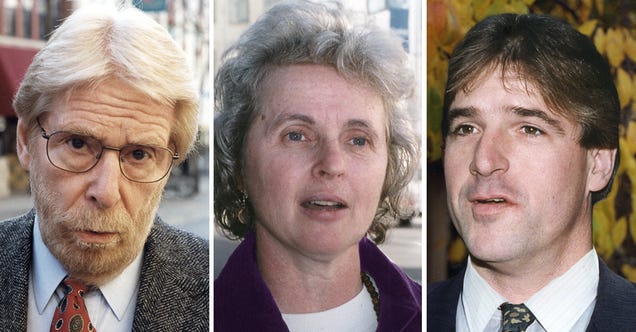
Joe Manchin To Not Seek Reelection
Sen. Joe Manchin, a moderate West Virginia Democrat, announced that he will not run for reelection next year, fueling speculation over whether he plans to mount a third-party White House bid and immediately complicating his party’s chances of holding the Senate. What do you think?
Cowboy Who? likes this
15 Nov 18:54
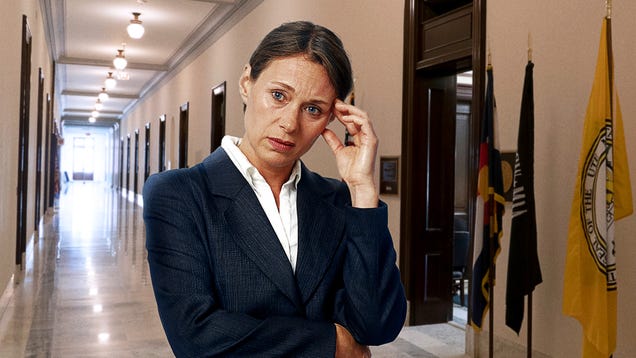
Woman Comes Out Of Manic Episode To Discover She’s Been Elected U.S. Representative
PORT ST. LUCIE, FL—Returning to her normal baseline after a prolonged period in a frenzied, psychotic state, a local woman confirmed Tuesday that she had come out of her manic episode to discover she was now a member of the U.S. House of Representatives. “I was suffering from extensive hallucinations and delusions for…
Cowboy Who? likes this
15 Nov 18:53
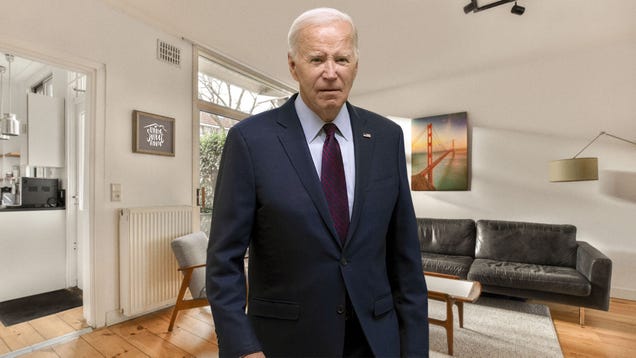
Biden Forced To Share Airbnb With 3 Roommates While Visiting San Francisco
SAN FRANCISCO—Stressing that this was the best option given how prohibitively expensive all the Bay Area hotels were, sources confirmed Wednesday that President Joe Biden has been forced to share an Airbnb with three roommates during his visit to San Francisco. “While the president obviously would have loved to have…
Cowboy Who? likes this
15 Nov 18:49
Comic for 2023.11.15 - Crippling Addiction 2
New Cyanide and Happiness Comic
Cowboy Who? likes this
15 Nov 18:48
Click here to go see the bonus panel!
Today's News:
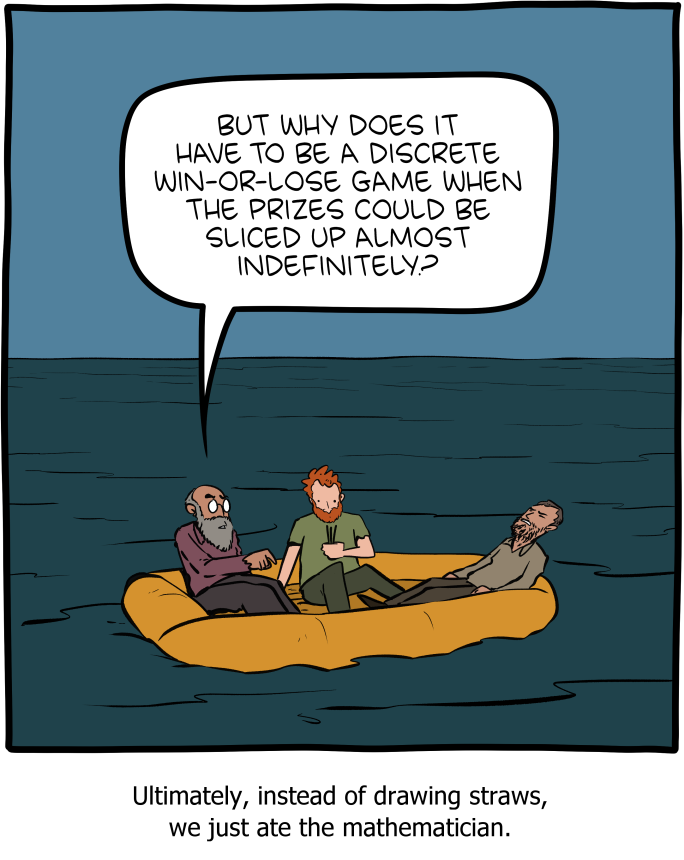
Saturday Morning Breakfast Cereal - Discrete
by Zach Weinersmith
Click here to go see the bonus panel!
Hovertext:
Anyone know if there's a case of partial application of law of the sea?
Today's News:
Come see me! BAHFest London, this Saturday, one night only.
Cowboy Who? likes this
15 Nov 13:53
thanks to this workplace harassment training video my coworkers and I now say this to each other on…
thanks to this workplace harassment training video my coworkers and I now say this to each other on a near-daily basis
Cowboy Who?, Cary likes this
15 Nov 13:52
Do u still use a safe word?
Yeah it’s “meatloaf” bc I’ll do anything for love but I won’t do that
I fucking love this????
Cowboy Who?, Zach and one other like this
14 Nov 17:34
The "Days without a Kant/Can't Pun" has been re...
The "Days without a Kant/Can't Pun" has been reset: https://existentialcomics.com/comic/524
Cowboy Who? likes this