Read more of this story at Slashdot.
AndrewThis is good news. Hopefully the politicians heed the counsel of this report.
Read more of this story at Slashdot.
Andrew#maytheforcebewithher

The “Star Wars” actress had a cardiac issue aboard an airplane and Twitter had a heart attack.
As soon as word spread that “Star Wars” actress Carrie Fisher had a medical emergency onboard a flight, social media had a collective response: Aw, hell no.
This year has already taken Prince, Muhammad Ali, David Bowie and Leonard Cohen — and given us President Donald Trump. Folks on Twitter were not ready to lose Princess Leia, too.
To 2016, RE: Carrie Fisher pic.twitter.com/kZfElIwumj
— Eric Morales (@ericsmorals) December 23, 2016
Fisher’s prognosis is unclear as the actress remains in a Los Angeles hospital. According to USA Today, she is stable but remains in intensive care.
But, as noted by several people, the 60-year-old actress has already survived drug addiction and bipolar disorder. So maybe she can give us the end-of-year triumph we all so badly need.
Here are some more amazing Twitter reactions:
Here's hoping 2016 finally meets its match and Princess Leia shoots it right in the face #CarrieFisher #MaytheForcebeWithHer #prayforcarrie
— Matt & Mike (@2DadsInColorado) December 24, 2016
Dear 2016,
— Darth Vader (@DepressedDarth) December 23, 2016
It's been a tough year, please don't take Carrie Fisher.
Sincerely,
Everybody.
Hey 2016 You already have the Prince leave the Princess alone! #princessleia #carriefisher pic.twitter.com/a7xD1sPnHS
— Craig Sutton (@TheCraigSutton) December 24, 2016
• • • "In other news, 2016 went on a violent rampage, leaving over a dozen celebrities dead, with one in critical condition."#CarrieFisher
— Jason Katzwinkel (@JKatzwinkel) December 24, 2016
If anyone can beat the monster that is 2016, surely it's #CarrieFisher. #MaytheForcebeWithHer pic.twitter.com/43ylgrvHgz
— Matthew Lewis (@MattLewisAuthor) December 24, 2016
Carrie Fisher survived:
— Sèan (@SFaggetter) December 23, 2016
• Alcoholism
• Drug Addiction
• Depression &
• Bipolar Disorder
If anyone can survive 2016, it's her.
Enlarge (credit: D Sharon Pruitt)
The mountain of scientific studies about the harms of excess dietary sugar is really just a house of cards—a flimsy stack of weak conclusions based on low-quality data. And the international dietary guidelines based on those studies—the ones urging people to cut back on sweets and sugary drinks—are disingenuous and cannot be trusted.
At least, that’s what a review out this week would have you believe. To get to those bold claims, the authors used questionable methods, subjective assessments, and money from the food and beverage industry. One of the lead authors is even on the scientific advisory board of Tate & Lyle, one of the world’s largest high-fructose corn syrup producers.
Health experts and researchers were quick to criticize the review—and its blatant bias. “Although scrutiny of dietary guidelines is warranted, we believe that this review is an example of the ‘politicization of science,’” Dean Schillinger and Cristin Kearns, health experts and researchers at the University of California, San Francisco, wrote in an accompanying editorial. “Politicization occurs when an actor overly accentuates inherent uncertainties of science to cast doubt on the scientific consensus.”
Read 15 remaining paragraphs | Comments
AndrewMan, this is crazy.
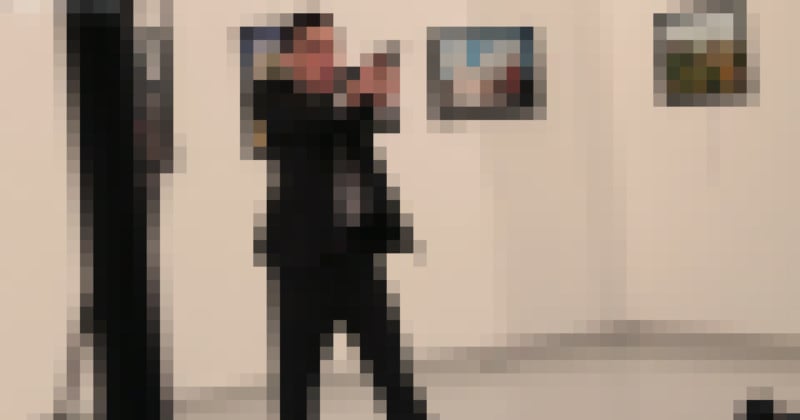
AP photographer Burhan Ozbilici is a photojournalist incredibly dedicated to his job; so dedicated, in fact, that he kept on taking pictures when a gunman shot and killed Russian ambassador Andrei Karlov at a photo gallery in Ankara, Turkey. The photos he captured have instantly risen to iconic status.
Warning: The images in this post might be offensive or upsetting to some, as they depict both the gunman and his victim. Proceed with caution.
Ozbilici was working the event, but instead of putting his camera down and ducking for cover when 22-year-old Turkish police man Mevlut Mert Altintas opened fire on the Russian ambassador, he kept working. Ozbilici snapped several photos of the enraged gunman as he paced around his victim and yelled at the assembled crowd, at one point shooting Karlov again at close range.
The photos he captured have spread across the world like wildfire, prompting praise from NBC Nightly News Social Editor Micah Grimes:
AP photographer Burhan Ozbilici continued his work in the face of this. pic.twitter.com/mGdH37ZMei
— Micah Grimes (@MicahGrimes) December 19, 2016
The AP itself:
An AP photographer was in the audience during the attack on Russia's ambassador to Turkey – the latest here: https://t.co/QNlIA8e2Eu pic.twitter.com/EBPa5izHsi
— AP Images (@AP_Images) December 19, 2016
And the Los Angeles Times, who interviewed Ozbilici:
A photographer's eyewitness account of Russian ambassador's assassination: "I'm a journalist. I have to do my work." https://t.co/kQfkQEelE8 pic.twitter.com/mQ8hnTJdyY
— Los Angeles Times (@latimes) December 20, 2016
Speaking with the LA Times, Ozbilici explained why and how he was able to keep on taking pictures, even the killer paced in front of him, condemning Russia for their role in Syria.
“I was, of course, fearful and knew of the danger if the gunman turned toward me. But I advanced a little and photographed the man as he hectored his desperate, captive audience,” Ozbilici tells the LA newspaper. “I was thinking: ‘I’m here. Even if I get hit and injured, or killed, I’m a journalist. I have to do my work. I could run away without making any photos… But I wouldn’t have a proper answer if people later ask me: ‘Why didn’t you take pictures?'”
To see more of the photos Ozbilici captured at the art gallery or hear his account of this terrifying moment, visit his LA Times interview or read the AP’s own coverage of the incident here.

Unless he divests himself from all his businesses, Donald Trump is laying the groundwork to violate the Constitution of the United States the second he takes office. But he’s not president yet.
On December 19, the 538 members of the Electoral College have to cast their votes, and a majority of them have to vote in favor of Trump for him to earn the title. He may have won — sorry, did I say win? I mean lost — the popular vote by a margin larger than any other president in history. But he did win the Electoral College, and the electors have yet to vote.
Some have called efforts to pressure the Electoral College “crazy,” and if this were a normal election, I would agree. But “normal” is the last word anyone would use to describe 2016. So if the election wasn’t normal, why are we expecting the Electoral College to be?
Regardless of how you feel about the Electoral College as an institution, it exists for a specific reason: to prevent someone like Donald Trump to take office. When Alexander Hamilton helped create it in 1788, it was designed specifically to prevent a political crisis like the one America has been plunged into. In fact, if you read the Federalist Papers, of which Hamilton was one of the authors, it’s as if he were almost able to predict a man like Trump being this close to the White House.
The Electoral College is like if your iPhone had an “are you sure you want to send this sext to your mom instead of your boyfriend” button. The Electoral College once prevented voters from having direct access to presidential democracy. Now it may give the country the ability to prevent a huge mistake. Its goal was to make sure the role of president would never be filled by a person who doesn’t have the “requisite qualifications” and to protect the highest office in the land “from the desire in foreign powers to gain an improper ascendant in our councils.”
That remind you of someone?
No matter how you feel about Trump’s emotional instability or his bewildering approaches to foreign and domestic policy, one thing that is objectively bananas is his innumerable conflicts of interests. Given that Trump reportedly possesses at least 111 companies in 18 different countries, it would be practically impossible for Trump to prove that he is not financially benefiting from foreign governments. Since he won’t release his tax returns, the public doesn’t know the magnitude of the spiderweb of his domestic and international business holdings — and, most importantly, who is investing in them. And just like the Scotch tape holding his tie together, it’s shady AF.
If Trump were president right now, he would clearly be in violation of the Constitution by the actions he has taken since winning the election, by reportedly talking to British politician Nigel Farage about the windmills blocking the view of his golf course in Scotland. Or just look at how Trump won’t let go of his executive producer title, and presumably the profits, of NBC’s The Apprentice. These holdings would be in direct violation of the emoluments clause in Article I, Section 9 of the Constitution, which bars presidents from taking money or gifts from foreign leaders without Congress’s approval.
Now, I know this sounds insane, the Electoral College being filled with enough faithless electors to overturn the decision of a presidential election. It’s as crazy as … I don’t know … Donald Trump being president?
Andrewso good.
Read more of this story at Slashdot.
Read more of this story at Slashdot.
AndrewThe update is the best.
Donald Trump, in a seemingly bizarre (even by his standards) tweet this morning:
Nobody should be allowed to burn the American flag - if they do, there must be consequences - perhaps loss of citizenship or year in jail!
Jonathan Chait:
This is an unusual “issue” for the president-elect to highlight, given the dire conditions he claims the country faces. The odd protester has torched the odd flag every so often for decades. The Supreme Court in 1989 held that burning the flag constitutes political speech, and thus cannot be banned. Republicans have occasionally used the issue as a cheap political stunt, since a majority of the public viscerally opposes flag-burning. To that standard tactic, Trump added the new Trumpian touch of proposing to revoke citizenship for violators, which would make his unconstitutional proposal even more unconstitutional, and also more attention-getting. And he did not send this one in the middle of the night, as he often does, but at 6:55 a.m., a moment probably calculated to seize the morning news cycle.
But why would he choose to pick this strange fight? Here is a case where the common complaint that he is distracting the public from unflattering stories rings true. Proposing a flag-burning ban is a classic right-wing nationalist distraction, and Trump has a number of ugly stories from which to distract: his plan for massive, unprecedented corruption, the extreme beliefs of his appointees, a controversy over a recount that highlights his clear defeat in the national vote.
Trump using this as a distraction aside, the 1989 Supreme Court decision that held flag-burning to be a legal form of First Amendment protest is an interesting one. It was a 5-4 decision, but the split among justice was not along party lines. The majority decision was written by William Brennan, perhaps the staunchest liberal ever to sit on the court, and joined by Harry Blackmun, Thurgood Marshall, conservative Anthony Kennedy, and arch-conservative Antonin Scalia. Dissents were written by conservative chief justice William Rehnquist and liberal John Paul Stevens. Different times.
(Scalia, notably, is Trump’s proclaimed model for the type of justice he plans to nominate to the court.)
Update: Fox News ran a segment on flag-burning at a Massachusetts college half an hour prior to Trump’s tweet. So it probably wasn’t strategic. He just tweets grotesquely unconstitutional thoughts that pop into his head while watching Fox News.

An 8-minute history of the giant field of physics.
Physics can be defined simply as the study of matter and energy. But that simple definition covers an enormous range of topics.
There’s the classical physics you learned about in high school: It can explain how much force it takes to slide a box across the floor, how heat transfers from one object to another, or how light bends through a prism. Then there are more modern branches, such as particle physics, which seeks to understand the fundamental building blocks of the universe. And physicists are always on the lookout for new branches yet to be discovered (they need something to account for mysteries like dark energy).
All of these topics fall under the umbrella of “physics,” and it’s a lot to keep track of. So here’s some help. In the video below, physicist Dominic Walliman explains how all the subdisciplines of physics are related in one animated “map” of the science.
In the video, Walliman explains a critical truth about physics: As scientists solved mysteries like the laws of motion or electromagnetism, their discoveries opened the door to new mysteries to solve. The mysteries opened by classical physics led to theories on relativity and quantum mechanics. And so on.
As Walliman’s animation shows, there’s still a giant “chasm of ignorance” that scientists are seeking to fill. Even though scientists now know a lot about things like optics, thermodynamics, fluid mechanics, and electromagnetism, their tested theories still can’t explain things like dark matter and dark energy. And there’s no complete theory that squares quantum physics with relativity.
What’s exciting about the “map” of physics, is that even though it is filled up with so many subdisciplines, there may be many, many more to discover.
/cdn.vox-cdn.com/uploads/chorus_asset/file/7548357/Screen_Shot_2016_11_28_at_1.24.06_PM.png) Dominic Walliman / YouTube
Dominic Walliman / YouTube
Walliman has made other great “map” videos, charting the subdisciplines of biology, computer science, chemistry, and mathematics. They’re great, quick, primers that will remind you how much there is to know about the world. Check them out.
Andrewlol - Gruber, telling it like it is.
Jim Tankersley, writing for The Washington Post:
In the modern era of presidential politics, no candidate has ever won the popular vote by more than Hillary Clinton did this year, yet still managed to lose the electoral college. In that sense, 2016 was a historic split: Donald Trump won the presidency by as much as 74 electoral votes (depending on how Michigan ends up) while losing the nationwide vote to Clinton by 1.7 million votes and counting. [Note: It’s now over 2.2 million votes and counting.]
But there’s another divide exposed by the election, which researchers at the Brookings Institution recently discovered as they sifted the election returns. It has no bearing on the election outcome, but it tells us something important about the state of the country and its politics moving forward.
The divide is economic, and it is massive. According to the Brookings analysis, the less-than-500 counties that Clinton won nationwide combined to generate 64 percent of America’s economic activity in 2015. The more-than-2,600 counties that Trump won combined to generate 36 percent of the country’s economic activity last year.
I will say it flatly: Trump voters are ignoramuses, bigots, and/or fools. But time is not on their side. This is their last gasp.
Andrew"The main takeaway from the survey is simply that economists, while their views do show a wider spread on various issues than the views of climate scientists, do widely agree that climate is a serious problem requiring immediate action. And some 80 percent of them think America could help induce others to take action by restricting its own emissions; 77 percent of them support the US acting unilaterally."

It's fairly well-established at this point that there's a robust scientific consensus about the threat of climate change. But analysts and journalists often say (or imply) that there's less of an economic consensus, that economists are leery of the actions recommended by scientists because of their cost.
Is it true? It turns out there have been very few systematic surveys of economists' opinions on the subject, and the few that have been done suffer from methodological shortcomings.
Last year, the New York–based Institute for Policy Integrity tried to remedy that situation with just such a large-scale survey of economists who have published work on climate change.
The conclusion? There is broad consensus on some questions, a wider spread on others, but in every case the median opinion of climate economists supports more vigorous action against climate change, sooner. Like scientists, economists agree that climate change is a serious threat and that immediate action is needed to address it.
IPI tried to round up the names of every economist who has published a paper on climate change in a top economics journal, or a top journal of climate economics, since 1994. It found 1,103 economists (still working in the field and reachable) and sent them the survey; 365 responded, a fairly robust number for a survey like this.
I won't get bogged down in methodology, but there are some nerdily interesting questions here about the best way to get an accurate reading of a group's opinions. IPI went with a "wisdom of the crowd" approach, surveying a large collection of economists rather than asking a smaller group to deliberate and come to a consensus (which risks groupthink and "leveling down" of outlier positions).
There's always some risk, in a survey like this, of selection bias — economists who care the most may be more likely to respond. Then again, there are some economists (e.g., Richard Tol) who are invested in countering what they see as alarmism in the profession; they might be more motivated to respond, as well. The authors partly account for these unknowns with confidence intervals; you can read more on wonky methodological questions in the longer version of the paper.
Most economists believe unmitigated climate change will be a serious problem for the US:
/cdn0.vox-cdn.com/uploads/chorus_asset/file/4331657/ipi-climate-economist-consensus-2.png) (Institute for Policy Integrity)
(Institute for Policy Integrity)
And most believe immediate action is warranted:
/cdn0.vox-cdn.com/uploads/chorus_asset/file/4331671/ipi-climate-economist-consensus-1.png) (Institute for Policy Integrity)
(Institute for Policy Integrity)
In both cases, these numbers are considerably higher than in most surveys of public opinion; the public is much more prone to seeing climate as a distant threat.
When asked when climate change will begin having negative effects on the global economy, here's what economists said:
/cdn0.vox-cdn.com/uploads/chorus_asset/file/4330857/ipi-climate-economic-consensus-2.png) (Institute for Policy Integrity)
(Institute for Policy Integrity)
The median answer here is 2025, which is considerably earlier than many prominent economic models estimate. For instance, Tol's FUND model — one of the three big models used in the field — estimates that impacts will not be net negative until 2080. (More on those models later.)
Economists also agree that climate change will eventually dent economic growth rates:
/cdn0.vox-cdn.com/uploads/chorus_asset/file/4331809/ipi-climate-economic-consensus-4.png) (Institute for Policy Integrity)
(Institute for Policy Integrity)
The most interesting results of the survey, at least to climate nerds like yours truly, are about economic models and the values and assumptions that inform them. In short, most economists who work on climate believe that the climate-economic modeling community (a relatively small subset of economists) is systematically underestimating climate change — and thus giving policymakers bad advice.
A bit of background: Climate modeling is generally done using integrated assessment models (IAMs), the shortcomings of which I have written about before. IAMs produce climate-economic forecasts that are used to inform policymaking; the results they generate are largely based on the choice of input values entered on the front end.
For instance: One such value is the "social cost of carbon," an estimate of total economic damages represented by a single ton of carbon emissions. One question on the survey directly addressed this. It noted: "In 2013, a U.S. government Interagency Working Group adopted $37 (in 2007 USD) as its central estimate for the SCC." And it asked: Does that sound right? The results:
/cdn0.vox-cdn.com/uploads/chorus_asset/file/4332209/ipi-climate-economic-consensus-5.png) (Institute for Policy Integrity)
(Institute for Policy Integrity)
"If we exclude individuals who did not answer this question," says the report, "three-quarters of respondents believed that the actual SCC is equal or greater than $37, as compared to the 9% that believe that $37 is too high."
If the US government's estimate of SCC is too low, it has enormous consequences for policy — a higher SCC justifies a more ambitious response.
Another key parameter in IAMs is "discount rates," which specify how much future damages (or benefits) are discounted relative to present damages. If you're interested in learning more about discount rates — and who isn't? — I wrote a long explainer on them a few years ago, complete with cute pictures of otters. For now the important point is that a higher discount rate leads to lower present-day ambition, while a lower discount rate (which puts a higher value on future damages) justifies more ambition.
Currently, the method used by the US government to calculate the future costs and benefits of policies (including climate policies) is a fixed discount rate, pegged to market interest rates. Typically this means three policy scenarios are run, using discount rates of 2.5, 3, and 5 percent respectively.
So what do economists think of this practice, as applied to climate policy? Not much:
/cdn0.vox-cdn.com/uploads/chorus_asset/file/4332445/ipi-climate-economic-consensus-6.png) (Institute for Policy Integrity)
(Institute for Policy Integrity)
Only 8 percent of economists think the current discount-rate method is appropriate for climate policy. A large majority think either that the rate should decline over time, or that it should be determined using ethical rather than market criteria, or both. (Using ethical criteria generally means making it lower; some argue the "intergenerational" discount rate should be zero.)
Economists were also asked if the government were going to pick a constant discount rate, what should it be? The median answer was 2 percent — lower than the lowest figure the US government uses.
Again, the consequences for policy are clear: more ambition.
The main takeaway from the survey is simply that economists, while their views do show a wider spread on various issues than the views of climate scientists, do widely agree that climate is a serious problem requiring immediate action. And some 80 percent of them think America could help induce others to take action by restricting its own emissions; 77 percent of them support the US acting unilaterally.
Like climate scientists, professional economists are more concerned about climate, and supportive of action, than the general public.
More intriguingly, the economic consensus seems to be stronger than the economic models policymakers look to for guidance. On the surface, this seems odd. Who is making those economic models, if not economists?
In fact, the economic modeling community is a relatively small subset of climate-focused economists, with its own tribal habits and customs. IAMs have long come in for criticism from other economists. One frequent critic is MIT economist Robert Pindyck. In a recent paper called "The Use and Misuse of Models for Climate Policy," he notes that IAMs purport to produce objective, fact-based forecasts and projections, but in fact those forecasts and projections depend almost entirely on the values of the inputs, which are decided by the modeler. In short, IAMs simply reflect the opinions of the modeler (about discount rates, etc.).
In that paper, Pindyck proposes a new method. Rather than key values (discount rate, chances of catastrophic outcomes, SCC) being rectally extracted by the modeler, they should be based on a broad sample of expert opinion.
The survey conducted by IPI is a good first step in establishing exactly what expert opinion is on these matters. Not only will it clarify where the profession stands, but it could help inform better, more representative modeling, improving the quality of the advice economists offer policymakers.
AndrewThis seems like a good idea...

Selfie sticks are SOOO last year. If you want to be on the cutting edge of selfie technology, you really need to get your hands on the ‘world’s first selfie bottle’—a camera invention by none other than Coca-Cola.
The (let’s call it odd?) gadget was created by advertising agency Gefen Team for Coca-Cola Israel’s Summer Love event. The so-called “world’s first selfie bottle” is more of a bottle butt with a camera, gyroscope, and USB port built-in. Every time you tilt the ‘camera’ beyond 70-degrees to take a drink, the bottle snaps a selfie that you can access via the USB port.
This might seem inane to the photo purist, but Gefen claims it helps party goers be “more present and active during the event,” because “they can share their special moments just by drinking.” Who are we to argue…
Unfortunately, we haven’t been able to find any coke bottle selfies on the Coca Cola Israel Instagram, but if you spot any, be sure to drop a link in the comments.
(via TechCrunch via Engadget)
AndrewThis, I think, hits to the heart of the matter:
"To make iPhones, there will need to be a cluster of suppliers in the same place, which the U.S. does not have at the moment," the executive said. "Even if Trump imposes a 45% tariff, it is still possible that manufacturers will decide to continue production overseas as long as the costs together with the tariffs are lower than the amount they need to spend on building and running production lines in the U.S."
So let's say Trump imposes his tarrifs, and companies still find it cheaper to stay in China... all you're going to have is a pissed-off American populace that now has to pay more for their phones.

"Apple asked both Foxconn and Pegatron, the two iPhone assemblers, in June to look into making iPhones in the U.S.," a source said. "Foxconn complied, while Pegatron declined to formulate such a plan due to cost concerns."In a speech at Liberty University in Virginia earlier this year, President-elect Donald Trump said "we're going to get Apple to start building their damn computers and things in this country instead of in other countries," while he has also threatened to introduce a 45% tax on products imported from China.
China put an enormous focus on manufacturing. In what we would call, you and I would call vocational kind of skills. The U.S., over time, began to stop having as many vocational kind of skills. I mean, you can take every tool and die maker in the United States and probably put them in a room that we're currently sitting in. In China, you would have to have multiple football fields.Meanwhile, an industry executive told Nikkei the U.S. does not have the "cluster of suppliers" needed to manufacture iPhones. In Asia, Taiwan's TSMC makes A-series chips for iPhones, Japan's Sharp and Japan Display supply iPhone displays, and South Korea's SK Hynix and Japan's Toshiba produce memory chips for the device.
"To make iPhones, there will need to be a cluster of suppliers in the same place, which the U.S. does not have at the moment," the executive said. "Even if Trump imposes a 45% tariff, it is still possible that manufacturers will decide to continue production overseas as long as the costs together with the tariffs are lower than the amount they need to spend on building and running production lines in the U.S."U.S. manufacturing would inevitably raise concerns about Apple's profit margins and, in turn, how much the iPhone costs for customers. iPhone 7 component costs are estimated to start at $220, compared to a base price of $649, although Cook has previously dismissed third-party cost estimates as being highly inaccurate.
AndrewThis is pretty cool. I've got a buddy at work who is color blind - I hope this app can help him out.

Colorblindness isn’t usually a debilitating condition, but it’s probably more common than you think, affecting some eight percent of the population. In extreme cases, people might wear tinted glasses to shift the colors they see nearer to real life, but most don’t bother. Now, though, a new app from Microsoft will make it easier for anyone with colorblindness to see the world a little clearer.
The app is named Color Binoculars and uses your phone’s camera as a lens through. "It’s an app that helps colorblind people distinguish color combinations that they would normally have trouble telling apart," says creator Tom Overton in a Microsoft blog. "For example, since I have difficulty distinguishing between red and green, our app makes reds...
AndrewI caused one of these reply-all hells at work a few years ago. Luckily it was only sent out to half of the company. but still, it was rough for a few hours. haha
Read more of this story at Slashdot.

The Square Off is a chess board with magnets and motors that can move pieces around by remote command. It’s a new Kickstarter project that’s designed to allow people to play chess on a physical board remotely with each other via a smartphone or against a computer. It can also allow chess fans to watch live or replay famous chess matches on a physical board in front of them.
But let’s be honest here: this was clearly designed to be wizard chess from Harry Potter. But I’m not sold.
Why? Because Square Off carried the concept 90 percent of the way there and then dropped the ball. Unlike in actual wizard chess, with the Square Off, once you’ve successfully taken an opponent’s piece, the magnets just...
AndrewAwesome.
Read more of this story at Slashdot.
AndrewIt just seems if you're worried something you email could "come back to haunt you", it just means you need to not say those things...
Read more of this story at Slashdot.
AndrewIt's this kind of stuff that Trump and his supporters don't get (economically, speaking). America won't get manufacturing jobs back due to increased automation and globalization, and that's a fact that everyone will have to come to grips with (cue discussion on UBI).
Read more of this story at Slashdot.

After a bunch of fires — something you want to avoid in a smartphone — the Galaxy Note 7 is gone. Everyone can agree that your phone catching fire is a bad thing, but at the moment it’s a bit abstract. All we’ve seen are pictures of phones after they caught fire, so it was a bit tricky to imagine just what was going on to these phones.
No longer. The Associated Press has video of Dee Decasa’s phone catching fire in her Honolulu home Sunday morning — this is the sixth reported replacement Note 7 to catch fire in the US, if you’re keeping track. In the video, you can see a clearly alarmed Decasa carry a smoking phone into the kitchen and place it down, before apparently fainting.
It’s easy to imagine how terrifying it would be to have a...
AndrewI love thinking about stuff like this. And then complaining to anyone who will hear me.
Read more of this story at Slashdot.
AndrewI know I already have all these ROMs, but man, I think I really want one of these things.

Nintendo’s NES Classic Edition is a fairly straightforward device: it’s a tiny version of the classic console, with 30 games built in so you can play them easily on a modern television. It doesn’t have much in the way of frills, but today Nintendo is revealing a few new features for the device.
Most notably, it will offer three different display options. One, which Nintendo calls "pixel perfect" mode, cleans up the visuals so that they look crisp on your high-definition TV, while displaying them in a square format. Nintendo says that many of these 8-bit games look better in this mode than they do through the Virtual Console on the Wii and Wii U. Another mode sharpens up the visuals slightly, while maintaining the 4:3 aspect ratio of the...

Enlarge / AT&T's all-seeing eye will soon be shut. (credit: Seth Anderson)
AT&T is getting rid of Internet Preferences, the controversial program that analyzes home Internet customers' Web browsing habits in order to serve up targeted ads.
“To simplify our offering for our customers, we plan to end the optional Internet Preferences advertising program related to our fastest Internet speed tiers," an AT&T spokesperson confirmed to Ars today. "As a result, all customers on these tiers will receive the best rate we have available for their speed tier in their area. We’ll begin communicating this update to customers early next week.”
Data collection and targeted ads will be shut off, AT&T also confirmed.
Read 11 remaining paragraphs | Comments
Andrew1.1 terabits per second! frak me.
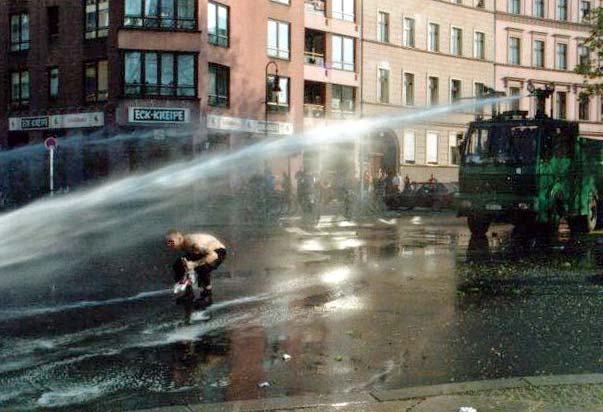
Last week, security news site KrebsOnSecurity went dark for more than 24 hours following what was believed to be a record 620 gigabit-per-second denial of service attack brought on by an ensemble of routers, security cameras, or other so-called Internet of Things devices. Now, there's word of a similar attack on a French Web host that peaked at a staggering 1.1 terabits per second, more than 60 percent bigger.
The attacks were first reported on September 19 by Octave Klaba, the founder and CTO of OVH. The first one reached 1.1 Tbps while a follow-on was 901 Gbps. Then, last Friday, he reported more attacks that were in the same almost incomprehensible range. He said the distributed denial-of-service (DDoS) attacks were delivered through a collection of hacked Internet-connected cameras and digital video recorders. With each one having the ability to bombard targets with 1 Mbps to 30 Mbps, he estimated the botnet had a capacity of 1.5 Tbps.
On Monday, Klaba reported that more than 6,800 new cameras had joined the botnet and said further that over the previous 48 hours the hosting service was subjected to dozens of attacks, some ranging from 100 Gbps to 800 Gbps. On Wednesday, he said more than 15,000 new devices had participated in attacks over the past 48 hours.
Read 6 remaining paragraphs | Comments
Google's newest attempt at creating a decent instant messaging platform, Google Allo, is finally available. Google announced the new IM service at Google I/O 2016, and a whopping four months later, we finally get to try it out.
We're still not quite sure what the future of Allo holds. Will it eventually become Android's default instant messaging platform? Will we get a Chrome and Chrome OS client? After a lackluster effort with Google Hangouts (which Google says will stick around), how much does Google really care about this new platform? For now all we can do is talk about the present, and right now Google has given us an instant messaging client that doesn't seem like it was built for the modern age.
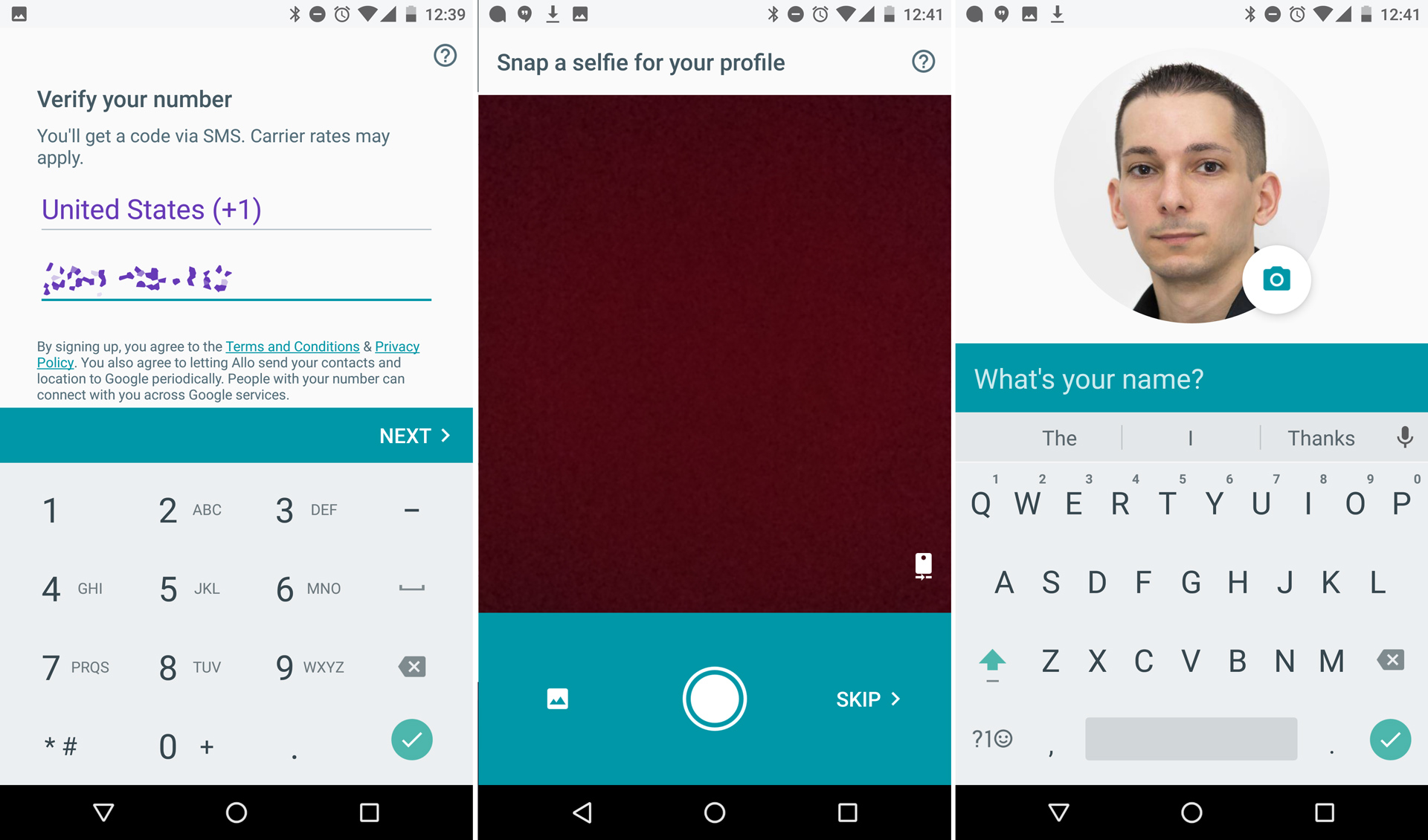
Setup is very odd in that Allo doesn't use your Google account. Sign-up and identification are done entirely through your cell carrier's phone number, just like Whatsapp and Wechat. After typing in your random string of 10 digits and getting a verification text, Allo pretends you are a complete stranger and asks for your name and profile picture. Google asking for my name is definitely off-putting, especially when—thanks to my prodigious usage of Google services—the company probably knows damn near everything about me. Allo acts more like a third-party service and pretends the Google connection doesn't exist.
Read 26 remaining paragraphs | Comments
AndrewAs cool as this sounds, I'm not sure I want to put all of my media up in Amazon's cloud - I might have misplaced some of my receipts...

Plex is giving the world another reason to subscribe to Plex Pass subscriptions today with the launch of Plex Cloud. As the name suggests, Plex Cloud eliminates the need to run the Plex Media Server on a computer or Networked Attached Storage (NAS) in your house. It does, however, require a subscription to Amazon Drive ($59.99 per year for unlimited storage) and the aforementioned Plex Pass ($4.99 per month or $39.99 per year).
Plex Cloud functions just like a regular Plex Media Server giving you access to your media — no matter how you acquire it — from an incredibly broad range of devices. Most, but not all Plex features are available in today's beta. Some of the missing capabilities include Camera Upload and Offline Sync, though...
AndrewOk, I'm totally going to train Scotty to do this.

My 19-month-old son, Stanley, has learned how to use a camera and to shout out cheese as he presses the shutter. He has a few of my old crappy point-and-shoot film cameras in his toy box to play with, but today I gave him my old Canon G12.
To be honest, the camera is a pile of s**t and it doesn’t get used at all. It was probably a tip-top camera back in the day, but by today’s standards it’s not the best.
He wandered round the house and garden snapping away saying ‘cheese’ at everything. He even managed to switch the settings to ‘sepia’ at one point. I’m guessing he was feeling a bit pretentious and wanted to change the style of his shots. He looks through the viewfinder as well rather than use the LCD screen on the back.
After he had finished and started to press all the buttons to see what they did, I whacked the memory card in the MacBook and had a look at the pics. He did pretty well!
What do you think? Is he any good? Is the dude a photographer in the making, or should he hang the camera up now and get back to watching Paw Patrol and coloring in?


As he walked around, I grabbed a few photos of him at work on my iPhone as well. Here they are.


I hope you enjoyed these photos and seeing life through the eyes of a 19-month-old!
About the author: Timothy Jones is a photographer based in Bristol, England, who current serves as a British Army Photographer covering West Midlands and Wales. He provides local and national publications with photos and videos for the British Army. He also works as a professional event photographer. You can find more of his work on his website, Facebook, Twitter, and Instagram. This article was also published here.
AndrewSOOOOO cute!
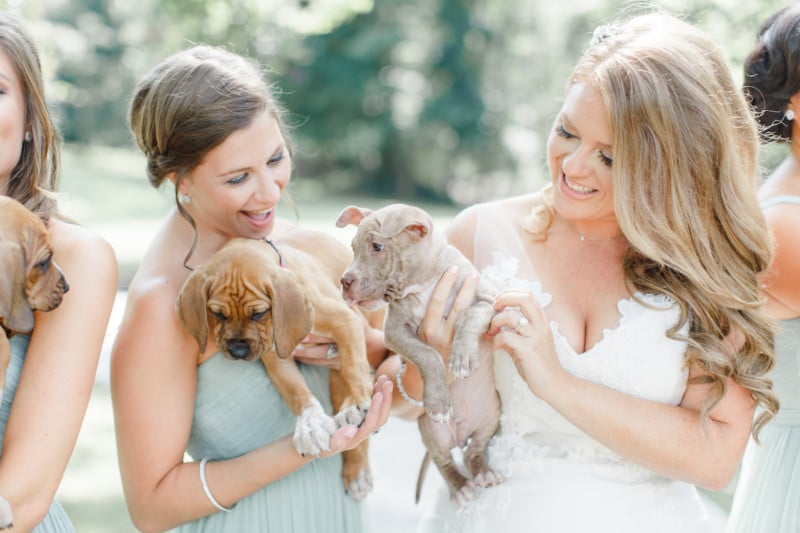
It’s not always guaranteed, but here’s a great way to make sure your next wedding shoot goes viral: replace flower bouquets with adoptable puppies. That’s how photographer Caroline Logan‘s recent wedding shoot wound up skyrocketing to Internet fame.
You see, the bride in this case, Mrs. Sarah Mallouk Crain, actually works for a dog rescue non-profit called Pitties Love Peace. So naturally, when it came to planning her bridal party photos, she asked Caroline if they could trade in the bouquets for puppies from her rescue.
“When Sarah first came to me with this idea I was thrilled,” Caroline told PetaPixel over email. “Because she is so involved with rescue pup work and has a huge passion for animal rescue in general, she was excited to include this huge piece of her heart in her wedding day and encourage others to #adoptnotshop. I immediately loved the idea and couldn’t wait for their wedding day!”


Enter the puppies: one nine-week-old pit bull found on the streets of Brooklyn and lovingly referred to as Biggie Smalls, and five boxer-coonhound sisters named after the first first ladies of the United States: Martha, Abigail, Dolley, Elizabeth, and Louisa.
Fortunately, it turned out photographing the bridesmaids, groomsmen, bride, and groom with the pups was a … well … a walk in the park. The puppies actually helped make for more candid shots.
“While photographing six rambunctious puppies definitely brought an added challenge, it also caused the bridal party to be more at ease,” Caroline explained to us. “Having something to divert attention from that uncomfortable ‘Oh my goodness, I’m getting my picture taken… what do I do with my hands?!’ feeling to pure puppy bliss made for relaxed photos where the bridal party was able to focus on interacting with the fun-loving puppies as I documented it all unfold.”
Pure puppy bliss… we couldn’t describe it better if we tried:


The best part, Caroline tells us, is that all of the puppies in the photos are adoptable, and Pitties Love Peace has seen a slew of requests since the photos went viral. Speaking of which, we asked Caroline what it was like to have her photos blow up like this. The short answer: surreal.
“This has been an unbelievably exciting few days, when I photographed my first wedding at age fourteen I NEVER imagined that my photos would someday go viral!” she said over email. “Having my photos go viral has been surreal, and it’s so rewarding to see people connecting with them as much as they are! I am so grateful.”
And we are also grateful. Our day was made at least 2,567% cuter thanks to this photo series.
To see more of Caroline’s work—puppies not necessarily included—be sure to give her a visit at her website or check her out on Instagram, Facebook, and Twitter.
Image credits: All photos by Caroline Logan Photography and used with permission.
Andrewbwahahahah. It probably serves these people right and I hope they learn their lesson.
Read more of this story at Slashdot.
.jpg)