O Google está bem empolgado com o Project Ara, o seu smartphone modular que vai permitir ao usuário conceber seus próprios aparelhos, com os componentes que desejarem incluir. A ideia é fornecer um hardware barato e de qualidade, que o consumidor possa customizar de acordo com seus gostos e poder aquisitivo ao invés de adquiri uma solução completa.
Mountain View pelo visto gostou do resultado do Nexus 9, o tablet da HTC com Android puro que é equipado com o Tegra K1, a atual geração de processadores da nVidia e que representa uma evolução considerável em performance e consumo de energia (o Laguna que o diga). Isso posto o Google anunciou ontem que o K1 também estará entre os componentes do Project Ara, mostrando que a ideia inicial de introduzir somente SoCs baratos era ao menos um tanto conservadora: a Rockchip, conhecida por fabricar chips de baixo custo e de boa performance era até então a única parceria mencionada em processadores.
A Marvell é a outra fabricante de processadores que também desenvolverá para o Ara, disponibilizando uma versão do PXA1928, um quad-core de entrada de 64 bits. Ambos, assim com o a chip da Rockchip a ponte UniPro compatível que a Toshiba está desenvolvendo para manter a performance.
Mountain View tem uma conferência sobre o Project Ara agendada para janeiro, onde acredita-se que será dado o pontapé inicial do smartphone modular. Entretanto ainda acredito que demorará um pouquinho para pormos as mãos em um destes aparelhinhos e ver se o Google ATAP mandou bem.
Jesus não é filho de José, porém de Roger Abdelmassih, o médico especialista em fertilização que engravidou 90% do Império Romano e 83% do povo Judeu. Segundo José, Maria não conseguia engravidar e foi procurar um médico. Entretanto, com as denúncias feitas contra Abdelmasshih, José diz ter certeza que o filho não é dele.
Maria alegou que o filho é de Deus, porém, José afirma que isso são alucinações após o abuso do médico. José quer justiça e foi até Herodes pedir a punição do médico. Herodes achou por bem matar todos os meninos com suspeitas de serem filhos de Roger Abdelmassih.
Papai Noel ficou maluco! Ao colocar um presentinho de natal, ele encontrou 50 milhões de dólares na meia de um deputado. O caso foi descoberto após o deputado mandar prender papai noel, dizendo que 60 milhões dos 50 milhões que estavam na meia haviam sumido.
Noel está preso e aguarda julgamento. Provavelmente, nesta noite, milhares de crianças ficarão sem presentes. Enquanto isto, milhares de deputados continuarão recebendo suas boladas em dólar, pois vivem num país de brinquedo.
Mary Mallon, an immigrant woman working in New York City in the early 1900s, became the most famous symbol of infectious disease in the United States. But the true story behind "Typhoid Mary" is more terrifying — and depressing — than you ever realized.
Over at Cato Unbound, I respond to Jerome Barkow’s survey of possible influences on the evolution of alien culture and intelligence, as clues to the kinds of aliens we might meet. Alas, Barkow assumes that alien styles are largely determined by the specific biological environments in which particular alien species originally evolved. However:
This might make sense for aliens who are a thousand years more advanced than humans are today. But it makes far less sense for aliens who are a million or a billion years more advanced – far more likely timescales. Given how much adaptation could have taken place over such times, we should expect to see older aliens selected far more by their final environment than their initial environment.
I then offer five predictions about older aliens:
First, … [they] should be very well adapted to their final physical environment. … Advanced aliens are physically similar across the universe, unless significantly different social equilibria are possible and have substantially different physical implications.
Second, … sexual reproduction is quite unlikely to last. … This doesn’t mean signaling will end. …
Third, very old aliens should be accustomed to very low levels of growth and innovation. … We’d [not] have much general information of use to such aliens. …
Fourth, … very advanced aliens should not be either generically friendly or generically hostile to outsiders. Instead they should be very good at making their friendship or hostility appropriately context-dependent. … Such aliens would ask themselves in great and careful detail, what exactly could humans eventually do to help or hurt them?
Fifth, advanced aliens should be well adapted in both means and ends. … Advanced aliens will be very patient, but also very selfish regarding their key units of reproduction, and quite risk averse about key correlated threats to their existence. (more)
Sony Pictures recently attempted to enter talks with Apple over distributing its highly-anticipated film "The Interview" on iTunes, reportsThe New York Times. The report notes that Apple showed no interest in the offer, which came shortly after Sony Pictures announced that it would be canceling the wide theatrical release of the movie after being threatened by hackers.
It remained unclear, however, whether any on-demand service would take "The Interview." According to people briefed on the matter, Sony had in recent days asked the White House for help in lining up a single technology partner — Apple, which operates iTunes — but the tech company was not interested, at least not on a speedy time table. An Apple spokesman declined to comment.
Sony announced yesterday that it would be showing "The Interview" at select independent cinemas, with Sony Entertainment Chairman and CEO Michael Lynton noting that the company is "continuing our efforts to secure more platforms and more theaters so that this movie reaches the largest possible audience.”
The movie has been the subject of controversy throughout the later half of 2014, as it depicts two journalists attempting to assassinate North Korean leader Kim Jong-un under the guidance of the CIA. The hacking of Sony Pictures and the movie's cancellation prompted widespread reaction, with U.S. President Barack Obama calling the latter move a "mistake."
Did you know by creating an account you can favorite comics and shorts, automatically bookmark the last one you saw, and more? Learn more about it here!
In many ways, Yahoo’s decline from a $128 billion company to one
worth virtually nothing is entirely natural. Yahoo grew into a
colossus by solving a problem that no longer exists. And while
Yahoo’s products have undeniably improved, and its culture has
become more innovative, it’s unlikely that Mayer can reverse an
inevitability unless she creates the next iPod. All breakthrough
companies, after all, will eventually plateau and then decline.
U.S. Steel was the first billion-dollar company in 1901, but it
was worth about the same in 1991. Kodak, which once employed
nearly 80,000 people, now has a market value below $1 billion.
Packard and Hudson ruled the roads for more than 40 years before
disappearing. These companies matured and receded over the
course of generations, in some cases even a century. Yahoo went
through the process in 20 years. In the technology industry,
things move fast.
Carlson’s take is pretty brutal, and paints a bleak picture for Yahoo’s prospects as an independent company. (Activist investors are pushing for a merger with AOL.) And it doesn’t seem like Mayer is going to get much more time.
I would argue that Yahoo lost its way early. Yahoo was an amazing, awesome resource when it first appeared, as a directory to cool websites. Arguably, the directory to cool websites. It was hard to find the good stuff on the early web, and Yahoo created a map. Their whole reason for being was to serve as a starting point that sent you elsewhere.
Then came portals. The portal strategy was the opposite of the directory strategy — it was about keeping people on Yahoo’s site, instead of sending them elsewhere. It was lucrative for a while, but ran its course. And it turned out that the web quickly became too large, far too large, for a human-curated directory to map more than a fraction of it. The only way to index the web was algorithmically, as a search engine. And one search engine stood head and shoulders above all others: Google.
Yahoo reportedly had an opportunity to buy Google in 2002 for $5 billion. Yahoo, under the leadership of CEO Terry Semel, declined. And that was the end of Yahoo.1 We all know hindsight is 20/20. There are all sorts of acquisitions that could have been made. But I would argue that acquiring Google in 2002 (if not earlier) was something Yahoo absolutely should have known they needed to do. The portal strategy had played itself out. All they were left with was their original purpose, serving as a starting page for finding what you were looking for on the web.
Buying Google in 2002, at whatever cost, was the only way for Yahoo to return to those roots. Google wasn’t just something shiny and new — it was the best solution to date (even now) to the problem Yahoo was originally created to solve. In a broad sense, buying Google would have been to Yahoo what buying NeXT was to Apple in 1997: an acquisition that returned the parent company to its roots, with superior industry-leading technology and outstanding talent.2
In short, Yahoo’s early 2000s leadership had no understanding whatsoever why Yahoo had gotten popular and profitable in the first place. That serving as the leading homepage for the entire web was important and profitable, and that the only way to maintain that leadership was to acquire Google.
Google, on the other hand, learned an important lesson from Yahoo. The basic gist of portals never really died: Google has gone on to build all sorts of properties like Gmail, Google News, Maps, and Google Plus, all of which are designed to keep users on Google-owned sites. But Google never conflated these things with web search. The google.com home page remains to this day as spartan as when it first appeared, and they fully understand that the point of it is to send users to other sites.
Yahoo’s loss of focus on indexing the web was a mistake in the late ’90s. They had a chance to completely correct that mistake by acquiring Google in the early 00’s. They blew that chance, and it’s been all downhill for them ever since.
You could argue that the mistake wasn’t declining to acquire Google, but rather the earlier decision to hire Semel as CEO and an executive staff with a Hollywood/media company background. Two sides of the same bad coin, I say. ↩
Among the many problems with this analogy: Apple and NeXT needed each other. Both companies were deeply adrift in 1996. NeXT had talent and great software, but their prospects were even bleaker than Apple’s. Google, obviously, did not need Yahoo, and in fact was almost certainly better served by staying independent and declining any offers to acquire it. ↩
A Netflix anunciou hoje que por causa do Natal passará a exibir filmes Bíblicos. O primeiro será os dez travamentos. A vida de Cristo também está a caminho e será exibido em 1.235.467 partes, sendo que cada parte terá mais ou menos dois segundos, tempo que leva entre um travamento e outro. O gerente regional da Netflix do Brasil, em entrevista exclusiva, explicou os planos da empresa.
“Vamos…. (Carregando. Por favor espere)…. Fazer….. No…. (carregando, por favor espere)…. Vem….. (desculpe, estamos com problemas para reproduzir essa frase).
I’m not one of those who thinks Cuba is the next Singapore or even the next Puerto Rico. Why not?
I’m willing to assume that the end of the American embargo will mean some kind of economic liberalization over the next ten years. But how much good will that bring?
We could start by looking for relevant comparisons. We could ask how well have non-British-ruled, non-Dutch-ruled, non-American-ruled Spanish-speaking Caribbean islands done? There is a fairly clear example of such a country with some ethnic, cultural, historic, and linguistic similarities to Cuba, namely the Dominican Republic. For non-PPP-adjusted gdp per capita, the D.R. clocks in at about $5800 per year. And that is about where I think Cuba will end up, after a good bit of turmoil.
Now various official sources put Cuban per capita gdp (again, non-PPP-adjusted) at about that same level. That is highly misleading, and yes I have been to both countries. (Other countries at that level don’t have so many hungry people or so many women selling their bodies to tourists.) In any case I expect Cuban reforms, along with a good bit of additional deindustrialization from U.S. competition, to bring a short-run gdp dip, with an eventual climb into a D.R.-like economy, albeit with big bumps along the way.
Here are a few additional points:
1. The Caribbean in general has done very poorly since the economic crisis of 2008. Most of it does not show signs of bouncing back.
2. The short-run trends for foodstuffs are not so great. The major agricultural exports are sugar, citrus, fish, cigars, and coffee. Sugar is by far the most important of those, and right now the sugar price is well below half of its 2011 level.
4. National savings and investment rates are at about ten percent, well below Latin American averages (pdf, p.8).
5. I don’t in general buy “brain drain” arguments, but they do sometimes apply to islands and for historical reasons they are especially likely to apply to Cuba. Many of the most talented Cubans were encouraged to leave, or managed to leave, and staying in Miami will be better than going back for a long time to come.
6. Cuba has some of the best beaches in the Caribbean, but I expect most of those returns to accrue to land and capital, not labor.
7. Cuba already imports 30% of its food from America. Note that sum has been falling lately, as Cuba seeks cheaper alternatives, such as food from Vietnam. Post-liberalization, trade with America will go up a good deal but we are not starting from zero under the status quo.
8. Cuba is inheriting some very serious problems with institutions, and that is assuming they manage to move away from communism. In my admittedly limited experience, a fair number of Cubans still believe in communism, while also thinking the revolution somehow went astray. Emmanuel Todd has argued that Cuban family structures make the country susceptible to authoritarian rule. I consider that speculative, but still communism has had a long shelf life there, well past the fall of the Soviet Union, so let’s not dismiss it out of hand. The country also had a notable history of instability well before the Castro revolution. It is hard to be optimistic on this front.
9. Cuba seems to depend a good deal upon…Venezuela. Is that an asset you wish to hold in your portfolio?
10. Foreign investors can hire Cuban labor only through a state employment agency, and no this has not led to a form of efficient offsetting power, rather it has kept productivity low. More generally, this long Brookings study of FDI in Cuba (pdf) shows how difficult the environment is for foreign capital.
11. Costa Rica has far, far better institutions than Cuba and still it is relying on agriculture and tourism.
13. Literacy is high, probably higher than in the United States, and there is a functioning social health infrastructure which reaches a high percentage of Cubans.
15. The Cuban diaspora may nonetheless kick in as a source of talent and investment.
I’m not a super pessimist on Cuba, I just think they will need a long time to get to the point the Dominican Republic is at today. Being “the next Costa Rica” seems for them impossibly far off.
A apostadora Lucinda Moreira, do Rio de Janeiro, teve um sonho estranho essa noite. Ela sonhou que conversava com acionistas animados da Petrobras, que garantiam que compraram as ações quando a presidente Dilma Rousseff disse que eles iriam ganhar muito dinheiro. Todos agora estavam ricos, alguns com carros importados, outros tinham trocado de casa.
Lucinda não pensou duas vezes: correu até uma banca de bicho no Centro da cidade e apostou tudo o que tinha no burro. Ganhou uma bolada. “Não tinha como dar errado. O palpite era certeiro”, disse ela, que já ganhara no bicho outra vez apostando no burro. Ela tinha sonhado com uma apresentadora de TV.
A Igreja Católica negou o batismo de Jesus, nascido em Belém, capital do Pará. Segundo o Vaticano, a igreja ainda não aceita crianças fruto de relações poligâmicas, muito menos com dois pais: José e Deus. Maria ameaçou batizar a criança na Igreja Cristã Contemporânea.
Os padrinhos já estavam certos, após São João Batista recusar o título por não admitir que seu afilhado fosse batizado por aspersão, ficaram com a responsabilidade Zaqueu e Maria de Cleofás. Maria, José e Deus já entraram com processo contra a Igreja Católica e esperam um pedido de desculpas oficial do Papa. Porém, Papa Francisco ainda não foi visto desde a derrota do San Lorenzo para o Real Madrid.
2014 já está indo embora e com ele alguns modelos que deixarão (ou não) saudades em muita gente. Depois de 2013, que marcou pela saída da vetusta Kombi e dos populares Ka, Gol G4 e Mille, esse ano saíram de linha ou do mercado nacional alguns modelos importantes. A lista de óbitos em 2014 está relacionada abaixo com as marcas e modelos em ordem alfabética.
Confira abaixo os modelos que disseram adeus em 2014:
Chery Cielo – O médio da marca chinesa tinha um belo visual e contava com estilo italiano, mas derrapou em qualidade e principalmente em seu conjunto mecânico, alvo de críticas. Disponível em carrocerias sedã e hatch, o modelo tinha somente motor 1.6 de 119 cv e câmbio manual.
Chery S18 – O subcompacto chinês era uma boa promessa, sendo que ainda possui versões sedã e perua/crossover na China, mas bateu de frente com o Face e não encontrou seu espaço entre este e o QQ. Tinha motor 1.3 Flex de até 91 cv e câmbio manual.
Chevrolet Agile – O compacto da GM sempre foi controverso. O design discutível e a plataforma do Celta – que por sua vez era do Corsa de 1994 – não foram empecilhos para que vendesse bem na época em que a montadora estava saindo do pior momento de sua história. Chegou a ganhar facelift e câmbio automatizado, mas o Onix eclipsou de vez o argentino, que ficou do outro lado da fronteira.
Chevrolet Sonic – O bom compacto global da GM – feito sobre a plataforma Gamma II – chegou para ser um intermediário entre os populares e o médio Cruze, mas não encontrou seu espaço, mesmo com o bom motor 1.6 16V de 120 cv. O sedã tinha visual sem graça, mas o hatch era bonito. Saiu de cena deixando o irmão Tracker.
Citroën C4 Hatch – O hatchback francês até que durou muito no mercado brasileiro, visto que a nova geração já tem algum tempo na Europa, apesar de pouco apelo visual. O modelo tem estilo muito próprio e inovação nos detalhes. Saiu sem deixar herdeiro no Brasil.
Ford Fiesta Rocam – Chamado assim por causa do motor Zetec Rocam, o compacto da marca americana foi bastante elogiado pelos consumidores e deu início ao período de reação da empresa no Brasil, sendo destaque na Campanha Upgrade que o levou ao quarto posto entre os mais vendidos. No fim da vida, se destacou pelas vendas em alta, deixando o espaço pronto para o Novo Ka.
Ford Transit – Enquanto a montadora americana ressuscitava os velhos F-350 e F-4000, deixava de lado a (ainda) moderna Transit. O problema foi a variação cambial, já que o modelo vinha importado da Turquia, onde a nova geração passou a ser feita esse ano. Ainda assim, a van deve retornar em um futuro próximo.
Hyundai Sonata – O sedã médio-grande da marca sul-coreana fez sucesso entre os consumidores de maior poder aquisitivo no Brasil, mas a proximidade de preço com o Azera, fez com que o modelo deixasse de ser importado e o mercado não chegou a conhecer a nova geração.
Hyundai Veloster – Um hatch de três portas com visual agressivo e muita polêmica. O modelo deixou de ser comercializado na questionável versão 1.6 de 128 cv, que era declarada como sendo 140 cv…. Sem fazer jus ao nome, ele promete se redimir em 2015, quando chega a versão Turbo.
Lamborghini Gallardo – O superesportivo italiano foi substituído pelo Huracán e viveu por praticamente uma década antes de morrer. O touro de Sant´Aghata Bolognese custava em torno de R$ 1,5 milhão e tinha motor V10 5.2 com até 570 cv.
Lifan 320 – Embora a produção tenha parado antes de 2014, o modelo chegou a ser comercializado ainda em 2014 com poucas unidades. Inspirado no MINI Cooper, não fez sucesso, apenas gerou polêmica.
Lifan 620 – Outro que já estava fora de linha quando também foi oferecido novamente em poucas unidades após a marca chinesa assumir a operação no Brasil. Clone do Corolla de duas gerações atrás, tinha pouca expressão e qualidade.
Peugeot 207 – O compacto francês também gerou polêmica, pois em realidade era o anterior 206 apenas remodelado e rebatizado como o modelo europeu, já de geração mais nova. Conservou alguns pontos positivos do best seller francês, mas ficou esquecido após a chegada do belo 208. Teve até versão perua, mas morreu em 2014 apenas com sedã e hatch.
Peugeot 508 – Era um belo sedã topo de linha e dotado de muita tecnologia embarcada. No entanto, seu maior problema era o preço, custando em torno de R$ 112.000. Tinha o bom motor 1.6 THP e transmissão automática de seis marchas.
Peugeot Hoggar – Definitivamente a picape da marca francesa – criada especialmente para cá, não conseguiu refazer o sucesso que um dia a empresa teve com a quase esquecida 504 Pickup – aquela de motor diesel e 1.300 kg de carga – e nem incomodar as rivais Strada, Saveiro e Montana.
Em era de relógios inteligentes, um inventor ousou fazer um dispositivo diferente para ser colocado no pulso. Com ideias tiradas diretamente dos filmes do James Bond, o alemão Patrick Priebe criou o LaserWatch, um relógio que dispara lasers que realmente são capazes de queimar coisas.
Ele mantém uma empresa chamada Laser Gadgets, cujo nome é autoexplicativo. Em seu último projeto, ele decidiu fazer algo mais refinado, embora o seu aparelhinho esteja longe de se passar por um relógio de pulso comum.
Para isso, ele gastou cerca de US$ 200 em material e mais cerca de 40 horas para a montagem. Cada um dos componentes foi feito por ele, desde os botões até o próprio laser de 1,5 mil megawatts. A luz é forte, e a bateria é pequena, então não é possível manter o o fornecimento de energia do laser por muito tempo.
Em contato com a CNET, Priebe respondeu à questão que todos querem saber: “mas não vai queimar a mão do usuário?”. Ele diz que o brilho azul não tem efeitos, mas se o raio diretamente atingir sua mão, vai ficar quente rapidamente. Neste caso, é só deixar de apertar o botão para parar, mas ele confirma. “É realmente capaz de queimar sua pele, no entanto. Não é exatamente um brinquedo”.
Ele também diz que não tem intenção de produzir em massa o seu projeto, mas ele afirma que se o fizesse, o relógio custaria muito mais de US$ 300. No entanto, ele diz que, como outras de suas invenções, o LaserWatch pode ser feito sob encomenda pelo seu site.
When we have a headache or painful joints, the first thing that many of us reach for is ibuprofen, the common, over-the-counter painkiller that’s probably in your medicine cabinet. But it turns out that ibuprofen could have benefits far greater than curing your hangover: it could increase longevity. As described in PLOS Genetics, researchers found that regular doses of the drug extended the lifespan of yeast, worms and fruit flies in the lab. No, none of those are humans, or even mammals, but the fact that we see the same thing in different kingdoms of life raises the possibility that the same could be true for us.
Aging is the biggest risk factor for numerous serious diseases, such as cancer and dementia, so it’s no wonder that researchers are keen to delay it for the benefit of our health. Testing out drugs for their ability to increase lifespan is actually relatively easy, thanks to model organisms such as yeast and worms which are quick and simple to grow. But screening thousands of potential compounds is an arduous task, to say the least, and the results would be meaningless if candidates turn out to be toxic to humans. This is why scientists have started to focus their attention on drugs that are already used on humans.
One group of drugs that has piqued the interest of researchers recently is nonsteroidal anti-inflammatories (NSAIDs), which are used to treat pain, fever and inflammation. That’s because aging and inflammation are tightly integrated, although cause and effect are unclear at the moment. And it seems that scientists may be onto something as studies have already shown that aspirin is capable of extending the lifespan of worms in the lab. Another NSAID that researchers thought might be worth investigating is ibuprofen, which has already been shown to lower the risk of developing certain age-related diseases, such as Alzheimer’s.
To find out more, scientists from the Buck Institute and Texas A&M University administered doses of ibuprofen comparable to those used in humans to three diverse model organisms: yeast, worms and flies. They found that the drug increased the lifespan of all three species, indicating a conserved longevity effect. Yeast given the anti-inflammatory lived around 17% longer compared to controls, and the other two had their lifespans increased by around 10%. Furthermore, the organisms also appeared healthier.
Further examination in yeast also hinted at the likely mechanism behind the increase in longevity. They found that ibuprofen decreased the uptake of an amino acid—the building blocks of proteins—called tryptophan. Tryptophan is an essential amino acid, meaning it is essential for our life but cannot be synthesized by the body, and therefore must be obtained from our diet. The researchers discovered that ibuprofen destabilizes the membrane protein involved in transporting this amino acid into the cell, resulting in around a 15% decrease in tryptophan levels.
Of course, the work is proof of principle, so it doesn’t necessarily mean we will see the same in humans. However, the researchers think it’s worth pursuing more animal studies, starting off with mice. “We are not sure why this works,” lead scientist Michael Polymenis said in a news release, “but it’s worth exploring further.”





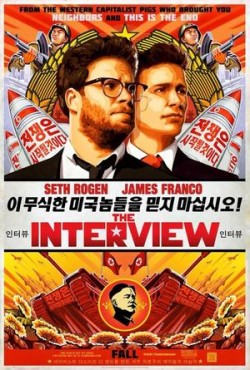 Sony Pictures recently attempted to enter talks with Apple over distributing its highly-anticipated film "The Interview" on iTunes, reports The New York Times. The report notes that Apple showed no interest in the offer, which came shortly after Sony Pictures announced that it would be canceling the wide theatrical release of the movie after being threatened by hackers.


