We report on theoretical and experimental results for a ball that rolls without slipping on a surface of revolution, whose symmetry axis is aligned with a uniform gravitational field, particularly investigating both near-circular orbits and scattering-type orbits in cones. The experimental data give support for the theoretical treatment, a non-trivial application of Newton's second law that expands on our previous work and related work of others. Our findings refine those from a recent article in this journal, and largely replicate those obtained from an earlier Lagrangian approach, adding some new details and commentary. While the orbits of marbles rolling in cones do not match inverse-square-law orbits quantitatively (e.g., instead of Kepler's 3rd law, we have ), we argue that students should experience these qualitative phenomena—precession of orbits, escape velocity behavior, spin-orbit coupling, conservation laws for angular momentum, energy, and spin projection—as much for the fun and kinesthetic impressions as for the raw learning. We also report on a heretofore largely ignored variable in the exploration of rolling orbits in a gravity well: the marble's spin about its own axis as it rolls. Experimenters can, intentionally or not, vary this initial condition and produce different orbital periods for a given orbital radius—a distinctly non-celestial behavior. Careful selection of the initial spin direction and speed for a particular cone can result in marble orbits that mimic the planetary ellipses.
Jacopo.bertolotti
Shared posts
11/08/13 PHD comic: 'Spousal Ignorance'
| Piled Higher & Deeper by Jorge Cham |
www.phdcomics.com
|
|
 |
||
|
title:
"Spousal Ignorance" - originally published
11/8/2013
Get the new Thesis Fuel Mug, only at the PHD Store |
||

Asking Photons Where They Have Been
Author(s): A. Danan, D. Farfurnik, S. Bar-Ad, and L. Vaidman
 We present surprising experimental evidence regarding the past of photons passing through an interferometer. The information about the positions through which the photons pass in the interferometer is retrieved from modulations of the detected signal at the vibration frequencies of mirrors the photo...
[Phys. Rev. Lett. 111, 240402] Published Mon Dec 09, 2013
[Report] Phase Mismatch–Free Nonlinear Propagation in Optical Zero-Index Materials
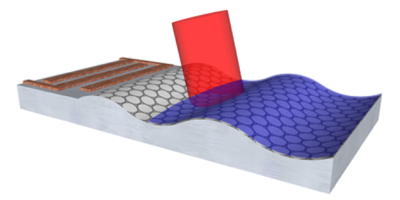
Synopsis: Flexing Some Graphene Muscle
Published Thu Dec 05, 2013
Mathematical Formulation of Multilayer Networks
Author(s): Manlio De Domenico, Albert Solé-Ribalta, Emanuele Cozzo, Mikko Kivelä, Yamir Moreno, Mason A. Porter, Sergio Gómez, and Alex Arenas
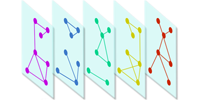
 A “monoplex” network, like a Facebook-based social network, can be represented by a set of nodes (people) linked by their Facebook connections (interactions). But real-world networks can be “multiplex,” with multiple types of interactions and where one type of interaction can influence another. A unifying framework for describing “multiplex” networks has been missing so far. Deftly employing the concept of tensors, theorists now present such a framework that will power studies of “multiplex” networks across many scientific disciplines.
[Phys. Rev. X 3, 041022] Published Wed Dec 04, 2013

Spifferi e Fantasmi
Jacopo.bertolottiPity it is just in Italian

La telefonata arriva verso sera. «Sono Zichichi». «Professore come sta?». «Bene, bene. Ma mi ascolti. Qui gira voce di una scoperta straordinaria». Sono passati appena nove minuti dalle 2 del mattino di giovedì 22 settembre 2011 e sul sito de Il Giornale viene pubblicata un’intervista [1] ad Antonino Zichichi, fisico trapanese, professore emerito all'università di Bologna e uomo dalle frequentazioni politiche importanti, almeno fino a qualche tempo fa.
Le Università e i Centri di Ricerca, quando ritengono di avere in tasca un grande risultato frutto del lavoro dei propri ricercatori, lo comunicano seguendo delle regole codificate, fanno un po’ come le agenzie governative quando devono informare il grande pubblico su questioni di sicurezza nazionale. Gli uffici stampa di queste organizzazioni preparano un comunicato che riassume e prova a spiegare quel risultato accompagnandolo con l’articolo che sta per essere pubblicato su una rivista scientifica. Questo materiale non è a disposizione di tutti ma, per un tempo ben definito, in genere le due settimane che precedono la pubblicazione, solo delle agenzie di stampa, dei giornalisti e di altri scienziati che hanno così la possibilità di prepararsi al commento o di pubblicare la notizia il giorno stesso che questo tempo arriva a scadenza. La procedura in questione viene chiamata embargo proprio come l’ordine che si dà a una nave di non salpare o come il blocco degli scambi commerciali tra paesi in conflitto. Nella maggior parte dei casi l’articolo è la fotocopia del comunicato stampa ma questa è un’altra faccenda, quello che conta è che chi aderisce all'embargo non può fare scherzi pena la perdita del privilegio di sapere le cose prima degli altri.


[1] «Ecco la scoperta che mette in crisi Einstein», Vittorio Macioce, il Giornale.it, Giovedì 22/09/2011
[2] Gibbs, P. E., Neutrinos, Press Embargos & Let's Talk about FTL Prespacetime Journal, November 2011, Vol. 2, Issue 11, pp. 1725-1728.
[3] Peter Woit, Not Even Wrong: The Failure of String Theory and the Search for Unity in Physical Law, Basic Books (September 4, 2006). In italiano lo pubblica Codice meno di un anno dopo col titolo “Neanche sbagliata. Il fallimento della teoria delle stringhe e la corsa all'unificazione delle leggi della fisica”.
[4] P, Odifreddi, Zichicche. Pensieri su uno scienziato a cavallo tra politica e religione, Dedalo (1 marzo 2003).
[5] OPERA collaboration, Measurement of the neutrino velocity with the OPERA detector in the CNGS beam, arXiv:1109.4897v1
[Avevo questa roba da parte, la pubblico qui, tanto non so più che farmene]
Communication: Science is not about simple stories
Communication: Science is not about simple stories
Nature 503, 7475 (2013). doi:10.1038/503198f
Author: Jeroen Bergmann
Presenting science as a compelling story is becoming a popular way of communicating results — a technique that is guaranteed to capture the attention of the scientific community and the public. Although science needs great stories, stories are not science.Storytelling glosses over uncertainties; methodological
Inelastic scattering puts in question recent claims of Anderson localization of light
Nature Photonics 7, 934 (2013). doi:10.1038/nphoton.2013.210
Authors: Frank Scheffold & Diederik Wiersma
Inelastic scattering puts in question recent claims of Anderson localization of light
Nature Photonics 7, 934 (2013). doi:10.1038/nphoton.2013.281
Authors: Georg Maret, Tilo Sperling, Wolfgang Bührer, Andreas Lubatsch, Regine Frank & Christof M. Aegerter
Is super-resolution microscopy right for you?
Nature Methods 10, 1157 (2013). doi:10.1038/nmeth.2756
Author: Vivien Marx
Imaging with better than 200-nanometer resolution brings new subcellular-scale details into focus. Practitioners share how they weigh trade-offs in speed, resolution and phototoxicity.
Points of significance: Power and sample size
Nature Methods 10, 1139 (2013). doi:10.1038/nmeth.2738
Authors: Martin Krzywinski & Naomi Altman
The ability to detect experimental effects is undermined in studies that lack power.
Un bosone di Higgs che decade anche in qualche leptone
È passato un po' di tempo dall'ultima volta che ho scritto delle ricerche del bosone di Higgs. Magari vi siete fatti una cattiva idea, che con la scoperta del luglio 2012 e tutte le misure che le sono seguite la faccenda fosse chiusa, perlomeno fino alla riapertura delle attività di LHC nel 2015. Niente affatto.
Fino ad adesso, la particella che tanto assomiglia al bosone di Higgs del Modello Standard ha lasciato le sue tracce disintegrandosi in fotoni, o particelle Z o W: sono questi i canali di decadimento che ci hanno permesso di identificarlo, e di misurarne le proprietà. Se siete lettori abituali di questo sito, non vi sarà sfuggita l'elemento comune di questi decadimenti: in tutti e tre i casi, la particelle di Higgs si frantuma in bosoni, le particelle mediatrici delle interazioni fondamentali. Visti i risultati, resta dunque aperta una questione spinosa: la particella che abbiamo scoperto decade anche in fermioni, i costituenti fondamentali della materia? È una domanda importante: il decadere del bosone di Higgs in un certo tipo di particella è strettamente legato all'essere responsabile della sua massa. Se quello che abbiamo scoperto è proprio un bosone di Higgs, è responsabile della massa sia dei bosoni che dei fermioni?


I fermioni si dividono in due famiglie: da una parte i quark, i componenti fondamentali degli adroni (come il protone e il neutrone), dall'altra i leptoni, ovvero l'elettrone, il muone e la particella tau, più i loro rispettivi neutrini. In qualche modo sappiamo già, almeno indirettamente, che il bosone di Higgs che abbiamo visto ha una qualche relazione con i quark. Essendo il responsabile della massa della particelle, il bosone di Higgs può decadere solo in particelle che ne siano dotate, Come fa dunque a venire prodotto dalla fusione di due gluoni, o disintegrarsi in due fotoni, visto che queste particelle sono prive di massa? Tramite la mediazione di particelle massive, tra cui anche i quark, come nel diagramma qui sotto:

Nell'attesa che ATLAS osservi il decadimento del bosone di Higgs in due quark (quello più probabile sarebbe in una coppia quark-antiquark  ), restava aperta la caccia a qualche traccia di decadimento in una coppia di leptoni. Non solo il bosone di Higgs ama relazionarsi con particelle dotate di massa, lo fa tanto più volentieri quanto maggiore è la questa loro massa. Dal punto di vista dei leptoni, è dunque molto più probabile che il bosone di Higgs decada in una coppia di leptoni tau
  che in una coppia muone-antimuone o elettrone-positroni. La massa di un
  è infatti circa 18 volta quella di un
  , che a sua volta pesa circa duecento volte più che un elettrone.

Ieri mattina c'era una certa folla al seminario del CERN, durante il quale ATLAS avrebbe annunciato gli ultimi risultati sulle ricerche del bosone di Higgs in sui decadimenti in fermioni. La ragione di questo affollamento era evidente: tutti volevano sapere se ATLAS avesse finalmente avvistato un segnale inequivocabile di un decadimento in leptoni, che per adesso nessuno ha isolato con certezza. I fisici, come sapete se avete letto la serie di articoli sull'isolare un segnale da un rumore di fondo, hanno regole piuttosto precise per definite che cosa sia un'evidenza o una scoperta. Per adesso, la cosa che più si avvicinava a un'evidenza di un decadimento del bosone di Higgs in leptoni erano le 2.9 sigma di CMS nel canale annunciati questa primavera. Molto vicino, ma non ancora abbastanza.

I leptoni sono bestie difficili da isolare, molto più rognosi di elettroni e muoni, i loro cuginetti leggeri. Proprio per la loro massa considerevole, i possono decade in un sacco do modi diversi, per cui isolarli per bene e misurane la velocità è un'impresa complessa. Questa è una delle ragione per cui ATLAS ha impiegato così tanto tempo per uscire con il risultato presentato ieri. Il tempo impiegato però ha dato i suoi frutti. Ve la faccio breve: ATLAS vede chiaramente un segnale di decadimento del bosone di Higgs di massa intorno a 125 GeV che decade in una coppia di leptoni , con un'eccesso quantificato a 4.1 sigma. Non ancora abbastanza per dichiarare una scoperta in questo canale, ma ben più di una semplice evidenza!

Il ritmo osservato di decadimenti in del nostro bosone di Higgs è un po' deludente. I numeri sono in ottimo accordo con quanto previsto dal Modello Standard, e non sembrano esserci tracce evidenti di nuova fisica in questo canale. Il Modello Standard si riconferma stabile e robusto, con tutti i problemi che questo porta con se.

Nella mia casella email è appena arrivato un messaggio: la settimana prossima ci sarà un seminario di CMS intitolato Direct Measurement of the Higgs Boson Fermionic Couplings at CMS, dove vedremo risultati di ricerche simili. E, ne sono certo, avremo qualche sorpresa interessante.
© Marco @ Borborigmi di un fisico renitente, 27/11/2013. (Some right reserved)|
Permalink |
3 commenti
Archiviato in Fisica| Tag: ATLAS, bosone di Higgs, bosoni, CERN, evidenza, fermioni, higgs, leptoni, tau
Lethal Neutrinos
Lethal Neutrinos
How close would you have to be to a supernova to get a lethal dose of neutrino radiation?
(Overheard in a physics department)
The phrase "lethal dose of neutrino radiation" is a weird one. I had to turn it over in my head a few times after I heard it.
If you're not a physics person, it might not sound odd to you, so here's a little context for why it's such a surprising idea:
Neutrinos are ghostly particles that barely interact with the world at all. Look at your hand—there are about a trillion neutrinos from the Sun passing through it every second.

The reason you don't notice the neutrino flood is that neutrinos hardly interact with ordinary matter at all. On average, out of that massive flood, only one neutrino will "hit" an atom in your body every few years.[1]Less often if you're a child, since you have fewer atoms to be hit. Statistically, my first neutrino interaction probably happened somewhere around age 10.
In fact, neutrinos are so shadowy that the entire Earth is transparent to them; nearly all of the Sun's neutrino flood goes straight through it unaffected. To detect neutrinos, people build giant tanks filled with hundreds of tons of material in the hopes that they'll register the impact of a single solar neutrino.
This means that when a particle accelerator (which produces neutrinos) wants to send a neutrino beam to a detector somewhere else in the world, all it has to do is point the beam at the detector—even if it's on the other side of the Earth!

That's why the phrase "lethal dose of neutrino radiation" sounds weird—it mixes scales in an incongruous way. It's like the idiom "knock me over with a feather" or the phrase "football stadium filled to the brim with ants".[2]Which would still be less than 1% of the ants in the world. If you have a math background, it's sort of like seeing the expression "ln(x)e"—it's not that, taken literally, it doesn't make sense, but it's hard to imagine a situation where it would apply.[3]If you want to be mean to first-year calculus students, you can ask them to take the derivative of ln(x)e dx. It looks like it should be "1" or something, but it's not.
Similarly, it's so hard to get enough neutrinos to compel even a single one of them to interact with matter, making it hard to picture a scenario in which there'd be enough of them to affect you.
Supernovae[4]"Supernovas" is also fine. "Supernovii" is discouraged. provide that scenario. The physicist who mentioned this problem to me told me his rule of thumb for estimating supernova-related numbers: However big you think supernovae are, they're bigger than that.
Here's a question to give you a sense of scale:
Which of the following would be brighter, in terms of the amount of energy delivered to your retina:
A supernova, seen from as far away as the Sun is from the Earth, or
The detonation of a hydrogen bomb pressed against your eyeball?

Applying the physicist rule of thumb suggests that the supernova is brighter. And indeed, it is ... by nine orders of magnitude.
That's why this is a neat question; supernovae are unimaginably huge and neutrinos are unimaginably insubstantial. At what point do these two unimaginable things cancel out to produce an effect on a human scale?
A paper by radiation expert Andrew Karam provides an answer.[5]Karam, P. Andrew. "Gamma And Neutrino Radiation Dose From Gamma Ray Bursts And Nearby Supernovae." Health Physics 82, no. 4 (2002): 491-499. It explains that during certain supernovae, the collapse of a stellar core into a neutron star, 1057 neutrinos can be released (one for every proton in the star that collapses to become a neutron).
Karam calculates that the neutrino radiation dose at a distance of one parsec[6]3.262 light-years, or a little less than the distance from here to Alpha Centauri. would be around half a nanosievert, or 1/500th the dose from eating a banana.[7]xkcd.com/radiation
A fatal radiation dose is about 4 sieverts. Using the inverse-square law, we can calculate the radiation dose: \[ 0.5\text{ nanosieverts} \times\left ( \frac{1\text{ parsec}}{x}\right )^2 = 5\text{ sieverts} \] \[ x=0.00001118\text{ parsecs}=2.3\text{ AU} \] 2.3 AU is a little more than the distance between the Sun and Mars.
Core collapse supernovae happen to giant stars, so if you observed a supernova from that distance, you'd probably be inside the outer layers of the star that created it.

The idea of neutrino radiation damage reinforces just how big supernovae are. If you observed a supernova from 1 AU away—and you somehow avoided being being incinerated, vaporized, and converted to some type of exotic plasma—even the flood of ghostly neutrinos would be dense enough to kill you.
If it's going fast enough, a feather can absolutely knock you over.

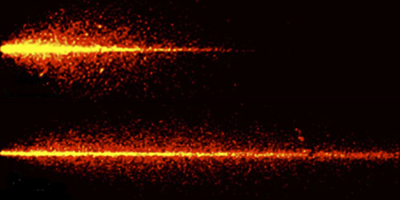
Synopsis: Colloidally Trapped Light Needles
Published Thu Nov 21, 2013

Putting the Wolfram Language (and Mathematica) on Every Raspberry Pi
Jacopo.bertolottiAm I getting it right? Am I going to get a working version of Mathematica on a 25$ Raspberry Pi?
And that for just 25$? No extra cost for Mathematica? Are you sure?
Last week I wrote about our large-scale plan to use new technology we’re building to inject sophisticated computation and knowledge into everything. Today I’m pleased to announce a step in that direction: working with the Raspberry Pi Foundation, effective immediately there’s a pilot release of the Wolfram Language—as well as Mathematica—that will soon be bundled as part of the standard system software for every Raspberry Pi computer.

In effect, this is a technology preview: it’s an early, unfinished, glimpse of the Wolfram Language. Quite soon the Wolfram Language is going to start showing up in lots of places, notably on the web and in the cloud. But I’m excited that the timing has worked out so that we’re able to give the Raspberry Pi community—with its emphasis on education and invention—the very first chance to put the Wolfram Language into action.
I’m a great believer in the importance of programming as a central component of education. And I’m excited that with the Wolfram Language I think we finally have a powerful programming language worthy of the next generation. We’ve got a language that’s not mostly concerned with the details of computers, but is instead about being able to understand and create things on the basis of huge amounts of built-in computational ability and knowledge.
It’s tremendously satisfying—and educational. Writing a tiny program, perhaps not even a line long, and already having something really interesting happen. And then being able to scale up larger and larger. Making use of all the powerful programming paradigms that are built into the Wolfram Language.
And with Raspberry Pi there’s something else too: immediately being able to interact with the outside world. Being able to take pure code, and connect it to sensors and devices that do things.
I think it’s pretty amazing that we’re now at the point where all the knowledge and computation in the Wolfram Language can run in a $25 computer. And I think that it’s the beginning of something very important. Because it means that going forward it’s going to be technically possible to embed the Wolfram Language in pretty much any new machine or system. In effect immediately injecting high-level intelligence and capabilities.
I’ve waited a long time for this. Back in 1988 when Mathematica was first released, it could only just fit in a high-end Mac of the time, but not yet a PC. A decade later—even though it had grown a lot—it could run well on pretty much any newly sold personal computer. But embedded computers were a different story—where one expected that only specially compiled simple code could run.
But I knew that one day what would become the Wolfram Language would be able to run in its complete form on an embedded computer. And now it’s clear that finally that day has come: with the Raspberry Pi, we’ve passed the threshold for being able to run the Wolfram Language on an embedded computer anywhere.
To be clear, the Raspberry Pi is perhaps 10 to 20 times slower at running the Wolfram Language than a typical current-model laptop (and sometimes even slower when it’s lacking architecture-specific internal libraries). But for many things, the speed of the Raspberry Pi is just fine. And for example, my old test of computing 1989^1989 that used to take many seconds on the computers that existed when Mathematica was young now runs in an immeasurably short time on the Raspberry Pi.
From a software engineering point of view, what’s being bundled with the Raspberry Pi is a pilot version of our new Wolfram Engine. Then there are two applications on the Pi powered by this engine. The first is a command-line version of the Wolfram Language. And the second is Mathematica with its notebook user interface, providing in effect a rich document-based way of interacting with the Wolfram Language.

The command-line Wolfram Language is quite zippy on the Raspberry Pi. The full notebook interface to Mathematica—requiring as it does the whole X Window stack—can be a trifle sluggish by modern standards (and we had to switch a few things off by default, like our new Predictive Interface, because they just slowed things down too much). But it’s still spectacular: the first time Mathematica has been able to run at all on anything like a $25 computer.
And it’s the whole system. Nothing is left out. All 5000+ Wolfram Language functions. All capabilities of Mathematica and its notebook interface.
For me, one of the most striking things about having all this on the Raspberry Pi is how it encourages me to try a new style of real-world-connected computing. For a start, it’s easy to connect devices to a Pi. And a Pi is small and cheap enough that I can put it almost anywhere. And if I start a Wolfram Language program on it, it’s reliable enough that I can expect it to pretty much go on running forever—analyzing and uploading sensor data, controlling an autonomous system, analyzing and routing traffic, or whatever.
Building in as much automation as possible has been a longstanding principle of mine for the Wolfram Language. And when it comes to external devices, this means consistently curating properties of devices, and then setting up general symbolic functions for interacting with them.
Here’s how one would take this whole technology stack and use it to switch on LEDs by setting voltages on GPIO pins:

And here’s some image analysis on a selfie taken by a RaspiCam:

Something we’re releasing alongside the Raspberry Pi bundle is a Remote Development Kit, that allows one to develop code and maintain a notebook interface on a standard laptop or other computer, while seamlessly executing code on a networked remote Raspberry Pi. The current RDK connects to a copy of Mathematica (such as Mathematica Student Edition) running on any Mac, PC or Linux machine; soon there will be other options, for example on the web.
Within the Wolfram Language there’s actually a whole emerging structure for symbolically representing remote running language instances—and for collecting results, dispatching commands, doing computations in parallel, and so on. We’re also going to have WolframLink (derived from the MathLink protocol that we’ve used for nearly 25 years), that’ll let one exchange code, data or anything else in a very flexible way.
I’m very excited to see what kinds of things people invent with the Wolfram Language on the Raspberry Pi—and I look forward to reading about some of them in the Wolfram+Raspberry Pi section on Wolfram Community, as well as on the Raspberry Pi Foundation website.

In the next few months, it’s all going to get more and more interesting. What we’re releasing today on the Raspberry Pi is just the first pilot for the Wolfram Language. There’ll be many updates, particularly as we approach the first production release of the language.
As with Wolfram|Alpha on the web, the Wolfram Language (and Mathematica) on the Raspberry Pi are going to be free for anyone to use for personal purposes. (There’s also going to be a licensing mechanism for commercial uses, other Linux ARM systems, and so on.)
As a footnote to history, I might mention that the Raspberry Pi is only the second computer ever on which Mathematica has been bundled for free use. (Not counting, of course, all the computers at universities with site licenses, etc.) The first was Steve Jobs’s NeXT computer in 1988.
I still regularly run into people today who tell me how important Mathematica on the NeXT was for them. Not to mention the gaggle of NeXT computers that were bought by CERN for physicists to run Mathematica—but ended up being diverted to invent the web.
What will be done with the millions of instances of the Wolfram Language that are bundled on Raspberry Pi computers around the world? Maybe some amazing and incredibly important invention will be made with them. Maybe some kid somewhere will be inspired, and will go on to change the world.
But one thing is clear: with the Wolfram Language on Raspberry Pi we’ve got a new path for learning programming—and connecting it to the real world—that a great many people are going to be able to benefit from. And I am very pleased to have been able to do my part to make this happen.
Synopsis: Entangled through a Wormhole
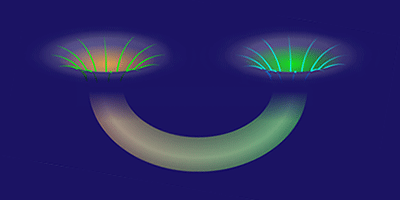
Published Wed Nov 20, 2013
“Exposure to Fast Food Impedes Happiness”
This study is packed with tasty subtleties and interconnectivities:
 “Too Impatient to Smell the Roses: Exposure to Fast Food Impedes Happiness,” Julian House [pictured below], Sanford E. DeVoe, and Chen-Bo Zhong [who rose to fame with his study about the MacBeth Effect — see yesterday's blog item about that; he is pictured here, at right], Social Psychological and Personality Science, epub 2013. The authors, at the University of Toronto, explain:
We tested whether exposure to the ultimate symbols of an impatience culture—fast food—undermines people’s ability to experience happiness from savoring pleasurable experiences.
-
Study 1 found that the concentration of fast-food restaurants in individuals’ neighborhoods predicted their tendencies to savor.
-
Study 2 revealed that exposure to fast-food primes impeded participants’ ability to derive happiness from pictures of natural beauty.
-
 Study 3 showed that priming fast food undermined positive emotional responses to a beautiful melody by inducing greater impatience, measured by both subjective perception of time passage and self-reports of impatience experienced during the music.
(Thanks to investigator Erwin Kompanje for bringing this to our attention.)
The authors produced a companion study:
“Fast food and financial impatience: A socio-ecological approach,” Sanford E. DeVoe, Julian House, and Chen-Bo Zhong, Journal of Personality and Social Psychology, 105; 2013, pp. 476-494.
BONUS: Toronto Mayor Rob Ford:
Experimental realization of a water-wave metamaterial shifter
Author(s): C. P. Berraquero, A. Maurel, P. Petitjeans, and V. Pagneux
 We demonstrate by quantitative experimental measurements that metamaterials with anisotropic properties can be used in the context of water waves to produce a reflectionless bent waveguide. The anisotropic medium consists in a bathymetry with subwavelength layered structure that shifts the wave in t...
[Phys. Rev. E 88, 051002] Published Tue Nov 19, 2013
Editorial: Getting the Word Out
Jacopo.bertolottiA new journal from APS?
PRX turned out to be a very nice journal. But I am worried about journal inflation and proliferation
Published Mon Nov 18, 2013
Metasurface holograms for visible light
Jacopo.bertolottiFor what obscure reason they did not put the paper as "open"?
The result is that I will not read it. Nice move
Article
Holographic techniques provide phase and amplitude information for images of objects, but normally the hologram thickness is comparable to the light wavelength used. Ni et al. present ultra-thin plasmonic holograms that control amplitude and phase in the visible region and are just 30 nm thick.
Nature Communications doi: 10.1038/ncomms3807
Authors: Xingjie Ni, Alexander V. Kildishev, Vladimir M. Shalaev
Three-dimensional optical holography using a plasmonic metasurface
Article
Holographic techniques allow for the construction of 3D images by controlling the wave front of light beams. Huang et al. develop ultrathin plasmonic metasurfaces to provide 3D optical holographic image reconstruction in the visible and near-infrared regions for circularly polarized light.
Nature Communications doi: 10.1038/ncomms3808
Authors: Lingling Huang, Xianzhong Chen, Holger Mühlenbernd, Hao Zhang, Shumei Chen, Benfeng Bai, Qiaofeng Tan, Guofan Jin, Kok-Wai Cheah, Cheng-Wei Qiu, Jensen Li, Thomas Zentgraf, Shuang Zhang
Against storytelling of scientific results
Jacopo.bertolottiI do not necessarily agree with everything said here. But surely this is a nice point to think about
Points of significance: Significance, P values and t-tests
Jacopo.bertolottiAnother bite sized piece of statistics that every physicist should know
Nature Methods 10, 1041 (2013). doi:10.1038/nmeth.2698
Authors: Martin Krzywinski & Naomi Altman
The P value reported by tests is a probabilistic significance, not a biological one.
Workshop "Waves in complex media" - Jun 2014
Jacopo.bertolottiNobody invited me :-(
But it is going to be a great summer school anyway ;-) Highly recommended.
