Jacopo.bertolotti
Shared posts
[Report] Quantum Limit of Heat Flow Across a Single Electronic Channel
[News & Analysis] Israel's Silent Polio Epidemic Breaks All the Rules
Inaccurate predictions
Inaccurate predictions
Nature 502, 7473 (2013). doi:10.1038/nj7473-713c
Peer review fails at predicting success.
Real-time wavefront shaping through scattering media by all-optical feedback
Nature Photonics 7, 919 (2013). doi:10.1038/nphoton.2013.248
Authors: Micha Nixon, Ori Katz, Eran Small, Yaron Bromberg, Asher A. Friesem, Yaron Silberberg & Nir Davidson
Analytical estimates of eigenfrequencies, dispersion, and field distribution in whispering gallery resonators
The problem of accurate calculation of eigenfrequencies in resonators of complex geometry is not only fundamental but also has many practical applications. In particular, a possibility for calculating the eigenfrequencies and geometry dependent dispersion of whispering gallery modes is important ... [J. Opt. Soc. Am. B 30, 3056-3063 (2013)]
Should scientists tell stories?
Nature Methods 10, 1037 (2013). doi:10.1038/nmeth.2726
A narrative can effectively communicate scientific information. But when telling a perfect story becomes an end in itself, the scientific process can be easily compromised.
Reply to: "Against storytelling of scientific results"
Experimental Observation of a Fundamental Length Scale of Waves in Random Media
Author(s): S. Barkhofen, J. J. Metzger, R. Fleischmann, U. Kuhl, and H.-J. Stöckmann
Waves propagating through a weakly scattering random medium show a pronounced branching of the flow accompanied by the formation of freak waves, i.e., extremely intense waves. Theory predicts that this strong fluctuation regime is accompanied by its own fundamental length scale of transport in rando...
[Phys. Rev. Lett. 111, 183902] Published Fri Nov 01, 2013
Tying Knots in Light Fields
Author(s): Hridesh Kedia, Iwo Bialynicki-Birula, Daniel Peralta-Salas, and William T. M. Irvine
 We construct analytically, a new family of null solutions to Maxwell’s equations in free space whose field lines encode all torus knots and links. The evolution of these null fields, analogous to a compressible flow along the Poynting vector that is shear free, preserves the topology of the knots an...
[Phys. Rev. Lett. 111, 150404] Published Thu Oct 10, 2013
Predictability and Suppression of Extreme Events in a Chaotic System
Author(s): Hugo L. D. de S. Cavalcante, Marcos Oriá, Didier Sornette, Edward Ott, and Daniel J. Gauthier
In many complex systems, large events are believed to follow power-law, scale-free probability distributions so that the extreme, catastrophic events are unpredictable. Here, we study coupled chaotic oscillators that display extreme events. The mechanism responsible for the rare, largest events make...
[Phys. Rev. Lett. 111, 198701] Published Mon Nov 04, 2013
Information Processing and the Second Law of Thermodynamics: An Inclusive, Hamiltonian Approach
Author(s): Sebastian Deffner and Christopher Jarzynski
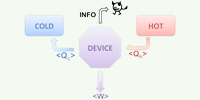
 Coupling thermodynamics together with information processing is highly nontrivial conceptually, as demonstrated by the notion of Maxwell’s demon. Theorists present a fundamental framework that generalizes the second law of thermodynamics to include the physical effects of information processing.
[Phys. Rev. X 3, 041003] Published Thu Oct 17, 2013
Do Cloaked Objects Really Scatter Less?
Author(s): Francesco Monticone and Andrea Alù
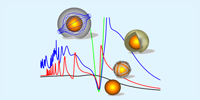
Known metamaterial-based “invisibility cloaks” have been observed to work only for narrow ranges of electromagnetic waves, for example, making an object invisible to red light, but highly visible to blue light. With a comprehensive and quantitative theoretical analysis, researchers now provide a concrete understanding of the observations and also propose a design for broadband cloaks using diamagnetic or superconducting thin cloaking layers.
[Phys. Rev. X 3, 041005] Published Mon Oct 21, 2013
Degree Distribution in Quantum Walks on Complex Networks
Author(s): Mauro Faccin, Tomi Johnson, Jacob Biamonte, Sabre Kais, and Piotr Migdał
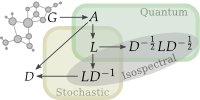
Google’s search engine algorithmically determines the relative importance of the world’s webpages by exploiting the physics of a classical random walker on the complex network of nodes (pages) and links (hyperlinks). What happens if the classical random walker is replaced by a quantum one? Researchers develop and investigate a simple model of a quantum walker on a complex network, uncovering interesting quantum-classical correspondence as well as fundamentally intriguing differences.
[Phys. Rev. X 3, 041007] Published Thu Oct 24, 2013
10/18/13 PHD comic: 'Believe it or Don't!'
| Piled Higher & Deeper by Jorge Cham |
www.phdcomics.com
|
|
 |
||
|
title:
"Believe it or Don't!" - originally published
10/18/2013
For the latest news in PHD Comics, CLICK HERE! |
||
Measuring Large Optical Transmission Matrices of Disordered Media
Author(s): Hyeonseung Yu, Timothy R. Hillman, Wonshik Choi, Ji Oon Lee, Michael S. Feld, Ramachandra R. Dasari, and YongKeun Park
We report a measurement of the large optical transmission matrix (TM) of a complex turbid medium. The TM is acquired using polarization-sensitive, full-field interferometric microscopy equipped with a rotating galvanometer mirror. It is represented with respect to input and output bases of optical m...
[Phys. Rev. Lett. 111, 153902] Published Thu Oct 10, 2013
10/11/13 PHD comic: 'Post-Doctor Who, Pt. 3'
| Piled Higher & Deeper by Jorge Cham |
www.phdcomics.com
|
|
 |
||
|
title:
"Post-Doctor Who, Pt. 3" - originally published
10/11/2013
For the latest news in PHD Comics, CLICK HERE! |
||
Closed question
Closed question
Nature 502, 7470 (2013). doi:10.1038/502141b
The US shutdown is damaging science, and Congress must be called to account.
Observing single quantum trajectories of a superconducting quantum bit
Observing single quantum trajectories of a superconducting quantum bit
Nature 502, 7470 (2013). doi:10.1038/nature12539
Authors: K. W. Murch, S. J. Weber, C. Macklin & I. Siddiqi
The length of time that a quantum system can exist in a superposition state is determined by how strongly it interacts with its environment. This interaction entangles the quantum state with the inherent fluctuations of the environment. If these fluctuations are not measured, the environment can be viewed as a source of noise, causing random evolution of the quantum system from an initially pure state into a statistical mixture—a process known as decoherence. However, by accurately measuring the environment in real time, the quantum system can be maintained in a pure state and its time evolution described by a ‘quantum trajectory’ determined by the measurement outcome. Here we use weak measurements to monitor a microwave cavity containing a superconducting quantum bit (qubit), and track the individual quantum trajectories of the system. In this set-up, the environment is dominated by the fluctuations of a single electromagnetic mode of the cavity. Using a near-quantum-limited parametric amplifier, we selectively measure either the phase or the amplitude of the cavity field, and thereby confine trajectories to either the equator or a meridian of the Bloch sphere. We perform quantum state tomography at discrete times along the trajectory to verify that we have faithfully tracked the state of the quantum system as it diffuses on the surface of the Bloch sphere. Our results demonstrate that decoherence can be mitigated by environmental monitoring, and validate the foundation of quantum feedback approaches based on Bayesian statistics. Moreover, our experiments suggest a new means of implementing ‘quantum steering’—the harnessing of action at a distance to manipulate quantum states through measurement.
Announcement: Launch of an online data journal
Jacopo.bertolottiNot exactly sure what this is supposed to be. A journal with just data but no new discoveries? A peer-reviewed data repository? A strange mix whose scope is not clear to anyone?
Announcement: Launch of an online data journal
Nature 502, 7470 (2013). doi:10.1038/502142a
Everyone wants better ways to make research data available and to give more credit to the researchers who create and share data. But for a data set to be widely reusable, scientists need to know how the data were produced and what quality-control experiments were
Quantum physics: Watching the wavefunction collapse
Quantum physics: Watching the wavefunction collapse
Nature 502, 7470 (2013). doi:10.1038/502177a
Authors: Andrew N. Jordan
The continuous random path of a superconducting system's quantum state has been tracked as the state changes during measurement. The results open the possibility of steering quantum systems into a desired state. See Letter p.211
Average light velocities in periodic media
Electromagnetic Bloch modes are used to describe the field distribution of light in periodic media that cannot be adequately approximated by effective macroscopic media. These modes explicitly take into account the spatial modulation of the medium and therefore contain the full physical information ... [J. Opt. Soc. Am. B 30, 2849-2854 (2013)]
Quantum Amplification by Superradiant Emission of Radiation
Jacopo.bertolotti25 pages long!
For now this paper goes in the "to read the day I have time" folder
Author(s): Anatoly A. Svidzinsky, Luqi Yuan, and Marlan O. Scully
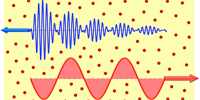
Light amplification in lasers usually relies on populating higher energy levels with more light emitters than lower energy levels. Scientists propose a new way of amplifying light without such population inversion, based on their discovery of resonant superradiant emission from an atomic ensemble interacting with a driving light field.
[Phys. Rev. X 3, 041001] Published Tue Oct 08, 2013
[Special Issue News] The Rise of Open Access
Jacopo.bertolottixkcd on Science!
(but, in all honesty, this is not a very good infographics)
[Editorial] Improving Scientific Communication
Jacopo.bertolottiThis editorial is so bad that it is worth reading it. If nothing else to see how bad it is.
A new kind of solid - why "q-glass" really is weird and interesting
A solid is a material that resists shear deformation - if you exert a certain force horizontally across the top surface of the material, the material will deform a bit until it's internal forces balance your applied force, and then deformation will reach some constant amount. (In contrast, a fluid will keep deforming continuously!) The most ordinary solids people know about are either crystalline (this includes polycrystalline materials made up of many crystal grains) or glasses. In a crystalline solid, the atoms have taken on highly symmetric spatial arrangements. That is, the atoms aren't separated by random distances, but integer multiples of certain particular spacings; similarly, crystals are not isotropic - there are particular directions along which atoms are arranged. In contrast, simple liquids are isotropic, and except for some typical nearest-neighbor distance set by the atomic or molecular size, there is no other spatial ordered arrangement. When a solid crystallizes from a liquid, it is a collective phenomenon, a phase transition, and this happens on cooling when the free energy of solid phase becomes lower than that of the liquid phase. Quasicrystals (see 2011 Nobel for Chemistry) are in these senses crystals - their symmetries are just more subtle than those of ordinary crystals.
Glasses (including those made from polymers) are different. They resist shear, too, but they do not have the long-range, periodic/anisotropic arrangement of constituents seen in crystals. Instead, upon cooling, glasses become solid (meaning that their viscosity diverges toward infinity) because the constituents become "kinetically hindered". At the risk of dragging up controversy, the simple description is that there is no true glass phase in the thermodynamic sense - glasses are rigid because the constituents can't readily move out of each others' ways, not because there is some true collective thermodynamic stability (involving free energies) at work.
The authors of this new work have found something special that they have termed a "q-glass" while looking at what happens in the solidification of a molten mixture of aluminum, iron, and silicon. In the resulting solids, they find nodules of a new material (Al91Fe7Si2, approximately) that is definitely not crystalline or polycrystalline (no preferred lattice spacings; completely isotropic). At the same time, the material does form out of the melt through a genuine first-order phase transition (!), and therefore appears to be highly ordered in some sense (both distinguishing it from a glass). It will be very interesting to learn exactly what is going on here, and whether there are other materials that have these peculiar features.
Gaps and waveguides in disordered photonic solids [Applied Physical Sciences]
Condensed-matter physics: Quantum togetherness
Condensed-matter physics: Quantum togetherness
Nature 502, 7469 (2013). doi:10.1038/nature12689
Authors: Sougato Bose
Two independent experiments have demonstrated control of one mobile quantum of excitation by another. The results are likely to have ramifications for information processing and transfer. See Letters p.71 & p.76
US government shuts down
US government shuts down
Nature 502, 7469 (2013). http://www.nature.com/doifinder/10.1038/502013a
Author: Lauren Morello
Research disrupted as lawmakers spar over funding.
Science without borders
Science without borders
Nature 502, 7469 (2013). doi:10.1038/502005a
The idea of standardizing science and removing barriers to research mobility across Europe is simple, but putting it into practice has proved more challenging.
Three-dimensional imaging of localized surface plasmon resonances of metal nanoparticles
Three-dimensional imaging of localized surface plasmon resonances of metal nanoparticles
Nature 502, 7469 (2013). doi:10.1038/nature12469
Authors: Olivia Nicoletti, Francisco de la Peña, Rowan K. Leary, Daniel J. Holland, Caterina Ducati & Paul A. Midgley
The remarkable optical properties of metal nanoparticles are governed by the excitation of localized surface plasmon resonances (LSPRs). The sensitivity of each LSPR mode, whose spatial distribution and resonant energy depend on the nanoparticle structure, composition and environment, has given rise to many potential photonic, optoelectronic, catalytic, photovoltaic, and gas- and bio-sensing applications. However, the precise interplay between the three-dimensional (3D) nanoparticle structure and the LSPRs is not always fully understood and a spectrally sensitive 3D imaging technique is needed to visualize the excitation on the nanometre scale. Here we show that 3D images related to LSPRs of an individual silver nanocube can be reconstructed through the application of electron energy-loss spectrum imaging, mapping the excitation across a range of orientations, with a novel combination of non-negative matrix factorization, compressed sensing and electron tomography. Our results extend the idea of substrate-mediated hybridization of dipolar and quadrupolar modes predicted by theory, simulations, and electron and optical spectroscopy, and provide experimental evidence of higher-energy mode hybridization. This work represents an advance both in the understanding of the optical response of noble-metal nanoparticles and in the probing, analysis and visualization of LSPRs.