Jacopo.bertolotti
Shared posts
[In Depth] No sexism in science? Not so fast, critics say
[In Depth] Just one poliovirus left to go?
Italian seismologists cleared of manslaughter
Italian seismologists cleared of manslaughter
Nature 515, 7526 (2014). http://www.nature.com/doifinder/10.1038/515171a
Authors: Alison Abbott & Nicola Nosengo
Appeals court says six scientists did not cause deaths in 2009 L'Aquila earthquake and cuts sentence of a government official.
The benefits of being a big name
Jacopo.bertolottiLa scoperta dell'acqua calda.
The benefits of being a big name
Nature 515, 7526 (2014). doi:10.1038/515167f
Scientists develop reputations that often work to their advantage. A study suggests that the presence of a well-known scientist on a list of authors can drive citations of the paper, regardless of the merits of the research — especially soon after its publication (A. M.

Windows' biggest web app framework is coming to Linux and Mac
Jacopo.bertolottiI personally hate the .NET framework. But having it running painlessly on both Linux and Mac would probably simplify the life of a LOT of people.
 Microsoft has opened up a lot over the past several months. It released powerful mobile versions of Office, launched cross-platform health technology and even posted some code for .NET, the programming framework that underpins a large part of the...
This is Your Brain on Administration
There are many things in life that can encroach on our creative-thinking time and abilities -- babies and illness (to name just two) -- and over time can make it difficult to sustain an energetic research program. I have experienced those; now my major distraction is of a more mundane sort: administrative thoughts are taking over my brain.
It is not just that I have less time for research. Realizing this was a bit of a surprise. I guess I always assumed that administrators who complained about the negative effect of administrative duties on their research were talking about how little time they had for research. The lack of time for research is of course a factor. But now I think that a more insidious factor is what spending so much time on administration can do to your brain.
Administrative work (in my experience) can be broadly classified into two general (admittedly imperfect categories): Stupid Tasks and Other Tasks.
Stupid Tasks are classified as such by me because they are unnecessarily time-sucking. These tasks include things that:
- a robot zombie computer could do;
- are the result of shiny new policies that are meant to change but not necessarily improve anything for anyone;
- are the result of someone else doing something stupid, unnecessary, immature, or unwise;
- are involved in documenting that we are not spending federal, state, or any money on illegal drugs, yachts, massages or alcohol, and -- just as bad -- are not spending this research money on that research project instead of on this research project, and we can prove it by documenting how everyone spends all their time, 24/7, whilst working on this or that research project; oh, and by the way, the system by which we monitor all that is going to change every year or so and in between you will spend a lot of time figuring out the new system, which will have bugs, but there is training you can attend to learn the new system before it is superceded by the next one, which will cost the university a lot of money and will be bewildering;
- require lots of meetings but don't need to;
- involve people who work for the University Facilities unit.
Some Stupid Tasks are actually important, many are urgent, and all are annoying.
Other Tasks are ones that require some higher level of thought or decision-making than the Stupid Tasks. Some of these are stressful and some of them are the only reason why being a department/unit head is at all rewarding (examples: hiring, supporting faculty/researchers/staff/students in various ways, solving problems that are worth solving, being an advocate for the department in the university and the broader Science community, connecting with alumni, and just generally being helpful so that bright and hard-working colleagues and students can do their great work as well as possible).
Being an administrator requires some creativity, and that may help keep the research part of the brain from atrophying too much. But I have found that it is easy to let a focus on Stupid Tasks take over, narrowing my vision and withering my imagination (I fear). And again, it isn't just about time. I can make time for research (most weeks). It's just that during random times when I might previously have been thinking about research -- such as when walking on campus, exercising, or sitting quietly with a friendly cat -- instead of thinking about Science, I find myself thinking about all the Stupid Tasks I have to do that day/week and how to solve a certain short-term problem and so on. Not good.
I recently talked with some colleagues who are or were department heads for a substantial amount of time (>5 years) and whose research careers came to a crashing halt as a result. Talking to them was dispiriting. It helps to think of examples to the contrary (and I know some good ones), so this is what I try to do. Perhaps some day it won't be important to me to have a strong research component to my work and life and I will happily spend my days thinking about parking, plumbing, provosts, policies, and printers. For now, though, I will try to stop thinking so much about Stupid Tasks that don't really require as much brain-space as I have been giving them.
Ma quanto sono spione le “smart TV”

Ma le ha, e sono sorprendentemente invadenti e soprattutto vengono cambiate unilateralmente. In pratica, se comprate una “smart TV”, pagate per farvi schedare e spiare: quello che dite mentre il televisore è acceso verrà registrato. Non dai criminali informatici, ma dai produttori di questi dispositivi.
È un problema segnalato da varie fonti, come Techdirt e Salon, i cui esperti si sono presi la briga di leggere le tediosissime pagine informative sulla privacy che accompagnano questi e altri dispositivi “smart”. Per esempio, l'informativa generale di Samsung dice che Samsung “usa tecnologie... che consentono di sapere quando avete visto uno specifico contenuto o una specifica mail” e registra “le app che usate, i siti Web che visitate, e come interagite con i contenuti.”
Non è finita. La seguente perla è presente in questo documento sulla privacy di Samsung, specifico per le Smart TV: “Siete pregati di tenere presente che se le vostre parole pronunciate includono informazioni personali o altre informazioni sensibili, tali informazioni faranno parte dei dati catturati e trasmessi a terzi tramite il vostro uso del Riconoscimento Vocale.”
In pratica, se usate le funzioni di riconoscimento vocale incorporate nelle “smart TV”, state attenti a quello che dite quando siete davanti alla TV accesa, perché il riconoscimento non viene effettuato localmente, sul televisore: quello che dite viene trasmesso via Internet a “terzi” (imprecisati), che lo analizzano e convertono al volo in comandi.
Come se tutto questo non bastasse, i fabbricanti delle “smart TV” possono cambiare le proprie regole di gestione dei dati personali dopo che avete acquistato l'apparecchio: Techdirt riferisce che LG, per esempio, ha inviato a maggio 2014 un aggiornamento software ad alcune sue “smart TV” che conteneva una modifica di questo genere. L'utente si è trovato obbligato a scegliere fra perdere le funzioni “smart” regolarmente pagate all'acquisto, e quindi trovarsi con un televisore menomato, e consegnare a LG e ai soliti “terzi” (sempre imprecisati) una quantità esagerata di dati personali, comprese “le parole usate per cercare contenuti, i dettagli delle azioni compiute durante la visione (per esempio riproduzione, stop, pausa, eccetera), la durata di visione del contenuto”.
Se a qualcuno tutto questo fa venire in mente 1984 di Orwell, non è il solo, ma ci sono differenze importanti: nella realtà siamo noi a pagare per farci mettere in casa il teleschermo che ci cataloga, ci scheda e ci timbra, e la sorveglianza non è imposta da un governo totalitario, ma viene spinta di soppiatto dai social network e dalle agenzie pubblicitarie. E noi la abbracciamo felici. Neppure Orwell era riuscito a immaginare un futuro così.
Soluzioni? Ce ne sono poche, per ora: non comperare una “smart TV” ma un televisore normale, oppure comperarla ma non collegarla a Internet o filtrarne la connessione e perdere così la maggior parte delle sue funzioni. E intanto far conoscere l'esistenza del problema.
Comic for November 7, 2014
Models overestimate Ebola cases
Models overestimate Ebola cases
Nature 515, 7525 (2014). http://www.nature.com/doifinder/10.1038/515018a
Author: Declan Butler
Rate of infection in Liberia seems to plateau, raising questions over the usefulness of models in an outbreak.
Economics: Account for depreciation of natural capital
Economics: Account for depreciation of natural capital
Nature 515, 7525 (2014). doi:10.1038/515032a
Author: Edward B. Barbier
Economic indicators that omit the depletion and degradation of natural resources and ecosystems are misleading, warns Edward B. Barbier.
University sued by creationist
Jacopo.bertolottiI have the feeling that the "behind the curtain" part of the story is a lot bigger and more complicated than the public side of it.
University sued by creationist
Nature 515, 7525 (2014). http://www.nature.com/doifinder/10.1038/515020a
Author: Christopher Kemp
Microscopist’s wrongful-dismissal case faces long odds.
Column: It takes time and a team to win grants
Column: It takes time and a team to win grants
Nature (2014). doi:10.1038/nj7524-153a
Author: Ingrid Eisenstadter
Start and finish early, seek feedback and file before deadline, says Ingrid Eisenstadter.
Topological photonics
Jacopo.bertolottiInteresting? Uninteresting? I still have to decide.
Nature Photonics 8, 821 (2014). doi:10.1038/nphoton.2014.248
Authors: Ling Lu, John D. Joannopoulos & Marin Soljačić
Plasmonic lasers: On the fast track
Nature Physics 10, 799 (2014). doi:10.1038/nphys3127
Author: Mark Stockman
Plasmons offer the tantalizing prospect of accelerated light–matter interactions. Accelerated dynamics has now been observed in a hybrid plasmonic laser or spaser, capable of producing pulses on ultrafast timescales.
Ultrafast plasmonic nanowire lasers near the surface plasmon frequency
Nature Physics 10, 870 (2014). doi:10.1038/nphys3103
Authors: Themistoklis P. H. Sidiropoulos, Robert Röder, Sebastian Geburt, Ortwin Hess, Stefan A. Maier, Carsten Ronning & Rupert F. Oulton
Observation of self-amplifying Hawking radiation in an analogue black-hole laser
Jacopo.bertolottiA single-author paper describing a Bose-Einstein condensate experiment? How is this even possible? :-O
Ultracold atoms: A black-hole laser
Nature Physics 10, 793 (2014). doi:10.1038/nphys3141
Author: Giovanni Modugno
Astrophysical observations of Hawking radiation may be out of reach, but evidence for the self-amplification of Hawking radiation has now been observed in a sonic analogue of a black hole.
Enhancement of long-range correlations in a 2D vortex lattice by an incommensurate 1D disorder potential
Nature Physics 10, 851 (2014). doi:10.1038/nphys3132
Authors: I. Guillamón, R. Córdoba, J. Sesé, J. M. De Teresa, M. R. Ibarra, S. Vieira & H. Suderow
Long-range correlations in two-dimensional (2D) systems are significantly altered by disorder potentials. Theory has predicted the existence of disorder-induced phenomena, such as Anderson localization or the emergence of a Bose glass. More recently, it has been shown that when disorder breaks 2D continuous symmetry, long-range correlations can be enhanced. Experimentally, developments in quantum gases have allowed the observation of the effects of competition between interaction and disorder. However, experiments exploring the effect of symmetry-breaking disorder are lacking. Here, we create a 2D vortex lattice at 0.1 K in a superconducting thin film with a well-defined 1D thickness modulation—the symmetry-breaking disorder—and track the field-induced modification using scanning tunnelling microscopy. We find that the 1D modulation becomes incommensurate with the vortex lattice and drives an order–disorder transition, behaving as a scale-invariant disorder potential. We show that the transition occurs in two steps and is mediated by the proliferation of topological defects. The resulting critical exponents determining the loss of positional and orientational order are far above theoretical expectations for scale-invariant disorder and follow instead the critical behaviour describing dislocation unbinding melting. Our data show that randomness disorders a 2D crystal, with enhanced long-range correlations due to the presence of a 1D modulation.
Disproving the Peres conjecture by showing Bell nonlocality from bound entanglement
Article
A longstanding question in quantum information is the validity of the disputed Peres conjecture stating that bound entangled state can never lead to Bell inequality violation. Here Vértesi and Brunner prove that the Peres conjecture is false by providing an explicit counter example.
Nature Communications doi: 10.1038/ncomms6297
Authors: Tamás Vértesi, Nicolas Brunner
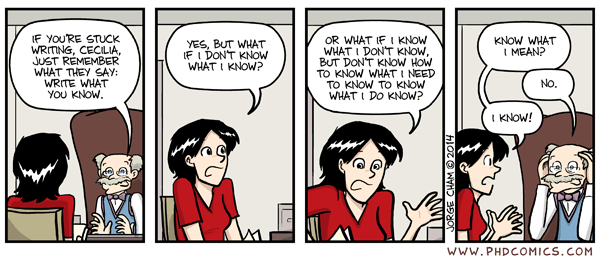
11/03/14 PHD comic: 'Research is complicated'
| Piled Higher & Deeper by Jorge Cham |
www.phdcomics.com
|
|
 |
||
|
title:
"Research is complicated" - originally published
11/3/2014
For the latest news in PHD Comics, CLICK HERE! |
||
Giusto per ricordarvi che lo Juncker col quale ce l’ha su...
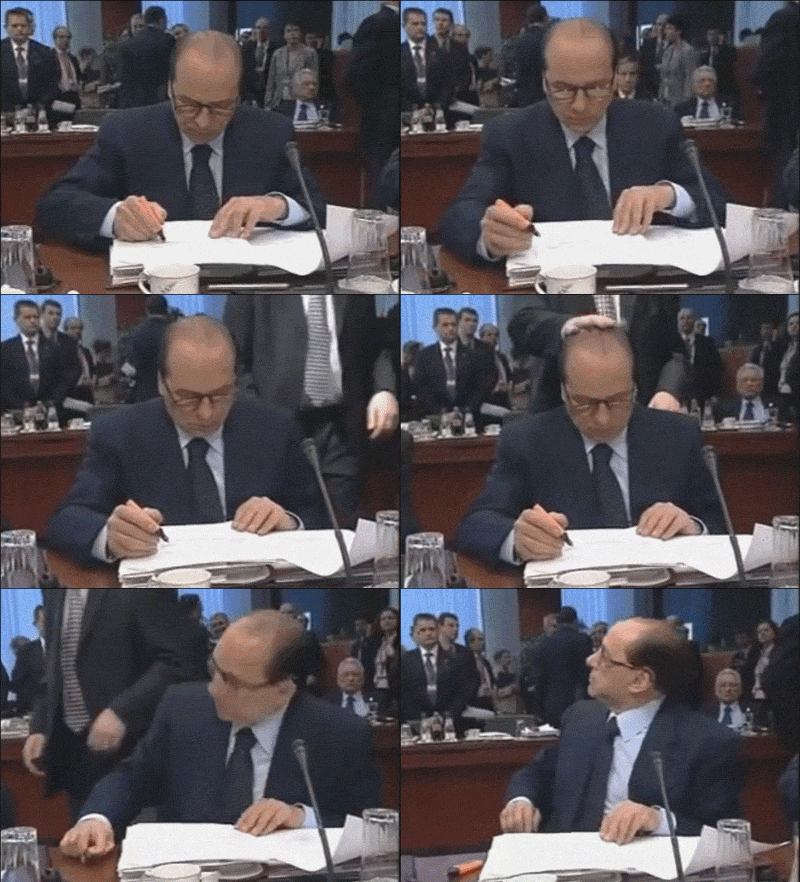
Giusto per ricordarvi che lo Juncker col quale ce l’ha su Renzi in questi giorni è l’eroe che qualche anno fa rifilò questa splendida schiaffetta bennyhilliana a Berlusconi. Tirate le vostre conclusioni; io… IO STO CON JUNCKER.
Two-step procedure to discriminate discordant from classical correlated or factorized states
Author(s): Simone Cialdi, Andrea Smirne, Matteo G. A. Paris, Stefano Olivares, and Bassano Vacchini
We devise and experimentally realize a procedure capable of detecting and distinguishing quantum discord and classical correlations as well the presence of factorized states in a joint system-environment setting. Our scheme builds on recent theoretical results showing how the distinguishability betw…
[Phys. Rev. A 90, 050301(R)] Published Tue Nov 04, 2014
The last Pirate Bay founder has finally been caught and arrested
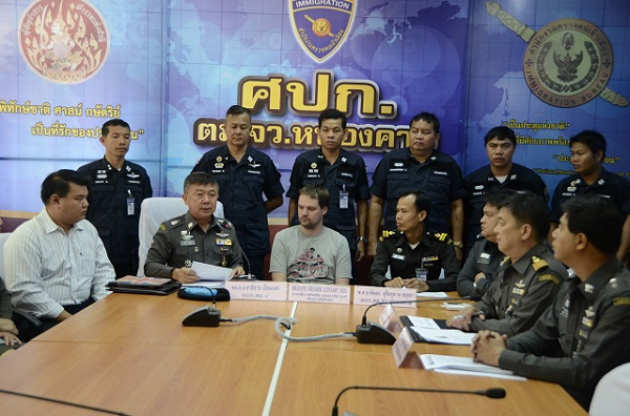 It was only a matter of time. The last of The Pirate Bay's three co-founders was arrested yesterday on the border between Laos and Thailand, signalling the end of a drawn-out manhunt for the site's infamous creators. Fredrik Neij's apprehension...
Underestimating extreme events in power-law behavior due to machine-dependent cutoffs
Author(s): Filippo Radicchi
Power-law distributions are typical macroscopic features occurring in almost all complex systems observable in nature. As a result, researchers in quantitative analyses must often generate random synthetic variates obeying power-law distributions. The task is usually performed through standard metho...
[Phys. Rev. E 90, 050801(R)] Published Mon Nov 03, 2014
L'"effetto Iene".
 |
| Mehmet Oz, medico, guru delle diete |
Qualcosa di simile (e più severa) è capitata ad un altro "guru" delle diete miracolose seguitissimo negli USA: Kevin Trudeau.
 |
| Kevin Trudeau, guri dei complotti medici |
Allo stesso modo di Oz: lui non prescrive nulla, racconta dei fatti, consiglia, riporta opinioni altrui, sta a chi legge fare delle scelte. Comodo, semplice e senza rischi.
Tutto come da copione, scarico di responsabilità compreso, sono cose che accadono anche da noi e che siamo abituati a leggere, se non fosse che il Senato statunitense ha preso sul serio le conseguenze dei comportamenti di quel medico. Probabilmente OZ se la caverà con un richiamo e tornerà a fare quello che ha sempre fatto, lo spettacolo deve continuare, ma è sintomatico di come gli approcci verso le informazioni false e pericolose sono diversi da uno stato all'altro e soprattutto come la superficialità nel dire "io non rispondo delle conseguenze di quello che dico" sia internazionale.
Un altro falso medico che è finito in galera (con 18 capi d'accusa) è Robert Young, autore del libro che ha diffuso nel mondo la cosiddetta "dieta alcalina", una bufala che ormai è diventata un classico della pseudomedicina.
 |
| Robert Young, "inventore" della dieta alcalina finito in carcere con 18 capi d'accusa, dall'abuso della professione medica alla truffa. |
La dieta alcalina è quella che consigliava la dottoressa intervistata dalle Iene. Negli USA in galera, in Italia in TV ed a fare conferenze a pagamento...e poi dicono che da noi non si è liberi...
"Abbiamo solo raccontato una storia". Sono sembrati anche un po' infastiditi, non capendo con sguardo leggermente nel vuoto il motivo di tante proteste. La risposta è la stessa che danno tutti quelli che scrivono con superficialità, la stessa che danno ordini dei medici (!) che organizzano convegni su false medicine, la stesso fanno associazioni e comuni che danno il loro patrocinio ad incontri di pseudomedicina: "sentiamo l'altra campana". Ma quando "l'altra campana" è un delirio di falsità, una pubblicità a pericolose pratiche sulla salute, che "campana" è? Che "storia" stai raccontando?
Questo Le Iene e tutti i media che soffiano sul fuoco delle false cure, non lo sanno (evidentemente, perché se lo sapessero sarebbero degli avvoltoi). O lo sanno ma si girano dall'altra parte vendendo la sofferenza degli altri per un proprio tornaconto?
Voi non rischiate nulla, fate rischiare, non subirete danni, li procurate.
Che ognuno si assuma le proprie responsabilità quindi, perché questo va ben oltre il semplice buon senso e l'onestà intellettuale e professionale (abbondantemente travalicate), va nella responsabilità personale.
Perché se un ingegnere sbaglia ne paga le conseguenze ma una trasmissione non deve rispondere dei suoi danni?
Perché se un geologo sbaglia gli fanno un processo ed invece un presentatore l'anno prossimo sarà sempre lì con la prossima "cura per tutte le malattie"?
Oppure: continuiamo con l'indifferenza dello "scaricabarile", tanto la pellaccia non è né del presentatore TV e nemmeno del presidente dell'ordine dei medici, così possiamo continuare a "raccontare storie", di truffe sulla salute, ma sempre storie sono.
Alla prossima.
NOTA: Ne approfitto per ricordare che venerdì 14 novembre alle ore 20,00, sarò a Bologna (Sala Cenerini, via Pietralata, 60), ingresso libero, per la conferenza organizzata dall'associazione Minerva. Salute e Bugie.

Random Image Experiment Reveals The Building Blocks of Human Imagination
Scientists have discovered how to extract the template images that the human mind uses to recognise objects, such as balls, cars and people.
Here’s a curious experiment. Take some white noise and use it to produce a set of images that are essentially random arrangements of different coloured blocks. Show these images to a number of people and ask whether any of the images remind them of, say, a car.
Incidente in volo, SpaceShip Two è precipitato
 |
| Credit: Scaled Composites / Jason DiVenere |
Non è un buon periodo per i voli spaziali. Dopo l'esplosione al decollo del vettore cargo Antares arriva la notizia che poco fa il velivolo spaziale suborbitale SpaceShip Two della Virgin Galactic ha avuto quella che per ora viene chiamata “anomalia in volo”.
 SpaceShip Two (foto qui accanto) era partito da Mojave, in California, un paio di ore fa, trasportato in quota dall'aereo madre White Knight (foto qui sopra). Alle 18:07 italiane è stato sganciato ed ha acceso i motori a razzo, ma circa sei minuti dopo lo sgancio è esploso in volo (Virgin Galactic ha tweetato l'“anomalia” alle 18:13). Flightradar24 riferisce che il segnale dal transponder di bordo è stato perso alle 18:12 italiane). La FAA conferma che a bordo c'erano due piloti.
Uno dei due piloti è morto, stando alle comunicazioni radio dei soccorsi e alla Associated Press, che cita la polizia della California. È stato avvistato un paracadute. L'aereo madre è atterrato senza problemi.
È prevista per le 21 GMT una conferenza stampa.
Pubblicherò qui e su Twitter gli aggiornamenti man mano che mi arriveranno.
Altri dettagli sono su NBC News, Spaceflightnow, Turnto23, KGET, Ars Technica. Qui sotto le prime immagini dei rottami dell'aereo: si tratta di parti della coda doppia del velivolo.


Questa è la rotta dell'aereo:

La si può ripercorrere qui: il callsign di SpaceShip Two era N339SS, quello di White Knight è N348MS. White Knight era a 45.110 piedi (circa 13.750 m) di quota.
Aggiornamento (2014/11/01 00:15)
Sono state pubblicate altre immagini dei rottami e alcune fotografie del momento dell'incidente. Per ora la risoluzione è molto bassa e non permette di capire meglio la dinamica degli eventi.


Su Astronautinews.it trovate una sintesi della situazione.
La conferenza stampa non ha fatto i nomi dei due piloti e non ha fornito dettagli sulle condizioni del pilota sopravvissuto. Secondo quanto dichiarato nella conferenza, non c'è stata una esplosione vera e propria (le foto sembrano confermare questo fatto). L'incidente è avvenuto due minuti dopo lo sgancio, non sei.
Aggiornamento (2014/11/01 10:00)
La BBC ha pubblicato un servizio video nel quale vengono mostrate ulteriori immagini della distruzione in volo di Spaceship Two e si nota che i rottami sono sparsi su un'area di due miglia.


Le immagini mostrano un'accensione iniziale regolare, seguita da una rottura del velivolo in più parti, senza una palla di fuoco. Questo, insieme alla distribuzione dei rottami in grandi tronconi su un'area relativamente ridotta e non disseminati a largo raggio, suggerisce un cedimento strutturale di Spaceship Two, forse innescato dalle sollecitazioni prodotte dal motore, più che un'esplosione del propellente, ma è presto per avere certezze.
Virgin Galactic ha confermato la morte di uno dei due piloti e ha dichiarato che l'altro pilota si è paracadutato, è gravemente ferito e ora è ricoverato presso un ospedale locale. Le autorità per la sicurezza del volo e per le indagini post-incidente sono già sul luogo del disastro.
Come ha detto anche Richard Branson di Virgin Galactic, andare nello spazio è difficile e non bisogna mai adagiarsi sugli allori: la perfezione di tanti lanci è ogni volta il risultato di un lavoro di estrema precisione che implica l'uso di grandi quantità di sostanze esplosive, per cui ci saranno sempre giorni come questo e piloti che rischieranno la vita per evitare che sia in pericolo la nostra.
Aggiornamento (2014/11/01 21:15)

Secondo la BBC, questo volo sperimentale del velivolo era il primo a usare un nuovo tipo di propellente, già collaudato estesamente a terra.
Antibufala: la NASA ha annunciato sei giorni di oscurità a dicembre
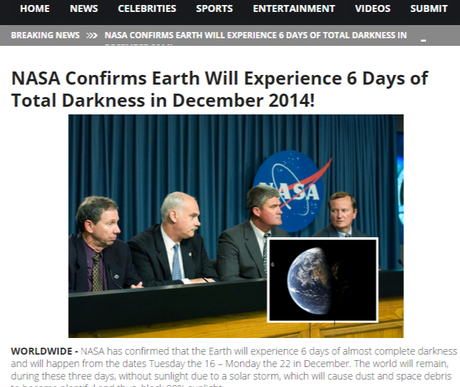
A quanto pare, a nessuno di quelli che propagano la notizia viene in mente di verificare se per caso c'è davvero sul sito della NASA (non c'è) o se viene ripresa da qualche testata scientifica o anche soltanto dai giornali di buona reputazione: l'hanno letto su Internet e questo è sufficiente. E ci sono naturalmente i complottisti e i catastrofisti che spiegano l'assenza della notizia sui media con un complotto per tenerla segreta. Senza pensare che se qualcuno avesse voluto tenerla segreta, far fare un annuncio pubblico alla NASA non pare un metodo molto affidabile per mantenere il riserbo.
In realtà si tratta di una bufala fabbricata dal sito satirico Huzlers.com riprendendo una panzana analoga del 2012 che annunciava tre giorni di oscuramento invece di sei. I video che mostrano il direttore della NASA mentre chiede agli americani di “prepararsi all'emergenza” sono spezzoni tratti da un video del 2013 che si riferisce alla gestione di uragani e terremoti, non alle tempeste solari.
Fra l'altro, giusto per capirci, una tempesta solare non è come una tempesta sulla Terra: è un fenomeno elettromagnetico e non è un vento che solleva nubi di polvere. Chi diffonde questa storia non fa altro che pubblicizzare la propria ingenuità e ignoranza.