22 Nov 07:33
by Xiaolin Zhang, Rui Qu, Zehong Chang, Yunlong Wang, Zhenyu Guo, Min An, Hong Gao, Fuli Li, and Pei Zhang
Author(s): Xiaolin Zhang, Rui Qu, Zehong Chang, Yunlong Wang, Zhenyu Guo, Min An, Hong Gao, Fuli Li, and Pei Zhang
Quantum incompatibility, referred as the phenomenon that some quantum measurements cannot be performed simultaneously, is necessary for various quantum information processing tasks, such as nonlocality and steering. When these applications come to high-dimensional multimeasurement scenarios, it is c…
[Phys. Rev. Lett. 133, 190202] Published Fri Nov 08, 2024
31 Aug 00:32
by Andrea Maiani, Morten Kjaergaard, and Constantin Schrade
Author(s): Andrea Maiani, Morten Kjaergaard, and Constantin Schrade
A mechanism for entangling tunable transmons with low-frequency protected superconducting qubits is proposed, opening the way to heterogeneous quantum processors.
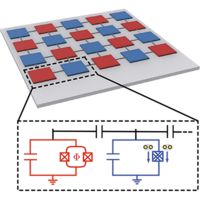
[PRX Quantum 3, 030329] Published Mon Aug 29, 2022
17 Jan 11:23
by Louis Garbe, Obinna Abah, Simone Felicetti, Ricardo Puebla
Quantum metrology shows that by exploiting nonclassical resources it is
possible to overcome the fundamental limit of precision found for classical
parameter-estimation protocols. The scaling of the quantum Fisher information
-- which provides an upper bound to the achievable precision -- with respect to
the protocol duration is then of primarily importance to assess its
performances. In classical protocols the quantum Fisher information scales
linearly with time, while typical quantum-enhanced strategies achieve a
quadratic (Heisenberg) or even higher-order polynomial scalings. Here we report
a protocol that is capable of surpassing the polynomial scaling, and yields an
exponential advantage. Such exponential advantage is achieved by approaching,
but without crossing, the critical point of a quantum phase transition of a
fully-connected model in the thermodynamic limit. The exponential advantage
stems from the breakdown of the adiabatic condition close to a critical point.
As we demonstrate, this exponential scaling is well captured by the new bound
derived in arXiv:2110.04144, which in turn allows us to obtain approximate
analytical expressions for the quantum Fisher information that agree with exact
numerical simulations. In addition, we discuss the limitations to the
exponential scaling when considering a finite-size system as well as its
robustness against decoherence effects. Hence, our findings unveil a novel
quantum metrological protocol whose precision scaling goes beyond the
paradigmatic Heisenberg limit with respect to the protocol duration.
31 Mar 22:59
by Maryam Khanahmadi, Klaus Mølmer
According to Heisenberg's uncertainty relation, there is an ultimate limit to
how precisely we may predict the outcome of position and momentum measurements
on a quantum system. We show that this limit may be violated by an arbitrarily
large factor if one aims, instead, to guess the unknown value of a past
measurement. For experiments on a single quantum system, the precise assignment
of past position and momentum measurement outcomes is accompanied by large
uncertainty about their linear combinations, while we show that entanglement
with an ancillary system permits accurate retrodiction of any such linear
combination. Finally, we show that the outcomes of experiments that jointly
measure multiple linear combinations of position and momentum observables by
means of ancillary probe particles can also be guessed with no formal lower
limit. We present quantitative results for projective measurements and for
generalized measurements where all components are prepared in Gaussian states.
30 Mar 06:47
by Ben Jaderberg, Lewis W. Anderson, Weidi Xie, Samuel Albanie, Martin Kiffner, Dieter Jaksch
The resurgence of self-supervised learning, whereby a deep learning model
generates its own supervisory signal from the data, promises a scalable way to
tackle the dramatically increasing size of real-world data sets without human
annotation. However, the staggering computational complexity of these methods
is such that for state-of-the-art performance, classical hardware requirements
represent a significant bottleneck to further progress. Here we take the first
steps to understanding whether quantum neural networks could meet the demand
for more powerful architectures and test its effectiveness in
proof-of-principle hybrid experiments. Interestingly, we observe a numerical
advantage for the learning of visual representations using small-scale quantum
neural networks over equivalently structured classical networks, even when the
quantum circuits are sampled with only 100 shots. Furthermore, we apply our
best quantum model to classify unseen images on the ibmq\_paris quantum
computer and find that current noisy devices can already achieve equal accuracy
to the equivalent classical model on downstream tasks.
08 Jan 08:13
by Stephen DiAdamo, Marco Ghibaudi, James Cruise
Interconnecting small quantum computers will be essential in the future for
creating large scale, robust quantum computers. Methods for distributing
monolithic quantum algorithms efficiently are thus needed. In this work we
consider an approach for distributing the accelerated variational quantum
eigensolver (AVQE) algorithm over arbitrary sized - in terms of number of
qubits - distributed quantum computers. We consider approaches for distributing
qubit assignments of the Ansatz states required to estimate the expectation
value of Hamiltonian operators in quantum chemistry in a parallelized
computation and provide a systematic approach to generate distributed quantum
circuits for distributed quantum computing. Moreover, we propose an
architecture for a distributed quantum control system in the settings of
centralized and decentralized network control.
10 Dec 07:46
by Leonardo Banchi, Quntao Zhuang, Stefano Pirandola
Quantum hypothesis testing is one of the most fundamental problems in quantum
information theory, with crucial implications in areas like quantum sensing,
where it has been used to prove quantum advantage in a series of binary
photonic protocols, e.g., for target detection or memory cell readout. In this
work, we generalize this theoretical model to the multi-partite setting of
barcode decoding and pattern recognition. We start by defining a digital image
as an array or grid of pixels, each pixel corresponding to an ensemble of
quantum channels. Specializing each pixel to a black and white alphabet, we
naturally define an optical model of barcode. In this scenario, we show that
the use of quantum entangled sources, combined with suitable measurements and
data processing, greatly outperforms classical coherent-state strategies for
the tasks of barcode data decoding and classification of black and white
patterns. Moreover, introducing relevant bounds, we show that the problem of
pattern recognition is significantly simpler than barcode decoding, as long as
the minimum Hamming distance between images from different classes is large
enough. Finally, we theoretically demonstrate the advantage of using quantum
sensors for pattern recognition with the nearest neighbor classifier, a
supervised learning algorithm, and numerically verify this prediction for
handwritten digit classification.
04 Nov 00:56
by Jahan Claes, Eleanor Rieffel, Zhihui Wang
Randomized benchmarking (RB) is a powerful method for determining the error
rate of experimental quantum gates. Traditional RB, however, is restricted to
gatesets, such as the Clifford group, that form a unitary 2-design. The
recently introduced character RB can benchmark more general gates using
techniques from representation theory; up to now, however, this method has only
been applied to "multiplicity-free" groups, a mathematical restriction on these
groups. In this paper, we extend the original character RB derivation to
explicitly treat non-multiplicity-free groups, and derive several applications.
First, we derive a rigorous version of the recently introduced subspace RB,
which seeks to characterize a set of one- and two-qubit gates that are
symmetric under SWAP. Second, we develop a new leakage RB protocol that applies
to more general groups of gates. Finally, we derive a scalable RB protocol for
the matchgate group, a group that like the Clifford group is non-universal but
becomes universal with the addition of one additional gate. This example
provides one of the few examples of a scalable non-Clifford RB protocol. In all
three cases, compared to existing theories, our method requires similar
resources, but either provides a more accurate estimate of gate fidelity, or
applies to a more general group of gates. In conclusion, we discuss the
potential, and challenges, of using non-multiplicity-free character RB to
develop new classes of scalable RB protocols and methods of characterizing
specific gates.
19 Jan 02:04
by Ernest Y.-Z. Tan, Charles C.-W. Lim, and Renato Renner
Author(s): Ernest Y.-Z. Tan, Charles C.-W. Lim, and Renato Renner
Device-independent quantum key distribution (DIQKD) offers the prospect of distributing secret keys with only minimal security assumptions, by making use of a Bell violation. However, existing DIQKD security proofs have low noise tolerances, making a proof-of-principle demonstration currently infeas...
[Phys. Rev. Lett. 124, 020502] Published Thu Jan 16, 2020
19 Sep 04:52
by Felix Bischof, Hermann Kampermann, and Dagmar Bruß
Author(s): Felix Bischof, Hermann Kampermann, and Dagmar Bruß
Quantum coherence is a fundamental feature of quantum mechanics and an underlying requirement for most quantum information tasks. In the resource theory of coherence, incoherent states are diagonal with respect to a fixed orthonormal basis; i.e., they can be seen as arising from a von Neumann measur...
[Phys. Rev. Lett. 123, 110402] Published Thu Sep 12, 2019
18 Apr 02:11
by Dominik Šafránek
Author(s): Dominik Šafránek
Quantum Fisher information matrix (QFIM) is a cornerstone of modern quantum metrology and quantum information geometry. Apart from optimal estimation, it finds applications in description of quantum speed limits, quantum criticality, quantum phase transitions, coherence, entanglement, and irreversib...
[Phys. Rev. A 97, 042322] Published Thu Apr 12, 2018
18 Apr 01:07
by Daniel Braun, Gerardo Adesso, Fabio Benatti, Roberto Floreanini, Ugo Marzolino, Morgan W. Mitchell, Stefano Pirandola
Quantum-enhanced measurements exploit quantum mechanical effects for
increasing the sensitivity of measurements of certain physical parameters and
have great potential for both fundamental science and concrete applications.
Most of the research has so far focused on using highly entangled states, which
are, however, difficult to produce and to stabilize for a large number of
constituents. In the following we review alternative mechanisms, notably the
use of more general quantum correlations such as quantum discord, identical
particles, or non-trivial hamiltonians; the estimation of thermodynamical
parameters or parameters characterizing non-equilibrium states; and the use of
quantum phase transitions. We describe both theoretically achievable
enhancements and enhanced sensitivities, not primarily based on entanglement,
that have already been demonstrated experimentally, and indicate some possible
future research directions.
19 Jan 01:58
by Guzhi Bao, Arne Wickenbrock, Simon Rochester, Weiping Zhang, and Dmitry Budker
Author(s): Guzhi Bao, Arne Wickenbrock, Simon Rochester, Weiping Zhang, and Dmitry Budker
The nonlinear Zeeman effect can induce splitting and asymmetries of magnetic-resonance lines in the geophysical magnetic-field range. This is a major source of “heading error” for scalar atomic magnetometers. We demonstrate a method to suppress the nonlinear Zeeman effect and heading error based on ...
[Phys. Rev. Lett. 120, 033202] Published Wed Jan 17, 2018
17 Oct 02:09
by Yuxiang Yang, Giulio Chiribella, and Gerardo Adesso
Author(s): Yuxiang Yang, Giulio Chiribella, and Gerardo Adesso
Quantum technology promises revolutionary advantages in information processing and transmission compared to classical technology; however, determining which specific resources are needed to surpass the capabilities of classical machines often remains a nontrivial problem. To address such a problem, ...
[Phys. Rev. A 90, 042319] Published Thu Oct 16, 2014
17 Oct 01:36
by Yuhe Zhang, G. J. Sreejith, N. D. Gemelke, and J. K. Jain
Author(s): Yuhe Zhang, G. J. Sreejith, N. D. Gemelke, and J. K. Jain
A method is proposed that would allow fractional statistics to be measured experimentally using a pair of atoms immersed in a specifically tailored quantum many-body state.
[Phys. Rev. Lett. 113, 160404] Published Thu Oct 16, 2014
No more posts. Check out what's trending.
