American Journal of Physics, Volume 85, Issue 12, Page 908-914, December 2017.
Jacopo.bertolotti
Shared posts
15 Dec 11:07
How tall can gelatin towers be? An introduction to elasticity and buckling
by Nicolas Taberlet
Jacopo.bertolotti likes this
15 Dec 11:07
Welcome to the Back of the Envelope
by Sanjoy Mahajan
American Journal of Physics, Volume 85, Issue 12, Page 959-961, December 2017.
Jacopo.bertolotti likes this
01 Dec 10:51
Automatic error spotter gains in popularity
by Chawla, D. S.
Jacopo.bertolottiIf an automated tool can do your data analysis better than you, you probably shouldn't be doing any data analysis.
01 Dec 10:45

Super- and Anti-Principal-Modes in Multimode Waveguides
by Philipp Ambichl, Wen Xiong, Yaron Bromberg, Brandon Redding, Hui Cao, and Stefan Rotter
Author(s): Philipp Ambichl, Wen Xiong, Yaron Bromberg, Brandon Redding, Hui Cao, and Stefan Rotter
Multimode optical fibers offer more transmission capacity by supporting multiple transverse modes, but crosstalk between these channels remains a vexing problem. New experiments and theoretical analysis reveal unique light states in multimode fibers that are strongly protected against this crosstalk.
[Phys. Rev. X 7, 041053] Published Thu Nov 30, 2017
Jacopo.bertolotti likes this

29 Nov 10:20

Stability Landscape of Shell Buckling
by Emmanuel Virot, Tobias Kreilos, Tobias M. Schneider, and Shmuel M. Rubinstein
Author(s): Emmanuel Virot, Tobias Kreilos, Tobias M. Schneider, and Shmuel M. Rubinstein
Experiments reveal what kinds of dents render a can and other metal shells crushable.

[Phys. Rev. Lett. 119, 224101] Published Tue Nov 28, 2017
Jacopo.bertolotti likes this
28 Nov 13:05
Il nuovo codice di Hammurabi
by Nebo
Su Le Monde, un gruppo di femministe dichiara che se un uomo viene accusato di stupro è colpevole fino a prova contraria. Lena Dunham, sceneggiatrice di Girls, ha dichiarato la stessa cosa: le donne non mentono sullo stupro. Quindi se un padre, un fratello o un figlio verranno accusati di molestie da una tizia qualsiasi,
Jacopo.bertolotti likes this
27 Nov 18:05

Statistical projection effects in a hydrodynamic pilot-wave system
by Pedro J. Sáenz
Statistical projection effects in a hydrodynamic pilot-wave system
Statistical projection effects in a hydrodynamic pilot-wave system, Published online: 27 November 2017; doi:10.1038/s41567-017-0003-x
Droplets moving on the surface of a vibrating fluid bath mimic the behaviour of electrons in quantum corrals. Introducing submerged features in the bath can even drive the droplets to excite modes that induce effects reminiscent of quantum mirages.
27 Nov 17:34

The ‘Singing Cymbal’ controversy
by Martin Gardiner
Jacopo.bertolottiEasy to solve the controversy. Do it in vacuum and measure the vibrations with a transducer.
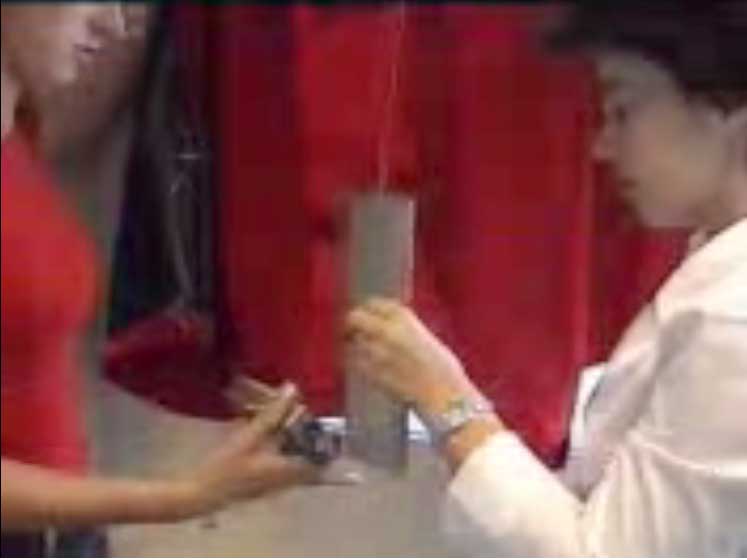
The photo above is a still from a CERN teaching resources video (2014).
“Use a cymbal or metallic plate that can vibrate freely. Use a flash, for example from a camera, hold it close to the plate and flash. You will hear a low tone.
Physics: The moment of the photons are transferred in an inelastic collision to the atoms of the cymbal. This can also be used as an example of energy conversion.”
Not so fast, say Thomas R Moore, Samantha Collin and Nikki Etchnique of the Department of Physics at Rollins College in their paper ‘The singing cymbal : Is it really photon momentum?’
“Although it has been generally accepted that this is a demonstration of the effects of photon momentum, and the idea promulgated by a world-class institution such as CERN, this does not necessarily make it so.”
Their experimental and theoretical study found that the cymbal does indeed ‘sing’ – but primarily from heating and acoustic effects caused by the camera flash. Only a tiny fraction of the vibration, they say, is due to photon momentum transfer effects – equivalent to dropping just one grain of salt onto the cymbal (with inaudible results).
NOTE: Unfortunately, CERN’s ‘Singing Cymbal’ experiment is now off-line – but an archive from 2014 is available here. The video itself is available in a somewhat obsolete format (.rm) here.
23 Nov 17:56
Si tratta di uno studio di coorte (significa che si osservano nel tempo dei gruppi di individui con caratteristiche paragonabili) nel quale sono stati controllati tre gruppi di persone. Quelle che si rivolgevano al medico ordinario, quelli che andavano da un medico che usava sia omeopatia che medicine e chi si rivolgeva ad un omeopata.

Medicine come caramelle o caramelle come medicine, un sondaggio ci dice che è sempre un errore.
by Salvo Di Grazia
In questi giorni sta girando una notizia (soprattutto in pagine e siti di appassionati di omeopatia): uno studio francese avrebbe dimostrato che i prodotti omeopatici avrebbero lo stesso effetto dei medicinali.
In realtà questo è un esempio di come i dati di uno studio possano essere usati (manipolandoli) per ottenere il risultato che preferiamo, che ci piace e dimostra casomai come l'omeopatia sia un business molto furbo, in questo sì identica alla medicina che, quando vuole fare business ha i trucchi perfetti per farlo.
L'omeopatia, per chi non lo sapesse, è quella antica pratica esoterica secondo la quale dei granuli di puro zucchero (o di alcol nel caso dei prodotti liquidi) avrebbero la capacità di curare le malattie. In seguito ad una cerimonia magica (si diluisce l'ingrediente decine o centinaia di volte, poi si sbatte 10 volte così la sostanza produrrebbe l'effetto opposto a quello conosciuto, per esempio il caffè curerebbe l'insonnia invece di causarla) questi granuli si trasformerebbero in medicine anche se, ad una analisi, contengono solo ed esclusivamente zucchero (dalla 12ma diluizione in poi). È chiaro quindi che di effetti non possono essercene (così come dimostrano sia la logica che gli studi del settore), lo zucchero, non cura nulla e che chi dice di averli avuti probabilmente ha beneficiato dell'effetto placebo o ha confuso il normale decorso della malattia con una guarigione miracolosa, non ci sono altre spiegazioni. Ovviamente chi produce e vende omeopatia evita di mostrare il lato paranormale e punta tutto su improbabili dimostrazioni di efficacia e su studi realizzati in maniera piuttosto furba, come questa.
La ricerca francese sull'omeopatia (realizzata con metodi piuttosto discutibili, in pratica i dati sono stati raccolti via telefono, come in un'intervista), finanziata da Boiron (multinazionale omeopatica) nota che i pazienti dei medici omeopati, rispetto a quelli dei medici normali, usano meno ansiolitici, meno antibiotici e meno anti infiammatori.
Inoltre, incredibile (?), non hanno più problemi di salute o complicazioni di chi si rivolge al medico ordinario. In pratica, usando meno medicine, si ammalano allo stesso modo di chi va dal medico.
Le notizie ed i comunicati relativi alla vicenda hanno toni trionfalistici (a me è arrivato addirittura un comunicato stampa): "L'omeopatia funziona come le medicine!" oppure "i pazienti omeopatici hanno salute identica a quelli normali, quindi l'omeopatia funziona". Ma quello che si legge in questo studio conclude davvero così? Dimostra che l'omeopatia funziona?
Inoltre, incredibile (?), non hanno più problemi di salute o complicazioni di chi si rivolge al medico ordinario. In pratica, usando meno medicine, si ammalano allo stesso modo di chi va dal medico.
Le notizie ed i comunicati relativi alla vicenda hanno toni trionfalistici (a me è arrivato addirittura un comunicato stampa): "L'omeopatia funziona come le medicine!" oppure "i pazienti omeopatici hanno salute identica a quelli normali, quindi l'omeopatia funziona". Ma quello che si legge in questo studio conclude davvero così? Dimostra che l'omeopatia funziona?
Niente di tutto questo, gli omeopati ci prendono in giro ancora una volta.
Andiamo per ordine, provo a spiegare a grandi linee lo studio che, alla fine, si rivela un semplice, banale, spot pubblicitario. Nello studio c'è poca scienza e molta propaganda.
Intanto è bene ricordare che parliamo di una ricerca effettuata qualche anno fa in Francia e che se ne parla in questi giorni solo perché l'accademia francese delle scienze ha ribadito l'inutilità e la mancanza di basi dell'omeopatia. Uno stuolo di omeopati si è quindi preoccupato di trovare sostegno per ribattere ed ha pensato di rispolverare questo studio non proprio recente. I dati dello studio sono stati pubblicati in molte riviste (quasi tutte alternative o di omeopatia) dividendo i dati per tipo di malattia o sfruttandoli per altre considerazioni. Il nome della ricerca è EPI3.
Andiamo per ordine, provo a spiegare a grandi linee lo studio che, alla fine, si rivela un semplice, banale, spot pubblicitario. Nello studio c'è poca scienza e molta propaganda.
Intanto è bene ricordare che parliamo di una ricerca effettuata qualche anno fa in Francia e che se ne parla in questi giorni solo perché l'accademia francese delle scienze ha ribadito l'inutilità e la mancanza di basi dell'omeopatia. Uno stuolo di omeopati si è quindi preoccupato di trovare sostegno per ribattere ed ha pensato di rispolverare questo studio non proprio recente. I dati dello studio sono stati pubblicati in molte riviste (quasi tutte alternative o di omeopatia) dividendo i dati per tipo di malattia o sfruttandoli per altre considerazioni. Il nome della ricerca è EPI3.
Si tratta di uno studio di coorte (significa che si osservano nel tempo dei gruppi di individui con caratteristiche paragonabili) nel quale sono stati controllati tre gruppi di persone. Quelle che si rivolgevano al medico ordinario, quelli che andavano da un medico che usava sia omeopatia che medicine e chi si rivolgeva ad un omeopata.
Di questi pazienti sono state controllate le condizioni di salute e l'uso che hanno fatto di alcune classi di farmaci: ansiolitici, antibiotici, anti infiammatori.
Il risultato finale è che i pazienti dell'omeopata usano meno farmaci ed hanno condizioni di salute (quindi "esiti" della malattia) simili a quelli dei medico ordinario.
Omeopati, associazioni omeopatiche, industria omeopatica e simpatizzanti dell'omeopatia, hanno quindi concluso che i prodotti omeopatici hanno la stessa efficacia e gli stessi risultati (i pazienti non muoiono o non stanno peggio) di quelli normali. Voi la vedete così?
Che i pazienti degli omeopati prendano meno medicine non sorprende, gli omeopati già ne prescrivono di meno (o non si direbbero "omeopati", farebbero i medici ordinari) ed i loro pazienti sono, per ovvi motivi, "selezionati" (chi va dall'omeopata lo fa perché non vuole andare dal medico o in ogni caso non ha particolare tendenza ad assumere medicine). Inoltre i disturbi di chi consulta un omeopata sono quasi sempre banali, lievi, spesso passeggeri, altrimenti altro che omeopata, si corre in ospedale. Perché non osservare quello che succede in malattie gravi e che, senza terapia, non migliorano?
Nulla di sorprendente quindi in quel risultato, i pazienti degli omeopati prendono meno medicine per ovvi e comprensibili motivi e non hanno complicazioni o problemi di salute conseguenti per motivi altrettanto ovvi e legati ai primi (se non hai malanni gravi, passati questi stai bene, a prescindere dal farmaco che hai preso o se non lo hai preso). Il concetto è ovviamente riconosciuto dai ricercatori (che dicono che le similitudini tra i gruppi possono rispecchiare il trattamento che i pazienti ricevono dai vari tipi di medici così come il normale andamento della malattia, la "regressione verso la media" del linguaggio statistico).
Se avete una mentalità scientifica vi sarete perciò subito resi conto che questo risultato non dimostra nulla, né l'efficacia dell'omeopatia né altro (nemmeno l'inefficacia, è proprio uno studio molto banale, senza pretese, praticamente un sondaggio telefonico), anzi, dimostra solo una cosa: quando le medicine non servono non bisogna prenderle. E dimostra anche che le aziende omeopatiche sono, appunto, aziende, con lo scopo di vendere e di usare qualsiasi tecnica pubblicitaria che aiuti a farlo. Non a caso, oltre al fatto che lo studio è stato finanziato da Boiron, molti degli autori sono direttamente coinvolti con l'azienda, essendone dipendenti.
Questa vicenda è un esempio perfetto di come le multinazionali farmaceutiche (in questo caso omeopatiche) riescano a "spremere" gli studi ottenendone sempre un risultato a loro favore. I dati della ricerca in questione non ci dicono nulla dell'efficacia dell'omeopatia ma i comunicati stampa lo annunciano con fierezza lo stesso. Una cosa simile avvenne qualche anno fa ad una presentazione di un mio libro.
C'erano tra il pubblico degli agopuntori. Una di essi mi fece una domanda, più o meno: "sa che l'agopuntura ha dimostrato di funzionare quanto un noto farmaco anti infiammatorio? Perché quindi non usarla?" io risposi qualcosa che chi ha mentalità scientifica ritiene ovvio: "quello che dice non dimostra assolutamente che l'agopuntura funziona, potremmo avere dimostrato per esempio che l'anti infiammatorio non funzioni, dipende dai punti di vista". La dottoressa fu presa da una sorta di crisi isterica (non scherzo, iniziò a battere i piedi) dicendo che ero io a non volere ammettere l'efficacia dell'agopuntura e che ero chiuso di mente. Ecco, diciamo che studi di questo tipo servono semplicemente a confermare le ipotesi che vogliamo, non certo a fare progredire la medicina.
Come vedete non è difficile "imbrogliare" la nostra mente, persino chi fa un lavoro che richiederebbe "occhio critico" può cascare nelle giravolte delle aziende che, non importa come, hanno solo interesse a dire che il loro prodotto funziona e deve essere venduto.
Io invece da questa ricerca traggo un altro messaggio, che è pure risaputo: non si deve abusare dei farmaci, anche se difficile da fare accettare.
Questa vicenda è un esempio perfetto di come le multinazionali farmaceutiche (in questo caso omeopatiche) riescano a "spremere" gli studi ottenendone sempre un risultato a loro favore. I dati della ricerca in questione non ci dicono nulla dell'efficacia dell'omeopatia ma i comunicati stampa lo annunciano con fierezza lo stesso. Una cosa simile avvenne qualche anno fa ad una presentazione di un mio libro.
C'erano tra il pubblico degli agopuntori. Una di essi mi fece una domanda, più o meno: "sa che l'agopuntura ha dimostrato di funzionare quanto un noto farmaco anti infiammatorio? Perché quindi non usarla?" io risposi qualcosa che chi ha mentalità scientifica ritiene ovvio: "quello che dice non dimostra assolutamente che l'agopuntura funziona, potremmo avere dimostrato per esempio che l'anti infiammatorio non funzioni, dipende dai punti di vista". La dottoressa fu presa da una sorta di crisi isterica (non scherzo, iniziò a battere i piedi) dicendo che ero io a non volere ammettere l'efficacia dell'agopuntura e che ero chiuso di mente. Ecco, diciamo che studi di questo tipo servono semplicemente a confermare le ipotesi che vogliamo, non certo a fare progredire la medicina.
Come vedete non è difficile "imbrogliare" la nostra mente, persino chi fa un lavoro che richiederebbe "occhio critico" può cascare nelle giravolte delle aziende che, non importa come, hanno solo interesse a dire che il loro prodotto funziona e deve essere venduto.
Io invece da questa ricerca traggo un altro messaggio, che è pure risaputo: non si deve abusare dei farmaci, anche se difficile da fare accettare.
È un concetto che si ripete da anni, le medicine sono farmaci, droghe, molto potenti, si usano solo in caso di bisogno.
Nella stragrande maggioranza dei casi (influenze, malesseri passeggeri, fastidi banali, sintomi temporanei) prendere una medicina non cambierà né il sintomo né il decorso del problema (al contrario, quando si ha un vero problema o un sintomo serio è sempre bene parlare con il medico che giudicherà se fosse il caso di assumere farmaci). Il risultato dello studio quindi ci conferma una cosa che sappiamo già e ne sottolinea un'altra che, continuamente, ripeto quando si parla di omeopatia e qualcuno mi dice "ma se non fa male, perché non prenderla?".
Bene, intanto una medicina si prende "perché fa bene" e non "perché non fa male" e poi si dimentica la perdita di denaro, la presa in giro della prescrizione di caramelle come fossero farmaci, le bugie che, per chiari motivi, l'omeopata dovrà dire al paziente.
Insomma il problema etico in omeopatia è importante, altrimenti chiunque potrebbe prescrivere acqua fresca, mentine come fossero pillole e dolciumi per curare le malattie. Non si può e non si deve fare.
Insomma il problema etico in omeopatia è importante, altrimenti chiunque potrebbe prescrivere acqua fresca, mentine come fossero pillole e dolciumi per curare le malattie. Non si può e non si deve fare.
Basta quindi non prendere niente, né medicine, né omeopatia, né altro, perché i disturbi passeranno da soli e che prendere farmaci, omeopatia, pasticcini o liquirizia è, fondamentalmente, la stessa cosa. In tutto questo l'efficacia dell'omeopatia non c'entra nulla ma gli omeopati hanno ovviamente rigirato la frittata trasformando un'ovvietà in una dimostrazione di efficacia (della quale nello studio non c'è traccia).
Il messaggio corretto, quindi, non è "l'omeopatia funziona come le medicine" ma "omeopatia, medicine ed altro, molte volte non servono a niente, evitatele".
Perché è vero che i medici prescrivono medicine come fossero caramelle ed è sbagliato ma gli omeopati prescrivono caramelle come fossero medicine, che probabilmente è anche peggio.

Alla prossima.
Jacopo.bertolotti likes this
20 Nov 11:53
The destruction of graduate education in the United States
by Scott
If and when you emerged from your happiness bubble to read the news, you’ll have seen (at least if you live in the US) that the cruel and reckless tax bill has passed the House of Representatives, and remains only to be reconciled with an equally-vicious Senate bill and then voted on by the Republican-controlled Senate. The bill will add about $1.7 trillion to the national debt and raise taxes for about 47.5 million people, all in order to deliver a massive windfall to corporations, and to wealthy estates that already pay some of the lowest taxes in the developed world.
In a still-functioning democracy, those of us against such a policy would have an intellectual obligation to seek out the strongest arguments in favor of the policy and try to refute them. By now, though, it seems to me that the Republicans hold the public in such contempt, and are so sure of the power of gerrymandering and voter restrictions to protect themselves from consequences, that they didn’t even bother to bring anything to the debate more substantive than the schoolyard bully’s “stop punching yourself.” I guess some of them still repeat the fairytale about the purpose of tax cuts for the super-rich being to trickle down and help everyone else—but can even they advance that “theory” anymore without stifling giggles? Mostly, as far as I can tell, they just brazenly deny that they’re doing what they obviously are doing: i.e., gleefully setting on fire anything that anyone, regardless of their ideology, could recognize as the national interest, in order to enrich a small core of supporters.
But none of that is what interests me in this post—because it’s “merely” as bad as, and no worse than, what one knew to expect when a coalition of thugs, kleptocrats, and white-nationalist demagogues seized control of Hamilton’s and Jefferson’s experiment. My concern here is only with the “kill shot” that the Republicans have now aimed, with terrifying precision, at the system that’s kept American academic science the envy of the world in spite of the growing dysfunction all around it.
As you’ve probably heard, one of the ways Republicans intend to pay for their tax giveaway, is to change the tax code so that graduate students will now need to pay taxes on “tuition”—a large sum of money (as much as $50,000/year) that PhD students never actually see, that can easily exceed the stipends they do see, and that’s basically just an accounting trick that serves the internal needs of universities and granting agencies. Again, to eliminate any chance of misunderstanding: PhD students, who are effectively low-wage employees, already pay taxes on their actual stipends. The new proposal is that they’ll also have to pay taxes on a whopping, make-believe “X” on their payroll sheet that’s always exactly balanced out by “-X.”
For detailed analyses of the impacts, see, e.g. Luca Trevisan’s post or Inside Higher Ed or the Chronicle of Higher Ed or Vox or NPR. Briefly, though, the proposal would raise taxes by a few thousand dollars per year, or in some cases as much as $10,000 per year (!), on PhD students who already live hand-to-mouth-to-ramen-bowl, with the largest impact falling on students in STEM fields. For many students who aren’t independently wealthy, this could push a PhD beyond the realm of affordability, and cause them to leave academia or to do their graduate work in other countries.
“But isn’t there some workaround?” Indeed, financial ignoramus that I am, my first reaction was to ask: if PhD tuition is basically an accounting fiction anyway, then why can’t the universities just declare that the tuition in question no longer exists, or is now zero dollars? Feel free to explain further in the comments if you understand this stuff, but as far as I can tell, the answer is: because PhD tuition is used to calculate how much “tax” the universities can take from professors’ grant money. If universities could no longer take that tax, and they had no other way to make up for it, then except for the richest few universities, they’d have to scale back research and teaching pretty drastically. To avoid that outcome, the universities would be relying on the granting agencies to let them keep taking the overhead they needed to operate, even though the “PhD tuition” no longer existed. But the granting agencies aren’t set up for this: you can’t just throw a bomb into one part of a complicated bureaucratic machine built up over decades, and expect the machine to continue working with no disruption to science.
But more ominously: as my friend Daniel Harlow and many others pointed out, it’s hard to look at the indefensible, laser-specific meanness of this policy, without suspecting that for many in Congress, the destruction of American higher education isn’t a regrettable byproduct, but the goal—just another piece of red meat to throw to the base. If so, then we’d expect Congress to direct federal granting agencies not to loosen their rules about overhead, thereby forcing the students to pay the tax, and achieving the desired destruction. (Note that the Trump administration has already made tightening overhead rules—i.e., doing the exact opposite of what would be needed to counteract the new tax—a central focus of its attempt to cut federal research funding.)
OK, two concluding thoughts:
- When Republicans in Congress defended Trump’s travel ban, they at least had the craven excuse that they were only following the lead of the populist strongman who’d taken over their party. Here they don’t even have that. As far as I know, this targeted destruction of American higher education was Congress’s initiative, not Trump’s—which to me, underscores again the feather-thinness of any moral distinction between the Vichy GOP leadership and the administration with which it collaborates. Trump didn’t emerge from nowhere. It took decades of effort—George W. Bush, Sarah Palin, Karl Rove, Rush Limbaugh, Mitch McConnell, and all the rest—to transform the GOP into the pure seething cauldron of anti-intellectual resentment and hatred that we know today.
- Given the existential risk to American higher education, why didn’t I blog about this earlier? The answer is embarrassing to admit, and reflects no credit on me. It’s simply that I didn’t believe it—even given all the other stuff that could “never happen in the US,” until it happened this past year. I didn’t believe it, not because it was too far from me but because it was too close—because if true, it would mean the crippling of the research world in which I’ve spent most of my life since age 15, so therefore it couldn’t be true. Surely even the House Republicans would realize they’d screwed up this time, and would take out this crazy provision before the full bill was voted on? Or surely there’s some workaround that makes the whole thing less awful than it sounds? There has to be … right?
Anyway, what else is there to say, except to call your representative, if you’re American and still have the faith in the system that such an act implies.
Jacopo.bertolotti likes this
14 Nov 15:43
Observation of mean path length invariance in light-scattering media
by Savo, R., Pierrat, R., Najar, U., Carminati, R., Rotter, S., Gigan, S.
The microstructure of a medium strongly influences how light propagates through it. The amount of disorder it contains determines whether the medium is transparent or opaque. Theory predicts that exciting such a medium homogeneously and isotropically makes some of its optical properties depend only on the medium’s outer geometry. Here, we report an optical experiment demonstrating that the mean path length of light is invariant with respect to the microstructure of the medium it scatters through. Using colloidal solutions with varying concentration and particle size, the invariance of the mean path length is observed over nearly two orders of magnitude in scattering strength. Our results can be extended to a wide range of systems—however ordered, correlated, or disordered—and apply to all wave-scattering problems.
Jacopo.bertolotti likes this
14 Nov 15:42
Rogue wave generation by inelastic quasi-soliton collisions in optical fibres
by M. Eberhard
M. Eberhard, A. Savojardo, A. Maruta, R. A. Römer
Optical “rogue” waves are rare and very high intensity pulses of light that occur in optical devices such as communication fibers. They appear suddenly and can cause transmission errors and damage in optical communication systems. Indeed, the physics governing their dynamics is very ... [Opt. Express 25, 28086-28099 (2017)]
Optical “rogue” waves are rare and very high intensity pulses of light that occur in optical devices such as communication fibers. They appear suddenly and can cause transmission errors and damage in optical communication systems. Indeed, the physics governing their dynamics is very ... [Opt. Express 25, 28086-28099 (2017)]
14 Nov 15:39
Multiple scattering limit in optical microscopy
by Amaury Badon
Amaury Badon, A. Claude Boccara, Geoffroy Lerosey, Mathias Fink, Alexandre Aubry
Optical microscopy offers a unique insight of biological structures with a sub-micrometer resolution and a minimum invasiveness. However, the inhomogeneities of the specimen itself can induce multiple scattering of light and optical aberrations which limit the observation to depths close to the ... [Opt. Express 25, 28914-28934 (2017)]
Optical microscopy offers a unique insight of biological structures with a sub-micrometer resolution and a minimum invasiveness. However, the inhomogeneities of the specimen itself can induce multiple scattering of light and optical aberrations which limit the observation to depths close to the ... [Opt. Express 25, 28914-28934 (2017)]
14 Nov 15:29
From quenched disorder to continuous time random walk
by Stanislav Burov
Author(s): Stanislav Burov
This work focuses on quantitative representation of transport in systems with quenched disorder. Explicit mapping of the quenched trap model to continuous time random walk is presented. Linear temporal transformation, t→t/Λ1/α, for a transient process in the subdiffusive regime is sufficient for asy...
[Phys. Rev. E 96, 050103(R)] Published Mon Nov 13, 2017
14 Nov 15:16

Generation of Caustics and Rogue Waves from Nonlinear Instability
by Akbar Safari, Robert Fickler, Miles J. Padgett, and Robert W. Boyd
Jacopo.bertolottiOk, looks interesting, but I don't understand the initial linear part at all. How do they get caustics out of it?
Author(s): Akbar Safari, Robert Fickler, Miles J. Padgett, and Robert W. Boyd
Experiments show that the nonlinear response of an optical system can enhance localization of energy, leading to the formation of rogue waves.

[Phys. Rev. Lett. 119, 203901] Published Mon Nov 13, 2017
14 Nov 09:01

Click here to go see the bonus panel!
Hovertext:
The garden of Eden was the one time I tried to fix things and that went JUST GREAT.
New comic!
Today's News:
Saturday Morning Breakfast Cereal - Flawed
by tech@thehiveworks.com
Click here to go see the bonus panel!
Hovertext:
The garden of Eden was the one time I tried to fix things and that went JUST GREAT.
New comic!
Today's News:
Tindalostalbot, Eve Liquide and 4 others like this
11 Nov 16:56

Beijing restaurant gives medical professionals discounted food for thought
by Marc Abrahams
Jacopo.bertolottiIf I ever go to Beijing I need to bring a few preprints with me and go to this restaurant!
China Daily reports:
Lancet restaurant gives medical professionals food for thought
When Feng Shangqing published a paper in a scientific journal, she was simply hoping it would prove beneficial to her medical career. She certainly didn’t imagine that the article would provide her with a discounted treat at a barbecue restaurant in Beijing.
The physician, who graduated from Fourth Military Medical University in Xi’an, Shaanxi province, was given a discount of 84 yuan ($12.67) at a barbecue restaurant that is popular with medical professionals as a result of the paper’s “impact factor”—a measure of the frequency with which articles are cited in a particular year. The 84 yuan discount was a multiple of the paper’s impact factor of 8.4, which is considered a good score.
Under the rules of the restaurant, scientists, medical professionals and social scientists are eligible for a discount if they have recently published papers in journals that are included on internet databases such as the Science Citation Index and the Social Sciences Citation Index.
The paper’s impact factor is multiplied by 10 to determine the discount, which can account for as much as 30 percent of the bill….
The restaurant is named after the medical journal, The Lancet. China Daily earlier reported on a visit to the restaurant by an editor of journal:
Medical journal Lancet’s senior editor visits Lancet grill in Beijing
The popular Beijing grill “The Lancet“, which is named after the famous medical journal, received a special customer on Sunday—William Summerskill, one of the four senior executive editors of the journal, according to the grill’s weibo account.
The grill invested by a group of surgeons and graduates from Tsinghua University and Peking University, caught internet attention in early October when it published an article on its WeChat account on September 21 in which it advertised discounts to scholars whose published papers received influential citation indexes such as SCI, SSCI, and CSSCI in the past five years….

10 Nov 11:16
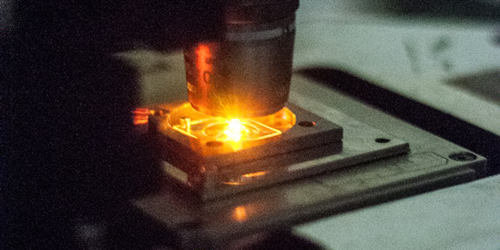
Synopsis: Photons Couple Like Cooper Pairs
A pairing of photons—similar to the pairing of electrons in superconductors—can occur when light scatters in a transparent medium.
[Physics] Published Thu Nov 09, 2017
Sonny Rhim likes this
10 Nov 09:48
Una volta ogni cent’anni
by Maurizio Codogno
Quando si dice che c'è una possibilità su un milione che capiti qualcosa allora succederà nove volte su dieci [Continua]
The post Una volta ogni cent’anni appeared first on Il Post.
Jacopo.bertolotti likes this

09 Nov 18:13
Alcohol use primes cocaine addiction
by LaBar, K. S.
Jacopo.bertolottiAlcohol is a gateway drug.
09 Nov 18:06
Heisenberg scaling of imaging resolution by coherent enhancement
by Robert McConnell, Guang Hao Low, Theodore J. Yoder, Colin D. Bruzewicz, Isaac L. Chuang, John Chiaverini, and Jeremy M. Sage
Jacopo.bertolottiIt's amazing how papers on quantum imaging never show anything even close to imaging.
Author(s): Robert McConnell, Guang Hao Low, Theodore J. Yoder, Colin D. Bruzewicz, Isaac L. Chuang, John Chiaverini, and Jeremy M. Sage
Classical imaging works by scattering photons from an object to be imaged, and achieves resolution scaling as 1/t, with t the imaging time. By contrast, the laws of quantum mechanics allow one to utilize quantum coherence to obtain imaging resolution that can scale as quickly as 1/t – the so-called ...
[Phys. Rev. A 96, 051801(R)] Published Thu Nov 09, 2017
09 Nov 17:35

How to Make Any Shape Zippable [research study]
by Marc Abrahams
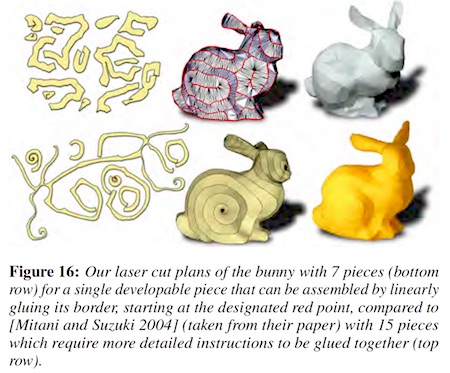
Mathematics comes to the rescue of anyone who wants to make almost any shape “zippable” with a single zipper. This study has details:
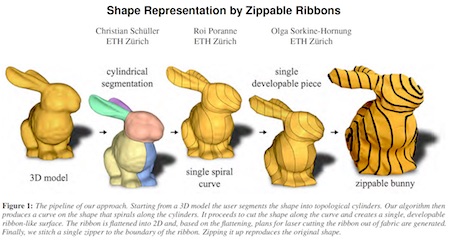
“Shape Representation by Zippable Ribbons,” Christian Schüller, Roi Poranne, and Olga Sorkine-Hornung, arXiv:1711.02450v1, November 7, 2017. The authors, at ETH Zürich, Switzerland, explain:
“We observe that the assembly of complex 3D shapes created by existing methods often requires first fabricating many small flat parts and then carefully following instructions to assemble them together. Despite its significance, this error prone and tedious process is generally neglected in the discussion. We propose an approach for shape representation through a single developable part that attaches to itself and requires no assembly instructions. Our inspiration comes from the so-called zipit bags, which are made of a single, long ribbon with a zipper around its boundary. In order to ‘assemble’ the bag, one simply needs to zip up the ribbon. Our method operates in the same fashion, but it can be used to approximate any shape.”
(Thanks to Mason Porter for bringing this to our attention.)
Jacopo.bertolotti likes this
09 Nov 16:13

Celebrate the scientific hierarchy
by George Ellis
Celebrate the scientific hierarchy
Celebrate the scientific hierarchy, Published online: 02 November 2017; doi:10.1038/nphys4300
NatureArticleSnippet(type=standfirst, markup=The validity of our scientific descriptions of reality does not hinge on their emergence from a more fundamental theory.
, isJats=true)
Jacopo.bertolotti likes this
06 Nov 10:00
Qualcosa di grosso sta per accadere in Medio Oriente
by fabristol
 Quello che è successo nei giorni scorsi tra Siria e Iraq ha creato un effetto domino di proporzioni enormi in Medio Oriente. Come al solito i media occidentali si sono soffermati solo sugli effetti ma non sulle cause. Vediamole allora qui le cause e di seguito una breve analisi.
Cause (i giorni prima):
- l’esercito siriano ha conquistato Deir Ezzor e ora si appresta ad assediare Al Bukamal, l’ultimo grande centro urbano in mano all’ISIS in Siria.
- nel frattempo l’esercito iracheno e le PMU sciite hanno conquistato l’intero Anbar a sud dell’Eufrate arrivando a controllare Al Qaem, importante centro al confine tra Siria e Iraq. In poche parole ISIS è finito.
- La Turchia è entrata in Siria nella regione qaedista di Idlib e ha creato decine di chilometri di territorio cuscinetto. Tutto questo d’accordo con la Russia.
- il presidente del Kurdistan iracheno, Barzani, appoggiato da Israele e Arabia Saudita si è dimesso e tutti i territori che aveva cercato di annettere al Kurdistan con il referendum sono stati riconquistati dall’esercito iracheno.
Effetti (alcuni giorni dopo):
- In Arabia Saudita sono in atto le purghe più grandi che si siano mai viste nealla sua storia. Re Salman ha arrestato 10 principi della casa reale accusati di corruzione piu 38 altri politici, incluso il principe bin Talal, uno degli uomini più ricchi al mondo che possiede quote importanti di Citibank e Twitter. Quando in Medio Oriente si arresta per corruzione significa che si è stati purgati dal potente di turno (i politici sono tutti corrotti per definizione). Le ragioni di questo sono molteplici ma guardando ai nomi della lista ci si rende conto che si tratta di persone legate o agli Stati Uniti o alla guerra in Siria. La tempistica infatti ci suggerisce che Salman abbia deciso che la guerra in Siria fosse persa (vedi cause qui sopra) definitivamente e che si dovesse fare piazza pulita di tutti quei personaggi scelti da suo fratello Abdullah.
- il primo ministro del Libano Hariri si dimette adducendo che lo fa a causa delle pressioni iraniane e di un fantomatico piano per assassinarlo. Ma la cosa più buffa è che annuncia le sue dimissioni esattamente il giorno dopo aver incontrato Re Salman a Riad. E ancora più incredibile annuncia di ricevere pressioni iraniane mentre è a Riad. Infatti a Beirut Hariri non è ancora tornato e forse non ci tornerà mai, visto che ha doppia nazionalità, libanese e saudita. Parlando di pressioni di un paese straniero vogliamo parlare di quelle che ha ricevuto dall’Arabia Saudita allora?
- mentre i soldati siriani massacravano gli ultimi militanti dell’ISIS a Deir Ezzor Israele si muoveva dalle alture del Golan (ricordiamolo, ancora occupate illegalmente dal 67). Al Nusra in Siria infatti ha attaccato alcuni villaggi drusi nel sud della Siria e Israele ha annunciato che forse dovrà intervenire per aiutare i civili invadendo “pacificamente” la Siria. Dopo aver aiutato per anni militarmente e logisticamente Al Nusra Israele decide che ora è venuto il momento di combattere i terroristi.
Analisi:
La situazione in questo momento è molto fluida ma quello che è certo è che i wahabiti/americani/israeliani stanno spostando le pedine del loro scacchiere mediorientale dopo la sonante sconfitta in Siria. Dobbiamo infatti capire che US, Arabia Saudita e Israele hanno investito centinaia di milioni di dollari per eliminare Assad e non solo non ce l’hanno fatta, ma hanno perfino rafforzato il loro nemico nel farlo. Israele sta fremendo per attaccare Hezbollah in Libano e Assad nel sud della Siria e quale migliore scusa se non quella di un Hariri dimesso messa sul piatto d’argento dall’amica Arabia Saudita? Ma le cose potrebbero rivelarsi veramente difficili per Israele questa volta. Hezbollah non è più un gruppo paramilitare: parliamo di soldati addestrati da generali siriani e russi a combattere guerra urbana e su terreno aperto. Parliamo di una organizzazione che ora possiede armi anti-carro e anti-aeree sofisticate. E non dimentichiamoci delle unita iraniane, afgane e palestinesi ancora presenti in Siria. Se Israele dovesse attaccare si riverserebbero sulle alture del Golan con il beneplacito dell’aviazione siriana e la protezione russa del suolo siriano.
Jacopo.bertolotti likes this

03 Nov 16:10
Torna a casa, Laika
by Massimo Sandal
I l 3 novembre 1957 una cagnetta randagia nata e cresciuta per le strade di Mosca diventò il primo essere vivente a orbitare la Terra. La chiamavano in tanti modi: Kudryavka (“ricciolina”), Zhuchka (“bacherozzo”), Limonchik (“limoncino”) ma divenne famosa come Laika. Non avrebbe mai rivisto il suo pianeta.
Laika non fu il primo organismo vivente a raggiungere lo spazio. A parte la possibilità, remota ma non impossibile, che qualche batterio terrestre scagliato dall’impatto di un asteroide abbia percorso gli spazi interplanetari, vari animali erano stati lanciati nello spazio, a volte riuscendo a recuperarli sani e salvi. I primi furono dei moscerini della frutta lanciati – e recuperati vivi – dagli USA nel 1947 a bordo di un razzo che raggiunse i 109 chilometri di altitudine (100 chilometri sono considerati il limite formale oltre il quale si parla di “spazio”). Ma si trattava di voli sub-orbitali: fondamentalmente razzi sparati come proiettili che arrivavano in alto, molto in alto prima di tornare giù. Laika fu la prima in orbita: a giungere nello spazio e a rimanerci, almeno finché la sua traiettoria non decadde naturalmente a Terra.
Ventiquattro giorni per l’eternità
Per noi, che viviamo in un’epoca di cautela a volta forse ossessiva, è difficile concepire la frenesia dell’inizio della corsa allo Spazio. Il primo Sputnik venne lanciato il 4 ottobre 1957. Sei giorni dopo, il 10 ottobre, al ricevimento ufficiale in onore del satellite, Nikita Krusciov decise che sarebbe stato opportuno avere un nuovo lancio che coincidesse con il 40° anniversario della Rivoluzione d’Ottobre, quindi entro il 6 novembre – meno di un mese dopo. Non poteva essere un’altra palla di metallo capace al massimo di un bip bip via radio, però: serviva qualcosa di spettacolare. Un altro pugno allo stomaco dell’orgoglio statunitense. Il salto di qualità più immediato era quello di inviare un animale in orbita: ma andava fatto in quattro settimane, partendo quasi da zero. L’11 ottobre il personale coinvolto nel lancio dello Sputnik 1 venne precipitosamente richiamato dalle ferie per lavorare a tempo pieno alla nuova missione, Sputnik 2.
Recuperare il passeggero era fuori discussione: non c’era ancora nessuna idea su come riportare giù qualcosa da un volo orbitale. I lanci sub-orbitali con animali potevano dare una dritta su come organizzare la cabina, ma il resto era da inventare. Il volo aveva senso se si dimostrava che l’ospite della capsula poteva sopravvivere nello spazio: bisognava quindi trovare il modo di riciclare l’aria, di provvedere a cibo e acqua, di mantenere la temperatura costante, di gestire i reflui. Bisognava inoltre trasmettere a terra dati in modo continuo. Non c’era nemmeno il tempo di buttare giù dei veri progetti: lo Sputnik 2 venne costruito sulla base di semplici schizzi disegnati in fretta e furia dagli ingegneri, che poi seguivano di persona i lavori nell’officina.
Laika subì un addestramento cruento, fatto di centrifughe per simulare l’accelerazione del lancio, rumori assordanti a cui abituarsi e adattamento a gabbie sempre più strette, per venti giorni.
E venne scelta Laika. Per il suo carattere particolarmente docile, si dice. I cani usati per i test spaziali sovietici venivano scelti tra i celebri (e tuttora numerosi) randagi di Mosca, di cui scrisse anche Cechov, ritenuti particolarmente robusti e capaci di reggere lo stress e la fame. Laika fu costretta a subire un addestramento cruento, fatto di centrifughe per simulare l’accelerazione del lancio, rumori assordanti a cui abituarsi e adattamento a gabbie sempre più strette, per venti giorni. Altre due cagnette, Albina e Mushka, facevano da backup e da “controllo” a Terra rispettivamente, e vennero addestrate allo stesso modo. Erano tutte femmine: era più facile farle urinare, nello spazio minuscolo della capsula orbitale.
Laika venne sottoposta a una piccola operazione chirurgica per facilitare l’inserzione dei sensori della respirazione, della pressione sanguigna e del battito cardiaco. Poi venne trasportata a Tashkent, e infine al cosmodromo di Baikonur, in Kazakistan. Il colonnello Vladimir Yazdovsky, medico militare responsabile della selezione e addestramento dell’equipaggio, raccontò che una sera pochi giorni prima del lancio portò Laika a casa, a giocare con i suoi bambini. “Laika era calma e incantevole. Volevo fare qualcosa di buono per lei. Aveva così poco ancora da vivere.” Il 31 ottobre 1957, tre giorni prima della missione, Laika entrò nella capsula del satellite da cui non sarebbe più uscita.
Space Oddity
Il mattino del 3 novembre – ventiquattro giorni dopo il diktat di Krusciov – un razzo portò in orbita con successo lo Sputnik 2 con Laika a bordo. Il quarantennale della Rivoluzione era salvo. I sensori indicavano chiaramente che Laika era terrorizzata – respirava affannosamente e il suo battito cardiaco arrivò a 240 battiti al minuto durante l’accelerazione iniziale: ma era viva. Una volta in orbita i suoi parametri vitali tornarono lentamente verso la norma, e riuscì a nutrirsi. I sovietici avevano dimostrato che un essere vivente poteva raggiungere l’orbita terrestre e, in linea di principio, sopravvivere. Può sembrare banale per noi oggi, ma all’epoca si avevano idee solo vaghe degli effetti dell’assenza di gravità o dell’ambiente spaziale su un organismo.
Quando l’agenzia sovietica TASS annunciò il successo della missione, a terra le reazioni furono miste. Da un lato gli americani furono veramente umiliati. Mentre il loro programma satellitare Vanguard languiva, i sovietici non solo avevano lanciato due satelliti nel giro di un mese, ma avevano anche chiaramente fatto il primo passo concreto verso una missione con uomini a bordo. La capacità dei russi di mettere a punto missili balistici intercontinentali era stabilita. Le parole del presidente Eisenhower, riportate dal New York Times, anche lette oggi sembrano sibilate tra un digrignar di denti: “Questo lancio non aumenta la mia preoccupazione, nemmeno di una virgola.”
Quando si annunciò il successo della missione, le reazioni furono miste. Da un lato gli americani furono umiliati. Dall’altro lato ci si domandava se avesse senso sacrificare un animale per una questione di propaganda.
Dall’altro lato, anche all’epoca, ci si domandava se avesse senso sacrificare un animale per una questione fondamentalmente di propaganda. Sì, il volo di Laika era scientificamente importante, ma tutto sommato valeva la pena di condannarla a morte solo per approfittare di un anniversario, invece di trovare il tempo per una missione con ritorno a terra? Ci furono proteste in Occidente,ma anche nel blocco comunista serpeggiava perplessità. Su una rivista di divulgazione scientifica polacca il fisico Krzysztof Boruń criticò apertamente la scelta di non riportare Laika a terra: una mossa quantomeno coraggiosa, visto il clima dell’epoca.
Le ultime ore di Laika
La bagarre era mitigata dal fatto che, a sentir loro, i sovietici avevano fatto le cose per bene. Laika era più o meno in salute, e quando sarebbe stato il momento – qualche giorno dopo il lancio – un boccone avvelenato l’avrebbe addormentata senza farla soffrire. Tutto sommato non un pessimo destino per un cane randagio che altrimenti sarebbe morto probabilmente di fame e freddo alla periferia di Mosca. Purtroppo non è andata così. La vera fine di Laika venne rivelata nel 2002 da uno degli scienziati della missione, Dimitri Malashenkov, a un congresso di scienze spaziali a Houston:
Durante il volo, i canali telemetrici registrarono un aumento graduale di umidità e temperatura in cabina. Dopo circa 5-7 ore di volo il sistema di telemetria andò in avaria. Non era più possibile conoscere lo stato del cane dopo la quarta orbita. Durante la simulazione a terra delle condizioni di volo si arrivò alla conclusione che Laika doveva essersene morta durante la terza o quarta orbita, per surriscaldamento. Divenne chiaro che era praticamente impossibile creare un sistema di controllo della temperatura affidabile nel tempo limitato disponibile.
La colpa non fu di chi lavorò al progetto. In quattro settimane gli ingegneri russi dello Sputnik inventarono praticamente da zero il primo sistema di sopravvivenza nello spazio, che nei piani avrebbe potuto tenerla in vita per almeno una settimana. Semmai è sorprendente quanto, della missione, abbia effettivamente funzionato. Laika arrivò viva in orbita e, se non fosse stato per la temperatura, sarebbe sopravvissuta. Sempre Malashenkov riporta che:
L’analisi dell’ambiente della cabina mostrò che l’ossigeno era sufficiente. Il fatto che la pressione in cabina non si fosse ridotta mostrò che era isolata in modo affidabile. […] I dati sperimentali confermarono l’ipotesi iniziale che le condizioni del volo spaziale non causerebbero danno agli esseri viventi, inclusi gli esseri umani. Il livello di sviluppo della medicina spaziale poteva permettere di arrivare molto vicini al compito del volo spaziale umano.
Nel corso dei mesi lo Sputnik 2 decadde lentamente, fino a bruciare a contatto con l’atmosfera. Una scia di fuoco passò sopra New York e infine sparpagliò le ceneri di Laika sopra l’Amazzonia, il 14 aprile 1958.
E dopo?
Sputnik 2 fu la prima e ultima missione spaziale concepita senza ritorno. Beninteso, Laika non fu la prima martire della conquista allo spazio (l’onore, se così vogliamo dire, va alla scimmia Albert, un macaco Rhesus che morì a causa del malfunzionamento del razzo in un volo suborbitale statunitense, nel 1949). Né fu certo l’ultima, umana o animale. Ma non vennero più pianificate missioni in cui il ritorno fosse impossibile. Il 19 agosto 1960 altre due randagie, Belka e Strelka, raggiunsero l’orbita terrestre a bordo del Korabl-Sputnik 2. Il loro destino fu assai più felice: assieme a quaranta topi, due ratti e varie piante, sarebbero atterrate sane e salve il mattino seguente – Strelka ebbe pure dei cuccioli dopo la missione, uno dei quali venne donato dai russi a Jacqueline Kennedy come gesto conciliatorio. Qualche mese dopo, al posto di Belka e Strelka avrebbe volato il primo essere umano, Yuri Gagarin.
Laika è il simbolo dolceamaro di un’epoca in cui tentare l’impossibile era normale: in sole quattro settimane tra il 10 ottobre e il 3 novembre 1957 si gettarono le basi concrete dell’astronautica.
Oggi non c’è più una corsa allo spazio: l’esplorazione spaziale umana del primo Ventunesimo secolo ha un ritmo fin troppo pacato, dove il massimo delle emozioni è vedere Space Oddity di Bowie cantata a bordo della ISS. Non facciamo una retorica dei bei tempi andati: ammazzare bestie senza motivo e arrabattare missioni all’ultimo momento per assurde pretese di marketing o propaganda non è il modo in cui mandare avanti una qualsiasi impresa scientifica. Si dice che il volo di Laika aprì una discussione sull’utilizzo degli animali nella ricerca, ma abbiamo visto che anche all’epoca una missione del genere non era ritenuta granché etica. La ricerca sugli animali non è (non dovrebbe essere, perlomeno) spreco di vite.
Ma Laika è anche il simbolo dolceamaro di un’epoca in cui tentare l’impossibile era normale. Rendiamoci conto che gli Sputnik sono cronologicamente più vicini al primo aeroplano dei fratelli Wright – decollato a Kitty Hawk 54 anni prima – di quanto lo siano ai giorni nostri. Certo c’era il vantaggio di “cogliere i frutti più bassi dell’albero”, è molto più facile mettere in orbita una capsula che mandare una spedizione su Marte. Ma resta il fatto che in sole quattro settimane tra il 10 ottobre e il 3 novembre 1957 si gettarono le basi concrete dell’astronautica. Il volo di Laika fu il primo vero test sulla possibilità della specie umana di attraversare lo spazio. Sessant’anni dopo, perso l’ardore giovanile, non abbiamo ancora preso in mano tutte le possibilità che ci aprì quel sacrificio.
L'articolo Torna a casa, Laika proviene da il Tascabile.
Jacopo.bertolotti likes this
31 Oct 15:31


Cioè, se un giornale intitolasse un'intervista "corpi umani per produrre il sangue per le trasfusioni" o "organi espiantati quando il cuore ancora batte per fare trapianti" o "pus nel latte", non starebbe dicendo una bugia ma nemmeno farebbe un servizio al cittadino, forse un servizio ad un'ideologia, questo sì. A cosa servono quindi cose (e titoli) del genere?
VaxLegend: come si infila un feto in un vaccino? Con un articolo di giornale.
by Salvo Di Grazia
La propaganda antivaccinista esiste da sempre, da quando sono nati i vaccini.
La sua origine è ovviamente l'ignoranza, non percepire non solo l'importanza delle vaccinazioni ma anche il loro meccanismo, non si capiscono i motivi per cui sono considerati sicuri ed efficaci perché sono medicine che si assumono in assenza di malattia, per prevenire e tutto ciò che si fa a scopo preventivo è considerato superfluo, per natura ci immaginiamo immuni dai problemi più gravi.
Nel 1900, quando l'ignoranza era un analfabetismo diffuso, le paure erano ovviamente irrazionali. Per esempio si spargeva il terrore dicendo che il vaccino, derivando dalle vacche (era stata questa la prima forma, grezza, di vaccinazione), avrebbe causato malattie simili a quelle degli animali nei vaccinati, oppure avrebbe addirittura creato dei mostri, metà uomini e metà mucche.
Normale per quell'epoca. Se a quei tempi la propaganda antivaccini usava argomenti adatti alla popolazione analfabeta, oggi ne usa altri adatti alla popolazione generale, fondamentalmente analfabeta scientificamente ma che ha accesso ai media (internet, televisione) molto facilmente.
 |
| Propaganda antivaccini: dopo la vaccinazione antivaiolo dal corpo escono mucche. La propaganda punta a creare ribrezzo, con qualsiasi mezzo, nei confronti del "nemico", in questo caso i vaccini. |
Oggi si punta ad altro, l'ignoranza esiste ancora ma spesso è dovuta all'incapacità nel distinguere le buone notizie dalle bufale o deriva dall'eccesso di informazioni: abbiamo tante di quelle notizie da confonderci e non sapere più chi ascoltare. Non si può più dire che nascono le mucche sulla pelle ma possiamo dire che i vaccini conterrebbero qualsiasi cosa, meglio se qualcosa che faccia effetto, basta dare con leggerezza false informazioni ed il gioco è fatto.
E sui vaccini di falsa informazione ce n'è tanta. Fortunatamente, dopo un iniziale caos, i media stanno iniziando (almeno quelli più seri) a prendere provvedimenti, a non dare più voce a ciarlatani o imbonitori a fare parlare solo le persone competenti ma ogni tanto qualcuno ci ricasca.
Come qualche giorno fa il quotidiano "La Verità".
Come qualche giorno fa il quotidiano "La Verità".
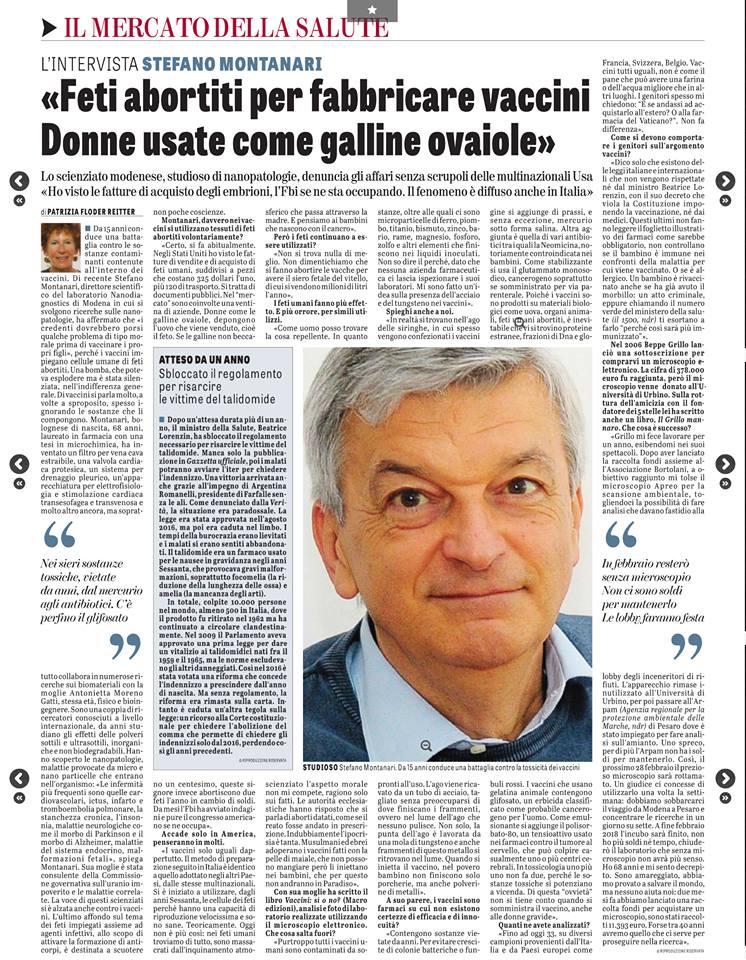
Quante volte avete letto la bufala "feti abortiti nei vaccini" o "nei vaccini ci sono cellule di feti abortiti"? Bene. Capisco che chi non è del campo potrebbe non capire cosa si nasconda in questa "terribile rivelazione" ma posso provare a spiegarlo.
In questo caso si tratta di una bufala che usa sapientemente delle tecniche di propaganda: crea ribrezzo per suscitare paure e confusione.
"Feti abortiti per fabbricare vaccini, donne usate come galline ovaiole", è questo il titolo del quotidiano nel quale è apparsa una lunga intervista poi richiamata in prima pagina, l'intervistato è il titolare (noto antivaccinista) di un laboratorio analisi privato, presentato invece come "scienziato famoso in tutto il mondo" che dice di voler salvare l'umanità con queste sue rivelazioni. Il problema è che, per salvarla, chiede soldi, anche con toni piuttosto drammatici.
In questo caso si tratta di una bufala che usa sapientemente delle tecniche di propaganda: crea ribrezzo per suscitare paure e confusione.
"Feti abortiti per fabbricare vaccini, donne usate come galline ovaiole", è questo il titolo del quotidiano nel quale è apparsa una lunga intervista poi richiamata in prima pagina, l'intervistato è il titolare (noto antivaccinista) di un laboratorio analisi privato, presentato invece come "scienziato famoso in tutto il mondo" che dice di voler salvare l'umanità con queste sue rivelazioni. Il problema è che, per salvarla, chiede soldi, anche con toni piuttosto drammatici.
I toni drammatici sono usati anche nell'intervista e la giornalista, senza fare una piega come se fosse una cosa normale, riporta la notizia dei "feti abortiti" per fare i vaccini.
Ovviamente per le risposte catastrofiche del presunto scienziato famoso in tutto il mondo non c'è nessuna spiegazione o un contraddittorio, si lancia la bufala e buona notte, l'informazione ormai si fa così.
Ovviamente per le risposte catastrofiche del presunto scienziato famoso in tutto il mondo non c'è nessuna spiegazione o un contraddittorio, si lancia la bufala e buona notte, l'informazione ormai si fa così.
In realtà questo articolo potrebbe essere una risposta per chi si chiede come mai i quotidiani non vendano più, perché c'è una crisi della carta stampata, eccone un motivo: i giornali si comprano per informarsi, se ospitano pagine di fantamedicina e disinformazione, perché spendere soldi? Di pagine di false notizie è pieno internet, che è gratis.
Perché comprare quindi un foglio di carta che non serve a nulla?
Perché comprare quindi un foglio di carta che non serve a nulla?
Cioè, se un giornale intitolasse un'intervista "corpi umani per produrre il sangue per le trasfusioni" o "organi espiantati quando il cuore ancora batte per fare trapianti" o "pus nel latte", non starebbe dicendo una bugia ma nemmeno farebbe un servizio al cittadino, forse un servizio ad un'ideologia, questo sì. A cosa servono quindi cose (e titoli) del genere?
I "feti per produrre i vaccini" è dunque un esempio di cattiva informazione, di malafede e manipolazione della realtà ai fini ideologici.
Chi lavora nel campo della ricerca, infatti, si starà facendo sicuramente una risata, lo so benissimo non preoccupatevi, perché l'uso di linee cellulari umane è uno standard (da decenni ormai) di qualsiasi laboratorio di ricerca ma avverto che sarà una risata amara perché lo scienziato dello scoop dei feti fa invece capire chiaramente che questo "uso di feti abortiti" sarebbe uno scoop, praticamente un crimine e ci sarebbe qualcosa di immorale o proibito. Lui ha visto addirittura le fatture! Tutte cretinate che, chi non è del campo, potrebbe non capire.
Se dicessi "attenzione, DNA umano nelle trasfusioni di sangue!" o "usano corpi umani per preparare il sangue delle trasfusioni" non starei dicendo bugie ma starei tentando di creare paura, ribrezzo e se poi dicessi che questi derivati di corpi umani sono usati abitualmente persino negli ospedali italiani creerei un clima di sospetto che, riflettendoci, è però piuttosto stupido. Nel sangue che usiamo per le trasfusioni c'è (ovviamente) una bella quantità di cellule umane (i globuli rossi!) e di DNA (che è nelle cellule, in tutte).
Ovviamente sono usati corpi umani (e di chi allora, i donatori sono umanissimi...) e chi avrebbe il coraggio di dire che le trasfusioni sarebbero per questo dannose? Nessuno, passerebbe per ignorante (o in malafede). Eppure c'è chi da tempo va in giro a dire che nei vaccini ci sarebbero "feti abortiti" o che "si usano feti abortiti per fare i vaccini". E glielo fanno dire pure in prima pagina.
Come leggete questa notizia? Paura? Schifo?
No, state tranquilli, chi lo dice vi sta semplicemente prendendo per stupidi.
Ora vi "traduco" questa terribile notizia e vedrete come tutto diventa ridicolo e mostra che tecniche (viscide) di propaganda usa l'antivaccinismo.
I virus (per chi non lo sapesse) non sono cellule normali, non sono come i batteri, per "vivere" e riprodursi devono entrare (proprio entrare, dentro) una cellula vivente. Per questo sono pericolosissimi, riproducendosi distruggono le cellule che li hanno ospitati. Chi deve studiare o produrre virus a scopi medici deve quindi tenerne conto.
Ovviamente per produrre alcuni vaccini (quelli che usano virus attenuati, per esempio) o per studiare i virus, abbiamo bisogno di averne a disposizione qualcuno, esattamente come quando studiamo i batteri (se non ne abbiamo come li studiamo)? O come quando si studia un organo umano, dobbiamo procurarcelo.
Come si fa allora a "coltivare" virus? Si usano delle cellule viventi (esattamente come per studiare i tumori). In queste cellule viventi (che possono essere di cavia o di uomo) si coltivano i virus che poi si useranno per studio o per farmaci. Per produrre i vaccini a virus attenuati (per esempio quello per la rosolia) si useranno quindi dei virus coltivati in cellule umane. Lo stesso per studiare i virus o per fare diagnosi, per capire quale virus (o sospetto) ha causato una malattia, eccetera.
Fin qui ci siamo?
Ecco.
Da questo momento in poi le cellule umane non si usano più. Si prendono i virus ed il resto è un procedimento farmaceutico che porterà alla produzione del farmaco. Ovviamente non si usano cellule a caso", ogni azienda o laboratorio compra da altri laboratori specializzati le cellule di coltura. Questi laboratori hanno milioni di cellule che derivano da alcune (poche) fonti, in particolare da due (che hanno delle sigle): la WI-38 e la MRC-5. La prima deriva da un feto abortito volontariamente (a scopo terapeutico) a 12 settimane (3 mesi) nel 1962 e la seconda da uno abortito a 14 nel 1966. Queste cellule, donate dalle madri per la ricerca e la medicina, sono state fatte riprodurre e quindi distribuite nei decenni a tutti i laboratori e le aziende del mondo. Le cellule usate oggi non sono ormai nemmeno quelle originali di cinquanta anni fa ma le loro "discendenti". Per la ricerca questo è un dato assolutamente normale e conosciuto ed anche per qualsiasi laboratorio diagnostico di alto livello.
La stessa identica cosa succede nello studio dei tumori, per il quale si usano moltissimo le cellule di una donna morta per tumore del collo dell'utero, Henrietta Lacks e proprio dalle sue iniziali (HE-LA) queste cellule prendono il loro nome. Nel caso dei vaccini quindi non si tratta di "feti abortiti" usati per la produzione ma di cellule discendenti da altre cellule di feto abortito e donato alla ricerca. Forse questo fa assumere alla cosa un altro significato e fa capire il livello di serietà di chi ha detto certe cose.
Queste cellule sono acquistabili da tutti (anche on line!) per dire quanto sia "segreta" questa procedura, l'intervistato ha visto le fatture ma noi siamo più fortunati, potendo acquistare on line anche se non facciamo parte dei servizi segreti.
Battute a parte, in che tipo di cellule vuoi coltivare virus umani? Come puoi ottenere cellule da destinare alla ricerca? Non certo dal nulla e allora si usano quelle derivate da un unico tipo di cellule tanti anni fa. Se si ha qualcosa in contrario basta rinunciare praticamente a tutta la medicina moderna. Se ci aggiungiamo anche che per esercitarsi un chirurgo spesso deve usare cadaveri (che impressione, vero?) potremmo fare un altro scoop in prima pagina.
Nulla di segreto o di proibito, niente di schifoso o preoccupante, che ve ne pare?
Si tratta di ordinaria scienza, medicina, normale produzione farmaceutica. È quello che si fa e si è sempre fatto per studiare le cure per le malattie, produrre farmaci e fare ricerca che è poi lo scopo per cui, quelle donne, hanno donato le cellule dei propri figli, l'importanza di queste cellule è descritta anche dagli studiosi che ne hanno parlato nelle loro ricerche che sottolineano come, la sicurezza e le caratteristiche di queste linee cellulari, abbiano rappresentato un enorme passo avanti della scienza e per la salute. Chi ne parla come qualcosa di strano quindi o è ignorante o in malafede.
L'intervistato aggiunge altri particolari scabrosi che aumentano la tensione del suo romanzo giallo, per esempio l'FBI che indagherebbe sui fatti.
Storia complicata. In realtà questo è uno scontro politico avvenuto negli Stati Uniti: un'associazione di pianificazione famigliare (Planned Parenthood), spesso al centro di scontri e denunce di gruppi antiabortisti o ultracattolici, è stata accusata da gruppi antiaborto ( dopo un report fatto con uso di telecamere nascoste ed infiltrati) di ricevere denaro in cambio di forniture di tessuti fetali da destinare alla ricerca. Le indagini (sono quasi 500 pagine) del congresso americano sono finite con lo scagionamento da tutti i reati dell'associazione e delle aziende chiamate a risponderne e comunque l'associazione ha annunciato di rinunciare da quel momento in poi a pagamenti in cambio di tessuti. Sulle "donne ovaiole" stendo un velo pietoso, come definizione di chi ha scelto (dolorosamente, com'è comprensibile) di interrompere una gravidanza è davvero di cattivo gusto.
Ma evidentemente queste notizie non sono importanti e tutto si è concentrato sui feti contenuti nei vaccini, su una notizia-non notizia, stupida, data male e manipolata peggio per la quale la giornalista ha assunto una posizione assolutamente acritica se non complice. Un articolo pieno di baggianate. Ma questo è un esempio di informazione in Italia e, come dicevo all'inizio, può essere un esempio di uno dei motivi per cui la stampa italiana ormai sia considerata poco attendibile.
Vi ho spiegato (spero bene) quello che succede e le ragioni della bufala, ora voi, con queste notizie, avete qualche idea in più. Non vado oltre, giudicate voi l'attendibilità e la serietà di chi dice queste cose, giudicate voi se un giornale che pubblica queste cose sia serio.
E giudicate voi se l'antivaccinismo sia morale o meno, soprattutto alla luce del fatto che, per salvare il mondo, non si chiedono soldi alla gente.
La Verità, è questa e forse fa capire tutto molto più facilmente.
Alla prossima.
Jacopo.bertolotti likes this