Telefónica, un acteur majeur espagnol des télécommunications, met en avant l'utilisation de la 5G, de l'IoT et de l'IA pour transformer les soins de santé. Au MWC de Barcelone, deux projets innovants démontreront comment ces technologies permettent de surveiller et diagnostiquer des patients à distance, efficacement.
Des solutions innovantes pour l'ophtalmologie et l'oncologie
Telefónica se prépare à dévoiler au MWC deux solutions de santé innovantes, centrées sur l'IoT et l'IA. Ces technologies utilisent les réseaux 5G pour transporter les données des patients en temps réel. D'ailleurs, cette approche permet de réduire la latence et d'améliorer la transmission des données.
Les dispositifs, CatEye et Pointcheck, ciblent respectivement l'ophtalmologie et l'oncologie. Le premier, conçu pour diagnostiquer les cataractes, permet de déterminer si une intervention chirurgicale est nécessaire. Le second, basé sur la surveillance des globules blancs, protège les patients atteints de cancer des infections. Ces solutions permettent de prendre des décisions de santé précises.
L'IA et la 5G pour des diagnostics plus rapides
L'intégration de l'intelligence artificielle permet à ces dispositifs de prendre des décisions autonomes. Comme pour le produit CatEye, l'appareil prend une photo des yeux et l'envoie à une IA via 5G pour analyse. De plus, cette analyse aide à déterminer si une intervention est nécessaire, sans consultation immédiate avec un spécialiste.
Cela permet aux ophtalmologues de déléguer certaines tâches aux appareils. Par conséquent, ils peuvent se concentrer sur des interventions plus complexes. En outre, l'utilisation de la 5G garantit une plus grande mobilité et une capacité de transmission optimale des données. Cela facilite l'accès au diagnostic même en zones éloignées.
Des projets pilotes et un futur prometteur pour la santé
Pointcheck, la solution destinée à la surveillance des patients atteints de cancer, est en phase pilote. Ce dispositif utilise la technologie 5G pour suivre en temps réel les niveaux de globules blancs des patients. De plus, il permet de prévenir les risques d'infections en alertant les médecins à distance.
Le réseau 5G facilite une interaction rapide entre le patient et l'équipe médicale. Effectivement, cela réduit les délais de transmission des données. Effectivement, ces technologies permettent une prise en charge médicale plus réactive et plus efficace. Ce qui contribue ainsi à la santé globale des patients.
La 5G comme catalyseur de l'innovation dans les soins de santé
L'utilisation de la 5G dans le secteur de la santé ouvre des perspectives immenses pour les soins à distance. Effectivement, la faible latence et la capacité de transmission étendue rendent ces technologies particulièrement adaptées aux environnements médicaux exigeants. De plus, cela permet une interaction plus fluide entre les dispositifs médicaux et les professionnels de santé.
Telefónica met donc cette technologie au service des patients et des médecins, et participe à la modernisation du secteur. Grâce à la 5G, l'IA et l'IoT, le diagnostic devient plus rapide, plus précis et accessible, même dans les régions les plus isolées, où les infrastructures médicales sont limitées.
Les initiatives de Telefónica au MWC montrent clairement le potentiel de la 5G pour transformer les soins de santé. Ces technologies permettent non seulement de diagnostiquer plus rapidement, mais aussi de rendre les soins plus accessibles à distance, avec un impact positif sur les traitements en ophtalmologie et en oncologie. L'avenir des soins de santé semble résolument tourné vers la 5G.
Le groupe Carrefour a annoncé mardi 11 février son intention d'acquérir l'intégralité des actions en circulation de Carrefour Brésil qu’il contrôle à 67.4%. A l’issue de l’opération, Peninsula, le véhicule financier de la famille Diniz, détiendra jusqu’à 10,7% du capital du groupe, ce qui fera de cette famille brésilienne le 1er actionnaire de Carrefour, loin devant les Moulin.
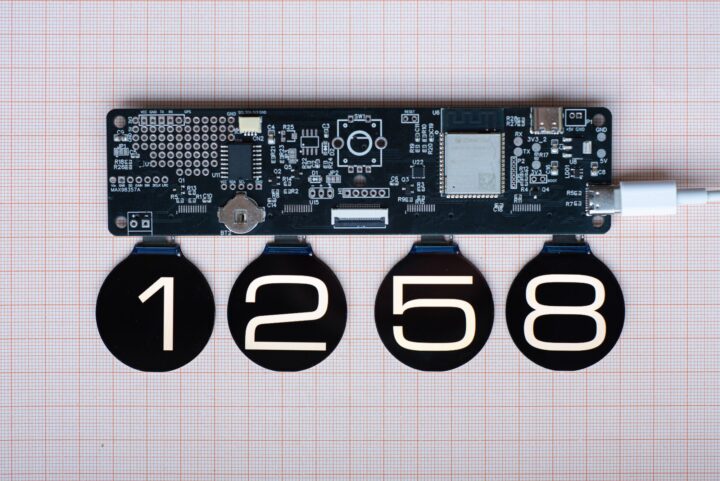
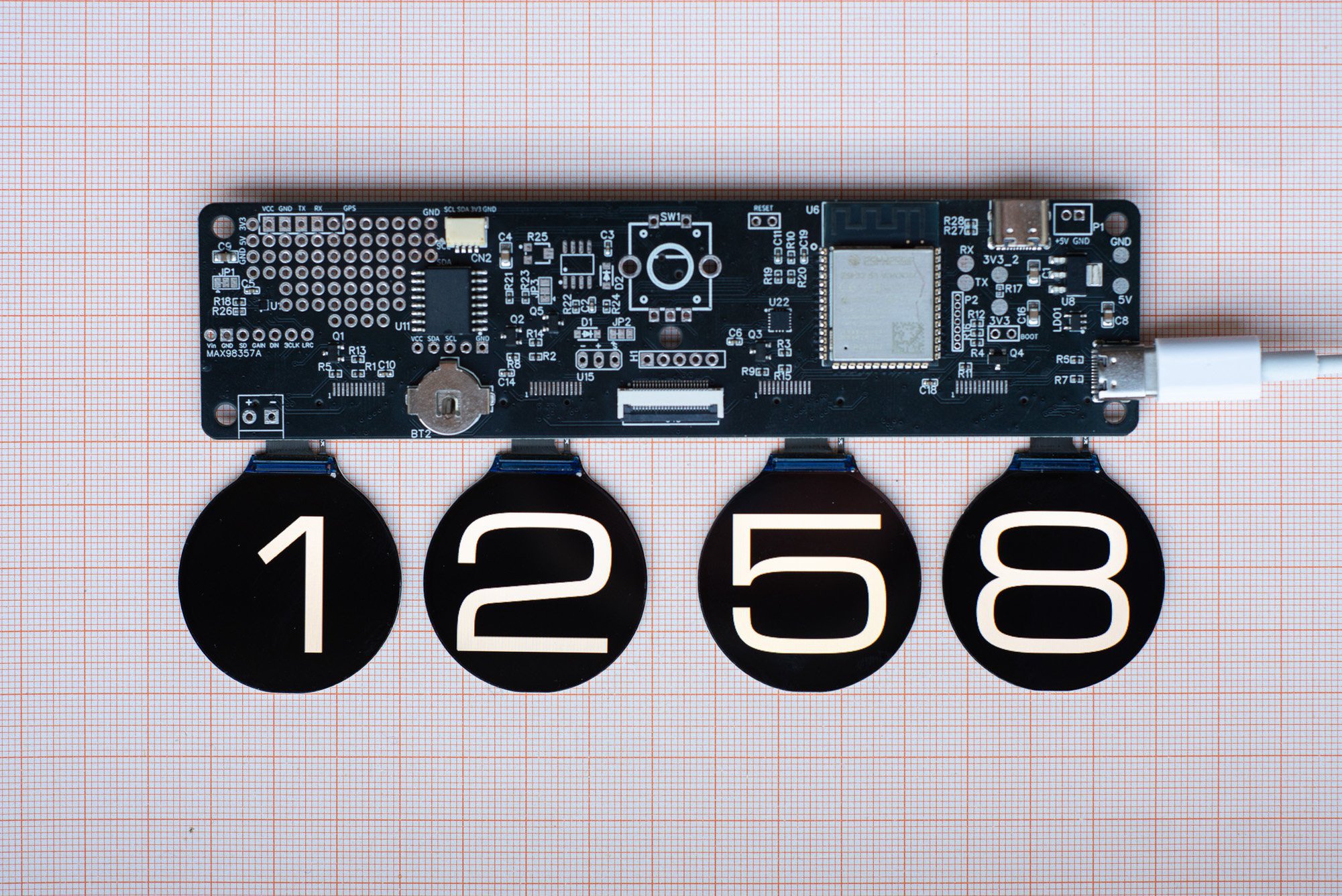
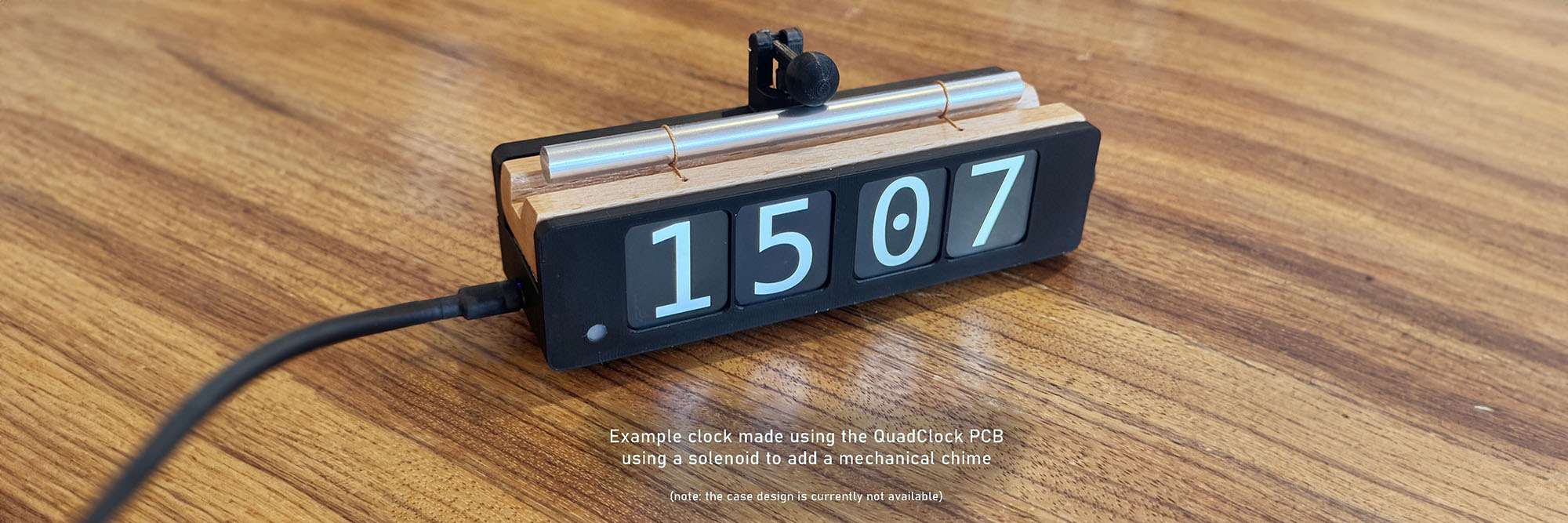
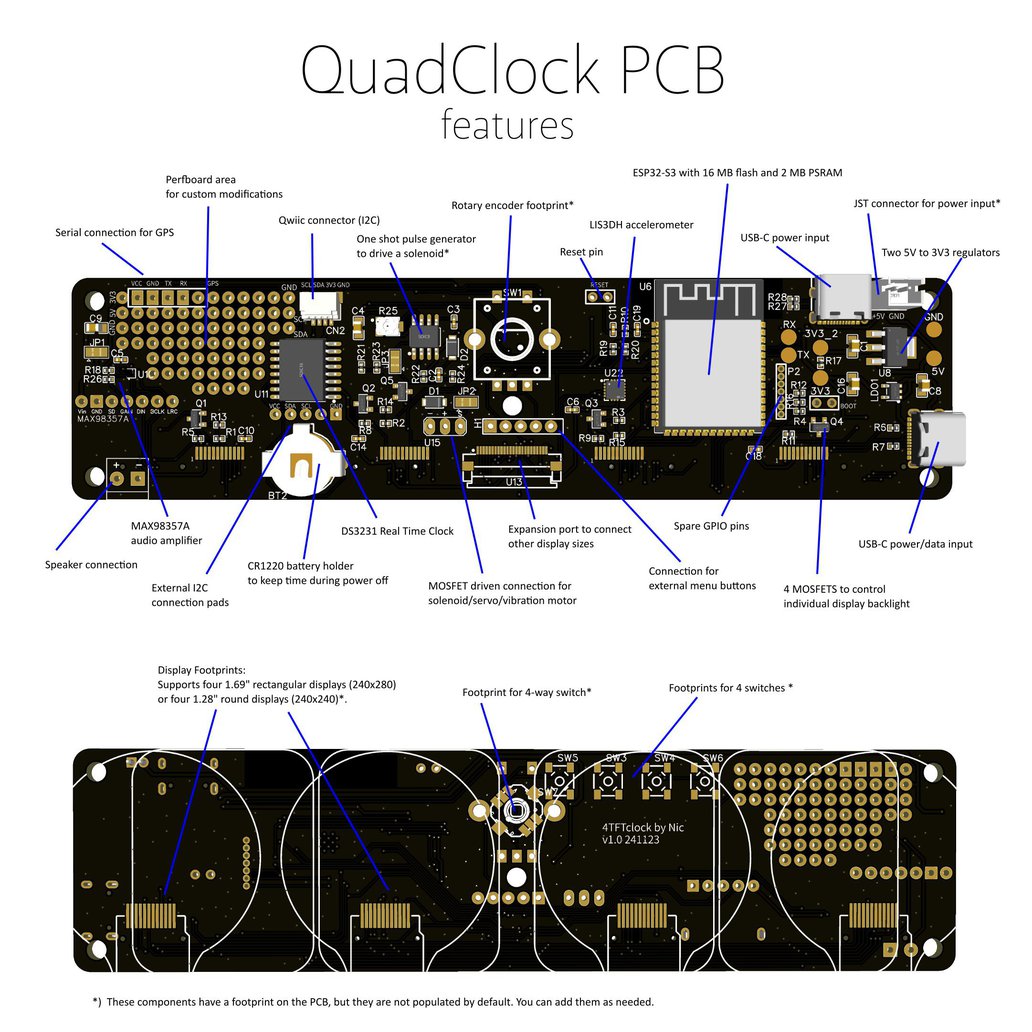
The QuadClock PCB is an ESP32-S3-powered multi-display clock controller designed to serve as a foundation for creating a four-TFT-display clock. It supports up to four 1.69-inch rectangular TFT displays (240×280) or four 1.28” round displays (240×240). It manages essential functions such as driving the displays and maintaining precise time, allowing you to focus on crafting a unique enclosure or integrating additional features.
It is open-source and is powered by the ESP32-WROOM-1 module with up to 16MB flash and 2MB PSRAM. It supports independent brightness control for each mounted display via four MOSFETs and includes an onboard real-time clock with a backup battery for accurate timekeeping.
The QuadClock PCB is designed for enthusiasts and makers interested in creating multi-display clock projects. It can also be used for stock tickers, weather displays, and smart home dashboards.
The QuadClock ESP32-based clock controller is declared as “not entirely beginner-friendly” as it requires precise soldering to mount the TFT displays if not ordered pre-mounted. The documentation page lists hardware design files and includes instructions for mounting the displays and installing firmware. The C++ source code is available on GitHub.
The QuadClock PCB is priced at $39 on Tindie for the baseboard alone. Buyers can include mounted 1.28-inch and 1.69-inch displays for $34 and $30 extra, respectively. There is a discount for buying more than one unit. Alternatively, the QuadClock Orbix is a fully assembled product built around the QuadClock PCB.
by Leila Abboud and Melissa Heikkilä, Financial Times
US Vice President JD Vance has warned Europe not to adopt “overly precautionary” regulations on artificial intelligence as the US and the UK refused to join dozens of other countries in signing a declaration to ensure that the technology is “safe, secure and trustworthy.”
The two countries held back from signing the communique agreed by about 60 countries at the AI Action summit in Paris on Tuesday as Vance vowed that the US would remain the dominant force in the technology.
“The Trump administration will ensure that the most powerful AI systems are built in the US, with American-designed and manufactured chips,” Vance told an audience of world leaders and tech executives at the summit.
This week, Microsoft’s HoloLens took another major hit, potentially securing the end of the mixed-reality headset in the future.
Following widespread device discontinuation reports and a roadmap of finality regarding its HoloLens technical support, Microsoft lost its last major lifeline with the loss of the US Military IVAS contract worth a reported $22 billion.
While the HoloLens saw enterprise usage across its lifespan, the firm’s IVAS contract kept the device afloat in the previous few years as the marketplace matured and developed, with more vendors selling devices with similar functionality.
However, and interestingly, the recent loss of the IVAS has seen Microsoft’s HoloLens division replaced by Palmer Luckey’s start-up, Anduril, a firm focusing on defence technology.
Keen eyes will remember Palmer Luckey as the person who founded Oculus, the virtual reality start-up that Mark Zuckerberg acquired and eventually transitioned into the Meta and Reality Labs umbrella following Luckey’s departure.
Anduril is taking over developing and producing a mixed-reality device, following Microsoft’s work with the HoloLens-powered IVAS.
Microsoft’s IVAS was not without its problems, through years of trail and error feedback came back negativey repeatedly; hwoever the prospects of a MR device for on-field defence perpurses is to appealing for the US military to drop entirly.
But since Microsoft’s slow decline in support for HoloLens, which can be traced back to Alex Kipman’s distancing in years past, led to the more recent discontinuation of HoloLens, replacing HoloLens from the US Army contract makes sense as a more secure hardware partner is most likely crucial for IVAS success.
While the prospect of Anduril joining the IVAS development cycle seems secure, the US Army notes that final agreements are still being worked out.
Microsoft is not absent from the project. Notably, Microsoft Azure will remain attached to the IVAS project, giving cloud computing support for IVAS MR and AI technologies, in part proving Microsoft’s place as a backend framework provider for the emerging XR market, a strong position.
As part of the Anduril IVAS deal, the firm notes aligned partnerships with OpenAI and Palantir to integrate AI training features into the project. Moreover, reports suggest that the IVAS contract could reach $28 billion in the future, a valuable asset for the Oculus founder.
Microsoft Receives Final Updates
Following its official announcement about the last chance to purchase, Microsoft has launched the final major feature update for HoloLens 2 ahead of its discontinuation in December. The device will continue to receive minor security and stability updates until 2027. However, this most recent update represents the last significant change, fundamentally altering the framework of the HoloLens 2.
The latest update introduces new system text size settings, allowing users to adjust the size of the Start Menu UI with the option to scale text up to 200%. Users can skip the eye calibration setup during first-time activation, simplifying the initial setup process.
Two new applications have also been added to the headset. First, WinGet integration enables users to download Microsoft Store apps after the storefront’s retirement. Second, integrating the OneDrive PWA application gives users an improved cloud-sharing tool.
Along with these significant updates, the release includes various bug fixes and security updates, reinforcing Microsoft’s commitment to keeping the device secure for businesses following the last purchase opportunity.
As part of the last-time-to-buy initiative, Microsoft will sell the remaining HoloLens 2 units on a first-come, first-served basis. These units will only be available directly from Microsoft or through official resellers. Warranty and customer/developer support will remain unchanged despite this announcement.
Although this news may seem like the end for HoloLens 2, Microsoft will continue to support the device through security and major functionality updates until December 31, 2027, including this latest update.
In conjunction with the last-time-to-buy announcement, Microsoft informed its HoloLens/Mixed Reality Partner community that the first-generation HoloLens headset will receive its final update on December 10, 2024. This follows a multi-year, Long-Term Servicing state for the legacy device that began in 2021. After the final update on December 10, 2024, HoloLens 1 devices will no longer receive security or software support.
À l'heure où les acteurs de l'automobile cherchent à renforcer l'empreinte expérientielle de leurs marques, le constructeur britannique présente un nouveau concept olfactif déjà déployé sur la mythique Phantom.
Les équipes de cybersécurité chez Microsoft ont remarqué l'émergence d'un nouveau groupe de pirates lié au renseignement militaire russe. Ces pirates sont proches d'une unité connue pour ses attaques destructrices.
Le Sommet pour l’Action sur l’intelligence artificielle s’est tenu à Paris du 6 au 12 février 2025, réunissant chefs d’État, entreprises et experts du secteur. Entre ambitions politiques et annonces stratégiques, cet événement a mis en lumière la volonté de la France et de l’Europe de se positionner comme une alternative aux dominations américaine et chinoise en matière d’IA.
Ce sommet se déroulait dans deux lieux symboliques : le Grand Palais, où régnait une ambiance politique et institutionnelle et un accès réservé à un nombre limité de participants, et à Station F qui accueillait l'écosystème d’entrepreneurs et qui affichait complet.
Sur le plan politique, Emmanuel Macron a réaffirmé sa volonté de faire de la France un leader en intelligence artificielle. 58 pays, dont la France, l'Inde et la Chine, ont signé une déclaration pour une IA "ouverte", "inclusive" et "éthique". Mais les Etats-Unis et la Grande Bretagne n'ont pas signé.
Sur le plan économique, on retiendra parmi les annonces marquantes : 109 milliards d’euros investis en France, notamment pour la construction de data centers, un objectif de formation de 100 000 data scientists par an en France et 200 milliards d’euros d’investissements européens annoncés par Ursula von der Leyen.
Côté entreprises, Mistral AI a été la grande vedette du sommet, avec des annonces de partenariats avec les télécoms. Free, Orange et Bouygues Telecom vont intégrer de l’IA générative dans leurs offres.
Enfin, côté people, Sam Altman (présent) et Elon Musk (absent) se sont livrés à une joute sur X autour d’une hypothétique acquisition d’OpenAI.
Sur le plan réglementaire, l’Union européenne semble vouloir assouplir ses restrictions afin de ne pas freiner l’innovation. Toutefois, les enjeux de cybersécurité, de désinformation et de déstabilisation politique restent préoccupants, comme l’a rappelé le scientifique Yoshua Bengio.
L’IA est plus que jamais au cœur des enjeux économiques et géopolitiques mondiaux. Reste à savoir si l’Europe pourra réellement imposer une « troisième voie » face aux modèles américain et chinois.
If you’re taking any medication, you probably need to take it in a certain dose on a certain schedule. It can quickly become difficult to keep track of when you’re taking multiple medications. To that end, [Mellow_Labs] built an automated pill dispenser to deliver the right pills on time, every time.
The pill dispenser is constructed out of 3D printed components. As shown, it has two main bins for handling two types of pills, controlled with N20 gear motors. The bins spin until a pill drops through a slot into the bottom of the unit, with the drop detected by a piezo sensor. It uses a Beetle ESP32 as the brains of the operation, which is hooked up with a DS1307 real-time clock to ensure it’s dosing out pills at the right time. It’s also wired up with a DRV8833 motor driver to allow it to run the gear motors. The DRV8833 can run up to four motors in unidirectional operation, so you can easily expand the pill dispenser up to four bins if so desired.
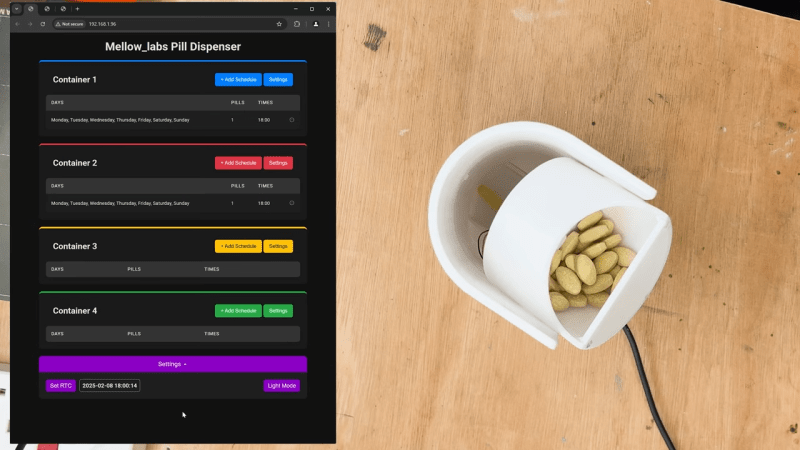
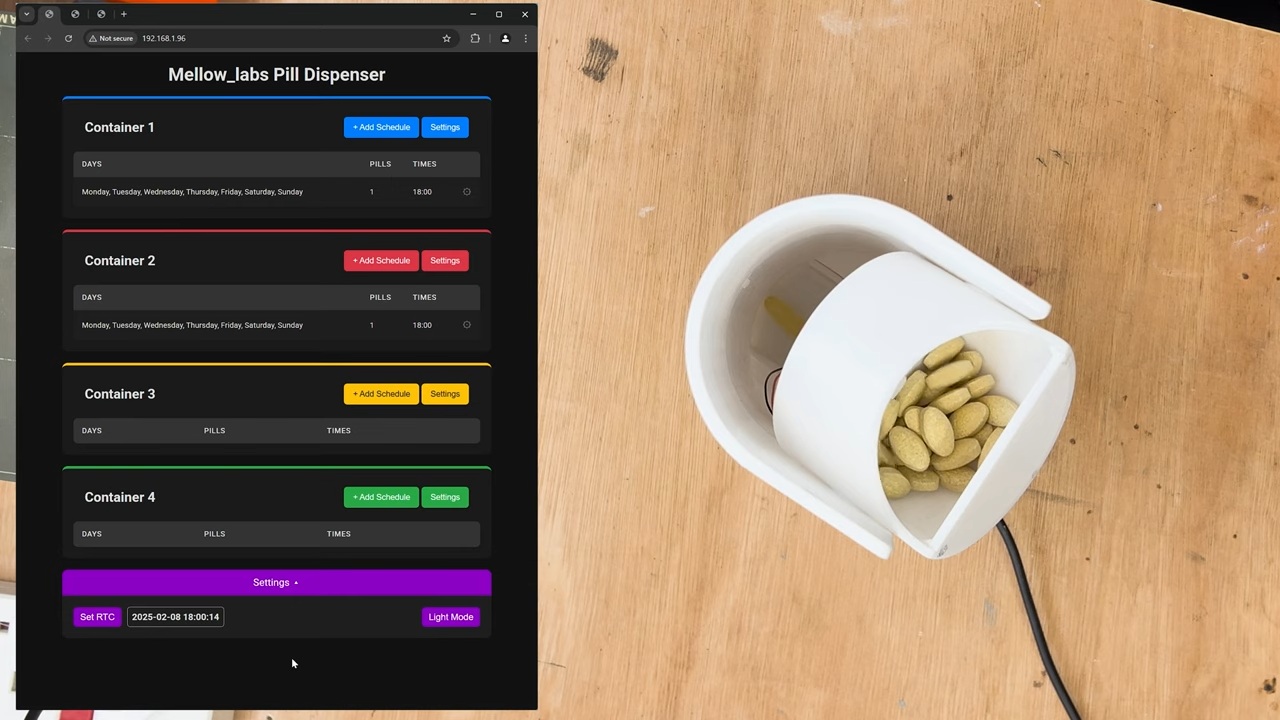
We particularly like how the pill dispenser is actually controlled — [Mellow_Labs] used the ESP32 to host a simple web interface which is used for setting the schedule on which each type of pill should be dispensed.
This past weekend, Richtech Robotics opened Clouffee & Tea, a coffee shop at the Town Square shopping center in its hometown of Las Vegas that features a robot barista named Adam.
Adam, a round white robot that emulates human movements, makes most of the beverages while one or two human workers prepare food items and replenish ingredients the robot has access to. Using Nvidia AI technology, the robot detects when customers are present, engages in conversation, takes orders and makes beverages including Americanos and lattes. Richtech expects to grow the brand by opening additional Clouffee & Tea locations featuring robot baristas in the future.
Richtech Robotics expects to expand Clouffee & Tea to dozens of locations in the next two to three years, but the company has larger ambitions than just operating a chain of robotic coffee shops. The company, which went public last year, has deployed more than 300 robots throughout the U.S., which are performing tasks at restaurants, retail stores, hotels, healthcare facilities, casinos, senior living homes and factories.
Continue reading this article on modernretail.co. Sign up for Modern Retail newsletters to get the latest on the shifting dynamics between retail’s old and new guards.
At Integrated Systems Europe ISE 2025, Seekink presented a comprehensive suite of advanced E Ink solutions, underscoring their commitment to sustainable and versatile display technologies across various sectors. Their exhibition featured a diverse array of products, each leveraging the unique properties of electronic paper to deliver energy-efficient and customizable applications
—
Megapixel VR is my ISE 2025 video coverage sponsor, check out my Megapixel/Ventana playlist here: https://www.youtube.com/playlist?list=PL7xXqJFxvYvg9YC437j-BJHzdBeVEpVfb
—
In the realm of consumer electronics, Seekink unveiled the H82NPL 8.2-inch Epaper Notepad, designed to facilitate efficient, paperless workflows. This device offers a high-resolution E Ink display that mimics the experience of writing on paper, providing users with a comfortable and natural note-taking experience. The notepad supports stylus input, ensuring precision and responsiveness for professionals and students alike. Its lightweight design and long battery life make it an ideal companion for daily use.
Seekink also showcased their innovative E Ink phone cases, which feature dynamic, customizable displays. Utilizing NFC technology, users can effortlessly update the content displayed on their phone cases, allowing for personalization with favorite photos, artwork, or information. The high-resolution E Ink screen ensures clear and crisp visuals, while the low power consumption characteristic of E Ink technology ensures that the display can maintain an image without draining the device’s battery.
In the transportation sector, Seekink introduced the S133EC-O 13.3-inch E-Paper Bus Stop Signage. Engineered for outdoor use, this rugged display provides real-time transit information with exceptional readability, even under direct sunlight. The E Ink technology ensures minimal power consumption, allowing the signage to operate efficiently in various environmental conditions. The display supports partial refresh, enabling updates to specific sections without affecting the entire screen, which is crucial for timely information dissemination in public transportation systems.
For workplace applications, Seekink presented the E-Ink Full-Color Nameplate, a customizable display solution for offices and conferences. These nameplates can showcase company logos, employee names, and departmental information with vibrant colors, enhancing professional environments. The E Ink displays are glare-free and consume power only during content updates, making them both visually appealing and energy-efficient. The ability to update information remotely ensures flexibility and ease of management, particularly in dynamic office settings.
In the healthcare sector, Seekink highlighted the E-Ink Patient Care Sign, designed to display critical patient information outside hospital rooms. These signs can be updated in real-time to reflect patient status, care instructions, or other pertinent details, thereby improving communication among healthcare providers. The E Ink displays are easy to read from various angles and under different lighting conditions, ensuring that vital information is always accessible to medical staff. The low power requirements and durability of E Ink technology make these signs a practical solution for the demanding healthcare environment.
Seekink’s participation in ISE 2025 underscored their dedication to advancing E Ink technology across multiple industries. Their diverse product lineup demonstrated the adaptability of electronic paper displays in addressing specific needs, from consumer electronics to public transportation, workplace environments, and healthcare settings. By leveraging the unique advantages of E Ink—such as low power consumption, readability in various lighting conditions, and flexibility in design—Seekink continues to innovate and provide sustainable display solutions that cater to the evolving demands of modern applications.
For more detailed information on Seekink’s products and technological advancements, please visit their official website: https://www.seekink.com/
Check out all my ISE 2025 videos in this playlist: https://www.youtube.com/playlist?list=PL7xXqJFxvYvhSl82o7cYiTSXCtEJ5MeOZ
This video was filmed using the DJI Pocket 3 ($669 at https://amzn.to/4aMpKIC using the dual wireless DJI Mic 2 microphones with the DJI lapel microphone https://amzn.to/3XIj3l8 ), watch all my DJI Pocket 3 videos here https://www.youtube.com/playlist?list=PL7xXqJFxvYvhDlWIAxm_pR9dp7ArSkhKK
Join https://www.youtube.com/charbax/join for Early Access to my videos as soon as I upload them before they go public.
Forget tiny homes—how about a full-blown mini luxury mansion for pets? Zhongyuan-based engineer Xing Zhilei has taken pet pampering to the next level, crafting a to-scale luxury condo for his furry friends! Originally designed to promote his wife’s pet store, this architectural marvel has gone viral, captivating pet lovers worldwide.
We’re talking multi-room living spaces, a spa, a supermarket—basically, a pet-friendly shopping center where Zhilei’s animal residents can live their best lives. He’s been sharing snapshots of their daily adventures, and honestly? This is the kind of wholesome content we all need.
L'intelligence artificielle chinoise DeepSeek suscite un engouement mondial et s'impose comme un concurrent sérieux face aux modèles américains. Comment cette IA est-elle perçue en Chine ? Quels sont les enjeux technologiques et géopolitiques de cette avancée ?
Dans cet épisode, nous recevons Shanhui Zhang, journaliste à China Global Television Network (CGTN), qui nous apporte un regard éclairé sur la manière dont DeepSeek est accueillie en Chine et sur son impact économique et politique.
Contenu : - Une fierté nationale : la couverture médiatique en Chine et l'engouement des internautes. - Les clés du succès : DeepSeek mise sur un coût réduit, l'open source et une stratégie de mondialisation. - Un concurrent de taille : DeepSeek surpasse ChatGPT sur l'App Store et atteint 20 millions d'utilisateurs actifs en quelques jours. - Géopolitique de l'IA : tensions entre la Chine et les États-Unis, restrictions sur les puces Nvidia et stratégies chinoises pour contourner les embargos. - Un modèle open source qui interpelle : transparence et accessibilité face à la fermeture progressive d'OpenAI. - Une équipe jeune et innovante : le profil du fondateur Lian Wenfeng et sa vision disruptive du développement technologique. - IA et biais culturels : DeepSeek et ChatGPT reflètent-ils les valeurs de leurs pays respectifs ?
Une nouvelle application open source appelée uTag permet aux utilisateurs d’utiliser les Samsung SmartTags avec des appareils Android non-Samsung. Les Samsung SmartTags fonctionnent de manière analogue aux Apple AirTags et utilisent la technologie ultra-large bande (UWB) pour un suivi de localisation plus précis. Les SmartTags sont généralement limités aux appareils Samsung Galaxy, car l’application SmartThings […]
OpenAI is entering the final stages of designing its long-rumored AI processor with the aim of decreasing the company's dependence on Nvidia hardware, according to a Reuters report released Monday. The ChatGPT creator plans to send its chip designs to Taiwan Semiconductor Manufacturing Co. (TSMC) for fabrication within the next few months, but the chip has not yet been formally announced.
The OpenAI chip's full capabilities, technical details, and exact timeline are still unknown, but the company reportedly intends to iterate on the design and improve it over time, giving it leverage in negotiations with chip suppliers—and potentially granting the company future independence with a chip design it controls outright.
In the past, we've seen other tech companies, such as Microsoft, Amazon, Google, and Meta, create their own AI acceleration chips for reasons that range from cost reduction to relieving shortages of AI chips supplied by Nvidia, which enjoys a near-market monopoly on high-powered GPUs (such as the Blackwell series) for data center use.
Researchers at the University of Oxford say they've achieved quantum teleportation — stitching together separate quantum computers to run an algorithm collaboratively, across a distance, in a "breakthrough" they say could lead to powerful quantum supercomputers.
The scientists linked two quantum processors that were six and a half feet apart using a "photonic network interface," as detailed in a paper published last week in the journal Nature.
The team, led by Oxford University Physics graduate student Dougal Main, hopes the achievement will lay the groundwork for a "quantum internet" of distributed ultra-secure processors.
It's not technically the first time scientists have demonstrated quantum teleportation. Previous research has shown that the states of quantum bits known as qubits — the equivalent of a conventional computer's bits, except they can be superimposed and entangled — can be transferred across physically separated systems.
"In our study, we use quantum teleportation to create interactions between these distant systems," said Main in a statement. "By carefully tailoring these interactions, we can perform logical quantum gates — the fundamental operations of quantum computing — between qubits housed in separate quantum computers."
"This breakthrough enables us to effectively 'wire together' distinct quantum processors into a single, fully connected quantum computer," he explained, essentially the equivalent of linking traditional computers to create a supercomputer.
Main and his team are hopeful that by using light to transmit data instead of electrical signals, they can overcome engineering obstacles involved in creating large quantum computers. Broadly speaking, the more qubits a quantum computer has, the more difficult it is to keep them in a stable state and reduce external noise.
"By interconnecting the modules using photonic links, the system gains valuable flexibility, allowing modules to be upgraded or swapped out without disrupting the entire architecture," Main explained.
"Our experiment demonstrates that network-distributed quantum information processing is feasible with current technology," principal investigator and Oxford physics professor David Lucas added.
But before quantum computers, let alone quantum supercomputers, can become a commonly used piece of equipment, researchers still have formidable hurdles to overcome.
"Scaling up quantum computers remains a formidable technical challenge that will likely require new physics insights as well as intensive engineering effort over the coming years," Lucas explained.
Beyond the technical limitations of building bigger quantum computers, scientists are still struggling to turn them into actually useful tools that solve functional calculations.
Nonetheless, researchers are hopeful that quantum computing systems could one day run calculations in just hours that today's supercomputers would take years to solve.
Recently, frontline AR solutions provider Vuzix debuted AugmentOS, a dedicated operating system for workplace immersive human-computer interfaces. The OS is ready for Vuzix’s portfolio of products, allowing end-users and developers to use products such as the Z100 smart glasses, which include AI functionality integration.
AugmentOS is debuting as version 1.0. The launchpad application will include real-time captions, instant translation, proactive AI assistance, smart notifications, AI dashboards, and language learning tools.
Vuix is developing the AugmentOS platform with partner Mentra in order to provide emerging opportunities to the former list of frontline customers.
Paul Travers, President and CEO of Vuzix, added:
The Z100 smart glasses are an ideal platform for AugmentOS. Our close collaboration with Mentra will accelerate developer adoption and innovation in the smart glasses industry, positioning Vuzix at the forefront of the AI-enabled wearable revolution.
On the developer side, the partners note how AugmentOS allows for the streamlined creation of enterprise-ready AR applications that work across the Vuzix hardware portfolio.
“This is the moment where AI steps out of our phones and into our world,” Cayden Pierce, CEO of Mentra, also added.
Pierce explained that by partnering with “an industry leader like Vuzix,” Mentra can create an AR platform where “AI can finally see what we see and understand our context in real-time.”
Pierce explained:
For the first time, multiple AI assistants can work together seamlessly to enhance our daily lives—right in our field of view,” said . “What excites me most about AugmentOS is how it brings AI-powered smart glasses to life today. Users get an incredible set of tools out of the box, while developers gain a frictionless way to build next-generation AI applications.
A Busy 2024 for Vuzix
Vuzix is launching 2025 with a fresh innovation via the AugmentOS launch. This follows a busy 2024 for the AR smart glasses leader, which set the stage for the new AI-ready operating system.
For example, Vuzix has strengthened its collaboration with the U.S. Department of Labor’s Occupational Safety and Health Administration (OSHA), which broadens the deployment of its workplace AR smart glasses from this governmental organization.
Vuzix notes that this enhanced partnership with OSHA follows approximately two years of trials for the device in various OSHA settings, including worker training and device refinement. This preparation enables Vuzix to deploy the smart glasses for on-site inspections and foster collaboration among field personnel.
Additionally, last year was marked by hardware innovations from Vuzix, especially upgrading its smart glasses portfolio ahead of the OSHA expansion. The company introduced the Xtreme Smart Glasses Kit in August, specifically engineered to endure extreme weather conditions. This new kit features enhancements such as a lightweight, durable power bank for extreme weather. The power bank and the Xtreme Kit have an IP67 rating, indicating they are resistant to dust and water and can function within a temperature range of 20°C to 45°C.
Vuzix has released an upgraded version of the Android 13 operating system for its smart glasses, significantly enhancing the security of augmented reality wearables. This final version of Android 13 is now generally available and provides the highest level of protection for head-worn devices. The new software features of Android 13 include security updates, improved Wi-Fi networking, enhanced enterprise device management and permissions, and an updated Android API 33 for app developers.
Furthermore, Vuzix has announced the integration of Microsoft’s Intune, a cloud-based Mobile Device Management (MDM) service, to assist businesses in deploying hardware across their workforce. This integration will be implemented in Vuzix’s M-series of AR smart glasses, with the company receiving official certification from the Intune provider. This initiative aims to support the scaling and distribution efforts for customers already utilizing the MDM solution.
The various pushes forward led to Vuzix Corporation’s stock prices soaring last year, placing the veteran firm in a strong position and heading into what could be a busy year for smart glasses.
At Integrated Systems Europe ISE 2025, Samsung unveiled a range of advanced display technologies, emphasizing their commitment to innovation in visual solutions. A highlight was the 265-inch IWC model featuring a 1.2mm pixel pitch, showcasing anamorphic content that appeared to extend beyond the screen. This effect was enhanced using projectors and a smoke system, all driven by Samsung’s proprietary S-Box processor, delivering 120Hz refresh rates and 95% DCI-P3 color gamut coverage.
—
Megapixel VR is my ISE 2025 video coverage sponsor, check out my Megapixel/Ventana playlist here: https://www.youtube.com/playlist?list=PL7xXqJFxvYvg9YC437j-BJHzdBeVEpVfb
—
In the realm of microLED technology, Samsung introduced the MMFA All-in-One, an entry-level microLED display with a 1.5mm pixel pitch and 500 nits brightness. Designed for boardrooms and meeting spaces, this display offers 16-bit color depth and is built for durability and ease of maintenance. Its modular design allows for quick installation, typically within a few hours.
For command and control applications, Samsung presented a premium display with a 0.8mm pixel pitch, measuring 265 inches diagonally. Configured in an 8K by 4K resolution, this display boasts EMC Class B certification to prevent radio interference and features power and signal redundancy to ensure continuous operation. The integration of Black Seal technology enhances its deep black levels, crucial for detailed visualizations in critical environments.
Samsung also showcased a 54-inch transparent microLED display with a 0.6mm pixel pitch, offering 600 nits brightness and 60% transparency. Comprising four cabinets installed side by side, this display is poised for mass production by mid-2025, targeting applications in retail and interactive installations.
Addressing the growing demand for corporate broadcasting solutions, Samsung collaborated with ARRI, a leading camera manufacturer, to develop a bundled solution featuring a 1.6mm pitch screen. This package includes real-time content management tools, optimized color processing, and is tailored for organizations seeking high-quality in-house production capabilities.
In automotive retail, Samsung demonstrated a 146-inch diagonal display configured in a 4×4 cabinet setup, achieving 4K resolution. Paired with a car configurator, this setup allows customers to visualize vehicle customizations in real-time. A smaller 2×2 HD screen complements the main display, providing additional interactive options.
For museum applications, Samsung utilized the same transparent microLED technology to recreate historical artifacts, offering viewers a glimpse into the past with enhanced visual context. The flexibility of mounting options, including landscape, portrait, and pivot orientations, allows for versatile installations tailored to exhibit needs.
Culminating their showcase, Samsung unveiled a premium all-in-one solution with a 0.8mm pixel pitch, measuring 146 inches and delivering 20-bit color depth. This display integrates the S-Box processor and supports 4K resolution, making it suitable for high-end auditoriums and luxury home theaters. Its modular design ensures straightforward installation, typically completed within two hours.
These innovations underscore Samsung’s dedication to advancing display technology across various sectors, from corporate environments to retail and entertainment. For more information on Samsung’s latest offerings, visit https://www.samsung.com
Check out all my ISE 2025 videos in this playlist: https://www.youtube.com/playlist?list=PL7xXqJFxvYvhSl82o7cYiTSXCtEJ5MeOZ
This video was filmed using the DJI Pocket 3 ($669 at https://amzn.to/4aMpKIC using the dual wireless DJI Mic 2 microphones with the DJI lapel microphone https://amzn.to/3XIj3l8 ), watch all my DJI Pocket 3 videos here https://www.youtube.com/playlist?list=PL7xXqJFxvYvhDlWIAxm_pR9dp7ArSkhKK
Join https://www.youtube.com/charbax/join for Early Access to my videos as soon as I upload them before they go public.
by Grégory Maubon, Valerie Riffaud Cangelosi and Jean-Philippe Encausse
C’est avec plaisir que nous vous proposons notre synthèse des annonces et des découvertes du CES 2025 venant à la fois des visites sur place et d’une veille de la ...
At ISE 2025 in Barcelona, ROE Visual presented an array of advanced LED display technologies, highlighting their commitment to innovation in the audiovisual sector. A notable feature was the AR Artmor display, an architectural product from their sister company, SEO, which integrates customizable front covers with an LED backdrop. This design allows for various textures and surfaces, enabling hidden imagery to emerge dynamically.
—
Megapixel is my ISE 2025 video coverage sponsor, check out my Megapixel/Ventana playlist here: https://www.youtube.com/playlist?list=PL7xXqJFxvYvg9YC437j-BJHzdBeVEpVfb
—
The booth’s layout showcased a seamless integration of products, starting with the Artmor display transitioning into the Jet series. Attendees walked through a tunnel illuminated by the ROE Strip, with the new BM2i interactive LED floor enhancing the experience. This setup demonstrated the versatility and cohesive design of ROE Visual’s product lineup.
Central to the exhibit was the Topaz 2.6 Curve, a product tailored for live events and touring. Its natural curvature eliminates visible facets, offering a smooth visual experience. The panel supports adjustable angles from -5 to +15 degrees, providing flexibility in design. Additionally, the Vanish Solid Touring series was displayed, designed for outdoor applications like festivals and arena tours, emphasizing durability and performance.
For fixed installations, the Coral 1.2 LED panel was introduced, utilizing Chip on Board (COB) technology. In COB, LEDs are built directly into the PCB substrate, enhancing power efficiency, heat dissipation, and brightness. This design is particularly suited for corporate and broadcast environments, offering high contrast and color accuracy.
The Topaz series also featured the Cube panel, enabling the creation of seamless corners due to its chamfered PCB and chassis design. This modularity allows for combining flat, curved, and cube panels, ensuring a cohesive and adaptable display system.
A highlight was the Denali 0.7 MIP (Micro LED In Package) display, achieving a 4K resolution with a 0.7 mm pixel pitch. Each diode measures less than 100 microns, pushing the boundaries of LED technology. This advancement suggests potential future applications in home theater systems as the technology becomes more accessible.
The booth also showcased the Sierra 1.2 mm pixel pitch display, aimed at corporate and broadcast settings. This product offers full HD resolution and shares brightness capabilities with the Denali series, ensuring vibrant and clear visuals.
ROE Visual’s global presence includes headquarters in Shenzhen, China, with offices across North America, Europe, Australia, Japan, and the Middle East. Recognized as a leader in the rental market for live events and broadcast sectors, the company is now venturing into architectural applications with innovative products like the Artmor display. This expansion opens new possibilities for architects and interior designers to incorporate dynamic LED elements into their projects.
Description by Chatgpt.
This video was filmed using the DJI Pocket 3 ($669 at https://amzn.to/4aMpKIC using the dual wireless DJI Mic 2 microphones with the DJI lapel microphone https://amzn.to/3XIj3l8 ), watch all my DJI Pocket 3 videos here https://www.youtube.com/playlist?list=PL7xXqJFxvYvhDlWIAxm_pR9dp7ArSkhKK
Join https://www.youtube.com/charbax/join for Early Access to my videos as soon as I upload them before they go public.
Through the years, it seems the biggest unsolved vision human factors problem was the vergence-accommodation conflict (VAC), which has been discussed in many articles on this blog. The Magic Leap One attempted to partially address the problem before Magic Laep abandoned it in favor of better image quality and other factors on the Magic Leap Two (see: What About Vergence Accommodation?).
Then, with Meta’s Orion, Meta started talking about (but not supportied on Meta’s Orion AR Glasses) and filing for patents on “disparity correction.” Below are some figures from Meta’s patent application.
In a further study on Orion’s waveguide, I discovered Magic Leap’s 2022 AR/MR/VR presentation on the Magic Leap Two discusses what Meta calls “disparity correction” (see: Magic Leap Two Disparity Correction), but Magic Leap more generically as optical alignment correction.
Etymology of the Term “Disparity”
Meta was the first I saw to use the term “disparity” for the optical misalignment due to the glasses frame flexing, but I can’t find evidence that this is universal. A Berkley Researcher on the Visual Human Factors panel at AR/VR/MR 2022 who had some research funded by Meta also used the term disparity, but I don’t know who influenced who. Avegant also calls it “disparity,” but this may have been due to Meta’s influence in the field. But then Magic Leap’s nearly three-year earlier presentation didn’t call it “disparity.”
Binocular disparity refers to the difference in image location of an object seen by the left and right eyes, resulting from the eyes’ horizontal separation (parallax). The mind uses binocular disparity to extract depth information from the two-dimensional retinal images in stereopsis. In computer vision, binocular disparity refers to the difference in coordinates of similar features within two stereo images.
Figure 1: The full black circle is the point of fixation. The blue object lies nearer to the observer. Therefore, it has a “near” disparity dn. Objects lying more far away (green) correspondingly have a “far” disparity df. Binocular disparity is the angle between two lines of projection . One of which is the real projection from the object to the actual point of projection. The other one is the imaginary projection running through the nodal point of the fixation point.
The 2020 paper “Optimizing Depth Perception in Virtual and Augmented Reality through Gaze-contingent Stereo Rendering” by Brooke Krajancich, Petr Kellnhofer, and Gordon Wetzstein discusses some of the issues and causes of “disparity distortion” with no mention I could find of glasses twisting. They discuss rendering errors and issues with pupil alignment as causes. Perhaps of additional interest is that two of the authors, Kellnhofer and Wetzstein, in addition to being university professors, worked for the MicroLED company Raxium, which Google later (2022) acquired.
I’m not trying to split hairs, but I want to note that “disparity” has a broader meaning and that there are many forms of disparity distortion (or error) other than from frame twisting. It could be that others have used “disparity” in the context of frame twisting, but Meta was the first company I have seen to use it to mean the disparity distortion due to frame twisting.
Human Physical Factors Casing Disparity Issues
In addition to issues with the flex of the headset, most people have some degree of asymmetry between the two eyes and the nose and vertically with respect to each other. This would be in addition to shifts in the glasses when worn. Because the glasses are so close to the eye, small differences have a multiplicative effect relative to viewing real-world objects that are far away.
I don’t know the answer, but it would be interesting to understand all the factors and how significant the frame twisting is relative to these other factors.
AR/VR/MR 2025 Human Vision Science Panel Discusses “Disparity”
Panel discussion: Human Vision Science and the Visual Experience in AR/VR was moderated by Bjorn Vlaskamp (Google AR) with panelist Laurie M. Wilcox, York Univ., Alexandra Boehm (Google AR), Jorge Otero-Millan (Univ. of California, Berkeley), T. Scott Murdison (Meta), Emily Cooper (Univ. of California, Berkeley).
I found this panel interesting for its discussion of human visual factors. These researchers discussed many different challenges for AR that can adversely affect visual comfort. Below are some of the introductory slides for the panel.
The much-discussed vergence-accommodation conflict (VAC) is shown (above right). They also discussed disparity problems (perhaps the broader definition rather than Meta Orion’s definition related to frame twist) and some of the pros and cons of monocular versus biocular with respect to disparity.
Headsets without a small enough IPD
One of the panelists brought up the fact that women typically have a smaller IPD than men and that some headsets don’t support a small enough IPD adjustment. The point was made that if the IPD of the headset’s display is larger than the IPD of the user’s eyes, it will require the eyes to diverge when looking at virtual objects that are (virtually) far away, which the eyes and vision system typically can’t do at all or will cause pain even with short use.
Having the IPD smaller than the use will cause issues with the apparent distance, but unless it is severe, it won’t cause the level of discomfort. From a design perspective, one can appreciate that supporting a smaller IPD can be more difficult, particularly with VR headsets where the display and optics are being moved and physically run into each other with small IPDs, particularly with larger FoVs.
Meta Presentation Includes Disparity
Meta’s Jason Hartlove of Meta Reality Labs will provide a presentation of some of the key issues that Meta is trying to address in Augmented reality. These issues included resolution, dynamic range, color gamut, frame rate, latency, VAC, FoV, degrees of freedom, and binocular vertical disparity correction (for frame twist). The images on the right are taken from the slide on vertical disparity correction.
Disparity due to frame twist is only one factor
I assume that Meta plans to correct the disparity caused by frame twists by somehow manipulating the image to the two eyes. I’m assuming that this method would also want to include some form of eye tracking to correct based on the location of the person’s eyes, which may also be asymmetrical, and how the glasses are being worn. It would seem that if one is to fully correct for all the factors, there could be a significant amount of both physical hardware (sensors) and processing (hardware and power) to correct for everything.
Avegant Presentation Include Disparity
Ed Tang, CEO of Avegant, has presented their progress on small LCOS display projectors for AR for several years. This year, they were talking more about shaping their projectors to better fit into the temples of glasses (right).
But at the end of the presentation, Avegant showed the side of a micro-gimbal technology to correct binocular alignment/disparity. This is not as far of a stretch as it might seem for a company known today for optics. The founders of Avegant, including Ed Tang, had studied micromachine (MEMS) technology at the University of Michigan.
poLight and Cambridge Mechatronics Technology for Disparity Correction
In 2023, I wrote about Cambridge Mechatronics and poLight Optics Micromovement (CES/PW Pt. 6), and Avegant’s disparity correction design made me think of both of these companies, which have miniature technology for moving/adjusting optics. Both of these companies have technology used in high-volume smartphone focusing and optical image stabilization, but it is conceivable that their respective technologies could be applied to disparity correction.
poLight works (left) by using piezoelectric actuators to change the shape of optics to redirect light.
Cambridge Mechatronics uses shaped memory alloy (SMA) wires to move small optical structures very precisely (below).
I mentioned that I was seeing considerable discussion about disparity correction at AR/VR/MR to people from both companies, and they both indicated that they were looking into it.
Binocular Color Difference/Disparity
The previous discussion of “disparity” is concerned with the geometric distortion on depth impact. There is also color disparity between the two eyes. Many humans, myself included, see slightly different colors with each eye. The paper, Stereo Disparity Improves Color Constancy, discusses how, in the real world, lighting and other factors cause each eye to see the same object as having slightly different colors, and this may factor into human perception of the lighting, surface shape, and surface texture of an object.
Another issue I thought the Human Vision Science Panel commented on is the difference in color between the right and left eyes, particularly common with diffractive waveguides. I recently wrote about Jade Bird Display’s MicroLED Compensation and discussed Binocular Fusion and the Rivalry caused by the difference in color with binocular displays. Below is an image from that study.
I met with Snap at CES 2025, and the topic of why Snap rotated the waveguides from WaveOptics’s (Snap bought WaveOptics in 2021) typical orientation with light entrance on the top to the Spectacles 4 and 5 orientation with the light entering the left and right side was discussed. Snap said it was to give better color fusion (combined biocular perceived color). The pictures below show WaveOptics projecting down orientation (upper) and Snap Spectacles 5 left and right entrance orientation (lower).
The light output from diffractive waveguides varies in color and brightness from the entrance grating to the far side of the waveguide. By rotating the waveguides 180 degrees relative to each other, an averaging effect occurs.
Below are pictures I took through Snap Spectacles 5 left and right waveguide and a 50/50 average of the left and right images I generated in Photoshop to roughly simulate the “fusion effect.” The improvement is most notable in the faces. I should note that Spectacles 5 in this test did not perform “digital correction” of the color (as was done in my JBD study). Also, note that Spectacles 5 has a 46° versus the JBD’s ~30° FoV, and the Spectacles 5 has ~4.58 times as many pixels (using LCOS versus JBD’s MicroLED).
Conclusions
Many, but not all, of the problems these researchers have studied involve prolonged use. There is likely a level of imperfection that can be tolerated for “data snacking” but becomes intolerable when used continuously for long periods. I suspect this discussion of disparity will affect the plethora of AI/AR glasses products coming to market in 2025 (and as discussed in AR/VR/MR 2025 AI Glasses Paneland with coverage of AR/VR/MR and CES to on this subject to come).
I often say that VAC is one of those issues that everyone likes to talk about, but nobody has come up with a practical solution (some are still developing solutions, such as Creal). Magic Leap, in its 2022 AR/VR/MR presentation (Magic Leap 2 at SPIE AR/VR/MR 2022 – wow, it has been 3 years), said VAC was an important issue, but other factors were more important to visual comfort as the reason they didn’t continue with dual focus distances from the Magic Leap One on the Magic Leap Two. Meta has shown many different approaches to VAC through the years, all of which are impractical for optical see-through (OST) designs.
We will have to wait and see if Disparity is a “topic de jour” and if companies follow through on their solutions for disparity correction (due to frame twists or other causes).
Geniatech showcased its latest partial color E Ink screen refresh technology at ISE 2025, demonstrating a new driver board based on E Ink Spectra 6. Unlike conventional solutions that rely on standard TCON driver chipsets, Geniatech has developed its own FPGA, allowing for a more flexible and efficient way of updating content on E Ink displays. This approach results in higher DPI and a smoother experience, particularly for applications like digital menu boards, where only selective parts of the screen need to be updated rather than refreshing the entire display. More details can be found at https://www.geniatech.com.
One of the key innovations of this system is its ability to perform non-rectangular partial updates, meaning that only specific elements—such as a price or a dish name—can be refreshed without affecting the rest of the content. This significantly improves user experience by reducing flickering, a common drawback in traditional E Ink updates. In practice, this means that restaurant menus, retail displays, and other digital signage applications can dynamically update individual sections without redrawing the entire page, leading to a smoother and more natural-looking transition.
Geniatech’s approach also enables more efficient power usage, although the primary goal of the technology is to enhance display performance rather than minimize energy consumption. The ability to target updates to specific areas of the screen helps maintain clarity and eliminates unnecessary redraws, making it particularly useful for scenarios where information needs to be updated frequently but without causing distractions.
The company believes this market has substantial growth potential, especially as industries look for sustainable alternatives to paper-based solutions. Even if only a small percentage of traditional printed signage is replaced with E Ink displays, the impact could be significant. The flexibility of Geniatech’s API allows for seamless integration into content management systems (CMS), enabling businesses to easily update their displays through web-based platforms.
Technically, the system requires precise control of every pin on the display, which Geniatech has achieved through its proprietary driver board design. This level of control enables more efficient and cost-effective large-scale color E Ink displays, making them more viable for mass adoption. In addition to the driver board, the company is also developing supporting hardware, including the player board and BSP (Board Support Package), as well as cloud service integration for remote content management.
Geniatech envisions a future where regulatory measures, particularly in the EU, could encourage businesses to adopt low-power display technologies. With sustainability and energy efficiency becoming key factors in consumer and business decisions, E Ink solutions provide an eco-friendly alternative to conventional LCD and LED displays. The technology is particularly well-suited to outdoor use, where glare-free, paper-like readability is an advantage over traditional backlit screens.
The demonstration at ISE 2025 was an early-stage prototype, rapidly developed just days before the event. While optimizations such as reducing reflections on the display are still in progress, the core functionality is already promising. As development progresses, Geniatech aims to refine the display quality to closely resemble real paper while maintaining the advantages of digital adaptability.
By combining proprietary hardware, optimized firmware, and cloud-based content management, Geniatech is positioning itself as a leader in next-generation E Ink signage. The potential for widespread adoption spans multiple industries, from hospitality to retail and beyond. With a focus on improving performance, reducing costs, and supporting sustainability efforts, this technology could help drive a significant shift towards more energy-efficient digital displays.
Description by Chatgpt.
This video was filmed using the DJI Pocket 3 ($669 at https://amzn.to/4aMpKIC using the dual wireless DJI Mic 2 microphones with the DJI lapel microphone https://amzn.to/3XIj3l8 ), watch all my DJI Pocket 3 videos here https://www.youtube.com/playlist?list=PL7xXqJFxvYvhDlWIAxm_pR9dp7ArSkhKK
Join https://www.youtube.com/charbax/join for Early Access to my videos as soon as I upload them before they go public.
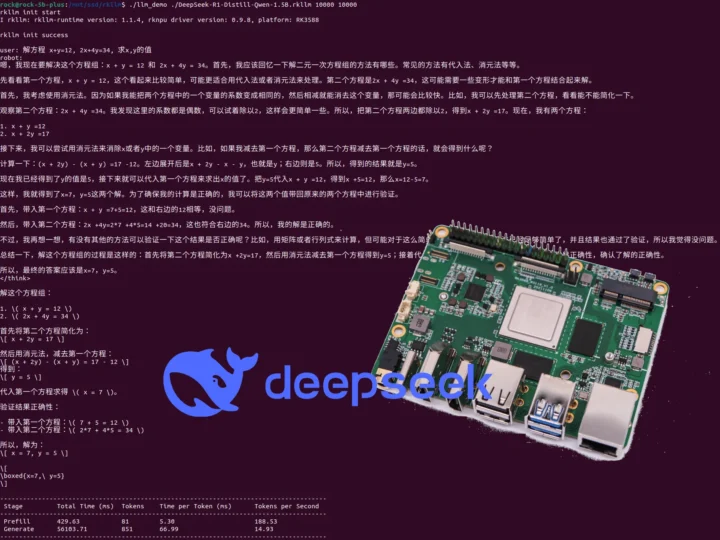
DeepSeek R1 model was released a few weeks ago and Brian Roemmele claimed to run it locally on a Raspberry Pi at 200 tokens per second promising to release a Raspberry Pi image “as soon as all tests are complete”. He further explains the Raspberry Pi 5 had a few HATs including a Hailo AI accelerator, but that’s about all the information we have so far, and I assume he used the distilled model with 1.5 billion parameters.
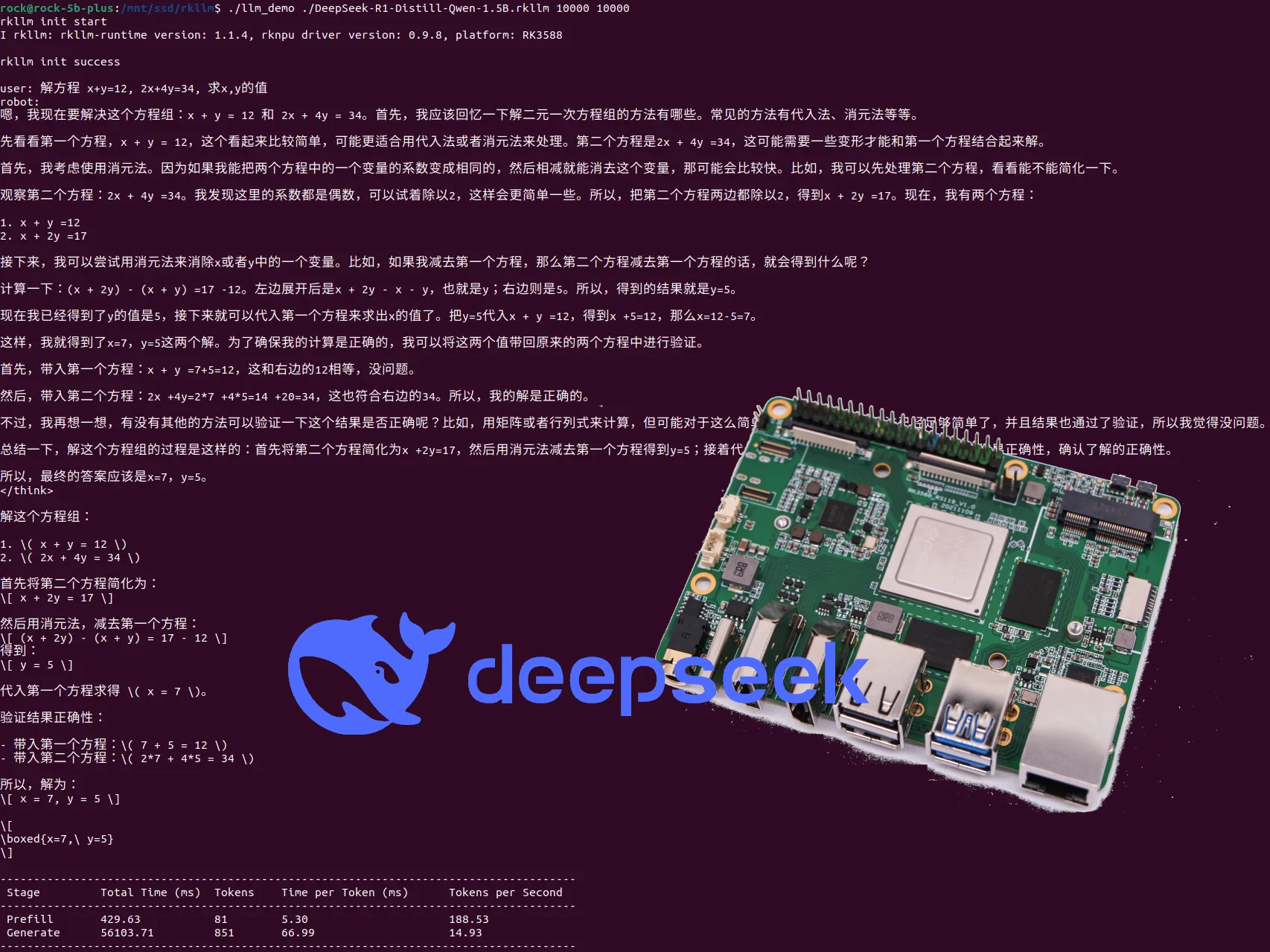
Jeff Geerling did his own tests with DeepSeek-R1 (Qwen 14B), but that was only on the CPU at 1.4 token/s, and he later installed an AMD W7700 graphics card on it for better performance. Other people made TinyZero models based on DeepSeekR1 optimized for Raspberry Pi, but that’s specific to countdown and multiplication tasks and still runs on the CPU only. So I was happy to finally see Radxa release instructions to run DeepSeek R1 (Qwen2 1.5B) on an NPU, more exactly the 6 TOPS NPU accelerator of the Rockchip RK3588 SoC, using the RKLLM toolkit.
The full instructions explain how to compile the model yourself, but if you only want to try it quickly, Radxa offers a pre-compiled RKLLM from ModelScope which you can get with:
Radxa says the RK3588 achieves 14.93 tokens per second for the math program
Solve the equations x+y=12, 2x+4y=34, find the values of x and y
The demo was tested on Radxa ROCK 5B. I haven’t done it myself since I don’t have the board with me right now… It should also work on other Rockchip RK3588/RK3588S boards and even Rockchip RK3576 hardware platforms since they use the same NPU. Banana Pi also shared a post on X with a video showing DeepSeek R1 (Qwen 1.5B) running the Banana Pi BPI-M7 board (RK3588).
At Integrated Systems Europe ISE 2025 in Barcelona, Interactive Scape’s Hauke Helmer introduced their latest innovation, Scape X®. This technology leverages projected capacitive (PCAP) sensors to detect not only touch inputs but also objects and smartphones placed on the display. The system identifies devices based on their unique capacitive signatures, allowing for seamless interaction without any modifications to the devices themselves.
—
Megapixel is my ISE 2025 video coverage sponsor, check out my Megapixel/Ventana playlist here: https://www.youtube.com/playlist?list=PL7xXqJFxvYvg9YC437j-BJHzdBeVEpVfb
—
A notable demonstration involved scanning a visitor’s badge to instantly retrieve and display their contact information on the screen. This capability extends to sharing digital content; for instance, placing a company brochure on the display enables immediate transfer of the document to a connected device, streamlining information exchange during events.
The core of Scape X® is its AI-driven recognition system, which processes data from the PCAP sensors to distinguish between various shapes and objects. Unlike traditional gesture-based systems, Scape X® can identify up to 24 different passive object IDs and over 100 simultaneous touch points, including transparent objects. This advanced object recognition facilitates unique interactions and applications across multiple sectors.
Interactive Scape offers a range of hardware solutions, including multitouch tables and displays, all powered by Scape X®. These devices are designed for durability and versatility, making them suitable for various applications. Integration is simplified through the TUIO API, allowing developers to create customized applications that leverage the full potential of the hardware and object recognition capabilities.
In collaboration with partners like DISPLAX, Interactive Scape is exploring new form factors, such as round displays, to offer more playful and engaging user experiences. These prototypes aim to push the boundaries of interactive technology, providing innovative solutions for diverse use cases.
The company also showcased applications like a magnification tool, where users can place an object on the display to zoom into detailed images, such as a map of Barcelona’s harbor. This feature demonstrates the system’s ability to handle complex gestures and provide intuitive user interactions.
Interactive Scape’s business model focuses on providing the hardware and recognition technology, while partnering with other companies for application development and integration. This collaborative approach allows them to offer comprehensive solutions tailored to specific client needs across various industries.
Based in Berlin, Germany, Interactive Scape has established a global partner network to distribute and support their products worldwide. This network enables them to deliver localized solutions and services, ensuring that clients receive the best possible support and expertise in implementing interactive technologies.
Description by Chatgpt.
This video was filmed using the DJI Pocket 3 ($669 at https://amzn.to/4aMpKIC using the dual wireless DJI Mic 2 microphones with the DJI lapel microphone https://amzn.to/3XIj3l8 ), watch all my DJI Pocket 3 videos here https://www.youtube.com/playlist?list=PL7xXqJFxvYvhDlWIAxm_pR9dp7ArSkhKK
Join https://www.youtube.com/charbax/join for Early Access to my videos as soon as I upload them before they go public.
Des astronomes ont détecté un signal radio répétitif, capté à plusieurs reprises, provenant d'une galaxie ancienne et inactive. Cette découverte remet en question les théories actuelles sur...
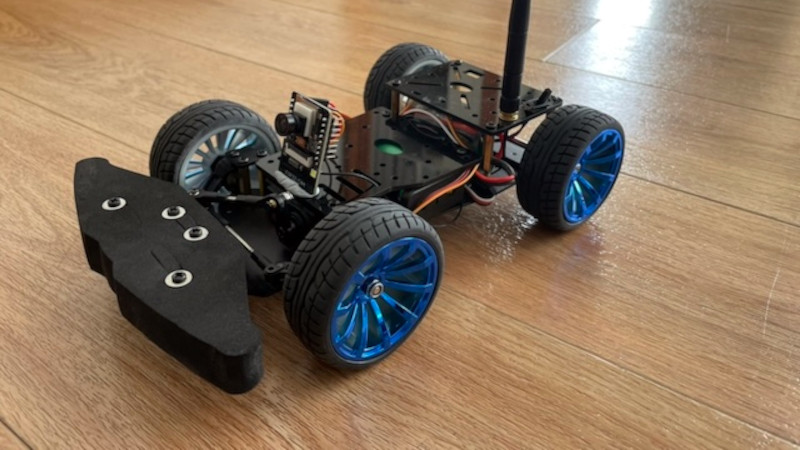
Those little ESP32-CAM boards which mate the WiFi-enabled microcontroller with a small parallel-interface camera module have been with us for years, and while they are undeniably cool to play with, they sometimes stretch the available performance in trying to process and stream video. [Mattsroufe] has made a very cool project with one of them, not only managing to stream video from a small model car, but also to control the steering and motor by means of servos and a little motor driver.
Sadly it’s not entirely a stand-alone device, as the ESP32 streams video to a web server with some Python code to handle the controls. The server can aggregate several of them on one page though, for perhaps a little real-life quad-screen Mario Kart action if you have enough of the things. We can see that this idea has plenty of potential beyond the mere fun of driving a toy car around though, but to whet your appetite there’s a demo video below.
We may have found the killer app for AI. Well, actually, British telecom provider O2 has. As The Guardian reports, they have an AI chatbot that acts like a 78-year-old grandmother and receives phone calls. Of course, since the grandmother—Daisy, by name—doesn’t get any real phone calls, anyone calling that number is probably a scammer. Daisy’s specialty? Keeping them tied up on the phone.
While this might just seem like a prank for revenge, it is actually more than that. Scamming people is a numbers game. Most people won’t bite. So, to be successful, scammers have to make lots of calls. Daisy can keep one tied up for around 40 minutes or more.
You can see some of Daisy’s antics in the video below. Or listen to Daisy do her thing in the second video. When a bogus tech support agent tried to direct Daisy to the Play Store, she replied, “Did you say pastry?” Some of them became quite flustered. She even has her own homepage.
While we have mixed feelings about some AI applications, this is one we think everyone can get onboard with. Well, everyone but the scammers.
A small team of AI researchers from Stanford University and the University of Washington has found a way to train an AI reasoning model for a fraction of the price paid by big corporations that produce widely known products such as ChatGPT. The group has posted a paper on the arXiv preprint server describing their efforts to inexpensively train chatbots and other AI reasoning models.







 C’est avec plaisir que nous vous proposons notre synthèse des annonces et des découvertes du CES 2025 venant à la fois des visites sur place et d’une veille de la ...