

src via escapist-fiction
His defense lawyer talking to the New York Times: “He has a skill set that is very unique"…? Goddamn, that is the tagline of every movie I ever want to see. I’m just jealous of the lawyer getting to say that out loud. A hacker named after a professional wrestler who helped take down other hackers to help his female cousins…? I would see that movie. JJ Abrams is probably trying to figure out how to cast Benedict Cumberpatch as “Hector Xavier Monsegur" right this second…

(via twiststreet)
The Clear Voice of a Sharp Sword
This demonstration shows the different behaviour of sharp swords binding as opposed to blunt training swords, and why it is important to explore this when reconstructing historical European swordsmanship.
Source: Copyright © 2014 Dimicator


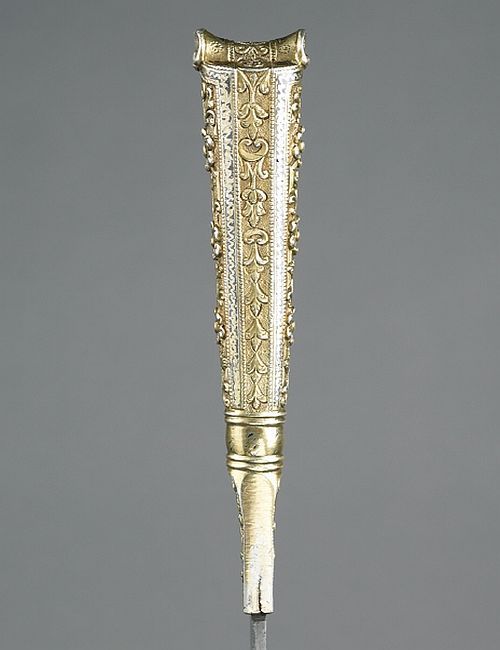
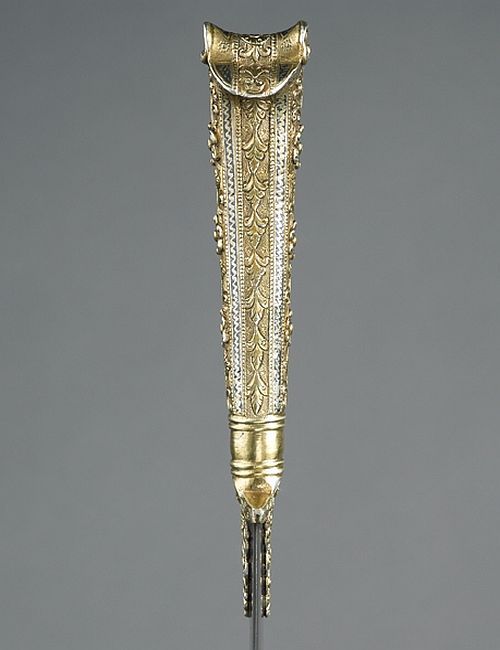


Dagger with scabbard
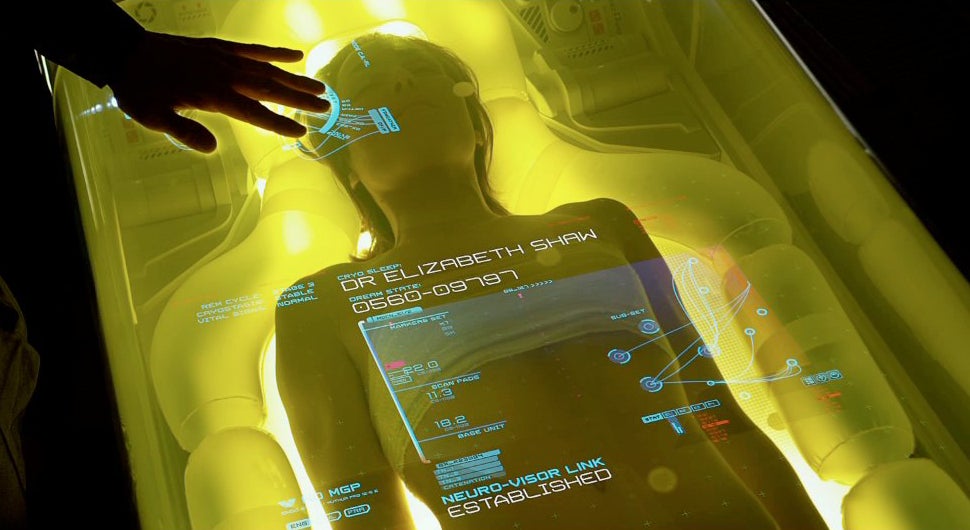
Surgeons from the UPMC Presbyterian Hospital in Pittsburgh, Pennsylvania, are set to begin suspended animation trials by dramatically cooling down trauma victims in an effort to keep them alive during critical operations.

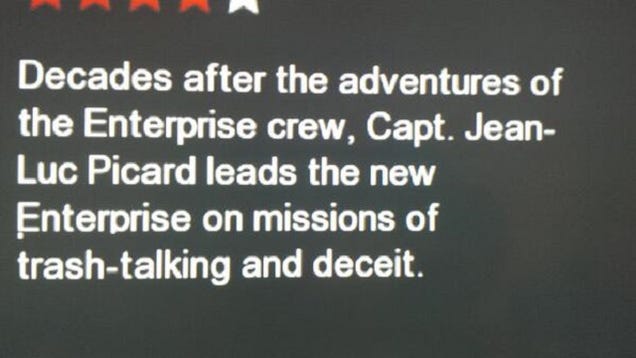
A couple of weeks ago, a bug caused a Netflix app to accidentally slam together the summaries for different films. And they sound so much better than the originals.


This 1908 paper is a gem. It's about recovery from nerve trauma — and the research was done by two doctors who were so interested in the subject that one volunteered to have his nerves severed, just to see how they healed.


There's something undeniably awesome about a blazing rock entering our atmosphere from space. Especially when you can watch it over and over again, because some lucky (or unlucky) person caught it on video.

Bunker.jordan... what

 If you think about it, the RepRaps and other commercial 3D printers we have today are nothing like the printers that will be found in the workshops of the future. They’re more expensive than they need to be, and despite the RepRap project being around for a few years now, no one has cracked the nut of closed loop control yet. [mad hephaestus], [Alex], and [Will] over on the Hackaday Projects site are working on the future of 3D printing with the Servo Stock, a delta printer using servos and closed loop control to build a printer for about a quarter of the price as a traditional 3D printer.
The printer itself is a Kossel derivative that is highly modified to show off some interesting tech. Instead of steppers, the printer has three axes controlled by servos. On each axis is a small board containing a magnetic encoder, and a continuous rotation servo. With this setup, the guys are able to get 4096 steps per revolution with closed loop control that can drive the servo to with ±2 ticks.
The electronics and firmware are a clean sheet redesign of the usual 3D printer loadout. The motherboard uses a Pic32 running at 80MHz. Even the communication between the host and printer has been completely redesigned. Instead of Gcode, the team is using the Bowler protocol, a system of sending packets over serial, TCP/IP, or just about any other communications protocol you can think of.
Below is a video of the ServoStock interpreting Gcode on a computer and sending the codes and kinematics to the printer. It seems to work well, and using cheap servos and cut down electronics means this project might just be the first to break the $200 barrier for a ready to run 3D printer.


Tiny robot flies like a fly. by Ron Cowen via nature.com
A robot as small as a housefly has managed the delicate task of flying and hovering the way the actual insects do.
“This is a major engineering breakthrough, 15 years in the making,” says electrical engineer Ronald Fearing, who works on robotic flies at the University of California, Berkeley. The device uses layers of ultrathin materials that can make its wings flap 120 times a second, which is on a par with a housefly’s flapping rate. This “required tremendous innovation in design and fabrication techniques”, he adds.
The robot’s wings are composed of thin polyester films reinforced with carbon fibre ribs and its ‘muscles’ are made from piezoelectric crystals, which shrink or stretch depending on the voltage applied to them.
Kevin Ma and his colleagues, all based at Harvard University in Cambridge, Massachusetts, describe their design today in Science1.
The tiny components, some of which are just micrometres across, are extremely difficult to make using conventional manufacturing technologies, so the researchers came up with a folding process similar to that used in a pop-up book. They created layers of flat, bendable materials with flexible hinges that enabled the three-dimensional structure to emerge in one fell swoop. “It is easier to make two-dimensional structures and fold them into three dimensions than it is to make three dimensional structures directly,” explains Ma.
Manufacturing marvel“The ability to manufacture these little flexure joints is going to have implications for a lot of aspects of robotics that have nothing to do with making a robotic fly,” notes Michael Dickinson, a neuroscientist at the University of Washington in Seattle.
The work “will also lead to better understanding of insect flapping wing aerodynamics and control strategies” because it uses an engineering system “that can be more easily modified or controlled than an animal”, Fearing adds.
Weighing in at just 80 milligrams, the tiny drone cannot carry its own power source, so has to stay tethered to the ground. It also relies on a computer to monitor its motion and adjust its attitude. Still, it is the first robot to deploy a fly’s full range of aerial motion, including hovering.
The biggest technical obstacle to independent flight is building a battery that is small enough to be carried by the robotic fly, says Fearing. At present, the smallest batteries with enough power weigh about half a gram — ten times more than what the robotic fly can support. Ma says he believes that the battery obstacle might be overcome in 5-10 years.
If researchers can come up with such a battery, and with lightweight onboard sensors, Ma says that the robots could be useful in applications such as search and rescue missions in collapsed buildings, or as ways to pollinate crops amid dwindling bee populations.
“The DeLorean is a sports car manufactured by John DeLorean’s DeLorean Motor Company for the American market in 1981–82. Featuring gull-wing doors and stainless steel panels, the car became iconic for its appearance as a modified time machine in the Back to the Future film trilogy.”


Bunker.jordanWANT


Controversy this week regarding MakerBot’s aggressive patent filings. Why the controversy? Because the concepts were originally donated by supporters in good faith to further the cause of 3D printing. And now MakerBot has patented them.
Two examples of this pattern exist. OpenBeam reports their work on an auto-leveling system for RepRap printers has apparently been patented by MakerBot. Secondly, the Quick Release Extruder, originally designed by Thingiverse user Whosa whatsis, has also been patented. Whosa whatsis says on Google Plus:
Oh fuck no. +MakerBot is trying to patent my work too.
There are likely other instances of this pattern occurring: innovative maker members of the MakerBot/Thingiverse community developing ideas that have subsequently been patented by MakerBot/Stratasys. Needless to say, the community is profoundly disturbed.
It’s questionable whether MakerBot can actually do this, given that the designs were supposedly provided to Thingiverse via a Creative Commons license that prevents subsequent patenting. However, there may be “fine print” in the Thingiverse terms of use license that may override the CC license.
Regardless of the legality, it is truly bad form to do this, particularly when the patent doesn’t even mention the originator as the inventor.
However, MakerBot/Stratasys’ lawyers and leaders evidently believe this is an appropriate corporate strategy. For us, it means this:
Via Google Plus and OpenBeam

We’re checking out a new 3D model repository that recently launched: Redpah.
Aside from the unusual name we found the site to be a pretty standard 3D model site, similar to many others that have recently launched. You can browse, select and download 3D models suitable for 3D printing. Like many early-stage repositories, Redpah has few models, just over 100 from our quick count. There’s a mix of free 3D models and some non-free items priced from USD$1-25.
To encourage designers to post their models, they make this offer:
Post your 3D print file for $1 with a good picture and Redpah will buy 1 to get your sales started!
It’s a good idea, but we’re not sure how well they’ll be able to compete in the burgeoning 3D model space, where it seems new entrants appear monthly. Not only that, they’ll have to compete with the giants like CGTrader, YouMagine, Thingiverse and others.
Finally, one issue we observed was a surprising number of Star Wars-based 3D models. We’re not certain, but if Redpah does not hold appropriate licensing for these items they might be receiving a note from Disney soon.
Via Redpah

The knowledge that MakerBot has apparently patented designs given to them by their community is spreading and some folks are upset.
The cartoon above by Anthony Clark represents the feelings of many designers.

Here we see the reaction of Thingiverse designer Ubermeisters, who has changed the object image on their 3D models to the above call for a Thingiverse boycott. In fact, Ubermeisters also changed the text on the entries to read:
This illegal, immoral, and undeniable. several examples of prior art exist just within the confines of Thingiverse.com, and I am no longer supporting this website with traffic from my model being shared.
So it may be that Thingiverse’s momentum may slow as a result of this incident, at least among its original users. New MakerBot customers may know nothing about this and due to the strong integration of MakerBot’s new Gen5 hardware and software with Thingiverse, the site may continue to grow without the DIYers.
Via Thingiverse


Junior Lago/UOL

Junior Lago/UOL

Junior Lago/UOL

Junior Lago/UOL


Junior Lago/UOL
Brazilian graffiti artists Os Gemeos recently partnered up with GOL Airlines to paint this gargantuan mural on the fusalage of a Boeing 737 that will be used to carry Brazil’s team during the World Cup. The duo used some 1,200 cans of spray paint to depict a crowd of fans in their signature vibrant yellow which coincidentally is the same color used by the Brazilian team. Completed in only a week, the plane first flew today and will remain in use for at least another two years after use by the team. See many more photos over on Arrested Motion.


Pac-Man turned 34 this week and video game personality Patrick Scott Patterson made this hilarious video looking at various news coverage of the game. He also wrote a great article on the history of the game for the examiner.
When the calendar switched to 1980, more changed than just the decade. Disco died, America elected a former actor as President of the United States and the world was caught up in the grip of the first-ever video game boom. While games such as Space Invaders, Asteroids and Galaxian had ruled the video arcade scene, a cute and hungry cartoon character would leave them in the dust.
That character, still known today as Pac-Man, has now turned 34 years old. Originally installed in a Tokyo, Japan movie theater on May 22, 1980, the Namco classic began life known as Puckman. The name was changed a short time later out of concern that the name could be misread or vandalized to read as a common American expletive.
Pac-Man caught on quick in Japan and caught on even quicker when released in the United States toward the end of 1980. While trade show experts originally felt the game was “too cute” to succeed in an arcade market dominated by space shoot-em-ups, Pac-Man quickly became the most popular arcade video game on the map. Bally / Midway, who held the license to manufacture the arcade game in the U.S., sold 100,000 units of the game, a record that still stands in second place all-time for American arcade machine sales.
The only coin-op game to sell more units than Pac-Man in North America is Ms. Pac-Man, the first sequel in the franchise. It was released in January 1982.
In addition to breaking sales and coin box records, Pac-Man set the bar for merchandise rights for a video game property. Various portable versions of the game were accompanied at retailers by items emblazoned with the Pac-Man logo and characters, from bed sheets and pillows to shirts, hats, shoes, shoelaces, underwear, sleeping bags, cigarette lighters, plates, bowls, lunch boxes and more. A strategy guide for the game hit the New York Times Best Seller List while a hit single named Pac-Man Fever appeared on the Billboard Top Ten. ABC began airing a Saturday morning cartoon series while grocery store shelves began stocking a Pac-Man cereal, Pac-Man vitamins and a series of Pac-Man pasta items from Chef Boyardee.
Micah Scott uploaded this cool video of a tool of this awesome tool she made based on Zen photon garden. We had a blast playing around with it! Try it out here.
Announcing High Quality Zen, a batch renderer based on Zen photon garden. I built it as a way to further experiment with this 2D raytracing style, adding animation and color.
I created a short video intro in the form of an Amon Tobin music video.
Take a look at the hqz README on GitHub.
 Every Tuesday is Art Tuesday here at Adafruit! Today we celebrate artists and makers from around the world who are designing innovative and creative works using technology, science, electronics and more. You can start your own career as an artist today with Adafruit’s conductive paints, art-related electronics kits, LEDs, wearables, 3D printers and more! Make your most imaginative designs come to life with our helpful tutorials from the Adafruit Learning System. And don’t forget to check in every Art Tuesday for more artistic inspiration here on the Adafruit Blog!

Everything you need to know about shipping pallets…
There are approximately two billion wooden shipping pallets in the United States.1 They are in the holds of tractor-trailers, transporting Honey Nut Cheerios and oysters and penicillin and just about any other product you can think of: sweaters, copper wire, lab mice, and so on. They are piled up behind supermarkets, out back, near the loading dock. They are at construction sites, on sidewalks, in the trash, in your neighbor’s basement. They are stacked in warehouses and coursing their way through the bowels of factories.

Check out these beautiful laser cut lamps from Israeli designer Amit Sturlesi. How cool would this look on your desk at work? Check out the SturlesiDesign Etsy shop for to get one for yourself! Via Colossal.


Every Tuesday is Art Tuesday here at Adafruit! Today we celebrate artists and makers from around the world who are designing innovative and creative works using technology, science, electronics and more. You can start your own career as an artist today with Adafruit’s conductive paints, art-related electronics kits, LEDs, wearables, 3D printers and more! Make your most imaginative designs come to life with our helpful tutorials from the Adafruit Learning System. And don’t forget to check in every Art Tuesday for more artistic inspiration here on the Adafruit Blog!

Brain pickings posted this incredible story about the history of typewriter art.
“Art is not a thing — it is a way,” Elbert Hubbard observed in 1908 in what became one of history’s finest definitions of art. Hubbard was writing at the dawn of an unusual new art form, wherein artists were appropriating a new thing — a trailblazing technology — to find a new way of making art. The product and legacy of that is what graphic design scholar Barrie Tullett explores in Typewriter Art: A Modern Anthology (public library) — a fascinating chronicle of “the development of the typewriter as a medium for creating work far beyond anything envisioned by the machine’s makers,” embedded in which is a beautiful allegory for how all technology is eventually co-opted as an unforeseen canvas for art and political statement.
What makes this unusual art form so enchanting is that it blends the compositional drama of drawing with the patterned precision of the machine. But what is typewriter art anyway? The definition, Tullett argues, is both very broad and very personal:
For some artists, it is an object to draw — from the machine itself, to the ephemera associated with it (typewriter oils, ribbon cases and so on) — or an object to make art from, whether that be the music of the Boston Typewriter Orchestra, or sculptural pieces and explorations… For others, however, the typewriter is a tool to draw with; a means of making art.
The first typewriter, the Hansen Writing Ball, made its public debut in 1870, but it was another four years until a commercially successful machine took off. Much like the bicycle, one of the most immediate and palpable roles of the new technology was in the emancipation of women — not only did the typewriter create a whole new sphere of female employment, but it also provided a medium of democratic political communication outside the patriarchal regime’s circle of censorship. It was, as Tullett notes, a revolution.
As is the case in any cultural revolution, artists were quick to appropriate its medium for their own message.

For nearly a century, it was believed that the very first known example of typewriter art appeared in 1898, seventeen years after the first emoticon made its debut. It was a mechanical “drawing” of a butterfly by Flora F.F. Stacey — an English stenographer and, not coincidentally, a female artist. A short 1904 New York Times profile noted:
Some years ago, seeing a prize offered by a phonographic paper, [Stacey] entered for the competition, and has since applied herself enthusiastically to the idea.
Such competitions were not uncommon as manufacturers and early proponents sought to get the general public excited about and comfortable with the new technology — creative exploration, after all, is the greatest conduit to adoption. In announcing one such call for entries for “Fancy Work on a Typewriter,” a Syracuse paper cited Stacey as an exemplar for entrants:
Flora Stacey, an Englishwoman, has done some remarkable work at machine drawing, and out of her experiences, which have been without competition, some facts helpful to contestants … may be given.
Stacey, in fact, had been experimenting with “art-typing” for several years before her butterfly drawing catapulted her into international fame, as were other artists. The first edition of Pitman’s Typewriter Manual, published in 1893, included several examples of typed ornaments that a typewriter operator could use to embellish his or her work. Though Stacey may have well produced more typewriter art before her famous butterfly, none of it is preserved and the anonymous plate from the 1893 manual is now considered the first recorded example of “art-typing.”


Every Tuesday is Art Tuesday here at Adafruit! Today we celebrate artists and makers from around the world who are designing innovative and creative works using technology, science, electronics and more. You can start your own career as an artist today with Adafruit’s conductive paints, art-related electronics kits, LEDs, wearables, 3D printers and more! Make your most imaginative designs come to life with our helpful tutorials from the Adafruit Learning System. And don’t forget to check in every Art Tuesday for more artistic inspiration here on the Adafruit Blog!

Alexandra Khitrova‘s fantasy inspired digital illustrations are spectral and visually mesmerizing. See her work here! From thisiscolossal.
Early last year motion graphics artist and Alexandra Khitrova decided to utilize some of the digital tools she had acquired in her profession to explore concept illustration. While she did study art in school, this was an entirely new creative realm, a pet project to explore realms of science fiction and fantasy where flying dragons mingled with terrifying storms and otherworldly beings were brought to life on the screen.


Cosplayer Its Raining Neon completed her first Samus suit earlier this year, and she chose to build a Light Suit from Metroid Prime 2. She enjoyed the process so much, she wants to make at least two more of the character’s suits this year (Samus has quite the wardrobe). She used craft foam for all the armor, and the whole suit only took her less than a month to make. Besides being her first Samus suit, it’s the first project she’s ever used LEDs on. Both the front and back of the suit are lit.
Read more and see more pics at It’s Raining Neon’s Facebook page. Top photo by Cozpho Photography.

this is the weirdest job app i’ve ever filled out
Let me say to all the skeptics out there, as someone who has recently left the hell pit that is walmart, this is a real fucking question and when I asked about it i was told there’d been an ‘incident at corporate’.

IEE spectrum has the incredible story on how a group of hackers are planning to try to communicate with a 35-year-old spacecraft.
Early next week, a team of volunteers will use the Arecibo Observatory in Puerto Rico to see if they can make contact with a spacecraft that hasn’t fired its thrusters since 1987. If all goes well, the effort could bring the 35-year-old spacecraft, the International Sun-Earth Explorer 3 (ISEE-3), back into position near the Earth, where it could once again study the effect of solar weather on Earth’s magnetosphere.
It will be a race against time. ISEE-3, which is transmitting two carrier signals, only came into hearing range a couple of months ago. Dennis Wingo, CEO of California-based Skycorp Incorporated, and his colleagues reckon ISEE-3 still has enough fuel to make it back to its original orbit at the Lagrangian point L1, at a spot between the sun and the Earth where a spacecraft can stay in sync with Earth’s orbit. But to make it, Wingo says, the spacecraft must be commanded to fire its thrusters by mid-June.
And that’s far easier said than done. NASA no longer has the hardware to communicate with the ISEE-3. So in April, Wingo and Keith Cowing, a former NASA employee and editor of the websites NASAWatch and SpaceRef, started a (still-running) crowdfunding campaign on RocketHub to develop what they need to communicate and control the spacecraft: signal modulators and demodulators, transmitters, and a software-based mission control console to monitor the spacecraft’s propulsion and attitude control systems.
Building all of this even 10 years ago “would have been impossible,” Wingo says. But with the advance of embedded systems technology, the team can construct radio components in software and debug them on aggressive timescales without breaking the bank.
Read the full story here.