Shared posts

23 Mar 21:25

Busting out the Pan’s Labyrinth and Hellboy builds

by Simon

Tyler (The Deathly Halliwell) has long been one of my favorite builders of all things Del Toro. He’s probably the only builder that can take the fantastic creatures from Del Toro and sculpt them so beautifully…I regretted not blogging his Faun earlier this year, but thankfully he’s added the Pale Man to his growing collection:

Together Forever

And if that wasn’t enough, Tyler also did another Del Toro movie icon Hellboy:

Hellboy (2)


Bravo Tyler!

23 Mar 20:33

Photo


23 Mar 20:33

Photo


23 Mar 20:31

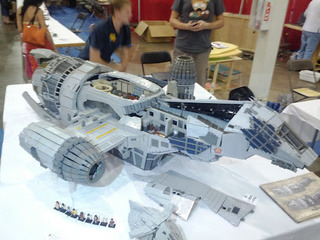
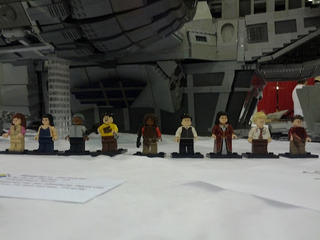
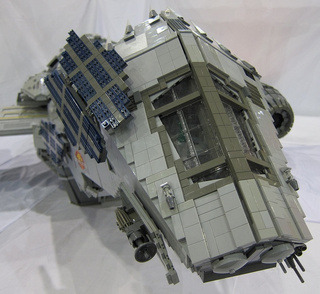
savingthr0ws: Epic LEGO Serenity build. By Adrian Drake of...


savingthr0ws:

Epic LEGO Serenity build.

By Adrian Drake of Westlake, Ohio.

23 Mar 20:30

#33713

23 Mar 20:07

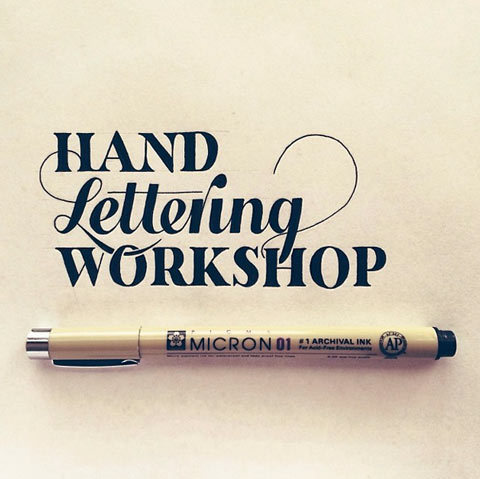
iampox: Hand lettering by Sean McCabe

23 Mar 20:05

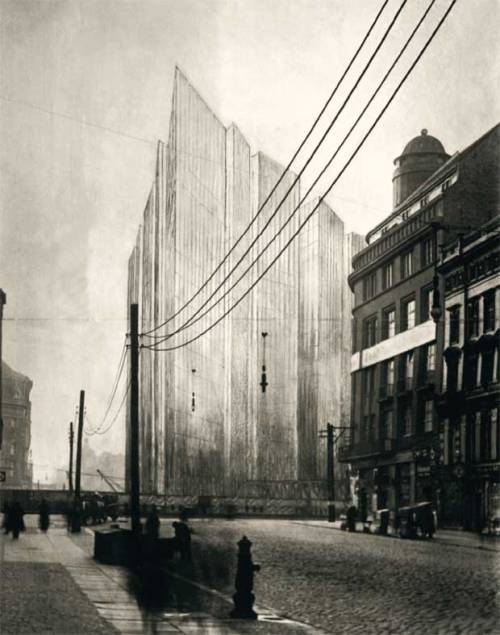
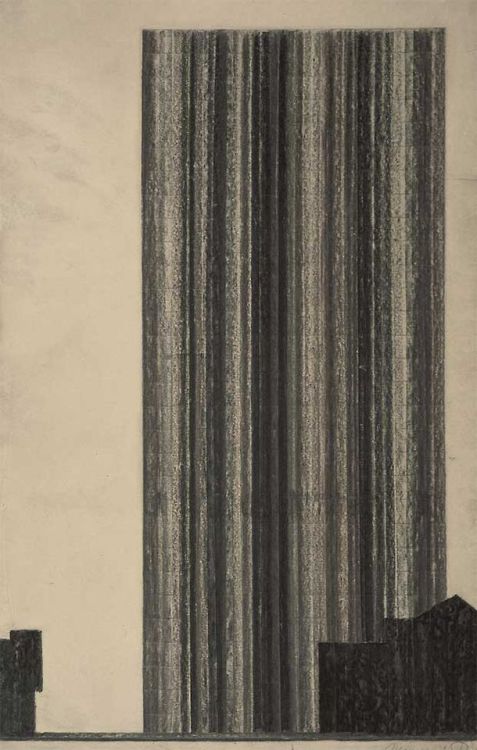
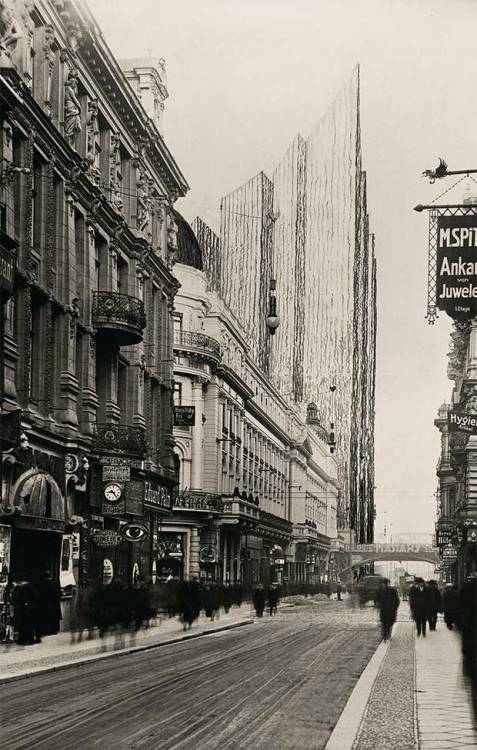
Friedrichstrasse Skyscraper | Mies van der Rohe | Via Perhaps...


Friedrichstrasse Skyscraper | Mies van der Rohe | Via

Perhaps inspired by photographs of the “high-reaching steel skeletons” of American skyscrapers under construction Mies van der Rohe’s vision of a tower more transparent than solid first became apparent with his entry for the Berlin Friedrichstrasse Skyscraper competition of 1921–22. As Detlef Mertins’ new book Mies reveals, the visionary project (although unbuilt) became the architect’s first major post-war design.

Mies used the competition to break with the past and boldly begin again at the beginning, for him personally and for his architecture. It was the architect’s first chance to explore a building type other than the country house and to develop his own ideas about modernization and metropolitan architecture. As Mertins points out, it was his first engagement with a metropolitan program (the high-rise office building) and a metropolitan building site (which adjoined a major train station), as well as new materials and technologies of construction.  

The program for the competition was itself unprecedented: a high-rise office building on Berlin’s major commercial street. The jury awarded prizes to a range of approaches represented in the 144 submissions. Whereas many entries attempted to assimilate the new scale and program to familiar organizational types and old styles (Gothic, classical or both), others sought to devise a new style. 

23 Mar 20:04

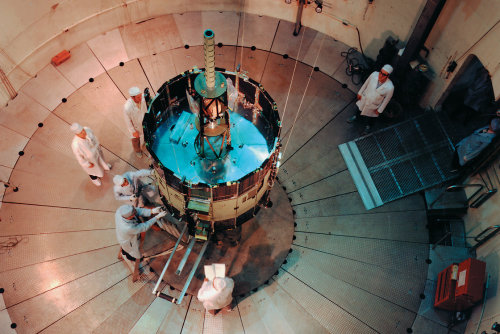
More than 30 years ago, Robert Farquhar stole a spacecraft. Now...


More than 30 years ago, Robert Farquhar stole a spacecraft.

Now he’s trying to give it back.

The green satellite, covered with solar panels, is hurtling back toward the general vicinity of Earth, after nearly three decades of traveling in a large, looping orbit around the sun.

If Farquhar, a former mission design specialist for NASA, gets his way, the agency will command the spacecraft to fire its thrusters, veer close to the moon, and slip back into the spot where it was intended to be when it was launched in 1978 — and where it was when Farquhar and his accomplices “borrowed” it.

Back in the 1980s, space agencies were racing to Halley’s Comet. But NASA wasn’t going — officials said a comet mission was too expensive. That did not sit well with Farquhar, who had dreamed of achieving the first comet encounter ever.

So he figured out how to divert an existing satellite, called the International Sun-Earth Explorer (ISEE-3), that was stationed between the Earth and the sun in an innovative halo orbit that he had pioneered.

Farquhar came up with a complicated trajectory that would let this spacecraft intercept a different comet called in September of 1985, months before the armada of other space probes would arrive at Halley’s.

"We beat all the other countries of the world," recalls Farquhar. "The European Space Agency. The Russians. The Japanese."

President Reagan even sent him a congratulatory letter.

But some of the scientists who’d been using ISEE-3 to study things like solar wind were not amused by the comet caper.

"They thought that — it was in the newspapers, even — that we stole their spacecraft," says Farquhar. "We didn’t steal it; we just borrowed it for a while! That’s what I tried to tell them."

Read more: "Space Thief Or Hero? One Man’s Quest To Reawaken An Old Friend"

23 Mar 20:03

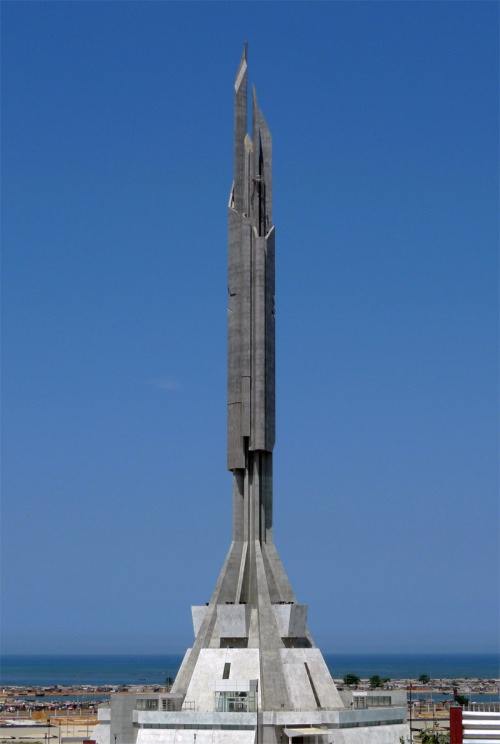
Space-Age Buildings in Africa | Via


Space-Age Buildings in Africa | Via

23 Mar 19:44

c. 1905: On manoeuvres

by Amanda
Bunker.jordan

If I ever go to burning man... this.

On manoeuvres  1 On manoeuvres 2

Sergeant Major Robert Griffith French, 2nd Battalion Royal Dublin Fusiliers, on manoeuvres at the Currah Co. Kildare.

23 Mar 19:43

Architect’s Wallet

by mark
Bunker.jordan

I would not pay $95 for this, but I probably would make one of my own.

Over the past 10 years I have slowly converted to the “small wallet in my front pocket” club. My last was minimal but it fell apart quickly as my other everyday carry items, like my pen, rubbed against the apparently cheaply made wallets I was getting. Four months ago I purchased this Architect’s Wallet after looking at other slim models. The combination of three items I always carry into one package sold me. This wallet holds a Fisher Space Pen (another Cool Tool), a small Moleskine Volant notebook, and about 10 or 11 credit cards, which is more than I carried before I owned this.

The leather is handsome and sturdy and has worn in so that it mimics the shape of my thigh, making it all but invisible in my front pants pocket. The perfect EDC (everyday carry) pocket organizer.

-- Matthew A. Walker

Architect’s Wallet
$95

Manufactured by Form Function Form

23 Mar 19:24

Watson to be used in choosing cancer treatments

by Stella Striegel

NewImage

IBM has announced that Watson will be used to analyze cancer data and recommend treatments. via ars technica.

Earlier today, IBM announced that it would be using Watson, the system that famously wiped the floor with human Jeopardy champions, to tackle a somewhat more significant problem: choosing treatments for cancer. In the process, the company hopes to help usher in the promised era of personalized medicine.

The announcement was made at the headquarters of IBM’s partner in this effort, the New York Genome Center; its CEO, Robert Darnell called the program “not purely clinical and not purely research.” Rather than seeking to gather new data about the mutations that drive cancer, the effort will attempt to determine if Watson can parse genome data and use it to recommend treatments.

Darnell said that the project would start with 20 to 25 patients who are suffering from glioblastoma, a type of brain cancer with a poor prognosis. Currently, the median survival time after diagnosis is only 14 months; “Time, frankly, is not your friend when you have glioblastoma,” as Darnell put it. Samples from those patients (including both healthy and cancerous tissue) would be subjected to extensive DNA sequencing, including both the genome and the RNA transcribed from it. “What comes out is an absolute gusher of information,” he said.

It should theoretically be possible to analyze that data and use it to customize a treatment that targets the specific mutations present in tumor cells. But right now, doing so requires a squad of highly trained geneticists, genomics experts, and clinicians. It’s a situation that Darnell said simply can’t scale to handle the patients with glioblastoma, much less other cancers.

Read more.

23 Mar 19:23

Photo


23 Mar 19:22

su


su

23 Mar 19:21

Photo


23 Mar 19:20

Photo

Bunker.jordan

preeeetttyyy


23 Mar 19:20

March 22, 2014

Bunker.jordan

I love this so much.


Here's an interview I did with WGBH Boston's Innovation Hub. Please give it a listen :)
23 Mar 19:18

Researchers develop new microengine, but aren't sure how it works

by David Szondy
Bunker.jordan

Hooray for scientists admitting they don't know something publicly!

At the microscopic level, combustion can't support itself, as it does in this Petri dish f...

If you’re going to do something like building a Porsche 911 that fits on the head of a pin, or make a microscopic medical pump, you need a microscopic engine. A team of researchers from the University of Twente in the Netherlands, the Russian Academy of Sciences, and Germany’s University of Freiburg have developed a micro-engine that burns oxygen and hydrogen, but there’s a small problem; they’re not sure how the thing works. .. Continue Reading Researchers develop new microengine, but aren't sure how it works

Section: Science

Tags: Electricity, Engine, Nanotechnology, Russian Academy of Sciences, University of Freiburg, University of Twente

Related Articles:
23 Mar 19:14

Taipei’s Mobile 3D Printer

by Site Admin

Fabraft, a Taipei-based design company has combined 3D printing, trash picking and a bicycle to create something very unusual.

The firm has mounted a battery-powered 3D printer on a bicycle, which roves around the streets of Taipei. The bike stops to pick up scrap plastic in the form of waste cups and bottles. 

These are fed into a shredder, which produces a fine plastic powder for use in the portable 3D printer. 

On the spot, within a “couple of hours”, art is produce. Trash is transformed into beauty. 

We think this is an interesting project, but not one that could be done for the long term. It would also be helpful if printing didn’t take so long. In any case, Taipei’s streets are slightly less cluttered with plastic trash. 

Via GMA News

23 Mar 19:09

Building a toolbox: 3D printed tape measure & dial calipers

Bunker.jordan

This is pretty cool... but totally not cost effective. The tools look like they are printed on a polyjet machine, and the resin for those printers is *super* expensive. These are probably $150 bucks a piece at least.

AngryMonk has created a fully assembled, 3D printed, 4ft tape measure with 114 separate parts.

This article Building a toolbox: 3D printed tape measure & dial calipers is first published at 3ders.org.

23 Mar 19:04

Josh Kurpius on his chopper “The Locust” covered in mud and...

Bunker.jordan

This brings back memories...


Josh Kurpius on his chopper “The Locust” covered in mud and dirt. Perhaps this is an ‘after’ photo from him blasting through the lake?

Note the camera on his hip. 

[ Josh Kurpius photography | more choppers ]

21 Mar 21:16

Absurdly Expressive Dog Portraits by Elke Vogelsang

by Christopher Jobson

Absurdly Expressive Dog Portraits by Elke Vogelsang dogs

It goes without saying that one of the most ubiquitous sightings on the web are millions upon trillions of pet photos. Cat gifs, funny dog videos, puppy memes, and even an entire currency. But every once in a while an animal (or group of animals), paired with the right photographer, rises above the mammalian fray and enters the realm of art. We’ve seen it here on Colossal with the works of Carli Davidson, Seth Casteel, Theron Humphrey & Maddie, and Sonya Yu & Trotter. Enter the latest contenders: self-taught photographer Elke Vogelsang and her three dogs Noodles, Scout and Loli.

Based in Hildesheim, Germany, Vogelsang is a professional photographer who mostly shoots portraits of people and pets, but in her spare time spends plenty of time with her trio of rescue dogs who frequently find themselves in front of the camera. Two of the dogs are Galgo Español mixes and the youngest, Loli, is a bonafide mut. Regardless of their pedigree, Vogelsang has a knack for capturing the dogs at their most expressive moments, resulting in photos that are equally heartwarming and humorous.

Absurdly Expressive Dog Portraits by Elke Vogelsang dogs

Absurdly Expressive Dog Portraits by Elke Vogelsang dogs

Absurdly Expressive Dog Portraits by Elke Vogelsang dogs

Absurdly Expressive Dog Portraits by Elke Vogelsang dogs

Absurdly Expressive Dog Portraits by Elke Vogelsang dogs

Absurdly Expressive Dog Portraits by Elke Vogelsang dogs

Absurdly Expressive Dog Portraits by Elke Vogelsang dogs

Absurdly Expressive Dog Portraits by Elke Vogelsang dogs

Absurdly Expressive Dog Portraits by Elke Vogelsang dogs

Absurdly Expressive Dog Portraits by Elke Vogelsang dogs

Absurdly Expressive Dog Portraits by Elke Vogelsang dogs

You can follow Vogelsang’s work on Facebook and 500px and she has prints of almost every photo available in her shop. (via Bored Panda)

Update: Vogelsang shares some tips with SLR Lounge on getting the most out of your pet photoshoot.

21 Mar 20:53

How Does XYZ Printing Do It?

by Site Admin
Bunker.jordan

That is *ridiculously* cheap. I'm tempted to buy one, if for nothing else than to reverse engineer it...

New entrant XYZ Printing offers personal 3D printers at incredibly low cost, as low as USD$499 per unit. How do they do it? 

To be sure, their USD$499 Da Vinci model doesn’t offer all the features of more expensive units. In fact, XYZ Printing offers a couple of higher grade units, which each include more bells and whistles. Still, XYZ Printing’s low and high end machines are all priced quite low. How do they hope to make any money on this venture? 

One might think they wish to make their money back through their proprietary filament cartridges. Let’s take a look at how it’s priced. 

Their filament (currently ABS only) is sold in cartridges containing 600g of material for USD$28. This is equivalent to about USD$47 per kg. By comparison, MakerBot’s filament retails for USD$55 per kg, not significantly different. So it appears XYZ Printing is not making massive profit on their filament. 

What then? We’re thinking that because XYZ Printing is actually a subsidiary of Kinpo Group, a gigantic Taiwan-based industrial conglomerate of 40,000 employees, they have a huge advantage over most 3D printer companies. The larger company can provide many internal services and repurposed capabilities that could lower the cost of production, not to mention they have the ability to provide significant funding for startup. 

Why do this? We suspect it’s because Kinpo is attempting to profit on huge sales volumes. They’re going to make a little bit of money from each of a large number of sales. This is very different from the pricing strategies of some of their major competitors. 

Which approach will succeed? 

Via XYZ Printing

21 Mar 19:50

Authentic Blue Blueprints

by Brian Benchoff

blue

At one point in history, blueprints were actually blue. Now, if you even see a dead tree version of plans or assemblages, they’re probably printed off with a plotter or large format printer. You can, however, make your own blueprints at home, as [Tyler] shows us in his Hackaday Project.

Back in the olden days, master drawings were traced onto large sheets of transparent film. These master prints were then laid over paper prepared with Potassium Ferricyanide and Ferric Ammonium Citrate to create an insoluble Prussian Blue background for the prints. Developing is easy – just expose the transparent positive and undeveloped paper to UV light, in the form of fluorescent bulbs or the sun.

[Tyler] began his blueprint creation process by getting a few design sketches of the RSI Aurora and Nautilus, editing them on a computer, and printing them out on transparency sheets. A solution of equal parts Potassium Ferricyanide and Ferric Ammonium Citrate were painted onto a piece of paper and allowed to dry. Exposing was a simple matter of laying the transparency over the undeveloped paper and setting it out in the sun for 20 minutes or so. After that, it’s a simple matter of washing off the unexposed chemicals and letting the newly created blueprint dry.

It’s a simple technique, but also very, very cool. Not exactly practical, given a plotter can spit out an architectural or assembly drawing of any building, vehicle, or device in a few minutes, but just the ticket for art pieces or extremely odd engineers.

Thanks [Sarah] for sending this in.


Filed under: chemistry hacks, classic hacks
21 Mar 18:07

Salvador Dalí’s Sinister and Sensual Paintings for Dante’s Divine Comedy

by Maria Popova

From Heaven to Hell in melting faces and flying bones.

Something magical happens when a prominent artist interprets a literary classic visually, from William Blake’s paintings for Milton’s Paradise Lost to Picasso’s 1934 drawings for a naughty ancient Greek comedy to Matisse’s 1935 etchings for Ulysses. But the celebrated artist most prolific in illustrating literary classics was undoubtedly Salvador Dalí, who illustrated Don Quixote in 1946, the essays of Montaigne in 1947, Alice in Wonderland in 1969, and Romeo and Juliet in 1975.

At the height of his fame in 1957, more than a century after William Blake had done the same, Salvador Dalí began working on a series of 100 paintings based on Dante’s epic poem The Divine Comedy, commissioned by the Italian government. He was given eight years to complete the artwork, which was then to be released as limited-edition prints in 1965 to mark the 700th anniversary of Dante’s birth. But when word got out that one of Italy’s greatest literary legacies had been entrusted to a Spaniard, the public outcry led the government to pull out. Dalí, however, forged forward on his own to complete the series in 1964, then enlisted two engravers who spent five years hand-carving 3,500 wooden blocks to be used for reproductions of Dalí’s paintings.

Somewhat surprisingly, the series was never published as an official English edition of the classic book, but reproductions of the individual paintings can still be purchased online — often for outrageous amounts — and found in an obscure out-of-print book released by the Park West Gallery in 1993.

From Sordello drawing a line in the sand of Purgatory to demarcate his freedom after nightfall to the outstretched grasping arms of the Wood of Suicides to the gruesomely melted and stretched skulls of The Blasphemers, Dalí’s surrealist tour of Heaven, Hell, and Purgatory blends the sinister and the sensual to a haunting effect.

For a curious counterpoint, see William Blake’s take on the Dante classic.

Donating = Loving

Bringing you (ad-free) Brain Pickings takes hundreds of hours each month. If you find any joy and stimulation here, please consider becoming a Supporting Member with a recurring monthly donation of your choosing, between a cup of tea and a good dinner.


♥ $7 / month♥ $3 / month♥ $10 / month♥ $25 / month


You can also become a one-time patron with a single donation in any amount.


Brain Pickings has a free weekly newsletter. It comes out on Sundays and offers the week’s best articles. Here’s what to expect. Like? Sign up.

Brain Pickings takes 450+ hours a month to curate and edit across the different platforms, and remains banner-free. If it brings you any joy and inspiration, please consider a modest donation – it lets me know I'm doing something right. Holstee

21 Mar 00:00

Kinematics Bodice: First Piece of Kinematics Clothing from Nervous System! #3DThursday #3DPrinting #3DScanning

by Matt

Jessica nervous system

Kinematics Bodice: First Piece of Kinematics Clothing from Nervous System:

The first piece of Kinematics clothing, a 3D-printed nylon bodice, will be debuted in New York City this week at the opening of the exhibition “Coding the Body” at apexart. The bodice is composed of 1,320 unique hinged pieces and was 3D-printed as a single part. In order to fit the bodice into the printer and minimize the space it took up in the machine, the design was printed in a flattened form that was designed with Nervous System’s “Kinematics” folding software. The bodice was wearable straight out of the printer; no pieces were manually assembled and no fasteners were added. The back features integrated 3D-printed snaps for fastening the garment.

The bodice was produced from a 3D scan of Jessica Rosenkrantz, one of the designers. It serves as a proof of concept for Nervous System’s “Kinematics” design system which pairs a constructional logic of hinged panels with a simulation strategy of folding and compression to produce customized clothing designs that can be fabricated efficiently by 3D-printing. The system is an example of the developing field of 4D-printing where 3D-printing is used to create objects that transform in shape. Background information on our “Kinematics” project can be found here….

More details of the “long road to printing a kinematics dress” here!

Pasted Image 3 20 14 4 50 PM


649-1
Every Thursday is #3dthursday here at Adafruit! The DIY 3D printing community has passion and dedication for making solid objects from digital models. Recently, we have noticed electronics projects integrated with 3D printed enclosures, brackets, and sculptures, so each Thursday we celebrate and highlight these bold pioneers!

Have you considered building a 3D project around an Arduino or other microcontroller? How about printing a bracket to mount your Raspberry Pi to the back of your HD monitor? And don’t forget the countless LED projects that are possible when you are modeling your projects in 3D!

The Adafruit Learning System has dozens of great tools to get you well on your way to creating incredible works of engineering, interactive art, and design with your 3D printer! We also offer the MakerBot Digitizer in our store. If you’ve made a cool project that combines 3D printing and electronics, be sure to let us know, and we’ll feature it here!

20 Mar 23:59

Altergaze, a 3D printed smartphone VR headset launches Kickstarter

Bunker.jordan

This is *awesome*!

A new project designed to transform your iPhone or Samsung smartphone into a virtual reality interface has been launched on Kickstarter. The Altergaze is a new, affordable virtual reality (VR) headset made on a 3D printer that lets you clip in a smartphone and experience VR straight away. It has also been designed to allow you to get access to incoming phone calls while using it.

This article Altergaze, a 3D printed smartphone VR headset launches Kickstarter is first published at 3ders.org.

20 Mar 23:31

Multimeters Without A Country: Fluke’s Broad Trademark Bans Yellow Multimeter Imports

by Mike Szczys
Bunker.jordan

This is ridiculous...

fluke-killing-sparkfun-for-being-yellow

Check out this SparkFun Digital Multimeter. Does it make your blood boil to see them ripping off Fluke by using the color yellow? From SparkFun’s side of the story that’s exactly what’s happened here. They have a shipment of 2000 of these things stuck in customs. The trademark being infringed upon can be found in their article. Fluke owns the trademark on multimeters with a dark face and yellow border. Great. This seems like a wonderful idea, right up there with Apple owning tablets that are shaped like a piece of paper.

Okay, so if you’re not crying big fat tears for Fluke being taken advantage of in this way let’s talk about more immediate issues than fixing trademark, patent, copyright, and all of the other screw-the-little-guy type of laws (not that SparkFun is necessarily the little guy but you know what we mean). The DMMs sitting in a warehouse are costing SparkFun $150 per day. We believe they have no option of choosing a warehouse with a lower cost as we must be talking a pallet or two, right? The only two options they do have are shipping them back to China where they were manufactured, or having them destroyed. The former will cost more in re-import tariffs than the cost of the product, and the latter comes with a $150/hour disposal fee and no metric on which to judge how long it would actually take. We hate seeing this kind of waste, but sure enough 2000 DMMs are headed for the shredder in a couple of days.

We know you already have your flaming sword in hand, but simmer down for just a second. Fluke makes great products, ask anyone. And companies the world over defend their trademarks. Hopefully there will soon be a positive response from Fluke on this one. If you would like to politely encourage them to do the right thing we found Fluke’s Facebook page URL in the SparkFun comments thread. Both are worth browsing.

[Thanks Chris via Reddit]


Filed under: news, rants
20 Mar 23:22

Game of Thrones Kingsguard Armor

by Amy Ratcliffe

got kings guard armor

Being the King of Westeros comes with perks and one of them is having your own Kingsguard. The elite group of knights will keep you safe from assassins, family members, you name it. RPF user teranmx created this armor set based on the Kingsguard armor seen in Game of Thrones. It looks beautiful and fit for knights serving the throne. The maker explained the build process at the RPF:

I carved all of the patterns with my dremel. I used pvc glue to fuse it together. I used Bondo to fill gaps. I did add a few rivets for attaching tough areas and for comparison to other rivet marks. I do know from some more recent photos there are more details on the chest that I missed. I would like to fix that on the next one I make. On the shoulder pauldrons I took a bowl and vacuum formed the pvc over it, cut it mid way and then attached the two pieces together with the other part of the bowl pointing outward. I fused it with pvc glue, extra support with rivets, to fill big gaps i used window screen as a fiber for the bondo to hold onto extra along with the pvc. It allowed me to get those corners sharp since there was like a 1 inch gap in between the top and bottom. If I could’ve afforded it I would gone the next step further and made molds of all of this and cast them in another material so they would be solid.

got kings guard armor 2

Read more at The RPF.

20 Mar 22:08

Fluke Issues Statement Regarding Sparkfun’s Impounded Multimeters

by Mike Szczys
Bunker.jordan

I'm really glad that Fluke is trying to make things right.

fluke-reponds-to-sparkfun-dmm-impounding

Fluke just issued a response to the impounding of multimeters headed for market in the United States. Yesterday SparkFun posted their story about US Customs officials seizing a shipment of 2000 multimeters because of trademark issues. The gist of the response is that this situation sucks and they want to do what they can to lessen the pain for those involved. Fluke is providing SparkFun with a shipment of genuine Fluke DMMs which they can sell to recoup their losses, or to donate. Of course SparkFun is planning to donate the meters to the maker community.

Anyone with a clue will have already noticed the problem with this solution. The impounded shipment of 2k meters will still be destroyed… eh. The waste is visceral. But good for Fluke for trying to do something positive.

Before we sign off let’s touch on the trademark issue for just a moment. We can’t really blame Fluke too much for this. The legal crux of the matter is you either defend your trademark in every case, or you don’t defend it at all. In this case it was the border agents defending the filing, but for ease of understanding we’ll not go into that. On the other hand, speaking in general business terms, the way things are set up it is advantageous to acquire a trademark specification that is as broad as possible because it helps to discourage competitors from coming to market. So trademark is good when it keep hucksters from trying to rip off consumers. But it is bad if applied too broadly as a way of defending a company’s market share.

Where does Fluke come down in all of this? Who knows. There is literally no right answer and that’s why the discussion around yesterday’s post was full of emphatic arguments. A Fluke meter is a cream-of-the-crop device and they have the right (and obligation) to ensure that reputation is not sullied. SparkFun serves a market that probably can’t afford a Fluke at this time but may some day in the future. And this is the reason we can feel okay about this outcome.

[via Twitter]


Filed under: news, rants