Shared posts

14 Apr 19:13

LED Lamp that Projects its own Shade

by Kelly

YOY collection at Milan 2014 dezeen ss8

The Japanese design studio YOY has developed an LED lamp that projects its own shade, via Dezeen.

From YOY:

A series of a table lamp and a floor lamp. When switched on, a shade of light will appear on the wall. There is a LED inside the head of the pole which imitates a socket..

YOY collection at Milan 2014 dezeen 4

Read more.

14 Apr 19:12

Six women who paved the way for female engineers and architects #WomenInSTEM

by Jessica
Bunker.jordan

Badass

NewImage

Gizmodo has a great post on 2 inspirational women who paved the way for female engineers and architects. Above is Margaret Ingels, the first woman to receive a graduate degree in mechanical engineering in the US.

Because there was no architecture school at the University of Kentucky, Margaret Ingels studied engineering at the suggestion of professor, and became the first woman to receive a graduate degree in mechanical engineering in the country. She worked across a wide range of emerging technologies at the time, including at the Chicago Telephone Company and the United States Bureau of Mines.

But an early fascination with air conditioning—not a prevalent technology in the early 1900s!—led her to Carrier Lyle Heating and Ventilation Corporation, where she helped develop the Anderson-Armspach dust determinator, which became the industry standard for air filtration, as well as the sling psychrometer, which measures air humidity and is still used today. She was well-known for her lectures and traveled across the country to deliver them, including one entitled “Petticoats and Slide Rules.”

NewImage

This is Emily Warren Roebling, a chief engineer on the project to use caissons on the Brooklyn Bridge.

Marrying into a family of engineers was fortuitous for Emily Warren: Her husband was Washington Roebling, a civil engineer, and father-in-law was John A. Roebling, who developed the revolutionary design for the Brooklyn Bridge. Emily and Washington traveled together to Paris to study the possibility of using caissons on the Brooklyn Bridge, a new technology that used pressurized chambers to allow workers to install bridge pilings underwater. John contracted tetanus after he crushed his foot during construction, and Washington took over as chief engineer—but Washington, sadly, succumbed to the very technology he championed, getting decompression sickness and staying bedridden during the final phase of construction.

For 14 years, Emily acted as chief engineer on the project while fighting to ensure that Washington did not lose credit for his work. In 1883, she was the first person to cross the finished Brooklyn Bridge in a carriage.

NewImage

Above is Aine Brazil.

As vice chairman of the engineering firm Thornton Tomasetti, Aine Brazil has been responsible for overseeing groundbreaking methods that have allowed some of the world’s tallest and most unique buildings and infrastructure projects to be constructed.

The Irish native worked at engineering firm Arup before starting at Thornton Tomasetti, where she was the lead structural engineer for 11 Times Square, a game-changing skyscraper for the Midtown neighborhood. Brazil is currently working on the Hudson Yards development, which will use a concrete “apron” to float six city blocks over a train yard.

Head over to Gizmodo to see the rest of the list.

14 Apr 18:54

Photo


14 Apr 18:53

humanoidhistory: Chesley Bonestell paintings from the 1964 book...


humanoidhistory:

Chesley Bonestell paintings from the 1964 book Beyond the Solar System.

(The Golden Age)

14 Apr 18:52

Photo


14 Apr 18:52

weegboi: Watch Dogs (2014) summary: you are an extremely talented watchmaker with a twist: you’re...

weegboi:

Watch Dogs (2014) summary: you are an extremely talented watchmaker with a twist: you’re actually three dogs in a man costume. try to fake your way through trade shows and investor meetings without getting kicked out (no dogs allowed)

rated m for mature

14 Apr 18:51

unclefather: dialupmodem: cookingchannel: Can’t afford the...

Bunker.jordan

Shared for comments.


unclefather:

dialupmodem:

cookingchannel:

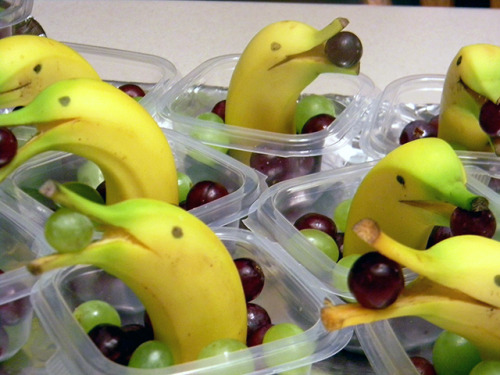
Can’t afford the trip down to Florida to swim with the dolphins? Swim with these dolphin-esque bananas instead.

try n close those containers

You cannot close the containers because then the dolphins couldn’t breathe, idiot

14 Apr 18:50

Harrison Ford Revealed His Powerful Opinion On Who Shot First

by Rob Bricken
Bunker.jordan

"I think we would all like to know: Who shot first? Han Solo or Greedo?

HF: I don't know and I don't care."

Harrison Ford Revealed His Powerful Opinion On Who Shot First

During a Reddit AMA to promote his new movie Years of Living Dangerously, Harrison Ford was of course — of course asked for his thoughts regarding the eternal debate of who truly shot first in Star Wars. Ford did not disappoint.

Read more...


14 Apr 18:48

Photo


14 Apr 18:46

Soon We May Be Mass Producing Human Blood

by George Dvorsky

Soon We May Be Mass Producing Human Blood

Researchers in the UK have developed a technique to culture universal type-O blood from stem cells. It's the first time scientists have manufactured blood to the appropriate quality and safety standards for transfusion into a human being. It's a breakthrough that could eventually end blood shortages in emergencies.

Read more...


14 Apr 18:22

wnslw: hydrolize: Someone left their dogs outside the...


wnslw:

hydrolize:

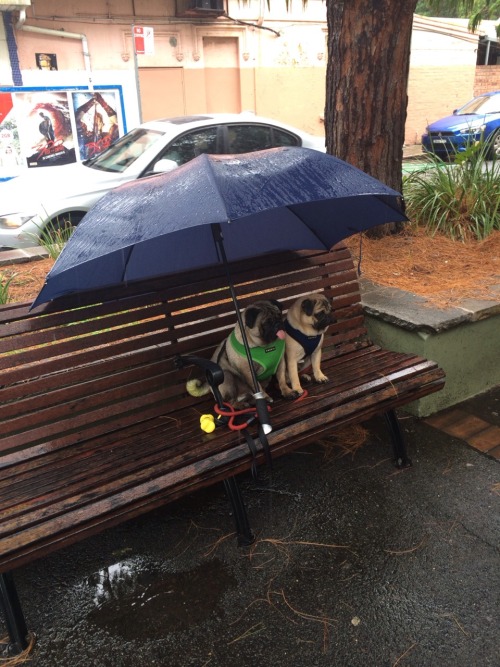
Someone left their dogs outside the cafe

pug date

14 Apr 18:21

Photo


14 Apr 18:21

mightfallin: whirrring: thetiredgames: Dachshund U.N. “For...


mightfallin:

whirrring:

thetiredgames:

Dachshund U.N.

“For three weekends, 47 Dachshunds, more commonly known as Sausage Dogs, will attempt to solve the world’s Human Rights issues.”

this was so fucking important

"And they still accomplished more than the actual U.N."

14 Apr 18:21

Researchers have discovered 500 million-year-old fossilized embryos.

by George Dvorsky

Researchers have discovered 500 million-year-old fossilized embryos. Dating back to the Cambrian Explosion, they emerged during a time when most phyla of marine invertebrates first appeared. The discovery is offering a rare opportunity for scientists to study the origin and development of our planet's oldest animals.

Read more...


14 Apr 17:41

New technique allows particles to switch the quantum state of each other

by Jessica

NewImage

Via SciTechDaily.

Using a laser to place individual rubidium atoms near the surface of a lattice of light, scientists at MIT and Harvard University have developed a new method for connecting particles — one that could help in the development of powerful quantum computing systems.

The new technique, described in a paper published today in the journal Nature, allows researchers to couple a lone atom of rubidium, a metal, with a single photon, or light particle. This allows both the atom and photon to switch the quantum state of the other particle, providing a mechanism through which quantum-level computing operations could take place.

Moreover, the scientists believe their technique will allow them to increase the number of useful interactions occurring within a small space, thus scaling up the amount of quantum computing processing available.

“This is a major advance of this system,” says Vladan Vuletić, a professor in MIT’s Department of Physics and Research Laboratory for Electronics (RLE), and a co-author of the paper. “We have demonstrated basically an atom can switch the phase of a photon. And the photon can switch the phase of an atom.”

That is, photons can have two polarization states, and interaction with the atom can change the photon from one state to another; conversely, interaction with the photon can change the atom’s phase, which is equivalent to changing the quantum state of the atom from its “ground” state to its “excited” state. In this way the atom-photon coupling can serve as a quantum switch to transmit information — the equivalent of a transistor in a classical computing system. And by placing many atoms within the same field of light, the researchers may be able to build networks that can process quantum information more effectively.

“You can now imagine having several atoms placed there, to make several of these devices — which are only a few hundred nanometers thick, 1,000 times thinner than a human hair — and couple them together to make them exchange information,” Vuletić adds.

Read more.

14 Apr 17:41

Architects Imagine A “Living Skyscraper” That’s One With Nature

by Kelly

69d45fe0b639b4992090ec877c9dcae4

Chilean architects Diego Espinosa Figueroa and Javiera Valenzuela Gonzalez proposed a skyscraper that’s inextricably infused with nature, via The Creators Project.

We’ve seen skyscraper-tall vertical gardens before, but the concept design for “Re-Silience” is some next-level greenery. The building, proposed by Diego Espinosa Figueroa, and Javiera Valenzuela Gonzalez of Chile, sets to create structure by treating biomass and soil as “one in the same.”

The structure is based on observations of natural forms like honeycombs, coral reefs, and ant nests. It would have an energy system composed by geothermal plant and solar panels, a water system that collects rainwater and underground water, and a platform system that connects the main floors with habitable capsules. Not only would the structure be made of earth, but based on the sketches, it appears like the semi-cavernous skyscraper would have moss-covered walls, as well.

Of course, this is all concept design, but imagine living in an apartment complex that is literally one with nature. Sure, mold would be a natural occurence, but the air couldn’t get fresher. ..

49486bee2367f48b147064bcf1c7e680

Read more.

14 Apr 17:39

Scientists improve human-robot connection with non-verbal cues #robotics

by Jessica
Bunker.jordan

Very cool work being done. Important to integrating robots in society.

Phys.org has this interesting story on a study that shows how to improve the human-robot connection.

Researchers at the University of British Columbia enlisted the help of a human-friendly robot named Charlie to study the simple task of handing an object to a person. Past research has shown that people have difficulty figuring out when to reach out and take an object from a robot because robots fail to provide appropriate nonverbal cues.

“We hand things to other people multiple times a day and we do it seamlessly,” says AJung Moon, a PhD student in the Department of Mechanical Engineering. “Getting this to work between a robot and a person is really important if we want robots to be helpful in fetching us things in our homes or at work.”

Moon and her colleagues studied what people do with their heads, necks and eyes when they hand water bottles to one another. They then tested three variations of this interaction with Charlie and the 102 study participants.
Programming the robot to use eye gaze as a nonverbal cue made the handover more fluid. Researchers found that people reached out to take the water bottle sooner in scenarios where the robot moved its head to look at the area where it would hand over the water bottle or looked to the handover location and then up at the person to make eye contact.

Read more.

14 Apr 17:27

Nannup Holiday House lets nature get close ... but not too close

by Adam Williams

The Nannup Holiday House, by Iredale Pedersen Hook Architects (Photo: Peter Bennetts)

The Nannup Holiday House, by Iredale Pedersen Hook Architects, strikes a careful balance between allowing its owners to get in touch with nature, while preventing nature from taking over completely. Raised on stilts to help avoid hazards which include local wild pigs, venomous snakes, and floods, the home also features sustainable technology such as solar panels and grey water recycling. .. Continue Reading Nannup Holiday House lets nature get close ... but not too close

Section: Architecture

Tags: Australia, Environmentally-friendly, House, Prefabricated, Sustainability

Related Articles:
14 Apr 17:21

c. 1934: “The House That Jell-O Built”

by Amanda

House Jello 1

14 Apr 17:21

1945: General Motors reception

by Amanda

General Motors Reception 1

General Motors Technical Center, Warren, Michigan, 1945; 1946-56. Design Center interior with stair in background.

General Motors Reception 5 General Motors Reception 4 General Motors Reception 3 General Motors Reception 2

14 Apr 17:21

1959: Model of a Project Mercury capsule in a spin tunnel

by Amanda

Mercury Capsule Spin Test 1 Mercury Capsule Spin Test 2 Mercury Capsule Spin Test 3 Mercury Capsule Spin Test 4

Undergoing aerodynamic tests at Langley Research Centre.

14 Apr 17:20

The Oldest Living Things in the World: A Decade-Long Photographic Masterpiece at the Intersection of Art, Science, and Philosophy

by Maria Popova

What a 13,000-year-old eucalyptus tree reveals about the meaning of human life.
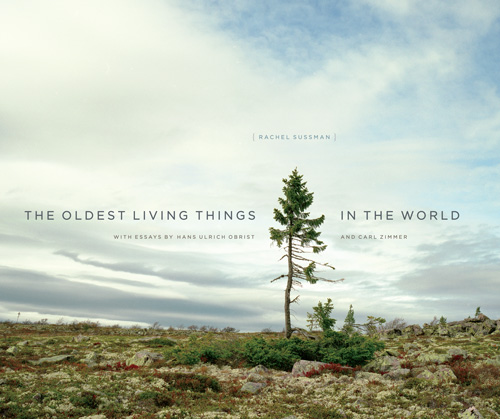
“Our overblown intellectual faculties seem to be telling us both that we are eternal and that we are not,” philosopher Stephen Cave observed in his poignant meditation on our mortality paradox And yet we continue to long for the secrets of that ever-elusive eternity.

For nearly a decade, Brooklyn-based artist, photographer, and Guggenheim Fellow Rachel Sussman has been traveling the globe to discover and document its oldest organisms — living things over 2,000 years of age. Her breathtaking photographs and illuminating essays are now collected in The Oldest Living Things in the World (public library) — beautiful and powerful work at the intersection of fine art, science, and philosophy, spanning seven continents and exploring issues of deep time, permanence and impermanence, and the interconnectedness of life.
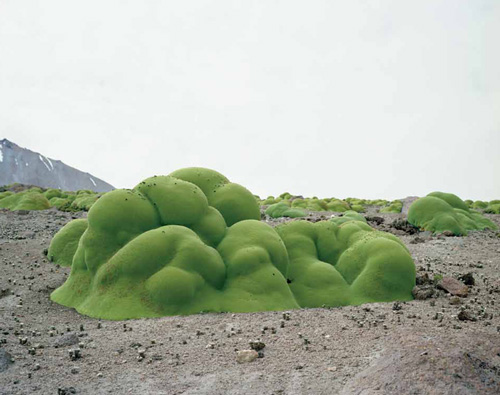
Llareta

3,000 years | Atacama Desert, Chile
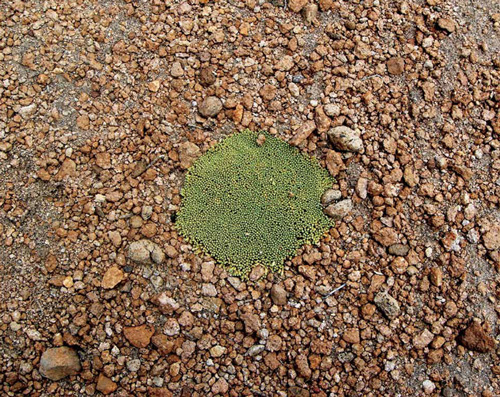
Baby llareta

With an artist’s gift for “aesthetic force” and a scientist’s rigorous respect for truth, Sussman straddles a multitude of worlds as she travels across space and time to unearth Earth’s greatest stories of resilience, stories of tragedy and triumph, past and future, but above all stories that humble our human lives, which seem like the blink of a cosmic eye against the timescales of these ancient organisms — organisms that have unflinchingly witnessed all of our own tragedies and triumphs, our wars and our revolutions, our holocausts and our renaissances, and have remained anchored to existence more firmly than we can ever hope to be. And yet a great many of these species are on the verge of extinction, in no small part due to human activity, raising the question of how our seemingly ephemeral presence in the ecosystem can have such deep and long-term impact on organisms far older and far more naturally resilient than us.
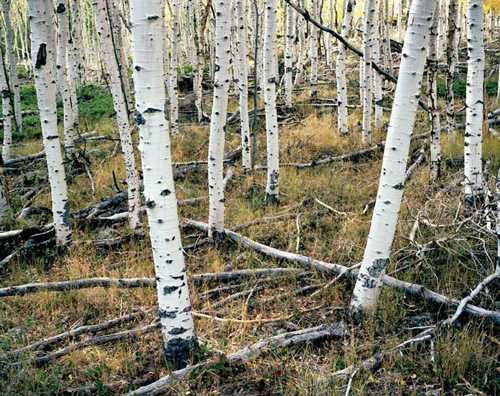
Pando (quick aspen)

80,000 years | Fish Lake, Utah, USA
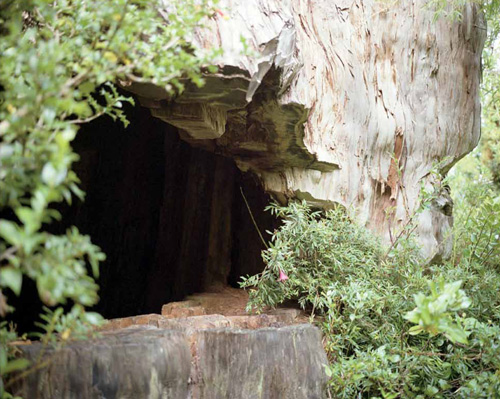
Alerce (Patagonian cypress)

2,200 years | Patagonia, Chile

Above all, however, the project raises questions that aren’t so much scientific or artistic as profoundly human: What is the meaning of human life if it comes and goes before a patch of moss has reached the end of infancy? How do our petty daily stresses measure up against a struggle for survival stretching back millennia? Who would we be if we relinquished our arrogant conviction that we are Earth’s biological crown jewel?

Sussman offers no answers but invites us, instead, to contemplate, consider, and explore on our own — not as creatures hopelessly different from and dwarfed by the organisms she profiles, but as fellow beings in an intricately entwined mesh of life. What emerges is a beautiful breakage of our illusion of separateness and a deep appreciation for the binds that pull us and these remarkable organisms in an eternal dance — our only real gateway to immortality.
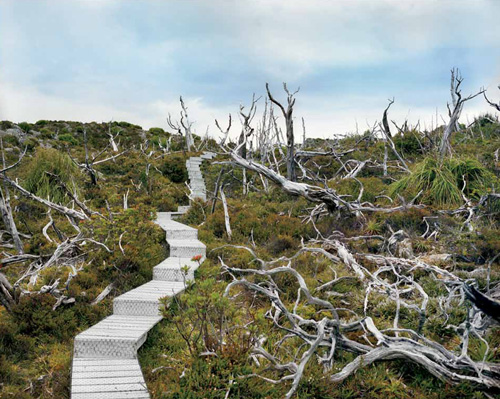
Dead Huon pine

10,500 years | Mount Read, Tasmania; Royal Tasmanian Botanical Garden, Hobart

Indeed, it is this capacity for questioning that makes Sussman’s perspective particularly powerful. She herself, adding to history’s most beautiful definitions of art, considers it the supreme responsibility of the artist:

The role as an artist [is] to answer some questions, but to ask many more.
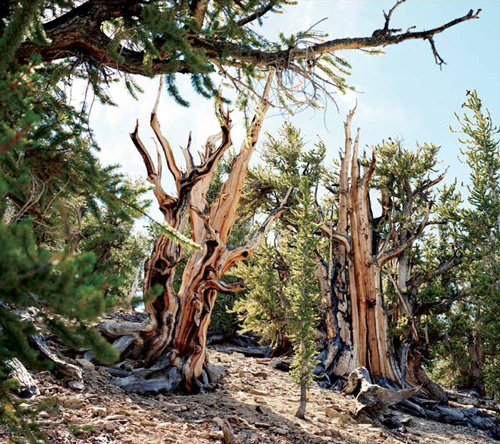
Bristlecone pine

5,068 years | White Mountains, California, US
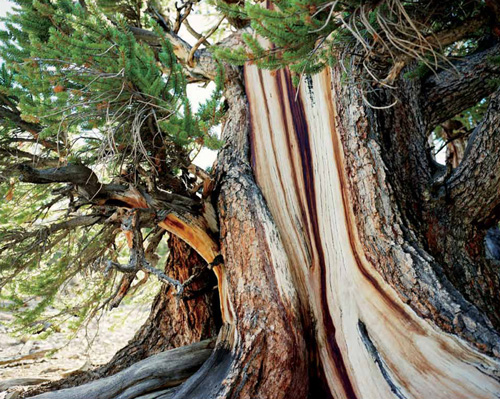
Bristlecone pine detail

5,068 years | White Mountains, California, US

Sussman writes in the preface:

What does it mean when the organic goes head-to-head with the geologic? We start talking about deep time and the quotidian in the same breath, along with all the strata in between. All of these organisms are living palimpsests: they contain myriad layers of their own histories within themselves, along with records of natural and human events; new chapters written over the old, year after year, millennium after millennium. When we look at them in the frame of deep time, a bigger picture emerges, and we start to see how all of the individuals have stories, and that all of those stories are in turn interconnected — and in turn, inextricably connected to us all.

[…]

The oldest living things in the world are a record and celebration of the past, a call to action in the present, and a barometer of our future.
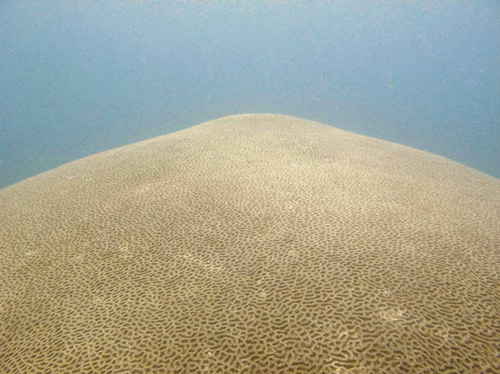
Brain coral

2,000 years | Speyside, Tobago
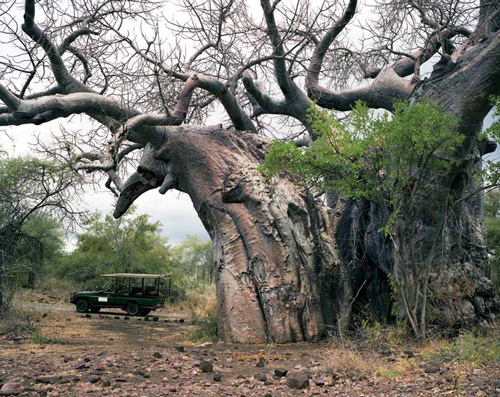
Baobab

2,000 years | Limpopo, South Africa
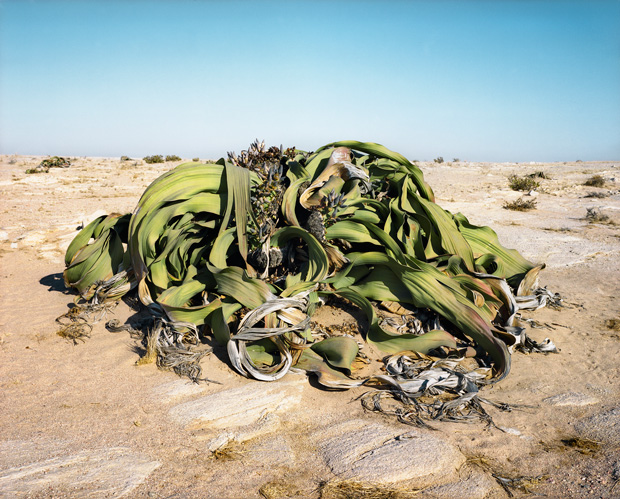
Welwitschia Mirabilis

2,000 years| Namib-Naukluft Desert, Namibia

To be sure, the project has resonance far deeper and wider than a purely artistic pursuit. In a culture where 40% of people don’t believe the world is more than 6,000 years old — a kind of faith-washing known as Young Earth Creationism — Sussman’s work brings to light tangible, irrefutable, gloriously alive evidence of the scientific reality. After all, when beholding a majestic 13,000-year-old Eucalyptus tree, how can human arrogance dare deny its reality under the blindness of dogma?

Indeed, the exploration of deep time is one of the most powerful elements in Sussman’s work — certainly a scientific concept, in terms of being concerned with biology, geology, and astrophysics, but also very much a philosophical one raising enormously important, if unsettling, existential questions: Why are we here? How can we matter if we’re gone in the blink of a cosmic eye, the metaphorical minute of a Bristlecone Pine’s day? And, most importantly, what gives us the arrogance to consider ourselves atop the hierarchy of living organisms? We extol our intelligence as the uniquely human faculty that sets us apart from other animals, but even our definitions of intelligence are narrowly anthropocentric and based on things we humans happen to be good at. Surely there’s a special kind of biological and existential intelligence in an organism capable of such remarkable resilience — an organism that can outlive us by millennia and witness all of our fleeting struggles while it remains unflinchingly rooted in its particular corner of the ecosystem.
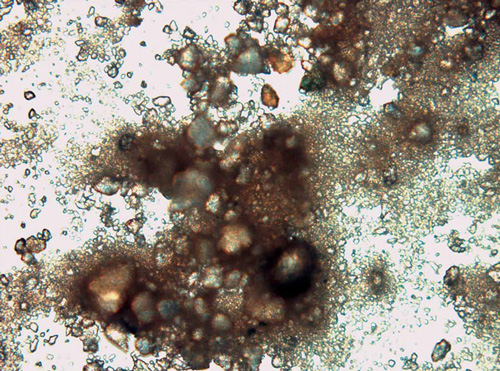
Soil sample containing Siberian actinobacteria

400,000-600,000 years | Kolyma Lowlands, Siberia
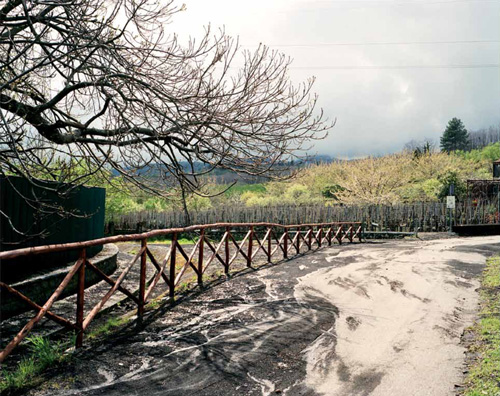
Chestnut of 100 Horses with fresh lava

3,000 years | Sant'Alfio, Sicily

Because of its unique cross-disciplinary slant and dimensional scope, the book comes with two introductory essays — an art one by art-world legend and curator extraordinaire Hans Ulrich Obrist and a science one by Carl Zimmer, one of the finest and most respected science writers working today.

Obrist elegantly applies the late and great philosopher Eric Hobsbawm’s notion of “the protest against forgetting” to Sussman’s work and celebrates it as a living archive of remembrance. He writes:

The oldest living things may well not be a clear category science-wise, but it is a category that is defined by curiosity, humane character, a fascination with deep time, and the courage of an explorer.

In the science essay, Zimmer explores how lives become long and why the remarkable timescale of these organisms’ lifespans matters — not just scientifically, but also culturally:

The durable mystery of longevity makes the species in this book all the more precious, and all the more worthy of being preserved. Looking at an organism that has endured for thousands of years is an awesome experience, because it makes us feel like mere gastrotrichs. But it is an even more awesome experience to recognize the bond we share with a 13,000-year-old Palmer’s oak tree, and to wonder how we evolved such different lifetimes on this Earth.
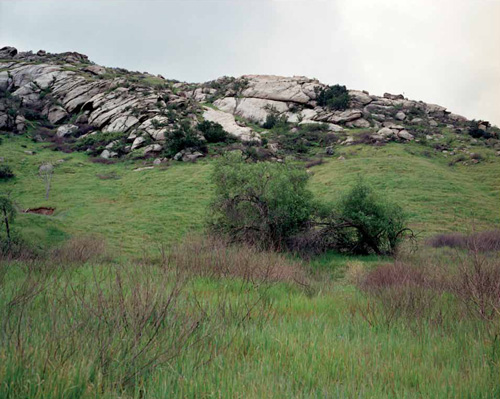
Lower slope leading to Palmer's Oak

13,000 years | Riverside, California, USA
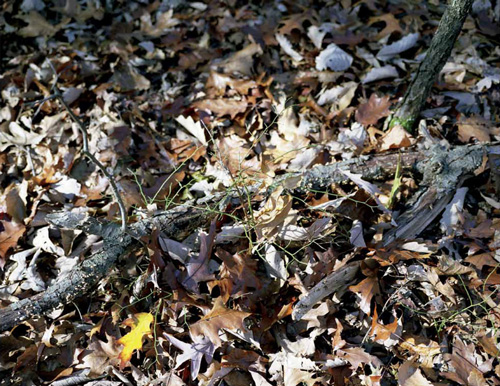
Box Huckleberry (Bibleberry) branches stripped by deer

8,000 to 13,000 years | Perry County, Pennsylvania, USA

Chestnut of 100 Horses with fresh lava

3,000 years | Sant'Alfio, Sicily
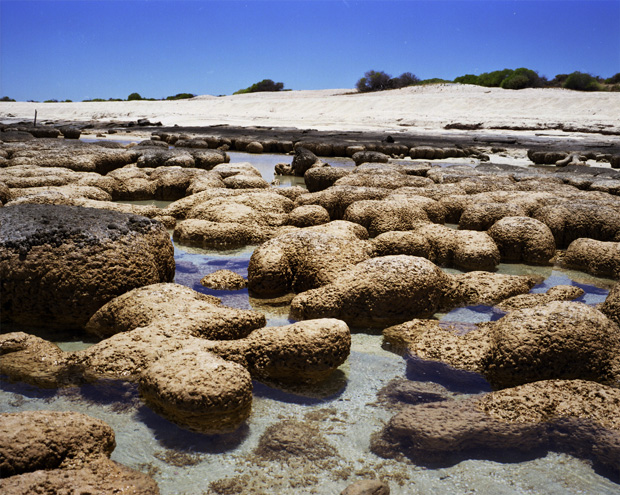
Stromatolites

2,000-3,000 years | Carbla Station, Western Australia

Even more fascinating than how much we know, however, is how much we don’t — many of these organisms stand as a testament to the “thoroughly conscious ignorance” that drives science. In a book chapter exploring the 2,000-year-old Stromatolites of Western Australia — a species composed of bound cyanobacteria that formed about 3 billion years ago and undertook the Herculean task of oxygenating our then-oxygen-poor planet — Sussman observes:

It’s remarkable that we know so little about the origins of life on our planet. We know more about surfaces of other planets than we do about the beginnings of life on our own.
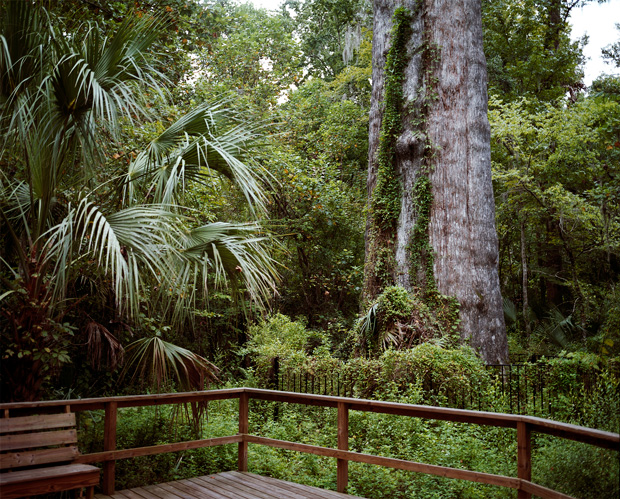
The Senator (bald cypress)

3,500 years | Seminole County, Florida

One of the most moving stories in the book is that of the Senator tree in Florida, one of the oldest Cypress trees in the world, which Sussman originally wrote for Brain Pickings a few years ago. She had photographed the Senator in 2007, but upon developing the film — Sussman shoots with a medium-format film camera for her high-quality fine art prints — she found herself unhappy with the result and resolved to return to the tree down the line. Since it was one of the most easily accessible organisms in her stable — what’s a sunny flight to Florida next to a harrowing weeklong voyage to Antarctica’s icy cliffs? — and since the tree had been around for 3,500 years, she figured it could wait.

Then, in January of 2012, news broke that a mysterious fire had burned the Senator to the ground. Unsettled and full of unease, Sussman immediately got on a plane to shoot the charred remains of the mighty tree, the only sign of its former brush with Forever. She poignantly observes:

Extreme longevity can lull us into a false sense of permanence. We fall into a quotidian reality devoid of long-term thinking, certain that things which have been here “forever” will remain, unchanging. But being old is not the same as being immortal. Even second chances have expiration dates. The comparative ease of access and the seeming lack of urgency bred a complacency in my return to the Senator.
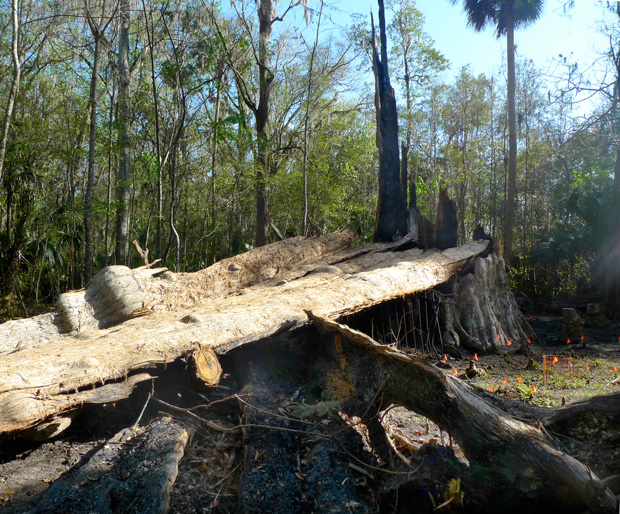
The charred remains of the Senator Tree, February 8, 2012

The most devastating part? It was later discovered that the cause of the fire was a group of twenty-somethings who had broken into the park after dark, high on meth, climbed inside the tree, and lit matches or a lighter to “see the drugs better,” setting the Senator ablaze and erasing thousands of years of natural wisdom under the influence of synthetic senility.

But this story, too, is one of optimism. Sussman writes:

For the Senator, there is a chance at a second life: clippings from the tree were taken years ago and successfully propagated in a nursery. In February 2013, after a careful root-stabilization process, a forty-foot grafted tree was successfully transplanted back into the Senator’s original spot and has already sprouted fresh growth and gained in height. Four artisans and several institutions were selected to make works honoring the Senator’s legacy. The stump has been incorporated into the playground area.

In this beautiful short trailer by filmmaker Jonathan Minnard offers glimpse of Sussman’s extraordinary world:

Interwoven with Sussman’s photographs and essays, brimming with equal parts passion and precision, are the stories of her adventures — and misadventures — as she trekked the world in search of her ancient subjects. From a broken arm in remote Sri Lanka to a heart-wrenching breakup to a well-timed sip of whisky at polar explorer Shackleton’s grave, her personal stories imbue the universality of the deeper issues she explores with an inviting dose of humanity — a gentle reminder that life, for us as much as for those ancient organisms, is often about withstanding the uncontrollable, unpredictable, and unwelcome curveballs the universe throws our way, and that resilience comes from the dignity and humility of that withstanding.
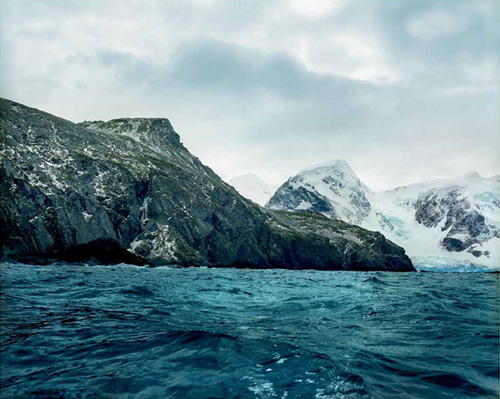
Antarctic moss

5,500 years | Elephant Island, South Georgia

The Oldest Living Things in the World is absolutely remarkable in its entirety — a true masterpiece of compassionate curiosity and cross-disciplinary brilliance. A limited collectors’ edition is also available, housed in a gorgeous handcrafted, cloth-encased box, including a signed print of the Spruce image on the cover.

For more, see Sussman’s 2010 TED talk:

All photographs © Rachel Sussman published exclusively with the artist’s permission

Donating = Loving

Bringing you (ad-free) Brain Pickings takes hundreds of hours each month. If you find any joy and stimulation here, please consider becoming a Supporting Member with a recurring monthly donation of your choosing, between a cup of tea and a good dinner.


♥ $7 / month♥ $3 / month♥ $10 / month♥ $25 / month


You can also become a one-time patron with a single donation in any amount.


Brain Pickings has a free weekly newsletter. It comes out on Sundays and offers the week’s best articles. Here’s what to expect. Like? Sign up.

Brain Pickings takes 450+ hours a month to curate and edit across the different platforms, and remains banner-free. If it brings you any joy and inspiration, please consider a modest donation – it lets me know I'm doing something right. Holstee

14 Apr 14:17

mariuswatz

14 Apr 14:16

Great Dane is Stuck in the Tub


Great Dane is Stuck in the Tub

14 Apr 02:02

r/mensrights Demographics Survey

13 Apr 17:03

Transcribing Piano Rolls with Python

by Eric Evenchick
Bunker.jordan

I've been thinking about doing this! Makes it that much easier...

Piano Roll


Perforated rolls of paper, called piano rolls, are used to input songs into player pianos. The image above was taken from a YouTube video showing a player piano playing a Gershwin tune called Limehouse Nights. There’s no published sheet music for the song, so [Zulko] decided to use Python to transcribe it.

First off the video was downloaded from YouTube. This video was processed with MoviePy library to create a single image plotting the notes. Using a Fourier Transform, the horizontal spacing between notes was found. This allowed the image to be reduced so that one pixel corresponded with one key.

With that done, each column could be assigned to a specific note on the piano. That takes care of the pitches, but the note duration requires more processing. The Fourier Transform is applied again to determine the length of a quarter note. With this known, the notes can be quantized, and a note duration can be applied to each.

Once the duration and notes are known, it’s time to export sheet music. LilyPond, an open source language for music notation, was used. This converts ASCII text into a sheet music PDF. The final result is a playable score of the piece, which you can watch after the break.


Filed under: musical hacks, software hacks
13 Apr 17:02

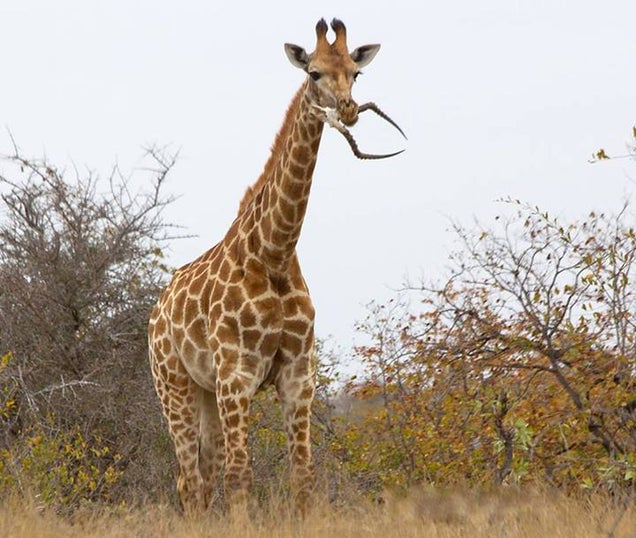
And Now, A Giraffe Eating An Impala Skull

by Robert T. Gonzalez

And Now, A Giraffe Eating An Impala Skull

From time to time, wild giraffes have been known to nom on the bones of other animals. The behavior is called osteophagia, and it's... well... actually kind of common among ruminants, as Jason Goldman explains below.

Read more...


13 Apr 17:02

Celebrate the Birth of Human Spaceflight, with Yuri's Night!

by Robert T. Gonzalez

Celebrate the Birth of Human Spaceflight, with Yuri's Night!

Fifty three years ago today, cosmonaut Yuri Gagarin became the first human in history to venture into outer space. Below, Mika McKinnon talks about Gagarin's incredible journey to Earth orbit (and how to best commemorate that journey: by finding the Yuri's Night party nearest you!)

Read more...


13 Apr 16:02

Daytime Napping Linked to Increased Risk of Death

by Robert T. Gonzalez

Daytime Napping Linked to Increased Risk of Death

Today in unsettling news: Results published in a recent issue of the American Journal of Epidemiology suggest a correlation between daytime napping and increased mortality risk.

Read more...


13 Apr 06:26

Honda's 750cc NM4 Vultus: A new species of motorcycle

by Mike Hanlon

The Honda NM4-1 on display at the Tokyo Motorcycle Show(Photo: Stephen Clemenger)

Honda, the world’s largest motorcycle manufacturer, has announced a new motorcycle – the 750 cc NM4 Vultus – and it's a bold departure from tradition with anime/manga styling, a "fighter pilot" feet-forward riding position, an ultra-low seat and advanced electronic rider assistance to make it easier to ride. This is a motorcycle aimed at the next generation of motorcycle enthusiast raised on video games and a different visual vocabulary. If you are a traditionalist, you'll probably hate it... Continue Reading Honda's 750cc NM4 Vultus: A new species of motorcycle

Section: Motorcycles

Tags: BMW, BMW M3, Brough Superior, Bugatti Veyron, Concept Bikes, CVT, Elysium, Feet-forward, Ferrari, GT-R, Honda, Lamborghini, Lotus, McLaren, Nissan, Quasar, Suzuki, Tokyo Motor Show, Triumph, V-Twin, Vultus, Yamaha

Related Articles: