
Scott Akerman
Shared posts
31 Jan 15:18
wh-psh
Scott AkermanI miss you John Campbell
Madison Metricula, Scott Akerman likes this


20 Apr 17:00


Warren Buffet vs goldbugs
by Cory Doctorow
Scott AkermanMaybe this is why the Wilsons hate Buffet.

Warren Buffet thinks buying gold is dumb: specifically, he thinks that buying gold is speculation, not investing, because gold doesn't do anything productive. Here, he waxes eloquent on the subject:
“If you put your money into gold or other non-income- producing assets that are dependent on what someone else values that in the future, you’re in speculation,” he said. “You’re not into investing....”
To illustrate the point, he asked readers to picture the world’s entire gold stock melded together into a cube 68 feet (21 meters) on each side valued at $9.6 trillion at then- prevailing prices. For the same amount, an investor could have purchased all the farmland in the U.S., 16 replicas of Exxon Mobil Corp., and still have about $1 trillion of “walking- around money.”
A century later, the farmland will be producing valuable crops no matter the currency, and dividends from the companies would probably added up to trillions of dollars, Buffett wrote.
The 170,000 metric tons of gold “will be unchanged in size and still incapable of producing anything,” he wrote. “You can fondle the cube, but it will not respond.”
Mr Buffet has a lot more faith in the longterm health of soil in an agribusiness context than I do, but the point is still an interesting one.
Buffett Mocking Gold Sidesteps Slump As He Bets on Stocks (via JWZ) 
    
|
Scott Akerman likes this

19 Apr 15:11


Austerity economics only works if you make an Excel formula error
by Cory Doctorow
A new paper called Does High Public Debt Consistently Stifle Economic Growth? A Critique of Reinhart and Rogoff by Thomas Herndon, Michael Ash, and Robert Pollin from UMass Amherst tries and fails to replicate the classic work on austerity, Carmen Reinhart and Kenneth Rogoff's 2010 Growth in a Time of Debt.
Reinhart-Rogoff is the main research cited in favor of cutting public services and spending in bad economic times. It's a big part of why the local library is shutting down, why they're kicking people out of public housing, shutting down arts programs, slashing education and public transit, and laying off public employees. It purports to show that countries with high debt-to-GDP ratios of 90 percent or more are a "threat to sustainable economic growth."
In the new Amherst paper, the authors reexamine Reinhart-Rogoff's original data and conclude that the numbers don't add up. They show that Reinhart-Rogoff cherry-picked which years of high-debt GDP they measure, that they put their thumbs on the scales with "unconventional weighting" and made a "coding error" that "entirely excludes five countries, Australia, Austria, Belgium, Canada, and Denmark." This last error -- literally the wrong formula in a spreadsheet cell -- badly skews the outcome.
Here's the tl;dr: "the average real GDP growth rate for countries carrying a public debt-to-GDP ratio of over 90 percent is actually 2.2 percent, not -0.1 percent as [Reinhart-Rogoff claim]."
Selective Exclusions. Reinhart-Rogoff use 1946-2009 as their period, with the main difference among countries being their starting year. In their data set, there are 110 years of data available for countries that have a debt/GDP over 90 percent, but they only use 96 of those years. The paper didn't disclose which years they excluded or why.
Herndon-Ash-Pollin find that they exclude Australia (1946-1950), New Zealand (1946-1949), and Canada (1946-1950). This has consequences, as these countries have high-debt and solid growth. Canada had debt-to-GDP over 90 percent during this period and 3 percent growth. New Zealand had a debt/GDP over 90 percent from 1946-1951. If you use the average growth rate across all those years it is 2.58 percent. If you only use the last year, as Reinhart-Rogoff does, it has a growth rate of -7.6 percent. That's a big difference, especially considering how they weigh the countries.
Unconventional Weighting. Reinhart-Rogoff divides country years into debt-to-GDP buckets. They then take the average real growth for each country within the buckets. So the growth rate of the 19 years that the U.K. is above 90 percent debt-to-GDP are averaged into one number. These country numbers are then averaged, equally by country, to calculate the average real GDP growth weight.
In case that didn't make sense, let's look at an example. The U.K. has 19 years (1946-1964) above 90 percent debt-to-GDP with an average 2.4 percent growth rate. New Zealand has one year in their sample above 90 percent debt-to-GDP with a growth rate of -7.6. These two numbers, 2.4 and -7.6 percent, are given equal weight in the final calculation, as they average the countries equally. Even though there are 19 times as many data points for the U.K.
Now maybe you don't want to give equal weighting to years (technical aside: Herndon-Ash-Pollin bring up serial correlation as a possibility). Perhaps you want to take episodes. But this weighting significantly reduces the average; if you weight by the number of years you find a higher growth rate above 90 percent. Reinhart-Rogoff don't discuss this methodology, either the fact that they are weighing this way or the justification for it, in their paper.
Researchers Finally Replicated Reinhart-Rogoff, and There Are Serious Problems. [Mike Konczal/Next New Deal]
Does High Public Debt Consistently Stifle Economic Growth? A Critique of Reinhart and Rogoff
(via Techdirt) 
|
|
Drkashik, Scott Akerman likes this
18 Apr 22:58


What happens when you wring out a washcloth in space?
by Maggie Koerth-Baker
For hand towels, astronauts get those little vacuum-packed pucks that you kind of have to unravel into a towel. But what happens when you actually put the towels to use?
Two Nova Scotia high school students, Kendra Lemke and Meredith Faulkner, submitted this experiment to Canadian Space Agency and got to see astronaut Chris Hadfield actually test it out on the ISS. The results are seriously extraordinary and you need to see them.
Thanks, Dean!
|
|
Leettaschmidt, Drkashik and 2 others like this
18 Apr 02:12
Effort to criminalise oral sex fails
by Rob Beschizza
A homophobic politician's attempt to recriminalize anal and oral sex has ended in failure in Virginia. Virginia Attorney General Ken Cuccinelli wanted to revive the state's “Crimes against Nature” statute; the Fourth Court unanimously blew him off.


|
|
Scott Akerman likes this
10 Apr 23:55
Just look at this soldier feeding bananas to an adorable little goat
by Xeni Jardin


Scott Akerman likes this
10 Apr 23:53




Pressure Cooker
Pressure Cooker
Am I right to be afraid of pressure cookers? What's the worst thing that can happen if you misuse a pressure cooker in an ordinary kitchen?
—Delphine Lourtau
The worst thing?
Pressure cookers are dangerous.
They can explode, in a sense, but not as violently as you might fear (or hope). The pressure inside a consumer cooker doesn’t go above about two atmospheres—about the pressure inside a can of soda. Those levels can be dangerous, but they’re generally not high enough to cause the metal to violently rupture.
So what makes a pressure cooker dangerous?
Imagine a world where Pepsi is scalding hot. Now imagine that someone shakes up a can of Pepsi and sets it in front of you.
That’s the real threat from a pressure cooker: If the seal fails (or the lid is opened too early), it can spray scalding stew in all directions.
But it’s not really an explosion.
The blast couldn’t even fling the lid very far. If you mounted a rifle-style barrel on a pressure cooker, even in ideal circumstances it wouldn’t be able to fire the lid much faster than you could throw it. Any potato cannon (especially this one) could do better.
Of course, the question wasn’t about whether a pressure cooker is likely to explode. It was about what the worst thing that could happen was.
If you disable the safety valve, there are plenty of ways to produce much more dangerous pressures. You could completely fill it with water and heat it, fill it with Drano and aluminum foil, or just pump in air from a compressor.
The result would depend on your pressure cooker. Chances are it would start to leak. If it didn’t, and it somehow stayed together up a few hundred atmospheres (pressures typical of scuba tank), when it finally ruptured it could easily kill you.
Even so, that’s far from the worst thing you could do with a pressure cooker.
Frankly, there are so many options it would be impossible to survey them all. But for my money, one of the most horrifying things you could do is this:
(Note: Never try this, for reasons which will become obvious in a moment.)
Fill the cooker with oxygen up to 5 PSI, then pump in fluorine until it starts escaping through the safety valve. Put the vessel over an open flame until it reaches 700°C (That’s °C, not °F. Yes, this will probably set off the smoke alarm.) Now, pump the hot gas over a liquid-oxygen-cooled stainless steel surface.
The procedure here is a little tricky, but if you do things right, the gas will condense into dioxygen difluoride (O2F2).
And that stuff is awful.
Ray Bradbury taught us that paper burns when exposed to oxygen at temperatures above 451°F. Dioxygen difluoride is so volatile that it makes almost any organic substance ignite and explode at any temperature hotter than 300°F below zero. It can literally make ice catch fire.
In an article about O2F2, Chemistry blogger Derek Lowe (of the excellent In The Pipeline) used phrases like “violently hideous”, “deeply alarming”, and “chemicals that I never hope to encounter”. Another article refers to fluorine as “the gas of Lucifer”, and lists chemists who were poisoned or blown up while attempting to work with it.
If your house is heated by natural gas, and it happens to contain hydrogen sulfide, you could pipe some of it into your container of O2F2. In addition to a massive explosion, this will also produce a cloud of hydrogen fluoride gas. Hydrogen fluoride can dissolve human tissue on contact, starting with your lungs and corneas.
As Lowe points out, the chemistry of this kind of reaction (O2F2 and sulfides) is largely unexplored.
Which gives us an answer to our question. What’s the worst thing that can happen in a pressure cooker?
Science.
Deltag, Golemkerensky and 4 others like this
09 Apr 11:34

Buttercup Festival by David Troupes


8 April 2013
Joel Rust's musical setting of the poem Mt Norwottuck and a Prescription for Citalopram from my first
book is being performed in London on April 19th. I've heard it. It's fascinating and weird.
Scott Akerman likes this

 facebook
  reddit
06 Apr 12:57


How far away from Earth is Mars?
by Mark Frauenfelder
 D.S. Deboer says "Check this out! It's neat and really helped me grasp how far away Mars is. (Hint: It's really, really, really far away.)"
(Ben shared this in the Google + Boing Boing Community. Join us there for fun link sharing and conversation!)
|
|
Scott Akerman likes this


29 Mar 14:46

83-year-old fashionista is photographer's muse for Sartorialist-styled blog
An 83-year-old Turkish tailor has become photographer Zoe Spawton's muse for her blog 'What Ali Wore.' The Tumblr blog, styled after the popular fashion photograhy blog, The Sartorialist, features just Ali and his impeccable taste in clothes. In an interview with German website Spiegel.de, the photographer explains how Ali caught her eye as he passed by the cafe where she works wearing a new ensemble every day. Her daily snapshots of his ever-alternating outfits evolved into a full-blown photo project. Click through to see the photos and a link to Zoe's blog. (via Spiegel.de)
Scott Akerman likes this

26 Mar 01:18
The case of the poison potato
by Maggie Koerth-Baker
Frying a potato is a tricky proposition. Doing it right isn’t just about your skill as a cook, but also your partner, the potato itself. Waxy potatoes — high in sugar, low in starch — brown a little too easily as the sugar in them is altered by heat. By the time the interior is cooked through, the exterior is burnt to a crisp.
Good potato chips come from starchy potatoes. But to get just the right chip color — that perfect, buttery golden brown — you have to pay attention to a lot of different factors, from the types of sugar found in the potato, to the internal chemistry that happens as the potato sits in a sack post-harvest.
In the late 1960s, researchers from the US Department of Agriculture, Penn State University, and the Wise Potato Chip Company teamed up breed a very special potato, which they named the Lenape. More than 30 years later, one of their colleagues still thought fondly of that spud. “Lenape was [wonderful],” Penn State scientist Herb Cole told journalist Nancy Marie Brown in 2003. “It chipped golden.”
Yes, the Lenape made a damn fine potato chip.
Unfortunately, it was also kind of toxic.
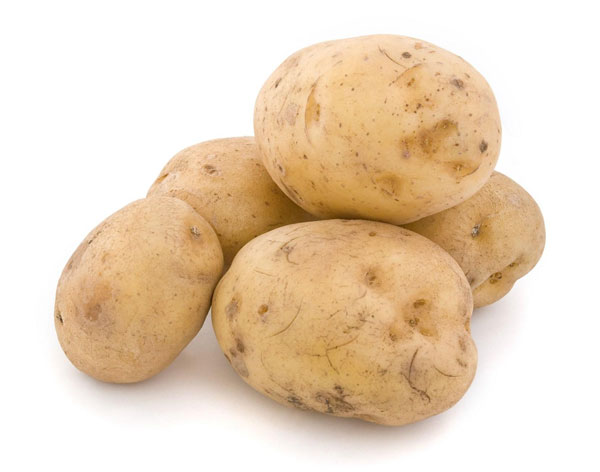
Despite an almost boring reputation as the squishy white bread of the plant kingdom, potatoes actually come from somewhat nasty roots. Their closest relatives are innocuous enough. Potatoes have strong genetic ties to tomatoes and eggplants. But their more distant cousins include tobacco, chili peppers, deadly nightshade, and the hallucinatory drug-producing flower, datura.
This is a phylogenetic family that is ready to throw down, chemically speaking. Called Solanaceae, its members are known for producing a wide variety of nitrogen-rich chemical compounds, called alkaloids. Nicotine is an alkaloid. So are caffeine, cocaine, and a host of other plant-derived chemicals that humans have taken a liking to over the millennia. Depending on the dose, and on the specific compound, alkaloids can have effects ranging from medicinal, to far-out crazy hallucinatory, to deadly.
Potatoes produce an alkaloid called solanine. All potatoes have it, and it’s a feature, not a bug — at least as far as the potato is concerned. Like a lot of other plant-produced alkaloids, solanine is a natural defense mechanism. It protects the potato from pests. Think of potato blight, the fungus-like disease partly responsible for the Irish Famine of the 19th century. The more solanine a potato contains, the less susceptible it is to blight. When a potato is put into a compromising situation — when it’s young and vulnerable, for instance, or when tubers get uncovered and, thus, more exposed to things that might eat it — solanine production can rev up.
Those triggers aren’t always the most convenient for the potato’s human predators. A sudden frost, for instance, can stunt the growth of tubers and promote the growth of vines and leaves, which mimics a younger stage of development and is accompanied by higher solanine concentrations. And if you leave potatoes exposed to the sun for too long after harvest, they start reacting as though they just got accidentally uncovered. They turn green and they produce more solanine. This is actually why you’re not supposed to eat green potatoes. Those spuds, and especially their skins, are rich in solanine. How much solanine varies; it might just be enough to make your stomach a little upset. Or, it could lead to serious illness accompanied by vomiting, diarrhea, loss of consciousness, and convulsive twitching. In very rare cases, people who ate green potatoes have even died.

Poor post-harvest handling was not the problem with the Lenape, however. In 1974, after Lenape potatoes had been recalled from agricultural production and relegated to the status of “breeding material”, the USDA published results of an experiment where they grew Lenape, and five other potato varieties, at 39 locations around the country. They carefully monitored growing and harvesting conditions and then compared the solanine content of all the potatoes.
The conclusion: Lenape was genetically predisposed towards producing an extraordinarily high amount of solanine, no matter what happened to it during growth and harvest. The average Russet potato, for instance, contained about 8 mg of solanine for every 100 g of potato. Lenape, on the other hand, was closer to 30 mg of toxin for every 100 g of food. That made it nicely resistant to a lot of agricultural pests. But it also explained why some of the people who were the first to eat Lenapes — most of them breeders and other professionals in the agriculture industry — ended up with severe nausea, like a fast-acting stomach bug.
What makes the Lenape really interesting, though, is its legacy as a cautionary tale. I first learned about it from Fred Gould, an entomologist at North Carolina State University, whom I met while I was working on a New York Times Magazine story about genetically modified mosquitoes.
He used Lenapes as an example of risk and uncertainty. Often, people frame genetically modified plants as this huge open question — a giant uncertainty, of the sort we’ve never dealt with before. There’s this idea that GM plants are uniquely at risk of producing unexpected side effects, and that we have no way of knowing what those effects would be until average consumers start getting sick, Gould told me. But neither of those things is really true. Conventional breeding, the simple act of crossing one existing plant with another, can produce all sorts of unexpected and dangerous results. One of the reasons Lenape potatoes are so infamous, I later found out, is that they played a big role in shaping how the USDA treats and tests new varieties of conventionally bred food plants today.
In fact, from Gould’s perspective, there’s actually a lot more risk and uncertainty with conventional breeding, than there is with genetic modification. That’s because, with GM, you’re mucking about with a single gene. There are a lot more genes in play with conventional breeding, and a lot more ways that surprising genetic interactions could come back to haunt you. “You try breeding potatoes for pest resistance, but you’re bringing in a whole chromosome from a wild potato,” he said. “We’ve found interactions between the wild genomes and the cultivated genomes that actually led to potentially poisonous chemicals in the potato.”
In 2004, a National Academies panel on the unintended health effects of genetic engineering reported that conventional potato breeders continue to try to increase the amount of solanine produced by the leaves and vines of their potato plants in hopes of making those plants more naturally pest-resistant. Because of that, the USDA actually has a recommended limit for solanine content of new potato varieties — but that limit isn’t strictly enforced.
Gould’s point isn’t that genetic modification is always better than conventional breeding. It’s not. Instead, they’re both tools — imperfect technologies that could produce unintended side effects. Which one you choose to use depends on what you’re trying to do. But, either way, you can’t say that one is scary and one is safe.
CREDITS
• Photo: REUTERS/Hazir Reka
• Mendel In The Kitchen: A Scientist's View Of Genetically Modified Food [Google Books]
• Towards fewer handicapped children [bmj.com]
• Lenape: A new potato variety high in solids and chipping quality [springer.com]
• Safety of Genetically Engineered Foods: Approaches to Assessing Unintended Health Effects [nap.edu]
• Effect of Environment on Glycoalkaloid Content of Six Potato Varieties [Google Books]
• The Potato in the Human Diet [Google Books]
• A Review of Important Facts about Potato Glycoalkaloids [PDF, ucdavis.edu]
hFACTORS DETERMINING POTATO CHIPPING QUALITY [PDF, umaine.edu]
POTATOES' NATURAL DEFENCES [McGill.ca]
Drkashik, Scott Akerman and one other like this
No more posts. Check out what's trending.