Shared posts
Why Are We Still Buying Snake Oil?

Worst-Case Thinking Breeds Fear and Irrationality
Here's a crazy story from the UK. Basically, someone sees a man and a little girl leaving a shopping center. Instead of thinking "it must be a father and daughter, which happens millions of times a day and is perfectly normal," he thinks "this is obviously a case of child abduction and I must alert the authorities immediately." And the police, instead of thinking "why in the world would this be a kidnapping and not a normal parental activity," thinks "oh my god, we must all panic immediately." And they do, scrambling helicopters, searching cars leaving the shopping center, and going door-to-door looking for clues. Seven hours later, the police eventually came to realize that she was safe asleep in bed.
Lenore Skenazy writes further:
Can we agree that something is wrong when we leap to the worst possible conclusion upon seeing something that is actually nice? In an email Furedi added that now, "Some fathers told me that they think and look around before they kiss their kids in public. Society is all too ready to interpret the most innocent of gestures as a prelude to abusing a child."
So our job is to try to push the re-set button.
If you see an adult with a child in plain daylight, it is not irresponsible to assume they are caregiver and child. Remember the stat from David Finkelhor, head of the Crimes Against Children Research Center at the University of New Hampshire. He has heard of NO CASE of a child kidnapped from its parents in public and sold into sex trafficking.
We are wired to see "Taken" when we're actually witnessing something far less exciting called Everyday Life. Let's tune in to reality.
This is the problem with the "see something, say something" mentality. As I wrote back in 2007:
If you ask amateurs to act as front-line security personnel, you shouldn't be surprised when you get amateur security.
And the police need to understand the base-rate fallacy better.
Remus Lupin Was an Amazing Figure of Non-Toxic Masculinity, Don’t @ Me

There has been a lot of Fantastic Beasts discussion about Newt Scamander and whether he, as a hero, is a good example of non-toxic masculinity. As someone who loves a good hero who shirks the idea of toxic masculinity (Steve Rogers, Thor, Steve Trevor, and Finn are all my favorite examples), I will say that my favorite part of the eternally frustrating Newt is that he tends towards the kind, the compassionate, and the non-violent.
However, I think the first introduction I ever had to a character who displayed non-toxic masculinity remains the superior compassionate character in the Harry Potter franchise. I am talking, of course, about Remus Lupin.
Even when I first read Prisoner of Azkaban when I was a tiny, not-jaded Potter fan, Lupin was my absolute favorite. I own two copies of the third Harry Potter book because my original has fallen apart to such a degree that it now deserves to rest in a glass case somewhere. There is much to love about the wonderful third book, from Hogsmeade to hippogriffs, but Lupin is one of the best additions to the series.
We’re first introduced to Lupin on the Hogwarts Express, where Harry and his friends wonder about how “shabby” he looks as he dozes in the corner, and why a professor is on the train with them. Lupin wakes up when dementors converge on the car, drawn to Harry’s trauma, and he immediately dispatches them. He makes sure Harry gets some chocolate in him and makes sure his soon-to-be students are safe.
This might seem like a low bar, but between Dumbledore’s “I’m like a cool grandpa who wants you to die” schtick and Snape abusing students left and right, this kindness sticks out.
It’s a kindness that he doesn’t only extend to the son of his former best friend. He’s genuinely kind to all of his students, especially to poor, frightened Neville during the boggart sequence. He even behaves courteously towards Snape, who treats him like utter garbage the entire time.
Let me just say this about Lupin’s boyhood misadventures and why Snape might still dislike him: He didn’t know that Sirius sent Snape to the Whomping Willow, and also anything Snape endured did not mean that Snape should out him to the entire school and get him fired from what was probably his only stable job in his adult life.
Lupin’s wolfy secret could have made him a complete and utter asshole. Look at Snape, whose big hangup is that he got rejected for being a racist supporter of a fascist organization and held that against everyone until he died. Lupin, who was cursed as a child and as a result was ostracized his entire adult life, shows nothing but kindness towards others, despite the Wizarding World trying to break him at every turn.
He’s an empathetic individual who is, without a doubt, the best Defense Against the Dark Arts teacher in the entire series, and who bravely stands up for what’s right when Voldemort rises again, even at the cost of his own life.
When Harry turns to him for private help fighting off the dementors, Lupin does so and never once belittles or becomes angry when Harry can’t produce a patronus or gets frustrated. He’s supportive and encouraging, and it’s his teaching that allows Harry to actually access his most cherished memory and conjure a full patronus. Again, being a decent teacher is a low bar, but this is Hogwarts we’re talking about.
Lupin consistently reacts with kindness and empathy, which is why his characterization in Deathly Hallows is, as the kids say, bullshit. Flaws are great; abandoning your pregnant wife is another thing, not to mention Rowling used Lupin’s moment of weakness to half-heartedly justify offing him by saying that Arthur Weasley had to live instead, since he was one of the few good fathers in the Wizarding World.
Arthur’s great, but Lupin is still a better father figure than literally every other character. Am I still bitter? Probably.
J.K. Rowling, in her infinite capacity for heteronormativity, intended Lupin’s struggle with lycanthropy to be a metaphor for the AIDS crisis, but that reading falls very flat after she has aggressively denied that he might be queer at any turn. Interestingly enough, both Prisoner of Azkaban director Alfonso Cuaron and actor David Thewlis, who now plays the anti-Lupin in Big Mouth, read the character as gay.
To try to apply the idea of non-toxic masculinity to a character written by an author whose flaws become more apparent with each reread will never quite work, but in his first outing, Lupin is every inch the non-toxic male hero. His compassion and empathy drives him to care for his students, and I only wish he’d have had the chance to actually grow, rather than play pair the spares and die for shock value.
If Newt is now leading the way for a new kind of wizarding hero, then Lupin paved that way.
(image: Warner Bros)
Want more stories like this? Become a subscriber and support the site!
—The Mary Sue has a strict comment policy that forbids, but is not limited to, personal insults toward anyone, hate speech, and trolling.—

Saudi Arabia Proves That Oil Is Power
Civility vs. Decency
Excerpt
A spokesperson for a divisive president is turned away from a restaurant. That president delights in dog-whistle insults that fall just short of outright ethnic slurs—usually. A white woman calls the police on a black child selling water on a city street on a beastly hot day. A patron who hasn’t been turned away from a restaurant leaves a note for the server, who bears an Arabic name, saying, “We don’t tip terrorist [sic].”
Updated Date
Thursday, October 4, 2018 - 16:30
A spokesperson for a divisive president is turned away from a restaurant. That president delights in dog-whistle insults that fall just short of outright ethnic slurs—usually. A white woman calls the police on a black child selling water on a city street on a beastly hot day. A patron who hasn’t been turned away from a restaurant leaves a note for the server, who bears an Arabic name, saying, “We don’t tip terrorist [sic].”
We live in bitter, angry times, with a hall-of-funhouse-mirrors quality to them: Call a racist a racist, and that person will be hurt because you have used an injurious term. Call someone you disagree with a derogatory term, on the other hand, and you might earn a few likes on Facebook. Lose a job here, gain a pardon there: In this swirl of flying invective and free-floating rage, we’re barely talking to one another except to shout.
All this speaks to a crisis of civility, which is to say, a species of etiquette: As a civil person, I may despise the beliefs you hold, but I won’t shout, “You lie!” across a crowded auditorium. I may not like the way you look, but I’ll reserve my comments for interior monologue. Believe what you want to, the thinking goes, but be polite about how you express it in public; advocate separating children from parents at the border or argue for the virtues of the Confederacy with all your might, but mind your manners as you do so and you will have satisfied the all-too-frequently heard plea for civil behavior, no matter how ugly the message.
One can have heart and mind full of venom and still be civil; decency need not enter the picture. Like civility, the latter term speaks to propriety of conduct. Unlike civility, it carries an element of essential soulcraft to it: It goes deeper, into character more than manners. A civil person may be a scoundrel, a decent person never so; a civil person may be a racist, a decent person not; and so forth. Decency gauges the inherent rightness or wrongness of a thought or action, while civility is largely agnostic on such matters. When Joseph Nye Welch beseeched Joseph McCarthy, in a famous moment in American political history, “At long last, have you left no sense of decency?” he was asking the Wisconsin senator for more than showing a little decorum.
Does one precede the other? And which is to be preferred? If you’re looking for no one to be offended, then civility is a desideratum, to be sure. But, observes the philosopher Avishai Margalit, decency is really what we should be after: “A decent society,” he writes, “is one whose institutions do not humiliate people.” A decent society is fair and constructive, a civil one merely polite. Given the war on the social contract and the supremacy of the zero-sum game, of course, we should be grateful to take what we can get, but there’s a world to win—with the utmost courtesy, of course.
Author(s)
Gregory McNamee Topics: Conduct society racism character call to action courtesy Fine DistinctionsPages
224Issue
Fall 2018
N.K. Jemisin Wins Her 3rd Consecutive Hugo Award For Best Novel

Last night was the Hugo awards and the Beyoncé of science fiction, N.K. Jemisin, won her third Hugo in a row for the final book in her Broken Earth Trilogy The Stone Sky. It was not only a big night for Jemisin, but for female authors in general at the Hugo Awards. Most of the winners of the evening were women and some were women of color, including Ohkay Owingeh /Black author, Rebecca Roanhorse, Asian-American author Marjorie M. Liu, and Japanese illustrator Sana Takeda.
Best Novel
- The Stone Sky, by N.K. Jemisin (Orbit)
- The Collapsing Empire, by John Scalzi (Tor)
- New York 2140, by Kim Stanley Robinson (Orbit)
- Provenance, by Ann Leckie (Orbit)
- Raven Stratagem, by Yoon Ha Lee (Solaris)
- Six Wakes, by Mur Lafferty (Orbit)
Best Novella
- All Systems Red, by Martha Wells (Tor.com Publishing)
- “And Then There Were (N-One),” by Sarah Pinsker (Uncanny, March/April 2017)
- Binti: Home, by Nnedi Okorafor (Tor.com Publishing)
- The Black Tides of Heaven, by JY Yang (Tor.com Publishing)
- Down Among the Sticks and Bones, by Seanan McGuire (Tor.com Publishing)
- River of Teeth, by Sarah Gailey (Tor.com Publishing)
Best Novelette
- “The Secret Life of Bots,” by Suzanne Palmer (Clarkesworld, September 2017)
- “Children of Thorns, Children of Water,” by Aliette de Bodard (Uncanny, July-August 2017)
- “Extracurricular Activities,” by Yoon Ha Lee (Tor.com, February 15, 2017)
- “A Series of Steaks,” by Vina Jie-Min Prasad (Clarkesworld, January 2017)
- “Small Changes Over Long Periods of Time,” by K.M. Szpara (Uncanny, May/June 2017)
- “Wind Will Rove,” by Sarah Pinsker (Asimov’s, September/October 2017)
Best Short Story
- “Welcome to your Authentic Indian Experience™,” by Rebecca Roanhorse (Apex, August 2017)
- “Carnival Nine,” by Caroline M. Yoachim (Beneath Ceaseless Skies, May 2017)
- “Clearly Lettered in a Mostly Steady Hand,” by Fran Wilde (Uncanny, September 2017)
- “Fandom for Robots,” by Vina Jie-Min Prasad (Uncanny, September/October 2017)
- “The Martian Obelisk,” by Linda Nagata (Tor.com, July 19, 2017)
- “Sun, Moon, Dust” by Ursula Vernon, (Uncanny, May/June 2017)
Best Related Work
- No Time to Spare: Thinking About What Matters, by Ursula K. Le Guin (Houghton Mifflin Harcourt)
- Crash Override: How Gamergate (Nearly) Destroyed My Life, and How We Can Win the Fight Against Online Hate, by Zoe Quinn (PublicAffairs)
- Iain M. Banks (Modern Masters of Science Fiction), by Paul Kincaid (University of Illinois Press)
- A Lit Fuse: The Provocative Life of Harlan Ellison, by Nat Segaloff (NESFA Press)
- Luminescent Threads: Connections to Octavia E. Butler, edited by Alexandra Pierce and Mimi Mondal (Twelfth Planet Press)
- Sleeping with Monsters: Readings and Reactions in Science Fiction and Fantasy, by Liz Bourke (Aqueduct Press)
Best Graphic Story
- Monstress, Volume 2: The Blood, written by Marjorie M. Liu, illustrated by Sana Takeda (Image Comics)
- Black Bolt, Volume 1: Hard Time, written by Saladin Ahmed, illustrated by Christian Ward, lettered by Clayton Cowles (Marvel)
- Bitch Planet, Volume 2: President Bitch, written by Kelly Sue DeConnick, illustrated by Valentine De Landro and Taki Soma, colored by Kelly Fitzpatrick, lettered by Clayton Cowles (Image Comics)
- My Favorite Thing is Monsters, written and illustrated by Emil Ferris (Fantagraphics)
- Paper Girls, Volume 3, written by Brian K. Vaughan, illustrated by Cliff Chiang, colored by Matthew Wilson, lettered by Jared Fletcher (Image Comics)
- Saga, Volume 7, written by Brian K. Vaughan, illustrated by Fiona Staples (Image Comics)
Best Dramatic Presentation – Long Form
- Wonder Woman, screenplay by Allan Heinberg, story by Zack Snyder & Allan Heinberg and Jason Fuchs, directed by Patty Jenkins (DC Films / Warner Brothers)
- Blade Runner 2049, written by Hampton Fancher and Michael Green, directed by Denis Villeneuve (Alcon Entertainment / Bud Yorkin Productions / Torridon Films / Columbia Pictures)
- Get Out, written and directed by Jordan Peele (Blumhouse Productions / Monkeypaw Productions / QC Entertainment)
- The Shape of Water, written by Guillermo del Toro and Vanessa Taylor, directed by Guillermo del Toro (TSG Entertainment / Double Dare You / Fox Searchlight Pictures)
- Star Wars: The Last Jedi, written and directed by Rian Johnson (Lucasfilm, Ltd.)
- Thor: Ragnarok, written by Eric Pearson, Craig Kyle, and Christopher Yost; directed by Taika Waititi (Marvel Studios)
Best Dramatic Presentation – Short Form
- The Good Place: “The Trolley Problem,” written by Josh Siegal and Dylan Morgan, directed by Dean Holland (Fremulon / 3 Arts Entertainment / Universal Television)
- Black Mirror: “USS Callister,” written by William Bridges and Charlie Brooker, directed by Toby Haynes (House of Tomorrow)
- “The Deep” [song], by Clipping (Daveed Diggs, William Hutson, Jonathan Snipes)
- Doctor Who: “Twice Upon a Time,” written by Steven Moffat, directed by Rachel Talalay (BBC Cymru Wales)
- The Good Place: “Michael’s Gambit,” written and directed by Michael Schur (Fremulon / 3 Arts Entertainment / Universal Television)
- Star Trek: Discovery: “Magic to Make the Sanest Man Go Mad,” written by Aron Eli Coleite & Jesse Alexander, directed by David M. Barrett (CBS Television Studios)
Best Editor – Short Form
- Lynne M. Thomas & Michael Damian Thomas
- John Joseph Adams
- Neil Clarke
- Lee Harris
- Jonathan Strahan
- Sheila Williams
Best Editor – Long Form
- Sheila E. Gilbert
- Joe Monti
- Diana M. Pho
- Devi Pillai
- Miriam Weinberg
- Navah Wolfe
Best Professional Artist
- Sana Takeda
- Galen Dara
- Kathleen Jennings
- Bastien Lecouffe Deharme
- Victo Ngai
- John Picacio
Best Semiprozine
- Uncanny Magazine, edited by Lynne M. Thomas & Michael Damian Thomas, Michi Trota, and Julia Rios; podcast produced by Erika Ensign & Steven Schapansky
- Beneath Ceaseless Skies, editor-in-chief and publisher Scott H. Andrews
- The Book Smugglers, edited by Ana Grilo and Thea James
- Escape Pod, edited by Mur Lafferty, S.B. Divya, and Norm Sherman, with assistant editor Benjamin C. Kinney
- Fireside Magazine, edited by Brian White and Julia Rios; managing editor Elsa Sjunneson-Henry; special feature editor Mikki Kendall; publisher & art director Pablo Defendini
- Strange Horizons, edited by Kate Dollarhyde, Gautam Bhatia, A.J. Odasso, Lila Garrott, Heather McDougal, Ciro Faienza, Tahlia Day, Vanessa Rose Phin, and the Strange Horizons staff
Best Fanzine
- File 770, edited by Mike Glyer
- Galactic Journey, edited by Gideon Marcus
- Journey Planet, edited by Team Journey Planet
- nerds of a feather, flock together, edited by The G, Vance Kotrla, and Joe Sherry
- Rocket Stack Rank, edited by Greg Hullender and Eric Wong
- SF Bluestocking, edited by Bridget McKinney
Best Fancast
- Ditch Diggers, presented by Mur Lafferty and Matt Wallace
- The Coode Street Podcast, presented by Jonathan Strahan and Gary K. Wolfe
- Fangirl Happy Hour, presented by Ana Grilo and Renay Williams
- Galactic Suburbia, presented by Alisa Krasnostein, Alexandra Pierce and Tansy Rayner Roberts; produced by Andrew Finch
- Sword and Laser, presented by Veronica Belmont and Tom Merritt
- Verity!, presented by Deborah Stanish, Erika Ensign, Katrina Griffiths, L.M. Myles, Lynne M. Thomas, and Tansy Rayner Roberts
Best Fan Writer
- Sarah Gailey
- Camestros Felapton
- Mike Glyer
- Foz Meadows
- Charles Payseur
- Bogi Takács
Best Fan Artist
- Geneva Benton
- Grace P. Fong
- Maya Hahto
- Likhain (M. Sereno)
- Spring Schoenhuth
- Steve Stiles
Best Series
- World of the Five Gods, by Lois McMaster Bujold (Harper Voyager / Spectrum Literary Agency)
- The Books of the Raksura, by Martha Wells (Night Shade)
- The Divine Cities, by Robert Jackson Bennett (Broadway)
- InCryptid, by Seanan McGuire (DAW)
- The Memoirs of Lady Trent, by Marie Brennan (Tor US / Titan UK)
- The Stormlight Archive, by Brandon Sanderson (Tor US / Gollancz UK)
In recent years, the science fiction awards have been working to be more inclusive, and this year’s finalists and winners show just how far we have come in recognizing the accomplishments of a diversity of people in working in that genre. It is hard to believe that in 2016 Jemisin became the first African-America author to win the Hugo for Best Novel and has now become the first person to win it three years in a row in that category.
It’s a beautiful reminder that despite all the things going wrong, that progress is happening.
(via Tor, image: Orbit)
Want more stories like this? Become a subscriber and support the site!
—The Mary Sue has a strict comment policy that forbids, but is not limited to, personal insults toward anyone, hate speech, and trolling.—
Here's the funniest, most scathing, most informative and most useful talk on AI and security
https://youtu.be/ajGX7odA87k
James Mickens (previously) has a well-deserved reputation for being the information security world's funniest speaker, and if that were all he did, he would still be worth listening to. (more…)
Our Disruptive Media Startup is Taking On Massive Debt to Meet the Needs of an Audience That Does Not Exist
In the headwinds of today’s online economy, digital media companies are feeling the pinch of shrinking viewership, saturated markets, and debt-heavy, bloated parent companies. In this era of uncertainty, we believe the market is ripe for a disruptive media group that asks: What if there was a company that did more of the same, but more so? A company that doesn’t dwell on the baggage of past lessons, and stares straight into the blinding light of the future. It’s time to meet a new kind of digital media startup.
We call ourselves YouthBlade Media. We decided this is a name that strikes the perfect balance of rebellious excitement and inoffensive vagueness that will help us reward our shareholders before this rocket ship goes Columbia, if you know what we mean. But if you think our media disruptiveness ends at our name, then you’re in for a rude surprise.
We’re hiring and firing writers at an incredibly disruptive rate. We feel this better positions us to compete with the generation of writers whose careers we’ve kneecapped.
We’ve spared no expense recruiting prestige essayists from the New York Times, The Washington Post, and, due to a miscommunication with our recruiter, Allrecipes.com. These writers will help us establish a name and reputation, and, until we figure out a site they can write on, we say their $400,000-a-year salaries are well worth the investment.
As for the rest of our writers, we’re cutting back on the needless excesses that hobble larger, more successful companies. Our average staffers, or ‘pawns’ as we affectionately like to call them, will earn a competitive-but-sensible annual salary of $18,000, plus generous health benefits composed of one lime per week to prevent scurvy.
Certainly, some writers may balk at being required to commute from a homeless camp to our offices in the New York Financial District, but they’re only showing how uncommitted they are to our revolutionary mission.
What is our mission? Our mission draws from a range of inspirations: South American Air Traffic Control, The Tower of Babel, even Vice. In short, our mission is to unite a diverse group of readership under an umbrella of groundbreaking websites to stake a cultural claim in the digital age.
Wow, that actually sounded pretty good! We should really write that down somewhere.
We’re in debt, and expanding rapidly: We may be 200 billion dollars in the hole on this thing, but assuming we reach our modest goal of becoming the largest media company on earth, we should be profitable as early as 2044.
Our incoming class of interns is the coolest, most well-qualified1 and diverse2 group of our executives’ nephews our company has ever seen.
Every day that passes, we only become more disruptive!
Our average reader is an 18-24-year-old Russian hacker making over $200,000 a year that we pay him to boost our traffic numbers!
Our web properties are incredibly woke, but also unafraid of being politically incorrect!
Our clickbait sites are expanding into hard-hitting news! Our respected news teams will write lists of skateboarding fails!
We’re going to kill God and write a blog about it!
Ultimately, we’re a simple startup, with a revolutionarily simple business model: Borrow, spend, and pray. And if that doesn’t sound rebellious enough to pique your interest, we hope the slogan we spent millions of dollars on focus-grouping will:
We’re YouthBlade Media. Check Us Out.
1 As our first group of interns, they are also our least qualified, if you want to be a drag about it.
2 See above.
5 unspoken rules of being a manager that no one tells you about
You’ll be on the receiving end of more information than you want. Use that privilege wisely.
After many hours of hard work, your employer made you a manager. For the first time in your life, you have several employees reporting to you. You’re excited to make your mark and take your career to the next level. And you should be–your company has recognized that you have leadership potential, and they’re giving you an opportunity to shine.
Right-wing Brazilian presidential candidate picks dictatorship-loving general as a running mate

Bolsonaro, running as a candidate for the small Social Liberty Party (PSL), has pegged much of his candidacy on controversial remarks, whether defending of the past military dictatorship or suggesting acts of violence against homosexuals. In an interview last year with Reuters, the candidate for the Social Liberty Party (PSL) played down Mourão’s remarks. “It was just a warning. Nobody wants to seize power that way,” Bolsonaro said. “Maybe we could have a military man winning in 2018, but through elections.” Bolsonaro had struggled to find a running mate as other parties tried to distance themselves from his controversial comments. Other proposed vice presidential candidates - including another general, an astronaut and a sitting senator - ultimately fell through.Encouraging acts of violence against homosexuals and propping up the deeds of a past dictatorship. I can’t imagine why Bolsonaro was having problems finding a running mate. Unfortunately, as we’ve learned over the past few years, having no moral compass or compassion for minorities won’t stop a dangerous bully or a dictator from coming to power during an election year. Image via Wikipedia
High Speed Internet Is Causing Widespread Sleep Deprivation, Study Finds
Read more of this story at Slashdot.
Beyoncé’s Vogue Interview Carries an Important Message About the History of Rape and Miscegenation in America

Beyoncé’s September Vogue cover was already highly anticipated because, duh, it’s Beyoncé, but also because she used her platform to give a 23-year-old black photographer an opportunity.
Beyond the cover, you can find stories from the Queen of Pop Music about her relationship with her body (including her FUPA) and creating opportunities for black artists coming up after her: “Imagine if someone hadn’t given a chance to the brilliant women who came before me: Josephine Baker, Nina Simone, Eartha Kitt, Aretha Franklin, Tina Turner, Diana Ross, Whitney Houston, and the list goes on. They opened the doors for me, and I pray that I’m doing all I can to open doors for the next generation of talents.”
Her interview is just filled with insight and really allows you to understand that, whether you like Beyoncé or not, she is aware of her place in music history and how that has impacted the world and herself as a wife, mother, sister, daughter, and human being.
However, one of the more important parts of the article comes when she talks about her heritage and finding out her ancestry: “I researched my ancestry recently and learned that I come from a slave owner who fell in love with and married a slave. I had to process that revelation over time. I questioned what it meant and tried to put it into perspective,” she says.
The language Beyoncé uses is important, because while it may be part of her process of understanding where she comes from, it’s important to call things what they are, and a relationship between a white slave owner and a black slave is rape. It will always be rape because there is no consent in captivity. However, what Beyoncé is talking about is something that shows up often in narratives known as miscegenation fiction.
I spoke about miscegenation fiction before when I wrote about the author Frances Harper for my Black History Month series, but as a recap:
Miscegenation fiction was a popular type of fiction that was about the “forbidden relationships” between non-white people (mostly black, sometimes Native peoples) and white people. Lydia Maria Child was an abolitionist writer who used this genre frequently to explore the myths of white supremacy through stories of beautiful mixed-race people and white people. While nowadays we understand that this is problematic due to colorism, during slavery, this was used to show that if black people were so inferior to white people, then why were the offspring of those “relationships” capable of being accepted as attractive and intelligent?
The most common of these “tragic mulatto” tales would be a mixed-race woman falls in love with a white man, they are married “in the eyes of God,” a.k.a. bullshit because, in those days, you couldn’t marry a non-white person legally. They would have children who usually don’t grow up knowing they are mixed race, and eventually, the white father would die or marry a rich white woman, and the black family members would be sent back into slavery to probably die tragically. You see this in Uncle Tom’s Cabin, Clotel, and many of Child’s own works.
Frances Harper wrote a novel called Iola Leroy, which was about a light-skinned mixed-race woman married (semi-legally) to a white plantation owner because the slave passed enough for white to get by. It’s important to note that anti-miscegenation laws in this country existed to (a) uphold white supremacy and (b) to allow white men to forsake responsibility for their mixed-raced children. By 1776, seven out of the original 13 colonies had banned miscegenation, and as the country expanded in slave-owning states those same laws continued to be enacted.
In 1912, Georgia’s Democratic Senator Seaborn Anderson Roddenbery (what a name) tried to add an anti-miscegenation law into the United States Constitution in response to mixed race marriages, like those of the first-African-American world heavyweight boxing champion, Jack Johnson, being married to white women. Before Congress he made the following statement:
Intermarriage between whites and blacks is repulsive and averse to every sentiment of pure American spirit. It is abhorrent and repugnant to the very principles of Saxon government. It is subversive of social peace. It is destructive of moral supremacy, and ultimately this slavery of white women to black beasts will bring this nation a conflict as fatal as ever reddened the soil of Virginia or crimsoned the mountain paths of Pennsylvania.
I’m sure he was really moved by Birth of a Nation when it came out.
It’s this culture—one where black and brown women could be raped with zero legal protection—that many African-American and women within the black diaspora are born into. It is this legacy of pain and rape that is part of our legacy, sometimes down to the last names many of us have. Even men who “married” slaves could only keep that illusion if no one knew the truth and no one came to claim the property that belonged to the master’s family. That is not love.
What popped into my mind after reading this, after Iola Leroy, was Kindred, by Octavia E. Butler, which very much goes into this legacy of rape and brutality through the narrator, Dana, who goes back in time to see her ancestors’ relationship: one a slave owner (Rufus), one a slave (Alice), who is eventually driven to take her own life in order to finally escape rape and torment.
Throughout the story, Rufus allows himself to believe that the brutality is love because he believes there would be genuine shame in actually loving Alice and respecting her.
I said nothing. I was beginning to realize that he loved the woman—to her misfortune. There was no shame in raping a black woman, but there could be shame in loving one.
“I didn’t want to just drag her off into the bushes,” said Rufus. “I never wanted it to be like that. But she kept saying no. I could have had her in the bushes years ago if that was all I wanted.”
The entire interview is a powerful, and this part no less a reminder of the brokenness of the black family and trauma that permeates through that heritage, even to this day. However, Beyoncé does have this sliver of hope within that knowledge:
“I come from a lineage of broken male-female relationships, abuse of power, and mistrust. Only when I saw that clearly was I able to resolve those conflicts in my own relationship. Connecting to the past and knowing our history makes us both bruised and beautiful.”
(via Vogue, image:VALERIE MACON/AFP/Getty Images)
Want more stories like this? Become a subscriber and support the site!
—The Mary Sue has a strict comment policy that forbids, but is not limited to, personal insults toward anyone, hate speech, and trolling.—
Can We Decentralize the Web?
Read more of this story at Slashdot.
New Alexa Skill Plays Fake Stupid Arguments To Scare Off Burglars
Read more of this story at Slashdot.
'Why Liberal Arts and the Humanities Are as Important as Engineering'
Read more of this story at Slashdot.
I finally achieved inbox zero, and it totally changed how I work
“One day I did something drastic. I deleted or moved all 457 of the messages that were sitting in my inbox. It was liberating.”
The average person sends and receives about 235 emails a day and spends between 2.5 and 4.1 hours a day in their inboxes, depending on which study you believe. Either way, that’s a lot of time—and what do you do with all those messages?
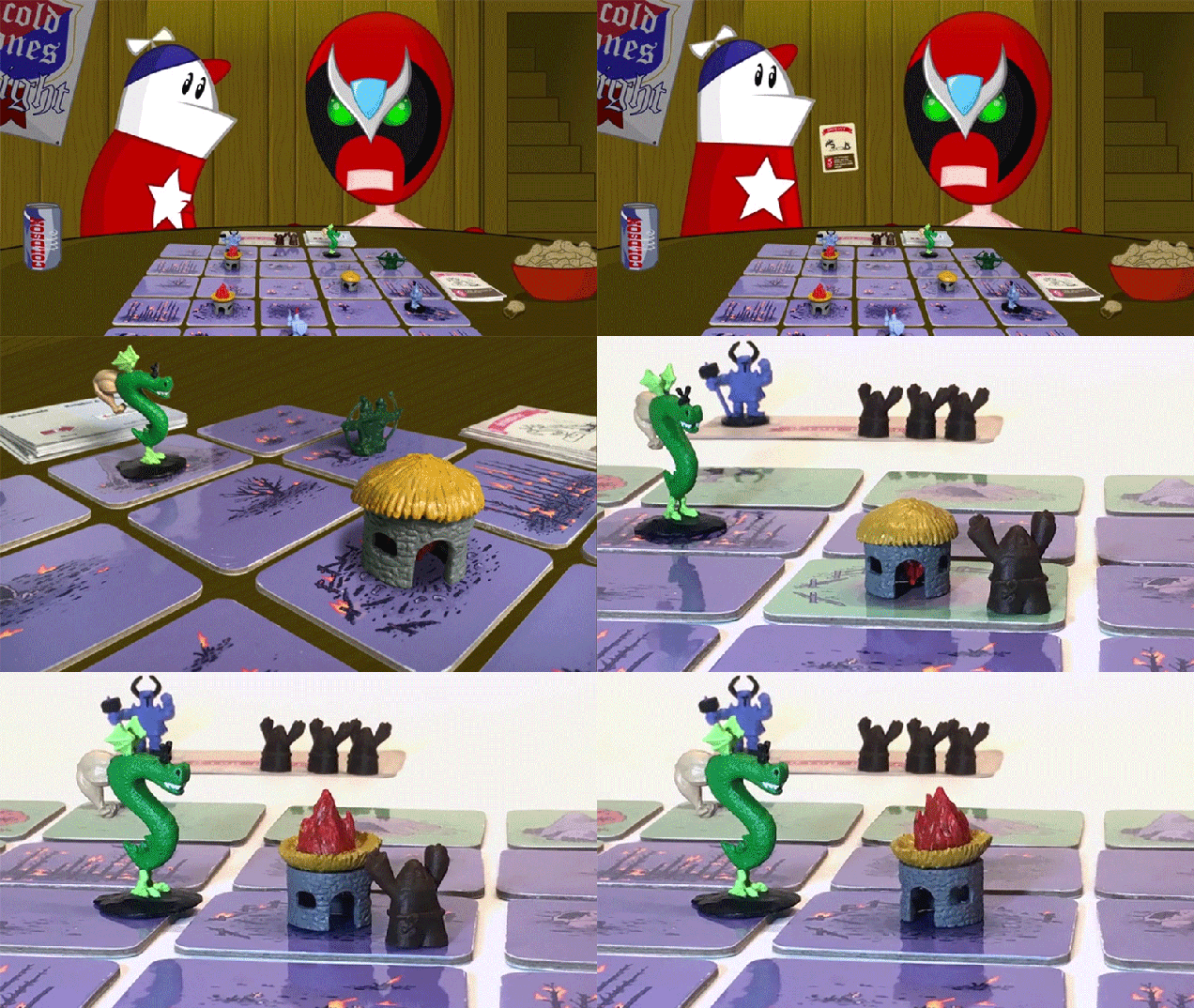
Homestar Runner's Trogdor Is Coming to Burninate Board Game Night

The Brothers Chaps’ Homestar Runner cartoons are one of the few good things to ever come from this internet thing. It introduced the world to countless quotable characters, but few became as immediately popular as the S-shaped, one-armed, flying, burninating dragon called Trogdor, who’s now starring in his very own…
The 'Ada Lace' Books Will Get Girls Interested in STEM
LambdaMOO, MUDs, and 'When the Internet Was Young'
Read more of this story at Slashdot.
Conservation of Threat
Here's some interesting research about how we perceive threats. Basically, as the environment becomes safer we basically manufacture new threats. From an essay about the research:
To study how concepts change when they become less common, we brought volunteers into our laboratory and gave them a simple task -- to look at a series of computer-generated faces and decide which ones seem "threatening." The faces had been carefully designed by researchers to range from very intimidating to very harmless.
As we showed people fewer and fewer threatening faces over time, we found that they expanded their definition of "threatening" to include a wider range of faces. In other words, when they ran out of threatening faces to find, they started calling faces threatening that they used to call harmless. Rather than being a consistent category, what people considered "threats" depended on how many threats they had seen lately.
This has a lot of implications in security systems where humans have to make judgments about threat and risk: TSA agents, police noticing "suspicious" activities, "see something say something" campaigns, and so on.
The academic paper.
The Computer History Museum just published the sourcecode for Eudora

Eudora -- first released in 1988 -- was the first industrial-strength email client designed to run on personal computers like IBM PC and the Macintosh; though there are still die-hard users of the program, the last version was published in 2016. (more…)
Trump Can't Block Critics on Twitter. What Does This Mean For Free Speech?
Today In “Please Stop Blaming Women for Men’s Behavior” News: Ariana Grande Shuts It Down

It seems like no matter what a man does, people will find a way to blame his behavior on a woman. Everything from school shootings and serial killers to football players not footballing well enough–it’s just a quick hop and a step to finding a woman to fault. That’s what some dude was doing when he tweeted about rapper/producer Mac Miller’s recent car crash and DUI. As this guy saw it, Miller’s not to blame for his actions. Nope, this rando blames Ariana Grande for breaking up with him recently.
Mac Miller totalling his G wagon and getting a DUI after Ariana Grande dumped him for another dude after he poured his heart out on a ten song album to her called the divine feminine is just the most heartbreaking thing happening in Hollywood
— Elijah Flint (@FlintElijah) May 21, 2018
It’s bad enough to blame Grande’s choice to end a relationship for her ex’s destructive behavior, but the implication here is that Miller somehow earned and deserved Grande’s affection by writing songs about her. That sort of entitlement is dehumanizing and incredibly creepy.
Ariana Grande responded to the tweet directly:
— Ariana Grande (@ArianaGrande) May 23, 2018
“How absurd that you minimize female self-respect and self-worth by saying someone should stay in a toxic relationship because he wrote an album about them,” she writes, clarifying that really only one song on the album was about her–NOT THAT THAT MATTERS. As she writes, “I am not a babysitter or a mother and no woman should feel that they need to be. I have cared for him and tried to support his sobriety & prayed for his balance for years (and always will of course) but shaming / blaming women for a man’s inability to keep his shit together is a very major problem. Let’s please stop doing that.”
After Grande’s shut down what was happening with total firmness but no scorn or cruelty, the guy replied with an apology.
My sincerest apology, Ariana pic.twitter.com/l3CavwKCtO
— Elijah Flint (@FlintElijah) May 23, 2018
When it comes to talking on the internet about misogyny, those conversations usually only escalate. It’s heartening to see a man willing to listen to a woman he’s demeaned and respond with such open regret.
thank you for hearing me, i appreciate your response v much. ☁️ sending u love.
— Ariana Grande (@ArianaGrande) May 23, 2018
In terms of Twitter conversations, this was unusually productive.
(image: Kevin Winter/Getty Images)
Want more stories like this? Become a subscriber and support the site!
—The Mary Sue has a strict comment policy that forbids, but is not limited to, personal insults toward anyone, hate speech, and trolling.—

"Hyperspace" shows how science can inform science fiction

Welcome back to Pop Lexicon, The A.V. Club’s series with Kory Stamper, Merriam-Webster lexicographer and editor, where she reveals the origins of America’s favorite colloquialisms. Today, Kory explains how not only can science can inform science fiction, but science fiction can influence scientific discovery, starting…
A hard look at the wastefulness of "proof of work," the idea at the core of the blockchain

David Gerard is a technically minded, sharp-witted, scathing critic of Bitcoin and other cryptocurrencies; his criticism is long, comprehensive and multipartite, but of particular interest is is critique of "proof of work" (an idea that is central to the blockchain, but which many cryptographers are skeptical of). (more…)
Women Leaders: 3 Ways to Break Through the Glass Ceiling – Without Getting Cut

Sponsored by Landmark Sign Company:
No, it’s not emblazoned on big, bold office lobby signs for everyone to see, but women in leadership roles — or who aspire toward an elevated position and platform — know exactly what it feels like to crash into the glass ceiling. It’s a mixture of shock, awe, humiliation, exasperation, and of course, wholly justified anger at what has been, is now, and always will be a completely unfair and unjustifiable barrier to professional and personal...
Neil Cicierega presents the official nightmares of all 50 states

Neil Cicierega writes songs, makes video games, and routinely epitomizes everything wonderful and baffling about what the youngs think is funny these days. His latest effort is a straight-faced video in which he shares the official nightmare of each state in the U.S.A., and, refreshingly, none of them involve the…
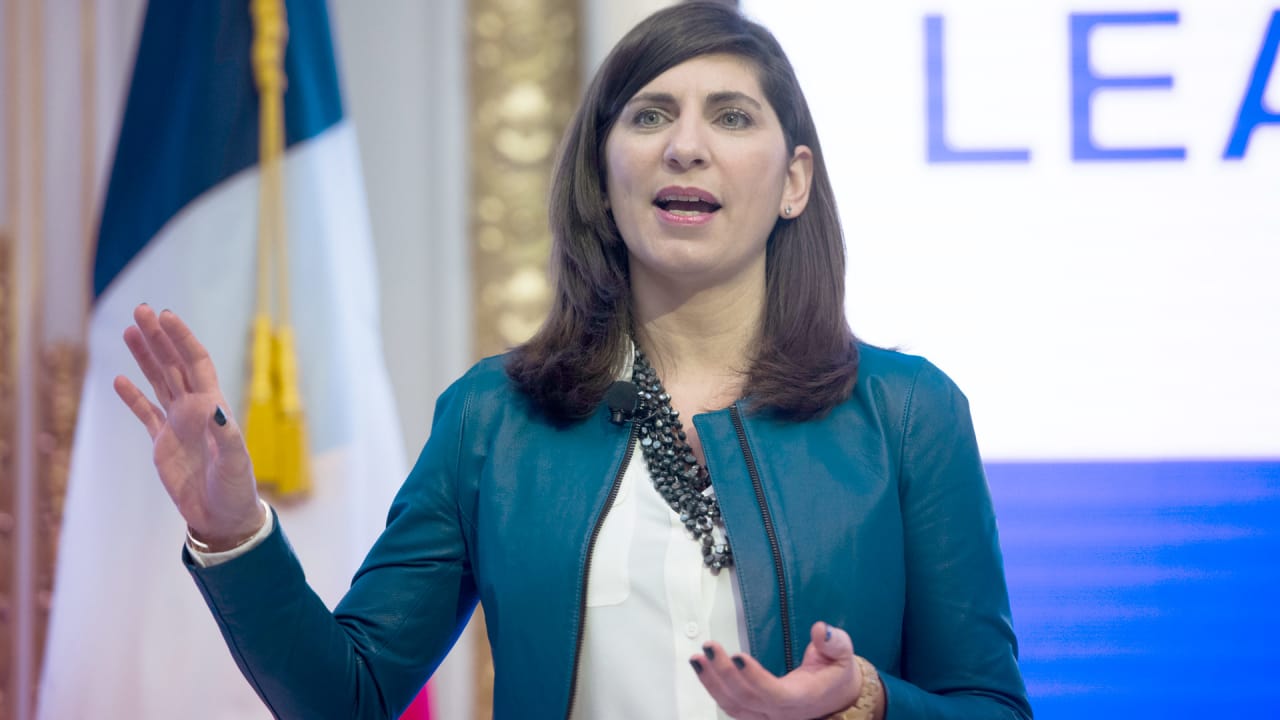
Stacey Cunningham: 4 things to know about the NYSE’s first woman president
Fearless girl turned fearless leader.
For the first time in its 226-year history, the New York Stock Exchange has a woman president. Stacey Cunningham, who is currently the NYSE’s chief operating officer, will become the exchange’s 67th president as of Friday.