Shared posts

03 Jan 18:55

House Republicans Back Down on Bid to Gut Ethics Office

Joel Thrasymachus Dahl

LOL.

Please let this be indicative of how the congress/white house relationship will go for the next eight years . . .

House Republicans Back Down on Bid to Gut Ethics Office

Photo
In a pair of postings on Twitter, President-elect Donald J. Trump called the Office of Congressional Ethics “unfair,” but said focusing on it now was a case of misplaced priorities. Credit Kevin Hagen for The New York Times

WASHINGTON — House Republicans, facing a storm of bipartisan criticism, including from President-elect Donald J. Trump, moved early Tuesday afternoon to reverse their plan to kill the Office of Congressional Ethics. It was an embarrassing turnabout on the first day of business for the new Congress, a day when party leaders were hoping for a show of force to reverse policies of the Obama administration.

The reversal came less than 24 hours after House Republicans, meeting in a secret session, voted, over the objections of Speaker Paul D. Ryan, to eliminate the independent ethics office. It was created in 2008 in the aftermath of a series of scandals involving House lawmakers, including three who were sent to jail.

Mr. Trump criticized House Republicans on Tuesday for their move to gut the office, saying they should focus instead on domestic policy priorities such as health care and a tax overhaul.

In a pair of postings on Twitter, Mr. Trump called the Office of Congressional Ethics “unfair,” but he said focusing on it now was a case of misplaced priorities. He appended the hashtag “DTS,” an apparent allusion to his promise to “drain the swamp” in Washington.

The comments constituted a public break by Mr. Trump with rank-and-file Republicans, who overrode their top leaders on Monday in a vote to significantly curtail the power of the ethics office, which was set up in the aftermath of corruption scandals that sent three members of Congress to jail.

Democrats and ethics watchdog groups were also sharply critical of House Republicans, adding to the pressure that led them to reverse course.

03 Jan 16:54

Saturday Morning Breakfast Cereal - Evil Ethics

by tech@thehiveworks.com


Click here to go see the bonus panel!

Hovertext:
Fortunately, there aren't any Evil Nietzcheans.

New comic!
Today's News:

Christy Christmachrist!

23 Dec 15:46

7 measles cases reported in LA County

by City News Service

LOS ANGELES >> Los Angeles County public health officials said Thursday they are investigating an outbreak of seven measles cases, and they encouraged residents to ensure they are vaccinated.

Details about the patients or where they reside or work were not released, although health officials said most of cases "are epidemiologically linked.

18 Dec 18:53

What a mobile website is SUPPOSED to do

by Matthew Inman
Joel Thrasymachus Dahl

Depressingly accurate.

17 Dec 02:07

This Political Theorist Predicted the Rise of Trumpism. His Name Was Hunter S. Thompson.

Joel Thrasymachus Dahl

"Many if not most Trump supporters long ago gave up on the idea that any politician, even someone like Trump, can change the direction the wind is blowing. Even if he fails to bring back the jobs, Trump can maintain loyalty in another way: As long as he continues to offend and irritate elites, and as long as he refuses to play by certain rules of decorum—heaven forfend, the president-elect says ill-conceived things on Twitter!—Trump will still command loyalty. It’s the ethic, not the policy, that matters most."

Hunter S. Thompson

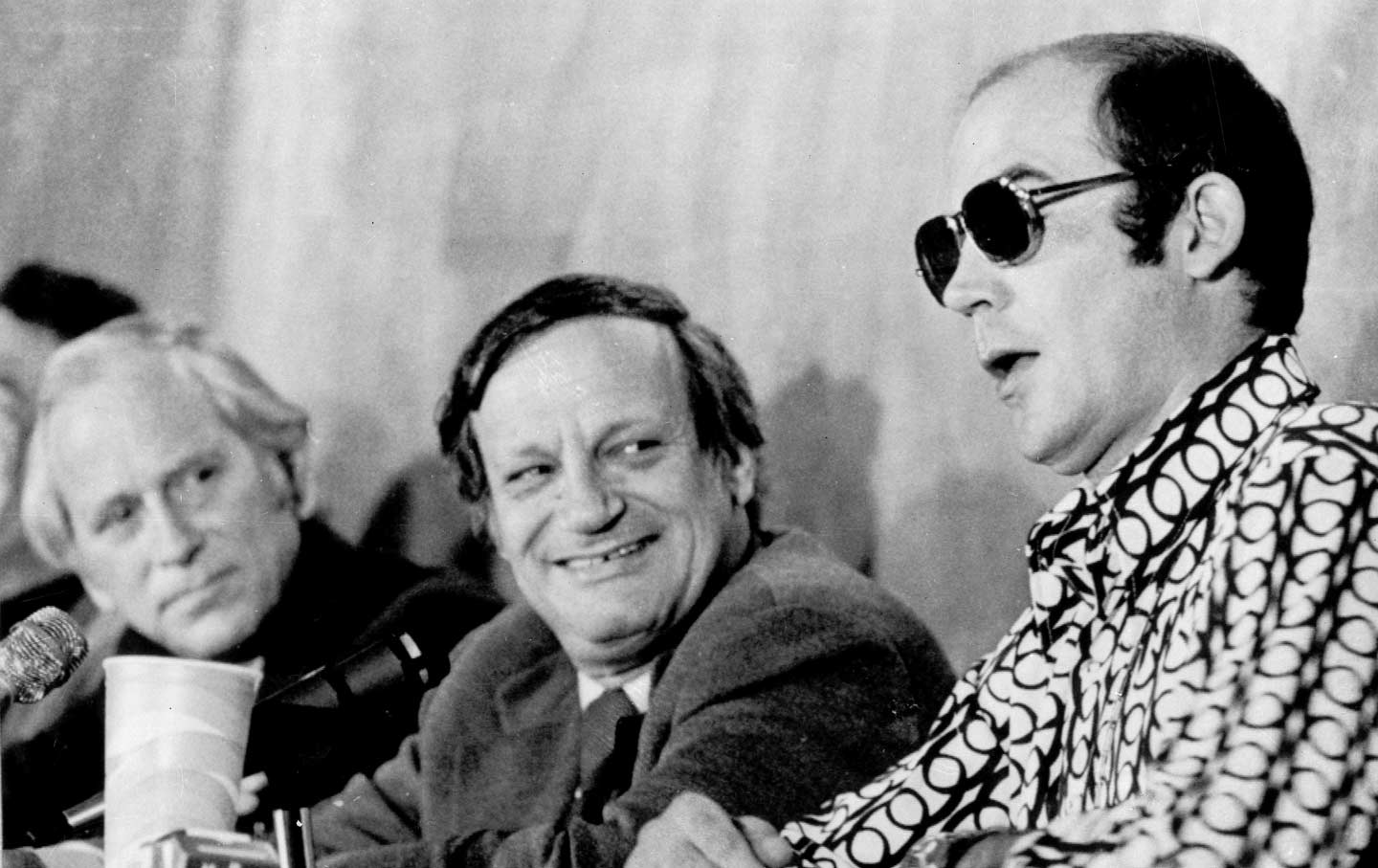
Hunter S. Thompson, right, speaks at a panel discussion in New Haven, Connecticut, on December 7, 1972. (AP Photo)

In late March, Donald Trump opened a rally in Wisconsin by mocking the state’s governor, Scott Walker, who had just endorsed his Republican opponent, Ted Cruz. “He came in on his Harley,” Trump said of Walker, “but he doesn’t look like a motorcycle guy.” Ad Policy

“The motorcycle guys,” he added, “like Trump.”

It has been 50 years since Hunter S. Thompson published the definitive book on motorcycle guys: Hell’s Angels: The Strange and Terrible Saga of the Outlaw Motorcycle Gangs. It grew out of a piece first published in The Nation one year earlier. My grandfather, Carey McWilliams, editor of the magazine from 1955 to 1975, commissioned the piece from Thompson—it was the gonzo journalist’s first big break, and the beginning of a friendship between the two men that would last until my grandfather died in 1980. Because of that family connection, I had long known that Hell’s Angels was a political book. Even so, I was surprised, when I finally picked it up a few years ago, by how prophetic Thompson is and how eerily he anticipates 21st-century American politics. This year, when people asked me what I thought of the election, I kept telling them to read Hell’s Angels.

Thompson observed that the Hell’s Angels were alienated from a changing America in which they felt left behind.

Most people read Hell’s Angels for the lurid stories of sex and drugs. But that misses the point entirely. What’s truly shocking about reading the book today is how well Thompson foresaw the retaliatory, right-wing politics that now goes by the name of Trumpism. After following the motorcycle guys around for months, Thompson concluded that the most striking thing about them was not their hedonism but their “ethic of total retaliation” against a technologically advanced and economically changing America in which they felt they’d been counted out and left behind. Thompson saw the appeal of that retaliatory ethic. He claimed that a small part of every human being longs to burn it all down, especially when faced with great and impersonal powers that seem hostile to your very existence. In the United States, a place of ever greater and more impersonal powers, the ethic of total retaliation was likely to catch on.

What made that outcome almost certain, Thompson thought, was the obliviousness of Berkeley, California, types who, from the safety of their cocktail parties, imagined that they understood and represented the downtrodden. The Berkeley types, Thompson thought, were not going to realize how presumptuous they had been until the downtrodden broke into one of those cocktail parties and embarked on a campaign of rape, pillage, and slaughter. For Thompson, the Angels weren’t important because they heralded a new movement of cultural hedonism, but because they were the advance guard for a new kind of right-wing politics. As Thompson presciently wrote in the Nation piece he later expanded on in Hell’s Angels, that kind of politics is “nearly impossible to deal with” using reason or empathy or awareness-raising or any of the other favorite tools of the left.

Listen to Hunter S. Thompson speak with Studs Turkel about ‘Hell’s Angels’ in 1967.

Hell’s Angels concludes when the Angels ally with the John Birch Society and write to President Lyndon Johnson to offer their services to fight communism, much to the befuddlement of the anti-Vietnam elites who assumed the Angels were on the side of “counterculture.” The Angels and their retaliatory militarism were, Thompson warned, the harbingers of a darker time to come. That time has arrived.

* * *

Fifty years after Thompson published his book, a lot of Americans have come to feel like motorcycle guys. At a time when so many of us are trying to understand what happened in the election, there are few better resources than Hell’s Angels. That’s not because Thompson was the only American writer to warn coastal, left-liberal elites about their disconnection from poor and working-class white voters. Plenty of people issued such warnings: journalists like Thomas Edsall, who for decades has been documenting the rise of “red America,” and scholars like Christopher Lasch, who saw as early as the 1980s that the elite embrace of technological advancement and individual liberation looked like a “revolt” to the mass of Americans, most of whom have been on the losing end of enough “innovations” to be skeptical about the dogmas of progress.

But though Thompson’s depiction of an alienated, white, masculine working-class culture—one that is fundamentally misunderstood by intellectuals—is not the only one out there, it was the first. And in some ways, it is still the best psychological study of those Americans often dismissed as “white trash” or “deplorables.”

Thompson’s Angels were mostly working-class white men who felt, not incorrectly, that they had been relegated to the sewer of American society. Their unswerving loyalty to the nation— the Angels had started as a World War II veterans group—had not paid them any rewards or won them any enduring public respect. The manual-labor skills that they had learned and cultivated were in declining demand. Though most had made it through high school, they did not have the more advanced levels of training that might lead to economic or professional security. “Their lack of education,” Thompson wrote, “rendered them completely useless in a highly technical economy.” Looking at the American future, they saw no place for themselves in it.

The Angels were the original “strangers in their own land”—clunky and outclassed like their Harleys.

In other words, the Angels felt like “strangers in their own land,” as Arlie Russell Hochschild puts it in her recent book on red-state America. They were clunky and outclassed and scorned, just like the Harley-Davidsons they chose to drive. Harleys had been the kings of the American motorcycle market until the early 1960s, when European and Japanese imports came onto the scene. Those imports were sleeker, faster, more efficient, and cheaper. Almost overnight, Harleys went from being in high demand to being the least appealing, most underpowered, and hard to handle motorcycles out there. It’s not hard to see why the Angels insisted on Harleys and identified strongly with their bikes.

Just as there was no rational way to defend Harleys against foreign-made choppers, the Angels saw no rational grounds on which to defend their own skills or loyalties against the emerging new world order of the late 20th century. Their skills were outdated; their knowledge was insubstantial; their powers were inferior. There was no rational way to argue that they were better workers or citizens than the competition; the competition was effectively over, and Angels had lost. The standards by which they had been built had been definitively eclipsed.

We parents tell our children that when you know you’ve lost an argument or a race, the right thing to do is to be a good sport and to “get ’em next time.” But if there is no next time, or you know that every next time you are going to be in the loser’s lane again, what’s the use of being a good sport? It would make you look even more ignorant, and more like a loser, to pretend like you think you have a chance. The game has been rigged against you. Why not piss on the field before you storm off? Why not stick up your finger at the whole goddamned game?

Therein lies the ethic of total retaliation. The Angels, rather than gracefully accepting their place as losers in an increasingly technical, intellectual, global, inclusive, progressive American society, stuck up their fingers at the whole enterprise. If you can’t win, you can at least scare the bejeesus out of the guy wearing the medal. You might not beat him, but you can make him pay attention to you. You can haunt him, make him worry that you’re going to steal into his daughter’s bedroom in the darkest night and have your way with her—and that she might actually like it.

* * *

It’s not hard to see in the demographics, the words, and the behavior of Trump supporters an ethic of total retaliation at work. These are men and women who defend their vote by saying things like: “I just wanted people to know that I’m here, that I count.” These are men and women whose scorn of “political correctness” translates into: “You can’t make me talk the way that you want me to talk, even if that way of talking is nicer and smarter and better.” These are men and women whose denials of climate change are gleeful denials of scientific expertise in a world where scientific experts have unquestioned intellectual respect and social status. These are men and women who seemed to applaud the incompetence of Trump’s campaign because competence itself is associated with membership in the elite.

Thompson would want us to see this: These are men and women who know that, by all intellectual and economic standards, they cannot win the game. So whether it be out of self-protection or an overcompensation for their own profound sense of shame, they lash out at politicians, judges, scientists, teachers, Wall Street, universities, the media, legislatures—even at elections. They are not interested in contemplating serious reforms to the system; they are either too pessimistic or too disappointed to believe that is possible. So the best they can do is adopt a position of total irreverence: to show they hate the players and the game.

Understood in those terms, the idea that Trumpism is “populist” seems misplaced. Populism is a belief in the right of ordinary people, rather than political insiders, to rule. Trumpism, by contrast, operates on the presumption that ordinary people aren’t going to get any chance to rule no matter what they do, so they might as well piss off the political insiders using the only tool left available to them: the vote.

While many commentators say Trump will have to bring back jobs or vibrancy to places like the Rust Belt if he wants to continue to have the support of people who voted for him, Thompson’s account suggests otherwise. Many if not most Trump supporters long ago gave up on the idea that any politician, even someone like Trump, can change the direction the wind is blowing. Even if he fails to bring back the jobs, Trump can maintain loyalty in another way: As long as he continues to offend and irritate elites, and as long as he refuses to play by certain rules of decorum—heaven forfend, the president-elect says ill-conceived things on Twitter!—Trump will still command loyalty. It’s the ethic, not the policy, that matters most.

The racism unleashed by Trump can be understood as directed at the political elite rather than minority groups.

Even the racism that was on full display in Trump’s campaign should be understood at least in part in retaliatory terms, as directed at the political elite rather than at struggling minority groups. The Hell’s Angels, Thompson wrote, did things like get tattoos of swastikas mostly because it visibly scared the members of polite society. The Angels were perfectly happy to hang out at bars with men of different races, especially if those men drove motorcycles, and several insisted to Thompson that the racism was only for show. While I have no doubt (and no one should have any doubt) that there are genuine racists in Trump’s constituency—and the gleeful performance of racism is nothing to shrug off—Thompson suggests we should consider the ways in which racism might not be the core disease of Trumpism but a symptom of a deeper illness.

* * *

Thompson would also direct our attention in the early days of the Trump administration to the armed forces and the policies that will mandate what they do. For one great exception to the Angels’ ethos of total retaliation against authority was the military, just as one great exception to the Trump voters’ ethos of total irreverence is the police. Thompson explains that such institutions, which are premised on brute force rather than the more refined rules of intellectual engagement, maintain both a practical and a cultural connection to people like the Angels. The military and the police draw mostly from poor and working-class communities to fill their ranks, and their use of violence is something the motorcycle guys understand. It is one aspect of American life they can easily imagine themselves being a part of.

For his part, Thompson thought that what might prove most dangerous about the ethic of total retaliation was the way it encouraged the distrust of all authority—except for the authority of brute force. The president-elect’s enthusiasm for waterboarding and other forms of torture, his hawkish cabinet choices, and his overtures to strongmen like Vladimir Putin are grave omens. We could end up back where Thompson left off at the end of his book: the Angels, marching with the John Birch Society, on behalf of the Vietnam War.

At the end of Hell’s Angels, having spent months with the motorcycle guys, Thompson finally gets stomped by them. For some offense he doesn’t understand (and which he probably didn’t commit), Thompson gets punched, bloodied, kicked in the face and in the ribs, spat at and pissed on. He limps off to a hospital in the dead of night, alone and afraid. Only in that moment does Thompson realize that as a journalist (and therefore a member of the elite), he could not possibly be a true friend of the Angels. Wear leather and ride a motorcycle though he might, Thompson stood on the side of intellectual and cultural authority. And that finally made him, despite his months of good-timing with the Angels, subject to their retaliatory impulses. The ethic of retaliation is total, Thompson comes to realize. There is nothing partial about it. It ends with violence.

There’s no doubt about it: trouble lies ahead. That Hell’s Angels foresaw all this 50 years ago underscores the depth and seriousness of Thompson as a political thinker and of ours as a singularly dangerous time. Trumpism is about something far more serious than Trump, something that has been brewing and building for generations. Let us take Thompson’s cautions seriously, then, so that this time we Berkeley types are not naive about what we face. Otherwise, we’re all liable to get stomped.

12 Dec 13:18

Urgent appeal: California Democrats to invoke new anti-Trump weapon

by By Laurel Rosenhall CAL matters

As they suit up for battle against the Trump administration, Democrats who dominate California's Legislature vow to unleash one of the superpowers of holding a supermajority: the ability to enact laws immediately.

An underplayed consequence of the fact that they won two-thirds of the seats in both houses last month is that-if they stick together-California Democrats have the required margin to pass a bill with an "urgency" clause.

12 Dec 13:16

Man arrested for allegedly stabbing worshipper near Simi Valley mosque

by By the Associated Press

A 29-year-old man was booked on suspicion of making criminal threats and committing a hate crime after allegedly stabbing and injuring a worshipper near a mosque in Simi Valley late Saturday night, authorities said.

Simi Valley police responded to numerous 9-1-1 calls at 11:15 p.m. Saturday regarding a fight in the 1800 block of Errington Road, said Sgt.

10 Dec 16:14

Schwarzenegger: OK Trump is still 'Apprentice' producer

by By Marcela Isaza AP Entertainment Writer

UNIVERSAL CITY, Calif. >> Arnold Schwarzenegger, star of the new version of "Celebrity Apprentice," is unfazed that President-elect Donald Trump has retained a producer's stake in the show.

Schwarzenegger said Friday that it's just business, comparable to his situation when he became California's governor and retained a screen credit and kept earning royalties for the "Terminator" movie.

08 Dec 15:10

What If Men Did the Breastfeeding?

Joel Thrasymachus Dahl

Very, very worth the click-through to see the video.

Patricia Garcia by Patricia Garcia

Returning to work after maternity leave can be incredibly difficult for new mothers. Not only do you have to deal with leaving a newborn baby at home, or at daycare, but there’s also the matter of keeping up with a strict breastfeeding routine. Pumping, while revolutionary, remains one of the most unpleasant parts of the maternity experience. All that lugging around of machinery and bottles, the indignity of a hands-free pumping bra—and the noise! That dreadful mechanical noise! And even though the law requires that most companies provide working mothers with time and space to pump, the majority of working mothers (this one included) still too often find themselves plugging in a pump while sitting in a bathroom stall or storage closet.

One can’t help but wonder how things would be if the gender roles were reversed. Thankfully, we need wonder no longer: Naya Health, a startup founded by a mother of three that sells a smart, gentler, and quieter breast pump, has released a hilarious new parody video that imagines what pumping would look like if men were the ones who had to breastfeed a baby. Think: pimped-out lactation rooms, competitive output charts, and overwhelming support from your boss. Watch above.

In This Story:
07 Dec 19:05

8 Christmas Traditions We’ll Skip This Year

santa with kid on lap

Christmas traditions like giving Santa all the props for what’s under the tree? Ain’t gonna happen.

My wife and I bust our collective asses providing for the children and making sure they have everything they need. When December 25 rolls around, I don’t want the fat guy in red stealing our thunder. We still talk about Santa and I play the game every time they say something like “How does Santa deliver all those toys around the world in ONE NIGHT?” or “How does Santa fit down our tiny chimney?”

Santa gives our kids toothbrushes and underwear, not the big-ass Lego set. Kids, this gift was made possible by a Danish factory and mommy’s hard work. Remember all those times she wasn’t here for dinner? These are blood LEGOS. Enjoy!

2. Elf on The Shelf

christmas traditions: elf on the shelf

This may be the creepiest of all Christmas traditions.

I don’t know what possesses people to put a creepy little doll around their house that effs everything up. I thought these things were supposed to keep your kids from being naughty? If you need a doll to get your kids to behave for one month leading up to Christmas, you have bigger problems on your hands. It’s not that these Elf on the Shelf packs are a special item either. You can go into any store and buy them. How do you explain to your kids that your elf is really a magical one and not an end-cap store special for a parent at the end of their holiday rope?

Moving a creepy doll around my house every day just to see the look on my kid’s faces as to why he moves? I can’t even remember to slip that dollar under the pillow like some nighttime ninja when the tooth fairy visits. My kids would have the laziest elf who never wanted to move around the house because he must like only that one spot. That’s an aggravation I don’t need.

3. Cutting Down Your Own Christmas Tree

christmas vacation ornament

Good Christmas traditions leave you with a warm feeling in your heart, not a cold keister.

My dad always meant well, trying to come up with Christmas traditions us kids would really remember. He succeeded in that this one was hard to forget. It always seemed that the best trees were miles from the Christmas tree farm’s main wrapping area and usually the snow was deep. I mostly remember being cold.

I know now why my dad went to a plastic tree and why, to make it more authentic, he would hang pine tree air fresheners. “Can’t tell the difference can you son?” he would say. No watering the tree, no sap, and certainly no squirrels in your living room.

4. Shopping at the Mall

No way in hell. From the parking to the massive amounts of people, shopping at the mall is everything I hate about the holiday season. The kids go loopy telling me they want every toy in the building, other parents’ screaming kids, and frantic parents trying to sneak toys into a bag when the urchins aren’t looking? No thank you.

Fighting people over an item that I can have delivered right to my door through Amazon by a guy in a delivery truck while I eat cookies in my pajamas sounds more fun.

5. Formal Christmas Photo

christmas photo

“Everyone look at the damn camera!”

I won’t drag my family to a studio to snap a picture of us all in our matching sweaters. Besides, this is how it is going to go: The only people who will be looking at the camera will be me and my wife. Our three kids will all be looking in a different direction with my oldest son being closest to actually looking at the camera. My middle daughter will give us that creepy smile that isn’t a real smile, and the 3-year-old will look anywhere BUT the camera.

With digital photography being what it is today, I know I am going to have to Photoshop a head from another photo for each kid. I may even switch out the head from the school pictures just to ensure everyone is smiling.

6. Having My Kids Help Me With Christmas Lights

Maybe someday they will be up for it and I can make them climb on the roof like my dad let me do while he drank coffee  supervised from the ground. Someday I might even assign them the death-defying task of attaching the wooden Santa to the chimney.

For now, I like being out there myself applying all my dad taught me about outdoor illumination. Just a man and his 10,000 individual bulbs to check. I mean, my kids can’t even get a knot out of their sneakers so why would I trust them with the lights? No, this dad enjoys figuring out which of our 50 extensions cords actually will handle the wattage for all our lights this year.

7. Caroling 

"Once more with feeling. And don't be so pitchy."

“Once more with feeling. And don’t be so pitchy.”

Of all the Christmas traditions, this is one better left to professionals who can actually carry a tune. I’m not freezing my keister off going from door to door to spread holiday cheer. I am that guy in church lip synching to try to blend in with the guys belting out “Hallelujah” behind me. It’s not pretty.

If I show up at your doorstep trying to sing Jingle Bells off-key, I give you permission to slam the door and send me home for some hot chocolate. Also, if you come to my house, don’t be offended that I am not opening the door. I can hear you perfectly fine without letting all that icy winter air starting up my furnace.

8. Getting A Picture With Santa

We all know how this goes. We build this up to be such a great thing and then we willingly have our kids sit on a strange man’s lap. Then we are surprised that they find this a scary situation.

I checked on Santa’s rates at the mall and he is charging $20 to $30 for you not to take pictures with your own camera. Sorry, but at $20 a head and three kids who want to tell this stranger what they want for Christmas when I already know, I’d rather blow that cash on ingredients to make Coquito and get myself liquored up on Christmas Eve instead.

So to these Christmas traditions, I say: Bah humbug!

A version of this first appeared on DadNCharge.

07 Dec 18:43

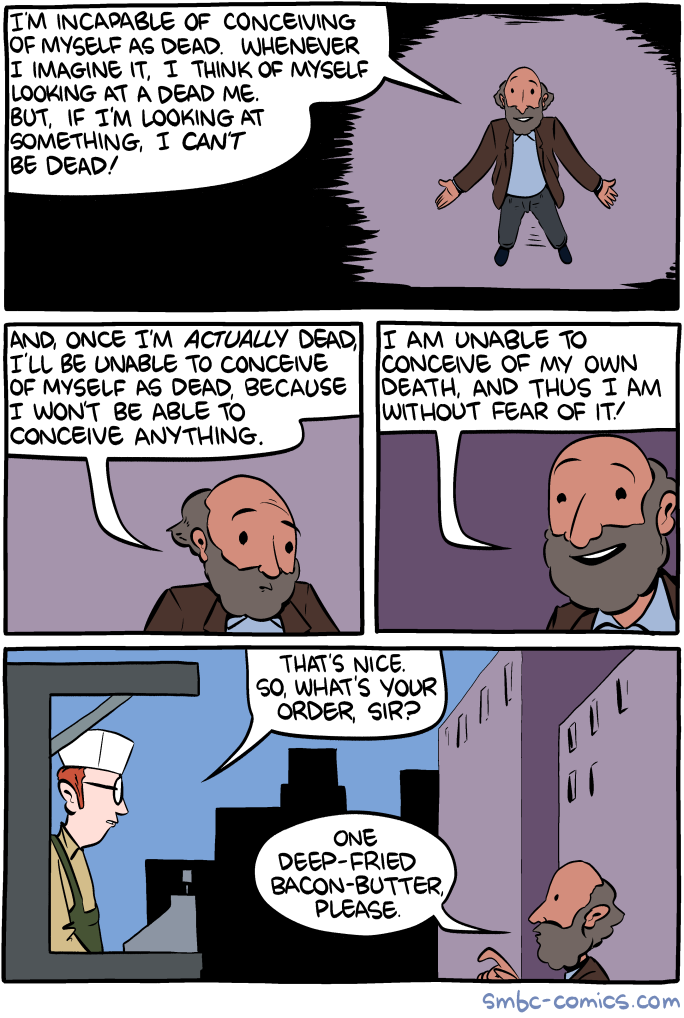
Saturday Morning Breakfast Cereal - The Denial of Death

by tech@thehiveworks.com


Click here to go see the bonus panel!

Hovertext:
I will never understand why existentialists eat salad.

New comic!
Today's News:
07 Dec 18:18

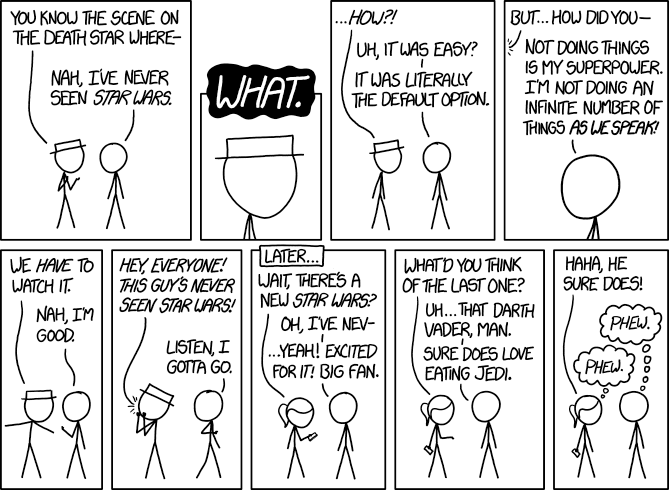
Never Seen Star Wars

Joel Thrasymachus Dahl

This was me, a bunch of years ago. I didn't see it until after I graduated college. A friend of mine was horrified, and sought to rectify the situation . . . and, I thought it was OK. I think you need to first see Star Wars as a little kid, in order to think as an adult that it's awesome. Nostalgia will fuel a lot.

If anyone calls you on any weird detail, just say it's from the Jedi Prince book series, which contains so much random incongruous stuff that even most Expanded Universe/Legends fans collectively agreed to forget about it decades ago.
04 Dec 01:34

USC professor fatally stabbed on campus, student in custody, LAPD says

by Staff and wire reports

Exposition Park >> A male professor was stabbed and killed on the USC campus Friday and a suspect, identified as a male student at the university, was taken into custody a short time later, police said.

The suspect was approximately 25 years old, according to Margaret Stewart of the Los Angeles Fire Department.

04 Dec 01:04

Student who allegedly killed USC professor identified by police

by By the Associated Press
Joel Thrasymachus Dahl

Holy shit! I know him!

(ish)

He checks out laptops from the library on a regular basis, and man is he an *asshole* to deal with every time.

By Dana Bartholomew

dbartholomew@scng.com

@DN_DanaBart on Twitter

A graduate student arrested on suspicion of stabbing to death the professor who oversaw his work at the University of Southern California was being held on $1 million bail Saturday as the campus plunged into mourning.

03 Dec 16:05

LA won't lose a dime if it gets 2024 Olympics, officials say

by By Scott M. Reid sreid@scng.com @sreidocregister on Twitter

LOS ANGELES >> Controversy surrounding the cost of putting on the Olympic Games is as old as the Modern Games themselves.

But the last 40 years in particular have seen a series of financial crises rock the International Olympic Committee and Olympic movement and led to mounting criticism of the IOC, scared off high-profile potential bid cities, created upheaval and financial uncertainty that has often embroiled and overshadowed the actual games and left several host cities still drowning in red ink decades after the Olympic flame was extinguished.

03 Dec 15:58

Donald Trump voter lost home to Pasadena bank run by Treasury nominee

by By Josh Boak and Jeff Horwtiz Associated Press

WASHINGTON >> When Donald Trump named his Treasury secretary, Teena Colebrook felt her heart sink.

She had voted for the president-elect on the belief that he would knock the moneyed elites from their perch in Washington. And she knew Trump's pick for Treasury - Steven Mnuchin - all too well.

02 Dec 13:04

Self-assessment

I would probably have gotten more out of this class if I had done the reading.

01 Dec 17:40

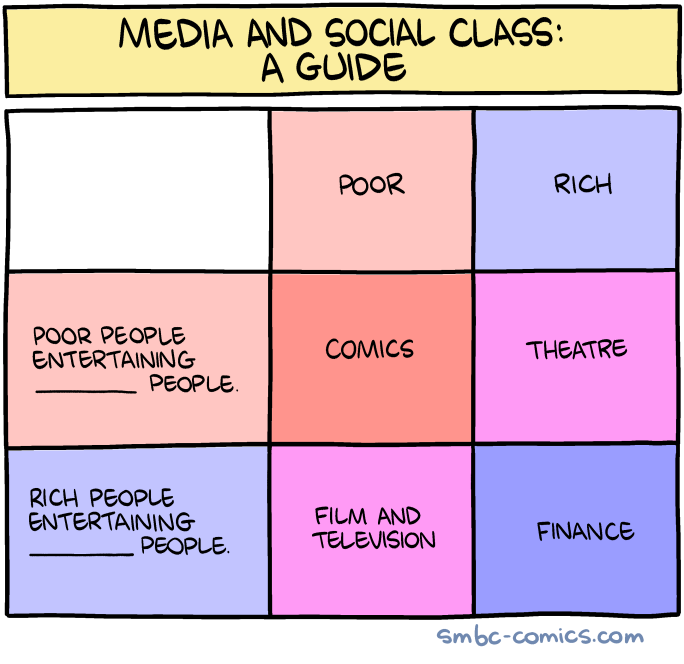
Saturday Morning Breakfast Cereal - Class and Media

by tech@thehiveworks.com
Joel Thrasymachus Dahl

Nic, I had no idea that your field and mine were connected!


Click here to go see the bonus panel!

Hovertext:
Before you write me an email asking 'what about the middle class,' please understand that I want this comic to still be relevant in 50 years.

New comic!
Today's News:
29 Nov 19:37

Saturday Morning Breakfast Cereal - Unappreciated

by tech@thehiveworks.com
Joel Thrasymachus Dahl

Nic, once you get tenure, propose this in a department meeting whenever there's hiring going on.


Hovertext:
I mean, technically we're only using the top half of the adjunct. Why do we have to pay for the whole thing?

New comic!
Today's News:
23 Nov 22:01

The End of Identity Liberalism

The End of Identity Liberalism

Photo
Credit Dan Gluibizzi

It is a truism that America has become a more diverse country. It is also a beautiful thing to watch. Visitors from other countries, particularly those having trouble incorporating different ethnic groups and faiths, are amazed that we manage to pull it off. Not perfectly, of course, but certainly better than any European or Asian nation today. It’s an extraordinary success story.

But how should this diversity shape our politics? The standard liberal answer for nearly a generation now has been that we should become aware of and “celebrate” our differences. Which is a splendid principle of moral pedagogy — but disastrous as a foundation for democratic politics in our ideological age. In recent years American liberalism has slipped into a kind of moral panic about racial, gender and sexual identity that has distorted liberalism’s message and prevented it from becoming a unifying force capable of governing.

One of the many lessons of the recent presidential election campaign and its repugnant outcome is that the age of identity liberalism must be brought to an end. Hillary Clinton was at her best and most uplifting when she spoke about American interests in world affairs and how they relate to our understanding of democracy. But when it came to life at home, she tended on the campaign trail to lose that large vision and slip into the rhetoric of diversity, calling out explicitly to African-American, Latino, L.G.B.T. and women voters at every stop. This was a strategic mistake. If you are going to mention groups in America, you had better mention all of them. If you don’t, those left out will notice and feel excluded. Which, as the data show, was exactly what happened with the white working class and those with strong religious convictions. Fully two-thirds of white voters without college degrees voted for Donald Trump, as did over 80 percent of white evangelicals.

The moral energy surrounding identity has, of course, had many good effects. Affirmative action has reshaped and improved corporate life. Black Lives Matter has delivered a wake-up call to every American with a conscience. Hollywood’s efforts to normalize homosexuality in our popular culture helped to normalize it in American families and public life.

Have you changed anything in your daily life since the election? For example, have you tried to understand opposing points of view, donated to a group, or contacted your member of Congress? Your answer may be included in a follow up post.

"Share Your Thoughts"

Go to Facebook

But the fixation on diversity in our schools and in the press has produced a generation of liberals and progressives narcissistically unaware of conditions outside their self-defined groups, and indifferent to the task of reaching out to Americans in every walk of life. At a very young age our children are being encouraged to talk about their individual identities, even before they have them. By the time they reach college many assume that diversity discourse exhausts political discourse, and have shockingly little to say about such perennial questions as class, war, the economy and the common good. In large part this is because of high school history curriculums, which anachronistically project the identity politics of today back onto the past, creating a distorted picture of the major forces and individuals that shaped our country. (The achievements of women’s rights movements, for instance, were real and important, but you cannot understand them if you do not first understand the founding fathers’ achievement in establishing a system of government based on the guarantee of rights.)

Continue reading the main story

Recent Comments

  • See All Comments
  • Write a comment

When young people arrive at college they are encouraged to keep this focus on themselves by student groups, faculty members and also administrators whose full-time job is to deal with — and heighten the significance of — “diversity issues.” Fox News and other conservative media outlets make great sport of mocking the “campus craziness” that surrounds such issues, and more often than not they are right to. Which only plays into the hands of populist demagogues who want to delegitimize learning in the eyes of those who have never set foot on a campus. How to explain to the average voter the supposed moral urgency of giving college students the right to choose the designated gender pronouns to be used when addressing them? How not to laugh along with those voters at the story of a University of Michigan prankster who wrote in “His Majesty”?

This campus-diversity consciousness has over the years filtered into the liberal media, and not subtly. Affirmative action for women and minorities at America’s newspapers and broadcasters has been an extraordinary social achievement — and has even changed, quite literally, the face of right-wing media, as journalists like Megyn Kelly and Laura Ingraham have gained prominence. But it also appears to have encouraged the assumption, especially among younger journalists and editors, that simply by focusing on identity they have done their jobs.

Recently I performed a little experiment during a sabbatical in France: For a full year I read only European publications, not American ones. My thought was to try seeing the world as European readers did. But it was far more instructive to return home and realize how the lens of identity has transformed American reporting in recent years. How often, for example, the laziest story in American journalism — about the “first X to do Y” — is told and retold. Fascination with the identity drama has even affected foreign reporting, which is in distressingly short supply. However interesting it may be to read, say, about the fate of transgender people in Egypt, it contributes nothing to educating Americans about the powerful political and religious currents that will determine Egypt’s future, and indirectly, our own. No major news outlet in Europe would think of adopting such a focus.

But it is at the level of electoral politics that identity liberalism has failed most spectacularly, as we have just seen. National politics in healthy periods is not about “difference,” it is about commonality. And it will be dominated by whoever best captures Americans’ imaginations about our shared destiny. Ronald Reagan did that very skillfully, whatever one may think of his vision. So did Bill Clinton, who took a page from Reagan’s playbook. He seized the Democratic Party away from its identity-conscious wing, concentrated his energies on domestic programs that would benefit everyone (like national health insurance) and defined America’s role in the post-1989 world. By remaining in office for two terms, he was then able to accomplish much for different groups in the Democratic coalition. Identity politics, by contrast, is largely expressive, not persuasive. Which is why it never wins elections — but can lose them.

Sign Up for the Opinion Today Newsletter

Every weekday, get thought-provoking commentary from Op-Ed columnists, the Times editorial board and contributing writers from around the world.

Sign-up for free NYT Newsletters

Morning BriefingSubscribed
News to start your day, weekdays
Opinion TodaySubscribed
Thought-provoking commentary, weekdays
CookingSubscribed
Delicious recipes and more, 5 times a week
Race/RelatedSubscribed
A provocative exploration of race, biweekly

Please verify you're not a robot by clicking the box.

Invalid email address. Please re-enter.

You must select a newsletter to subscribe to.

Sign Up
Receive occasional updates and special offers for The New York Times's products and services.

Thank you for subscribing.

An error has occurred. Please try again later.

You are already subscribed to this email.

View all New York Times newsletters.

The media’s newfound, almost anthropological, interest in the angry white male reveals as much about the state of our liberalism as it does about this much maligned, and previously ignored, figure. A convenient liberal interpretation of the recent presidential election would have it that Mr. Trump won in large part because he managed to transform economic disadvantage into racial rage — the “whitelash” thesis. This is convenient because it sanctions a conviction of moral superiority and allows liberals to ignore what those voters said were their overriding concerns. It also encourages the fantasy that the Republican right is doomed to demographic extinction in the long run — which means liberals have only to wait for the country to fall into their laps. The surprisingly high percentage of the Latino vote that went to Mr. Trump should remind us that the longer ethnic groups are here in this country, the more politically diverse they become.

Finally, the whitelash thesis is convenient because it absolves liberals of not recognizing how their own obsession with diversity has encouraged white, rural, religious Americans to think of themselves as a disadvantaged group whose identity is being threatened or ignored. Such people are not actually reacting against the reality of our diverse America (they tend, after all, to live in homogeneous areas of the country). But they are reacting against the omnipresent rhetoric of identity, which is what they mean by “political correctness.” Liberals should bear in mind that the first identity movement in American politics was the Ku Klux Klan, which still exists. Those who play the identity game should be prepared to lose it.

We need a post-identity liberalism, and it should draw from the past successes of pre-identity liberalism. Such a liberalism would concentrate on widening its base by appealing to Americans as Americans and emphasizing the issues that affect a vast majority of them. It would speak to the nation as a nation of citizens who are in this together and must help one another. As for narrower issues that are highly charged symbolically and can drive potential allies away, especially those touching on sexuality and religion, such a liberalism would work quietly, sensitively and with a proper sense of scale. (To paraphrase Bernie Sanders, America is sick and tired of hearing about liberals’ damn bathrooms.)

Write A Comment

Teachers committed to such a liberalism would refocus attention on their main political responsibility in a democracy: to form committed citizens aware of their system of government and the major forces and events in our history. A post-identity liberalism would also emphasize that democracy is not only about rights; it also confers duties on its citizens, such as the duties to keep informed and vote. A post-identity liberal press would begin educating itself about parts of the country that have been ignored, and about what matters there, especially religion. And it would take seriously its responsibility to educate Americans about the major forces shaping world politics, especially their historical dimension.

Some years ago I was invited to a union convention in Florida to speak on a panel about Franklin D. Roosevelt’s famous Four Freedoms speech of 1941. The hall was full of representatives from local chapters — men, women, blacks, whites, Latinos. We began by singing the national anthem, and then sat down to listen to a recording of Roosevelt’s speech. As I looked out into the crowd, and saw the array of different faces, I was struck by how focused they were on what they shared. And listening to Roosevelt’s stirring voice as he invoked the freedom of speech, the freedom of worship, the freedom from want and the freedom from fear — freedoms that Roosevelt demanded for “everyone in the world” — I was reminded of what the real foundations of modern American liberalism are.

Mark Lilla, a professor of the humanities at Columbia and a visiting scholar at the Russell Sage Foundation, is the author, most recently, of “The Shipwrecked Mind: On Political Reaction.”

Follow The New York Times Opinion section on Facebook and Twitter (@NYTOpinion), and sign up for the Opinion Today newsletter.

23 Nov 13:33

What TV journalists did wrong — and the New York Times did right — in meeting with Trump

On Monday, some of the biggest names in TV news trooped into Trump Tower for an off-the-record meeting with the president-elect.

It was an all-star cast. Not just on-air stars like Lester Holt, Wolf Blitzer and George Stephanopoulos, but their bosses were also summoned before the Potentate of Fifth Avenue.

The meeting was a huge success — for Donald Trump.

Soon after it broke up, a leak to the New York Post brought on a story about how thoroughly the president-elect had taken the attendees to task.

With attribution to anonymous tipsters, the Post wrote: “The meeting was a total disaster. The TV execs and anchors went in there thinking they would be discussing the access they would get to the Trump administration, but instead they got a Trump-style dressing-down. . . . Trump kept saying, ‘We’re in a room of liars, the deceitful, dishonest media who got it all wrong.’ ”

In light of President-elect Trump's meetings with media executives on Nov. 21 and the New York Times on Nov. 22, Washington Post media columnists Erik Wemple and Margaret Sullivan talk about the merit of off-the-record meetings and the role of the media in Trump's administration with Facebook Live host Libby Casey. (The Washington Post)

Call it Woodshed Theater, with all the applause lines for the president-elect.

Brandon Friedman, a Virginia-based public relations executive, offered his theory on Twitter: “They walked into an ambush, agreed not to talk about it, then Trump went straight to the Post with his version.”

Then it was just a hop, skip and jump to a big headline on the Drudge Report, with its huge worldwide traffic: “Trump Slams Media Elite, Face to Face.” As Business Insider politics editor Oliver Darcy aptly put it, that is “how a lot of America will see this.”

The result for the president-elect: He once again was able to use the media as his favorite foil. Having a whipping boy is more important than ever now that the election is over and there is no Democratic opponent to malign at every turn.

Yes, there’s no proof that the Trump camp tipped the New York Post, but don’t forget, this is someone who used to pose as his own spokesman to spread word of his romantic conquests. And the newspeople were largely unable to provide their own version of events because they had agreed to its being off the record. That’s supposed to mean that nobody talks about it — a rule that was immediately broken (which also doesn’t speak particularly well for them). Through anonymous leaks, participants agreed with some aspects of the “total disaster” and disagreed with others, but Trump benefited in the end.

He got a lot of attention, he got to continue bashing the establishment elite, and he evidently put the TV people on notice that if they want access to him as president, they’ll need to bow and scrape. Notably, Trump hasn’t held a news conference since July.

On Tuesday, shockingly, a new melodrama arose: Trump’s planned meeting at the New York Times was canceled, then restored.

The Times played it right. Despite a tweet attack from the president-elect, editors refused to go the off-the-record route with Trump, which was his preference, for obvious reasons — because he wanted again to control the story.

With the exception of a brief off-the-record conversation between Times Publisher Arthur Sulzberger and the president-elect, the meeting was fair game for news stories — as it should be.

Off-the-record was a mistake for the TV people, and it would have been a mistake for the Times. The paper successfully called Trump’s bluff. As much as he professes to despise the Times, he remains in some ways the Queens boy who lusted after Manhattan success and acceptance.

In many ways, Trump can bypass the traditional press — using YouTube or Twitter to take his message to the world without pesky journalistic fact-checking or filtering.

He has masterfully manipulated the media for the past 18 months — bullying reporters, garnering billions in free publicity and portraying journalists as part of the corporate structure that must be brought down so that the people can triumph.

That’s a deeply misleading and dangerous picture. In fact, U.S. citizens need an independent press more than ever.

Journalists, and their corporate bosses, shouldn’t allow themselves to be used as props in Trump’s never-ending theater.

For more by Margaret Sullivan visit wapo.st/sullivan

18 Nov 17:02

Man who admitted vandalizing Donald Trump's star charged with felony

by Daily News staff

The West Hollywood man who admitted to vandalizing President-elect Donald Trump's Hollywood Star has been charged with felony vandalism, the Los Angeles County District Attorney's Office said Thursday.

James Lambert Otis, 52, made headlines on Oct. 26 after video of him

18 Nov 12:49

Facebook fake-news writer: ‘I think Donald Trump is in the White House because of me’

Twitter, Google, Facebook are changing their policies to prevent bullying and improve accuracy. (Reuters)

What do the Amish lobby, gay wedding vans and the ban of the national anthem have in common? For starters, they’re all make-believe — and invented by the same man.

Paul Horner, the 38-year-old impresario of a Facebook fake-news empire, has made his living off viral news hoaxes for several years. He has twice convinced the Internet that he’s British graffiti artist Banksy; he also published the very viral, very fake news of a Yelp vs. “South Park” lawsuit last year.

But in recent months, Horner has found the fake-news ecosystem growing more crowded, more political and vastly more influential: In March, Donald Trump’s son Eric and his then-campaign manager, Corey Lewandowski, even tweeted links to one of Horner’s faux-articles. His stories have also appeared as news on Google.


(Paul Horner)

In light of concerns that stories like Horner’s may have affected the presidential election, and in the wake of announcements that both Google and Facebook would take action against deceptive outlets, Intersect called Horner to discuss his perspective on fake news. This transcript has been edited for clarity, length and — ahem — bad language.

[The only true winners of this election are trolls]

You’ve been writing fake news for a while now — you’re kind of like the OG Facebook news hoaxer. Well, I’d call it hoaxing or fake news. You’d call it parody or satire. How is that scene different now than it was three or five years ago? Why did something like your story about Obama invalidating the election results (almost 250,000 Facebook shares, as of this writing) go so viral?

Honestly, people are definitely dumber. They just keep passing stuff around. Nobody fact-checks anything anymore — I mean, that’s how Trump got elected. He just said whatever he wanted, and people believed everything, and when the things he said turned out not to be true, people didn’t care because they’d already accepted it. It’s real scary. I’ve never seen anything like it.

You mentioned Trump, and you’ve probably heard the argument, or the concern, that fake news somehow helped him get elected. What do you make of that?

My sites were picked up by Trump supporters all the time. I think Trump is in the White House because of me. His followers don’t fact-check anything — they’ll post everything, believe anything. His campaign manager posted my story about a protester getting paid $3,500 as fact. Like, I made that up. I posted a fake ad on Craigslist.

(Twitter via Mediaite)

Why? I mean — why would you even write that?

Just ’cause his supporters were under the belief that people were getting paid to protest at their rallies, and that’s just insane. I’ve gone to Trump protests — trust me, no one needs to get paid to protest Trump. I just wanted to make fun of that insane belief, but it took off. They actually believed it.

I thought they’d fact-check it, and it’d make them look worse. I mean that’s how this always works: Someone posts something I write, then they find out it’s false, then they look like idiots. But Trump supporters — they just keep running with it! They never fact-check anything! Now he’s in the White House. Looking back, instead of hurting the campaign, I think I helped it. And that feels [bad].

You think you personally helped elect Trump?

I don’t know. I don’t know if I did or not. I don’t know. I don’t know.

Early on the morning of Nov. 9, Republican President-elect Donald Trump addressed supporters in New York, declaring victory over Democrat Hillary Clinton. Here are key moments from that speech. (Sarah Parnass/The Washington Post)

I guess I’m curious, if you believed you might be having an unfair impact on the election — especially if that impact went against your own political beliefs — why didn’t you stop? Why keep writing?

I didn’t think it was possible for him to get elected president. I thought I was messing with the campaign, maybe I wasn’t messing them up as much as I wanted — but I never thought he’d actually get elected. I didn’t even think about it. In hindsight, everyone should’ve seen this coming — everyone assumed Hillary [Clinton] would just get in. But she didn’t, and Trump is president.

[Facebook has repeatedly trended fake news since firing its human editors]

Speaking of Clinton — did you target fake news at her supporters? Or Gary Johnson’s, for that matter? (Horner’s Facebook picture shows him at a rally for Johnson.) 

No. I hate Trump.

Is that it? You posted on Facebook a couple weeks ago that you had a lot of ideas for satirizing Clinton and other figures, but that “no joke . . . in doing this for six years, the people who clicked ads the most, like it’s the cure for cancer, is right-wing Republicans.” That makes it sound like you’ve found targeting conservatives is more profitable.

Yeah, it is. They don’t fact-check.

But a Trump presidency is good for you from a business perspective, right?

It’s great for anybody who does anything with satire — there’s nothing you can’t write about now that people won’t believe. I can write the craziest thing about Trump, and people will believe it. I wrote a lot of crazy anti-Muslim stuff — like about Trump wanting to put badges on Muslims, or not allowing them in the airport, or making them stand in their own line — and people went along with it!

Facebook and Google recently announced that they’d no longer let fake-news sites use their advertising platforms. I know you basically make your living from those services. How worried are you about this?

This whole Google AdSense thing is pretty scary. And all this Facebook stuff. I make most of my money from AdSense — like, you wouldn’t believe how much money I make from it. Right now I make like $10,000 a month from AdSense.

[Google’s top news link for ‘final election results’ goes to a fake news site with false numbers]

I know ways of getting hooked up under different names and sites. So probably if they cracked down, I would try different things. I have at least 10 sites right now. If they crack down on a couple, I’ll just use others. They could shut down advertising on all my sites, and I think I’d be okay. Plus, Facebook and AdSense make a lot of money from [advertising on fake news sites] for them to just get rid of it. They’d lose a lot of money.

But if it did really go away, that would suck. I don’t know what I would do.

Thinking about this less selfishly, though — it might be good if Facebook and Google took action, right? Because the effects you’re describing are pretty scary.

Yeah, I mean — a lot of the sites people are talking about, they’re just total BS sites. There’s no creativity or purpose behind them. I’m glad they’re getting rid of them. I don’t like getting lumped in with Huzlers. I like getting lumped in with the Onion. The stuff I do — I spend more time on it. There’s purpose and meaning behind it. I don’t just write fake news just to write it.

So, yeah, I see a lot of the sites they’re listing, and I’m like — good. There are so many horrible sites out there. I’m glad they’re getting rid of those sites.

I just hope they don’t get rid of mine, too.

Liked that? Try these:

18 Nov 12:33

Blame

Joel Thrasymachus Dahl

Too true, too true.

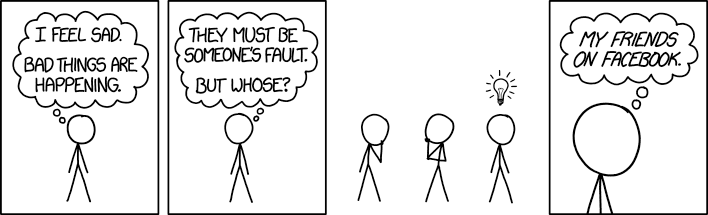
I bet if I yell at my scared friends I will feel better.
18 Nov 12:30

Trump’s Victory Could Be Making IUDs Even More Popular

by Christianna Silva

Dr. Stacey Leigh Rubin has noticed a change in her obstetrics and gynecology practice since Election Day. Before Donald Trump beat Hillary Clinton in the presidential race, Rubin saw two to three women a week at her Baltimore office who wanted long-acting reversible contraceptives. But with the chance that contraceptive care could become more expensive and less accessible under a new administration, that number has increased fivefold.

Rubin isn’t alone. It’s too early to round up concrete data telling us how many women have decided to switch from methods such as birth control pills to long-acting reversible contraceptives since Trump’s election, but multiple stories like hers have come to light.

In 2012, a mandate under the Affordable Care Act went into effect requiring that all health care plans cover contraceptives. Opponents of the rule say it isn’t the government’s or employers’ job to pay for birth control, but according to a 2013 survey by the Journal of the American Medical Association, most Americans support the mandate. Still, the president-elect and the GOP lawmakers in control of Congress could amend the ACA to remove this coverage — though it’s unclear what changes are coming for the ACA and what they’ll mean for contraceptive access.

“These are real concerns that women have,” Rubin said of her patients. “They’re scared and anxious. They want to talk about it.”

Long-acting reversible contraception, or LARCs, have grown more popular since the early 2000s, and that trend has continued since the mandate went into effect. This category includes intrauterine devices, or IUDs, and hormonal implants, which are options for women who don’t want to get pregnant in the near future (they can last three to 12 years). According to a report from the American Congress of Obstetricians and Gynecologists, LARC methods are 20 times more effective than birth control pills, patches or rings over the long term. About 12 percent of women who use contraceptives were using one of these methods in 2011-13, the most recent data available from the National Survey of Family Growth shows.

These birth control methods have never been nearly as popular as shorter-term methods. According to 2012 figures from the Guttmacher Institute, a policy and advocacy organization focused on reproductive health, 25 percent of women who used contraception used a birth control pill, 25 percent had undergone tubal sterilization and 15 percent used condoms. But this represents a comeback for LARCs. In 1982, 4 percent of all U.S. women ages 15 to 44 reported using LARCs, according to the survey data. These were the early days of LARCs. The big issue in this arena in the 1970s was an IUD called the Dalkon Shield, which was taken off the market after it was found to be dangerous, causing pain, infection and, occasionally, infertility or death. By 1988, LARC use had dropped to 1.4 percent. There was no change from 1988 to 2002, but then the LARCs that women use now started popping up, more comfortable and less problematic IUDs and implants. The share of women of reproductive age who used LARCs doubled from one study in 2002 to another in 2006-10, which brought it back to 1982 levels. Then it nearly doubled again for 2011-13.

silva-contraception-screenshot

Part of this trend results from the increase in availability and quality of LARCs, but it’s also tied to affordability. Out-of-pocket costs for LARCs — without the coverage provided by the contraceptive mandate under the ACA — can hit $1,000 and the birth control pill can cost up to $50 a month. Under the ACA, both have to be provided for free (with some exceptions).

According to multiple research articles, the increase in LARC popularity under the ACA is simple: Women use LARCs if they can afford them. And one report shows, unsurprisingly, that a woman’s willingness to pay more for different birth control options depends on her financial stability.

We still don’t know if, how or when a Trump administration would limit access to birth control. It won’t happen immediately, if it happens at all. But many women aren’t taking any chances.

17 Nov 14:53

TV Problems

Joel Thrasymachus Dahl

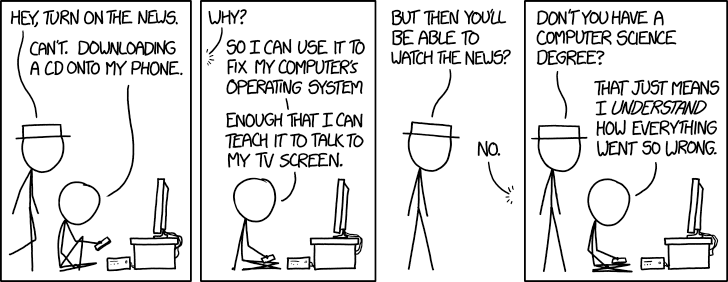
My dad is fond of saying that if refrigerators were as unreliable as computers, we'd never tolerate that.

Certified skydiving instructors know way more about safely falling from planes than I do, and are way more likely to die that way.
16 Nov 21:10

I told conservatives to work for Trump. One talk with his team changed my mind.

I am a national security Never-Trumper who, after the election, made the case that young conservatives should volunteer to serve in the new administration, warily, their undated letters of resignation ready. That advice, I have concluded, was wrong.

My about-face began with a discreet request to me from a friend in Trumpworld to provide names — unsullied by having signed the two anti-Trump foreign policy letters — of those who might be willing to serve. My friend and I had agreed to disagree a while back about my taking an uncompromising anti-Trump stand; now, he wanted assistance and I willingly complied.

After an exchange about a senior figure who would not submit a résumé but would listen if contacted, an email exchange ensued that I found astonishing. My friend was seething with anger directed at those of us who had opposed Donald Trump — even those who stood ready to help steer good people to an administration that understandably wanted nothing to do with the likes of me, someone who had been out front in opposing Trump since the beginning.

[Michael Gerson: The triumphant GOP is mired in crisis after crisis]

This friend was someone I liked and admired, and still do. It was a momentary eruption of temper, and we have since patched up our relationship. I surmise that he has been furious for some time, knowing that supporting Trump has been distinctly unpopular in his normal circles. He is in the midst of a transition team that was never well-prepared to begin with and is now torn by acrimony, resignations and palace coups. And then there are the pent-up resentments against a liberal intellectual and media establishment that scorned his ilk for years.

I sympathize, but the episode has caused me to change my mind about recommending that conservatives serve in the administration, albeit with a firm view in their minds of what would cause them to quit. This was a tipping point. The tenor of the Trump team, from everything I see, read and hear, is such that, for a garden-variety Republican policy specialist, service in the early phase of the administration would carry a high risk of compromising one’s integrity and reputation.

In a normal transition to a normal administration, there’s always disorder. There are the presidential friends and second cousins, the flacks and the hangers-on who flame out in the first year or two. There are the bad choices — the abusive bosses, the angry ideologues and the sheer dullards. You accept the good with the bad and know that there will be stupid stuff going on, particularly at the beginning. Things shake out. Even if you are just blocking errors, it is a contribution.

[Daniel Drezner: The dilemma of serving in a Trump administration]

This time may be different. Trump was not a normal candidate, the transition is not a normal transition, and this will probably not be a normal administration. The president-elect is surrounding himself with mediocrities whose chief qualification seems to be unquestioning loyalty. He gets credit for becoming a statesman when he says something any newly elected president might say (“I very much look forward to dealing with the president in the future”) — and then reverts to tweeting against demonstrators and the New York Times. By all accounts, his ignorance, and that of his entourage, about the executive branch is fathomless. It’s not even clear that he accepts that he should live in the White House rather than in his gilt-smeared penthouse in New York.

Here's what you need to know about the man who went from Breitbart News chairman to Donald Trump's campaign CEO before his appointment as chief White House strategist and senior counselor. (Jenny Starrs/The Washington Post)

In the best of times, government service carries with it the danger of compromising your principles. Here, though, we may be in for something much worse. The canary in the coal mine was not merely the selection of Stephen K. Bannon for the job previously filled by John Podesta and Karl Rove, that of counselor to the president and chief strategist. Rather, the warning signs came from the Republican leaders excusing and normalizing this sinister character — and those who then justified the normalizers.

One bad boss can be endured. A gaggle of them will poison all decision-making. They will turn on each other. No band of brothers this: rather the permanent campaign as waged by triumphalist rabble-rousers and demagogues, abetted by people out of their depth and unfit for the jobs they will hold, gripped by grievance, resentment and lurking insecurity. Their mistakes — because there will be mistakes — will be exceptional.

Nemesis pursues and punishes all administrations, but this one will get a double dose. Until it can acquire some measure of humility about what it knows, and a degree of magnanimity to those who have opposed it, it will smash into crises and failures. With the disarray of its transition team, in a way, it already has.

My bottom line: Conservative political types should not volunteer to serve in this administration, at least for now. They would probably have to make excuses for things that are inexcusable and defend people who are indefensible. At the very least, they should wait to see who gets the top jobs. Until then, let the Trump team fill the deputy assistant secretary and assistant secretary jobs with civil servants, retired military officers and diplomats, or the large supply of loyal or obsequious second-raters who will be eager to serve. The administration may shake itself out in a year or two and reach out to others who have been worried about Trump. Or maybe not.

I hope that I am wrong. I hope that the administration will settle down and that I can cheer it when it is right and offer temperate criticisms when it is wrong. But the auspices here are disturbing.

So what should the policy community do for now? Do what you can do in other venues, and remember that this too will pass, and some day a more normal kind of administration will either emerge or replace this one.

Your country still needs you — just not yet.

16 Nov 14:15

The Pussy Grabs Back Machine

Donal Trump - The Pussy Grabs Back OMG OMG OMG have so many people to thank for helping me make this video! Laura Kampf for building the Pussy Grabs Back Mac...
15 Nov 19:33

"Hope for the best, expect and prepare for the worst"

Cheriss May/ZUMA

Throughout the election, CNN commentator Van Jones has been a leading voice for progressivism, a smart critic of failings within the Democratic Party, and an unflinching tribune against the bigotry exhibited by the Donald Trump campaign. On election night, Jones—co-founder of Color for Change and president of the social justice incubator Dream Corps—spoke for many when he said that parents who'd told their kids not to be bullies or bigots were dreading how to explain the outcome to them in the morning.

On Friday, I spoke with Van Jones about where we go from here.

Clara Jeffery: On election night, you said it was pretty clear that this was a "whitelash" against not only Barack Obama, but also due to the unease that whites have of losing their demographic choke hold.

Van Jones: That part got the most attention because I was the only person on national TV willing to call out the elephant in the room. The vast majority of white people voted for Trump, and the vast majority of people of color didn't. That's been true in presidential elections for a while, but in a race where even Paul Ryan said there were textbook examples of racism coming out of the mouth of the Republican nominee, we have to accept that some very toxic stuff was marbled into the Trump phenomenon.

Now, the Trump phenomenon has a lot of really good stuff in it, the anti-elitism, the concern for America's economy in the Rust Belt, the desire to see better days for the country. That's all great stuff. Some of that stuff is Bernie Sanders stuff. The problem is that it's marbled through with xenophobia and misogyny and bigotry. The problem that we have in the country now is, some people only see the positive stuff and wave off the toxic stuff, and some people only see the toxic stuff and wave off the positive stuff. You can't have an honest conversation.

For the past 30 years, elites in both political parties signed off on trade, deregulating the banks, building all these prisons, getting into these dumb wars, et cetera. Both parties. When somebody comes along and says, "I think Washington, DC, sucks," that's not wrong. The problem is that in Trump's case, he also demagogued around racial issues. Now I think liberals have gone from underreacting to Trump and saying that Trump is just a clown and a buffoon, and that Hillary Clinton's going to kick his ass, to now overreacting, and saying, "Oh my God, 60 million people consciously endorsed a white supremacist for president."

Neither of those are true, okay? I put out a video on MoveOn.org explaining how Trump was going to beat us. I had insufferably arrogant people from across the Democratic establishment and innumerable regular NPR liberals tell me I was crazy. It has been the most frustrating year and a half, trying to explain to people who think that they're so smart and think the red-state people are so stupid that they are the ones sitting on train tracks. That the rumbling sound they're hearing is not a Beyoncé song. Okay? It was ridiculous.

Now, these same people are completely panicked and they think that Trump has power he doesn't have. Trump is holding together the shakiest coalition that you could conceivable govern on. It is a conservative, populist alliance that agrees with itself on very little. Now, he's a great deal-maker with a lot of momentum and it will do a lot of damage to us. We are in grave peril and it's going to be terrible.

But, Paul Ryan wants to privatize Social Security. Trump says he wants to keep it, save the program. How does that get worked out?  Trump wants to tear up TPP [the Trans-Pacific Partnership]. Paul Ryan is 1,000 percent for TPP. How do the conservatives and the populists govern together? Now they will agree on a whole bunch of terrible stuff, trust me, they're going to put pipelines everywhere if they can. They're going to town militarizing stuff. Civil liberties, immigration, there's a whole bunch of terrible stuff to come. But this idea that 60 million people all want to join the Klan and now have absolute control of all three branches of government and that America's over is just ridiculous.

CJ: Sure, we can't think all Trump supporters want to join the Klan—it's much more complicated. Some might be really drawn to the messages of bigotry, but for most it's probably just that…

VJ: Those kinds of comments were not disqualifying for a lot of voters who were basing their vote on other reasons.

CJ: But we have seen attacks on people all over the country, people who are Muslim or Latino or whatever. What should our level of panic be about Trump supporters who think they have permission to act like that.

VJ: One, we should take it very, very seriously. We are on track now for a tragedy. There will be a Muslim Trayvon Martin within the next six months on our present trajectory. Some completely innocent Muslim, possibly a female, who gets gravely injured, if not killed, by somebody who feels empowered by white nationalist extremes of the Trump phenomenon. So we should take it very seriously.

Number two, we need to try to get as specific and concrete as we can and gather the evidence, because one or two stories circulate on Facebook, bounce a thousand times, and it can sometimes feel like there's more going on than there is. We want to make sure we're accurate in what we're describing.

Number three, we need to put pressure on Trump, to speak out very forcefully that he's the president of all Americans including Muslims, and that his administration, including his law enforcement, is going to take very, very seriously any crimes against any Americas based on their race or their faith, including Muslims. He needs to send that signal very, very soon and very, very clearly. Otherwise, he's going to be seen as culpable. And his silence may be interpreted as encouragement, rightly or wrongly.

I think we have every reason to hope for the best but expect and prepare for the worst. It is conceivable that maybe he won't feel the need to throw so much raw meat at his base and might govern reasonably, but it seems more likely that he'll follow the usual pattern of demagogues. The usual pattern of demagogues is to promise the moon, fail to deliver, and then blame vulnerable others for those failures. He's promised the moon. Now he has power. He's going to fail to deliver. He's not going to be able to bring a bunch of coal jobs back and a bunch of factory jobs back in this global economy. Period. Because you can't. It's not going to happen.

When he fails to deliver and the economic pain is the same as it is right now, he'll have two choices. He's going to have to spend a bunch of money on infrastructure jobs, which, frankly, I'm not mad at. Especially if they're not only in the red states. That will have, against the overall economy, some multiplier effects, but relatively limited impact. He's not going to want to pay for it, so he's going to have to do that depth of finance, which will have some economic consequences, maybe mild. Then he's going to start blaming people. He's going to start a war, he's going to start attacking immigrants or Muslims or Black Lives Matter or whatever. Because he's going to have to distract them from the no jobs. I think we have every reason to hope for the best but to expect and prepare for the worst.

CJ: There's obviously a lot of infighting—everything from bitter animosity to heartfelt soul-searching—about what went wrong within the Democratic Party. What should the next Democratic National Committee chair do?

VJ: Well, you know, try to rebuild, but the problem wasn't the DNC. The problem was the arrogance of the Clinton camp, which showed up in a thousand different ways. The whole email server thing was just a debacle. She shouldn't have done it. Then the way they stopped the Sanders' rebellion, which was 80 percent fine and 20 percent bad.

Listen, Sanders lost because he didn't get enough black support. Period! End of story, we're done. Black women in the South stuck with Hillary Clinton and stopped his rebellion. You don't have to do anything else. You don't have to do all kinds of hijinks and stuff like that. In fact, do the opposite, and tell your people to do the opposite.

CJ: Do you feel that that came from Clinton herself, from her circle? Or from Debbie Wasserman Schultz and the DNC?

VJ: Hard to know, but the Sanders insurgency felt it was treated like garbage. The candidate said nice things, but…Let me just tell you how it should have been. First of all, look, you fight. You try to win. You try to win based on your own advantages and your own stuff. Hillary Clinton, in two debates, pulled out unfair attacks that made it seem like Bernie Sanders was supporting the Minutemen. Distorting attacks when people already don't trust you is not smart.

Then when the thing went down at the Nevada caucus, where allegedly chairs were thrown, but no chairs were thrown…Sanders had an opportunity that he blew and Hillary had an opportunity that she blew. Sanders should have come out and said, you know, in one statement just, "Any violence or threats in my movement, I don't want." Period, full stop. Then come back four or five hours later and talk about being concerned about the denial of the [convention] rules. He didn't do that.

She had an opportunity to come out and say, "Any shenanigans that are going on, I don't want." She and Bernie and Debbie should have held a press conference and said, "We want every vote to count. We are concerned about this and we're looking into it. Bernie and I don't agree on very much, but we both agree on democracy, and we both agree that every Democrat matters. I'm appointing a special team and so is he and we're going to oversee this thing and we're going to make sure none of this happens again."

Because listen, this played huge for the Sanders people. That's where, "This thing is completely rigged" came from. It came out of how Nevada was handled. That's really where it got accelerated.

CJ: Well right, and the primary and caucus system is so crazy. Especially to people who are new to politics.

VJ: Right, the Clintons just felt like "we can ignore people's complaints about the process, because the process is always bumpy and we're going to win this thing and move on. Just like in 2008, when we got on board with Obama, these Sanders people will have to get on board with us." Then we see nasty, inflamed comments all over the internet against the Sanders people…

CJ: Although in fairness there was also some really vicious stuff coming from some Sanders' supporters.

VJ: Listen, but guess what? A lot of all that stuff was Russia. This is the first election we ever went through where an enemy deliberately disrupts our democracy, and everybody keeps acting like it didn't happen. The Russians have had and continue to have an active program to undermine American society, and a part of that was accelerating all this online stuff. It hacked the DNC but not the RNC. We've never seen Donald Trump's email. All of this stuff was part of the disruption, so yeah, there were some Bernie bros who were saying bad stuff, some horrible behavior. I'm not trying to excuse it, but what I am saying is that…

CJ: You think some of the online nastiness from each camp was in part stoked by or was actually the work of Russian disinformation?

VJ: This is what top American intelligence officials have been saying the entire time, with the mainstream media ignoring it. And Donald Trump saying that he doesn't believe it, even though he was briefed on it over and over again. We're in the middle of a cyberwar with Russia. Yes, there was terrible behavior from some Sanders people. But Hillary Clinton was almost certainly going to be the nominee. I think they really misread the Sanders voters.

The most enthusiastic, the hardest-working, the best of the Sanders campaign had a very hard time making that turn. Here's the thing: Hillary Clinton did try to reach out to the Sanders voters with policy concessions, but Sanders voters, especially his most activist core, are process people. They're not policy wonks. They're people who want big money out of politics. They're people who want fairness from the DNC chair. They're people who want every vote to count. They're the people who don't like Wall Street money. Right? They're primarily about the process of politics and whether or not it's fair and whether or not big-money elites are rigging things in your favor. They don't care how many zeroes you add onto your promised education college policy if they don't trust you in the first place.

You saw this tragic thing, where Hillary Clinton thinks she's handing roses to the Sanders people by making policy concessions. That's how it appeared to her. These people are actually probably allergic to roses and wanted chocolate in the first place.

So you wind up with this train crash inside the Democratic Party. I tell people all the time, "Well, they had no place to go but Trump." I said, "Have you ever heard of Pokemon Go? Have you ever heard of Netflix and chill? They can go Netflix and chill and play Pokemon Go, they don't have to do what you say. They don't have to come vote." Guess what? Six million Democrats didn't come vote.

CJ: Are you in the "Keith Ellison for DNC chair" camp? How are you feeling about the candidates that have come forward so far? [Editor's note: At the time of this conversation, both Rep Keith Ellison (D-MN) and former DNC chair Howard Dean's had both been floated for DNC chair. Labor Secretary Tom Perez had not yet signaled interest.]

VJ: I'm for Keith Ellison to head the United Nations, but if he decided to turn that job down, he could deign to be the DNC chair. Keith Ellison is the future of the Democratic Party, the future of the progressive movement.

CJ: Howard Dean said the DNC chair has got to be a full-time job. What do you think about that?

VJ: I don't know. There's how hard you work, and there's what you would do when you got the job. You have both problems right now because the party's been decimated. Since 1992, the fundamental center of gravity was the Clintons and the Obamas. Now the Clintons have been obliterated and Obama's going to have to go and be quiet for at least two years—because you can only have one president at a time and he doesn't want to be a jackass like Dick Cheney. That means there's just a big gaping hole. Who's going to inspire us and point us in the right direction and encourage us? And some of it is practical: How are we going to organization ourselves and raise all the money and find all the candidates? It's really hard to say which one is the bigger problem.

I love Howard Dean, it's just that Keith Ellison's the future of the progressive movement. The future of the progressive movement is Elizabeth Warren and Keith Ellison.

CJ: What would you encourage ordinary people to get involved in right now?

VJ: Local politics matters a lot. Local, state, an effort to rebuild the farm team from the ground up, because we lost so much during the Obama years when it comes to Congress, when it comes to state legislatures. Anybody who's mad should run for something. Let's get that going. I also think that also sometimes we overemphasize the political system. There are other ways to make a difference. There's technology, there's media, there's business. We need a more diversified portfolio of change-making tools so that we don't just get so freaked out by whatever's happening in the political corner.

This is a horrific setback—there's going to be horrible consequences for a generation or more. The country may never fully recover from this, but it's not all bad and it's not over yet, and the American people may recover their senses.

First of all, almost half the people didn't vote at all. Of the half that did vote, Hillary got more votes, and of the people who voted for Trump, only probably 10 percent of them endorsed all this crazy stuff; the other 40 percent were just giving a middle finger to either Hillary Clinton, DC, or PC stuff run amok, whatever that means to them. That doesn't mean that they all want to privatize Social Security or even build a wall, in fact. If you take the people who didn't vote, cut them in half, and assume that some would have voted for Trump and some would have voted for Hillary, and then if you take her voters, that's like 150 million people. That's a lot of people who cannot be rationally included in the Trump camp at all. Then if you take the half of his voters—or more, probably—the vast majority of his voters who aren't into a lot of his crazy stuff, you got a lot to work with.

CJ: Where do you feel the media screwed up the most?

VJ: The catnip of the ratings, it's just hard to shake off. He's a hell of a performer, he's a hell of an entertainer. If you put him on and let him say his crazy stuff, you're going to get a lot of viewers. If you take him off and have some sober discussion about what's going on in Syria, you're going to lose 80 percent of your audience. When you get $1 billion of free advertising, it's hard not to have anybody buy the product.

You have a new media system and he emerged as a new master of it. FDR was underrated, but he understood radio and he dominated. JFK was underrated, but he understood television and he dominated. Obama was underrated, but he understood the internet and its capability to bring out small-dollar donors and to push viral videos. Trump was underrated, but he understood social media and he understood reality television. We thought he was leaving that world of entertainment and climbing over the wall into politics. In fact, what he did was he pulled the world of politics into the world of reality television. Basically, we all just had to live in the Trump reality television show, and now we're kind of stuck there for at least four years. Maybe eight.

He understood the dynamics of the new media system better than the people who ran the old media system. You don't get fewer followers saying outrageous stuff on Twitter. You don't get lower ratings playing the villain on reality TV. Playing the villain gets you higher ratings on reality TV and saying outrageous stuff on Twitter gets you more followers. All the old rules—if you say some crazy stuff you get your show canceled or you get your campaign ended—don't apply in the world of social media. They don't apply in the world of reality TV. He just played everybody.

CJ: At 3:30 a.m. on election night, you said a lot of Americans were struggling with what they were going to tell their kids. It's been really hard for especially young kids to process the fear that grown-ups are feeling and a lot of cases that their classmates are experiencing. If you have any wisdom for America on that front, I'm sure people would like to hear it.

VJ: I think that this should give us a lot of empathy for the kids in Syria and other wartorn countries who want to get away from crazy and to come here. Like, just the fact that someone who said mean things was able to become president traumatized a whole generation of children. No building got blown up next to them. They didn't see their dad get torn apart in a car bomb. Just one mean person saying mean things, being put in a position of power, traumatized half of a generation of kids. So it should give us a little bit more empathy for people scrambling to leave these war zones. Rich countries do civil wars with tweets and votes. In countries where there are real civil wars, people go through a lot, and we should be willing to go through a lot to help them. Hopefully this will open up our eyes to how fragile democracy is and how key civility is to civilization. Civility isn't just some optional value in a multicultural, multistate democratic republic. Civility is the key to civilization. Everybody got through it with their kids as best they could. If you're a Muslim parent, if you're a Latino parent, you're still going through it. For the rest of us who have a little bit of privilege, maybe we should be a little bit more tender-hearted.

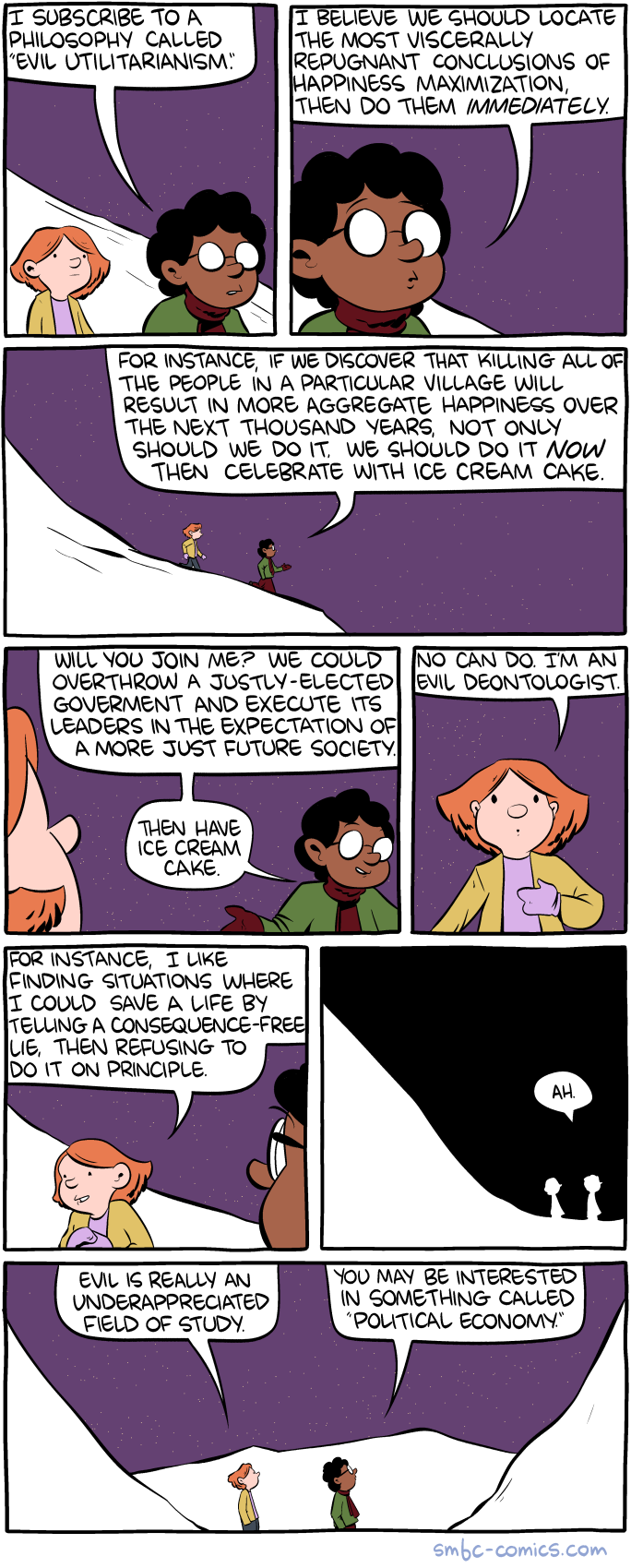
15 Nov 12:45

Clinton's 'Final Days' Farewell Video

Watch President Clinton's critically acclaimed lame-duck video, in which a film crew documented how he spent his final days in office. From the 2000 White Ho...