Shared posts

11 Feb 15:51

Report: Michael Schumacher not responding to stimuli

by Brandon Turkus

Filed under: Motorsports, Celebrities

Michael Schumacher

If you haven't been worrying about the fate of Michael Schumacher, perhaps now is the time to start. Doctors have spent the past two weeks attempting to bring the seven-time Formula One World Champion out of the coma he's been in since a December 29 skiing accident, but attempts to elicit responses to "deliberate stimuli" have been absent. Rather, Schumacher has only displayed reflex twitches.

The report comes from Germany's Bild-Zeitung, which was picked up by Fox Sports, so we'd like to stress that this is not an official update. Schumacher's medical and PR teams have been quiet since the initial announcement that doctors would begin easing the German's sedative levels.

According to the German publication, Schumacher's wife, Corinna, continues to spend her days at the driver's bedside, talking to him. Patients in Schumi's condition have been known to show improvements when being exposed to a continuous, familiar voice. As explained in previous posts, patients that remain in induced comas for too long may never wake up, or if they do, suffer from mental deficits and personality changes.

In other Schumacher-related news, it's been reported that newly retired team principal, Ross Brawn, has been by to visit the stricken F1 driver. Brawn was instrumental in Schumacher's rise to the top of the sport, as team principal for all seven of his championships.

As always, should new information on Schumacher's condition become available, we'll be sure to let you know.

Michael Schumacher not responding to stimuli originally appeared on Autoblog on Mon, 10 Feb 2014 13:15:00 EST. Please see our terms for use of feeds.

Permalink | Email this | Comments
11 Feb 13:46

Leno’s final show gets biggest audience in 15 years

by James Hibberd
UPDATED: Jay Leno exited on a very high note: The late-night host’s final Tonight Show delivered his biggest audience since
11 Feb 09:26

Такси пет звезди

by Татяна Пунчева-Василева

Повече на брой от легендите за софийските таксита са само легендите за техните шофьори. И колкото и браншът да се опитва да се регулира, засега напредъкът е труден. Това обаче има и добрата си страна - дава възможност за иновативни решения, които съвсем обяснимо през последните месеци стават все повече.

Едно от тях е смартфон приложението на младата компания TaxiMe, с което човек бързо и лесно може да си извика такси и най-важното да оцени шофьора на колата. То се разработва от...
11 Feb 09:20

Watch A Crow Solve A Complex Puzzle

by Colin Lecher


Crows are smarter than great apes and about on par with a 5-year-old child. We know they (and similar birds) can already complete complicated tasks, like putting a stick through a tube to finagle out food. But in this BBC video, the crow, after thinking it over briefly, easily completes a multi-step puzzle. 

I was not sure about the solution to this puzzle until very close to the end of the video. I choose to believe this says more about the crow than about me. Bravo, crow.

[BBC


11 Feb 09:11

Russian Building Climber Takes Incredible Photos From Ridiculous Heights

by Rollin Bishop

Kirill Oreshkin Climbing

Russian climber Kirill Oreshkin has made a habit of climbing tall buildings and other man-made structures and photographing himself standing on or hanging precariously from the top of them. The wide-angle lens that Oreshkin uses in some of these shots only serves to further induce a sense of vertigo, but they’re no less impressive.

Kirill Oreshkin Climbing Star

Kirill Oreshkin Climbing Tower

Kirill Oreshkin and Friend Climbing

Kirill Oreshkin Climbing Selfie

images via Kirill Oreshkin

via Gizmodo Sploid

11 Feb 07:28

Report: Clash of Clans raking in $654k per day

by Danny Cowan
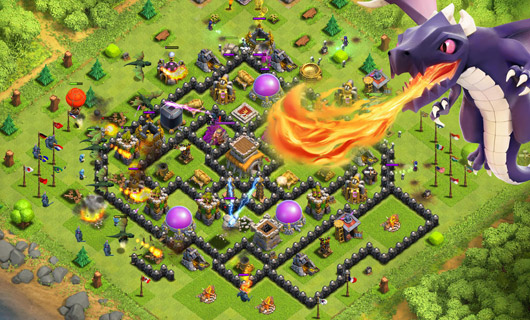
Finnish developer Supercell is earning around $654,000 daily in Clash of Clans microtransaction sales on iOS and Android devices, according to a report from Business Insider. Clash of Clans is a free-to-play simulation game with tower defense...
10 Feb 17:56

Unedited silent footage of Nagasaki bombing

by Rob Beschizza

From preparing the bomb to dropping it—the explosion is a few seconds after 8:40. [Video Link]

This silent film shows the final preparation and loading of the "Fat Man" bomb into "Bockscar," the plane which dropped the bomb on Nagasaki. It then shows the Nagasaki explosion from the window of an observation plane. This footage comes from Los Alamos National Laboratory. I have not edited it in any way from what they gave me except to improve the contrast a little — it is basically "raw." I have annotated it with some notes on the bombing and what you can see — feel free to disable it if you don't want it.

I suggest leaving them on. This is the first time I've ever seen a video benefit from YouTube annotations! [via Nuclear Secrecy and MeFi]


10 Feb 15:06

The Robocop reboot: the reviews are in

by David Konow

We just ran a report on TGD about the reboot of RoboCop, which is coming on February 12. A friend of ours who runs the Movie Zombie blog saw it early, and he wasn’t terribly impressed. Now the first official reviews are in. The verdict? 

read more


10 Feb 15:03

Leonard Nimoy Urges Fans to Stop Smoking

by David Konow

There’s been a big anti-smoking movement in America for years, to the point where people have even criticized characters smoking in movies. While we think that things like that are going a little too far, we’re all for people speaking out against what can be a very deadly habit in the long run. 

read more


10 Feb 15:02

Happy Birthday HR Giger, the Artist of Alien

by David Konow

HR Giger’s artwork is some of the most frightening I’ve ever seen. It’s brilliantly done, but I’d hate to be on the wrong drugs looking at it. Now the man who gave us the nightmarish visions of Alien has turned 74 years old.

read more


10 Feb 14:58

EVE Online players to get a real-life monument in heart of Iceland

by S. Prell
How does your favorite game or game series thank you, the player? In-game items? Bonus XP weekends? Raffle contests? How about a monument to your honor and glory in the heart of a country's capital city? CCP, developers of EVE Online, plan to erect a...
10 Feb 14:50

Movie Week: Him and Her: Spike Jonze reveals why the OS of the future is all talk

by Marc Chacksfield
Movie Week: Him and Her: Spike Jonze reveals why the OS of the future is all talk

Spike Jonze on people and technology

This is an old feature that has been republished for TechRadar's Movie Week. The original piece was published in 2014.

With the words "OK, Google" inching closer to everyday use and Apple desperately looking to raise Siri beyond gimmick, it's clear that computing companies are trying to find their true voices when it comes to OS interaction.

Fiction it may be but if the movie Her is anything to go by, then the future of device communication will certainly be through speech – speech that moves way beyond simple commands and into full-blown conversation.

The film's plot, when said out loud, may raise eyebrows. Joaquin Phoenix plays Theodore, a lonely writer who is helped over a breakup by the arrival of a new operating system in his life, Samantha, voiced by Scarlett Johansson.

In a lesser director's hands, this is a film premise that would fall flat but under the guidance of Spike Jonze (Being John Malkovich, Where The Wild Things Are) it's elevated to something special.

Her's take on AI leans heavily on intelligence, while almost completely disregarding the artificial. It's a wonderfully warm movie that presents a future that's only a beat or two away from the modern day; a world that's awash with technology but the gadgets used are kept very discreet.

Phones are spoken to through hidden earpieces, with the devices themselves looking more like delicate cigarette holders than ever-increasing rectangles.

People, Theodore included, still sit at computers but everything is controlled by voice. Everyone is talking but for the most part it's operating systems that are being chatted to. And these systems chat back.

Technology outpacing people

TechRadar was lucky enough to sit down with Spike Jonze before the premiere of Her in the UK where he revealed that despite the plot's futuristic focus, the idea that the operating system in Her acts as a support network, is something that's steeped in history.

"The way I see it is that we have lived in civilisation for the last 10,000 years. We have been turned from hunters and gatherers into a cultural-based society and from that point on, from when we started agriculture, villages, building towns our lives have definitely got much faster paced," says Jonze.

"And in the last 10 years things have gotten exponentially faster paced."

With the growth of technology in the last decade, particularly our reliance on smartphones, it's clear that Jonze is sensitive to how technology is now key to all of our lives, for better or worse, but there is a worry that technology is outpacing the people that operate it.

Her

"I can't imagine that our psychology in that time has kept up with this pace," explains Jonze. "That seems like something to think about, with finding ways to be kinder on ourselves, feel empathy for ourselves, help us deal with the situations that we put ourselves in.

"In history there was better support. You used to live in villages with your elders that you could talk to, or priests who were much more important, or the witchdoctor. Whoever it was there was a whole support system and now we don't have it – now we have our iPhone."

With such importance laid firmly on our gadgets, their access to the web and its seemingly infinite pool of knowledge, Jonze does believe that technology has the potential to burden us to the point of burn-out.

"I think about the way that the phone I carry is now part of me. How much of our life is through our phones, our computers, through our texts, through our emails. How much of our day is spent taking in information, receiving and replying to communication. It's so much," he says.

Spike Jonze on how technology changes us

Her

In Her, Johansson's Samantha alleviates this burden from Phoenix's character. She/it filters his emails for importance, often emotional importance, essentially putting order into a life that's increasingly overcome by information.

Technology in the movie is used to simplify and sort, helping Theodore feel, well, more human. Samantha is even there to give advice and act as a digital shoulder to cry on when things get too much.

In real life, though, Jonze is well aware of the imbalance that many of us go through with our technology; the constant battle to stay on top of things and how this affects us emotionally.

"Technology shouldn't just offer information but also ways to take care of ourselves," he says.

"There is this incredible amount of information, this incredible amount of communication and pressure to respond to it all and see it all.

"To succeed now you have to respond to 150 emails a day, you are never really off. It is not like the 50s where you would go have cocktails, dinner with your family and clock off at five. That reality just doesn't exist anymore."

Seeking out balance

Does this mean that technology has pushed us all too far? With half the world glued to their phones, is humanity doomed? Jonze doesn't think that's the case, believing that whatever technology offers our human side will always win out.

"Because we are such adaptive creatures and are so resourceful, we are going to do what we need to do and the more our lives get consumed with technology the more we are going to seek out the balance. Humanity will always find a way to make sure it gets what it needs," he explains.

This seeking out of balance seems to come naturally to Jonze. With every question we ask, he poses a question back at us.

Her

At one point he asks TechRadar if we think we are outsourcing our memory to our phone (and we think he has a point). Further into the conversation he wants to know if we think technology has stopped us getting intimate with ourselves, preventing us from connecting with our feelings and thoughts (again, we think he has a point).

It's these themes that punctuate Her and Jonze is clearly still inquisitive about people's relationships with technology. This passion comes out in the movie and is one of many reasons his screenplay has been nominated for an Oscar. Interestingly, though, this has never swayed him to try and interact with his own phone in this way.

When asked if he uses Siri he just smiles and says, "No."

If he did then he would learn that his film has garnered so much attention from Apple that if you ask Siri what it thinks of Her's Samantha, you are given a brilliantly bitchy reply.

Siri may not be as adept as Samantha yet but it's little things like this that prove Jonze's vision of the future really isn't that far away.

Her is out in UK cinemas February 14, courtesy of Entertainment Film Distributors, and is ready to pre-order on Blu-ray in the US and Australia.




10 Feb 13:42

Motorist in Bradford hit with parking ticket while sat in queuing traffic

by Leon Poultney
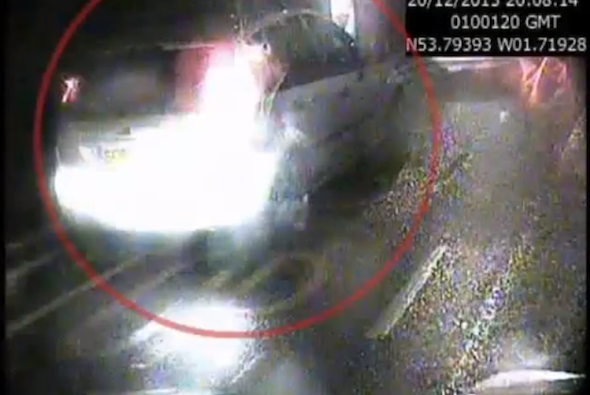
Victor Hankins was sat in queuing traffic the moment a mobile traffic enforcement vehicle snapped his vehicle allegedly 'parked' in a bus stop, resulting in a fine winging its way through the post.
    
10 Feb 13:27

How Real Is 'RoboCop'?

by Erik Sofge

RoboCop
After near-fatal injuries, Officer Alex Murphy becomes RoboCop.
Courtesy Columbia Pictures

This week, RoboCop steps back onto the screen. But unlike a cartoonish steel cyborg, the new Officer Alex Murphy is eerily imaginable. Director José Padilha and production designer Martin Whist were inspired by some of today’s most promising (or perilous) science as they conceived the part-human, part-robot peace­keeper of 2028.

Ultimate Armor

Rather than clanging metal plates, Whist chose graphene for Robo­Cop’s armor. The lattice of carbon atoms is 200 times stronger and six times lighter than steel. Although graphene is now only produced in small batches, corporations, including Samsung, are researching more efficient ways to produce the material.

All-seeing Vision

RoboCop can identify a face in a matter of seconds, a feat that’s not far-fetched for 2028. The FBI currently can match faces to mug shots with up to 80 percent accuracy, and researchers have developed algorithms that identify faces in video. The hitch will be securing enough bandwidth to analyze all that data on the fly.

Drone Control

Today, military and law enforcement agencies can send flying drones to do their dirty work. In Padilha’s dystopian future, we’ll send robotic people. Although Officer Murphy wants to believe that he has free will, he’s never quite sure whether the computer implants in his brain are what’s actually guiding his decisions and actions.

Finicky Implants

The majority of Officer Murphy’s body is robotic. Because of that, his human body is likely to reject the machine parts and constantly battle infection. So between shifts, he enters a full-body docking station, which protects his brain, lungs, and other surviving biological bits by performing a complete blood transfusion.

A version of this article originally appeared in the February 2014 issue of Popular Science.


10 Feb 09:07

Mt. Gox Bitcoin Bank Run Intensifies, 1 Million Customers at Risk

by Jason Mick
Exchange is refusing to give customers their money, CEO is at large, and company faces "significant losses"


10 Feb 09:04

Photo


10 Feb 09:03

Verizon support rep admits anti-Netflix throttling

by Cory Doctorow

Robbo sez, "Dave Raphael of Dave's Blog has an interesting post about a conversation he recently had with Verizon support and discovered some uncomfortable - yet wholly unsurprising - truths about how Verizon is selectively limiting bandwidth to AWS services and adversely affecting the quality of Netflix. The open admission of this by Verizon support was unexpected - but the fact it is happening should be of no surprise to anyone but the ignorant and naive."


Frankly, I was surprised he admitted to this. I’ve since tested this almost every day for the last couple of weeks. During the day – the bandwidth is normal to AWS. However, after 4pm or so – things get slow.

In my personal opinion, this is Verizon waging war against Netflix. Unfortunately, a lot of infrastructure is hosted on AWS. That means a lot of services are going to be impacted by this.

Verizon Using Recent Net Neutrality Victory to Wage War Against Netflix [Dave Raphael/Dave's Blog] (Thanks, Robbo!)


07 Feb 16:01

Tuomas Holopainen - Releases Video For Solo Song

by Dark†SymphonY
Here it is folks, the first taste taken off Nightwish mastermind Tuomas Holopainen's solo album. The video for the track and debut single "A Lifetime Of Adventure" has been released and you can enjoy it right here. It is taken from The Life And Times Of Scrooge, Tuomas first solo venture. The album will be out on April 11th, 2014 via Nuclear Blast. The cover artwork on both the single and the album is by Don Rosa, the illustrator of Disney's Duck characters, who also appears on the video.
07 Feb 16:01

Megadeth - Boots Newsted From Soundwave Sideshows

by Ace Frawley
Roumen.ganeff

dis-like

Soundwave Touring have confirmed that at the request of Megadeth, Newsted will not be performing at the Melbourne and Sydney sidewaves. Ever year, bands are recruited to tour throughout Australia for the Soundwave Festival. Many bands take the opportunity to play extra 'Sidewave' shows while they're traveling around the country, but Jason Newsted's solo band has been booted from two Megadeth side shows "at the request" of the band.
07 Feb 13:26

ARROW Scoop: Katrina Law, Plus EPs Marc Guggenheim and Andrew Kreisberg Talk Nyssa al Ghul and What’s Next on ARROW

by theTVaddict
By: Sarah Stephens ARROW is cracking up open the DC universe and last night’s episode was just the beginning! Fanboys and girls have been clamoring for some League of Assassins action since ARROW came back for its sophomore season. In “Heir to the Demon,” ARROW fans got their first introduction to Nyssa al Ghul, daughter
Read More
07 Feb 12:21

Steve Wozniak suggests Apple to make Android phones

by Asad Rafi

Apple founder Steve Wozniak has found himself in a bit of a fanboy brouhaha after this week suggesting that Apple should consider make an Android smartphone.

Speaking with WIRED at the Apps World North America conference in San Francisco, Woz said:

“There’s nothing that would keep Apple out of the Android market as a secondary phone market.

We could compete very well. People like the precious looks of stylings and manufacturing that we do in our product compared to the other Android offerings. We could play in two arenas at the same time.” – Apple co-founder Steve Wozniak

This is not the first time Wozniak has looked at Android as a viable platform; he told us nearly 4 years ago that Android will win at the end. He’s also advised that Android does things better than the iPhone.

Obviously this isn’t something that’s going to happen, but it’s fun to think of the potential device. Hardware as polished as Apple’s, paired with a platform as robust as Android sounds like a recipe for great things. While we’re somewhat keen on the idea, die-hard Apple fans are getting their knickers in a twist. Take a look at the comments in WIRED and you’ll see fun banter on all sides of the argument.

Don’t forget to share your thoughts with us in the comment box below.

Source: Wired

The post Steve Wozniak suggests Apple to make Android phones appeared first on AndroidGuys.

06 Feb 09:05

Sony sells its VAIO PC business, is splitting TV arm into a separate company

by Mat Smith
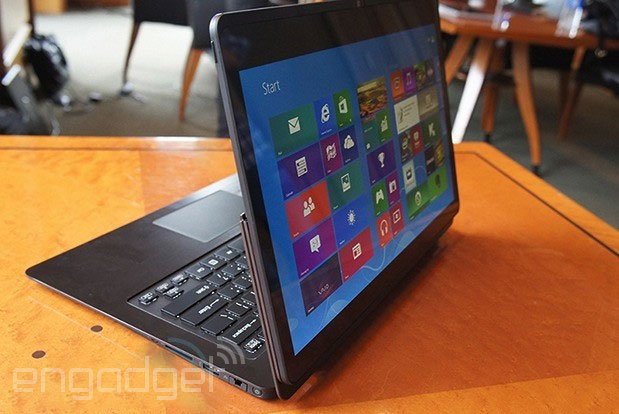
Sony said it was "addressing various options" as recently as yesterday when it came to its VAIO PC and laptop arm, and while announcing its financial results for Q3 2013, it's apparently come to a decision. Amid reforming its TV arm (and splitting it...
06 Feb 08:58

90-Minute DNA Screening Available Soon For Law Enforcement

by Douglas Main

DNA
Richard Wheeler via Wikimedia Commons
Current human DNA tests take two to three weeks to be completed, and must be sent into an accredited laboratory. But a new rapid test, which could analyze human DNA in 90 minutes in the field, is nearly complete, Pentagon and industry officials told USA Today.

The change to an exponentially faster, mobile test will have huge implications for for law enforcement, war crimes investigations and immigration, Chris Asplen, the executive director of the Global Alliance for Rapid DNA Testing, told the paper. "When it comes to solving crime (not proving it in court but actually using DNA to find the killer, rapist, burglar, etc.) the value of DNA as an investigative tool is directly proportional to the speed at which it can be leveraged in any given investigation," Asplen said.

The Pentagon will finish evaluating the test by this June, prototypes of which are being developed by NetBio of Waltham, Mass. The departments of Homeland Security and Justice are working on their own tests.

Current laws that governs how DNA tests can be used--particularly the DNA Identification Act of 1994--did not anticipate rapid analysis. "The language requires that only DNA tests done in an accredited laboratory may be entered" into a national database, Asplen said. "That language will have to changed."

[USA Today]


06 Feb 08:57

Your Body Can Kill Cancer. It Just Needs Better Instructions.

by Veronique Greenwood

Battling Cancer With A Vaccine
Medi-Mation

Part of what makes cancers so insidious is that they’re not invaders: They’re our own cells turned against us. That means the body usually doesn’t see them as a threat. But over the last few years, teams at several different research institutions have been programming peoples’ immune systems to recognize and destroy cancer. So far, clinical trials of about a hundred terminal leukemia patients have shown some lasting effects. A single treatment has kept two of them cancer-free for three years and counting—after everything they tried had failed. Applying the technique to more cancers requires finding new targets to attack, says Michel Sadelain, an immunologist at Memorial Sloan-Kettering Cancer Center who pioneered the approach. Exploratory clinical trials, including for lung and prostate cancers, are getting under way.

1) Capture T cells (the immune system‘s attack force) from the blood of a patient with B-cell leukemia.

2) Genetically engineer the T cells to train their sights on the CD19 molecule, which sits on the surface of B cells and the cancer cells that arose from them.

3) Inject the patient with the modified T cells, which may then destroy all cells with CD19—both cancerous and not.

4) Bolster the patient’s immune system with treatments of antibodies, since B cells normally make antibodies needed to fight infection.

This article originally appeared in the February 2014 issue of Popular Science.


06 Feb 08:57

How A Simple New Invention Seals A Gunshot Wound In 15 Seconds

by Rose Pastore

XStat
RevMedx

When a soldier is shot on the battlefield, the emergency treatment can seem as brutal as the injury itself. A medic must pack gauze directly into the wound cavity, sometimes as deep as 5 inches into the body, to stop bleeding from an artery. It’s an agonizing process that doesn't always work--if bleeding hasn't stopped after three minutes of applying direct pressure, the medic must pull out all the gauze and start over again. It’s so painful, “you take the guy’s gun away first,” says former U.S. Army Special Operations medic John Steinbaugh.

Even with this emergency treatment, many soldiers still bleed to death; hemorrhage is a leading cause of death on the battlefield. "Gauze bandages just don't work for anything serious," says Steinbaugh, who tended to injured soldiers during more than a dozen deployments to Iraq and Afghanistan. When Steinbaugh retired in April 2012 after a head injury, he joined an Oregon-based startup called RevMedx, a small group of veterans, scientists, and engineers who were working on a better way to stop bleeding.

XStat, before and after
RevMedx

RevMedx recently asked the FDA to approve a pocket-size invention: a modified syringe that injects specially coated sponges into wounds. Called XStat, the device could boost survival and spare injured soldiers from additional pain by plugging wounds faster and more efficiently than gauze. 

The team’s early efforts were inspired by Fix-a-Flat foam for repairing tires. “That’s what we pictured as the perfect solution: something you could spray in, it would expand, and bleeding stops,” says Steinbaugh. “But we found that blood pressure is so high, blood would wash the foam right out.”

So the team tried a new idea: sponges. They bought some ordinary sponges from a hardware store and cut them into 1-centimeter circles, a size and shape they chose on a whim but later would discover were ideal for filling wounds. Then, they injected the bits of sponge into an animal injury. “The bleeding stopped,” says Steinbaugh. “Our eyes lit up. We knew we were onto something.” After seeing early prototypes, the U.S. Army gave the team $5 million to develop a finished product.

But kitchen sponges aren’t exactly safe to inject into the body. The final material would need to be sterile, biocompatible, and fast-expanding. The team settled on a sponge made from wood pulp and coated with chitosan, a blood-clotting, antimicrobial substance that comes from shrimp shells. To ensure that no sponges would be left inside the body accidentally, they added X-shaped markers that make each sponge visible on an x-ray image.

“By the time you put a bandage over the wound, the bleeding has already stopped.”

The sponges work fast: In just 15 seconds, they expand to fill the entire wound cavity, creating enough pressure to stop heavy bleeding. And because the sponges cling to moist surfaces, they aren’t pushed back out of the body by gushing blood. “By the time you even put a bandage over the wound, the bleeding has already stopped,” Steinbaugh says.

Getting the sponges into a wound, however, proved to be tricky. On the battlefield, medics must carry all their gear with them, along with heavy body armor. RevMedx needed a lightweight, compact way to get the sponges deep into an injury. The team worked with Portland-based design firm Ziba to create a 30 millimeter-diameter, polycarbonate syringe that stores with the handle inside to save space. To use the applicator, a medic pulls out the handle, inserts the cylinder into the wound, and then pushes the plunger back down to inject the sponges as close to the artery as possible.

XStat sponges
RevMedx

Three single-use XStat applicators would replace five bulky rolls of gauze in a medic’s kit. RevMedx also designed a smaller version of the applicator, with a diameter of 12 millimeters, for narrower injuries. Each XStat will likely cost about $100, Steinbaugh says, but the price may go down as RevMedx boosts manufacturing.  

If the FDA approves XStat, it will be the first battlefield dressing created specifically for deep, narrow wounds. Gauze, the standard treatment for gunshot and shrapnel injuries, is only approved by the FDA for external use, but “everyone knows that if you get shot, you have to pack gauze into the wound,” says Steinbaugh. When RevMedx submitted its application to the FDA, the U.S. Army attached a cover letter requesting expedited approval. According to Steinbaugh, RevMedx and the military are now in final discussions with the FDA. 

Last summer, RevMedx and Oregon Health and Science University won a seed grant, sponsored by The Bill & Melinda Gates Foundation, to develop a version of XStat to stop postpartum bleeding. In the future, RevMedx hopes to create biodegradable sponges that don’t have to be removed from the body. To cover large injuries, like those caused by land mines, the team is working on an expanding gauze made of the same material as XStat sponges.

“I spent the whole war on terror in the Middle East, so I know what a medic needs when someone has been shot, ” Steinbaugh says. “I’ve treated lots of guys who would have benefitted from this product. That’s what drives me.”

Rose Pastore is an assistant editor at Popular Science. Follow her on Twitter at @RosePastore.


06 Feb 08:55

A Mind-Controlled Robotic Hand With A Sense Of Touch

by Francie Diep

photo of Denis Aabo Sorensen shaking hands with a researcher
Denis Aabo Sørensen Wears the Experimental Prosthetic, March 2013
LifeHand 2/Patrizia Tocci

Denis Aabo Sørensen lost his left hand nine years ago, while handling fireworks. Since then, he has used prosthetic hands, but never one like this. Last year, a team of European engineers created for him a prosthetic hand that connects directly to the remaining nerves in his upper arm. That means the hand is able to send sensations of touch back through his arm and into his brain. Plus, when Sørensen wanted to grab something, he could move the hand by simply thinking about it.

"The sensory feedback was incredible," Sørensen said in a statement. "When I held an object, I could feel if it was soft or hard, round or square."

"I could feel things that I hadn't been able to feel in over nine years," he said.

His feeling-hand prosthetic was an experimental prototype, so researchers had to remove the implant after a month of wear, following European law about experimental medical devices. While Sørensen had it on, however, he demonstrated for researchers that he was able to do things like distinguish between a bottle, a baseball and a mandarin orange, and press things with light, medium or firm pressure. He wore a blindfold and headphones while completing each of these tasks, to prove he could do them only by touch.

photo of Sorensen wearing prosthetic with six researchers behind him
Researchers Monitor Sørensen's Prosthetic
LifeHand 2/Patrizia Tocci

He could even adjust his grip as needed, all from his robotic sense of touch. "What we did was to provide this tactile information," Silvestro Micera, the hand's lead engineer, says. "It is the first time this is exploited in real time for modulating the force during the grasp." Micera is a robotics researcher with the Scuola Superiore Sant'Anna in Italy and the Ecole Polytechnique Federale de Lausanne in Switzerland.

The implant is one more step in a worldwide effort by researchers to create prosthetics that have a natural sense of touch. Touch is essential for so many everyday tasks. Without it, prosthetics wearers must watch what they're picking up to help them judge whether they've got a good—but not too tight—grip on that banana or coffee cup. While that's workable, it's a far cry from the unconscious ease with which someone with natural hands is able to grip everything from a hammer to an egg.

photo of the robotic hand
Closeup of the Hand
LifeHand 2/Patrizia Tocci

Other researchers have made experimental, feeling prosthetics similar to Sørensen's and tested them in humans. One notable experiment was actually carried out 10 years ago. Sørensen's hand is another step forward, outside researchers I talked with say. One thing everyone was impressed by: The detail with which Micera and his team recorded what Sørensen could do with touch. The study volunteer, who is 36 years old and lives in Denmark, performed 700 individual tasks for the hand's creators.

"They really showed the value of having this feedback to the user and, in some ways, justified, in an actual use setting, an implanted interface with the nerve," says Dustin Tyler, a biomedical engineer at Case Western Reserve University who has made and studied feeling prosthetics in people.

"In my view, that volunteer is really doing science a great favor," says Daofen Chen, the program director in systems and cognitive neuroscience at the U.S. National Institute of Neurological Disorders and Stroke, who was not involved in the recent study.

Of course, touch-enabled prosthetics have a long way to go before they're available for most people to use. Sørensen's experimental hand illustrates what's left to do, and what many researchers, including Micera and Tyler, are working on now.

The hand required surgeons to implant electrodes directly onto Sørensen's nerves. There need to be more studies of how long electrodes like that last in the body. (No one wants to have to undergo extra surgeries because, oh no, my electrodes wore out again.) There's also the problem of all the computing hardware. Sørensen's prosthetic did serious math to translate what its sensors felt into an electrical signal that was meaningful to Sørensen's nerves and brain. So the hand connected to a laptop, to run the calculations, before connecting back to his nerves. Researchers are working on miniaturizing the computer so it can fit right in the implant.

Micera and his team published their work on Sørensen's implant today in the journal Science Translational Medicine.


05 Feb 21:32

Visitors to Sochi Olympics should expect to be hacked (video)

by Zach Honig
There's little question at this point that the logistics in Sochi, from hotel rooms to public infrastructure, are a mess, but one of the greatest threats to visitors is one they can't even see. According to NBC, it's a near-guarantee that connected...
05 Feb 16:33

This Just In: Sexy New Photos of the Cast of CASTLE!

by theTVaddict
Since new episodes of CASTLE don’t return until Monday February 17th, we thought fans might enjoy a slew of just released hot shots featuring a handful of very familiar — not to mention easy on the eyes — faces. See for yourself, after the jump.
05 Feb 12:38

Toshiba Portege Ultrabook Survives Dog Drool Test

Toshiba Portege Ultrabook Survives Dog Drool TestWhat's the weirdest thing you've spilled on your laptop?
05 Feb 06:37

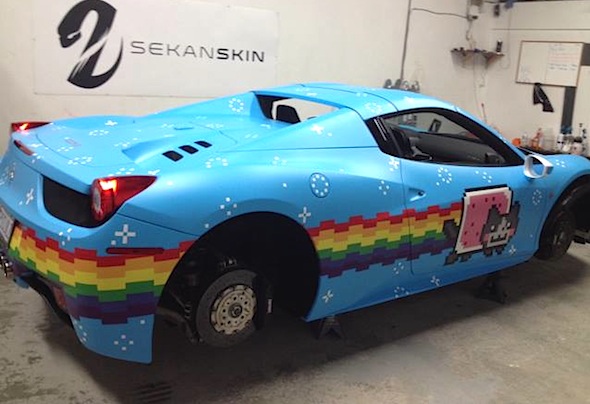
Superstar DJ Deadmau5 gives his Ferrari 458 a mad makeover

by Leon Poultney
The name Deadmau5 probably won't mean a lot to those who don't follow the dance music scene but we can assure you that the man who wears a massive mouse head at all gigs is enormous within these circles.