Shared posts

02 Nov 07:10

Will Wormhole Travel Ever Be Possible?

by Loren Grush

Travel By Wormhole

As a curious species, humans have long dreamed of traveling to the farthest depths of space. That's the major theme of the upcoming science fiction epic Interstellar, which will take Matthew McConaughey and Anne Hathaway to the places we hope to one day reach ourselves. Except for that tiny hiccup called deep space travel.

The universe is big. And along with its enormous size, it's also incredibly spread-out; any neighboring planets, stars, and galaxies are depressingly distant. Proxima Centauri, the closest star to Earth, for example, is 4.22 light years away. If the fast-moving Voyager spacecraft attempted to reach Proxima Centauri, it would take the tiny probe more than 80,000 years to get there.

So how are we supposed to explore the universe in a way that won’t take us thousands of generations? Among the many concepts researchers have devised, one technique has remained particularly popular, especially in the realm of science fiction: shortcuts, or theoretical tunnels known as wormholes.

Wormholes are thought to be highly unstable, and the insertion of foreign matter might cause them to collapse completely.

In theory, wormholes are tunnel-like connections made out of spacetime, offering a shorter distance between two vastly separated areas of the universe. The idea is that space travelers can use these tunnels to make space commutes much shorter than thousands of years. Numerous books, TV shows, and films have utilized the wormhole concept for deep space travel—from Dr. Arroway's mysterious alien-filled journey in Contact to the Bajoran Wormhole, which allows access to the unexplored Gamma Quadrent in Star Trek: Deep Space Nine.

This plot device will be utilized yet again in Interstellar. In the film, a band of astronauts travel through a newly discovered wormhole connecting widely separated areas of space-time, in order to find a new world to call home. It sounds incredible, as if all our space travel fantasies can come true. But is it possible? Could humans one day use a wormhole to travel to another galaxy or beyond?

The science says it’s highly unlikely, yet possible. However, to make a traversable wormhole, we're going to need a lot of specific conditions and an understanding of where these amazing secret passages come from.

What is a wormhole?

Up until the early 1900s, Newton’s theory of gravity held supreme. It was the idea that all objects in the Universe—including you and me—have an innate force within us that attracts other objects. The larger an object, the greater this intrinsic gravitational pull. This explains why we “stick” to the Earth instead of flying off into space.

But in 1915, Albert Einstein completely tore that idea apart. He theorized that gravity is actually the result of a warping in spacetime (a combination of space and time into one continuum). Essentially, an object’s very existence deforms space and time around itself, creating an imprint on the universe.

And it’s this deformation of space-time that gives rise to gravity’s effects. “Suppose that there’s you and another mass. You deform the spacetime around you and the mass deforms the space-time around it, and you’re both falling into each other’s wells,” says Richard Holman, a physics professor at Carnegie Mellon University.

Now here's the part where this all ties into wormholes. According to Einstein and his colleague Nathan Rosen, a wormhole is actually deformed space that has warped in such a way to connect two different points in space-time. The result is a tunnel-like structure that could be straight or curved, linking two areas of the Universe that are incredibly far apart.

Einsteinian mathematical models predict that wormholes exist, but none have ever been found. Fumio Abe, an astrophysicist at Nagoya University, has proposed a way to search for large wormholes (big enough for a spaceship) by looking at a star’s brightness when it moves in front of the tunnel. An effect called gravitational lensing would cause the brightness to fluctuate in a unique way.

However, chances are that we’re not going to find big wormholes any time soon.

Enter If You Dare

The problem with wormholes

So far, physicists haven’t determined a way in which wormholes would form naturally in the Universe.  However, theoretical physicist John Wheeler said it’s possible that wormholes may spontaneously appear and disappear, according to his quantum foam hypothesis (the idea that virtual particles are, quite weirdly, popping in and out of existence at all times).

Unfortunately, Wheeler theorized that these impromptu wormholes would be super small, appearing at the Planck scale. That’s about 10-33 centimeters long. In other words, the wormhole would be so small that it'd be almost impossible to detect.

Let’s suppose, however, that we could find tiny wormholes as they pop into existence: We might be able to make them bigger. And to do that, you’d need a funky material called exotic matter.

“The rule of ordinary matter in the universe is that it has positive energy density and positive pressure,” says Eric Davis, a senior research physicist at the Institute for Advanced Studies at Austin. “Exotic matter is a little bit different. It’s matter that has negative energy density and/or negative pressure. You can have a clump of matter with negative energy and positive pressure or visa versa.”

Negative properties of exotic matter might push the sides of a wormhole outward, making it large enough—and stable enough—for a person or a spaceship to fit through it. Except exotic matter isn’t exactly easy to come by; it exists only in theory, we don't know what it looks like, and we have yet to know where to find it.

But say we surmount even that in our hypothetical. We’ve found a tiny wormhole, we somehow have obtained some exotic matter, and we’ve expanded and stabilized the tunnel to be big enough to fit a spaceship. Holman explains that it’s possible inserting anything that isn’t exotic matter would destabilize the wormhole completely. In other words: Entering a wormhole could immediately kill you.

Wormholes come with a lot of caveats, but here’s an even bigger one. Wormholes could very well connect two completely different space-times; i.e. the entry point might exist in a completely different era. That means traversing via wormhole comes with the risk of winding up in a different time in the universe's history. Some have even theorized that wormholes could connect completely different universes altogether. Wrap your head around that one for a second.

When it comes to the prospect of using wormholes for space travel, Davis is a bit more optimistic than Holman, explaining that harnessing exotic matter is all you need to create your own functional wormhole from scratch. (He’s currently working on a way to create exotic matter in his lab at Icarus Interstellar.) Holman takes a more realistic approach.

“If you really could do it, with all the exoplanets and stars out there, you’d figure someone ‘else’ would already have done this,” Holman explains. “And as far as we could tell, from looking at a decent fraction of the universe, we’re not seeing any evidence of that. That starts telling you that you may just have to travel the hard way.”

28 Oct 13:18

OZZY OSBOURNE Says BLACK SABBATH Will 'Disband' After Next Studio Album, Tour

Ozzy Osbourne says that BLACK SABBATH will "disband" after completing the next album and touring cycle, leaving him to focus entirely on his solo career. The singer released a solo retrospective called "Memoirs Of A Madman" earlier this month. The collection features 17 of Ozzy's greatest hit singles compiled in one place for the first time in his career. Asked why he decided to release "Memoirs Of A Madman" now, Ozzy told The Times-Picayune: "A lot of people are asking me, with the success of the reformation of BLACK SABBATH, am I going to do any solo stuff any more? The answer is yes. I am going to continue to do my solo stuff, but I can't do the two at the same time. This 'Memoirs Of A Madman' package is to let everybody know that I haven't abandoned my solo career." He continued: "I'm doing one more BLACK SABBATH tour, one more BLACK SABBATH album, and then we're disbanding the name, I believe. And then after that, I'll be doing my solo stuff." Ozzy added: "In a way, I'm glad that I did the things with BLACK SABBATH. No. 1, it was the first time we ever had a No. 1 [album] in America. No. 2, hopefully we'll end on a happy note. The only sad note about it is that [original drummer] Bill Ward didn't do the last tour, for reasons that I guess have something to do with financing or something. I don't know. "It would be great for him to get it together and sort all the problems out for the next tour. It would be a great way for the four of us to end such a wonderful experience of being BLACK SABBATH, and what we achieved. "Tommy Clufetos [the drummer in Osbourne's solo band] did a great job [filling in for Ward on the most recent tour]. He's a great drummer. But he ain't Bill Ward, you know?" Ward was announced as part of the band's reunion in late 2011, but dropped out early the following year due to what was assumed to be a dispute over his contract. Since that time, however, the other three original SABBATH members — Ozzy, guitarist Tony Iommi and bassist Geezer Butler — have hinted that Ward was not physically up to the task of recording a new album and embarking on a lengthy world tour. Ozzy said as much when The Pulse Of Radio asked about Ward's absence a while back. "Bill Ward has got the most physically demanding job of the lot of us, 'cause he's the timekeeper," he said. "I don't think personally he had the chops to pull it off, you know. The saddest thing is that he needed to own up to that, and we could have worked around it, whether we had a drummer on the side with him or something. But I suppose it was something to do with finances as well." Ward underwent surgery last year for perforated diverticulitis, a gastrointestinal condition in which the walls of the intestine have become perforated. For the recording of its 2013 reunion album, "13", SABBATH used RAGE AGAINST THE MACHINE drummer Brad Wilk, while Clufetos handled the drums on tour. Ozzy recently told Metal Hammer magazine that Rick Rubin, who produced last year's "13" album, will likely be back for the next project. Asked if he has started writing songs for the new BLACK SABBATH album, Ozzy told Esquire magazine: "No. Although I texted [guitarist] Tony [Iommi] the other day. I said, 'It would be a great idea if you could send me some musical ideas so I can try and work some melodies around so we don't have to go searching for the song structure.' So I'm not starting from a cold block, you know?"
27 Oct 17:04

Amazon Announces $39 Fire TV Stick, Prime Members Can Pay $19 for a Limited Time

by Brandon Hill
Amazon looks to burn the competition with its new Fire TV Stick
27 Oct 12:59

flamingraichu: I googled ‘motion capture Groot’. I was not...


flamingraichu:

I googled ‘motion capture Groot’. I was not disappointed. 

27 Oct 12:57

[camperjohn64]

27 Oct 12:45

Julian Assange: Google is breaking bad

by Dave Neal
Julian Assange: Google is breaking bad

Web firm is 'not what it seems', warns WikiLeaks founder


27 Oct 11:49

Scientist trumps his own work three weeks after winning the Nobel Prize

by Daniel Cooper
If you'd just won the Nobel Prize for Chemistry, no-one would blame you if you took a quick trip to Disneyland, or at least a few days to catch up on Orange is the New Black. Eric Betzig, however, had other plans, since shortly after he was told he...
27 Oct 11:47

Sundar Pichai takes control of Google's crucial products

by Chris Velazco
Well, we guess congratulations are in order. According to Re/code, Sundar Pichai, the senior vice president at Google who used to just be in charge of the Chrome, Android, and web apps teams now basically has control of almost every other Google...
27 Oct 09:45

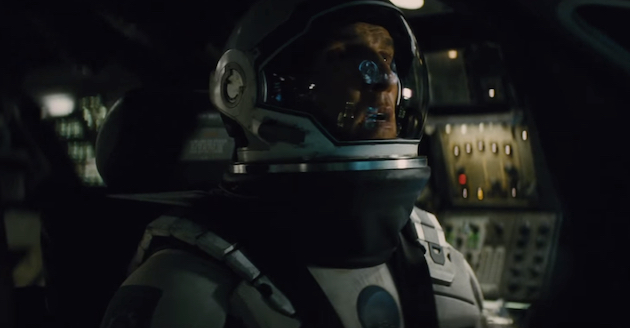
Investigating the science in Christopher Nolan's 'Interstellar'

by Timothy J. Seppala
Even the most well respected filmmakers have been known to bend the truth a bit when it comes to depicting science on the silver screen, throwing accuracy to the wind in favor of trivialities like "plot" and "drama." We kid, of course. But how does...

27 Oct 09:44

App-controlled coffeemaker can automatically mix your perfect blend

by Mariella Moon
You won't even bother denying it: you're somewhat of a coffee snob and have a particular bean-to-water ratio of choice. This new coffeemaker called Bruvelo promises to make it a lot faster to mix your perfect cup -- you don't even have to do anything...
27 Oct 09:43

Watch a Platypus Walk between Creeks in Tasmania

by RJ Evans

You really don’t see this every day.  The platypus is usually considered nocturnal (even though it can also be seen in the early evening) yet sometimes, needs must.  This platypus (one of the few venomous mammals on the planet) wants to get from one creek to another in its Tasmanian home but with no streams to get it to its destination, it has been forced to walk. Its trek was caught on film by Max Moller of Black Devil Productions.
27 Oct 09:43

The Hidden Life of the Burrowing Owl

by RJ Evans

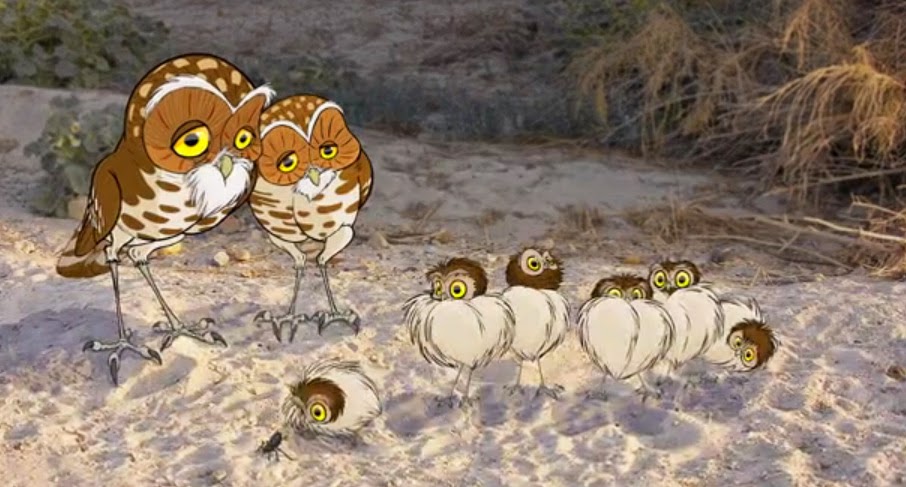
We don’t usually stray away from live action on Ark in Space, but this is really something rather wonderful.  Mike Roush, an animator living in California, has created this animated record of the life and loves of the Burrowing Owl.  Although it does veer in to the anthropomorphic it also faithfully records many of the details of how burrowing owls survive in the wild.  If this wets your appetite for the real thing then why not take a look at our feature article on the burrowing owl.
27 Oct 09:39

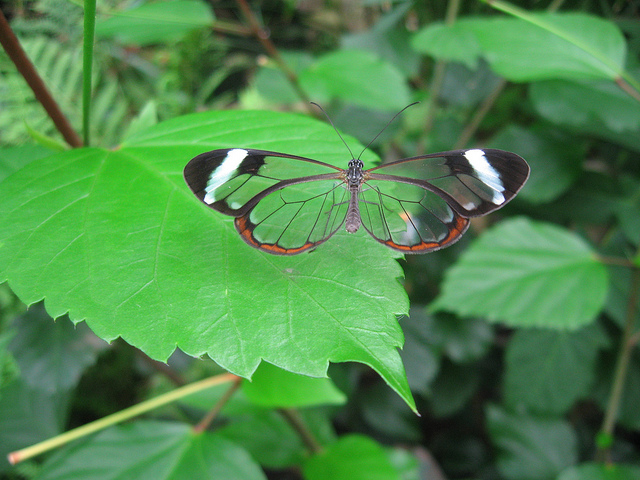
The Incredible Glasswing Butterfly

by RJ Evans
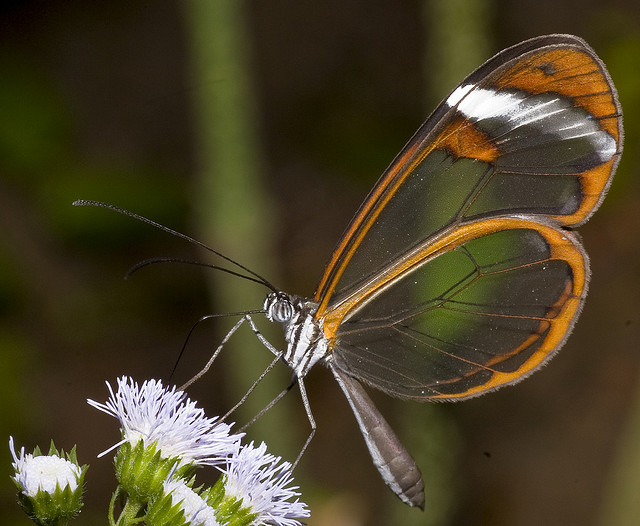
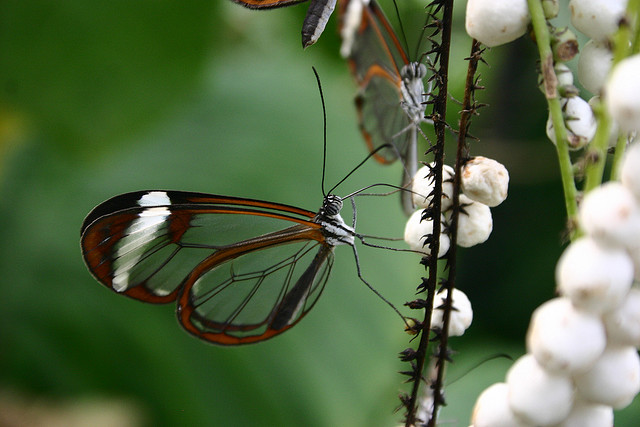
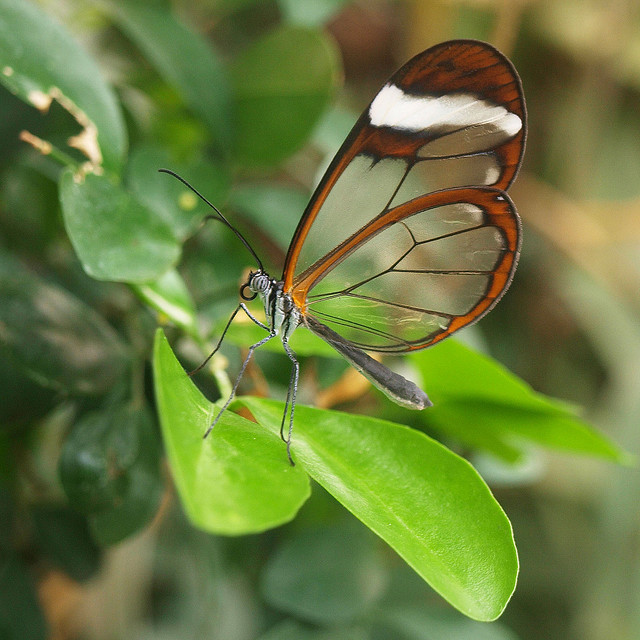
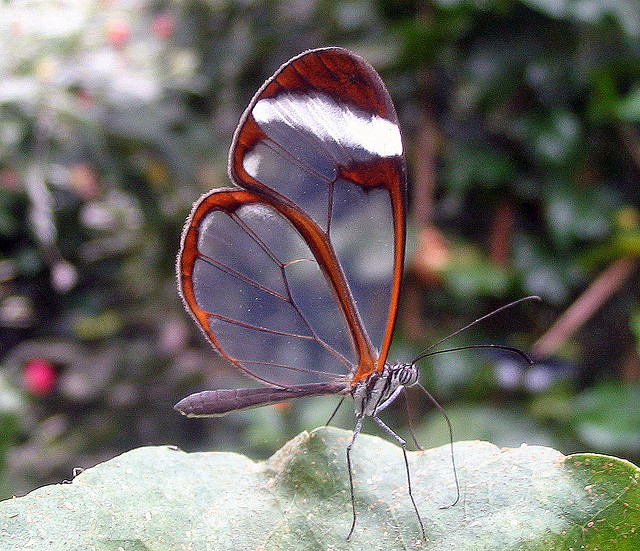
A butterfly with transparent wings? Surely not. Yet there is a species that exhibits this trait. Take a close look at the incredible Glasswing, an enchanting species that confounds science.

Greta oto may sound like the name of a silent movie star from Eastern Europe but is in fact the scientific name for one of the most exquisite – and little known – species of butterfly on the planer. This butterfly’s claim to fame is that its wings, spanning up to six centimeters, are almost completely transparent. That’s right, you can see just about right through them.

The common English name for this remarkable butterfly is glasswing, which in itself speaks volumes about the appearance of this small but unusual insect. However, it takes the romance languages to step in and give the butterfly the name which, for many, suits it best. The Spanish name for the glasswing is ‘espejitos’. Literally translated, this means little mirrors. Just a glance at the insect in question and one can imagine the thrill of pleasure when the moment of inspiration that came to its Hispanic name giver.

A close look at Greta oto reveals that between the veins of its wings the tissue is virtually see through) or, properly, translucent). Most other butterflies have colored scales which pattern the wings, quite often to ward off predators. The glasswing has another way of doing this entirely, but over the millennia it has evolved these specific wings to hide itself from predators rather than to warn them off. The only way that you can tell that it has wings at all are the borders, which are of a dark hue, sometimes bordering on the orange. Were it not for these borders, the glasswing would be more or less invisible to the human eye.

The glasswing is part of a specific clade of butterfly. Now for the science, as Jennifer Aniston used to say. A clade is a ‘branch’ and is a term used in the taxonomy of species. When groups of species has a single common ancestor (which does not necessarily need to be extant) then it is known as monophyletic. The common ancestor of the glasswing is long extinct but the clade it belongs to is known as the clearwing clade.

Transparency in nature is not something that has been very well understood. In order to achieve transparency the tissue must not absorb light. Neither can it scatter light, as this is the major obstacle to being see-through. Humans, for example, will never be able to be transparent because they have chemical and biological compounds that all have different refraction.

The wings of the glasswing must, therefore, have the same refractive index all the way through them as otherwise this transparency could not possibly occur. It is thought (a postulation at the moment rather than sure fire fact) that the surface of the wing has a covering of protrusions that are so small they can be called submicroscopic. They have a single refractive index and so do not scatter light, so making the wings transparent.

As with most butterflies it is a delicate looking species, but those who breed it in captivity have found it to be quite resilient and its wings are no less strong than those of other species. Another relief is the fact that in its native habitat it is quite common. Unless you live in South America, however, the only chance you will get of seeing the glasswing alive is in a butterfly house or farm.

If you want to see ‘little mirrors’ in the wild, however, you will have to take a trip – anywhere from Mexico to Panama in Central America will do the trick. You will also have to locate the nearest rainforest as the understory of this environment is where the glasswing prospers. They feed off the nectar of a variety of rainforest flowers but when it comes to laying their eggs and ensuring the survival of the next generation, the glasswing has a fine trick up its (metaphorical) sleeve.

The glasswing, where possible, will lay its eggs on a plant of the genus ‘Cestrum’. Its common name, to you and I, is the nightshade and it is highly poisonous. The caterpillars, which are striped in bright purple and red to warn possible predators, are thus a snack that birds and other animals will not enjoy at all. The alkaloids, a chemical in the plants that occurs naturally and is full of nitrogen, stay in the bodies of the glasswing in to adulthood meaning that even then they will not be an attractive meal.

During mating, which can last for many hours, usually starting in the early afternoon, the males will convert some of these alkaloids in to pheromones which will attract the females to them. The glasswing is also noted for its long migrations and the fact that the males of the species, when about to meet, practice lekking. This is when a host of males gather together to show off their best features en masse – the females then choosing the most dominant and visually exciting.

The glasswing, while not rare as a species, is one of very few land based animals that have successfully mastered the act of transparency. Now you see it, now you don’t.

27 Oct 09:37

In Pictures: 40 Of The Dirtiest PCs You've Ever Seen

Even if you like to get your hands dirty, today's picture story may make you want a shower. Get your latex gloves and liquid air ready. These messes won't be easy to clean up.
24 Oct 13:47

‘Game of Thrones’ mania hits Spain as 86,000 apply for roles

by James Hibberd
Roumen.ganeff

The photo is hilarious

Game of Thrones is conquering Spain: The HBO fantasy hit’s production is enjoying an overwhelming response since filming started in
24 Oct 13:28

China Deploys Troops And Fighter Jets Over A Mapping Drone

Can you imagine the look on the drone operator's face when the Chinese army showed up with over 1,200 troops and a couple fighter jets? China deployed more than 1,200 troops and scrambled fighter jets in response to an unauthorised flight near Beijing airport by what turned out to be a mapping drone, state-run media reported on Thursday. Three men were being prosecuted over the incident, the China Daily said. It cited prosecutors as saying that 1,226 military personnel, 123 military vehicles, 26 radar technicians, two fighter jets and two helicopters were sent into action after the aircraft was spotted on radar screens. Comments
24 Oct 12:49

Autonomous Cars May Change Our Lives In Unexpected Ways

by Kevin Ohannessian

google-car.jpg

One of the test vehicles for Google's Self-Driving Car project.


In the future, we may not be dealing with the hassles and frustrations that come with driving cars everyday. Autonomous automobiles can make our lives better! But are cars that drive by themselves all that it's cracked up to be?

The advertising agency Sparks & Honey has compiled a mess of data and research on autonomous cars into a report entitled "Driving Disrupted: Driverless Cars Change Everything." Besides the obvious things such as being safer for travel and freeing up time for other pursuits, there are some surprising things that will emerge in a world with intelligent cars.

Car Sharing

Pointing to an MIT study, the report states that whole cities could adopt a car-sharing program, not unlike bike sharing, which may make car ownership obsolete.

Entertainment on the Go

Beyond having extra time to work or read or do other hobbies, the report imagines autonomous cars as a place where the owner entertains a group of friends or colleagues, almost like a moving bar. And who knows where such drunkenness and debauchery will go...

Vehicles of Vice

And that means that bar-like autonomous cars could become the go-to place for illicit activities. Whether it is casual sexual encounters or drug use, the privacy and luxury of such cars could bring a spike in such activities.

We'll Need A New Source Of Municipal Income

With fewer traffic violations, cities and towns will have to find new ways to ticket its citizens to earn revenue or the penalties for existing violations will become more harsh. So you may want to reconsider your stance on jaywalking.

We'll Need A New Source Of Organs

Whether it is through growing them in the labs or through a form of 3-D printing, according to the report, artificial organs for health care will be in high demand because less traffic accidents means fewer natural organ donations.

You can view a slideshow of the report.

24 Oct 12:41

Malicious ads on major websites held users' files to ransom

by Aaron Souppouris
A widespread attack has exposed millions to malware that holds files to ransom. The campaign, which was first detected a month ago, placed fake adverts on websites such as Yahoo, AOL and The Atlantic that installed so-called "ransomware" onto a...
23 Oct 13:29

The Surprising Science Behind The Movie 'Interstellar'

by Dave Mosher

Wormhole from the Interstellar movie trailer
Interstellar
Syncopy/Paramont Pictures

Asking a team of journalists to rally around a science fiction movie might sound ludicrous. Yet some combination of boundless vision, relaxing of natural laws, and enthralling story can prompt even the most disciplined Popular Science employee to daydream at his or her desk. To us, science fiction is a lens through which we can explore our place and future in the universe.

So when we found out director Christopher Nolan was making Interstellar, we couldn’t resist. The film promises to pull habitable alien worlds into reach, bring far-out spaceflight technologies within grasp, and test humanity’s mettle in spectacular fashion. We wondered aloud: What if?

You won’t find any spoilers here; we have yet to see the movie, which stars Anne Hathaway and Matthew McConaughey and debuts Nov. 7. But in geeking out with experts over the limited information we extracted from the movie’s trailers (Nolan’s team, including theoretical physicist Kip Thorne, refused all interview requests), we rounded up the latest knowledge about wormhole travel, robotic companions, habitable exoplanets, and, of course, starships.

Without further navel-gazing, we present the science of Interstellar.

23 Oct 13:04

Christian Bale Confirmed to Play Steve Jobs in Upcoming Film

by Brandon Hill
Aaron Sorkin to write the film's screenplay, while Danny Boyle will direct
23 Oct 11:52

After Catching 1,000+ Pedophiles, CG Child Scores First Conviction

by Jason Mick
"Sweetie" is helping to ferret out child predators on the internet
23 Oct 10:58

Sorry, Cat Haters, Science Isn't On Your Side

by Rafi Letzter

"Unfeeling" Cats

Some people just don't like cats. That's okay. Some people don't like pizza. Or dogs. Or Harry Potter. But some cat-haters aren't satisfied with not owning cats themselves. They need to drag the rest of us down with them.

"Those who hate the cat hate him with a malignity which, I think, only snakes in the animal kingdom provoke to an equal degree."

The first thing you notice when you dig around in the seedy underworld of cat-bashing is that it's an old hobby. The haters have left their mark across poetry, literature, and art for centuries.

"There's always going to be someone in a group who's going to stand up and say cats are aloof, manipulative little devils," says cat researcher John Bradshaw.

In his 1922 cultural history of the domestic cat, The Tiger in the House, Carl Van Vechten notes, "One is permitted to assume an attitude of placid indifference in the matter of elephants, cockatoos, H.G. Wells, Sweden, roast beef, Puccini, and even Mormonism, but in the matter of cats it seems necessary to take a firm stand....Those who hate the cat hate him with a malignity which, I think, only snakes in the animal kingdom provoke to an equal degree."

Joseph Stromberg at Vox is only the most recent ailurophobe to launch a broadside against the feline species. His 28-paragraph essay on the supposed evils of Felis catus, published last week, tells readers that cats are "selfish, unfeeling, environmentally harmful creatures."

His argument breaks down into four simple points: "Your cat probably doesn't love you." "Your cat isn't really showing you affection." "Cats are an environmental disaster." And, "Your cat might be driving you crazy."

We called Bradshaw, an internationally recognized cat and dog researcher and author of several books on pet ownership, including Cat Sense, for his learned opinion on the "science" of cat-bashing.

Feline Love Isn't Needy

The Difference Between Dogs And Cats

Haters want you to believe cats don't really care about their people. Stromberg points to a series of studies by Daniel Mills at the University of London and other researchers that show cats don't look to humans for guidance in unfamiliar situations. Abandon your dog (or child) in a place it's never seen before, and it's likely to run to you on your return. Cats are more likely to explore the space on their own terms.

Compared to a stranger, the dogs become more disturbed when their owners leave, and interact with them more when they return. By contrast, Mills' cat experiments — which are still ongoing and haven't yet been published, but were featured in a BBC special last year—haven't come to the same conclusion. On the whole, the cats seem disinterested both when their owners depart and return.

Meanwhile, other experiments carried out by a pair of Japanese researchers have provided evidence for a fact already known to most cat owners: they can hear you calling their name, but just don't really care. As detailed in a study published last year, the researchers gathered 20 cats (one at a time) and played them recordings of three different people calling their name—two strangers, plus their owners.

Regardless of the order, the cats consistently reacted differently upon hearing their owner's voice (in terms of ear and head movement, as graded by independent raters who didn't know which voice belonged to the owner). However, none of them meowed or actually approached the speaker, as though they'd be interested in seeing the person.

Bradshaw says this interpretation draws too much out of limited study—research similar to work he has done himself. "It shows something about cats, but it doesn't show you that cats are not affectionate," he says.

Dogs have evolved to be "almost obsessively" dependent on humans, Bradshaw says. In unfamiliar situations, they look to their humans as sources of stability and guidance, much like small children. Cats, on the other hand, "prefer to deal with things in their own heads." 

A creature that fails to run to your side in a strange situation does not necessarily have a cold, unfeeling heart. Some couples show up at parties and hold hands the entire time, talking mostly to one another. Others split up when they arrive, mingle, meet new people. But they still leave together when it ends. Your cat's a mingler—an explorer.

Your Cat Really Is Showing Affection

A Cat Not Faking It

After wedging a seed of doubt into the emotional relationships between humans and their cats, the enemies of felinekind try to insert themselves into the physical expressions of human-feline love. Stromberg is no exception:

Many cats... will rub up against the leg of their owner (or another human) when the person enters a room. It's easy to construe this as a sign of affection. But many researchers interpret this as an attempt, by the cat, to spread his or her scent — as a way to mark territory. Observations of semi-feral cats show that they commonly rub up against trees or other objects in the exact same way, which allows them to deposit pheromone-containing secretions that naturally come out of their skin.

In other words, all the squirming and rubbing cats lavish on their owners are just the feline equivalent to a dog lifting its leg and peeing all over a fire hydrant.

Bradshaw says this notion is way off-base. "Superficially, [rubbing against humans] looks like scent marking," he says, but "the display that goes on when a cat raises its tail and rubs its sides against another cat, or a person, is a social action."

"Like all genuine affectionate relationships, [cat cuddling] is a two-way street."

Some researchers suggest the behavior has a its roots in the creation of a "clan scent" for packs of wild cats, but no one has published proof. What's important, Bradshaw says, is the interaction between creatures. The raised tail is a signal of good intent. When two cats know each other well they will rub their whole bodies against each other, including their sides, which have no scent glands. They often then lie down together and purr. Cats will do the same thing with their owners. Claiming this behavior is no deeper than a wild cat rubbing its face on tree bark is like saying that human handshakes are mostly about checking for secret weapons.

A 2013 study supposedly shows cats hate when humans pet them.

The research indeed found that cats pumped stress hormones into their bloodstreams when they were petted excessively. But Bradshaw points out that the research was conducted in Brazil, a country where house cats are far less common than small dogs. He thinks pet owners used to rough-and-tumble dogs might not prepared to handle cats in ways they enjoy. The cats grabbed and picked up for the study were reacting to a long history of unpleasant interactions, not simple human touch.

"Like all genuine affectionate relationships, [cat cuddling] is a two-way street," he says. "Dogs put up with harsher treatment. Yank on a choke chain, and the dog bounces back. Cats say goodbye."

Your Cat Is Too Clumsy To Threaten Wildlife

Threats To All Birdkind

Perhaps the most damning charge against cats is that they are natural murderers who can disrupt local ecosystems. Stromberg pounced gleefully once again:

In the US, domestic cats are an invasive species—they originated in Asia. And research shows that, whenever they're let outside, cats' carnivorous activity has a devastating effect on wild bird and small mammal populations, even if the cats are well-fed.

So what's an environmentally-conscious cat lover to do? Bradshaw says not to worry. It turns out, as long as your cat wasn't born feral or on a farm, it's probably a clumsy hunter. Birds and rodents zip away from its plodding, obvious approach.

Bradshaw says cats learn to kill from their mothers. In the wild, a kitten follows its mom on many hunts in the first eight weeks of its life. She teaches the skills of sneaking up on prey and pouncing with lethal precision. But housecats born at home or to breeders miss that crucial step. Kittens instead spend their first eight weeks yowling at cotton balls and bits of string. Unless you trained your pet in the art of war before the end of its second month—a crucial period in its development—it's probably next to useless against live prey (even if it does sometimes get lucky).

"Obviously there's some deep ancestral memory of stalking prey," he says, "but a cat by itself is usually not a very good hunter." 

Whenever local fauna succumb to feline hunting, he says, "it almost always turns out to be feral cats." Australian experiments with 24-hour cat curfews turned out to have minimal impacts. Still, the ASPCA suggests keeping cats indoors to prolong their lives, so it's probably a good idea. Also, spayed and neutered housecats will never birth feral kittens that could endanger wildlife.

If you really want to do right by the environment, Bradshaw says, cats are way better than dogs.

Okay, Your Cat May Give You A Parasite That Controls Your Thoughts

Toxoplasma gondii parasites form a cyst in a mouse brain.
Jitinder P. Dubey via Wikimedia Commons
Stromberg is wrong about cat love, but there's a chance he's right about horrible brain-controlling parasites in cat poop. Even Bradshaw can't defend your kitten now.

See, there's this parasite called Toxoplasma gondii. It enters the brains of prey animals like mice and alters their behavior to make them less afraid of predators. These bold, addled rodents ride their parasitic high all the way into your favorite pet's gnashing jaws, and some of those parasites make their way into your cat's litterbox. From there it's a short jump to a human owner's body.

Some reaserchers suspect that humans infected with T. gondii are susceptible to its nefarious mind control as well. Here's what Kathleen McCauliffe wrote about the parasite in her extensive coverage for the Atlantic:

The subjects who tested positive for the parasite had significantly delayed reaction times. [Parasite researcher Jaroslav] Flegr was especially surprised to learn, though, that the protozoan appeared to cause many sex-specific changes in personality. Compared with uninfected men, males who had the parasite were more introverted, suspicious, oblivious to other people’s opinions of them, and inclined to disregard rules. Infected women, on the other hand, presented in exactly the opposite way: they were more outgoing, trusting, image-conscious, and rule-abiding than uninfected women.

Infected men were more likely to wear rumpled old clothes; infected women tended to be more meticulously attired, many showing up for the study in expensive, designer-brand clothing. Infected men tended to have fewer friends, while infected women tended to have more. And when it came to downing the mystery fluid, reports Flegr, “the infected males were much more hesitant than uninfected men. They wanted to know why they had to do it. Would it harm them?” In contrast, the infected women were the most trusting of all subjects. “They just did what they were told,” he says.

Flegr goes on to note that even infected people may not be heavily impacted by the bug, and that cat poop is not the only way humans catch it. (In fact, it's incredibly common.) Not all researchers agree with Flegr's dire interpretations of the evidence, though T. gondii does turn dangerous when patients have damaged immune systems.

Ultimately, yes, your cat probably loves you, but that might just be the mind-controlling parasite talking.

23 Oct 10:57

New Fabric Softener Tech Promises Clothes That Never Stain

by Rafi Letzter

A Sofft Marketing Image
Sofft

Detergent, prepare to be disrupted.

The makers of a new fabric softener, Sofft, say they want our clothes to join us in the fight against stink and stains. While mixing with your clothes in the washing machine, Sofft coats organic and plastic fibers in a thin protective layer of hydrophobic molecules. These chemicals cause common stains like oil and juice to slide right off clothes (at least, that's how it seems in their promotional videos). The company says clothes would remain breathable.

Sofft's protection does not last forever. Clothes still have to get washed as the coating wears off, but most users would be able to get a few more wears in between trips to the laundromat. Plus, fewer loads in laundry machines could also ease the strain of detergent chemicals and water consumption on the environment.

(All GIFs courtesy Vinod Nair)

Vinod Nair, founder and CEO of the Sofft company, calls the technique "prevention based laundry." In the manner of a Silicon Valley programmer hawking a revolutionary new app, he sells his product with the vision of a changed future. If Sofft succeeds, he says, "we would expect an ecosystem change. The washing machine would have to change." We would all do laundry less often, he argues, because our clothes would stay fresh longer. His company calls this imagined world "Laundry 2.0."

Sofft's hydrophobic qualities may also make it easier to filter out waste water than regular detergent. The molecules don't dissolve well, and Nair believes they could be extracted more easily than common laundry chemicals at waste treatment plants.

Sofft still faces challenges. Right now they have no large scale, efficient factories. Plus, 32-ounce bottles of the product cost $35 a pop, with enough fluid for about 15 light loads. The only way to order is through their Kickstarter campaign, which has already beaten its $25,000 goal by more than $10,000 with six days to go. They expect to ship in February 2015.

"Once we get to scale," Nair says, "our long term vision is to have this selling for $10 on the shelf at Walmart."

If that happens, he says mass use of Sofft and the competitors that would follow will require laundry machine makers to redesign their products as well.

"We're doing high performance chemistry in a washing machine," he says. Modern machines are very good at removing chemicals from clothing, but not great at adding others in their place. Clorox held patents now used in Sofft, Nair says, but balked at the expense of engineering an untested product. The laundry giant signed its rights over to retiring engineer Greg van Buskirk, who went on to design Sofft with Nair.

So now, the future of Sofft (and the future of laundry, according to Nair) is now in the hands of the Kickstarter-funding public.


23 Oct 10:49

2,000bhp Trion Nemesis set to shake supercar establishment

by Daljinder Nagra


23 Oct 10:47

Keanu Reeves Has a Winner With John Wick

by David Konow
22 Oct 13:17

'Orphan Black' Star Tatiana Maslany Heads Off Broadway

by Katherine Brooks
NEW YORK (AP) — Tatiana Maslany, the star of "Orphan Black," will be finding a temporary home on an off-Broadway stage.

Second Stage Theatre said Tuesday that the BBC America star will appear beside Tony Award nominee and "The Newsroom" actor Thomas Sadoski in Neil LaBute's world premiere "The Way We Get By." The play will be directed by Leigh Silverman, who was nominated for a Tony Award last season for her direction of "Violet." Previews begin May 12.

Maslany, who plays varied clones of her main character on "Orphan Black," just finished filming "The Woman in Gold." In that, she stars alongside Helen Mirren and Ryan Reynolds.

LaBute's plays include "Reasons to Be Happy" and "The Money Shot." His movies include "Your Friends and Neighbors" and "Nurse Betty."

___

Online: http://www.2ST.com
22 Oct 09:34

5 Plot Holes You Never Noticed In 'Star Wars'

by Todd Van Luling
May the forced plots be with you.

Unless you actually grew up in a galaxy far, far away, you know what the deal is with "Star Wars." George Lucas originally created three movies in the '70s and '80s, and then went back to make the first three episodes of the saga in the '90s and '00s. This writing structure may have caused some questionable directions to the storyline, but that didn't matter too much: The movies were extremely successful, and "Star Wars" is cherished today as one of the greatest additions to American cultural canon. ("Episode VII" is due out on Dec. 18, 2015, the first part of a third "Star Wars" trilogy.)

Famously, the movies would add twists that didn't quite add up in scenes that came in earlier movies, most notably Luke and Leia being almost lovers-turned-twin siblings. But although mistakes like that are a bit weird, we wanted to find plot holes that really mess with the integrity of the movies.

In honor of Carrie Fisher's birthday (Oct. 21), here is a loving takedown of "Star Wars." These may not change how you think about the classic saga overall, but the glaring holes will definitely throw you off the next time you binge watch Lucas' series all the way through.

You’re all clear, kid! Now let’s blow this plot and go home!

TK TK gifs


1. Luke, Leia and Obi-Wan are all supposed to be hiding in the first movie, but the plot of the prequels makes it so the Empire could find them in a moment's notice.

73913906

In "Star Wars Episode III: Revenge of the Sith," Padmé Amidala gives birth to the twins, Luke and Leia, who are the children of Anakin / Darth Vader. It's decided that since Padmé dies in childbirth, the twins should be hidden away so that Emperor Palpatine and Darth Vader cannot find them. Instead of having the children lie low and change their identities, Leia becomes a princess, a title that is inexplicable without a tie to her mother, and Luke retains the Skywalker last name and grows up on Vader's home planet of Tatooine. You wouldn't even need the Force to find these two and although they were supposed to have died with Padmé, you'd think rumor would get around that there's a princess with questionable lineage and that a Skywalker is on Tatooine.

Also, Obi-Wan Kenobi is supposed to be hiding out on Tatooine. Fortunately, the outfit he wears seems to blend with the local fashion; it's nothing fancy and makes sense for him in "Star Wars Episode IV: A New Hope." But then, George Lucas decided that Obi-Wan's basic clothing was actually the uniform for all Jedi in the prequels and therefore Kenobi's outfit makes no sense retroactively. Everyone would recognize him as a Jedi wherever he went and the Empire would have an easy time hunting him down.


2. The Millennium Falcom is supposed to travel "point five past lightspeed," but that's far too slow to travel between galaxies.

TK TK gifs

When Luke Skywalker first sees the Millennium Falcom in "Star Wars Episode IV: A New Hope," he remarks that it looks like a "piece of junk." Then, probably a bit hurt, Han Solo brags, "She'll make point five past lightspeed. She may not look like much, but she's got it where it counts, kid. I've made a lot of special modifications myself." In "Star Wars Episode V: The Empire Strikes Back," Lando Calrissian claims the ship is the "fastest hunk of junk in the galaxy." Over the course of the movies, "Star Wars" takes place in at least six galaxies and even the main galaxy has been guessed to be about 120,000 light years in diameter. Unfortunately, if this is considered a fast ship in the "Star Wars" universe, then the space travel would take far longer than the movie shows.

It is possible that Han Solo simply didn't know how fast his ship could go and that "hyperdrive" makes the travel possible, but since Solo is so proud about tinkering with his own ship, it seems unlikely that he wouldn't know exactly how fast it could go. Regardless, "hyperdrive" has been explained into the universe, as one "Star Wars" fan notes in a forum:

In modern explanation the "past lightspeed" bit has been retconned away. Instead there are the hyperdrive classes with a reverse scale. The higher the number the slower the ship. So a Class 1 hyperdrive is one of the fastest, but the Millennium Falcon has a 0.5 class hyperdrive. Twice as fast as a Class 1. Just how fast a Class 1 is is never really explained.


3. Darth Vader, Obi-Wan and maybe even Uncle Owen should all easily recognize C-3PO and R2-D2.

113941790

Before he was Darth Vader, Anakin Skywalker built C-3PO. Eventually, he gifts the robot to Padmé Amidala in the canon cartoon-series "The Clone Wars" and then after their marriage, Skywalker hangs out with Amidala's R2-D2 quite a bit in the cartoon. Although other robots exist in the "Star Wars" universe that look similar to these two and C-3PO's memory is wiped in "Star Wars - Episode III: Revenge of the Sith," given the extremely intimate relationship he had with these two, it seems ridiculous that Darth Vader would not recognize them.

Given the amount of interaction Obi-Wan Kenobi had with the two robots in the prequels, it would also make no sense for him to not recognize them in "Star Wars Episode IV: A New Hope." Granted, as one "Star Wars" fan explains, he may have been faking ignorance:

Obi-Wan never explicitly stated in the three "Star Wars" movies that he didn't remember R2-D2 and C3PO. He merely told Luke he never remembered "owning" a droid, which was indeed the case. Considering that he lied told from a "certain-point-of-view" about "Vader betrayed and murdered your father" (to prevent Luke from prematurely learning the truth he couldn't handle yet), it seems very plausible that he ALSO was pretending to not recognize the droids, for the same reason.


Seems like a retroactive explanation for George Lucas' mistake, but a decent point, regardless. Owen Lars probably should have also recognized the robots, but as he didn't have quite as intimate a connection, it's perhaps plausible that he simply forgot.

Image: Flickr user cabeza


4. Skywalker's training with Yoda is supposed to take a long time. In reality, it can only take a few hours.

TK TK gifs

A main story arc in "Star Wars: Episode V: The Empire Strikes Back" is that while the Millennium Falcon is being chased to Lando Calrissian's Cloud City, Luke Skywalker is learning how to be a Jedi from Yoda. Despite a brief detour in a meteor, the Millennium Falcon seems to get to Cloud City in relatively short time, and since the two scenes are linked that also means Skywalker learned how to be a Jedi in an afternoon.

Granted, in point two, it was mentioned that it should take a long time for the Millennium Falcon to travel, but plot holes shouldn't be used to explain away other plot holes. Don't encourage black holes into "Star Wars."

Anyway, Skywalker does abandon the training early to go save his friends, but when he returns in "Star Wars Episode VI: The Return of the Jedi," Yoda tells him he has nothing left to learn and that all he needs to do now to become a Jedi is to defeat Darth Vader. Surely, young Skywalker could have used more training to defeat Vader than the amount of time it took the Millennium Falcon to visit Calrissian. To make it even more clear that it doesn't take long to get to Cloud City, Skywalker then uses his swamped ship to quickly get to his friends to help them. Something doesn't add up here.

Also, this is a side note, but Obi-Wan Kenobi claims he was trained by Yoda in "Star Wars Episode IV: A New Hope," but then in the prequels it's clear he is mainly trained by Qui-Gon Jinn. Yoda doesn't really work long hours.


5. In "Return of the Jedi," Leia remembers her mom, but in the prequels Padmé dies in childbirth. Could Leia really be the new hope?

73913906

This is a famous plot hole, but perhaps a dubious stretch. In "Star Wars Episode VI: Return of the Jedi," Luke Skywalker asks about Leia Organa's mother and Leia says she doesn't really remember much as her mother died young. Then Organa says, "She was very beautiful. Kind, but ... sad." As mentioned before, their mother dies in childbirth, so Leia is apparently remembering somebody else. How can she be Skywalker's twin if she remembers a mother? In reference to Skywalker, Obi-Wan Kenobi says "That boy is our last hope." Yoda replies, "No ... there is another." Is there actually no new hope then?

Granted, as one Reddit user explained, this memory might have been caused by her ability to use the Force:

While training with Yoda, Luke learns that "through the force many things you will see ... the future, the past, good friends long gone". Later in the movie Luke calls out to Leia from Bespin and she receives his "force message" and his exact location without realizing she is using the force herself. So we know Leia is force capable (Luke confirms this to her in "ROTJ" as well) so it is entirely possible that Leia can remember "images" of her real mother being "beautiful, but sad". Keep in mind that Leia doesn't have any concrete memories of her mother, just the images and feelings she described. In "ROTS," this how we see Padmé just before she dies.


Image: Wookiepedia / "Star Wars: Episode III"


BONUS: Now that "Star Wars" is Disney, maybe midi-chlorians have something to do with pixie dust and Micky Mouse magic.

TK TK gifs

Do you believe in magic? In 2012, Disney acquired "Star Wars." This certainly doesn't cause a plot hole as Disney movies are not all in one canon, but maybe there should still be an explanation of Disney magic within the "Star Wars" universe and whether Darth Vader is simply strong with the force of pixie dust. What Mickey Mouse can do with those brooms in "Fantasia" certainly looks like the Force.


All images Getty unless otherwise stated.
22 Oct 09:27

Here's How Benedict Cumberbatch Became Smaug In 'The Hobbit'

by Erin Whitney
How do you play a giant dragon when you're a mere human? By being Benedict Cumberbatch, of course.

In new behind-the-scenes footage from "The Hobbit: The Desolation of Smaug," released as part of the Extended Edition Blu-Ray out on Nov. 3, we find out what really went into creating the greedy dragon. In the clip, Cumberbatch dons a motion -capture suit as he lays on the floor talking to an unseen Bilbo. "We wanted someone who would something original, unexpected," director Peter Jackson says in the video. "Something that was a surprise to us."

The Weta Digital animation team told The Hollywood Reporter that the actor's head movements and facial expressions helped to assist in the creation of Smaug -- and those were some expressions! But visual effects supervisor Matt Aitken revealed earlier this year that none of Cumberbatch's motion capture was used directly for the dragon, but mostly as a "visual reference to inform the character.”

Regardless, Cumberbatch's deep, crackling voice is definitely what makes Smaug such a distinct dragon. Check out the actor's intense metamorphosis in the video.
22 Oct 08:32

PhotoMath uses your phone's camera to solve equations

by Jon Fingas
Need a little help getting through your next big math exam? MicroBlink has an app that could help you study more effectively -- perhaps too effectively. Its newly unveiled PhotoMath for iOS and Windows Phone (Android is due in early 2015) uses your...

22 Oct 08:32

Someone put Spotify inside this old cassette recorder

by Sean Buckley
The above contraption may look like the kind of cassette player bygone teens used to use to create mix tapes, but it's not -- it's a Raspberry Pi-powered Spotify speaker with NFC-based playlists. Its creator, a British builder named Matt Brailsford,...