In October, Amber and I flew to and from New York on JetBlue and I was impressed enough to write here, "This trip was the first time I've flown on JetBlue. It is not the last time I will fly on JetBlue. I am considering never flying to any city in the future if I cannot fly there on JetBlue." Well, maybe not.
According to Tim Wu, JetBlue decided in November "…that it would follow United, Delta, and the other major carriers by cramming more seats into economy, shrinking leg room, and charging a range of new fees for things like bags and WiFi."
That's quite distressing, especially to a guy like me who's 6'3" and needs to stretch out and be able to flex the knee he had replaced a few years ago. In November, I flew to Miami where, alas, JetBlue does not venture. I flew American and had to pay $80 extra each way to get enough leg room for my leg. My publisher is reimbursing me for expenses but that won't be the case with every flight I take in the future. (And if I take Amber and we want to sit together, I'll have to pay the extra dough for her so she can sit in the same section even though she doesn't need the extra inches of leg space.)
As Mr. Wu points out, the airlines are making bazillions by charging for extra legroom, early boarding and other "extras" to make flying less of a miserable experience. Thus, they have every incentive to make flying a miserable experience. You won't pay for extras if you can be happy without them.
The day's going to come when you'll have to pay an additional fee to sit in the section where the flight attendants don't come by, slap you silly, pour the hot coffee in your lap and make snide remarks about your appearance. They may even start charging for those seat cushions which in the case of a water landing can be used as flotation devices and at some point, your ticket seller may ask you, "Now, would you like to upgrade to a plane with two wings and a trained pilot?"
UPDATE: It has since been pointed out to me that the Tim Wu article to which I linked above is from 2014…so JetBlue hasn't started doing all those bad things yet. But they might. It certainly is the way other airlines operate.
The Tories tearing the country apart almost as fast as they tear each other apart. The Labour Opposition slavishly not opposing. The Lib Dems going nowhere.
Seems like things have got pretty DARK recently, doesn’t it?
So, disguising myself as a BB9-E-for-Elephant droid, I got the Daddies to smuggle me into Stockport’s new cinema, The Light – half Hipster Cornflake Bar; half Interior Star Destroyer, but they do a decent hotdog – in (first) order to watch the new STAR WARS movie.
BB9-E
BB9-Esque
Which was very excellent, but about as CHEERING as Emo Kylo Ren watching a double bill of The Empire Strikes Back and The Empire Strikes Back AGAIN (it’s his favourite).
Non-spoilery review:
It’s a wonderfully faithful examining of the original ideas about “The Force of Relations” that really hasn’t been attempted at all by these movies yet.
At the same time, it completely upends what you thought it meant to be a Star Wars story, by deliberately throwing away the tropes and clichés of Campbell that have been the lynchpin of Lucas from the very beginning in part IV (if you see what I mean).
The first great twist comes in the title crawl, pointing out that actually the First Order WON halfway through The Force Awakens, but you might have missed it what with the second half of Episode VII covering a bigger remake of A New Hope. Again. Then Luke does [THAT THING] with [THAT THING].
Rey finds new ways to be feisty while learning the ways of the Force. Finn makes a new friend and learns to be braver. Captain Poe gets to double-check with BB8 about “naked Finn” before learning lessons in leadership from a lady with purple hair who is PROBABLY AUNTIE JENNIE. And Emo Kylo Ren pouts gloriously as he trembles between the Dark Side and the Light. Then HE does [THAT THING] with the [THAT THING]. Which is awesome.
So, if The Force Awakes was a reverent remake of A New Hope, then The Last Jedi is very much doing the The Empire Strikes Back Thing (yes, down to the “let us do [THAT THING] together as [THAT RELATIONSHIP] and [THAT RELATIONSHIP]”) but by DOING ITS OWN THING.
Also Green Milk.
Also you can still apparently get doughnuts once you’ve become one with the Force, as the appearance and sugar-rush of [THAT PERSON] clearly demonstrate.
On the DOWN side: the giant AT-M6 Walkers are apparently called “Gorilla Walkers” even though they are much BIGGER than the AT-ATs. (Evil metal war elephants are STILL elephants and should still be the BEST!)
Later in the week we saw an article in the Grauniad asserting that Star Wars: The Last Jedi is “as left-wing as Jeremy Corbyn”.
Now it’s EASY enough to think that MAYBE our columnist has been indulging a wee bit much on the EGG NOG at the Graun’s Winterval Cheese and Wine Do.
But perhaps he’s not ENTRIELY without a point as – mild spoilers for the STAR WARS – the BADDIES are the SPACE NAZIS.
But it’s more than just that. And, to get a teeny bit more spoilery, actually there IS a bit of a flavour of the “99%” movement about the film, both in the side-arc where some of our working-class heroes visit the casino-planet of Cantor Bight where the ultra-rich of the galaxy gamble with their ill-gotten gains or watch the races like it’s Space Ascot, and even more so in the way the narrative explicitly rejects the “Chosen One” narratives of the Prequel Trilogy for an egalitarian “The Force is for Everyone” theme.
But is that REALLY “lefty” in the Jez-We-Can Kenobi cult of personality Chosen One sort of way?
A lot of “fans” I understand are a bit Emo Kylo Ren about Luke Skywalker (of all people) saying it’s time for the Jedi to end. (That’s not a spoiler: he says it in the TRAILER. And also, that is the START of his character arc in the film, so I do recommend you go see it to see where that arc is going to take him.)
But, he IS right that that the Jedi Order was WRONG. Not because of the JEDI. Because of the ORDER.
The Jedi had decided that they would do GOOD by RULING THE GALAXY. Which is where Mr Corbyn comes in. And which isn’t that different from what the SITH wanted.
I mean, the REAL lesson of the Prequels – apart from “Don’t Let George Lucas loose with too much money and a CGI paintbox” – is beware of overthrowing your democracy for the nice kindly-seeming man who promises to solve all your problems for you by taking you back to a time that seemed simpler.
Daddy Richard was asked recently: “If you want to be an MP, why don’t you just join the Labour Party?”
To which the FLIPPANT answer is: “Have you SEEN the Labour Party?”
But, more seriously, if you REALLY HAVE SEEN the Labour Party when they get into unchallenged power, like in places like Tower Hamlets, you see how quickly power corrupts them absolutely, but also when you see that candidates like the missing-in-action MP for Sheffield Hallam are not, in fact, unusual, but products of Labour’s SYSTEM of rewarding the people who do not THINK but JUST do what the Party tells them (and behave HOWEVER the heck they want outside those parameters), then you do not want ANYTHING to do with them.
But, most seriously, this comes down to a VERY FUNDAMENTAL difference of philosophy between Socialism and Liberalism.
Socialism believes that they are doing good and will do good to you WHETHER YOU WANT THEM TO OR NOT.
Liberalism, informed by JS Mill and Harriet Taylor on the HARM PRINCIPLE, says that “doing someone good” is NOT good enough reason to override their freedom to choose; only stopping them harming someone else is reason enough to do that.
It is why Labour feel able to promise you everything you want – and rainbows and unicorns – because they will give you what THEY decide is good, regardless of whether you want it. Or even whether it really IS good. (see also, Iraq War.)
And why Liberals have to think VERY HARD before making promises like that, and by and large ASK MORE from people. We TRUST people. So we EXPECT BETTER of them.
Liberals are the real rebels.
Socialism, and the Labour Party, are just another kindly Senator Palpatine, ready to turn into the Evil Emperor, ready to bring peace and justice to the galaxy with Sith lightning and a red lightsabre. (see also, Iraq War.)
It is, as the saying goes, a DARK TIME for the galaxy, when the Conservatories are being absolutely terrible, but the alternative is not much better and not really much alternative. And the Lib Dems still on single-digit polling.
Those polling figures, I am SURE – and I mean this from TALKING to REAL people – are NOT a sign of huge love for EITHER big, establishment Party.
I mean it hardly seems likely that there is a huge wave of Love for Mrs Mayhem in the country. Pity, yes. Love, cough cough, I think not, actually.
And although there ARE a lot of people in love with Mr Jeremy – or at least their IDEA of Mr Jeremy, which is rather not the same thing at all – I think not 40% of the population.
No, those polls to me are more a sign of FEAR.
40% of people are absolutely terrified of getting a Labour government, after what the last one did to the economy; 40% of the people are absolutely horrified at the idea of the Tory government continuing after what they’ve done with austerity.
And FEAR is, as we all know by now, the path to the DARK SIDE.
Hope is thin on the ground. And the Liberal Democrats are the Party of hope. Of Freedom and the Future, which depend on hope.
So why do we do this? Why do we carry on, when it’s at its darkest and it’s so, so hard?
A brief swerve to paraphrase Dr Woo from his (soon to be her) recent adventure down a black hole: “We don’t do this for the rewards. We don’t do this because it’s fun. We do this because it’s right, it’s necessary and above all because it’s kind.”
But to return to the Star Wars movie (and this is in the trailer too):
“We are the spark. That will light the flame. That will return freedom to the galaxy!”
The Dark Side has taken control from the very beginning, from halfway through last time even if you didn’t notice. But they cannot extinguish the last of the Light. And that is why, in the end the Light will win.
I am informed that cartoonist and comic book writer Vic Lockman died last June 1 at the age of 90. This may be the first obit published on the 'net of the man who just might have been the most prolific comic book writer of all time and the least well-known. A great many folks who consider themselves expert comic book historians who will read this and say, "Who the heck was that?" I'm afraid I can't tell you much about the man other than what little follows.
He wrote thousands of comic book stories for Western Publishing Company beginning around 1950. These were for their Dell and Gold Key comics. For an explanation of the relationship between Dell Comics and Western Publishing, click here.
Mr. Lockman was also an artist who occasionally penciled what he wrote, usually puzzle pages or one-page gags. More often, he would letter and/or ink a story that someone else had penciled. Most often, he just wrote.
For which comics did he write? Lockman stories ran among scripts by others in all the Disney comics, all the Warner Brothers comics, all the Walter Lantz comics, all the Hanna-Barbera comics and any other "funny" comics produced out of Western's Los Angeles office. He was the main guy behind a seventies comic called The Wacky Adventures of Cracky and he has been credited with creating the Disney character, Moby Duck. For years, a division of the Walt Disney company in Burbank was also producing comic book material for European publishers who needed more pages than they got by translating all the Gold Key books. Lockman also did hundreds of scripts for them.
After Western shut down its comic book division in 1984, he wrote a few scripts for later American publishers of Disney comics but he seems to have redirected most of his efforts to his other endeavor — comics for the Christian marketplace. More on them in a moment. First, let's discuss how many stories Lockman might have done for non-religious comics…
I can't give you a precise total but I'm sure it was a staggering number. In a self-promotional piece Mr. Lockman issued in the mid-seventies, he claimed he wrote one script a day, Monday through Friday, for a total at that point of around 7000. We don't have a clear idea of what time period he was basing that on but if you figure five scripts a week and 52 weeks per year, that's 260 scripts annually. As noted, he started around 1950 so if he'd adhered to that schedule, he would have written 7000 scripts by 1977 — and he was actively producing scripts for Western and the Disney foreign comics program in 1977. At that rate, he might have hit 8000 by the time he stopped writing.
I'm skeptical anyone could keep up that pace but it's not impossible. He was probably counting the Christian comics and also scripts that his editors at Western and Disney didn't accept. When I was writing for Western, they rejected about 15% of what I wrote and my editor there, Chase Craig, used to tell me, "Don't feel bad. You should see how many of Vic Lockman's scripts I turn down." Lockman might have sold some of his rejected Disney scripts for Western to the Disney foreign comic program (or his rejects from them to Chase) but some of them probably went unpublished. And since he had no other place to sell his rejected non-Disney scripts for Western, they were presumably never published. Those all would be impossible to count.
Further complicating that count is that in the fifties and sixties, so much of what Lockman did for Western was one-page puzzle and gag features. He did hundreds upon hundreds of them. Was he counting each of those as a "story?" Probably.
That's important to consider if we weigh his output against that of Paul S. Newman, who was recognized by The Guinness Book of World Records as the most prolific comic book writer of all time. They credit Paul with more than 4,100 published stories totaling approximately 36,000 pages. If each of Lockman's one-pagers is to be considered a story than he might have topped Newman in total stories but lost to him in total page count. It's kind of an Electoral College situation.
Newman was able to present sufficient documentation to get the Guinness people to accept his claim. I doubt that kind of proof could be assembled for Vic Lockman — or for that matter, for two other contenders for the title: Charlton Comics writer Joe Gill or Archie writer Frank Doyle. I would not doubt for a second though that Lockman was one of the five most prolific comic book writers of all time, probably one of the three most prolific…and possibly Numero Uno.
And I could not begin to estimate his productivity for the Christian marketplace. His vast catalogue of books, many of which he published himself, included titles such as Biblical Economics in Comics, a multi-volume series called Catechism For Young Children With Cartoons, God's Law for Modern Man, How Shall We Worship God?, Psalm Singing for Kids, The Big Book of Cartooning (In Christian Perspective) and hundreds of self-published tracts. I have — shall we say? — problems with some of his lessons but it's obvious Mr. Lockman was a very sincere and talented cartoonist.
He sold many of these through his website and you can still see them there, though I have no idea if anyone is still filling orders. In some of them, he argues, a la Judge Roy Moore, that his interpretation of God's word is the only true one and that it outranks any law made by Man. In my brief contacts with Mr. Lockman — two phone calls almost 30 years apart, nothing in person — he was cordial to me until he began to proselytize and I declined to convert on the spot.
The second of these conversations was a few years ago when I called to sound him out as a potential recipient of the Bill Finger Award for Excellence in Comic Book Writing, which I administer and which goes to writers who have not received sufficient recognition and/or reward. Since Lockman certainly qualifies for lack of recognition, I wanted to see if he'd consider accepting it should the judging committee select him some year. I am not sure I completely understood his response but it was unmistakably negative about the award and the whole concept of celebrating comic books that do not celebrate God's covenants.
Each year, the Finger Award goes to one recipient who is alive and to one posthumously. I decided not to propose Mr. Lockman for the "alive" one until such time as a few nominators did. Since we started the award, we've received over a thousand nominations for around 250 different writers. We have received one or less for Vic Lockman…which kind of proves he has not received the attention he deserves. Maybe we can do something about that with the posthumous award one of these years. A career like he had is absolutely deserving of attention.
It is a basic contention of this blog that Donald J Trump is not fit for office.
A crooked real estate developer with a dubious past and highly questionable finances. he has systematically lied his way into financial or other advantage. His personal qualities include vulgarity, sexual assault allegations and fraudulent statements on almost every subject.
He lost the popular vote by nearly three million votes.
He has, of course, been under criminal investigation practically since before he took the oath of office. The indictment of some of closest advisers is just the beginning. His track record suggests that in due course there is no action he will not take, whether illegal or unconstitutional in order to derail his own inevitable impeachment and the indictments that must surely follow the successful investigation of Robert Mueller into his connections with Russia.
However, all of that is a matter for the American people.
It is also a matter for the American people that Trump is cheating the US Treasury with his outrageous, self interested tax bill. Robbing the average American to benefit the corporate interest is the settled will of the Republican party, and at present they have every right to enact the legislation, however unjust, however economically wrong headed, however loathsome. It will continue to undermine American democracy by making it ever more impossible for the poor to get on the ladder to a better life. The American dream is being crushed by greed and selfishness: the perfect metaphor for the catastrophic Trump Presidency.
Yet even this act of economic and political vandalism is not the low for this vile administration. Defying the studied ambiguity of the past fifty years, Trump unilaterally decided to recognise Jerusalem as the capital of the State of Israel. It is a potentially very dangerous move, resisted for decades by all previous administrations. As always Trump rushes in where angels fear to tread. Yet having committed this act, he then turns on those who criticised the move in the United Nations general assembly, saying that aid would be suspended to those who voted against the move. Since the United States was forced to veto the Security Council resolution, it is clear that the US has very few friends on this issue.
Trump's threat is the end of the United States as a force for good in the world. It is an abdication of a policy of freedom and seeks to place the US as a hegemonic power without consent. Nothing could reduce the influence of America more quickly that to attempt to impose Trumps bullying and injustice on the international order. It turns willing allies into sullen satraps, and it will fail.
The problem now is that Putin's puppet can still cause immense damage before he is removed from office. Every day this thug remains in the White House is a national humiliation for the United States. The image of the US is being trashed, and the reality of alliances formed to support freedom and justice in the face of Soviet tyranny is being undermined- perhaps fatally.
Above is based on YouGov polling from last February when the specific question of the post-Brexit reintroduction of the blue passport was asked. This is something that ministers have just announced will happen. The figure shown is the net one. The total opposed is subtracted from those supporting for each segment.
As can be seen from the chart this will please some older voters but in the overall sample there were more opposed than in favour. This is because the youngest age groups feel a fair bi more strongly about it than those who are older.
Now this polling is from last February but it should be noted that support for Brexit was stronger then that it is now.
No doubt we’ll see some new polling after the holidays.
The fine journalist and human being Heidi MacDonald investigates a quote attributed to Jack Kirby: "Kid…Comics will break your heart." Apparently, some folks think its origin was in an encounter Jack had with artist James Romberger at a convention in New York in the 80's. Others wonder if he said it at all and also note others who supposedly said it, including Charles Schulz.
I kinda doubt Schulz said it. Every time I was with him, he seemed absolutely delighted with what drawing comic strips had done for his life but I have no hard evidence that he did or didn't say the line in some context. I can however solve the Kirby question real easily: Yeah, he said it. He said it many times and he said it long before he said it to James Romberger.
I heard him say it, though not directly to me. When I met Jack, I had no expectation of working in comics or working in comics as much as I eventually did. What he said to me was more in the nature of encouragement to keep thinking of comics as something to do for a while before moving on to other things. But I heard him say the line or variations of it to others — mostly kids who approached him at San Diego Cons. I can't give you any of their names because I think they all took his advice.
Well, some of them did. Around 1971, a young artist named Wendy Fletcher visited him and showed him her drawings. I don't think he said the "break your heart" line to her but he told her not to get into comics, urged her to pursue other illustration work and gallery showings (as he did to Romberger) and told her, "If I catch you working in comics, I'll spank you."
Wendy did later work in comics. After she married Richard Pini and became Wendy Pini, they created and she drew Elfquest and other wonderful things. Jack did not spank her. I think he may have congratulated her for doing such fine work and retaining ownership of it. There were many variations of his advice. He especially urged folks he thought were talented to not see drawing someone else's creations for DC or Marvel as a real career.
I should also point out that Jack's advice fluctuated. There were times he was happier in the field than he was at other times. When he did say things like that it came from a frustration not with the form of comics, which he loved, but with the working conditions, bad compensation and loss of control of one's work he encountered. He probably said it much less (if at all) in the last years of his life when he could see creators sometimes holding onto copyrights and making real good money in comics.
And I doubt he was ever as dour as the above drawing (by New Zealand cartoonist Dylan Horrocks) made him out to be. He usually said such things with a feisty, defiant manner. Jack was a pretty feisty, defiant guy.
Ex-YouGov President, Peter Kellner, says be cautious
The former President of YouGov and leading political commentator, Peter Kellner, has written a comprehensive note about the BMG poll for the Indy which has Remain 10% ahead to a question of how those sampled would vote in a future referendum. In his look at the BMG numbers Kellner notes:
“First, they are mainly driven by a seemingly huge shift in people who did not vote in last year’s referendum. Sure, the Remain camp is being swelled by young adults who abstained last time or were not old enough to vote. But previous BMG polls included this phenomenon. During the summer, when previous non-voters were asked how they would vote in a fresh referendum, they divided fairly steadily: around 45% Remain, 25% Leave. Now, suddenly, BMG say the divide is 67%- 16%. As this group comprises more than a fifth of BMG’s total weighted sample (299 out of 1,363), this 51-point Remain lead within this group accounts for the whole of the reported overall Remain lead.
However, BMG did not actually interview 299 previous non-voters. Its unweighted subsample was barely half that: 156. The margin of error on such a subsample is large – and the very fact that BMG could not track down as many non-voters as it wanted, provides a clear warning (as I know from my experience at YouGov) that the sub-sample may not be as representative as one would like.
Secondly, if it were true that, despite these sampling issues, there had been a sharp shift among non-voters to Remain, there would be some echo of this among other groups. In particular, one would expect to see clear signs of growing buyers’ remorse among Leave voters. That wouldn’t apply to hardline anti-EU voters – something like two thirds of those who voted Leave 18 months ago. But it would be likely to have some effect on the one-third who were “instrumental” voters: people who are not viscerally anti-EU, but believed that Brexit held the best hope of more jobs, higher pay, less crime, a better-funded NHS and improved access to public services such as local schools and social housing.
The point is that any weakening of these pro-Brexit arguments that is liable to shift large numbers of non-voters into the Remain camp, should also produce some shift among the “instrumental” Leave voters. But BMG’s figures produce no evidence of this. There is no statistically significant rise in buyers’ remorse among Leave voters in this poll compared with previous BMG polls.
The third reason to doubt that BMG’s figures reflect a public reaction to last weeks’ Government defeat in the House of Commons is that the poll was conducted before the vote. Its fieldwork dates were December 5-8 – that is the week before last.
Fourthly, other polls within the past fortnight show no indication of a lurch to Remain. Two YouGov surveys and one ICM poll indicate that nothing much has changed in recent weeks, despite the turbulence surrounding the events leading to the EU’s decision to allow Brexit negotiations to move to stage two. They are consistent with a narrow Remain lead, compared with a narrow Leave lead before this year’s general election. Over the past six months, as I discussed in a recent blog, there has been a small shift to Remain, but only a small shift.
To say this is not in any way to denigrate the quality of BMG’s work. Small subsamples of hard-to-reach groups must always be examined with care, for they are liable to trip up even the best research companies. BMG seem to have been unlucky, not culpable.
The larger point is one that applies to enthusiasts on any side of any issue. It is important to resist the temptation to cherry-pick those polls and findings that support one’s case, and ignore those that don’t. Remember the warning of those great 20th century philosophers, Simon and Garfunkel, in The Boxer: “All lies and jest: a man hears what he wants to hear, and disregards the rest”.
Like all shock polls we need to see if other surveys from other organisations show the same broad trend. So at the moment we must wait. As Peter writes it is too easy for people to believe what they want to believe.
The point that Professor John Curtice made yesterday about the big dividing politics British politics has become between social liberals and social conservatives is very much backed up by the above polling published by YouGov earlier in the year.
All the options that the sample was offered are in the chart above and as can be seen hanging and corporal punishment are at the top of the list for the voters followed by blue passports.
Really there is nothing surprising here. This is something that we knew but it is good to see hard numbers which is why I have revived this polling which I don’t think has been repeated.
Let's have a little counterfactual fun this morning. All just because ten years ago a Lib Dem party leadership contest came to an end. It was very close:
Nick Clegg 20,988 Chris Huhne 20,477
Clegg had been seen as the front runner, with more support amongst the MPs and perhaps a bit because Huhne was defeated in the previous leadership contest. Huhne fought a bold campaign though, and nearly stopped the heir apparent to the top job. What if it had gone the other way?
The usual mark against Huhne is the speeding ticket farrago. Putting the morality of the incident to one side, it only ever became public knowledge as a result of his marital breakup.I imagine that in the party leader role Huhne would have felt more pressure to keep his marriage together and might have had less time for other relationships, so I tend to think that a swing of 256 votes would have seen him never face the driving related prosecution.
It's plausible that Huhne wouldn't have had quite the Cleggmania impact in the 2010 election; from that, we can assume the Lib Dem poll bounce would have been reduced. Prior to Cleggmania everything was pointing to a loss of around 30 Lib Dem seats at that election - leaving the party a mere 30 or so MPs, for which by summer 2015 the bird of liberty would have given its right wing. Most if not all of those seats would have fallen to the Tories, and so Cameron's May 2010 problem of being 19 seats short of a majority would instead have been his glorious victory with a majority of about a dozen.
We've seen where Cameron with a majority of twelve winds up. I wonder who would have become PM in the summer of 2012 after he resigned because we voted to leave the EU? The result of the referendum would be more in doubt, of course, as the chances are we'd've had a less pro-poverty Labour leader than Jeremy Corbyn.
But if we'd voted to leave, as negotiations sank into the mire we see today, Huhne would have then been the only major party leader to have fought a general election, leading a - or the - anti-Europhobe and pro-Brejoin party from a basis of 30 seats, rather than the slim team Tim Farron was at the helm of in the wake of the Brexit referendum.
How different would that 2015 election have been? Without the contraction of the Lib Dem council base we saw during the left-right coalition years, and without the ironic voter opprobrium of Labour-leaning voters who in 2015 were outraged at the Liberals for delivering Labour policies like the ATOS contract and the Bedroom Tax. With the support of student voters who had seen the Labour-Tory plan for unlimited tuition fees deliver an annual cost nearer £20k than £9k.
A greater loss of seats in 2010 could have made for a noticeably bigger parliamentary party by 2017 than in 2005.
Ah well. What might have been. But, as with any counterfactual, probably wouldn't've.
old people really need to learn how to text accurately to the mood they’re trying to represent like my boss texted me wondering when my semester is over so she can start scheduling me more hours and i was like my finals are done the 15th! And she texts back “Yay for you….” how the fuck am i supposed to interpret that besides passive aggressive
Someone needs to do a linguistic study on people over 50 and how they use the ellipsis. It’s FASCINATING. I never know the mood they’re trying to convey.
I actually thought for a long time that texting just made my mother cranky. But then I watched my sister send her a funny text, and my mother was laughing her ass off. But her actual texted response?
“Ha… right.”
Like, she had actual goddamn tears in her eyes, and that was what she considered an appropriate reply to the joke.I just marvelled for a minute like ‘what the actual hell?’ and eventually asked my mom a few questions. I didn’t want to make her feel defensive or self-conscious or anything, it just kind of blew my mind, and I wanted to know what she was thinking.
Turns out that she’s using the ellipsis the same way I would use a dash, and also to create ‘more space between words’ because it ‘just looks better to her’. Also, that I tend to perceive an ellipsis as an innate ‘downswing’, sort of like the opposite of the upswing you get when you ask a question, but she doesn’t. And that she never uses exclamation marks, because all her teachers basically drilled it into her that exclamation marks were horrible things that made you sound stupid and/or aggressive.
So whereas I might sent a response that looked something like:
“Yay! That sounds great - where are we meeting?”
My mother, whilst meaning the exact same thing, would go:
‘Yay. That sounds great… where are we meeting?”
And when I look at both of those texts, mine reads like ‘happy/approval’ to my eye, whereas my mother’s looks flat. Positive phrasing delivered in a completely flat tone of voice is almost always sarcastic when spoken aloud, so written down, it looks sarcastic or passive-aggressive.
On the reverse, my mother thinks my texts look, in her words, ‘ditzy’ and ‘loud’. She actually expressed confusion, because she knows I write and she thinks that I write well when I’m constructing prose, and she, apparently, could never understand why I ‘wrote like an airhead who never learned proper English’ in all my texts. It led to an interesting discussion on conversational text. Texting and text-based chatting are, relatively, still pretty new, and my mother’s generation by and large didn’t grow up writing things down in real-time conversations. The closest equivalent would be passing notes in class, and that almost never went on for as long as a text conversation might. But letters had been largely supplanted by telephones at that point, so ‘conversational writing’ was not a thing she had to master.
So whereas people around my age or younger tend to text like we’re scripting our own dialogue and need to convey the right intonations, my mom writes her texts like she’s expecting her Eighth grade English teacher to come and mark them in red pen. She has learned that proper punctuation and mistakes are more acceptable, but when she considers putting effort into how she’s writing, it’s always the lines of making it more formal or technically correct, and not along the lines of ‘how would this sound if you said it out loud?’
Reblogging for reference because I’m working on this exact question for the book right now.
As a teenager growing up in a city riven by religious conflict, I found Arthur C. Clarke one of the early guides to a more rational way of thinking. I loved his early short stories, I loved hismid-periodnovels, and I forgave the later collaborations. Sometimes his wit could baffle translators, but his compassionate vision of the future of humanity was always clear.
I was deeply honoured to carry on his vision as one of the judges of the 2015 Arthur C. Clarke Award. He created our world in so many ways.
He arrived at Halnaker in early June 1729. Although Lord Derby was apparently at home, he did not immediately send for his new French reader, so Cruden had time to settle in and find his way about. Set amidst gracious acres of parkland complete with obligatory herd of deer, Halnaker* was more a venerable mansion than a truly stately home, but it boasted a medieval great hall with ornate panelling and stained glass windows, a long picture gallery, a sizeable chapel, a wonderful library and quite enough space and splendour to live up to his expectations. It also boasted a large household ruled by the lofty Mr Clayton, the Earl's chamberlain, and the not quite so lofty Mr Frederick, his steward. Cruden was given to understand that as French reader to the Earl, his position in the domestic hierarchy would be below Mr Clayton, more or less on a level with Mr Frederick and the Earl's chaplain Mr Ball, and comfortably above the butlers, footmen, valets, housekeepers, cooks and their assorted underlings. Since this corresponded almost exactly with his position as tutor in previous households, he was quite content. But when he dis-covered that, in addition to his own room, he would have the use of a book-lined sitting-room where meals would be served to him by the younger servants, he knew that his prayers had indeed been answered. As soon as he had unpacked his belongings, been introduced to such members of the house-hold as were deemed worthy of his acquaintance, and been taken on a tour of the grounds by the amiable Mr Ball, he sat down to spread the news.
Cruden's Concordance is an amazing work. For those who are not familiar with it, it's a listing of every word (apart from the most common) used in the Bible, in the context where it is used, working from the Authorised Version. It has never been out of print since it was first published in 1737. Alexander Cruden, who compiled it, wrote a great deal else, about the need to improve the nation's morals through correct spelling and grammar, and about several of his spells of incarceration for mental illness. Julia Keay argues that he was perfectly sane, and was a victim of local politics in Aberdeen and of his romantic rivals in London. I have to say that her case is not made out thoroughly convincingly. What is missing is a wider consideration of insanity in 18th century Britain (Cruden grew up in Aberdeen but spent most of his working life in London), and indeed a contextualisation of Cruden's work with his peers more generally would have been helpful - was he unusual in his obsession with the line-by-line approach to Scripture, or in the mainstream? did others agree with his notion of correcting the nation's morals by correcting its grammar? Overall the book leans too heavily on Cruden's own writing, though there is some interesting detective work about his youth in Aberdeen.
This was the non-fiction book that had lingered longest on my unread shelf. Next on that pile is Nine Gates: Entering the Mind of Poetry, by Jane Hirshfield.
Furthermore if you want to sell science fiction, your chances would be considerably greater if you tried to write a completely original story for one of the magazines, rather than basing your work on the characters and background of an already famous TV show. Originality is valued more highly in science fiction than in any other branch of literature. Hence, no matter what your affection for the Star Trek characters — which I share— you will in the long run be better off creating you own.
James Blish.
There is nothing wrong with writing a sequel to a long established, classic work. Many great works of literature have been created in that way, such as…
Including…
Well, for example…
I’ll get right back to you on this.
We are in an alternate America; 25 years in the past but somehow a dark reflection of 2017. There is an international crisis going on, but the President is playing golf; “the wall” has come down and people are fleeing from the USA into Mexico; someone is holding a placard saying “make America safe again”. In the foreground, a riot is going on, possibly between liberals and conservatives; in the background news reports talk of Russia invading Poland and the US preparing a nuclear strike. The narrator, a masked man, leaves the riot zone and breaks into a prison; he rescues a woman, claiming to be able to reunite her with her infant son; and then her husband, who is mute and communicates in mime. The narrator expects to be dead by the end of the day. They travel through forests and sewers to a secret base where another masked man is waiting for them. There is much talk about other masked characters, some of whom are dead and some of whom are in hiding. The two masked men have a scheme to save the world by “finding God”. There is a final cutaway to two other characters, sharing a bed, one of whom has just dreamed of the day his parents died in a car crash. There is no suggestion of how these two characters connect with the rest of the action, although the dream-father tells the dream-son that whatever happens is part of God’s plan.
The thing is reasonably well-paced and quite pretty to look at but there is no real hint of what the story is going to be about; why we should care particularly about these characters; or how much we should be concerned about a wholly fictional America blowing itself out of existence 25 years ago. Granted, this is the first of an (oh god) twelve part series; but 32 pages is a long time to keep the reader wondering “what is this thing going to be about?” Although the story turned out to be about very many other things as well, the question “Who killed the Comedian?” was asked on almost the first page of Watchmen.
But this is not a comic book. It is a piece of conceptual art. It’s content is unimportant; it says what it says by virtue of existing.
A continuation of Watchmen without Alan Moore or Dave Gibbons is a very, very bad idea. But the history of comic books is littered with very, very bad ideas. The New Gods without Kirby or Howard the Duck without Gerber come to mind. In some cases these very bad ideas yielded pretty good comics. But we are not talking about an inferior talent taking on some auteur’s characters and running with them. The comic book industry was built by people who took other people's characters and ran with them. The one thing I learned in my year of reading nothing but Captain America is that Cap is a folk hero. He isn’t a singular work of art created by Jack Kirby and Joe Simon; he is the end result of a torch being passed from Kirby to Lee and from Lee to Englehart and from Englehart to Byrne and from Byrne to Brubaker. Captain America is who he is as a result of their cumulative efforts. Twenty years from now he will be someone else entirely.
That’s also the definition of folk music. As the musicians play, standing behind them is the ghost of the person they learnt the music from. Standing behind the ghost is the ghost of the player they learnt from, and so on, back to the beginning of music. You are only a folksinger when you understand that soon you will be one of the ghosts.
There is no shame in being an inferior talent. When we are talking about Alan Moore or Jack Kirby or even Steve Gerber more or less everyone is an inferior talent.
Very stupid people have said that there is Nothing Wrong with inferior talents writing Watchmen fan fiction because Watchmen is nothing more than Charlton Comics fan fiction. This is nonsense, of course, the kind of nonsense spouted by the kind of fan who holds creators oddly in contempt. But it is undoubtedly true that Alan Moore’s first commission from DC comics was to pick up an existing character and run with it, as fast as he could. By the time he was done, there wasn’t very much of the original character left.
Swamp Thing was created by Len Wein. Len Wein also edited Watchmen as well as creating some character called Wolverine. The first issue of Doomsday clock is rather pointedly dedicated to him.
If you haven’t held the thing in your hands, it is hard for me to convey the sheer horror of the Doomsday Clock artifact. The title is printed in yellow on black text down the left hand side of the cover. There is a little yellow doomsday clock under the title, and a big doomsday clock on the back page, which is otherwise black. There is four pages of diegetic text after the main comic strip. There are four pages of in-house adverts, black and white with a single quote from each character.
Which is to say: the first issue of Doomsday Clock is trying to be as physically similar to the first issue of Watchmen as it is possible for two comics to be. The ubiquitous Watchmen graphic novel reproduced the comic book issues exactly (including text pages and front and back covers) so any collected edition of Doomsday Clock will match Watchmen on the shelf. Some years ago, Jeffery Archer wrote a feeble short story about Judas Iscariot and arranged for it to be published in double column text with verse numbering and fake leather covers suggesting to gullible readers that this was some how a new section of the Bible. Doomsday Clock is very nearly as absurd a piece of hubris.
But the really fiendish thing is this. The various doomsday clock devices all have a teeny tiny Superman “S” motif where the “XII” ought to be. The black and white adverts are illustrated, not with Watchmen characters but with characters from DC comics: a quote from the Comedian adorns a picture of the Joker and a quote from Ozymandias has Lex Luther staring out underneath it.
If anyone truly believed that the Watchmen were just one more group of comic book characters — that it was as natural for Geoff Johns to have his turn on Doctor Manhattan now Alan Moore has finished with him as it is for Dan Slott to have a go at the Silver Surfer — then no-one would feel the need to produce a comic which is a pastiche of itself. No-one expects a 2017 issue of Captain America to look like a 1943 issue of Captain America, except maybe for some special anniversary edition. Everyone involved in constructing this artifact knows that Watchmen is a singular text; twelve issues created by Alan Moore and Dave Gibbons, and there can’t possibly be any more of it. The packaging of Doomsday Clock is, I suppose, intended to conceal the stupidity of the idea of adding more chapters to Watchmen. Instead it screams out its stupidity on every page.
Watchmen, of course, ended on a big question mark. Ozymandias has forced America and Russia to bury their nuclear differences by staging a fake alien invasion, but Rorschach has discovered the plan and posted his diary through the mail box of a right-wing newspaper. We are left not knowing if this package will ever be opened. Many interesting questions are thus left hanging: was Rorschach right to never compromise even in the face of Armageddon? If the paper discovers the truth, should they reveal it? Is the killing of millions to avert nuclear annihilation at any level justified?
Alan Moore didn't foolishly forget to tell us if anyone ever read Rorschach's diary, any more than Ibsen carelessly omitted to tell us whether or not Mrs Alving administered the suicide pill to her dying son. The whole point of the book is that it asks a question and doesn't answer it -- that it leaves both outcomes suspended as eternal possibilities. No one reads the diary; nuclear war is averted; but it is based on a lie and Ozymandias gets away with a million murders. Someone reads the diary; Ozymandias is exposed; everyone knows the truth; the world has to face the very real possibility of annihilation.
Within three panels of Doomsday Clock we have been told yes, the New Frontiersmen did publish the diary; yes, it was believed; and yes, nuclear war between America and Russia is very much back on the agenda. So pretty much the whole point of Watchmen is wiped out in a page. In place of the very specific question “Who killed the comedian?” we are offered the very general one “What, exactly, is Rorschach up to?”
There is a riot going on, and we pick up a few things from news stations: Ozymandias is wanted for genocide; Robert Redford really is president; America and Russia are gearing up for war; American politicians still use the term "Ruskies".
Rorschach is still the main character, and still keeps a very wordy diary ("we split open the world’s belly, secrets came spilling out, an intestine full of truth and shit strangled us” etc etc.) He keeps making reference to “God” having turned his back on the world, and intends to somehow "call God down". Of course, at the end of Watchmen, Rorschach was inconveniently dead — atomized by Doctor Manhattan. This character insists that he is truly Rorschach, but he very definitely isn’t Kovacs — at one point he takes off his glove and reveals that he’s a black man.
(Please, god; please don't let him turn out to be the kid at the news-stand.)
Most of the strip consists of fake-Rorschach rescuing someone called the Marionette and someone called the Mime from prison: the Marionette is absolutely essential to whatever it is fake-Rorschach is trying to do; but we are given no hint as to her background or her connection with him. They go along the sewer to Nite Owl's old base, but it turns out that the person Rorschach is working with isn’t Nite Owl but Ozymandias, who has cancer. (He also has a baby Bubastis, which made me want to hurl the comic through the window.) It transpires that the God who Rorschach wants to find is Doctor Manhattan. "This is our mission. All of us. We need to find Jon.” Doctor Manhattan presumably being the only person who can prevent this volume's nuclear holocaust.
At which point we cut away to Lois Lane and Clark Kent in bed. (They have been legally married since 1996, although they would still have been single in 1992.) Clark is dreaming about the death of his earth-parents, in a car crash on the day of his high school prom. There have been many, many reboots since I last read a Superman comic, so I don’t know if this is how they currently canonically died, or if we are supposed to go “Gadzooks! That’s not right!” I assume that these final pages are taking place in the DC Universe while the rest of the comic takes place in a different Watchmen Universe, but that’s only because (the last time I looked) Superman and Rorschach didn’t share a continuity: nothing in the art or the captions makes this at all clear.
Ozymandias specifically recalls Doctor Manhattan saying “I’m leaving this galaxy for one less complicated” so I think we are supposed to infer that the regular DC Universe is the “less complicated” place he ended up, or possibly that DC Earth is the human civilization he threatened to create. I suppose that Ozymandias is going to find some way of hopping between universes and winding up on DC Earth. We can expect a big argument about whether Superman or Doctor Manhattan is the better God, with doubtless some meta-textual musings about whether comic books were better before or after Watchmen.
How they are going to spin this out to 360 pages I cannot imagine.
I have no doubt you could augment an earwig to the point where it understood nuclear physics, but it would still be a very stupid thing to do! The Second Doctor
Bob Givens got out of high school in 1936. In 1937, he went to work for the Walt Disney Studio, mostly as animation checker on Donald Duck cartoons and Snow White and the Seven Dwarfs. In 1940, he moved over to the Warner Brothers cartoon studio where one of his first jobs was doing the redesign of a rabbit character who would henceforth be known as Bugs Bunny.
In 1942, he was drafted into the army and spent most of his tour of duty working on military training films with animation director Rudolph Ising. After the war, he returned to Warner Brothers working for all their directors but mainly as a layout artist for Robert McKimson and Chuck Jones. He also began moonlighting for Western Publishing, drawing for their childrens books and comic book line.
In the decades that followed, he worked on and off for Warners but could occasionally be found at the U.P.A. studio, Jack Kinney's studio, Hanna-Barbera, DePatie-Freleng, Filmation, Film Roman and maybe a few other places. He more or less retired from working in animation around the start of the twenty-first century but taught well into his nineties. As you can see, he had what may well be the most impressive résumé in the history of the cartoon business.
Robert Givens died yesterday less than three months before he would have celebrated his hundredth birthday. We lost not only an important figure in the world of animation but a much-loved, unanimously-respected man who was always willing to talk to anyone about his work and to encourage others.
I was honored to talk with him now and then when he worked on Garfield and Friends, and to be invited to participate in a gang interview of him on the Disney lot last April. He was an amazing man.
AI assisted porn video is, it seems, now a thing. For those of you who don't read the links: you can train off-the-shelf neural networks to recognize faces (or other bits of people and objects) in video clips. You can then use the trained network to edit them, replacing one person in a video with a synthetic version of someone else. In this case, Rule 34 applies: it's being used to take porn videos and replace the actors with film stars. The software runs on a high-end GPU and takes quite a while—hours to days—to do its stuff, but it's out there and it'll probably be available to rent as a cloud service running on obsolescent bitcoin-mining GPU racks in China by the end of next week.
(Obvious first-generation application: workplace/social media sexual harassers just got a whole new toolkit.)
But it's going to get a whole lot worse.
What I'm not seeing yet is the obvious application of this sort of deep learning to speech synthesis. It's all very well to fake up a video of David Cameron fucking a goat, but without the bleating and mindless quackspeak it's pretty obvious that it's a fake. Being able to train a network to recognize the cadences of our target's intonation, though, and then to modulate a different speaker's words so they come out sounding right takes it into a whole new level of plausibility for human viewers, because we give credence to sensory inputs based on how consistent they are with our other senses. We need AI to get the lip-sync right, in other words, before today's simplistic AI-generated video porn turns really toxic.
(Second generation application: Hitler sums it up, now with fewer subtitles)
There are innocuous uses, of course. It's a truism of the TV business that the camera adds ten kilograms. And we all know about airbrushing/photoshopping of models on magazine covers and in adverts. We can now automate the video-photoshopping of subjects so that, for example, folks like me don't look as unattractive in a talking-heads TV interview. Pretty soon everyone you see on film or TV is going to be 'shopped to look sexier, fitter, and skinnier than is actually natural. It'll probably be built into your smartphone's camera processor in a few years, first a "make me look fit in selfies" mode and then a "do the same thing, only in video chat" option.
But with procedural speech mimicry on top of face/body substitution, all video evidence turns questionable. We can no longer believe the evidence of our own eyes and ears, unless we are in-person witnesses to a politician's speech. Everything becomes deniable, and in an age of state-sponsored infowar waged in social media it'll be trivially easy to discredit anyone. The political consequences of this toxic metastasis of "false news" I leave for discussion in comments.
And then things get surreal.
For a while now there's been a very weird phenomenon on YouTube, whereby popular childrens videos are pirated, remixed, and reuploaded as advertising delivery vehicles. The content and keywords on these ad-videos is largely algorithmically composed, and optimized for maximum eyeball draw. (The preceding link is long and deeply creepy in its implications: it's a must-read.) And when algorithms go hog-wild to maximize eyeballs and/or sales you get weird and unpleasant results like this:
(This came up because some idiot wrote a bot to sell tee shirts via Amazon, with the caption "Keep Calm and [X][Y]" where [Y and [Y] are phrases some sort of machine learning system scraping lists of verbs and pronouns. Most of the output was random gibberish, or inoffensive at worst: the same can't be said of "Keep Calm and Knife Her" or "Keep Calm and Rape A Lot". It's possible the perpetrators don't speak or read English; this is a side-effect of machine learning tools gone feral.)
Maximizing views is easy if you decide to go for the shock value. Spamming YouTube keywords for ad revenue? Also possible. The point is, we're close to going beyond simple recaptioning/keyword addition of pirated kids' cartoons, and getting into AI-assisted remixes of real people with TV/movies/game content, optimized to compel the viewer to watch it. Forget troll armies harassing people they don't like by 'shopping their heads onto snuff movie victims and posting this on social media (so that if you naively go searching for person X, your first thousand hits are videos of person X committing horrific acts or being dismembered). Once we combine procedural video generation with toolkits for promoting social media addiction and good old web tracking, we're on course to all be parasitized by our own AI stalkers, helpfully generating video and other content tweaked iteratively to compel us to pay attention, whether due to arousal, disgust, happiness, fear, or whatever. It doesn't matter how insanely CPU-intensive this sort of application is: some dipshit with no social insight and an underdeveloped sense of morality is going to deploy it in an attempt to monetize us. The low hanging fruit is procedural porn tailored to appeal to the micro-targeted audience's kinks, even if they don't think they have any (use A/B testing to see which random fetish images get their attention, then converge). What are the high-end applications, beside destroying all trust in news media forever?
Discuss.
(PS: This blog entry was delayed because I needed to finish and formally submit "The Labyrinth Index". Which is now with the editors at Tor.com and Orbit. Phew!)
The FT reports that thousands of cash point machines might close. One of the very few worthwhile financial innovations of my lifetime might therefore be about to go into reverse. This poses the question: shouldn’t we take the possibility of technical regress more seriously?
Certainly, it was common before (pdf) the industrial revolution; plumbing, for example, was better in parts of India around 2000BC than it was until quite recently in the west. The dark ages weren't wholly misnamed. But we have also seen it in our lifetimes.
For example, it takes longer now to fly across the Atlantic than it did in the 80s when we had Concorde – especially if you consider longer check-in times and time spent getting through airport security. Equally, some train journeys take longer now than they did years ago. And of course, men are no longer travelling to the moon.
It’s not just in transport that we’ve seen regress. Older readers might remember that we used to get two postal deliveries a day, one of them before lunch. Paul Romer has claimed (pdf) that macroeconomic research has seen intellectual regress. The fact that companies have for years built up cash piles suggests that banks are no longer as good at financial intermediation as they were – not that they ever (pdf) much improved (pdf) in the first place - perhaps because the rise of intangible assets deprives firms of collateral against which they can borrow. Newspapers used to keep readers well-informed with numbers of foreign correspondents and detailed parliamentary reports. (Brendan O’ Carroll, for example, managed to track down his grandfather’s killer by using newspaper reports at the time). Today, they prefer to flatter readers’ prejudices. Most worryingly of all, antibiotics are becoming less effective which might cause a general regress in medicine.
You might object that we still know how to do most of these things, but it’s just that the costs of doing so have risen prohibitively, For my purposes, this is irrelevant. BITD we spoke of the socio-technical conditions of production: we knew that we cannot separate technology from the social circumstances that facilitate or not its use.
Regress, then, is a real possibility.
This can help explain cyclical downturns. If we combine Xavier Gabaix’s point (pdf) that recessions can start from large individual firms getting into trouble with Daron Acemoglu’s description (pdf) of how network effects can amplify such fluctuations, we have a story of how regress can cause recessions. This, I think, was true of the 2008-09 recession. Banks’ ability to produce credit declined. That technical regress caused a collapse the effects of which are still with us. What’s daft about real business cycle theory is its conception of labour markets and use of representative agents, not its identification of the cause of downturns.
This poses the question. What possible mechanisms might give us longer-term regress. Here’s a non-exhaustive list:
- Baumol’s disease. Where productivity cannot improve, relative costs increase over time as wages rise. This might render some services unprofitable. This is probably the story of postal services.
- Intangibles. We used to think that one route through which technology improved was that failing firms’ assets would be bought by better firms. This may well be true of physical assets. But is it so true of intangible ones? If a firm’s know-how consists in organizational capital, it’s demise might cause knowledge to be lost. And as Luigi Zingales has said (pdf), “a temporary shock such as financial distress may have very long-term consequences.”
- Path-dependence. Brian Arthur has described (pdf) how a poor technology might gain a temporary advantage over a good one because of a lucky accident. Producers then continue piecemeal improvements in the inferior technology with the result that a potentially better technology is abandoned. This might be the story of steam-powered cars, or perhaps economic research.
- Incentives. If there are big incentives for rent-seeking rather than innovation, we’ll get less of the latter. Worse still, fighting over shares of income can reduce that income. This is the story, in different ways, of the natural resource curse and John Kay’s marvellous parable of the ox.
Perhaps a bigger danger, though, is simply the rise of anti-intellectual and anti-scientific attitudes – of the sort we see variously in opposition to vaccinations, the belief in a post-truth world and the attack on universities.
Progress is more fragile than we suppose. We must ask how we can shore up the material and intellectual preconditions of it.
His ambivalence over Brexit impedes LAB on the biggest issue
Two Westminster voting intention polls in the past 24 hours have both got the COM in the lead and of course LAB in second place. This is the first time since the general election that consecutive polls have showed this.
Labour’s real problem is that it is failing to have a clear distinctive voice that resonates with the vast numbers of Labour voters Who are strongly for remain.
Brexit is by far the biggest issue of the day yet Mr Corbyn seems extraordinarily reluctant to talk about it and exploit opportunities where the Conservatives appeared to be divided. An opposition leader worth his salt would have seized upon the divisions in government and be piling the pressure on now.
Last week at PMQs, it will be recalled, the Labour leader totally failed to mention what was then the biggest embarrassment for the government – the statement by David Davis earlier to a committee that there were no impact assessments as he had been talking about for months.
Today an opposition leader worth his salt would have really being tearing into the government over the comments made by David Davis which have now been seized on by other European leaders has reasons to delay proper trade talks.
Corbyn has two problems: He doesn’t really believe in staying in the EU which means he is very much out of line with party voters. Second is that he simply does not have the mental flexibility to seize issues that could embarrass the government and develop them.
One of the findings in today’s YouGov poll has Theresa May extending her lead by five points as who is the best prime minister. She was up and he is down.
How different it all looked in the summer when he made his Glastonbury appearance a week or so after the general election. Then we were being told that he had predicted that he would be in Downing Street by Christmas . Well it ain’t going to happen.
Hi, I’m here to propose that A.A. Milne’s distinctive syntax in the Winnie-the-Pooh books is a major origin of modern Capital Letters Used For Emphasis On The Internet. Observe:
(in which Pooh wryly self-deprecates)
(in which Eeyore masters modern sarcasm)
(in which Eeyore is vagueblogging)
(in which Owl says something i would absolutely type in the YOOL 2017)
(In which Eeyore continues to be a shining example to us all)
(in which Pooh describes a Big Mood)
(in which Piglet has a Relatable Experience)
I could go on, but you can read the books and find your own. It’s a weirdly modern-feeling layer to an old, thoroughly enjoyable story and most of the original Pooh books are online for free. I cited from this online text upload of the book. Enjoy!
Google is taking on the irritating trend of auto-playing Web videos with its Chrome browser. Starting in Chrome 64, which is currently earmarked for a January 2018 release, auto-play will only be allowed when the video in question is muted or when a “user has indicated an interest in the media.”
The latter applies if the site has been added to the home screen on mobile or if the user has frequently played media on the site on desktop. Google also says auto-play will be allowed if the user has “tapped or clicked somewhere on the site during the browsing session.”
. . . .
In addition, Google is adding a new site muting option to Chrome 63 (due for release in October), which allows users to completely disable audio for individual sites. The site muting option will persist between browsing sessions, allowing for some degree of user customisation.
However, Apple’s upcoming Safari 11 browser—which features its own auto-play blocking tools—will allow for more granular control, enabling users to mute auto-playing media with sound or block auto-playing media entirely on specific sites or on the Internet as a whole.
. . . .
In addition to auto-play blocking, Google is planning to implement ad-blocking inside the Chrome browser. The Google ad-blocker will block all advertising on sites that have a certain number of “unacceptable ads.” That includes ads that have pop-ups, auto-playing video, and “prestitial” count-down ads that delay content being displayed.
Lucius has been poorly recently, which has required some trips to the vet and therefore a bill of a size that only David Davis could negotiate*. This has made me wonder: is there more to be said for the labour theory of value than we like to think?
For a long time, I’ve not really cared about this theory one way or the other. This is partly because I’ve not bothered much with questions of value; partly because, as John Roemer has shown, we don’t need (pdf) a labour theory of value to suggest workers are exploited; and partly because the main Marxian charges against capitalism – for example that it entails relationships of domination – hold true (or not!) independently of the theory.
As I approach retirement, however, I’ve begun to change my mind. I think of major expenses in terms of labour-time because they mean I have to work longer. A trip to the vet is an extra fortnight of work; a good guitar an extra month, a car an extra year, and so on.
When I consider my spending, I ask: what must I give up in order to get that? And the answer is my time and freedom. My labour-time is the measure of value.
This is a reasonable basis for the claim that workers are exploited. To buy a bundle of goods and services, we must work a number of hours a week. But taking all workers together, the hours we work are greater than the hours needed to produce those bundles because we must also work to provide a profit for the capitalist. As Marx put it:
We have seen that the labourer, during one portion of the labour-process, produces only the value of his labour-power, that is, the value of his means of subsistence…During the second period of the labour-process, that in which his labour is no longer necessary labour, the workman, it is true, labours, expends labour-power; but his labour, being no longer necessary labour, he creates no value for himself. He creates surplus-value which, for the capitalist, has all the charms of a creation out of nothing. This portion of the working-day, I name surplus labour-time.
For Marx, value was socially-necessary labour time: David Harvey is good on this.
From this perspective, exploitation and alienation are linked. Workers are exploited because they must work longer than necessary to get their consumption bundle. And they are alienated because this work is unsatisfying and a source of unfreedom.
Now, I’ll concede that many people hate the labour theory of value. One reason for this is that many discussions of it quickly become obscurantist – as if “value” is some mystical entity embodied in commodities.
This, though, certainly was not Marx’s intention. Quite the opposite. He intended his theory to be a demystification. He wanted to show how what looked like relations between things – the exchange of money for goods or labour-time – were in fact relations between people. And unequal ones at that.
What’s more, the charge of obscurantism against Marx is an especially weak one when it comes from orthodox economics. Much of this invokes unobservable concepts such as the natural rate of unemployment, marginal productivity, utility, the marginal product of capital and natural rate of interest – ideas which, in the last two cases, might not even be theoretically coherent.
In fact, the LTV is reasonably successful by the standards of conventional economics: we have empirical evidence to suggest that it does (pdf) a decent (pdf) job of explaining (pdf) relative prices – not that this was how Marx intended it to be used.
You can of course, think of counter-examples to the theory. But so what? in the social sciences, no substantial theory is 100% true.
I suspect that some of the animosity to Marx’s use of LTV arises because of a resistance to the inference that Marx drew from it – that workers are exploited. This issue, however, is independent of the validity of not of the LTV. For example, Roemer thinks workers are exploited without believing in the LTV, and Smith believed the LTV without arguing that workers were exploited.
By the (low) standards of economic theories, perhaps the LTV isn’t so bad.
* He seems to be recovering now. The vet is also expected to make a full recovery eventually.
Until last week, if you pledged $1 an essay and I wrote 4 essays, you would have been charged $4, of which I would have got about $3.40.
For reasons best know to themselves, Patreon have decided to start charging punters 35c and a 2.8% cover charge on each donation. So now, if you pledge $1 and I write 4 articles in a month, you will be charged $5.55 and I will recieve $3.80. Slightly better for me: much worse for you.
Brits who pledge $1 (US) will pay £4.15 (UK) of which I will see £2.84 (UK).
This seems specifically set up to harm small creators, discourage small donations, and break the crowdfunding / micropayments model which was the whole point of Patreon.
I currently have 44 followers giving me between 1 and 5 dollars per essay; I banked about 200 quids last month. I work part time in a library: this is a significant contribution to my income; and it is more than I could make in any other kind of freelancing. (I was getting about £40 a writing for geeky magazines; and only a matter of pence for local arts reviews.)
The Patreon model gives me the freedom to write the kind of stuff that I want to write and that at least 44 people want to read.
I did consider using Kickstarter to pre-sell the eventual Big Book Of Spider-Man essays -- which will consist of the 1963, 64 and 65 volumes, plus an fourth "after Ditko" section. Only backers and purchasers would get that additional material. But I concluded that it made more sense to continue to post everything on the blog: ten new essays would have bagged me $700 on Patreon; selling 140 books with a $5 mark up is pretty unthinkable.
What I propose to do for the moment is therefore: nothing.
If you are okay with paying an extra 35c per essay / $1.40 per month then you don't need to do anything, and we can carry on as before. Thank you for your support.
If you don't want to pay the extra money to Patreon, I strongly suggest that you multiply your donation by 4 and set your "maximum" to the same amount. So if you pledge $1, change it to $4 with a maximun of $4, and you'll pay $4.35. at the end of the month. So you only pay for the first article and I get the same money I would have done anyway. Thank you for your support.
So far only one person has cancelled their backing (and one person has already done the times four thing.) Thank you everyone else for sticking with me.
"But never mind all this commerce -- what are you going to write for us?"
The next thing I write will definitely be on Doomsday Clock. (Doomsday Clock? Doomsday Cock more like.) I suspect my short essay on That Tim Farron Column will see the light of day thereafter. (How can you have been leader of the liberal party and use the word "liberal" in four different senses in the same sentence?) Then the long overdue piece on Homecoming. (The best Spider-Man movie by virtue of not actually being a Spider-Man movie.) There may be something on TV on Christmas day I'll have words to say about, and I am going to the movies at midnight on Wednesday. And then it's back to Spider-Man 31 - 33. (I understand they have given general satisfaction, sir.)
So if you are already backing me, my continued thanks and hang in there. If you are not backing me and think any of the above sounds worth my time and effort, then please think about joining the happy band. If everyone reading this donated $1 a month, my monthly income would be, er, 75p times my current readership.
If you haven't got a penny, a hapany will do. If you haven't got a hapany then God bless you.
Other midwinter religious festivals are available.
“The interests of Arron Banks are not those of Lloyd Blankfein” says Simon. This highlights what I suspect is an under-appreciation distinction between two types of character, albeit ones that occasionally co-exist in the same person: bureaucrats and entrepreneurs.
A bureaucrat is one who manages an existing operation; an entrepreneur creates one from scratch. And their characters are very different. The bureaucrat values rules and convention whilst the entrepreneur scorns them: an entrepreneur, by definition, does something different. And the bureaucrat hates uncertainty whilst the entrepreneur is comfortable with it. It’s no accident therefore that the businessmen who are keen on Brexit tend to be entrepreneurs - Banks, Dyson, Martin – whilst those who oppose it, like Blankfein, are bureaucrats.
In making this distinction, I’m echoing Joseph Schumpeter. He argued that business would become more bureaucratic and in doing so would displace the true entrepreneur:
Rationalized and specialized office work will eventually blot out personality, the calculable result, the “vision.” The leading man no longer has the opportunity to fling himself into the fray. He is becoming just another office worker—and one who is not always difficult to replace…The perfectly bureaucratized giant industrial unit not only ousts the small or medium-sized firm and “expropriates” its owners, but in the end it also ousts the entrepreneur (Capitalism, Socialism and Democracy (pdf), p133-4)
This, I think, is an under-rated forecast. I suspect – though cannot prove – that one reason for secular stagnation is that the over-optimism of the entrepreneur has been displaced (to a degree) by the cautious rational calculation of the bureaucrat with the result that innovation and investment has declined*.
One upshot of this is that, despite all the talk of disruption and new technologies, the pace of creative destruction has slowed. John Haltiwanger has documented this in the US (pdf). And whilst data is less clear in the UK, the fact that job-to-job flows are smaller now than in the early 2000s suggests something similar has happened in the UK.
As creative destruction has drained from the economy, however, it has entered politics. Brexiters such as Arron Banks fancy themselves as disruptors of conventional politics. This is perhaps most apparent in Dominic Cummings, one of the very few interesting intellectuals on the right. He’s written:
The reason why Gove’s team [in the Department of Education] got much more done than ANY insider thought was possible – including Cameron and the Perm Sec – was because we bent or broke the rules…I increasingly think there is a chance that a handful of entrepreneurs could start a sort of anti-party to exploit the broken system and create something which confounds the right/centre/left broken mental model that dominates SW1.
This is the mindset of the entrepreneur, not the bureaucrat.
Which brings me to a curiosity. From the late 70s to the 00s, the established wisdom in economic policy-making was that governments must provide a stable framework in which creative destruction could be encouraged and channelled. Thatcher and Brown, in their different ways, both agreed upon this. This consensus has now been broken: and as Cummings shows, the desire to do so isn’t confined to Brexit. We used to think that politics should be a realm of stability and business of innovation. Today, it seems as if the opposite is the case: we have disruption in politics and secular stagnation in business. (The causality between the two, if any, is another matter.)
This is consistent with a point made by the brilliant Corey Robin – that conservatives have never really been the lovers of stability which Oakeshott claimed them to be:
Far from embracing the cause of quiet enjoyments and secure attachments, the conservative politician has consistently opted for an activism of the not-yet and the will-be (The Reactionary Mind, 2nd ed, p63)
The upshot of this is that policy instability – as measured by Baker, Bloom and Davis – has been extraordinarily high recently. Economists believe this is bad for growth – a fact reflected in both private and official forecasts.
Most of us, I suspect, think this is a temporary aberration. But what if it’s not?
* Returns to innovation have always been low generally, as William Nordhaus has shown, which suggests it was motivated by overconfidence.
Recently I’ve been trying to reduce the amount of meat I consume. The aim is to reduce my carbon footprint and think harder about the provenance of the meat I do eat (in practice this is stuff lovingly cooked by trusted chums), which ideally would be from a sustainable source that treats its workers and the environment well. It might be a drop in the ocean but I’m trying to use what little consumer power I have to encourage restaurants and sandwich shops to provide a decent range of vegetarian options. As a result, for the last few months I’ve only bought/ordered vegetarian things when out and about.
That grand plan all went t!ts up yesterday lunchtime when I ventured to Japanese-Peruvian chain Waka, on the promise of some Christmas Sushi. Sorry, planet!
The Nikkei Navidad sushi set costs about six quid, for which you get three types of roll: Chicken katsu and carrot, smoked salmon and cream cheese, and turkey and cranberry with mushroom and chestnut stuffing. Accompanying this are some edamame beans, grated raw carrot and what can only be described as ‘sprouts in gravy’.
(As you can see above, I opted for a backup container of plantain crisps, in case the sushi itself was inedible. These were not technically Christmas themed, but I feel obliged to add my thoughts on them nonetheless: fine, but strangely lacking in salt.)
Naming aside, the Peruvian influence in the setup was unclear, but the katsu sauce on the chicken rolls certainly ticked my Japanese boxes – it’s been a while since my last proper katsu curry and I happily munched away on these like someone with a vitamin B6 deficiency. The smoked salmon and cream cheese rolls were perfectly decent creamy canapés with a good balance of fish and cheese, and I liked the zingy sesame glaze on top. The turkey rolls – the most Christmassy of the trio – were not so successful. Flavourless cylinders of grey gloop with some overly sickly cranberry were not worth breaking my meat-fast for, and the bright pink sauce on top was both terrifying and disappointingly bland.
The salad elements felt unusually healthy for a festive lunch, but the sprouts (usually my leave-at-the-side-of-the-plate component of an Xmas dinner) were doused in enough grease to actually make them acceptable.
Overall the meal was satisfactory, though it was a shame that the tastiness level was inversely proportional to the Christmassiness level throughout. Plus, the novelty of eating a wobs lunch with chopsticks could not be denied. There’s potential for so much more! Itsu, Wasabi, Abokado – the (rice) ball is in your court.
I recently read Terri Favro’s upcoming book on the history and future of robotics, sent to me by a publisher hungry for blurbs. It’s a fun read— I had no trouble obliging them— but I couldn’t avoid an almost oppressive sense of— well, of optimism hanging over the whole thing. Favro states outright, for example, that she’s decided to love the Internet of Things; those who eye it with suspicion she compares to old fogies who stick with their clunky coal-burning furnace and knob-and-tube wiring as the rest of the world moves into a bright sunny future. She praises algorithms that analyze your behavior and autonomously order retail goods on your behalf, just in case you’re not consuming enough on your own: “We’ll be giving up our privacy, but gaining the surprise and delight that comes with something new always waiting for us at the door” she gushes (sliding past the surprise and delight we’ll feel when our Visa bill loads up with purchases we never made). “How many of us can resist the lure of the new?” Favro does pay lip service to the potential hackability of this Internet of Things— concedes that her networked fridge might be compromised, for example— but goes on to say “…to do what, exactly? Replace my lactose-free low-fat milk with table cream? Sabotage my diet by substituting chocolate for rapini?”
Maybe, yeah. Or maybe your insurance company might come snooping around in the hopes your eating habits might give them an excuse to reject that claim for medical treatments you might have avoided if you’d “lived more responsibly”. Maybe some botnet will talk your fridge and a million others into cranking up their internal temperatures to 20ºC during the day, then bringing them all back down to a nice innocuous 5º just before you get home from work. (Salmonella in just a few percent of those affected could overwhelm hospitals and take out our medical response capacity overnight.) And while Favro at least admits to the danger of Evil Russian Hackers, she never once mentions that our own governments will in all likelihood be rooting around in our fridges and TVs and smart bulbs, cruising the Internet Of Things while whistling that perennial favorite If You Got Nothin’ to Hide You Got Nothin’ to Fear…
Nor should we forget that old chestnut from Blue Lives Murder: “I had to shoot him, Your Honor. I feared for my life. It’s true the suspect was unarmed at the time, but he’s well over six feet tall and according to his Samsung Health app he lifted weights and ran 20K three times a week…”
That’s just a few ways your wired appliances can hurt you personally. We haven’t scratched the potential damage to wider targets. What’s to stop them from getting conscripted into an appliance-based botnet like, for example, the one that took out KrebsOnSecurity last year?
I’m not trying to shit on Favro; as I said, I enjoyed the book. But it did get me thinking about bigger pictures, and this recent demand for brighter prognoses. These days it seems as if everyone and their dog is demanding we stick our fingers in our ears, squeeze our eyes tight shut, and whistle a happy tune while the mountainside collapses on top of us.
In a sense this is nothing new. Denial is a ubiquitous part of human nature. One of the things science fiction has traditionally done has been get in our faces, hold our eyelids open and force us to look at the road ahead. That’s a big reason I was drawn to the field in the first place.
So how come some of the most strident demands to Lighten the Hell Up are coming from inside science fiction itself?
*
It started slow. Remember back at the beginning of the decade, when the president of Arizona State University told Neal Stephenson that the sorry state of the space program was our fault? Science fiction wasn’t bold and optimistic like it used to be, apparently. It had stopped Dreaming Big. The rocket scientists weren’t inspired because we weren’t being sufficiently inspirational.
Are we saving the world yet?
I’ve always found that argument a bit tenuous, but Stephenson took it to heart. Booted up “Project Hieroglyph“, a big shiny movement devoted to chasing dystopia down into the cellar and replacing it with upbeat, optimistic science fiction that could Change The World. The fruit of that labor wasHieroglyph: Stories and Visions for a Better Future; a number of my friends can be found within its pages, although for some reason I was not approached for a contribution. (No problem— I got my shot just this year when Kathryn Cramer, the coeditor of H:SaVfaBF, let me write my own piece of optiskif for the X-Prize’s Seat 14C.)
A few grumbled (Ramez Naam struck back in Slate in defense of dystopias). Others dug in their heels: You don’t need to squint very hard to figure out Michal Solana’s take-home message in “Stop Writing Dystopian Fiction – It’s Making Us All Fear Technology“. That appeared in Wired back in 2014, but the bandwagon rolls on still. Just this year, writing in Clarkesworld, my dear friend Kelly Robson put her foot down: “No more dystopias [italics hers]. What we need is near- and mid-future stories that show an array of trajectories out of the gloomy toilet bowl we’re spiraling.”
There’s something telling about that edict, insofar as it explicitly admits that yes, we are indeed circling the drain. We’re all on that same page, at least. But what the hope police[1] seem to be converging on is, You don’t get to give us bad news unless you can also tell us how to make it good. Don’t you dare deliver a diagnosis of cancer unless you’ve got a cure stashed up your sleeve, because otherwise you’re just being a downer.
Looks like dangerous seas up ahead. I know! Let’s erase all the reefs from our nautical charts![2]
*
Inherent in this attitude is the belief that science fiction matters, that it can influence the trajectory of real life, that We Have The Power To Change the Future and With Great Power Goes Great Responsibility— so if we serve up an unending diet of crushing dystopias people will lose all hope, melt into whimpering puddles of flop sweat, and grow too paralyzed to fix anything. Because the World takes us so very seriously. Because if we do not tell tales of hope, then we have no one to blame but ourselves when the ceiling crashes in.
I’ve always been a bit gobsmacked by the arrogance of that view.
I’m not saying that SF has never proven inspirational in real life. NASA is infested with scientists and engineers who were weaned on Star Trek. Gibson informed the future as much as he imagined it. Hell, we wouldn’t have the glorious legacy of Reagan’s Strategic Defense Initiative if a bunch of Real SF Writers hadn’t snuck into the White House and inspired the Gipper with hi-tech tales of space-based missile shields and ion cannons. I’m not denying any of that.
What I’m saying is that none of those things inspired people to change. It merely justified their inclination to keep on doing what they’d always wanted to. Science fiction is like the Bible that way: it’s big enough, and messy enough, to let you cherry-pick “inspiration” for pretty much any paradigm that turns your crank. Hell, you can even use SF to justify a society based on incest (check out the works of Theodore Sturgeon if you don’t believe me). That’s one of the reasons I like the genre; you can go anywhere.
You want to convince me that SF can change the world? Show me the timeline where we headed off overpopulation because people read Stand on Zanzibar. Show me a world where the existence of Nineteen Eighty-Four prevented the US and Britain from routinely surveilling their citizens. Show me a place where ‘Murrica read The Handmaid’s Tale and whispered in horrified tones: “Holy shit, we really gotta dial back our religious fundamentalism.”
It’s no accomplishment to inspire people to do things they already want to. You want to lay claim to being part of Team Worldchanger, show me a time when you inspired people to do something they didn’t want to. Show me a time you changed society’s mind.
Ray Bradbury tried to imagine such a world, once— late in his career when he’d gone soft, when hard-edged masterpieces like “Skeleton” and “The Small Assassin” were lost to history and all he had left in him were mushy stories about Laurel and Hardy, or time-travelers who used their technology to go back and make Herman Melville feel better about his writing career. This particular story was called “The Toynbee Convector”, and it was about a guy who saved the world by lying to it. He told everyone that he’d built a time machine, gone into the Future, and seen that It Was Good: we’d cleaned up the planet, saved the whales, eliminated poverty and overpopulation. And in this upbeat science fiction story, people didn’t say Great: well, since we know everything’s gonna be okay anyhow, we might as well keep sitting on our asses, snarfing pork rinds until Utopia comes calling. No, they rolled up their sleeves, and by golly they set about making that future happen. I don’t know if I’ve ever read a story more willfully blind to Human Nature.
If you’re looking for ways in which science fiction can inspire, here’s something the hope police may have forgotten to mention: if downbeat stories inspire despair and paralysis, it’s at least as likely that upbeat stories inspire complacency. Yeah, I know the planet’s warming and the icecaps are melting and we’re wiping out sixty species a day, but I’m sure we’ll muddle through somehow. We’re a resourceful species when the chips are down. Someone will come up with something. I read it in a book by Kim Stanley Robinson.
*
In fact, Kim Stanley Robinson is a good example. He’s no misty-eyed Utopian by any stretch, but he’s certainly more hopeful in his imaginings than the Atwoods and Brunners of the world. He recently pointed to the Paris Agreement as a “hopeful sign“:
It was a historical moment that will go down in any competent world history … That moment when the United Nation member states said, “We have to put a price on carbon. We have to go beyond capitalism and regulate our entire economy and our technological base in order to keep the planet alive.”
Surely I can’t be the only one who sees the oxymoron in “put a price on carbon … go beyond capitalism”. The moment you affix a monetary value to carbon you’re subsuming it into capitalism. You’re turning it into just another commodity to be bought and sold.
Don’t worry! Be happy!
Granted, this is better than pretending it doesn’t exist (I believe “externalities” is the term economists use when they want to ignore something completely). And Robinson is no fan of conventional economics: he dismissed the field as “pseudoscience” at Readercon a few years back, which was heartening even if it is so obvious you shouldn’t have to keep coming out and saying it. But the moment you put a price on carbon, it’s only a matter of time before some asshole shows up with a checkbook and says “OK— here’s your price, paid in full. Now fuck off while I continue to destroy the world in time for the next quarterly report.” Putting a price on carbon is the exact opposite of moving beyond capitalism; it’s extending capitalism into new and more dangerous realms.
Citing such developments as positive makes me a bit queasy.
I got the same kind of feeling when everyone dog-piled all over David Wallace-Wells “The Uninhabitable Earth” in New York Magazine this past summer. Wallace-Wells’ bottom line was that even the bad news you’ve heard about climate change is a soft-sell, that things are even worse than the experts are admitting, that in all likelihood large parts of the planet will be uninhabitable for humans by the end of this century.
It took about three hours for the yay-sayers to start weighing in, tearing down that gloomy-Gus perspective. They tried to pick holes in the science, although ultimately they had to admit that there weren’t many. The main complaint was that Wallace-Wells always assumes the worst-case scenario— and really, things probably won’t get that bad. Even Michel Mann, one of Climate Change’s biggest rock stars, weighed in: “There is no need to overstate the evidence, particularly when it feeds a paralyzing narrative of doom and hopelessness.” This turned out to be the most common criticism: not that the article was necessarily wrong overall, but that it was just too depressing, too defeatist. Have to give people hope, you know. Have to stop being all doom-and-gloom and start inspiring instead.
I have a few problems with this. First: Sorry, but when you’re driving for the edge of a cliff with your foot literally on the gas, I don’t think “inspiration” is what we should be going for. We should be going for sheer pants-pissing terror at the prospect of what happens when we go over that cliff. I humbly suggest that that might prove a better motivator.
Further, describing the worst-case scenario isn’t unreasonable when the observed data keep converging on something even worse. Science, by nature, is conservative; a result isn’t even considered statistically significant below a probability of at least 95%, often 99%. Global systems are full of complexity and noise, things that degrade statistical significance even in the presence of real effects— so scientific publications, almost by definition, tend to understate risk.
Which might explain why, once we were finally able to collect field data to weigh against decades of computer projections, the best news was that observed CO2 emissions were only tracking the predicted worst-case scenario. Ice-cap melting and sea-level rise were worse than the predicted worst-case— and from what I can tell this is pretty typical. (I’ve been checking in on the relevant papers in Science and Nature since before the turn of the century, and I can remember maybe two papers in all that time that said Hey, this variable actually isn’t as bad as we thought!)
So saying that Wallace-Wells takes the worst-case scenario isn’t a criticism. It’s an endorsement. If anything, the man understates our predicament. Which made it a bit troubling to see even Ramez Naam— defender of dystopian fiction— weighing in against the New York piece. Calling it “bleak” and “misleading”, he accused Wallace-Wells of “underestimat[ing] Human ingenuity” and “exaggerat[ing] impacts”. He spoke of trend lines for anticipated temperature rise bending down, not up— and of course, he lamented the hopeless tone of the article which would, he felt, make it psychologically harder to take action.
I’m not sure where Ramez got his trend data— it doesn’t seem entirely consistent with what those Copenhagen folks had to say a few years back— but even if he’s right, it’s a little like saying Yes, we may be a hundred meters away from running into that iceberg, but over the past couple of hours we’ve actually managed to change course by three whole degrees! Progress! At this rate we’ll be able to miss the iceberg entirely in just another three or four kilometers!
*
I don’t mean to pick on Ramez, any more than on Favro— having recently hung out with him, I can attest that he is one smart and awesome dude. But. Try this scenario on for size:
You’re in your living room, watching Netflix. You look out the window and see a great honking boulder plunging down the hill, mere seconds from smashing your home to kindling. Do you:
Crumple into a ball of weeping despair and wait for the end;
Keep watching Stranger Things because that boulder is just a Chinese hoax;
Wait for someone to inspire you to action with tales of a hopeful future; or
Run like hell, even though it means abandoning your giant flatscreen TV?
This underscores, I believe, a potential flaw in the worldview of the hope police. It may be that despair and hopelessness reduce us into inaction— but it may also be true that we simply aren’t scared enough. You can thank our old friend Hyperbolic Discounting for that: the future is never all that real to us, not down in the gut where we set our priorities. Catastrophe in ten years is less real than discomfort today. So we put off the necessary steps. We slide towards apocalypse because we can’t be bothered to get off the couch. The problem is not that we are paralyzed with despair; the problem, more likely, is that we haven’t really internalized what’s in store for us. The problem is that our species is already delusionally optimistic by nature.
Not all of us, mind you. Some folks perceive their contextual status with relative accuracy: they’re better than the rest of us at figuring out how much control they really have over local events, for example. They’re better at assessing their own performance at assigned tasks. Most of us tend to take credit for the good things that happen to us, while blaming something else for the bad. But some folks, faced with the same scenarios, apportion blame and credit without that self-serving bias.
We call these people “clinically depressed”. We regard them as a bunch of unmotivated Debbie Downers who always look on the dark side— even though their worldview is empirically more accurate than the self-serving ego-boosts the rest of us experience.
Judged on that basis, chances are that even most dystopias are too optimistic. Telling us that we need to be more optimistic is like telling an already-drunk driver to have another mickey for the road. More hope and sunshine may be the last thing we need; just maybe, what we need is to catch sight of that boulder crashing down the hill, and to believe it. Maybe that might be enough to get us moving.
*
The distribution isn’t a clean bimodal. Sure, there’s a clump of us here at the Grim Dystopia end of the scale, and another clump way over there at the Power of Positive Thinking. But there’s this other place between those poles, a place that mixes light and dark. A place whose citizens say You may not like it but it’s gonna happen anyway, so why not just settle back and enjoy the ride?
I see it when Terri Favro waves away the implications of smart homes that drain our savings into the coffers of retailers we never met in exchange for products we never asked for, with a shrug and a cheery “How many of us can resist the lure of the new?” I see it when I read articles in Wired that rail against our ongoingloss of privacy, only to finally admit “We are not going to retreat from the cloud… We live there now.” Or that more recent piece— just a couple of months back— which begins with ominous descriptions of China’s truly pernicious Social Scoring program, segues into it’s-not-all-bad Territory (Hey, at least it’s more transparent than our own No-Fly Lists), and finishes off with the not-so-subtle implication that it’ll probably happen here too before long, so we might as well get used to it.
It’s almost as though some Invisible Hand were drawing us in by expressing our worst fears, validating them to engender trust— and then gently herding us toward passive acceptance of the inevitable. “We’ll be giving up our privacy, but gaining the surprise and delight that comes with something new always waiting for us at the door!” Can’t ask for more than that.
Not unless you want to end up on the wrong kind of list, anyway.
*
These aren’t huge leaps. Inspiration Not Despair segues into Look on the Bright Side which circles ever closer to Accept and Acquiesce. There are, after all, a lot of interests who don’t want us to believe in that boulder crashing down the hill— and if said boulder becomes ever-harder to deny, then at least they can try to convince us that it really isn’t so bad, that we’ll learn to like the boulder even if ends up squashing a few things we used to value. There’s always a bright side. The planet may be warming, but it’s not warming as fast! Just another few kilometers and we’ll be past that iceberg! See, we’ve even put a price on carbon!
Of course, if you really need to blame someone, look no further than those naysayers over in the corner; they’re the ones who didn’t Dream Big. They’re the ones who failed to Inspire the rest of us. Don’t blame us when the boulder squashes you flat; blame them, for “making us all fear technology”. Blame them, for failing to “show an array of trajectories out of the gloomy toilet bowl we’re spiraling”.
In fact, why wait until the boulder actually hits?
Blame them now, and avoid the rush.
[1] To borrow a brilliant term from David Roberts, whose piece in Vox ably defends Wallace-Wells’ prognosis.
[2] If you want a cinematic example of this mindset, check out Roberto Benigni’s insipid 1997 film “Life is Beautiful“, whose take-home message is that the best way to ensure your child’s survival in a Nazi death camp is to trick him into thinking that it’s all just an elaborate game and nothing can possibly hurt him.
I spent last weekend in Amsterdam at the Congress of the Alliance of Liberals and Democrats for Europe (ALDE), the European-wide federation of liberal parties. It was a great opportunity to meet up with old friends, and hear some pretty inspiring speakers - the prime ministers of the Netherands, Belgium, Estonia, Slovenia and Luxembourg were all present and spoke.
As an elections nerd, the most interesting bit for me was the conference's choice of six Vice-Presidents from a field of seven. (The President of ALDE, Hans van Baalen, a Dutch MEP fromPM Rutte's VVD party, was also up for re-election, but had no opponent and scored more than 90% of the vote.)
I wasn't heavily involved with the campaigning, and as a mere observer didn't have a vote myself, but I knew four of the candidates personally - Timmy Dooley, the Fianna Fáil TD for County Clare (I was very grudgingly positive about FF joining the liberals in 2009; it has worked out much better than I expected); Ilhan Kyuchyuk, a Bulgarian MEP from the Movement for Rights and Freedoms; Markus Löning, a former German MP and former German Federal Commissioner for Human Rights; and Baroness Ros Scott, a former President of the UK Liberal Democrats. I like and respect them all. I didn't know the other three candidates, Frederick Federley, a Swedish MEP; Joanna Schmidt of the Polish party Nowoczesna; and Annelou van Egmond of the Dutch D66 party (more lefty than prime minister Rutte's VVD).
Had I had a vote, I would have been inclined to vote for the Bulgarian, Polish and Irish candidates, in that their parties are more recent arrivals in the Liberal family and it makes sense tactically to moor them more closely to the group. I'd probably then have thrown in votes for Ros Scott and Markus Löning, since I know and like them; and the D66 crowd grabbed me early on in the Congress and actually got me to wear an Annelou van Egmond sticker, so I would probably have given her my sixth vote. (The system was simply to place up to six X's by the names of the candidates you preferred.)
The actual result reflected the first part of my own thinking, in that the Bulgarian, Polish and Irish candidates topped the poll. But I was dismayed that Ros Scott finished in last place, by a significant margin. (She was 29 votes behind Annelou van Egmond, the sixth-placed candidate, who was only 31 votes behind Timmy Dooley, the third-placed candidate.)
I was surprised, and I wasn't alone. Ros Scott is not disliked by anyone, and had by all accounts worked hard as a Vice-President in the previous term. I had heard that two of the other candidates had performed poorly at hustings; I suspected there might be resistance to having a second person at senior level from the Netherlands, after Hans van Baalen. But other factors prevailed.
My suspicion is that for the ALDE voters, boosting individual party profiles for the 2019 European elections was pretty important. In the 2014 elections, ALDE came narrowly fourth in terms of votes (the far-left GUE group came third, after the mainstream centre-left PES and the centre-right EPP) and also fourth in terms of seats (the conservative ECR managed to scrape together a few more MEPs, including Brian Crowley, formerly of Fianna Fail). A very strong third place is a reasonable and credible target for ALDE in the 2019 elections. (There was some crazy talk of coming second; ALDE is doing well in terms of prime ministers at present, but mainly of smaller countries.)
And, sadly, the Lib Dems are very unlikely to be a factor in the 2019 European Parliament elections, because of Brexit. For the average ALDE voter in Amsterdam, it therefore made more sense to help the parties who will actually be contesting those elections, rather than those who won't.
On the positive side, it's nice to see that a candidate from a Muslim background can top the poll in an internal European liberal election.
apparently this is currently an open letters blog. Okay. Um. So. That's a thing.
So. John. Pull up a chair.
This has been a long time coming, and while the proximate cause is your clueless comments on To Siri With Love, that's just a last straw.
John, I know you think you're an expert in neurodiversity, because abled people tell you that you are. It feels good, right? Being accepted by the people who you have been told your whole life you should be like? So I can almost see the temptation to try to play reasonable with them, even when they're unreasonable.
Here's the thing, John: when you suggest that maybe the autistic community should try to listen to parents, to see things their way, you are giving away your newness. That has been done. That ship sailed, over and over and over did it sail. We gave up on that before you even heard the word Aspergers. We tried it. It failed. We tried again. It still failed.
So. John. Let me give you an analogy, because I sort of know how you feel. I know what it's like to be given standing and respect I didn't actually earn, to be assumed to be more skilled or in the know or whatever than I am. So here, let me try to empathize with you.
I do a martial art where a lot of things are based on seniority--where you line up depends on your rank. If you and other people are the same rank, who got there first? If you got there the same time, who got to the previous rank first? Who started first, it ultimately goes back to, if it needs to. Both kid's and adult class work this way, but the ranks are mostly the same--youth has a couple more, but kids melt into adult class seamlessly at whatever their rank is when they hit the magic birthday.
Bear with me here, John.
So. I'm mid ranked, I guess, good enough to be impressive to the untrained eye but no expert. This time along I am working with a bunch of kids who also just came up, getting ready for a test. Technically all these kids are senior to me.
Because I am an adult, and because I am comfortable teaching movement based things, people assume I am working 'with' these students. I am not! And it's really important, John, that I don't forget that. They are young. They give me back just as much as I give them. They know the protocols better than I do, even if I am more comfortable with some of the movements. If we need to puzzle something out, they are right there with "maybe it's like this?". If one student has a ridiculous, wrong idea that seems like it should make a technique works, but it won't, someone (or several someones) are there to say "that sounds like a good idea. It doesn't work. We can try it, but this is what happens".
It's vitally important that I remember, John, that these kids are my equals in the community, but also that within the community, if we are needing to split hairs, they're my seniors. They know things I don't. They've got years of experiences with the art that I just don't have. I have experiences in other things, and they transfer over sometimes. Sometimes they are drastically wrong for the objective we are trying to achieve.
It feels good to be told that it's so nice that I'm working with the kids. I know how great you feel when people treat you like an authority on neurodiversity. But there are a lot of people whose experiences you are ignoring, you are refusing to learn from, because the ego of "I'm an expert! I got thank yous and a shiny fellowship and everything!" gets in the way of allowing oneself to learn.
We get people now and then, John, who cannot deal with the fact that children outrank them. Hell, we get people who can't deal with the fact that I outrank them and I'm a very young looking mid-30s. This doesn't go well. They don't learn things. They embarrass themselves. If they represent our club at workshops and such it can embarrass the whole community, because they're fundamentally not understanding what we are about. And this not understanding, largely born of ego and wanting to be respected more than they want to learn, keeps the entire group back.
John, you aren't doing us any favors when you suggest that we need to entertain notions of throwing kids off bridges or involuntary sterilization or any of that. It's not actually reasonable. You're not representing the neurodiversity movement. You are vastly misunderstanding it for your own short term gratification. You aren't doing our next generation any good. You're hurting us all, John, and from here it looks exactly like it's for short term ego boosting 'respect' to the detriment of all of us.
You want to represent us? Then represent us. But you have to start by looking at who came before you and what has been done after you, not just what will make your life easier.


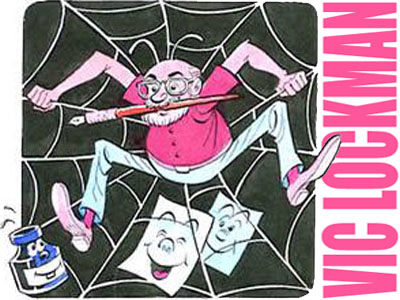


 We are in an alternate America; 25 years in the past but somehow a dark reflection of 2017. There is an international crisis going on, but the President is playing golf; “the wall” has come down and people are fleeing from the USA into Mexico; someone is holding a placard saying “make America safe again”. In the foreground, a riot is going on, possibly between liberals and conservatives; in the background news reports talk of Russia invading Poland and the US preparing a nuclear strike. The narrator, a masked man, leaves the riot zone and breaks into a prison; he rescues a woman, claiming to be able to reunite her with her infant son; and then her husband, who is mute and communicates in mime. The narrator expects to be dead by the end of the day. They travel through forests and sewers to a secret base where another masked man is waiting for them. There is much talk about other masked characters, some of whom are dead and some of whom are in hiding. The two masked men have a scheme to save the world by “finding God”. There is a final cutaway to two other characters, sharing a bed, one of whom has just dreamed of the day his parents died in a car crash. There is no suggestion of how these two characters connect with the rest of the action, although the dream-father tells the dream-son that whatever happens is part of God’s plan.
  But this is not a comic book. It is a piece of conceptual art. It’s content is unimportant; it says what it says by virtue of existing.
 Watchmen, of course, ended on a big question mark. Ozymandias has forced America and Russia to bury their nuclear differences by staging a fake alien invasion, but Rorschach has discovered the plan and posted his diary through the mail box of a right-wing newspaper. We are left not knowing if this package will ever be opened. Many interesting questions are thus left hanging: was Rorschach right to never compromise even in the face of Armageddon? If the paper discovers the truth, should they reveal it? Is the killing of millions to avert nuclear annihilation at any level justified?