Jakienle
Shared posts
09 Oct 17:59
Racing Legend to Locate in Speedway
Texas-based AJ Foyt Racing is planning to open a new office in Speedway. The team joins other INDYCAR-related businesses selecting sites along the town's revamped Main Street, including CFH Racing and Dallara LLC.
09 Oct 17:59
Firefighters union wins OK for College Avenue parking lot
by solson@ibj.com
Indianapolis Historic Preservation Commission members gave the union the go-ahead to build the lot, paving the way for a $43 million apartment and retail development on Mass Ave.
09 Oct 13:52
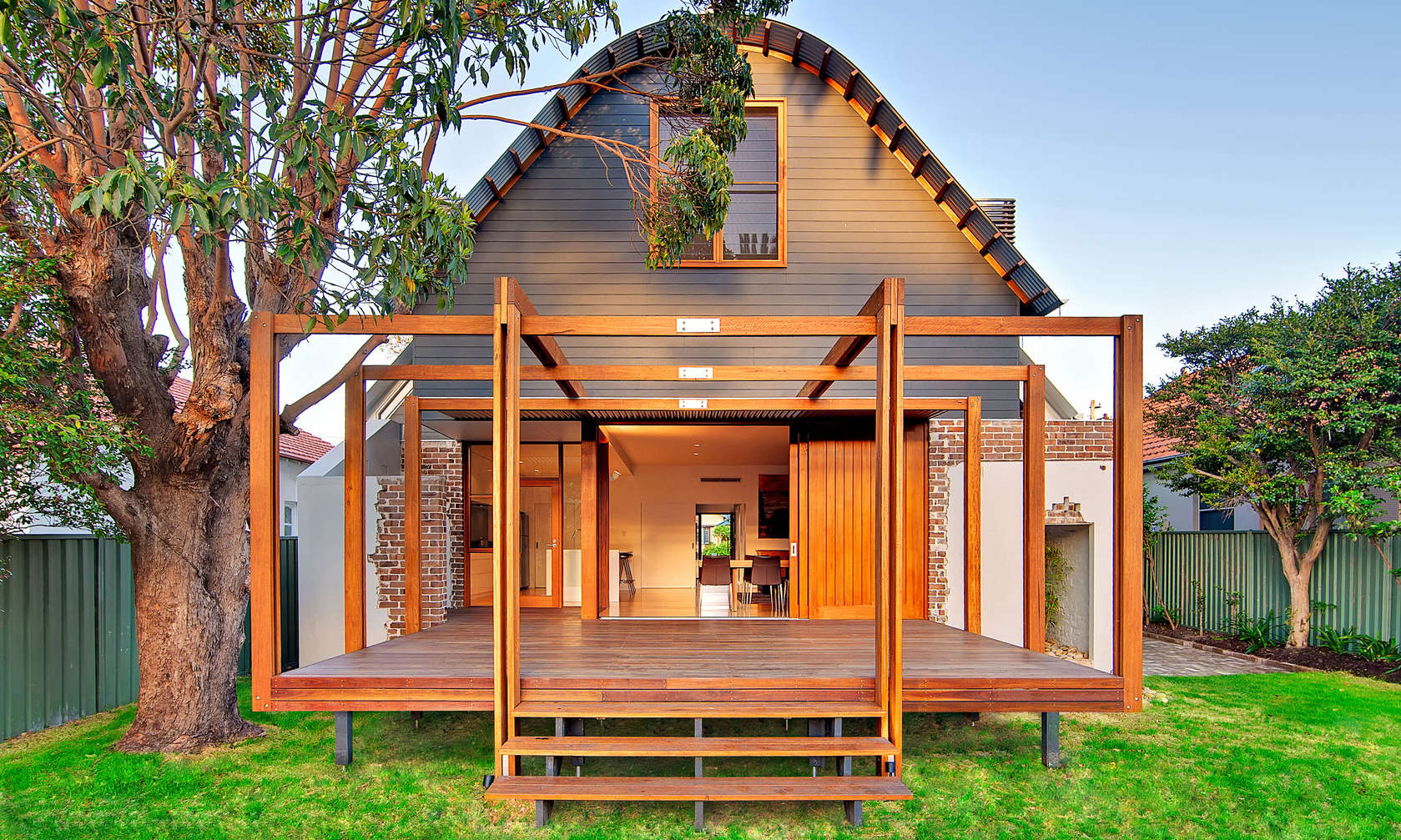 Situated in Kensington, Sydney, this project worked within an existing first floor addition to a 1920s Californian bungalow. Preserving the existing building envelope, the ground floor and first floor were transformed to provide additional bedrooms and a versatile social area with kitchen, living, and dining opening up to a new outdoor entertaining area. The private bedroom spaces were placed within the reworked first floor, with the addition of fixed windows to the northern facade dramatically improving the natural light within the dwelling. The reworking of the existing addition creates new opportunities for access to improved natural ventilation and provides generous volumes to the new living spaces and master bedroom. Cypress Pine has been utilized as batten screens to provide a durable and attractive element to the first floor facades, softening the impact of the previous alterations.
Kensington Residence
by Architizer Editors
Situated in Kensington, Sydney, this project worked within an existing first floor addition to a 1920s Californian bungalow. Preserving the existing building envelope, the ground floor and first floor were transformed to provide additional bedrooms and a versatile social area with kitchen, living, and dining opening up to a new outdoor entertaining area. The private bedroom spaces were placed within the reworked first floor, with the addition of fixed windows to the northern facade dramatically improving the natural light within the dwelling. The reworking of the existing addition creates new opportunities for access to improved natural ventilation and provides generous volumes to the new living spaces and master bedroom. Cypress Pine has been utilized as batten screens to provide a durable and attractive element to the first floor facades, softening the impact of the previous alterations.
Jakienle likes this
09 Oct 13:50
 This project features a modern swimming pool and cabana where the granite ledge of Gloucester Harbor meets the manicured grounds of this private residence. The modest-sized building is an overachiever, with its soaring roof and glass walls striking a modern counterpoint to the property’s century-old shingle style home.
Eastern Point Pool Retreat
by Architizer Editors
This project features a modern swimming pool and cabana where the granite ledge of Gloucester Harbor meets the manicured grounds of this private residence. The modest-sized building is an overachiever, with its soaring roof and glass walls striking a modern counterpoint to the property’s century-old shingle style home.
07 Oct 21:29
Twitter Inc. said Tuesday that it is suing the U.S. government for the right to disclose more detailed information on government surveillance of its users, furthering a clash between Silicon Valley and Washington, D.C., that has intensified in recent months.
Twitter’s lawsuit alleges the Justice Department and the Federal Bureau of Investigation are violating the social media company’s First Amendment rights by restricting what the company is able to disclose about the scope of the government’s national security requests for user data.
Twitter Sues U.S. Government Over Data Requests
by Yoree Koh and Devlin Barrett

07 Oct 18:01
Wine School: Wine School: Champagne
by By ERIC ASIMOV
Let’s examine Champagne as a wine, an agricultural product made of grapes and intended not as the life of the party but to be consumed with food at a meal.


07 Oct 17:31


Remembering The Golden Age of the American Airport
by Jake Gallagher
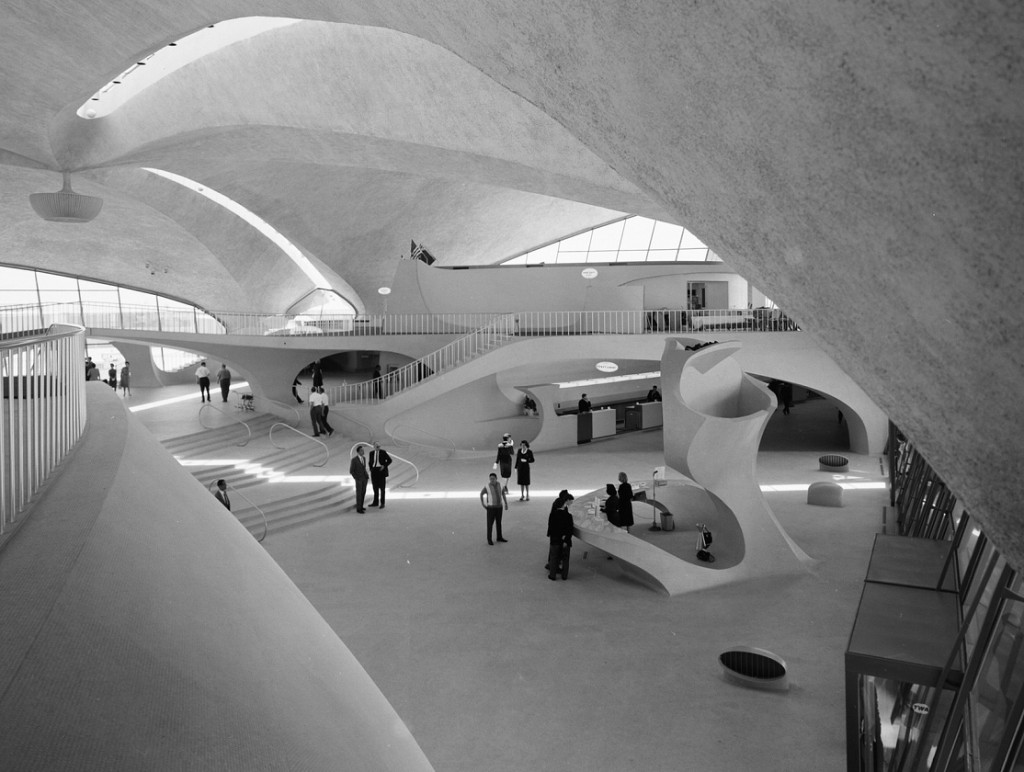
At this point, modern air travel is so unpleasant, so inconveniencing, so downright annoying that talking about it almost seems pointless, like shouting into a jet engine. If there is one positive to be extracted from all of our collective airline agony, it’s that it forces us to reflect upon a time when air travel was not only enjoyable, but dare I say, sexy. Shows like Mad Men, and movies like Catch Me if You Can play into our rosy-eyed curiosity with mid-century air travel, portraying well-heeled passengers, sociable stewardesses, and those beautiful modernist concourses. Airports of today are drab reminders of just how far you are from home, but in the early decades of air travel these buildings were sleek, shiny shrines to the future. The terminals that serviced America’s larger cities at this time were designed to not only help carry passengers from point A to point B, but also to reflect the progressive spirit of commercial air travel, which had really only taken off (no pun intended) in 1958 with the advent of the Boeing 707. So buckle up, make sure your seat backs and tray tables are in their full upright position, and travel back in time with us to the golden age of the American airport.
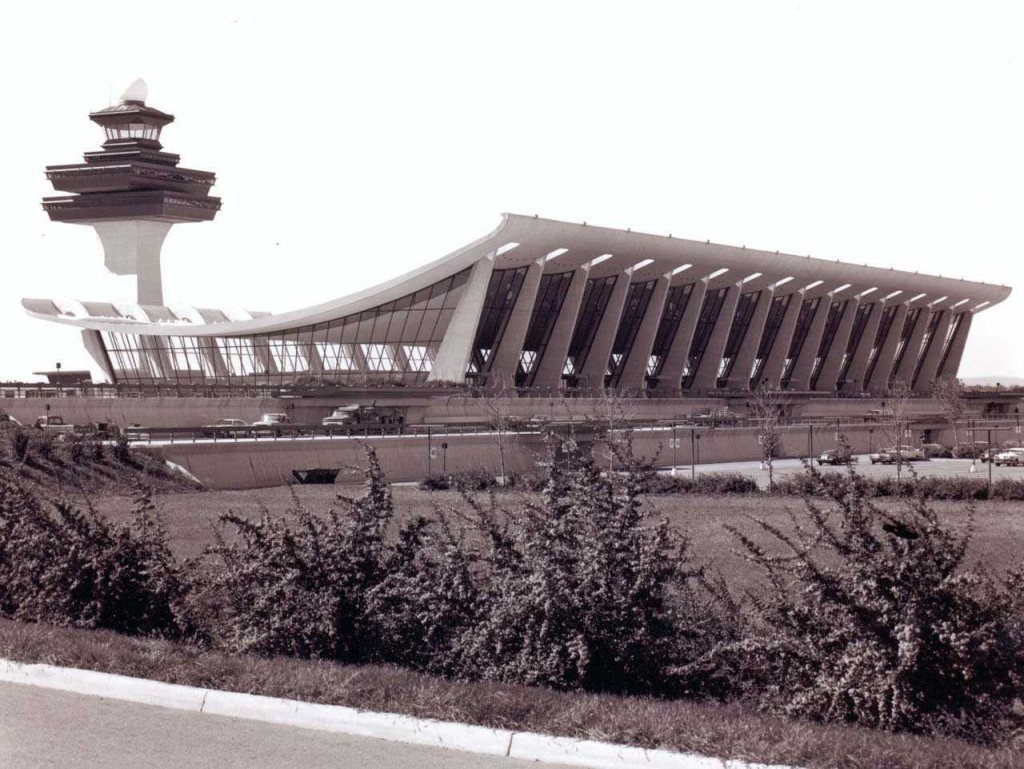
Main Terminal at Washington Dulles International Airport, VA
Designed: 1958
Opened: 1962
Architect: Eero Saarinen
Style: Neofuturism
Fact: Saarinen proclaimed that the airport was “the best thing I have ever done.”
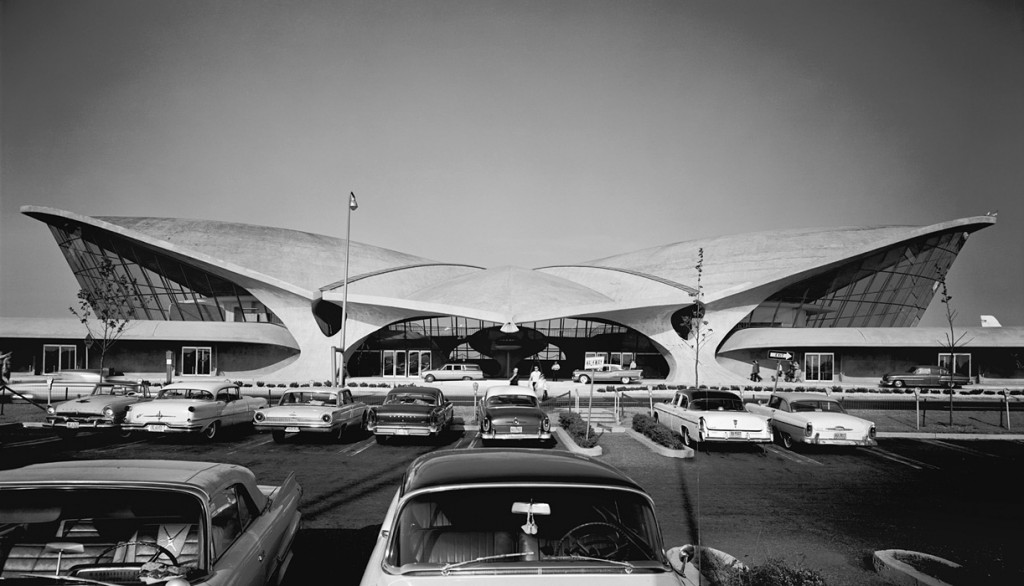
TWA Flight Center at John F. Kennedy International Airport, NY
Designed: 1955
Opened: 1962
Architect: Eero Saarinen
Style: Neofuturism
Fact: The once-bustling terminal has sat idle for over a decade.
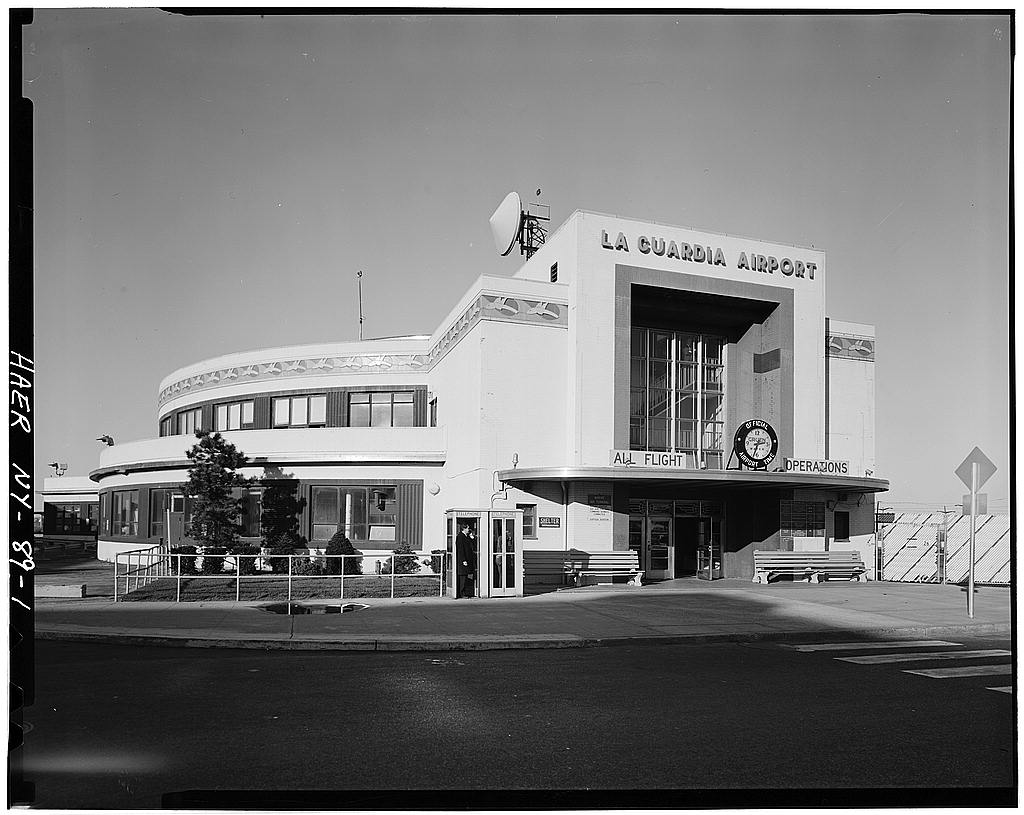
The Marine Air Terminal at LaGuardia Airport, NY
Designed: 1937
Opened: 1940
Architect: William Delano
Style: Art Deco
Fact: The Marine Air Terminal remains the only “first generation” terminal still in use today.

The Theme Building at Los Angeles International, CA
Designed: 1959
Opened:1961
Architect: Pereira & Luckman Architects
Style: Googie
Fact: The top of the structure originally featured a rotating restaurant giving diners a 360 view of the airport.

The Field Terminal at McCarran Airport, NV
Designed: 1959
Opened: 1963
Architect: Welton Becket and Associates and John Replogle
Style: Mid-century Modern
Fact: Welton Becket also designed the Capitol Records Building, the Santa Monica Convention Center, and The Beverly Hilton Hotel.

Long Beach Airport, CA
Designed: Early 1940′s
Opened: 1942
Architect: Horace Austin and Kenneth Wing
Style: Streamline Moderne
Fact: This terminal is still in operation today and was made a cultural landmark in 1990

Pan Am Worldport at John F. Kennedy International Airport, NY
Designed: Late 1950′s
Opened: 1960
Architect: Ives, Turano & Gardner Associated Architects and Walther Prokosch of Tippets-Abbett-McCarthy-Stratton
Style: Futuristic Modernism
Fact: With Pan Am long since bankrupt, the Worldport was unfortunately demolished just last year.
07 Oct 17:15

The 42 Countries That Agree On Islamic State And Little Else
by Carl Bialik
Islamic State, the group of Sunni extremists also referred to as ISIS or ISIL, has operated primarily in the Middle East, but its influence has spread worldwide in a difficult accomplishment: It has united leaders of countries whose residents disagree sharply on many important issues.
In his address Wednesday, President Obama said that “America will be joined by a broad coalition of partners” in its fight against the group. Obama didn’t name partners besides Iraq and the Syrian opposition. But in response to my email requesting a list of coalition partners, a White House spokeswoman passed along two documents, one listing countries that have taken measures against Islamic State and the other listing countries whose leaders have spoken out against it.

Forty-one countries, by these definitions, join the U.S. in opposing Islamic State, as do officials of NATO, the Arab League and the United Nations.
That hardly means 42 countries are providing military support to fight Islamic State. Many are participating only in humanitarian relief for refugees, such as the 3,300 tents, 20,000 plastic sheets, 18,500 kitchen sets and 16,500 jerry cans donated last month by nine countries and IKEA. And not all of the statements cited by the State Department specifically mention Islamic State or its other names. Several decry “barbarians,” “terrorists” or “militants.”
Residents of the 42 countries have a wide range of views on many important issues, including confidence in the president who is seeking to build the coalition.
Pew Research Center’s Global Attitudes Project and the World Values Survey each have surveyed more than a dozen of the anti-Islamic State countries in recent years and found divergent opinions. This year, Pew asked respondents in 14 of the countries whether they are confident in Obama. More than 80 percent of people in South Korea and France said yes; fewer than 20 percent in Egypt and Jordan did (58 percent said yes in the U.S.).
Here are a few of the other issues that divide the (loosely defined) coalition partners:


07 Oct 16:51

Yelp And Michelin Have The Same Taste In New York Restaurants
by Nate Silver
It’s supposed to be the food fight of the century. In the blue corner we have Yelp, the upstart crowdsourced review site that takes on restaurants of all shapes and sizes. Critics allege that Yelp reviewers are unsophisticated, cheap and obsessed with trivial details of the restaurant experience. But Yelp is a heavyweight. The company is now worth about $5 billion, and poor Yelp reviews can knock a restaurant out of business.
In the red corner, we have the Michelin Guide, a 114-year-old veteran of the field. Michelin reviewers are accused of being pretentious and “out of touch” and of enforcing a rigid view of dining that’s biased against certain cuisines. But Michelin still packs a punch — it can make chefs cry. Of the 27 New York restaurants to have lost their Michelin stars since 2005, 10 — or almost 40 percent — have closed.11
But at least when it comes to New York, this isn’t much of a battle. Yelp and Michelin largely agree on the best restaurants.
Michelin revealed its 2015 ratings for New York on Tuesday. I took each restaurant on the Michelin list and looked up its Yelp rating. I also looked up Yelp ratings for restaurants that have lost their Michelin stars since Michelin first published a New York guide in November 2005. This serves as a control group for “Michelin-esque” restaurants that are no longer performing up to the guide’s standards.12
The tale of the tape is below. Most of the columns should be self-explanatory, but a brief explanation of the others follows:
- Cost is the price of a restaurant on a scale from one ($) to four ($$$$) dollar signs as listed by Yelp.
- Average Yelp stars is a restaurant’s average review on Yelp’s scale from one star (awful) to five stars (great).13
- Adjusted review count is the number of Yelp reviews adjusted for the length of time the restaurant was in business. For more details on this, see the description from our Burrito Bracket project, which used a similar method to evaluate the popularity of burrito-selling establishments.14
- VORB is a formula that combines the review count and the star ratings. It’s also a relic from our Burrito Bracket project.15 When we rated burritos, VORB stood for “Value Over Replacement Burrito” — here, you can think of it as “Value Over Replacement Bistro.”
Here are the restaurants sorted by VORB score:

Keep in mind that VORB reflects both review quality and review volume. Peter Luger Steak House rates high on the VORB list mostly because of its extremely high number of reviews. On the flip side, Chef’s Table at Brooklyn Fare has a low review volume16 but its Yelp rating (4.62 stars) is terrific.
But let’s get back to the food fight (or lack thereof): There’s a reasonably strong correlation between Yelp and Michelin ratings. Of current and former Michelin-starred restaurants, those with the highest VORB scores are Le Bernardin (28.7), Eleven Madison Park (28.2), Gramercy Tavern (27.7), Daniel (26.6), Per Se (25.9) and Jean-Georges (23.3). Four of those six restaurants have three Michelin stars, the top rating. The exceptions are Daniel, which was just demoted to two Michelin stars, and Gramercy Tavern, which has one.
By contrast, most of the restaurants with the lowest VORB scores have since lost their Michelin stars, (and in some cases have also closed). The bottom five are the defunct Vong and the still-open Laut, Pok Pok NY, Lan Sheng and A Voce Columbus. Mind you, these aren’t the worst restaurants in New York. I’d personally vouch for a couple of them as being pretty good. But the standard is high, and Yelpers feel they’re closer to average than to the top tier.
The correlation between Yelp stars and Michelin stars is highly statistically significant.17 Indeed, it forms an eerily linear progression. The restaurants to have lost their Michelin stars have 3.83 Yelp stars on average, barely better than the average for all restaurants citywide. Each additional Michelin star translates to about 0.2 additional Yelp stars. The one-starred Michelin restaurants have an average Yelp rating of 4.02 stars. The Michelin two-star restaurants have a Yelp rating of 4.25. The Michelin three-star restaurants average 4.47 Yelp stars.18

Still, these reflect the group averages, and there are a few restaurants that buck the trend. Gramercy Tavern, as I mentioned, is rated very highly by Yelp but has just one Michelin star.
Where do differences arise? One apparent theme has to do with cost — but it runs in the opposite direction of what you might expect. Controlling for their Michelin ratings, Yelp actually rates restaurants higher when they are more expensive. Each additional dollar sign (e.g. going from $$ to $$$) works out to 0.2 additional Yelp stars; the relationship is highly statistically significant.

What the heck? I can think of several plausible theories:
- Generally, service and decor scale up with price more than food quality does. Many people are skeptical about this, but Michelin star ratings are theoretically based on the quality of the food alone19 whereas Yelp reviewers are presumably also concerned with service and decor. Under this theory, it’s not that Yelpers like expensive restaurants. But they’re willing to pay for better service and that’s factored into their ratings.
- It could also be, as has been shown to be the case with wine, that food tastes better when it’s more expensive, especially to nonprofessional reviewers. Michelin reviewers — who also have the luxury of eating on an expense account — may be modestly better at avoiding this bias.
- Price may be a proxy for the market’s view of a restaurant’s quality. Maybe you have a Michelin star; if you can’t persuade your customers to pay Michelin prices, it won’t help you stay in business. Prices and Yelp ratings both reflect the wisdom of crowds, and so it shouldn’t be a surprise if they’re highly correlated with one another.
- Finally, perhaps Michelin does a poor job of picking affordable restaurants that break from the template of the “Michelin-esque” experience. More on this in a moment.
Keep in mind that this finding is derived only from New York restaurants that currently or formerly held a Michelin star — a very narrow range of culinary experience. In looking at a vastly different type of restaurant — those which serve burritos — my colleague Anna Maria Barry-Jester instead came away with the impression that Yelp reviewers place too much emphasis on price and portion size as opposed to the quality of the food.
My personal experience has been that perception of price has a lot to do with expectations. You might be outraged when a mediocre sandwich costs $13 at a museum cafeteria or a ballgame — or when a mediocre burrito costs $11. But later that night, you might not flinch at spending $350 while taking your wife out on her birthday because you were expecting the steep bill.20
Another theme is that certain cuisines do poorly in Yelp as compared with their Michelin star ratings. Consider the four restaurants with the lowest VORB scores. They are (or were), respectively, a Vietnamese restaurant, a Malaysian restaurant, a Thai restaurant and a Chinese (Szechuan) restaurant.
It’s not that Yelpers rate these cuisines poorly overall. But in the United States, they tend to be associated with cheap takeout food. Even to a fairly experienced diner, a Michelin-starred Thai restaurant might seem like an oxymoron.21 Michelin’s reviewers may also lack a template for these types of restaurants. Zabb Elee, an unpretentious Thai restaurant in the East Village, earned a Michelin star this year. It’s very good, but most foodies I know prefer SriPhaPhai in Queens (SriPhaPhai also gets much better Yelp ratings).
Outside of the canonical European cuisines (French, Italian) and “new American” food,22 Michelin seems to struggle. Thai restaurants and Indian restaurants, for example, have often won Michelin stars only to lose them a couple of years later. It’s almost as though Michelin is cycling through representatives of these cuisines at random — putting forth some effort to increase the diversity of its list but not going to great lengths to identify the best examples. To a lesser extent, Michelin may struggle with American food served in a more informal setting or for what lack of a better term might be called “hipster” cuisine. The Breslin, a gastropub in the Ace Hotel, has a Michelin star, but there are dozens of similar restaurants with higher Yelp ratings.
Could Michelin also have a pro-Manhattan bias? In one respect, this might seem self-evident. Almost 80 percent of the Michelin-starred restaurants in the 2015 Guide are in Manhattan while only 40 percent of New York’s restaurants are.
One way to test this is to look at whether Michelin-starred restaurants in Brooklyn and Queens23 receive higher Yelp ratings on average. If so, that might indicate that restaurants in the outer boroughs need to do more to receive the same level of recognition from the Michelin Guide.
The evidence is ambiguous. Michelin-starred restaurants24 in Brooklyn and Queens have an average Yelp rating of 4.17, as compared with 3.99 for those in Manhattan. However, the difference is not highly statistically significant and there is no real difference in their VORB scores. This doesn’t mean Michelin is unbiased — it may be that Yelpers have the same biases.
In most respects, the challenge in evaluating restaurants is the same as when looking at any other statistical distribution. It’s easy to identify the outliers — the extraordinary restaurants and the execrable ones. Michelin and Yelp largely agree on those. Distinguishing the very good restaurants from the average ones is more challenging. There may be no substitute for eating your way through them.
07 Oct 16:25
$20M project on tap for Mapleton-Fall Creek area
by solson@ibj.com
The planned $20 million senior housing and retail project could help breathe new life into a blighted neighborhood that’s sorely in need of investment.
06 Oct 15:42

New York Times' college football fandom map shows Ohio State allegiance knows no bounds
by Matt Brown
The New York Times created another map of college football fandom, using Facebook data, and to no surprise, Buckeye fans are everywhere.
The New York Times recently put out a new map tracking the college football fandom of every zip code in the US, gleaning the data from Facebook likes. As you'd probably imagine, Ohio State has the state of Ohio on lockdown, dominating every county. As you'd also probably have guessed, Ohio State claims fans from all over the country.
In Ohio, the Buckeyes cleared 50% of the total fans in every county but Hamilton (still first place at 47.6%), only furthering the argument that Cincinnati is secretly not part of the state. In Columbus and Cleveland, Ohio State routinely claimed more than 70% of the fans, where Michigan and Notre Dame typically in very distant second and third places.
But Ohio State fandom isn't limited to the borders of Ohio. Per this data, Ohio State is the second most popular team in Maricopa County (Phoenix). They're the second most popular team in Clark County (Las Vegas), and within shouting distance of the first, the Oregon Ducks. The Buckeyes are 3rd in Charlotte, NC. Ohio State comes in second or third place in counties from California to South Carolina, Virginia to Massachusetts, Montana to Missouri. In terms of pure geographic reach, Ohio State is one of the few true "national brands", along with Notre Dame, Texas and Oregon.
So why is this? Part of it is because Ohio State has been so consistently successful over the past few decades. Part is because Ohio State is on national television a lot. Part is even probably because Ohio State is a gigantic school with alumni all over the country. And some of it also probably because the down economy in Ohio has sent a number of folks who grew up in the Buckeye State elsewhere, thus taking their Buckeye fandom to all corners of the country
Whatever the reason, having so many fans, and in so many places no less, is pretty great news for Buckeye Nation.
02 Oct 15:58
A Simple Guide to Pattern-Mixing
by Alex Crawford
Pattern-mixing can be a little tricky, but not if you follow these three basic guidelines.

1. Mix the Media
You can generally group all menswear patterns into three broad categories: 1) checks/plaids 2) stripes 3) repeat prints (polka dots, paisleys, wild animals, etc). Try pairing one with the other; visually these three pattern styles offset and counterbalance each other.
2. Offset The Scales
Look carefully at the size of the patterns together. They should each be a different scale. In the photo above, for example, the windowpane suit is a large exaggerated pattern, the stripes on the shirt are about 1/4 the scale of the checks on the suit, and the dots on the tie are noticeably tighter still.
3. Distribute the Weight
The three patterns should also be different levels of “boldness” or “loudness”. One pattern should be faint and not very noticeably (the shirt above). One should be more conservative; evident but not overpowering (the tie above). And one should be a little more bold and flashy, within reason (the suit above).
Here are some examples of these basic concepts in action, from the TSBmen archives:

The Tailor Game feat. Rich Freshman


Let’s Get Chalky feat. DJ McDonald


Pattern-Mixing feat. Alex Yampolsky

Once you understand the traditional “rules” and concepts of menswear, you can start to have some fun with them and use them to create more expressive or adventurous looks.
Here’s two examples from our new studio test shots the other day:

This look is not too bold from afar, but gets more and more interesting as you get up close.
Call it micro-pattern-mixing.


Houndstooth flannel suit and diamond print french-cuff shirt by Michael Andrews Bespoke. Cashmere V-Neck sweater by Etro. Linen splash-dot tie Vintage. Custom leather/suede captoe brogues by Allen Emonds.

I wouldn’t recommend this 70s-meets-80s look to everyone, but I think it illustrates my points above.
Don’t forget to have a little fun with your tailored wardrobe!

Windowpane suit and paisley shirt by Michael Andrews Bespoke. Burgundy micro dot tie by Ralph Lauren. Tie bar vintage. Burnished blood lace-ups by Scarpe di Bianco.
Thanks, as always, for reading. Major Updates coming soon!
Yours in style,
TBSBmen
Photography by Alex Crawford.
Jakienle likes this
02 Oct 15:57
White River Trail
by Kevin Kastner
On Tuesday, I had the opportunity to ride my bicycle on the newest portion of the White River Trail. According to the city’s link, this trail extends from 30th Street to the Indianapolis Zoo, but the southern extension to Raymond Street has actually been completed for months. It already shows up on Google Maps (pan down a few frames to find the extension).
The trail is a great opportunity to play tourist in your own town, featuring panoramic views of the downtown skyline. There are nice historical markers in place that were designed by the late Eric Fulford.
Most of the ride is quite pleasant:


There are also reminders that this is an urban place, and that urban places are messy, such as this Combined Sewer Overflow cover:

The remnants of the GM Stamping Plant loom large in the area. The southwest side of the river was highly industrialized:

Looking north from the GM Plant:

A bit farther north, I had to get a photo of one of my favorite places in the city, the Promenade, which is located just outside of the zoo. The photo didn’t turn out great, unfortunately:

Heading back south. The signage is clear and pleasant. And, interestingly, there are concrete curbs along much of the trail. Personally I think it’s a good look:


I highly recommend riding or walking along this trail.
02 Oct 15:43


Big Ten informs NCAA of recommended reforms; IU announces quantification of scholarships
by podcastonthebrink@gmail.com (Matt Dollinger, Justin Albers)
The Big Ten Conference announced on Wednesday afternoon it has informed the NCAA of several reformations to student-athlete benefits it wishes to enact, similar to those in the IU Student-Athlete Bill of Rights released in July. The conference has proposed giving its student-athletes full cost-of-education financial aid, guaranteed four-year scholarships, lifetime scholarships that will allow […]
The post Big Ten informs NCAA of recommended reforms; IU announces quantification of scholarships appeared first on Inside the Hall | Indiana Hoosiers Basketball News, Recruiting and Analysis.
01 Oct 20:28
Vonnegut Boyhood Home Hits The Blocks
The boyhood home of one of Indiana's most well-known authors is for sale. F.C. Tucker Co. is listing the property where Kurt Vonnegut grew up in Indianapolis for just under $900,000.
01 Oct 17:20
Four-story addition proposed for Mass Ave. office building
by solson@ibj.com
Gershman Partners, which bought the Marott Center less than a year ago, wants to build the addition on an adjacent surface lot.
25 Sep 21:31


Time Lapse Portugal
by Aaron M. Renn
JakienleLove Portugal.
This week a time lapse video of Portugal by Kirill Neiezhmakov, featuring Sesimbra and Lisbon. The scene transition technique is very cool. A beautiful piece but my gut reaction was that the beauty seems at odds with the country’s economic malaise. Best in full screen high definition. if the video doesn’t display for you, click over to Vimeo. h/t Likecool
As a bonus time lapse, here’s another installment in a series on LA, “Time-LAX 3.” If the video doesn’t display for you, click over to Vimeo.
 The Urban State of Mind: Meditations on the City is the first Urbanophile e-book, featuring provocative essays on the key issues facing our cities, including innovation, talent attraction and brain drain, global soft power, sustainability, economic development, and localism. Included are 28 carefully curated essays out of nearly 1,200 posts in the first seven years of the Urbanophile, plus 9 original pieces. It's great for anyone who cares about our cities.
24 Sep 18:50
Cooking Techniques
A library of more than 50 videos demonstrating simple skills that home cooks should master.
24 Sep 18:33

Volcanic activity
Thousands of people today started to evacuate the area near the Mayon Volcano in the Philippines after scientists warned of an imminent eruption. Compiled here are images from volcanic activity around the globe in the last couple of months. --Lloyd Young (18 photos total)
Lava cascades flow down the slope of restive Mayon Volcano as seen from Legazpi City, Albay province, Philippines, on Sept. 17. Tens of thousands of people living near the Philippines' most active volcano began to evacuate after increased activity prompted government scientists to warn of an imminent eruption. Dozens of military trucks were dispatched to pick up the residents in the danger zones around Mayon Volcano in Albay province. An estimated 12,000 families or nearly 60,000 residents are in the danger zones that affect three cities and five towns in Albay province. (Zalrian Z. Sayat/EPA)
VITIMan, David Pelaez likes this
24 Sep 17:40
Lykins stepping down as Citizens CEO in 2015
Carey Lykins has been with Citizens for 42 years, including the past nine as president and CEO. He joined the local utility group as a cashier in 1973 when it was known as Citizens Gas & Coke Utility.
16 Sep 16:26
Cummins selects firm to design downtown office building
by solson@ibj.com
The firm has chosen New York-based Deborah Berke Partners to design its $30 million global distribution headquarters that will be built on part of the site where Market Square Arena once stood.
12 Sep 20:04
Currents: Rooms: Beer With Its Own Accommodations
by By ANDREW WAGNER
JakienleLewes is a beautiful town. Definitely a good place to stay.
Roughly 10 miles from the brewery, the Dogfish Inn welcomes dogs.
11 Sep 18:29
Parking lots in historic districts or Why IHPC was right to deny the firefighter’s credit union
by jason.larrison

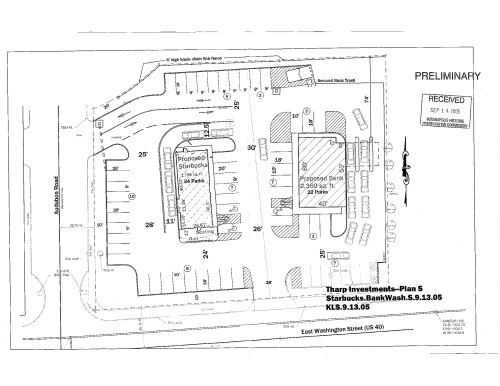
Original proposal for Starbucks and bank development in Irvington
Back in 2005, I sat on the Historic Irvington Community Council’s design and zoning review committee. Irvington had just recently become a historic district and was under the jurisdiction of the Indianapolis Historic Preservation Commission. Not long into our life as a historic district, a developer submitted an application to redevelop the northeast corner of East Washington Street and Audubon Road, a prominent intersection in the neighborhood.
The corner was home to two vacant buildings. The corner building was a 60’s era building that most recently housed an auto parts store. East of it was a long vacant building that formerly housed a chain pizza restaurant and, intermittently, a fireworks store. The neighborhood was desperate to rebuild this corner.
The developer proposed building two new buildings to house a bank branch and a Starbucks. The bank branch was great, but the addition of a Starbucks… that was a sign for many that Irvington had arrived. The neighborhood caffeine addicts were foaming to have a nearby fix.
But we were given a catch: we were told that Starbucks would only sign the lease if their typical design was built, surrounded with a moat of asphalt. There would be no way that Starbucks would build a more appropriate design. If the neighborhood pushed back, Starbucks would pack up their Pike Place and go somewhere else.
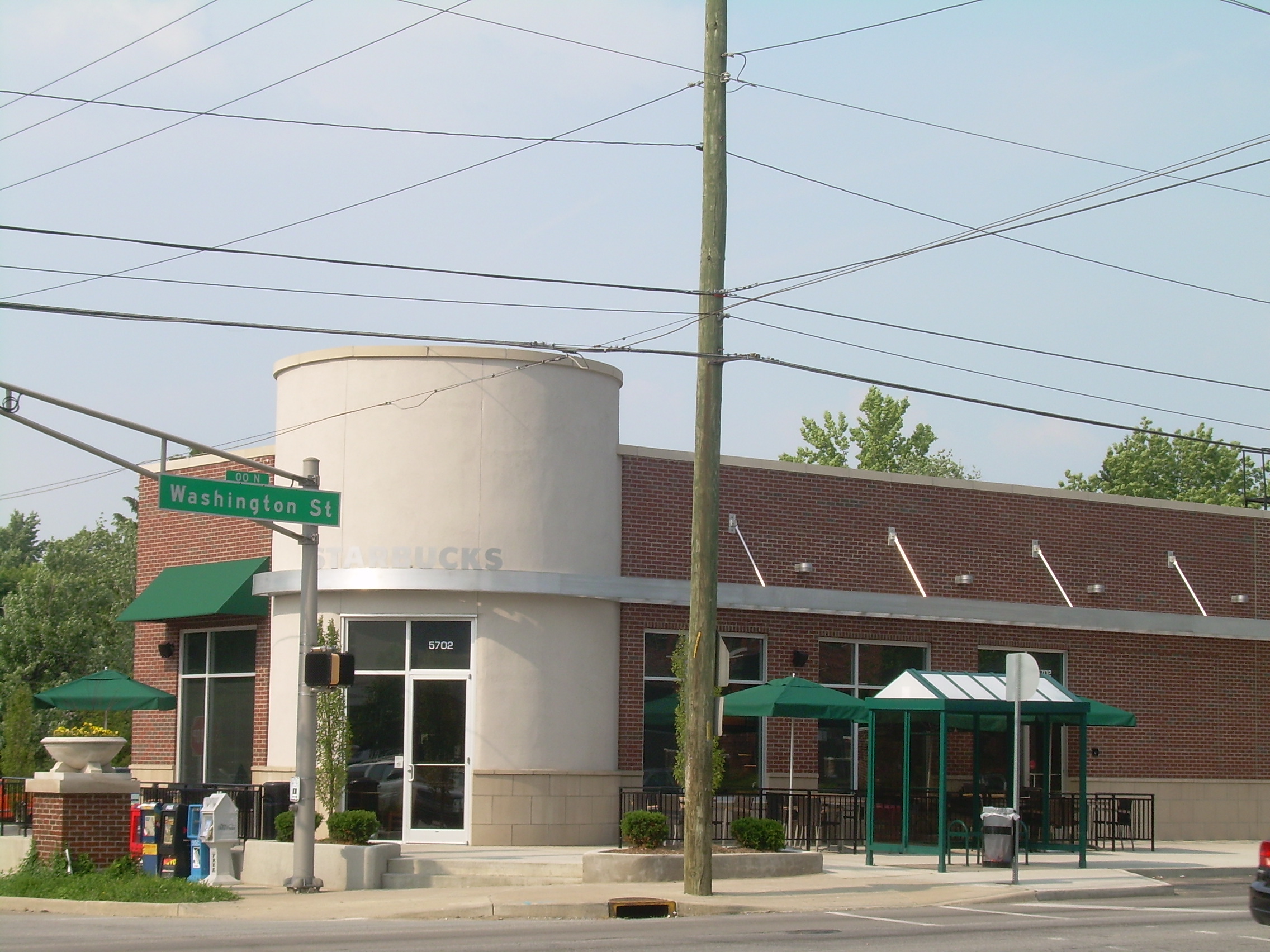
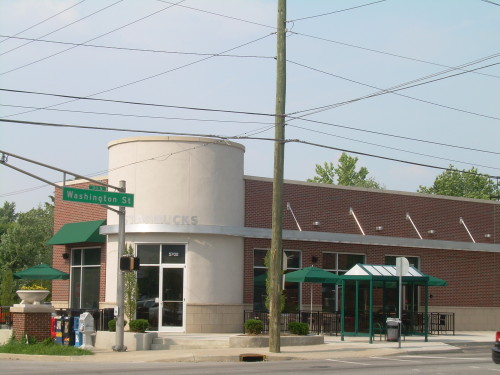
The Starbucks in Irvington as viewed from the intersection of East Washington Street and Audubon Road. (image from http://upload.wikimedia.org/wikipedia/en/3/31/Starbucks,_Irvington,_Indiana.jpg).
Flash forward to today. Irvington has its Starbucks, but the building isn’t surrounded by a parking lot. It is located on the corner with the long side facing Washington Street. Yes, there is plenty of parking and a drive thru, but the design and orientation fits Irvington. And it is because a group of appointed individuals said that the original proposal was not suitable for Irvington.
The IHPC is made up of mayoral and council appointees. At the time, none of the members lived in Irvington. But because the neighborhood petitioned, the City-County Council approved, and the Mayor signed a proposal to put the design and zoning considerations of Irvington under the careful watch of the Commission. They were designated to be the aesthetic conscience of the neighborhood.
So when the corner parking lot came forward and 100 residents came to the Commission meeting to support the suburban design out of fear of losing the development, the Commission did the right thing: it said no.
Many commissioners made comments regarding the proposal. The one that stands out the most to me was made by Susan Williams. It was succinct but poignant: Irvington deserves better; you (the residents) may not believe it, but you do.
With that, the developers were sent back to the drawing board. In spite of the threats made, they returned with an architect experienced with historic and urban designs. The parking lot was moved from the corner. They provided an appropriate design and IHPC approved it.
I bring this up because there is a current case before IHPC dealing with the construction of the firefighter’s credit union and an addition to the firefighter’s union hall. The construction of the credit union is part of a larger plan to redevelop the existing credit union and fire station on Massachusetts Avenue. The majority of components were approved, including a drive thru that exits onto Mass Ave. But IHPC said no to a parking lot proposed at the corner of Mass Ave, College Avenue, and St. Clair. It is a prominent intersection and there are multiple reasons to save that corner from being paved. By saying no to that component, the IHPC is saying that the neighborhood and the intersection deserve better. And it is true.
There are other options. One option would be to split the parcel in half. Parking along the western half and leave the eastern half open for future development. Another would be to rotate the addition to the hall by 45 degrees; this would allow for perpendicular or angle parking on St. Clair. Then maybe add parking along the alley between St. Clair and Arch. That saves the majority of the lot in question for future development. And there are certainly other solutions to consider.
Given some extra time, a solution will be found that will allow things to proceed. And that is what the IHPC has provided: extra time to find the right solution. That is what IHPC is charged with doing and it is what they successfully do every time they meet.
It is true; the commission members are not elected. They are appointed by those that we elect. The same is true of the directors of every department in the City and every commission member in the County. The Bond Bank, the Department of Code Enforcement, and the Department of Metropolitan Development are all guided by appointed commissioners. The Police Chief, the Fire Chief, the Director of Public Safety… all appointed. During the recent string of violent crime, nobody has criticized the Police Chief because he is appointed.
The commission is appointed by the Mayor and the Council as delegates. The responsibility for zoning and design review has been delegated by the Mayor and the Council to the Commission. And when these historic districts were locally designated, it was not because the will of an authoritarian applied it. It is because the neighborhood at that time asked to be held to a higher standard. The neighborhood created the plan that guides the Commission.
And on page 62 of the Chatham-Arch & Massachusetts Avenue Historic Area Plan, that corner lot has a specific recommendation. And that recommendation is “658 E. St. Clair Street: If this site is developed, new development should be residential and should be sensitive to the houses on St. Clair and Arch Streets.” This is a recommendation in a plan created by the neighborhood. It was not created by the IHPC; the plan was created by the neighborhood. And the plan was presented by the neighborhood to the IHPC and the MDC in 2006. The neighborhood asked to be held accountable to their plans and on September 3rd, the IHPC did exactly that. The proposal offered a parking lot and that is the opposite of what the neighborhood wanted.
The commission members said no. And I commend them for doing their job.
Jakienle likes this
10 Sep 19:33
The Charm of Tammis Keefe

I’m not much for the overly cute or quaint, but I find a lot of charm in the work of Tammis Keefe. Keefe was a textile designer in the 20th century, born in Los Angeles in 1913. She worked for a time as a colorist and print designer for the famous Dorothy Liebes, which is where she first became known for her creative illustration style and sharp sense of color. Much of this early work was for architects and interior designers. That is, textiles that would be used in homes and commercial settings.
Sometime in the ‘40s, however, Keefe designed a silk scarf for a friend as a birthday gift. It had “Happy Birthday” written in bold circus letters, and candelabras in purple, blue, and chartreuse. The friend liked it so much that she showed it to Lord & Taylor’s handkerchief buyer, who then showed it to the scarf manufacturer Kimball, who in turn commissioned six designs – each orientated to appeal to a certain type of personality (the antique collector, the musician, the sports fan, etc). The pieces sold out immediately, and happy clients continued to promote her work and commission new art. Between 1944 and 1960, Keefe created hundreds of handkerchief designs, with each one featuring her signature at the corner (a rare thing for textile designers at the time, and even rarer today).
You can still find Keefe’s work if you search secondhand goods stores. I used to find them all the time in thrift shops, when I visited as a youth to rummage for home furnishings. Now that we have the Internet, you can browse for them more easily on eBay and Etsy. Just search for the name Tammis Keefe or Peg Thomas (Peg being the shortening of Tammis’ birth name, Margaret, and Thomas being her middle name). The Peg Thomas line was just something Keefe created for Kimball, who then sold them to stores who couldn’t market Keefe’s name for business reasons.
The squares are admittedly on the small side (usually 14” or 15”), and the fabrics are nothing luxurious. They are, however, silkscreened – which is increasingly rare nowadays – and the edges are typically handrolled. More than anything, you’re getting one of Tammis Keefe’s designs, which are always charming and unique. Above are my three hanks: one was inspired by Chinatown, San Francisco; another by jazz music; and the last features hot air balloons. You can also see Keefe’s squares being worn by the always well-dressed Voxsartoria, and check out many of her designs at www.tammiskeefe.com (where the photos below were taken from). In a world where good pocket squares are increasingly approaching the 100 dollar mark, it’s nice that you can get something this fun – and with this much provenance – for about 30 bucks.


09 Sep 22:16
Two downtown office towers changing hands
by solson@ibj.com
The 36-story Regions Tower is selling in a negotiated transaction, and the 30-story Market Tower is getting a new owner via a loan default. They are among downtown’s largest office complexes.
05 Sep 16:25
Shapiro's to open restaurant in Fashion Mall
by jnewman@ibj.com
The 4,200-square-foot restaurant will be about 60 percent smaller than Shapiro’s downtown flagship location, but will carry most of the same menu items the deli is known for, plus some new ones.
04 Sep 13:25
Culinary Trends in New York
by By THE NEW YORK TIMES
The hot dishes, drinks and other details to watch for in restaurants this fall.


04 Sep 13:15
How to Build a Smart Suit Wardrobe
by Dan Trepanier
Building a smart wardrobe is one of the most important investments a man can make. The compound benefits over time are truly immeasurable. Like any smart investment, it should involve research, planning, and efficient execution.
I went through the TSBmen archives and put together a brief guide to building a tailored wardrobe. The keys to success are understanding proper fit, having a great relationship with your tailor, buying quality over quantity, and making sure everything works together.
Here’s the order I would recommend building a life-long suit wardrobe.
1st Suit: Navy Blue

This is your hero. Your workhorse. Your go-to. Your three days a week, but nobody really notices. It’s also your weekend blazer and your most versatile trousers. Look for something in a 7-9 oz fabric that you can wear across seasons. I prefer a fabric with a little texture – like a a birdseye or a hopsack – since the texture makes the pieces easier to break-up and wear casually.
2nd Suit: Medium Grey

This is your #2. Your back-up. Your Robin. Your Scottie Pippen. You already hit ‘em with the navy this week, next comes the grey. Look for something in a light-to-medium shade, which can be worn in all four seasons. Keep in mind that both the jacket and trouser should work seamlessly with those from the navy suit.
3rd Suit: Classic Pinstripe

This is your power suit. Your deal closer. Your money maker. Your Gordon Gekko. This is the suit you wear to that big meeting that you’ve been prepping for. It takes confidence to wear (especially if the stripes are this pronounced) but it projects the same emotion in equal parts. Look for a neutral pinstripe on navy or grey.
4th Suit: Subtle Windowpane

This is your European flair. Your suave side. Your lady killer. Your proof that you’re not a rookie in the sartorial department. You can rock a windowpane suit to the office and introduce some pattern-mixing to your co-workers, but it’s also a smooth look with an open collar and/or a nice knit for an evening out. Look for a neutral check on navy or grey.
5th Suit: Black

This is your going-out suit. Your wingman. Your partner in crime. Your late night confidant. It’s also your tuxedo rental alternative. Now that you have a solid rotation of traditional business suits, think about one for evening events and nights out. A slim black suit (preferably in wool/mohair) has you covered for formal occasions, semi-formal occasions, night clubs, and funerals.
6th Suit: Double-Breasted

This is your sixth man. Your back-up point guard. Your workhorse’s cousin. Just when your solid navy suit was feeling over-worked, the DB comes in to give it a break. You already have five foundational single-breasted suits, time to introduce a new silhouette. The DB gives you an option to dress slightly more “business formal”. Go dark, solid, and go navy or grey.

Of course, you can wear the double-breasted jacket as a blazer, too. It should work well with the grey solid trousers from suit #2, or the grey windowpane trousers from suit #4.
The most important thing to remember when building a wardrobe is keeping synergy between all the pieces!

7th Suit: A Lighter Blue

This is your spinmove. Your left hook. Your energy boost. Your keep-them-on-their-toes. A lighter shade of blue is not only refreshing in the business world, it’s also the perfect backdrop to introduce more color and pattern with your shirt & tie wardrobe.
8th Suit: Khaki Linen or Cotton

This is your happy place. Your tropical getaway. Your vegetarian platter. Your coolest suit, literally. This one if reserved for those hot and sticky days, because a true gentleman is never caught sweaty and flustered in an out-of-season fabric.
9th Suit: Grey Flannel

This is your response to winter. Your cozy blanket. Your protection from the elements. When temperatures drop, there isn’t another suit that you’ll want to reach for. Your first flannel suit will probably change the way you look at tailoring and fabrics.
10th Suit: Brown

This is your wild card. Your secret weapon. Your Ace on the river. Nobody expects you to pull-off a brown suit, but when you do, they’ll never forget it. It also opens-up plenty of opportunities for different shirt and tie combinations. At first I had the brown suit in the top 5 – that’s how much of an impact I think it can have on your wardrobe.
——————
Once you have these ten foundational suits in your rotation, you can start to get a little more creative and experience the true joys of custom tailoring. You can experiment with stronger colors, bolder patters, statement pieces, etc. But we’ll get into brainstorming ideas for your “next 10 suits” in a later post…
Thanks for reading.
Yours in style,
TSBmen
Photography by Alex Crawford.
03 Sep 21:36
Element and A Loft Hotel: Early Renderings
by Kevin Kastner
A new two-flag hotel is being proposed downtown, directly across the street from Banker’s Life Fieldhouse. This lot featured a different hotel proposal before the market crash. The hotel is being designed by Ratio, across the street from their headquarters. The renderings of the new hotel are included on the IHPC Staff Report, and I’ve included some of them below:


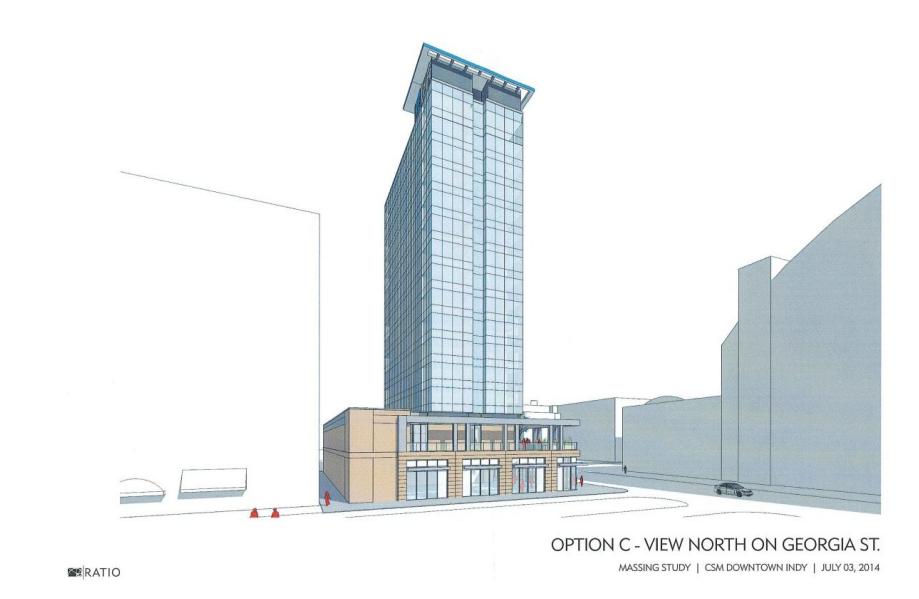



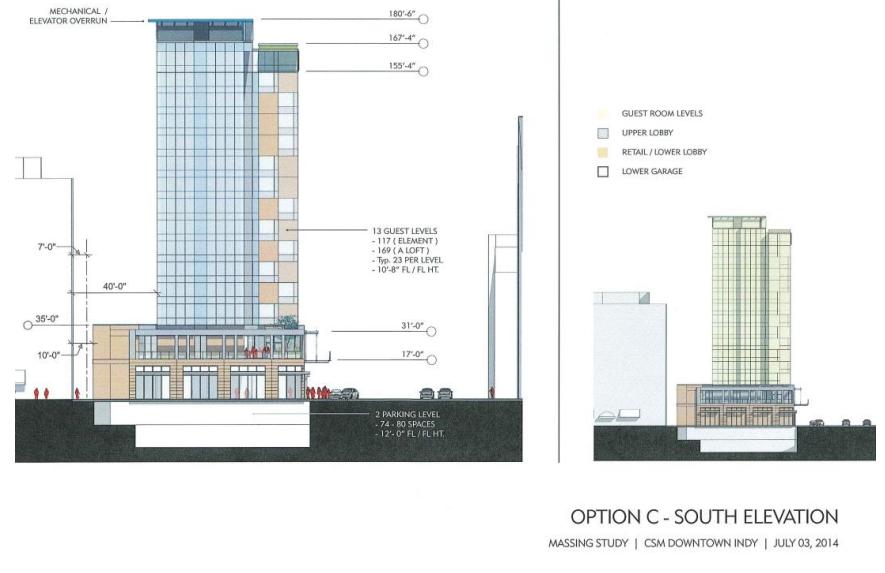
What do you think?
26 Aug 21:38
A Guide to Buying a Bespoke Suit
by Dan Trepanier
As the team and I continue to grind behind the scenes and prepare to launch a whole new TSBmen (including an updated version of the much-requested Stye Guide), I’ve been going through the archives and editing some of our top articles from back in the day. As some of you may remember, two years ago I did an extensive “Guide to Bespoke Tailoring”, with all kinds of information. The article needed some tweaks and some updates, so over the next couple weeks I’ll be sharing tips, experiences, and discussions on tailoring, wardrobe building, alterations, etc.
To start, here’s 12 things you should know before buying a bespoke suit. As always, if you have specific questions, feel free to hit me in the comments section below.

#1: Fabric Comes First
There are a thousand ways to sew a suit, but the garment is ultimately only as good as its raw ingredients. Fabric selection is the most important decision you will make when designing your new bespoke suit. Not only does it determine how your suit will look and feel, but also how it will perform and last over time. Avoid anything with a synthetic blend. To start, look for a 100% worsted wool from a trusted mill in a “super 110s-120s” thread count for the best combination of luxury and durability.
#2: Trust Nobody
Because this is a business where manufacturing begins after the sale is complete, and most clients aren’t well versed in the nuances of tailoring, the ugly truth is that custom suit iss a very shady industry.
I’ve seen everything from counterfeit branded fabrics to “Made in USA” tags being sewn into jackets in SouthEast Asia.
The most common deception in the business is the location of manufacturing – i.e. shops that say their garments are “Made On Site” when indeed they are not.
Here’s some simple math:
A well made hand-tailored suit takes an average of 40 hours to complete. The average master tailor working in America doesn’t pick up his shears for less than $30-40 an hour…let’s call it an average of $35/hour. That’s $1,600 in labor alone.
Decent cloth from a respected mill, purchased at wholesale, runs roughly $50-$100 per yard…let’s call it an average of $75/yard. It takes about 3 yards of cloth to make a suit (2.5 for solids, 3 for pinstripes, 3.5-4 for check patterns). That comes out to an average of $225 for the cloth. Add roughly $25 for the buttons, trims, lining, etc. That’s $250 in cost of tangible inputs, making a rough total of $1,850 for overall cost of production.
Therefore, an American made suit (with a typical 65% profit markup) is going to retail for at least $3,050. Translate this to Euros in Italy and pounds in England.
If a shop located in an area with similar cost of labor is offering an suit “made on site” at a price notably lower than this, they are likely pulling the wool over your eyes (pun intended) by using counterfeit cloth or overseas production where the hourly cost of skilled labour is significantly cheaper.
#3: HOW it’s made over WHERE it’s made
The quality and attention to detail of overseas manufacturing can vary greatly from one workshop to the next, but on the whole there have been enormous strides made in the past decade or so. “Made in China” doesn’t mean it’s crap, as long as the person in charge of the manufacturing process is careful, diligently, and honest. I have an article coming up about the questions to ask to determine the quality level of tailoring… Stay tuned.
#4: Understand the shop’s “House Cut”
Every bespoke shop has their own opinion on how a suit should be cut to best flatter a man’s body.
For example, traditional British shops, like the esteemed tailors on Savile Row, tend to cut with larger allowances (the difference between a client’s body measurements and the measurements of the finished garment) for a roomier fit with a smoother “drape”. English tailors also prefer heavier cloth, a lower gorge line (the seam where the collar meets the lapel) and more overall structure to the jacket (stiffer chest canvas, thicker shoulder pads, etc).
By contrast, Italian tailors tend to prefer lighter cloth, smaller allowances (cut closer to the body), a higher gorge and a more “flexible” construction (softer shoulders, less padding, etc).
The difference in cutting style can vary greatly from one tailor to the next, even in the same city. For example, tailors in midtown manhattan tend to make a more traditional garment with British accents geared toward an older client base, while downtown shops generally cut a more Italian-influenced, slightly “edgier” garment for a younger crowd.
Understanding the style and strategy of the shop is important in order to achieve the fit you are seeking. Ask if you can try-on a sample garment in your closest size, this will give you an idea of how the tailor thinks about a suit.
#5: Get to a stable body shape before ordering
If you plan on going through any major body transformations, wait until you reach a stable weight that you are happy with before investing in custom clothing. And make sure it’s a weight you can maintain!
As an added bonus, an expensive custom suit will probably be your best motivation to stay in shape.
#6: Get the fit right, the first time
A good shop will keep a paper (or digital) pattern on file for you, and tweak that pattern every time they make you a new garment or alter one of your old ones.
If you have the option of paying more for a “higher level” that includes additional fittings, do it for your first suit. Once you have your pattern locked down, you shouldn’t have to do it again and your future orders will be a breeze.
#7: Understand that you’re (probably) not an expert
Most shops have employees whose full-time job is to make their clients look their best. Listen to their advice and conversate with them about your styling decisions rather than assuming you know better.
#8: Avoid trends like the plague
You want your new investment to last 5-10 years (depending on how hard you wear your clothing), so keep the proportions classic and avoid anything “of the moment”. I feel bad for guys who ordered cropped jackets with razor thin lapels years ago and are now afraid to wear them outside the house. The same will happen to the guys ordering super oversized lapels today.
The trouser hemline is a slightly different issue as this can be lengthened or shortened in a matter of minutes.
#9: Don’t get caught up in thread counts
Some guys think the higher the thread count (or “super” number), the better the cloth. This is not necessarily true. This number – which represents the number of fibers spun into a unit measure of cloth – indicates only the “fineness” of the fibers. It can mean that a cloth will have a great “hand feel” and sheen, but what’s more important is its inverse relationship with durability.
Most of my suits are in the Super 110-130 range, which I consider the perfect balance between luxury and durability.
Super 180s and higher become very delicate. They should be reserved for guys who have 20+ suits in their rotation who are looking for something that they bust out once a month to make a statement or for a special event.
You should invest in the most durable fabric that feels good in your hand. Truth is, a “super 110s” from a quality mill can feel softer than a “super 180s” from a second rate fabric house anyway.
#10: Get the basics first, then build from there
Think of your first visit to a bespoke shop as the first step in building your new wardrobe. Start with versatile basics and slowly build out to seasonal fabrics with more personality. You can wear a solid blue or grey suit to the office three times a week and nobody will notice, but your co-workers will call you out if they keep seeing those purple pinstripes.
Also, don’t factor-in the suits you already have in your closet unless you love them and they fit very well. 90% of guys stop wearing their off-the-rack suits after going custom.
If you already have a strong base and are looking for something specific, don’t be afraid to bring a picture reference to show your salesperson.
#11: Have realistic expectations
Unless you look like George Clooney, a new suit won’t make you look like George Clooney.
Also, don’t be a wrinkle chaser. The suit is designed to look pristine on a still, standing body. As you start moving all bets are off and the suit will crease and wrinkle. It’s fabric, not magic.
If you want a very slim look, there are trade-offs when it comes to comfort. You will feel the suit and lose a little range of motion. If you are not accustomed to slim tailoring, there may be a short adjustment period here. Keep in mind the only way to make it “roomier” is to make it bigger, thus losing some shape. In my case, I actually like to feel my jackets against my body. The feeling of being “locked in”.
#12: Take care of your investments
Ask your tailor for proper care instructions.
Generally speaking, dry clean your suits as infrequently as possible (only when their physically dirty from spills or sweat). Dry cleaning is a chemical wash that slowly erodes fabric – essentially scraping away the surface layer.
Otherwise, if the garment simply needs a “refresher”, have it steamed or pressed (which is much cheaper than dry cleaning and effectively cleans it using heat and steam anyway).

Have questions about buying a bespoke suit? I’ll do my best to answer in the comments below!
Thanks, as always, for reading.
Yours in style,
TSBmen
Photography by Alex Crawford.