
Jakienle
Shared posts
27 Oct 20:49
Go To Law School — Seriously. Just Do A Few Things First.
by Shannon Achimalbe
If you are dead set on going to law school, how can you make sure you're attending the right school at the right price?


27 Aug 15:19
A Rebirth for Wright's First L.A. Project
Clues to Hollyhock's past have since emerged. When it re-opens to the public this fall, many long-vanished features will be revived, and sparkling.
25 Aug 15:56
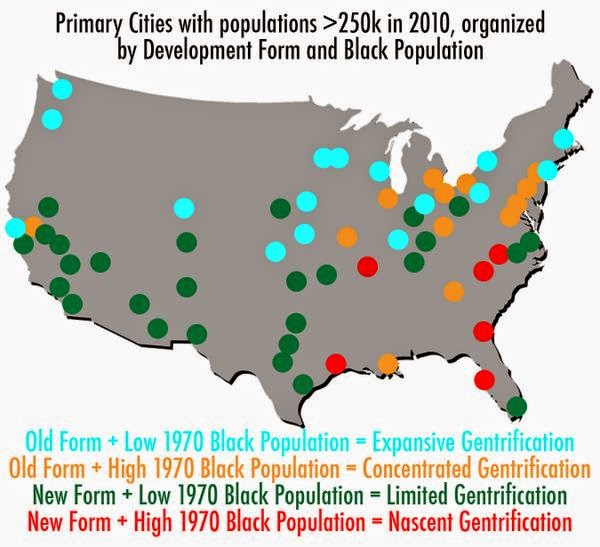
Cities by gentrification type. Special thanks to Adam Carstens for producing this map.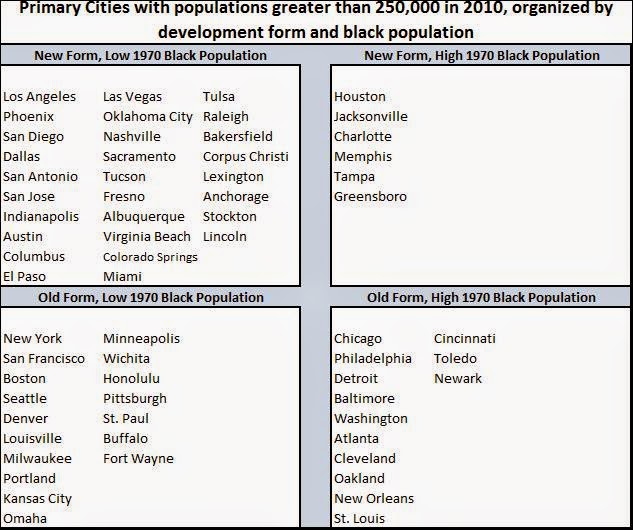


A Typology of Gentrification by Pete Saunders
by Aaron M. Renn
[ Pete Saunders has been on fire lately. His latest is a framework for examining gentrification. A couple of informative comments on the original post on Pete's blog are worth clicking over to read - Aaron. ]
Cities by gentrification type. Special thanks to Adam Carstens for producing this map.
Patterns of gentrification vary by city, and the spread of gentrified areas is partly determined by the city’s predominant development form and the historic levels of African-American populations within them. Gentrification is a nuanced phenomenon along these characteristics, but most people engaged in any gentrification fail to acknowledge the nuances.
Spurred on by the recent debate on the impact of limited housing supply on home prices and rents, thereby “capping” gentrification, (taken on fantastically by geographer Jim Russell in posts like this), I decided to do a quick analysis of large cities and see how things added up. The analysis was premised on a couple observations of gentrification, one often spoken and one not. One, gentrification seems to be occurring most and most quickly in cities that have an older development form, offering the walkable orientation that is growing in favor. Two, gentrification seems to be occurring most and most quickly in areas that have lower levels of historic black populations. This less noted observation was the thrust of a study by Harvard sociology professor Robert Sampson and doctoral student Jackelyn Hwang, recently described here. Here’s what they said, after conducting an exhaustive study of gentrification patterns in Chicago:
After controlling for a host of other factors, they found that neighborhoods an earlier study had identified as showing early signs of gentrification continued the process only if they were at least 35 percent white. In neighborhoods that were 40 percent or more black, the process slowed or stopped altogether.
That prompted my quick study. I wanted to categorize cities by old and new development forms, and low and high historic levels of black population. To do that I came up with an arbitrary proxy for the age of development form. Using decennial Census data, if a city reached 50 percent of its peak population by 1940, it was deemed to have an old development form; if a city reached 50 percent of its peak population in 1950 or later, it was deemed to have a new development form. Here’s a quick example of how this works. Baltimore, currently with a population of a little over 600,000, reached its peak of 949,000 in 1950. Baltimore reached half its peak, or about 475,000, by 1890, a time at which it could be said that Baltimore’s form as a city had been firmly established. Similarly, Austin reached its peak of 790,000 in 2010. The fast-growing Texas city was half that size in only 1990, a year in which it could be said that its development form was established and the city began to see itself as a major city. Imprecise, yes, but a decent proxy for examining old and new city development forms.
The second piece of analysis was gathering Census data on central city black populations in 1970. This decade was chosen largely because it represents the end of the Great Migration, when millions of African-Americans left the rural South for cities across the nation. By that time the cities which are generally recognized as having large black populations had already been identified, and it’s possible to explore the impact of the migration on them. I arbitrarily said cities with black populations lower than 25 percent of the total in 1970 had a low black population, and those above 25 percent had a high black population.
Using those two factors, I put together this table of the 64 primary cities over 250,000 in the U.S.:
There are more than a few cities that are exceptions, largely because recent consolidations or large-scale annexations have boosted them into more unfamiliar boxes. But some patterns are evident, and if you think of these in terms of gentrification, you might be able to make the following general assumptions:
Old Form + Low Black Population = Expansive Gentrification (OFLB)
Old Form + High Black Population = Concentrated Gentrification (OFHB)
New Form + Low Black Population = Limited Gentrification (NFLB)
New Form + High Black Population = Nascent Gentrification (NFHB)
Identifying the examples might be the best way to explain what I mean. New York, San Francisco and Boston are the prototypical OFLB cities, and gentrification has made its widest impact in these three cities. Chicago, Washington and Atlanta are the classic OFHB cities, where gentrification is concentrated in certain areas of the city (or region), and eludes the heavily African-American parts of the city. Phoenix, San Diego and Las Vegas might be the prototypical NFLB cities, all of which came of age with the car as the dominant mode of transport and with few African-Americans. NFLB cities may also be the leaders and innovators in seeking ways to catalyze their inner cities, with greater tangible investments in public transit and mixed use development. The relatively few NFHB cities are a distinctly Southern phenomenon, and by all appearances gentrification activity lags behind other cities, with sprawl still the dominant development engine.
Why would any of this matter? Nationally, the gentrification debate is defined by the experiences of the OFLB types like New York, San Francisco and Boston. There, the issues are rapidly growing unaffordability, concerns with displacement and growing inequality. But the gentrification debate is quite different in OFHB cities like Philadelphia and Atlanta, where seeking ways to more equitably spread the positive benefits of revitalization might lead such discussions.
In other words, it’s not exactly correct to look at what’s happening in Los Angeles or San Diego, or Baltimore or St. Louis, in the New York-San Francisco-Boston context. Different forces and different experiences are creating different outcomes in each city, and if we want to understand how to look at gentrification’s impact, we need to understand its foundations.
This post originally appeared in Corner Side Yard on August 15, 2014.
 The Urban State of Mind: Meditations on the City is the first Urbanophile e-book, featuring provocative essays on the key issues facing our cities, including innovation, talent attraction and brain drain, global soft power, sustainability, economic development, and localism. Included are 28 carefully curated essays out of nearly 1,200 posts in the first seven years of the Urbanophile, plus 9 original pieces. It's great for anyone who cares about our cities.
Hartman.marcus likes this
25 Aug 15:48
College and Massachusetts: A Critical Intersection
by Kevin Kastner
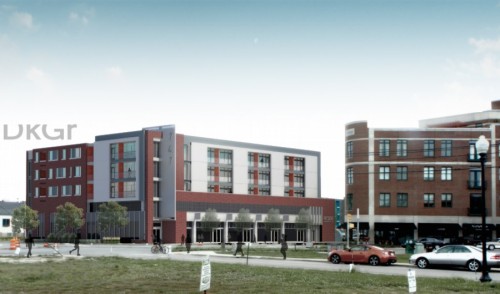
The corner of College, Mass, and St. Clair has been on my radar for years now, as it currently features one solid newer building and 5 open lots:
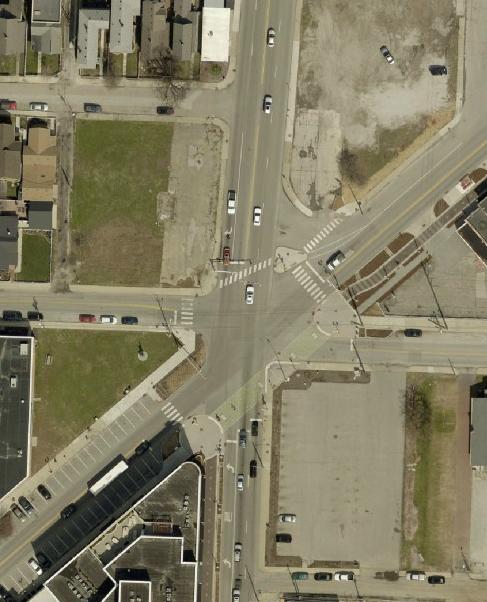
Recently, there have been a few different proposals to change the status quo on the corner, which could become a critical link between downtown and Broad Ripple. First up is a mixed use proposal on the Southeast corner by Milhaus, which appears to be a solid infill project:
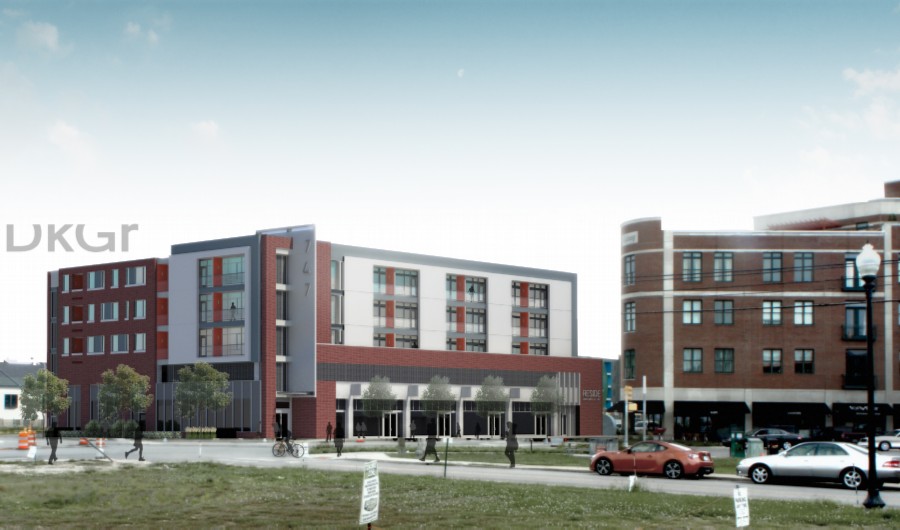
Image Credit: IBJ Property Lines
On the southwestern corner, a much-less inspired proposal was recently tabled by the Indianapolis Historic Preservation Commission. The proposal included a surface parking lot at College and St Clair, and a drive-thru credit union. Keeping the plaza with the artwork on the corner might be ok, but not at the expense of asphalting prime real estate. Besides, I’d rather see a good flatiron building at that corner. So I hope this proposal gets a major overhaul.
This corner has a potential to be even better than this similarly shaped 6-sided intersection on State Street in Madison (note the modern glass-sided flatiron). It can be taller since we are basically building from scratch. Even with all of this activity, there are still 2 empty corners on the northeastern quadrant. If nothing else, I hope to see that ridiculous dedicated right turn lane from Mass Ave to College lopped off, but I would love to see new buildings in those locations as well. Further northeast, of course, is the Art Deco Coke Plant that is currently an IPS bus storage facility, but that’s another subject for another time.
22 Aug 20:15
Advocate brokers lower IPL rate hike for car-sharing service
by kmclaughlin@ibj.com
Indianapolis Power & Light Co. customers would see less of a rate hike for an electric car-sharing program under a settlement agreement negotiated by the Indiana Office of Utility Consumer Counselor.
15 Aug 18:19
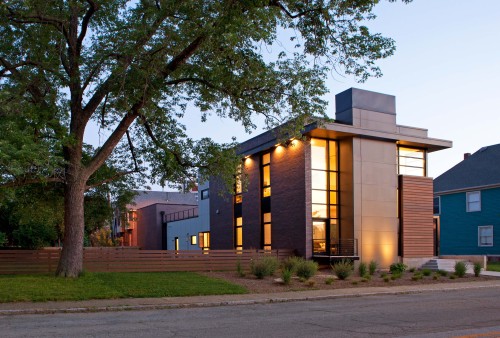
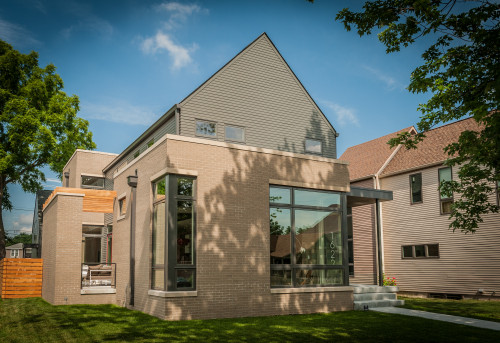
Architects’ Home Tour
by Brian Burtch
The Indianapolis chapter of the American Institute of Architects will be hosting their bi-annual Architects’ Home Tour on September 20th & 21st.
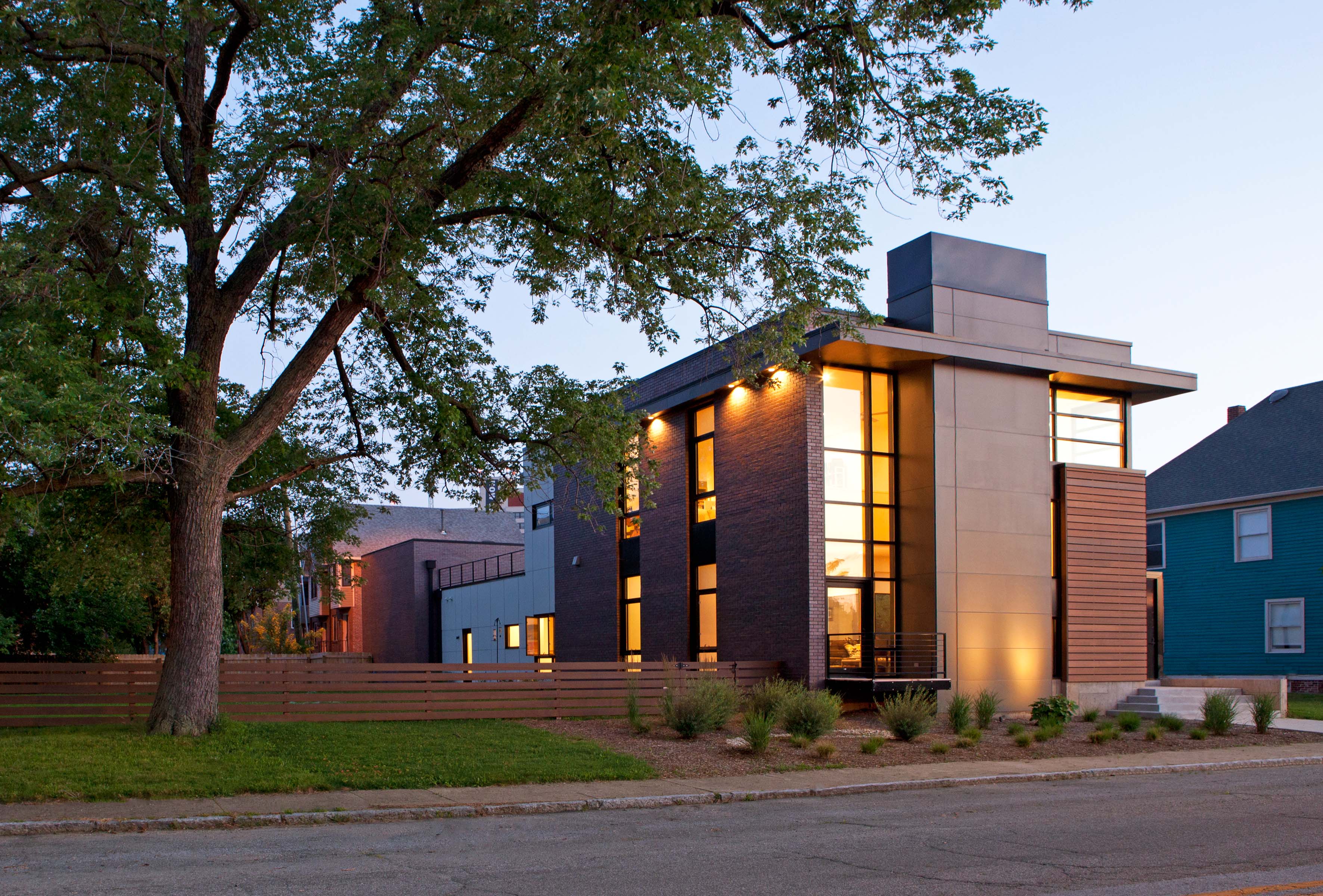
One 10 Studio – Chatham Arch
This year’s tour is a bit unique, in that it focuses on homes in the city and homes in distinct Indianapolis neighborhoods, 7 in all. You’ll find homes in Fountain Square, Chatham Arch, Cottage Home, Herron Morton, Glendale, Broad Ripple, and Butler Tarkington.
The tour is a excellent opportunity for the general public to see what an architect designed home looks like and to better understand the value that architects bring to the residential world. The tour showcases the ability of architects to bring creative, unique solutions to the house and, hopefully, inspire those in the local community to not only appreciate the design intent of the homes but also to better understand the merits of hiring an architect.
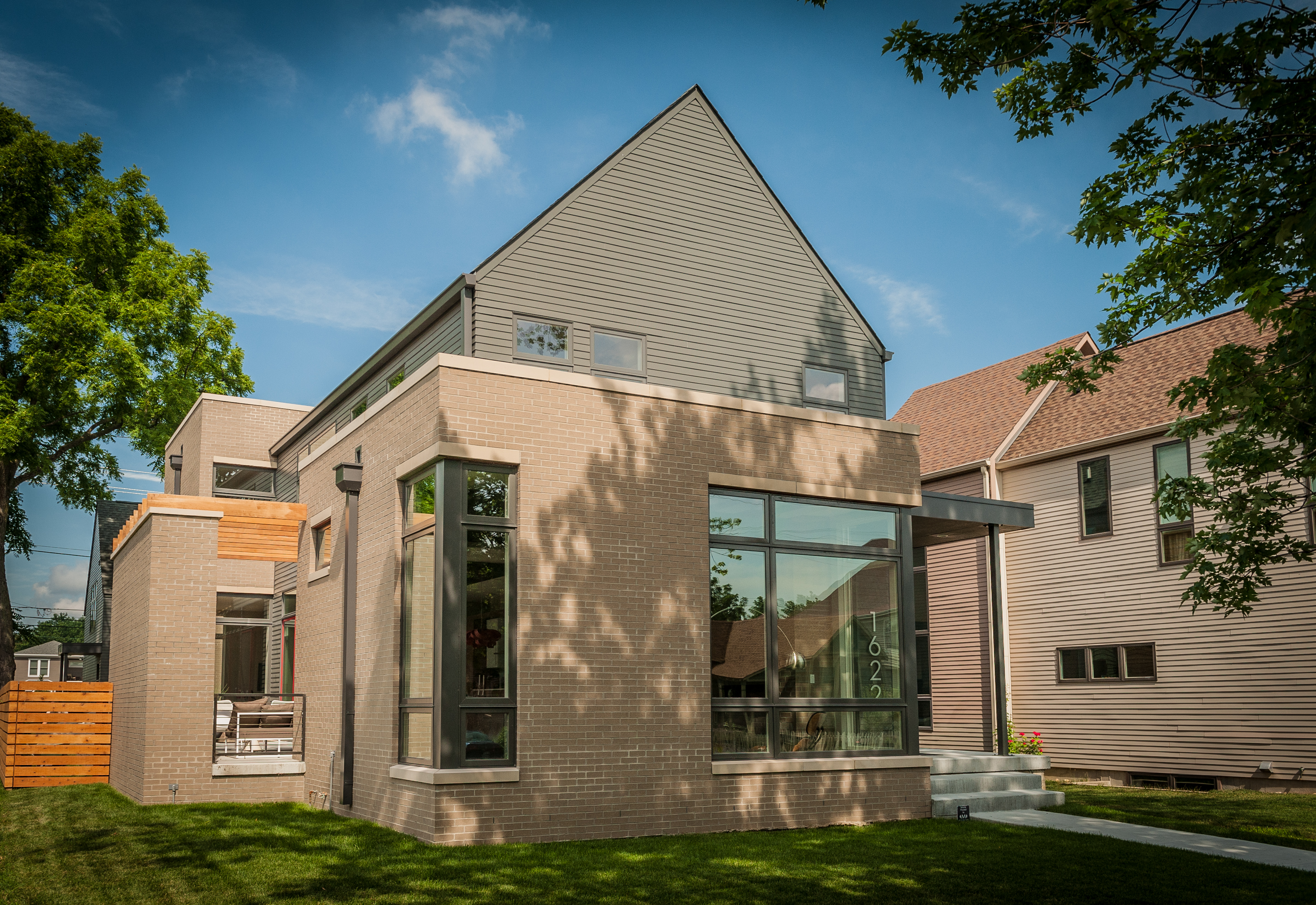
Rottmann Collier Architects – Herron Morton
If you enjoy this blog and enjoy much of the work showcased here, you most certainly will enjoy the tour. Check out the website for more info, a sneak peak of all the homes, and to purchase tickets:
Also, plans are in the works for a film screening the Friday night before the tour in Fountain Square. Keep your eyes and ears open regarding this!
14 Aug 18:32

The Countries Where You’re Surrounded By Tourists
by Nate Silver
When traveling in Tokyo a couple of years ago, I was struck by how few tourists there were. Sure, taking advice from an English-language website or guidebook could still lead you to a place with plenty of gaijin. But I didn’t have the sense of being surrounded by fellow tourists that one sometimes gets in Rome or Paris or Barcelona.
The statistics bear this out. Barcelona gets about twice as many international tourists each year as Tokyo. But that’s only part of the story. Barcelona’s metro-area population is about 4.7 million — compared to 39.4 million for Tokyo. Relative to the size of its population, Barcelona has about 16 times more tourists.
That’s the ratio you notice when walking around a city: how many of the people around you are tourists and how many are locals. We can also study this phenomenon at the country level, where the data is slightly more comprehensive. (Our focus will be on international tourists — not, for example, New Yorkers visiting the Grand Canyon.)
Countries vary in how welcoming, accessible and attractive they are to visitors. But as a general rule, the number of tourists doesn’t scale up linearly with the number of residents. China gets roughly 10 times more tourists than tiny Bahrain but has 1,000 times Bahrain’s population. That means Bahrain has about 100 times more tourists as a share of its population.
More formally, we might define this ratio as the tourist percentage — the number of international tourists in a country on an average day throughout the year as a share of the total number of people present:

To calculate tourist percentage, you need data on a country’s population and on the number of international tourists present on an average day. The population numbers are easy to find, but figuring out the number of tourists isn’t so simple.
The World Bank collects data on the annual number of international tourist arrivals in each country. (A tourist arrival, by the World Bank’s definition, occurs whenever someone enters a country from abroad and stays overnight.29 I used the most recent year of data available from the World Bank — usually 2012 — although had to turn to other sources in a couple of cases that I’ll note in the text below.) The challenge is in going from annual tourist arrivals to an estimate of how many tourists are present on an average day. If we knew how long the average tourist stayed, we could calculate it as follows:

But there isn’t comprehensive data on the duration of tourist visits. In 2010, the U.S. Travel Association estimated the average length of a vacation taken by an American as 3.8 days (and falling). But foreign trips are presumably longer than average vacations — and American workers receive less time off than people in most other countries, so their vacations may be shorter. A week — seven days — probably works better as an estimate of the average international trip.
But there’s another issue: The length of an average visit presumably varies some from country to country. Compare Austria and Australia, for example, the two countries that your fourth-grade teacher admonished you not to confuse.
Austria is a small country in the middle of Europe. It’s easy to pass through Austria en route to somewhere else — on a train from Munich to Venice, for example. The World Bank wouldn’t count that particular journey as a tourist visit unless you stayed in Austria overnight. Nevertheless, a night or two spent in Vienna might be just one hop on a longer European trip. Australia, by contrast, is a giant island thousands of miles from the world’s population centers. That’s part of what makes visiting there fun: You really feel like you’ve gotten away. But you probably don’t go to Australia just for a day or two.
So to estimate the average length of a tourist visit, I used another World Bank data series on the annual amount of tourism income in each country. The ratio of tourism income to tourist arrivals ought to provide a rough proxy for the length of a journey: You’ll spend more money on a two-week vacation than a weekend holiday. The ratio will also be affected by other factors, however, such as the strength of a country’s currency and the wealth of the people who visit it.
I ran a regression on the ratio of tourism spending to tourist visits as a function of two geographic factors: the number of land borders that a country has and its area.30 The regression implies that more isolated countries receive more money per visit, and that larger countries receive more money than smaller ones. These factors probably do tell us something about the average length of a visit; they imply that the average trip to Australia lasts about 50 percent longer than that the average trip elsewhere, for instance.31 We’ve estimated that the average international trip worldwide lasts seven days, so that means an average trip to Australia would last 10 to 11 days instead.
One country requires special handling: the Vatican. Lots of people visit it — in 2013, about 5.5 million people visited the Vatican Museums while 6.6 million attended some sort of public event with the Pope, such as in St. Peter’s Square. Even assuming that there was some overlap between these groups,32 that’s an awful lot of tourists in a country with a population of barely more than 800 people. On the other hand, visits to the Vatican are very short; there are no hotels there, so you need to have the invitation of the Pope or someone else important to stay there overnight. I assumed an average visit of four hours instead.
The Vatican still qualifies as a huge outlier relative to the rest of the world. My method estimates that there are about five tourists there on average for every one resident, or a tourist percentage of 83 percent. Surely the tourist percentage is higher still during the hours when the Vatican Museums are open or when the Pope is hosting a major public event.
Ranking second in the world is tiny Andorra, with a tourist percentage of 29 percent. The numbers drop off quickly after that; it’s about 11 percent in Palau and Bahrain, for example, 9 percent in the Bahamas and 8 percent in Monaco.

There’s an economic lesson here: Even in places whose economies are dominated by tourism, and where it may seem like you’re completely surrounded by tourists, you’ll generally find a number of locals for every tourist. Hotels can employ one employee per guest room or even more in parts of the world where labor is cheap but tourist dollars are plentiful. Tourists also need dining, transportation and entertainment options. Meanwhile, all the people who work in the tourism industry have families and needs of their own. This is why tourism is associated with a multiplier effect; it produces secondary and tertiary sources of income and employment in addition to the revenues received directly from tourists.
By contrast, tourists can represent a vanishingly small part of the population in large countries. This next chart lists the tourist percentage for the top 25 countries in the world by GDP:

Among these high-GDP countries, Spain ranks as the most touristy. On average throughout the year, about 2 percent of the people there are tourists, I estimate. (Obviously the percentage is going to be higher at certain places and times: during high season in Ibiza, for instance.) France is next at 1.7 percent, followed by Canada, the Netherlands, Italy and the United Kingdom. Australia isn’t far behind.
In Japan, however, the tourist percentage is only 0.2 percent. And it’s lower still in some other places: just 0.05 percent in China, 0.04 percent in Brazil, and 0.01 percent in India, meaning that only about 1 in 10,000 people is an international tourist there at any given time. These countries do attract reasonable numbers of tourists — but their native populations are very large, so tourists represent a tiny fraction of the population.
Some countries outside the top 25 in GDP undoubtedly have lower tourist percentages still. Afghanistan gets an estimated 3,500 tourists per year, for example, compared with a population of 30 million. Assuming an average visit there lasts seven days, that implies a tourist ratio of 0.0002 percent, or about one tourist for every 500,000 Afghanis. However, countries with very limited tourist economies generally don’t publish reliable data on the industry, so it’s hard to know exactly which country ranks at the bottom.
Those countries probably aren’t at the top of most tourists’ bucket lists anyway. But Brazil, China, India and Japan have incredible experiences to offer. The choice is clear: If you want to get away from tourist traps, go to places where there are more locals.
13 Aug 19:18
Downtown Indy High on Livability List
A national travel site that focuses on quality-of-place is highlighting the state's largest city. Livability.com has placed Indianapolis on its top 10 list of the best downtowns. In addition to income, investment, growth and retail factors, the site also considered interviews with residents and travel expert opinions.
13 Aug 18:48
Big Names Set For Lecture Series
A well-known astrophysicist and a prominent radio host will take part in this year's Omnibus Lecture Series at Indiana University-Purdue University Fort Wayne. Neil deGrasse Tyson and Prairie Home Companion host Garrison Keillor are among speakers for this year's series.
13 Aug 18:45
WellPoint to change corporate name back to Anthem
The name change will be completed by the end of the year, pending shareholder approval, the company said Tuesday.
13 Aug 18:45
Mainstreet's Turner to sell health care REIT in $2.3B deal
by jkwall@ibj.com
HealthLease Properties REIT, which is led by Mainstreet Property's Zeke Turner, will be sold to Ohio-based Health Care REIT Inc., along with 17 projects Mainstreet has under construction. The deal includes 45 future projects.
12 Aug 19:09
Star reducing staff ahead of headquarters relocation
by jnewman@ibj.com
The Indianapolis Newspaper Guild, which represents most of the Star's newsroom and building-services employees, said the newspaper intends to chop newsroom staff and management 15 percent over the next few weeks.
12 Aug 18:50
HUD funding helping to revitalize Crown Hill neighborhood
by dbarbosa@ibj.com
Near North Development Corp. is serving as master developer of the project, which will bring 15 subsidized homes to market.
11 Aug 18:27
CBS affiliation switch means major changes at WTTV
Those changes are coming in the wake of Monday's huge announcement that Chicago-based Tribune Broadcasting, parent to WTTV, has wrestled away the CBS-TV affiliation held by WISH-TV Channel 8 since 1956.
06 Aug 16:12
Ten-acre parcel near Colts stadium hits the market
by solson@ibj.com
The vacant property west of Lucas Oil Stadium could get a boost from redevelopment efforts at the former GM stamping plant site just across White River.
06 Aug 16:09

Pacers And George Still Have Plenty To Play For
by Nate Silver
Indiana Pacers star Paul George suffered a horrifying injury on Friday night in a scrimmage with his teammates on the United States national team. The good news is that surgery on George’s right leg was successful, and he’s in admirable spirits. Furthermore, George’s history of staying relatively healthy in the past could portend a quicker and more complete recovery.
Thanks everybody for the love and support.. I'll be ok and be back better than ever!!! Love y'all!! #YoungTrece—
Paul George (@Paul_George24) August 02, 2014
Still, George is expected to miss all of next season. The Pacers went 56-26 last season with George, a total that is only occasionally good enough to translate into a title. The NBA is not a very forgiving sport; any and all weaknesses are exposed over the course of a full season: Losing George would almost almost certainly take them out of title contention for next year.
But like the Chicago Bulls — who adapted around a season-ending injury to Derrick Rose last year — the Pacers are a well-coached and well-managed team in a reasonably good salary cap situation. That means they could maintain respectability next season even without George — or rebuild for 2015-16 and beyond with him.
We can consider what the Pacers might look like next season assuming that George doesn’t play but they otherwise don’t make changes to their roster. I’ll do that by running a projection based on the technique described here, which evaluates players based on their age and performance over the past three regular seasons. In contrast to the previous article, which used a metric called statistical-plus minus, I used ESPN’s NBA Real Plus Minus, which better accounts for a player’s defense — a key consideration whenever you’re talking about the Pacers. (The projection for Croatian Damjan Rudez, the recent Pacers pick up who has not played in the NBA, assumes that he’ll be halfway between league-average and replacement level.)

This method projects the Pacers to a 44-38 record, which last year would have translated into a No. 5 or No. 6 seed in the Eastern Conference. It assumes the Pacers will stand pat with their current roster, but they may have the opportunity to sign another rotation player by using a disabled player exception to the salary cap.
Obviously, there’s a huge amount of uncertainty around this forecast. An unselfish roster like Indiana’s might seem better equipped to adapt to the loss of any one player. But the Pacers already had a lot of trouble generating shots with George in the lineup — it will be even harder without him. And while the Pacers should still be strong on defense, the ferocious effort they put forth on the defensive side of the ball could vary as the team’s spirits do.
The Pacers’ other option would be sacrifice the season by dealing Roy Hibbert and David West. That would leave them with only George, point guard George Hill, Rudez and Ian Mahimni signed for the 2015-16 season — a salary commitment of just $30 million total. With cap room and draft picks and good coaching and scouting, there would be the opportunity to build another very good lineup around George, who would be just 25 years old at the start of the 2015-16 season. The injury was an unfair blow to George, but if he can recover, he and the Pacers still have plenty to look forward to.
05 Aug 16:45
More executives want break from 24-hour connectivity
by aschoettle@ibj.com
A growing number of people are seeking a kind of digital detox at least once a year, but many still resist the idea. According to Wired magazine, less than 10 percent of all Americans unplug—even for one week a year,
05 Aug 16:39
State eyes downtown site for $17M archives project
Officials want developers to submit plans for a site on the American Legion Mall, including an existing historic building and a 36,000-square-foot addition.
05 Aug 16:34
UPDATE: Indy Star owner to break into two companies
McLean, Virginia-based Gannett is the latest in a string of media companies to break off print from faster-growing media businesses, including broadcast TV.
30 Jul 19:53
Central State Redevelopment Update
by Kevin Kastner
On Monday, thanks to Derek Naber from the Department of Metropolitan Development, I had the opportunity to tour the Central State Hospital grounds to take a look at their ongoing redevelopment efforts. Derek also sent me the latest pdf of the current plans, which can be viewed here. I’ll excerpt a few of the more relevant slides throughout this post for reference purposes.
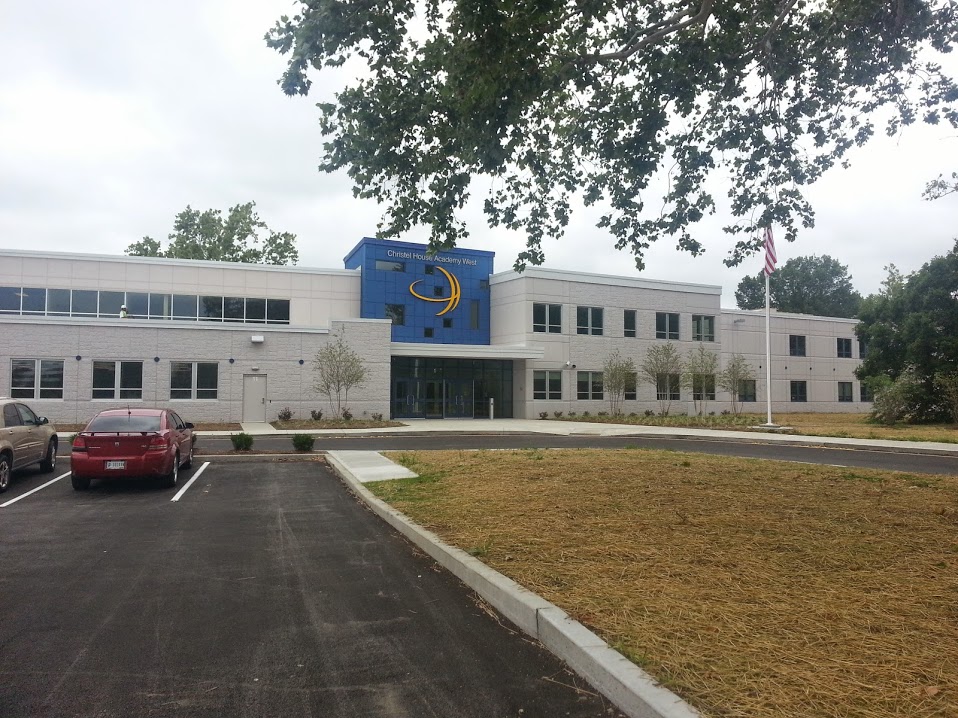
There have already been a few apartment buildings built upon the grounds that have been occupied for 2 years now. This fall, the southwest corner will see the opening of a new Christel House Acadamy. Unfortunately, the school does not display the most urban of forms:
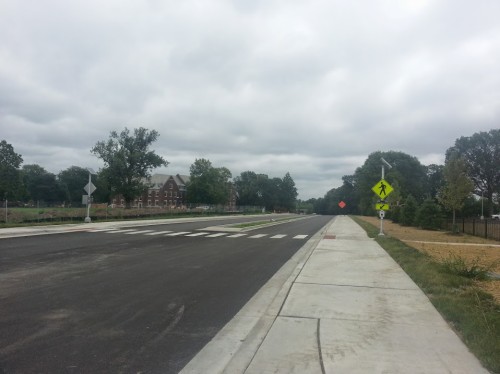
The crosswalk to the north of the school:
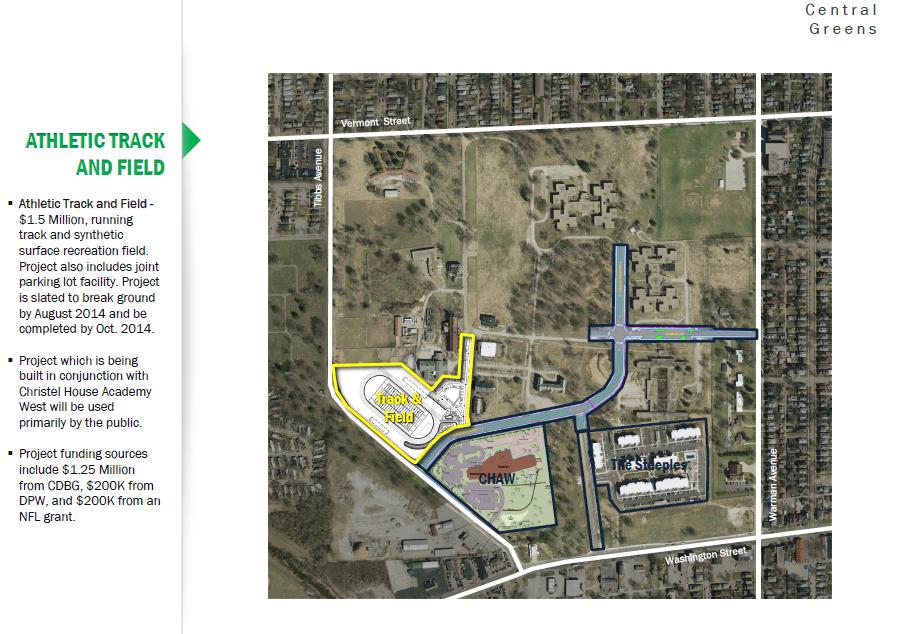
Soon to break ground is the Track and Field, located just to the north of the school, which is shown below:
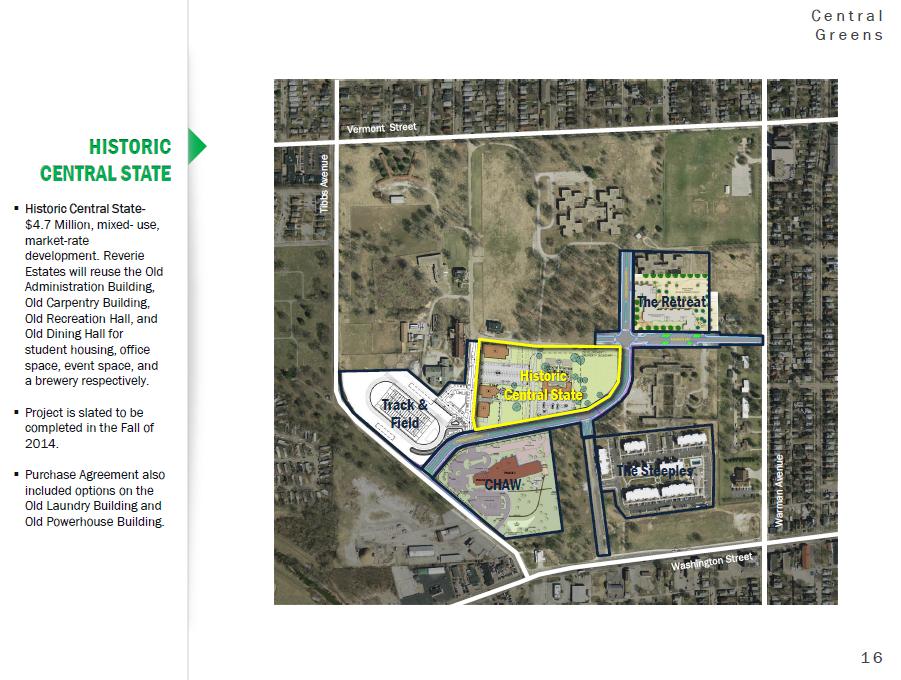
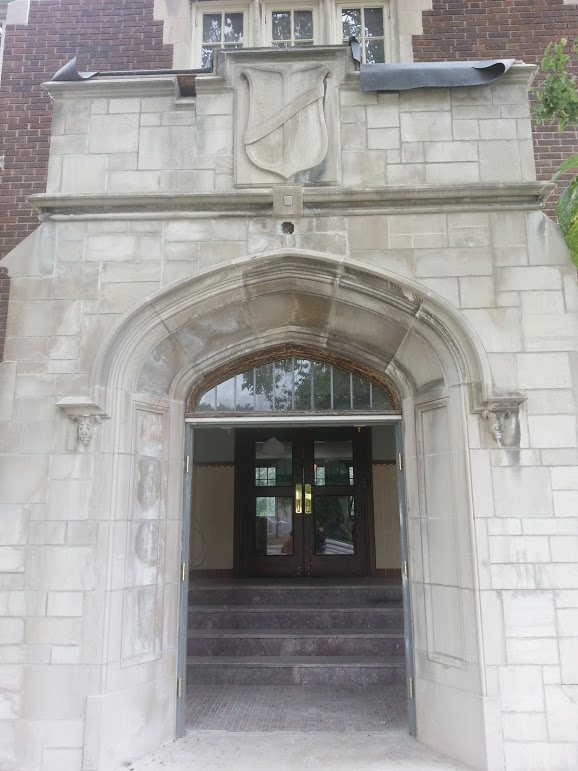
Another project that is set to open soon is the Central State Mansion. Located within the former dormitory of Central State’s workers, it is being converted into dorm-style apartments geared towards attracting younger residents. It is located in the eastern portion of the Historic Central State building cluster:
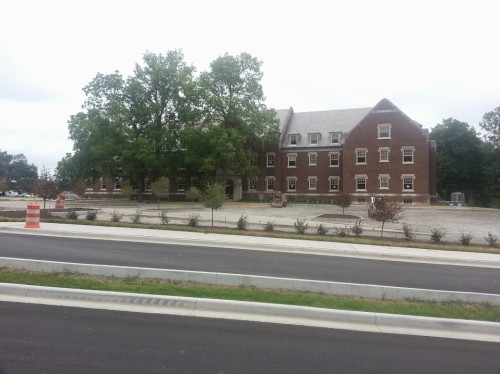
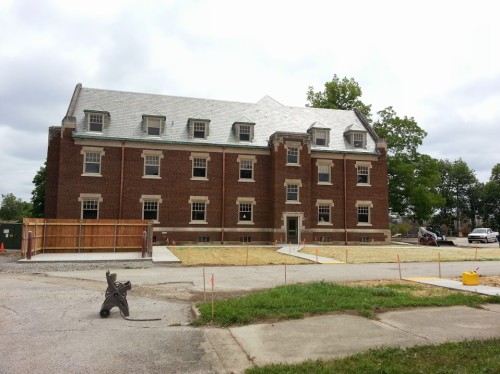
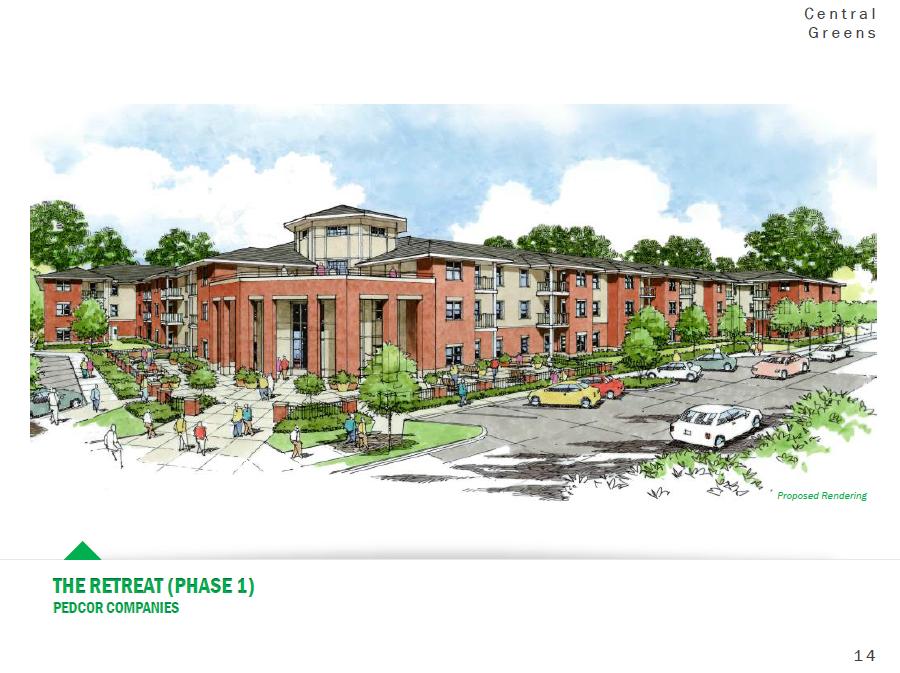
To the north of this project is a new Senior Living Center known as The Retreat, which is currently under construction.
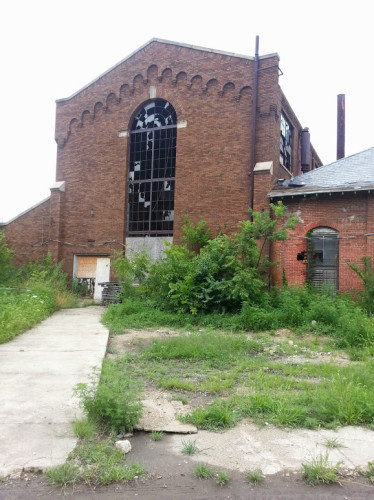
Not surprisingly, the part that is most interesting to me is the remaining historic core, which sits in various states of disrepair. Here’s the old power station:
The old Recreation Hall, which will eventually be turned into a wedding and events center by Reverie Estates.
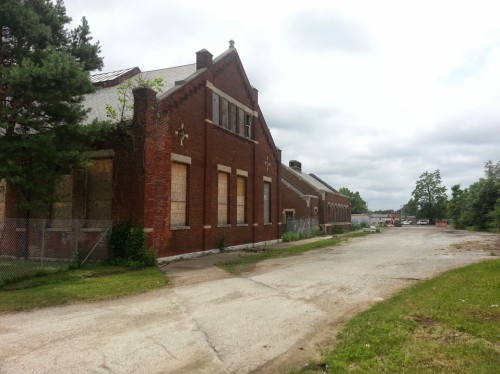
The interior qualifies as a jaw-dropper:
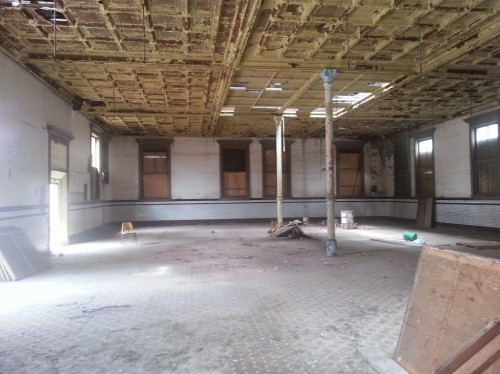
Finally, a 3 acre plot on the north end of the property is being used as an urban farm.

There is so much land out here that even with all these projects, there are still many acres left untouched or unplanned. It remains a large challenge for the city, as well as a source for potential inspiration. I hope that future buildings and projects are a little more conservative with the amount of land that they require, but it is still good to see the amount of activity going on there.
Finally, on a personal note, I’ll be away on vacation starting tomorrow evening, and will be away from the blog until August 11th. It will remain monitored in capable hands while I’m away, though.
30 Jul 19:50

Best place to watch a game
Bloomington Restaurant and Bar Guide
by Ben R.
Need a place to go when you're in Bloomington for a game? Do you want to find a good spot in town to relax or have a nice meal? Here's a guide to help you out.
With Big Ten media days over, football not starting for another month, and basketball gearing up for its summer trip to Montreal, I thought it might be a good time to discuss one of my favorite things about life in Bloomington, Indiana. By this, of course, I mean the terrific restaurant and bar scene around town. After seeing the post on BT Powerhouse recently about each Big Ten school's one essential restaurant, as well as giving a few suggestions for a commenter's upcoming stay in B-town, I figured I should expand these suggestions to a full restaurant and bar guide. Thus, here are some of my favorite places that I've been to over my last two years in Bloomington. I tried to stay away from chain restaurants or bars for this list as well.
Best place for current students (or to relive your undergrad days)
We're going to have to start the list with Kilroy's on Kirkwood, better known as Roy's or KOK. This bar is a Bloomington staple, and has multiple floors, lots of drink specials, and good outdoor areas. And if you go on Thursday, you can get a free t-shirt. The other Kilroy's-owned bars in town, Dunnkirk or Sports, are most populated late at night; though don't try to use a fake ID at Sports, especially if you're a starter on the basketball team.
Best place to watch a game
The one and only Nick's English Hut. Nick's is also a Bloomington staple, but caters to a different crowd than KOK, namely alums and grad students. I'm quite partial to the chicken fingers and fries, and Sink the Biz is always a fun game to play here with a group of friends. During the winter of 2013, IU basketball game watches were quite fun here, especially the Michigan game that gave us the Big Ten title.
Best place to go before or after a game
For its proximity to all of the IU athletic facilities, Yogi's is the easy call. Yogi's will also always hold a special place in my heart for two soccer games that I watched there: 1) IU men's soccer team winning its 8th national title in 2012, and 2) The USMNT beating Ghana in the World Cup this summer.
Best local beer
While there have been lots of great craft breweries sprouting up around Bloomington recently (such as Function, Quaff On, or Bloomington Brewing Company), the king of the local craft beer scene is still Upland. The Upland brewpub in town has delicious food, as well as a great outdoor seating area.
Best place for a chill night
Head to Atlas if you just want to hang out with your friends and choose the music on the jukebox, or if you want to play skeeball and other old school arcade games.
Best beer selection
That would be The Tap, which lives up to its name with an amazing craft beer selection on tap. I also enjoy their trivia nights, which happen on Tuesdays and Wednesdays.
Best live venue
If you enjoy stand-up, the Comedy Attic brings the goods. The venue is compact, but never feels overcrowded, so it works quite well. I've seen some great well-known acts here, such as Marc Maron, Rob Delaney, Jen Kirkman, Hannibal Burress, and Chris Hardwick.
Best burger
A little off the beaten path as you head down West Kirkwood towards Route 37 is a place called Hinkle's Hamburgers. It's an old-school, no-frills burger joint that probably hasn't changed much in five decades, aside from its prices. Needless to say, I love it for that reason, and the burgers taste great.
Best food on the go
I'm from the east coast, so I'm pretty particular about my bagels. Luckily, Bloomington Bagel has many great options, as well as excellent cream cheese, or schmear, to go with it.
Best brunch
There are so many good brunch options in Bloomington, but in my mind, you can't beat Runcible Spoon, which is just north of Kirkwood on Sixth Street. Huge pancakes, bottomless coffee, and excellent omelettes make this the place to go on Sunday mornings.
Best area for a nice meal
I love Fourth Street, with its plethora of cuisine options. The street is filled with Indian, Thai, Chinese, Turkish, Vietnamese, and Tibetan restaurants, among others. Go ahead and pick any place on Fourth. You won't be disappointed.
Best buffet
I really like Taste of India's lunch buffet. It has ton of terrific options - make sure you leave room for the food at the end of the line - at a decent price.
Best BBQ joint
Short Stop BBQ Train, which is located in the Sunoco parking lot on the east side of town. Though it's only open on Thursdays during the warm weather months, it is well worth the trip. I trust the BBQ opinions of the southerners I know here in Bloomington, and most of them swear by this place.
Best coffee shop
The Pour House Cafe, which has terrific coffee and a prime location on Kirkwood, is a great spot to get work done during the day or on weekends.
Best pizza
There can only be one: Mother Bear's. Their pizza is a Bloomington institution, and you can't go wrong with any of their specialty pies, along with their cheesy bread and gigantic portions of strawberry lemonade.
Best ice cream
There's almost always a line at The Chocolate Moose, and it's well worth the wait. I'll usually get a waffle cone of grasshopper ice cream, which is their mint Oreo flavor, but the moose tracks and black raspberry flavors never disappoint either.
Best place to take a date
I'm a fan of Sweetgrass, which is on the south side of town near the hospital. Impress your date by ordering the delicious fried green tomatoes for both of you to split. If you want to head to a smaller restaurant, another good option is Anatolia, the delicious Turkish place on 4th street. Get the red lentil soup and thank me later.
Best place to take your parents (or for them to take you)
Bring them to Janko's Little Zagreb if everyone in your party likes steak. If any of you are vegetarians or want more local options, check out Farm. However, if it's a birthday or graduation that you're celebrating, you might as well do it big and head to Scholar's Inn Gourmet Cafe.
28 Jul 17:46
Zillow to Acquire Trulia for $3.5 Billion
by By MICHAEL J. DE LA MERCED
Zillow agreed on Monday to buy Trulia for about $3.5 billion in stock, creating a giant repository of online listings for real estate and home values.
23 Jul 14:54

These Big Ten schools as pro soccer team jerseys are the best
by Luke Zimmermann
B1G Soccer Kit Concepts pic.twitter.com/wz0lDxoOaK
— Kevin Ives (@AUPPL) July 22, 2014
Whether you were as into this past World Cup as our staff (sorry, Matt and Ian; Deutschland uber alles) or not, it's awfully hard not to dig these concept soccer jerseys, courtesy of Twitter genius @AUPPL.
A few weeks back, he did the same thing with the SEC, but he's really at the height of his powers with these latest mockups. The Big Ten iterations include an awesome scarlet and gray striped home Ohio State jersey and a sweet sash laden road one that includes Buckeye leaves. Very, very cool.
The pattern on Rutgers home kit and Domino's sponsoring Michigan are just a few of the other beyond awesome touches. Which jerseys were your favorites? Let us know in the comments below.
21 Jul 17:30
OneAmerica Parking Garage: The Story
by Kevin Kastner
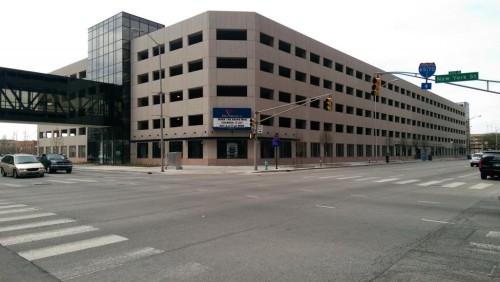
Readers of the Indianapolis Business Journal may recall that two years ago, members of this blog remonstrated against the design of the OneAmerica Parking Garage. That story has never been told on Urban Indy, until now. The reason for sharing this now will be explained towards the end of this article. But first, some background on the process.
A member of our team (who was at the time independent of this blog) first brought up the various issues with the urban design of the garage, which was proposed to replace a surface lot at the corner of New York and Illinois. This garage was to be built with public funding, in order to free up other surface lots owned by OneAmerica to the north and west for the Axis Project. Most importantly among the issues, the garage violated the city’s own Regional Design Guidelines. Here are the guidelines that we focused on:
- SC 1.2.1:New development and changes in use in areas proposed as High-Density Mixed-Use in the Indianapolis Regional Center Plan 2020 are to have multiple uses in each building or multiple uses controlled by a single development entity. In buildings that are designed primarily for single use, such as garages or office buildings, highly active grade level uses such as retail, restaurants, cafeterias, lobbies, security, and other similar uses will be considered as mixed-use.
- SC 1.3.1:In areas proposed as High-Density Mixed-Use, all grade level uses shall be designed to activate the adjacent pedestrian ways. Retail, restaurant, and commercial uses are encouraged. Exhibit windows and public art may also be acceptable for areas where retail and commercial uses are not currently feasible.
- SC 2.5.3:All new development, including parking structures shall be designed and constructed with provisions for active grade level uses to pedestrian ways.
- SC 3.3.1:All structured parking fronting on public pedestrian ways shall have the grade level designed to accommodate active uses that generate pedestrian activity, such as retail shops, restaurants, business services, and offices.
It was upon these grounds that we built our case for the remonstrance. Fortunately, we were able to set up several meetings with city officials and the developers to pitch our 3 alternatives, which are presented as follows:
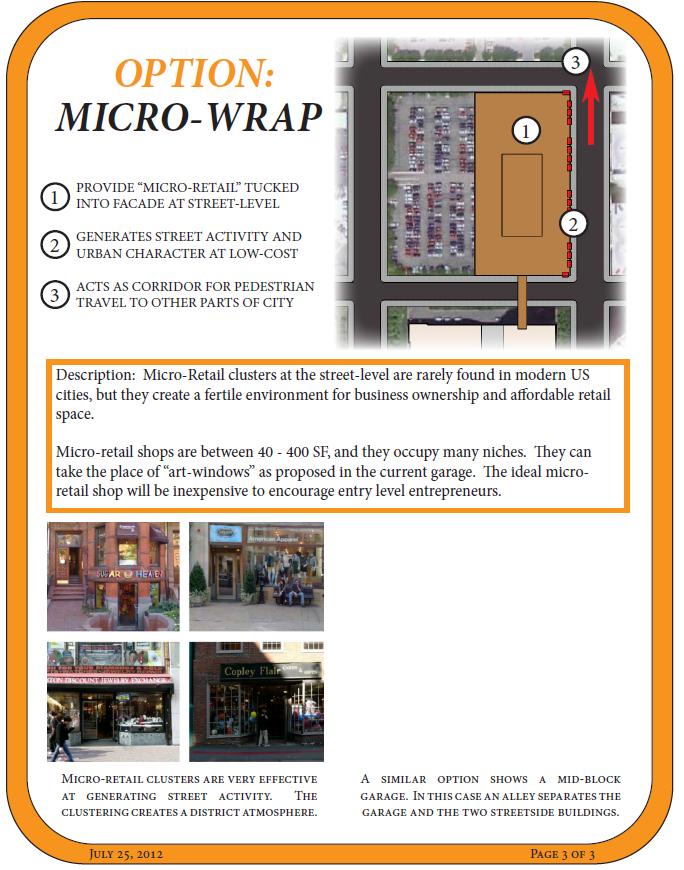
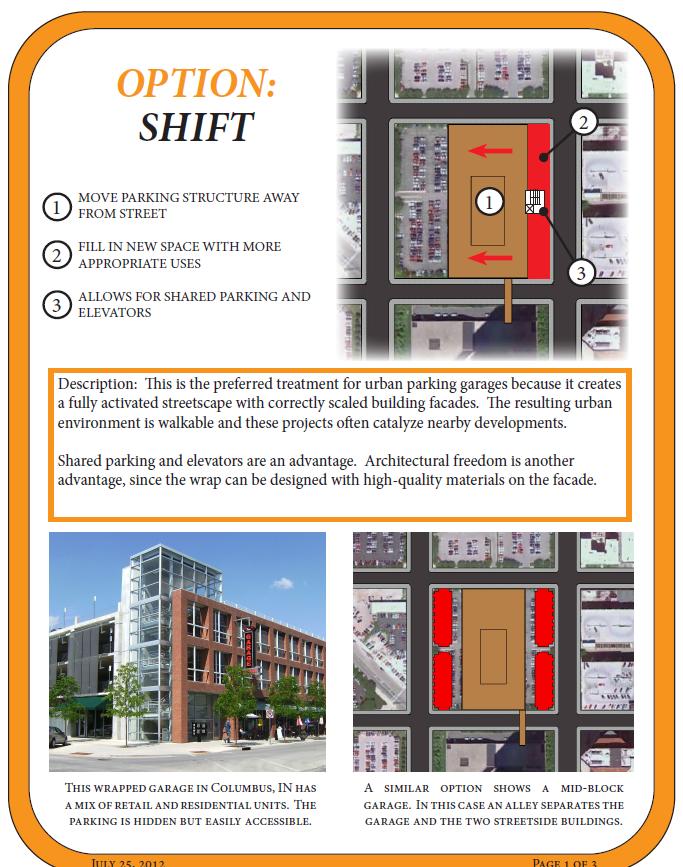
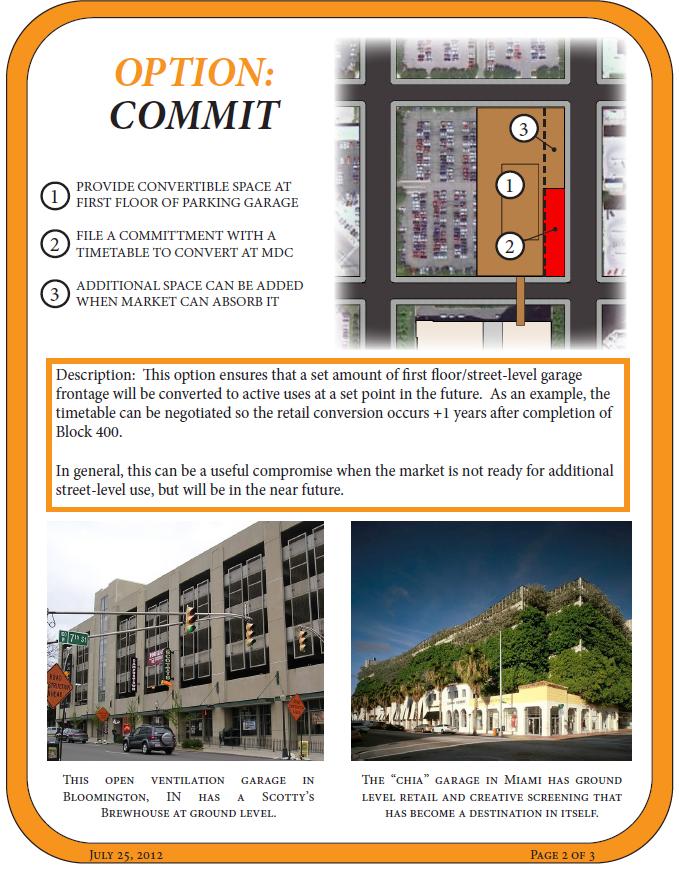
The meetings proved that it is possible for committed citizens to meet with high-level people in this city. Unfortunately, we heard that it was too late for them to change the project, and that the Axis and Marsh was too important of a deal to jeopardize. Besides, they assured us that the project did include a 1500 square foot retail space at the corner of New York and Michigan. But, did it?
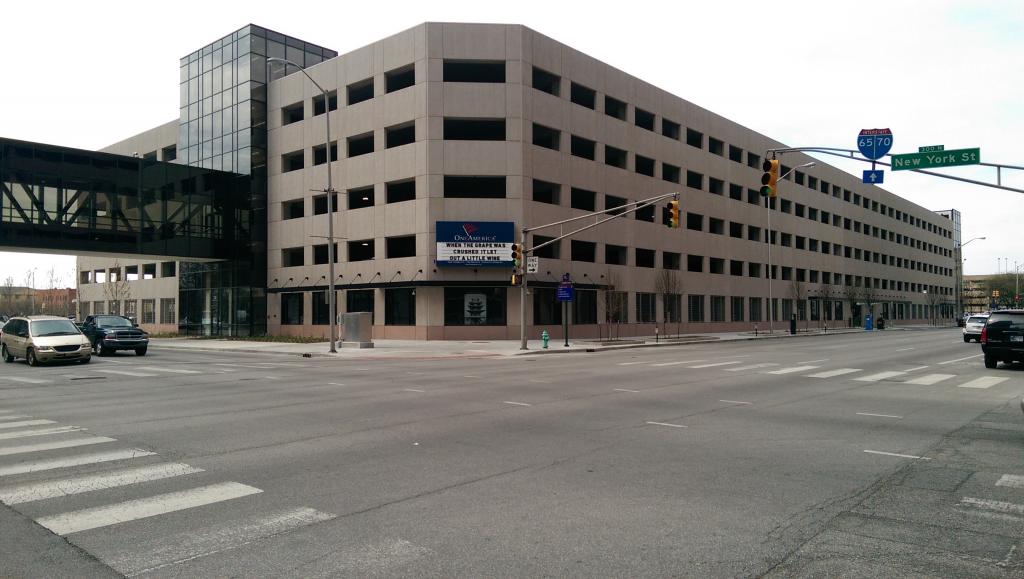
Photo Credit: Chris Corr
The finished product does not feature a street level door. An Urban Indy author went to look at the garage, and this was his report:
Someone brought up the additional stuff about the OA garage not having a separate entrance to the commercial space a while ago, so I decided to try and explore how one is to get inside the commercial space over the weekend. I went to the door off of New York thinking you had to enter the common entrance, and then enter the commercial space, but this door is locked and may be accessed only by employees with a swipe card. I walked along Illinois, but the only access is through closed gates for the vehicle entrance and exit. The door on the north side along Vermont is the same as the door along New York. Finally, I walked around a gate arm on the west side of the building in the surface parking lot area. I entered the garage through the vehicle access point and walked towards the commercial space. There is no commercial space. It is additional parking with no rough-in features, no plumbing, no nothing.
In essence, the city paid to build this garage for a corporation’s benefit, without even complying with its own guidelines. In return, the city will have a completely dead streetscape for the next 50 years, at the least, just a few blocks away from Monument Circle. Urban Indy’s authors and other committed citizens will have to do our best to make sure that nothing this egregious happens here in Indianapolis again.
18 Jul 19:34

Former Indiana Rower Killed in Malaysia Airlines Flight 17 Crash
by Ben R.
Karlijn Keijzer was an IU doctoral student in chemistry, originally from the Netherlands, who rowed for the Hoosiers during the 2010-11 season.
I hate to start this summer weekend on a down note, but Indiana University received tragic news this morning in connection to yesterday's Malaysian Airlines Flight 17 crash in Ukraine. Karlijn Keijzer, a former varsity rower for the Hoosiers and current doctoral student at IU, was on Flight 17 when it was shot down, which resulted in everyone aboard being killed. This was an outrageous and senseless event, and hearing the news about the almost 300 lives lost in the crash has been awful.

(photo from iuhoosiers.com)
Keijzer, 25, who originally hailed from the Netherlands, rowed on the Varsity 8 boat for the Hoosiers for the 2010-11 season. During that season, the team - which made it to its first NCAA championships this season - finished 14-5. Keijzer had been living in Bloomington, and was working toward her Ph. D in chemistry, after having received her master's degree in Amsterdam.
Our thoughts and prayers go out to Keijzer's family at this time, as well as to the families of the other victims on Flight 17.
18 Jul 15:31

The Thursday Thinker
by Candystripes for Breakfast
I know, it's kinda early to think about basketball season, but you can't honestly tell me you aren't just a little curious about this. With the excitement of new recruits, the hoping that Hanner is ready to be the guy at center, and wondering whether a 5 guard lineup is feasible, men's basketball is yearning for some attention right now. So let's give them a little bit. (Also, I'm trying not to exhaust the things we can talk about related to football before the season starts.)
The thinking behind this question should be pretty easy to understand, as it's a discussion that won't truly end until we actually get to basketball season. Your Thursday Thinker is: Who starts for the Hoosiers in 2014-15?
It should be the simplest question, and yet when I mentioned the possibility of running a five guard lineup a bit ago, you cringed because it could totally happen, right? With this team as currently constituted, I wouldn't be surprised if at least once or twice during the non-con schedule, we didn't run a forward or center out there at all. Hopefully, such things end by the start of the conference schedule, but we don't know just yet.
And now that I've probably freaked you out more than any of us should be right now, I'm gonna turn it over to you, and let the wild lineups roll in. Who starts for the Hoosiers in 2014-15?
16 Jul 17:36
Law - Indiana wine shipping prohibitions hit home to former Star reporter
by Marcia Oddi
The ILB, which has posted many entries on the wine shipping issue over the years, noticed these tweets by former...
16 Jul 17:22
New downtown concert venue to seat 15,000
by solson@ibj.com
A music amphitheater soon will take center stage on the site of the former General Motors metal-stamping plant on the western edge of downtown, sources tell IBJ.
16 Jul 15:30


Tom Crean breaks down returnees, newcomers
by podcastonthebrink@gmail.com (Matt Dollinger, Justin Albers)
As part of his press conference on Tuesday afternoon at Assembly Hall, Tom Crean broke down the 2014-2015 Indiana roster on a player-by-player basis. We’ve organized his quotes on each player below: Yogi Ferrell Yogi is getting a lot better. He’s getting a lot stronger. He’s benching 245 right now which is phenomenal. He’s always […]
The post Tom Crean breaks down returnees, newcomers appeared first on Inside the Hall | Indiana Hoosiers Basketball News, Recruiting and Analysis.
15 Jul 13:27
Wines of The Times: Tasting Wines from Ribeira Sacra
by By ERIC ASIMOV
In the northern region of Spain, the wines are still evolving.


