Airlines, payment processors, 911 call centers, TV networks, and other businesses have been scrambling this morning after a buggy update to CrowdStrike's Falcon security software caused Windows-based systems to crash with a dreaded blue screen of death (BSOD) error message.
We're updating our story about the outage with new details as we have them. Microsoft and CrowdStrike both say that "the affected update has been pulled," so what's most important for IT admins in the short term is getting their systems back up and running again. According to guidance from Microsoft, fixes range from annoying but easy to incredibly time-consuming and complex, depending on the number of systems you have to fix and the way your systems are configured.
Microsoft's Azure status page outlines several fixes. The first and easiest is simply to try to reboot affected machines over and over, which gives affected machines multiple chances to try to grab CrowdStrike's non-broken update before the bad driver can cause the BSOD. Microsoft says that some of its customers have had to reboot their systems as many as 15 times to pull down the update.
The Federal Communications Commission today voted to lower price caps on prison phone calls and closed a loophole that allowed prison telecoms to charge high rates for intrastate calls. Today's vote will cut the price of interstate calls in half and set price caps on intrastate calls for the first time.
The FCC said it "voted to end exorbitant phone and video call rates that have burdened incarcerated people and their families for decades. Under the new rules, the cost of a 15-minute phone call will drop to $0.90 from as much as $11.35 in large jails and, in small jails, to $1.35 from $12.10."
The new rules are expected to take effect in January 2025 for all prisons and for jails with at least 1,000 incarcerated people. The rate caps would take effect in smaller jails in April 2025.
Surprise, another grifter who only gets ahead by ripping other people off
Republican Senate candidate Tim Sheehy, the multimillionaire rhinestone-cowboy transplant from Minnesota who is taking on Montana Democratic Sen. Jon Tester, has apparently learned everything he knows about business from Donald Trump. That includes mythologizing his origin story and allegedly shafting his employees.
Take this example from a recent meet and greet in Missoula.
“As a small business owner, you know, you don't balance the budget in your business, you don't get paid,” Sheehy told the gathering in audio obtained exclusively by Daily Kos. “I've been there. I've gone years without a paycheck before, when I've made sure my team gets paid first, I'll get paid later.”
Nice story. But some of his former employees would dispute that.
In a lawsuit filed in April, former employees John Wantulok and Weston Irr allege that Sheehy, his brother, and their companies defrauded them out of potentially millions of dollars.
Wantulok and Irr were early employees in the Sheehys’ aerospace venture, Bridger Aerospace. The former workers allege that they agreed to reduced salaries, unpaid overtime, and work on weekends and holidays in return for ownership interests in the form of Class C stocks in Bridger Management, the parent company for the companies the employees worked at. The suit says they signed contracts about those shares in 2017.
The suit also alleges that Tim Sheehy and his brother instructed Irr and Wantulok not to tell other employees about those stock holdings or they would lose both the stocks and their jobs.
Fast forward to 2020, when the Sheehys sold Ascent Vision Technologies, a subsidiary of Bridger Management at which Irr had previously worked. The suit alleges that the employees were told they “would be required to sell their ownership interests in Bridger Management prior to the sale.” That sale brought in “roughly $350 million,” according to the suit. Then, the suit alleges, the Sheehys’ Bridger Management merged Bridger Aerospace with another company and took it public with a valuation of “roughly $860 million.”
The former workers claim that these actions should have made their shares worth millions.
Except one thing: Their suit alleges that Sheehy improperly forced them to accept a buyout before dissolving Bridger Management, then failed to distribute the proceeds from the sale of Ascent Vision or from Bridger Aerospace’s public offering. The former workers also claim that the Sheehys refused to provide them with accounting or ownership records.
The suit says that Sheehy and his brother “never provided a legal or contractual basis for forcing Plaintiffs to sell their ownership interests in Bridger Management.” It also claims that the brothers “never provided a legal, contractual, or financial basis for the valuations of Plaintiffs’ ownership interests in Bridger Management,” and that the former workers “did not agree to the sale of their ownership interests of Bridger Management or agree to Defendants’ valuations of their ownership interests.”
Bloomberg News reports that Tim Sheehy made about $75 million off selling Ascent Vision in 2020. And that same year, he purchased millions of dollars of ranch land in Montana and, with assistance, started a cattle company, HuffPost reports.
Meanwhile, his company appears to be struggling, with reported losses of $77 million in 2023, though Sheehy reported earning more than $2.4 million from the company in his annual disclosure filed in June 2024.
Former president Barack Obama has privately expressed concerns to Democrats about President Joe Biden's candidacy, and Speaker Emerita Nancy Pelosi privately warned Biden that Democrats could lose the ability to seize control of the House if he didn't step away from the 2024 race.
Pelosi also showed Biden polling that he likely can't defeat Republican Donald Trump, according to people familiar with the matter who insisted on anonymity to discuss it.
Time racing, Democrats at the highest levels are making a critical push for Biden to reconsider his reelection bid, as unease grows at the White House and within the campaign at a fraught moment for the president and his party.
Biden has insisted he's not backing down, adamant he's the candidate who beat Trump before and will do it again. Pressed about reports Biden might be softening to the idea of leaving the race, his deputy campaign manager Quentin Fulks said Thursday: "He is not wavering on anything."
In recent days the president has become more committed to staying in the race, according to another person familiar with the matter.
But influential Democrats from the highest levels of the party apparatus, including congressional leadership headed by Senate Majority Leader Chuck Schumer and House Democratic Leader Hakeem Jeffries, are sending signals of concern. Some Democrats hope Biden will assess the trajectory of the race and his legacy during this few days' pause.
Using mountains of data showing Biden's standing could wipe out the ranks of Democrats in Congress, frank conversations in public and private and now the president's own time off the campaign trail after testing positive for COVID-19, many Democrats see an opportunity to encourage a reassessment.
If Democrats are seriously preparing the extraordinary step of replacing Biden and shifting Vice President Kamala Harris at the top of the ticket, this weekend will be critical to changing the president's mind, other people familiar with the private conversations said.
One said it's now or never ahead of a planned virtual roll call to nominate the party's choice in early August, ahead of the Democratic National Convention in Chicago.
Over the past week, Schumer and Jeffries, both of New York, have spoken privately to the president, candidly laying out the views of Democrats on Capitol Hill, including Democrats' concerns.
Separately, the chair of the Democratic Congressional Campaign Committee, Rep. Suzan DelBene of Washington, spoke with Biden last week armed with fresh data. The campaign chief aired the concerns of front-line Democrats seeking election to the House.
And Wednesday, California Rep. Adam Schiff, a close ally of Pelosi, called for Biden to drop his reelection bid, saying he believes it's time to "pass the torch."
Biden, in a radio interview taped just before he tested positive for COVID-19, dismissed the idea it was too late for him to recover politically, telling Univision's Luis Sandoval that it's still early and that many people don't focus on the election until September.
"All the talk about who's leading and where and how, is kind of, you know — everything so far between Trump and me has been basically even," he said in an excerpt of the interview released Thursday morning.
Some national polls do show a close race, though others suggest Trump with a lead. And some state polls have contained warning signs too, including a recent New York Times/Siena poll that suggested a competitive race in Virginia.
While the tensions over Biden's ability to carry on a winning campaign subsided some, particularly after the Trump assassination attempt and as the Republican National Convention was underway in Milwaukee, Democrats know they have limited time to resolve the party turmoil after the president's faltering debate performance last month.
To be sure, many Democrats want Biden to stay in the race. And the Democratic National Committee is pushing ahead with plans for a virtual vote to formally make Biden its nominee in the first week of August, ahead of the Democratic National Convention that begins Aug. 19 in Chicago.
Late Wednesday, ABC News reported new details about Biden's private meeting over the weekend with Schumer at the president's beach home in Delaware. It said Schumer told the president it would be "better for the Democratic Party, and better for the country if he were to bow out."
A Schumer spokesperson called the report "idle speculation. Leader Schumer conveyed the views of his caucus directly to President Biden on Saturday."
White House spokesman Andrew Bates said Biden told Schumer, as well as Jeffries, that "he is the nominee of the party, he plans to win, and looks forward to working with both of them to pass his 100 days agenda to help working families."
But among Democrats nationwide, nearly two-thirds say Biden should step aside and let his party nominate a different candidate, according to a new AP-NORC Center for Public Affairs Research poll. That sharply undercuts Biden's post-debate claim that "average Democrats" are still with him even if some "big names" are turning on him.
Biden tested positive for COVID-19 while traveling Wednesday in Las Vegas and is experiencing "mild symptoms" including "general malaise" from the infection, the White House said.
The president, who has spent the past several days campaigning, had already been scheduled to return to his Delaware beach home even before the diagnosis.
Schiff's announcement brings to nearly 20 the number of Democratic members of Congress calling on Biden to withdraw from the presidential race in the wake of his dismal debate performance against Trump last month.
Schiff said that by bowing out, Biden would "secure his legacy of leadership by allowing us to defeat Donald Trump in the upcoming election."
Schiff is a prominent Democrat on his own, and his statement will also be watched because of his proximity to Pelosi.
It was Pelosi who revived questions about Biden post-debate, when she said recently that "it's up to the president" to decide what to do — even though Biden had already fully stated he had no intention of stepping aside. The former House speaker publicly supports the president, but has fielded calls from Democrats since debate night questioning what's next.
In response to Schiff's comments, the Biden campaign pointed to what it called "extensive support" for him and his reelection bid from members of Congress in key swing states, as well as from the Congressional Black and Hispanic caucuses. The campaign noted that Biden had been joined on his trip to Nevada this week by nearly a dozen Congressional Black Caucus members.
Still, Schiff's announcement came after Schumer and Jeffries encouraged the party to delay for a week plans to hold the virtual vote to renominate Biden, which could have taken place as soon as Sunday, according to two people familiar with the situation who spoke on the condition of anonymity to discuss private conversations.
The Democratic National Committee' s rulemaking arm is set to meet on Friday to discuss how the virtual vote plans will work and to finalize them next week.
"We will not be implementing a rushed virtual voting process, though we will begin our important consideration of how a virtual voting process would work," Bishop Leah D. Daughtry and Minnesota Gov. Tim Walz, co-chairs of the rules committee for the Democratic National Convention wrote in a letter Wednesday.
Four days after a gunman's attempt to assassinateDonald Trump at a Pennsylvania rally, the public is still in the dark over the extent of his injuries, what treatment the Republican presidential nominee received in the hospital, and whether there may be any long-term effects on his health.
Trump's campaign has refused to discuss his condition, release a medical report or records, or make the doctors who treated him available, leaving information to dribble out from Trump, his friends and family.
The first word on Trump's condition came about half an hour after shots rang out, Trump dropped to the ground after reaching for his ear, and then pumped his fist defiantly to the crowd with blood streaming down his face. The campaign issued a statement saying he was “fine" and “being checked out at a local medical facility.”
“More details will follow,” his spokesperson said.
It wasn't until 8:42 p.m., however, that Trump told the public he had been struck by a bullet as opposed to shrapnel or debris. In a post on his social media network, Trump wrote that he was “shot with a bullet that pierced the upper part” of his right ear.
“I knew immediately that something was wrong in that I heard a whizzing sound, shots, and immediately felt the bullet ripping through the skin,” he wrote.
Presidents and major-party candidates have long had to balance their right to doctor-patient confidentiality with the public's expectations that they demonstrate they are healthy enough to serve, particularly when questions arise about their readiness. Trump, for example, has long pressed President Joe Biden to take a cognitive test.
After a would-be assassin shot and gravely wounded President Ronald Reagan in 1981, the Washington, D.C., hospital where he was treated gave regular, detailed, public updates about his condition and treatment.
Trump has appeared at the Republican National Convention the past three days with a bandage over his right ear. But there has been no further word since Saturday from Trump’s campaign or other officials on his condition or treatment.
Instead, it has been allies and family members sharing news.
Rep. Ronny Jackson, a Texas Republican who served as Trump's White House doctor and traveled to be with him after the shooting, said in a podcast interview Monday that Trump was missing part of his ear, but that the wound would heal.
“He was lucky," Jackson said on “The Benny Show,” a conservative podcast hosted by Benny Johnson. ”It was far enough away from his head that there was no concussive effects from the bullet. And it just took the top of his ear off, a little bit of the top of his ear off as it passed through."
He said that the area would need to be treated with care to avoid further bleeding—“It's not like a clean laceration like you would have with a knife or a blade, it's a bullet track going by," he said—but that Trump is "not going to need anything to be done with it. It's going to be fine.”
The former president’s son. Eric Trump, said in an interview with CBS on Wednesday that his father had had “no stitches but certainly a nice flesh wound.”
The lack of information continues a pattern for Trump, who has released minimal medical information throughout his political career.
When he first ran in 2016, Trump declined to release full medical records, and instead released a note from his doctor that declared Trump would be “the healthiest individual ever elected to the presidency.”
Dr. Harold Bornstein later revealed that the glowing, four-paragraph assessment was written in 5 minutes as a car sent by Trump to collect it waited outside.
Jackson, after administering a physical to Trump in 2018, drew headlines for extolling the then-president's “incredibly good genes” and suggesting that “if he had a healthier diet over the last 20 years he might live to be 200 years old.”
When Trump was infected with the coronavirus in the midst of his 2020 re-election campaign, his doctors and aides tried to downplay the severity of his condition and withheld information about how sick he was and key details of his treatment.
Former White House chief of staff Mark Meadows wrote in his book that Trump’s blood oxygen dropped to a “dangerously low level" and that there were concerns that Trump would not be able to walk on his own if he had waited longer to be transported to Walter Reed for treatment.
Promises are worthless if there's no plan to accomplish them.
US President Joe Biden speaks to supporters at a campaign event at Renaissance High School on July 12, 2024 in Detroit, Michigan. | Bill Pugliano/Getty Images
Amid calls for President Joe Biden to step aside as the Democratic nominee following his disastrous debate performance last month, he has turned to an unlikely set of allies for support: progressives.
Biden has long billed himself as a moderate. In the 2020 Democratic primary, he positioned himself as the pragmatic and less polarizing choice than the more progressive Sen. Bernie Sanders (I-VT). Throughout his first term, Biden has often clashed with the more leftist elements of the party on issues ranging from immigration to Israel, even though he’s also found common ground with them on the Inflation Reduction Act and advanced progressive ideas like a billionaire tax.
Now Biden is again seeking their help — and they’re willingly offering it.
Just as Rep. Adam Schiff (D-CA) publicly urged Biden to step aside Wednesday, the New Yorker published an interview with Sanders where he threw his support behind Biden’s candidacy. This comes after Rep. Alexandria Ocasio-Cortez (D-NY), a member of the progressive so-called “Squad,” left no room for doubt that Biden should be the nominee and said, “I support him and making sure that we win in November.”
Understand the push to replace Biden
President Joe Biden has come under mounting pressure from Democrats to reconsider his 2024 reelection bid.
Biden’s need for allies — wherever he can get them — may have created an opportunity for progressives to negotiate with him on policy. AOC made this explicit in her comments earlier this month, saying that Biden should “lean in” to a bolder economic agenda “and move further towards the working class.”
Two questions loom over this push from Biden. One, are these proposals actually achievable — especially since, if he wins the presidency, he likely won’t have the congressional majorities needed to enact his agenda? And two, can this late push help him politically?
Biden’s new progressive priorities
The progressive policies Biden is pushing have little chance of becoming law, even though they might be popular among Democratic base voters, not just those on the left flank.
Biden is reportedly weighing legislation that would impose term limits on Supreme Court justices who currently serve for life (or until they decide to retire), and introduce a new ethics code in the wake of several scandals involving conservative Justices Clarence Thomas and Samuel Alito. Such legislation would likely be dead on arrival in the Republican-controlled House, and would struggle in a Senate full of members hesitant to fiddle with institutional rules.
He is also reportedly considering a constitutional amendment that would roll back the recent Supreme Court decision providing broad presidential immunity from prosecution for official actions. As any amendment requires the approval of 38 states — a tall order that hasn’t been fulfilled in decades — this constitutional change seems unlikely. That said, endorsing such policies would mark a big shift for a president who was previously reluctant to touch the Supreme Court amid leftist calls to pack the court with more justices, sometimes referred to as Democrats’ nuclear option.
On Tuesday, Biden revived his calls for a national assault weapons ban. The shooter who attempted to assassinate Trump used an AR-style assault weapon, which he said has “killed so many others, including children.” The president’s last effort on this front failed due to a lack of congressional interest; though there have been a number of high-profile shootings since then, little has changed with Congress’s willingness to engage with gun reform.
Also on Tuesday, Biden proposed legislation to limit rent increases in an environment in which housing inflation has remained higher than overall inflation figures for the year.
Biden would prevent landlords who raise rent by more than 5 percent annually from obtaining tax credits starting in 2024 and for the next two years. More than 20 million rentals would be affected under the plan, which applies only to landlords who own more than 50 units and would exempt newly constructed or renovated properties.
There is disagreement among economists and housing advocates as to whether this would help renters. Even setting that aside, this proposal, like the others, isn’t likely to be passed by Congress before the November election.
And even if Biden wins a second term, his current performance in the polls is now endangering down-ballot Democrats who would need to win overwhelmingly to get the numbers in Congress required to pass such ambitious legislation.
What is Biden’s strategy?
All of that raises the question: What exactly is Biden’s game plan here? These proposals are unrealistic even in the best of times for Democrats, and right now is definitely not the best of times for Democrats.
These policies might shore up support for Biden among Democratic base voters at a moment when his candidacy is in doubt. Nearly two-thirds of Democrats now want Biden to withdraw from the race, according to a recent AP-NORC Center for Public Affairs Research poll.
But less than four months from the election is not a time when a candidate should have to worry about drumming up support in any wing of their party. In a normal election, a nominee’s position would be secure; They could spend their time courting swing voters who are especially likely to identify as moderate and whose support they also need to win.
Seems that Donald Trump’s campaign doesn’t trust their vice presidential candidate, J.D. Vance, in a debate against Vice President Kamala Harris.
“We don’t know who the Democrat nominee for Vice President is going to be, so we can’t lock in a date before their convention,” the campaign said in a statement. “To do so would be unfair to Gavin Newsom, JB Pritzker, Gretchen Whitmer, or whoever Kamala Harris picks as her running mate.”
Oh, they think they’re so clever. We all know that in reality, if the unlikely were to happen and Harris isn’t running for vice president, that a new person could be easily swapped in. This is all about fear that Vance—a weak candidate who almost lost red Ohio for the Republicans in 2022 and cost the Republicans $32 million to bail out—wouldn’t be able to defend his record against a former prosecutor.
He’d also have to explain how he wants to restrict divorce, despite the guy at the top of the ticket being twice-divorced himself.
But worst of all, he would have to defend his extremist desire to ban all abortion nationally, as CNN reported late Wednesday.
“I certainly would like abortion to be illegal nationally,” he told the “Very Fine People” podcast in January 2022.
He even offered a weird hypothetical! “[L]et’s say Roe vs. Wade is overruled. Ohio bans abortion, in 2022 or let’s say 2024. And then, you know, every day George Soros sends a 747 to Columbus to load up disproportionately Black women to get them to go have abortions in California..”
“And, and it’s like, if that happens, do you need some federal response to prevent it from happening?” Vance mused to podcast host Aimee Therese. “I’m pretty sympathetic to that actually. So, you know, hopefully we get to a point where Ohio bans abortion in California and the Soroses of the world respect it.”
Among President Joe Biden’s many debate failures, he was unable to pin Trump down on abortion. Harris wouldn’t have that problem. And with Trump and his people running as hard as they can away from the issue, the last thing they need is a debate in which abortion features front and center.
Better late than never, but jesus dude, get a spine
On Tuesday evening, The Washington Post reported that President Joe Biden is preparing to announce his support for major reforms to the Supreme Court. Rather than call for immediate expansion of the court or for the impeachment of justices clearly violating the court’s toothless ethics guidelines, Biden will seek to establish term limits and an enforceable code of ethics.
Biden is also considering whether to promote a constitutional amendment to reverse the Supreme Court’s recent decision giving presidents broad immunity from prosecution.
While not offering the prospect of immediate relief from the precedent-breaking rulings of this ultraconservative court, Biden’s proposals would bring serious (and overdue) changes to the court—and they’re some of the most consequential ever put forward. The proposals also have the advantage of not being overtly partisan or created to generate a particular end, unlike court expansion. They also have the advantage of being really smart politics.
Republicans would viciously fight any Democratic proposal to expand the court. They would see any attempt by Biden to tack on four or six new justices as explicitly partisan, designed to weaken their iron grip on the court. Not only would such a proposal be immediately squelched in the Republican-controlled House, it also wouldn’t see much consideration in the filibuster-happy Senate.
When polled by Gallup in 2023, Americans were roughly evenly split over the idea of expanding the court, with 51% opposing it and 46% supporting it. But the same poll shows overwhelmingly bipartisan support both for placing an age limit on members of the court (74% support it) and for placing term limits on Congress members (87% percent support it). The reported proposal from Biden would sort of combine those two ideas, using a term limit for justices instead of an age limit. This has advantages over putting an age limit on the court because three of the four youngest justices are Trump appointees, and an age limit would allow them to remain on the court for decades to come.
And while Republicans would assail placing term limits on justices, that proposal would likely garner high enough levels of public support to make Republicans think twice. Even if they don’t, Republican leadership would be on record opposing a popular proposal, while Biden would be on record as offering an innovative solution to a widely-recognized problem.
Smart. Politics.
This is even more true for an enforceable code of ethics. A May survey from Data for Progress shows 77% of likely voters say Supreme Court justices and their spouses should be required to follow a code of ethics. Just 10% of likely voters, including only 18% of Republicans, oppose this idea. Overall, 73% felt that members of the court should be held to the same ethics standards as other federal judges. Only 17% felt that the court should be allowed to set its own ethical standards.
That’s about as good a mandate as any idea is going to get in a day when the majority of Americans oppose teaching Arabic numbers. People may not know the history of the symbols they use when paying for a burger, but they know that Justice Clarence Thomas is dirty as hell.
Republicans in Congress are sure to view any ethics proposal as a response to the escapades of Justices Thomas and Samuel Alito and their insurrection-loving wives. So would the public. However, not only do a majority of likely voters support impeaching both Thomas and Alito (after voters are informed about those justices’ ethical lapses), but putting Republicans in the position of opposing ethical guidelines is essentially the same as forcing them to stand there and declare themselves the party of corruption.
That’s also very smart politics.
Biden’s proposal for a constitutional amendment to reverse the recent Supreme Court ruling on presidential immunity is also likely to be popular. No one is particularly fond of the “Seal Team 6” scenario in which a president would be immune from having his political rivals assassinated. And it could be seen as a willingness on Biden’s part to surrender power and hold his office to higher standards at the same time that he is proposing such standards for the court.
None of this is to say that expanding the court is a bad idea. It may be the only way that the United States could gain relief from this court’s egregious rulings. Democrats should absolutely be ready to push that idea if this year’s election provides them the presidency and a majority in both chambers of Congress.
But right now, Senate Majority Leader Chuck Schumer and Senate Judiciary Committee Chair Dick Durbin should be prepared to pounce on Biden’s court proposals as soon as they are announced.
There are good ideas. These are likely to be popular ideas. This is a very good fight to have in the months leading up to the election. So please, have it. Loudly and enthusiastically.
Now would be better than later. Getting this in public and forcing Republicans to react to it while the RNC is still going on would be just … peachy. Let Donald Trump deliver an acceptance speech in which he bombastically defends corruption. Put Republicans on the defense.
And deliver something the public not only wants but needs.
President Joe Biden returned to the campaign trail on Tuesday for the first time since the attempted assassination of Donald Trump, continuing his calls to calm the divisive rhetoric on both sides but also arguing that doing so "doesn’t mean we should stop telling the truth” about his Republican rival.
Addressing the NAACP convention in Las Vegas, Biden said curbing political violence in the country should mean combating all kinds of bloodshed—including reducing police brutality and banning weapons like the AR-style rifle used in the weekend attack on the former president.
“Our politics have become too heated,” Biden said.
That didn't stop him from tearing into Trump, though, listing why the former president's administration was “hell” for Black Americans, including his mishandling of the coronavirus pandemic, skyrocketing unemployment amid early lockdowns and attempts to, as Biden put it, erase Black history.
“Just because we must lower the temperature in our politics as it relates to violence doesn't mean we should stop telling the truth,” Biden told the crowd that often broke into chants of “Four more years!”
The president is aiming to showcase his administration’s support for Black voters, who are a tentpole of the Democratic coalition and of his personal political support. As part of his swing in Nevada, he did an interview with BET and was set to address on Wednesday the Hispanic advocacy group UnidosUS, another crucial Democratic-leaning bloc.
Asked during the BET interview about waning enthusiasm for his reelection among Black Americans, Biden said such voters should turn out for him “because they know where my heart is. They know where my head is.”
He added that many Americans, especially young voters, weren’t watching the election closely until recently and “we’re just getting down to gametime now.”
For the NAACP crowd, Biden seized on Trump recently referencing “Black jobs,” drawing big applause by joking, “I love the phrase.”
“I know what a Black job is. It’s the vice president of the United States,” Biden said of Vice President Kamala Harris, who he added “could be president.” He also referenced Barack Obama as the nation’s first Black president, and his own appointment to the Supreme Court of its first Black and female justice, Ketanji Brown Jackson.
Biden's trip comes as Democrats have been engaged in a weeks-long crisis of confidence over his candidacy after his devastating debate with Trump last month. The president’s shaky performance inflamed voter concerns about his age, fitness for office and capacity to defeat Trump once again.
Republicans, for their part, are demonstrating that they are more coalesced than ever around Trump amid their national convention in Milwaukee.
The 81-year-old Biden has rejected a flurry of calls from within his party to step aside, restating his belief that he is the best-positioned Democrat to beat Trump. He has relied heavily on his support among Black and Latino elected officials.
The president made indirect reference to unrest in his own party on Tuesday, recalling President Harry S. Truman famously saying, “If you want a friend in Washington, get a dog.”
“After the last couple of weeks, I know what he means,” Biden said.
Biden promised to use the first 100 days of a second term to oversee congressional approval of a dramatic expansion of voting rights—something he’s been unable to so far. He also renewed earlier promises to “end medical debt.”
“I know the good Lord hasn’t brought us this far to leave us now," Biden told the convention, offering overtly religious tones.
Trump has tried to appeal to both Black and Latino voters, hoping to capitalize on Biden's sagging favorability. While it's not clear that the loss of enthusiasm for Biden has helped Trump's approval with those groups, any marginal loss of support for Biden could prove pivotal in a close race.
The president and his campaign hit pause on their criticisms of Trump in the immediate aftermath of the shooting Saturday at Trump's rally in Pennsylvania, where the Republican candidate was injured in the ear, a rallygoer was killed and two others seriously injured.
In an Oval Office address on Sunday night, Biden called on Americans to reject political violence and for political leaders to “cool it down.” In a Monday interview with NBC News he allowed that he made a “mistake” when he told campaign donors that he wanted to put a “bull’s-eye” on Trump, but argued that the rhetoric from his opponent was more incendiary.
“Look, how do you talk about the threat to democracy, which is real, when a president says things like he says?” Biden said. “Do you just not say anything because it may incite somebody?”
President Joe Biden is welcomed by NAACP President and CEO Derrick Johnson before speaking at the NAACP National Convention in Las Vegas on Tuesday.
NAACP President Derrick Johnson, in an interview, sidestepped questions about whether Biden should bow out of the race. He instead focused on the need for Black voters to hear “solutions” on issues like inflation, education, and attacks on civil rights, which are among the top concerns for Black communities in this election.
“We want to focus on the policy goals of whoever occupies the White House in the next term,” Johnson said. He added that Black voters would dismiss candidates “concerned with personality and sound bites.”
Later, speaking at an economic summit hosted by Congressional Black Caucus Chair and Rep. Steven Horsford at the College of Southern Nevada’s campus in North Las Vegas, Biden announced that the regional housing authority and municipal officials would receive a $50 million federal grant to build 400 affordable housing units—playing up his attempts to lower rents in a state where housing costs are a critical political issue.
The president also talked about his administration's efforts to ease the effects of extreme heat on the workforce, while continuing to lay into his opponent in November's election.
"Trump says he doesn’t believe climate change is real. Maybe he should step out here in Vegas, where it’s 120 degrees, in his bare feet,” Biden said as the crowd hooted.
Biden also stopped briefly at Mario’s Westside Market, a grocery store in a predominantly Black and Hispanic neighborhood.
The president is also proposing to cap rent increases at 5% for tenants whose landlords own over 50 units. If landlords hiked rents by more than that, they would lose access to some tax write-offs. But doing that would require congressional approval that Biden is unlikely to receive with a House Republican majority.
An anonymous reader quotes a report from Wired, written by Chris Baraniuk: The buses struggling in China's muggy weather gave [Matt Jore, CEO of Montana Technologies] and his colleagues an idea. If they could make dehumidification more efficient somehow, then they could make air conditioning as a whole much more efficient, too. They headed back to the US wondering how to make this happen. [...] "I have here 50-gallon barrels of this stuff. It comes in a special powder," says Jore, referring to the moisture-loving material that coats components inside his firm's novel dehumidifier system, AirJoule. This is the result of years of research and development that followed his team's trip to China. The coating is a type of highly porous material called a metal-organic framework, and the pores are sized so that they fit around water molecules extremely well. It makes for a powerful desiccant, or drying device. "Just one kilogram can take up half or more than half -- in our case 55 percent -- of its own weight in water vapor," says Jore.
The AirJoule system consists of two chambers, each one containing surfaces coated with this special material. They take turns at dehumidifying a flow of air. One chamber is always drying air that is pushed through the system while the other gradually releases the moisture it previously collected. A little heat from the drying chamber gets applied to the moisture-saturated coating in the other, since that helps to encourage the water to drip away for removal. These two cavities swap roles every 10 minutes or so, says Jore. This process doesn't cool the air, but it does make it possible to feed dry air to a more traditional air conditioning device, drastically cutting how much energy that secondary device will use. And Jore claims that AirJoule consumes less than 100 watt-hours per liter of water vapor removed -- potentially cutting the energy required for dehumidification by as much as 90 percent compared to a traditional dehumidifier.
Montana Technologies wants to sell the components for its AirJoule system to established HVAC firms rather than attempt to build its own consumer products and compete with those firms directly -- it calls the approach AirJoule Inside. The firm is also working on a system for the US military, based on the same technology, that can harvest drinkable water from the air. Handy for troops stationed in the desert, one imagines. However, AirJoule is still at the prototype and testing stages. "We're building several of these pilot preproduction units for potential customers and partners," says Jore. "Think rooftops on big-box retailers." Montana Technologies isn't the only firm using cutting-edge technology to make air conditioning units more efficient. Rival firm Blue Frontier has developed a desiccant-based dehumidifying system using a liquid salt solution, with installations in various U.S. locations, that links to a secondary air-conditioning process and regenerates desiccant during off-peak hours to reduce peak electricity demand.
Then there's Nostromo Energy's IceBrick system, installed in California hotels, which freezes water capsules during off-peak hours and uses the stored coolth during peak times. This system can reduce cooling costs by up to 30 percent and emissions by up to 80 percent, according to Wired.
Yeah so can we drop the "law and order" bullshit for the GOP? It's over. They'll support any behavior, no matter how criminal, if they think it'll prolong their minority power.
Pity poor Republicans. Once upon a time, they proudly claimed to be the party of law and order. Today?
They can’t even bring themselves to criticize Democratic Sen. Bob Menendez, who was just convicted of 16 counts of bribery.
Democrats are calling on Menendez to resign immediately, or be expelled from the Senate.
“In light of this guilty verdict, Senator Menendez must now do what is right for his constituents, the Senate, and our country, and resign,” Senate Majority Leader Chuck Schumer tweeted.
“I reiterate my call for Senator Menendez to resign immediately after being found guilty of endangering national security and the integrity of our criminal justice system,” Murphy said. “If he refuses to vacate his office, I call on the U.S. Senate to vote to expel him.”
Fellow New Jersey Sen. Cory Booker called it “a dark, painful day for the people of New Jersey.”
Other Democrats quickly joined the chorus. You know who didn’t?
Republicans. As of 4 PM ET, on Tuesday, July 16:
Nothing from Republican Senate Minority Leader Mitch McConnell.
Nothing from Republican presidential nominee Donald Trump.
Nothing from Republican House Speaker Mike Johnson.
Nothing from Republican Senatorial Campaign Committee Chair Steve Daines.
There’s a simple reason, of course. If these high-profile Republicans argue that a convicted felon can’t hold public office, that also means that their presidential nominee, Donald Trump, is also not fit to hold public office. Menendez was convicted of 16 counts of bribery and corruption? Hell, that’s just amateur hour compared to the 34 counts Trump has already been convicted of, and the 54 more he still faces in court (assuming the appeals court reverses Judge Aileen Cannon’s Monday dismissal of 40 of them, as expected).
Republicans have surrendered their “law and order” cred in defense of the most corrupt politician in American history. And they seem totally okay with that.
Last night, NBC aired an interview that Lester Holt conducted with Joe Biden, the most recent in a series of unscripted events designed to ease voters’ worries after the president’s disastrous June 27 debate. It is hard to imagine this latest performance doing that. Biden was defensive and rambling. When Holt asked how he could be sure there wouldn’t be a future repeat of his debate “episode,” the president at first looked confused, asking, “What happened?” and then let out an indecipherable noise before claiming no such repeat would occur.
This was only Biden’s latest less-than-confidence-inspiring public appearance. During an interview with ABC’s George Stephanopoulos on July 3—also defensive, also rambling—Biden said “I don’t think I did” watch his own debate. During last week’s NATO summit, he initially introduced Ukrainian President Volodymyr Zelensky as “President Putin” and later referred to Kamala Harris as “Vice President Trump.” On Sunday night, the president delivered an Oval Office address in response to the failed assassination attempt against Donald Trump. Although his remarks seemed heartfelt, his delivery was flagging and often garbled. He repeatedly called the “ballot box” the “battle box.” He seemed to come perilously close to saying that we need to “make America great again” before realizing his mistake.
Biden defenders tend to dismiss these kinds of moments as mere gaffes, or as a result of his stutter. In the face of ever more dismal polling and voters’ growing concerns about the president’s cognitive ability, a spin machine of Biden aides and allies continues to insist that Democrats should stick with their candidate—that he is the person best situated to beat Trump and that he is capable of serving another four years. With each day, their growing list of talking points and excuses becomes only more implausible and irrational. These arguments require—sometimes implicitly, sometimes outright—that the American people believe a variety of assertions about the president that defy our own observations and experiences, and stretch the bounds of common sense.
We are asked to believe that there are two Bidens. The one voters see in public might frequently look exhausted and confused. He struggles to remember names and details, and he answers easy questions (say, about abortion) with bizarre non sequiturs (say, about murderous immigrants). By contrast, people who spend time with the president insist he is sharp as a tack and in command of the issues. He allegedly maintains such a packed schedule that he leaves his younger aides trying to keep up with him.
These claims imply that it is not the job of America’s highest elected official to inspire public confidence and project competence and strength to U.S. citizens, allies, and enemies. The fact that Biden looks frail and that we often struggle to make out what he’s saying is irrelevant. That he reminds us of our ailing parents and grandparents is also irrelevant. All that is relevant is his impressive policy record, and his commitment to serving another four years.
Biden’s defenders encourage us to believe that extemporaneous public speaking is not an important part of the president’s job. He frequently has trouble communicating without a script, and has come to rely on teleprompters even in small group settings, but we are told that this is perfectly understandable and “not unusual.” Nor is Biden’s reliance on a teleprompter, which he sometimes has issues reading from, a sign that anything has changed about his mental fitness. And when he accidentally reads a cue out loud—during a call with the Congressional Progressive Caucus on Saturday, he reportedly read a note from his staff to “stay positive you are sounding defensive”—these mistakes are just ordinary slipups.
We are asked to believe that it’s okay for presidents to keep bankers’ hours. Biden’s aides tell reporters that they try to keep important events within the window when he is consistently sharp and focused, from 10 a.m. to 4 p.m. It should not concern us that the president can be relied on for only a quarter of the day; we should not be worried about crises that might crop up at other times, including overnight. Although he misses the occasional meeting with a world leader because he needs to go to bed, this is apparently not an issue. We are asked to believe that running a presidential campaign is more taxing and stressful than being president, and that Biden can at least handle the latter, even though the former seems to leave him tired to the point of incoherence.
We are asked to believe that the nuclear briefcase is safe in Biden’s hands, and will be for another four years. Although the United States is currently entangled in Ukraine’s conflict with Russia and although Taiwan looms as a flash point with China, we should have no anxiety about Biden’s ability to act decisively and with good judgment in the event of a foreign-policy crisis. It is estimated that the president might have only minutes to respond to a nuclear incident; Biden, despite his hourly limitations, will perform with competence should he be woken up in the middle of the night with the world on the brink of Armageddon.
We are asked to believe that Biden’s apparent cognitive difficulties are not indicative of an underlying condition, and that he does not need to prove his cognitive health to the American public. Even though a Parkinson’s doctor has visited the White House eight times in eight months, and even though Biden and his team have given inconsistent accounts of the president’s medical exams since the debate, and even though Parkinson’s experts have said that he appears to have potential symptoms of the disease, the public should accept Biden’s refusal to take a cognitive exam and release the results.
We are asked to believe that the June 27 debate was just one bad night, that presidents can have 90-minute stretches of befuddlement. We are asked to believe that this will not happen again, even though those close to Biden have told reporters that similar incidents have been happening more frequently since at least this spring, and even though George Clooney, a high-powered fundraiser for the president, has said that the Biden we saw on the debate stage is the same Biden he has seen behind the scenes.
We are asked, by the president himself, to believe that those who want him to withdraw from the race are “elites.” This is despite the fact that 85 percent of voters in a recent ABC poll said that Biden is too old to be president, and 67 percent said that he should exit the race; 56 percent of Democrats said the same.
We are asked to believe that trying to force Biden out of the race—to potentially be replaced by Kamala Harris, who would be the first Black female president if elected—is an agenda being pushedprimarily by white men, one that ignores the will of voters of color. We are told that Biden is the favored candidate of the Black community, and that Black Americans will be furious if he withdraws, even though a recent Economist/YouGov poll found that 49 percent of Black Americans think Biden “probably” or “definitely” should step aside, compared with 34 percent who think he should remain in the race.
We are asked to believe that Biden is the Democratic candidate who can beat Donald Trump, despite the fact that the president was behind in the polls even before the debate. As a matter of fact, Biden and his allies say, we shouldn’t trust the polls. Polls that say Biden is bleeding minority voters are wrong. Polls that show Biden losing must-win swing states are wrong. Polls that reveal Biden’s horrendous approval rating are wrong. Any polls that are bad are wrong.
We are asked to believe that Biden remains the best candidate to beat Trump after the attempt on his opponent’s life, even as that event—and Trump’s defiant response to it—only further highlights the apparent gap between the vitality of the two candidates.
We are asked, implicitly at least, to believe that Biden will turn the reins over gracefully and voluntarily to Harris in the event that he becomes unable to perform his duties in a second term. Even though he clings to power now, he won’t in the future.
And what are we asked not to believe? We are asked not to believe our own instincts, our own senses, our own head and heart: If you read any of the numerous reports that say Biden’s own allies believe he has no chance of winning in November, then what you read is wrong. If Biden looks too old to you, then what you see is wrong. If Biden sounds too weak and too confused to you, then what you hear is wrong. The problem is you, and your expectations and standards for a sitting American president.
“The Party told you to reject the evidence of your eyes and ears,” Orwell wrote in 1984. In 2024, this remains, as Orwell put it, the “most essential command.”
President Joe Biden was joined by Maryland Democratic gubernatorial candidate Wes Moore at a DNC rally on August 25, 2022 in Rockville, Maryland. | Drew Angerer/Getty Images
The fight over whether President Joe Biden should remain Democrats’ presidential nominee has moved to a new phase, centering on whether the party should accelerate his official nomination through a virtual roll call as early as next week — or wait to do the honors in person at their August convention.
Biden supporters want to move forward quickly with the virtual roll call, saying the plan has been set and approved for weeks — long before the presidential debate in June — and is necessary because of Republican moves in Ohio that once threatened to keep the president off the state’s ballot.
But Ohio lawmakers moved to close that loophole in late May. With Biden’s spot on the ballot now secured, Biden’s critics say, a virtual roll call process now amounts to an attempt to ram through his nomination.
Who’s right? That depends on how safe you think Biden’s Ohio ballot spot is — and whether you think the party needs more time to decide on who should challenge Donald Trump.
Ever since the jaw-dropping presidential debate on June 27, Democrats have had a heated internal fight over whether Biden should stay on the top of the ticket, given his alarming performance and seeming deteriorating health. Dozens of lawmakers and activists have called on the president to consider stepping aside ahead of the Democratic National Convention scheduled for August 19 in Chicago.
Biden thus far has hotly rejected any suggestion he back out, but has also been unable to quiet questions and concerns from fellow Democrats and the press.
The push to hold a virtual roll call ahead of the convention began in late May, when Ohio Senate Republicans tried to squeeze last-minute unrelated amendments to a bill ensuring Biden would appear on Ohio’s November ballot. Since then, though, Ohio lawmakers passed a “clean” bill to protect Biden’s ballot spot, rendering the need for a virtual roll call less necessary.
In light of the debate around Biden’s candidacy, some lawmakers and DNC delegates have urged the party to abandon its virtual roll call plan and wait until next month to select the presidential nominee in person.
California Democratic Rep. Jared Huffman circulated a letter on Monday among his House Democratic colleagues calling on the party to hold off on a virtual roll call process and wait until the convention. “To try to squelch debate and jam this through is a power play of the highest order,” Huffman told the New York Times. The newly formed Pass the Torch group also released a statement on Monday blasting the virtual roll call as an “unjustified push” to ram through a Biden nomination.
“The Democratic Party is having a conversation on the most important topic imaginable – what is the best path forward to defeat Donald Trump and win control of Congress. Stifling this debate and prematurely shutting down any possible change in the Democratic ticket through an unnecessary and unprecedented ‘virtual roll call’ in the days ahead is a terrible idea,” said Pass the Torch activist Aaron Regunberg.
The question at hand, now, is whether Democrats should trust that Ohio Republicans are truly done playing games, and whether the November ballot issue is really resolved. The new Ohio law takes effect August 31.
The Biden campaign, DNC chair Jaime Harrison, and Ohio Democratic Party Chair Elizabeth Walters have all said Ohio Republicans should not be trusted, and they insist the stakes are too high to risk the GOP backtracking somehow later this summer. They say the fact that the law is not already in effect creates an opportunity for misbehavior.
“Trusting the Ohio GOP to do the right thing for voters is like trusting an arsonist to put out a fire,” Walters said in a statement to Vox, pointing to a $60 million corruption scandal involving the state’s House Republican speaker from 2023, and heavily gerrymandered maps the Ohio Supreme Court has ruled unconstitutional seven times.
“This election comes down to nothing less than saving our democracy from a man who has said he wants to be a dictator on ‘day one’ — so we certainly are not going to leave the fate of this election in the hands of MAGA Republicans in Ohio that have tried to keep President Biden off of the general election ballot,” Harrison of the DNC told Vox.
Republican leaders in Ohio, meanwhile, say the ballot nominating issue is now moot and blasted Democrats for trying to gin up more panic.
“The issue is resolved in Ohio, and Democratic activists should stop trying to scapegoat Ohio for their party dysfunction,” said Ben Kindel, a spokesperson for Ohio’s Secretary of State Frank LaRose. Kindel shared with Vox a legal advisory LaRose sent to all Ohio County Board of Elections directors and board members on June 3 affirming that the deadline for political parties to certify their presidential and vice-presidential candidates is now September 1 — well after Democrats’ convention in Chicago.
A spokesperson for Ohio Gov. Mike DeWine also told Vox that the new Ohio law would ensure that any nominee selected at the DNC’s August convention would appear on the November ballot. “The new law is structured so that it will take effect in time for it to serve as legal instructions for the Ohio secretary of state to prepare the ballot,” the spokesperson, Dan Tierney, said. “Every single Democrat member of the General Assembly voted in favor of [the bill].”
Biden campaign allies reject the idea that the DNC is doing anything other than sticking to the plan party leaders decided on more than a month ago.
But the party has failed to explain how Ohio Republicans could actually prevent a Democrat from appearing on the November ballot now that a law has been passed to ensure it. By pushing through a cautious early vote with no clear legal justification, Democrats risk fueling more distrust among voters they’ll need to win November. Axios reported on Tuesday that a Democratic official briefed on the party’s plans said DNC leaders “rarely mention” Ohio internally as the reason to push forward with an earlier nominating date.
“It’s disingenuous for the Biden-aligned forces to be making arguments that seem to reference the Ohio law, but whose actual purpose is pretty clearly to allow for the president’s renomination as early and with as little drama as possible,” said Daniel Schlozman, a Johns Hopkins University political scientist who recently co-authored a book on weakened political parties.
“That’s what, in other contexts, we would call misinformation,” he said. “Ever since 1968, reformers have argued that party processes should be open. For much longer than that, the convention has been the apex of party authority, with the national committee just the continuing body between conventions. The virtual roll call violates both of those core principles without a compelling justification.”
How the virtual roll call came to be
Ohio election law requires political parties to confirm their presidential candidates 90 days before the November election, but that date this year — August 7 — falls well before the DNC’s scheduled convention. This isn’t the first time Ohio lawmakers have had to pass special legislation to get around this problem; they did so also in 2020 for Donald Trump and 2012 for Barack Obama.
Alabama also has a similar 90-day-rule rule, and this past May Alabama lawmakers unanimously approved a bill to ensure Biden would appear on the ballot.
LaRose flagged the nominating deadline issue in early April. And by mid-April Ohio Republicans, who control the state legislature, agreed to pass a bill ensuring Biden would appear on the ballot. On May 7, an Ohio House committee passed a bipartisan bill out of committee to fix the problem, extending the nomination deadline to August 23. Republican House Speaker Jason Stephens praised it at the time, noting it helps both parties.
“Just four years ago, we had this issue,” Stephens told Ohio Capital Journal on May 8. “The party in power in the White House usually goes last for the convention, so hopefully this will take care of that issue.”
The problems came after, when some Senate Republican lawmakers tried to squeeze in controversial amendments to limit outside spending to state and local ballot measures — a move many experts believe was in response to Ohio’s winning abortion rights ballot measure last year. (Ohioans United for Reproductive Rights raised three times as much as anti-abortion opponents.)
The proposed Senate amendments — which Democrats blasted as unrelated “poison pills” — would have prevented political spending from outside the US, required more campaign finance disclosures, and made it harder overall for groups to collect petition signatures. Even though Ohio voters overwhelmingly rejected another Republican proposal last August that would have made it harder to place measures on the ballot, many GOP elected officials claimed outside spending was to blame for that result.
By May 23, the nominating deadline issue was still not resolved, and DeWine publicly urged the legislature to reach a compromise. “Ohio is running out of time to get Joe Biden, sitting president of the United States, on the ballot this fall,” DeWine said during a press conference. “Failing to do so is simply not acceptable. This is ridiculous; this is an absurd situation.” DeWine also then endorsed the idea to ban foreign spending from state ballot measure campaigns.
On May 28, amid all this chaos, the Democratic National Committee made its decision to hold a virtual roll call vote by August 7, so they could resolve Ohio’s nominating deadline problem without relying on Ohio Republicans to address it. By June 4, the DNC’s Rules and Bylaws Committee voted to move forward, and the full DNC membership finalized approval for the virtual roll call process on June 20.
The DNC has two more scheduled meetings to finalize this process — this coming Friday and this coming Sunday. Both meetings will be streamed on YouTube, and the virtual roll call could take place soon after that, as early as Sunday. The last possible date it could be held is August 7.
“We look forward to nominating Joe Biden through a virtual roll call and celebrating with fanfare together in Chicago in August alongside the 99 percent of delegates who are supporting the Biden-Harris ticket,” DNC Chair Harrison told Vox.
According to party rules, the Democratic Party could still replace Biden with someone else should he choose to voluntarily step aside after the August convention, but it would be a contentious process so close to Election Day. The new nominee would be selected by the 435 members of the Democratic National Committee, rather than the nearly 4,000 pledged convention delegates.
US President Joe Biden speaks to supporters at a campaign event at Renaissance High School on July 12, 2024 in Detroit, Michigan. | Bill Pugliano/Getty Images
Many congressional Democrats believe their party is hurtling toward a cliff’s edge and shouldn’t even bother trying to turn around.
Late last week, Senate Democrats held a private meeting to discuss Joe Biden’s electoral viability in the wake of his disastrous debate performance and subsequent revelations of his apparent cognitive decline. According to Politico, no more than four of the caucus’s 50 Democrats said they were committed to sticking with Biden as their party’s nominee.
By many accounts, a large majority of Democrats on the Hill believe that Biden has little hope of defeating Donald Trump and that a different candidate would have a better chance. The Capitol Hill reporters Heather Caygle and Jake Sherman claim that they haven’t spoken to a single congressional Democrat “who privately says they think Biden is capable of running and beating Trump at this point.” Unnamed “senior Democrats” have told Politico they’re convinced the president will lose the election.
The former president’s near-death experience has rendered some Democrats even more pessimistic about Biden’s chances. And yet, Saturday’s tragic events have also led many to give up on persuading him to step aside.
The precise rationale for this surrender varies between lawmakers. Democrats who spoke with the Washington Post’s Robert Costa said, in his summary, “it’s time for the country to stick together, and that means Democrats sticking together as well.”
As Jonathan Chait notes, this argument is incoherent. It is unclear why a shocking act of violence — committed by a young person with no discernible political motive — compels Democrats to change their behavior. If the concern is unifying the nation, it seems counterproductive to line up behind a president with a 38 percent approval rating.
Regardless, the impulse to prioritize the pursuit of unity over victory is informed by fatalism: Many Democrats have decided that the attempt on Trump’s life has made him unbeatable.
A senior House Democrat told Axios Sunday, “We’ve all resigned ourselves to a second Trump presidency.” A veteran Democratic consultant echoed this new conventional wisdom in an interview with NBC News the same day, saying, “The presidential contest ended last night.”
If Democrats are certain to lose no matter whom they nominate, then why bother with the uncomfortable, divisive task of trying to persuade your party’s president to forfeit the nomination?
But this defeatism is rooted more in Democrats’ own cowardice than objective reality.
We do not yet have much polling data taken after the assassination attempt against Trump, but there’s no reason to assume that the Republican’s brush with death will secure him a durable surge in support. America is a deeply divided country, and voters’ views of Trump are generally deep-seated at this point. The defining feature of this year’s polls has been their relative insensitivity to (even extraordinary) events.
Trump’s criminal conviction cost him only about 1 percentage point in polls taken immediately afterward, and this shift dissipated in the ensuing weeks. Biden’s catastrophic debate performance shaved only about 2 points off his margin. Maybe Saturday’s assassination attempt will prove to be the one thing capable of totally upending the race, but there’s no reason to presume it will.
Even if there is a large shift in polls this week, such a change is likely to revert toward the long-running average over time. Four months is an eon in the American news cycle.
Meanwhile, the polling data taken through the end of last week suggests that the Democratic Party is in okay political shape. It’s only Joe Biden who is not.
When asked which party they would like to see running Congress, voters currently favor the Democrats over the Republicans by 0.6 points, according to FiveThirtyEight’s polling average. In battleground states, Democratic Senate candidates are consistently outperforming Biden. A New York Times/Siena College poll released Monday found the president trailing Trump by 3 points in Pennsylvania, while Democratic Sen. Bob Casey leads his Republican challenger David McCormick by 11 points.
Meanwhile, a fresh set of swing-state surveys from YouGov found Trump leading Biden by 7 points in Arizona, 2 points in Michigan, 4 points in Nevada, 5 points in Wisconsin, and 3 points in Pennsylvania. In those very same polls, Democratic Senate candidates led Republican ones in all of those states by 7 points or more.
Some Democrats believe that only Kamala Harris could realistically replace Biden and that she would make no stronger a candidate than the president, even in his diminished state.
I think this view is mistaken. For one thing, we’re in uncharted territory; no one can be fully certain of what would happen if Biden stepped aside. More importantly, though, there is good reason to think that Democrats could improve their prospects by replacing Biden with Harris. The vice president is currently polling at least as well against Trump as Biden is: In RealClearPolitics’s polling average, Harris trails Trump by 2 points while Biden trails him by 2.7 points.
Harris also has a lower disapproval rating than Biden. It’s conceivable that her numbers are currently depressed by her association with him.
Most critically, Harris is not in conspicuous cognitive decline. An overwhelming majority of voters do not consider her too old to serve. She is a competent public speaker. All of these qualities differentiate her from Biden.
Biden’s boosters may cite his relatively small polling decline since the debate as evidence that he’s still viable. After all, as I wrote above, the significance of even extraordinary campaign events tends to dissipate over time. But this reasoning is premised on a conceptual error. Biden’s problem is not a bad debate, it’s more the sad reality his debate performance revealed: He is no longer capable of reliably achieving even bare competence when communicating with the public.
This was apparent in his interview with Lester Holt of NBC Monday night. Throughout, Biden frequently spoke in clipped sentences through a hoarse voice. He struggled with the core task of a politician in a Q&A: directing the conversation back to one’s talking points in a manner that seems neither strained nor incoherent. Asked about whether he has concerns with the performance of the Secret Service, Biden spoke about how he’s now more reluctant to get out and shake hands with people in the wake of Saturday’s assassination attempt, then clumsily tried to connect this to January 6:
I like to walk out, shake hands, move, look at people in the eye, see what they’re thinking. It’s really curtailed that ability on my part and on everybody’s part. And so because there’s a heightened notion that when you say there’s nothing wrong with going to the Capitol, breaking in, threatening people, a couple cops dying, hanging — put — putting up a noose, a gallows for — done for the vice — the former vice president.
When Biden was asked about whether it was acceptable to him that the head of the Secret Service hadn’t made a public statement, the president said, “Oh, I’ve heard from him” — despite the fact that the head of the Secret Service is a woman.
Biden’s Oval Office remarks Sunday night were similarly lackluster. Addressing the nation following the assassination attempt against Trump, Biden proved unable to successfully execute a short speech, even while reading from a teleprompter. The president aimed to say that “in America, we resolve our differences at the ballot box” instead of “with bullets.” Instead, he said that “we resolve our differences at the battle box” — then, evidently trying and failing to correct himself, he continued, “You know, that’s how we do it, at the battle box, not with bullets.”
By itself, the president accidentally suggesting that America’s political conflicts should be resolved in some sort of ultimate fighting arena would be of little consequence. But Biden’s flub underscores his campaign’s fatal flaw. A bad debate will fall out of the news, but a candidate’s increasingly limited capacities for effective communication will not. Biden’s decline will constrain his capacity to convey favorable political narratives while perpetually introducing new negative news stories spotlighting voters’ top concern with his candidacy. The president’s Oval Office address Sunday and recent press conference gave him a rare chance to ingratiate himself and his party to a large national audience. Due to Biden’s limitations, these functioned less as opportunities to exploit than hazards to survive.
All this said, Democrats who still have faith in Biden aren’t the problem. It is the lawmakers who believe that their party would do better if he stepped aside — but are doing nothing to bring that about — who are most derelict in their duties.
Such Democrats may tell themselves there’s no point in pressuring Biden to step down since their party is doomed either way. But this is a rationalization for cowardice, not an unblinkered appraisal of reality.
Accepting a second Trump administration as inevitable is not rational, given the available data. And doing so is not moral, given the stakes of keeping an illiberal reactionary out of power. Democrats have a path to victory. Some would simply rather avoid personal risk or discomfort than take it.
Attendees duck from gunfire during a campaign rally for Republican presidential candidate former President Donald Trump on July 13. The assassination attempt on the candidate has prompted Republican outcry — but not over gun control. | Jeff Swensen/Getty Images
Republicans could take action to make it harder for people to obtain these weapons, if they wanted to. There’s even a precedent for it: In 1994, Democratic President Bill Clinton, with the help of Congressional Democrats and a small but essential block of Republican lawmakers, enacted the Federal Assault Weapons ban, barring certain kinds of semi-automatic weapons (including the Colt AR-15) along with high-capacity magazines. To get the regulation to pass, lawmakers agreed that it would expire in 10 years unless renewed by Congress.
Politics around gun ownership became more polarized, and the provision expired without renewal after 2004. Today, introducing another federal ban has become a top priority for several Democrats, following the shooting at Sandy Hook Elementary in Newtown Connecticut in 2012. Organizations working to reduce gun violence agree with them; polling suggests that a majority of Americans would approve of a ban, too. According to one Fox News poll last year, 61 percent of Americans would support legislation restricting the weapons commonly referred to as assault rifles.
Opponents of assault weapons bans point out that the vast majority of American gun homicides are committed by handguns, not so-called assault rifles — which is true. But policymakers and safety advocates focus on the AR-style weapons precisely because of how much damage they’re able to do to multiple people, and how quickly they can do it, along with the fact that they’ve been used in several recent mass shootings.
But even after an assassination attempt on the former president this weekend, it’s highly unlikely that modern-day Republicans will do anything to try to prevent people from obtaining these guns.
Indeed, hardly anyone expects them to bring up guns in the coming days. To the extent that Republicans are assigning blame, it’s mostly to Democrats. Despite the fact that officials still haven’t released any information on the shooter’s possible motive, GOP Sen. J.D. Vance (Ohio), now Trump’s running mate, wrote on X that Democratic rhetoric “led directly to President Trump’s attempted assassination.” South Carolina Sen. Tim Scott said that Democrats’ “inflammatory rhetoric put lives at risk.” Utah Sen. Mike Lee called for “government control, not gun control,” arguing that too much centralized power inevitably led to political violence (or something).
But it wasn’t always this way.
Republicans have been essential to passing gun safety legislation in the past
It might be difficult to imagine now, but the last time a gunman got this close to assassinating a president, it resulted in some of the most significant gun safety legislation in American history. A small but powerful contingent of Republicans was crucial to advocating, and ultimately voting, for the law.
It was March 30, 1981, when John Hinckley Jr. shot President Ronald Reagan outside of a Washington DC hotel, injuring Reagan and three others. Reagan suffered a punctured lung, but survived after undergoing emergency surgery.
His press secretary, James Brady, was more gravely injured. After being shot in the head, Brady survived but was partially paralyzed for the rest of his life. When Brady died, in 2014, his death was ruled a homicide resulting from the gunshot injury.
After the shooting, Brady and his wife, Sarah, both high-profile Republicans, got involved in a nascent campaign to prevent gun violence. They connected with the National Council to Control Handguns, which Sarah eventually took over in 1989, and began meeting with lawmakers in order to build support for legislation that would require prospective gun buyers to undergo background checks.
Hinckley, the man who shot Reagan and Brady, had been arrested months before the assassination attempt for bringing guns to an airport, and had a history of mental illness. Setting up a background check system that screened people who weren’t supposed to have firearms — including people convicted of felonies — could help prevent others from suffering from gun violence.
The first iteration of what became the Brady bill was introduced in 1987. Even in a less polarized time, the bill faced National Rifle Association and Congressional opposition, stalled out, and died in committee. In 1993, after a nudge from President Clinton to Congress, then-Rep. Chuck Schumer re-introduced the bill and began working for its passage in Congress. By the end of the year, the Bradys were at the White House watching Clinton sign the law.
The Brady bill expanded those who were barred from owning guns to include people convicted of domestic violence and those dishonorably discharged from the military. It required all federally licensed gun dealers to run a check before selling a gun to someone. And it established the National Instant Criminal Background Check System, which helped those dealers perform the background checks, and which now provides policymakers and law enforcement with a rough idea of how many people are currently buying guns. A year later, when members of Congress moved to pass the assault weapons ban, the Bradys were major supporters, helping the ban to pass, over the opposition of some pro-gun Democrats.
The Bradys were Republicans, and gun owners. They were motivated not by partisanship but by their experience as gun violence survivors who wanted to prevent others from going through what they did. While the law establishing background checks ultimately didn’t go as far as many would have liked, it established an important mechanism for firearms sales, one that today is exceedingly popular among the public.
In recent years, polling shows that expanding background checks is supported by upwards of 90 percent of the public. And while the current laws contain loopholes that allow far too many people to get around the restrictions, according to the Bureau of Justice Statistics, 4.4 million background checks since Brady’s passage have resulted in a denial of sale. In other words, they blocked sales to people who weren’t legally allowed to own a gun.
It’s not a coincidence that the US has this many guns
Even with those curbs, the United States has the highest rate of civilian firearm ownership on Earth, with at least 120 guns per 100 people, and hardly any restrictions on their sale or access. The saturation of guns in the United States was created through decades worth of advocacy and lobbying efforts by pro-gun organizations like the National Rifle Association, and it was built by Republican allies in Congress and in the White House, who have staunchly and consistently stood in the way of any legislation that would restrict people from acquiring guns, in 2013, 2015, 2016, 2019, and too many other times to mention.
The presence of so many guns has led to a sense of cynicism that gun laws could even be effective, but we didn’t end up as the only nation with more guns than people by accident.
The dark irony is that you are likely to hear only one party speak directly about the weapons that make leaders so vulnerable to assassination attempts. Time and time again, Republicans have gone out of their way to avoid criticizing the instruments that make this political climate so potentially dangerous.
The details of how the Brady bill and assault weapons ban came into existence matter. They undermine the notion that the politics around gun ownership have always been hopelessly deadlocked and always will be.
Our recent history shows us that breaking through the partisan stalemate is possible. But it requires that both parties fully grasp the ways in which we are all vulnerable to gun violence — even the former president of the United States.
Then-US Senate candidate J.D. Vance speaks to supporters at an election watch party at the Renaissance Hotel on November 8, 2022, in Columbus, Ohio. | Andrew Spear/Getty Images
I met Sen. J.D. Vance (R-OH), Donald Trump’s new choice for vice president, in the summer of 2022. I was covering a conservative conference in Israel, and Vance was the surprise VIP attraction. We chatted for a bit about the connections between right-wing movements across the world, and what American conservatives could learn from foreign peers. He was friendly, thoughtful, and smart — much smarter than the average politician I’ve interviewed.
Yet his worldview is fundamentally incompatible with the basic principles of American democracy.
This worldview translates into a very aggressive agenda for a second Trump presidency. In a podcast interview, Vance said that Trump should “fire every single mid-level bureaucrat” in the US government and “replace them with our people.” If the courts attempt to stop this, Vance says, Trump should simply ignore the law.
“You stand before the country, like Andrew Jackson did, and say the chief justice has made his ruling, now let him enforce it,” he declares.
The President Jackson quote is likely apocryphal, but the history is real. Vance is referring to an 1832 case, Worcester v. Georgia, in which the Supreme Court ruled that the US government needed to respect Native legal rights to land ownership. Jackson ignored the ruling, and continued a policy of allowing whites to take what belonged to Natives. The end result was the ethnic cleansing of about 60,000 Natives — an event we now call the Trail of Tears.
For most Americans, this history is a deep source of shame: an authoritarian president trampling on the rule of law to commit atrocities. For Vance, it is a well of inspiration.
J.D. Vance is a man who believes that the current government is so corrupt that radical, even authoritarian steps, are justified in response. He sees himself as the avatar of America’s virtuous people, whose political enemies are interlopers scarcely worthy of respect. He is a man of the law who believes the president is above it.
The authoritarian wing of the authoritarian party
J.D. Vance wasn’t always like this.
He grew up poor in Middletown, Ohio — escaping a difficult childhood to make it to Yale Law and, subsequently, to the lucrative world of venture capital. This narrative served as the backbone of his 2016 book, Hillbilly Elegy, that turned into a mega-bestseller: a book that seemed to explain Trump’s appeal to America’s downtrodden. It put Vance on the national map.
The Vance of Hillbilly Elegy was very different politically. Back then, he took a conventional conservative line on poverty, describing the working class as beset by a cultural pathology encouraged by federal handouts and the welfare state.
Eight years later, Vance has metamorphosed into something else entirely. Today, he pitches himself as an economic populist and cosponsors legislation with Sen. Elizabeth Warren curtailing pay for failed bankers. In an even more extreme shift, he has morphed into one of Trump’s leading champions in the Senate — backing the former president to the hilt and even, at times, outpacing him in anti-democratic fervor.
When I spoke to Georgia state Sen. Josh McLaurin (D) — the former law school roommate who had received Vance’s “America’s Hitler” text — I asked him how the Vance he knew evolved into the Vance we see today.
“The through line between former J.D. and current J.D. is anger,” McLaurin told me. “The Trump turn can be understood as a lock-in on contempt as the answer to anger” — specifically, contempt directed at Vance’s political enemies.
McLaurin’s comments suggest that Vance’s conversion to Trumpism is genuine. I’m inclined to agree, though the timing of his MAGA conversion surely is convenient: He converted to right-wing populism just in time to run for a vacant seat in Trumpy Ohio.
Ultimately, whether Vance truly believes what he’s saying is secondary to the public persona he’s chosen to adopt. Politicians are not defined by their inner lives, but the decisions that they make in public — the ones that actually affect law and policy. Those choices are deeply shaped by the constituencies they depend on and the allies they court.
And it is clear that Vance is deeply ensconced in the GOP’s growing “national conservative” faction, which pairs an inconsistent economic populism with an authoritarian commitment to crushing liberals in the culture war.
Vance has cited Curtis Yarvin, a Silicon Valley monarchist blogger, as the source of his ideas about firing bureaucrats and defying the Supreme Court. His Senate campaign was funded by Vance’s former employer, Peter Thiel, a billionaire who once wrote that “I no longer believe that freedom and democracy are compatible.”
He’s a big fan of Patrick Deneen, a Notre Dame professor who recently wrote a book calling for “regime change” in America. Vance spoke at an event for Deneen’s book in Washington, describing himself as a member of the “postliberal right” who sees his job in Congress as taking an “explicitly anti-regime” stance.
Vance is also an open admirer of Hungarian Prime Minister Viktor Orbán, a right-wing politician who has systematically torn his country’s democracy apart. Vance praised Orbán’s approach to higher education in particular, saying he “made some smart decisions there that we could learn from in the United States.” The policies in question involve using national dollars to impose state controls over universities, turning them into vehicles for disseminating the government line.
In a profile of Vance, Politico reporter Ian Ward quotes multiple leading Republican figures — specifically, the leaders of the faction trying to turn these postliberal ideas into practice — saying that they see Vance as a leading advocate for their cause.
Top Trump advisor (and current federal inmate) Steve Bannon told Ward that Vance is “at the nerve center of this movement.” Kevin Roberts, the president of the right-wing Heritage Foundation and the driving force behind Project 2025, told Ward that “he is absolutely going to be one of the leaders — if not the leader — of our movement.”
Enacting Trump’s dark ambitions
There is little doubt that Vance will continue in this role if elected vice president. He would enable all of Trump’s worst instincts, and put a brake on none — deploying his considerable intellectual and intrapersonal gifts toward bending the government to Trump’s will.
In Trump’s first term, he faced considerable opposition from inside his own administration. People like Defense Secretary James Mattis and Vice President Mike Pence served as brakes on Trump’s most radical impulses, challenging or even refusing to implement his (illegal) directives.
Vance’s ascendance represents the death of this “adults in the room” model. Backed by people drawn from the lists of loyal staffers being prepared by places like Heritage, Vance would not only support Trump’s radical impulses but seems likely to spearhead efforts to implement them.
He would be a direct conduit from the shadowy world of far-right influencers, where Curtis Yarvin is a respected voice and Viktor Orbán a role model, straight to 1600 Pennsylvania Avenue.
It's hard to encapsulate just how craven and dangerous Vance is. He's a religious zealot who will not let democracy stand in the way of his theocratic dreams.
Donald Trump announced on social media Monday that he has picked Ohio Sen. J.D. Vance as his vice presidential running mate for the 2024 campaign. Vance once called Trump “America’s Hitler” and wrote an op-ed titled “The Opioid of the Masses” in which he compared the Republican candidate to heroin addiction.
Trump’s selection of Vance likely indicates that he feels elevated enough by his brush with death over the weekend to abandon all pretense of reaching out, even within the GOP. Not only can Vance be relied on to parrot MAGA orthodoxy, but he often takes the most extreme positions—a slightly more literate Marjorie Taylor Greene.
As an example of who Vance used to be, he “liked” this tweet in 2016.
Here is an old picture of one of USA's most hated, villainous, douchey celebs. Also in picture: OJ Simpson pic.twitter.com/r8fkiLtna8
Vance began his pro-Trump turnaround in 2018 as he eyed a potential spot in the Senate. Eventually, as Rolling Stone reported in 2022, Vance “kissed Trump’s ass just enough” to win his race. From there, he transformed into one of the media’s most beloved Trump surrogates. He’s a favorite at Republican functions, including making a recent appearance to praise Project 2025.
Trump promised the nation that his vice presidential selection process would be like “The Apprentice.” Unfortunately, that didn’t mean a series of episodes in which Trump bellowed, “You’re fired!” at the likes of Vivek Ramaswamy or Kristi Noem. That might, at least, have been entertaining.
Instead, it meant months of shortlists and even shorter lists of potential choices whose names were never all that official. Even when it came down to what seemed to be the final trio of North Dakota Gov. Doug Burgum, Florida Sen. Marco Rubio, and Vance, reports amounted to little more than speculation and supposed leaks—with the lingering possibility that Trump could go into far-right field and make a choice ranging from one of his children to Russia-loving talk show host Tucker Carlson.
Then there was the last-minute maneuvering by his United Nations ambassador and former South Carolina Gov. Nikki Haley. Haley dropped her opposing run, did a 180-degree turn to endorse Trump, instructed her delegates to vote for Trump, and then announced that she would be speaking at the convention after earlier claiming she would not attend. All of which seemed like a potential run-up to a surprise last-minute announcement: Trump would choose the candidate he called “a birdbrain” throughout her campaign, forming a unity ticket spanning all the way from MAGA fascism to extreme far-right conservatism. Kumbayas all around.
Had Trump selected Burgum, he would have been picking a running mate who brings little in the way of a personal support base and little enthusiasm from Trump supporters. Burgum’s biggest selling points were that he never threatened to upstage Trump, and that he’s rich enough to act as Trump’s go-between to the billionaire boys club staking his campaign.
Rubio was always problematic. Not only has he fumbled his every turn in the national spotlight and failed to catch fire with Trump’s base, he also has the Florida problem. Making a sitting senator pack up his bags and depart the state because Trump would rather write Mar-a-Lago on his luggage tags than his address in New York apparently wasn’t enough fun for Trump.
Of all the candidates who were considered, Vance is the most like Trump: a scam artist who abandoned all of his previous positions when it seemed advantageous to his own career. That’s not only made him a favorite among Trump supporters: It makes him the only VP pick who might claim to be not just Trump’s running mate, but his heir.
Enlarge / An example of an 8-inch floppy disk. It's unclear which brand disks the German Navy uses. (credit: Cromemco, CC BY-SA 4.0)
The German Navy is working on modernizing its Brandenburg-class F123 frigates, which means ending their reliance on 8-inch floppy disks.
The F123 frigates use floppy disks for their onboard data acquisition (DAQ) systems, as noted by Tom’s Hardware on Thursday. Augen geradeaus!, a German defense and security policy blog by journalist Thomas Wiegold, notes that DAQs are important for controlling frigates, including power generation, "because the operating parameters have to be recorded," per a Google translation. The ships themselves specialize in anti-submarine warfare and air defense.
Earlier this month, Augen geradeaus! spotted a tender for service published June 21 by Germany's Federal Office of Bundeswehr Equipment, Information Technology, and In-Service Support (BAAINBw) to modernize the German Navy's four F123 frigates. The ships were commissioned from October 1994 to December 1996. As noted by German IT news outlet Heise, the continued use of 8-inch floppies despite modern alternatives being available for years "has to do with the fact that established systems are considered more reliable.”
The “Streisand effect” of Donald Trump trying to disavow Project 2025 continues. On Thursday, CNN took his I-dunno-nothin’-about-it claim and found at least 140 Trump administration people who helped write the autocratic agenda, including six former Cabinet secretaries and “more than half of the people listed as authors, editors and contributors to ‘Mandate for Leadership,’ the project’s extensive manifesto for overhauling the executive branch,” CNN reports.
With all this attention on the dangerous, radical plan, more and more people are trying to find out what it’s all about. Navigator Research, a consortium of progressive polling firms, has the goods on how we should talk about it with friends and family, and what Democrats need to be saying about it on the stump as the election heats up.
On Wednesday, Navigator released the third and final results from its latest survey about Project 2025. Conducted June 20-24, the survey found that the most salient and message about Project 2025 is that it “is an unprecedented, extreme Republican plan that will fundamentally alter the American government making Trump even more dangerous in a second term by granting him presidential powers like no president before him has ever had.”
According to Navigator, the most effective messages focused on the impact rather than on political consequences. The message that worked best for Democrats and independents was that Project 2025 would "roll back and eliminate Americans’ constitutionally protected rights and freedoms," while the message that worked best for non-MAGA Republicans—i.e., Republican voters who did not self-identify as supporting the MAGA movement—was that it would "hurt hard-working American families and seniors."
“Nearly 9 in 10 Democrats (87%), 7 in 10 independents (70%), and about half of non-MAGA Republicans (48%) believed it would have a negative impact on them and their families after exposure to Project 2025’s policies and messaging,” Navigator found.
Voters of all stripes know Trump, so all his efforts to distance himself from these policies won’t work. The majority of people surveyed by Navigator also believe that Project 2025 describes policy positions of the Republican Party and Donald Trump, and that Republicans would implement it if they win full control of the government in 2024.
The big takeaway from Navigator’s three surveys on this is that the more people find out about it, the more unpopular it is. Navigator writes, “Project 2025 is underwater by 48 points at the end of this survey … with nearly 3 in 4 independents opposed to it … and Republicans split on the plan … [and ] more than 9 in 10 Democrats are opposed to Project 2025 by the end of the survey.”
That makes our—and the Democratic Party’s—job in talking about Project 2025 easier. With left-leaners, you should talk about how much more dangerous Trump and Republicans will be in a second term. With independents and right-leaners, focus on the negative impact the agenda will have on them and their families.
After the House of Representatives Committee on the Judiciary released a report accusing the Global Alliance for Responsible Media (GARM) of colluding with companies to censor conservative voices online, Elon Musk chimed in. In a post on X (formerly Twitter), Musk wrote that X "has no choice but to file suit against the perpetrators and collaborators" behind an advertiser boycott on his platform.
"Hopefully, some states will consider criminal prosecution," Musk wrote, leading several X users to suggest that Musk wants it to be illegal for brands to refuse to advertise on X.
Among other allegations, Congress' report claimed that GARM—which is part of the World Federation of Advertisers (WFA), whose members "represent roughly 90 percent of global advertising spend, or almost one trillion dollars annually"—directed advertisers to boycott Twitter shortly after Musk took over the platform.
Three-quarters of an hour of detailed, sophisticated answers. Mastery of detail. Knowledge of world personalities. Courtesy to the reporters before him. Accurate recall of facts and figures. Justified pride in a record of accomplishment. A spark of sharp humor at the very end.
Also: Verbal stumbles. Thoughts half-finished. Strangled vocal intonations. Flares of unprompted anger. Glimpses of the politician’s inner monologue—resentment at how underappreciated he is—spoken aloud, as it never should be, in all its narcissism and vulnerability.
Art restorers use the term photodegradation to describe the process by which a painting fades. The colors remain present; they just become less vivid. That’s the Joe Biden story.
Incumbent presidents lose or quit for one of three reasons: economic crisis, military failure, or party split. (Sometimes an incumbent is rocked by two at once, even all three, as Jimmy Carter was in 1980.) Biden’s economy is the best since the late 1960s. The United States is not directly at war. And until the June debate, the Democratic Party was united. But Biden’s particular miscues have created the kind of party split that devoured William Howard Taft in 1912 and George H. W. Bush in 1992.
Biden’s press conference tonight was intended to close his party’s split. He spoke as a party man to other party men and women. He expressed a keen awareness of the necessarily self-interested nature of his fellow politicians—“I get it”—when he described how they ask only whether the top of the ticket will help or hurt their own, downballot races.
Two very different things might have followed from that thought—but neither did. He might have tried to reassure his Democratic colleagues that he had some plan to turn things around, for him and for them. He did not do that, other than to vaguely suggest that things could be worse, the polls were not reliable, and other (unnamed) incumbent presidents had bounced back.
Not a line of argument likely to assuage anxious fellow Democrats.
The other line he might have tried could have been a Ted Kennedy–style “sail against the wind” appeal to deeply felt and widely shared party values—the things all Democrats consider worth fighting for and, if must be, losing for. That’s not the Biden way or the Biden language, but it was the only plausible Plan B to buck up his party. He did not execute that either.
What was left was an implicit reproach, a put-down of the downballot politician’s egotism in a top-of-the-ballot race. There was not much “you” and not much “us” in this press conference, but there was a lot of “I”: things I wanted to do, things I’d be disappointed not to finish.
The appealing and important fact about Biden is his expertise in the politician’s trade—so much so that my colleague Franklin Foer titled his book about Biden The Last Politician. The politician should recognize his own dispensability, his own replaceability. That’s why Congress hangs so many portraits on the walls, the great majority of them figures whom only specialists remember—and then only as fit to teach the lesson “He thought he was a big deal once, and now he’s gone. You think you’re a big deal now, but you’ll be gone someday, too.”
It’s human and humbling, a caution that most messiahs are false. But the messiah bug seems to have bitten Biden, of all unlikely victims.
Biden has been an astonishingly successful president. With a wafer-thin majority in the House and Senate in his first two years (and despite losing the House for his second), Biden enacted more major liberal legislation than any other president since Lyndon B. Johnson. He organized the successful defense of Ukraine against Russian invasion, expanded and invigorated NATO, and faced down internal opposition in his own party to stand by Israel in its hour of need.
Over his four years in office, one social indicator after another has turned positive after trending the wrong way under even the pre-pandemic Donald Trump: Crime is down, marriages are up; opioid deaths are down, the number of American births is up. Not all of this was his personal work, but it happened on his watch—and the opposite happened on the previous watch.
The great frustration of Biden’s life must be getting the presidency so late. He sought it in 1988, and again in 2008. He wanted it in 2016. Had he gained the Democratic nomination that year, the country might have been spared the Trump presidency, and Biden might now be completing his second term—uncontroversially aged by the office, but still recognizably himself. Instead, the presidency came to him when he still possessed the vigor and skill to do the job, but while the strength to gain and keep it was ebbing from him. At his press conference, he reminded me of an athlete who still knew where to aim the shots, but who could no longer muster the force to send them home.
As I watched this good man summoning all the power of his will against the weakening of his body, two Broadway songs came to mind. One from the musical Evita:
But on the other hand, she’s slowing down
She’s lost a little of that magic drive.
But I would not advise those critics present to derive
Any satisfaction from her fading star.
She’s the one who’s kept us where we are.
And the other from Hamilton:
If I say goodbye, the nation learns to move on
It outlives me when I’m gone.
If Biden loses to Trump, the nation Biden believed in does not outlive him. A different America replaces it, one where the presidency can be contested by violence, with judicially conferred immunity for an attempted seizure of power. Collective security will be junked, with American military power at risk of being hired by whichever dictators pay bribes to the president and his family.
Biden’s career has been based on the clear-eyed calculus of political risk. But just as the clarity of his presence is fading with the passage of time, so also does the clarity of his perception seem to be degrading. He remembers what he was, and he wants to hold that former being forever. But time has no mercy for human yearning. It takes, and it does not give back.
Hot off the press, 50 yrs in the making, it’s best-selling author Donald J. Trump’s new hit book, “Project 2025: FASCISM FOR DUMMIES”. Now available everywhere even if the Trump campaign and the Republican Party or the ghouls at the Heritage Foundation don’t want you to know it exists!
Yeah a lot of the "we have to keep Biden at all costs" arguments are real Maga bullshit
Democratic insiders don’t generally find common ground with MAGA diehards, but such is the state of politics in 2024. In the days since Joe Biden’s dismal debate performance, some of his staunchest supporters have suggested that it’s too late for the Democratic Party to nominate a new candidate. Joining them in that argument is an unlikely partner: the Heritage Foundation, a conservative think tank stocked with former Trump-administration officials. Heritage has argued that replacing Biden on the ballot might violate the election laws of several states. The idea, which has been picked up by news outlets, political scientists, and Democratic megadonors, is not true. State laws haven’t locked Biden onto any ballots. In a few weeks, however, the Democratic Party’s own rules just might.
On June 21, Heritage’s Oversight Project posted an “EMERGENCY DRAFT MEMO” to X outlining how it might block any attempt to put a new candidate on top of the Democratic ticket if Biden were to drop out. A few states, the memo argued, including Wisconsin, don’t allow presidential candidates to withdraw from the race other than in cases of death or incapacitation. “Arguing for strict application” of such statutes “would likely bear some fruit,” it concluded. In an interview, Mike Howell, the Oversight Project’s executive director, told me that, because Biden has publicly described himself as the nominee, courts might hold that the laws apply to him.
When I ran Howell’s theory by election-law experts, they could not have dismissed it more emphatically. Biden isn’t the nominee until the Democratic National Committee officially nominates him, regardless of what he says, Rick Hasen, a law professor at UCLA, told me. Derek Muller, an election-law professor at the University of Notre Dame, said that a lawsuit based on Howell’s theory “would not go to discovery. It would get dismissed, and it might subject the lawyers to sanctions. I mean, that’s how frivolous I think a lawsuit would be.” Other election-law professors I spoke with called Heritage’s claims “an issue that doesn’t exist” and “nonsensical and completely inaccurate.” All agreed that there is no legal barrier to replacing Biden if he drops out of the race before the DNC officially nominates him.
But that window could shut sooner than most people realize. Typically, each party officially nominates its candidate at the end of its national convention, which in the Democrats’ case will run from August 19 to 22. This year, however, the DNC plans to nominate Biden via a virtual roll call before the convention. It made that decision in response to an Ohio law that would have prevented Biden from appearing on the ballot if his nomination came later than August 7. Ohio has since pushed back its deadline until after the conventions, but the DNC has said that it’s sticking with its plan to nominate Biden before August 7, and possibly as early as July 21—ostensibly because the Ohio legislature could still reverse its reversal. The DNC will settle on an exact date on July 19.
Of course, if Biden were to drop out before then, the party would be forced to adjust its plans. But if he stays in the race for the next few weeks and gets the early nomination, making any changes could get seriously difficult. Once the party communicates its formal nomination to the states, laws governing the replacement of candidates will kick in—including those laws, like Wisconsin’s, that appear to prohibit candidates from dropping out for strategic reasons.
According to Edward B. Foley, the director of the election-law program at Ohio State University, the Democratic Party could still swap in a new nominee up until each state’s ballot-access deadline, many of which are in late August or early September. But each state’s procedures are different, and any change would likely go to court, raising the possibility, however remote, that Biden will be on the ballot despite the party attempting to nominate someone else.
So although Democrats aren’t yet stuck with Biden, under the DNC’s current rules, the window for him to smoothly step aside is less than a month and could, in theory, be as short as 10 days. Biden’s biggest supporters—and biggest critics—are hoping he can hang on past that point.
"For 55 years, San Diego Comic-Con has been offering fans and aficionados of all things comic and movie related a place to meet, gawk, show off, and in general bask in their geekery," writes longtime Slashdot reader smooth wombat. "That may be coming to an end. Due to hotels' price gouging the cost of rooms, Comic-Con may be moving." Forbes reports: "We would never want to leave, but if push came to shove and it became untenable for us, it's something that we would certainly have to look into," said David Glanzer, Chief Communication and Strategy Officer for Comic-Con International, the nonprofit group that puts on SDCC and WonderCon, in a phone interview Monday. "As event planners, we're always contacted by different cities and it would be reckless for us to not at least acknowledge that." Asked if the show was locked in to San Diego for 2025, Glanzer responded, "2025 is when our contract expires, unless something happens before the convention this year. And if so, I imagine we would make an announcement during the show."
The sticking point for the Convention is the behavior of some of the hotels in the area. For decades, SDCC has negotiated block rates for rooms that they offer to out-of-town attendees, exhibitors, professionals and guests at a discount. Typically, the more deluxe hotels within walking distance of the convention center run $275-335/night, and ones further out can be had for as low as $215 through the Con's hotel site for registered attendees. Competition for rooms in the desirable hotels has become so intense that the day the reservations open has become known as "Hotelocapylse."
Recently, Glanzer said some hotels have been making fewer and fewer rooms available in the blocks, knowing they can charge top dollar on the open market. Rates for non-block rooms during Comic-Con weekend at some of the bigger hotels can go for two or three times the ordinary high season rate, and even smaller hotels and Airbnbs in the area charge significantly more to take advantage of the peak demand. Now that opportunistic behavior is threatening to kill the golden goose that brings hundreds of thousands of visitors and hundreds of millions of dollars into the city in a single week. "If attendees opt not to come because they can't afford to stay at a hotel here, they'll go to another convention," said Glanzer. "And if that starts to happen, the studios won't be able to make as big an impact, and it becomes a downward spiral that no one wants to go down. If we can't accommodate the people who want to attend the show then we're in a pretty bad situation."
"I think there is a belief that because we opened the Comic-Con Museum here [in San Diego] and we have always had the show here, that we are anchored to San Diego and could never leave. Well, we don't want to leave, but we've run conventions in Oakland, San Francisco, Los Angeles, Anaheim, San Jose, and they were very successful. I think there are a lot of cities that would want to accommodate us. In my experience with other science fiction cons I have attended, cities would bid for the convention."
This article was featured in the One Story to Read Today newsletter. Sign up for it here.
Never underestimate the destructive power of a stubborn old narcissist with something to prove.
Ideally no one gets hurt along the way: Maybe grandpop refuses to give up his license, drives into an oak tree, and only the car gets totaled. But sometimes there are casualties: Maybe a pedestrian gets hit.
President Joe Biden, 81, is acting like one of history’s most negligent and pigheaded leaders at a crucial moment, and right now, we are all pedestrians.
Since his debate debacle nearly two weeks ago, much of America has been locked into the classic “Will he or won’t he?” cliffhanger. Will Biden step aside and not run for reelection, as massive majorities of voters have for years said they want him to do? Or will he persist in pursuing one of the most ill-fated and ill-advised presidential campaigns ever carried out?
The spectacle has been endlessly depressing, unless you’re Donald Trump or want him back in the White House—in which case you’re relishing this slowly unfolding, self-owning, party-destroying wreck. Next week’s Republican National Convention is shaping up to be a week-long Mardi Gras of MAGA in Milwaukee.
“The radical-left Democrat Party is divided, in chaos, and having a full-scale breakdown,” Trump said during a rally in Miami last night, sounding downright giddy. This was a rare declaration from Trump that checks out as 100 percent true. “They can’t decide which of their candidates is more unfit to be president,” Trump continued. “Sleepy Joe Biden or Laughing Kamala.” He taunted Biden by challenging him to another debate, followed by an “18-hole golf match.”
All of this has been thoroughly dispiriting to the majority of Americans who are eager to vote for someone besides Trump. It could easily get worse, too: Imagine what the September debate could look like for Biden if it bears any resemblance to the Accident in Atlanta. Imagine Election Night, or whatever unfolds after, while Biden licks his wounds and ice-cream cones back in Rehoboth Beach and staggers into his forced and disgraced retirement. His legacy-scorers will not be kind. Historians will be brutal. And Biden will deserve his own special place in the pantheon of Great Leaders Who Refused to Go Gracefully, to Tragic Effect.
Ruth Bader Ginsburg, hold my prune juice.
It is now obvious that Biden has in no way internalized the disaster toward which he is defiantly ambling—or, more to the point, toward which he is leading his party and his country (and, for that matter, NATO, Ukraine, thousands of as-yet-not-deported immigrants, and unprosecuted Trump “enemies”). He seems fully indifferent to any consideration beyond his own withered pride and raging ego.
“I’ll feel as long as I gave it my all and did the good as job as I know I could do,” Biden said in what was probably the most quoted line—and not favorably—from his Friday-night interview with ABC’s George Stephanopoulos. “That’s what it’s all about” is how Biden ended that thought, which seemed to unleash a furious internal cry from so many viewers: No, that’s not what this is all about.
C’mon, man.
“That is the answer that most concerned me,” Representative Adam Schiff, Democrat of California, said Sunday morning on NBC’s Meet the Press. “This is not just about whether he gave it the best college try.” Wasn’t this, supposedly, about the fate of democracy? Existential threats and all the big words and phrases that Biden and his campaign have been tossing out for months? You have to wonder, in retrospect, if they were sincere about how must-win this election really was, given how cavalier Biden sounds.
As of now, it looks as if Biden is committed to “riding this out” and “staying the course,” no matter how unfit he might be for the ugly course ahead. This is, maddeningly, the only consideration that now matters, because Biden is the ultimate decision maker. Democrats have no practical way to force him out of the race, except hoping that he comes around and is willing to place the country’s best interests ahead of his own. Corny idea, right? But he controls this story, which since the debate has only made him look more and more foolish, selfish, and, yes, likely to lose.
In the shell-shocked aftermath of Atlanta, many pointed out that at least there was time to do something. It was only June. Biden could reconsider whether it was wise to keep going. No shortage of Biden allies from the Democratic consultant and donor classes, elected office, and the media called—almost immediately—for him to end his campaign. “The next few days will be critical,” they said—for Biden to come around; for Democrats to assess their situation and figure out a Plan B (Kamala Harris?), Plan C (a mini-primary?), or Plan Something Else.
Democrats have now been saying “the next few days will be critical” for nearly two weeks. Roughly half of them seem more than eager for Biden to get over himself so they can get on with the business of saving themselves. But Biden controls the clock, which is ticking, and which he seems determined to run out.
“Biden is treating us the way Trump has treated Republicans for a decade,” the columnist Josh Barro wrote yesterday on Substack. “He’s pointing a gun at the head of the Democratic Party and threatening to shoot if he doesn’t get his way.”
Clearly the White House has no serious answer for people’s widespread and legitimate doubts about the president’s capacity to serve, let alone for another four-year term. “Watch me” has been Biden’s glib rejoinder to this question since he came into office—disingenuous at best, given how rare his press conferences, interviews, and unscripted appearances have been. When voters do have the chance to watch Biden—as 50 million debate-viewers did—the results can be grim.
The other go-to response to nervous Democrats from Biden loyalists has been, simply, “Calm down.” “The polls are wrong.” “Joe’s got this.” “Don’t be a bed wetter!” (“I’m not sure incontinence is the metaphor you want to go with,” Jon Stewart pointed out Monday on The Daily Show.)
Few elected Democrats have called for Biden to step aside. Instead, they keep insisting that they support him as their nominee—albeit, in many cases, as if they’re saying so with the aforementioned gun to their head. Trump is on track “to win this election and maybe win it by a landslide and take with him the Senate and the House,” Senator Michael Bennet of Colorado told CNN’s Kaitlan Collins last night. “The White House has done nothing since the debate to demonstrate they have a plan to win this election.” But he, too, stopped short of asking Biden to withdraw.
It seems obvious that the White House has no plan, except to continue to keep Biden mostly out of view and limit him to set-piece and teleprompter appearances. One rare exception to this will occur tomorrow, when Biden will preside over a much-anticipated press conference with other leaders at a NATO summit, a spectacle that will almost certainly be dominated by questions about his age and fitness. It says something about the bleak state of affairs that more than one prominent Democrat I’ve spoken with in recent days said they secretly hope Biden face-plants again. “This is a terrible thing to say,” one White House official told me. “But that might be the only thing that could force him out at this point, while there’s still time to rewrite the ending.”


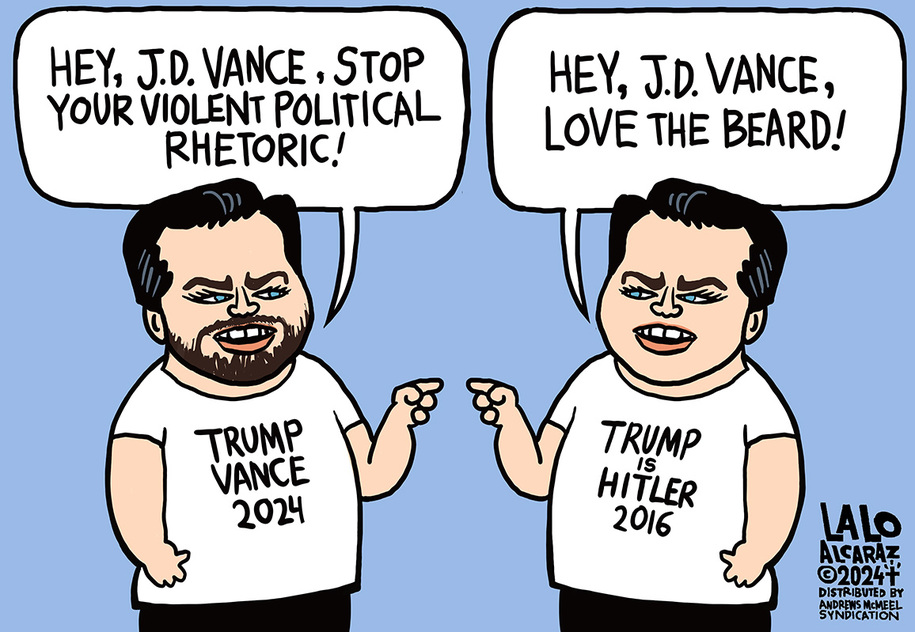
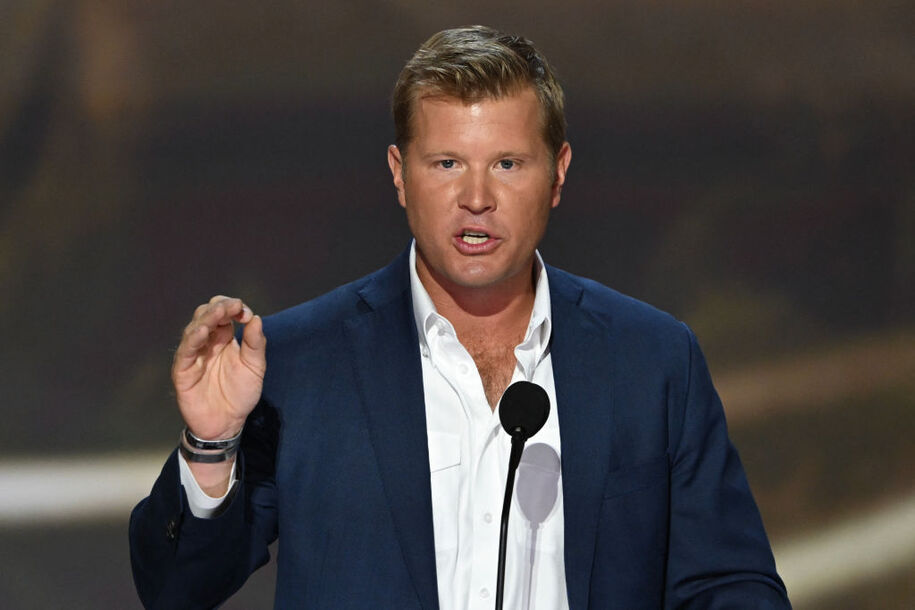
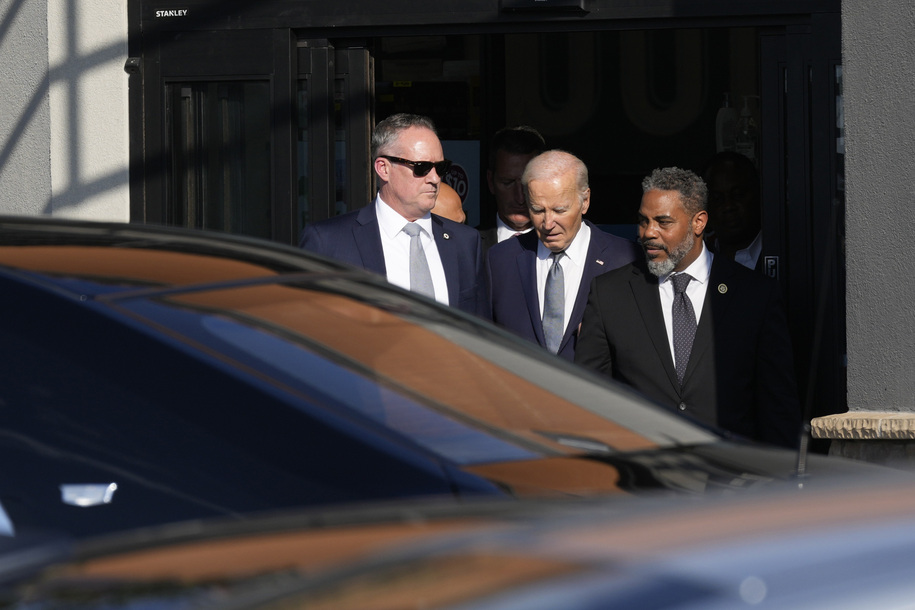
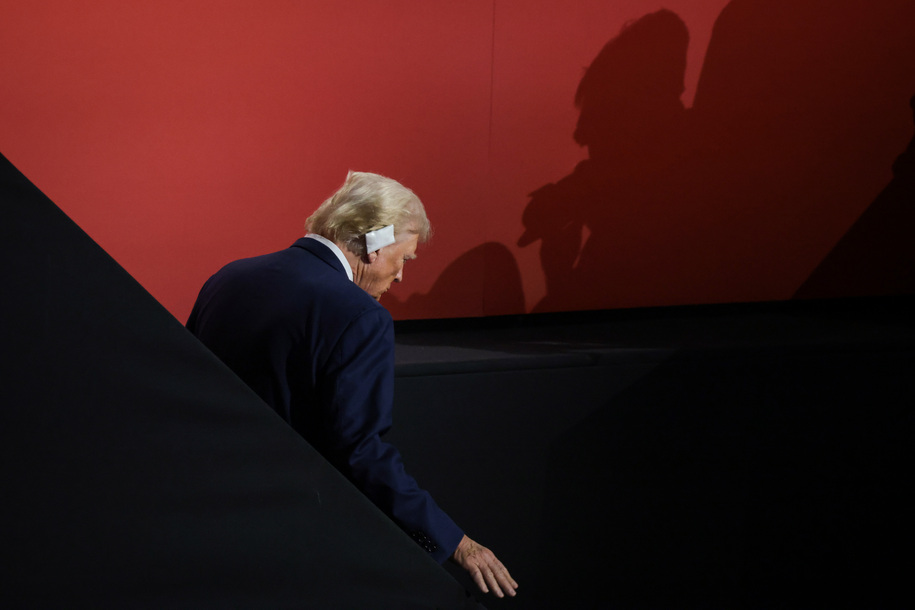


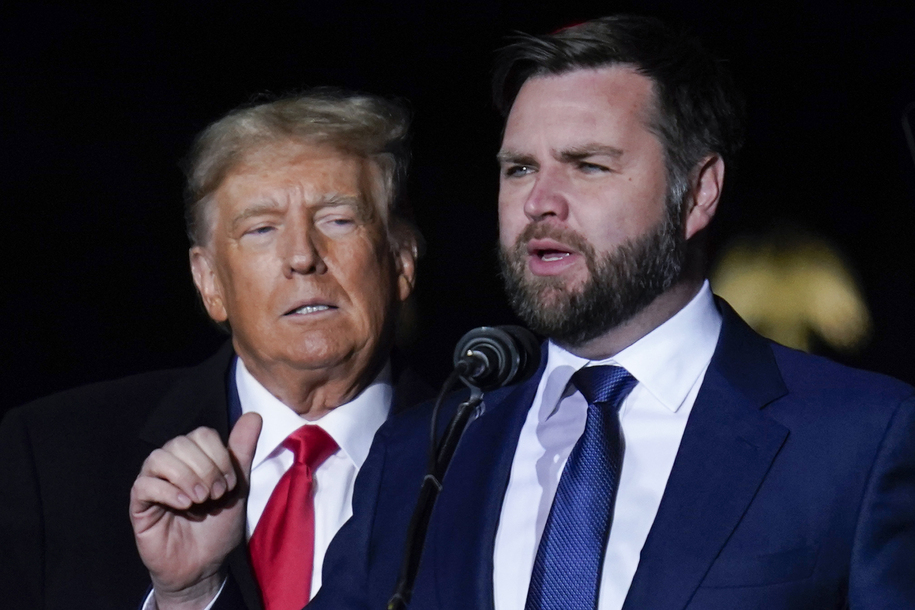
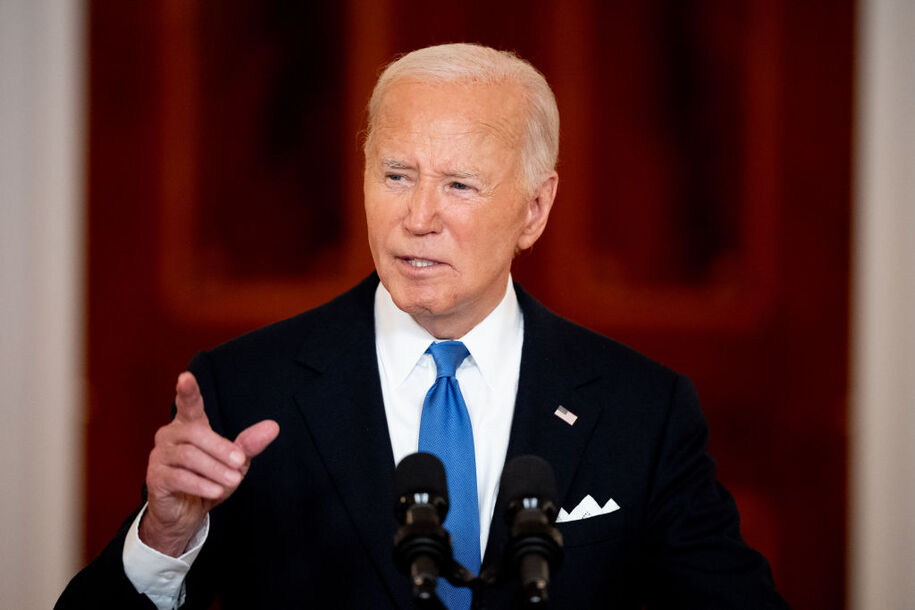
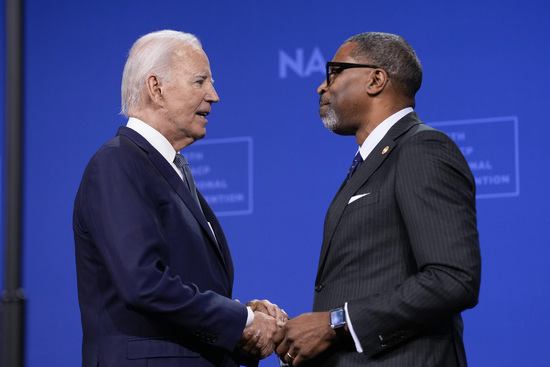
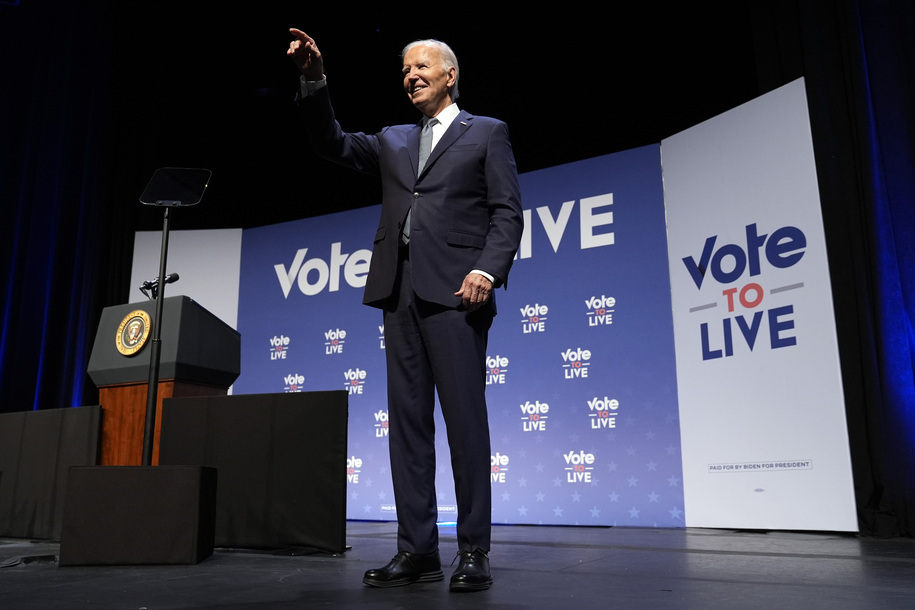


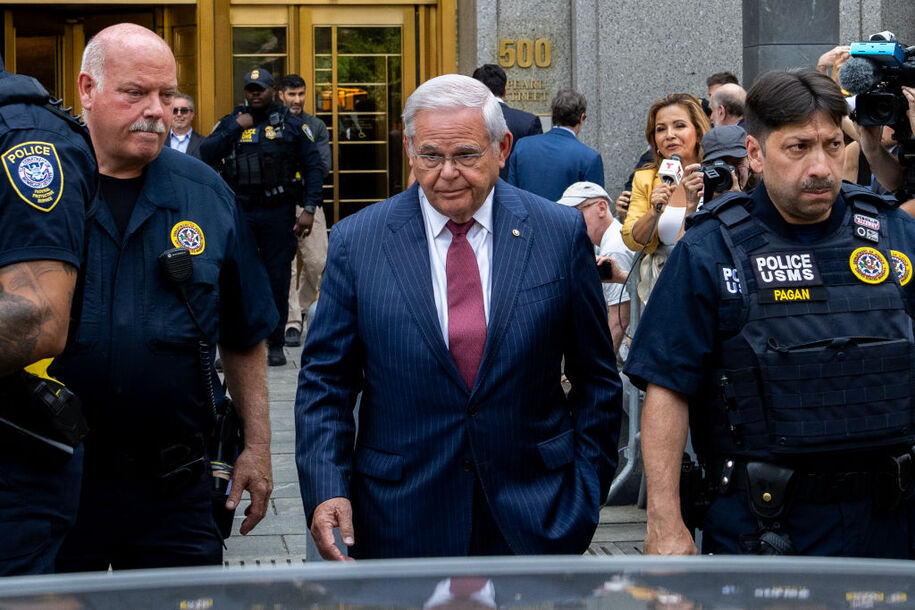


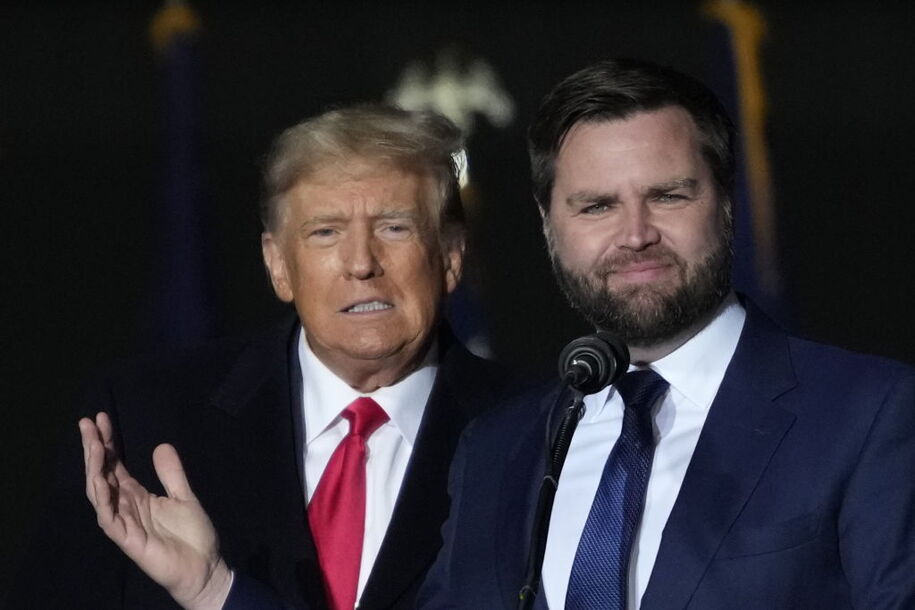


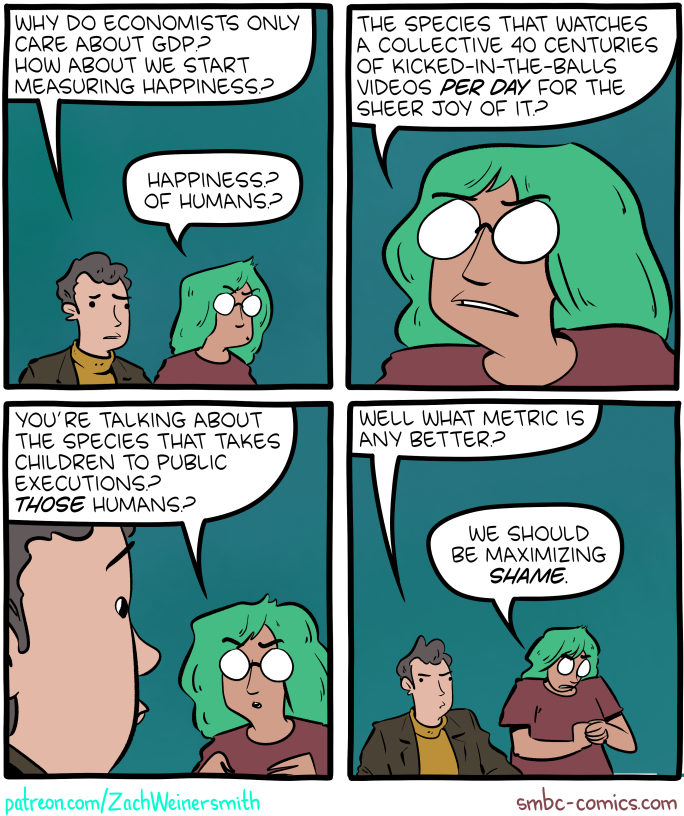
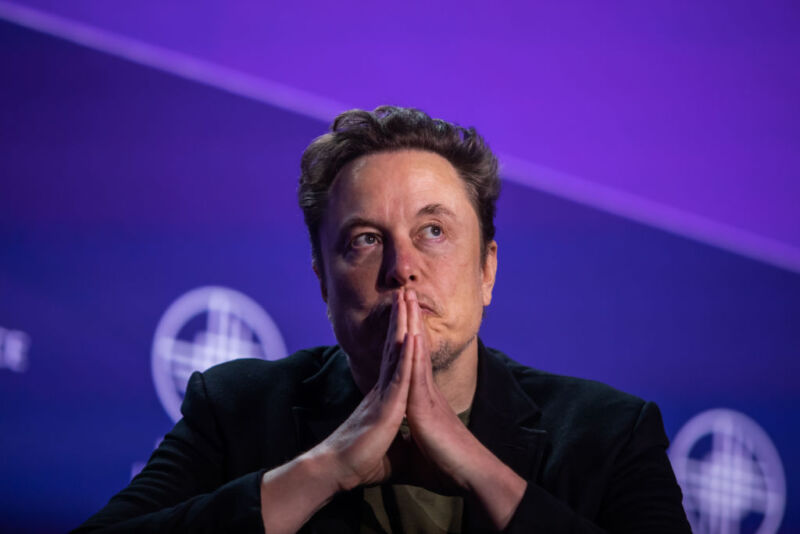

![Hint: If you ever encounter this puzzle in a crossword app, just [term for someone with a competitive and high-achieving personality].](https://imgs.xkcd.com/comics/a_crossword_puzzle.png "Hint: If you ever encounter this puzzle in a crossword app, just [term for someone with a competitive and high-achieving personality].")