Shared posts

02 Feb 03:54

Can more Harry Potter ever be okay?

by Aja Romano
James.galbraith

Yeah, it better never see the light of day

Harry and Ron gaze hopelessly into a crystal ball.
Daniel Radcliffe and Rupert Grint as Harry Potter and Ron Weasley in Harry Potter and the Prisoner of Azkaban. | Warner Bros.

Is the magic of Hogwarts Legacy — or any new Harry Potter storyline — ever worth enabling JKR’s transphobia?

The release of the controversial Hogwarts Legacy game has revived a never-quite-dormant firestorm of opinions over J.K. Rowling and the fate of the universe she created. Rowling, once seen as a vanguard of progressive idealism, has spent most of the past half-decade forging a new reputation as the world’s most famous transphobe. Rowling’s name is now synonymous with “TERF” — trans-exclusionary radical feminism, or the belief that trans women aren’t women and that biological sex is the only factor that determines someone’s gender. Amid ongoing protests from trans activists and broken-hearted fans, Rowling has continually redoubled her rhetoric.

That means any discussion of what new Harry Potter content is or can be has to come with an acknowledgment of Rowling’s transphobia and the problems it creates. New stories of the Wizarding World will inevitably be a complicated joy for many, and purely painful for many trans people whose lives have been made worse because of Rowling’s influential views. At the very least, new stories, as Legacy is currently demonstrating, leave many people feeling deeply conflicted about whether they can support or enjoy any new Harry Potter content in the wake of Rowling’s problematic statements.

Hogwarts Legacy isn’t the only new Harry Potter production; in 2021, news surfaced of a rumored TV show from Warner Bros. and HBO. That show is currently still only a rumor; it may not ever get made.

But the release of Legacy and the possibility of still more Harry Potter media to come mean we have to ask whether new official Harry Potter content can ever be okay. And to answer that question, we have to understand exactly how and why Rowling’s transphobia has tainted the beloved Harry Potter universe, and what possibilities — if any — exist for the Harry Potter franchise to heal some of the hurt its creator has caused.

Rowling’s transphobia is not a one-off or casual thing. It’s vehement and powerful.

J.K. Rowling’s anti-trans sentiments have steadily grown more blatant over the years. Elements of her writing as well as her social media activity have long suggested a growing alliance with anti-trans groups, and some Harry Potter fans have been voicing concerns about Rowling’s stated beliefs since at least the spring of 2018. But it wasn’t until December 2019, when Rowling tweeted in support of a British TERF, that the public caught on more generally.

In June 2020, after that initial moment of attention, Rowling indisputably affirmed her anti-trans beliefs — first in a tweet mocking trans-inclusive language, and then in a lengthy manifesto of nearly 4,000 words. In it, she supports the scientifically flawed and emotionally abusive narrative that “gender dysphoric teens will grow out of their dysphoria,” and suggests that transgender men assigned female at birth who experience dysphoria as teens probably just need to read more feminist literature to get their heads on straight.

Perhaps most distressingly, Rowling’s manifesto perpetuates the dangerous TERF narrative that trans women may be sexual predators in disguise. Rowling argues that the movement to accept trans women as women is “offering cover to predators” who are at any moment about to perpetuate “male violence and sexual assault.” That’s the kind of hysteria-based rhetoric that’s been used to deny trans people everything from safe bathrooms to workplace equality; hearing it come from a children’s author is pretty horrific.

Rowling’s views received international media attention and backlash, but she wasn’t shamed into silence. Instead, she seemed to get even more outspoken. In August 2020, Rowling returned a human rights award after the president of the presenting association repudiated her transphobic views, claiming that she’d received “thousands of private emails of support” from people “within the trans community” and repeating her assertion that gender identity therapy is dangerous. (It’s not, but the body of research seeking to treat gender dysphoria through non-affirmational methods arguably is.) In September 2020, she promoted a shop selling transphobic merchandise that bears slogans like “transwomen are men” and “fuck your pronouns.”

I think many people still haven’t confronted the depth and the vitriol of Rowling’s transphobia. If they had, we wouldn’t be having a conversation about whether a Harry Potter TV show or Hogwarts Legacy should exist. I believe that most people — even if they don’t understand the ins and outs of trans identity and gender identity — instinctively know that mocking trans people for their anatomy and disregarding people’s pronouns is cruel. But it’s been difficult for many people who are aware of Rowling’s statements to grasp that this (former) hero to generations of hopeful children is now openly prejudiced toward trans and nonbinary people.

I get how painful it is to accept that. It feels like bereavement; in some ways, it is.

For me, a nonbinary Harry Potter fan who spent more than two decades loving Harry Potter, recounting all of this is deeply hurtful, even traumatic. Every new reminder that J.K. Rowling harbors such hateful views toward trans men and women — one of the most vulnerable and endangered marginalized communities — hits me like a slap. It’s a painful betrayal from a creator I loved and trusted; for me, the past year has been, to some extent, a grieving process, about letting go and moving on.

On some level, I can’t help but feel a wistful curiosity about the new game because I still love the Harry Potter characters and universe. Before the events of 2020, I would have been thrilled by the idea of a Harry Potter TV show or an immersive Hogwarts RPG that could explore more of the complexities and layers of the Wizarding World.

So it’s devastating to also feel that the only appropriate response to the idea of these works is outright rejection of their entire concepts.

Will it ever be okay to make new Harry Potter stories? Probably not.

For me and many fans like me, any new Harry Potter content can only be a source of deep distress. People who choose to buy the new video game inevitably send a message that they care more about the Harry Potter universe than they do about the real-world fans Rowling has hurt — and especially the real-world harm that comes from bankrolling her transphobia. The endless debates around Hogwarts Legacy remind us over and over that the fictional magic of Harry Potter matters more, to more people, than all of the real trans fans and allies who have been displaced from participating in that magic by Rowling’s actions, choices, and behavior. Honestly, when the rumors broke of the TV show two years ago, even seeing tentatively positive reactions to the rumored series left me feeling deeply sad and uneasy. Now, regarding Hogwarts Legacy, I have chosen to opt completely out of the discussion over the game. The stakes are too painful; one must simply put aside one’s humanity to even begin to talk about the game purely as “art,” even though far too many people are eager to do just that.

And still — still! — it’s so tempting to ask: If we must have more Harry Potter, are there ways to make these works feel like a reclamation for the fans who have been most alienated from the original franchise over the years? Could more Harry Potter ever be okay?

Initially, I thought so.

I thought about how any new Harry Potter story would inject new energy into the fandom, generating new conversations and creative interest. And those fans would have the ability to respond in their own ways. After all, they’ve already been critiquing and reshaping Harry Potter into a better version of itself for decades, through fanfiction and other fan commentary.

But more than that, I thought about how new content could allow the franchise to openly reject Rowling’s intolerance with a Harry Potter story that embraces inclusivity, diversity, and a transformational vision of the world she created. The creators of Hogwarts Legacy have actively tried to do that to a degree — they’ve even introduced the franchise’s first explicitly transgender character, and players are able to play as any gender they want. And as my colleague Rebecca Jennings noted in her review, Warner Bros. has tried to make the series as diverse as possible, though sources have implied that the moves were “performative bullshit.”

Such “bullshit” hints at the problem with any kind of sanctioned Potterverse story, even one that’s ostensibly trying to be radical: Unless Warner Bros. were to strike an unprecedented deal, none of those transformative elements would be part of a Harry Potter series unless Rowling wanted them to be there. Rowling has always exerted authorial control over her universe and the messages it sends — across the books, across all the Warner Bros. movies (though the movies were written by Steve Kloves, she vetted all of his scripts), and even the Cursed Child stage play, which Rowling collaborated on. And while the creators of Hogwarts Legacy were at pains to stress that Rowling had no part whatsoever in the making of the new game, the game must still respond to her restrictive, limited worldbuilding. Meanwhile, any new series or story would inevitably have to gain her approval — and how likely will a Rowling who is increasingly hardened to the pleas of trans people ever be to approve a story that validates, let alone centers, us?

Anything that we respond to and love about a new Harry Potter series will still be something that ultimately came from J.K. Rowling — from the den mother who betrayed us. And given that she’s increasingly embraced mean, reactionary politics in her post-Harry Potter writing, I’m dubious that any new Harry Potter series that gains her approval will contain the open-hearted, optimistic kindness that drew so many people to the original stories.

New Harry Potter can only be a source of ultimate harm unless Rowling lets go of her creative control and cedes her universe to other minds — something I sense she’s very unlikely to ever do, given how much she’s continued to contribute further world-building to the universe over the years, and how unrepentant she has been about how much she’s hurt fans.

And even if Rowling somehow could be persuaded to give up creative control, or even if fans could accept a new series on its own merits, the bottom line is that for many people, any new Harry Potter work would be an unacceptable one because Rowling would still be profiting from it.

We’ll never be able to deplatform J.K. Rowling. Does that mean we accept the status quo?

As the debate around these new works has raged, many fans have voiced variants of the same idea — their worry that Rowling would profit from any new Harry Potter series. So she would in essence be profiting from her continued vocal transphobia.

To be clear, Rowling — a billionaire and the second-highest-paid author on the planet — will continue to make money regardless. In 2022, Warner Bros. released the third movie in the abysmal and baffling Fantastic Beasts series (there will be five films altogether), and while it was the least successful of any film in the franchise to date, it still eked out a good $400 million at the box office. Rowling profits from perpetually popular Harry Potter attractions and exhibits at theme parks around the world. And, of course, the original Harry Potter books continue to sell — in fact, in Britain, in the 2020 sales quarters after Rowling posted her transphobic manifesto, sales of the Harry Potter books actually increased.

Given that no amount of social protest is going to dent Rowling’s bank account, perhaps it’s understandable, then, to consider a pragmatic response to Hogwarts Legacy or any new Harry Potter series. Perhaps the only way to approach the possibility of more Harry Potter is to accept that nothing we do will change the status quo — that J.K. Rowling will always be one of the wealthiest people on earth, no matter how much we wish otherwise, and no matter how much we are aware that she’s actively using her power and influence to promote transphobic messaging. To accept that the consumerist machine that is the Harry Potter franchise is simply bigger than all of our feelings, and bigger than the harm Rowling’s views have brought and will continue to bring to real trans people. In other words, as the meme goes, “there is no ethical consumption under capitalism.”

Perhaps, with those realities established, we can proceed to have a critical conversation about what the future of the Harry Potter franchise can and should be.

But reaching that position requires us to accept a lot of things that feel like loss, like defeat. Accepting new Harry Potter means accepting that trans people will be overlooked, will have their concerns and their sorrow pushed aside — by Rowling, by Hollywood, by anyone who continues to work with Rowling and promote or publish her works, and by the society that has yet to repudiate her into obsolescence. When we use words like “marginalized” to describe trans communities and other vulnerable communities, this is exactly the kind of thing we mean. This is marginalization in action.

It’s possible that Rowling has been so confident about her transphobic opinions, despite all the pushback she’s received, because she is the author of Harry Potter. That is, it’s possible she feels like her voice as the author of Harry Potter simply outweighs everything else — even objective science, even trans people saying, “You’re hurting us, please stop.” And while the initial wave of backlash against Rowling was significant — most of the media coverage and popular debate around Rowling framed her views as abhorrent — the tide has continually turned in her favor, as most of the British media and increasingly mainstream US outlets like the New York Times publish intensely gaslighting treatises which insist that Rowling’s transphobia isn’t transphobic at all. Such pieces frame her as the misunderstood, abused victim of a virulent smear campaign — as though she were the one who suffers meaningful real-world consequences, rather than the millions of trans people whose lives are actively endangered by the kind of transphobic scaremongering she practices.

This, then, is the ultimate cost of more Harry Potter. If Hogwarts Legacy succeeds and if Warner Bros. makes a new Harry Potter series — if anyone makes a new Harry Potter anything — it will clearly broadcast the message that Rowling’s views aren’t abhorrent. That you can demonize trans people as mentally ill sexual predators and continue to have a voice, a career, and tremendous social influence.

It’s arguable even now that the legacy of Harry Potter is larger than any single thing Rowling can do to diminish it. But it’s certainly not large enough to outweigh or override the negative impacts of Rowling’s viewpoints. If Harry Potter himself could become flesh and blood, it seems clear that he’d argue that more Harry Potter stories should never take precedence over real trans lives.

But Harry Potter is fiction. And as new Harry Potter works come out and the increasingly obfuscating debate around Rowling intensifies, their mere existence conveys that the books’ core tenets of promoting tolerance, love, equality, and resistance are ultimately just a fantasy.

02 Feb 03:51

SNL’s cold open asks if anything in America still works

by Anya van Wagtendonk
James.galbraith

It's a great opener

Cecily Strong, playing US Rep. Marjorie Taylor Green, speaks to Kate McKinnon, playing herself, in Saturday Night Live’s January 30 cold open.
Will Heath/NBC/NBCU Photo Bank/Getty Images

The skit investigated Rep. Marjorie Taylor Greene, GameStop, social media, Covid-19, and Tom Brady.

After a year that seemed to last a decade, the month of January has somehow also managed to pack a lifetime’s worth of major historic events into a few weeks.

That was the premise of Saturday Night Live’s cold open for its January 30 show, which featured a spoof of gentle morning talk shows, called What Still Works?

Kate McKinnon played the host, and began the segment with the question: “It’s a new year and we have a new president, so some things should work. But do they?”

A range of characters came out to answer that question by speaking on topics including politics, finance, technology, and health — each touching on the fact that in the past few weeks, a new Congress has been sworn in, there was an attempted insurrection at the US Capitol, former President Donald Trump became the first president to be impeached twice, an internet community helped drive a major stock market squeeze, and the pandemic continues to take thousands of lives per day.

Out first was QAnon adherent Rep. Marjorie Taylor Greene (played by Cecily Strong) to talk about the government. McKinnon prompted her to review her week, which included the surfacing of previous incorrect statements, ranging from her claim that California’s 2018 forest fires were caused by Jewish-controlled space lasers to her suggestions that school shootings aren’t real.

“And those are real things you believe and tell other people about? And you’re a US representative?” McKinnon asked, to which Strong replied, “Mmhm, yep.”

“People can Google you and it’ll say, ‘She’s a real member of the US government?’” McKinnon asked.

“That may not be the first thing that comes up, but yes,” Strong replied.

“So, government doesn’t work,” McKinnon concluded.

Next, McKinnon turned to talking about the stock market. “That usually works, right? That’s where people invest all their retirement money, so it should probably work.”

Out came Pete Davidson as Derrick Boner, introduced as the new majority shareholder of GameStop. This week, that company saw its share prices soar after an army of small investors, largely encouraged by a Reddit forum, turned that stock into a valuable meme.

When asked if the stock market still works, Davidson — attired in a GameStop shirt, an enormous gold chain, and a a gaudy wristwatch — replied, “Hell yeah.”

But McKinnon questioned whether GameStop, which currently relies on an increasingly obsolete business model at a time when many people download or stream games, will be able to maintain its sky-high share prices.

“So now it seems like — ” she prompted Davidson.

“The entire system is a joke?” he replied.

“Exactly,” she said. “So, the stock market no longer works.”

Next, McKinnon questioned Twitter CEO Jack Dorsey (played by Mikey Day), and Facebook CEO Mark Zuckerberg (played by Alex Moffat), quickly concluding that social media is broken, too, after each reflected on the role the major tech platforms played in amplifying far-right voices ahead of the violent siege of the Capitol.

In focusing on the Covid-19 vaccine rollout, McKinnon brought out Kenan Thompson as O.J. Simpson, who received an inoculation this week.

“Get your shot. I got mine!!!” the 73-year-old, whose age puts him in his state’s priority group, posted on Twitter on Friday. The post drew backlash from some who felt the former football star was getting special treatment, as millions of vulnerable Americans still have not received theirs amid a bumpy and disorganized distribution scheme.

“Teachers can’t get vaccines, but you did? People with long-term lung conditions can’t get the vaccine, but you did?” McKinnon asked. “Among the first 3 percent of Americans given the vaccine was O.J. Simpson?”

“Hey, guilty as charged,” Thompson’s Simpson laughed. “About the vaccine!”

Finally, McKinnon brought out Tampa Bay Buccaneers quarterback Tom Brady, played by the show’s host, John Krasinski.

“You might be the only thing in America that still works,” McKinnon said. “So I guess everyone must be rooting for you, right?”

“Almost no one,” Krasinski replied.

McKinnon said she’d root for him, because “it’s not like you’re a weird Trump guy or anything, right?”

Brady has long faced such questions over his relationship with Trump, and at that, Krasinski left.

McKinnon ended the segment by joking that she’s been “slowly losing my mind with all of you,” and with a more sober acknowledgment that amid all the news, it is okay to sometimes feel overwhelmed.

02 Feb 03:43

New report from Rep. Katie Porter reveals the downsides of pharma mergers

by Dylan Scott
James.galbraith

a lively antitrust division would sure help a lot

Rep. Katie Porter (D-CA) released a new report on how pharmaceutical mergers affect research and development. | Tom Williams/CQ-Roll Call, Inc via Getty Images

A new report from Rep. Katie Porter has an illuminating case study on the value of antitrust in health care.

Success in the pharmaceutical industry these days often looks something like this. A small, scrappy biotech research company comes up with a promising new treatment. Then a major pharmaceutical manufacturer will acquire that smaller company, along with its intellectual property, and bring the treatment to market.

The big pharma company makes money on the retail sales. The smaller outfit makes money when it’s acquired by Big Pharma. Everybody wins ... right?

Not necessarily, according to a new investigation from Rep. Katie Porter (D-CA) shared exclusively with Vox. Porter’s office zeroed in on Immunex, a small biotech firm that was bought by one of the major pharma companies in the early 2000s — and promptly saw its culture of innovation and risk-taking start to deteriorate.

These transactions happen all the time. The number of mergers and acquisitions by the top 25 pharma firms doubled from 2006 to 2016. In 2018, small companies accounted for 64 percent of the new drugs brought to market that year, up from 31 percent in 2009. There was a business logic to this shift, according to a 2014 paper from the University of Pennsylvania: The large drug companies felt their own R&D pipelines weren’t producing enough results to justify the cost. So they switched to acquiring small companies and helping those therapies get FDA approval and mass market distribution.

In an ideal world, this system could make sense. The big drug company deploys its know-how to help an innovative product reach patients. But too often, Porter contends citing the findings of her investigation, these mergers and acquisitions end up squelching innovation. Her report cites prior research that found R&D and new patents declined after a company was acquired.

“The less competition that exists in the pharmaceutical industry,” Porter writes, “the less likely the industry will actually focus on innovation and new cures that can save lives.”

How the Amgen-Immnex merger helped set back cancer research

Amgen acquired Immunex in 2002. The bigger company had been eager to get its hands on a new treatment for rheumatoid arthritis being developed by the smaller biotech firm. The treatment, called Enbrel, was projected to bring in billions of dollars in annual sales.

This kind of acquisition happens all the time, according to research cited in Porter’s report. Increasingly, the business model of large drug makers is to use their immense resources to buy up other companies that have already done the legwork on developing a therapy, rather than spending their own money on research and development.

According to her report, which included interviews with several former employees, a former Immunex scientist reached out to her office after hearing testimony from an Amgen executive that he thought downplayed the role of Immunex in developing Enbrel.

This scientist, Laurent Galibert, and several other former Immunex (and, eventually, Amgen) employees described what happened at the company after Amgen acquired it: Amgen ended most of Immunex’s research into immunotherapy for cancer treatment. This was in the early 2000s, when immunotherapy (which tries to activate the body’s immune system to fight a cancer) was still on the fringes of mainstream science.

Today, immunotherapies are seen as one of the most promising frontiers in cancer treatment. Immunex was years ahead of the game — only to see those efforts stall out once it was gobbled up by a bigger fish, according to its former employees.

“We had anticipated immunotherapy when everyone else thought it was a dream,” Galbraight told Porter’s office. “It took everyone else 11 years to realize that we were right.”

What can be done about all of this?

Porter has some prescriptions for situations like this. She wants the Federal Trade Commission to review prior mergers and to reevaluate its standards for the anti-competitive risks of any future mergers. She is also pressing Congress to pass legislation that would bring small mergers, currently exempt from FTC oversight, under the agency’s purview.

Consolidation in health care is a problem much bigger than the pharma industry. Hospitals have been merging with one another and buying up physician practices; health insurers have been consolidating as well. The overwhelming consensus of researchers is that this market consolidation leads to higher prices and lower quality for US patients.

US health care relies on markets. Almost all health care providers, both doctors and hospitals, are private. More than half of health care is privately financed. The feds and state governments play an important role in setting the rules of the road, and in paying for much of the medical care Americans receive, but the country’s health system depends on healthy competition to deliver care to people and to restrain costs.

According to Martin Gaynor at Carnegie Mellon, who authored a paper last year on how health care markets could be made more efficient, the average hospital market in the US is considered “highly concentrated” according to the criteria used by federal agencies. So is the average market for specialist physicians and health insurers. Primary care doctors just barely miss the cut, but it’s close.

“Something I would be concerned about is so many geographic areas in the US are dominated by one really big health system. They don’t want more competition,” Gaynor says. “If you’re a firm and you’ve merged or acquired to dominate the market, you want to maintain that position, enhance it if you can.”

The conditions are ripe for anti-competitive contracting in many places, and we know that higher prices, which providers can negotiate under these circumstances, account for most of the health care spending growth seen over the last decade.

Health care has a lot of issues, and antitrust enforcement can be part of the solution

Antitrust enforcement is usually slow (it took nearly 10 years for the Sutter case to be resolved) and it’s by nature surgical (every individual monopoly gets targeted with its own enforcement case). A more aggressive federal government can make examples out of bad actors, but in order to get costs under control across the country, more sweeping reforms are probably needed.

But big changes to US health care are hard. Single payer is off the table for the time being. Even rate-setting, like the kind seen in Maryland, may too aggressive for the more moderate members of the Democratic Senate majority, especially because the health care industry is sure to mobilize against such a proposal.

Nobody is talking about shiny new health care cost controls in the middle of a pandemic when health care workers have been hammered. Porter’s ambitions could also be hampered by pharma’s new political clout after delivering Covid-19 vaccines in record time.

But medical consolidation isn’t going away. It is a structural problem driving the nation’s health care affordability crisis. If Biden is serious about doing something, he’ll need to contend with the problems described in this new report.

This story appears in VoxCare, a newsletter from Vox on the latest twists and turns in America’s health care debate. Sign up to get VoxCare in your inbox along with more health care stats and news.

02 Feb 03:40

How Biden’s stimulus bill could actually build back better

by German Lopez
James.galbraith

automatic stabilizers would be huge and stop the GOP from holding the country hostage every time they crash the economy

President Joe Biden speaks about climate change and his executive actions to address it on January 27, 2021, in Washington, DC. | Anna Moneymaker via Getty Images

The economic relief bill should address the current crisis — but it can try to mitigate the next crisis, too.

As President Joe Biden and Democrats in Congress gear up to pass an economic relief package, their most pressing task is addressing the recession. But some economists and activists are hoping Biden and other lawmakers will also take a longer view.

The Covid-19 recession has revealed many structural problems in the economy. Vast socioeconomic and racial inequality. Insufficient support for parents, who have been asked to do much more as schools and child care close down. Low-wage workers deemed “essential” are paid very little while being asked to risk their health and lives to do their jobs.

All of these problems preceded the pandemic, but Covid-19 magnified them.

So some experts and advocates have called for an economic relief package to do more than just provide crucial temporary aid, including:

1) More automatic stabilizers. When the economy gets bad, Congress boosts several existing programs, like unemployment insurance, or creates new ones to offer relief. But what if this were more automatic? So when the economy hits a set low point — say, an unemployment rate of 7.5 percent — programs like unemployment insurance or food stamps would be increased without Congress needing to pass another bill. This could be done based on regional statistics, so Mississippi could get a boost even if California doesn’t need one.

Congress has proven the need for this kind of policy in the last year. After passing a big stimulus package in the spring, federal lawmakers didn’t follow up until late December, letting programs propping up the economy expire and dealing another blow to the people already hurting most from the recession.

In the future, automatic stabilizers could help recession-proof the economy. As Claire Guzdar of the progressive Groundwork Collaborative told me, “There’s no reason to be reactive to every economic crisis.”

2) A child allowance. In most wealthy countries, the government simply gives parents money. The closest equivalent in the US, the child tax credit, is limited in key ways — one of them being that parents who make too little to owe income taxes don’t get the full benefit. This contributes to the very high cost of parenting in the US.

One way to fix this would be to make the tax credit fully refundable, meaning parents could get help even if they make no money at all. Or the government could just make it an allowance, sending parents money on a monthly basis. By some estimates, doing this and boosting the benefit to at least $3,000 a year could help cut child poverty in the US by half.

3) Raise the minimum wage. This one is pretty straightforward: A stimulus bill could raise the minimum wage to $15 an hour. While there are concerns this could kill jobs (as employers cut openings to balance out higher wages), more recent evidence suggests the impact of a higher minimum wage on employment would be small.

All of these ideas have a common theme: They make sure that the economic recovery can lift up the people who have historically been left behind.

And these ideas are getting some serious attention. Biden’s plan repeatedly mentions setting up automatic stabilizers. He expands on the child tax credit (though only for one year), and congressional Democrats apparently want to go bolder. He also proposes raising the minimum wage.

The question now is if Congress can get any of this done. Not all of these ideas can likely pass without Republican support in the Senate. Biden’s proposal also has a price tag of $1.9 trillion; more moderate lawmakers have already expressed some concerns about that cost.

If the moderates’ concerns hold, future-minded items that add to the cost of the bill could get squeezed out — repeating the current cycle the next time the economy falters.

Sign up for the Weeds newsletter. Every Friday, you’ll get an explainer of a big policy story from the week, a look at important research that recently came out, and answers to reader questions — to guide you through the first 100 days of President Joe Biden’s administration.

02 Feb 03:35

State GOPs have already introduced dozens of bills restricting voting access in 2021

by Gabby Birenbaum
James.galbraith

No shit

Protestors Dressed as USPS drop boxes In Philadelphia during Election week 2020
Protesters hold signs and chant slogans outside of the Philadelphia Convention Center as the counting of the ballots continued in Pennsylvania on November 6, 2020. Mail-in ballots continued to be counted in the battleground state for days after the election. | Chris McGrath/Getty Images

A new Brennan Center report shows an unprecedented amount of legislation seeking to restrict voting access has been introduced in state legislatures this year.

In 2020, voters turned out at the highest level in 100 years, thanks in part to expanded vote-by-mail. In response, state-level Republicans are introducing an unprecedented amount of legislation to restrict voting rights, according to a new report from the Brennan Center for Justice.

State legislators in 28 states have filed 106 bills restricting the franchise thus far in 2021 — and the overwhelming majority have come from Republicans. Compare that to last year at this time: Then, only 35 such bills had been filed in six states.

“We are seeing a backlash,” says Eliza Sweren-Becker, the report’s lead author. “Rather than going out and trying to persuade voters, we’re seeing legislators trying to shrink the electorate in order to ensure job security for themselves.”

The proposed legislation largely falls into two categories: bills that either increase the difficulties individual Americans would face absentee voting or that give officials greater leeway to shrink the voter pool. Some are attempts to roll back voting rights expansions necessitated by the pandemic; others are retreads of policies Republicans have pushed before, like expanded voter identification laws.

The passage of these laws will, essentially, depend on whether Republicans control both the statehouse and the governorship in the states in which they’ve been introduced — a reality in 18 of the 28 states. And while Sweren-Becker says their constitutionality would hinge on the way each bill is written and implemented, a lot of them have a decent chance at sticking around.

The news isn’t all bad: A whopping 406 bills have been introduced in 35 states that would expand access to voting, including permanently codifying the absentee voter policies that allowed voters in some states to cast their ballots early and remotely. Some states will consider both expansive and restrictive voting rights bills; which path the state follows will likely hinge on which party controls the legislature.

A map of voting rights expansion bills Tim Ryan Williams/Vox

At the national level, Democrats in Congress are pushing a number of voting rights bills. Last year, the House passed the John Lewis Voting Rights Advancement Act, which would provide for federal oversight in states with a recent history of racial discrimination in voting laws. On Thursday, Sen. Ron Wyden (D-OR) reintroduced his annual Vote From Home bill with Rep. Earl Blumenauer (D-OR), which would mandate universal absentee voting — or the ability to vote by mail without an excuse — for federal elections and disallow states from imposing “additional conditions or requirements on the eligibility of the individual,” save for the postmark deadline.

“Last year we saw a widespread expansion of vote-at-home access as a safe and secure way to participate during the COVID-19 pandemic,” Blumenauer said in a release. “We should continue to make voting easier, not harder.”

At each level of government, the fight over the future of how America’s democracy operates is in full effect — and states are moving quickly.

What Republicans are trying to pass, briefly explained

State legislators’ proposals run the gamut from seemingly reasonable to downright offensive, but they all aim to lower the likelihood of a vote getting cast or counted.

Legislators have introduced bills in Republican-controlled Alabama, Arkansas, Arizona, Florida, Georgia, Indiana, Iowa, Mississippi, Missouri, Montana, New Hampshire, North Dakota, Nebraska, Oklahoma, South Carolina, Texas, and Wyoming; and divided Alaska, Kentucky, Kansas, Minnesota, and Pennsylvania, according to the Brennan Center report.

They’ve also introduced them in Democratic-controlled Connecticut, New Jersey, New York, Virginia, and Washington, though those bills are less likely to succeed.

A map of voting rights restriction bills Tim Ryan Williams/Vox

The bills contain a number of tactics to increase the individual cost of voting. With mail-in voting, three states would strengthen the excuse requirement — in Missouri, for example, the coronavirus would no longer be an excuse to vote absentee, while in Pennsylvania, a proposed bill would eliminate no-excuse absentee voting after it was passed with bipartisan support in 2019.

State legislators have proposed further limiting who can assist voters with their absentee ballots and adding cumbersome witness requirements, such as mandating witnesses to give identification information.

In Arizona, where President Joe Biden became the first Democrat to carry the state in more than two decades, Sweren-Becker said state legislators introduced a particularly egregious “voter-suppressive hat trick,” which restricts who can assist voters in delivering absentee ballots, requires all mail-in ballots to be notarized, and adds a voter ID requirement for returning ballots in person.

Legislators in 10 states introduced new voter ID laws, including creating them for the first time in six states.

In one particularly absurd example, Georgia Republicans want to require that absentee voters provide a photocopy of their ID two times throughout the voting process.

State legislators in Mississippi and New York are trying to require proof of citizenship when registering to vote, explicitly targeting noncitizens. And to increase the challenges associated with obtaining a ballot, legislators in four states introduced bills to cut election day registration.

Legislators are also trying to give election officials more opportunities to throw out ballots or purge voters from the rolls. According to the Brennan Center report, one common tactic is to make it easier for officials to remove voters from the permanent absentee list and throw out votes due to signatures mismatches — a measure introduced in Pennsylvania despite the state supreme court explicitly ruling that a mismatched signature could not be the sole reason for rejecting a ballot. Republican state lawmakers also want to increase poll watcher access to ballot-counting processes, move up ballot postmark deadlines or remove secretaries of states’ discretion in setting those deadlines, and allow officials to be more proactive in purging voter rolls, to the point of allowing practices that courts have deemed improper.

It’s an unprecedented deluge of bills, but it’s not coming out of nowhere.

The GOP’s proposed laws are directly tied to Trump’s election fraud lies

Many of the bills being introduced this year aim to tackle the very practices that former President Donald Trump decried as unfair while peddling various false election conspiracies — but enacting some of his preferred reforms might actually backfire.

In the dozens of lawsuits the Trump campaign filed and saw thrown out by courts, they falsely claimed that Biden only won due to the votes of noncitizens, illegally cast absentee ballots whose signatures could not be verified (conveniently only in counties Biden won), and ballots miscounted because Trump-friendly poll watchers weren’t allowed in to watch. All of these claims were proven false by recounts and in courts, where no evidence of widespread ballot fraud was found, and it was proven that poll watchers were indeed present.

But that hasn’t stopped state GOPs from seizing the opportunity to try to justify new restrictive proposals based on Trump’s lies.

“We are certainly seeing state [legislatures] take up the mantle of this voter fraud lie and use it as a justification to restrict access to voting, to essentially enact voter suppression,” Sweren-Becker said.

Though there’s a renewed vigor to the suppression efforts in 2021, the strategy is nothing new. As Emory University historian Carol Anderson explained to Vox’s Sean Illing, America has a long history of “conservative whites continually finding new ways to rob minorities of their right to vote.” In recent decades, that’s meant state GOPs have attempted to discourage traditional Democratic voters — most notably Black voters and immigrants — from turning out.

Trump’s court challenges and Twitter rants, too, were targeted at throwing out votes in the cities of states Biden flipped, such as Detroit, Milwaukee, Philadelphia, and Atlanta — all of which have significant Black populations.

Trump’s issue with mail-in voting was conceptual, and he railed against it on Twitter and discouraged his followers from partaking in it. By following him on his crusade, state-level Republicans could be making the same mistake the former president did.

Historically, vote-by-mail had a nonpartisan benefit — it juiced turnout for both parties. Vote-by-mail did benefit Democrats more in 2020, but there’s no guarantee that continues to be the case. Last year, Trump discouraged his voters from taking advantage of it; his misinformation made it a partisan game. And considering his propensity for turning out new voters and low-information voters, making voting more difficult may mean his base could skip future elections where obtaining a ballot that Trump is not on requires more work.

So despite the rash of new restrictive proposals, there’s no guarantee these laws work out exactly as state Republican parties hope, if they even pass in the first place. But Trump is giving Republicans a whole new voter suppression playbook to work with — and as long as state GOPs follow his mold, restrictive voting bills are likely to feature prominently on their agendas.

02 Feb 03:20

We’re getting a Wakanda spinoff series from Ryan Coogler on Disney+

by Jennifer Ouellette
James.galbraith

can't wait

Promotional image for Black Panther.

Enlarge / We'll be getting more Wakanda-centric stories thanks to a new development deal between Black Panther director Ryan Coogler and The Walt Disney Company. (credit: Marvel/Disney)

Following on the success of The Mandalorian and WandaVision on Disney+, The Walt Disney Company has tapped Black Panther director Ryan Coogler to develop an as-yet-untitled new series for the streaming service focusing on the fictional nation of Wakanda. Deadline Hollywood reports that the planned series is part of an exclusive five-year deal between Coogler's Proximity Media production company and the Mouse House to develop the new TV series and includes shows for other divisions of the company.

"Ryan Coogler is a singular storyteller whose vision and range have made him one of the standout filmmakers of his generation," said Bob Iger, executive chairman of The Walt Disney Company, in a statement. "With Black Panther, Ryan brought a groundbreaking story and iconic characters to life in a real, meaningful and memorable way, creating a watershed cultural moment. We're thrilled to strengthen our relationship and look forward to telling more great stories with Ryan and his team."

Coogler earned praise for his films Fruitvale Station and Creed before helming Black Panther. The latter film grossed a whopping $1.3 billion worldwide—the highest-grossing film by a Black director and the ninth-highest-grossing film of all time—and became the first MCU movie to win multiple Oscars (Best Costume Design, Best Original Score, and Best Production Design). It was nominated for Best Picture, although it didn't win.

Read 4 remaining paragraphs | Comments

02 Feb 03:03

Dogs have been our best friends for at least 23,000 years

by Kiona N. Smith
James.galbraith

yep sounds right

Color photo of two huskies, a white female and a gray and while male, laying on a grassy lawn

Enlarge / So far, the remains of the very earliest dogs are almost impossible to tell apart from wolves. Their skeletons, their genomes, and the isotopic signatures of their diets all look so much like wolves that archaeologists can’t reliably say who’s who. The oldest animal that’s clearly a dog lived about 15,000 years ago in what is now Germany. (credit: Luna 2020)

Dogs tagged along with the first humans to venture into the Americas, according to a recent study that analyzed existing collections of canine and human DNA. The results suggest that people domesticated dogs sometime before 23,000 years ago in Siberia, where isolated groups of wolves and people were struggling to survive the Last Glacial Maximum.

A tail of two species

Researchers generally agree on how dogs evolved (more on that below), but the when and where have remained more elusive. Durham University archaeologist Angela Perri and her colleagues used genetics to try to narrow it down.

Because genomes collect small, random mutations at a predictable rate, geneticists can compare genome sequences and tell how long ago two animals last shared a common ancestor. Perri and her colleagues used already-sequenced genomes from ancient and modern dogs to calculate when populations had split or interbred, and then they repeated the process with human genomes.

Read 23 remaining paragraphs | Comments

02 Feb 02:56

Multi-layered Outside the Wire is part action thriller, part intimate drama

by Jennifer Ouellette
Anthony Mackie and Damson Idris must foil a a warlord's plan to launch a network of dormant nuclear weapons in <em>Outside the Wire</em>.

Enlarge / Anthony Mackie and Damson Idris must foil a a warlord's plan to launch a network of dormant nuclear weapons in Outside the Wire. (credit: Netflix )

To say that Netflix is leaning into its recent forays into feature film-making is an understatement. The streaming giant announced earlier this month that it will be releasing a new feature film on its platform every week in 2021. Among the streamer's January releases was Outside the Wire, in which Anthony Mackie (Sam Wilson/Falcon in the MCU, Synchronic) stars as an android military officer who teams up with a disgraced drone pilot to ward off a nuclear attack.

(Some spoilers below, but no major reveals.)

Director Mikael Håfström is a Swedish director best known for the Oscar-nominated 2003 film Evil, and 1408, a solidly spooky, haunted hotel/psychological horror film starring John Cusack and based on a short story by Stephen King. So Outside the Wire is something of a departure for him: partly a military action thriller, and partly a psychological study of its two central characters. It's the latter aspect that most strongly bears the hallmark of Håfström's artistic sensibility. Per the official synopsis:

Read 10 remaining paragraphs | Comments

02 Feb 02:31

A Friendly Ear

WILLOW DRAGONFANG

02 Feb 01:56

Saturday Morning Breakfast Cereal - Evolution of Language

by tech@thehiveworks.com


Click here to go see the bonus panel!

Hovertext:
Please share this comic to increase your hierarchy status.


Today's News:
02 Feb 01:45

Saturday Morning Breakfast Cereal - Think

by tech@thehiveworks.com
James.galbraith

god I love them


Click here to go see the bonus panel!

Hovertext:
Somehow this became Dunk on Humans month.


Today's News:
02 Feb 01:19

'Harry Potter' TV Series Reportedly In The Works At HBO Max, Because Of Course It Is

James.galbraith

If She Who Must Not Be Named is involved, it's DOA

By Carly Tennes  Published: January 25th, 2021 
01 Feb 20:17

Amateur Diagnosis

IT WOULD MAKE A LOT OF SENSE

01 Feb 20:16

The Great Awakening

by jon

The Mysterious Q has been defeated by the forces of facts and failed predictions. Huzzah! Everything will be great and perfect from now on, guaranteed.

01 Feb 07:25

Memo to Democrats: Trump’s trial won’t be a distraction. Do it right.

by Paul Waldman, Greg Sargent
James.galbraith

If only...

Democrats have a duty to provide a full and complete accounting.
29 Jan 21:45

Google Says It May Have Found a Privacy-Friendly Substitute To Cookies

by BeauHD
James.galbraith

huh, interesting way to look at things. At least it'd stop the "the one product I searched for once won't stop following me around in ads" phenomenon. It'd follow 1k people instead LOL

Google says its new machine learning algorithms could replace cookie-based ad targeting without invading your privacy. Axios reports: Google has been testing a new API (a software interface) called Federated Learning of Cohorts (FLoC) that acts as an effective replacement signal for third-party cookies. The API exists as a browser extension within Google Chrome. The company said Monday that tests of FLoC to reach audiences show that advertisers can expect to see at least 95% of the conversions per dollar spent on ads when compared to cookie-based advertising. FLoC uses machine learning algorithms to analyze user data and then create a group of thousands of people based off of the sites that an individual visits. The data gathered locally from the browser is never shared. Instead, the data from the much wider cohort of thousands of people is shared, and that is then used to target ads. It's a big deal that Google says it's close to coming up with a technology that will replace cookies, because one of the toughest parts of phasing cookies out of internet ad-targeting is that there hasn't been a great solution for what to replace them with. [...] Google has other proposals to replace cookies in the works, so it's not guaranteed that FLoC will be the answer, but the company said it's highly encouraged by what it has seen so far.

Read more of this story at Slashdot.

29 Jan 21:44

How Final Fantasy VII Remake legitimizes sexuality and gender identity

by Ars Staff
James.galbraith

Hallelujah, about fucking time. Even recent JRPGs still have some not so subtle homophobic undercurrents (hi Persona)

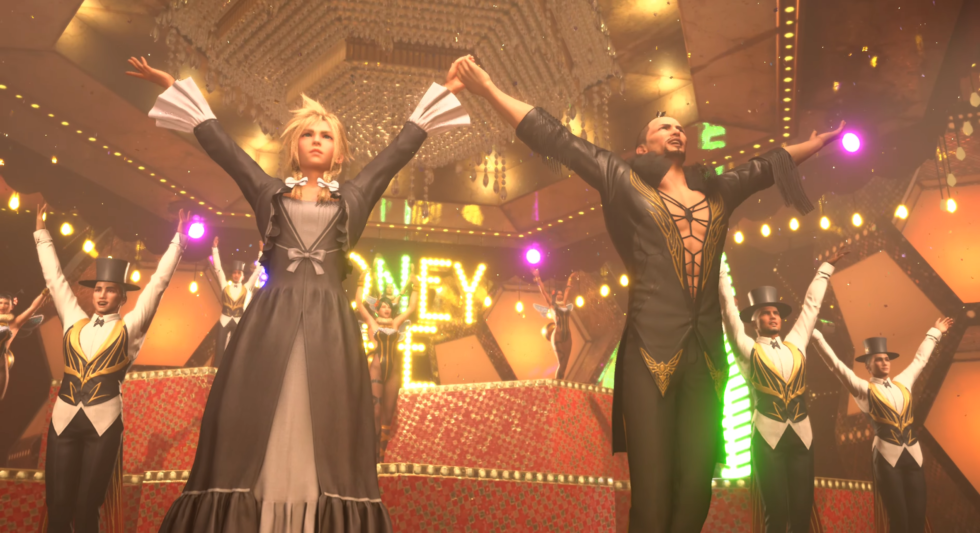
In Final Fantasy VII, spiky-haired protagonist Cloud Strife fights countless battles. But when he arrives in the red-light district called Wall Market, he faces what might be his greatest challenge: cross-dressing. To rescue his childhood friend and ally Tifa Lockhart from a seedy old slumlord, Cloud infiltrates an adults-only establishment called the Honey Bee Inn. The catch: to get to her, he must go undercover as a woman.

In the original 1997 version of FFVII, Cloud's drag transformation is played for laughs. Undertones of queer panic and derision punctuate nearly every character interaction while he's dressed in a frilly, lavender frock. The audience is supposed to guffaw at this warrior clad in women's clothing, tamping down any inherent issues of sexual identity and expression that could be attached to the scene. Final Fantasy VII, while heartfelt, dramatic, and in many ways beautiful, was never what could be interpreted as "in tune" with its sexual side.

Nearly 25 years later, Final Fantasy VII Remake flipped the script. A narrative that was once eager to mock Cloud's dalliances in drag, and which turned a blind eye to the sexual implications of the situation, has morphed. In Remake, this scene blossoms into a brilliant and daring piece of media that encourages the exploration and freedom of one's sexual identity. It also legitimizes both the cisgender and queer desires that certain characters harbor.

Read 22 remaining paragraphs | Comments

28 Jan 01:11

A third of Trump voters are ready to jump GOP ship for the 'Patriot Party'

by Kerry Eleveld
James.galbraith

Burn baby burn

Fully 81% of Republican voters still get warm fuzzies when they think of Donald Trump, with 54% feeling "strongly" about their adoration, according to a newly released Politico/Morning Consult survey taken Jan. 23-25. That whole attack Trump orchestrated on the homeland—whatevs. In fact, positive views of Trump have bounced back a handful of points since the outlet's Jan. 10-12 survey taken shortly after the riot. The survey also found that 75% of GOP voters disapprove of the Senate following through with an impeachment trial for Trump, with just 18% backing it.

So if you're wondering why 45 Senate Republicans just voiced their opposition to putting Trump on trial for his role in inciting the Capitol siege, it's because none of them have the faintest idea how to win elections without Trump—the guy who helped the GOP forfeit the White House, the House, and the Senate in just four years' time. Impressive. 

On top of that, Trump's musings about forming a so-called "Patriot Party" have piqued the interest of more than a third of 2020 Trump voters (35%) and 30% of Republican voters overall. In fact, Trump's Patriot Party splits both groups of voters—Republicans and Trump voters—roughly into thirds, with a third sticking with the GOP, a third interested in joining the new party, and a third who say they aren't interested in affiliating with either party or else hold no opinion on the matter.

Trump, the great divider, is working his magic on the Republican Party and will continue to do so for the foreseeable future. And no one in the Republican Party is inspired enough to chart a new course to winning more voters over to their side. 

Loser Trump is all they've got. 

28 Jan 01:10

Cartoon: why aren't you voting for impeachment?

by Matt Bors
28 Jan 00:34

Federal prosecutors and former senior DOJ officials say video evidence is damning against Trump

by Walter Einenkel
James.galbraith

Let's see if Dems can figure out how to present this

Online news outlet Just Security, which focuses on 'rigorous analysis of law, rights, and U.S. national security policy,' has created an intense 10-minute compilation splicing together video clips from events leading up to the Capitol insurrection alongside Donald Trump's speech to the mob before they marched to and into the Capitol.

Using videos that were created and uploaded by users of the gutter of right-wing social media dumpster Parler (before the FBI lights came on and users started to scramble), the events of Jan. 6 are becoming clearer. The original video was collected by ProPublica and made available to the public, and Just Security was able to create more context for Donald Trump's speech, using the crowd responses. Set chronologically, the video is a damning piece of evidence that could and should be used in the impeachment trial of the twice-impeached former president. It shows the crowd reacting in real-time to Donald Trump's calls to "fight" for him at the Capitol, as well as whipping the crowd into a white-hot frenzy toward his own vice president. 

Just Security reporters Ryan Goodman and Justin Hendrix interviewed numerous “former senior Justice Department officials and former federal prosecutors” to get their takes on the video compilation and the result is a roadmap into the possible second impeachment of Donald Trump.

The video begins with footage of Donald Trump speaking to the Jan. 6 Stop the Steal crowd, highlighting his claims that “We will never give up. We will never concede. You don’t concede when there is theft involved,” and “We want to be so nice. We want to be so respectful of everybody, including bad people.”

Video of the crowd obtained from Parler shows people yelling and cheering, and responding to Trump’s call to action by yelling things like “Storm the Capitol,” “Invade the Capitol building,” and “Take the Capitol.” Calling the “left” of the United States, “ruthless,” Trump continuously called on then-Vice President Mike Pence to “do what’s right for the Constitution and the country.” 

Trump hits the war and fighting metaphor again, saying that “Now it is up to Congress to confront this egregious assault on our democracy,” and how the Stop The Steal folks will now march down to the Capitol building and make themselves a herd heard.  The video then pivots to the march down to the Capitol building, showing charlatan luminaries like InfoWars’ Alex Jones telling the crowd to go to the “other side of the Capitol building,” where he claims Trump will be.

Later, the video shows a crowd at the door of the Capitol building chanting “We want Pence,” over and over again. It’s not a bunch of people calling for Mike Pence to speak—that’s something that’s never happened in America, frankly. A man inside of the Capitol building is videotaped talking into a landline phone in the building, asking for Speaker Pelosi and Mike Pence, saying “We are coming for you, bitch!”

Other video taped next to scaffolding erected at the Capitol building shows a guy speaking into a megaphone, saying he hopes Mike Pence goes to the “gallows,” and that he would like to see him in front of a “firing squad.” I wonder why Mike Pence didn’t come out to nod paternalistically at the MAGA supporters, like he has for the past four years?

Video inside of the Capitol building hallways shows big bearded faketriots screaming at D.C. and Capitol police, telling them that “You’re outnumbered. There’s a million of us out there, and we are listening to Donald Trump—your boss.”

The chant of “Fight for Trump” continues.

At 4:17 PM that day, after hours of inaction, Trump released his weak sauce Twitter video, once again calling the election “fraudulent,” but telling his supporters to go home. This is followed by video of Mr. QAnon Narcissistic Mascot Jacob Chansley saying that Trump told them to go home and that the rioters had “won the day,” because it had sent the message they would remove officials from office “one way or another” if they didn’t overturn the results of the election—or whatever demands they come up with, I guess?

Finally, they cut in MAGA acolytes like Texas realtor Jenna Ryan, who chartered a private jet to go and storm the Capitol building. After first telling people she hadn’t gone in the building, only to have her own footage and a lot of other footage show that she was lying, the video has a local news interview with her saying that she thought she was following Trump’s instructions. She was, but that’s still a crime.

Former Assistant United States Attorney for the Southern District of New York Elie Honig tells Just Security that “The House impeachment managers should consider rolling this tape as their final exhibit at the trial. It shows, clearly and viscerally, how President Trump’s words in fact incited the insurrectionist mob — particularly when taken in combination with Trump’s own tweet, after the riot, praising the mob as ‘great patriots’ who should ‘remember this day forever.’”

Former U.S. Attorney for the Western District of Pennsylvania and former Deputy Assistant Attorney General Harry Litman disagrees with Honig on strategy, but not on how damning this all is: 

From a legal standpoint, a prosecutor in a case charging Trump with seditious conspiracy would play this tape in an opening, and then say, “Ladies and Gentlemen of the Jury, the evidence will show that the insurrectionists came to Washington that day because they believed the President had called them there to do their patriotic duty; once there, the President worked them into a demented rage, telling them they had to fight like hell, and that he would be there with them at the Capitol. They went with blood in their eyes screaming ‘Fight for Trump!,’ threatening the lives of Nancy Pelosi and Mike Pence, and proceeded to storm and lay waste to the Capitol, the sanctum of our democracy, all while President Trump viewed the bedlam with delight from his safe perch back at the White House. They were criminals and deserved to be punished; but any fair-minded person will see from this evidence and more that we will bring forward that it was the President who lit the match and threw it on the fire because he wanted – and at a minimum reasonably foresaw – that they would become an out-of-control mob.”

In lieu of real evidence of fraud, the Trump administration and its surrogates—and those wanting to make some last-minute money off the MAGA crowds—promoted the idea that the entire election of Joe Biden over Donald Trump was rigged. In every form of media, at every opportunity, they told millions of Americans that not only were their suspicions of problematic votes cast, but that in fact, a coordinated effort to overthrow the “landslide” victory of Donald Trump was underway.

You can argue that the people who believe the things that Donald Trump says are being conned. They are. You can say they truly believed that their attempt to force Congress to throw out millions of American votes was just and constitutional. You can say all of those things because Donald Trump, the president of the United States, told them exactly that. Other elected officials, including senators, told them it was true. 

The fact of the matter is that Trump’s guilt is very easily verified. He purposely misled his supporters and then attempted to have them illegally overthrow our government. The only defense the MAGA insurrectionists being arrested right now have amounts to an insanity plea. They believed the government was out to get them and they needed to violently defend themselves because they believed they were about to be hurt by magic. It’s not a worthwhile defense in most of their cases, and hopefully, they can watch from a jail cell’s closed-captioned television set as their fearful leader and liar is convicted of crimes against our Constitution and the Executive office of our country.

"Fight For Trump" Just Security - Incitement at US Capitol from Justin Hendrix on Vimeo.

28 Jan 00:33

Congressional Democrats push for first minimum wage increase in more than 10 years

by Laura Clawson
James.galbraith

Finally

The federal minimum wage hasn’t gone up since 2009, staying stuck at $7.25 an hour. Democrats haven’t had the power to change that since January 2011, but now they do—and they plan to. Congressional Democrats are introducing the Raise the Wage Act of 2021, which would bring the minimum wage to $15 an hour over five years.

According to the Economic Policy Institute, the Raise the Wage Act would raise pay for 32 million workers and chip away at racial and gender pay gaps, with 23% of the people seeing their pay go up being Black or Latina women. Three in five workers with below-poverty incomes would also get a raise.

Under the legislation, the minimum wage would hit $15 in 2025, and then—and don’t undersell how exciting this part is—be indexed to median wage growth so that the minimum wage would not get stuck for another 12 years because Republicans regain the power to stand in the way. Instead, under the Raise the Wage Act, once the minimum wage hits $15, workers would get small, regular raises so that their pay didn’t fall steadily behind the cost of food and housing.

The subminimum wage for tipped workers has been at $2.13 since 1991, and other groups that get subminimum wages include youth workers and workers with disabilities. Those groups would also gradually reach the full minimum wage, in another massive strong point to this bill—and something that industry groups are going to throw a ton of lobbyists at to remove from the bill.

And do expect a lot of money to go into either defeating this bill or watering it down dramatically. One very powerful argument on the side of raising it, though—one that can be used against wavering Democrats or possibly even a tiny number of Republicans—is that the $15 minimum wage is popular. Popular as in more than 60% of Florida voters approved a $15 minimum wage at the same time as the state went for Donald Trump. This is not just some deep-blue-state thing that swing district House members should fear. It’s giving a lot of people a big raise before the 2022 elections—to $9.50 an hour in 2021 (specifically on the first day of the third month after enactment of the legislation) and to $11 a year later. Recent years have brought a string of minimum wage victories through ballot measures. It’s past time for Congress to get its act together, and that means Senate Republicans getting out of the way.

28 Jan 00:31

Republican facing multiple convictions for human trafficking and fraud begins sentence

by Walter Einenkel
James.galbraith

Another shining star from AZ

In October of 2019, former elected county assessor for Maricopa County Paul Petersen was charged by Utah’s attorney general with 11 felonies. Those felonies included “human smuggling, sale of a child and communications fraud.” The charges stemmed from what prosecutors said was an illegal “adoption scheme” where Petersen recruited and transported at least 40 pregnant women from the Republic of the Marshall Islands to Utah, where they birthed and then gave up their babies. Petersen cut a plea deal in Arizona and was sentenced to 74 months in prison. 

On Jan. 21, Petersen began his sentence at a federal prison near El Paso, Texas. Petersen is still facing sentencing for fraud convictions in Arizona and the human trafficking convictions in Utah. The Associated Press reports that Petersen is appealing the sentencing in the Arizona case after the judge gave him two years more than the guidelines recommend.

Petersen was able to cut a deal allowing him to plead guilty to “Alien Smuggling For Financial Gain,” a way of saying he’s a straight-up monster and that Arizona is racist. According to CNN, Petersen is also on the hook for $105,100 in fines and court costs and will submit to three years of supervised release after his time in federal prison. The Utah conviction was a deal with Petersen pleading guilty to “three counts of human smuggling and one count of communications fraud.”

QAnon are still running around looking for human traffickers at pizza shops.

28 Jan 00:28

Pro-Trump areas are undercounting COVID-19 deaths, new study suggests, by a lot

by Walter Einenkel
James.galbraith

Gee I wonder why

Fro the beginning of the COVID-19 pandemic, study after study after study has pointed to “excess deaths” either directly or indirectly related to the novel coronavirus steadily increasing. There are numerous reasons for this increase: an overtaxed healthcare system being at the top of the list of causes for the increase in deaths. But as the CDC itself explains, “Counts of deaths from all causes of death, including COVID-19, are presented. As some deaths due to COVID-19 may be assigned to other causes of deaths (for example, if COVID-19 was not diagnosed or not mentioned on the death certificate), tracking all-cause mortality can provide information about whether an excess number of deaths is observed, even when COVID-19 mortality may be undercounted.” In fact, the analysis puts the true mortality numbers from COVID-19 in the U.S. at 31% higher than what is currently being reported.*

A new analysis of data from across the country, out of Boston University School of Public Health, shows a very distinct correlation between areas with pro-Trump leanings and very high “excess deaths.” The reasons for this are many and the correlation between COVID-19 denialism extending to death certificates is not simply the result of someone denying someone else died of the disease, it’s the result of a systematic denialism in these areas. And while researchers know that many of these deaths can be attributed to suicide and drug overdoses, hesitancy to get medical attention, and other possibly pandemic-related factors, they also believe that many of these deaths are very likely to be the direct result of COVID-19.

According to the study, rural areas had much higher “excess deaths” recorded than urban ones and the same was true when comparing pro-Trump voting areas to non-Trump areas (based on election data from 2016 and 2020). To be clear, lower income areas also had higher excess deaths, and many of those areas don’t vote for Trump. But what researchers are responding to here is the difference between 44 excess deaths that weren’t officially recognized as Covid-19 for every 100 official Covid-19 deaths,” versus “25% of counties with the most Trump voters in 2020, with 163 excess deaths for every 100 Covid-19 deaths.”

This is where the many insidious ways Trump’s COVID denialism has expressed itself. As the study points out that one of the many reasons a death doesn’t get counted as COVID-19-related is if the person was not tested for the virus. Trump and our country’s inability to get out a meaningful testing infrastructure has made it virtually impossible to control the spread of the virus, but it also means that many people who have potentially died after contracting the virus, never knew for sure that they did indeed have COVID-19. People have been trying to work on ways to maximize results under our federal government’s weak response.

But this is not the only reason. Sadly, one of the big correlations drawn here are between areas where the local coroner can be an elected non-medical professional, the rates of excess COVID-19 deaths were far higher than those with medical examiners appointed by medical officials. There are other reasons as well. Chief medical examiner in Pima County, Arizona, Greg Hess, told Stat News that not only are medical examiners stretched thin, many rural coroners have to pay for post-mortem testing out of their own budgets.

Hess also brought up smaller areas’ pressure on these officials. “There are certain expectations that families have or certain narratives that they have in their mind about why their loved one died that might be contrary to or supported by what is available in the medical record. Sometimes someone might tailor the way a death certificate is written to try to get some relief from a family member who might be bothering or badgering them.” Hess, who says this is not an issue he has seen any specific evidence of this, did offer it as one of the potential scenarios for why the data looks as it.

And then, of course, there are the pro-Trump officials who believe that COVID-19 is “overblown,” and even possibly a “hoax.” The lies that many of the MAGA world have internalized are so deep, people die of the virus while maintaining the virus itself does not exist. The lie is so prevalent that Trump officials, trying to pass the poison potato of their failures, are also trying to give excuses for the fake news spouted by the orange maniac. Believing that there are people in pro-Trump areas willing to lie or deny COVID-19 on death certificates is not a great stretch. 

*As of this story’s publishing, the United States has officially recorded 419,000 deaths due to COVID-19.

28 Jan 00:28

Cartoon: The censure

by Nick Anderson
James.galbraith

Ducey can be accused of many things, but a display of basic integrity is not one of them.

Please consider supporting my work on Patreon or on Ko-Fi so I can continue creating it.

Also, please sign up for my free editorial cartooning newsletter.

28 Jan 00:25

Cartoon: Life in the liminalverse

by Tom Tomorrow
James.galbraith

so sad and so true

If you enjoy this work, please consider helping me keep it sustainable by joining Sparky’s List!

28 Jan 00:08

How the anti-abortion movement fed the Capitol insurrection

by Tina Vasquez

Reproductive justice advocate Jordyn Close watched with the rest of the nation on Jan. 6 as Donald Trump supporters invaded the Capitol. Some were outfitted in tactical gear and had zip ties at the ready. Others brought nooses and pitchforks and Confederate flags. The insurrectionists broke windows, ransacked lawmakers’ offices, and spread feces on the Capitol walls. By the end of it all, five people died.

The escalation from rhetoric to violence at the Capitol has shocked many Americans. Close, who works with Unite for Reproductive and Gender Equity (URGE), is an abortion storyteller with We Testify, and serves on the board of the abortion fund Women Have Options Ohio, is less surprised. Very early into the news coverage of the insurrection, Close saw a number of familiar faces. Overwhelmingly, these were white men who—when not trying to overthrow the government—spend a great deal of their time harassing people outside of abortion clinics.

“The venn diagram of white supremacists and antis is a circle,” Close said. Similar sentiments were expressed to Prism by reproductive health, rights, and justice advocates in Ohio, North Carolina, and West Virginia, none of whom were particularly shocked to see leaders in the anti-abortion movement storm the Capitol in support of Trump. Abortion advocates have long warned that it was only a matter of time before the rhetoric became violent. 

In his inauguration speech on Jan. 20, President Joe Biden said the United States must “confront and defeat'' political extremism, white supremacy, and domestic terrorism.” Abortion advocates want to know if this commitment applies to the threats, harassment, and violent rhetoric they face from anti-choice movements. The threat of violence has been unrestrained for decades, minimized or outright dismissed by law enforcement officials and lawmakers even as abortion clinics continue to be a primary target for domestic terrorism.

Abortion stigma is the primary reason why few in the media or American public listen to abortion advocates when they warn of the violence that right-wing movements are capable of. But now that the nation has seen this violence firsthand, advocates are waiting to see if it will change anything.

“I don't know at what point people will simply listen to abortion advocates because we've been the victim of this violence for decades,” Close said. “Will they listen to us now?”

‘Far-right white supremacist ideals’

Since the attempted coup, there has been a slate of reporting from Mother Jones, Vice, Jezebel, Rewire News Group, and The Washington Post about prominent members of the anti-abortion movement spotted at the coup. But this isn’t about the singular appearance of specific antis at the storming of the Capitol. Many reproductive justice advocates have argued that the anti-abortion movement is a white supremacist movement, but what’s certain is that in recent years the anti-abortion movement’s many iterations have made inroads with extreme right-wing groups—including militia movements and white supremacist groups.  

Renee Bracey Sherman, founder and executive director of the abortion storytelling group We Testify, said in a statement that anti-abortion activists “are nothing but white supremacists who organize around criminalizing abortion.” In fact, she explained, the anti-abortion movement “came about while trying to maintain segregation in schools and continued organizing around our nation's long history of subjugating the reproductive freedoms of Black and Brown people.”

Given the context and the failings of law enforcement officials to take the threats of anti-choice activists seriously, it’s largely on abortion access advocates to keep themselves safe. In part, this requires performing opposition research, or the practice of identifying anti-choice protestors outside of clinics and monitoring their online activities to assess the danger they may pose. To help fill these information gaps, groups like Abortion Access Front have “amassed a database of anti-abortion extremists from across the country,” according to the group’s founder, Lizz Winstead.

Abortion Access Front was able to quickly identify at least a dozen anti-abortion activists who were at the Capitol. The group shared a document with Prism; it features social media from the antis who were at the scene, some of whom have ties to militia movements and the extreme and aggressive anti-abortion group Operation Save America, which is known for harassing abortion providers and demanding that people seeking abortion care receive the death penalty.

“The leadership of these anti-choice organizations tell the public they don’t believe in violence, but they can’t have it both ways,” Winstead said. “They support violence and they use inflammatory rhetoric like ‘murdering babies,’ ‘slaughtering children,’ and calling abortion a ‘Holocaust.’ Unless the public begins to connect these dots and see that it’s the same people across movements engaging in the same terrorism, the people who provide abortions are going to be forced to continue fending off this violence by themselves.”

In one video taken by Jason Storms, the assistant director of Operation Save America and the founder of Faithful Soldier Training Camp, he is standing on scaffolding outside the Capitol as the coup is unfolding and he calls it a “revolution.” Abortion Access Front also found plenty of footage online from Operation Save America regional leader Dave Daubenmire, who co-founded the Christian militia Minutemen United and runs a survivalist training camp in Ohio. Tayler Hansen, self-proclaimed “pro-life” activist and the founder of Baby Lives Matter, filmed the shooting of fellow insurrectionist Ashli Babbitt, doing nothing to help her as she lay bleeding to death.  

Perhaps most alarming was the presence of two men in particular: John Brockhoeft and Derrick Evans.

Brockhoeft firebombed a Cincinnati, Ohio, Planned Parenthood clinic in 1985 and was convicted of planning to bomb the Pensacola Ladies Center in 1988. More recently, he has been active at Reopen Ohio rallies in response to coronavirus-related shutdowns. At the Capitol on Jan. 6, Brockhoeft filmed a video of himself declaring his “love” for Donald Trump as Trump’s voice is heard over loudspeakers in the background.

Evans, before he was elected to the West Virginia House of Delegates in November, had a long history of harassing patients outside of West Virginia’s Women’s Health Center, the only abortion clinic in the state. “Evans was a fixture at the clinic for much of 2019, with a reputation for harassment so severe that the clinic erected a 10-foot fence to deter him. A volunteer escort obtained a restraining order against him, accusing him of stalking her,” The Washington Post reported. Known for wearing a “Make America Great Again” hat while livestreaming his harassment of patients to thousands of followers, Evans was one of the many insurrectionists who pushed their way into the Capitol and filmed the crime. Days later he was arrested and forced to resign from office.

No one on staff at the Women's Health Center of West Virginia was surprised that Evans participated in the attempted coup, said Katie Quinonez, the executive director of the clinic. They’ve had to deal with Evans “up close and personal,” Quinonez told Prism. He regularly filmed patients’ license plates, and he seemed to do research on clinic staff and clinic escorts, referring to them by their first names and shouting out details about them. The implication seemed to be, “I know who you are and I know where to find you,” said Quinonez.

Evans’ harassment inspired others to come to the clinic, including armed members of one of the largest radical anti-government groups in the nation: The Oath Keepers, whose tens of thousands of members are former law enforcement officials and military veterans. Quinonez told Prism that members of the group once appeared at her clinic “with guns on their hips,” alleging that they were there to provide protection to anti-abortion harassers.

The Oath Keepers have their own relationship to the attempted coup. On Jan. 19, prosecutors filed conspiracy charges against members of the Oath Keepers in the Capitol attack, alleging that three members of the group planned and coordinated ahead of the Jan. 6 assault.

“I certainly hope the general public is waking up to the fact that the anti-abortion movement is about far-right white supremacist ideals—they don’t care about pregnant people, they don’t care about babies or families. They care about controlling people seeking health care, LGBTQ folks, and people of color,” Quinonez said. “When someone is aggresively anti-abortion, it’s not just a matter of having a different opinion than you. It’s deeply rooted in white supremacist values.”

Building bridges with white supremacists

Close told Prism that in Ohio, it is the same people protesting abortion clinics who are now committed to protesting the federal government and making threats against the Biden-Harris administration. During the pandemic, the reproductive justice advocate said she has gone to Reopen the State rallies in Ohio to counter white supremacists, only to see anti-abortion leaders like Sarah Cleveland shaking hands with elected officials and known terrorists like Brockhoeft.

Cleveland, who was present at the Capitol on Jan. 6, is part of an emerging segment of the anti-abortion movement that Prism has reported on in partnership with the social justice think tank Political Research Associates. Known as “abortion abolitionists,” anti-abortion activists like Cleveland assert that the pro-life movement is too secular, abortion constitutes homicide, and that abortion providers and people seeking abortion care should be subject to the death penalty. This ideology is largely informed by longtime leaders in the violent wing of the anti-abortion movement.

Close said that in Ohio, anti-abortion figures like Cleveland are trying to “build bridges” with white supremacist groups like the Proud Boys, inviting them to protest outside of clinics.

In fact, when the coup was unfolding at the Capitol, Michelle Davis, a patient support advocate for Women Have Options Ohio, was actually at the Columbus, Ohio, statehouse to counter a Proud Boys rally.

Davis told Prism that antis used to pretend they had “the moral high ground,” but in recent years they have made little to no effort to hide their ties to white supremacist movements.  

“We’ve had violent Trump rallies in our city and anti-choicers are always a big part of it. They can operate with impunity, and that makes me nervous because I know these anti-choice groups are historically violent,” Davis said, noting that antis have left anti-choice propaganda on her doorstep and mailed packages to her home.

Escalating violence

On the morning of Jan. 6, Calla Hales talked to her father on the phone while watching the news as mobs of Trump supporters descended on the Capitol. Hales is the director of A Preferred Women’s Health Clinic (APWHC) in Charlotte, North Carolina, one of the busiest abortion clinics in the state. APWHC is the site of large, weekly anti-abortion protests, orchestrated by the anti-abortion group LoveLife who are assisted by Philip “Flip” Benham, the director of Operation Save America who is largely responsible for bringing “anti-abortion extremism” to North Carolina. In 2011, the fundamentalist Christian minister was found guilty of stalking an abortion provider. In 2018, Benham was arrested outside of Hales’ clinic for communicating threats. In 2020, Benham was again arrested outside of Hales’ clinic for refusing to disperse during COVID-19 stay-at-home orders.

“On the phone, my dad made a joke about how I’d probably see [Benham] at the Capitol and it wasn’t long after that I actually saw faces I recognized,” Hales told Prism in a phone interview. “It's scary and it shakes you, but it’s also frustrating. Many abortion providers, clinic workers, advocates, and activists have said that anti-choice protestors are capable of terrorism and their movements are a breeding ground for racism and violence.”

Kelsea McLain, who coordinates the North Carolina clinic escort group Triangle Abortion Access Coalition, said she expected to see antis at the Capitol—especially women. While white men represent the vast majority of the more extreme wings of the anti-abortion movement, white women are also very active, yet are reported on far less. In fact, one of the most prominent anti-abortion figures to first be identified at the Capitol was Abby Johnson, the former Planned Parenthood director who has carved out a career as an anti-abortion zealot.

At the North Carolina clinic where McLain volunteers her time, several women are the leaders of what McLain called “the most offensive behaviors.”

“There’s one woman in particular named Sharon Dooley that has become incredibly pervasive and an abusive presence at the clinic,” McLain said. “She uses being a white, conservative woman almost as armor. She escapes accountability and no one listens to us when we say that she is truly abusive and violent.”

Dooley, who is an avid believer in the QAnon conspiracy theory, falsely accused a volunteer of assault and has doxxed clinic escorts—including McLain. Dooley is so committed to harassing patients outside of the North Carolina clinic that after going to Washington, D.C. to support Trump on Jan. 6, she returned to harassing patients outside of the abortion clinic Jan. 7.

As antis more openly embrace extreme right-wing movements and conspiracy theories that inspire violence, it’s increasingly hard for reproductive health, rights, and justice advocates to know which threats to take seriously. McLain said that several months ago she was sitting in her home looking out her back window when she noticed a person appear and take pictures of her car. Without thinking, she ran out to confront them. The person hopped in a car loaded with other people and sped off.

Close told Prism that she wants the public to understand that anti-abortion activists are becoming “more radicalized” and normalizing the idea that violence against providers and clinic staff is justifiable. The threat of violence is reaching a boiling point, she said, and it still seems like only abortion advocates are taking it seriously.

“It’s really easy for people in society not to give a shit about a person who needs an abortion being harassed,” Close said. “The stigma around abortion leads a lot of the public to believe that we deserve this harassment, and we don’t.”

Law enforcement looks the other way

While reproductive justice advocates have long embraced abolitionist frameworks and many have supported the movement to defund the police, it’s important to note the role law enforcement officials play in the anti-choice movement and their inaction when it comes to the threats that abortion advocates receive.

McLain said there’s a direct correlation between the way that insurrectionists were treated at the Capitol and the way members of the anti-abortion movement are treated outside of clinics where they harass patients.

“[Anti-choice activists] act like they are immune to repercussions and to law enforcement because they’ve largely been allowed to be,” McLain said, noting that the threats experienced by reproductive health, rights, and justice advocates are almost never taken seriously. “They truly do whatever they want; they break whatever rules they want. They’re as abusive as they want to be, and they know that nothing will ever happen to them because of it. Law enforcement treats them with the kiddest of kid gloves, so of course they went to D.C. and stormed the Capitol and thought nothing would ever happen to them.”

During the attempted coup, the nation watched as police officers appeared to usher the white mob into what was supposed to be one of the most secure buildings in the country. Officers were seen gingerly walking elderly domestic terrorists down the Capitol steps and taking selfies with insurrectionists, who came from far and wide to overthrow the government and overturn the results of the election. It has since been reported that some of the officers at the Capitol were politically aligned and in solidarity with the white supremacist and right-wing movements that attempted the coup.

Needless to say, Close received no such treatment back in May and June of 2020 when she was assaulted by police officers four times while participating in Black Lives Matter protests in Columbus, Ohio, after the police killing of George Floyd. During the worst incident in May, the reproductive justice advocate said police smacked her phone out of her hand, knocked her glasses off her face, and kicked her. One officer grabbed her ponytail, yanked her head back, and shot pepper spray into her eyes “at point blank range.” In June when Close was arrested, she was pepper sprayed before being put in the back of a police cruiser where she remained for six hours.

On the other hand, members of the anti-abortion movement who stormed the Capitol were so confident that nothing would happen to them that they livestreamed their crimes. Others who attended Trump’s Jan. 6 rally—now considered one of the nation’s darkest days—have spent the last several weeks proudly using the day’s events as fodder and content for their social media accounts.  

McLain said it’s clear that anti-choice activists are emboldened, and it makes her fearful for her safety and the safety of others who work to provide abortion access in states like North Carolina where there is a large and active anti-choice movement.

“They were let into the Capitol by the police, and they’re let into the sanctity of our clinic space every day by the police. Sometimes we see the cops high-five antis or shake their hands or pray with them,” McLain said. “The truth is that every day, the police are protecting anti-abortion harassment in ways that violate people’s constitutional right to access abortion in every state around the country. It’s not just a problem here in North Carolina or in southern states. There is an epidemic of law enforcement enabling what I think will inevitably be the next domestic terrorist incident at a clinic.”

Tina Vasquez is a senior reporter for Prism. She covers gender justice, workers’ rights, and immigration. Follow her on Twitter @TheTinaVasquez.

Prism is a BIPOC-led nonprofit news outlet that centers the people, places and issues currently underreported by our national media. Through our original reporting, analysis, and commentary, we challenge dominant, toxic narratives perpetuated by the mainstream press and work to build a full and accurate record of what’s happening in our democracy. Follow us on Twitter, Facebook, and Instagram.

25 Jan 18:41

3Mbps uploads still fast enough for US homes, Ajit Pai says in final report

by Jon Brodkin
James.galbraith

Good so that should be his max bandwidth for life

FCC Chairman Ajit Pai wearing a mask at a Senate hearing.

Enlarge / FCC Chairman Ajit Pai says goodbye to members of a Senate Appropriations Subcommittee afters testifying during a hearing on June 16, 2020, in Washington, DC. (credit: Getty Images | Chip Somodevilla)

In one of his last acts as Federal Communications Commission chairman, Ajit Pai decided to stick with the FCC's 6-year-old broadband standard of 25Mbps download and 3Mbps upload speeds.

The decision was announced yesterday in the FCC's annual broadband-deployment report, released one day before Pai's departure from the FCC. As in all previous years of Pai's chairmanship, the report concludes that the telecom industry is doing enough to extend broadband access to all Americans—despite FCC Democrats saying the facts don't support that conclusion.

Pai's report said:

Read 21 remaining paragraphs | Comments

24 Jan 05:27

“Complete incompetence:” Biden team slams Trump’s COVID work

by Beth Mole
James.galbraith

No shit

A man in a suit holds up a laminated binder while speaking at a microphone.

Enlarge / US President Joe Biden releases his strategic COVID-19 plan at the White House on Thursday, Jan. 21, 2021. (credit: Getty | Bloomberg)

Just a day into office, President Joe Biden and his administration have unveiled a comprehensive, 200-page strategic plan and over a dozen executive orders and actions to tackle the COVID-19 pandemic currently rampaging across the country.

With the running start, the administration hopes to finally get control over the virus, which has already taken the lives of more than 408,000 Americans. The number of deaths is expected to top 500,000 next month, Biden said in an appearance Thursday to unveil his strategic plan.

"Things are going to continue to get worse before they get better," he said, calling his approach to the pandemic a "full-scale wartime effort."

Read 10 remaining paragraphs | Comments

24 Jan 05:22

The persistence of memory in B cells: Hints of stability in COVID immunity

by John Timmer
James.galbraith

Let's hope so...

Cartoon diagram of some of the cells of the immune system.

Enlarge / The immune response involves a lot of moving parts. (credit: BSIP/Getty Images)

There's still a lot of uncertainty about how exactly the immune system responds to the SARS-CoV-2 virus. But what's become clear is that re-infections are still very rare, despite an ever-growing population of people who were exposed in the early days of the pandemic. This suggests that, at least for most people, there is a degree of long-term memory in the immune response to the virus.

But immune memory is complicated and involves a number of distinct immune features. It would be nice to know which ones are engaged by SARS-CoV-2, since that would allow us to better judge the protection offered by vaccines and prior infections, and to better understand whether the memory is at risk of fading. The earliest studies of this sort all involved very small populations, but there are now a couple that have unearthed reasons for optimism, suggesting that immunity will last at least a year, and perhaps longer. But the picture still isn't as simple as we might like.

Only a memory

The immune response requires the coordinated activity of a number of cell types. There's an innate immune response that is triggered when cells sense they're infected. Various cells present pieces of protein to immune cells to alert them to the identity of the invader. B cells produce antibodies, while different types of T cells perform functions like coordinating the response and eliminating infected cells. Throughout this all, a variety of signaling molecules modulate the strength of the immune attack and induce inflammatory responses.

Read 14 remaining paragraphs | Comments

24 Jan 05:07

DDoS-Guard To Forfeit Internet Space Occupied By Parler

by BeauHD
James.galbraith

Oh good

An anonymous reader quotes a report from Krebs On Security: Parler, the beleaguered social network advertised as a "free speech" alternative to Facebook and Twitter, has had a tough month. Apple and Google removed the Parler app from their stores, and Amazon blocked the platform from using its hosting services. Parler has since found a home in DDoS-Guard, a Russian digital infrastructure company. But now it appears DDoS-Guard is about to be relieved of more than two-thirds of the Internet address space the company leases to clients -- including the Internet addresses currently occupied by Parler. The pending disruption for DDoS-Guard and Parler comes compliments of Ron Guilmette, a researcher who has made it something of a personal mission to de-platform conspiracy theorist and far-right groups.

Read more of this story at Slashdot.