Shared posts

09 Apr 17:35

The self-inflicted death of American science has already begun

by Bryan Walsh
James.galbraith

horrifying

Demonstrators take part in a “Stand Up For Science” rally at the Lincoln Memorial in Washington, DC, on March 7, 2025. | Alex Wroblewski/AFP via Getty Images

In Ezra Klein and Derk Thompson’s new book Abundance — which maybe you’ve heard of — they tell the story of Katalin Karikó, the Hungarian American scientist whose work ultimately led to the mRNA Covid vaccines.

When the research center she was working for in Hungary lost its state funding in the early 1980s, Karikó left her homeland, selling her car for 900 British pounds and sewing the cash into her daughter’s teddy bear so her family had something to live on. Like countless other researchers around the world, she found her way to the country where a scientist had the best chance of finding the funding and support to further their work: America.

Thompson and Klein, one of Vox’s founders, mostly use Karikó’s story to illustrate the way risk aversion holds back science. Karikó was convinced that mRNA could be harnessed for new kinds of treatments and vaccines, but she experienced rejection after rejection from short-sighted grantmakers at the National Institutes of Health (NIH). It was only when the Covid pandemic struck that the enormous value of Karikó’s mRNA work was finally recognized. The mRNA vaccines ultimately saved as many as 20 million lives in just one year, and Karikó won the Nobel Prize for Medicine in 2023.

But wind the tape back. 

Even before her years of rejection in American academia, had Karikó never been able to immigrate, she might never have been in a position to further her research in the first place. Perhaps we never would have had the mRNA vaccines — or even if we had, they would have been the product of another nation, one that would have reaped the benefits that ultimately went to the US.

Instead, Karikó is one of a long line of foreign scientists, with the support of America’s unparalleled university system and government support, achieved greatness that benefited her and her adopted country. The US has won more Nobel Prizes in the sciences than any other country by far, and immigrant scientists won more than a third of those Prizes, a proportion that has only increased in recent years. 

America has become a scientific colossus not just because it has spent more than any other nation on research and development, but because it made itself a magnet for global scientific talent, from superstar researchers to lowly junior scientists like Karikó. That, in turn, has translated to enormous economic benefit. According to one study, government-funded research and development has been responsible for 25 percent of productivity growth since the end of World War II.

Now the Trump administration is working to destroy all of that through catastrophic funding cuts and blatantly nativist immigration policies. And the result will be nothing less than an act of national suicide.

That’s what the money’s for

There has been no shortage of coverage of the funding cuts that Elon Musk’s Department of Government Efficiency has demanded of US science. The NIH announced in February that it would slash the indirect costs it covers for academic research, which would result in a cut of some $4 billion from the NIH’s roughly $50 billion budget; more cuts were announced later. Hundreds of grants that go to research in fields the Trump administration seems to believe are controversial — like HIV — have been outright canceled. Thousands of government scientists in agencies like the Centers for Disease Control and Prevention and the Department of Health and Human Services have been fired. Universities are seeing hundreds of millions in grants for scientific research threatened over campus policies

This is very bad. Sheer dollar power has always been a key ingredient in American scientific dominance, going back to the country’s enormous advances during World War II. (As important as geniuses like J. Robert Oppenheimer were to the development of the atomic bomb, the US ultimately got there first because it had the resources, as the physicist Niels Bohr put it, to turn the entire country into a factory for nuclear material.) Universities have already resorted to hiring freezes to cope with the cuts, and some are even rescinding admissions offers to PhD students. Some young scientists may simply leave the field altogether, potentially robbing us of future Karikós.

But there has already been some success in pushing back against these cuts. On Friday, a federal judge permanently barred the Trump administration from limiting funding from the NIH to support academic research, though the ruling is almost certain to be appealed. And even if funding is cut, future administrations could restore it, while alternative sources of money can be found in the interim. What the Trump administration is doing with funding is a body blow to American science, but doesn’t have to be a fatal one.

What is happening with immigration policy, however, is another matter altogether.

Killing the golden goose

The Trump administration has made no secret of the fact it is deliberately targeting foreign students in the US that have been involved — sometimes only peripherally — in pro-Palestinian protests. Mahmoud Khalil, a green-card holder from Algeria who was a grad student at Columbia University, is currently sitting in custody in Louisiana after his arrest by Immigration and Customs Enforcement agents. Another international student, Rümeysa Öztürk of Tufts University, was arrested and scheduled for deportation, apparently for the crime of co-writing a newspaper op-ed criticizing Israel’s actions in Gaza. 

But those are just the most high-profile cases. The New York Times reported this week that nearly 300 international students at universities around the US have had their visas suddenly revoked and could face deportation. (That figure could be higher when you read this — every time I clicked on the headline yesterday, the number of visas revoked went up.) There have also been reports of harassment and detainment of foreigners legally crossing the US border, which adds to a state of fear for any noncitizens.

A few hundred students may not seem like that much, given that the US granted more than 400,000 visas in 2024 alone. But the message from the administration, which is also apparently scouring student visa applicants’ social media for evidence of “hostile attitudes” toward America or Israel, is clear: We don’t want you here. And students and scientists are listening.

In a recent poll by the journal Nature of more than 1,200 scientists in the US, three-quarters said they were considering leaving the country. This was especially true of the young scientists who are set to form the next vanguard of American research. Foreign scientists who might otherwise come to the US for conferences or short-term positions are rethinking those plans, afraid — with reason — they might end up inside an ICE detainment facility. Other countries like China and Canada are already making overtures to scientists in the US, because they’re smart enough to grab an opportunity when they see one. As one recent Times opinion piece put it, the Trump administration’s actions “could mean America’s demise as the most powerful force for innovation in science, health and technology in the 21st century.”

Could they be replaced by American students? Don’t bet on it.

In 2017, international students accounted for 54 percent of master’s degrees and 44 percent of doctorates granted that year in STEM fields. For some especially important subjects, the percentage is even higher: In 2019, 72 percent of graduate students in computer science were international. At the same time, the number of native-born Americans enrolling in STEM programs has remained stagnant. American students scored lower than their counterparts in 36 other educational systems on international math tests in 2018, and only one in five college-bound American high school students is considered ready for college-level STEM courses.   

To push out foreign scientists who are here and shut the door to those who would come would cause incalculable damage to the US. Jeremy Neufeld of the Institute for Progress has called the recruitment of brilliant immigrant scientists to the US the “secret ingredient” in American dynamism. A 2022 study found that immigrants have accounted for 36 percent of total innovation in the US since 1990, as measured through patents, while more than half of the billion-dollar US startups over the last 20 years have an immigrant co-founder.

And now, apparently, we don’t want them anymore. 

Destroying our future

A boutique industry has emerged recently trying to make sense of the seemingly senseless actions of Trump and Musk. One theory is that Musk is doing what he often did at his companies: cutting things to the bone, and then adjusting as he sees what breaks. 

This can work — Musk didn’t build multibillion-dollar companies like Tesla and SpaceX by accident — but it depends on being able to see the effects of what is cut immediately, through a fast information feedback loop. If Musk makes a change to a SpaceX rocket and it blows up, well, there’s his answer. 

But as Klein said on a recent podcast, “the government doesn’t have very fast feedback loops.” And that’s especially true for something as long-term as science funding and talent.

Katalin Karikó came to the US in 1985, but it wasn’t until 35 years later that her true value as a scientist was borne out. We may not immediately feel the impact of fewer foreign scientists coming to the US and staying here, but the impact is real. We’ll feel it when we see scientists in other countries take home Nobel Prizes, when China laps us in vital fields like biotechnology and AI, when we struggle to find the people and the ideas that can create the next world-beating companies. We’ll feel it when America becomes just another country. 

A version of this story originally appeared in the Future Perfect newsletter. Sign up here!

08 Apr 16:21

The Supreme Court just made it easier for Trump to deport people

by Ian Millhiser
James.galbraith

Yeah it's a shitshow and one that the Court is very aware of. They are rigging the system AGAIN for Trump

Prisoners seen in a cell at the Terrorism Confinement Center
Prisoners are seen in a cell at the Terrorism Confinement Center in Tecoluca, in San Vicente, El Salvador, on April 4, 2025. | Alex Pena/Anadolu via Getty Images

On Monday night, the Supreme Court handed down a 5-4 decision tossing out a closely watched district court decision, which blocked President Donald Trump’s attempt to use a 227-year-old law — the Alien Enemies Act — to deport many individuals without due process. The Court largely voted along party lines, although Republican Justice Amy Coney Barrett crossed over to dissent with the three Democratic justices.

Though the Court’s decision in Trump v. J.G.G. is a win for Trump, it is not a total victory. The Court does not express an opinion on whether the Alien Enemies Act actually permits Trump to deport anyone. It also rules that, before anyone is deported under this law, that person must be given “notice and an opportunity to challenge their removal.”

But this decision is still a significant victory for Trump — and a loss for anyone Trump’s administration deems worthy of deportation. For starters, Judge James Boasberg, the district court judge, had issued a blanket order that temporarily blocked all deportations under the Alien Enemies Act. Those deportations can now resume.

The Supreme Court’s decision also rules that anyone Trump targets must bring a “habeas” proceeding, a process that ordinarily can only be used by a single individual to challenge their detention by the government. That means judges can only bar detention on a person-by-person basis.

As Justice Sonia Sotomayor warns in dissent, “individuals who are unable to secure counsel, or who cannot timely appeal an adverse judgment rendered by a habeas court, face the prospect of removal directly into the perilous conditions of El Salvador’s [Center for Terrorism Confinement], where detainees suffer egregious human rights abuses.” (The administration has sent several hundred men accused of belonging to the Venezuelan gang Tren de Aragua to that prison.) 

Habeas proceedings must be brought in the place where the person seeking relief is detained. Thus far, the Trump administration has transferred prisoners it intends to deport under the Alien Enemies Act to Texas, which is located in the US Court of Appeals for the Fifth Circuit’s jurisdiction. 

The Fifth Circuit is the most right-wing court in the federal appellate system. If someone brings a habeas suit in its jurisdiction, and the decision is appealed to the Fifth Circuit, the court could hand down a precedent that means any habeas proceedings challenging these deportations would fail.

The Supreme Court’s decision in J.G.G. stands on dubious legal grounds. Habeas is the correct process for anyone who challenges the government’s decision to detain them, but the individuals at issue in J.G.G. do not challenge the government’s authority to detain them. They only challenge the government’s ability to deport them under the Alien Enemies Act.

As the Court said in Skinner v. Switzer (2011), there is no case “in which the Court has recognized habeas as the sole remedy, or even an available one, where the relief sought would ‘neither terminat[e] custody, accelerat[e] the future date of release from custody, nor reduc[e] the level of custody.’”

Finally, while the Supreme Court does not reach the question of whether the Alien Enemies Act can be used by Trump to deport people, the answer to this question under current law is an emphatic “no.” The Act, which has only been used three times in American history before Trump took office, may only be used against citizens of a country that the United States is at war with, or against a country that is engaged in a military invasion of the United States. The United States is not at war, nor has it been invaded.

Realistically, it is unlikely the Court can avoid the question of whether Trump may invoke this wartime statute for long. Indeed, in the likely event that the Fifth Circuit denies relief to the people Trump seeks to deport, one of them is likely to seek Supreme Court review of that decision.

For now, however, the Court gets to delay that showdown. The one silver lining in the J.G.G. case is that all nine justices agree that anyone Trump seeks to deport under the Alien Enemies Act must be given an opportunity to find a lawyer and challenge their deportation. 

But that opportunity is unlikely to mean much for as long as these cases remain in the Fifth Circuit.

08 Apr 16:18

Tariffs

James.galbraith

good explainer

[later] I don't get why our pizza slices have such terrible reviews; the geotextile-infused sauce gives the toppings incredible slope stability!
07 Apr 15:35

Saturday Morning Breakfast Cereal - Humourous

by Zach Weinersmith


Click here to go see the bonus panel!

Hovertext:
All natural, in the sense of not having been made in a particle accelerator.


Today's News:
04 Apr 21:51

A conspiracy theorist convinced Trump to fire the NSA director

by Patrick Reis
James.galbraith

We are in hell

Conspiracy theorist Laura Loomer wears a shirt that reads “Donald Trump did nothing wrong.”
Laura Loomer shows up in support of President Donald Trump in 2023 when he was scheduled to appear in federal court for his arraignment on charges including possession of national security documents after leaving office, obstruction, and making false statements.  | Stephanie Keith/Getty Images

This story appeared in The Logoffdaily newsletter that helps you stay informed about the Trump administration without letting political news take over your life. Subscribe here.

Welcome to The Logoff: Donald Trump’s tariffs, and the economic havoc they’re wreaking, are still dominating the headlines. But today I want to focus on a story I worry is going under the radar: the president outsourcing national security staffing decisions to a far-right conspiracy theorist.

What’s the latest? Trump fired Gen. Timothy Haugh, the head of the National Security Agency and US Cyber Command, on Thursday. Haugh and several other high-ranking national security officials were booted after Trump met with Laura Loomer, who urged him to purge “disloyal” figures from his national security team. Loomer took credit for the firings, while Trump denied she was involved.

Who is Laura Loomer? She’s a far-right activist and social media personality known for her embrace of conspiracy theories, her self-described Islamophobia, and her loyalty to Trump. She has claimed 9/11 was an inside job, that Joe Biden was behind the July attempt to assassinate Trump, and that multiple school shootings were staged.

Who is Haugh? He’s a four-star general whom Joe Biden nominated to lead NSA. The Senate confirmed him in 2023 with overwhelming bipartisan support. Before that, he co-led a 2018 effort to prevent Russian interference in the midterms.

Why does it matter who directs the NSA? The agency has extraordinary power to wiretap Americans and engage in cyber espionage, and its leader has great influence over whether that power is abused.

Is this legal? Yes. The NSA director serves at the pleasure of the president.

So what’s the big picture? Trump says Loomer was not involved in the firings, but that’s not credible, given their timing and his track record with the truth. So it appears that a conspiracy theorist was given significant influence over leadership of agencies that have the power to infringe on civil liberties.

And with that, it’s time to log off…

I hate being bored. I’m not great at sitting still, and I get anxious when I have to do so. At even a hint of boredom, I reflexively reach for my phone, which too often ends in time wasted on games or passive scrolling, and that somehow only makes me more bored. So I was really grateful for this article about how boredom isn’t a punishment — it’s a tool. Boredom, my colleague Allie Volpe writes, can help you know “when you’ve gone off track from what you value and what you care about and what you can give to the world.” Take good care this weekend, and I’ll see you back here on Monday.

04 Apr 21:07

Saturday Morning Breakfast Cereal - Yup

by Zach Weinersmith


Click here to go see the bonus panel!

Hovertext:
There's a whole genre of robots taking selfies next to sterilized planets.


Today's News:
04 Apr 19:43

Microsoft Employee Disrupts 50th Anniversary and Calls AI Boss 'War Profiteer'

by msmash
An anonymous reader shares a report: A Microsoft employee disrupted the company's 50th anniversary event to protest its use of AI. "Shame on you," said Microsoft employee Ibtihal Aboussad, speaking directly to Microsoft AI CEO Mustafa Suleyman. "You are a war profiteer. Stop using AI for genocide. Stop using AI for genocide in our region. You have blood on your hands. All of Microsoft has blood on its hands. How dare you all celebrate when Microsoft is killing children. Shame on you all."

Read more of this story at Slashdot.

04 Apr 17:42

The right is cooking up a surprising legal fight against Trump’s tariffs

by Ian Millhiser
James.galbraith

well this is the most depressing thing to read all day, and that's saying quite a bit

Trump at his desk about to sign an executive order.
President Donald Trump speaks to reporters and signs an executive order about enforcement in the concert and entertainment industry on March 31, 2025. | Jabin Botsford/The Washington Post via Getty Images

On Thursday, one day after President Donald Trump announced sweeping new tariffs, what appears to be the first lawsuit challenging those tariffs was filed in a federal court in Florida. That alone isn’t particularly surprising. The tariffs are expected to drive up the costs of goods in the United States, and have already sent the stock market into a nose dive. That means that a lot of aggrieved potential plaintiffs have standing to challenge the tariffs in court.

What is surprising is that the plaintiff in this particular case, known as Emily Ley Paper v. Trump, is represented by the New Civil Liberties Alliance (NCLA), a right-wing legal shop that previously backed Trump’s efforts to expand executive power.

NCLA is part of what appears to be a growing effort among prominent right-leaning intellectuals and commentators to challenge Trump’s tariffs. 

At the Volokh Conspiracy, an influential right-libertarian legal blog, George Mason law professor Ilya Somin is actively recruiting plaintiffs to file a similar lawsuit challenging the tariffs (Somin has long been a principled libertarian critic of Trump). Ben Shapiro, the one-time Breitbart writer who is also a lawyer, criticized Trump’s tariffs as a “massive tax increase on American consumers,” and has gently advocated for Trump to change course. Richard Hanania, a writer best known for his baroque criticisms of “wokeness,” responded to a pro-Trump member of Congress’ praise of the tariffs with “we’re ruled by morons.”

All of this matters because conservative-minded judges, including the six Republicans who dominate the Supreme Court, are often highly responsive to public statements from conservative legal and media elites.

During President Barack Obama’s first term, for example, liberal lawyers and legal scholars were often flabbergasted by how quickly conservative judges rallied behind a weak legal case against the Affordable Care Act — eventually persuading four Republican justices to vote to repeal the law altogether. Their mistake — one I made as well — was assuming that judges would be persuaded by the kind of careful, precedent-focused legal reasoning that earns you top grades in law school, rather than by what they were hearing from legal and political elites that they viewed as ideological allies.

As Yale law professor Jack Balkin wrote about that error, a legal argument can “move from off the wall to on the wall because people and institutions are willing to put their reputations on the line and state that an argument formerly thought beyond the pale is not crazy at all.” In the end, many judges cared more about what they heard on Fox News or at an event hosted by the Federalist Society, than they did about what the Supreme Court said in Gonzales v. Raich (2005).

If you take the Court’s recent precedents seriously, there is a very strong legal argument against the tariffs

At least on the surface, anyone who wants to challenge Trump’s tariffs faces a far more favorable legal landscape than Obamacare opponents faced in 2010. During the Obama and Biden administrations, Republican justices fabricated novel new legal doctrines, such as the so-called major questions doctrine, in order to strike down Democratic policies they deemed too ambitious. They also threatened to revive old, once-discredited ideas like the “nondelegation doctrine,” which was used to frustrate President Franklin D. Roosevelt’s New Deal.

Both of these doctrines are grounded in the idea that the judiciary has broad power to strike down policies established by the executive branch of the federal government, even if the executive can point to an act of Congress that explicitly gives them the power to do what they want to do.

The primary reason to be skeptical that the Supreme Court will actually apply one of these doctrines to strike down Trump’s tariffs is that the Republican justices’ rollout of their new approach to executive power has been so partisan that it is hard not to suspect that they are acting in bad faith. 

The same six Republican justices who said that Democratic President Joe Biden’s student loan forgiveness program was an egregious power grab, despite the fact that that program was authorized by a federal statute empowering the executive to “waive or modify any statutory or regulatory provision applicable to the student financial assistance programs,” also said that Republican President Donald Trump is allowed to use the powers of the presidency to commit crimes.

Similarly, the best legal argument against Trump’s tariffs is rooted in the Court’s major questions doctrine, which holds that judges should cast a skeptical eye on executive branch actions “of vast ‘economic and political significance’” According to the Budget Lab at Yale, the tariffs are expected to reduce the average American household’s real annual income by nearly $3,800. That seems like a matter of vast economic and political significance.

But the short history of this major questions doctrine would give any serious legal scholar great pause. The idea that programs of “vast economic and political significance” are suspect was first articulated in Utility Air Regulatory Group v. EPA (2014), in order to criticize a hypothetical Environmental Protection Agency regulation that was never enacted, that no one ever proposed, and that likely would have shut down all construction of hotels in the United States if it had ever actually existed. A year later, the Court used the major questions doctrine again to repudiate an imaginary health regulation that would have collapsed the individual health insurance markets in most states.

Having used these strawmen to invent a completely new legal doctrine that appears nowhere in the Constitution or in any statute, the Court let this major questions doctrine lay dormant for Trump’s entire first term — only to revive it with a vengeance once a Democrat became president. To date, the doctrine has only been used to strike down actual, rather than theoretical, policies during the Biden administration.

One of the most important questions looming over Trump’s second term is whether a Republican Supreme Court will apply the same rules it invented to thwart Democratic administrations to Trump and his subordinates. We do not know yet how the justices will answer this question. But, as Balkin writes, the answer is likely to be shaped by how elite conservatives in the legal profession, the media, and in elected office urge the justices to behave.

One of the most important questions is whether elected Republicans join groups like NCLA or commentators like Shapiro in criticizing the tariffs. “What really accelerates the movement of constitutional arguments from off the wall to on the wall is neither intellectuals nor social movements,” Balkin wrote about the Obamacare fight. Instead, the most important factor is often what Republicans in political office want the courts to do

“When establishment politicians — who, after all, have to stand for election and don’t want to be thought out-of-touch to their constituents — get behind a constitutional argument, they often help move it forward quickly,” Balkin wrote.

For now, it remains to be seen whether members of Congress, governors, and other top elected Republicans will speak out against the tariffs once their constituents start to experience the pain of higher prices. But if you are hoping to see these tariffs go away, you should take the fact that the first spear targeting the tariffs was thrown by a prominent right-wing legal shop as a very positive sign.

04 Apr 16:25

Trump's war on veterans targets program to help them keep their homes

by Oliver Willis
James.galbraith

This is what veterans voted for by nearly 2:1. Let 'em have it.

The Department of Veterans Affairs is ending a program that has helped over 17,000 veterans attain homeownership. It is just the latest in a series of attacks and slights against veterans from President Donald Trump.

The VA announced on Thursday that it was putting an end to the Veterans Affairs Servicing Purchase Program. The program purchases defaulted mortgage loans for veterans facing financial hardship and then offers them as direct loans with a fixed 2.5% interest rate.

“Beginning May 1, 2025, VA's Veterans Affairs Servicing Purchase Program [VASP] ... will stop accepting new enrollees,” the VA said in a statement to NPR. “This change is necessary because VA is not set up or intended to be a mortgage loan restructuring service.”

Experts say this will create a crisis for veterans and their families.

“Halting the VASP program will increase the number of veterans facing foreclosure unless the VA and Congress implement a permanent partial claim option as soon as possible,” said Bob Broeksmit, president and CEO of the Mortgage Bankers Association, in a statement.

Protesters walk outside the John D. Dingell Veterans Affairs Medical Center in Detroit, on Feb. 28.

Trump has come under fire in the past after it was revealed—and verified by his then-White House chief of staff John Kelly—that he referred to deceased military veterans as “suckers” and “losers.” And he has repeatedly disrespected veterans: On Friday, Trump blew off honoring four U.S. soldiers who died in Lithuania during a training exercise to instead attend a Saudi-backed golf tournament at his country club.

The Biden administration launched the VASP program in April of last year after it was revealed that thousands of veterans were in danger of losing their homes after a program implemented at the height of the COVID-19 pandemic ended.

Then-VA Secretary Denis McDonough said at the time that the VA was “committed to doing everything in our power to help veterans avoid foreclosure.” Under Trump, that is no longer the case.

Congressional Republicans back Trump’s decision to cut off this lifeline for veterans.

In a joint statement Rep. Mike Bost of Illinois, chair of the House Committee on Veterans Affairs, along with Rep. Derrick Van Orden of Wisconsin), chair of the Subcommittee on Economic Opportunity, said, “We—along with many of our colleagues—had serious concerns about the impact VASP would have on not only the future of VA’s home loan program, but the mortgage lending business as a whole. Today, the Trump administration rightfully put an end to VA’s VASP program.”

The program’s closure is the latest in a series of attacks on veterans from the Trump administration. Under the auspices of Elon Musk’s Department of Government Efficiency, the VA has cut staff—likely adding to wait times for veterans seeking care while also complicating efforts in dealing with day-to-day care issues.

Veterans have also been affected by the administration’s actions to cut thousands of government workers. These concerns were dismissed by then-Trump aide Alina Habba who told Fox News in March, “We have taxpayer dollars, we have a fiscal responsibility to use taxpayer dollars to pay people who actually work, that doesn't mean we forget about our veterans by any means, we are going to care for them in the right way, but perhaps they're not fit to have a job at this moment or are not willing to come to work.”

Habba has since been promoted to interim U.S. attorney for the district of New Jersey.

Campaign Action

04 Apr 16:20

Trump blows off honoring dead soldiers to attend golf tournament

by Emily Singer
James.galbraith

Again, this would be a weeks-long scandal is a democrat did it

President Donald Trump isn’t attending the dignified transfer of four American soldiers who died in Lithuania, because he has instead chosen to attend a Saudi-backed golf tournament at his country club in Doral, Florida.

Staff Sgt. Jose Duenez Jr., Staff Sgt. Edvin F. Franco, Pfc. Dante D. Taitano, and Staff Sgt. Troy S. Knutson-Collins, all in their twenties, died during a training exercise in the Baltic region of Europe when the military vehicle they were driving sank into a swamp, Military.com reported.

Their bodies began their dignified transfer back to the United States on Thursday and are expected to arrive on Friday at Dover Air Force Base in Delaware. In place of Trump, Defense Secretary Pete Hegseth will be present at the transfer, according to Fox News.

“The President of the United States as of now will not meet the remains of our service members when they land at Dover…because he will be at a golf tournament,” Democratic Sen. Ruben Gallego of Arizona wrote in a post on X. “Now you see why we are worried about his cuts to the [Department of Veterans Affairs]?”

Unlike Trump, thousands of Lithuanians have honored the soldiers, lining the streets of Vilnius as the hearses carrying their bodies drove to the airport on Thursday.

Thousands of Lithuanians in Vilnius honored the four American soldiers who tragically lost their lives. pic.twitter.com/dT1SvDffjO

— Arvydas Anušauskas (@a_anusauskas) April 3, 2025

“For us, it is more than a duty, it is an emotion. We have experienced trials in our history and therefore we understand well what loss is, what death is, what honorable duty is,” Lithuanian President Gitanas Nausėda said in a speech, according to the Associated Press.

For Trump, ignoring the dignified transfer is about as respectful of fallen service members as when, during the 2024 presidential campaign, he used the graves of dead soldiers to stage a photo op.

Last August, Trump’s campaign used a ceremony at Arlington National Cemetery to create campaign content, with his staffers verbally abusing and even getting into a physical altercation with a cemetery official who told the campaign that it was against the rules to film in a section of the cemetery where recent casualties are buried.

All of this is part of Trump’s long history of dishonoring fallen soldiers.

He has called soldiers who died "suckers" and "losers." And in 2018, he canceled a visit to the Aisne-Marne American Cemetery in France, where thousands of American troops who died in World War I are buried, because feared the rain would mess up his hair and “he did not believe it important to honor American war dead,” according to The Atlantic, which cited four people familiar with his statements.

Trump has denied saying those things. But Trump’s former chief of staff, retired Gen. John Kelly, confirmed in 2023 that Trump made those disparaging remarks. 

Kelly wrote in a statement to CNN at the time:

What can I add that has not already been said? … A person that thinks those who defend their country in uniform, or are shot down or seriously wounded in combat, or spend years being tortured as POWs are all ‘suckers’ because ‘there is nothing in it for them.’ A person that did not want to be seen in the presence of military amputees because ‘it doesn’t look good for me.’ A person who demonstrated open contempt for a Gold Star family—for all Gold Star families—on TV during the 2016 campaign, and rants that our most precious heroes who gave their lives in America’s defense are ‘losers’ and wouldn’t visit their graves in France. A person who is not truthful regarding his position on the protection of unborn life, on women, on minorities, on evangelical Christians, on Jews, on working men and women. A person that has no idea what America stands for and has no idea what America is all about. A person who cavalierly suggests that a selfless warrior who has served his country for 40 years in peacetime and war should lose his life for treason—in expectation that someone will take action. A person who admires autocrats and murderous dictators. A person that has nothing but contempt for our democratic institutions, our Constitution, and the rule of law. There is nothing more that can be said. God help us.

Ultimately, Trump choosing golf over honoring fallen soldiers is par for the course—pun not intended. The selfish commander-in-chief left for Florida on Thursday just one day after tanking the stock market due to his idiotic tariff policy.

Thank you to the Daily Kos community who continues to fight so hard with Daily Kos. Your reader support means everything. We will continue to have you covered and keep you informed, so please donate just $3 to help support the work we do.

04 Apr 00:02

No Tariff Exemptions for American Farmers

by David Frum
James.galbraith

Damn right

American farmers are pleading for exemptions from President Donald Trump’s tariffs. Republican members of Congress from farm states are working to deliver the relief farmers want. But farmers do not deserve special treatment and should not get it.

Tariffs will indeed hurt farmers badly. Farm costs will rise. Farm incomes will drop. Under Trump’s tariffs, farmers will pay more for fertilizer. They will pay more for farm equipment. They will pay more for the fuel to ship their products to market. When foreign countries retaliate, raising their own tariff barriers, American farmers will lose export markets. Their domestic sales will come under pressure too, because tariffs will shrink Americans’ disposable incomes: Consumers will have to cut back everywhere, including at the grocery store.

Farmers will share this tariff predicament of higher costs and lower incomes with almost all Americans—except the very wealthiest, who are less exposed to tariffs because they consume less of their incomes and can offset the pain of tariffs with other benefits from Trump, beginning with a dramatic reduction in tax enforcement.

Farmers are different from other Americans, however, in three ways.

First, farmers voted for Trump by huge margins. In America’s 444 most farm-dependent counties, Trump won an average of 77.7 percent of the vote—nearly two points more than Trump scored in those same counties in 2020.

Second, farmers have already pocketed windfall profits from Trump’s previous round of tariffs.

When Trump started a trade war with China in 2018, China switched its soybean purchasing from the United States to Brazil. By 2023, Brazil was exporting twice as much as the United States. Trump compensated farmers with lavish cash payouts. The leading study of these effects suggests that soybean farmers may have received twice as much from the Trump farm bailout as they lost from the 2018 round of tariffs, because the Trump administration failed to consider that U.S. soybeans not exported to China were eventually sold elsewhere, albeit at lower prices. The richest farmers collected the greatest share of the windfall. The largest 10 percent of farms received an average of $85 an acre in payouts, according to a 2019 study by the economists Eric Belasco and Vincent Smith for the American Enterprise Institute. The median-size farm received only $56 an acre. Altogether, farmers have been amply compensated in advance for the harm about to be done to them by the man most farming communities voted for.

Third, farmers can better afford to pay the price of Trump’s tariffs than many other tariff victims.

Farmers can already obtain federal insurance against depressed prices for their products. Most farmers report low incomes from farming, but they have a high net worth. The median American farm shows net assets of about $1.5 million. Commercial-farm households show median net assets of $3.6 million. The appearance of low incomes is in any case misleading. Again, according to Smith, families that own farms earn only 20 percent of their income from farming. Even the richest farmers, those with farm assets above $6 million, still earn about half their income from other sources, including a spouse’s employment in a local business or through a rural government job such as a county extension agent. On average, farm families earn higher total incomes than nonfarm families, and their debt-to-equity ratio is typically low.

[Jerusalem Demsas: Trump is unleashing a chaos economy]

None of this is to deny that farmers will suffer from the tariffs. They will. A lot. But so will city people. As will people in industries that use steel or aluminum or copper as components. As will people in service industries and export industries, people who rely on the trade treaties trashed by Trump to protect their copyrights and patents. And anybody with money invested in stocks. And anybody who drives a car or truck.

During the 2024 election campaign, Americans were told, in effect, that no sacrifice was too great to revive the domestic U.S. toaster-manufacturing industry. If that claim is true, then farmers should be proud to pay more and receive less, making the same sacrifice as any other American.

But if a farm family voted for Trump, believing that his policies were good, it seems strange that they would then demand that they, and only they, should be spared the full consequences of those policies. Tariffs are the dish that rural America ordered for everyone. Now the dish has arrived at the table. For some reason, they do not want to partake themselves or pay their share of the bill.

That’s not how it should work. What you serve to others you should eat yourself. And if rural America cannot choke down its portion, why must other Americans stomach theirs?

03 Apr 23:45

An ‘Administrative Error’ Sends a Maryland Father to a Salvadoran Prison

by Nick Miroff
James.galbraith

Bullshit. They refuse to fix this, and that's deeply chilling.

Sign up for Trump’s Return, a newsletter featuring coverage of the second Trump presidency.

The Trump administration acknowledged in a court filing Monday that it had grabbed a Maryland father with protected legal status and mistakenly deported him to El Salvador, but said that U.S. courts lack jurisdiction to order his return from the megaprison where he’s now locked up.

The case appears to be the first time the Trump administration has admitted to errors when it sent three planeloads of Salvadoran and Venezuelan deportees to El Salvador’s grim “Terrorism Confinement Center” on March 15. Attorneys for several Venezuelan deportees have said that the Trump administration falsely labeled their clients as gang members because of their tattoos. Trump officials have disputed those claims.

But in Monday’s court filing, attorneys for the government admitted that the Salvadoran man, Kilmar Abrego Garcia, had been deported accidentally. “Although ICE was aware of his protection from removal to El Salvador, Abrego Garcia was removed to El Salvador because of an administrative error,” the government told the court. Trump lawyers said the court has no ability to bring Abrego Garcia back now that he is in Salvadoran custody.

Simon Sandoval-Moshenberg, Abrego Garcia’s attorney, said he’s never seen a case in which the government knowingly deported someone who had already received protected legal status from an immigration judge. He is asking the court to order the Trump administration to ask for Abrego Garcia’s return and, if necessary, to withhold payment to the Salvadoran government, which says it’s charging the United States $6 million a year to jail U.S. deportees.

Trump-administration attorneys told the court to dismiss the request on multiple grounds, including that Trump’s “primacy in foreign affairs” outweighs the interests of Abrego Garcia and his family.

“They claim that the court is powerless to order any relief,’’ Sandoval-Moshenberg told me. “If that’s true, the immigration laws are meaningless—all of them—because the government can deport whoever they want, wherever they want, whenever they want, and no court can do anything about it once it’s done.”

Court filings show that Abrego Garcia came to the United States at age 16 in 2011 after fleeing gang threats in his native El Salvador. In 2019 he received a form of protected legal status known as “withholding of removal” from a U.S. immigration judge who found he would likely be targeted by gangs if deported back.

Abrego Garcia, who is married to a U.S. citizen and has a 5-year-old disabled child who is also a U.S. citizen, has no criminal record in the United States, according to his attorney. The Trump administration does not claim he has a criminal record, but called him a “danger to the community” and an active member of MS-13, the Salvadoran gang that Trump has declared a foreign terrorist organization.

Sandoval-Moshenberg said that those charges are false, and that the gang label stems from a 2019 incident when Abrego Garcia and three other men were detained in a Home Depot parking lot by a police detective in Prince George’s County, Maryland. During questioning, one of the men told officers that Abrego Garcia was a gang member, but the man offered no proof and police said they didn’t believe him, filings show. Police did not identify him as a gang member.

Abrego Garcia was not charged with a crime, but he was handed over to U.S. Immigration and Customs Enforcement after the arrest to face deportation. In those proceedings, the government claimed that a reliable informant had identified him as a ranking member of MS-13. Abrego Garcia and his family hired an attorney and fought the government’s attempt to deport him. He received “withholding of removal” six months later, a protected status.

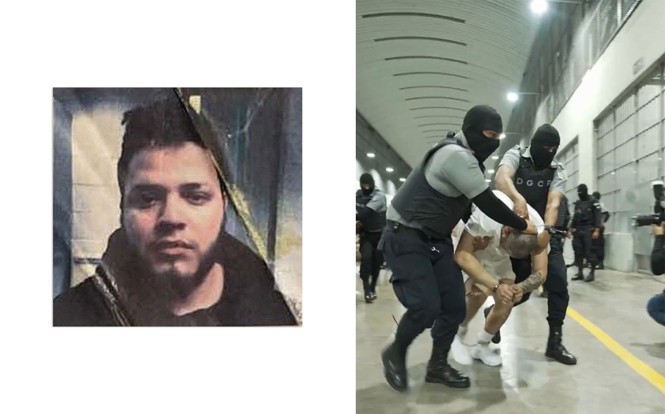
Diptych photograph showing Abrego Garcia. and Garcia at CECOT.
Left: Abrego Garcia. Right: Garcia at CECOT according to his lawyer. (U.S. District Court for the District of Maryland)

It is not a path to permanent U.S. residency, but it means the government won’t deport him back to his home country, because he’s more likely than not to face harm there.

Abrego Garcia has had no contact with any law-enforcement agency since his release, according to his attorney. He works full time as a union sheet-metal apprentice, has complied with requirements to check in annually with ICE, and cares for his 5-year-old son, who has autism and a hearing defect, and is unable to communicate verbally.

On March 12, Abrego Garcia had picked up his son after work from the boy’s grandmother’s house when ICE officers stopped the car, saying his protected status had changed. Officers waited for Abrego Garcia’s wife to come to the scene and take care of the boy, then drove him away in handcuffs. Within two days, he had been transferred to an ICE staging facility in Texas, along with other detainees the government was preparing to send to El Salvador. Trump had invoked the Alien Enemies Act of 1798, and the government planned to deport two planeloads of Venezuelans along with a separate group of Salvadorans.

Abrego Garcia’s family has had no contact with him since he was sent to the megaprison in El Salvador, known as CECOT. His wife spotted her husband in news photographs released by Salvadoran President Nayib Bukele on the morning of March 16, after a U.S. district judge had told the Trump administration to halt the flights.

“Oopsie,” Bukele wrote on social media, taunting the judge.

Abrego Garcia’s wife recognized her husband’s decorative arm tattoo and scars, according to the court filing. The image showed Salvadoran guards in black ski masks frog-marching him into the prison, with his head shoved down toward the floor. CECOT is the same prison that Department of Homeland Security Secretary Kristi Noem visited last week, recording videos for social media while standing in front of a cell packed with silent detainees.

If the government wants to deport someone with protected status, the standard course would be to reopen the case and introduce new evidence arguing for deportation. The deportation of a protected-status holder has even stunned some government attorneys I’ve been in touch with who are tracking the case, who declined to be named because they weren’t authorized to speak to the press. “What. The. Fuck,” one texted me.

Sandoval-Moshenberg told the court that he believes Trump officials deported his client “through extrajudicial means because they believed that going through the immigration judge process took too long, and they feared that they might not win all of their cases.’’

Officials at ICE and the Department of Homeland Security did not respond to a request for comment. The Monday court filing by the government indicates that officials knew Abrego Garcia had legal protections shielding him from deportation to El Salvador.

“ICE was aware of this grant of withholding of removal at the time [of] Abrego Garcia’s removal from the United States. Reference was made to this status on internal forms,” the government told the court in its filing.

Abrego Garcia was not on the initial manifest of the deportation flight, but was listed “as an alternate,” the government attorneys explained. As other detainees were removed from the flight for various reasons, Abrego Garcia “moved up the list.’’

The flight manifest “did not indicate that Abrego Garcia should not be removed,’’ the attorneys said. “Through administrative error, Abrego Garcia was removed from the United States to El Salvador. This was an oversight.” But despite this, they told the court that Abrego Garcia’s deportation was carried out ‘’in good faith.’’

03 Apr 21:56

Schrodinger's Economics

by msmash
James.galbraith

lol yup

databasecowgirl writes: Commenting in The Times on the absurdity of Meta's copyright infringement claims, Caitlin Moran defines Schrodinger's economics: where a company is both [one of] the most valuable on the planet yet also too poor to pay for the materials it profits from. Ultimately "move fast and break things" means breaking other people's things. Or, possibly worse, going full 'The Talented Mr Ripley': slowly feeling so entitled to the things you are enamored of that you end up clubbing out the brains of your beloved in a boat.

Read more of this story at Slashdot.

02 Apr 20:05

First-party Switch 2 games—including re-releases—all run either $70 or $80

by Andrew Cunningham
James.galbraith

I think I'll be skipping the Switch this time. the controllers are too small, the graphics too old, and the library too limited.

Nintendo's Switch 2 presentation gave us pricing for the console ($449 to start) and Nintendo's product pages have given us pricing information for accessories ($80 for a Pro Controller, $90 for another pair of Joy-Cons, and $110 for a replacement dock, sheesh). But what Nintendo didn't mention during the presentation was game pricing, either for standalone Switch 2 titles or the Switch 2 Edition upgrades for existing Switch games.

Nintendo announced via its website after the presentation that Mario Kart World, the console's flagship launch title, will cost $50 when you buy a digital copy as part of a Switch 2 bundle. But the game will cost $80 when you buy it on its own, $30 more than the pack-in version and $20 more than the usual $60 price for first-party Switch games.

Pre-order listings at US retailers that have gone live since this morning also list several $80 games—we'll use Wal-Mart's as an example. The upgraded Switch 2 Editions for a trio of Switch games—2024's Super Mario Party Jamboree, 2023's The Legend of Zelda: Tears of the Kingdom, and 2022's Kirby and the Forgotten Land—are all going for $80, the same as Mario Kart World.

Read full article

Comments

02 Apr 20:04

Microsoft Urges Businesses To Abandon Office Perpetual Licenses

by msmash
James.galbraith

bullshit. The only one who benefits here is Microsoft.

Microsoft is pushing businesses to shift away from perpetual Office licenses to Microsoft 365 subscriptions, citing collaboration limitations and rising IT costs associated with standalone software. "You may have started noticing limitations," Microsoft says in a post. "Your apps are stuck on your desktop, limiting productivity anytime you're away from your office. You can't easily access your files or collaborate when working remotely." In its pitch, the Windows-maker says Microsoft 365 includes Office applications as well as security features, AI tools, and cloud storage. The post cites a Microsoft-commissioned Forrester study that claims the subscription model delivers "223% ROI over three years, with a payback period of less than six months" and "over $500,000 in benefits over three years."

Read more of this story at Slashdot.

02 Apr 20:03

Not just Signal: Michael Waltz reportedly used Gmail for government messages

by Jon Brodkin
James.galbraith

christ if only there were some fucking consequences

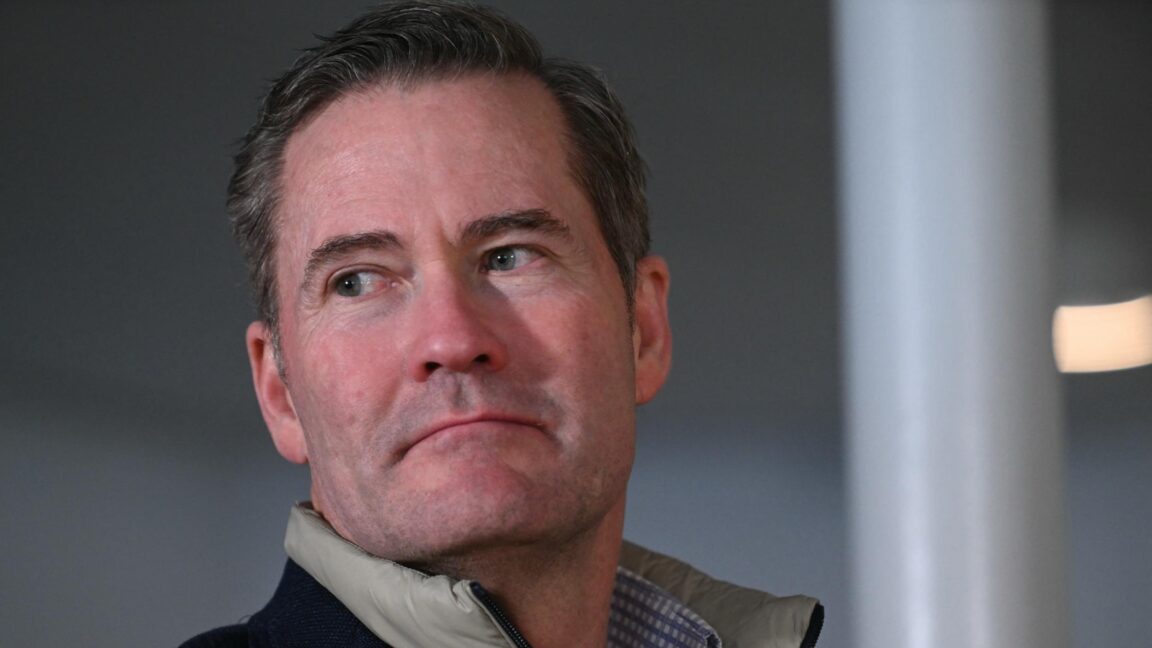
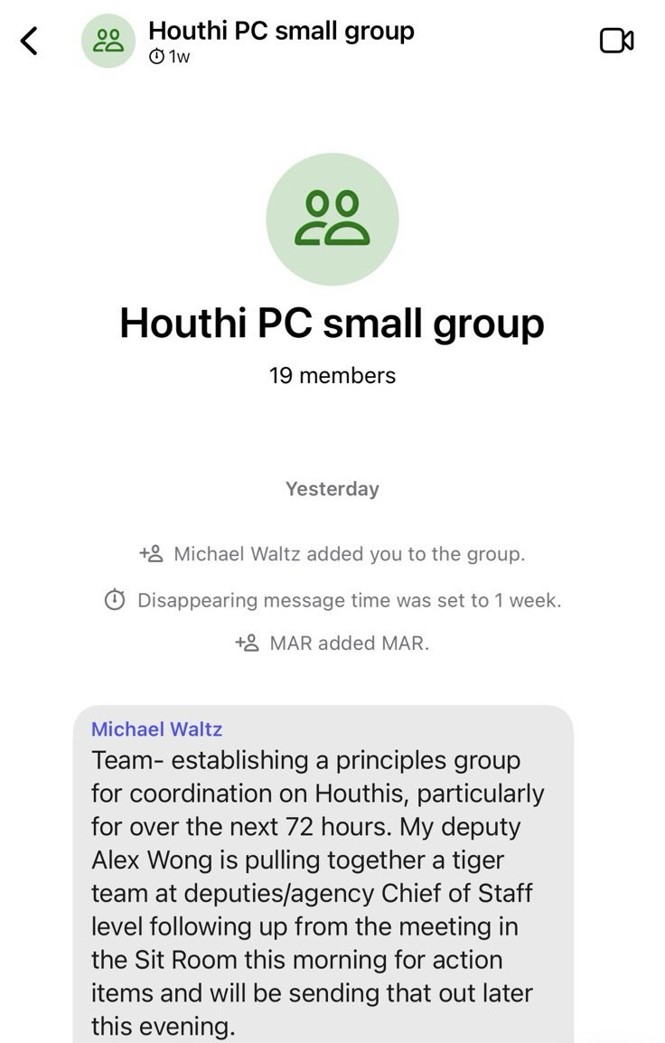
National Security Advisor Michael Waltz and a senior aide used personal Gmail accounts for government communications, according to a Washington Post report published yesterday.

Waltz has been at the center of controversy for weeks because he inadvertently invited The Atlantic Editor-in-Chief Jeffrey Goldberg to a Signal chat in which top Trump administration officials discussed a plan for bombing Houthi targets in Yemen. Yesterday's report of Gmail use and another recent report on additional Signal chats raise more questions about the security of sensitive government communications in the Trump administration.

A senior Waltz aide used Gmail "for highly technical conversations with colleagues at other government agencies involving sensitive military positions and powerful weapons systems relating to an ongoing conflict," The Washington Post wrote.

Read full article

Comments

02 Apr 20:02

95% of Code Will Be AI-Generated Within Five Years, Microsoft CTO Says

by msmash
James.galbraith

security is doomed

Microsoft Chief Technology Officer Kevin Scott has predicted that AI will generate 95% of code within five years. Speaking on the 20VC podcast, Scott said AI would not replace software engineers but transform their role. "It doesn't mean that the AI is doing the software engineering job.... authorship is still going to be human," Scott said. According to Scott, developers will shift from writing code directly to guiding AI through prompts and instructions. "We go from being an input master (programming languages) to a prompt master (AI orchestrator)," he said. Scott said the current AI systems have significant memory limitations, making them "awfully transactional," but predicted improvements within the next year.

Read more of this story at Slashdot.

02 Apr 19:16

DeepMind is holding back release of AI research to give Google an edge

by Melissa Heikkilä and Stephen Morris, Financial Times
James.galbraith

It's like there's a reason to move basic research to public institutions (when they're not being burned down by a fascist toddler)

Google’s artificial intelligence arm DeepMind has been holding back the release of its world-renowned research, as it seeks to retain a competitive edge in the race to dominate the burgeoning AI industry.

The group, led by Nobel Prize-winner Sir Demis Hassabis, has introduced a tougher vetting process and more bureaucracy that made it harder to publish studies about its work on AI, according to seven current and former research scientists at Google DeepMind.

Three former researchers said the group was most reluctant to share papers that reveal innovations that could be exploited by competitors, or cast Google’s own Gemini AI model in a negative light compared with others.

Read full article

Comments

02 Apr 19:11

Honey Lost 4 Million Chrome Users After Shady Tactics Were Revealed

by BeauHD
James.galbraith

only???

The Chrome extension Honey has lost over 4 million users after a viral video exposed it for hijacking affiliate codes and misleading users about finding the best coupon deals. 9to5Google reports: As we reported in early January, Honey had lost around 3 million users immediately after the video went viral, but ended up gaining back around 1 million later on. Now, as of March 2025, Honey is down to 16 million users on Chrome, down from its peak of 20 million. This drop comes after new Chrome policy has taken effect which prevents Honey, and extensions like it, from practices including taking over affiliate codes without disclosure or without benefit to the extension's users. Honey has since updated its extension listing with disclosure, and we found that the behavior shown in the December video no longer occurs.

Read more of this story at Slashdot.

01 Apr 23:07

'No Longer Think You Should Learn To Code,' Says CEO of AI Coding Startup

by msmash
James.galbraith

well that's horrifying

Learning to code has become sort of become pointless as AI increasingly dominates programming tasks, said Replit founder and chief executive Amjad Masad. "I no longer think you should learn to code," Masad wrote on X. The statement comes as major tech executives report significant AI inroads into software development. Google CEO Sundar Pichai recently revealed that 25% of new code at the tech giant is AI-generated, though still reviewed by engineers. Furthermore, Anthropic CEO Dario Amodei predicted AI could generate up to 90% of all code within six months. Masad called this shift a "bittersweet realization" after spending years popularizing coding through open-source work, Codecademy, and Replit -- a platform that now uses AI to help users build apps and websites. Instead of syntax-focused programming skills, Masad recommends learning "how to think, how to break down problems... how to communicate clearly, with humans and with machines."

Read more of this story at Slashdot.

01 Apr 16:21

The Supreme Court seems poised to give religious employers a big win

by Ian Millhiser
James.galbraith

Yeah this will be a disaster

People attend a rally, one person is holding a crucifix and another a large cross
People attend the 50th annual March for Life rally on the National Mall on January 20, 2023, in Washington, DC. | Chip Somodevilla/Getty Images

There wasn’t a lot of suspense going into Monday’s Supreme Court argument in Catholic Charities v. Wisconsin Labor & Industry Review Commission. This Court is typically very sympathetic to Christian organizations that seek religious exemptions from the law, even as it shows less sympathy for other religious groups such as Muslims. 

As the name of the Catholic Charities case suggests, this case involves a Catholic organization that seeks a religious exemption from a state law — in this case, Wisconsin’s law requiring most employers to pay taxes that fund unemployment benefits for their workers. After Monday’s argument, it appears that a lopsided majority of the Court will vote to give Catholic Charities that exemption.

All six of the Court’s Republicans, plus Democratic Justice Elena Kaga,n seemed to favor that outcome, and the Court’s decision could potentially be unanimous.

That said, several of the justices, including Republicans Chief Justice John Roberts and Justice Amy Coney Barrett, did express concerns that there must be some limit on a business’s ability to exempt itself from the law if it claims that its operations are motivated by religion. Roberts, for example, asked whether a group of people who think it is a sin to eat meat could exempt themselves from taxes if they opened a vegetarian restaurant.

Similarly, Barrett noted at one point that there is a difference between a nonprofit charity and a for-profit business, suggesting that she may limit the scope of some religious exemptions to nonprofits.

The question of whether this Court will set some limit on when religiously motivated organizations can claim an exemption from the law is probably more important than the specific dispute before the justices in Catholic Charities. The Catholic Church claims that it maintains its own internal unemployment benefits system that “provides the same maximum weekly benefit rate as the State’s system.” So it appears that, regardless of who prevails before the Supreme Court, Catholic Charities’ workers will still receive similar benefits.

But the Court’s decision is unlikely to be limited to the Catholic Church, meaning that workers at religious organizations that do not offer unemployment insurance could lose that benefit altogether. And, if the Court’s decision is too broad, it could potentially allow for-profit businesses to thumb their nose at workplace regulations of all kinds, simply by claiming that they object to those regulations on religious grounds.

It remains to be seen whether Roberts, Barrett, or some other justice will slip language into the Court’s decision that will prevent for-profit companies from dodging unemployment laws, minimum wage laws, workplace safety laws, and similar regulations. If they do not, the Court’s decision in Catholic Charities could have dire consequences for many American workers.

What’s the specific legal dispute in Catholic Charities?

Wisconsin, like every other state, taxes employers to fund benefits for workers who lose their jobs. Like most states, Wisconsin’s law includes an exemption for church-run nonprofits that are “operated primarily for religious purposes.” According to the state’s highest court, this exemption only applies to nonprofits that primarily engage in religious activities such as holding worship services, and not to charities that provide secular services like feeding poor people or caring for people with disabilities — even if these secular services are motivated by the charity’s faith.

Catholic Charities, meanwhile, provides these kinds of secular services and does not proselytize its faith to the people it serves. Significantly, the Catholic Church chooses to operate Catholic Charities as a separate corporation that is distinct from the greater church itself, even though the charitable arm is controlled by church officials. 

This decision to separately incorporate Catholic Charities provides considerable benefits to the greater church. Most notably, it means that, if Catholic Charities is successfully sued, that lawsuit cannot touch the broader church’s assets. But the church’s decision to make Catholic Charities a separate corporate entity means that this entity is not exempt from the state’s unemployment law — because Catholic Charities itself only provides secular services.

Catholic Charities claims that this arrangement is unconstitutional, and that it should be allowed to benefit both from separate incorporation and from the state’s exemption for organizations “operated primarily for religious purposes.”

Though its lawyers offered three different reasons to rule in their favor, several of the justices suggested that the simplest and most straightforward way to rule in the church’s favor would be to conclude that Wisconsin unconstitutionally discriminates against religious sects that engage in charitable work without proselytizing or otherwise engaging in the kind of religious activity that triggers Wisconsin’s exemption.

Indeed, many of the justices pounced on a disastrous concession by Colin Roth, the lawyer defending Wisconsin’s regime before the Court. Justice Samuel Alito asked Roth what is the bare minimum Catholic Charities would need to do in order to secure an exemption, and Roth said that a charity which runs a soup kitchen would be exempt if it requires hungry people to say the Lord’s Prayer before they receive soup, but not if it runs an identical soup kitchen without this requirement.

But such a distinction, Kagan warned, discriminates against the Catholic Church specifically because its religious beliefs require it to do charitable works without demanding that the beneficiaries of those works participate in Catholicism. “I thought it was pretty fundamental that we don’t treat some religions better than other religions,” Kagan said.

Without the Obama-appointed Kagan’s vote, it’s hard to imagine how Wisconsin can win this case. And all six of the Court’s Republicans appeared to share Kagan’s concern.

What will happen when the next case involves a more exploitative employer?

The Court’s 40-year-old decision in Tony and Susan Alamo Foundation v. Secretary of Labor (1985) looms large over Catholic Charities. In that case, a religious organization that was widely described as a cult owned numerous for-profit businesses, including “service stations, retail clothing and grocery outlets, hog farms, roofing and electrical construction companies, a recordkeeping company, a motel, and companies engaged in the production and distribution of candy.” Workers in these businesses were given no wages or cash salaries, only food, clothing, and shelter. 

After the federal government sued, claiming violations of minimum wage and overtime laws, the Court rejected the organization’s request for a religious exemption from these laws. Among other things, the Court warned that if a religious cult is allowed to pay substandard (or nonexistent) wages, that “would undoubtedly give [it] and similar organizations an advantage over their competitors” — and push employers who must comply with federal law out of the market.

Again, the immediate consequences of a decision ruling in favor of Catholic Charities is likely to be minimal, because the Catholic Church has its own unemployment benefits program. But if Catholic Charities is entitled to a religious exemption for the reason offered by Kagan, then it is unclear why some other religious organizations cannot claim an exemption even if it does not provide unemployment benefits.

Similarly, if it is unconstitutional for a state to treat religions that do not proselytize differently than religions that do, why can the state discriminate against religions that operate for-profit businesses? As Justice Barrett noted at one point, a church may very well believe that raising money to fund its operations is as essential to its religious mission as the Catholic Church believes that charitable work is to its mission.

One possibility is that the Court could create a carve-out specifically for for-profit entities — ruling that they cannot seek religious exemptions from the law. This is the rule the Court laid out in United States v. Lee (1982), which held that “when followers of a particular sect enter into commercial activity as a matter of choice, the limits they accept on their own conduct as a matter of conscience and faith are not to be superimposed on the statutory schemes which are binding on others in that activity.”

But the Court also seemed to walk away from Lee in Burwell v. Hobby Lobby (2014), which held that for-profit corporations may seek religious exemptions from federal (although not necessarily state) law.

After Monday’s oral argument, it seems inevitable that the Court will rule that the Catholic Church can enjoy all the benefits of separately incorporating Catholic Charities, without the costs that normally come along with that decision. If that’s all the Court rules, then it is hardly the end of the world for American workers.

But it will be very difficult for the Court to write a decision in favor of Catholic Charities that does not open the door to much more exploitative employers receiving exemptions from very basic laws intended to protect workers.

28 Mar 23:37

DOGE To Rewrite SSA Codebase In 'Months'

by BeauHD
James.galbraith

that'll be an unmitigated disaster

Longtime Slashdot reader frank_adrian314159 writes: According to an article in Wired, Elon Musk has appointed a team of technologists from DOGE to "rewrite the code that runs the SSA in months." This codebase has over 60 million lines of COBOL and handles record keeping for all American workers and payments for all Social Security recipients. Given that the code has to track the byzantine regulations dealing with Social Security, it's no wonder that the codebase is this large. What is in question though is whether a small team can rewrite this code "in months." After all, what could possibly go wrong? "The project is being organized by Elon Musk lieutenant Steve Davis ... and aims to migrate all SSA systems off COBOL ... and onto a more modern replacement like Java within a scheduled tight timeframe of a few months," notes Wired. "Under any circumstances, a migration of this size and scale would be a massive undertaking, experts tell WIRED, but the expedited deadline runs the risk of obstructing payments to the more than 65 million people in the US currently receiving Social Security benefits." In 2017, SSA announced a plan to modernize its core systems with a timeline of around five years. However, the work was "pivoted away" because of the pandemic.

Read more of this story at Slashdot.

28 Mar 20:17

Again and Again, NSO Group's Customers Keep Getting Their Spyware Operations Caught

by msmash
James.galbraith

no shit

An anonymous reader shares a report: Amnesty International published a new report this week detailing attempted hacks against two Serbian journalists, allegedly carried out with NSO Group's spyware Pegasus. The two journalists, who work for the Serbia-based Balkan Investigative Reporting Network (BIRN), received suspicious text messages including a link -- basically a phishing attack, according to the nonprofit. In one case, Amnesty said its researchers were able to click on the link in a safe environment and see that it led to a domain that they had previously identified as belonging to NSO Group's infrastructure. "Amnesty International has spent years tracking NSO Group Pegasus spyware and how it has been used to target activists and journalists," Donncha O Cearbhaill, the head of Amnesty's Security Lab, told TechCrunch. "This technical research has allowed Amnesty to identify malicious websites used to deliver the Pegasus spyware, including the specific Pegasus domain used in this campaign." To his point, security researchers like O Cearbhaill who have been keeping tabs on NSO's activities for years are now so good at spotting signs of the company's spyware that sometimes all researchers have to do is quickly look at a domain involved in an attack. In other words, NSO Group and its customers are losing their battle to stay in the shadows. "NSO has a basic problem: They are not as good at hiding as their customers think," John Scott-Railton, a senior researcher at The Citizen Lab, a human rights organization that has investigated spyware abuses since 2012, told TechCrunch.

Read more of this story at Slashdot.

27 Mar 22:13

Study of Lyft rideshare data confirms minorities get more tickets

by John Timmer
James.galbraith

no shit

It's no secret that "driving while black" is a real phenomenon. Study after study has shown that minority drivers are ticketed at a higher rate, and data from speed cameras suggests that it's not because they commit traffic violations more frequently. But this leaves open the question of why. Bias is an obvious answer, but it's hard to eliminate an alternative explanation: Minority groups may engage in more unsafe driving, and the police are trying to deter that.

But now, Lyft has given a group of researchers access to detailed data from their drivers. The results confirm that minority drivers get more tickets, and they pay higher fines when they do. And the results also show that minorities aren't in any way more likely to speed or engage in unsafe driving. Which suggests, in their words, that the problem is "animus" against minority drivers.

Giving research a Lyft

The work was done thanks to cooperation from the ridesharing company Lyft, which provided data on its drivers in Florida, all 222,838 of them, along with a record of all the GPS pings their tracking systems sent into the company's servers. Combined with a detailed map of Florida's roads, along with their speed limits, they could determine when a given driver was speeding. They also obtained Florida police records of any accidents and cross-referenced their locations to any vehicle that experienced a sudden stop in that spot at the same time.

Read full article

Comments

27 Mar 21:53

Trump’s attack on migrants is an attack on everyone

by Zack Beauchamp
James.galbraith

Yep this is a 5-alarm fire

 A woman in a long white coat and headscarf is surrounded by men in black jackets and hats on a city sidewalk.
Footage of Rumeysa Ozturk’s arrest by unidentified law enforcement officers on March 25. | AP

At around 5:15 pm on Tuesday, a man in a black hoodie stopped Tufts University graduate student Rumeysa Ozturk on the street in Somerville, Massachusetts. She tried to walk by, but he grabbed her. She screamed, and it seemed like help was arriving.

But the masked newcomers were actually there to help her assailant. They took off Ozturk’s backpack and seized her cellphone. The hooded man put her in handcuffs. “We’re the police,” they told her.

“You don’t look like it,” an apparent bystander replied. “Why are you hiding your faces?”

Ozturk, a Turkish national on a student visa, is currently being held in an Immigration and Customs Enforcement processing center in Louisiana — despite a court order that she must remain in Massachusetts. The State Department has canceled Ozturk’s visa; ICE is preparing her deportation.

The Trump administration claims she has engaged in “pro-Hamas” activity, but they have provided no evidence of material support for Palestinian militants (or any other terrorist group). The closest thing anyone has found is a 2024 op-ed in the Tufts student newspaper, in which Ozturk and her co-authors criticize Israel’s war in Gaza but do not express anything that even approximates support for Hamas. 

This troubling theory — that Ozturk was punished purely for her political speech — received more support during a Thursday afternoon press conference, when Secretary of State Marco Rubio said that his agency revoked Ozturk’s visa because she was part of a pro-Palestinian movement that caused “a ruckus” on campus.

“We gave you a visa to come and study and get a degree, not to become a social activist that tears up our university campuses,” he said, while providing no evidence that Ozturk had done anything more disruptive than penning an op-ed. He also suggested he had revoked the visas of “more than 300” students like her on similar grounds.

This is a clarifying moment for American democracy. Unmarked and unidentified law enforcement abducting a lawful migrant, seemingly in retaliation for First Amendment-protected speech, is the sort of attack on civil liberties that we would not hesitate to label as authoritarian in another country.

And it is only one example among many. 

The targeting of at least seven other pro-Palestinian students, the rendering of hundreds of Venezuelan migrants to a Salvadoran prison camp, and the extended detention and physical abuse of lawful migrants at the border — all of these represent extraordinary abuses of federal power, targeting groups whose citizenship status gives them limited legal recourse.

Long-held fears about the weaponization of the US government against dissenters are thus no longer hypothetical. What’s happening is the full-spectrum application of federal immigration powers for authoritarian ends. And things are likely to get worse from here.

Immigration enforcement as an authoritarian gateway drug

On Wednesday night, Mother Jones published a story about how the Trump administration identified Venezuelans for deportation that illustrates just how dangerous the current moment is.

Reporters Noah Lanard and Isabela Dias conducted extensive interviews with the friends, families, and community members of several men who had been sent to El Salvador. They found no evidence that these men were, as the Trump administration alleged, members of the Tren de Aragua gang. Rather, the reporters found, they were abducted purely because they have tattoos.

Neri Alvarado Borges, a Venezuelan baker who lived in the Dallas area, is a case in point. 

No one who knew him believed he had any connection to Tren de Aragua. They did, however, note that he had a large tattoo of a ribbon — a tribute to his brother, Nelyerson, a 15-year-old with autism. According to Borges, this tattoo and two others were the sole reasons for his detention.

“Well, you’re here because of your tattoos,” an ICE agent told Borges, per Mother Jones’ reporting. “We’re finding and questioning everyone who has tattoos.”

This is, as a matter of law enforcement, an absurd policy. Experts on Tren de Aragua do not believe there is a generally reliable way to use tattoos to identify gang members. This is substantiated by other reports of ICE mistakes, such as sending a professional soccer player to a Salvadoran prison because, his lawyer says, of his Real Madrid ink.

But as an attempt to assert power, it makes sense. The government has identified groups they wish to repress — like Venezuelan migrants and pro-Palestinian activists — and is using the threat of abduction and physical harm to control or silence them. It is classic authoritarian politics: using law enforcement to punish law-abiding individuals who belong to the wrong groups or have the wrong ideas.

It is easy to see why noncitizens are getting the worst of it right now. They enjoy fewer rights under the American legal system, making it far easier to subject them to the brutest of brute force.

Yet, as Trump’s treatment of universities and federal bureaucrats shows, he is eager to wield arbitrary power against citizens as well. And there are good reasons to believe that versions of the tactics being used on immigrants today might one day be directed against citizens — not the least of which is the Trump team’s longstanding fascination with “denaturalization,” the process of stripping citizenship from naturalized Americans.

In his 2021 book Immigration and Freedom, political theorist Chandran Kukathas argues that immigration enforcement by its very nature entails restrictions on citizens’ rights. The very act of trying to distinguish between citizens and noncitizens, for the purposes of deportation or provision of benefits, requires increased levels of surveillance and monitoring against every person residing in the country. How else are governments to distinguish between those they intend to target and those whom they do not?

Kukathas is writing about immigration enforcement systems in general — pointing out that even the best-intentioned ones require some restrictions on freedom. But what happens when you have an attempt to wield the powers created by immigration enforcement in an arbitrary manner, one seemingly designed to repress critics and sow terror?

Well, then you get statements like this one from White House aide Stephen Miller: “Dear marxist judges: If an illegal alien criminal breaks into our country the only ‘process’ he is entitled to is deportation.”

Miller here is not just expressing contempt for the idea of “due process.” He is expressing contempt for the idea that there should be any legal checks on their ability to identify whom to deport. Due process exists because law enforcement can’t be trusted to only go after the “right” targets. Free societies depend on oversight and limitations on police power. Otherwise, freedoms are just words on paper subject to the whims of those who have guns.

In expressing such unmitigated hostility to this idea, Miller has shown us the disturbing linkage between the administration’s assault on immigrants, its repression of American citizens, and its contempt for legal oversight. 

They are acting like they have the right to go after whomever they want, for whatever reason they went, in whatever manner they want — and that anyone who tries to stop them is disloyal at best and a terrorist sympathizer at worst.

We’ve seen this kind of politics before. And its track record is grim.

27 Mar 20:05

“This will be a painful period”: RFK Jr. slashes 24% of US health dept.

by Beth Mole
James.galbraith

for fucks sake

Health Secretary and anti-vaccine advocate Robert F. Kennedy Jr. is slashing a total of 20,000 jobs across the Department of Health and Human Services—or about 24 percent of the workforce—in a sweeping overhaul said to improve efficiency and save money, Kennedy and the HHS announced Thursday.

Combining workforce losses from early retirement, the "Fork in the Road" deferred resignation deal, and 10,000 positions axed in the reductions and restructuring announced today, HHS will shrink from 82,000 full-time employees to 62,000 under Kennedy and the Trump administration. The HHS's 28 divisions will be cut down to 15, while five of the department's 10 regional offices will close.

"This will be a painful period," Kennedy said in a video announcement posted on social media. Calling the HHS a "sprawling bureaucracy," Kennedy claimed that the cuts would be aimed at "excess administrators."

Read full article

Comments

27 Mar 18:55

Who exactly is running the White House? It's sure not Trump

by Emily Singer
James.galbraith

yep he's just the cranky racist face while the minions are running the show

President Donald Trump’s incoherent response to his senior military and intelligence officials compromising national security by sharing the details of an impending military strike on an unsecure text messaging app raises a terrifying question: Who is even running things around here?

Trump has repeatedly said that he’s either not been briefed on the massive security lapse, or has shown he doesn’t understand what happened—neither of which is reassuring.

For example, the day that Atlantic Editor-in-Chief Jeffrey Goldberg reported that he was apparently inadvertently added to a Signal chat with Vice President JD Vance, national security adviser Mike Waltz, Defense Secretary Pete Hegseth, and other top national security officials where they were discussing an imminent attack on a rebel group in Yemen, Trump said he didn’t know that happened.

"I don't know anything about it,” Trump told reporters at the White House. “I'm not a big fan of The Atlantic. To me it's a magazine that's going out of business. But I know nothing about it. You're saying that they had what?"

The question was posed to him hours after the article was published, giving him ample time to have had a response prepared. What’s more, since Goldberg had reached out to the White House for comment before the article was published; Trump should have known for even longer that the story was coming. The fact that he said he didn’t know about it means he was either lying or hadn’t been kept in the loop by his own staff—which again are both terrible scenarios.

Then on Wednesday, days after the story broke, Trump gave an interview to right-wing podcaster Vince Coglianese in which he suggested he didn’t even know what the Signal messaging app was.

“But somebody in my group, either screwed up or it’s a bad signal. It’s a bad signal, happens too,” Trump said, apparently thinking that this scandal revolves around a literal signal and not the Signal messaging app.

Additionally on Wednesday, when The Atlantic released yet more texts showing that Hegseth had shared classified information in the thread about the exact timing of the attacks and what weapons systems would be used, Trump falsely claimed to reporters that Hegseth wasn’t involved.

"Hegseth is doing a great job. He had nothing to do with this. How do you bring Hegseth into it? He had nothing to do with it,” Trump said while sitting in the Oval Office.

Trump then went on to make more nonsensical comments about Signal, giving an answer that ultimately makes what his top administration officials did look even worse.

“You want to ask about whether or not Signal works? I don’t know that Signal works. I think Signal could be defective to be honest with you. And I think that’s what we have to do, because you use Signal and we use Signal and everybody uses Signal, but it could be a defective platform and we’re going to have to figure that out.”

That response certainly doesn’t help Trump’s argument that this is all a hoax, given that we know his aides used Signal to share classified information—which Trump described as a “defective platform.”

Of course, Trump is both a notorious liar and a moron, so you never know whether he is lying by playing dumb, or really doesn’t understand what is going on.

In this instance, it’s likely both, as the technologically illiterate Trump—who thinks his own son is some sort of genius because he can turn on a laptop computer—probably doesn’t understand what Signal is.

Nevertheless, we should have faith that our president has a grasp of what is going on and will hold his administration accountable for putting lives on the line by discussing classified information that could have gotten American troops killed.

But given that Trump is refusing to take responsibility for the security lapse, defending the bad behavior of his inept Cabinet officials, and lying about the scandal itself being a “hoax,” we are not holding our breath that any accountability is on the way.

Thank you to the Daily Kos community who continues to fight so hard with Daily Kos. Your reader support means everything. We will continue to have you covered and keep you informed, so please donate just $3 to help support the work we do.

27 Mar 16:08

Cartoon: Tom the Dancing Bug—The N-word is back!

by RubenBolling
James.galbraith

insanity

Support your friendly neighborhood independent comic strip: SIGN UP FOR THE INNER HIVE and you'll get each week's Tom the Dancing Bug comic at least a day before publication. Plus other exclusive content like extra comics, commentary, juicy gossip, puzzles, jokes, and super-secret Hollywood secrets featuring fabulous celebs. Please do join the team that makes it possible for Tom the Dancing Bug to exist.

Get the new book that explains it all. "IT'S THE GREAT STORM, TOM THE DANCING BUG!" collects all Tom the Dancing Bug comics from 2020-2023 (and more!)! Now accepting orders right HERE! Get your personalized / signed / sketched / swagged copy while it's still legal to buy. "Intricate, incisive, shape-shifting"  The New Yorker

Sign up for the free weekly Tom the Dancing Bug Review! Not nearly as good as joining the Inner Hive, but it's free!

Follow @RubenBolling on Bluesky and/or Mastodon. Or, if you must: Threads, Facebook and Instagram.

Related | Inside Trump’s racist crusade to erase American heroes from US history

26 Mar 19:51

Republicans created a labor shortage—and they want children to fix it

by Alex Samuels
James.galbraith

Fuck Florida. This is the vision for GOP governance. Children are great to exploit since they're much less likely to organize or push back

Children as young as 14 could soon be allowed to work overnight shifts in Florida as part of a push by the Republican-led legislature to relieve labor shortages they attribute to the deportation of undocumented immigrants.

According to CNN and other outlets, the effort to ease labor laws in Florida specifically comes as Gov. Ron DeSantis advocates for “dirt cheap” labor to replace the work once done by the very immigrants Republicans were so eager to boot from the country.  

“Why do we say we need to import foreigners, even import them illegally, when you know, teenagers used to work at these resorts, college students should be able to do this stuff,” DeSantis said last week.

The Sunshine State has been gradually loosening its child labor laws for years. CNN reports that the legislature passed a law in 2024 allowing homeschooled 16- and 17-year-olds to work “any hour of the day.” 

But Florida isn’t alone in this push. In recent years, GOP lawmakers in other red states like Arkansas, Indiana, and Iowa have passed laws making it easier for teenagers to work longer hours and take on more jobs—seemingly to fill poorly paid and undesirable positions that employers once relied on undocumented workers to fill.

“The consequences are potentially disastrous,” Reid Maki, the director of the Child Labor Coalition, which advocates against exploitative labor policies, told PBS News. “You can’t balance a perceived labor shortage on the backs of teen workers.”

But the desire to put kids to work only seems to be ramping up. One report found that since 2021, 28 states introduced bills to weaken child labor laws, and 12 states actually enacted such laws. By comparison, 14 states introduced new child labor-related bills in 2024 alone.

What’s worse, some unscrupulous businesses aren’t even waiting for states to pass laws that allow children to work. In May 2023, several McDonald’s franchises in Kentucky were accused of hiring a combined 300 children, some of them reportedly younger than 10.

Related | Child labor is A-OK with labor secretary

Republicans may argue they’re filing and passing these bills for practical reasons, such as addressing labor shortages in a competitive market. But the more likely explanation for the surge of new child labor bills is that Republicans want to reduce regulations on businesses—using child labor as a tool to directly attack longstanding federal safety rules.

It’s already legal for teenagers to take on certain jobs or paid internships, and children from middle- or upper-class families have been able to take advantage of these opportunities for years. But the Republican lawmakers pushing for looser labor laws aren’t focused on making it easier for teens to babysit or work the drive-thru at a fast food chain. Instead, they’re aiming to allow 16-year-olds to cover night shifts.

And, conveniently for them, they have allies in the White House who seem perfectly okay with this.

A report from the Center for American Progress revealed that Project 2025, the conservative blueprint for Donald Trump’s second presidential administration, advocated for rolling back child labor laws because … kids like danger?

“Some young adults show an interest in inherently dangerous jobs,” Project 2025 claims. “With parental consent and proper training, certain young adults should be allowed to learn and work in more dangerous occupations.”

Members of Trump’s Cabinet have also turned a blind eye to child labor. Earlier this month, newly appointed Labor Secretary Lori Chavez-DeRemer bragged about cutting $33 million from her department’s budget, including a program that helped regulate and prevent child labor abroad.

What’s also working in the Republicans’ favor is the fact that enforcement of child labor laws has been lax. Beyond the Kentucky incident, a November report by Arkansas Advocates for Children and Families revealed a staggering 266% increase in state-level child labor law violations between the fiscal years 2020 and 2023.

With enforcement already weak, it’s no surprise that some businesses and legislators are taking advantage of the situation to push the boundaries further—without much pushback.

The bill being considered by the Florida Legislature would remove employment time restrictions for 14- and 15-year-olds if they are homeschooled or attend virtual school. Under current law, these children are currently prohibited from working earlier than 6:30 AM or later than 11 PM.

If passed, this could have disastrous consequences. A report from the Florida Policy Institute warned that these types of bills could “reverse decades of child labor protections in Florida” and noted that child labor violations in Florida had already risen from 95 in 2019 to 281 in 2022.

Beyond the legal ramifications of passing such a measure, it’s maddening that Republicans are relying on children to fix the labor shortage created by their own xenophobic policies. After all, it was Republicans who took a harsh stance on immigration and pushed for more deportations—policies that economists have long warned would lead to labor shortages and inflation.

Yet, as red states continue to weaken child labor laws in an ill-fated attempt to fix the problem they created, the message from some lawmakers seems clear: Employers deserve more flexibility—even if it’s at the expense of protecting the most vulnerable workers. 

Campaign Action

26 Mar 18:05

Here Are the Attack Plans That Trump’s Advisers Shared on Signal

by Jeffrey Goldberg
James.galbraith

This has to have consequences

Editor’s Note: This article is the second in a series about the Trump administration's use of Signal group chatting. Read The Atlantic's original story here.

So, about that Signal chat.

On Monday, shortly after we published a story about a massive Trump-administration security breach, a reporter asked the secretary of defense, Pete Hegseth, why he had shared plans about a forthcoming attack on Yemen on the Signal messaging app. He answered, “Nobody was texting war plans. And that’s all I have to say about that.”


This article was featured in the One Story to Read Today newsletter. Sign up for it here.


At a Senate hearing yesterday, the director of national intelligence, Tulsi Gabbard, and the director of the Central Intelligence Agency, John Ratcliffe, were both asked about the Signal chat, to which Jeffrey Goldberg, the editor in chief of The Atlantic, was inadvertently invited by National Security Adviser Michael Waltz. “There was no classified material that was shared in that Signal group,” Gabbard told members of the Senate Intelligence Committee.

Ratcliffe said much the same: “My communications, to be clear, in the Signal message group were entirely permissible and lawful and did not include classified information.”

President Donald Trump, asked yesterday afternoon about the same matter, said, “It wasn’t classified information.”

These statements presented us with a dilemma. In The Atlantic’s initial story about the Signal chat—the “Houthi PC small group,” as it was named by Waltz—we withheld specific information related to weapons and to the timing of attacks that we found in certain texts. As a general rule, we do not publish information about military operations if that information could possibly jeopardize the lives of U.S. personnel. That is why we chose to characterize the nature of the information being shared, not specific details about the attacks.

[Read: The Trump administration accidentally texted me its war plans]

The statements by Hegseth, Gabbard, Ratcliffe, and Trump—combined with the assertions made by numerous administration officials that we are lying about the content of the Signal texts—have led us to believe that people should see the texts in order to reach their own conclusions. There is a clear public interest in disclosing the sort of information that Trump advisers included in nonsecure communications channels, especially because senior administration figures are attempting to downplay the significance of the messages that were shared.

Experts have repeatedly told us that use of a Signal chat for such sensitive discussions poses a threat to national security. As a case in point, Goldberg received information on the attacks two hours before the scheduled start of the bombing of Houthi positions. If this information—particularly the exact times American aircraft were taking off for Yemen—had fallen into the wrong hands in that crucial two-hour period, American pilots and other American personnel could have been exposed to even greater danger than they ordinarily would face. The Trump administration is arguing that the military information contained in these texts was not classified—as it typically would be—although the president has not explained how he reached this conclusion.

Yesterday, we asked officials across the Trump administration if they objected to us publishing the full texts. In emails to the Central Intelligence Agency, the Office of the Director of National Intelligence, the National Security Council, the Department of Defense, and the White House, we wrote, in part: “In light of statements today from multiple administration officials, including before the Senate Intelligence Committee, that the information in the Signal chain about the Houthi strike is not classified, and that it does not contain ‘war plans,’ The Atlantic is considering publishing the entirety of the Signal chain.”  

We sent our first request for comment and feedback to national-security officials shortly after noon, and followed up in the evening after most failed to answer.

Late yesterday, White House Press Secretary Karoline Leavitt emailed a response: “As we have repeatedly stated, there was no classified information transmitted in the group chat. However, as the CIA Director and National Security Advisor have both expressed today, that does not mean we encourage the release of the conversation. This was intended to be a an [sic] internal and private deliberation amongst high-level senior staff and sensitive information was discussed. So for those reason [sic] — yes, we object to the release.” (The Leavitt statement did not address which elements of the texts the White House considered sensitive, or how, more than a week after the initial air strikes, their publication could have bearing on national security.)

A CIA spokesperson asked us to withhold the name of John Ratcliffe’s chief of staff, which Ratcliffe had shared in the Signal chain, because CIA intelligence officers are traditionally not publicly identified. Ratcliffe had testified earlier yesterday that the officer is not undercover and said it was “completely appropriate” to share their name in the Signal conversation. We will continue to withhold the name of the officer. Otherwise, the messages are unredacted.

[Listen: Jeffrey Goldberg on the group chat that broke the internet]

As we wrote on Monday, much of the conversation in the “Houthi PC small group” concerned the timing and rationale of attacks on the Houthis, and contained remarks by Trump-administration officials about the alleged shortcomings of America’s European allies. But on the day of the attack—Saturday, March 15—the discussion veered toward the operational.

At 11:44 a.m. eastern time, Hegseth posted in the chat, in all caps, “TEAM UPDATE:”

The text beneath this began, “TIME NOW (1144et): Weather is FAVORABLE. Just CONFIRMED w/CENTCOM we are a GO for mission launch.” Centcom, or Central Command, is the military’s combatant command for the Middle East. The Hegseth text continues:

  • “1215et: F-18s LAUNCH (1st strike package)”
  • “1345: ‘Trigger Based’ F-18 1st Strike Window Starts (Target Terrorist is @ his Known Location so SHOULD BE ON TIME – also, Strike Drones Launch (MQ-9s)”

Let us pause here for a moment to underscore a point. This Signal message shows that the U.S. secretary of defense texted a group that included a phone number unknown to him—Goldberg’s cellphone—at 11:44 a.m. This was 31 minutes before the first U.S. warplanes launched, and two hours and one minute before the beginning of a period in which a primary target, the Houthi “Target Terrorist,” was expected to be killed by these American aircraft. If this text had been received by someone hostile to American interests—or someone merely indiscreet, and with access to social media—the Houthis would have had time to prepare for what was meant to be a surprise attack on their strongholds. The consequences for American pilots could have been catastrophic.

The Hegseth text then continued:

  • “1410: More F-18s LAUNCH (2nd strike package)”
  • “1415: Strike Drones on Target (THIS IS WHEN THE FIRST BOMBS WILL DEFINITELY DROP, pending earlier ‘Trigger Based’ targets)”
  • “1536 F-18 2nd Strike Starts – also, first sea-based Tomahawks launched.”
  • “MORE TO FOLLOW (per timeline)”
  • “We are currently clean on OPSEC”—that is, operational security.
  • “Godspeed to our Warriors.”

Shortly after, Vice President J. D. Vance texted the group, “I will say a prayer for victory.”

At 1:48 p.m., Waltz sent the following text, containing real-time intelligence about conditions at an attack site, apparently in Sanaa: “VP. Building collapsed. Had multiple positive ID. Pete, Kurilla, the IC, amazing job.” Waltz was referring here to Hegseth; General Michael E. Kurilla, the commander of Central Command; and the intelligence community, or IC. The reference to “multiple positive ID” suggests that U.S. intelligence had ascertained the identities of the Houthi target, or targets, using either human or technical assets.

Six minutes later, the vice president, apparently confused by Waltz’s message, wrote, “What?”

At 2 p.m., Waltz responded: “Typing too fast. The first target – their top missile guy – we had positive ID of him walking into his girlfriend’s building and it’s now collapsed.”

Vance responded a minute later: “Excellent.” Thirty-five minutes after that, Ratcliffe, the CIA director, wrote, “A good start,” which Waltz followed with a text containing a fist emoji, an American-flag emoji, and a fire emoji. The Houthi-run Yemeni health ministry reported that at least 53 people were killed in the strikes, a number that has not been independently verified.

Later that afternoon, Hegseth posted: “CENTCOM was/is on point.” Notably, he then told the group that attacks would be continuing. “Great job all. More strikes ongoing for hours tonight, and will provide full initial report tomorrow. But on time, on target, and good readouts so far.”

It is still unclear why a journalist was added to the text exchange. Waltz, who invited Goldberg into the Signal chat, said yesterday that he was investigating “how the heck he got into this room.”


Screenshot
Screenshot
Screenshot
Screenshot

Screenshot

Screenshot
Screenshot
Screenshot
Screenshot
Screenshot
Screenshot
Screenshot
Screenshot
Screenshot

Screenshot
Screenshot
Screenshot